Interventions for Complex Traumatic Events (INCiTE): Systematic review
and research prioritisation exercise
Keywords Post-traumatic stress disorders; complex post-traumatic stress disorder; depression; anxiety; comorbidities; systematic review; meta-analysis; network meta-analysis; qualitative research; acceptability; comparative effectiveness research; psychological; pharmacological; bias; veterans; adult survivors of child abuse; refugees; domestic violence; war affected.
Authors Hollie Melton,1 Nick Meader,1 Holly Dale,2 Kath Wright,1 Julie Jones-Diette,1 Melanie Temple,3 Iram Shah,3 Karina Lovell,4 Dean McMillan,5,6 Rachel Churchill,1 Corrado Barbui,7 Simon
Gilbody,5,6 Peter Coventry1,5
1 Centre for Reviews and Dissemination, University of York, York, YO10 5DD, UK
2 School of Health Sciences, University of Manchester, Manchester, M13 9PL, UK
3 Schoen Clinic, Heslington Rd, York, YO10 5BN, UK
4 Division of Nursing, Midwifery & Social Work, University of Manchester, M12 9PL, UK
5 Department of Health Sciences, University of York, York, YO10 5DD, UK
6 Hull York Medical School, University of York, York, YO10 5DD, UK
Correspondence to Peter Coventry
01904 321528
Mental Health and Addiction Research Group
Department of Health Sciences
Faculty of Science
University of York
York
YO10 5DD
Conflicts of interest
Churchill was part of a Systematic Reviews Programme Advisory Group and if so please add this to the ICMJE form and the competing interest statement.
Gilbody is a member of the following committees: HTA Clinical Trials Board 2008 – 2014; HTA Commissioning Board 2016 – 2019; HTA Efficient Study Designs 2015 – 2016; HTA End of LIfe Care and Add on Studies 2016; HTA Funding Boards Policy Group (formerly CSG) 2017 – 2020; HTA Funding Teleconference Members 2015 – 2016; HTA Post-board funding teleconference 2017 - 2020
Table of Contents
Abstract 16
Plain English summary 19
Scientific summary 20
1 Background 29
1.1 Rational and aims of this review 33
2 Methods of effectiveness review and meta-analysis 35
2.1 Aims and objectives 35
2.2 Literature searches 36
2.3 Inclusion and exclusion criteria 36
2.4 Study selection 40
2.5 Data extraction 41
2.6 Risk of bias 41
2.7 Data analysis 42
2.8 Meta-analyses of clinical effectiveness and attrition 42 2.9 Meta-regression analyses: predictors of treatment effectiveness 44
2.10 Components network meta-analyses 45
2.11 Acceptability sensitivity analyses 46
3 Methods of qualitative acceptability review 48
3.1 Objective 48
3.2 Literature searches 48
3.3 Study selection 48
3.4 Data extraction 49
3.5 Quality assessment 49
3.6 Data analysis 50
4 Data sharing 50
5 Results of effectiveness review 51
5.1 Flow of included studies 51
5.2 Included studies 52
5.3 Quality of included studies 54
5.4 Meta-analyses of clinical effectiveness 60
5.5 Meta-analysis of attrition 100
5.8 Acceptability sensitivity analyses 111
5.9 Adverse events for pharmacological interventions 113
5.10 Non-randomised studies of clinical effectiveness 117
6 Results of qualitative acceptability review 125
6.1 Included studies 125
6.2 Quality of included studies – CASP Assessment 126
6.3 Narrative synthesis 130
7 Patient and Public Involvement and Research Prioritisation Exercise 135 7.1 Aim 1: Consultation on the overall aims and design of the review 135 7.2 Aims 2 and 3: Setting research priorities and dissemination of findings 140
8 Discussion 143
8.1 Summary of results across all populations with complex trauma for PTSD 143
8.2 Heterogeneity 149
8.3 Component network meta-analysis 150
8.4 Attrition 151
8.5 Comparison with other reviews and guidance 152
8.6 Strengths and limitations 155
8.7 Conclusions and implications for research 158
9 Acknowledgements 162
10 References 165
Appendix 1 179
Appendix 2 233
Appendix 3 255
Appendix 4 267
Appendix 5 278
Appendix 6 310
Appendix 7 336
Appendix 8 339
Appendix 9 342
Appendix 10 345
Appendix 11 372
Table of Tables
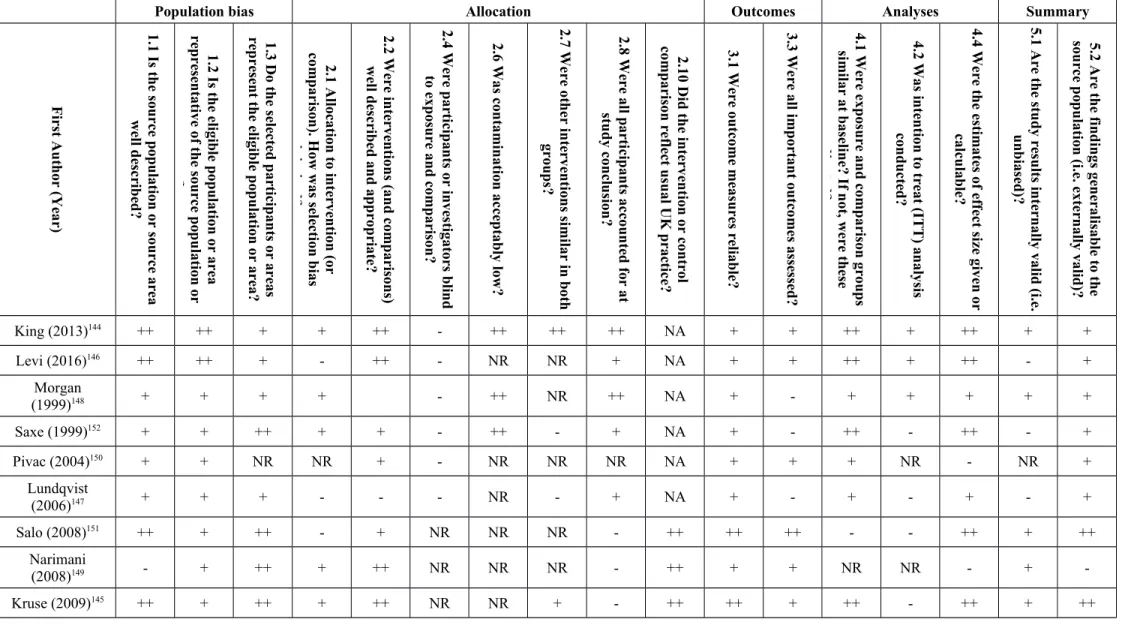
Table 1 Risk of bias gradings for the included non-randomised controlled studies...58
Table 2 Predictors of effectiveness of psychological interventions by population type (univariable analyses)...106
Table 3 Univariable predictors of treatment effectiveness by intervention component...106
Table 4 Predictors of treatment effectiveness by delivery method...107
Table 5 comparing goodness of fit for different component network meta-analysis models 109 Table 6 Mean difference for outcomes by intervention component...111
Table 7 Odds ratio of attrition per population shown across all studies and across only trials at low risk of attrition bias...113
Table 8 Pharmacological intervention withdrawals and adverse events as reported...114
Table 9 non-randomised trials intervention characteristics and effects on PTSD outcomes.119 Table 10 non-randomised trials intervention characteristics and effects on depression outcomes...122
Table 11 non-randomised trials intervention characteristics and effects on anxiety outcomes ...123
Table 12 Odds ratio of attrition for each trial reporting data...124
Table 13 Risk of bias assessment of included qualitative studies using the CASP tool...128
Table 14 Research priorities developed from research prioritisation exercise attendees, and share of online vote...141
Table 15 Search strategy for CINAHL via EBSCO...202
Table 16 Search strategy for CENTRAL via John Wiley's Cochrane Library...206
Table 17 Search strategy for Embase via OVID...217
Table 18 Search strategy for International Pharmaceutical Abstracts via Proquest...223
Table 19 Search strategy for MEDLINE(R)...224
Table 20 Search strategy for PILOTS via Proquest...231
Table 21 Search strategy for PsycINFO via OVID...244
Table 22 Search strategy for Science Citation Index via Web of Science...251
Table 23 Search strategy for CINAHL via EBSCO...256
Table 24 Search strategy for Embase via OVID...261
Table 25 Search strategy for MEDLINE via OVID...266
Table 26 Search strategy for PsycINFO via OVID...272
Table 27 Studies excluded at full-text screening stage, with rationale for exclusion...290
Table 29 Intervention characteristics for included randomised controlled studies comparing pharmacological interventions...323 Table 30 Intervention characteristics for included randomised controlled studies comparing
combined psychological and pharmacological interventions...329 Table 31 Population characteristics of included randomised studies of intervention
effectiveness...333 Table 32 Characteristics of interventions in the included non-randomised controlled studies
of intervention effectiveness...359 Table 33 Population characteristics of included non-randomised studies of intervention
effectiveness...362 Table 34 Risk of bias ratings across the domains of the Cochrane tool for all included RCTs
...365 Table 35 Effectiveness of psychological interventions on PTSD outcomes for all trauma
populations...369 Table 36 Effectiveness of psychological interventions on CPTSD outcomes for all trauma
populations...370 Table 37 Effectiveness of psychological interventions on depression outcomes for all trauma
populations...372 Table 38 Effectiveness of psychological interventions on anxiety outcomes for all trauma
populations...374 Table 39 Effectiveness of psychological interventions on quality of life outcomes for all
trauma populations...375 Table 40 Effectiveness of psychological interventions on sleep quality outcomes for all
trauma populations...376 Table 41 Effectiveness of psychological interventions for veteran populations...378 Table 42 Effectiveness of psychological interventions for war-affected populations...381 Table 43 Effectiveness of psychological interventions for childhood sexual abuse populations
...384 Table 44 Effectiveness of psychological interventions for refugee populations...386 Table 45 Effectiveness of psychological interventions for domestic violence populations. .389 Table 46 Effectiveness of pharmacological interventions on PTSD outcomes for veteran
populations...391 Table 47 Effectiveness of pharmacological interventions on depression outcomes for veteran
populations...392 Table 48 Effectiveness of pharmacological interventions on psychosis outcomes for veteran
populations...393 Table 49 Effectiveness of pharmacological interventions on sleep quality outcomes for
Table of Figures
Figure 1 PRISMA diagram indicating the flow of studies through the review process...51 Figure 2 Proportional distribution of risk of bias grades across included RCTs per domain of
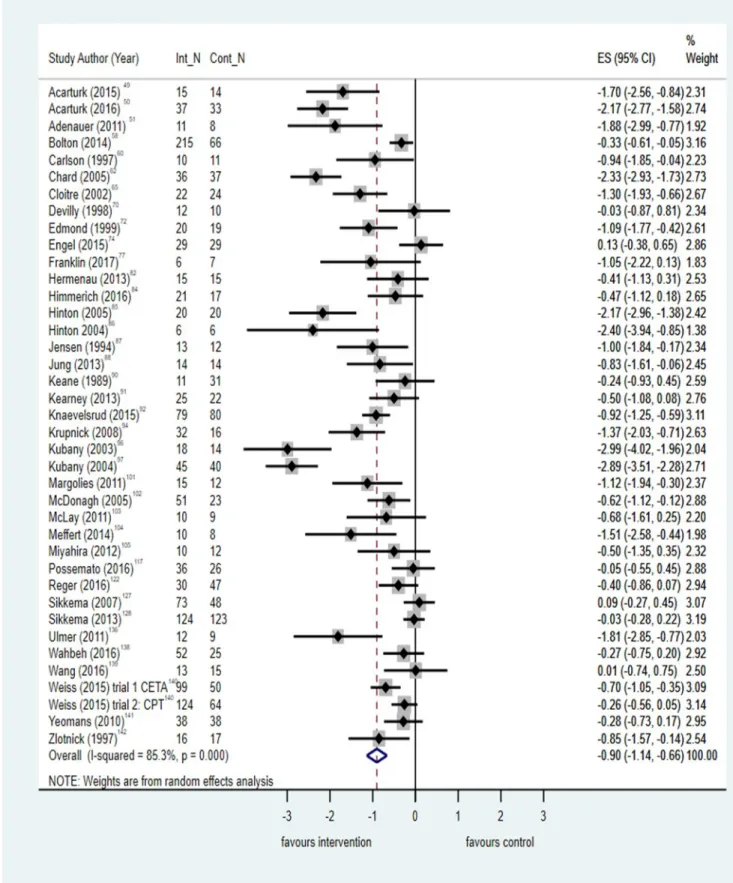
bias...55 Figure 3 Meta-analysis of post-treatment effect size (ES) for PTSD total symptoms,
comparing all psychological interventions with control...62 Figure 4 Meta-analysis of post-treatment effect size (ES) for PTSD total symptoms,
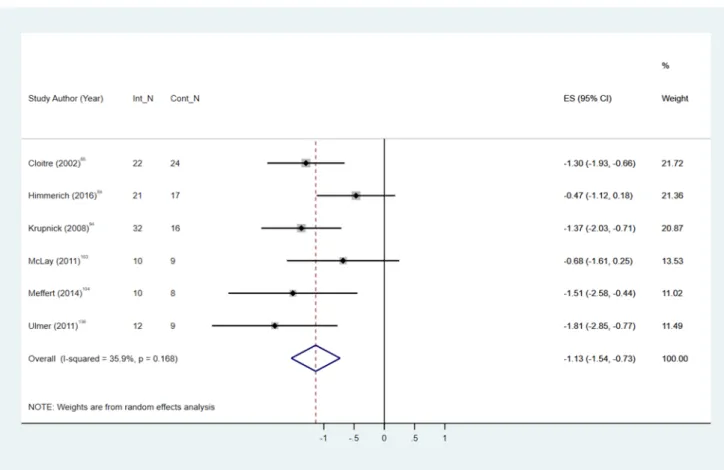
comparing phased-based psychological interventions with control...65 Figure 5 Meta-analysis of post-treatment standardised mean difference (SMD) for emotional
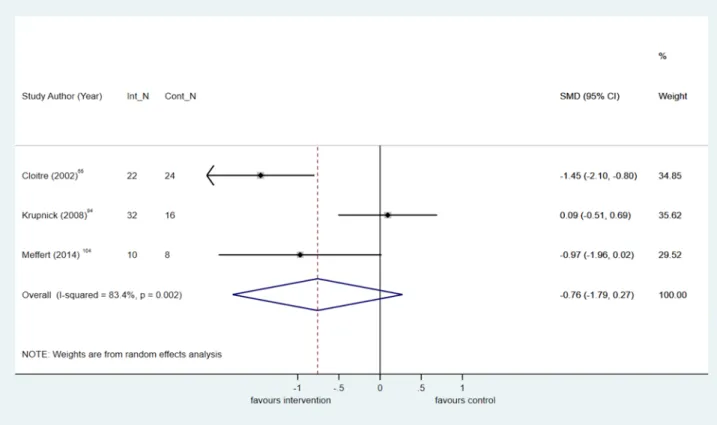
dysregulation, comparing all psychological interventions with control...66 Figure 6 Meta-analysis of post-treatment standardised mean difference (SMD) for emotional
dysregulation, comparing phased-based psychological interventions with control...68 Figure 7 Meta-analysis of post-treatment standardised mean difference (SMD) for negative
self-concept, comparing all psychological interventions with control (positive SMD equals improvement in symptoms)...69 Figure 8 Meta-analysis of post-treatment effect size (ES) for depression symptoms,
comparing all psychological interventions with control...71 Figure 9 Meta-analysis of post-treatment effect size (ES) for depression symptoms,
comparing phased-based interventions with control...73 Figure 10 Meta-analysis of post-treatment effect size (ES) for anxiety symptoms, comparing
all psychological interventions with control...74 Figure 11 Meta-analysis of post-treatment effect size (ES) for anxiety symptoms, comparing trauma-focused CBT with control...75 Figure 12 Meta-analysis of post-treatment effect size (ES) for quality of life, comparing all
psychological interventions with control (positive ES favours intervention)...77 Figure 13 Meta-analysis of post-treatment standardised mean difference (SMD) for total
PTSD symptoms, comparing all psychological interventions with control in veteran populations...79 Figure 14 Meta-analysis of post-treatment standardised mean difference (SMD) for total
depression symptoms, comparing all psychological interventions with control in veteran populations...81 Figure 15 Meta-analysis of post-treatment standardised mean difference (SMD) for total
anxiety symptoms, comparing all psychological interventions with control in veteran populations...83 Figure 16 Meta-analysis of post-treatment effect size (ES) for total PTSD symptoms,
comparing all psychological interventions with control in war-affected populations. ...85 Figure 17 Meta-analysis of post-treatment effect size (ES) for total depression symptoms,
Figure 18 Meta-analysis of post-treatment effect size (ES) for total anxiety symptoms,
comparing trauma-focused CBT with control in war-affected populations...88 Figure 19 Meta-analysis of post-treatment standardised mean difference (SMD) for total
PTSD symptoms, comparing all psychological interventions with control in
childhood sexual abuse populations...90 Figure 20 Meta-analysis of post-treatment standardised mean difference (SMD) for
depression symptoms, comparing all psychological interventions with control in childhood sexual abuse populations...92 Figure 21 Meta-analysis of post-treatment standardised mean difference (SMD) for total
PTSD symptoms, comparing all psychological interventions with control in refugee populations...94 Figure 22 Meta-analysis of post-treatment standardised mean difference (SMD) for
depression symptoms, comparing all psychological interventions with control in refugee populations...96 Figure 23 Meta-analysis of odds ratios (OR) of attrition for trauma-focussed CBT
interventions compared to control...102 Figure 24 Network plotfor all combinations of components extracted from included studies.
...108 Figure 25 PRISMA diagram of flow of records through the review process...125 Figure 26 Meta-analysis of post-treatment effect size (ES) for PTSD total symptoms,
comparing all IPT interventions with control...396 Figure 27 Meta-analysis of post-treatment effect size (ES) for PTSD total symptoms,
comparing all trauma focused CBT interventions with control...397 Figure 28 Meta-analysis of post-treatment effect size (ES) for PTSD total symptoms,
comparing all EMDR interventions with control...398 Figure 29 Meta-analysis of post-treatment effect size (ES) for PTSD total symptoms,
comparing all mindfulness interventions with control...399 Figure 30 Meta-analysis of post-treatment effect size (ES) for PTSD total symptoms,
comparing all non-trauma focused CBT interventions with control...400 Figure 31 Meta-analysis of post-treatment effect size (ES) for PTSD total symptoms,
comparing all single component trauma focused interventions with control...401 Figure 32 Meta-analysis of post-treatment effect size (ES) for PTSD total symptoms,
comparing all multi-component trauma focused interventions with control...402 Figure 33 Meta-analysis of post-treatment effect size (ES) for PTSD total symptoms,
comparing all single component non-trauma focused interventions with control...403 Figure 34 Meta-analysis of post-treatment standardised mean difference (SMD) for emotional dysregulation, comparing trauma focused CBT interventions with control...404 Figure 35 Meta-analysis of post-treatment standardised mean difference (SMD) for emotional
Figure 36 Meta-analysis of post-treatment standardised mean difference (SMD) for negative self-concept, comparing all trauma focused CBT interventions with control (positive SMD equals improvement in symptoms)...406 Figure 37 Meta-analysis of post-treatment standardised mean difference (SMD) for negative
self-concept, comparing all multi-component and trauma focused interventions with control (positive SMD equals improvement in symptoms)...407 Figure 38 Meta-analysis of post-treatment standardised mean difference (SMD) for negative
self-concept, comparing all single component and non-trauma focused interventions with control (positive SMD equals improvement in symptoms)...408 Figure 39 Meta-analysis of post-treatment standardised mean difference (SMD) for
interpersonal problems, comparing all psychological interventions with control...409 Figure 40 Meta-analysis of post-treatment effect size (ES) for depression symptoms,
comparing all trauma focused CBT interventions with control...410 Figure 41 Meta-analysis of post-treatment effect size (ES) for depression symptoms,
comparing all EMDR interventions with control...411 Figure 42 Meta-analysis of post-treatment effect size (ES) for depression symptoms,
comparing all IPT interventions with control...412 Figure 43 Meta-analysis of post-treatment effect size (ES) for depression symptoms,
comparing all mindfulness interventions with control...413 Figure 44 Meta-analysis of post-treatment effect size (ES) for depression symptoms,
comparing all non-trauma focused CBT interventions with control...414 Figure 45 Meta-analysis of post-treatment effect size (ES) for depression symptoms,
comparing all single component and trauma focused CBT interventions with control ...415 Figure 46 Meta-analysis of post-treatment effect size (ES) for depression symptoms,
comparing all multi-component and trauma focused interventions with control....416 Figure 47 Meta-analysis of post-treatment effect size (ES) for depression symptoms,
comparing all single component and non-trauma focused interventions with control ...417 Figure 48 Meta-analysis of post-treatment effect size (ES) for anxiety symptoms, comparing
EMDR interventions with control...418 Figure 49 Meta-analysis of post-treatment effect size (ES) for anxiety symptoms, comparing
single component and trauma focused interventions with control...419 Figure 50 Meta-analysis of post-treatment effect size (ES) for anxiety symptoms, comparing
multi-component and trauma focused interventions with control...420 Figure 51 Meta-analysis of post-treatment effect size (ES) for anxiety symptoms, comparing
single component and non-trauma focused interventions with control...421 Figure 52 Meta-analysis of post-treatment effect size (ES) for quality of life, comparing
Figure 54 Meta-analysis of post-treatment effect size (ES) for sleep quality, comparing trauma focused CBT interventions with control...424 Figure 55 Meta-analysis of post-treatment standardised mean difference (SMD) for total
PTSD symptoms, comparing trauma focused CBT interventions with control in veteran populations...425 Figure 56 Meta-analysis of post-treatment standardised mean difference (SMD) for total
PTSD symptoms, comparing EMDR interventions with control in veteran
populations...426 Figure 57 Meta-analysis of post-treatment standardised mean difference (SMD) for total
PTSD symptoms, comparing mindfulness interventions with control in veteran populations...427 Figure 58 Meta-analysis of post-treatment standardised mean difference (SMD) for total
PTSD symptoms, comparing single component and trauma focused interventions with control in veteran populations...428 Figure 59 Meta-analysis of post-treatment standardised mean difference (SMD) for total
PTSD symptoms, comparing multi-component and trauma focused interventions with control in veteran populations...429 Figure 60 Meta-analysis of post-treatment standardised mean difference (SMD) for total
PTSD symptoms, comparing single component and non-trauma focused
interventions with control in veteran populations...430 Figure 61 Meta-analysis of post-treatment standardised mean difference (SMD) for total
depression symptoms, comparing trauma focused CBT interventions with control in veteran populations...431 Figure 62 Meta-analysis of post-treatment standardised mean difference (SMD) for total
depression symptoms, comparing EMDR interventions with control in veteran populations...432 Figure 63 Meta-analysis of post-treatment standardised mean difference (SMD) for total
depression symptoms, comparing mindfulness interventions with control in veteran populations...433 Figure 64 Meta-analysis of post-treatment standardised mean difference (SMD) for total
depression symptoms, comparing single component and trauma focused
interventions with control in veteran populations...434 Figure 65 Meta-analysis of post-treatment standardised mean difference (SMD) for total
depression symptoms, comparing multi-component and trauma focused
interventions with control in veteran populations...435 Figure 66 Meta-analysis of post-treatment standardised mean difference (SMD) for total
depression symptoms, comparing single-component and non-trauma focused
interventions with control in veteran populations...436 Figure 67 Meta-analysis of post-treatment standardised mean difference (SMD) for total
anxiety symptoms, comparing trauma focused CBT interventions with control in veteran populations...437 Figure 68 Meta-analysis of post-treatment standardised mean difference (SMD) for total
anxiety symptoms, comparing EMDR interventions with control in veteran
Figure 69 Meta-analysis of post-treatment effect size (ES) for total PTSD symptoms, comparing trauma focused CBT interventions with control in war-affected
populations...439 Figure 70 Meta-analysis of post-treatment effect size (ES) for total PTSD symptoms,
comparing multi-component trauma focused interventions with control in war-affected populations...440 Figure 71 Meta-analysis of post-treatment effect size (ES) for depression symptoms,
comparing single-component and trauma focused interventions with control in war-affected populations...441 Figure 72 Meta-analysis of post-treatment effect size (ES) for depression symptoms,
comparing multi-component and trauma focused interventions with control in war-affected populations...442 Figure 73 Meta-analysis of post-treatment standardised mean difference (SMD) for total
anxiety symptoms, comparing single component and trauma focused interventions with control in war-affected populations...443 Figure 74 Meta-analysis of post-treatment effect size (ES) for total anxiety symptoms,
comparing multi-component and trauma focused interventions with control in war-affected populations...444 Figure 75 Meta-analysis of post-treatment standardised mean difference (SMD) for total
PTSD symptoms, comparing trauma focused CBT interventions with control in childhood sexual abuse populations...445 Figure 76 Meta-analysis of post-treatment standardised mean difference (SMD) for total
PTSD symptoms, comparing non-trauma focused CBT interventions with control in childhood sexual abuse populations...446 Figure 77 Meta-analysis of post-treatment standardised mean difference (SMD) for total
PTSD symptoms, comparing single component and trauma focused interventions with control in childhood sexual abuse populations...447 Figure 78 Meta-analysis of post-treatment standardised mean difference (SMD) for total
PTSD symptoms, comparing single component and non-trauma focused
interventions with control in childhood sexual abuse populations...448 Figure 79 Meta-analysis of post-treatment standardised mean difference (SMD) for
depression symptoms, comparing trauma focused CBT interventions with control in childhood sexual abuse populations...449 Figure 80 Meta-analysis of post-treatment standardised mean difference (SMD) for
depression symptoms, comparing single component and trauma focused
interventions with control in childhood sexual abuse populations...450 Figure 81 Meta-analysis of post-treatment standardised mean difference (SMD) for
depression symptoms, comparing single component and non-trauma focused
interventions with control in childhood sexual abuse populations...451 Figure 82 Meta-analysis of post-treatment standardised mean difference (SMD) for anxiety
Figure 83 Meta-analysis of post-treatment standardised mean difference (SMD) for total PTSD symptoms, comparing trauma focused CBT interventions with control in refugee populations...453 Figure 84 Meta-analysis of post-treatment standardised mean difference (SMD) for total
PTSD symptoms, comparing EMDR interventions with control in refugee
populations...454 Figure 85 Meta-analysis of post-treatment standardised mean difference (SMD) for total
PTSD symptoms, comparing single component and trauma focused interventions with control in refugee populations...455 Figure 86 Meta-analysis of post-treatment standardised mean difference (SMD) for
depression symptoms, comparing trauma focused CBT interventions with control in refugee populations...456 Figure 87 Meta-analysis of post-treatment standardised mean difference (SMD) for
depression symptoms, comparing EMDR interventions with control in refugee populations...457 Figure 88 Meta-analysis of post-treatment standardised mean difference (SMD) for
depression symptoms, comparing single component and trauma focused
interventions with control in refugee populations...458 Figure 89 Meta-analysis of post-treatment standardised mean difference (SMD) for PTSD
symptoms, comparing antidepressants with placebo...459 Figure 90 Meta-analysis of post-treatment standardised mean difference (SMD) for PTSD
symptoms, comparing SSRIs with placebo...460 Figure 91 Meta-analysis of post-treatment standardised mean difference (SMD) for PTSD
symptoms, comparing antipsychotics with placebo...461 Figure 92 Meta-analysis of post-treatment standardised mean difference (SMD) for PTSD
symptoms, comparing anticonvulsants with placebo...462 Figure 93 Meta-analysis of post-treatment standardised mean difference (SMD) for PTSD
symptoms, comparing prazosin with placebo...463 Figure 94 Meta-analysis of post-treatment standardised mean difference (SMD) for
depression symptoms, comparing antidepressants with placebo...464 Figure 95 Meta-analysis of post-treatment standardised mean difference (SMD) for
depression symptoms, comparing antipsychotics with placebo...465 Figure 96 Meta-analysis of post-treatment standardised mean difference (SMD) for
depression symptoms, comparing anticonvulsants with placebo...466 Figure 97 Meta-analysis of post-treatment mean difference (WMD) for positive psychotic
symptoms, comparing risperidone with placebo...467 Figure 98 Meta-analysis of post-treatment mean difference (WMD) for negative psychotic
symptoms, comparing risperidone with placebo...468 Figure 99 Meta-analysis of post-treatment mean difference (WMD) for total psychotic
symptoms, comparing risperidone with placebo...469 Figure 100 Meta-analysis of post-treatment mean difference (WMD) for general
Figure 101 Meta-analysis of odds ratio (OR) of attrition from all psychological interventions compared to control, among a veteran population...471 Figure 102 Meta-analysis of odds ratio (OR) of attrition from all psychological interventions
compared to active controls, among a veteran population...472 Figure 103 Meta-analysis of odds ratio (OR) of attrition from antidepressants compared to
placebo, among a veteran population...473 Figure 104 Meta-analysis of odds ratio (OR) of attrition from antidepsychotics compared to
placebo, among a veteran population...473 Figure 105 Meta-analysis of odds ratio (OR) of attrition from anticonvulsants compared to
placebo, among a veteran population...474 Figure 106 Meta-analysis of odds ratio (OR) of attrition from all psychological interventions
compared to control, among a childhood sexual abuse population...475 Figure 107 Meta-analysis of odds ratio (OR) of attrition from all psychological interventions
compared to control, among a refugee population...476 Figure 108 Meta-analysis of odds ratio (OR) of attrition from all psychological interventions
compared to control, among a domestic violence population...477 Figure 109 Meta-analysis of odds ratio (OR) of attrition from all psychological interventions
List of abbreviations
Abbreviation DefinitionCAPS Clinician Administered PTSD Scale PDS Posttraumatic Diagnostic Scale PTSD Post-Traumatic Stress Disorder
OR Odds ratio
CBT Cognitive Behavioural Therapy
EMDR Eye Movement Desensitisation and Reprocessing
CI Confidence interval
DSM Diagnostic and Statistical Manual of mental disorders IES Impact of Events scale
HTQ Harvard Trauma Questionnaire BDI Beck Depression Inventory SCL-90 Symptom Checklist 90
BSI Brief Symptom Inventory
TAU Treatment as usual
HADS Hospital Anxiety and Depression Scale
UK United Kingdom
TFCBT Trauma focused cognitive behavioural therapy NTFCBT Non trauma focused cognitive behavioural therapy SCNTF Single component non-trauma focused
SCTF Single component trauma focused MCTF Multi component trauma focused SMD Standard mean difference
DBT Dialetical Behaviour Therapy IPT Interpersonal Therapy
MD Mead Difference
RCT Randomised Controlled Trial
ES Effect size
Abstract
Background and objectives
People with a history of complex traumatic events typically experience trauma and stressor disorders and additional mental comorbidities. It is not known if existing evidence based treatments are effective and acceptable for this group. There is a need to identify candidate psychological and non-pharmacological treatments for future research.
Design
Mixed-methods systematic review.
Participants
Adults aged ≥18 years with a history of complex traumatic events.
Interventions
Psychological interventions versus control or active control; pharmacological interventions versus placebo.
Main outcome measures
Post-traumatic stress disorder (PTSD) symptoms; common mental health problems; attrition.
Data sources
CINAHL; Cochrane Central Register of Controlled Trials; Embase; International
Eligible studies were singly screened and disagreements were resolved at consensus meetings. Risk of bias was assessed using the Cochrane Risk of Bias tool and a bespoke version of a quality appraisal checklist used by the National Institute for Health and Care Excellence. A meta-analysis was conducted across all populations for each intervention category and for population sub-groups. Moderators of effectiveness were assessed using meta-regression and component network meta-analysis. A qualitative synthesis was
undertaken to summarise acceptability of interventions with relevance of findings assessed by the GRADE-CERQual checklist.
Results
One hundred and four randomised controlled trials and nine non-randomised controlled trials were included. 4324 records were identified for the qualitative acceptability review and 9 studies were included. Population sub-groups were: veterans; childhood sexual abuse; war-affected; refugees; domestic violence. Psychological interventions are superior to control at posttreatment for reducing PTSD symptoms (standardised mean difference 0.90, 95% CI -1.14 to -0.66; number of trials = 39), and also for associated symptoms of depression, but not anxiety. Trauma focused therapies were the most effective interventions across all
populations for PTSD and depression. Multi-component and trauma focused interventions were effective for negative self-concept. Phased-based approaches were also superior to control for PTSD and depression and showed the most benefit for managing emotional dysregulation and interpersonal problems. Only anti-psychotic medication was effective for reducing PTSD symptoms; medications were not effective for mental comorbidities. Eight qualitative studies were included. Interventions were more acceptable if service users could identify benefits and if they were delivered in ways that accommodated their personal and social needs.
Limitations
Evidence based psychological interventions are effective and acceptable at post-treatment for reducing PTSD symptoms and depression and anxiety in people with complex trauma. They were less effective in veterans and had less impact on symptoms associated with complex PTSD.
Future work
Definitive trials of phased based versus non-phased based interventions with long term follow-up for PTSD and associated mental comorbidities.
Study registration
PROSPERO: CRD42017055523
Funding details
Plain English summary
Traumatic events that happen often and are difficult to escape from, such as childhood abuse, are sometimes known as complex traumatic events. People who have a history of complex traumatic events can develop post-traumatic stress disorder (PTSD) and also suffer from other mental health problems. It is not known whether people who experience complex traumatic events can benefit from existing psychological treatments or medications, or whether these treatments are acceptable. This review aimed to find out which treatments are most effective and acceptable for mental health problems in people with complex trauma histories, and to identify the frontrunners for future research. We searched electronic
databases for evidence about treatment effectiveness and acceptability in adults with a history of complex traumatic events. We found 104 randomised controlled trials and 9
non-randomised controlled trials that tested the effectiveness of psychological and/or medications and 9 studies that used interviews and focus groups to describe the acceptability of
psychological treatments. The studies were split across different populations that included veterans, refugees, people who had experienced childhood sexual abuse and domestic violence and also civilians affected by war. We found that psychological treatments that focused on improving symptoms associated with trauma were effective for reducing PTSD symptoms and depression across all populations and fewer people dropped out of these treatments, suggesting they are acceptable. However, trauma-focused treatments were less effective among veterans and less effective for reducing other psychological symptoms commonly experienced by people with complex trauma histories. Phased treatments that first start with helping people to feel safe before focusing on trauma symptoms might be
Scientific summary
BackgroundThere is growing evidence that in addition to post-traumatic stress disorder (PTSD)
symptoms, exposure to prolonged and repetitive trauma of an inter-personal nature, such as childhood sexual abuse, is associated with additional mental health symptoms related to problems of emotional regulation, negative self-concept, and inter-personal dysfunction. To better capture the symptom profile of people exposed to prolonged and multiple forms of trauma a separate diagnosis of complex PTSD (CPTSD) has been proposed as part of the new ICD-11.
Evidence based treatments exist for single-event PTSD and these include trauma focused psychological interventions which are recommended as first line therapies, and also pharmacological therapies. However, it is not known if these therapeutic approaches are effective for people with a history of complex trauma or whether they are safe and acceptable among this population. People with complex mixes of comorbodities can be excluded from clinical trials, and they are further disadvantaged because their health needs are not well met by health services, such as Increasing Access to Psychological Therapy services.
Complex trauma is increasingly prominent and relevant to the NHS, but existing mental health services are not well equipped to appropriately manage patients with complex
traumatic histories. There is a need to identify candidate psychological and pharmacological treatments for this group with a view to informing practice and prioritising future research.
Objectives
To achieve these objectives, we specifically aimed to:
i. Descriptively synthesise evidence from randomised and non-randomised controlled trials of psychological and/or pharmacological interventions for mental health in people with history of complex traumatic events.
ii. Quantitatively assess, with meta-analysis if feasible, the clinical effectiveness of interventions delivered to adults, aged 18 and over, with trauma and stressor disorders after exposure to complex traumatic events.
iii. Provide evaluations of comparative clinical effectiveness of psychological interventions and pharmacological interventions using network meta-analysis.
iv. Identify, appraise and synthesise, qualitative and quantitative, data that addresses service user and provider perspectives about the acceptability and feasibility of using psychological and/or pharmacological interventions to treat mental health problems after complex traumatic events.
v. Identify leading candidate interventions that could be feasibly tested and used in the NHS and make recommendations to the HTA programme about future research priorities.
Methods
A mixed methods systematic review was conducted that included eligible studies to address questions about the effectiveness and acceptability of psychological and/or pharmacological interventions for mental health problems in adults, aged 18 or over, with a history of complex trauma. The methods for screening and data extraction and analysis followed guidance from the Cochrane Collaboration and the Centre for Reviews and Dissemination.
The quantitative and qualitative findings were presented at a stakeholder research
The systematic review was registered with PROSPERO: CRD42017055523.
Data sources
CINAHL Via EBSCO (1937 onwards; search date=20th April 2017); Cochrane Central
Register of Controlled Trials (CENTRAL) Via John Wiley’s Cochrane Library (from inception; search date=21st April 2017); Embase via OVID (from 1974 to 2017 Week 16; Search date=19th April 2017); International Pharmaceutical Abstracts Via Proquest (From 1970 onwards; search date=30th August 2017); MEDLINE(R) Epub Ahead of Print, In-Process & Other Non-Indexed Citations, Ovid MEDLINE(R) Daily and Ovid MEDLINE(R) via OVID (1946 to Present; search date=18th April 2017); PILOTS Via Proquest (1987 onwards; Search date=2nd May 2017); PsycINFO via OVID; 1806 to April Week 2 2017; search date=18th April 2017); Science Citation Index Via Web of Science (1900 onwards; search date=20th April 2017). Two separate searches were run to capture eligible studies relevant to questions of effectiveness and questions of acceptability of interventions.
Study selection
We identified the population of interest as adults, aged 18 or over, exposed to deliberate and premeditated events, or a series of events that were extreme and prolonged, or repetitive nature from which escape was difficult or impossible. Studies were included if they assessed treatment effectiveness and acceptability in this population. This approach approximated the definition of complex trauma used to describe CPTSD, though we did not use the newly defined ICD-11 diagnostic category of CPTSD to search for eligible studies. Eligible studies for the effectiveness review needed to be randomised or non-randomised controlled trials, and measure PTSD and/or mental health outcomes. Eligible studies for the qualitative acceptability review needed to have used qualitative methods, such as in-depth interviews or focus groups. Studies that evaluated any first or second line psychological therapy aimed at improving symptoms (including comorbidities) of trauma-and stressor related disorders, either delivered to individuals or groups, were included. Complementary and alternative therapeutic interventions were excluded. All drug treatments subjected to experimental testing in the context of treatment of mental health problems in people with a history of complex trauma were considered for inclusion.
Data were singly extracted by the review team using a pre-specified data extraction Excel spreadsheet that include domains for study and participant characteristics, outcomes, and attrition. Risk of bias for randomised controlled trials was assessed using the Cochrane Risk of Bias tool. Risk of bias for non-randomised controlled intervention studies was assessed using a bespoke version of a quality appraisal checklist used by the National Institute for Health and Care Excellence in public health guidance, and based on the Graphical Appraisal Tool for Epidemiological studies.
Quality assessments of the qualitative data were undertaken using the Critical Appraisal Skills Programme checklist, and validity and relevance of the data to the questions was assessed using the GRADE-CERQual (Confidence in the Evidence from Reviews of Qualitative research) checklist.
Data synthesis
For the quantitative review of effectiveness we undertook a series of meta-analyses that pooled results across all populations for each intervention category. Mean differences and 95% confidence intervals were computed for outcomes measured using the same scale. Standardised mean differences with 95% confidence interventions were computed for outcomes measured using different scales. We also evaluated the effectiveness of interventions with analysis across population sub-groups. In addition to the meta-analyses, we explored whether the treatment effects of interventions were moderated by population sub-group; intervention components; and delivery methods (e.g. individual or group). We further explored whether certain components of composite interventions were more effective than each other using component network meta-analysis.
For the qualitative review of acceptability of interventions we undertook a narrative synthesis of qualitative data extracted from the included studies, mapping data to themes and sub-themes related to acceptability and feasibility.
Results
Effectiveness of psychological interventions across all populations
The pooled results across all populations with complex trauma showed that existing
evidence-based psychological interventions are effective for reducing PTSD symptoms when compared with control at post-treatment (standardised mean difference -0.90, 95% CI -1.14 to -0.66; number of trials = 39), and there was some evidence that this finding held when treatment effects were measured up to six months post-treatment. Trauma-focused cognitive behavioural therapy (TFCBT) and more broadly single-component and trauma focused interventions were more effective than control at post-treatment and follow-up.
Multi-component and trauma focused interventions at post-treatment for PTSD symptoms were also effective but the treatment effects were smaller than for single-component and trauma
focused interventions.
For the symptom cluster associated with CPTSD we found no evidence that either trauma or non-trauma focused psychological interventions were superior in improving emotional dysregulation or interpersonal problems. Multi-component and single-component trauma focused interventions showed benefit for negative self-concept. Phased-based interventions that included stabilisation work before exposure therapy had positive effects on emotional dysregulation and inter-personal problems, although the results for these outcomes were of borderline significance.
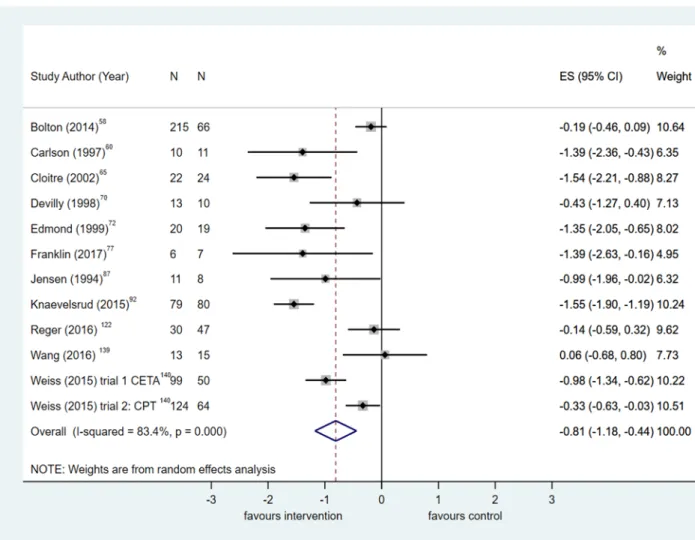
Collectively, psychological interventions are superior to control, but not active control, at post-treatment and at follow-up for managing associated symptoms of depression in all populations with complex trauma (standardised mean difference -0.94, 95% CI -1.20 to -0.68; number of trials = 22). The most consistent and largest effects for depression across all time points were observed in trials that tested single-component and trauma focused interventions. Similarly, pooled results showed that psychological interventions of any type are effective for reducing anxiety in all populations with complex trauma (standardised mean difference -0.81, 95% CI -1.18 to -0.46; number of trials = 13). Trauma-focused approaches, when delivered either as a single or multi-component intervention, were superior to control for anxiety symptoms when effects were pooled across all populations.
Among veterans psychological interventions were effective for reducing PTSD symptoms, but the size of the treatment effect was much smaller than in analyses that pooled results across all populations (standardised mean difference -0.48, 95% CI
-0.72 to 0.24; number of trials = 14). TFCBT and eye movement desensitisation and reprocessing (EMDR) therapy were the most efficacious treatments in this sub-group for PTSD, but superior effects were observed when multi-component and trauma focused interventions were compared with control. TFCBT and EMDR were also effective for reducing depression and anxiety in veterans.
For people exposed to childhood sexual abuse, psychological interventions were effective for reducing PTSD symptoms (standardised mean difference -0.90, 95% CI -1.43 to -0.37; number of trials = 9). The largest effects for reducing depression in this sub-group were observed in the meta-analysis that compared multi-component trauma focused interventions with control. There was no clear indication about which treatments are effective for reducing anxiety in people with a history of childhood sexual abuse.
Among war affected populations psychological interventions as a whole are effective for reducing symptoms of PTSD (standardised mean difference -0.46, 95% CI -0.68 to -0.25; number of trials = 8). Individual TFCBT was the most effective intervention in this sub-group for PTSD symptoms and for depression; there was insufficient evidence to draw firm
conclusions about the effectiveness of interventions for anxiety symptoms among war affected populations.
Large and positive effects in favour of psychological interventions for PTSD symptoms were observed in refugee populations (standardised mean difference -1.84, 95% CI -2.18 to -1.49; number of trials = 6). TFCBT and EMDR were the most effective interventions for PTSD and for depression too in this sub-group; no meta-analyses were possible that assessed the effectiveness of interventions for anxiety among refugees.
Only two trials were included in the meta-analyses of psychological interventions for people exposed to domestic violence. TFCBT was effective for reducing PTSD and depression in this sub-group.
exposure, and relaxation were effective components of TFCBT. Mindfulness and phased-based interventions were also effective components of composite interventions for PTSD symptoms.
Effectiveness of pharmacological interventions
All but one of the six trials that compared pharmacological interventions with placebo were conducted in veterans. Overall, only anti-psychotic medicine was effective in reducing PTSD symptoms in veterans (standardised mean difference -0.45, 95% CI -0.85 to -0.05; number of trials = 5). No pharmacological intervention was effective for reducing symptoms of
depression or psychosis in veterans. There was evidence from just two studies that prazosin had positive benefits for sleep quality among veterans.
Quality of evidence
Risk of bias across RCTs was difficult to ascertain for five of six domains of the Cochrane Risk of Bias Tool owing to inadequate reporting. Only a small proportion (20%-30%) of RCTs were rated as being at low risk of bias for sequence generation, allocation concealment, and blinding of outcome assessments, which were the primary indicators of study quality. Similarly, study quality was variable among the non-randomised controlled studies. There was a high risk of bias for outcome assessment with only three of nine studies taking steps to blind investigators; domains related to allocation bias were poorly reported, leading to judgments that the internal validity of non-randomised studies was low or difficult to assess.
Acceptability of interventions
Eight qualitative studies were included in the acceptability synthesis. The acceptability of interventions was associated with how congruent they were with participants’ therapeutic needs and social contexts, and the means by which they were able to afford participants opportunities to engage in personal and inter-personal improvement and confer demonstrable improvements. Feasibility of interventions hinged on more instrumental features such as scheduling and timing of treatment sessions
TFCBT and other trauma-focused interventions, including EMDR, delivered as single or as multi-component approaches, are superior to control for PTSD symptoms and associated mental disorder comorbidities. Positive effects were mainly found at post-treatment with few studies showing benefit over the long term. The quality of the RCT evidence was generally low or sufficiently unclear to be able to make fundamental recommendations about
effectiveness of interventions. We only identified a small sub-set of evidence from non-randomised controlled studies where study quality was variable and internal validity as low. The size of the positive treatment effects were not evenly distributed across populations exposed to complex trauma, with the smallest effects observed among veterans and war affected populations and the largest observed in those affected by domestic violence. Phased-based interventions, along with non-trauma focused intervention components including mindfulness and relaxation, are potentially among the most effective approaches for PTSD symptoms in people with a history of complex trauma, such as childhood sexual abuse. Additionally, there is inconclusive evidence that existing trauma-focused interventions are effective in treating the symptom cluster associated with disturbances of self-organisation typically seen in CPTSD. There was little evidence of effectiveness of pharmacological interventions for PTSD or for associated mental comorbidities.
Recommendations for research
Following the research prioritisation day and based on the synthesis of the effectiveness and acceptability reviews, we have identified the following priorities for future research:
1. Definitive and fully powered evaluations of effectiveness of interventions in complex trauma with long term follow up (i.e. at least 12 months), especially in veterans, childhood sexual abuse and populations affected by humanitarian crises.
2. Qualitative and quantitative process evaluations to assess the relationship between intervention and programme theory and anticipated outputs and trial results.
3. Qualitative evaluations of the acceptability and feasibility of interventions among people exposed to complex interventions to inform barriers and facilitators to treatment uptake, especially in refugees and asylum seekers.
5. Safety and adverse event profile of trauma and non-trauma focused interventions for people with complex trauma.
6. Developing a core outcome set for trials in complex trauma that include outcomes related to disturbances of self-organisation and mental comorbidities.
7. Testing the validity of the new ICD-11 diagnostic category for CPTSD to identify and recruit eligible participants to experimental studies.
Study registration
PROSPERO: CRD42017055523
Funding details
1 Background
Trauma and stressor related disorders and their relevance to complex traumatic events
Trauma and stressor related disorders, also known as reactions to severe stress and
adjustment disorders, are mental health problems directly related to exposure to a traumatic event or series of traumatic events. Post-traumatic stress disorder (PTSD) is among the most common mental health disorders to occur after experiencing (or witnessing) a major
traumatic event. Typical symptoms include involuntary re-experiencing the traumatic event in a vivid and distressing way (e.g. flashbacks, nightmares), avoidance of activities
reminiscent of the trauma, persistent numbness, emotional blunting and detachment from other people and previously significant activities, along with hyperarousal in the presence of reminders of the trauma (including hypervigilance, difficulty sleeping, irritability, poor concentration, and an exaggerated startle response). People with PTSD may also experience comorbid psychological problems including substance use disorders, depression (with increased risk of suicide), and other anxiety disorders (e.g. panic disorders), and functional somatic syndromes which can further impair social, educational and occupational
functioning.
PTSD can occur at any age and is relatively common with a lifetime prevalence of 7.8%,1 12 month prevalence ranges from 3-4%.2 Rates vary depending on the type of stressor
experienced: for example physical assaults in women are associated with a lifetime prevalence of 29%; combat experience in men is associated with a lifetime prevalence of 39%; and 15.4% in people exposed to war and displacement.3
experience complex trauma, especially, but not exclusively or necessarily in formative periods, are more at risk of other psychiatric disorders. Complex PTSD (CPTSD) and
Disorders of Extreme Distress Not Otherwise Specified (DESNOS) are labels that have been used to define syndromes that involve, in addition to core PTSD symptoms: pathological disassociation, emotional dysregulation, somatisation, and altered core schemas about the self, relationships and sustaining beliefs.5
Recent empirical work using latent class analysis in people exposed to different types of acute and chronic stress has gone some way to endorse the distinction (to be included in ICD-11)6 between PTSD and CPTSD, with the CPTSD class scoring highest for symptoms related to affective dysregulation, negative self-concept, and interpersonal problems.7, 8 The symptom profile of CPTSD is thus characterised by the loss of emotional, social, cognitive and
psychological skills, either because their development has been interrupted during a
formative phase or they have been seriously impaired owing to exposure to complex trauma. Beyond the prototypical case of childhood sexual abuse complex trauma experiences have also come to embrace ‘other types of catastrophic, deleterious and entrapping traumatisation occurring in childhood and/or adulthood, such as repeated domestic violence, trafficking and exploitation, and being forcibly displaced.9 Compared with single event PTSD, complex trauma is characterised by sustained or repeated instances of trauma of an interpersonal nature that are ‘extremely threatening or horrific and from which escape is difficult or impossible due to physical, psychological, maturational, family/environmental, or social constraints.’10
Impact and burden of complex trauma
Mass conflict, persecution, generalised violence and human rights violations pose a critical threat to global mental health. By the end of 2014, 59.5 million people across the world were forcibly displaced (19.5 million refugees, 1.8 million asylum seekers, 38.3 internally
of these in EU countries); the UK has seen a 5% increase in asylum applications from 2013 to 2014.12
PTSD affects 30.6% of forcibly displaced people; reported torture is consistently the
strongest population risk factor associated with PTSD in this group.3 Depression and anxiety occur as frequently if not more often than PTSD among refugees and asylum seekers, with rates as high as 40% observed among some displaced groups.13 Similarly, human trafficking (i.e. recruitment and movement of individuals by force, coercion or deception for exploitative purposes) is associated with high levels of physical and mental health problems.14
Worldwide, up to 2.5 million are known to be in conditions of forced labour and are exposed to high levels of physical and sexual violence, economic restrictions and controlling
behaviour.15 The risk of depression, anxiety and PTSD are significantly higher in women who have been exploited for 6 months or more,16 and higher in women trafficked for sexual exploitation compared with women trafficked for labour exploitation.17
Other critical cases of complex trauma that have a major impact on an increasingly visible population are associated with exposure to childhood sexual and physical abuse. Although underreported (1 in 3 cases are not reported) 1 in 20 children have been sexually abused in the UK.18 Victims of child abuse are three times more likely to experience PTSD over their lifetime. Rates of PTSD and alcohol dependence are especially high in women who have experienced childhood abuse and related interpersonal violence. In total the cost of physical and mental health (depression and PTSD) and substance abuse to the UK is estimated to be £3.2 billion a year, in part owing to under- and unemployment and high spend in the criminal justice system as well as costs attributed to use of mental health services.19 Stigma,
discrimination and depression similarly affect victims of childhood abuse and severely impair their quality of life.
Treating mental health problems in people affected by complex trauma
NICE guidance is based)20 were done in North American or Western European countries where the type and severity of trauma experienced by participants may not be comparable to settings and scenarios with a higher risk of prolonged exposure to complex interpersonal trauma. And the WHO guideline excluded systematic reviews based on trials of treatment of PTSD in refugee populations. 21 As such it is unclear whether treatments that are effective for people with single event PTSD are equally effective for people exposed to complex traumatic events who have significantly greater psychological comorbidity and functional impairment. Standard cognitive and behavioural therapies and exposure based treatments for PTSD might have limited utility and might be harmful if used prematurely for people with psychological problems following complex traumatic events.22 Many people with CPTSD have high levels of disassociation and psychological comorbidities that might limit their capacity to engage in exposure based therapies and findings from effectiveness studies in single event PTSD cannot be generalised to people with complex trauma.23 Compared with brief trauma focussed treatments, phased based approaches or sequential interventions which first focus on stabilisation (ensuring individuals’ safety, resolving symptoms – including dissociative symptoms – and increasing emotional, social and psychological competencies), followed by processing unresolved aspects of individuals’ trauma, with an emphasis on consolidation of treatment gains to facilitate re-engagement with social, educational, or occupational
relationships can be effective in more complex presentations of PTSD following childhood sexual abuse.24
However, the quality of the evidence for the CPTSD expert consensus guidelines is mixed: two studies were not randomised controlled trials; only three included an active control and none included head to head comparisons with trauma focused therapies; three studies did not follow-up participants; and all the evidence was drawn from populations exposed to
et al in a review of 25 experimental and non-experimental studies (n=1113) of psychosocial treatments for PTSD among refugees identified CBT as the most effective therapy for reducing PTSD symptoms.27 Trauma focused therapies such as CBT and narrative exposure therapy (NET) appear to be equally efficacious across different types of trauma too, including repeated traumatisation. Powers et al in a review of 13 trials (n=675) showed that there was no significant difference in effect sizes for prolonged exposure therapy across types of trauma (combat/terror, childhood sexual abuse, rape, mixed: p=0.14).28
More complex presentations of PTSD include psychiatric comorbidities and there is growing evidence that existing non-phased based approaches are effective in this group. A wide ranging review with meta-analysis that included 148 anxiety-disordered treatment samples (47 in PTSD; combined n=3534) showed that effect sizes at post-treatment or at follow-up were generally unrelated to psychiatric comorbidity (for comparisons with active and non-active psychological or pharmacotherapy treatments.29 However, in cases of PTSD there was a positive association between presence of comorbidities and treatment outcome – people with comorbidities did better. More specifically, there is emerging evidence that PTSD symptoms in patients with comorbid dissociation, depression, substance abuse, and/or mild borderline personality disorder can be successfully and safely treated with existing evidence based trauma focused therapies and their outcomes are comparable to patients without these comorbidities.30 CBT is also possibly the most effective approach for PTSD symptoms when compared with multicomponent interventions that seek to first address additional social and psychological problems in refugees.31
Additionally, consistent with NICE guidance, trauma focused therapies that target PTSD symptoms can positively impact comorbidities. A review of 93 studies with 116 comparisons showed that there was a strong correlation between effect sizes for PTSD and depression outcomes, suggesting that psychological and pharmacological therapies are equally efficacious for PTSD and depressive symptoms. 32
1.1 Rational and aims of this review
childhood abuse; findings might not translate to other populations with complex trauma histories. These consensus guidelines also did not review evidence about effectiveness of pharmacological interventions in CPTSD. There is accumulating evidence that trauma focused psychological therapies can reduce PTSD symptoms in people exposed to complex traumatic events who have psychiatric comorbidities. These treatments can also reduce comorbid illness in people with PTSD and can be used safely without a stabilisation phase. However existing reviews of the use of trauma focused therapies in people with complex trauma histories have focused on narrowly defined population sub-groups and we still do not how effective psychological therapies are across all populations with complex trauma. Comparative effectiveness of psychological interventions for mental health outcomes is also unknown for people with complex trauma histories in all settings. Acceptability of
2 Methods of effectiveness review and meta-analysis
2.1 Aims and objectivesThe aim of this review was to provide a broad synthesis of evidence about the effectiveness of psychological and/or pharmacological interventions to treat mental health problems (with or without PTSD symptoms) in people exposed to complex traumatic events. Additionally, where feasible, the review aimed to identify and synthesise qualitative and quantitative evidence about the acceptability and uptake of delivering mental health interventions for people with a history of complex traumatic events. Together these syntheses aimed to offer estimates of the clinical effectiveness and acceptability of existing and novel treatments and describe uncertainties about the strength of this evidence to inform a broader understanding about what interventions are likely to be candidates for testing in future definitive trials.
More specifically this review objectives were:
i. Descriptive synthesis: Provide an overview of existing randomised and non-randomised controlled trials of psychological and/or pharmacological interventions for mental health in people with history of complex traumatic events with specific reference to participant characteristics, intervention format and content, and outcomes measured.
ii. Clinical effectiveness: Narratively and quantitatively, with meta-analysis if feasible, report the clinical effectiveness of interventions delivered to adults aged 18 and over with trauma and stressor disorders after exposure to complex traumatic events.
iii. Comparative Effectiveness: Provide evaluations of comparative clinical effectiveness of psychological interventions (e.g. phased based versus conventional trauma focused
therapies) and different pharmacological interventions using network meta-analysis
iv. Acceptability and feasibility: Identify, appraise and synthesise narratively qualitative and quantitative data that addresses service user and provider perspectives about the
acceptability and feasibility of using psychological and/or pharmacological interventions to treat mental health problems after complex traumatic events.
2.2 Literature searches
Literature searches of the following databases were conducted: CINAHL Via EBSCO (1937 onwards; Search date=20th April 2017); Cochrane Central Register of Controlled Trials (CENTRAL) Via John Wiley’s Cochrane Library (From inception; Search date=21st April 2017); Embase via OVID (1974 to 2017 Week 16; Search date=19th April 2017);
International Pharmaceutical Abstracts Via Proquest (1970 onwards; Search date=30th August 2017); MEDLINE(R) Epub Ahead of Print, In-Process & Other Non-Indexed Citations, Ovid MEDLINE(R) Daily and Ovid MEDLINE(R) via OVID (1946 to Present; Search date=18th April 2017); PILOTS Via Proquest; 1987 onwards; Search date=2nd May 2017); PsycINFO via OVID (1806 to April Week 2 2017; Search date=18th April 2017); Science Citation Index Via Web of Science (1900 onwards; Search date=20th April 2017)
The full search strategies used are available in Appendix 1.
2.3 Inclusion and exclusion criteria 2.3.1 Population
Neither DSM-IV or ICD-10 distinguish between PTSD and CPTSD. DSM-V does include a dissociative sub-type, but it is unlikely that many studies have yet been conducted using this approach. ICD-11 criteria that will include CPTSD is not yet published and few studies will have used these criteria making it difficult to identify studies using this diagnostic label. Our goal was therefore to identify studies based primarily on trauma history rather than diagnostic criteria.
Adults over 18 years of age, exposed to complex interpersonal traumatic events defined as a “…deliberate and premeditated event or series of events of an extreme and prolonged or repetitive nature that is experienced as extremely threatening or horrific and from which escape is difficult or impossible due to physical, psychological, maturational,
family/environmental, or social constraints”.10 This included (but was not limited to) adults exposed to childhood physical and/or sexual abuse, being a victim of or witnessing domestic violence, forcibly displaced persons (refugees, asylum seekers, internally displaced persons), torture survivors, recruitment into armed conflict as a child, on-going armed conflict and combat, and relocation through human trafficking.
age, but only studies of adults were included. Inclusion in the review was not restricted based on psychiatric comorbidities, with the exception of substance misuse disorders.
Where studies included a mix of participants with a complex interpersonal trauma history and single event trauma history, studies were included where >75% of participants had
experience of complex interpersonal trauma (unless the data were presented separately).
Studies examining preventative therapies, or interventions in populations not yet exhibiting psychological problems following complex traumatic events were excluded.
2.3.2 Interventions
2.3.2.1 Psychological interventions
Studies that evaluated any first or second line psychological therapy aimed at improving symptoms (including comorbidities) of trauma-and stressor related disorders either delivered to individuals or in a group were included. Complementary and alternative therapeutic interventions were excluded from this review. Per the protocol registered with PROSPERO (https://www.crd.york.ac.uk/prospero/display_record.php?ID=CRD42017055523) and in-keeping with the classification used by NICE20 interventions considered were:
Trauma-focused CBT that included one or more of the following types of treatment techniques: exposure, cognitive therapy, stress management.
Eye movement desensitisation and reprocessing.
Other psychological treatments used to treat trauma survivors and victims but use predominately non-CBT techniques: supportive therapy and non-directive
counselling; psychodynamic therapies, including inter personal psychotherapy (IPT); hypnotherapy; mindfulness and compassion focused therapies; acceptance and commitment therapies; accelerated resolution, and sensorimotor therapies.
A more detailed study categorisation was undertaken to better describe the volume of evidence, see section 2.8.1.
2.3.2.2 Pharmacological interventions
All drug treatments subjected to experimental testing in the context of treatment of mental health problems in people with a history of complex trauma were considered for inclusion. Categories of pharmacotherapy that were considered were: SSRIs, antidepressants as a whole, antipsychotics, anticonvulsants, and other medications typically used in the context of managing the symptoms of trauma and stressor disorders.
2.3.3 Comparators
2.3.3.1 Psychological interventions versus Waitlist
Treatment as usual (defined as non-experimental active treatments that conform to best and/or clinical guideline recommended care and are ordinarily made available to patients)
No intervention Symptom monitoring
Repeated assessment or other minimal attention control group akin to psychological placebo
Alternative psychological treatment Pharmacological treatment
2.3.3.2 Pharmacological interventions versus Placebo
Other medication No intervention Psychological therapy
2.3.3.3 Head to head comparisons
Comparisons of two or more active interventions were included. Differences in comparators were taken into account during data summary and analyses. Network meta-analyses was conducted to provide comparisons of all interventions within a connected network (including comparisons of active interventions not originally evaluated in included trials).
2.3.4 Outcomes
2.3.4.1 Primary outcomes
Reduction in severity of traumatic stress symptoms as measured using a validated and standardised clinician rated scale.
Reduction in symptoms of difficulties with emotion regulation (e.g. Difficulties with Emotion Regulation Scale [DERS]33) and interpersonal relationship problems (e.g. Inventory of Interpersonal Problems [IIP]34).
2.3.4.2 Secondary outcomes
Severity of self-reported traumatic stress symptoms using a standardised measure (e.g. Modified PTSD Symptom Scale (MPSS-SR)35)
Reduction in depressive and/or anxiety symptoms measured using validated clinician-rated instruments (e.g. Hamilton Depression Rating Scale36), or validated patient self-reported instruments (e.g. Hospital Anxiety and Depression Scale37)
Reduction in symptoms of panic disorder Reduction in symptoms of disassociation
Reduction in symptoms of functional somatic syndromes Reduction in substance misuse
Acceptability measured in terms of intervention uptake, adherence and withdrawal (drop-outs)
Adverse events and harms from trial data (e.g. worsening of traumatic stress symptoms).
Suicidal ideation, attempts, and completion
Functioning and disability and quality of life measured by validated clinician-rated scales (e.g. Global Assessment of Functioning) or validated self-reported scales (e.g. SF-36).
Study designs
uncontrolled observational studies, single-subject design, case studies, opinion papers, descriptive studies, and editorials were excluded.
2.4 Study selection
The selection criteria and process was independently checked by an advisory group (see 2.4.1). Three researchers (JD; HM; HD) independently screened titles and abstracts. The EndNote library was split evenly between those involved in screening but to ensure the distribution was not weighted to any particular year or author groups each reviewer screened a cross section of the library across dates and authors. To ensure that the inclusion criteria were consistently applied, a 10% sample of records was first double screened based on title and abstract by pairs of researchers. Consensus meetings with the rest of the research team were held at regular intervals to resolve unclear decisions at the title and abstract screening phase. Full text records were similarly screened with consensus meetings used to resolve disagreements.
2.4.1 Advisory group