Article
1
Tetrel Bonds with
-Electrons Acting as Lewis Bases –
2
Theoretical Results and Experimental Evidences
3
Sławomir J. Grabowski 1,2
4
1 Faculty of Chemistry, University of the Basque Country and Donostia International Physics Center (DIPC),
5
P.K. 1072, 20080 Donostia (Spain); [email protected]; Tel.: +34-943-01-5477
6
2 IKERBASQUE, Basque Foundation for Science, 48011 Bilbao (Spain)
7
8
9
Abstract: MP2/aug-cc-pVTZ calculations were carried out for the ZFH3-B complexes (Z = C, Si, Ge,
10
Sn and Pb; B = C2H2, C2H4, C6H6 and C5H5-; relativistic effects were taken into account for Ge, Sn and
11
Pb elements). These calculations are supported by other approaches; the decomposition of the
12
energy of interaction, Quantum Theory of Atoms in Molecules (QTAIM) and Natural Bond Orbital
13
(NBO) method. The results show that tetrel bonds with π-electrons as Lewis bases are classified as
14
Z…C links between single centers (C is an atom of the π-electron system) or as Z…π interactions
15
where F-Z bond is directed to the mid-point (or nearly so) of the CC bond of the Lewis base. The
16
analogues systems with Z…C/π interactions were found in the Cambridge Structural Database
17
(CSD). It was found that the strength of interaction increases with the increase of the atomic
18
number of the tetrel element and that for heavier tetrel elements the ZFH3 tetrahedral structure is
19
more deformed towards the structure with the planar ZH3 fragment. The results of calculations
20
show that the tetrel bond is sometimes accompanied by the Z-H…C hydrogen bond or even
21
sometimes the ZFH3-B complexes are linked only by the hydrogen bond interaction.
22
Keywords: electron charge shifts; tetrel bond; hydrogen bond; π-electrons as Lewis bases; σ-hole
23
24
1. Introduction
25
The tetrel bond is one of the most important Lewis acid – Lewis base interactions that play a
26
crucial role in numerous chemical, physical and biological processes [1]; for example, it may be
27
considered as a preliminary stage of the SN2 reaction [2]. This interaction was classified as the -hole
28
bond by Politzer and coworkers since it may be defined as an interaction between the 14th Group
29
element acting as the Lewis acid centre through its -hole and a region that is rich of the electron
30
density by a lone electron pair, π-electron system etc [3,4]. The -hole is usually located in this case
31
in the elongation of the covalent bond to the tetrel centre and it is often characterized by the positive
32
electrostatic potential (EP) [3,4]. It seems that first time the tetrel bond was analyzed in terms of the
33
-hole concept in the SiF4 complexes with amines [5]. In spite of the fact that the term ¨tetrel bond¨
34
appeared very recently [6] and also this interaction was classified as the -hole bond recently [3-5] it
35
was analyzed in earlier studies. For example, the SiF4…NH3 and SiF4…(NH3)2 complexes were
36
analyzed theoretically since ab initio MO calculations were performed with the use of STO-3G and
37
STO-6G basis sets [7], another study that is more complex concerns a large sample of complexes of
38
silicon derivatives with electron-rich groups [8]. Both latter studies were performed before the
39
proposition of the -hole concept [9,10] and the introduction of the tetrel bond term [6].
40
One can mention other studies on tetrel bonds as for example that one where this interaction
41
was analyzed as a preliminary stage of the SN2 reaction [11], the theoretical analysis of structural and
42
energetic properties of acetonitrile complexes with the 14 Group tetrahalides [12]; a study on the
43
Lewis acid carbon center, the corresponding interaction was labeled as the carbon bond and it was
44
compared with the hydrogen bond [13]; it is worth mentioning that the carbon bond is a sub-class of
45
the tetrel bond interactions [2,11]. The tetrel-hydride interaction is another sub-class of tetrel bonds
46
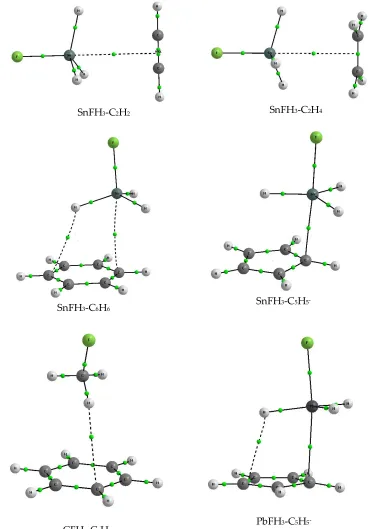
where the negatively charged H-atom plays the role of Lewis base center [14].
47
There are other, more recent studies on this kind of interaction; only few are mentioned here;
48
the analysis of factors which influence the strength of tetrel bonds [15], the analysis of mechanisms
49
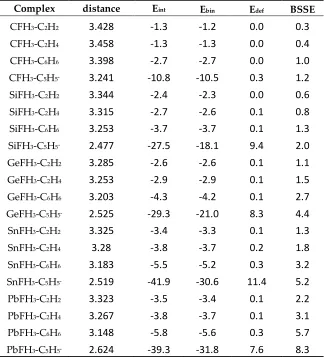
of SN2 reactions, among them at the C centre [16], the role of tetrel bonds in the crystal structures´
50
stabilization [17], the theoretical analysis of the H-Si…N and F-Si…N linear or nearly so
51
arrangements [18], comparison of neutral and charge assisted tetrel bonds [19], the geometry
52
deformations of monomers linked by tetrel bond [20] or the balance between the attractive forces of
53
tetrel interactions and the steric repulsions in crystal structures [21].
54
One may show numerous other examples since the number of studies on this kind of
55
interaction increases rapidly in last years. However, it seems that there are not systematic and
56
extensive studies on the tetrel bonds with π-electrons playing a role of Lewis bases or at most they
57
are very rare and they are not a main goal of investigations. For example, very recently, various
58
-hole bonds were analyzed with the use of few theoretical approaches: halogen, chalcogen,
59
pnicogen and tetrel bonds were compared [22]; three different types of Lewis bases were considered
60
there, neutral species (NH3), anion (Cl-) and the π-electron system (C2H2). Hence two tetrel bonded
61
complexes with acetylene molecule playing a role of the Lewis base were analyzed there among
62
various other complexes. These are the SiFH3…C2H2 and GeFH3…C2H2 complexes [22].
63
The other issue that is not analyzed so frequent concerns the tetrel bond interactions with the
64
heavier tetrel elements, such analyses are rather rare and mainly concern germanium species. There
65
are more experimental studies on tetrel bonds with heavier tetrel elements playing a role of the
66
Lewis acid centers, however only sometimes such experimental analyses are supported by
67
theoretical results [23]. One of examples where heavier tetrel elements were considered in tetrel
68
bonds is a study on the SnF4 and PbF4 complexes with NH3 and HCN that play a role of Lewis bases
69
through nitrogen centre [24]. The analogues to the latter one theoretical study was performed on the
70
lighter tetrel species since the complexes of CF4, SiF4 and GeF4 Lewis acid units with NH3 and AsH3
71
Lewis bases were analyzed [25].
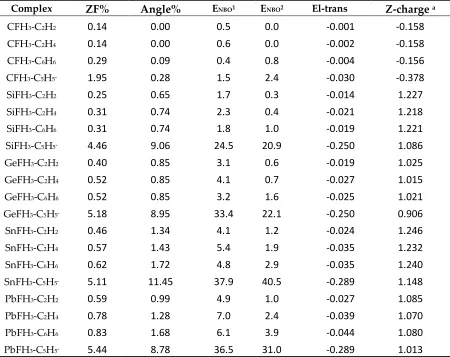
72
Returning to the π-electron species - numerous theoretical and experimental studies on
73
interactions where such systems play a role of Lewis bases may be mentioned. These are mainly
74
those studies that concern hydrogen bonded systems [26]. However other Lewis acid – Lewis base
75
interactions with π-electron donors were analyzed very often [27-30]. One can even mention the triel
76
bonds between the boron or aluminium Lewis acid center and acetylene or ethylene [31,32] or the
77
recent study where the multivalent halogen centers act as the Lewis acids [33].
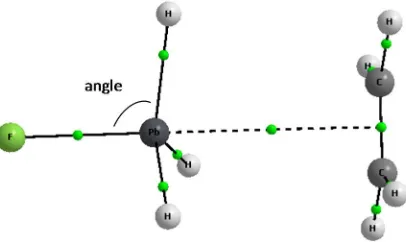
78
The aim of this study is an analysis of the tetrel bonds in complexes of ZFH3 species, where Z
79
labels the following centers; C, Si, Ge, Sn and Pb, thus light and heavy tetrels are taken into account;
80
the acetylene, ethylene, benzene and cyclopentadienyl anion were chosen as the π-electron moieties
81
acting as the Lewis bases. Different theoretical techniques are applied here to deepen the
82
understanding of the nature of these tetrel bond interactions; i.e. the Quantum Theory of Atoms in
83
Molecules (QTAIM) [34], Natural Bond Orbital (NBO) approach [35], the decomposition of the
84
energy of interaction [36,37] as well as the analysis of the electrostatic potential (EP) distribution [38].
85
The short descriptions of the theoretical approaches applied here are included in the section that
86
concerns the computational details.
87
2. Results and discussion
89
2.1. Energetic and geometric parameters
90
Figure 1 presents examples of complexes analyzed here. All kinds of Lewis bases that are
91
considered are shown in selected examples of the figure. The molecular graphs are presented since
92
they reflect geometry of species analyzed. However these graphs are discussed further here in the
93
section on QTAIM results.
94
SnFH3-C2H2
SnFH3-C6H6
CFH3-C6H6
SnFH3-C2H4
SnFH3-C5H
PbFH3-C5H
5-Figure 1. The molecular graphs of the selected complexes analyzed here; big circles – attractors, small
95
green circles – BCPs, the nonnuclear attractor (NNA) is located (small red circle) between two BCPs
96
The energetic parameters of analyzed complexes, among them, the binding and interaction
98
energies corrected for BSSE, Ebin and Eint, respectively, are included in Table 1. One can see much
99
stronger interactions, i.e. greater –Eint and –Ebin values, for complexes with the cyclopentadienyl
100
anion, than for complexes with the other Lewis base units. This may be explained since the
101
complexes of C5H5- anion that are linked through the tetrel bonds are assisted by negative charge; the
102
latter anion is much stronger base than the remaining species chosen here. The following tendencies
103
are also observed here, and it does not depend on the choice of -Eint or –Ebin value for the discussion;
104
the strength of interaction for the same Lewis base increases in the following order of the tetrel
105
center C < Si < Ge < Sn Pb. It was observed earlier for tetrel bond interactions [3,4] and it was
106
explained by the increase of the electrostatic part of the energy of interaction since the electrostatic
107
potential (EP) at the tetrel -hole increases with the increase of the atomic number [3,4]. The
108
calculations performed here show the EP of the tetrel -hole of the ZFH3 species equal to 0.033; 0.062;
109
0.068; 0.081; 0.080 au for C, Si, Ge, Sn and Pb centers, respectively (0.001 au electron density surfaces
110
were chosen). The EP values for tin and lead centers are almost equal one to each other. This is why
111
for complexes analyzed here the similar Lewis acid properties are observed for these centers;
112
however the strongest interaction is observed for the SnFH3-C5H5- complex if the interaction energy
113
is considered while if the binding energy is taken into account thus it is the PbFH3-C5H5- complex. If
114
the Lewis acid unit is the same thus the increase of the interaction strength increases in the following
115
order C2H2 < C2H4 < C6H6 < C5H5-. One can also see that the -Eint or –Ebin values do not exceed 6
116
kcal/mol for all complexes of acetylene, ethylene and benzene while they are much greater in a case
117
of complexes with cyclopentadienyl, especially large values are observed for the above-mentioned
118
tin and lead complexes.
119
Table 1. The energetic parameters of complexes analyzed (in kcal/mol); interaction energy, Eint,
120
binding energy, Ebin, deformation energy, Edef and BSSE correction. The distance between Lewis base
121
and Lewis acid units is included - the shortest Z…C distance was chosen (in Å).
122
Complex distance Eint Ebin Edef BSSE
CFH3-C2H2 3.428 -1.3 -1.2 0.0 0.3
CFH3-C2H4 3.458 -1.3 -1.3 0.0 0.4
CFH3-C6H6 3.398 -2.7 -2.7 0.0 1.0
CFH3-C5H5- 3.241 -10.8 -10.5 0.3 1.2
SiFH3-C2H2 3.344 -2.4 -2.3 0.0 0.6
SiFH3-C2H4 3.315 -2.7 -2.6 0.1 0.8
SiFH3-C6H6 3.253 -3.7 -3.7 0.1 1.3
SiFH3-C5H5- 2.477 -27.5 -18.1 9.4 2.0
GeFH3-C2H2 3.285 -2.6 -2.6 0.1 1.1
GeFH3-C2H4 3.253 -2.9 -2.9 0.1 1.5
GeFH3-C6H6 3.203 -4.3 -4.2 0.1 2.7
GeFH3-C5H5- 2.525 -29.3 -21.0 8.3 4.4
SnFH3-C2H2 3.325 -3.4 -3.3 0.1 1.3
SnFH3-C2H4 3.28 -3.8 -3.7 0.2 1.8
SnFH3-C6H6 3.183 -5.5 -5.2 0.3 3.2
SnFH3-C5H5- 2.519 -41.9 -30.6 11.4 5.2
PbFH3-C2H2 3.323 -3.5 -3.4 0.1 2.2
PbFH3-C2H4 3.267 -3.8 -3.7 0.1 3.1
PbFH3-C6H6 3.148 -5.8 -5.6 0.3 5.7
The BSSE corrections are greater for stronger interactions, especially large values are observed
123
for interactions in cyclopentadienyl complexes. The deformation energy, Edef, is a parameter that is
124
related to geometrical changes of the interacting systems. For example, in a case of the strong
125
A-H…B hydrogen bonds, the complexation often leads to the meaningful elongation of the A-H
126
proton donating bond that results in the greater Edef values [39]. Steric effects are very important for
127
tetrel bonded species [11,21] since the tetrel center, often characterized by the sp3 hybridization and
128
surrounded by four substituents (like for the systems considered here) is hardly available for the
129
Lewis base (nucleophilic attack). Thus the tetrel-base link should cause greater deformations
130
connected with the increase of the availability of the tetrel center. In other words the ZFH3
131
tetrehedral system should be closer to the trigonal bipyramid in the ZFH3-B complex with the ZH3
132
part being closer to planarity. For complexes of acetylene, ethylene and benzene Edef does not exceed
133
0.3 kcal/mol indicating negligible changes of geometry resulting from complexation. However for
134
the C5H5- complexes, if one excludes the CFH3-C5H5- complex with this energy amounting only 0.3
135
kcal/mol, Edef is close to 10 kcal/mol or even exceeds this value. This is in agreement with changes of
136
geometry; one can see (Fig. 1) the ZH3 part close to planarity and the F-Z…C arrangement close to
137
linearity for two complexes presented; SnFH3-C5H5- and PbFH3-C5H5-. Table 1 presents the Lewis
138
acid – Lewis base distances, for each of complexes the shortest Z…C contact was chosen. One can see
139
that these distances are usually greater than 3 Å, only for the C5H5- complexes they amount 2.5 Å
140
(except of the CFH3-C5H5- complex where this distance is equal to 3.2 Å).
141
Table 2. The characteristics of complexes analyzed; ZF% and Angle% are the percentage
142
increase of the Z-F distance and the percentage decrease of the F-Z-H angle, respectively; ENBO1 and
143
ENBO2 are the NBO energies defined in the text (in kcal/mol); El-trans (au) is the electron charge
144
transfer from the Lewis base to the Lewis acid while Z-charge is the charge of the Z-center in the
145
complex considered (both charges in au).
146
Complex ZF% Angle% ENBO1 ENBO2 El-trans Z-charge a
CFH3-C2H2 0.14 0.00 0.5 0.0 -0.001 -0.158
CFH3-C2H4 0.14 0.00 0.6 0.0 -0.002 -0.158
CFH3-C6H6 0.29 0.09 0.4 0.8 -0.004 -0.156
CFH3-C5H5- 1.95 0.28 1.5 2.4 -0.030 -0.378
SiFH3-C2H2 0.25 0.65 1.7 0.3 -0.014 1.227
SiFH3-C2H4 0.31 0.74 2.3 0.4 -0.021 1.218
SiFH3-C6H6 0.31 0.74 1.8 1.0 -0.019 1.221
SiFH3-C5H5- 4.46 9.06 24.5 20.9 -0.250 1.086
GeFH3-C2H2 0.40 0.85 3.1 0.6 -0.019 1.025
GeFH3-C2H4 0.52 0.85 4.1 0.7 -0.027 1.015
GeFH3-C6H6 0.52 0.85 3.2 1.6 -0.025 1.021
GeFH3-C5H5- 5.18 8.95 33.4 22.1 -0.250 0.906
SnFH3-C2H2 0.46 1.34 4.1 1.2 -0.024 1.246
SnFH3-C2H4 0.57 1.43 5.4 1.9 -0.035 1.232
SnFH3-C6H6 0.62 1.72 4.8 2.9 -0.035 1.240
SnFH3-C5H5- 5.11 11.45 37.9 40.5 -0.289 1.148
PbFH3-C2H2 0.59 0.99 4.9 1.0 -0.027 1.085
PbFH3-C2H4 0.78 1.28 7.0 2.4 -0.039 1.070
PbFH3-C6H6 0.83 1.68 6.1 3.9 -0.044 1.080
Table 2 presents geometrical parameters related to the changes resulting from complexation;
148
this is the percentage elongation (related to the corresponding isolated ZFH3 species that is not
149
involved in the tetrel bond) of the C-F bond resulting from complexation. One can see that these
150
elongations correspond to the deformation energies, the greatest values are observed for the
151
cyclopentadienyl complexes. For the species analyzed here three F-Z-H angles in the Lewis acid unit
152
are very close one to each other; however for each complex considered its average value is
153
considered in the further discussions; the latter angle is defined in Figure 2. For the isolated ZFH3
154
species this tetrahedral angle, labeled as iso, amounts from 101.40 for PbFH3 to 108.80 for CFH3. It
155
decreases in the complex to comp (up to 900 corresponding to the planar ZH3 system in the trigonal
156
bipyramid structure). The angle decrease values, [ (iso - comp)/ iso ] 100%, are presented in Table 2.
157
They correspond to the deformation energies discussed earlier here as well as to the elongations of
158
the C-F bonds since the greatest decreases are observed for the strongest interactions. The C-F bond
159
elongations result from the CC σZF* and CH σZF* overlaps; Table 2 shows the orbital-orbital
160
NBO energies corresponding to these overlaps; ENBO1 is a sum of all energies of such interactions for
161
the F-C bond considered. Similarly the ENBO2 energy summarizes all CC σZH* and CH σZH*
162
overlaps, however in this case the whole ZFH3 species is considered for one ENBO2 value (i.e. three
163
C-H bonds). One can see (Table 2) that both ENBO1 and ENBO2 values are much greater for the C5H
5-164
complexes than for the remaining ones.
165
Figure 2. The definition of the angle expressing the change of the tetrahedral structure into the
166
structure being closer to the trigonal bipyramid.
167
Table 2 shows the electron charge transfer values from the Lewis base to the Lewis acid unit,
168
these transfers are especially great for the ZFH3-C5H5- complexes, except of the CFH3 complex. Such
169
electron charge redistributions resulting from complexation are usually great for those complexes
170
where the geometry deformations are important [2]; this is observed also here. The charge of the
171
Z-central tetrel atom is shown in Table 2; one can see that this charge decrease (is ¨more negative¨) in
172
complexes in comparison with the corresponding isolated ZFH3 species. This is in opposite to the
173
A-H…B hydrogen bonded systems where the complexation usually results in the increase of the
174
positive charge of the central H-atom [35].
175
2.2. Nature of interactions – decomposition of interaction energy
176
Table 3 presents terms of the energy of interaction resulting from the Ziegler and Rauk
177
decomposition scheme (see section on computational details) [36,37]. One can see that only for the
178
CFH3 complexes with acetylene, ethylene and benzene the dispersion term, ΔEdisp, is the most
179
important attractive one. This is typical for weak van der Waals interactions where attractive
180
interaction energy terms related to charge distributions and to electron charge shifts, ΔEelstat and
181
ΔEorb, are less important [2]. For the above-mentioned three complexes, -ΔEint does not exceed 3
182
kcal/mol, in two cases it is close to 1 kcal/mol. The electron charge shifts for these complexes (Table
183
2) do not exceed 4 milielectrons! The latter is connected with the practically unchanged charge of
184
For the remaining complexes electrostatic interaction energy is the most important attractive
186
term, only in a case of the SiFH3-C6H6 and GeFH3-C6H6 complexes the dispersive term is slightly less
187
negative than the electrostatic one. If one excludes the above-mentioned three CFH3 complexes, thus
188
for majority of remaining complexes the orbital interaction, ΔEorb, is the next most important
189
attractive term, after electrostatic interaction.
190
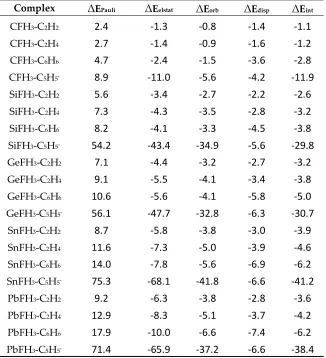
Table 3. The interaction energy decomposition terms (in kcal/mol); Pauli repulsion, ΔEPauli,
191
electrostatic, ΔEelstat, orbital, ΔEorb, dispersion, ΔEdisp, and the total interaction energy, ΔEint (in
192
kcal/mol).
193
Complex ΔEPauli ΔEelstat ΔEorb ΔEdisp ΔEint
CFH3-C2H2 2.4 -1.3 -0.8 -1.4 -1.1
CFH3-C2H4 2.7 -1.4 -0.9 -1.6 -1.2
CFH3-C6H6 4.7 -2.4 -1.5 -3.6 -2.8
CFH3-C5H5- 8.9 -11.0 -5.6 -4.2 -11.9
SiFH3-C2H2 5.6 -3.4 -2.7 -2.2 -2.6
SiFH3-C2H4 7.3 -4.3 -3.5 -2.8 -3.2
SiFH3-C6H6 8.2 -4.1 -3.3 -4.5 -3.8
SiFH3-C5H5- 54.2 -43.4 -34.9 -5.6 -29.8
GeFH3-C2H2 7.1 -4.4 -3.2 -2.7 -3.2
GeFH3-C2H4 9.1 -5.5 -4.1 -3.4 -3.8
GeFH3-C6H6 10.6 -5.6 -4.1 -5.8 -5.0
GeFH3-C5H5- 56.1 -47.7 -32.8 -6.3 -30.7
SnFH3-C2H2 8.7 -5.8 -3.8 -3.0 -3.9
SnFH3-C2H4 11.6 -7.3 -5.0 -3.9 -4.6
SnFH3-C6H6 14.0 -7.8 -5.6 -6.9 -6.2
SnFH3-C5H5- 75.3 -68.1 -41.8 -6.6 -41.2
PbFH3-C2H2 9.2 -6.3 -3.8 -2.8 -3.6
PbFH3-C2H4 12.9 -8.3 -5.1 -3.7 -4.2
PbFH3-C6H6 17.9 -10.0 -6.6 -7.4 -6.2
PbFH3-C5H5- 71.4 -65.9 -37.2 -6.6 -38.4
It was discussed in recent studies on hydrogen bonds and on other -hole bonds that these
194
interactions are accompanied by effects that are a response for the Pauli repulsion [2,40]. The latter
195
was also discussed for halogen bonds where multivalent halogen center plays a role of the Lewis
196
acid while the π-electrons are the Lewis base [33]. For such interactions correlations were found
197
between the repulsion interaction energy and different terms of the attractive interaction. It was
198
found in earlier studies than the orbital interaction energy (if one refers to the decomposition scheme
199
applied here) well correlates with the repulsion term, correlations for other interaction energy terms
200
are not so good. However, in general, the sum of all attractive terms correlates with the Pauli
201
repulsion term [2,33,40]. Figure 3 presents such a correlation for the complexes analyzed here. Thus
202
the attractive interaction which is related to various effects related to complexation, among them to
203
the electron charge redistribution, is a response for the Pauli repulsion.
204
The orbital interaction reflecting electron shifts corresponds to energy terms which are named
205
in the other way in other decomposition schemes; most often they are labeled as the delocalization
206
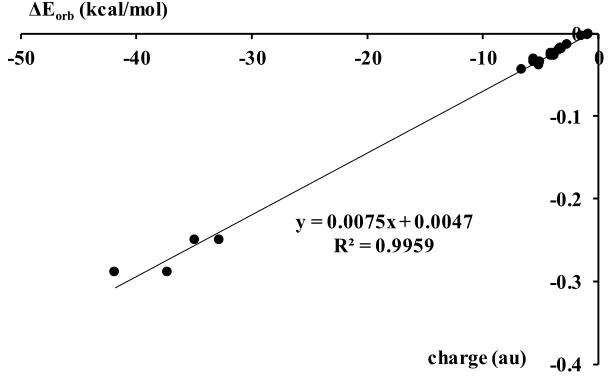
complexes analyzed here, the correlation between the orbital energy, ΔEorb, and the electron charge
208
shift resulting from complexation.
209
Figure 3. The linear correlation between the repulsion interaction energy and the sum of attractive
210
terms (both in kcal/mol) for the ZFH3-B complexes analyzed here.
211
Figure 4. The linear correlation between the orbital interaction energy, ΔEorb, and the electron charge
212
shift from the Lewis base unit to the Lewis acid (au).
213
2.3. Quantum Theory of Atoms in Molecules parameters
214
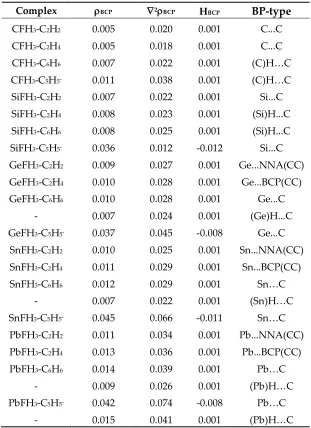
Table 4 presents characteristics of the bond critical point (BCP) of the bond path that connects
215
the Lewis acid and Lewis base units of the complex. It is a link between the tetrel center (tetrel
216
attractor) or the hydrogen center (hydrogen attractor) and the critical point of the Lewis base species.
217
This critical point may correspond to the carbon atom attractor, to the bond critical point (BCP) of
218
the CC bond or to the non-nuclear attractor (NNA) located on the CC bond path. Hence one can see
219
that there are various topologies of complexes analyzed here. The above-mentioned bond path may
220
concern the tetrel bond if the Z-center of the Lewis acid unit is linked with the Lewis base critical
221
point or it may concern the hydrogen bond if the H-atom attractor of the Lewis acid is linked with
222
the Lewis base critical point.
223
Particularly the following cases are observed for complexes analyzed here. For the CFH3-C2H2
224
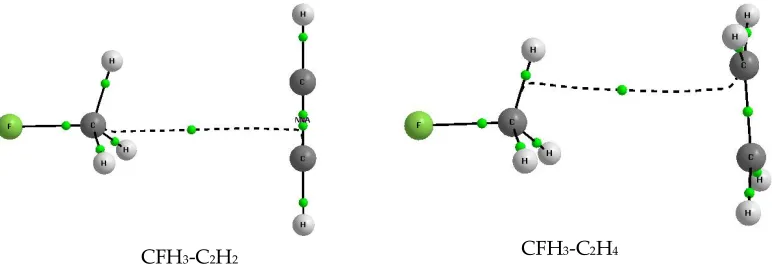
and CFH3-C2H4 complexes the irregular and nonlinear carbon-carbon bond paths are observed that
225
y = -1.5497x + 0.578 R² = 0.9969
-140 -120 -100 -80 -60 -40 -20 0
0 20 40 60 80
Pauli repulsion (kcal/mol)
attraction (kcal/mol)
y = 0.0075x + 0.0047 R² = 0.9959
-0.4 -0.3 -0.2 -0.1 0
-50 -40 -30 -20 -10 0
ΔEorb(kcal/mol)
may result from weak interactions (Fig. 5); formally according to the QTAIM approach, they may be
226
attributed to the tetrel bonds. For the CFH3-C6H6 (Fig. 1) and CFH3-C5H5- complexes the H…C
227
intermolecular bond paths are observed which correspond to the C-H…C hydrogen bonds! For the
228
SiFH3-C2H2, SiFH3-C2H4 and CFH3-C6H6 complexes the non-linear bond paths are detected, similarly
229
as for the CFH3-C2H2 and CFH3-C2H4 complexes, which are attributed to the Si…C or H…C
230
intermolecular links (Table 4).
231
Table 4. The QTAIM parameters (in au) of BCP of the Lewis acid – Lewis base bond path; electron
232
density at BCP, BCP, its laplacian, 2BCP, and the total electron energy density at BCP, HBCP. The
233
bond path type is also indicated.
234
Complex BCP 2BCP HBCP BP-type
CFH3-C2H2 0.005 0.020 0.001 C...C
CFH3-C2H4 0.005 0.018 0.001 C...C
CFH3-C6H6 0.007 0.022 0.001 (C)H…C
CFH3-C5H5- 0.011 0.038 0.001 (C)H…C
SiFH3-C2H2 0.007 0.022 0.001 Si...C
SiFH3-C2H4 0.008 0.023 0.001 (Si)H...C
SiFH3-C6H6 0.008 0.025 0.001 (Si)H...C
SiFH3-C5H5- 0.036 0.012 -0.012 Si...C
GeFH3-C2H2 0.009 0.027 0.001 Ge...NNA(CC)
GeFH3-C2H4 0.010 0.028 0.001 Ge...BCP(CC)
GeFH3-C6H6 0.010 0.028 0.001 Ge...C
- 0.007 0.024 0.001 (Ge)H...C
GeFH3-C5H5- 0.037 0.045 -0.008 Ge...C
SnFH3-C2H2 0.010 0.025 0.001 Sn...NNA(CC)
SnFH3-C2H4 0.011 0.029 0.001 Sn...BCP(CC)
SnFH3-C6H6 0.012 0.029 0.001 Sn…C
- 0.007 0.022 0.001 (Sn)H…C
SnFH3-C5H5- 0.045 0.066 -0.011 Sn…C
PbFH3-C2H2 0.011 0.034 0.001 Pb...NNA(CC)
PbFH3-C2H4 0.013 0.036 0.001 Pb...BCP(CC)
PbFH3-C6H6 0.014 0.039 0.001 Pb…C
- 0.009 0.026 0.001 (Pb)H…C
PbFH3-C5H5- 0.042 0.074 -0.008 Pb…C
- 0.015 0.041 0.001 (Pb)H…C
In a case of the SiFH3-C5H5- complex the clear almost linear Si…C bond path corresponding to
235
the strong tetrel bond is observed, similarly as for the other ZFH3-C5H5- complexes for Z = Ge, Sn and
236
Pb. In a case of the PbFH3-C5H5- complex the additional H…C bond path corresponds to the Pb-H…C
237
hydrogen bond is observed (Fig. 1). For theZFH3-C6H6 complexes (Z = Ge, Sn, Pb) the tetrel and
238
hydrogen bonds are observed with the corresponding bond paths, the SnFH3-C6H6 complex
239
representing such a situation is presented in Fig. 1. Similarly the SnFH3-C2H2, SnFH3-C2H4 complexes
240
in Fig. 1 reflect the same situation in analogues tin and lead complexes; in the case of acetylene Lewis
241
base the Z…NNA bond path is observed while in the case of ethylene Lewis base this is the Z…BCP
242
CFH3-C2H2 CFH3-C2H4
Figure 5. The molecular graphs of the CFH3-C2H2 andCFH3-C2H4 complexes; big circles – attractors,
244
small green circles – BCPs, the nonnuclear attractor (NNA) is located (small red circle) between two
245
BCPs in a case of the CFH3-C2H2 complex.
246
The characteristics of bond critical points presented in Table 4 reflect the strength of interaction.
247
It was discussed in various studies that these characteristics may be often treated as measures of the
248
strength of interaction [41]; especially for homogeneous samples of complexes. Numerous
249
relationships were found between characteristics of the H...B BCP and the strength of interaction for
250
the A-H...B hydrogen bonds. For complexes analyzed here greater values of the electron density at
251
the bond critical point, BCP´s, are observed for the C5H5- complexes. The laplacian of the electron
252
density at BCP, 2BCP, is positive for all complexes analyzed which may show these are not covalent
253
interactions; the HBCP values are positive and close to zero for all complexes of acetylene, ethylene
254
and benzene as well as for the CFH3-C5H5- complex. For the remaining complexes of the C5H5- anion
255
the negative HBCP values are observed that may indicate these are partly covalent in nature
256
interactions.
257
3. Computational details
258
The calculations were performed with the Gaussian16 set of codes [42] using the second-order
259
Møller-Plesset perturbation theory method (MP2) [43], and the aug-cc-pVTZ basis set [44]. The
260
relativistic effects for the heavier Ge, Sn and Pb atoms were taken into account. The calculations for
261
these elements were done with quasi-relativistic small-core effective core potentials: ECP10MDF,
262
ECP28MDF and ECP60MDF, for Ge, Sn and Pb, respectively [45]. For the latter elements the basis
263
sets corresponding to aug-cc-pVTZ were applied, i.e. ECP10MDF_AVTZ, ECP28MDF_AVTZ and
264
ECP60MDF_AVTZ, respectively [46]. Frequency calculations were performed for the complexes
265
analyzed and their monomers to confirm that the optimized structures correspond to energetic
266
minima. The binding energy, Ebin, was calculated as difference between the energy of the complex
267
and the sum of energies of monomers optimized separately while the interaction energy, Eint, is a
268
difference between the energy of the complex and the sum of energies of monomers which
269
geometries come from the geometry of the complex considered [47]. The binding and interaction
270
energies are negative but their difference – the deformation energy, Edef (Ebin – Eint), is positive and it
271
is connected with the change of geometries of monomers resulting from the complexation [39]. The
272
Counterpoise (CP) correction was applied to calculate the basis set superposition error BSSE [48];
273
hence the Ebin and Eint values corrected for BSSE are analyzed in this study.
274
The Quantum Theory of ‘Atoms in Molecules’ (QTAIM) was also applied to characterize critical
275
points (BCPs) in terms of the electron density (ρBCP), its Laplacian (2ρBCP) and the total electron
276
energy density at BCP (HBCP) which is the sum of the potential electron energy density (VBCP) and the
277
kinetic electron energy density (GBCP) [34]. The AIMAll program was used to carry out the QTAIM
278
calculations [49].
279
The Natural Bond Orbital (NBO) method [35] was applied to calculate atomic charges, the
280
interactions. The nB σAH* orbital-orbital interaction is characteristic for the A-H…B hydrogen
282
bond; nB labels the lone electron pair of the B Lewis base center and σAH* is the antibonding orbital of
283
the A-H Lewis acid bond [35]. In a case of the hydrogen bonds where π-electrons and -electrons
284
play a role of the Lewis bases, A-H…π and A-H… systems, the πB σAH* and B σAH* overlaps,
285
respectively, are the most important orbital-orbital interactions [50]. The similar situation occurs for
286
the tetrel bonds analyzed here, part of them may be classified as the Z…π interactions (Z labels the
287
tetrel centre). The πCC σZF* and πCC σZH* overlaps are observed here as the most important
288
interactions; besides the CH σZF* and CH σZH* overlaps are also detected but they are
289
characterized by lower energies than the former interactions. For example, the CC σZF* interaction
290
is calculated as the second-order perturbation theory energy (eq. 1):
291
E (CC σZF*) = -2 CCF σZF*2 / (ε (σZF*) - ε (CC) ), (1) CCF σZF* designates the Fock matrix element and (ε (σZF*) - ε (CC) ) is the orbital energy
292
difference. The similar equations (to eq.1) for the remaining above-mentioned orbital-orbital
293
interactions may be given.
294
The energy decomposition analysis (EDA) [36,37] was carried out with the BP86 functional
295
[51,52] using uncontracted Slater-type orbitals (STOs) as basis functions for all elements with triple-ζ
296
quality (ADF-basis set TZP). The energy decomposition analysis (EDA) was performed with the use
297
of the ADF2013.01 program [53] for all complexes analyzed here and characterized by geometries
298
resulting from the MP2/aug-cc-pVTZ optimizations. The EDA method follows the energy partition
299
of Morokuma [36,37]. The interaction energy, ΔEint, between two fragments (A and B) in the A-B link,
300
in the particular electronic reference state and in the frozen geometry of AB is considered in this
301
approach. The ΔEint interaction energy is divided into three components and the additional
302
dispersion term, ΔEdisp (Eq. 2).
303
ΔEint = ΔEelstat + ΔEPauli + ΔEorb + ΔEdisp, (2)
The ΔEelstat term corresponds to the electrostatic interaction between the unperturbed charge
304
distributions of atoms and is usually attractive. The Pauli repulsion, ΔEPauli,is the energy change
305
associated with the transformation from the superposition of the unperturbed electron densities of
306
the isolated fragments to the wavefunction which properly obeys the Pauli principle through explicit
307
antisymmetrization and renormalization of the product wavefunction; it comprises the destabilizing
308
interactions between electrons of the same spin on either fragment. The orbital interaction, ΔEorb,
309
accounts for charge transfer and polarization effects.
310
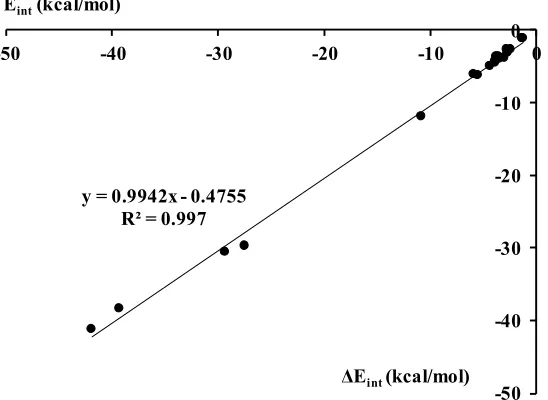
Figure 6 presents the correlation between the interaction energy calculated within the
311
MP2/aug-cc-pVTZ approach (Table 1), thus at the level corresponding to the systems´ optimizations,
312
and ΔEint DFT energy calculated with the use of ADF codes. The excellent correlation observed here
313
justifies the use of DFT calculations for the previously optimized MP2 geometries.
314
4. Conclusions and perspectives
315
The tetrel bonds in complexes where the π-electron system plays a role of the Lewis base were
316
analyzed here. Practically for all complexes considered the NBO approach shows the existence of the
317
πCC FZ* overlaps, however in a case of complexes of CFH3 with acetylene, ethylene and benzene
318
the corresponding energies are negligible thus the existence of tetrel bonds is problematic. On the
319
other hand for the remaining complexes the above-mentioned interactions are significant that may
320
indicate the existence of the tetrel bonds. The QTAIM approach often shows the complicated
321
topology, sometimes the additional bond paths corresponding to the hydrogen bonds are observed,
322
or like for the CFH3-C5H5- complex, only C-H…C intermolecular link is observed that may indicate
323
the existence of the hydrogen bond and not of the tetrel bond. However for the other
324
cyclopentadienyl complexes the interactions are very strong and the Z…C bond paths exist there.
325
Hence there is no doubt that these complexes are linked by the tetrel bonds; all theoretical
326
Figure 6. The linear correlation between the MP2 Eint interaction energy and the ΔEint energy
328
calculated within the DFT approach; both energies in kcal/mol.
329
Only for some of acetylene and ethylene complexes one may observe the link between tetrel
330
center and the site corresponding to π-electrons, NNA or BCP of the CC bond of the Lewis base unit
331
(see the SnFH3-C2H2 and SnFH3-C2H4 complexes in Fig. 1 as examples). In a case of the C6H6 and
332
C5H5- aromatic systems, the Z…C bond path is observed that suggest the one-atom Lewis base center
333
and not the π-electron system. Such a situation was earlier observed for the hydrogen bonded
334
complexes [54].
335
Figure 7. The fragment of the crystal structure (refcode: BAKZOF) where the Si…CC tetrel bond is
336
observed.
337
The question arises if the interactions analyzed theoretically here really exist. This is why the
338
Cambridge Structural Database (CSD) [55] search was performed. The following search criteria were
339
taken into account; non-disordered structures, R less than 10%, 3D coordinated determined, non
340
polymeric structures, single crystal structures and no errors (CSD updates up to February of 2018
341
were taken into account). The additional condition was that the Z tetrel center (C, Si, Ge, Sn and Pb)
342
has to form two intermolecular Z…C contacts within corresponding sum of van der Waals radii.
343
Two Z…C contacts were required since one may expect that in a case of double and triple CC bonds,
344
or if CC bond concerns delocalized aromatic system; at least two Z…C distances within the van der
345
y = 0.9942x - 0.4755 R² = 0.997
-50 -40 -30 -20 -10 0
-50 -40 -30 -20 -10 0
Eint(kcal/mol)
Waals sum should be observed. 218 systems of crystal structures fulfilling those requirements were
346
found in CSD. However only in 10 cases the clear tetrel-CC bond contacts with the tetrahedral (sp3
347
hybridized) tetrel center were observed which suggest the existence of the tetrel…π-electrons
348
interactions. Figure 7 shows an example where one can observe the F-Si..CC contact (CC bond of the
349
aromatic phenyl ring). This issue requires additional studies on the experimental crystal structures
350
however. It seems that the search criteria could be also improved. More detailed study on
351
experimental crystal structures´ results is in the progress.
352
Acknowledgments: Financial support comes from Eusko Jaurlaritza (GIC IT-588-13) and the Spanish
353
Government MINECO/FEDER (CTQ2016-80955). Technical and human support provided by Informatikako
354
Zerbitzu Orokora - Servicio General de Informática de la Universidad del País Vasco (SGI/IZO-SGIker
355
UPV/EHU), Ministerio de Ciencia e Innovación (MICINN), Gobierno Vasco Eusko Jaurlanitza (GV/EJ),
356
European Social Fund (ESF) is gratefully acknowledged.
357
Conflicts of Interest: The author declares no conflict of interest.
358
References
359
1. García-LLinás, X.; Bauzá, A.; Seth, S.K.; Frontera, A. Importance of R-CF3…O Tetrel Bonding Interactions
360
in Biological Systems. J.Phys.Chem. A 2017, 121, 5371-5376.
361
2. Grabowski, S.J. Hydrogen bonds, and -hole and π-hole bonds – mechanisms protecting doublet and octet
362
electron structures. Phys.Chem.Chem.Phys. 2017, 19, 29742-29759.
363
3. Politzer, P.; Murray, J.S.; Clark, T. Halogen bonding and other σ-hole interactions: a perspective.
364
Phys.Chem.Chem.Phys. 2013, 15, 11178-11189.
365
4. Bundhun, A.; Ramasami, P.; Murray, J.S.; Politzer, P. Halogen bonding: the σ-hole. J.Mol.Mod. 2013, 19,
366
2739-2746.
367
5. Politzer, P.; Murray, J.S.; Lane, P.; Concha, M.C. Electrostatically Driven Complexes of SiF4 With Amines.
368
Int.J.Quantum Chem. 2009, 109, 3773-3780.
369
6. Bauzá, A.; Mooibroek, T.J.; Frontera, A. Tetrel-Bonding Interaction: Rediscovered Supramolecular Force?
370
Angew. Chem. Int. Ed. 2013, 52, 12317-12321.
371
7. Chehayber, J.M.; Nagy, S.T.; Lin, C.S. Ab initio studies of complexes between SiF4 and ammonia.
372
Can.J.Chem. 1984, 62, 27-31.
373
8. Alkorta, I.; Rozas, I.; Elguero, J. Molecular Complexes between Silicon Derivatives and Electron-Rich
374
Groups. J.Phys.Chem. A 2001, 105, 743-749.
375
9. Clark, T.; Hennemann, M.; Murray, J.S.; Politzer, P. Halogen bonding: the σ-hole. J.Mol.Mod. 2007, 13,
376
291-296.
377
10. Politzer, P.; Lane, P.; Concha, M.C.; Ma, Y.; Murray, J.S. An overview of halogen bonding. J.Mol.Mod. 2007,
378
13, 305-311.
379
11. Grabowski, S.J. Tetrel bond - -hole bond as a preliminary stage of the SN2 reaction. Phys.Chem.Chem.Phys.
380
2014, 16, 1824-1834.
381
12. Helminiak, H.M.; Knauf, R.R.; Danforth, S.J.; Phillips, J.A. Structural and Energetic Properties of
382
Acetonitrile – Group IV (A & B) Halide Complexes. J.Phys.Chem. A 2014, 118, 4266-4277.
383
13. Mani, D.; Arunan, E. The X-C…Y (X = O/F, Y = O/S/F/Cl/Br/N/P) ´carbon bond´ and hydrophobic
384
interactions. Phys.Chem.Chem Phys. 2013, 15, 14377-14383.
385
14. Li, Q-Z.; Zhuo, H-Y.; Li, H-B.; Liu, Z-B.; Li, W-Z.; Cheng, J-B. Tetrel-Hydride Interaction between XH3F (X
386
= C, Si, Ge, Sn) and HM (M = Li, Na, BeH, MgH). J. Phys. Chem. A, 2015 119, 2217−2224.
387
15. Scheiner, S. Systematic Elucidation of Factors That Influence the Strength of Tetrel Bonds. J.Phys.Chem. A
388
2017, 121, 5561-5568.
389
16. Kubelka, J.; Bickelhaupt, F.M. Activation Strain Analysis of SN2 Reactions at C, N, O, and F centers.
390
J.Phys.Chem. A 2017, 121, 885-891.
391
17. George, J.; Dronskowski, R. Tetrel Bonds in Infinite Molecular Chains by Electronic Structure Theory and
392
Their Role for Crystal Stabilization. J.Phys.Chem. A 2017, 121, 1381-1387.
393
18. Marín-Luna, M.; Alkorta, I.; Elguero, J. A theoretical study of the HnF4-nSi:N-base (n = 1-4) tetrel-bonded
394
complexes. Theor. Chem. Acta 2017, 136, 41.
19. Liu, M.; Li, Q.; Scheiner, S. Comparison of tetrel bonds in neutral and protonated complexes of pyridine
396
TF3 and furan TF3 (T = C, Si, and Ge) with NH3. Phys.Chem.Chem Phys. 2017, 19, 5550-5559.
397
20. Zierkiewicz, W.; Michalczyk, M.; Scheiner, S. Implications of monomer deformations for tetrel and
398
pnicogen bonds. Phys.Chem.Chem Phys. 2018, 20, 8832-8841.
399
21. Scheiner, S. Steric Crowding in tetrel Bonds. J.Phys.Chem. A 2018, 122, 2550-2562.
400
22. Grabowski, S.J.; Sokalski, W.A. Are Various -Hole Bonds Steered by the Same Mechanisms?
401
ChemPhysChem 2017, 18, 1569-1577.
402
23. Roy, S.; Drew, M.G.B.; Bauzá, A.; Frontera, A.; Chattopadhyay, S. New J. Chem. 2018, 42, 6062-6076.
403
24. Grabowski, S.J. Tetrel bonds, penta- and hexa-coordinated tin and lead centres. Appl. Organometal. Chem.
404
2017, 31, e3727.
405
25. Grabowski, S.J. Lewis Acid Properties of Tetrel tetrafluorides – The Coincidence of the -Hole Concept
406
with the QTAIM Approach. Crystals 2017, 7, 43.
407
26. Nishio, M.; Hirota, M.; Umezawa, Y. The CH/ Interaction, Evidence, Nature, and Consequences. Wiley-VCH:
408
New York, USA, 1998.
409
27. Vasilyev, A.V.; Lindeman, S.V.; Kochi, J.K. Noncovalent binding of the halogens to aromatic donors.
410
Discrete structures of labile Br2 complexes with benzene and toluene. Chem. Com. 2001, 909-910.
411
28. Duarte, D.J.R.; de las Vallejos, M.M.; Peruchena, N.M. Topological analysis of aromatic halogen/hydrogen
412
bonds by electron charge density and electrostatic potentials. J. Mol. Model. 2010, 16, 737-748.
413
29. Zhuo, H.; Li, Q.; Li, W.; Cheng, J. Is π halogen bonding or lone pair…π interaction formed between
414
borazine and some halogenated compounds. Phys. Chem. Chem. Phys. 2014, 16, 159-165.
415
30. Liu, C.; Zeng, Y.; Li, X.; Meng, L.; Zhang, X. A comprehensive analysis of P…π pnicogen bonds:
416
substitution effects and comparison with Br…π halogen bonds. J. Mol. Model. 2015, 21, 143
417
31. Fau, S.; Frenking, G. Theoretical investigation of the weakly bonded donor-acceptor complexes X3B-H2,
418
X3B-C2H4, and X3B-C2H2 (X=H,F,Cl). Mol.Phys. 1999, 96, 519-527.
419
32. Grabowski, S.J. Triel Bonds, π-Hole-π-Electrons Interactions in Complexes of Boron and Aluminium
420
Trihalides and Trihydrides with Acetylene and Ethylene. Molecules 2015, 20, 11297-11316.
421
33. Grabowski, S.J. New Type of Halogen Bond: Multivalent Halogen Interacting with π- and -Electrons.
422
Molecules 2017, 22, 2150.
423
34. Bader, R.F.W. Atoms in Molecules, A Quantum Theory. Oxford University Press, Oxford, United Kingdom,
424
1990.
425
35. Weinhold, F.; Landis, C. Valency and Bonding, A Natural Bond Orbital Donor – Acceptor Perspective;
426
Cambridge University Press: Cambridge, United Kingdom, 2005.
427
36. Morokuma, K. Molecular Orbital Studies of Hydrogen Bonds. III. C=O…H-O Hydrogen Bond in
428
H2CO…H2O and H2CO…2H2O. J. Chem. Phys. 1971, 55, 1236-1244.
429
37. Ziegler, T.; Rauk, A. On the calculation of bonding energies by the Hartree–Fock Slater method. Theor.
430
Chim. Acta 1977, 46, 1-10.
431
38. Murray, J.S.; Politzer, P. Molecular electrostatic potentials and noncovalent interactions. WIREs Comput Mol Sci
432
2017, 7, e1326.
433
39. Grabowski, S.J.; Sokalski, W.A. Different types of hydrogen bonds: correlation analysis of interaction
434
energy components. J.Phys.Org.Chem. 2005, 18, 779–784.
435
40. Grabowski, S.J. Topological analysis of aromatic halogen/hydrogen bonds by electron charge density and
436
electrostatic potentials. J. Mol. Model. 2018, 24, 38.
437
41. Espinosa, E.; Molins, E.; Lecomte, C. Hydrogen bond strengths revealed by topological analyses of
438
experimentally observed electron densities. Chem. Phys. Lett. 1998, 285, 170-173.
439
42. Gaussian 16, Revision A.03, Frisch, M. J.; Trucks, G. W.; Schlegel, H. B.; Scuseria, G. E.; Robb, M. A.;
440
Cheeseman, J. R.; Scalmani, G.; Barone, V.; Petersson, G. A.; Nakatsuji, H.; Li, X.; Caricato, M.; Marenich,
441
A. V.; Bloino, J.; Janesko, B. G.; Gomperts, R.; Mennucci, B.; Hratchian, H. P.; Ortiz, J. V.; Izmaylov, A. F.;
442
Sonnenberg, J. L.; Williams-Young, D.; Ding, F.; Lipparini, F.; Egidi, F.; Goings, J.; Peng, B.; Petrone, A.;
443
Henderson, T.; Ranasinghe, D.; Zakrzewski, V. G.; Gao, J.; Rega, N.; Zheng, G.; Liang, W.; Hada, M.;
444
Ehara, M.; Toyota, K.; Fukuda, R.; Hasegawa, J.; Ishida, M.; Nakajima, T.; Honda, Y.; Kitao, O.; Nakai, H.;
445
Vreven, T.; Throssell, K.; Montgomery, J. A., Jr.; Peralta, J. E.; Ogliaro, F.; Bearpark, M. J.; Heyd, J. J.;
446
Brothers, E. N.; Kudin, K. N.; Staroverov, V. N.; Keith, T. A.; Kobayashi, R.; Normand, J.; Raghavachari, K.;
447
Rendell, A. P.; Burant, J. C.; Iyengar, S. S.; Tomasi, J.; Cossi, M.; Millam, J. M.; Klene, M.; Adamo, C.;
Cammi, R.; Ochterski, J. W.; Martin, R. L.; Morokuma, K.; Farkas, O.; Foresman, J. B.; Fox, D. J. Gaussian,
449
Inc., Wallingford CT, 2016.
450
43. Møller, C.; Plesset, M.S. Note on an Approximation Treatment for Many-Electron Systems. Phys. Rev. 1934,
451
46, 618-622.
452
44. Woon, D.E.; Dunning, T.H. Jr. Gaussian Basis Sets for Use in Correlated Molecular Calculations. III. The
453
second row atoms, Al-Ar. J.Chem.Phys. 1993, 98, 1358-1371.
454
45. Metz, B. ; Stoll, H.; Dolg, M. Small-core multiconfiguration-Dirac-Hartree-Fock-adjusted pseudopotentials
455
for post-d main group elements: Application to PbH and PbO. J.Chem.Phys. 2000, 113, 2563-2569.
456
46. Peterson, K.A. Systematically convergent basis sets with relativistic pseudopotentials. I. Correlation
457
consistent basis sets for the post-d group 13-15 elements. J.Chem.Phys. 2003, 119, 11099-11112.
458
47. Piela, L. Ideas of Quantum Chemistry; Elsevier Science Publishers: Amsterdam, Netherlands, 2007, pp.
459
684-691.
460
48. Boys, S.F.; Bernardi, F. The calculation of small molecular interactions by the differences of separate total
461
energies. Some procedures with reduced errors. Mol. Phys. 1970, 19, 553-561.
462
49. Keith, T.A. AIMAll (Version 11.08.23), TK Gristmill Software, Overland Park KS, USA, 2011
463
(aim.tkgristmill.com).
464
50. Grabowski, S.J. Dihydrogen bond and X-H…σ interaction as sub-classes of hydrogen bond. J. Phys. Org.
465
Chem. 2013, 26, 452-459.
466
51. Becke, A.D. Density-functional exchange-energy approximation with correct asymptotic behavious. Phys. Rev. A
467
1988, 38, 3098-3100.
468
52. Perdew, J.P. Density-functional approximation for the correlation energy of the inhomogeneous electron gas. Phys.
469
Rev. B 1986, 33, 8822-8824.
470
53. Velde, G.T.E.; Bickelhaupt, F.M.; Baerends, E.J.; Guerra, C.F.; van Gisbergen, S.J.A.; Snijders, J.G.; Ziegler, T.
471
Chemistry with ADF. J. Comput. Chem. 2001, 22, 931-967.
472
54. Grabowski, S.J.; Ugalde, J.M. Bond Paths Show Preferable Interactions: Ab Initio and QTAIM Studies on the X-H…π
473
Hydrogen Bond. J.Phys.Chem. A 2010, 114, 7223–7229.
474
55. Wong, R. ; Allen, F.H. ; Willett, P. The scientific impact of the Cambridge Structural Database: a
475
citation-based study. J.Appl.Cryst. 2010, 43, 811-824.