*Harsh Bansal1, Simar Preet kaur2, Atul Kumar Gupta2 1. R.K.S.D College of Pharmacy, Kaithal, Haryana, India. 2. M. M. College of Pharmacy, M. M. University, Mullana, Haryana, India.
*Corresponding author’s E-mail: [email protected]
Accepted on: 23-04-2011; Finalized on: 25-08-2011. ABSTRACT
A well designed controlled drug delivery system can overcome the problems of convention drug therapy and gives better therapeutic efficacy of a drug. Microsphere are also undersigned as novel/controlled drug delivery system having particle size less
than 200 µm. microsphere after ball bearing effects because of their spherical shape. The therapeutic efficacy of microspheres containing drug depends upon their characteristics that can be altered in required terms by altering materials, methods, polymers or techniques used. This review is concerned with microspheres as novel drug delivery system. With emphasis on preparation, application, biocompatible and their stability to obtain the required or enhanced therapeutic efficacy of a given drug, it become necessary to deliver that particular agent to the target tissues in optimal amount at right period of time with minimum toxicity/side effect. Control drug delivery system is concerned with systemic release of a pharmaceutical agent to maintain a therapeutic level of drug in body for sustained period of time. This may be achieved by incorporating the therapeutic agent into biodegradable polymers, releasing the agent continuously as matrix erodes
Keywords: Microspheres, Drug delivery, Preparation, applications.
INTRODUCTION
Microspheres are characteristically free flowing powders consisting of spherical particles of size less than 200 µm. Can be injects by 18 or 20 number needle. They consists proteins or synthetic polymers which are biodegradable in nature. A well designed controlled drug delivery system can overcome some of the problems of conventional therapy and enhance the therapeutic efficacy of a given drug1. Each particle is basically a mixture of drug, dispersed in a polymer form with release occurs by 1st order process. Drug release is controlled by dissolution/degradation of matrix. Because of their size and shape, Microspheres offer a ball-bearing effect. Recent advances in polymer science and drug carrier technologies have promulgated the development of novel drug carriers such as bioadhesive microspheres that have boosted the use of "bioadhesion" in drug delivery.2 Floating microspheres are gastro-retentive drug delivery systems based on non-effervescent approach. Hollow microspheres are in strict sense, spherical empty particles without core. These microspheres are characteristically free flowing powders consisting of proteins or synthetic polymers, ideally having a size less than 200 micrometer. Solid biodegradable microspheres incorporating a drug dispersed or dissolved throughout particle matrix have the potential for controlled release of drugs3 Magnetic microspheres use for target to tumors,
TYPES OF POLYMER
Microspheres used usually are polymers. They are classified into two types:
Synthetic Polymers
Natural polymers
1. Synthetic polymers are divided into two types. (A) Non-biodegradable polymers
For examples: Poly methyl methacrylate acrolein (PMMA), Glycidyl methacrylate, Epoxy polymers
(B) Biodegradable polymers
For example: Lactides and Glycolides and their
copolymers, Poly alkyl cyano acrylates, Polyanhydrides and Poly-ε-caprolactone (PCL)
2. Natural polymers obtained from different sources like proteins, carbohydrates and chemically modified carbohydrates.
(A) Proteins: Albumin, Gelatin4, and Collagen
Carbohydrates: Agarose, Carrageenan, Chitosan, Starch Chemically modified carbohydrates: Poly dextran, Poly starch.
The microsphere in pharmaceutical industry has been considered since the 1960s for their following applications:
Masking of taste and odor. Delay of volatilization
Safe in case of toxic substances. Flow of powder is improve
Sustained-release, controlled-release, targeted medication can produce
Reduced dose dumping
MICROSPHERE: METHODS OF PREPRATION AND APPLICATIONS; A COMPARATIVE STUDY
Best for incompatible materials
Provide protection to drug against the environment etc.
Ideal microparticulate carriers
The material utilized for the preparation of microparticulates should have the following properties1.
Longer duration of action Provide protection of drug Sterilizability
Water solubility Toxicity
Water dispersability Relative stability Bioresorbability
METHODS OF PREPARATION
The choice of technique depends upon the nature of polymer as well nature of drug and the duration o therapy1. The most important physical chemical factors that may be controlled in microsphere manufacture are:-
The particle size requirement Molecular weight of polymer Polymer to drug ratio No stability problem
Final product should be non-toxic. Total mass of drug and polymer Reproducibility
Controlled particle size and dispersability in aqueous vehicles for injection
Release of active reagent with a good control over a wide time scale
Techniques for microsphere preparation 1. Single emulsion techniques
2. Double emulsion techniques 3. Polymerization
a.Normal polymerization Bulk
Suspension Emulsion
b.Inter-facial polymerization
4. Phase separation coacervation technique 5. Spray drying
6. Solvent extraction
7. Solution-enhancement dispersion method 8. Wax coating Hot-melt method
1. Single emulsion technique
There are several Proteins and carbohydrates, which are prepared by this technique. In which the natural polymers are dissolved in aqueous medium and the followed by dispersion in oil phase i.e. non-aqueous medium. That is the first step in Next step cross linking is carried out by two methods
(1) Cross linking by heat: by adding the dispersion into heated oil, but it is unsuitable for the Thermolabile drugs.
(2) Chemical cross linking agents: - by using agents i.e. formaldehyde, di acid chloride, glutaraldehyde etc. but it is having a disadvantage of excessive exposure of active ingredient to chemicals if added at the time of preparation and then subjected to centrifugation, washing and separation. Chitosan solution (in acetic acid) by adding to Liquid paraffin containing a surfactant resulting formation of w/o emulsion5. Metformin hydrochloride microsphere are prepare by using gluteraldehyde 25% solution as a cross linking agent6.
2. Double emulsion technique
It is formation of multiple emulsions i.e. W/O/W is preparing by pouring the primary w/o emulsion into aqueous solution of poly vinyl alcohol. This w/o/w emulsion put a t constant stirring for 30 min. Slowly add some water to the emulsion over a period of 30 min. collect Microcapsules by filtration and dry under vacuum2. It is best suited to water soluble drugs, peptides, proteins and the vaccines. Natural as well as synthetic polymer can use for this method. The aqueous protein solution is dispersed in a lipophilic organic continuous phase. This protein solution may contain the active constituents. Disperse in oil/organic phase homogenization/vigorous i.e. formation of first emulsion then addition to aqueous solution of PVA (Poly Vinyl Alcohol) i.e. multiple emulsion formed now by addition to large aqueous phase denaturation/hardening after this separation, washings’ and drying and collection of microspheres1 genistein chitosan microsphere were prepared by the o/w/o multiple emulsion method by Wu and Li (2002).5
3. Polymerization techniques
Mainly two techniques are using for the preparation of microsphere are classified as:
(a) Normal polymerization
may be done by adding the drug during the process of polymerization. It is a pure polymer formation technique but it is very difficult to dissipate the heat of reaction which affects the thermo labile active ingredients. Suspension polymerization is carried out of lower temperature and also refer to as pearl polymerization in which heating the monomer mixture with active drug as droplets dispersion in continuous aqueous phase. Microsphere size obtained by suspension techniques is less the 100 µm. Emulsion polymerization is differ from the suspension as due presence of initiator in aqueous phase but is also carried out at low temperature as suspension external phase normally water in last two techniques so through which heat can easily dissipate .formation of higher polymer at faster rate is possible by these techniques but association of polymer with the un reacted monomer and other additives can occur1.
(b) Interfacial polymerization1, 6
It involves the reaction of various monomers at the interface between the two immiscible liquid phases to form a film of polymer that essentially envelops the dispersed phase. In this technique two reacting monomers are employed; one is dissolve in continuous phase while other is disperse in continuous phase (aqueous in nature) throughout which the second monomer is emulsified. Two conditions arise because of solubility of formed polymer in the emulsion droplet. That is formation is monolithic type of carrier if the polymer is soluble in droplet. Capsular type formed if the polymer is insoluble in droplet.
4. Spray drying and spray congealing
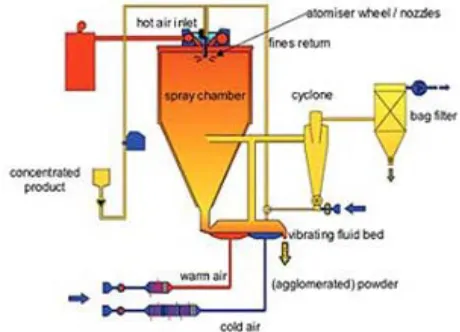
Concept of spray drying technique (fig 1) depending upon the removal of solvent or the cooling of solution the two processes are spray drying & spray congealing. Evaporation is the basic mechanism in spray drying, whereas in spray congealing it is that of a phase inversion from a liquid to a solid. Both processes are similar, except for energy flow1. Spray drying is the most widely used industrial process involving particle formation and drying. Therefore, spray drying is an ideal process where the end-product must comply with precise quality standards regarding particle size distribution, residual moisture content, bulk density, and particle shape.
Principle:7-9 Three steps involved in spray drying
a.) Atomization: of a liquid feed change into fine droplets. b.) Mixing: it involves the passing of hot gas stream through spray droplets which result in evaporation of liquids and leaving behind dried particles.
c.) Dry: Dried powder is separated from the gas stream and collected.
In this technique polymer is first dissolved in a suitable volatile organic solvent such as dichloromethane, acetone, etc. The drug in the solid form is then dispersed in the polymer solution under high-speed homogenization. This dispersion is then atomized in a
stream of hot air, this form small droplets or the fine mist, from which the solvent evaporates instantaneously leading the formation of the microspheres. The size range is 1-100 µm. By using hot air separate of Microparticle by means of the cyclone separator while the traces of solvent are removed by vacuum drying. Advantages of the process are feasibility of operation. This technique is very useful to encapsulate various penicillins. Thiamine mononitrate10 and sulpha ethylthiadizole11 are encapsulated in a mixture of mono- and diglycerides of stearic acid and palmitic acid using spray congealing. Very rapid solvent evaporation, however leads to the formation of porous microparticles1.
The sprays are produces by either rotary (wheel) or nozzle atomizers. Evaporation of moisture from the droplets and formation of dry particles proceed under controlled temperature and airflow conditions.
The microsphere size is controlled by the rate of spraying, nozzle size, temperature (in drying and collecting chambers.) and the feed rate of polymer drug solution. The quality of product is improved by addition plasticizer spray flow rate should kept constant around 6ml/min.2 Spray drying technique is also useful for preparing chitosan microsphere5, In 1999 He et.al. Used formaldehyde as a crosslinking and also reported a novel method in which cimetidine and famotidine were entrapped in microspheres prepared by spray drying of multiple emulsion (o/w/o or w/o/w). They found that the release of the drugs from microspheres by this novel method was significantly sustained as compared to those prepared by conventional spray drying or o/w emulsion method.12, 13 In 1994 Giunchedi et al. was used spray drying used for the preparation of PCL microspheres of ketoprofen.2 (c2) He used the organic solution of the drug and two polymers, cellulose acetate butyrate and PCL was made in a mixture of dichloromethane and chloroform (1:1). The prepared solution was sprayed through a nozzle in a spray-drier under different experimental conditions. Solid microspheres were collected into final bottom vessel spray-drier.14
Advantages and disadvantages7, 15
Spray drying is very useful for pulmonary drug delivery as well as for oral dosages form and it is remarkable versatility of the technology, and a wide range of product can be obtained by this technique. It is very flexible and reproducible method that, why number of industries use this technique for drying operation. It can be designed to virtually any capacity required easily. Can be used with both heat-resistant and heat sensitive products. Powder quality remains constant during the dryer. Particles which produced uniform in size and frequently hollow thus reduce the bulk density of the product. But there are some drawbacks in technique; the equipment is very bulky and expensive. The overall thermal efficiency is low, as the large volumes of heated air pass through the chamber without contacting a particle.
5. Wax Coating and Hot Melt
In this technique polymer is disperse in suitable dispersion medium and slowly cooled to form the microspheres. The polymers which having low melting point fabricated into microspheres by this technique easily2. For coating and coring of particle wax is use mostly. In which encapsulate the drug by dispersion in the molted wax. The wax suspension is dispersed by high speed mixing into cold solution for example liquid paraffin. Agitate the mixture for one hour. Then decanted the external phase and suspended microspheres collect from solvent. And allow drying it in air. It is inexpensive method as comparison to others and drug release is more rapid. Mostly Carnauba wax and beeswax can be used as the coating materials and these can be mixed in order to achieve desired characteristics.16
6. Solvent evaporation method5
For the formation of the emulsion between polymer solution and an immiscible continuous phase in aqueous (o/w) as well as non-aqueous phase (w/o) (fig 2). Bogataj et al. (2000) prepared microsphere by using liquid paraffin/ acetone as the solvents by evaporation method. The drug solution (in acetone) was dispersed in chitosan solution and this mixture was emulsified in liquid paraffin and stirred. The suspension of microspheres was filtered, washed and dried. Magnesium stearate was also added for preventing agglomeration as a Agglomeration preventing agent. The results showed that average particle size decreased with increasing amount of magnesium stearate used for microsphere preparation17. Lim et al. (2000) investigated the comparison of mucoadhesive microspheres of hyaluronic acid, chitosan glutamate and a combination of the two prepared by solvent evaporation with microcapsules of hyaluronic acid and gelatin prepared by complex coacervation.18
7. Phase separation coacervation technique
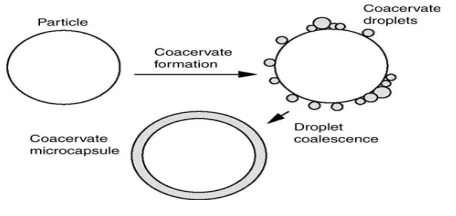
It is the simple separation of a micromolecular solution into two immiscible liquid phase. In this process, the polymer is solubilized to for a solution. This process is designed for preparing the reservoir type system e.g.
encapsulate water soluble drugs i.e. peptides, proteins etc1. The principle of coacervation is decreasing the solubility of the polymer in organic phase to affect the formation of polymer rich phase called the coacervates. In this method, formation of dispersion of drug particles in a solution of the polymer and an incompatible polymer is added to the system which makes first polymer to phase separate and engulf the drug particles. Matrix types preparations can also be prepared by this process for hydrophilic drug e.g. steroids, Addition of non-solvent results in the solidification of polymer. Poly lactic acid (PLA) microspheres have been prepared by this method by using butadiene as incompatible polymer.
Figure 2: Schematic diagram of the formation of a coacervate around a core material
But this method is not suitable for organic solvents and glutaraldehyde which are toxic in nature.Berthold et al. (1996a) prepared prednisolone sodium phosphate loaded chitosan microspheres using sodium sulphate as a precipitant. Addition of sodium sulphate to the solution of chitosan in acetic acid resulted in decreased solubility of chitosan, leading to precipitation of chitosan as a poorly soluble derivative.19
8. Solvent extraction1, 20
In this method preparation of microparticles, involves removal of the organic phase by extraction of the organic solvent. Isopropanol can be use as water miscible organic solvents. By extraction with water, Organic phase is removed. Hardening time of microsphere can be decrease by this method. One variation of the process involves direct addition of the drug or protein to polymer organic solution. The rate of solvent removal by extraction method depends on the temperature of water, ratio of emulsion volume to the water and the solubility profile of the polymer.
9. Emulsification method
PHARMACEUTICAL APPLICATION OF MICROSPHERES
a. Vaccine delivery b. Monoclonal antibodies c. Imaging
d. Topical porous microsphere e. Nasal drug delivery
f. Oral drug delivery g. Targeting drug delivery
h. Gastroretentive controlled delivery system i. Bio-medical application
j. Pharmaceutical application Other application
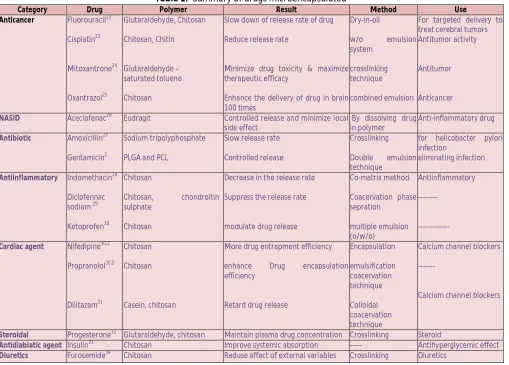
Table 1: Summary of drugs microencapsulated
Category Drug Polymer Result Method Use
Anticancer Fluorouracil22
Cisplatin23
Mitoxantrone24
Oxantrazol25
Glutaraldehyde, Chitosan
Chitosan, Chitin
Glutaraldehyde – saturated toluene
Chitosan
Slow down of release rate of drug
Reduce release rate
Minimize drug toxicity & maximize therapeutic efficacy
Enhance the delivery of drug in brain 100 times
Dry-in-oil
w/o emulsion
system
crosslinking technique
combined emulsion
For targeted delivery to treat cerebral tumors Antitumor activity
Antitumor
Anticancer
NASID Aceclofenac26 Eudragit Controlled release and minimize local
side effect
By dissolving drug in polymer
Anti-inflammatory drug
Antibiotic Amoxicillin27
Gentamicin2
Sodium tripolyphosphate
PLGA and PCL
Slow release rate
Controlled release
Crosslinking
Double emulsion
technique
for helicobacter pylori infection
eliminating infection
Antiinflammatory Indomethacin28
Diclofennac sodium 29
Ketoprofen30
Chitosan
Chitosan, chondroitin
sulphate
Chitosan
Decrease in the release rate
Suppress the release rate
modulate drug release
Co-matrix method
Coacervation phase sepration
multiple emulsion (o/w/o)
Antiinflammatory
---
---
Cardiac agent Nifedipine30,2
Propranolol30,2
Dilitazam31
Chitosan
Chitosan
Casein, chitosan
More drug entrapment efficiency
enhance Drug encapsulation
efficiency
Retard drug release
Encapsulation
emulsification coacervation technique
Colloidal coacervation technique
Calcium channel blockers
---
Calcium channel blockers
Steroidal Progesterone32 Glutaraldehyde, chitosan Maintain plasma drug concentration Crosslinking Steroid
Antidiabiatic agent Insulin33 Chitosan Improve systemic absorption --- Antihyperglycemic effect
Diuretics Furosemide34 Chitosan Reduse affect of external variables Crosslinking Diuretics
a. Microspheres in vaccine delivery2
The prerequisite of a vaccine is protection against the micro organism or its toxic product. An ideal vaccine must fulfill the requirement of efficacy, Safety and convenience in application and cost. In 2000 limin et al. prepared poly-microparticle by using solvent evaporation method as a drug carrier for insulin.35 The aspect of safety and minimization of adverse reaction is a complex issue36. The aspect of safety degree of the production of antibody responses are closely related to mode of application. Biodegradable delivery systems for vaccines that are given by parenteral route may overcome the shortcoming of the conventional vaccines. The interest in parenteral (subcutaneous, intramuscular, intradermal) carrier lies since they offer specific advantages including:
1. Improved antigenicity by adjuvant action
2. Modulation of antigen release 3. Stabilization of antigen.
Lamprecht et al. in 2000 prepared nanoparticle preparation of bovine serum albumin (BSA) by double emulsion method, found that on increase the protein concentration in the inner aqueous phase BSA encapsulation efficiency decreased while particle size was not influenced significantly. There is higher release rate with PLGA NP compared with PCL NP37.
b. Monoclonal antibodies mediated Microspheres targeting
targeting microspheres are immunomicrospheres. This targeting is a method used to achieve selective targeting to the specific sites. Monoclonal antibodies are extremely specific molecules. This extreme specificity of monoclonal antibodies (Mabs) can be utilized to target microspheres loaded bioactive molecules to selected sites. Mabs can be directly attached to the microspheres by means of covalent coupling. The free aldehyde groups, amino groups or hydroxyl groups on the surface of the microspheres can be linked to the antibodies. The Mabs can be attached to microspheres by any of the following methods
1. Non specific adsorption 2. Specific adsorption 3. Direct coupling 4. Coupling via reagents
In 1999 Shan et al Prepared Amoxycillin and metronidazole loaded chitosan microspheres for stomach specific delivery were prepared for the treatment of Helicobacter pylori infection by crosslinking in addition to precipitation with sodium tripolyphosphate. In vitro studies in simulated gastric fluid showed that the total amount of drug was released in 2 h due to the high porosity of the drug-loaded microspheres. However, amoxicillin showed 40% degradation in 10 h in simulated gastric fluid while metronidazole was stable for 24 h. This study showed the usefulness of porous metronidazole containing chitosan microspheres for eradication of the above infection38. Ampicillin microparticles by spray-drying technique a new derivative of chitosan, methyl-pyrrolidinone chitosan was used. Giunchedi et al., in1998) used Scanning electron microscopy, particle size analysis, differential scanning calorimetery and in vitro drug release studies were carried out to characterize the microparticles and microbiological assays were also performed using different bacterial strains. Results of the assay showed that ampicillin microspheres were able to maintain the antibacterial activity of the drug39.
c. Imaging
The particle size plays an important role in determining the imaging of particular sites. The particles injected intravenously apart from the portal vein will become entrapped in the capillary bed of the lungs. This phenomenon is exploited for the scintiographic imaging of the tumour masses in lungs using labeled human serum albumin microspheres9 Hejazi and Amiji (2003) Prepared microsphere by ionic crosslinking and precipitation method Studied the gastric residence time of tetracycline loaded chitosan microspheres. Following their oral administration in gerbils chitosan microsphere suspension in the nonsuppressed and acid-suppressed states. Animals were sacrificed at different time points, and the radioactivity in tissues and fluids was measured with a gamma counter40.
d. Topical porous microspheres
Microsponges are porous microspheres having myriad of interconnected voids of particle size range 5-300 µm. These microsponges having capacity to entrap wide range of active ingredients such as emollients, fragrances, essential oils etc., are used as the topical carries system further, these porous microspheres with active ingredients can be incorporated into formulations such as creams, lotions and powders. Microsponges consist of non collapsible structures with porous surface through which active ingredients are released in a controlled manner41.
e. Nasal Drug Delivery
Intranasal (IN) administration has many theoretical and practical advantages for the local and systemic delivery of a diverse therapeutic compound. IN delivery is needle-free, non-invasive, and essentially painless, does not require sterile preparation, and can be self-administered. The large surface area of the nasal mucosa originated from the presence of a large number of microvilli, a porous endothelial membrane, and a highly vascularized epithelium serves a rapid onset of therapeutic effect.42, 43
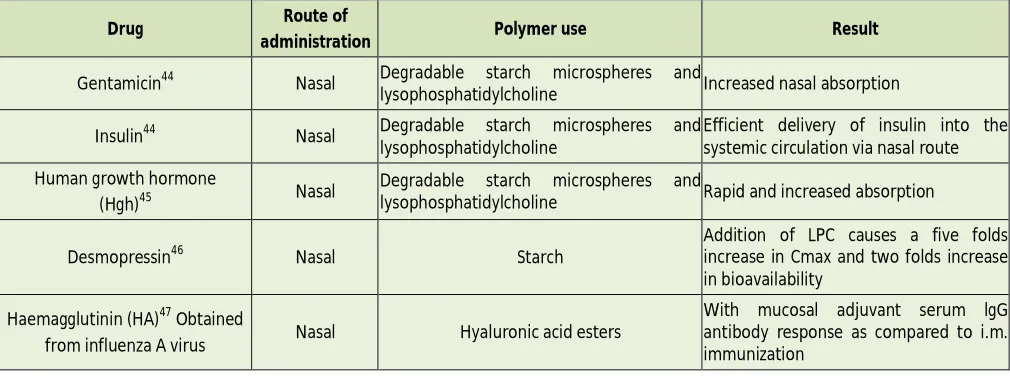
Table 2: Microspheres for nasal drug delivery
Drug Route of
administration Polymer use Result
Gentamicin44 Nasal Degradable starch microspheres and
lysophosphatidylcholine Increased nasal absorption
Insulin44 Nasal Degradable starch microspheres and lysophosphatidylcholine
Efficient delivery of insulin into the systemic circulation via nasal route Human growth hormone
(Hgh)45 Nasal
Degradable starch microspheres and
lysophosphatidylcholine Rapid and increased absorption
Desmopressin46 Nasal Starch
Addition of LPC causes a five folds increase in Cmax and two folds increase in bioavailability
Haemagglutinin (HA)47 Obtained
from influenza A virus Nasal Hyaluronic acid esters
It is describes various systems, devices, formulations, and methods of delivery of drugs to the nose or nasal cavity (table 2). Depending on the therapeutic intent, intranasal drugs may be targeted for local treatment or systemic action. For treatment and prevention of nasal symptoms E.g. Rhinitis, Allergy, Decongestion and Local inflammation etc. Martinac and at el in 2004 prepared Loratadine-loaded microspheres by spray-drying of dispersions, emulsions and suspensions differing in polymeric composition and solvents used. And he delivered loratadine (lipophilic) drug through nasal drug delivery by making bioadhesive microsphere48. In nasal drug delivery, coupling of bioadhesive properties to microspheres is of great importance because of additional advantages: efficient absorption and enhanced bioavailability of the drug, a much more intimate contact with the mucus layer and reduction in frequency of drug administration due to the reduction in mucociliary clearance of drug delivery system adhering to nasal mucosa.
f. Oral drug delivery
Shefi angel timmy49 et al. work on delivery of insulin by oral route by making microsphere with cyclodextrin making inclusion complex with drug molecule. In oral delivery of insulin for the treatment of diabetes mellitus. The main problem with insulin was degradation of drug due to enzyme in GI tract. Aliginate and enteric polymers, which protecting the insulin in acidic condition. Polk et al used chitosan alginate membranes for delayed release of protein.52
g. Targeting drug delivery
Microspheres exhibit a prolonged residence time at site of application and thus contribute to better therapeutic performance of drugs. Microspheres have been developed for oral, buccal, ocular, rectal, nasal and vaginal routes for either systemic or local effects. This article presents introduction and the advanced pharmaceutical applications of bioadhesive microspheres. There are number of drugs which are given by different route of administration and having good targeting effect some of example are given in below table 3.50
Table 3: Target drug delivery of different drug by microsphere
Drug Route of
administration Polymer used Acyclovir51 Ocular Chitosan
Insulin6,51 Nasal degradable starch microspheres and lysophosphatidylcholine Gentamicine6,45 Nasal degradable starch
microspheres and lysophosphatidylcholine Furosemide52 GI polyglycerol esters of fatty
acids
Insulin53 Colonic PGEF coated with Eudragit S 100
Insulin54 Vaginal hyaluronic acid esters
h. Gastroretentive controlled delivery system55
In which Floating systems are low-density systems (fig 3) that have float over the gastric contents and remain in the stomach for a prolonged period than conventional dosage forms. Gastric emptying of dosage form is extremely variable process and ability to control the emptying time is valuable asset for dosage forms, there are several difficulties are faced in designing controlled released systems for better absorption and enhanced the bioavailability.56 While the system floats over the gastric contents, the drug is released slowly at the desired rate, which results in increased gastro-retention time and reduces fluctuation in plasma drug concentration57-59.
Figure 3: gastroretentive drug delivery systems Several polymers are use for gastroretentive controlled delivery system such are Cellulose acetate, Chitosan, Eudragit, Acrycoat, Methocil, Polyacrylates, Polyvinyl acetate, carbopol, Agar, Polyethylene oxide, Polycarbonates, Acrylic resins and Polyethylene oxide etc55.
Some example of drug products in market are provided in table 4:
Tablets: Ampicillin, Atenolol, Amoxycillin, Acetyl salicylic acid, Acetaminophen, Chlorpheniramine maleate, Ciprofloxacin, Captopril, Cinnarazine, Diltiazem, Fluoruracil, Isosorbide di nitrate, Riboflavin, Prednisolone, Theophilline.
Capsules: Nicardepine, D8iazepam, Misoprostol, Propranolol, Verapamil.
Microspheres/Floating beads: Aspirin, Verapamil, Ibuprofen, Ketoprofen, Amoxicillin,
Granules: Riboflavin, Meloxicam, Nicardepine Indomethacin, Diclofenac, Prednisolone3
i. Implantable devices
until their activity is needed. The biotechnology industry employs microspheres to contain organisms and their recombinant products to aid in the isolation of this products.67
j. Pharmaceutical applications
A number of pharmaceutical microencapsulated products are currently on the market, such as aspirin, theophylline and its derivatives, vitamins, pancrelipase, antihypertensives, potassium chloride, progesterone, and contraceptive hormone combinations.68 Microencapsulated KCL (Micro-K, R.H. Robins, Richmond, VA) is used to prevent gastrointestinal complications associated with potassium chloride. The dispersibility of the microcapsules and the controlled release of the ions minimize the possibility of local high salt concentrations,
which could result in ulceration, hemorrhage, or perforation. Microspheres have also found potential applications as injection69, 70 or inhalation71-74 products. The number of commercially available products does not reflect the amount of research that has been carried out in this area, nor the benefits that can be achieved using this technology. Economic considerations have been a key factor in determining the number of pharmaceutical microencapsulated products. Most encapsulation processes are expensive and require significant capital investment for equipment. An exception is pan or sprays coating and spray drying, since the necessary equipment may already be available within the company. An additional expense is due to the fact that most microencapsulation processes are patent protected.
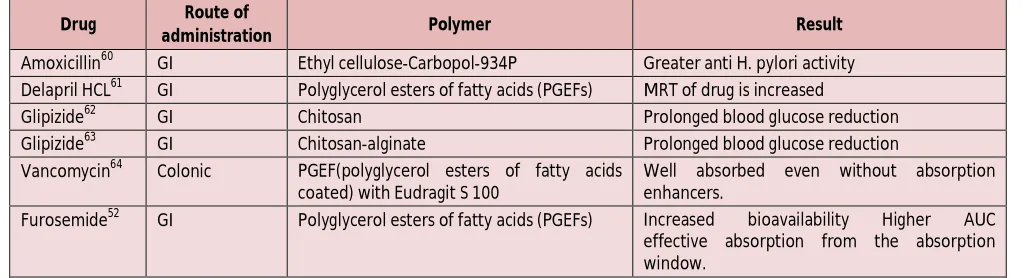
Table 4: Microspheres for GI drug delivery
Drug Route of
administration Polymer Result
Amoxicillin60 GI Ethyl cellulose-Carbopol-934P Greater anti H. pylori activity Delapril HCL61 GI Polyglycerol esters of fatty acids (PGEFs) MRT of drug is increased
Glipizide62 GI Chitosan Prolonged blood glucose reduction Glipizide63 GI Chitosan-alginate Prolonged blood glucose reduction Vancomycin64 Colonic PGEF(polyglycerol esters of fatty acids
coated) with Eudragit S 100
Well absorbed even without absorption enhancers.
Furosemide52 GI Polyglycerol esters of fatty acids (PGEFs) Increased bioavailability Higher AUC effective absorption from the absorption window.
OTHER APPLICATIONS
Applications of microencapsulation in other industries are numerous. The best known microencapsulated products are carbonless copying paper, photosensitive paper, microencapsulated fragrances, such as ‘‘scent-strips’’ (also known as ‘‘snap-n-burst’’), and microencapsulated aromas (‘‘scratch-n-sniff’’). All of these products are usually prepared by gelatin–acacia complex coacervation. Scratch-n-sniff has been used in children’s books and food and cosmetic aroma advertising. Microcapsules are also extensively used as diagnostics, for example, temperature-sensitive microcapsules for thermo graphic detection of tumors. In the biotechnology industry microencapsulated microbial cells are being used for the production of recombinant proteins and peptides73. The retention of the product within the microcapsule can be beneficial in the collection and isolation of the product. Encapsulation of microbial cells can also increase the cell-loading capacity and the rate of production in bioreactors. Smaller microcapsules are better for these purposes; they have a larger surface area that is important for the exchange of gases across the microcapsule membrane.
REFERENCES
1. Jain N K, Controlled and Novel drug delivery, (2004), 236-237, 21.
2. Sinha V R, Bansal K, Kaushik R, Kumria R, Trehan A. Poly-caprolactone microspheres and nanospheres, International Journal of Pharmaceutics (2004) 278 1–23. 3. Gholap S B, Banarjee S K,Gaikwad D D, Jadhav S L, Thorat
R M, hollow microsphere: a review1; (2010),1, 0-15. 4. Howard C Ansal, introduction to Pharmaceutical Dosage
forms,by Lea & Febiger, 4;1985,126.
5. Sinha V R,Singla A K,Wadhawan S,Kaushik R,Kumria R,Bansal K, Dhawan S, Chitosan microspheres as a potential carrier for drugs, International Journal of Pharmaceutics274;2004, 1–33.
6. Jayaprakash S, Halith S M, Mohamed Firthouse P U, Kulaturanpillai K, Abhijith, Nagarajan M. Preparation and evaluation of biodegradable microspheres of methotrexate. Asian J Pharm,3;2009,26-9.
7. Gohel Mukesh C, Parikh R K, Stavan, A Spray drying a review, pharmainfo, 7;2009, 5.
8. Parikh D, Spray drying as a granulation Technique; In: Handbook of Pharmaceutical Granulation Technology, Drugs and the Pharmaceutical Sciences. New York, Marcel Dekker 1997, 75-96.
9. Swarbrick b j, Spray drying and Spray Congealing of Pharmaceuticals, In: Encyclopedia of Pharmaceutical Technology, Marcel Dekker. 1992, 207-221.
15 John P M, Becker C H, J.pharm sci.(1968)57, 584. 16 He P, Davis, S S, Illum, L,Chitosan microspheres prepared
by spray drying. Int, J. Pharm,187;1999a,53–65.
17 He P, Davis, S S, Illum, L, Sustained release chitosan microspheres prepared by novel spray drying methods J Microencapsul,16;1999b, 343–355
18 Giunchedi P, Conti B, Maggi L, Conte U, Cellulose acetate butyrate and polycaprolactone for ketoproton spray-dried microsphere preparation J Microencapsul.11;1994, 381– 393.
19 Remington, Oral Solid Dosage Forms, The Science and Practice of Pharmacy,04;1995, 1627-1628
20 Bodmeier R, Wang J, Bhagwaywar H, Microencaps J.pharm. sci, 9;1992,89–98
21 Bogataj M, Mrhar A, Grabnar I, Rajtman Z, Bukovec P, Srcic S, Urleb U, The influence of magnesium stearate on the characteristics of mucoadhesive microspheres, Microencapsul J pharm.sci. 17;2000,499–508.
22 Lim S T, Martin G P, Berry D J, Brown M B, Preparation and evaluation of the in vitro drug release properties and mucoadhesion of novel microspheres of hyaluronic acid and chitosan J Control Rel. 66;2000),281–292.
23 Berthold A, Cremer K, Kreuter J,Influence of crosslinking on the acid stability and physicochemical properties of chitosan microspheres. STP Pharm. Sci,6;1996 b,358–364 24 Alagusundaram M,Madhu S C C , Umashankari K, Attuluri
V B,Lavanya C , Ramkanth S, Microspheres as a Novel Drug Delivery System,Chemtech,13;2009, 526-534,
25 Bodmeier R, Wang J, Bhagwatwar H J, Microencaps. J pharm.sci9;1992,99–107.
26 Li Y P, Machida T Y, Sannan T, Nagai T,. Preparation of chitosan microspheres containing fluorouracil using the ‘dryin-oil’ method and its release characteristics. STP Pharm. Sci. 1;1991,363–368
27 Kyotani S, Nishioka Y, Okamura M, Tanaka T, Miyazaki M, Ohnishi S, Yamamoto Y, Ito K, Ogiso T,Tanada S, A study of embolizing materials for chemo-embolization therapy of hepatocellular carcinoma antitumor effect of cis diamminedichloroplatinum(II) albumin microspheres, containing chitin and treated with chitosan on rabbits with VX2 hepatic tumors. Chem. Pharm. Bull. (Tokyo), 40;1990,2814–2816.
28 Jameela S R, Jayakrishnan A, Glutaraldehyde crosslinked chitosan microspheres as a long acting biodegradable drug delivery vehicle: studies on the in vitro release of mitoxantrone and in vivo degradation of microspheres in rat muscle. Biomaterials 16;1995, 769–775.
29 Hassan E E, Parish R C, Gallo J M, Optimized formulation of magnetic chitosan microspheres containing the anticancer agent, oxantrazole. Pharm. Res.9;1992, 390– 397.
30 Shah S, Qaqish R, Patel V, Amiji M, Evaluation of the factors influencing stomach-specific delivery of antibacterial agents for Helicobacter pylori infection. J. Pharm. Pharmacol.51;1999, 667–672.
31 Parul T, Varma A L M , Garud N, Preparation and characterization of aceclofenac microspheres, Asianpharmainfo, 2010.
32 Shiraishi S, Imai T ,Otagiri M,Controlled release of indomethacin by chitosan–polyelectrolyte complex:
optimization and in vivo/in vitro evaluation J. Control Rel,25;1993, 217–225
33 Murata Y, Miyamoto E, Kawashima S, Additive effect of chondroitin sulfate and chitosan on drug release from calciuminduced alginate gel beads. J. Control Rel,38;1996,101–108.
34 Rahul N, B Haritha, Reddy C K.Ashok K, K J Kumar, application of chitosan microspheres as drug carriers J. Pharm. Sci. & Res.1;2009,1-12.
35 Bayomi M A, al-Suwayeh S A, el-Helw A M, Mesnad A F,Preparation of casein–chitosan microspheres containing diltiazem hydrochloride by an aqueous coacervation technique. Pharm. Acta Helv.73;1998,187–192
36 Jameela S R, Kumary T V, Lal A V, Jayakrishnan A,Progesterone-loaded chitosan microspheres: a long acting biodegradable controlled delivery system. J. Control Rel.52;1998,17–24.
37 Huang H, Tian H, Li X, Zhao G, Hypoglycemic effect of chitosan-microcapsulated insulin on the blood glucose level of streptozotocin-diabetic Wistar rats. Sheng Wu Yi Xue Gong Cheng Xue Za Zhi,18; 2008, 425–427,
38 Akbuga J, Durmaz G, Preparation and evaluation of crosslinked chitosan microspheres containing furosemide. Int. J. Pharm.111;1994, 217–222.
39 Limin M, Yuzhin Z Q L, Zhongwel G, Study on preparation and pharmacodynamics of insulin-loaded polyester microparticles. Yaoxue Xuebao 35;2000, 850–853. 40 Funden berg H H, Stites D P, Caldwel J L,Wells J V ,In: Basic
and clinical immunology, Lange Medical, Los Altosca,2;1978,1346-1348
41 Lamprecht A, Ubrich N, Hombreiro Perez M, Lehr C,Hoffman M, Maincent P, Influences of process parameters on nanoparticle preparation performed by a double emulsion pressure homogenization technique. Int. J. Pharm. 196;2000, 177–182.
42 Shah S, Qaqish R, Patel V, Amiji M, Evaluation of the factors influencing stomach-specific delivery of antibacterial agents for Helicobacter pylori infection. J. Pharm. Pharmacol. 51;1999, 667–672.
43 Giunchedi P, Genta I, Conti B, Muzzarelli R A, Conte U,Preparation and characterization of ampicillin loaded methylpyrrolidinone chitosan and chitosan microspheres.Biomaterials,19; 1998,157–161.
44 Hejazi R, Amiji M, Stomach-specific anti-H. pylori therapy. II. Gastric residence studies of tetracycline-loaded chitosan microspheres in gerbils. Pharm. Dev. Technol, 8;2003, 253–262.
45 Nachts S, Martin K.The microsponges a novel topical programmable delivery formulation, Marcel Dekker Inc, Newyork,5th(1990) 299
46 Kang M L,Cho S C,Yoo H S, Application of chitosan microspheres for nasal delivery of vaccines, Biotechnology Advances,27;2009, 857–865
47 Patel J.K, Bioadhesion is a topic of current interest in the design of controlled systems Bioadhesive Microspheres, pharmainfo 4;2006,6
49 Illum L, Farraj N F, Davis S S, Johansen B R, O’Hagan D T Investigation of the nasal absorption of biosynthetic human growth hormone in sheep-use of a bioadhesive microsphere delivery system. Int. J. Pharm 63; 1990,207-211
50 Critchley H,Davis S S, Farraj N F, Illum L, Nasal absorption of desmopressin in rats and sheep-effect of a bioadhesive microsphere delivery system. J. Pharm. Pharmacol.46;1994,651-656
51 Singh M, Briones M, O’Hagan D T (2001) A novel bioadhesive intranasal delivery system for inactivated influenza vaccines. J. Control. Release,70;2001,267-276 52 Vasir J K, Tambwekar K, Garg S, Bioadhesive microspheres
as a controlled drug delivery system. Int. J. Pharm.255;2003,13–32
53 Shefi A T, Sunita P V, Chandra P S, Valsala K J, Betacyclodextrine complexed insulin loaded alginate microspheres-oral drug delivery system,15;2002, 48-53 54 Polk A, Amsden B, De yao, K Peng T, and Goosena A, J
pharm Sci. 83; 178-185 (1993)
55 Gental I, Conti B, Perugini P, Pavanetto F, Spadaro A, Puglisi G ,Bioadhesive microspheres for ophthalmic administration of Acyclovir. J. Pharm. Pharmacol.49;1997,737-742
56 Akiyama Y, Nagahara N, Novel formulation approaches to oral mucoadhesive drug delivery system. In: Mathiowitz E, Chickering DE, Lehr CM. (Eds.),Bioadhesive Drug Delivery Systems-Fundamentals, Novel Approaches and Development 1998. 477–505
57 Geary S, Schlameus H W, Vancomycin and insulin used as models for oral delivery of peptides. J. Control. Release 23;1993,65-74
58 Illum L, Farraj N F, Fisher A N, Gill J, Miglietta M, Benedetti L M, Hyaluronic acid ester microsphere as a nasal delivery system for insulin. J. Control. Release,29;1994,133-141 59 Punam.G, Floating Microspheres: A Review, Pharmainfo,
6;2008,5
60 Hirtz J. The git absorption of drugs in man: a review of current concepts and methods of investigation. Br J Clin Pharmacol 19;1985,77-83.
61 Chawla G, Gupta P, Koradia V, Bansal A K.Pharm Tech27(7),2001,50-51,
62 Chickering D E , Jacob J S.Matho W E.Reactive Polymers 25;1995,189-206.
63 Seng C H,J Pharm Sci 74;1995,399-405.
64 Liu Z, Lu W, Qian L, Zhang X, Zeng P, Pan J, In vitro and in
vivo studies
on mucoadhesive microspheres of amoxicillin J. Control. Release, 102;2005, 135-144
65 Akiyama Y, Yoshioka M, Horibe H, Inada Y, Hirai S, Kitamori N, Toguchi H ,Anti-hypertensive effect of oral controlled release microspheres containing an ACE inhibitor (Delapril hydrochloride) in rats. J. Pharm. Pharmacol 46;1994, 661-665
66 Patel JK, Patel RP, Amin AF, Patel MM Formulation and evaluation of mucoadhesive glipizide microspheres. AAPS PharmSciTech 6;2005, 49-55
67 Patel J K, Amin A F, Patel M M Formulation optimization and evaluation of controlled release mucoadhesive microspheres of glipizide for oral drug delivery using factorial design. Drug Delivery Technology4;2004, 48-53 68 Geary S, Schlameus H W,Vancomycin and insulin used as
models for oral delivery of peptides. J.Control. Release,23;1993,65-74
69 Chang, T M S. Artificial Liver and Artifical Cells, Plenum Press, New York, 1978.34-35
70 Chang, T M S. Biomedical Applications of Microencapsulation, Lim, F., Ed, CRC Press, Boca Raton, FL, 1984, 85.
71 Donbrow, M Microcapsules and Nanoparticles in Medicine and Pharmacy, Donbrow, M, Ed, CRC Press London, 1991,1–14.
72 Kissel, T , Demirdere, A Controlled Drug Delivery Mu ller , B W, Ed, Wissen-Schaftliche Verlagsge-Sellschaft mbH: Stuttgart, 1984, 103–131.
73 Gurney R , Peppas, N A Harrington, D D, Banks, G S,Drug Dev. Ind. Pharm. 7;1981, 1–25.
74 Maggi G C, Di Roberto F M, Microencapsulation Nixon J R, Ed, Marcel Dekker, Inc,New York, 1976.103–111.
About Corresponding Author: Mr. Harsh bansal