Munich Personal RePEc Archive
Overview by formal and informal
learning in the computer world
Udrică, Mioara and Vătuiu, Teodora
University of Petroşani
September 2009
Online at
https://mpra.ub.uni-muenchen.de/19262/
OVERVIEW BY FORMAL AND INFORMAL LEARNING IN THE COMPUTER WORLD
Mioara Udric , Teodora V tuiu *
ABSTRACT: The advancement of information and communication technologies, offers the training sector the promise that the latest generation of network applications will induce qualitative changes in education and training. In the present European context, Romania plans the strategically goals assumed in the process of integration to became reality an established strategic goals for the transition to a competitive and dynamic economy, to a high quality educational system, based on need to assuring the independence and autonomy context and ensure that higher education and research systems .
1. General consideration
In the present European context, Romania, as a recently accepted country into The European Community, plans the strategically goals assumed in the process of adhering to became reality and has established strategic goals for the transition to a competitive and dynamic economy, to a high quality educational system, based on:
Lisbon European Council 23 and 24 March 2000, stating that “Europe's education and training systems need to adapt both to the demands of the knowledge society and to the need for an improved level and quality of employment”;
The Bologna Declaration of 19 June 1999, affirming that “Universities' independence and autonomy ensure that higher education and research systems continuously adapt to changing needs, society's demands and advances in scientific knowledge”.
Romanian Post adhering strategy 2007-2013 stipulates, through specific objectives, the requirement, that the education should be concentrated on development of a set of key competences, which have to ensure a performances achieved at the individual level, both on personal and socio-professional field. These key competences, endorsed at the European level, are: communication in the mother tongue, communication in foreign languages, custom of mathematical calculation and basic competences in science and technology, TIC abilities, to learn for learning, civically and inter- personal components, enterprising and cultural conscience.
Development of key competences assumes an optimal correlation between the two forms of learning: formal learning and informal learning. Both formal and informal learning offer different strengths to the learning process, serve learners, may be useful to educators, to parents at home with their kids or to adult learners who are looking to expand their knowledge, either for their own enrichment or to increase their career options.
With regard to the connection among the participants of process and the way in which the transfer is made, (1)formal learning is defined as knowledge that can be captured in any format (written, video, audio) and can be accessed anytime and anywhere, independent of the person who originally had it; (2)informal learning is defined as what happens when knowledge has not been externalized or captured and exists only inside someone’s head. To get the knowledge, you must locate and talk to the person. (1)The formal knowledge transfer includes live virtual-classroom courses with prepared slides, books, video and audio tapes, digital libraries and repositories, a real-time seminar on the Web, electronic performance-support tools, programs accessed during a job or task, instructor- led courses that follow an outline, a recorded Web-based meeting. (2)The informal knowledge transfer includes instant messaging, a spontaneous
•
Prof., Ph. D. at “Titu Maiorescu” University of Bucharest ;meeting on the Internet, a phone call to someone who has information you need, a live one-time-only sales meeting introducing a new product, a chat-room in real time, a scheduled Web-based meeting with a real-time agenda, or a meeting with your assigned mentor or manager.
These different learning environments are significantly connected to the individual performances in the personal and professional field, are more and more influenced by the computer technology. The use of Internet, on-line resources, virtual libraries, on-line communication, have implications in the society we live in, stimulating and developing multiple cognitive potential of those involved in the educational process. More, the digital world
becomes a “real” component in a society based on information and knowledge where individual find unlimited resources, favorable to develop his own personality, the digital world becomes a present partner for the challenged person involved in the business environment.
The major change brought by computer technology is networking, realized by Internet global network. Most organizations, which were before of a hierarchical type, are now moving to networks and change information using Internet. Internet links people with people, people with information, and information with other information.
Internet is mainly a network of information. But education needs a network of knowledge, which is coherent information, linked to issues or questions, linked to possible uses. Knowledge, which is more elaborate, changes the role of educator, who has to create such networks, and to give the students the way to access knowledge.
Below are the conclusions of an analysis of the performances obtained in business environment by those who gained particular competences in the context of formal and informal environment.
2. Formal Learning
In the new context, school has to change similarly to society. The teachers have to try to eliminate some weaknesses of educational system: technological support is still limited; curriculum does not integrate the use of technology computer; there are not enough credit hours of instruction with CT; old-fashioned methods are still in use; teachers (others than those who teach informatics) have low-level training in informatics; evaluation systems test only acquired information; students want to have short-term benefits; there is a lack of motivation in acquiring long-term competences.
The school needs to understand the evolution of the external world and to change its curriculum areas, ways of learning, school structure and resources, in order to match its aims to social evolution. Because the computer technology profoundly transforms society, education and the way the teacher interacts with students have to take into account that: (1) students can search, evaluate and communicate their own results in the classroom settings or in informal settings, out of the classroom; (2) the teacher has the instruments to develop the ability of each student to intelligently process. For students with different background and competences, the teacher becomes the facilitator of learning, offering strategies to guide learners; (3) universities and other public institutions take part in the development of international projects.
Until now, the Romanian university system has been characterized by strong inertia and focused on teaching. From now on, we think that:
the curriculum has to be based on the following assumptions: (1) students live in a global, knowledge-based age and learn in an online world; (2) the teacher should have the knowledge, skills, understanding and positive attitude, to make effective use of the computer technology in their teaching practice;
the curriculum has to aims at developing individual competencies which lead individuals to success, institutional competencies which lead society to success and application of individual competencies to contribute to collective goals.
1) Information and Communication Technology (ICT) - a course that:
• develops the basic concepts in ICT and familiarizes students with the standards and
protocols in ICT ;
• gives the students skills in communication on Internet and Intranet;
• helps students to share their knowledge and experience, developing the ability to access new information regarding their fields;
• includes the students in projects initiated by other future teachers, in order to extrapolate the experience to other situations.
2) Relational Databases Management Systems- a course that:
• familiarizes students with design models and use simulation process in systemic
methodology for Information Systems;
• helps students in designing relational data bases and defining interface with the users; • teaches students to use information resulting from a data base in order to understand the
real system environment.
3) Multidimensional Analysis in Data Warehouses Collection - a course that:
• helps students to work in client-server architecture, give them initial knowledge in
Standard Query Language;
• guides the students to reach the basic level in designing data warehouses collections; • familiarizes students with multidimensional analysis of the data storage in data
warehouses and with the different business functions that lead to effective decision-making.
4) Object Oriented Modeling in Information Systems - a course that:
• shifts attention from symptoms to causes, from assertions to justifications and from the
specific to the general;
• familiarizes students with the analysis, design and implementation fazes used in object
oriented methodology;
• prepares students to apply conclusion from the analysis process, in order to develop an
existing model, by adding new components;
• helps students to develop network between objects, to define and reuse components in
different environment programming. By similarity, students can understand educational models based on “learning objects”.
Regarding the new methods, in order to develop competencies in computer technology, teachers have to:
(1) guide the students to reach the basic level in information and communication technology, using the digital library which provides documentation;
(2) create new and challenging situations so that students can understand data security, ethical issues and how important co-operation is;
(3) guide the students in understanding the network of knowledge and in designing data bases of knowledge and
(4) use multiple-choice questionnaires in order to evaluate the students’ progress and for self-assessment.
To develop key competencies of business or management graduates, it necessary to develop an environment where the students can apply knowledge on business or management issues, with a view to improving their decision-making ability at work. Teachers also have to:
(1) direct students towards the acquisition of learning skills that will help them operate in a continuously evolving business environment and prepare them to undertake progressively the professional duties required in the real world;
(2) help students to understand how organizations use information to create knowledge and make decisions and to analyze the effect of computer technology on business and integrate CT to strategic business plans.
If until now the interest of researchers was concentrated on the analysis of formal learning, it is now detected a change of emphasis towards a reconsideration of the importance and weight of informal learning, together with the other forms of learning. In addition, the success in an informal setting can lead to greater confidence in the formal classroom. Coffield F., in “The Necessity of Informal Learning” said: “Informal learning should no longer be regarded as an inferior form of learning whose main purpose is to act as the precursor of formal learning; it needs to be seen as fundamental, necessary and valuable in its own right”.
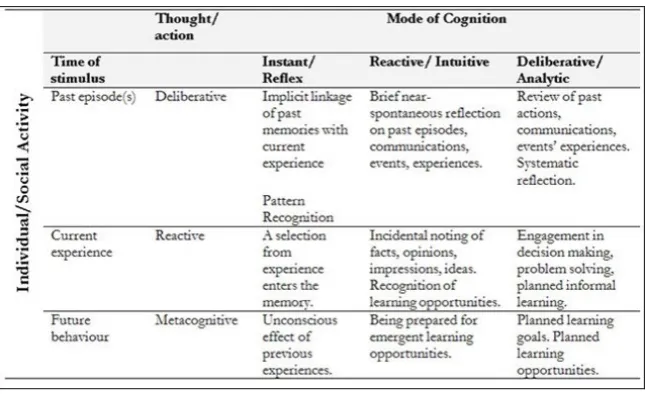
[image:5.595.144.467.259.456.2]The informal learning is an outstanding factor in the development of human personality, meant to ensure the necessary training of the individual for assuming different specific social roles in the context of globalization. By its multidisciplinary and spontaneous character, as well as its accessibility, ensures a vast development of individual personality best correlated with his needs, increases the odds of the individual to best and efficiently adapt to the demands of the environment.
Table 1 Michael Eraut’s typology of non-formal learning (2000, p.129)
Informal learning is natural: no curriculum, no classrooms, no grades or certificates, and no schedule in advance. Experience indicates that:
People learn to do their jobs largely by observing others, asking colleagues, and trial-and-error;
at least 80 percent of how people learn their jobs are informal and the 75 percent of learning happens as the learner creatively adopts and adapts to ever changing circumstances (A study of time-to-performance done by Sally Anne Moore at Digital Equipment Corporation in the early 1990s, Moore, Sally-Ann, "Time-to-Learning", Digital Equipment Corporation, 1998); Almost all real learning for performance is informal, and the people from whom we learn informally are usually present in real time. (The Institute for Research on Learning, 2000, Menlo Park).
In terms of learning in the workplace, everything is focused on performance and performance is everything. Into viewing them as creators and constructors of learning, the informal learning approach people as both learners and educators, moving away from seeing learners as consumers of different packages and opportunities. This means needs skills for learners and educators, offers the conceptual framework for the development of key competences:
for learners the skills include: forming, expressing, justifying, defending an opinion; supporting opinions of others; challenging others’ opinions; questioning others; seeking clarification; representing others’ opinions; building on others’ opinions;
Taking into account all these reasons, we consider that those who learn in the informal learning environment can easier develop key competences, which are needed to achieve professional performances. Consequently, formal classroom and companies have to accept informal moments of knowledge transfer, should add these accidental, informal intersections of learning and performance into their management.
Concluding Comments and Invitation to Further Research
Formal learning, along with informal learning, provides powerful learning opportunities which can strengthen and support one another. Responsibility for learning is shared among educators and learners. The differences are more a matter of degree in each of these types of education.
We hope that the generous issue of formal and informal learning will raise a major interest among the specialists and will bring together valuable individual efforts and experiences.
At the same time, we would like to be joined by specialists from different fields and geographical areas of the world, in order to build up a unitary vision, coherently connected to the learning environment, as a relevant factor in the development of human personality.
Bibliography:
Coffield, F., (2000) - The Necessity of Informal Learning, Bristol: The Policy Press;
Rogers, A., - (Accessed 30th July, 2009) - Looking again at non-formal and informal education - towards a new paradigm 2004. Available from: http://www.infed.org/biblio/non_formal_paradigm.htm
V tuiu T., Popeang V., (2005), - Economia digital i impactul ei asupra managementului educa ional, CNIV, Bucure ti ;
Udrica M, Martinov D, (2006), - Managementul bibliotecilor virtuale in sistemul de instruire asistata de calculator. Principii, metode, instrumente. Simpozionul interna ional “Economia româneasca. Prezent si viitor”, Bucure ti;
Udrica M, Dumitrescu A, (2007), - New Directions in Teacher Education in Today’s Romania, 27th Annual International Seminar of the International Society for Teacher Education - The Future of Teacher Education and Professional Development, University of Stirling, Anglia.
*** Internet ressources:
www.pz.harvard.edu
www7.nationalacademies.org/
www.teamsoft.ro/weblog/index.php?blog=1&
www.howardgardner.com
www.infed.org
www.1educat.ro/resurse/ise/reflectii_teoretice
www.ilinet.org