International Journal of Emerging Technology and Advanced Engineering
Website: www.ijetae.com (ISSN 2250-2459,ISO 9001:2008 Certified Journal, Volume 4, Issue 9, September 2014)
575
Performance Improvement of Wi-MAX System using QAM
Modulation and Moving Average Filter
Smriti Shrivastava
1, Prof. Md. Abdullah
2Department of Electronics and Communication Engineering, Sagar Institute of Science and Technology, Bhopal, M.P., INDIA
Abstract - WiMAX is introduced by the Institute of Electrical and Electronic Engineers (IEEE). Wireless provides a worldwide interoperability for microwave access. Now-a-days telecommunication industries are highly concerned with the wireless transmission of data, which can employ many transmission types, from point to multipoint links. It contains full mobile internet access. several applications have already been applied so far using Wi-MAX, as alternative to 3G mobile systems in developing countries, Wireless Digital Subscriber Line (WDSL), Wireless Local Loop (WLL). IEEE 802.16e-2005 has been developed for mobile wireless communication which is based on OFDM technology and this enables going towards the 4G mobile in the future. In this paper , we built a simulation model based on moving average
filter implementation and demonstrated in different
simulation scenarios with different modulation techniques such as BPSK, QPSK and QAM (Both 16 and 64) to find out the best performance of physical layer for WiMAX Mobile. All the essential conditions were implemented in the
simulation according to the 802.16e OFDMA-PHY
specification. The noise channel AWGN, Rayleigh fading, data
randomization methods, FFT, IFFT, and Adaptive
modulation is used for the whole simulation method. The performance has been concluded based on BER, SNR and Pe outcome through MATLAB Simulation.
Keywords-- Wi-Max, BPSK, QPSK, QAM, and Moving Average Filter.
I. INTRODUCTION
WiMAX is called the next generation broadband wireless technology, which provides high speed, security, sophisticate and last mile broadband services along with a cellular back haul and Wi-Fi hotspots. The development of WiMAX began a only some years ago when scientists and engineers felt the need of having a wireless Internet access and other broadband services which works well everywhere especially the rural areas or in those areas where it is hard to establish wired infrastructure and economically not feasible.
IEEE 802.16, also known as IEEE Wireless-MAN, provides both licensed and unlicensed band of 2-66 GHz which is standard of fixed wireless broadband and included mobile broadband uses.
WiMAX forum, a private organization was formed in June 2001 to coordinate the components and develop the equipment those will be compatible and inter operable. After several years, in 2007, Mobile WiMAX equipment developed with the standard IEEE 802.16e got the certification and they announced to release the product in 2008, as long as mobility and nomadic access. The IEEE 802.16e air interface based on Orthogonal Frequency Division Multiple Access (OFDMA) which main aim is to give better performance in non-line-of-sight environments. IEEE 802.16e Standard introduced scalable channel bandwidth up to 20 MHz, Multiple Input Multiple Output (MIMO) and AMC enabled 802.16e technology to support peak Downlink (DL) data rates up to 63 Mbps in a 20 MHz channel through Scalable OFDMA (S-OFDMA) system [2]. IEEE 802.16e has strong security architecture as it uses Extensible Authentication Protocol (EAP) for mutual validation, series of strong encryption algorithms, CMAC or HMAC based on message protection and reduced key lifetime [4].
Attenuation
Each signal has a specific strength. To reach to a distant receiver, a signal must be strong enough to be detected by the receiver. When a signal travels in the air, gradually it becomes weaker over time and this phenomenon is called Attenuation. WiMAX is considering this issue carefully as it works on both LOS and NLOS environment.
Multi Path Fading
When an object comes on the way between a wireless transmitter and a receiver, it blocks the signal and creates several signal paths known as multi path. Even though the signal makes till the receiver but with variant time and it is hard to detect the actual signal. Multi path degrade the quality of the signal. Several multipath barriers which as follow:
II. WI-MAX ARCHITECTURE
International Journal of Emerging Technology and Advanced Engineering
Website: www.ijetae.com (ISSN 2250-2459,ISO 9001:2008 Certified Journal, Volume 4, Issue 9, September 2014)
576
The WiMAX Network Working Group (NWG) has developed a network reference model according to the IEEE 802.16e-2005 air interface to make certain objectives of WiMAX are achieved.
To support fixed, nomadic and mobile the network reference model can be rationally divided into three parts [6]
Mobile Station (MS)
It is for the end user to access the mobile network. It is a portable station able to move wide areas and perform data and voice communication. It has the entire necessary user equipments for example an antenna, an amplifier, the transmitter, receiver and software required to perform the wireless communication. GSM, TDMA, FDMA, CDMA and W-CDMA strategies etc are the examples of Mobile station.
Access Service Network (ASN)
It is owned by NAP, formed with one or several base stations and ASN gateways (ASN-GW) which creates radio access network. It provides entire access services with full mobility and efficient scalability. Its ASN-GW controls the access in the network and coordinates between data and networking elements.
[image:2.612.334.563.340.521.2]Connectivity Service Network (CSN): Provides IP connectivity to the Internet or other public or corporate networks. It also applies for every user policy management, location management, address management, between ASN QoS, roaming and security.
Fig 2.1: WiMAX Network Architecture based on IP [6]
Mechanism
WiMAX is capable of working in different frequency ranges but according to the IEEE 802.16, the frequency band is 10 GHz - 66 GHz.
A typical architecture of WiMAX includes a base station built on top of a high rise building and communicates on point to multi-point basis with subscriber stations which can be a business organization or a home. The base station is linked through Customer Premise Equipment (CPE) with the customer. This connection can be a Line-of-Sight or Non-Line-of-Sight. Uses higher frequency between 10 GHz to 66 GHz
Huge coverage areas
Higher throughput
Less interference
Threat only comes from atmosphere and the characteristic of the frequency
LOS requires most of it’s first Fresnel zone should be free of obstacles
Fig 2.8: Fixed and Mobile WiMAX in different applications
III. PROPOSED METHODOLOGY
International Journal of Emerging Technology and Advanced Engineering
Website: www.ijetae.com (ISSN 2250-2459,ISO 9001:2008 Certified Journal, Volume 4, Issue 9, September 2014)
[image:3.612.114.511.111.292.2]577
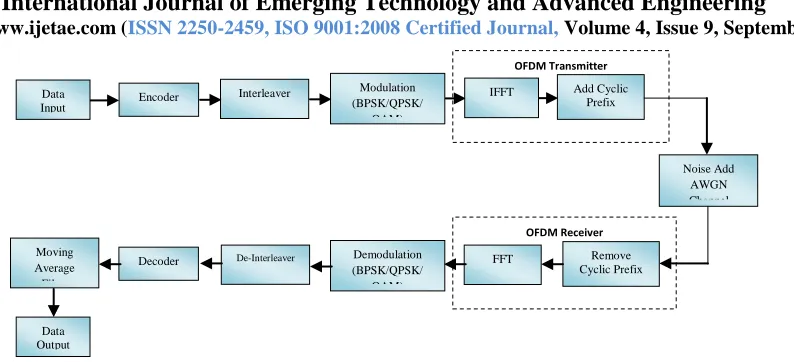
Fig. 3.1. Shows Block Diagram of Proposed Methodology
OFDM Transmitter
Add Cyclic Prefix Encoder Interleaver Modulation
(BPSK/QPSK/ QAM)
IFFT
Data
Input
Noise Add AWGN Channel
OFDM Receiver
Remove Cyclic Prefix FFT
Demodulation (BPSK/QPSK/
QAM)
De-Interleaver
Decoder Moving
Average Filter
International Journal of Emerging Technology and Advanced Engineering
Website: www.ijetae.com (ISSN 2250-2459,ISO 9001:2008 Certified Journal, Volume 4, Issue 9, September 2014)
[image:4.612.83.264.140.558.2]578
Fig. 3.2. Shows Flow Graph of Proposed Methodology
As the above flow graph shows the whole procedure of Proposed Methodology in this firstly, we initialize the environmental variables then data has been generated and encoded after that interleaving of data has been done then modulation schemes has been implemented and there after Orthogonal Frequency Division Multiplexing method adopted with AWGN Addition after vice versa above procedure the Moving Average Filtration technique is used to minimize the error possibility of WiMAX.
IV. SIMULATION RESULTS
IEEE 802.16 Wi-Max system has been simulated and found out results of its performance with different modulation techniques. Here to increase the performance of existing Wi-Max system we have also analyzed system with moving average filter (MAF) with each modulation technique. Now the effect of these techniques enhances when the number of iterations increased, i.e. when the repetition of frame is done more time the error rate of system decreases significantly. In below figures all the techniques and their performance is shown. The results is calculated in terms of BER vs SNR.
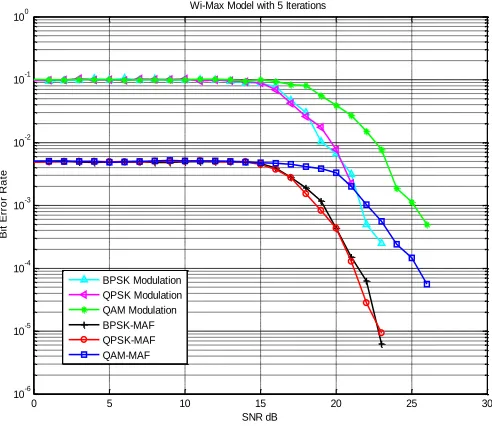
Fig.1. Wi-Max system performance with 5 iterations
Fig. sss.1 shows the performance of Wi-Max system under the condition of 5 iterations and three modulation techniques BPSK, QPSK and QAM with and without filter, and it is observed that BPSK and QPSK without filter and BPSK and QAM with filter gives better error performance.
0 5 10 15 20 25 30
10-6 10-5 10-4 10-3 10-2 10-1 100
SNR dB
Bi
t
Er
ro
r
R
a
te
Wi-Max Model with 5 Iterations
[image:4.612.326.572.286.499.2]International Journal of Emerging Technology and Advanced Engineering
Website: www.ijetae.com (ISSN 2250-2459,ISO 9001:2008 Certified Journal, Volume 4, Issue 9, September 2014)
579
Fig. 2. Wi-Max system performance with 10 iterations
Fig. 2 shows the performance of Wi-Max system under the condition of 10 iterations and three modulation techniques BPSK, QPSK and QAM with and without filter, and it is observed that BPSK and QPSK without filter and BPSK and QAM with filter gives better error performance.
Fig. 3. Wi-Max system performance with 15 iterations
Fig. 3 shows the performance of Wi-Max system under the condition of 15 iterations and three modulation techniques BPSK, QPSK and QAM with and without filter, and it is observed that BPSK and QPSK without filter and BPSK and QAM with filter gives better error performance.
Fig. 4. Wi-Max system performance with 20 iterations
Fig. 4 shows the performance of Wi-Max system under the condition of 20 iterations and three modulation techniques BPSK, QPSK and QAM with and without filter, and it is observed that BPSK and QPSK without filter and BPSK and QAM with filter gives better error performance.
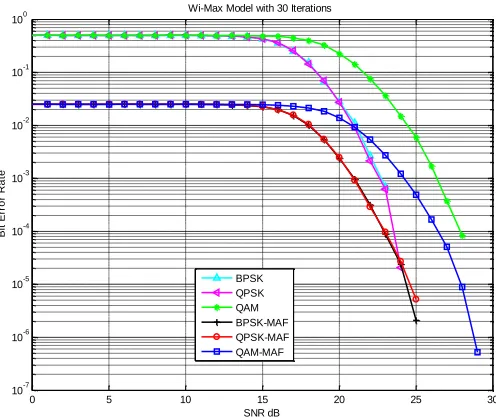
Fig. 5. Wi-Max system performance with 30 iterations
Fig. 5 shows the performance of Wi-Max system under the condition of 30 iterations and three modulation techniques BPSK, QPSK and QAM with and without filter, and it is observed that BPSK and QPSK without filter and BPSK and QAM with filter gives better error performance.
0 5 10 15 20 25 30
10-6 10-5 10-4 10-3 10-2 10-1 SNR dB Bi t Er ro r R a te
Wi-Max Model with 10 Iterations
BPSK QPSK QAM BPSK-MAF QPSK-MAF QAM-MAF
0 5 10 15 20 25 30
10-6 10-5 10-4 10-3 10-2 10-1 100 SNR dB Bi t Er ro r R a te
Wi-Max Model with 15 Iterations
BPSK QPSK QAM BPSK-MAF QPSK-MAF QAM-MAF
0 5 10 15 20 25 30
10-7 10-6 10-5 10-4 10-3 10-2 10-1 100 SNR dB Bi t Er ro r R a te
Wi-Max Model with 20 Iterations
BPSK QPSK QAM BPSK-MAF QPSK-MAF QAM-MAF
0 5 10 15 20 25 30
10-7 10-6 10-5 10-4 10-3 10-2 10-1 100 SNR dB Bi t Er ro r R a te
Wi-Max Model with 30 Iterations
[image:5.612.325.582.124.346.2] [image:5.612.54.301.129.345.2] [image:5.612.51.301.428.635.2] [image:5.612.327.575.429.638.2]International Journal of Emerging Technology and Advanced Engineering
Website: www.ijetae.com (ISSN 2250-2459,ISO 9001:2008 Certified Journal, Volume 4, Issue 9, September 2014)
580
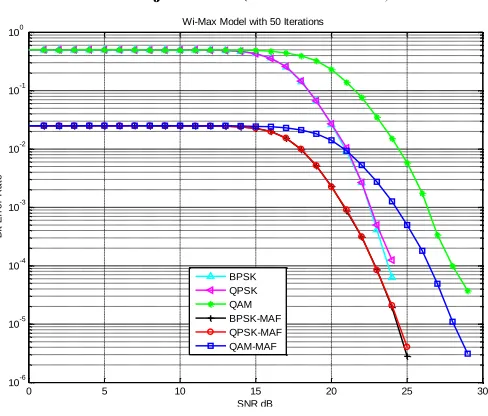
Fig. 6. Wi-Max system performance with 50 iterations
Fig. 6 shows the performance of Wi-Max system under the condition of 50 iterations and three modulation techniques BPSK, QPSK and QAM with and without filter, and it is observed that BPSK and QPSK without filter and BPSK and QAM with filter gives better error performance. After comparison of all the results it can be say that with higher iterations we can achieve better results in terms of error rate, with less complex modulation techniques.
V. CONCLUSION AND FUTURE SCOPE
Various techniques has been used to enhance the performance of Wi-Max system previously. In the same context we have simulate the IEEE 802.16 Wi-Max standard, the simulation results shows that the performance of the Wi-Max system increased when it is operated with QPSK modulation scheme or QAM modulation scheme with moving average filter (MAF) and repetitions.
In future more advance filter will also help to get better performance and higher speed processors make system faster to repeat the transmission frame which is added advantage with the system.
REFERENCES
[1] http://www.wimaxforum.org/resources/technical-specifications
[2] Agilent, "Digital Modulation in Communications Systems —An
Introduction", Application Note 1298.
[3] Askar, S.; Al-Raweshidy, H.S., "Performance evaluation of
IEEE802.16-2004 Wi-MAX with fixed high fading
channels," Wireless and Microwave Technology Conference (WAMICON), 2011 IEEE 12th Annual , vol., no., pp.1,6, 18-19 April 2011.
[4] Yong Su Lee; Young-Il Kim; Won Ryu; Lee Ho Jin; Tae-Sik Kim;
Whan-Woo Kim, "BER performance of pilot-aided channel estimation in mobile-Wi-MAX in the presence of frame
synchronization errors," ICT Convergence (ICTC), 2011
International Conference on , vol., no., pp.485,486, 28-30 Sept. 2011.
[5] Moraitis, N.; Vouyioukas, D.; Constantinou, Philip, "Propagation
Study and Performance Evaluation of a Mobile Wi-MAX System at 3.5 GHz," Communications (ICC), 2011 IEEE International Conference on , vol., no., pp.1,5, 5-9 June 2011.
[6] Iqbal, Z.; Nooshabadi, S.; Heung-No Lee, "Analysis and design of
coding and interleaving in a MIMO-OFDM communication system," Consumer Electronics, IEEE Transactions on , vol.58, no.3, pp.758,766, August 2012.
[7] Kahveci, S., "Performances of Zigzag coding with high-level
modulations on Wi-MAX system," Signal Processing and
Communications Applications Conference (SIU), 2012 20th , vol., no., pp.1,4, 18-20 April 2012.
[8] Yuan-Cheng Lai; Yen-Hung Chen; Ching-Neng Lai, "A Channel
Quality Aware Algorithm for IEEE 802.16 Uplink Burst Construction," Advanced Information Networking and Applications (AINA), 2012 IEEE 26th International Conference on , vol., no., pp.207,214, 26-29 March 2012.
[9] Kamali, B.; Bennett, R.A.; Cox, D.C., "Understanding Wi-MAX: An
IEEE-802.16 Standard-Based Wireless Technology," Potentials, IEEE , vol.31, no.5, pp.23,27, Oct. 2012.
[10] Patidar, M.; Dubey, R.; Jain, N.K.; Kulpariya, S., "Performance
analysis of Wi-MAX 802.16e physical layer model," Wireless and Optical Communications Networks (WOCN), 2012 Ninth International Conference on , vol., no., pp.1,4, 20-22 Sept. 2012.
[11] Dutta, N.; Biradar, S.R., "Interoperability of WiFi and
Wi-MAX," Parallel Distributed and Grid Computing (PDGC), 2012 2nd IEEE International Conference on , vol., no., pp.747,751, 6-8 Dec. 2012.
[12] Sekar, V.; Veerapagounder, P.; Baskaran, B., "BER performance and
frequency band efficiency analysis of fixed WI-MAX," Computing Communication & Networking Technologies (ICCCNT), 2012 Third International Conference on , vol., no., pp.1,4, 26-28 July 2012.
[13] Sharef, Z.T.; Alaradi, A.E.; Sharef, B.T., "Performance Evaluation
for Wi-MAX 802.16e OFDMA Physical Layer," Computational Intelligence, Communication Systems and Networks (CICSyN), 2012 Fourth International Conference on , vol., no., pp.351,355, 24-26 July 2012.
[14] Paz Portela, N.A.; Rodriguez Diaz, B., "Performance Comparison
between the Air Interfaces of LTE and Mobile Wi-MAX," Latin America Transactions, IEEE (Revista IEEE America Latina) , vol.11, no.4, pp.1001,1006, June 2013.
[15] Kharthika, B.; Vigneswari, G.M., "Performance resolution of
cross-layer framework in Wi-MAX OFDMA," Information
Communication and Embedded Systems (ICICES), 2013
International Conference on , vol., no., pp.773,779, 21-22 Feb. 2013.
[16] Prabakaran, N.; Shaji, K.S., "Performance analysis of uplink MIMO
in 2×2 mobile Wi-MAX system," Signal Processing Image Processing & Pattern Recognition (ICSIPR), 2013 International Conference on , vol., no., pp.6,9, 7-8 Feb. 2013.
0 5 10 15 20 25 30
10-6 10-5 10-4 10-3 10-2 10-1 100
SNR dB
Bi
t
Er
ro
r
R
a
te
Wi-Max Model with 50 Iterations
[image:6.612.54.298.129.337.2]![Fig 2.1: WiMAX Network Architecture based on IP [6]](https://thumb-us.123doks.com/thumbv2/123dok_us/8709416.881516/2.612.334.563.340.521/fig-wimax-network-architecture-based-ip.webp)