The effect of different types of insoles or
shoe modifications on medial loading of
the knee in persons with medial knee
osteoarthritis : a randomised trial
Jones, R, Chapman, GJ, Parkes, M, Forsythe, L and Felson, D
http://dx.doi.org/10.1002/jor.22947
Title
The effect of different types of insoles or shoe modifications on medial
loading of the knee in persons with medial knee osteoarthritis : a
randomised trial
Authors
Jones, R, Chapman, GJ, Parkes, M, Forsythe, L and Felson, D
Type
Article
URL
This version is available at: http://usir.salford.ac.uk/id/eprint/35410/
Published Date
2015
USIR is a digital collection of the research output of the University of Salford. Where copyright
permits, full text material held in the repository is made freely available online and can be read,
downloaded and copied for noncommercial private study or research purposes. Please check the
manuscript for any further copyright restrictions.
on Medial Loading of the Knee in Persons With Medial Knee
Osteoarthritis: A Randomised Trial
Richard K. Jones,1Graham J. Chapman,1,2Matthew J. Parkes,3Laura. Forsythe,3David T. Felson3,4,5
1School of Health Sciences, University of Salford, Salford, United Kingdom,2Clinical Biomechanics&Physical Medicine Section, Leeds Institute
of Rheumatic and Musculoskeletal Medicine (LIRMM) and Leeds NIHR Biomedical Research Unit, University of Leeds, Leeds, United Kingdom,
3Arthritis Research UK Centre of Excellence in Epidemiology, Centre for Musculoskeletal Research, University of Manchester, Manchester, United
Kingdom,4NIHR Manchester Musculoskeletal Biomedical Research Unit, Manchester Academic Health Sciences Centre, Manchester, United
Kingdom,5Clinical Epidemiology Unit, Boston University School of Medicine, Boston, Massachusetts
Received 12 December 2014; accepted 13 May 2015
Published online in Wiley Online Library (wileyonlinelibrary.com). DOI 10.1002/jor.22947
ABSTRACT: Many conservative treatments exist for medial knee osteoarthritis (OA) which aims to reduce the external knee adduction moment (EKAM). The objective of this study was to determine the difference between different shoes and lateral wedge insoles on EKAM, knee adduction angular impulse (KAAI), external knee flexion moment, pain, and comfort when walking in individuals with medial knee OA. Seventy individuals with medial knee OA underwent three-dimensional walking gait analysis in five conditions (barefoot, control shoe, typical wedge, supported wedge, and mobility shoe) with pain and comfort recorded concurrently. The change in EKAM, KAAI, external knee flexion moment, pain, and comfort were assessed using multiple linear regressions and pairwise comparisons. Compared with the control shoe, lateral wedge insoles and barefoot walking significantly reduced early stance EKAM and KAAI. The mobility shoe showed no effect. A significant reduction in latter stance EKAM was seen in the lateral wedge insoles compared to the other conditions, with only the barefoot condition reducing the external knee flexion moment. However, the mobility shoe showed significant immediate knee pain reduction and improved comfort scores. Different lateral wedge insoles show comparable reductions in medial knee loading and in our study, the mobility shoe did not affect medial loading.©2015 The Authors. Journal of Orthopaedic ResearchPublished by Wiley Periodicals, Inc. on behalf of Orthopaedic Research Society. J Orthop Res 33:1646–1654, 2015. Keywords: knee osteoarthritis; footwear; lateral wedge insoles; adduction moment; walking
Knee osteoarthritis (OA) is the most common form of OA and is the leading cause of pain and disability in older adults.1At the current time, there is no cure for
knee OA and therefore non-surgical conservative man-agement is at the forefront of the treatment for the disease. In the UK, National Institute of Clinical Excellence (NICE) guidelines recommend conservative management techniques such as footwear and insoles to be part of the management of the condition.2 The
medial compartment of the knee joint is more often affected than the lateral compartment.3
Dynamic joint loading has been implicated both in the development of knee pain associated with OA4and the progression of the disease.5 During walking the
ground reaction force passes medial to the knee in the frontal plane, this creates a moment that adducts the tibia relative to the femur, with the peak load on the medial compartment almost 2.5 times more than that on the lateral compartment.6The external knee adduction
moment (EKAM), captured from three-dimensional
motion analysis and inverse dynamics, is a valid and reliable proxy representing dynamic load distribution and is the primary mechanism, along with the external knee flexion moment, for the majority of compressive load in the joint.6–8 The EKAM typically has an early stance peak (first) and a late stance peak (second) with the first peak always higher than healthy controls regardless of severity, whereas the second peak is only higher in the more severe individuals.9 Therefore, given the target population for conservative management (mild and moderate knee OA), the primary parameters of interest are the first peak in the EKAM and also the knee adduction angular impulse (KAAI), which is the area under the adduction curve.10 These two parameters have been demonstrated to be related to severity11 to structural features of OA and to progression.12,13 Therefore, reducing the EKAM during walking and other activi-ties could be effective in delaying progression in medial knee OA.
Many unloading strategies are available including proximal and distal gait adaptations, direct orthotic management at the knee such as valgus knee brac-es,14,15 or indirectly at the foot and ankle interface such as shoes/footwear and foot orthoses such as lateral wedge insoles.16–18 The latter are popular as they are typically inexpensive with good adherence to treatment. Different types of shoes and orthotics have been shown to reduce the EKAM in knee OA tri-als16,18,19but these have not been directly compared in
terms of their effects on medial knee loading and clinical responses. Further, in recent studies directly
This is an open access article under the terms of the Creative Commons Attribution License, which permits use, distribution and reproduction in any medium, provided the original work is properly cited.
Grant sponsor: Arthritis Research UK Special Strategic Award; Grant number: 18676; Grant sponsor: Arthritis Research UK Centre of Excellence in Epidemiology; Grant number: 20380; Grant sponsor: SILK (ISRCTN); Grant number: 83706683; Grant sponsor: NIH; Grant number: AR47785.
Correspondence to: Richard K. Jones (E-mail: [email protected])
measured medial compressive loads have been shown to be affected by the magnitude of the external knee flexion moment20 in that a reduction in EKAM may not correspond with a true reduction in medial loads if a corresponding increase in knee flexion moment was seen. The literature on the different effects of lateral wedge insoles and shoe modifications on the knee flexion moment has also not been fully described.
There is also not one type of lateral wedge insole, but rather several types such as heel only, full length, and full length insoles with medial support, also with different angulations of lateral incline. In this study we chose to investigate a full length lateral wedge insole (typical) as these have been found to be better than heel only wedges21 and also one with a medial
arch support (supported), as this was previously found to be better functionally for the foot and ankle and more comfortable.22We have demonstrated in a previ-ous paper the effects on early stance peak EKAM and external knee flexion moment of these two different types of lateral wedge insole.18 In addition, other footwear based approaches to lowering medial load have been proposed. One such shoe treatment which aims to mimic barefoot walking during gait,16which is perceived as the best walking style for reducing medial loading, has been developed and recommended as efficacious for medial knee OA. These shoes have not been directly compared with traditional lateral wedge insoles in terms of their effects on medial knee load.
Understanding which treatment reduces medial loading and reduces pain may provide guidance in terms of which, if any, of these treatments is most likely to be efficacious for medial knee OA. The objectives of this study were to determine which of several different conservative treatments (barefoot, shoes, and insoles) most lowers the EKAM during walking, to determine if any concurrent changes occur in the external knee flexion moment and to compare the degree of immediate knee pain reduction and comfort during usage.
METHODS
The study is a Level 1 evidence randomised clinical trial (ISCRTN 83706683) whereby ethical approval was obtained from the North West Research Ethics Committee (09/H1013/ 51).
Participants
Participants with knee pain were recruited from the follow-ing sources: orthopaedic/physiotherapy clinics and advertise-ments in local media. The eligibility criteria for participation in the study were aged 45 years and above, medial tibiofe-moral OA with radiographs demonstrating Kellgren and Lawrence grade 2 or 3 in the affected painful knee with medial greater than lateral joint space narrowing, and at least mild pain during walking on a flat surface during the last week assessed by the KOOS pain subscale (P5).23 Radio-graphs were generally acquired as part of the patient’s routine care and were read by an experienced academically based musculoskeletal radiologist according to the OARSI
atlas.24 When no radiographs were available, we accepted evidence from recent arthroscopies or knee MRI’s as provid-ing sufficient information to evaluate eligibility. Patients were excluded if they presented with pain more localised to the patellofemoral joint on examination than medial joint (wedge inserts are not appropriate for disease in this compartment and lowering the EKAM may make them worse), had tricompartmental knee OA or grade 1 or grade 4 tibiofemoral OA on the Kellgren and Lawrence scale. Other exclusions included a history of high tibial osteotomy or other realignment surgery, total knee replacement on the affected side, or any foot and ankle problems,such as painful hallux valgus; plantar fasciitis; peripheral neuropathy or any foot and ankle pain, that contraindicated the use of the load modifying footwear interventions. In addition, participants were excluded if they had severe coexisting medical morbid-ities or used orthoses prescribed by a podiatrist or orthotist. Eligible participants were invited to attend the gait laborato-ry where informed consent was obtained.
Interventions
The analyses were conducted in the context of a single visit randomised trial. We tested five conditions: barefoot, a flat soled shoe (Ecco Zen) (control), two different lateral wedge insoles each which have been shown to reduce EKAM in patients with medial knee OA18,25 and a mobility shoe16 meant to mimic barefoot walking. Both lateral wedge insoles consisted of a 5 degree lateral wedge. The major difference between the lateral wedge insoles was that one had medial support (referred to hereafter as the “supported” wedge18 whereas the other had no medial support (the “typical” wedge).25 During the trial, these lateral wedges were
inserted into the flat-soled control shoe with participants having a minimum of 5 min familiarisation period to the condition. The mobility shoe was a flexible grooved shoe16
(see Fig. 1).
Protocol
All participants underwent gait analysis in all of the conditions. The order of presentation of the different con-ditions was randomised prior to participants’ enrolment using computer-generated permutations (using http://www. randomization.com/). Patients walked at their self-selected speed in all conditions. Upon completing each treatment, participants were asked to compare the knee pain experi-enced under that treatment while walking to pain when wearing their own shoes by scoring this pain on a 5-point Likert scale ranging from2 (indicating much better pain compared to the participants’ normal shoes) toþ2, (indicat-ing much worse pain compared to the participant’s normal shoes). Additionally, we asked participants to rate each condition’s comfort, in comparison to their normal everyday shoes. This was measured on a 10 cm VAS, with scores ranging from 5 (much less comfortable than the partic-ipants’ normal shoes), toþ5 (much more comfortable than the participant’s normal shoes). All outcomes were measured in all five study conditions (control shoe, typical lateral wedge, supported lateral wedge, mobility shoe, and barefoot.) A 16 camera Qualisys OQUS3 motion analysis system operating at 100 Hz and four AMTI force plates operating at 200 Hz were used to measure kinematics and kinetics during the trials. Each participant completed a minimum of three successful trials at a self-selected walking speed. The CAST marker set technique26was employed whereby rigid clusters
THE EFFECT OF DIFFERENT TYPES OF INSOLES OR SHOE 1647
of four non-orthogonal markers were positioned over the lateral shank, lateral thigh, and sacrum to track the move-ments of the limbs. Retroreflective markers were glued securely to the control shoes with the foot modelled as a rigid segment. A reference trial was conducted where retroreflec-tive markers were placed on bony landmarks specifying their location in relation to the clusters and to approximate joint centre. Ankle and knee joint centres were calculated as midpoints between the malleoli and femoral epicondyles respectively. The hip joint centre was calculated using the regression model of Bell et al.27 based on the anterior and
posterior superior iliac spine markers. Using an inverse dynamic approach Visual 3D (C-Motion, Rockville, Mary-land) we calculated the EKAM and sagittal plane external knee flexion moment (KFM) during stance phase for all of the trials and conditions. A custom Matlab (Matlab, USA) programme was used to extract the peak EKAM and KFM during early stance (up to 50% of stance phase) and the peak latter stance EKAM (from 50% of stance phase) and to calculate the knee adduction angular impulse (KAAI),9which
is the area under the adduction moment curve during the entire stance phase of gait. EKAMs and KFMs were normal-ised to participant’s mass (Nm/kg) with the KAAI normalnormal-ised to participant’s mass and stance time (Nm/kg s).
Data Analysis
Multiple linear regression was used to test for differences in continuous outcomes of interest, between the 5 different
experimental conditions. We created four models, one for each of the gait outcomes of interest (EKAM [first and second peak] KAAI, and KFM). In each model, the predictor variable was the orthotic intervention, coded as “dummy variables”— giving 5 predictor variables in total, one for each condition). The control shoe condition was used as the reference group. The model also accounted for the repeated-measures design of the study by including the participant ID as a panel variable. We used a Hausman specification test to check for the validity of using a random-effects model, in preference to a fixed-effects model of the same specification. The test did not show statistical significance and consequently, a random-effects model was used. We checked for model fit by investigating residuals against fitted plots. Since model residuals appeared heteroskedastic, robust standard errors (using sandwich estimators) were used to improve estimates of standard errors. Post-hoc pairwise contrasts were pro-duced, using linear combinations of the beta coefficients from the model to test for differences in all possible comparisons of the orthotics conditions, with ten pairwise tests for each of the three outcomes considered (EKAM, KAAI, and maximum external flexion moment). To counter issues of multiple testing, confidence intervals and p-values from these pair-wise tests were adjusted using the Benjamini-Hochberg procedure,28,29using a false discovery rate (FDR) of 0.05 (see supplementary material).
Because patient perceived change in knee pain was not normally distributed, we used Wilcoxon Sign Rank tests to investigate whether the distribution of patient-perceived pain change ranks were equal to zero, in each orthotic condition separately.
Finally, for each condition, we measured if the patient-perceived change in comfort was different from zero. To test this, we used a random-effects linear regression model, with the participants’ comfort ratings as the outcome variable. The predictor variable again was the orthotic intervention condition, coded as “dummy variables”, as in the EKAM/ KAAI regression. We then combined the model intercept with the beta coefficients of each condition in turn. This tests if the mean comfort rating in each is equal to zero. Additionally, as both walking speed and knee flexion moment were considered potential confounding variables, we repeated the above models, with walking speed and external knee flexion moment added as additional covariates.
All statistical analysis was performed using the statistical software package Stata (version 13.1; Stata Corporation, College Station, TX), with an alpha level of 0.05 (two-sided) for the assessment of statistical significance.
RESULTS
The flow of participants into the study is shown in Figure 2. The characteristics of the 70 participants were: a mean age of 60.3 years (SD 9.6), mean BMI of 30.5 kg/m2(SD 4.9), and 27 (38.6%) were female. Data
on Kellgren-Lawrence (K-L) grades were available for 62 of the 70 study participants, and of these, the mean K-L grade was 2.6 (SD 0.5). We reviewed recent knee arthroscopy reports or MRIs for 8 participants who did not have x-rays prior to the study to ensure that these subjects also had medial > lateral cartilage loss and other features of OA.
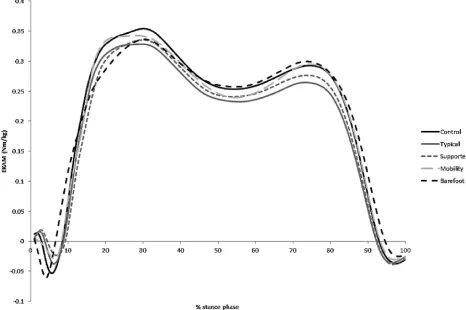
[image:4.594.41.269.62.401.2]When we examined the effects of the conditions on measures of medial loading (Tables 1 and 2, Fig. 3),
we found that barefoot walking had the greatest effect on early stance peak EKAM, lowering it by 7.6% (p<0.001 vs. control shoe). Both lateral wedges reduced the early stance peak EKAM by5.9 and5.6% (p¼0.001 vs. control shoe) for typical and supported respectively as we have previously reported.18 However, the mobility shoe did not pro-duce a significant reduction in the early stance peak EKAM compared with the control shoe (1.6%, p¼0.38).
For the second peak in EKAM during late stance, both of the lateral wedge insoles significantly reduced the magnitude of this peak in comparison to the control condition. There was no difference in the mobility or barefoot conditions in comparison to the control condition. For the knee adduction angular impulse (KAAI), the barefoot condition and the two lateral wedge conditions were significantly different in comparison to the control condition (barefoot 4.3%, p¼0.023; typical wedge 7.95%, p<0.001; supported wedge5.5%,p<0.001).
Pairwise comparisons (see supplementary material eTables S1–3) showed that there were no significant differences in the effects on the early stance peak in EKAM between each of the two lateral wedge condi-tions and barefoot walking. However, the early stance peak in EKAM in the barefoot condition was reduced significantly more than the mobility shoe (mean differ-ence0.024 Nm/kg,p¼0.004).
For the second peak in EKAM, both of the lateral wedge insoles had significantly greater reductions than the barefoot (typical wedge mean difference 0.029 Nm/kg,p<0.01; supported wedge mean differ-ence 0.019 Nm/kg, p¼0.004) and mobility (typical wedge mean difference 0.023 Nm/kg, p<0.01; supported wedge mean difference 0.013 Nm/kg, p¼0.024) conditions. A larger second peak reduction in the typical wedge resulted in a significant reduction in KAAI in comparison to the mobility shoe (mean difference 0.008 Nm/kg s,p¼0.011).
In comparison with the control shoe and all other conditions, the barefoot condition had significant reductions in the maximum external knee flexion moment (KFM) (etable 3) during early stance. No other changes in external knee flexion moment were seen.
Compared with the control shoe, walking speed increased by 0.03m/s with the mobility shoe (95% CI 0.02–0.04, p<0.001) and slowed by 0.04 m/s with barefoot walking (95%CI 0.05 to 0.03, p<0.001), but with adjustment for walking speed, this did not affect the overall findings or their significance. Addi-tional adjustment for external knee flexion moment changes also did not affect the differences seen between conditions in medial load measures.
In contrast with the findings with regard to medial loading, immediate reductions in knee pain were seen in two conditions: the supported (but not the typical)
Figure 2. Consort Figure: those eligible/en-rolled/randomised/studied.
THE EFFECT OF DIFFERENT TYPES OF INSOLES OR SHOE 1649
wedge (as reported previously)17and the mobility shoe (bothp<0.001) (see Fig. 4). A significant worsening of knee pain was reported by patients for the control shoe (not the subject’s own shoe) (p¼0.015) and barefoot walking (p¼0.054).
In terms of comfort, the control shoe was rated as less comfortable than the participant’s everyday shoes (see Table 3). Even though the wedges were placed inside these control shoes, both lateral wedges were rated as more comfortable than everyday shoes as were the mobility shoes.
DISCUSSION
To examine the effects of shoes and orthotics sug-gested as effective in unloading the medial knee
[image:6.594.34.539.74.241.2]compartment, we carried out a randomised trial, comparing these treatments. We found that barefoot walking and lateral wedge insoles all significantly reduced medial loading in the first part of stance phase with both of the lateral wedge insoles reducing medial loading during latter periods of stance. The two types of lateral wedge insoles showed roughly comparable effects on the knee adduction moment and impulse with only the barefoot walking signifi-cantly altering the sagittal moment. Although the mobility shoe did not reduce medial knee loading, participants reported that it diminished knee pain more than the typical wedge, control shoe, and barefoot, and was rated as more comfortable than the other treatments.
Table 1. EKAM, KAAI, Knee Flexor moment, Comfort Rating (VAS), and Walking Speed by Condition
Condition
EKAM 1st Peak, Nm/kg Mean (SD) EKAM 2nd Peak, Nm/kg Mean (SD) KAAI, Nm/kg*s Mean (SD)
Knee Flexor Moment (KFM), Nm/kg Mean
(SD)
Comfort Rating (-5 toþ5), Mean
(SD) Walking Speed, m/s Mean (SD) Control shoe
0.39 (0.16) 0.33 (0.14) 0.16 (0.07) 0.61 (0.24) -0.24 (2.29) 1.08 (0.33)
Typical lateral wedge
0.37 (0.15) 0.30 (0.13) 0.14 (0.07) 0.61 (0.23) 0.84 (2.42) 1.08 (0.33)
Supported lateral wedge
0.37 (0.15) 0.31 (0.14) 0.15 (0.07) 0.62 (0.23) 1.35 (2.13) 1.09 (0.33)
Mobility shoe
0.39 (0.16) 0.32 (0.14) 0.15 (0.07) 0.60 (0.24) 2.40 (2.22) 1.11 (0.34)
Barefoot 0.36 (0.15) 0.33 (0.14) 0.15 (0.07) 0.57 (0.22) 0.48 (2.35) 1.04 (0.33)
Table 2. Effects of Study Footwear on Moments and Walking speed compared with control shoe.
EKAM 1st Peak EKAM 2nd Peak KAAI
Knee Flexor
Moment (KFM) Walking Speed (m/s)
Condition
mean change (95% CI), p
% change
mean change (95% CI), p
% change
mean change (95% CI), p
% change mean change (95% CI), p % change mean change (95% CI), p
% change Typical lateral wedge -0.023 (-0.035 to -0.012), <0.001 -5.85 -0.028 (-0.036 to -0.02), <0.001 -8.49 -0.012 (-0.016 to -0.009), <0.001 -7.95 -0.002 (-0.022 to 0.018), 0.818 -0.39 0.003 (-0.007 to 0.013), 0.558 0.28 Supported lateral wedge -0.022 (-0.035 to -0.009), 0.001 -5.63 -0.018 (-0.026 to -0.01), <0.001 -5.52 -0.009 (-0.013 to -0.005), <0.001 -5.52 0.013 (-0.004 to 0.03), 0.133 2.17 0.009 (-0.002 to 0.019), 0.105 0.79 Mobility shoe -0.006 (-0.021 to 0.008), 0.384 -1.61 -0.005 (-0.015 to 0.005), 0.294 -1.59 -0.004 (-0.009 to 0.001), 0.090 -2.74 -0.006 (-0.029 to 0.017), 0.611 -0.99 0.029 (0.018 to 0.039), <0.001 2.65 Barefoot -0.03 (-0.044 to -0.016), <0.001 -7.62 0.001 (-0.011 to 0.013), 0.856 0.34 -0.007 (-0.013 to -0.001), 0.023 -4.30 -0.035 (-0.057 to -0.013), 0.002 -5.74 -0.042 (-0.056 to -0.028), <0.001 -3.89
[image:6.594.36.546.464.728.2]While lateral wedge inserts have not been shown to decrease knee pain in knee osteoarthritis,30 they do reduce medial loading. Since excess loading in the medial compartment contributes to knee pain and disease progression and since knee OA treatments that alter this are likely to be popular and inexpen-sive, further exploration of their possible effects is desirable. In that vein, our work suggests two impor-tant findings. First, they suggest that lateral wedge insoles reduce medial knee loading more than a control shoe throughout the whole of stance phase and significantly better than both barefoot walking and the mobility shoe during latter stance where the supported insole reduces immediate knee pain better than the typical device with increased comfort. Secondly, whist the mobility shoes did not reduce medial loading significantly, they were rated highly by participants for reductions in knee pain and comfort.
[image:7.594.73.539.63.373.2]Barefoot walking was found to have the greatest reduction in EKAM in comparison to the control shoe and is in agreement with a previous study by Shakoor and Block.31 However, they found a greater reduction (11.9%) in the peak EKAM (KAAI was not assessed in that study). Differences between our study and that of Shakoor and Block could have accounted for the difference in the magnitude of effect. We focused on the early stance first peak EKAM and not the peak EKAM (which is sometimes different) and we used one control shoe whereas they compared barefoot to a person’s individual shoes. We found importantly that barefoot walking reduced medial loading during latter stance in comparison to the control shoe, but had increased medial loading in the latter period of stance in comparison to the lateral wedge insoles. This reduced latter stance reduction in EKAM in the lateral wedge insoles, whilst not directly related to severity or
Figure 3. EKAM time series plots for the different conditions (n¼70).
Figure 4. Participant rating of knee pain during use of each condition compared with knee pain using their own shoe.
THE EFFECT OF DIFFERENT TYPES OF INSOLES OR SHOE 1651
[image:7.594.73.544.632.718.2]progression, would contribute to a greater reduction in the overall loading during stance phase (KAAI) which has been related to cartilage loss.13 Different shoes
may differ in their effect on medial knee loading and our control shoe may have been more effective than some personal shoes in reducing knee medial loads. An exploration of types of personal shoes and their effects on knee loading was beyond the scope of this trial but this is an important next step to determine what role different footwear has on medial knee loading.
In agreement with Jones et al.,22 there was no change in the reduction of EKAM or KAAI with the two different lateral wedge insoles. This is in contrast to the work by Nakijima et al.32who reported that a lateral wedge insole with an arch support reduced medial knee loading more than a standard lateral wedge. One reason for this difference is that the lateral wedge insole with the medial support used in this study is an off-the-shelf device and not custom made as in the study by Nakajima et al. It is noteworthy that the medial support incorporated into our lateral insole was not hard and could readily be compressed with weight-bearing and this may underlie the similar effects of both insoles we studied. Both insoles were deemed to be comfortable (Table 3) but the supported lateral wedge received a greater overall comfort score and significantly reduced pain immedi-ately in comparison to the typical wedge.
The mechanism for these reductions in EKAM and KAAI are perceived to be related to the change in the centre of pressure location for the lateral wedge insoles33which leads to a greater reduction in moment arm. The barefoot walking had a slightly slower speed but this was not associated with changes in EKAM or KAAI. Therefore, the mechanism for this is potentially due to altered foot mechanics but this was not the remit of this paper and further research is needed.
External knee flexion moments also contribute to medial knee loading and effects of shoe inserts or shoes on flexion moments could affect medial loading independently of EKAM or KAAI. We found no signifi-cant effects of shoe inserts or shoes on external knee flexion moment.20 Only barefoot walking reduced flexion moments and this may have been a conse-quence of a slower overall walking speed but this
needs to be further explored. Further, recent work by Trepczynski and colleagues8using instrumented knee prostheses suggests that the external knee flexion moment contributes importantly to medial knee load-ing only during activities when the knee is overly-flexed, such as stair climbing and squatting or kneeling. Our participants were only required to walk on level ground and our findings on flexion moments suggest that with this activity, most of the variance in medial loading is readily explained by the EKAM and KAAI.
Our results on the effects of the mobility shoe contrast with earlier studies in that we found a reduction of just greater than 1% in medial knee loading during early stance. One possible reason could have been the choice of control shoe. As noted earlier Shakoor and cowokers16tested mobility shoes against the individuals’ own shoes. Those authors comment that the choice of shoe worn by the patient has an effect on reduction in medial knee loads compared with the mobility shoe. It is also possible that medial loading reductions occur over time with the mobility shoe.34While the mobility shoe did not show expected reductions in medial loading, the participant’s immedi-ate knee pain scores were significantly improved in comparison to the control shoe with a favourable comfort rating. This suggests that patient adherence would be high and if medial loading were reduced significantly over time, this could be an effective intervention.
The reductions in pain seen in the mobility shoe and the lateral wedge insoles disagree with some longitudinal studies and the full reason behind why there were these changes in not known. However, one of the potential reasons could be due to an increased comfort in both the supported insole and the mobility shoe which reflected better perceived pain scores.
As with any study there are limitations other than the ones described earlier. The pain and comfort responses were assessed immediately and it is possible that these may change over time. However, previous work35 has suggested that immediate pain response and longer term pain response with wedges are highly correlated.
[image:8.594.35.538.84.172.2]In conclusion, different lateral wedge insoles show comparable reductions in medial knee loading with the
Table 3. Participants report of shoe/condition comfort
Mean Comfort Rating compared with participants’ own shoe (10cm VAS, -5 toþ5)
Condition mean (95% CI), p
Control -0.243 (-0.777 to 0.291), 0.373
Typical lateral wedge 0.844 (0.31 to 1.379), 0.002**
Supported lateral wedge 1.349 (0.814 to 1.883),<0.001***
Mobility shoe 2.403 (1.869 to 2.937),<0.001***
Barefoot 0.464 (-0.074 to 1.002), 0.091
supported insole reducing pain more. In our study, the mobility shoe did not affect medial loading. While we confirmed findings of other studies in demonstrating a clearcut reduction in early stance medial loading when walking barefoot, barefoot walking increased medial loading during the latter period of stance and may not be the best for medial loading reduction.
ACKNOWLEDGEMENTS
We appreciate the help of R.O.A.M. study staff (Helen Williams, Rosie Perry, Laura Heathers) in carrying out this study and are indebted to the participants for their help. We also wish to thank Najia Shakoor MD who graciously provided the mobility shoes we tested. Richard Jones may receive royalties from the lateral wedge insoles.
AUTHORS’ CONTRIBUTIONS
All authors contributed to the study design, collection, analysis and editing and approval of the final manuscript.
REFERENCES
1. Guccione AA, Felson DT, Anderson JJ, et al. 1994. The effects of specific medical conditions on the functional limitations of elders in the Framingham Study. Am J Public Health 84:351–358.
2. Osteoarthritis. Care and management of osteoarthritis in adults. NICE 2014; Clinical Guideline 177.
3. Ahlback S. 1968. Osteoarthrosis of the knee. A radiographic investigation. Acta Radiol Diagn (Stockh):72.
4. Amin S, Luepongsak N, Mcgibbon CA, et al. 2004. Knee adduction moment and development of chronic knee pain in elders. Arthritis Rheum 51:371–376.
5. Miyazaki T, Wada M, Kawahara H, et al. 2002. Dynamic load at baseline can predict radiographic disease progression in medial compartment knee osteoarthritis. Ann Rheum Dis 61:617–622.
6. Schipplein OD, Andriacchi TP. 1991. Interaction between active and passive knee stabilizers during level walking J Orthop Res 9:113–119.
7. Zhao D, Banks SA, Mitchell KH, et al. 2007. Correlation between the knee adduction torque and medial contact force for a variety of gait patterns. J Orthop Res 25:789– 797.
8. Trepczynski A, Kutzner I, Bergmann G, et al. 2014. Modula-tion of the relaModula-tionship between external knee adducModula-tion moments and medial joint contact forces across subjects and activities. Arthritis Rheumatol 66:1218–1227.
9. Mundermann A, Dyrby CO, Andriacchi TP. 2005. Secondary gait changes in patients with medial compartment knee osteoarthritis: increased load at the ankle, knee and hip during walking. Arthritis Rheum 52:2835–2844.
10. Stefanyshyn DJ, Stergiou P, Lun VM, et al. 2006. Knee angular impulse as a predictor of patellofemoral pain in runners. Am J Sports Med 34:1844–1851.
11. Kito N, Skinkoda K, Yamasaki T, et al. 2010. Contribution of knee adduction moment impulse to pain and disability in Japanese women with medial knee osteoarthritis. Clin Biomech 25:914–919.
12. Creaby MW, Wang Y, Bennell KL, et al. 2010. Dynamic knee loading is related to cartilage defects and tibial plateau bone area in medial knee osteoarthritis. Osteoarthritis Cartilage 18:1380–1385.
13. Bennell KL, Bowles KA, Wang Y, et al. 2011. Higher dynamic medial knee load predicts greater cartilage loss over 12 months in medial knee osteoarthritis. Ann Rheum Dis 70:1770–1774.
14. Jones RK, Nester CJ, Richards JD, et al. 2013. A comparison of the biomechanical effects of valgus knee braces and lateral wedged insoles in patients with knee osteoarthritis. Gait Posture 37:368–372.
15. Pollo FE, Otis JC, Backus SI, et al. 2002. Reduction of medial compartment loads with valgus bracing of the osteoarthritic knee. Am J Sports Med 30:414–421.
16. Shakoor N, Lidtke RH, Sengupta M, et al. 2008. Effects of specialized footwear on joint loads in osteoarthritis of the knee. Arthritis Rheum 59:1214–1220.
17. Kean CO, Bennell KL, Wrigley TV, et al. 2013. Modified walking shoes for knee osteoarthritis: Mechanisms for reductions in the knee adduction moment. J Biomech 46:2060–2066.
18. Jones RK, Chapman GJ, Forsythe L, et al. 2014. The Relationship between reductions in knee loading and imme-diate pain response whilst wearing lateral wedged insoles in knee osteoarthritis. J Orthop Res 32:1147–1154.
19. Erhart-Hledik JC, Elspas B, Giori NJ, et al. 2012. Effect of variable-stiffness walking shoes on knee adduction mo-ment, pain, and function in subjects with medial compart-ment knee osteoarthritis after 1 year. J Orthop Res 30:514–521.
20. Walter JP, D’Lima DD, Colwell CW Jr, et al. 2010. Decreased knee adduction moment does not guarantee decreased medial contact force during gait. J Orthop Res 28:1348–1354.
21. Hinman RS, Bowles KA, Payne C, et al. 2008. Effect of length on laterlly-wedged insoles in knee osteoarthritis. Arthritis Rheum 59:144–147.
22. Jones RK, Zhang M, Laxton P, et al. 2013. The biomechani-cal effects of a new design of lateral wedge insoles on the knee and ankle during walking. Hum Mov Sci 32:596–604. 23. Roos EM, Roos PH, Lohmander LS, et al. 1998. Knee injury
and Osteoarthritis Outcome Score (KOOS): development of a self-administered outcome measure. J Orthop Sports Phys Ther 78:88–96.
24. Altman RD, Gold GE. 2007. Atlas of individual radiographic features in osteoarthritis, revised. Osteoarthritis Cartilage 15: A1–A56.
25. Kerrigan DC, Lelas JL, Goggins J, et al. 2002. Effectiveness of a lateral-wedge insole on knee varus torque in patients with knee osteoarthritis. Arch Phys Med Rehabil 83:889– 893.
26. Cappozzo A, Catani F, Croce UD, et al. 1995. Position and orientation in space of bones during movement: anatomical frame definition and determination. Clin Biomech 10:171– 178.
27. Bell AL, Brand RA, Pedersen DR. 1989. Prediction of hip joint centre location from external landmarks. Hum Mov Sci 8:3–16.
28. Glickman ME, Rao SR, Schulz MR. 2014. False discovery rate control is a recommended alternative to Bonferroni-type adjustments in health studies. J Clin Epidemiol 67:850–857. 29. Benjamini Y, Yekutieli D. 2012. False discovery rate
control-ling confidence intervals for selected parameters. J Am Stat Assoc 100:71–80.
30. Parkes MJ, Maricar N, Lunt M, et al. 2013. Lateral wedge insoles as a conservative treatment for pain in patients with medial knee osteoarthritis: a meta-analysis. JAMA 10:722– 730.
31. Shakoor N, Block JA. 2006. Walking barefoot decreases loading on the lower extremity joints in knee osteoarthritis. Arthritis Rheum 54:2923–2927.
THE EFFECT OF DIFFERENT TYPES OF INSOLES OR SHOE 1653
32. Nakajima K, Kakihana W, Nakagawa T, et al. 2009. Addition of an arch support improves the biomechanical effect of a laterally wedged insole. Gait Posture 29: 208–213.
33. Hinman RS, Bowles KA, Meclaf BB, et al. 2012. Lateral wedge insoles for medial knee osteoarthritis: Effects of lower limb frontal plane biomechanics. Clin Biomech 27:27–33.
34. Shakoor N, Lidtke RH, Wimmer MA, et al. 2013. Improve-ment in knee loading after use of specialized footwear for
knee osteoarthritis: results of a six-month pilot investiga-tion. Arthritis Rheum 65:1282–1289.
35. Hinman RS, Payne C, Metcalf BR, et al. Lateral wedges in knee osteoarthritis: what are their immediate clinical and biomechanical effects and can these predict a three-month clinical outcome. Arthritis Care Res Mar 59:408–415.
SUPPORTING INFORMATION