Nursing Dissertations (PhD) School of Nursing
Spring 5-7-2011
The Experiences of Obese African American Women and Their
The Experiences of Obese African American Women and Their
Utilization of Preventive Healthcare Services
Utilization of Preventive Healthcare Services
Winsome Beverly Stephenson Georgia State University
Follow this and additional works at: https://scholarworks.gsu.edu/nursing_diss
Part of the Nursing Commons
Recommended Citation Recommended Citation
Stephenson, Winsome Beverly, "The Experiences of Obese African American Women and Their Utilization of Preventive Healthcare Services." Dissertation, Georgia State University, 2011.
https://scholarworks.gsu.edu/nursing_diss/17
iii
accordance with the stipulations prescribed by the author in the preceding statement.
The author of this dissertation is:
Winsome Stephenson 2615 Chestnut Walk Drive Grayson, GA 30017
The director of this dissertation is:
Dr. Margaret F. Moloney Associate Professor
Byrdine F. Lewis School of Nursing Georgia State University
PO Box 4019
Atlanta, GA 30302-4019
Users of this dissertation not regularly enrolled at Georgia State University are required to attest acceptance of the preceding stipulations by signing below. Libraries borrowing this dissertation for the use of their patrons are required to see that each user records here the information requested.
NAME OF USER ADDRESS DATE TYPE OF USE
iv ADDRESS: 2615 Chestnut Walk Drive Grayson, GA 30017
EDUCATION:
PhD 2011 Georgia State University
Atlanta, Georgia
MS 2005 Georgia State University Atlanta, Georgia
AAS 1995 Pace University
Pleasantville, New York
PROFESSIONAL EXPERIENCE:
2009 - 2011 Assistant Professor of Nursing - Mercer University 2007 - 2010 Nursing Instructor - Georgia Perimeter College 2005 - 2006 Clinical Nurse Specialist - Dekalb Medical Center 2001 - 2005 Staff/Charge Nurse - Gwinnett Medical Center 2000 - 2002 Staff Nurse - Emory Hospital
1999 - 2000 Director of Nursing Services - Beverly Healthcare 1998 - 1999 Director of Staff Education - Mariner Healthcare
1995 - 1998 Director of Nursing: Post-Acute Neuro and Orthopedic Rehabilitation -Tucker Nursing and Rehabilitation Center 1992 - 1995 Patient Care Technician - St. Agnes Hospital
PROFESSIONAL ORGANIZATIONS AND CERTIFICATIONS: 2008 - Present Southern Nursing Research Society
2007 - Present National League of Nursing
2004 - Present National Association of Clinical Nurse Specialist 2004 - Present Pi Gamma Chapter of Sigma Theta Tau International 2003 - Present Golden Key International Honor Society
2010 - Present Counselor, Pi Gamma Chapter, Sigma Theta Tau International 2010 - Present Manuscript Reviewer - Southern Online Journal of Nursing Research
2008 - Present Honors, Research & Scholarship Committee - Mercer University 2008 - Present Faculty Affairs Committee - Mercer University
2007 - Present Manchester High School Alumni Association - Georgia Chapter - Secretary
v Chapter
vi
UTILIZATION OF PREVENTIVE HEALTHCARE SERVICES
by
WINSOME STEPHENSON
Obesity is associated with higher death rates from breast and gynecological
cancers. African American women (AAW) are more likely to be diagnosed with these
cancers at later stages (Cui et al., 2003) and have lower survival rates than Caucasian
women (Stolley, Sharpe, & Schieffer, 2009). African American women are also
disproportionately affected by obesity. Studies suggest that the healthcare experiences of
obese women (primarily stigmatization), may contribute to their utilization of preventive
healthcare services (Howe 2006; Vallis Currie, Lawlor, & Ransom, 2007). However,
these studies have largely comprised Caucasian women; there remains a paucity of
studies addressing this issue in AAW. The purpose of this study was to explore the
healthcare experiences of AAW and their utilization of preventive healthcare services.
Interpretive phenomenology, based on the work of Max van Manen, was used to
describe and interpret the healthcare experiences of 15 obese AAW, living in
communities in Georgia. The women ranged in age from 23 to 62 with BMIs ranging
from 35-55. The majority of the sample (83%) had adequate health insurance. This was
a well educated sample with 87% having college degrees or some college education.
Individual, audio-taped interviews were used to collect data.
Data were analyzed using interpretive phenomenological methods, with analysis
vii
Attributing all problems to weight; They say lose weight but give us no tools;
Stigmatization; Cancel my appointment please: I won‘t be back, and Empowerment.
The women recalled a plethora of negative encounters with providers that they
termed demeaning, and ―nastiness for no reason.‖ Many women reacted by delaying or
avoiding healthcare, some not returning for preventive health screens for several years.
The significant association between obesity and mortality from cervical and breast
cancers necessitates timely preventive screens by obese women. The results of this study
can help to inform practice, education, and research. Recommendations for all three areas
viii
THE EXPERIENCES OF OBESE AFRICAN AMERICAN WOMEN AND THEIR UTILIZATION OF PREVENTIVE HEALTHCARE SERVICES
by
WINSOME STEPHENSON
A DISSERTATION
Presented in Partial Fulfillment of Requirements for the Degree of Doctor of Philosophy in Nursing in the Byrdine F. Lewis
School of Nursing in the College of Health and Human Sciences Georgia State University
Atlanta, Georgia
ix Copyright by
Winsome Stephenson
x
direction. All praises and thanks to him for allowing me to accomplish this monumental milestone in my life.
I would like to acknowledge the following persons who were instrumental in my development as a scholar and who, in numerous ways, molded and shaped my thought process in becoming a neophyte scientist:
Dr. Margaret Moloney: For your willingness to be my dissertation chairperson. I have learned so much from you. Your meticulous way of doing things and attention to details have taught me how to be a better writer. With every task I‘ve had to complete, you‘ve had faith in my ability to complete those tasks and have graciously helped me undertake them, even when deadlines were fast approaching. Not only have you mentored me academically, but your interest in me as an individual was always evident. Thank you sincerely.
Drs. Cecelia Grindel and Christine Rosenbloom: Thank you both for taking the time to be a part of my dissertation committee. Your feedback on my work has been very valuable.
I am eternally grateful to my mother, Mrs. Doris Green, who always believed in me and who has been one of my biggest supporters. As a child mom, you always told me to ―reach for the stars.‖ You never had the opportunity to get a college education but you always pushed me to excel. Even now, in failing health, you are still my ―rock‖. Thank you for your enduring love and unfailing support.
I would also like to acknowledge my best friend, Marie Peart, with whom I‘ve shared a friendship for many years. Your support for my work and your unwavering friendship has seen me through many challenging times during my journey to this milestone. Thank you for a shoulder to cry on when I needed it and a listening ear when I needed someone to hear me. You have truly exemplified what it means to be a ―best friend.‖
xi
List of Figures ... xv
List of Abbreviations ... xvi
Chapter I. INTRODUCTION ... 1
Background ... 1
Statement of the Problem ... 7
Purpose Statement ... 11
Significance of Study to Nursing ... 12
Research Questions ... 12
Definition of Terms... 13
Summary ... 14
II. LITERATURE REVIEW ... 16
Healthcare Utilization ... 16
Obesity Stigmatization ... 19
Stigmatization in Healthcare: Perspectives of Obese Persons ... 21
Stigmatization in Healthcare: Perspectives of Health Care Providers ... 23
Stigmatization and Healthcare Utilization ... 28
Assumptions ... 31
Interaction Model ... 33
Summary ... 33
xii
Design ... 36
Sample... 38
Recruitment of Participants... 38
Data Collection ... 40
Data Analysis ... 42
Authenticity and Trustworthiness ... 43
Protection of Human Subjects ... 45
Ethical Considerations ... 45
Minorities ... 46
Summary ... 47
IV. RESEARCH PROCESS ... 48
Recruitment ... 48
Data Generation: Initial Interviews ... 49
Data Generation: Follow-up Interviews ... 52
Data Analysis ... 54
Trustworthiness ... 55
Summary ... 56
V. FINDINGS AND DISCUSSION ... 57
Demographic Profile ... 57
Patterns and Themes ... 58
xiii
Theme#2: They Say Lose Weight but Give Us No Tools ... 64
Theme#3: Stigmatization ... 68
Pattern#2: Good or Bad: It‘s My Decision ... 83
Theme#1: Cancel My Appointment Please: I Won‘t Be Back ... 83
Theme#2: Empowerment ... 90
Discussion ... 98
Race, Gender and Stigmatization ... 99
Stigmatization: General ... 99
Stigmatization: Environmental Inadequacies ... 102
Stigmatization: Provider Characteristics ... 103
Delaying Care ... 105
Not Listening: Blaming Weight ... 109
Empowerment: Knowing Risks and Consequences ... 110
Study Limitations ... 113
Summary ... 114
VI. CONCLUSIONS AND RECOMMENDATIONS ... 115
Implications for Clinical Practice, Education, Policy, and Research ... 116
Summary ... 118
REFERENCES ... 121
APPENDICES ... 147
xiv
Appendix C: Consent Form ... 152
xv
xvi
AHRQ Agency for Healthcare Quality and Research
AAW African American Women
BMI Body Mass Index
BRFSS Behavioral Risk Surveillance System Surveys
CDC Centers for Disease Control
DHHS-OWH Department of Health and Human Services-Office of Women‘s Health
DNPAO Division of Nutrition, Physical Activity and Obesity
HCP Health Care Provider
IAT Implicit Association Test
IMCHB Interaction Model of Client Health Behavior
MEPS Medical Expenditure Panel Survey
MIDUS Midlife Development in the US
MMWR Morbidity and Mortality Weekly Report
NCHS National Center for Health Statistics
PCI Percutaneous Coronary Interventions
1 Background
Obesity has become a major national and international problem. Globally, about
five hundred million persons are classified as clinically obese (World Health
Organization [WHO], 2011) and in the United States, the number of obese persons
exceeds seventy- two million (National Center for Health Statistics [NCHS], 2007).
Obesity rates have not decreased in the last 30 years; in fact, obesity prevalence has more
than doubled in that time span, from 15% to the current 34% (Centers for Disease Control
and Prevention [CDC], 2009).
Even though the problem of obesity crosses genders and ethnicities, the rate is
highest in women and African American women (AAW) are affected disproportionately
(James, Fowler-Brown, Raghunathan, & Van Hoewyk, 2006; U.S. Department of Health
and Human Services: The Office of Minority Health, 2007). Studies show that in
2007-2008 women in the United States had an obesity prevalence rate of 35.5% while the rate
for men was 32.2% (Flegal, Carroll, Ogden, & Curtin, 2010). By the year 2020, it is
projected that 43.3% of women in the United States population compared to 40.2% of
men will be obese (Ruhm, 2007). Furthermore, at higher obesity levels (Body Mass
disproportionately higher rate than men, at 43% and 25% respectively (Ruhm, 2007).
For African American women, four out of every five are either obese or overweight and
they are almost twice as likely to be obese as Caucasian women (CDC-Morbidity and
Mortality Weekly Report [MMWR], 2009; James et al., 2006; US Department of Health
and Human Services: The Office of Minority Health, 2007; Sbrocco et al., 2005). Data
from the Behavioral Risk Factor Surveillance System surveys (BRFSS), collected in
2006-2008, showed that African American women had an obesity prevalence rate of
(39%), compared to White American women who had the lowest rate at 21.8%
(CDC-MMWR, 2009).
Some may argue that AAW are more comfortable with their weights and are more
accepting of larger body sizes (Baturka, Hornsby & Schorling, 2000; Breitkopf, Littleton,
& Berenson, 2007; DiGioacchino, Sargent, & Topping, 2001; Dutton, Martin, &
Brantley, 2004; Grabe & Hyde, 2006; Hawkins, Tuff & Dudley, 2006; Kumaniyika,
1994). However, in spite of the inclination for some AAW to be self accepting of their
weights, studies show that many AAW who are overweight are frequently dissatisfied
with their weights (Abrams, Allen & Gray, 1993; Ard, Greene, Malpede, & Jefferson,
2007; Boyington, Johnson, & Carter-Edwards, 2006; Tyler, Johnston, Dalton, & Foreyt,
2009). Regardless of the perception that this group of women has of their weights, the
prevalence of obesity in this population is unmistakable and the consequences are
deleterious.
Health consequences attributed to obesity affect the obese individual on all
Jenkins 2004). Some physiological consequences of being obese are potentially fatal to
the obese woman but with timely and preventative health screens, the woman may be
spared the debilitating or fatal outcomes of these conditions. Research shows that obese
women are particularly vulnerable to breast, cervical and endometrial cancers (Cohen et
al., 2008; Hu, 2003; Lane, 2005; Lahmann et al., 2004; Ludman et al., 2010; Maruthur,
Bolen, Brancati, & Clark, 2009; Steiner, Klubert, & Knutson, 2008) and are at increased
risk of dying from these cancers (Maruthur et al., 2009; Modesitt & van Nagell, 2005).
Unlike other health conditions (i.e., heart disease, respiratory illness, etc.), breast and
gynecological cancers can be detected at early onset and can benefit from early treatment.
A large prospective study, which examined 495,000 overweight and obese women over a
16 year period, found that women with higher BMIs (at least 40) had death rates from all
cancers that were 65% higher than women of normal weight (Calle, Rodriquez,
Walker-Thurmond, & Thun, 2003). Additionally, BMI was significantly associated with higher
rates of death from breast, cervical, uterine and ovarian cancers (Calle et al., 2003),
deaths that could possibly have been prevented with early screens and treatment.
African American women, the group most affected by obesity, have a greater likelihood
of being diagnosed with breast cancer at later stages, after the disease has already
metastasized (Cui et al., 2002). In addition, AAW have lower survival rates from breast
cancer than do White women (Stolley, Sharpe, & Schieffer, 2009).
A mammogram is the single most effective method to detecting breast cancer at
an early stage (American Cancer Society, 2007); however, research suggests that even
healthcare services for preventative screens for breast and other gynecological cancers
(Amy, Aalborg, Lyons & Keranen, 2006; Fair et al., 2009). Wee, McCarty, Davis, &
Phillips (2000), in a study of over 11,000 women , found that in the 18-75 age groups,
only 78% of obese and overweight women who had not had hysterectomies reported
having a Pap smear in the 3 years preceding the survey, compared to 84% of normal
weight women. At older ages (50-75), only 62% and 64% of obese and overweight
women respectively, had Pap screens in the preceding 2 years. Rosen & Schneider
(2004) had similar findings. Of 53,000 women studied, the authors found that those who
were morbidly obese had a 6% less likelihood of being screened for colorectal cancer. It
is reported that even when adequate insurance is not an issue, obese women delay
seeking health screens because of their weights (Fontaine, Moonseong, & Allison, 2001).
Findings examining the issue have been somewhat inconsistent. Some researchers
have suggested that obesity is a barrier to cancer screens in White women but not in
AAW (Ostbyte, Taylor, Yancy & Krause, 2005; Wee, Phillips, & McCarthy, 2005).
Others have reported that there is a more consistent relationship between decreased
screens for cervical cancer and increased body size in White women than in AAW. Still,
some have suggested that there is decreased screening for breast cancer among White
women but not among Black women (Cohen et al., 2008). However, Ferrante, Chen, &
Jacobs (2006) found that black women are less likely to be up to date with their
mammography screens (51.3%) than White (62.5%) and Hispanic (84.8%) women. For
papanicolau screens, AAW were also found to be less likely to be screened than White
participants (Hispanics = 878, Blacks = 632). There were 427 obese Hispanic and 375
obese Black women in the study.
Other physical consequences that are attributable to obesity have been explicated
in the literature. Obese persons experience cardiac problems at an earlier age. In a study
of 1,631 patients who had percutaneous coronary interventions (PCI), it was found that at
the time of the surgery, obese patients were significantly younger than normal weight
patients (Poston, Haddock, Conrad, & Spertus, 2004). In addition, the negative impact of
obesity on diabetes (Hossain, Kawar & Nahas, 2007; Rodbard, Fox, & Grandy, 2009;
Wang, McDonald, Reffitt & Edington; 2005; Wilborn et al., 2005), and respiratory illness
(Chlif, Keochkerian, Choquet,Vaidie, & Ahmaidi, 2009; Lederer et al., 2009; Ora,
Laveneziana, Ofir, Deesomchuk, Webb, & O‘Donnell, 2009) have been elucidated in the
literature. Decreased quality of life has also been attributed to obesity (CDC-MMWR,
2009; Wilborn et al., 2005). In examining the relationship between obesity and health
related quality of life, Jia & Lubetkin (2005) examined data from the 2000 Medical
Expenditure Panel Survey (MEPS) for over 13,000 adults and found that persons who
were obese had significantly lower health related quality of life than persons who had
normal weights.
The psychological consequences of obesity have also been reported (Becker,
Margraf, Turke, Soeder & Naimer, 2001; Bookwala & Boyar, 2008; Chwastiak et al.,
2009; Hach, 2007; Kivimaki et al., 2009). In a study of 509 participants it was found that
obese persons had higher incidences of depression (Bertakis & Azari, 2005). Another
the participants increased, their self-esteem decreased (Bodiba, Madu, Ezeokana &
Nnedum, 2008). Obesity also has implications for one‘s socioeconomic status (McLaren,
2007; Morris, 2006; Rodriquez, Martinez, Novalbos & Escobar, 2008; Tunceli, 2006). A
negative relationship was found between SES and obesity (Brennan, Henry, Nicholson,
Kotowicz, & Pasco, 2009; Sing, Kogan, Van Dyck & Siahpush, 2008). With the
magnitude of consequences, obesity presents a significant financial burden for society.
Current data shows that the annual healthcare costs associated with obesity may have
been as high as 147 billion dollars in 2008 (Finkelstein, Trogden, Cohen & Dietz, 2009).
Additionally, obesity accounts for more than eight percent of the total Medicare
expenditure and eleven percent of Medicaid expenditure (Finkelstein et al., 2009). The
dramatic increase in the rate and consequences of obesity has sparked intensified efforts
from various sectors to decrease the burden associated with the condition.
The CDC‘s Division of Nutrition, Physical Activity, and Obesity (DNPAO)
provides funds to many states to help in initiation of programs aimed at alleviating
obesity, particularly childhood obesity. Such programs include increasing physical
activity, decreasing time spent watching television, decreasing intake of sugar sweetened
beverages and increasing consumption of fruits and vegetables (CDC, 2011). Recently,
one million dollars was awarded to U S states and territories to help them in their efforts
to reduce obesity (CDC, 2011). In addition, The First Lady‘s popular ―Let‘s Move‖
initiative was recently started, aimed at combating childhood obesity. Further, since
2003, the Agency for Healthcare Quality and Research (AHRQ) has committed almost
continues to be exacerbated, especially in AAW. Additionally, the goal of Healthy
People 2010 to decrease the prevalence of obesity to 15% by 2010, Healthy People
(2010), was not attained; in fact, as discussed earlier, the prevalence of obesity has more
than doubled since the inception of that goal and the consequences of the condition have
also spiraled. Therefore, public measures to prevent obesity and its detrimental
consequences have largely failed.
Statement of the Problem
In this section I present data that shows a connection between stigma and
healthcare utilization. Findings from several qualitative studies will be presented. The
data will consistently show that obese women are stigmatized in healthcare settings and
that their experiences contribute to the decisions to delay use of healthcare services.
As indicated earlier, obese AAW have disproportionately high rates of obesity
and suffer the major consequences of the disease but do not readily utilize healthcare
services for preventive care. These facts predispose obese AAW to breast and
gynecological cancers. Researchers have speculated as to possible reasons for the delay
in healthcare utilization for preventive health screens by obese women. With the myriad
of psychological, physical and sociological problems to which obese persons are prone,
there may be any number of factors influencing the obese woman‘s utilization of
preventative healthcare services. However, the literature clearly elucidates stigmatization
of obese persons by healthcare providers and points to stigmatization as a possible
hindrance to healthcare utilization in this population of women (Fontaine, Faith, Allison
Healthcare providers (HCP) have reported harboring negative attitudes toward
obese people and obese women have described stigmatizing encounters while utilizing
health care services (Berryman, Dubale, Manchester, & Mittelstaedt, 2006: Carr &
Friedman, 2005; Foster et al.; 2003; Hoppe & Ogden 1997; Howe, 2006; Jeffrey & Kitto,
2006; Martyn-Nemeth, Penckofer, Gulanick, Velsor-Friedrich, & Bryant, 2009; Olson,
Schumaker, & Yawn, 1994; Puhl, Moss-Racusin, Schwartz, & Brownell, 2007; Vallis et
al., 2007). Furthermore, obese women have reported delaying cancer screening tests
because they perceive negative treatment from healthcare providers because of their
weights (Amy et al., 2006).
For example, in a survey that examined the attitudes of physicians toward obesity
and its treatment (n=620), more than 50% of the physicians surveyed considered patients
who were obese to be awkward, unattractive and non-compliant (Foster et al., 2003).
Similarly, in a study of 399 physicians, 40% reported having negative reactions toward
obese patients (Jay et al., 2009). Moreover, in Hebl & Xu, (2001), physicians admitted to
spending less time with obese patients and perceiving them in a significantly more
negative manner than non-obese patients. Poon & Tarrant (2009) had similar findings.
They investigated the attitudes towards obese persons of 198 registered nurses and found
that registered nurses had high levels of ―fear of obesity.‖ Obese persons were perceived
as overeaters, shapeless, slow, unattractive and liking food. Earlier studies also had
similar findings (Bagley et al., 1998; Maroney & Golub, 1992).
Carr & Friedman (2005) reported that obese persons with BMIs greater than 30
stigmatized because of their excess weight. Further, participants who had the highest
BMIs reported that along with discrimination from the general public, they also perceived
discrimination from health care providers. Pryor (2002) argued that persons who were
obese were afraid to approach health practitioners and go to health facilities primarily
because of encountering disapproving and discriminatory attitudes regarding the fact that
they were obese.
Obese women have reported delaying cancer screening tests because they
perceive their weights to be problematic to HCPs (Amy et al., 2006). Studies have found
a positive relationship between increasing BMI and reports of care seeking delay
(Adams, Smith, Wilbur, & Grady 1993; Amy et al., 2006; Drury & Louis, 2002;Olson et
al., 1994). For example, Adams et al. (1993) found that women with higher BMIs were
more reluctant to have pelvic examinations. Similarly, Amyet al. (2006) reported that
African American and Caucasian women (n=498) with BMIs greater than 25 had lower
rates of PAP tests (68%) than non-obese women (86%). Ninety (90) percent of this
sample had adequate insurance, again contradicting the belief that adequate health
insurance is the primary hindrance to care for obese women. Barriers reported for the
delay were disrespectful treatment and negative attitudes of HCP, embarrassment at being
weighed, and being told to lose weight when their visit was not related to their weights.
In addition, women delayed healthcare because they did not want a ―lecture‖ from the
HCP regarding their weight (Olsen et al., 1994).
Along with the reported barriers to care,a possible contributing factor to the
pelvic exams on obese women, while others (83%) indicated that they were unwilling to
perform these exams on women who were reluctant to have them. These data attest to the
fact that obese AAW may suffer the consequences of delayed screens for preventable
cancers if they perceive stigmatization and discriminatory attitudes from HCPs when they
attempt to utilize healthcare services.
Even though a high BMI results in greater utilization of healthcare services
(Zizza, Herring, Stevens, & Popkin, 2004) and greater healthcare costs (Wolf et al.,
2008), utilization is primarily for unavoidable care and not for preventive care (Fontaine
& Bartlett, 2000). For example, in the United States and several other countries, it was
found that obese persons had greater utilization costs because of longer hospital stays and
greater prescription drug use; utilization was related to treatment for obesity related
illnesses and not for use of preventative services (Barrett, Colosia, Boye, & Oyelow,
2008). Wolf et al. (2008), in a study (n=1167) of predominantly Caucasian participants,
found that the highest healthcare resource utilization was for prescription medications to
treat conditions related to the health consequences of obesity, specifically, diabetes,
hypertension, hypercholesterolemia, and depression. Others have had similar findings
(Raebel et al., 2004). It is apparent that preventative healthcare services are not readily
accessed by obese persons (Brownell, Schwartz, Puhl, & Rudd, 2005); healthcare
utilization at the time when health consequences of obesity have manifested themselves is
counter to what would be most beneficial for the obese woman who is at risk for the
preventable diseases discussed. Instead of this ―down-stream‖ approach, a more ―up-
diseases and do not wait until the diseases have occurred to treat them. This ―up-stream‖
approach may be less costly in terms of burden to the obese individual and the economy.
In addition, it may increase the woman‘s quality of life.
To impact the frequency with which obese AAW utilize preventative healthcare
services to obtain screens for breast and gynecological cancers, the perspectives of this
group of women regarding the issue must be known. Several facts are already known
regarding the issue. First, findings show that stigmatization of obese women exists in
healthcare settings. Second, stigmatization impacts health-seeking habits of obese
women. Last, there are few recent studies addressing the phenomenon. Missing from the
body of knowledge regarding this issue is the voice of AAW. There is poor
representation of AAW, the group most affected by obesity, in the studies. No study has
reported findings from this population exclusively; therefore, the voices of this sector in
society are silent on the issue. Additional research studies on the phenomenon need to
therefore focus on exploring the lived experiences of obese AAW, their perspectives on
healthcare utilization for preventative health screens and reasons that impact their
delayed utilization of such services. Additional research studies will also fill the gap
created by the lack of recent research data on the phenomenon.
Purpose Statement
The purpose of this qualitative, hermeneutic phenomenological study was to
explore the experiences of obese AAW as they utilize healthcare services and understand
the decisions they make to utilize preventive healthcare for mammograms and Pap
Significance of Study to Nursing
This study is significant in that, learning the stories of obese AAW as they have
utilized the healthcare system, and gaining insight into the experiences that may influence
their use of preventative health care, may guide researchers into understanding the
behaviors that impact avoidance or utilization of healthcare services in AAW and may
help nurses tailor nursing their interactions with obese persons to incorporate obesity
sensitive care. The knowledge gained from this study may provide the information
needed to develop interventions aimed at promoting timely use of preventative healthcare
services by AAW, with an ultimate goal of reducing mortality from breast and
gynecological cancers in this at risk population.
Research Questions
The following research questions guided the research process:
RQ1: What general experiences do obese African American women have while
utilizing healthcare services?
RQ2: What negative experiences, if any, do AAW have with healthcare
providers and how do these encounters influence their decisions to utilize
preventative healthcare services?
To guide participants into initiation of the interview, the following interview
questions were asked: ―Tell me about your general experiences (positive and negative)
using healthcare services,‖ and ―Tell me about your experiences using healthcare for
evolved, other probing and clarifying questions were asked as was deemed necessary, to
ensure that the participants‘ stories were told and understood completely.
Definition of Terms
Definition of terms refers to words that are frequently used in this study.
Definitions are offered for clarification.
Body mass index (BMI) provides a reasonable indicator of a person‘s body fat. It
is calculated using the following formula: Weight in pounds divided by height in inches
squared and multiply by 703. (Wt (lbs) / ht (inches)2 x 703) (CDC, 2011).
Morbid obesity refers to a body mass index that is equal to or greater than 40
(CDC, 2011).
Obesity is defined as a body mass index that is equal to or greater than 30 (CDC,
2011).
Overweight is defined as having a body mass index of 25 to 29.9.
Normal weight is considered to be a body mass index of 18.5 to 24.9.
African American women (AAW) refer to self-identified Black women of African
ancestry.
Prevalence refers to the number of persons in a population with a disease at a
given time.
Obesity prevalence refers to the number of persons who are obese in a population
currently.
Anti-fat bias refers to the existing negative attitudes directed at persons who are
Obesity stigma is defined as the social disapproval associated with the stereotypes
of anti fat biases.
Health care provider/practitioner (HCP) refers to all professionals who work in
any area of the healthcare system and provide any type of healthcare service to persons.
Health care setting/system refers to any entity where trained healthcare
professionals provide health care for persons. These include, but are not limited to,
hospitals, physicians‘ offices (all specialties), health clinics, dental offices, etc.
Preventative healthcare service for this study is specifically defined as health that
the woman seeks to detect breast and gynecological cancers. These are mammograms
and papanicolau tests.
―Down-stream‖ approach is a public health methodology pertaining to the
treatment of a health problem after it has occurred instead of using measures to prevent
the occurrence of the problem.
―Up-stream‖ approach is a public health methodology that uses measure of
prevention to prevent health conditions before they occur.
Summary
In summary, obesity is a major health crisis that contributes significantly to
multiple health problems. Several facts were presented in this discussion. First, AAW
have disproportionately high rates of obesity. Second, obesity is a significant risk factor
for breast and gynecological cancers in women. Third, AAW are diagnosed with breast
cancer at later stages and die from the disease at higher rates than do Caucasian women.
providers and last, obese women delay utilizing healthcare services for screens that
would provide early detection of these potentially fatal conditions.
If the disproportionately high obesity rate that is currently evidenced in women
increases, as the data suggests it might (Ruhm, 2007), it is not difficult to envision that
the high risk for breast and gynecological cancers will also increase exponentially.
Research that elicits AAW‘s accounts of meaning, experiences and perceptions regarding
utilizing healthcare services for preventative screens must be conducted. This can best be
achieved with qualitative research. Qualitative research focuses on understanding
AAW‘s experiences, told in their own voices; therefore, it is the appropriate methodology
for this particular study. Examining healthcare utilization qualitatively allows the
researcher to gain insight into the ―first hand‖ experiences of AAW and provides a
medium where this population of women can address experiences and reasons for delay
16 CHAPTER II
Literature Review
I begin this chapter by discussing utilization of healthcare services as the
phenomenon has been widely measured in obese persons; I also briefly highlight how
healthcare utilization has been measured in other health conditions. Next, a general
discussion of obesity stigma as it exists in society is given. I then elaborate on obesity
stigmatization from the perspective of obese persons as well as healthcare providers.
Finally, I conclude the chapter by elucidating the influence of obesity stigmatization on
healthcare utilization.
Healthcare Utilization
Even though healthcare utilization by obese persons has been examined in the
literature (Andreyeva, Sturm, & Ringel, 2004; Encinosa, Bernard, Chen & Steiner, 2006;
Holl, Almagor, Dick, & Dunlop, 2001; Peytremann-Bridevaux & Santos-Eiggimann,
2007; Wang et al.; 2005; Wolf et al., 2008), the studies have focused on the utilization of
healthcare services primarily from a quantitative perspective, reporting on types of health
services people are seeking, to what degree they are using these services and who is
utilizing the services (Bernstein, Hing, Moss, Allen, Sillar, & Tiggle, 2003). Studies
examining healthcare utilization from a qualitative perspective are either sparse or
outdated (Amy et al., 2006; Drury & Louis, 2002; Fair et al., 2008; Howe, 2006; Olson,
healthcare utilization by obese AAW (Lynch, Chang, Ford, & Ibrahim, 2007), a gap that
this study proposes to fill. There is no consensus in the literature as to the exact
definition of healthcare utilization by obese persons and how utilization is to be
measured. For example, in a sample of overweight and obese adults,
Peytremann-Bridevaux & Santos-Eggimann (2007) measured healthcare utilization, defining it based
on ambulatory care service, visits to general practitioners and specialists, number of
times hospitalized and nights spent in hospital, surgeries had, and home care, all received
in a 12 month period. On the other hand, Wang et al. (2005) examined the relationship
between BMI and healthcare utilization among Medicare retirees and defined healthcare
utilization as the number of emergency room visits, days hospitalized, inpatient and
outpatient costs and costs for pharmacology that occurred in a two year time span. In
contrast, Encinosa et al. (2006) defined healthcare utilization, in a sample of bariatric
surgery patients, by the number of health care claims received in the six month period
after the participants had bariatric surgeries.
Others have examined healthcare utilization in various other health conditions and
even though aspects of measurement have been similar in these studies, as with obesity,
consensus of measurement has been lacking. In cardiovascular disease, healthcare
utilization has been defined as visits to: (a) a family physician (b) a nurse practitioner, (c)
a cardiac surgeon, (d) an emergency department, (e) other providers, including
chiropractors and naturopaths, as well as re-admissions to a hospital, all occurring within
at 12 month time frame (Routledge et al., 2009). Number of cardiac prescriptions filled
problems (Beaton et al., 2009). Cancer related healthcare visits, defined as visits that are
expected because of an individual‘s cancer diagnosis, and preventable healthcare service,
defined as visits that are unrelated to an individual‘s cancer diagnosis, all measured over
a time period of six months, have also been used to capture healthcare utilization in
patients with cancer (Chumbler et al., 2007).
Measurement of hospitalization days, visits to specialists and emergency
departments and number of prescriptions given to patients, measured for a five year
period prior to the diagnosis of sleep apnea, have all been employed as specific
definitions of healthcare utilization for sleep apnea (Greenburg-Dotan, Reuveni,
Simon-Tuval, Oksenburg, & Tarasiuk, 2007). In addition, respiratory medication use, 12 months
before and 24 months after treatment, has been used to measure usage of healthcare
services in persons with chronic obstructive pulmonary disease (Joo, Lee, Bartle, Graaff,
& Weiss, 2008; Yu-Isenberg, Vanderplas, Chang & Shah, 2005). Others measuring
healthcare utilization by patients with chronic pain have used frequency of home care
nurse visits in a six month period (Hollisaaz et al., 2007) and number of visits to a pain
clinic (Blyth, March, Brnabic, & Cousins, 2004). Healthcare utilization for patients with
diabetes has been defined as visits for laboratory and diagnostic procedures that are either
specifically related to diabetes or related to other causes (Nair, Miller, Park, Allen,
Saseen, & Biddle, 2009; Shenolikar & Balkrishnan, 2008).
Most of the studies focus primarily on the types of healthcare services being used
and financial costs related to the service, and not on reasons the services are being used.
addition, most of the studies examine healthcare utilization for services related to chronic
health care and treatment for existing diseases; they do not examine utilization for
preventative healthcare use. Even though this study does not propose to measure
healthcare utilization quantitatively, it is important to delineate a definition of how
healthcare utilization will be perceived in the study. Therefore, healthcare utilization for
this study is defined as a visit to any health care provider, for preventative health care.
The focus of this definition is based on the stories that obese AAW tell regarding their
decisions to utilize or avoid healthcare.
It is clear that obese persons encounter stigmatization by HCPs and do not utilize
healthcare services as readily for preventive health screens as they do for treatment of
diseases that arise as a result of obesity. With the lack of representation of AAW in
studies examining the issue, there remains a large gap in the knowledge regarding the
issue from the AAW‘s perspective.
Obesity Stigmatization
Weight bias in American society is pervasive, affecting every aspect of existence
(Puhl & Heuer, 2009). Because a thin body figure is seen in the American culture as
normal, acceptable and beautiful, women are pressured to maintain the thin ideal (Hebl,
King & Perkins, 2009). Individuals who do not measure up to this image are perceived
as ―different‖ and are often times stigmatized. Negative social judgment aimed at
persons who are obese is now considered the norm in the American society (Friedlander,
Larkin, Rosen, Palermo & Redline, 2003; Hebl & Mannix, 2003) and it is reported that
(Klaczynski, 2008). Stigmatized individuals are usually assigned certain deviant labels
that cause them to be treated unfairly and to experience discrimination (Puhl et al., 2007).
Puhl & Brownell (2001, 2003) suggested that the final acceptable targets of
discrimination in society are obese persons and this stigma is powerful and quite difficult
to transform.
Stigma is not a new phenomenon; it is ageless. In his classic work on stigma
(Goffman, 1963, p. 3) defined stigma as ―an attribute that is deeply discrediting.‖ He
further writes that the stigmatized individual is ―reduced in our minds from a whole and
usual person to a tainted, discounted one‖ (p. 3). Stigma is further defined as something
that denotes a negative connotation, a mark of shame or discredit, a moral or physical
blemish and a prominent personal trait that can be perceived as socially, physically, or
psychologically disadvantageous (The American Heritage Medical Dictionary, 2004;
McGraw Hill Concise Dictionary of Modern Medicine, 2002; Mosby‘s Medical
Dictionary, 2008). Stigmatization of persons who are obese is also an enduring
phenomenon. Social scientists started to recognize the effects of obesity stigmatization
many years before obesity was considered a major health crisis. For example, Cahnman
(1968) suggested that obese individuals are more susceptible to discrimination than
persons of other marginalized groups. He defined stigmatization as ―…rejection and
disgrace that are connected with what is viewed as physical deformity and behavioral
aberration‖ (p. 293). Similarly, Maddox, Beck, & Liederman (1968) suggested that
people‘s evaluation of the obese individual as well as the individual‘s perception of him
Weight stigmatization has dangerous consequences (Swami et al., 2008) and for persons
who are obese, stigmatization has negative effects on every dimension of their lives
(Myers & Rosen, 1999).
Of particular importance to this discussion is the estimate that obesity
discrimination in the United States has seen an increase from 7% in 1995-1996 to 12% in
2004-2006 (Andreyeva, Puhl & Brownell, 2008). This finding was from The National
Survey of Midlife Development in the US (MIDUS), a survey of English speaking
community adults. The authors attribute this increase to the escalating obesity
prevalence. A clarification of this statement was not offered by the authors; however,
one explanation may be the fact that the increased numbers of obese persons have
generated increased intolerance of obesity by persons who have the tendency to
stigmatize the condition. This is particularly troubling data because it highlights the fact
that the stigmatization of obese persons has not benefited from the policies and laws
enacted in this country over the years that prevent such biases as racism or sexism.
Obese persons have been perceived as visually displeasing, socially handicapped,
aesthetically displeasing, and morally impaired (Allon, 1982; Cahnman, 1968; Crandall
& Biernat, 1990) and even though these data were generated several years ago, evidence
shows that stigma attributed to obesity has gained intensity (Latner & Stunkard, 2003).
Stigmatization in Healthcare: Perspectives of Obese Persons
Many of the studies reporting on the perspectives of obese persons regarding
stigmatization in healthcare settings were conducted several years ago (Wadden et al.,
& Golub, 1992); however, recent studies (Berryman et al.; 2006; Jeffrey & Kitto, 2006)
report similar findings. The three studies addressed in this section found that experiences
of obesity stigma-related situations were reported as common occurrences among all
participants. Women reported encounters of stigmatization by their HCPs, expressed
frustration with the HCPs, perceived that the negative treatment they received was
directly related to their weights and were ambivalent about the services they received
(Brown, Thompson, Tod, & Jones, 2006; Cossrow, Jeffrey, & McGuire, 2001; Puhl et al.,
2007).
A participant in one study reported that even when she visited the physician for
another complaint totally different from her weight, the complaint was ignored and the
focus became her weight(Cossrow et al., 2001). Additionally, women reported greater
variety and numbers of negative experiences because of their weights than did men in the
study (Cossrow et al., 2001). The internalization of obesity stigma by persons who are
obese was evidenced in the reports of participants who voiced that they expected
encounters of negative stereotypes in social interactions, including the healthcare
environment (Brown et al., 2006). This comment by participants alludes to the
pervasiveness of obesity stigmatization in society and the fact that it may be so powerful
that some persons who are obese may perceive it as the norm. Participants in one study
suggested several interventions to address the issue of obesity stigma, including
educating HCPs on the fact that excess weight should not be the first or only thing to be
on the part of HCPs is widespread, then it is not difficult to imagine the influence it may
have on utilization of healthcare services by obese women.
Even though these studies provide excellent data on the issue, as discussed earlier,
they do not represent the viewpoint of AAW. In almost all of the studies, AAW were
either not represented, under-represented or the researcher failed to explicitly state the
inclusion of this group in the study.
Stigmatization in Healthcare: Perspectives of Health Care Providers
The perspectives of HCPs regarding obese persons are just as valuable as the
perspectives of the obese individuals themselves because the HCPs perspectives can
validate the reports of stigmatization given by obese persons. It has been reported that
the same stigmatizing views about obesity that are pervasive in the general public, exist
among health care practitioners and this negative viewpoint impacts the care delivery to
obese persons (Fabricatore, Wadden, & Foster, 2005). The discussion in this section will
elaborate on obesity stigma as it is researched in the general population of health care
practitioners but will also highlight the issue as it is addressed in specific groups of health
care practitioners. Several studies have reported biases held by HCPs in the perceptions
and treatment of obese persons (Brown, Stride, Psarou, Brewins, & Thompson, 2007;
Foster et al., 2003; Greenwald, McGhee, & Schwartz, 1998; Harvey, Summerbell, Kirk,
& Hills, 2002; Hebl & Xu, 2001; Jay et al., 2009; Maroney & Golub, 1992; Petrich,
2000; Poon & Tarrant, 2009).
In several quantitative studies, the Implicit Association Test (IAT) was used to
the implicit and explicit stereotypes that obese persons are lazy, bad, stupid and worthless
(Greenwald et al., 1998; Schawrtz, Chambliss, Brownell, Blair, & Billington, 2003;
Teachman & Browell, 2001; Vallis et al., 2007). In Vallis, et al. (2007), the participants
(n=78) were all HCP, with women comprising 89% of the sample. Physicians, nurses
and dietitians made up most of the sample with 14%, 15% and 37 % respectively. In
contrast over 30% of the sample in Schwartz et al. (2003) was comprised of physicians;
nurses and dietitians made up very small percentage of the sample, about 2% and 8%
respectively. Evidence also exists that obese persons are perceived as physically
unattractive, undesirable and having responsibility for their weight problems (Carr &
Friedman, 2006). In addition, some physicians demonstrated less investment in patients
who did not lose weight as they were instructed; these actions may cause the obese
patient to become discouraged (Howe, 2006) and quite likely delay or avoid healthcare.
Even though recent studies examining perceptions of nurses regarding obesity are
sparse, researchers have examined this issue among nurses in past years and have found
similarities to perceptions of physicians. Findings in three qualitative studies were
consistent and showed that nurses did not view larger body sizes in a positive light, felt
repulsed when providing care to obese patients, were uneasy about discussing weight
with their patients, believed that obese persons lacked self-will and perceived that most
problems obese persons had were attributed to their weight (Bagley et al., 1989; Garner
& Nichol, 1998; Maroney & Golub, 1992). Sample sizes in these studies varied (n=10 to
In contrast to these findings, findings from two studies in recent years showed that
few nurses expressed negative attitudes toward obese persons (Brown & Thompson.,
2007; Zuzelo & Seminara, 2006). Specifically, over 60% of nurses disagreed that obese
persons are lazier than non-obese individuals and only 4% reported feelings of disgust
while caring for these patients (Brown & Thompson 2007). In addition, even though
some nurses expressed feeling dread and fear while caring for obese patients and worried
about their physical safety, very few expressed having negative attitudes toward these
patients (Zuzelo & Seminara, 2006).
Explanations for the inconsistencies in the old and new studies have not been
offered by the researchers. My assumption is that the latter two studies were conducted
more recently and with the increased attention placed on obesity in recent years, HCPs
may have become tolerant and sensitive to the issue. However, since these are only two
of a few recent studies on the issue, this assumption cannot be validated without
additional studies.
The beliefs of registered dietitians, another group of healthcare professionals who
closely interact with obese persons, have also been studied. As with nurses, there is a
paucity of recent studies addressing the phenomenon in this population of HCPs.
Nevertheless, the studies conducted have had similar findings. Compared with
overweight persons, dietitians have rated obese persons as less healthy, less likely to be
successful workers, having a greater likelihood that people would be uncomfortable
associating with them, and as being more likely to experience shame because of their
Adeyanju, 1995). The viewpoint that obese persons are not able to establish weight loss
goals that are realistic have also been expressed by some physicians while others have
attributed emotional problems to the cause of these individuals‘ excess weight (McArthur
& Ross, 1997).
The stigma associated with obesity is not just pervasive in practicing HCPs;
students in healthcare fields have exhibited similar biases toward obese individuals.
While there are few recent studies examining this issue in healthcare students, the studies
attest to the fact that obesity stigmatization exists in this population of future HCPs.
Three descriptive (Blumberg & Mellis, 1995; Culbertson & Smolen, 1999; Petrich, 2000)
and two intervention (Puhl, Schwartz, & Brownell, 2005; Wiese, Wilson, Jones, &
Neises, 1992) studies addressing the issue will be discussed in this section. Descriptive
studies will be discussed first.
In two studies, nursing students reported that they were uncomfortable when they
had to provide care to obese patients and would not care for these patients if they had a
choice (Culbertson & Smolen, 1999; Petrich, 2000). A large percentage of the students
(58%) felt that caring for obese persons was physically draining (Culbertson & Smolen,
1999). Similar to practicing nurses (discussed earlier), some nursing students expressed
repulsion at the sight of obese persons and believed that all obese persons were unhealthy
(Petrich, 2000). In the third descriptive study, 100 medical students were surveyed and
59% of the students gave several derogatory responses when asked about their initial
reaction to a person weighing 350 pounds. Scorn and disgust were their most frequent
Caring for obese persons has obvious challenges (i.e., heavier to lift, more
difficult to perform certain procedures, etc.) and it is understandable that care for the
obese patient may be physically exhausting. However, obese patients should not be
subjected to display of negative attitudes while utilizing healthcare services but should
receive the same un-biased care that is afforded to non-obese persons. As alluded to
earlier, such overt stigmatization by HCPs may no longer exist with the advent of
increased awareness regarding obesity in recent years; however, because the evidence
suggests that stigmatization in healthcare settings still exists, it may be assumed that the
negative attitudes associated with obesity stigmatization that obese persons encounter in
healthcare settings may be more covert and subtle.
In the first intervention study, Wiese et al. (1992) developed and evaluated an
educational intervention designed to change the stigma of obesity held by first year
medical students. Prior to the educational intervention, the medical students held
negative stereotypical attitudes regarding obese persons, perceiving them to be ugly and
lacking in self-will. One year post-intervention, the medical students were more likely to
attribute obesity to genetic factors instead of blaming obese persons for the condition.
Puhl et al (2005) conducted a more recent intervention study aimed at decreasing
obesity stigmatization. They used the Perceived Social Consensus Model as an
intervention to reduce obesity bias in a group of college students enrolledin psychology
classes. The perceived social consensus model proposes that stigma and stereotypes are
both functions of how a person perceives that others in his/her social group views
when they learned that others in their social in-group held more favorable views of obese
persons.
The two intervention studies are testament to the fact that even though the stigma
of obesity may be rife among healthcare practitioners, the widely held negative beliefs
may be modifiable with the appropriate interventions. The beliefs of others who are in
one‘s social group and educational interventions are just two methods that may be
beneficial in changing negative attitudes toward obesity. Therefore, if HCPs who have
negative attitudes toward obese persons perceive that others who are their peers do not
harbor negative attitudes toward obese persons, they may significantly decrease their own
negative perceptions.
The findings in these studies consistently demonstrate that negative attitudes and
beliefs about obese persons are evident among HCPs who care for this population. It
should be considered that such stigmatization may impact the decisions of AAW to
utilize preventative healthcare services. Healthcare providers are ―front–line‖
practitioners who interact with obese persons on a daily basis and are very influential in
the healthcare of these individuals. How their interactions with obese women seeking
healthcare are perceived by the women themselves can significantly influence the
healthcare utilization behaviors of these women.
Stigmatization and Healthcare Utilization
Despite the fact that the literature suggests the existence of obesity stigmatization
in healthcare settings, there are limited studies that examine the influence of obesity
obese women are reluctant to utilize healthcare, primarily for services that are
preventative in nature (Fontaine et al., 1998; Howe, 2006; Meisinger, Heier, & Loewel,
2004; Olson, et al., 1994; Wee et al., 2000). In addition, they frequently change
providers (Howe, 2006). Brownell et al. (2005) posit that such behaviors can be as a
result of patients‘ embarrassment because of their increased weights or their perceived
disapproval from physicians which cause them to seek out other healthcare providers who
are sympathetic toward them. Some women have identified lack of respect and
inadequate and undersized equipment as factorsimpacting use of timely healthcare
services (Amy et al., 2006; Fontaine et al., 1998).
Merrill & Grassley (2008) conducted a qualitative study of overweight and obese
women (n=8) about their life experiences as overweight individuals. The women
reported major challenges to fit into the sphere of healthcare services. They experienced
heightened awareness and dread in waiting rooms and examination rooms because of
inadequate spaces, equipment and examination gowns. In addition, participants reported
that HCPs dismissed them, did not believe their complaints or refused to focus on their
complaints, focusing instead on their weight. Further reports from participants were that
HCPs did not take time to hear them and so they felt that they were not listened to. The
women feared seeking healthcare when the relationships with HCPs were not good;
sometimes, encounters with HCPs were perceived as embarrassing and debasing. In
addition, participants described their encounters in seeking healthcare as a ―constant
struggle.‖ The reports of these women attest to the existence of obesity stigma in
reported that when good relationships and positive interactions with their HCPs are
fostered, the negative effects of obesity stigmatization are partially amended (Brown et
al., 2006).
In a more recent study, Fair et al. (2009) examined the relationship between
obesity and adherence to screening mammography (n=76). About 64 % of those
classified as obese, compared to 35.3% of non-obese women, delayed their return for
resolution of an abnormal mammogram. Further, it is suggested that obese women are
not receiving optimal care when it comes to preventative services, partly due to negative
attitudes of HCP (Howe, 2006). The evidence demonstrates the pervasiveness of
negative attitudes toward obese persons and highlights the reason why obese women may
not willingly use healthcare. As Brownell et al. (2005) posit, the introduction of obesity
bias in the healthcare setting causes patients to have negative responses which may
trigger an effect of greater risk of healthcare avoidance by these patients, resulting in
increased complications of obesity.
It is important to note that the negative attitudes that obese AAW experience with
HCP may be attributed, to some degree, to their gender and race. It appears that just
being ―female‖ predisposes a woman to differences in treatment in the healthcare setting.
It is reported that women receive inferior healthcare from HCP compared to their male
counterparts and experience worse health outcomes (U.S. Department of Health and
Human Services: Office of Women‘s Health [DHHS-OWH], 2007). For example women
receive less health counseling (Agency for Healthcare Quality and Research [AHRQ],
care (Correa-de-Araujo, McDermott, & Moy, 2006) and significantly worse cardiology
care (Daly et al., 2006). In addition, it has been reported that even when men and women
have the same rates of a disease, the referral for the condition is different, with men being
referred more frequently (DHHS-OWH, 2007). Compounding the problem in AAW is
the issue of race.
African Americans (AA) receive consistently poorer care from HCPs even when
insurance is not a factor (Smedley, Stith, & Nelson, 2003), are less likely to receive
needed cardiac procedures, and have higher mortality rates from heart disease (AHRQ,
2004). In addition, African Americans (AA) receive significantly worse health care for
diabetes than Caucasian Americans (Virnig et al., 2002). It is suggested that because of
the vulnerability to prejudice that exist with AA, a major reason for the worsened
healthcare in this population may be behaviors of HCPs (Thorburn & Bogart, 2005).
With the multiplicity of problems that AAW face because of gender and race, it is not
difficult to envision that when obesity is added to these issues, stigmatization of AAW
may be magnified. However, one major difference between biases based on gender and
race and obesity is the fact that the former two biases are protected by public policies (i.e.
women‘s rights, policies preventing blatant racism, etc.) but the latter has no public
policy that prevents its stigmatization.
Assumptions
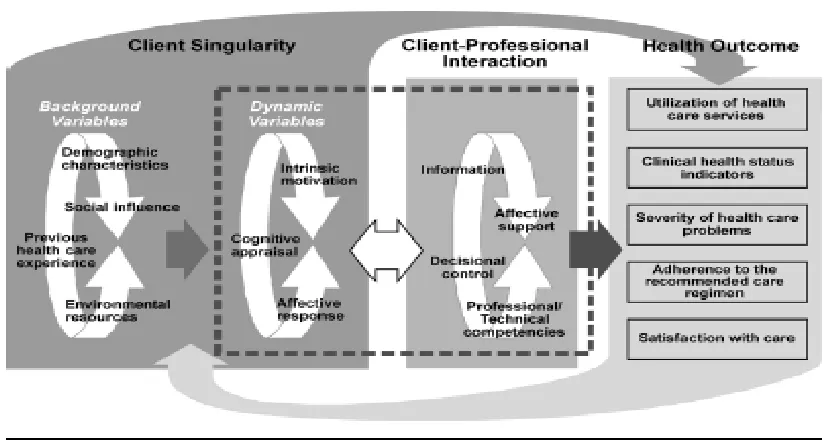
The Interaction Model of Client Health Behavior (IMCHB) (Figure 1) will frame
my assumptions for this study. The IMCHB was developed by Cox (1982, 2003). The
having a positive or negative impact on the client‘s health outcomes and healthcare
decisions are prominent in the framework (Cox, 1982). The model proposes that the
HCP‘s interaction style and approach toward clients have the ability to support or
discourage the client‘s health behaviors. African American women who perceive
negative interactions with HCPS may make the decision to delay or avoid utilization of
healthcare for preventative services, a decision that can have harmful health outcomes.
There are four assumptions underlying this study:
1. Obese AAW will honestly recount their experiences living as obese individuals.
2. In their interactions with healthcare providers, obese AAW encounter
stigmatization because of their weights and their stories will reflect poor
utilization of preventative healthcare services because of these interactions.
3. AAW with BMIs greater than 40 will recount more vivid experiences of obesity
stigmatization in healthcare settings.
4. The use of a phenomenological design will allow the stories of the women to be
heard and explicitly told by the researcher; the stories will help to inform
development of interventions that may prevent obesity stigmatization, increase
Figure 1: Interaction Model of Client Health Behavior
Summary
This review of literature is important to the study; it supports my assumption that
obese women encounter stigmatization in healthcare settings and are treated negatively
by some healthcare providers. These data also validate the reluctance that is seen in
obese women to readily utilize healthcare services for health care screens that can
significantly impact the breast and gynecological cancers that affect obese women
disproportionately. Because of the high prevalence of obesity in AAW, the high risk for
breast and gynecological cancers and the fact that AAW die disproportionately from
breast cancers, it is of paramount importance that these women seek, and are afforded,
Even though the literature supports the assumption that women delay utilizing
healthcare because of stigmatization, there remains a significantly large gap in the
understanding of this phenomenon. This gap lies in the fact that existing studies on the
issue include samples that have been skewed toward White American women while
others have not elaborated on the ethnic composite of the samples. The findings in the
studies are therefore not representative of AAW, the group most affected by obesity. In
addition, many studies addressing the issue are outdated and not representative of a
phenomenon that has worsened drastically in the past 20 years. Furthermore, researchers
studying utilization of healthcare services by obese persons have not agreed on a
definitive measure of healthcare utilization but have used varied approaches and
definitions. Moreover, the studies have focused primarily on quantitative measures;
qualitative studies on the phenomenon have been lacking. Examining healthcare
utilization qualitatively may allow obese women to voice experiences regarding their
utilization of healthcare services that could not otherwise have been captured
quantitatively. Their stories may give us insight into why they chose to use or not use
these services. Ultimately, examining the issue of preventative healthcare utilization
from the perspectives of obese women may have significant implications for HCPs and
policy makers.
With the known risk of breast and gynecological cancers that obese women have
and the high mortality from breast cancer that is present in obese AAW, HCPs need to be
aware of the healthcare utilization or avoidance behaviors of this population and be ready
nucleus of the healthcare system and are relied upon by obese clients for information and
education regarding health needs. Results of this study may also provide rich data that
can be used to (1) employ health policies aimed at addressing negative reasons that
prevent AAW from utilizing preventative healthcare services, (2) foster early and timely
screens for breast and gynecological cancers in AAW, and (3) decrease deaths from these
36 CHAPTER III
Methodology
Design
The aim of this study was to explore the experiences of obese African American
women (AAW) as they have used healthcare services and to understand if the encounters
with healthcare providers have impacted utilization of preventative healthcare services
(mammography & Papanicolau screens) by this group of women. This chapter delineates
the methodology that was used to conduct the study and includes the following sections:
design, sample, recruitment, data collection, data analysis, trustworthiness of the study
and protection of human subjects.
Interpretive hermeneutic phenomenology, based on the work of Max van Manen
(1997), was chosen to guide the process in this study. This methodology is focused on the
individual‘s life world or human experience as it is lived (van Manen, 1997) and is
therefore particularly beneficial as a guide for this study. Hermeneutic phenomenology
allows for the attainment of a rich description of experiences of obese African American
women told in their voices. In addition, it allows the researcher to understand the essence
of the women‘s lived experiences (van Manen, 1997). The interpretive approach further
aids in the understanding of participant‘s experiences (Ajjawi & Higgs, 2007). The
hermeneutic approach to phenomenology requires that the researcher employs a method