2017 2nd International Conference on Computer Science and Technology (CST 2017) ISBN: 978-1-60595-461-5
An Improved Message Filter and Routing Algorithm
Based on Topic and Eigenvalue Similarity
Guo-liang HU
1,a*,Xiao-fei GUAN
2,Fu-cheng PAN
1,
Peng LI
1and Bin DUAN
11Shenyang Institute of Automation Chinese Academy of Sciences; Shenyang, China
2CRRC SIFANG CO., LTD.; Qingdao, China
*Corresponding author
Keywords: Cyber-physical system, Topic-based, Eigenvalue similarity, Message filtering and routing.
Abstract. This paper discusses on the cyber-physical system technology that assures
the interoperability of manufacturing control system and equipment in intelligent manufacturing domain. This technology involves an information exchange and communication process, where broad manufacturing resources of production workshops in advanced manufacturing industries such as control system, equipment, personnel, and materials may freely enter or exit from the distributed self-organizing peer-to-peer network as independent message nodes. In this process, an improved filtering and routing algorithm based on topic and eigenvalue similarity is also employed to group and compress massive manufacturing messages in the light of semantics and message clusters for the purpose of intelligently identifying, positioning, tracking, monitoring and managing manufacturing resources. Based on the features of manufacturing process, this paper filters messages and implements end-to-end batch compression and transmission so as to ensure that the massive messages transmitted among different manufacturing resources in the intelligent manufacturing process are equipped with the advantages like real time, fault tolerance and high robustness when data validity is guaranteed.
Introduction
In future, the general trend of industrial manufacturing market is that the market creates intelligent production lines in an all-round way and shifts attention from completion of manufacturing to intelligent manufacturing [1], with focus placed on intelligent manufacturing. Traditional manufacturing control system [2] tends to rely on centralized or hierarchical control architecture, both of which adopt master-slave instruction control as an internal control method. That is, the controlled object is required to report its state to the superior controller and take an action completely according to the instruction given by the superior controller. Though master-slave instruction control is characterized by the advantages like global optimization and foreseeable performance due to its high stability, the constant master-slave relation can make it difficult for manufacturing control system to share resources and switch running state rapidly. This will impose tremendous constraints on flexibility, agility, expandability, changeability, and fault tolerance of manufacturing control system.
system network, message bus technology is taken as the core in support of semantics. As the central link integrating various manufacturing resources, message bus technology connects different manufacturing resource objects together, with message bus responsible for the communication of the objects integrated [4]. Sharing data based on the mechanisms like message publish/subscribe and event trigger mechanisms, message bus sends and receives messages relying on message channel, with each pair of interactive objects matched by a message channel. Nevertheless, as the number of interactive objects increases, the number of interactive objects is greater and system structure becomes increasingly sophisticated. Under this circumstance, the multicast transmission mode in message bus may easily lead to network congestion [5]. On this occasion, the system will be incapable of supporting the effective operation of manufacturing control system as a result of lower processing speed and slow real-time response, and also, message filtering and routing [6] will have to meet message processing's requirements for high reliability, speed and real-time performance. Thus, the research focus of this paper is the algorithm that supports efficient and real-time transmission of massive messages.
Message Filtering and Routing Algorithm
Algorithmic Architecture
Distributed self-organizing architecture is adopted by the real-time message bus researched in this paper. Relative to the traditional message bus architecture [7,8] built by centralized control mode, the distributed real-time message bus architecture with self-organizing characteristic is incomparable regardless of size, complexity, distributivity and isomerism. In this paper, the message bus architecture supports a series of features like self-healing, self-managing, self-discovering, self-planning, self-adjusting, and self-optimizing. That is, all manufacturing-related physical nodes are configured with embedded semantic gateways. The nodes which can find each other may enter, change, or exit from message bus system freely, and the failed nodes exiting abnormally can re-start automatically. Meanwhile, self-organizing architecture can balance the load, and all manufacturing resources within message bus system serve as independent message nodes. A certain node under heavy load may send a request to other spare nodes that can accomplish a part of tasks.
Algorithmic Description
destination into a small group. Meanwhile, there are large numbers of repeated contents encompassed by the messages processed by the filtering and routing algorithm based on subscriber's topic and eigenvalue similarity. The compression ratio will be higher when the messages in the message cluster are compressed together rather than one by one.
For the sake of faster message transmission [9-11], messages can be directly sent to network card's transmission buffer. Traditional message transmission is a process where system API is called to copy messages to system kernel's cache; then, messages are copied from kernel's cache to application buffer, written back to kernel and stored in socket buffer; subsequently, system API is called to copy messages from socket buffer to network card's transmission buffer. In this process, there are 4 information copies and 2 system API calls, which may result in low efficiency. In this paper, messages are directly copied to network card's transmission buffer. If there are several subscribers subscribing to one message, the message only needs to be copied to buffer once, and besides, the message is only required to be repeatedly used when sent to message subscriber every time. In this way, message transmission speed will approach the limit of network. Finally, the message will be sent to the node of message subscription, and then, the message node will process the message received.
Computation of Message Eigenvalue Similarity
The manufacturing resources of embedded semantic gateways in built-in specific model such as equipment, personnel, materials and intelligent control system may freely enter or exit from self-organizing message bus system, and every manufacturing resource may subscribe to topic message from message bus according to process features. Message bus groups and compresses messages as well as conducts end-to-end message transmission by way of filtering and routing algorithm based on subscriber’s topic and eigenvalue similarity.
The aforesaid filtering and routing algorithm based on subscriber’s topic and eigenvalue similarity computes message and subscriber’s topic eigenvalue similarity.
Computation of Message Eigenvalue Weight
Provided the appearance frequency of a new message word is greater than the given threshold value, it will be defined as message feature MF and the message feature and its frequency value FV will be added to message feature set MS maintained by system. In this set which is updated automatically, if there is a subset PS describing the meaning of a message feature, the individual ps within the subset will be considered as the paraphrase of the message feature MF. Message eigenvalue weight is mainly decided by the appearance frequency of message word in the whole message M, i.e., word frequency weight, as well as by the meaning of the message word, i.e., nature weight. The formula for message eigenvalue weight is represented as follows:
(1) In formula (1), and are constants; represents word frequency weight of message feature in message M; and means the nature weight of message feature in message M.
(2) In formula (2), is the total appearance frequency of message features in message M; represents the total appearance frequency of all message features;
means the frequency value of message feature in message feature set ; represents the total appearance frequency of the paraphrase of message feature ; and is the total appearance frequency of the paraphrase of all message features.
In terms of nature weight , if a message has n message features, the nature weight can be denoted as follows when the number of the paraphrases of message features in message feature set MS is :
(3)
In formula (3), is the parameter set as ; and refers to the sum total of frequency value of all paraphrases that describe message feature in message feature set MS.
Computation of the Similarity between Message and Subscriber's Topic
The computation of the similarities between message features and subscriber’s topics can help to figure out subscriber's most interesting topics maximally. Let message have n message features , can be obtained as follows:
(4) The set of subscriber’s topics can be denoted by , which is constituted by y message features . The similarity can be calculated as follows:
(5) In formula (5), function is to calculate the difference value between different message features. To be specific, the calculation focuses on the value corresponding to n message features in message feature set , with T referring to time factor and to system parameter.
Application Verification
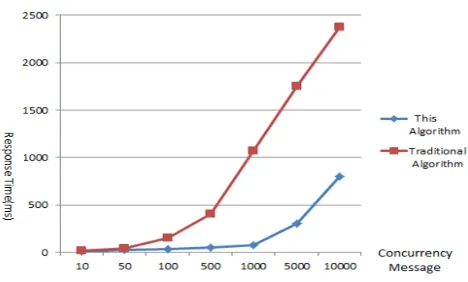
Figure 1. Comparison about Test Results.
The real-time message bus system taking advantage of the message filtering and routing algorithm based on topic and eigenvalue similarity in this paper has been actually applied and verified by the production and management system of a high-speed train manufacturer. The result proves that the real-time message bus based on this algorithm is characterized by high processing speed and short delay compared to the traditional method, thus having the ability to meet enterprise’s requirements for massive and concurrent message delivery in intelligent transformation.
Conclusion
Considering the timeliness of massive message transmission among different manufacturing resources in intelligent manufacturing such as control system, equipment, personnel and materials, this paper puts forward a grouped semantic message filtering and routing method that adopts distributed self-organizing architecture. This method proposes a message filtering and routing algorithm based on subscriber's topic and eigenvalue similarity, given that the centralized or hierarchical control architecture of traditional control system is inapplicable to intelligent control system in respect of processing efficiency, system flexibility and expandability, and there is a need for a large number of frequent data interactions among different manufacturing resource objects. The transmission speed will approach the limit of network, and the scale of message processing and transmission timeliness will be greatly improved when the messages in message clusters are compressed efficiently and directly sent to network card's transmission buffer as a whole.
According to the application verification of a high-speed training manufacturer's management system, the self-organizing architecture adopted by the algorithm of this paper can balance the load. As independent message nodes, manufacturing resources which are featured with high fault tolerance and good expandability also show strong robustness because the failed nodes exiting abnormally can restart automatically.
Acknowledgement
This paper is supported by the national sci-tech support plan 2015BAF08B02.
References
[1] GUO, Q., ZHANG, M. An agent-oriented approach to resolve scheduling optimization in intelligent manufacturing[J]. Robotics and computer-integrated manufacturing, 2010(26):39-45.
[2] Design and evaluation of a wide-area event notification service[J]. Antonio Carzaniga, David S. Rosenblum, Alexander L. Wolf. ACM Transactions on Computer Systems (TOCS). 2001 (3).
[3] A Concept Lattice-based Event Model for Cyber-Physical Systems. Tan Ying, Vuran M C, Goddard S, et al. Proceedings of the 1st ACM/IEEE International Conference on CyberPhysical Systems. 2010.
[4] Du Lixin. SOA-based Integration of Enterprise Vertical Applications[C] Proc. of ICCASM 2010. IEEE Press, 2010,12:122-126.
[5] Doulamis, N. D., Karamolegkos, P. N., Doulamis, A., et al. ExploitingSemantic Proximities for Content Search over P2P Networks[J].ComputerCommunications, 2009, 32(5): 814-827.
[6] Cohen, R., Raz, D. Cost-effective resource allocation of overlay routing relay nodes[J]. IEEE/ACM Transactions on Networking (TON), 2014, 22(2): 636-646. [7] Jayaram, K. R., Eugster, P., Jayalath, C. Parametric content-based publish/subscribe [J]. ACM Transactions on Computer Systems(TOCS), 2013,31(2): 1-52.
[8] Fotiou N, Trossen D, Polyzos G C. Illustrating a publish-subscribe internet architecture [J]. Telecommunication Systems, 2012, 51(4): 233-245.
[9] Liu, Guo, Zhou, Zhong, Wu, Wei. Event matching algorithm based on the judgment of redundant attributes in publish /subscribe systems [J]. Journal of Computer Research and Development, 2010, 47(10): 1690-1699.
[10] Pan, Yi, Zhang, Kai-long, Pan Jin-gui. Content-based publish subscribe mechanism and algorithm based on predicate covering[J]. Journal of Computer Research and Development, 2011, 8(5): 765-777.