BIROn - Birkbeck Institutional Research Online
Foley, Aideen M. (2018) Climate impact assessment and ‘islandness’:
Challenges and opportunities of knowledge production and decision-making
for Small Island Developing States. International Journal of Climate Change
Strategies and Management 10 (2), pp. 289-302. ISSN 1756-8692.
Downloaded from:
Usage Guidelines:
Please refer to usage guidelines at
or alternatively
International Journal of Climate Change Strategies and
Management
Climate impact assessment and “islandness”: Challenges and opportunities of knowledge production and decision-making for Small Island Developing States
Aideen Maria Foley,
Article information:
To cite this document:Aideen Maria Foley, (2018) "Climate impact assessment and “islandness”: Challenges and opportunities of knowledge production and decision-making for Small Island Developing States",
International Journal of Climate Change Strategies and Management, Vol. 10 Issue: 2, https://
doi.org/10.1108/IJCCSM-06-2017-0142 Permanent link to this document:
https://doi.org/10.1108/IJCCSM-06-2017-0142
Downloaded on: 12 March 2018, At: 07:32 (PT)
References: this document contains references to 84 other documents. The fulltext of this document has been downloaded 147 times since 2018*
Users who downloaded this article also downloaded:
(2018),"Hosting the Small Island Developing States: two scenarios", International Journal of Climate Change Strategies and Management, Vol. 10 Iss 2 pp. - <a href="https://doi.org/10.1108/ IJCCSM-10-2017-0183">https://doi.org/10.1108/IJCCSM-10-2017-0183</a>
(2018),"Seizing history: development and non-climate change in Small Island Developing States", International Journal of Climate Change Strategies and Management, Vol. 10 Iss 2 pp. - <a href="https://doi.org/10.1108/IJCCSM-02-2017-0037">https://doi.org/10.1108/ IJCCSM-02-2017-0037</a>
Access to this document was granted through an Emerald subscription provided by All users group
For Authors
If you would like to write for this, or any other Emerald publication, then please use our Emerald for Authors service information about how to choose which publication to write for and submission guidelines are available for all. Please visit www.emeraldinsight.com/authors for more information.
About Emerald www.emeraldinsight.com
Emerald is a global publisher linking research and practice to the benefit of society. The company manages a portfolio of more than 290 journals and over 2,350 books and book series volumes, as well as providing an extensive range of online products and additional customer resources and services.
Emerald is both COUNTER 4 and TRANSFER compliant. The organization is a partner of the Committee on Publication Ethics (COPE) and also works with Portico and the LOCKSS initiative for digital archive preservation.
*Related content and download information correct at time of download.
Climate impact assessment
and
“
islandness
”
Challenges and opportunities of knowledge
production and decision-making for Small
Island Developing States
Aideen Maria Foley
Department of Geography, Birkbeck University of London, London, UK
Abstract
Purpose–Climate data, including historical climate observations and climate model outputs, are often used in climate impact assessments, to explore potential climate futures. However, characteristics often associated with“islandness”, such as smallness, land boundedness and isolation, may mean that climate impact assessment methods applied at broader scales cannot simply be downscaled to island settings. This paper aims to discuss information needs and the limitations of climate models and datasets in the context of small islands and explores how such challenges might be addressed.
Design/methodology/approach – Reviewing existing literature, this paper explores challenges of islandness in top-down, model-led climate impact assessment and bottom-up, vulnerability-led approaches. It examines how alternative forms of knowledge production can play a role in validating models and in guiding adaptation actions at the local level and highlights decision-making techniques that can support adaptation even when data is uncertain.
Findings–Small island topography is often too detailed for global or even regional climate models to resolve, but equally, local meteorological station data may be absent or uncertain, particularly in island peripheries. However, rather than viewing the issue as decision-making with big data at the regional/global scale versus with little or no data at the small island scale, a more productive discourse can emerge by conceptualising strategies of decision-making with unconventional types of data.
Originality/value–This paper provides a critical overview and synthesis of issues relating to climate models, data sets and impact assessment methods as they pertain to islands, which can benefit decision makers and other end-users of climate data in island communities.
Keywords Decision-making, Climate change, Uncertainty, Islands, Climate models
Paper typeConceptual paper
1. Introduction
It is widely recognised that Small Island Developing States (SIDS) are among the most vulnerable to the effects of climate change (Betzold, 2015; Wang et al., 2016). The Alliance of Small Island States (AOSIS) has argued that climate change negotiations should aim to hold global warming below 1.5°C (Wong, 2011). The Paris Agreement reflects growing support for this limit, with governments agreeing to hold the increase
© Aideen Maria Foley. Published by Emerald Publishing Limited. This article is published under the Creative Commons Attribution (CC BY 4.0) licence. Anyone may reproduce, distribute, translate and create derivative works of this article (for both commercial & non-commercial purposes), subject to full attribution to the original publication and authors. The full terms of this licence may be seen at http://creativecommons.org/licences/by/4.0/legalcode
Climate impact
assessment and
“
islandness
”
289
Received 27 June 2017 Revised 25 August 2017 Accepted 17 September 2017
International Journal of Climate Change Strategies and Management Vol. 10 No. 2, 2018 pp. 289-302 Emerald Publishing Limited 1756-8692 DOI10.1108/IJCCSM-06-2017-0142 The current issue and full text archive of this journal is available on Emerald Insight at:
www.emeraldinsight.com/1756-8692.htm
“well below” the 2°C threshold while “pursuing efforts” to keep within 1.5°C of warming relative to pre-industrial levels. An IPCC special report on global warming of 1.5°C is in preparation, which will address the vulnerabilities of islands and coastal areas in particular. Limiting warming to 1.5°C would reduce risks to fishery sustainability (Cheung et al., 2016) and coral reefs (Schleussner et al., 2016) and modelling suggests that the 1.5°C target is feasible if a temperature overshoot is allowed and large, early reductions in emissions are made (Suet al., 2017). However, under Intended Nationally Determined Contributions (INDCs) as of 2016, a median warming of at least 2.6°C is anticipated by 2100 (Rogeljet al., 2016). Furthermore, even under an agreement of zero emissions, inertia in the climate system commits us to further sea level rise, as much as 2.3 m per degree of warming within the next 2,000 years (Levermannet al., 2013).
Methods used in global and regional climate impact assessments to assess climate change risks are poorly suited to SIDS and, especially, atoll countries, given the fundamental mismatches in the spatial scales of knowledge creation and decision-making/action. Equally, reliance on global-scale models combined with uncertainties associated with local climate impacts may obscure opportunities for adaptation as relevance and credibility of information can act as a barrier to decision-making (Moser and Ekstrom, 2010). Understanding the capacities and limitations of typical data sources used in impacts assessment is, therefore, paramount if we are to ensure that suitable information and decision-making techniques are available to support adaptation and minimize maladaptation, in island contexts.
A single, coherent definition of “islandness” is elusive. Characteristics such as isolation and peripherality are often cited; yet, island communities can be highly integrated with the mainland and the rest of the world (Grydehøj and Hayward, 2014), making them at once both open and closed (Pugh, 2016). Hay (2013) noted that characteristics such as isolation, remoteness and containment could also apply to continental locations and argued more specifically the importance of the sea in defining islandness, particularly as the source of boundedness. It has also been contended that islandness is a metaphysical sensation that arises from physical isolation (Conkling, 2007), withHay (2006)noting the enhanced sense of place that is often associated with islands. Similarly,Taglioni (2011)distinguished between insularity as a physical feature of certain spaces and islandness as the aggregate experiences of islanders. As such, while this paper is concerned predominantly with the confluence of assumed particular physical characteristics of islands, such as smallness, land boundedness, isolation and fragmentation (Fernandes and Pinho, 2017) and the challenges these pose to climate impact assessment, it recognises that these characteristics are neither exclusive to islands nor do they amount to a comprehensive definition of“islandness”.
Arguably, while smallness and land boundedness pose the technical challenge to climate modelling, the isolation and fragmentation of islands are associated with further knowledge gaps relating to observed environmental and vulnerability data, leading to a sub-optimal decision-making basis for managing climate risk, if we rely on conventional data sources alone. This paper explores these challenges of islandness in both top-down, model-led forms of climate impact assessment and bottom-up, vulnerability-led approaches. It examines the role that alternative forms of knowledge production can play in validating models, where they can match the scale of island decision-making and in guiding adaptation actions at the local level and highlights decision-making techniques that can support adaptation even when data is uncertain.
IJCCSM
10,2
290
2. Perceptions of climate risk in Small Island Developing States
Risks posed to SIDS by climate change include food insecurity (Barnett, 2011), water resource issues (Dore and Singh, 2013) and a range of human health impacts (McIveret al., 2016). The majority of recent extinctions have occurred on islands (Courchampet al., 2014) and the threats posed by climate change to biodiversity take on a particular urgency in light of the high levels of endemism among island species (Wetzelet al., 2012). In the Republic of Kiribati and in Tuvalu, migration from rural peripheral islands to urban central islands is already being attributed, in part, to climate change, coupled with socio-economic factors (Locke, 2009). In the short-term, as rural island populations relocate to urban areas, access to housing, employment and services needs to be considered to ensure positive outcomes for those migrating (Birk and Rasmussen, 2014). In the longer-term, islanders may be faced with losing their entire territory to the sea, which would raise highly complex issues relating to sovereignty and citizenship status (Skillington, 2017;Yamamoto and Esteban, 2010) and how to preserve the“lived values”of islands (Grahamet al., 2013).
Community-based adaptation projects have highlighted the potential for people to be highly perceptive of and attuned to their local environment yet be unaware of the threats climate change poses within that environment (Dumaru, 2010). In part, this stems from the reality that climate change is but one issue facing SIDS (Kelman, 2014). For example, in a case study of Funafuti, Tuvalu, McCubbin et al. (2015) found that people were more concerned about food, water and overcrowding than climate change. Yet, there is clear potential for climate change to influence these issues, potentially exacerbating or diminishing them.
Perception and awareness of climate change and its impacts can, thus, act as a barrier to climate adaptation (Betzold, 2015). For example, in a survey of students at the University of the South Pacific,Scott-Parkeret al.(2017)found that a majority of the respondents believed climate change risks to be overstated, which may reflect a lack of trust in scientific sources of information among a cohort that may include future regional leaders.
Empirical data have a role to play in raising awareness of impacts among communities that underestimate the effects of climate change and in defining the local scale and scope of impacts, to assist where decision-making is impeded by the perceived magnitude of the issue. Co-learning approaches, which use both local and external scientific knowledge, may help to expand community understanding of climate change, but the scope to implement such approaches is limited wherefine-grained, long-term data relating to the full range of impact-relevant climate parameters is unavailable or uncertain. As noted byMcCubbinet al.
(2015), the information provided by climate models generally refers to temperature and sea level change across broad regions and, as such, provides little insight into the specific concerns of a small island community. The following section will explore the technical limitations that give rise to this information gap.
3.“Islandness”in climate impact assessment
3.1 Scale and downscaling in climate modelling
Many climate impact assessments typically follow a sequential, top-down, model-led approach (Moss et al., 2010), which could also be referred to as a “predict then act” approach (Dessai et al., 2009). Socio-economic scenarios inform emissions scenarios, which in turn are used to produce radiative forcing scenarios. These radiative forcing scenarios are used to run climate models and climate model outputs such as temperature, precipitation and soil moisture are ultimately used as the inputs to impact models used to assess risks and vulnerabilities, often for a specific sector. For instance, the Inter-Sectoral Impact Model Intercomparison Project (ISI–MIP) involved global impact models for
Climate impact
assessment and
“
islandness
”
291
water, agriculture, biomes, coastal infrastructure and malaria (Warszawskiet al., 2014), but within most sectors, there are multiple impacts models to consider also (e.g. water resources;Scheweet al., 2014).
Given the central role of climate models in these types of impact assessment, it is important to consider their suitability and limitations as they pertain to islands. The state-of-the-art atmosphere–ocean General Circulation Models (GCMs) used in the Coupled Model Intercomparison Project 5 (CMIP5;Tayloret al., 2011) varies in resolution, but the average is 1.852.25° [1]. For reference, at the Equator, 1° corresponds to111 km. The small surface area of many islands, together with their land boundedness, means that the grid cells corresponding to their location are likely to be classed as ocean in the model. Furthermore, as noted byFernandes and Pinho (2017), island geomorphology may vary greatly across a small surface area, with volcanic islands such as Hawaii showing particularly large variations in altitude and, correspondingly, in bioclimatic conditions, little, if any, of which can be captured in a GCM.
Downscaling approaches can be used to address, in part, the scale mismatch. Regional climate models (RCMs) are a form of dynamical downscaling, in which GCM outputs are “regionalised” by a model operating at a higher resolution over a limited area.Figure 1
illustrates the effect that enhancing resolution can have on land surface representation. The Providing Regional Climates for Impacts Studies (PRECIS)-Caribbean initiative has led to significant modelling capacity and localised climate information in the Caribbean region (Tayloret al., 2013). The coordinated regional downscaling experiment (CORDEX) South Asia RCM simulations use an ensemble of different models and have a spatial resolution of 0.44° (50 km) (Ghimireet al., 2015), which is high resolution relative to GCMs. Statistical downscaling, a less computationally expensive method, in which local climate parameters are related to large-scale modelled variables, can also be applied. In the USA, statistical downscaling has been used to generate climate scenarios at 1/8° (14 km) (Ahmedet al., 2013).
However, in the case of SIDS, these methods can only bridge part of the gap and may come with additional uncertainty. Enhanced resolution is not a guarantee of reliable information. Centella-Artola et al. (2015) analysed PRECIS RCM simulations over the Caribbean with a resolution of 50 km and found that the default configuration of the model does not capture many of the smaller islands. In configurations that include the islands, by marking the nearest or covering grid boxes as land, a difference in simulated cloud cover is noted over the eastern Caribbean, highlighting how the absence or inclusion of small islands in models has ramifications for the quality of the regional projection.
Similarly,Cantetet al.(2014)generated climate scenarios for the Lesser Antilles using the ALADIN–Climate RCM nested within ARPEGE GCM and noted the islands are considered as land by the RCM model, but are not resolved at all by the driving GCM, which raises an important point relating to the credibility of RCM outputs for islands. RCMs are intended to add regional detail to a global scenario and so are highly dependent on the driving conditions received from the parent GCM (Foleyet al., 2013;Karmalkaret al., 2013). As such, the inability of a GCM to resolve island topography has the potential to significantly impact the simulative skill of the RCM.
3.2 Validating models in island contexts
Given these uncertainties, it is important to validate any type of downscaling approach against observed data. Where such data are limited, however, it may not be possible to establish an adequate record of past climate variability against which to assess the performance of models in the present.Nunnet al.(2014)note the tendency of impact studies
IJCCSM
10,2
292
to focus on the most densely populated areas of islands in contrast to rural communities, which is attributable to the urban bias of governance and decision-making structures (Connell, 2010). In terms of data landscapes, there is equivalence in that peripheral areas tend to be most affected by data sparsity.
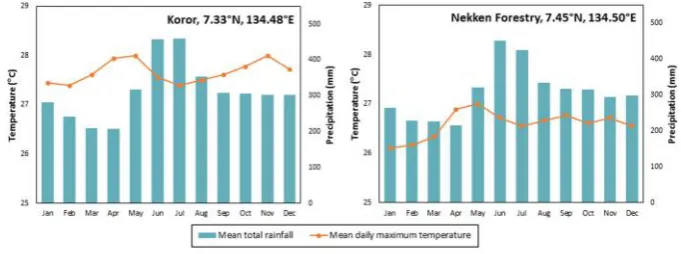
For instance, in a study of temperature trends in Fiji,Kumaret al.(2013)note that all meteorological stations analysed were located on or near the coast, with a scarcity of data in the island interior. However, differences in topography or land use may result in significant differences in climatic conditions even over short distances. For example, where data collection is limited to densely populated areas, urban heat effects may need to be taken into account. This effect is illustrated inFigure 2, using data from Koror, the largest city in Palau and Nekken Forestry, just 12 km away.
While data sparsity can also be an issue in continental locations, it is especially important in island contexts as the spatial gaps between observations can be very large due to the isolation and fragmentation of islands (Wrightet al., 2016). In their study using the PRECIS RCM in the Caribbean,Campbellet al.(2011)noted that the sparsity of Caribbean meteorological station data hampers validation of the model; data sparsity is also cited as a
Figure 1.
Horizontal resolutions considered in today’s higher resolution models and in very high resolution models now being tested
Climate impact
assessment and
“
islandness
”
293
limitation inWhanet al.’s (2014)study of temperature extremes in the Western Pacific. In this way, challenges to validation can complicate the use of climate models, even for islands that are large enough to be adequately resolved within a model. For recent decades, satellite-based data sets such as NASA’s Modern-Era Retrospective Analysis for Research and Applications (MERRA; Rienecker et al., 2011) are a useful resource. However, for the purposes of establishing baselines for climate model evaluation, data are required over a longer timeframe, to sample the full range of natural climate variability.
3.3 Informing bottom-up vulnerability assessment
In the absence of specific data relating to future risks, current vulnerabilities and adaptations are often discussed as a means of exploring the potential for adapting to climate change (McCubbin et al., 2015). Such an approach could be described as bottom-up, beginning with the identification of vulnerabilities, sensitivities and factors that increase resilience to climate-related threats (Falloonet al., 2014;Wilby and Dessai, 2010). But climate change also creates new challenges, such as sea level rise and ocean acidification, which are unprecedented on human timescales and for which there are no traditional adaptations, or for which the limits of existing adaptations may be unknown (Weiret al., 2017). Hence, the absence of appropriate data about future climate, against which to test adaptation strategies, may lead towards underestimation of future vulnerability.
[image:8.493.101.442.457.584.2]Furthermore, while bottom-up approaches may not rely on climate data, they must use other kinds of data to gauge the impact of and vulnerability of communities to, past hazards. Here, similar themes emerge around the mismatch in spatial scales of knowledge and action on SIDS. For instance, in the aftermath of natural hazards, community level impacts can go unnoticed when local data (e.g. relating to numbers dead, injured and homeless) is combined and analysed at the national scale, potentially resulting in missed opportunities for effective intervention (Méheuxet al., 2007).Prestonet al.(2011)finds that reliance on secondary data is common in vulnerability assessments, with none of the 45 studies reviewed incorporating primary data regarding biophysical factors and only nine per cent including primary data regarding socio-economic factors.Turvey (2007)also notes the challenges that data quality and availability issues pose in the creation of the composite vulnerability index (CVI) and particularly highlights the need for more information on the vulnerability of coastal environments to seasonal and interannual climate variability.
Figure 2.
1981-2010 climatological averages for rainfall and average temperature at two sites in Palau
IJCCSM
10,2
294
4. Addressing the scale mismatch
4.1 Applications of alternative data sources
Developing a robust understanding of past climate change in islands is key, so that models can be evaluated appropriately and so that current sensitivities to change can be more clearly apprehended. Combining modern and historical data has the potential to produce novel insights into the links between local conditions and the larger, changing climate system.
Arguably, the strong sense of place associated with islands privileges and aids in the preservation of local knowledge on environmental risk. Local knowledge cannot provide the same types of information to decision makers such as GCMs and so cannot directly compensate for the issues identified around small island representation at model scales. However, it can provide important, additional information, which may relate not only to environmental change but also to potential human responses. For example,Fritz and Kalligeris (2008)highlight the case of the 1 April 2007 Solomon Islands tsunami, during which islanders knew toflee to higher ground after an earthquake based on ancestral knowledge of past events. Similarly, it may be informative to make use of narrative accounts and oral traditions (e.g. poetry and songs) of past climate and environmental changes (Janifet al., 2016) to develop a long-term view of local contexts. In this manner, the cultural capital of island communities can connect with modern scientific knowledge.
Adgeret al.(2013)argue that cultural aspects are infrequently incorporated into climate change analyses due to the challenge of merging the qualitative approaches more often used to study culture and the quantitative methods common in natural science. However, there are some examples. In a study of shoreline recession in the Solomon Islands,Albertet al.
(2016)used historical aerial photography, satellite imagery and local historical insight to explore the interaction between sea level rise and other factors contributing to coastal recession, such as sea walls and extreme events. The merging of science and indigenous knowledge can also directly support adaptation in creative and unconventional methods.
Hirsch (2015) described how Maldivians are embracing inter-island mobility and reimagining ancestral practices, giving the example of the smartphone app Nakaiy Nevi, which combines the indigenous Maldivian calendar system of nakaiy with weather observations. Weather-related traditional knowledge, relating plant and animal behaviours to meteorological phenomena, such as tropical cyclones, can also be incorporated into scientific forecasting tools (Mageeet al., 2016), althoughChandet al.(2014)noted that the verification of traditional knowledge as a forecasting method is hindered by the lack of historical records for phenological responses (e.g. flowering times of mango trees as a predictor of cyclone activity).
Data rescue activities, including digitisation of historical meteorological records, facilitate such research. The Climate Data for the Environment (CliDE) system, a web-based climate data management tool, supports such activities and has been deployed in 14 Pacific island states (Martinet al., 2015). Workshops and peer-to-peer data exchange have also been successfully used in the Western Pacific to extend existing data sets and build research capacity in the region, although the length and quality of some of the datasets identified remain an issue (McGree et al., 2014). Citizen science strategies can also play a part here, building two-way collaborations between local communities and research teams, to not only disseminate researchfindings and inform decision makers but also harness local knowledge and experience and build synergies with existing priorities (Petridiset al., 2017).
Climate impact
assessment and
“
islandness
”
295
4.2 Robust decision-making strategies
Advances in computing capacity and climate modelling will inevitably enhance the quality of future climate projections that can be made for SIDS, but decisions about climate adaptation strategies will still have to be made against a backdrop of uncertainty. At each stage of the sequential process described previously, uncertainties and inconsistencies accumulate, widening the envelope of uncertainty associated with specific impacts. Even variation in methods and interpretations of uncertainty assessment can lead to different policy outcomes (Wesselink et al., 2015). Uncertainty may also impact how adaptation actions are perceived; for example, if a community decided to migrate in response to potential, but as yet unobserved, effects of climate change, would the available evidence base impact the level of international support they might receive (Kelman, 2015)?
Uncertainty can be perceived as a barrier to decision-making or used as a rationale to avoid decision-making, but in reality, it should not preclude action as uncertainties and unknowns are inevitable in any decision-making scenario. While computation strategies, using conventional decision-support tools such as multi-criteria analysis and cost–benefit analysis, would have to be based on an uncertain knowledge base, compromise, judgement or inspiration strategies could be more appropriate choices (de Boeret al., 2010) and may better reflect the important socio-political factors that shape the SIDS vulnerability. Within such strategies, robust decision-making could be applied to help decision makers understand the conditions under which a particular proposed policy would fail and ultimately identify policies that will endure under a range of scenarios (Lempert, 2013). A similar concept is decision scaling, introduced byBrownet al.(2012), which seeks to identify broadly the climate states that favour a particular decision and then establish the probability of occurrence using GCM data, thus lessening the specificity of information required from the models while enhancing the relevance of the data to the decision.
4.3 Visualising and communicating future climates
Given the inevitability of uncertainty, it is also worth considering how best to convey information about possible future climates. Communication of climate data relies heavily on visualisation; yet, there has been limited research into the effectiveness of different approaches, particularly in the context of understanding deep uncertainty (Spiegelhalter
et al., 2011).Kayeet al.(2012)noted that Web-based interfaces could offer innovative ways to explore uncertainty, compared to static approaches, proposing visualisations in which the user can specify an acceptable level of uncertainty, generating a map that only displays regions meeting that criteria. Wesselinket al. (2015)advised referring to processes and trade-offs when communicating results rather than relying on numerical ranges alone.
Links between spatial scales of data and risk perception may also benefit from further study. In a study of volcanic hazard mapping methods on Montserrat,Hayneset al.(2007)
found that perspective photographs were significantly more effective than other visualisations, as people could better identify features and their orientation.Dalyet al.(2010)
subsequently used large-scale aerial photographs, with landmarks identified, in participatory research on coastal vulnerability in Samoa, allowing islanders to make links between the visualisations and their own perceptions and experiences of hazards. It has been suggested that map users may associate a high level of visual realism in geospatial images, with higher confidence in the quality of the data underlying those image (Kettunen
et al., 2012). How, then, might the inability of a model to adequately resolve an island, or indeed, resolve it at all, impact the perceived trustworthiness of data and communication of risk? Is a coarse map better or worse than no map at all? Questions such as these are
IJCCSM
10,2
296
particularly relevant in the context of islands, considering the strong sense of place shared by many island communities (Baxteret al., 2015;Coulthardet al., 2017).
5. Conclusions
This paper has outlined some of the ways in which characteristics commonly allied with “islandness”, such as smallness, land boundedness and isolation, may limit the applicability of global and regional climate impact assessment methods to SIDS and, particularly, to atoll countries. Small island topography can be too detailed for current GCMs to resolve, but equally, local meteorological station data can only represent a point and records may be sparse or short in island peripheries. As well as the technical limitations of climate models and data sets, the absence or unreliability of local-level vulnerability data may be perceived as a barrier to adaptation actions.
Yet, there is a need for a robust decision-making basis in light of the kinds of climate adaptation policies under consideration. Climate science is increasingly harnessing big data (Schnaseet al., 2017) and by comparison, the decision-making basis for SIDS may seem limited on account of the constraints discussed, but this would be an oversimplification. Rather than viewing the issue as decision-making with big data versus with little or no data, a more productive discourse can emerge by conceptualising strategies of decision-making with differentdata. While climate models can still provide scenarios of future change, decision-making that uses those scenarios must recognise the inherent uncertainties. Continued recovery of historical observations, both of climate parameters and associated environmental phenomena identified through traditional knowledge, can aid in formulating baselines against which to assess models and evaluate long-term change. Looking forward, there is potential for crowdsourcing of climate data using citizen weather stations (Meier
et al., 2017) and smartphones (Mass and Madaus, 2014), which could play an important role in monitoring and understanding the onset of climate impacts. Alternative forms of knowledge production and robust decision-making can aid in raising awareness and enhancing the perception of climate change in island communities. The hybridization of science and indigenous knowledge offers much potential provided that the strengths and limitations of all forms of information are suitably acknowledged (Lebel, 2013) and that the merging of knowledge takes place in a culturally compatible manner (Merceret al., 2007).
Note
1. https://portal.enes.org/data/enes-model-data/cmip5/resolution
References
Adger, W.N., Barnett, J., Brown, K., Marshall, N. and O’Brien, K. (2013),“Cultural dimensions of climate change impacts and adaptation”,Nature Climate Change, Vol. 3 No. 2, pp. 112-117.
Ahmed, K.F., Wang, G., Silander, J., Wilson, A.M., Allen, J.M., Horton, R. and Anyah, R. (2013),
“Statistical downscaling and bias correction of climate model outputs for climate change impact assessment in the US northeast”,Global and Planetary Change, Vol. 100, pp. 320-332.
Albert, S., Leon, J.X., Grinham, A.R., Church, J.A., Gibbes, B.R. and Woodroffe, C.D. (2016),“Interactions between sea-level rise and wave exposure on reef island dynamics in the Solomon Islands”,
Environmental Research Letters, Vol. 11 No. 5, pp. 54011.
Arguez, A., Durre, I., Applequist, S., Squires, M., Vose, R., Yin, X. and Bilotta, R. (2010),NOAA’s U.S.
Climate Normals (1981-2010), NOAA National Centers for Environmental Information,
doi:10.7289/V5PN93JP(accessed 17 June 2017).
Climate impact
assessment and
“
islandness
”
297
Barnett, J. (2011),“Dangerous climate change in the Pacific Islands: food production and food security”,
Regional Environmental Change, Vol. 11 No. 1, pp. 229-237.
Baxter, G. Cooper, K. Gray, D. Reid, P.H. Vergunst, J. and Williams, D. (2015),“The use of photo elicitation to explore the role of the main street in Kirkwall in sustaining cultural identity, community and a sense of place”, available at: https://openair.rgu.ac.uk/handle/10059/1185
(accessed 20 June 2017).
Betzold, C. (2015),“Adapting to climate change in small Island developing states”,Climatic Change, Vol. 133 No. 3, pp. 481-489.
Birk, T. and Rasmussen, K. (2014),“Migration from atolls as climate change adaptation: current practices, barriers and options in Solomon Islands”,Natural Resources Forum, Vol. 38 No. 1, pp. 1-13.
Brown, C., Ghile, Y., Laverty, M. and Li, K. (2012),“Decision scaling: linking bottom-up vulnerability analysis with climate projections in the water sector”,Water Resources Research, Vol. 48 No. 9, pp. W09537.
Campbell, J.D., Taylor, M.A., Stephenson, T.S., Watson, R.A. and Whyte, F.S. (2011),“Future climate of the Caribbean from a regional climate model”,International Journal of Climatology, Vol. 31 No. 12, pp. 1866-1878.
Cantet, P., Déqué, M., Palany, P. and Maridet, J.-L. (2014),“The importance of using a high-resolution model to study the climate change on small islands: the Lesser Antilles case”,Tellus A, Vol. 66 No. 1, pp. 24065.
Centella-Artola, A., Taylor, M.A., Bezanilla-Morlot, A., Martinez-Castro, D., Campbell, J.D., Stephenson, T.S. and Vichot, A. (2015),“Assessing the effect of domain size over the Caribbean region using the PRECIS regional climate model”,Climate Dynamics, Vol. 44 Nos 7/8, pp. 1901-1918.
Chand, S.S., Chambers, L.E., Waiwai, M., Malsale, P. and Thompson, E. (2014),“Indigenous knowledge for environmental prediction in the pacific island countries”,Weather, Climate and Society, Vol. 6 No. 4, pp. 445-450.
Cheung, W.W.L., Reygondeau, G. and Frölicher, T.L. (2016),“Large benefits to marinefisheries of meeting the 1.5°C global warming target”,Science, Vol. 354 No. 6319, pp. 1591-1594.
Conkling, P. (2007),“On Islanders and Islandness”,Geographical Review, Vol. 97 No. 2, pp. 191-201. Connell, J. (2010), “Pacific islands in the global economy: paradoxes of migration and culture”,
Singapore Journal of Tropical Geography, Vol. 31 No. 1, pp. 115-129.
Coulthard, S., Evans, L., Turner, R., Mills, D., Foale, S., Abernethy, K., Hicks, C. and Monnereau, I. (2017),“Exploring ‘islandness’and the impacts of nature conservation through the lens of wellbeing”,Environmental Conservation, Vol. 44 No. 3, pp. 1-12.
Courchamp, F., Hoffmann, B.D., Russell, J.C., Leclerc, C. and Bellard, C. (2014),“Climate change, sea-level rise and conservation: keeping island biodiversity afloat”,Trends in Ecology and Evolution, Vol. 29 No. 3, pp. 127-130.
Cubasch, U., Wuebbles, D., Chen, D., Facchini, M.C., Frame, D., Mahowald, N. and Winther, J.-G. (2013),
“Introduction”, in Stocker, T.F., Qin, D., Plattner, G.-K., Tignor, M., Allen, S.K., Boschung, J., Nauels, A., Xia, Y., Bex, V. and Midgley, P.M. (Eds),Climate Change 2013: The Physical Science Basis. Contribution of Working Group I to the Fifth Assessment Report of the Intergovernmental
Panel on Climate Change, Cambridge University Press, Cambridge and New York, NY,
pp. 119-158, doi:10.1017/CBO9781107415324.007.
Daly, M., Poutasi, N., Nelson, F. and Kohlhase, J. (2010),“Reducing the climate vulnerability of coastal communities in Samoa”,Journal of International Development, Vol. 22 No. 2, pp. 265-281. Dessai, S., Hulme, M., Lempert, R. and Pielke, R. (2009),“Do we need better predictions to adapt to a
changing climate?”,Eos, Transactions American Geophysical Union, Vol. 90 No. 13, pp. 111-112. de Boer, J., Wardekker, J.A. and van der Sluijs, J.P. (2010),“Frame-based guide to situated
decision-making on climate change”,Global Environmental Change, Vol. 20 No. 3, pp. 502-510.
IJCCSM
10,2
298
Dore, M.H.I. and Singh, R.G. (2013),“Projected future precipitation scenarios for a small island state: the case of Mauritius”, in Younos, T. and Grady, C.A. (Eds),Climate Change and Water Resources, Springer, Berlin Heidelberg, pp. 47-66.
Dumaru, P. (2010), “Community-based adaptation: enhancing community adaptive capacity in Druadrua Island, Fiji”,Wiley Interdisciplinary Reviews: Climate Change, Vol. 1 No. 5, pp. 751-763. Falloon, P., Challinor, A., Dessai, S., Hoang, L., Johnson, J. and Koehler, A.-K. (2014),“Ensembles and
uncertainty in climate change impacts”,Frontiers in Environmental Science, Vol. 2, pp. 33. Fernandes, R. and Koehler, A.-K. (2017),“The distinctive nature of spatial development on small
islands”,Progress in Planning, Vol. 112, pp. 1-18.
Foley, A., Fealy, R. and Sweeney, J. (2013),“Model skill measures in probabilistic regional climate projections for Ireland”,Climate Research, Vol. 56 No. 1, pp. 33-49.
Fritz, H.M. and Kalligeris, N. (2008),“Ancestral heritage saves tribes during 1 April 2007 Solomon Islands tsunami”,Geophysical Research Letters, Vol. 35 No. 1, p. L01607.
Ghimire, S., Choudhary, A. and Dimri, A.P. (2015),“Assessment of the performance of CORDEX-South Asia experiments for monsoonal precipitation over the Himalayan region during present climate: part I”,Climate Dynamics, pp. 1-24, available at:https://doi.org/10.1007/s00382-015-2747-2
Graham, S., Barnett, J., Fincher, R., Hurlimann, A., Mortreux, C. and Waters, E. (2013),“The social values at risk from sea-level rise”,Environmental Impact Assessment Review, Vol. 41, pp. 45-52.
Grydehøj, A. and Hayward, P. (2014),“Social and economic effects of spatial distribution in island communities: comparing the isles of Scilly and Isle of Wight, UK”,Journal of Marine and Island Cultures, Vol. 3 No. 1, pp. 9-19.
Hay, P. (2013),“What the sea portends: a reconsideration of contested island tropes”,Island Studies Journal, Vol. 8 No. 2, pp. 209-232.
Hay, P.R. (2006),“A phenomenology of islands”,Island Studies Journal, Vol. 1 No. 1, pp. 19-42.
Haynes, K., Barclay, J. and Pidgeon, N. (2007), “Volcanic hazard communication using maps: an evaluation of their effectiveness”,Bulletin of Volcanology, Vol. 70 No. 2, pp. 123-138.
Hirsch, E. (2015),“It won’t be any good to have democracy if we don’t have a country: climate change and the politics of synecdoche in the Maldives”,Global Environmental Change, Vol. 35, pp. 190-198.
Janif, S., Nunn, P., Geraghty, P., Aalbersberg, W., Thomas, F. and Camailakeba, M. (2016),“Value of traditional oral narratives in building climate-change resilience: insights from rural communities in Fiji”,Ecology and Society, Vol. 21 No. 2, available at:https://doi.org/10.5751/ES-08100-210207
Karmalkar, A.V., Taylor, M.A., Campbell, J., Stephenson, T., New, M., Centella, A., Benzanilla, A. and Charlery, J. (2013),“A review of observed and projected changes in climate for the islands in the Caribbean”,Atmósfera, Vol. 26 No. 2, pp. 283-309.
Kaye, N.R., Hartley, A. and Hemming, D. (2012),“Mapping the climate: guidance on appropriate techniques to map climate variables and their uncertainty”,Geoscientific Model Development, Vol. 5 No. 1, pp. 245-256.
Kelman, I. (2014),“No change from climate change: vulnerability and small island developing states”,
The Geographical Journal, Vol. 180 No. 2, pp. 120-129.
Kelman, I. (2015),“Difficult decisions: migration from small island developing states under climate change”,Earth’s Future, Vol. 3 No. 4, 2014EF000278.
Kettunen, P., Irvankoski, K., Krause, C.M., Sarjakoski, T. and Sarjakoski, L.T. (2012),“Geospatial images in the acquisition of spatial knowledge for wayfinding”,Journal of Spatial Information Science, Vol. 2012 No. 5, pp. 75-106.
Kumar, R., Stephens, M. and Weir, T. (2013),“Temperature trends in Fiji: a clear signal of climate change”,The South Pacific Journal of Natural and Applied Sciences, Vol. 31 No. 1, pp. 27-38.
Climate impact
assessment and
“
islandness
”
299
Lebel, L. (2013),“Local knowledge and adaptation to climate change in natural resource-based societies of the Asia-Pacific”,Mitigation and Adaptation Strategies for Global Change, Vol. 18 No. 7, pp. 1057-1076.
Lempert, R. (2013),“Scenarios that illuminate vulnerabilities and robust responses”,Climatic Change, Vol. 117 No. 4, pp. 627-646.
Levermann, A., Clark, P.U., Marzeion, B., Milne, G.A., Pollard, D., Radic, V. and Robinson, A. (2013),
“The multimillennial sea-level commitment of global warming”,Proceedings of the National
Academy of Sciences, Vol. 110 No. 34, pp. 13745-13750.
Locke, J.T. (2009),“Climate change-induced migration in the pacific region: sudden crisis and long-term developments1”,Geographical Journal, Vol. 175 No. 3, pp. 171-180.
Magee, A.D., Verdon-Kidd, D.C., Kiem, A.S. and Royle, S.A. (2016),“Tropical cyclone perceptions, impacts and adaptation in the Southwest Pacific: an urban perspective from Fiji, Vanuatu and Tonga”,Natural Hazards and Earth System Sciences, Vol. 16 No. 5, pp. 1091-1105.
Mass, C.F. and Madaus, L.E. (2014),“Surface pressure observations from smartphones: a potential revolution for high-resolution weather prediction?”,Bulletin of the American Meteorological Society, Vol. 95 No. 9, pp. 1343-1349.
Martin, D.J., Howard, A., Hutchinson, R., McGree, S. and Jones, D.A. (2015), “Development and implementation of a climate data management system for western Pacific small island developing states”,Meteorological Applications, Vol. 22 No. 2, pp. 273-287.
McCubbin, S., Smit, B. and Pearce, T. (2015),“Where does climatefit? Vulnerability to climate change in the context of multiple stressors in Funafuti, Tuvalu”,Global Environmental Change, Vol. 30, pp. 43-55.
McGree, S., Whan, K., Jones, D., Alexander, L.V., Imielska, A., Diamond, H., Ene, E., Finauhali, S., Inape, K., Jacklick, L., Kumar, R., Laurent, V., Malala, H., Malsale, P., Moniz, T., Ngemaes, M., Peltier, A., Porteus, A., Pulehetoa-Mitiepo, R., Seuseu, S., Skilling, E., Tahani, L., Teimitsi, F., Toorua, F. and Vaiimene, M. (2014),“An updated assessment of trends and variability in total and extreme rainfall in the western Pacific”,International Journal of Climatology, Vol. 34 No. 8, pp. 2775-2791. McIver, L., Kim, R., Woodward, A., Hales, S., Spickett, J., Katscherian, D., Hashizume, M., Honda, Y.,
Kim, H., Iddings, S., Naickere, J., Bambrick, H., McMichael, A.J. and Ebi, K.L. (2016),“Health impacts of climate change in pacific island countries: a regional assessment of vulnerabilities and adaptation priorities”,Environmental Health Perspectives, Vol. 124 No. 11, pp. 1707-1714. Méheux, K., Dominey-Howes, D. and Lloyd, K. (2007), “Natural hazard impacts in small island
developing states: a review of current knowledge and future research needs”,Natural Hazards, Vol. 40 No. 2, pp. 429-446.
Meier, F., Fenner, D., Grassmann, T., Otto, M. and Scherer, D. (2017),“Crowdsourcing air temperature from citizen weather stations for urban climate research”,Urban Climate, Vol. 19, pp. 170-191. Mercer, J., Dominey-Howes, D., Kelman, I. and Lloyd, K. (2007), “The potential for combining
indigenous and western knowledge in reducing vulnerability to environmental hazards in small island developing states”,Environmental Hazards, Vol. 7 No. 4, pp. 245-256.
Moser, S.C. and Ekstrom, J.A. (2010),“A framework to diagnose barriers to climate change adaptation”,
Proceedings of the National Academy of Sciences, Vol. 107 No. 51, pp. 22026-22031.
Moss, R.H., Edmonds, J.A., Hibbard, K.A., Manning, M.R., Rose, S.K., van Vuuren, D.P., Carter, T.R., Emori, S., Kainuma, M., Kram, T., Meehl, G.A., Mitcheel, J.F.B., Nakicenovic, N., Riahi, K., Smith, S., Stouffer, R.J., Thomson, A., Weyant, J. and Wibanks, T.J. (2010), “The next generation of scenarios for climate change research and assessment”,Nature, Vol. 463 No. 7282, pp. 747-756.
Nunn, P.D., Aalbersberg, W., Lata, S. and Gwilliam, M. (2014), “Beyond the core: community governance for climate-change adaptation in peripheral parts of Pacific Island Countries”,
Regional Environmental Change, Vol. 14 No. 1, pp. 221-235.
IJCCSM
10,2
300
Petridis, P., Fischer-Kowalski, M., Singh, S.J. and Noll, D. (2017),“The role of science in sustainability transitions: citizen science, transformative research and experiences from Samothraki island, Greece”,Island Studies Journal, Vol. 12 No. 1, pp. 115-134.
Preston, B.L., Yuen, E.J. and Westaway, R.M. (2011),“Putting vulnerability to climate change on the map: a review of approaches, benefits and risks”,Sustainability Science, Vol. 6 No. 2, pp. 177-202. Pugh, J. (2016),“The relational turn in island geographies: bringing together island, sea and ship
relations and the case of the Landship”, Social & Cultural Geography, Vol. 17 No. 8, pp. 1040-1059.
Rienecker, M.M., Suarez, M.J., Gelaro, R., Todling, R., Bacmeister, J., Liu, E., Bosilovich, M.G., Schubert, S., Takacs, L., Kim, G.K., Bloom, S., Chen, J., Collins, D., Conaty, A., Silva, A., Joanna Joiner, W., Koster, R.D., Lucchesi, R., Molod, A., Owens, T., Pawson, S., Pegion, P., Redder, C.R., Reichle1, R., Robertson, F., Ruddick, A.G., Sienkiewicz, M. and Woollen, J. (2011),“MERRA: NASA’s modern-era retrospective analysis for research and applications”,Journal of Climate, Vol. 24 No. 14, pp. 3624-3648.
Rogelj, J., den Elzen, M., Höhne, N., Fransen, T., Fekete, H., Winkler, H., Schaeffer, R., Sha, F., Riahi, K. and Meinshausen, M. (2016),“Paris agreement climate proposals need a boost to keep warming well below 2°C”,Nature, Vol. 534 No. 7609, pp. 631-639.
Schewe, J., Heinke, J., Gerten, D., Haddeland, I., Arnell, N.W., Clark, D.B., Dankers, R., Eiser, S., Fekete, B., Colon-Gonzales, F., Gosling, S., Kim, H., Liu, X., Masaki, Y., Portman, F., Satoh, Y., Stacke, T., Tang, Q., Wada, Y., Wisser, D., Albrecht, T., Frieler, K., Piontek, F., Warszawski, L. and Kabat, P. (2014),“Multimodel assessment of water scarcity under climate change”,Proceedings of the
National Academy of Sciences, Vol. 111 No. 9, pp. 3245-3250.
Schleussner, C.-F., Lissner, T.K., Fischer, E.M., Wohland, J., Perrette, M., Golly, A., Rogelj, J., Childers, K., Schewe, J., Frieler, K., Mengel, M., Hare, W. and Schaeffer, M. (2016),“Differential climate impacts for policy-relevant limits to global warming: the case of 1.5°C and 2°C”,Earth System
Dynamics, Vol. 7 No. 2, pp. 327-351.
Schnase, J.L., Duffy, D.Q., Tamkin, G.S., Nadeau, D., Thompson, J.H., Grieg, C.M., McInerney, M.A. and Webster, W.P. (2017),“MERRA analytic services: meeting the big data challenges of climate science through cloud-enabled climate analytics-as-a-service”,Computers, Environment and
Urban Systems, Vol. 61 Part B, pp. 198-211.
Scott-Parker, B., Nunn, P.D., Mulgrew, K., Hine, D., Marks, A., Mahar, D. and Tiko, L. (2017),
“Pacific islanders’understanding of climate change: where do they source information and to what extent do they trust it?”,Regional Environmental Change, Vol. 17 No. 4, pp. 1005-1015.
Skillington, T. (2017),“On the rights of the peoples of disappearing states”,Climate Justice and Human
Rights, Palgrave Macmillan, New York, NY, pp. 177-206.
Spiegelhalter, D., Pearson, M. and Short, I. (2011),“Visualizing uncertainty about the future”,Science, Vol. 333 No. 6048, pp. 1393-1400.
Su, X. Takahashi, K. Fujimori, S. Hasegawa, T. Tanaka, K. Kato, E. Shiogama, H. Masui, T. and Emori, S. (2017), “Emission pathways to achieve 2.0°C and 1.5°C climate targets”, Earth’s Future, available at:https://doi.org/10.1002/2016EF000492.
Taglioni, F. (2011),“Insularity, political status and small insular spaces”,The International Journal of Research into Island Cultures, Vol. 5 No. 2, pp. 45-67.
Taylor, K.E., Stouffer, R.J. and Meehl, G.A. (2011),“An overview of CMIP5 and the experiment design”,
Bulletin of the American Meteorological Society, Vol. 93 No. 4, pp. 485-498.
Taylor, M.A., Centella, A., Charlery, J., Bezanilla, A., Campbell, J., Borrajero, I., Stephenson, T. and Nurmohamed, R. (2013), “The precis Caribbean Story: lessons and legacies”,Bulletin of the
American Meteorological Society, Vol. 94 No. 7, pp. 1065-1073.
Turvey, R. (2007), “Vulnerability assessment of developing countries: the case of small-island developing states”,Development Policy Review, Vol. 25 No. 2, pp. 243-264.
Climate impact
assessment and
“
islandness
”
301
Wang, G., Power, S.B. and McGree, S. (2016),“Unambiguous warming in the western tropical Pacific primarily caused by anthropogenic forcing”,International Journal of Climatology, Vol. 36 No. 2, pp. 933-944.
Warszawski, L., Frieler, K., Huber, V., Piontek, F., Serdeczny, O. and Schewe, J. (2014),“The inter-sectoral impact model intercomparison project (ISI–MIP): project framework”,Proceedings of the
National Academy of Sciences, Vol. 111 No. 9, pp. 3228-3232.
Weir, T., Dovey, L. and Orcherton, D. (2017),“Social and cultural issues raised by climate change in pacific island countries: an overview”,Regional Environmental Change, Vol. 17 No. 4, pp. 1017-1028.
Wesselink, A., Challinor, A.J., Watson, J., Beven, K., Allen, I., Hanlon, H., Lopez, A., Lorenz, S., Otto, F., Morse, A., Rye, C., Saux-Picard, S., Stainforth, D. and Suckling, E. (2015),“Equipped to deal with uncertainty in climate and impacts predictions: lessons from internal peer review”,Climatic
Change, Vol. 132 No. 1, pp. 1-14.
Wetzel, F.T., Kissling, W.D., Beissmann, H. and Penn, D.J. (2012),“Future climate change driven sea-level rise: secondary consequences from human displacement for island biodiversity”,Global
Change Biology, Vol. 18 No. 9, pp. 2707-2719.
Whan, K., Alexander, L.V., Imielska, A., McGree, S., Jones, D., Ene, E., Finaulahi, S., Inape, K., Jacklick, L., Kumar, R., Laurent, V., Mala, H., Mlasale, P., Pulehetoa-Mitiepo, R., Ngemaes, M., peltier, A., Porteous, A., Seuseu, S., Skilling, E., Tahani, L., Toorua, U. and Vaiimene, M. (2014),“Trends and variability of temperature extremes in the tropical Western Pacific”, International Journal of Climatology, Vol. 34 No. 8, pp. 2585-2603.
Wilby, R.L. and Dessai, S. (2010),“Robust adaptation to climate change”,Weather, Vol. 65 No. 7, pp. 180-185.
Wong, P.P. (2011),“Small island developing states”,Wiley Interdisciplinary Reviews: Climate Change, Vol. 2 No. 1, pp. 1-6.
Wright, E., Sutton, J., Luchetti, N., Kruk, M. and Marra, J. (2016),“Closing the pacific rainfall data void”,
Eos, Vol. 97, available at:https://doi.org/10.1029/2016EO055053
Yamamoto, L. and Esteban, M. (2010),“Vanishing Island States and sovereignty”,Ocean & Coastal
Management, Vol. 53 No. 1, pp. 1-9.
Corresponding author
Aideen Maria Foley can be contacted at:[email protected]
For instructions on how to order reprints of this article, please visit our website: www.emeraldgrouppublishing.com/licensing/reprints.htm
Or contact us for further details:[email protected]