1156
DWT BASED OFDM WITH INDEX MODULATION FOR
PERFORMANCE ENHANCEMENT IN THE PRESENCE OF
CFO
1
ASMA BOUHLEL, 2ANIS SAKLY, 3SALAMA IKKI
1
Laboratory of Electronic and Microelectronic, Faculty of sciences Monastir, University of Monastir, Tunisia
.
2
Industrial systems study and renewable energy (ESIER), National Engineering School of Monastir, University of Monastir, Tunisia.
3
Electrical Engineering Department, Faculty of Engineering, Lakehead University, Thunder Bay, Canada. E-mail:1
[email protected]
, 2[email protected],
3[email protected]
ABSTRACT
Inspired by the high spectral efficiency improvement of the Spatial Modulation (SM), Orthogonal Frequency Division Multiplexing with Index Modulation (OFDM-IM) was recently proposed and expected to be one of the key technologies of 5G systems. This novel transmission technique incorporates the index of active subcarriers to convey additional information. Similar to conventional OFDM, Carrier Frequency Offset (CFO) is considered as a dominant performance degrading cause of OFDM-IM system. In this paper, Discrete Wavelet Transform (DWT) based OFDM-IM is announced to improve the performance of the conventional OFDM-IM affected by CFO. To this purpose, DWT based OFDM-IM performance in terms of Bit Error Rate (BER) is compared to the original OFDM-IM based on Fast Fourier Transform (FFT) in the presence of CFO. Simulation results are provided to prove the performance enhancement of our proposed system over Rayleigh fading channel.
Keywords: Orthogonal Frequency Division Multiplexing with Index Modulation, Carrier Frequency
Offset, Discrete Wavelet Transform, Bit Error Rate.
1. INTRODUCTION
The demand for high data rate posed a major challenge in wireless communication system. Orthogonal Frequency Division Multiplexing (OFDM) was a dominant proposed solution since it turns the frequency-selective channel into a set of parallel flat fading channels by dividing the high data rate serial number into parallel streams with low data rates. To enhance the spectral efficiency, the concept of Spatial Modulation (SM), is recently adopted in OFDM systems [1], [2]. Indeed, SM was basically suggested for Mulitple-Input Multiple-Output (MIMO) systems [3], [4].The main key in SM was to include spatial dimension in the ordinary signal constellations diagram. Hence, the indices of the transmit antenna are applied to carry additional information. The same idea was used for OFDM systems by referring to subcarriers indices as antenna indices. More recently, OFDM with index
modulation (OFDM-IM) was proposed in [5] as a strong candidate of wireless communication to overcome the disadvantages of approaches in [1] and [2]. Due to the use of active subcarriers indices as an additional source to carry supplementary information in OFDM-IM system, higher spectral efficiency was reached in5 under BPSK modulation without the need to increase the size of the signal constellation. Moreover, OFDM-IM system achieves better error performance than classical OFDM system.
1157
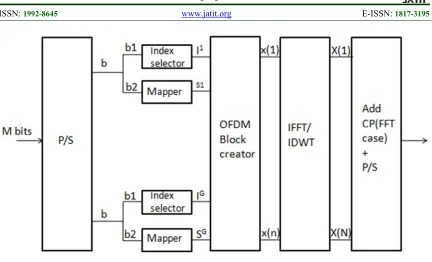
Figure 1: OFDM with index Modulation transmitter model
the frequency domain. This shift is also referred to as frequency offset. It can also be caused due to the Doppler shift in the channel. The demodulation of a signal with an offset in the carrier frequency can cause large bit error rate and may degrade the performance of a symbol synchronizer. For these reasons, it is crucial to predict and reduce the frequency offset effects on OFDM-IM system. Motivated by the significant performance and spectral efficiency improvement achieved by Discrete Wavelet Transform (DWT) recently used for OFDM system affected by CFO in [9], [10], [11].wavelet transform is firstly adopted in this work to further boost the performance of conventional OFDM with index modulation in the presence of CFO.
Indeed to combat the effects of the Inter-Symbol Interference (ISI) conventional OFDM based on Fast Fourier Transform (FFT) requires prepending a copy of the last part of each symbol under the condition of being longer than the maximum delay spread of the channel [12], thus leading to significant reduction in spectral efficiency and increasing power consumption. Further, unlike FFT in which symbols overlap only in the frequency domain, DWT transform provides the analysis of the signal in both time and frequency domain [13]. Consequently, the bandwidth waste decrease since there is no need to add Cycle Prefix (CP). However,
it is simply implemented by the replacements of the FFT/IFFT with DWT/IDWT, where IFFT is the Inverse FFT and IDWT is the inverse DWT.
In this study, we started with OFDM-IM system model presentation. CFO effects on OFDM-IM are depicted in section 3. Then, the performance of ordinary OFDM-IM is compared to DWT based OFDM-IM system under CFO and over Rayleigh fading channel using simulation results in section 4. Finally, conclusions are given in Section 5.
2. OFDM-IM SYSTEM MODEL
A system model for OFDM-IM is shown in Figure 1.Using a total number N of orthogonal subcarriers, an OFDM-IM block divides M input serial bits to parallel data streams. The input data is firstly divided into b bit streams forming G subblocks, i.e., M=bG. Each OFDM-IM subblock is defined by n=N/G subcarriers. The set of k out of n selected subcarriers are defined by b1 bits and the
M-ary mapped symbols by b2 bits, where b1=log2
(C (n, k)), b2=k log2(M) and b=b1+b2.
1158
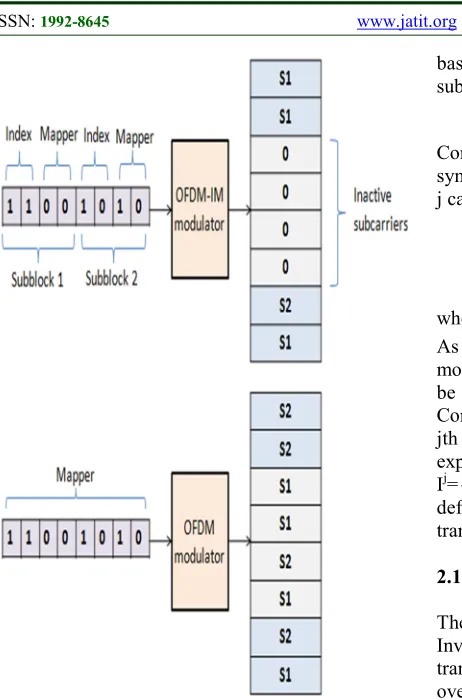
Figure 2: OFDM-IM and OFDM modulators comparison
[image:3.612.106.285.525.624.2]The index selector uses a look up table known in the transmitter and receiver sides and the incoming b1.bits to define the active subcarriers combination. Table 1 presents a possible set of selected indices used in this paper.
Table 1: Active subcarriers indices in the in phase dimension for n=4, k=2, b1=2
Input bits Active subcarriers indices
[0 0] {1,4} [0 1] {2,3} [1 0] {3,4} [1 1] {1,2}
The indices of k active subcarriers defined by b1 bit
for the jth subblock, are expressed as:
{
}
j j j
I
=
I (1) ,..., I (k) ,
(1)where
I
j(ρ) ϵ [1,…,n] for ρ =1,…,G.In the other hand, the suitably mapped symbols obtained from the modulated input bit stream b2
based on M-ary modulation, for the active subcarriers and each jth subblock are given by:
{
}
j j j
S
=
S (1) ,...,S (k)
(2)Considering the selected indices and the mapped symbols the transmitted sequence for each subblock j can be expressed as:
j j
S ( ),
I
j
x
0
otherwise,
γ
γ∈
=
(3)where
γ
=1,...,n.As an example, for n=4, k=2 using BPSK modulation, log2 (C (4, 2)) +2 log2 (2) =4 bits can be transmitted per OFDM-IM subblock. Considering the input bit sequence {0,1,0,1} for the jth subblock, subcarriers index vector can be expressed from the look-up table in table 1 as, Ij={2,3} as well the transmitted symbols vector defined by Sj={-1,1}. Hence, the resulting transmitted sequence is xj={0,-1,1,0}.
2.1 FFT based OFDM-IM
The conventional OFDM-IM is based on the Inverse Fast Fourier Transform (IFFT), block in the transmitter side to generate N parallel data streams over the subcarriers from the joined G subblocks. By applying IFFT, the symbol vectors are turned into the time domain and expressed as:
2
-1
1
( )
( )
,
0,...,
0
π
=
∑
=
=
m
i
N
N
X m
x m e
m
N
m
N
(4)
To combat the effects of the Inter-Symbol Interference (ISI) conventional OFDM-IM based on FFT requires prepending a copy of the last part of each symbol under the condition of being longer than the maximum delay spread of the channel, thus leading to significant reduction in spectral efficiency and increasing power consumption. Then, the signal vectors are fed through the transmitter Rayleigh fading channel. On the reception side CP is removed from the signal vector at the receiver antenna and FFT is applied. The received signal can be expressed in the frequency domain as:
( )
=
( )
( )
+
( ),
=
1,...,
y m
x m H m
η
m m
N
(5)1159
2.2 DWT based OFDM-IM
As illustrated in Figure.1 DWT based OFDM-IM is similar to the FFT based OFDM-IM system only the IFFT/FFT blocks are replaced by the IDWT/DWT blocks in addition to elimination of CP pending and removing in both transmitter and receiver sides . DWT has the advantage of providing localization of signal in the joint time-frequency domains that make it more robust against narrowband interference and Inter Carrier Interference (ICI) than conventional FFT. However, the signal is decomposed into small wavelets by using the wavelet function and the basis function. The DWT is the Quadrature Mirror Filters (QMF) using low-pass filters to determine the approximation coefficients and the high pass filter for the detailed coefficients [14].
These coefficients are obtained from the mother wavelet ψ (t) expressed as:
2
,
( )
2
(2
)
− −
=
−
j j
j k
t
t
k
ψ
ψ
(6)where j is the scaling index and k is the positions on the time axis.
To obtain a finite number of scales, scaling function
( )
t
φ
is used. IDWT OFDM symbol now can be considered as the weighted sum of wavelet and scale carriers, as expressed in (7):, , , ,
( )
( ) *
( )
*
( )
<=∑ ∑ ∑
=
j k j k+
J k J kj J k k
S t
w
t
ψ
t
a
φ
t
(7)
wj,k =Sequence of wavelet
aJ ,k =Approximation coefficients.
At the receiver side, after passing the signal over the Rayleigh fading channel, the reverse process is simulated using DWT. The signal will be processed by the demodulator for data recovery.
3. OFDM-IM IN THE PRESENCE OF
CARRIER FREQUENCY OFFSET
For robust OFDM-IM system implementation under realistic conditions, making the standard assumption of ideal transceiver and taking into account only the effects of channel and noise leads to inaccurate results. For these reasons, hardware impairments such as Radio Frequency (RF) front-end non ideal component should be the main concern in OFDM-IM performances assessment. These impairments result sampling clock offset, IQ imbalance, power amplifier, phase noise and carrier frequency offset nonlinearity [15]. OFDM-IM system affected by CFO suffers from orthogonality loss which has a harmful effect on the system
performance as mentioned in [8] and [16]. Two types of CFO are considered: integral CFO (IFO) and the fractional CFO (FFO) [9] which is principally the cause of subcarriers orthogonality distortion. Indeed, CFO basically arises from the frequency difference between the transmitter and the receiver oscillators denoted by ∆f.
Hence, considering the presence of CFO, the new expression of the received signal is:
2
( )
=
( )
( )
+
( )
j m N
y m
e
x m H m
m
π λ
η
(8)where λ is the normalized frequency offset λ=(fo/Δf).
4. RESULTS AND DISCUSSION
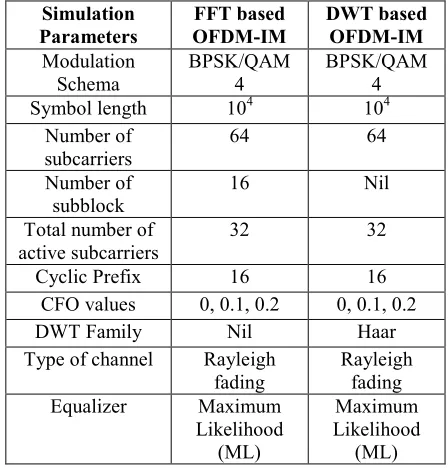
[image:4.612.305.529.399.633.2]In this part, simulation of BER performance in function of Signal to Noise Ratio (SNR) for standard OFDM-IM and DWT based OFDM-IM in the presence of CFO and over Rayleigh flat fading channel is carried out following simulation parameters in table 2. A set of value of CFO and different M-array modulation are adopted in simulations.
Table 2 .Simulation parameters Simulation Parameters FFT based OFDM-IM DWT based OFDM-IM Modulation Schema BPSK/QAM 4 BPSK/QAM 4 Symbol length 104 104
Number of subcarriers
64 64
Number of subblock
16 Nil
Total number of active subcarriers
32 32
Cyclic Prefix 16 16 CFO values 0, 0.1, 0.2 0, 0.1, 0.2 DWT Family Nil Haar Type of channel Rayleigh
fading
Rayleigh fading Equalizer Maximum
Likelihood (ML)
Maximum Likelihood
(ML)
1160
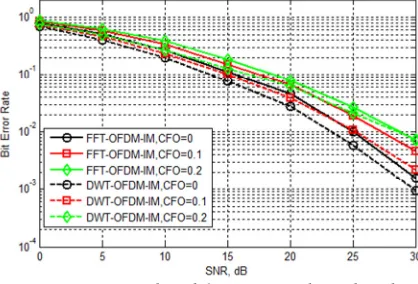
Figure 3: BER DWT based OFDM-IM and FFT based OFDM-IM in the presence of CFO using BPSK
For instance, for CFO=0, BER =10-2, SNR=19db for DWT based OFDM-IM while it is 20db for FFT based OFDM-IM. As it is obvious, increasing the CFO value from 0 to 0.02 affects harmfully the BER performance of both systems. Hence, DWT based OFDM-IM boost the performance of standard OFDM-IM for different CFO levels.
Figure 4: BER DWT based OFDM-IM and FFT based OFDM-IM in the presence of CFO using QAM-4
In Figure 4, switching from BPSK to QAM 4 for both DWT based OFDM-IM and FFT OFDM-IM, the possible states in the diagram of constellation increases which makes the searching area more complicated and with higher the probability of error. For all type of modulation, DWT based OFDM-IM provides performances improvement.
Simulation results demonstrate the ability of our proposed model based DWT transform to mitigate the CFO effects and to overcome the limitation of FFT based OFDM-IM system. It was found in [6] that OFDM-IM is more robust to CFO effects than the conventional OFDM system. In this paper,
DWT based OFDM-IM is proposed to further improve the performances of OFDM-IM system.
In fact, our proposed approach is less sensitive to the presence of CFO with conventional OFDM-IM performance and spectral efficiency enhancement. For the effectiveness of the OFDM-IM analysis and implementation in practical scenarios, CFO should be taking into account in BER estimation.
For this purpose an analytical BER expression for DWT based OFDM-IM in the presence of CFO should be developed and compared to simulation results found in this study. Hence, CFO mitigation algorithms will be an interesting topic.
5. CONCLUSIONS
In this paper, we have proposed DWT for OFDM-IM system. Indeed, the DWT transform overcomes the limitation of the FFT transform used in the conventional OFDM-IM systems and even provides better performances. Inspired by these advantages, this work extended the transforms comparison to include the effect of CFO over Rayleigh fading channel.
Simulation results confirm that the proposed system performs far better than conventional OFDM-IM in the presence of CFO. Therefore, the announced model is an adequate platform for high data rate wireless communication systems in the condition of using hardware impairments mitigation techniques which will be developed in our future works
.
REFRENCES:
[1] Abu-Alhiga R, Haas H. Subcarrier-index modulation OFDM. In2009 IEEE 20th International Symposium on Personal, Indoor and Mobile Radio Communications 2009 Sep 13 (pp. 177-181). IEEE.
[2] Tsonev D, Sinanovic S, Haas H. Enhanced subcarrier index modulation (SIM) OFDM. In2011 IEEE GLOBECOM Workshops (GC Wkshps) 2011 Dec 5 (pp. 728-732). IEEE. [3] Mesleh RY, Haas H, Sinanovic S, Ahn CW, Yun
S. Spatial modulation. IEEE Transactions on Vehicular Technology. 2008 Jul;57(4):2228-41. [4] Basar E, Aygolu U, Panayirci E, Poor HV.
Space-time block coded spatial modulation. IEEE Transactions on Communications. 2011 Mar;59(3):823-32.
[image:5.612.96.305.387.529.2]1161 [6] Ma Q, Yang P, Xiao Y, Bai H, Li S. Error
probability analysis of OFDM-IM with carrier frequency offset. IEEE Communications Letters. 2016 Dec;20(12):2434-7.
[7] Yu SY, Feng Y, Kim MK, Kim SC. Performance Analysis of Subcarrier Index Modulation OFDM in Doppler Spread Environments. Proc. International Conference on Intelligent Systems, 2016.
[8] Rugini L, Banelli P. BER of OFDM systems impaired by carrier frequency offset in multipath fading channels. IEEE Transactions on Wireless Communications. 2005 Sep; 4(5):2279-88.
[9] Jhingan A, Kansal L. Performance Analysis of FFT-OFDM and DWT-OFDM over AWGN Channel under the Effect of CFO. Indian Journal of Science and Technology. 2016 Feb 24;9(6).
[10] Jhingan A, Kansal L. Performance evaluation for wavelet based OFDM system effected by CFO over rayleigh channel. Indian Journal of Science and Technology. 2016 Feb 9;9(5). [11] Jhingan A, Kansal L. Performance Assessment
of OFDM Utilizing FFT/DWT over Rician Channel Effected by CFO. Indian Journal of Science and Technology. 2016 Mar 31;9(12). [12] Henkel W, Taubock G, Odling P, Borjesson
P.O, & Petersson N (2002). The cyclic prefix of OFDM/DMT-an analysis. In Broadband Communications, 2002. Access, Transmission, Networking. 2002 International Zurich Seminar on (pp. 22-1). IEEE.
[13] Resnikoff H.L, Raymond Jr.O (2012). Wavelet analysis: the scalable structure of information. Springer Science & Business Media.
[14] Mallat S. A wavelet tour of signal processing. Academic press; 1999 Sep 14.
[15] Muschallik C. Influence of RF oscillators on an OFDM signal. IEEE transactions on Consumer Electronics. 1995 Aug;41(3):592-603.