R E S E A R C H
Open Access
Patient-centered recruitment and retention
for a randomized controlled study
Sumedha Chhatre
1*, Ashlie Jefferson
2, Ratna Cook
2, Caitlin R. Meeker
3, Ji Hyun Kim
2, Kayla Marie Hartz
4,
Yu-Ning Wong
3, Adele Caruso
5, Diane K. Newman
5, Knashawn H. Morales
6and Ravishankar Jayadevappa
2,5,7,8,9Abstract
Background:Recruitment and retention strategies for patient-centered outcomes research are evolving and research on the subject is limited. In this work, we present a conceptual model of patient-centered recruitment and retention, and describe the recruitment and retention activities and related challenges in a patient-centered comparative effectiveness trial.
Methods:This is a multicenter, longitudinal randomized controlled trial in localized prostate cancer patients. Results:We recruited 743 participants from three sites over 15 months period (January 2014 to March 2015), and followed them for 24 months. At site 1, of the 773 eligible participants, 551 (72%) were enrolled. At site 2, 34 participants were eligible and 23 (68%) enrolled. Of the 434 eligible participants at site 3, 169 (39%) enrolled. We observed that strategies related to the concepts of trust (e.g., physician involvement, ensuring protection of information), communication (e.g., brochures and pamphlets in physicians’offices, continued contact during regular clinic visits and calling/emailing assessment), attitude (e.g., emphasizing the altruistic value of research, positive attitude of providers and research staff), and expectations (e.g., full disclosure of study requirements and time commitment, update letters) facilitated successful patient recruitment and retention. A stakeholders’advisory board provided important input for the recruitment and retention activities. Active engagement, reminders at the offices, and personalized update letters helped retention during follow-up. Usefulness of telephone recruitment was site specific and, at one site, the time requirement for telephone recruitment was a challenge. Conclusions:We have presented multilevel strategies for successful recruitment and retention in a clinical trial using a patient-centered approach. Our strategies were flexible to accommodate site-level requirements. These strategies as well as the challenges can aid recruitment and retention efforts of future large-scale, patient-centered research studies.
Trial registration:Clinicaltrials.gov, ID:NCT02032550. Registered on 22 November 2013.
Background
The cornerstone of a clinical trial is the willingness of par-ticipants to invest time and effort. However, recruitment and retention for clinical trials is challenging [1–5]. In the context of a research study, recruitment is the process through which an individual is recruited as a study partici-pant. This process involves presenting the study details to the potential participant; review of the details (by the potential participant); making a decision about participating; and providing informed consent if the participants agrees to enroll in the study. Participant retention is the continuous engagement of the participant in the research study, post
enrollment [6]. While achieving the required sample size for recruitment and retention is critical for ro-bust statistical power, and study validity [2, 7–10], achieving the targeted sample in terms of number or timespan is challenging [2, 5, 7, 10–19]. It was reported that only 55% of clinical studies accrue their total targeted sample size, and 78% accrue 80% of their targeted sample size [18]. Recruitment and retention issues can adversely affect the ability to detect intervention effects and may limit the significance of the research findings [2,5,7,20].
Patient-centered outcomes research (PCOR) is a way to achieve patient-centeredness in research. Patient-centeredness requires active participation and can lead to empowerment [21,22]. Focus of PCOR is on compar-ing the effects of treatment options on outcomes that * Correspondence:[email protected]
1Department of Psychiatry, Perelman School of Medicine, University of
Pennsylvania, 3535 Market St. Suite 4051, Philadelphia, PA 19104, USA Full list of author information is available at the end of the article
matter most to the patients [21,23]. Increased participa-tion of stakeholders in clinical trials is a key element of PCOR that can enhance concordance between research topics and patient priorities, improve patient recruit-ment and retention, and inform clinically relevant evidence-based policy [21–24].
Community-based participatory research (CBPR) is an excellent model for engaging communities in research [25,26]. There is an opportunity for the PCOR model to be informed by CBPR principles for enhancing patient engagement, and the two models can complement each other [25,27]. Principles of CBPR can be used to inform the three phases of a PCOR study: pre, continuous and sustained phase. The CBPR principles of community as a unit of identity, building on community strengths and equal partnerships can inform the pre-engagement phase of the PCOR research. The CBPR principles of bilateral learning and integration of research and action can inform the continuous engagement phase of PCOR research; and finally, the CBPR principles of system development, and involvement of all partners in the dis-semination of findings can inform the sustained engage-ment phase of PCOR research.
Research indicates that recruitment strategies that evolve and adapt to the needs of the study and use local resources appropriately are successful [28]. In addition, successful strategies are those that enhance a partici-pant’s awareness of the health issue [2, 29–32]. At the same time, operationalization of these insights into re-search protocols is challenging. Furthermore, while im-portant, these studies do not describe a patient-centered approach for recruitment and retention. Patient-centered recruitment and retention implies continuous engagement of stakeholders to identify the resources available, develop appropriate strategies and address the challenges to recruitment and retention. The objective of our paper is twofold. First, we present a conceptual model of patient-centered recruitment and retention. Next, in the context of this conceptual model, we describe the recruitment and retention strategies, and related challenges in our PCOR-based comparative effectiveness randomized controlled trial (RCT) in localized prostate cancer patients.
Methods
Conceptual model of patient-centered recruitment and retention
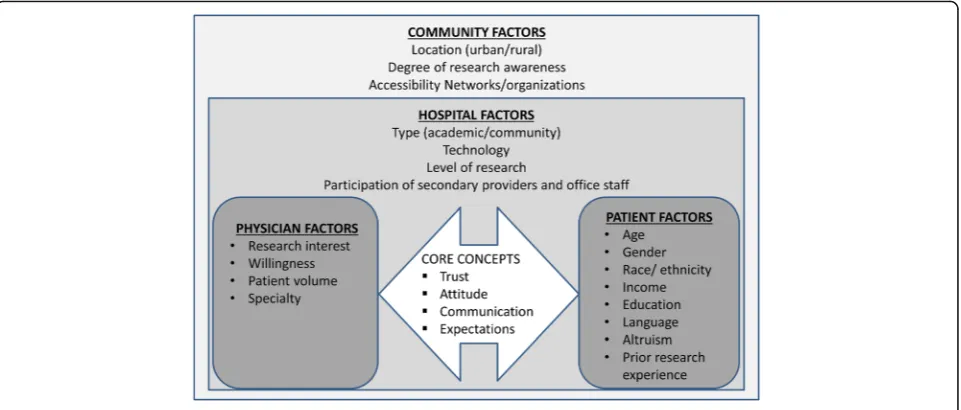
Our conceptual model of patient-centered recruitment and retention (Fig.1) was developed by the study princi-pal investigator prior to study initiation, and is informed by the PCOR principals [22,25,27,33]. The model iden-tifies four levels of factors (patient, physician, hospital, and community) that contribute to the engagement, recruitment and retention of participants in clinical
trials. Community and hospital are the macro-level fac-tors that influence feasibility, accessibility and translation of research. Patient and provider are micro-level factors that affect the conduct of, and engagement in, research. Trust, attitude, communication, and expectations between patients and providers are the core concepts of our model. A discussion of each core concept follows.
Trust
Trust is the foundation of recruitment and retention in clinical trials [32,34–37]. Trust in physician was cited as a reason for participating in a study [32, 35]. When physi-cians advise patients about clinical research, the physician-patient relationship is enhanced [38,39]. Patients may seek their physicians’ opinion about entry into a study [38], or the physician may refer the patient to a study. Either way, the patient may not fully assess the pros and cons of par-ticipation out of trust in the physician. Therefore, the phys-ician needs to inform the patient about the optional nature of research participation and that the patients’decision has no implications for care [38,40].
Attitude
Overall attitude of the patient and provider has implica-tions for recruitment and retention in a study [5]. Altru-istic attitude of participants was a main motivator for study participation [35,37]. Physician’s attitude towards research was cited as a barrier to participation by some [32,41].
Communication
An important principle of PCOR, communication or en-gagement, plays a vital role in recruitment and retention [5,23,33]. Patients must receive information that is use-ful for making health decisions. In a study of 485 con-secutive patients in a tertiary-care academic medical center, over two thirds of participants said that it was appropriate for an investigator to contact them about a study [5]. Patients also reported that they liked to receive details of the study [42]. Research protocols must describe the specifics about health questions that the research aims to inform; and the relevant population [23]. Clear communication about study requirements is shown to improve study retention [43].
Expectations
Process of developing recruitment and retention strategies Our study advisory board comprised of multiple stake-holders – prostate cancer survivors, providers and re-searchers. During regular meetings with the study team, based on their personal and clinical experience, the stakeholders were able to offer important insight into the essential steps (identification of potential partici-pants, contacting the potential participartici-pants, explaining the study, obtaining informed consent, conducting as-sessments and ongoing retention) and resources (personnel) that were necessary for participant recruit-ment and retention. Integration of these elerecruit-ments led to our recruitment and retention strategies that were rooted in the four core concepts of trust, attitude, com-munication and expectations.
Study description and intervention
The overall study methodology for our study funded by the Patient Centered Outcomes Research Institute (PCORI) has been described previously [45]. In this multicentered RCT, the intervention was a web-based Adaptive Conjoint Analysis (ACA) tool, PreProCare for preferences assess-ment. Participants in the intervention group completed the web-based ACA tool, PreProCare tool, to assess their indi-vidual preferences. Briefly, in this three-part tool, brief introduction to the tool was provided in part 1. In the sec-ond part, the participants ranked the attributes of various treatments (“not important” to “extremely important”). In the third part, choice scenarios consisting of combinations of attributes were presented based on attributes ranking, with participants selecting the combination that they most prefer. At end of the task, a graph and a list of the five attri-butes most preferred by the participant was generated. The participant had the option to have a printout of the output
to share with his provider [45]. The intervention group completed the intervention either during their office visit or at home. On average, this tool required about 30 min to complete. Usual care group participants received care as usual that consisted of standard educational material about prostate cancer treatments.
Sample size
Sample size analysis indicated that we needed a total of 720 participants, eligible for randomization into one of the two study groups to have 80% power for detecting an effect size as small as 0.2 standard deviations (SD) in out-comes. All participants were followed-up for 2 years and outcomes were assessed at baseline, at and 3-, 6-, 12-, and 24-month follow-up.
Randomization
The study biostatistician (KM) created randomization se-quences for each site using a pseudo-random number gen-erator with random blocking varying sizes from 2 to 6. The treatment assignments were placed in sealed, opaque enve-lopes. Research coordinators opened the envelope and noti-fied participants of group assignment. Study investigators were masked to the treatment assignment.
Outcomes
[image:3.595.59.540.88.293.2]as a token of appreciation. Local institutional review boards approved the study.
Study sites
The University of Pennsylvania (site 1) was the primary and coordinating site for this protocol and four out-patient offices facilitated the accrual efforts. Other study sites were the Corporal Michael J. Crescenz Veterans Administration Medical Center (CMCVAMC) site 2) and Fox Chase Cancer Center (FCCC) and Temple Healthcare System (site 3).
Study eligibility criteria
The study eligibility criteria were as follows: (1) newly diagnosed with localized prostate cancer (and yet to ini-tiate curative intent treatment for prostate cancer) or under the active surveillance protocol; (2) age≥18 years; (3) low risk (prostate-specific antigen (PSA) ≤10 ng/ml, and Gleason ≤6, and stage T1c–T2a), intermediate risk (PSA > 10 to ≤20 ng/ml, or Gleason 7, or stage T2b), and high risk (PSA > 20 ng/ml, or Gleason score 8–10, or stage T2c); (4) able to provide informed consent. The exclusion criteria are: (1) distant, metastatic or un-staged prostate cancer at diagnosis; (2) unable to com-municate in English; and (3) already treated for prostate cancer with curative intent.
Analysis
We summarized the patient-centered recruitment and re-tention strategies in the context of the four concepts. We also compared the baseline demographic and clinical char-acteristics of the intervention group and usual care groups.
Results
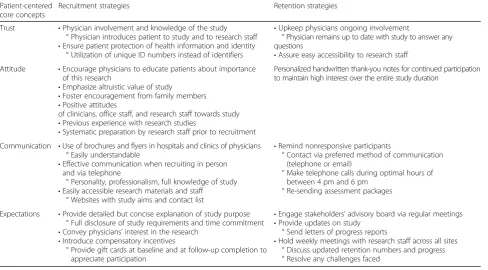
Core concepts, recruitment and retention strategies Table 1 summarizes our patient-centered recruitment and retention strategies and the related core concepts. Initial and continued involvement of physicians in the study was essential for developing trust. Introduction by the physician helped the research staff to develop better rapport with the participant. Providing details about pro-tection of health information to the participants was an-other element that developed trust. Positive attitude of providers and research staff was essential for our recruit-ment and retention efforts. During the engagerecruit-ment and recruitment process, our research team was mindful about describing the study protocol in a way that pa-tients would understand. We also emphasized the altru-istic value of research involvement. Our core concept of communication implied ongoing engagement of partici-pants and was facilitated by continued contact by re-search coordinators during regular clinic visits, and calling and re-sending assessment packages to those un-responsive. The core value of expectations translated
into full disclosure of study requirements and time com-mitment. Two sites sent update letters to the participants that briefed them about study progress, and thanked them for their continued participation. Advisory board mem-bers were also kept abreast of the study progress during regular advisory board meetings. Finally, at each study time point, participants were offered a gift card as a way of showing our appreciation. In the following sections, we present the details of the participant recruitment.
Onsite recruitment
Overall, the recruitment process consisted of five main steps: research coordinators reviewed medical records of patients scheduled for prostate needle biopsies, out-patient office appointments (urology, radiation oncology) for newly diagnosed prostate cancer or regularly sched-uled active surveillance visits. Potentially eligible patients were given a unique identification number and tracked using a secure database. Prior to approaching the patients, we obtained approval from their providers. Physicians and nurse navigators also referred potential patients to the study. Each site adjusted these steps per site-specific needs.
Telephone recruitment
For telephone recruitment at site 1, we obtained a list of prostate cancer patients from Penn Medicine’s Clinical Data Warehouse, the Penn Data Store. Those diagnosed in the prior 6 months were eligible for telephone contact. Prior to recruitment, we obtained approval from urolo-gists and radiation oncolourolo-gists to contact their patients. During this time, we also amended the study protocol to include active surveillance as inclusion criteria. During telephone contact, research coordinators used an IRB-approved telephone script to screen the patients for any exclusion criteria, explain the study, and review the con-sent form. To those who verbally agreed to participate, we mailed two copies of the informed consent form along with a self-addressed, stamped envelope. Patients were instructed to read over the form carefully and if they wished to participate, sign and date the form and mail it back, and keep the second one for their records.
who declined to participate, the reason for refusal was noted, and they were removed from the contact list. This strategy allowed staff to gauge the patient’s attitude toward participation, and to address the expectations of the participant, and what they could expect from the study team if they participated. If a potential participant was unreachable via telephone prior to his upcoming appointment, we attempted to approach him in the clinic. Physicians and nurse navigators were also encour-aged to refer eligible patients to the study.
Retention and follow-up
To enhance the participants’engagement and communica-tion, at sites 1 and 2, we mailed a one-page study update to the participants during the follow-up period. Study coordi-nators also created lists of unresponsive participants, and the assessments they had missed. We shared these lists with the providers so that they could stress the importance of continued participation during a participant’s follow-up visit. At all sites, we re-sent the questionnaires to those who were nonresponsive. Additionally, telephone calls were made and emails were sent to those who could not be con-tacted during their office visits. Direct interactions, such as speaking to participants during a provider visit or over tele-phone, was helpful. We also observed that calling later in the afternoon, and/or early evening, after work hours, were the most appropriate times than calling in the morning or early afternoon. Given the large number of participants, effective tracking to monitor retention was crucial. Study
coordinators developed a management system for all study activities, including a physical filing system with copies of letters that were sent and received, consent forms, copies of completed questionnaires, and any other correspondence, as well as a secured electronic database that included logging of individual randomization and retention-related information.
Patient recruitment and retention
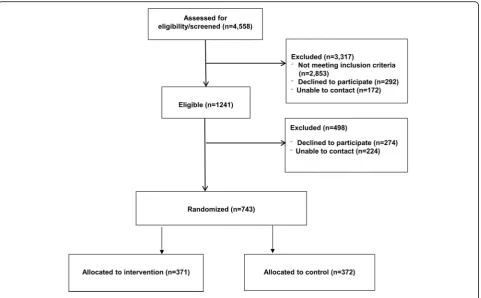
Using the strategies described in Table1, between January 2014 and March 2015, we recruited 743 patients with localized prostate cancer from the three sites, and followed them for 24 months. Across three sites, we assessed 4558 patients for eligibility, and excluded 3317 for various rea-sons. At site 1, of the 773 eligible participants, 551 (72%) were enrolled. At site 2, 34 participants were eligible and 23 (68%) enrolled in the study. Of the 434 eligible men at site 3, 169 (39%) enrolled. In total, 743 patients were random-ized (371 to intervention and 372 to usual care). The in-person recruitment among eligible patients was more ef-fective than telephone recruitment (87% vs. 41%). The top three reasons for declining to participate were a feeling of being overwhelmed with the diagnosis, not being interested in a research trial, and just wanting to move on with life.
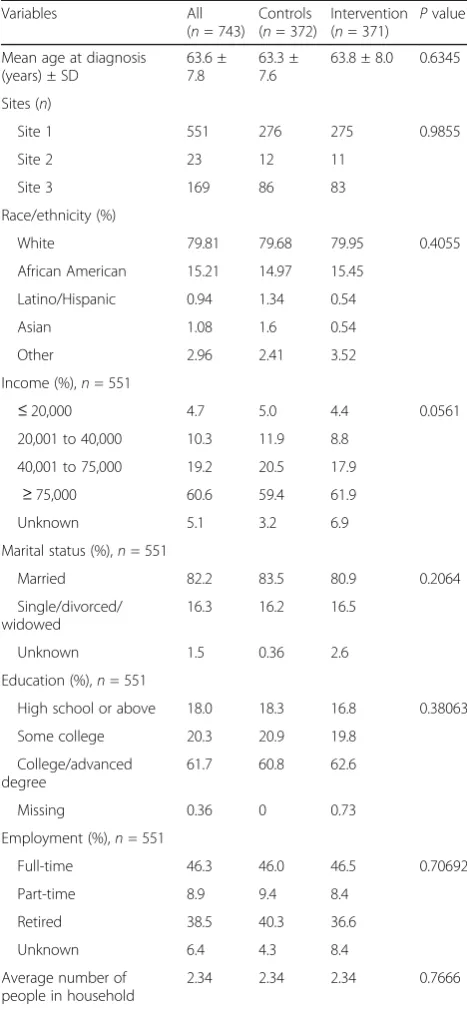
[image:5.595.57.546.100.370.2]Table 2 presents the baseline characteristics of our study cohort. The mean age at diagnosis of prostate can-cer was 63.58 years (SD 7.8). Most of the participants were white (79%), married (82%), with at least college degree (62%), and annual household income in excess of
Table 1Patient-centered values and strategies
Patient-centered core concepts
Recruitment strategies Retention strategies
Trust •Physician involvement and knowledge of the study ° Physician introduces patient to study and to research staff
•Ensure patient protection of health information and identity ° Utilization of unique ID numbers instead of identifiers
•Upkeep physicians ongoing involvement
° Physician remains up to date with study to answer any questions
•Assure easy accessibility to research staff Attitude •Encourage physicians to educate patients about importance
of this research
•Emphasize altruistic value of study
•Foster encouragement from family members
•Positive attitudes
of clinicians, office staff, and research staff towards study
•Previous experience with research studies
•Systematic preparation by research staff prior to recruitment
Personalized handwritten thank-you notes for continued participation to maintain high interest over the entire study duration
Communication •Use of brochures and flyers in hospitals and clinics of physicians ° Easily understandable
•Effective communication when recruiting in person and via telephone
° Personality, professionalism, full knowledge of study
•Easily accessible research materials and staff ° Websites with study aims and contact list
•Remind nonresponsive participants
° Contact via preferred method of communication (telephone or email)
° Make telephone calls during optimal hours of between 4 pm and 6 pm
° Re-sending assessment packages
Expectations •Provide detailed but concise explanation of study purpose ° Full disclosure of study requirements and time commitment
•Convey physicians’interest in the research
•Introduce compensatory incentives
° Provide gift cards at baseline and at follow-up completion to appreciate participation
•Engage stakeholders’advisory board via regular meetings
•Provide updates on study ° Send letters of progress reports
US$75,001 (61%). The intervention group and usual care group were comparable in terms of demographic and clinical characteristics. Figure 2 presents the Consoli-dated Standards of Reporting Trials (CONSORT) Dia-gram of patient recruitment. At 24 months, we maintained retention between 74 and 83% across all sites. It was observed that retention was higher was par-ticipants who were white, older than 75 years, and were married. To enhance the participants’ engagement, half
way through the study course, we mailed a one-page study update to all participants at sites 1 and 2. A 35 % increase in survey response rate was observed following the dissemination of the letter, especially from partici-pants who were otherwise unresponsive in responding to the surveys.
Discussion
Involvement of patient and other stakeholders’ in research is an essential component of PCOR. Addition-ally, the PCORI encourages stakeholders’ involvement over the entire research spectrum. Thus, for a patient-centered outcomes study, it is necessary that researchers have a collaborative relationship with both participants and stakeholders. Our work offers new insights into patient-centered recruitment and retention strategies in the context of a large, patient-centered RCT study in the following ways: (1) a novel patient-centered recruitment and retention model to operationalize concepts of trust, attitude, communication and expectations; (2) active engagement of all stakeholders including patients to enhance recruitment and retention; (3) sensitivity to the needs and challenges; and (4) appropriate use of available resources at study sites.
Our conceptual model of patient-centered recruitment and retention consists of patient-, physician-, hospital-, and community-level factors that have implications for recruitment and retention. We observed that strategies related to our concepts of trust (e.g., physician involve-ment, ensuring protection of information), communica-tion (e.g., brochures and pamphlets in physicians’offices, continued contact during regular clinic visits, resending assessments), attitude (e.g., emphasizing the altruistic value of research, positive attitude of providers and research staff ), and expectations (e.g., full disclosure of study requirements and time commitment, update letters) facilitated recruitment and retention. Screening patient records, identifying eligible patients, preparing recruitment material and ensuring that the relevant clinicians were informed about the study, were useful strategies in our study, and have been identified by prior research [9, 28]. The in-person recruitment among eligible patients was more effective than telephone recruitment (87% vs. 41%). However, despite having trained research staff, time and resource constraints prompted use of diverse techniques to augment the re-cruitment and retention efforts. Contacting potential participants prior to their scheduled appointment helped streamline the process at one site. Participants arrived 1 h early for their appointment, and this offered sufficient time to discuss questions and concerns.
[image:6.595.56.290.99.605.2]Collaboration between patients, clinicians, and re-searchers helped build trust. Most of our patients were in a sensitive period, having recently learned about their
Table 2Baseline demographic and clinical characteristics (n= 743)
Variables All (n= 743)
Controls (n= 372)
Intervention (n= 371) P
value
Mean age at diagnosis (years) ± SD
63.6 ± 7.8
63.3 ± 7.6
63.8 ± 8.0 0.6345
Sites (n)
Site 1 551 276 275 0.9855
Site 2 23 12 11
Site 3 169 86 83
Race/ethnicity (%)
White 79.81 79.68 79.95 0.4055
African American 15.21 14.97 15.45
Latino/Hispanic 0.94 1.34 0.54
Asian 1.08 1.6 0.54
Other 2.96 2.41 3.52
Income (%),n= 551
≤20,000 4.7 5.0 4.4 0.0561
20,001 to 40,000 10.3 11.9 8.8
40,001 to 75,000 19.2 20.5 17.9
≥75,000 60.6 59.4 61.9
Unknown 5.1 3.2 6.9
Marital status (%),n= 551
Married 82.2 83.5 80.9 0.2064
Single/divorced/ widowed
16.3 16.2 16.5
Unknown 1.5 0.36 2.6
Education (%),n= 551
High school or above 18.0 18.3 16.8 0.38063
Some college 20.3 20.9 19.8
College/advanced degree
61.7 60.8 62.6
Missing 0.36 0 0.73
Employment (%),n= 551
Full-time 46.3 46.0 46.5 0.70692
Part-time 8.9 9.4 8.4
Retired 38.5 40.3 36.6
Unknown 6.4 4.3 8.4
Average number of people in household
cancer diagnosis. The treating physician was fully knowledgeable about the study and the patients’ circum-stances. The physician introduced the study and the re-search staff to the participant. Because of this process, the participant was able to appreciate the physicians’ involvement with the study. Additionally, the research staff discussed the measures that were in place for pro-tection of health information and identity. The physician maintained ongoing involvement with the study and along with the research staff, remained accessible to the participant. Together, these measures generated trust and helped the recruitment and retention efforts. Studies report that up to 76% of patients expected their phys-ician to alert them about appropriate clinical trials [31], and that physician referral was one of the most useful recruitment strategy [30]. One RCT of localized prostate cancer patients analyzed the comparative effectiveness and cost-effectiveness of nurses and surgeons in recruit-ing patients. The recruitment rates between urology consultants and nurses were not significantly different, and although nurses spent longer time with patients on average, they were more cost-effective recruiters [46]. Due to the uncertainty that is inherent in clinical re-search, time pressures and lack of information about study details, physicians may be reluctant to discuss clin-ical research with patients [38]. However, interaction be-tween physician and patient is an important aspect of
study recruitment [28], whereas medical distrust is often cited as a barrier to recruitment [11,18,20,28].
Attitude was another of our core concept that aided recruitment and retention. By learning the flow of each physician’s office and working closely with the staff, we were able to enhance in-person recruitment. Altruism is one of the reasons for participating in a clinical trial [38]. Across all study sites, we observed that patients agreed to enroll after they learnt that study has the potential to help future prostate cancer patients. Many of the enrolled patients were approached fairly soon after learning about diagnosis and were usually accom-panied by family members. While the family members were naturally protective of the patient initially, when presented with the opportunity to help future patients, the family members played a pivotal role in encouraging the patient to participate.
[image:7.595.59.541.87.385.2]recruitment using targeted telephone and mail lists, and found that calling was time consuming and inefficient, similar to our findings [12].
Research indicates that geographical location has an ef-fect on recruitment for clinical trials, and that large cities were associated with poorer recruitment [9, 28, 47]. The likely reasons are a more diverse population, traditionally more difficult to engage subgroups, greater population mobility, and presence of multiple research entities result-ing in participant exhaustion [9,47]. Although recruitment for our study took place at urban, academic hospitals, we did not face these obstacles. While we attempted to recruit participants from all socio-economic groups, most of our participants had at least a college degree, and an annual household income of more than US$75,000.
Maintaining engagement at desired levels needs moni-toring and tailored solutions for study-specific chal-lenges [28]. In general population, the response rates for self-completion surveys was as little as 11% [47,48]. It is likely that respondents have better health statuses, com-pared to nonrespondents and this can affect the generalizability of the results [47, 49,50]. Our retention strategies were also rooted in our core concept of “expectations”, e.g., providing study updates, and offer-ing monetary incentive. Research has identified partici-pant incentive as a helpful strategy to enhance retention [51]. In a study of lung cancer patients, acknowledging and appreciating the efforts of participants motivated continued participation [51].
Limitations
We note some limitations to our study. All three sites in our study are urban academic institutions and our sample consisted of men with localized prostate cancer. Most of our participants were college graduates, and had an annual household income of more than US$75,000. Thus, the generalizability of the findings may be limited. Additionally, of the four levels of factors (patient, pro-vider, hospital, and community) depicted in our concep-tual model, we focused mostly on the patient- and provider-level factors. There may be core concepts in addition to the ones that we have identified, and these need to be addressed in future studies. While we observed some differences in the yield of different strat-egies, it is not fully possible to separate the effects of dif-ferent recruitment and retention approaches because several strategies were in place concurrently and no sin-gle strategy was adopted in isolation. Each research study faces specific conditions, and some recruitment and retention strategies we have presented may be more relevant than other strategies. Finally, in this paper our focus describing our novel patient-centered recruitment and retention activities. While we present the demo-graphic differences between intervention and usual care
groups to demonstrate that randomization worked, the outcomes data will be presented in our future work.
Conclusion
We have presented recruitment and retention strategies within the context of a patient-centered model. Despite approaching patients, many of whom only recently had learned about diagnosis of prostate cancer and thus were definitely in a sensitive period, and the short window within which to recruit and administer the intervention, we were able to recruit 743 men by utilizing these mul-tiple, proactive recruitment techniques. Additionally, our strategies were flexible to accommodate site-level re-quirements. Our strategies as well as challenges can aid recruitment and retention efforts of future large-scale, patient-centered research studies.
Abbreviations
CBPR:Community-based participatory research; PCOR: Patient-centered outcomes research; PCORI: Patient Centered Outcomes Research Institute; RCT: Randomized controlled trial; SD: Standard deviation
Acknowledgements
Not applicable
Funding
Patient-centered Outcomes Research Institute- CE-12-11-4973.
Availability of data and materials
All data generated or analyzed during this study are included in this published article.
Authors’contributions
SC and RJ conceptualized the study, designed the study and conducted the analysis. AJ, CM, and KH conducted the recruitment. RC, JK, and CM conducted the retention. YW, AC, and DN supervised the recruitment and retention. KM provided the randomization. SC, AJ, RC, CM, JK, KH, YW, AC, DN, KM, and RJ contributed to the writing, and reviewed the manuscript and approved the final version.
Ethics approval and consent to participate
The study was approved by the Institutional Review Boards of the University of Pennsylvania, Corporal Michael J. Crescenz VAMC, and the Fox Chase Cancer Center.
All participants provided informed consent and HIPAA approval.
Consent for publication
Not applicable
Competing interests
The authors declare that they have no competing interests.
Publisher’s Note
Springer Nature remains neutral with regard to jurisdictional claims in published maps and institutional affiliations.
Author details
1Department of Psychiatry, Perelman School of Medicine, University of
Pennsylvania, 3535 Market St. Suite 4051, Philadelphia, PA 19104, USA.
2Department of Medicine, Perelman School of Medicine, University of
Pennsylvania, Philadelphia, PA, USA.3Fox Chase Cancer Center, Temple
University Health System, Philadelphia, PA, USA.4Edward Via College of
Osteopathic Medicine, Blacksburg, VA, USA.5Division of Urology, Department of Surgery, Perelman School of Medicine, University of Pennsylvania, Philadelphia, PA, USA.6Department of Biostatistics and Epidemiology,
USA.7Corporal Michael J. Crescenz VAMC, Philadelphia, PA, USA.8Leonard
Davis Institute of Health Economics, University of Pennsylvania, Philadelphia, PA, USA.9Abramson Cancer Center, University of Pennsylvania, Philadelphia,
PA, USA.
Received: 19 May 2017 Accepted: 9 March 2018
References
1. Wong AD, Kirby J, Guyatt GH, Moayyedi P, Vora P, You JJ. Randomized controlled trial comparing telephone and mail follow-up for recruitment of participants into a clinical trial of colorectal cancer screening. Trials. 2013;11:14–40.
2. Bower P, Brueton V, Gamble C, Treweek S, Smith CT, Young B, Williamson P. Interventions to improve recruitment and retention in clinical trials: a survey and workshop to assess current practice and future priorities. Trials. 2014; 15(1):399.
3. James AS, Daley CM, Engelman K, Greiner KA, Ellerbeck E. Process evaluation of recruitment for a cancer screening trial in primary care. Health Promot Pract. 2011;12(5):696–703.
4. Kaplan PC, Nápoles AM, Dohan D, Hwang ES, Melisko M, Nickleach D, Quinn JA, Haas J. Clinical trial discussion, referral, and recruitment: physician, patient, and system factors. Cancer Causes Control. 2013;24:979–88. 5. Sood A, Prasad K, Chhatwani L, Shinozaki E, Cha SS, Loehrer LL,
Wahner-Roedler DL. Patients’attitudes and preferences about participation and recruitment strategies in clinical trials. Mayo Clin Proc. 2009;84(3):243–7. 6. Turner JR. Recruitment and retention of research subjects. In: Gellman MD,
Turner JR, editors. Behavioral Medicine. New York: Springer; 2013. 7. Nasser N, Grady D, Balke CW. Commentary: improving participant recruitment
in clinical and translational research. Acad Med. 2011;86(11):1334–5. 8. Leathem CS, Cupples ME, Byrne MC, O’Malley M, Houlihan A, Murphy AW,
Smith SM. Identifying strategies to maximise recruitment and retention of practices and patients in a multicentre randomised controlled trial of an intervention to optimise secondary prevention for coronary heart disease in primary care. BMC Med Res Methodol. 2009;9:40.https://doi.org/10.1186/ 1471-2288-9-40.
9. Newington L, Metcalfe A. Factors influencing recruitment to research: qualitative study of the experiences and perceptions of research teams. BMC Med Res Methodol. 2014;14(1):1–5.
10. Newington L, Metcalfe A. Researchers’and clinicians’perceptions of recruiting participants to clinical research: a thematic meta-synthesis. J Clin Med Res. 2014;6(3):162–72.
11. Bower P, Wilson S, Mathers N. Short report: how often do UK primary care trials face recruitment delays? Fam Pract. 2007;24(6):601–3.
12. McDonald AM, Knight RC, Campbell MK, Entwistle VA, Grant AM, Cook JA, Elbourne DR, Francis D, Garcia J, Roberts I, et al. What influences recruitment to randomised controlled trials? A review of trials funded by two UK funding agencies. Trials. 2006;7(1):9–13.
13. Advani AS, Atkeson B, Brown CL, Peterson BL, Fish L, Johnson JL, Gockerman JP, Gautier M. Barriers to the participation of African-American patients with cancer in clinical trials: a pilot study. Cancer. 2003;97:1499–506. 14. Ford JG, Howerton MW, Lai GY, Gary TL, Bolen S, Gibbons MC, Tilburt J, Baffi
C, Tanpitukpongse TP, Wilson RF, et al. Barriers to recruiting
underrepresented populations to cancer clinical trials: a systematic review. Cancer. 2008;112(228–242):228.
15. Fitzgibbon ML, Prewitt TE, Blackman LR, Simon P, Luke A, Keys LC, Avellone ME, Singh V. Quantitative assessment of recruitment efforts for prevention trials in two diverse black populations. Prev Med. 1998;27:838–45. 16. Lee RE, McGinnis KA, Sallis JF, Castro CM, Chen AH, Hickmann SA. Active vs.
passive methods of recruiting ethnic minority women to a health promotion program. Ann Behav Med. 1997;19:378–84.
17. Rivers D, August EM, Sehovic I, Lee Green B, Quinn GP. A systematic review of the factors influencing African Americans’participation in cancer clinical trials. Contemp Clin Trials. 2013;35:13–32.
18. Sully BG, Julious SA, Nicholl J. A reinvestigation of recruitment to randomised, controlled, multicenter trials: a review of trials funded by two UK funding agencies. Trials. 2013;14:166–7.
19. DasMahapatra P, Raja P, Gilbert J, Wicks P. Clinical trials from the patient perspective: survey in an online patient community. BMC Health Serv Res. 2017;17:166.
20. Treweek S, Lockhart P, Pitkethly M, Cook JA, Kjeldstrøm M, Johansen M, Taskila TK, Sullivan FM, Wilson S, Jackson C, et al. Methods to improve
recruitment to randomised controlled trials: Cochrane systematic review and meta-analysis. BMJ Open. 2013;3:e002360.
21. Mullins CD, Abdulhalim AM, Lavallee DC. Continuous patient engagement in comparative effectiveness research. JAMA. 2012;307(15):1587–8. 22. Mullins CD, Vandigo JE, Zheng J, Wicks P. Patient-centeredness in the
design of clinical trials. Value Health. 2014;17(4):471–5.
23. Patient Centered Outcomes Research Institute (PCORI). About Us.https:// www.pcori.org/about-us.
24. Lee DJ, Avulova S, Conwill R, Barocas DA. Patient engagement in the design and execution of urologic oncology research. Urol Oncol. 2017;35(9):552–8. 25. Sofolahan-Oladeinde Y, Mullins CD, Baquet C. Using community-based
participatory research in patient-centered outcomes research to address health disparities in under-represented communities. J Comp Eff Res. 2015; 4(5):515–23.
26. Pearson CR, Duran B, Oetzel J, Margarati M, Villegas M, Lucero J, Wallerstein N. Research for improved health: variability and impact of structural characteristics in federally funded community engaged esearch. Prog Community Health Partnersh. 2015;9(1):17–29.
27. Burke JG, Jones J, Yonas M, Guizzetti L, Virata MC, Costlow M, Morton SC, Miller E. PCOR, CER, and CBPR: alphabet soup or complementary fields of health research? Clin Transl Sci. 2013;6(6):493–6.
28. Menon U, Gentry-Maharaj A, Ryan A, Sharma A, Burnell M, Hallett R, Lewis S, Lopez A, Godfrey K, Oram D, et al. Recruitment to multicentre trials-lessons from UKCTOCS: descriptive study. BMJ Open. 2008;337:a2079.
29. Mason V, Shaw A, Wiles N, Mulligan J, Peters T, Sharp D, Lewis G. GPs’ experiences of primary care mental health research: a qualitative study of the barriers to recruitment. Fam Pract. 2007;24(518–525):518.
30. McCann S, Campbell M, Entwistle V. Recruitment to clinical trials: a meta-ethnographic synthesis of studies of reasons for participation. J Health Serv Res Policy. 2013;18(4):233–41.
31. Raftery J, Bryant J, Powell J, Kerr C, Hawker S. Payment to healthcare professionals for patient recruitment to trials: systematic review and qualitative study. Health Technol Assess. 2008;12(10):1–28.
32. Cox K. Enhancing cancer clinical trial management: recommendations from a qualitative study of trial participants’experiences. Psychooncology. 2000;9:314–22. 33. Patient Centered Outcomes Research Institute. PCOR definitions.https:// www.pcori.org/assets/PCOR-Definition-Revised-Draft-and-Responses-to-Input.pdf.
34. Cox K, McGarry J. Why patients don’t take part in cancer clinical trials: an overview of the literature. Eur J Cancer Care. 2003;12:114–22.
35. Jenkins V, Fallowfield L. Reasons for accepting or declining to participate in randomized clinical trials for cancer therapy. Br J Cancer. 2000;82(11):1783–8. 36. Hurd RC, Kaplan CD, Cook ED, Chilton JA, Lytton JS, Hawk ET. Building trust
and diversity in patient-centered oncology clinical trials: an integrated model. Clin Trials. 2017;14(2):170–9.
37. Stanford PD, Monte DA, Briggs FM, Flynn PM, Tanney M, Ellenberg JH, Clingan KL, Rogers AS. Recruitment and retention of adolescent participants in HIV research: findings from the REACH (Reaching for Excellence in Adolescent Care and Health) project. J Adolesc Health. 2003;32(3):192–203. 38. Chen DT, Miller FG, Rosenstein DL. Clinical research and the
physician-patient relationship. Ann Intern Med. 2003;138:669–72.
39. Mainous AG, Smith DW, Geesey ME, Tilley BC. Factors influencing physician referrals of patients to clinical trials. J Natl Med Assoc. 2008;100:1298–303. 40. Kass NE, Sugarman J, Faden R, Schoch-Spana M. Trust, the fragile
foundation of contemporary biomedical research. Hast Cent Rep. 1996; 26:25–9.
41. Mills EJ, Seely D, Rachlis B, Griffith L, Wu P, Wilson K, Ellis P, Wright JR. Barriers to participation in clinical trials of cancer: a metaanalysis and systematic review of patient-reported factors. Lancet Oncol. 2006;7:141–8. 42. Moorcraft SY, Marriott C, Peckitt C, Cunningham D, Chau I, Starling N,
Watkins D, Rao S. Patients’willingness to participate in clinical trials and their views on aspects of cancer research: results of a prospective patient survey. Trials. 2016;17:17.
43. Northrup TF, Greer TL, Walker R, Rethorst CD, Warden D, Stotts AL, Trivedi MH. An ounce of prevention: a pre-randomization protocol to improve retention in substance use disorder clinical trials. Addict Behav. 2017;64:137–42.
45. Jayadevappa R, Chhatre S, Gallo JJ, Wittkink M, Morales KH, Malkowicz SB, Lee D, Guzzo T, Caruso A, Van Arsdalen K, et al. Treatment preference and patient centered prostate cancer care: Design and rationale. Contemp Clin Trials. 2015;45:296–301.
46. Donovan JL, Peters TJ, Noble S, Powell P, Gillatt D, Oliver SE, Lane JA, Neal DE, Hamdy FC. Who can best recruit to randomized trials?: randomized trial comparing surgeons and nurses recruiting patients to a trial of treatments for localized prostate cancer (the ProtecT study). J Clin Epidemiol. 2003; 56(7):605–9.
47. Gilbert H, Leurent B, Sutton S, Morris R, Alexis-Garsee C, Nazareth I. Factors predicting recruitment to a UK wide primary care smoking cessation study (the ESCAPE trial). J Fam Pract. 2012;29(1):110–7.
48. Asch DA, Jedrziewski K, Christiakis NA. Response rates to mail surveys published in medical journals. J Clin Epidemiol. 1997;50:1129–36. 49. McColl E, Jacoby A, Thomas L, Soutter J, Bamford C. Design and use of
questionnaires: a review of best practice applicable to surveys of health service staff and patients. Health Technol Assess. 2001;5:101–2.
50. Moore DL, Tarnai J. Evaluating nonresponse error in mail surveys. New York: Wiley; 2002.
51. Islam KM, Opoku ST, Apenteng BA, Fetrick A, Ryan J, Copur M, Tolentino A, Vaziri I, Ganti AK. Engaging patients and caregivers in patient-centered outcomes research on advanced stage lung cancer: insights from patients, caregivers, and providers. J Cancer Educ. 2014;29(4):796–801.
• We accept pre-submission inquiries
• Our selector tool helps you to find the most relevant journal • We provide round the clock customer support
• Convenient online submission • Thorough peer review
• Inclusion in PubMed and all major indexing services • Maximum visibility for your research
Submit your manuscript at www.biomedcentral.com/submit