Northumbria Research Link
Citation: Abdulkader, Fatuma (2019) Exploring Saudi EFL teachers’ and learners’ perceptions regarding the application of communicative language teaching (CLT) in the English language classroom. Doctoral thesis, Northumbria University.
This version was downloaded from Northumbria Research Link: http://nrl.northumbria.ac.uk/42081/
Northumbria University has developed Northumbria Research Link (NRL) to enable users to access the University’s research output. Copyright © and moral rights for items on NRL are retained by the individual author(s) and/or other copyright owners. Single copies of full items can be reproduced, displayed or performed, and given to third parties in any format or medium for personal research or study, educational, or not-for-profit purposes without prior permission or charge, provided the authors, title and full bibliographic details are given, as well as a hyperlink and/or URL to the original metadata page. The content must not be changed in any way. Full items must not be sold commercially in any format or medium without formal permission of the copyright holder. The full policy is available online:
http://nrl.northumbria.ac.uk/pol i cies.html
Exploring Saudi EFL Teachers’ and Learners’
Perceptions Regarding the Application of Communicative
Language Teaching (CLT) in the English Language
Classroom
FATUMA AHMED ABDULKADER
A thesis submitted in partial fulfilment
of the requirements of the
Northumbria University at Newcastle
for the degree of
Doctor of Philosophy
Research undertaken in the Faculty of
Arts, Design & Social Sciences
August 2019
i ABSTRACT
Language teaching is a dynamic activity in the field of education in which great changes have been suggested and continuously implemented since communicative language teaching (CLT) was first proposed in the 1970s, now considered a major source of influence on language teaching practice (Richards, 2006; Tudor, 2001). The rationale for the study to evaluate CLT was based on the plan for English language teaching articulated by the Ministry of Education (MoE) in Saudi Arabia in 2006, which argued that it should be based on an internationally based curriculum and stated that the goal is to develop learners’ communicative competence (CC) in the four core language skills – speaking, listening, reading and writing – through collaborative class practices, focusing primarily on learners’ fluency rather than accuracy.
Therefore, the overarching research purpose was to investigate English as a foreign language (EFL) students’ and teachers’ perspectives concerning CLT and the extent to which teaching practices were in line with the principles of the approach, particularly in the Preparatory Year Programme (PYP), an area in which there has been a gap in research. Three sources were used for data collection, classroom observation, semi-structured interviews and questionnaires, enabling triangulation. A mixed-methods approach was employed, involving both quantitative and qualitative data and analysis. The data from the questionnaire were analysed statistically using appropriate methods. The participants included female EFL students (N = 175) and female EFL teachers (N = 47).
With regard to the main findings, analysis of the data indicated differences among the participants in relation to perceptions of EFL teachers and their classroom practices. The findings also showed that teachers focus on forms and use traditional methods (e.g. grammar translation, the audio-lingual method and techniques, a lecturing style). In addition, the results show that although Saudi EFL teachers have positive attitudes towards the CLT approach, the
ii
English language programme as currently implemented is not in line with the principles of CLT. In terms of the wider pedagogical implications, the findings revealed that teachers in Saudi Arabia apply a combination of both traditional and communicative approaches in their classroom practices, with aspects of traditional teaching appearing more dominant (Batawi, 2006). Moreover, there are inconsistencies between teachers' perceptions and classroom practices. The findings concern EFL teaching in Saudi Arabia, but can potentially be extended to EFL teaching in other countries. In particular, discrepancies between teachers’ perceptions and their actual classroom practices that prevent the effective use of CLT in many EFL settings such as Saudi Arabia must be identified and addressed to achieve the maximum benefits from the approach.
The findings also revealed that EFL teachers in Saudi Arabia encounter many problems in implementing CLT in their classrooms. Three sources of difficulty were consistently identified: problems faced by the teachers, those faced by the students and those related to the administrative system. Overall, the results indicated that although Saudi EFL teachers view the CLT approach in a positive light, the English language programme as currently implemented is not in line with CLT principles.
iii
ACKNOWLEDGEMENTS
First, my thanks and appreciation are owed fully to my lord, Allah, who has given me the strength and knowledge to go all the way and complete my thesis. Second, my thanks also go to my supervisors, Dr Alex Ho-Cheong Leung and Dr Graham Hall, who have been very helpful and supportive throughout my time at the university, providing useful – indeed, invaluable – feedback and encouragement to help push me over the finish line, namely the completion of my degree. Third, my special thanks and full appreciation go to the government of Saudi Arabia, which has granted me the opportunity to complete my doctoral degree with immense financial support through the English Language Institute at King Abdul Aziz University. I also extend special thanks to the members of the female campus of the English Language Institute, particularly Dr Badia AlHakim, Dr Fatima Al-Ghamdi, Dr Abeer Althaqafy and Dr Nawal Alghamdi. Also, I would like to thank the instructors and students, who were willing to participate and kindly provided support. It is a pleasure to thank Dr Nouf Alkhatabi, Dr Manal Batubarah and Dr Hajer Alharithi at Jeddah university for their kind support. My greatest gratitude goes to my beautiful mother, Sharifah Al-Ghamdi, who has been the key to unlocking many of the things I have achieved in my life, one of them being this doctoral degree. My thanks and appreciation are also extended to my brothers, Mohammed, Omer, Abdullah and Faisal and to my sisters Hayfa, Nawal, Fairuz, Ahlam, Manal for their continuous and unparalleled love. Special thanks to Amina Aldhaif for always being for me as a friend through the PhD journey. Finally, I would like to express my deepest love and appreciation to my dear husband, Ahmed Al-Ghamdi, for his faith in me and encouragement to take on this wonderful experience. Last, but certainly not least, I give deep thanks to my beloved sons Nawwaf, Naif and Fahad for their patience and kind support.
iv
DECLARATION
The opinions expressed in this dissertation are solely those of the author and acceptance of the dissertation as a contribution to the award of a degree cannot be regarded as constituting approval of all of its contents by the School of Arts, Design and Social Sciences. I certify that all material in this dissertation which is not my own work has been identified and properly attributed.
Name: Fatuma Abdulkader
Signature: __________________
v Contents
ABST RAC T . . . ... . ... . ... . ... . ... . . .. . .. . . . .. . .. . . .. . .. . . . .. . .. . . . .. . .. . . . i
ACKNOW LEDG EM EN TS . . . .. . ... . ... . ... . ... . ... . . .. . . .. . . . .. . .. . . . .. . .. . . . .. . .. . . . .. . . . iii
DEC LARA TI ON . . . .. . ... . ... . . .. . ... . ... . .. . . . .. . .. . . . .. . .. . . .. . .. . . . .. . .. . . . iv
Contents . . . ... . ... . ... . ... . ... . . .. . .. . . .. . .. . . . .. . .. . . . .. . .. . . . .. . .. v
LIS T OF ABBR EV IAT IONS . . . ... . ... . ... . ... . ... . . .. . .. . . .. . . . .. . .. . . . .. . .. . . . .. . .. . . xiv
CHAPTE R 1: INT RODUC T ION .. . ... . ... . ... . ... . . .. . .. . . . .. . . . .. . . . .. . .. . . . .. . .. . . . .. . .. . 1
1.1 Background to the study ... 1
1.2 Motivation for the study ... 3
1.3 Statement of the problem ... 4
1.4 Aims of the study ... 6
1.5 Significance of the study ... 6
1.6 Research questions... 7
1.7 Organization of the thesis... 8
CHAPTE R 2: CONTE XT OF THE S TU DY .. . .. . . . .. . .. . . . .. . .. . . . .. . .. . . .. . .. . . . 10
2.1 Introduction ... 10
2.2 Historical development of education in Saudi Arabia ... 11
2.2.1 Ministry of Education ... 14
2.2.2 Ministry of Higher Education ... 15
2.3 English language in Saudi Arabia ... 15
2.3.1 The development of English language education in Saudi Arabia ... 16
2.4 The importance of English in the Saudi context ... 18
2.5 English language in Saudi higher education ... 20
2.5.1 Aims and objectives of the higher education programme ... 20
2.5.2 English language teaching materials and methods in Saudi Arabia ... 21
2.5.3 English language teachers in Saudi Arabia ... 24
2.5.4 English language students in Saudi Arabia ... 25
2.6 Teacher training ... 26
2.7 English language teacher preparation programmes in Saudi Arabia ... 28
2.7.1 English language activities ... 30
2.7.2 English language assessment procedures ... 31
2.8 Conclusion ... 31
CHAPTE R 3: LITER ATU RE R EVIEW ... ... 33
vi
3.2 Principles of teaching and learning: Rationale for choosing CLT ... 33
3.3 The concept of methods in language teaching ... 34
3.4 Language teaching and learning methods ... 35
3.4.1 The grammar translation method (GTM) ... 35
3.4.2 The audio-lingual method (ALM) ... 40
3.4.3 The content-based approach ... 43
3.5 Communicative competence ... 45
3.6 Definition and principles of CLT ... 52
3.6.1 Principles of CLT ... 54
3.6.2 Strong and weak versions of CLT ... 56
3.6.3 Learning and teaching activities in CLT ... 58
3.6.4 Pair- and group-based activities in CLT ... 60
3.6.5 Types of activities in the ELI ... 62
3.6.6 Syllabus and materials in a CLT approach ... 63
3.6.7 Error correction in CLT ... 65
3.6.8 The role of the teacher in CLT ... 66
3.6.9 The role of the learner in CLT ... 67
3.6.10 Alternative assessment in CLT ... 70
3.6.11. Assessment procedures in the ELI ... 71
3.7 Empirical studies of CLT ... 72
3.7.1 Studies of CLT implementation in EFL contexts ... 73
3.7.2 Studies of CLT implementation in Arab contexts... 83
3.8 Literature gap ... 89
3.9 Summary ... 90
CHAPTE R 4: METHO DOLOG Y .. . ... . ... . ... . ... . . .. . .. . . . .. . . . .. . . . .. . .. . . . .. . .. . . . .. . . 93
4.1 Introduction ... 93 4.2 Research questions... 93 4.3 Research paradigm ... 94 4.4 Research design ... 96 4.5 Research participants ... 98 4.6 Ethical concerns………..99
4.7 Classroom observation participants ... 101
4.7.1 The student sample ... 102
4.8 Research context ... 102
vii
4.9.1 Classroom observation ... 103
4.10 The COLT observation scheme ... 106
4.10.1 Rationale for classroom observation ... 107
4.10.2 Approaches to classroom observation ... 108
4.10.3 Pilot study for classroom observation ... 110
4.11 Data collection procedures ... 112
4.11.1 Classroom observation procedure ... 113
4.11.2 Interviews ... 116
4.11.2.1 Rationale for using semi-structured interviews………117
4.11.2.2 Interview sample……….….……….119
4.11.2.3 Teachers’ interview procedures……….……….………..….…120
4.11.2.4 Teachers’ interview questions………...121
4.11.2.5 Teachers' interview schedule……….122
4.11.2.6 Piloting the interview schedule………..123
4.11.2.7 Students’ interviews………...124
4.11.2.8 Students’ interview schedule………...125
4.11.2.9 Rationale for using focus group interviews with students………..126
4.11.3 Questionnaire ... 126
4.11.3.1 Advantages of questionnaires………...…126
4.11.3.2 Disadvantages of questionnaires………...127
4.11.3.3 Rationale for the design of the questionnaire………..128
4.11.3.4 Types of questionnaire…………..……….….129
4.11.3.4.1 Open-ended and Close-ended questionnaire………129
4.11.4 Likert scales ... 131
4.11.5 Multiple choice... 132
4.11.6 Structure of the study questionnaire ... 133
4.11.7 Developing the questionnaires ... 133
4.11.7.1 Teachers’ questionnaire……….133
4.11.7.2 Students’ questionnaire………..135
4.11.7.3 Piloting the questionnaires……….135
4.12 Data analysis ... 138
viii
4.12.2 Qualitative data analysis ... 139
4.13 Validity and reliability of the data collection procedures ... 140
4.14 Measurement scales ... 141
4.15 Summary of the chapter ... 141
CHAPTE R 5: CLASSROO M OBSE RVA TION FI ND INGS .. . .. . . . .. . .. . . . .. . . 142
5.1 Introduction ... 142
5.2 Aspects of classroom observation………....142
5.3 Classroom observation participants ... 142
5.4 Classroom observation context... 144
5.4.1 Language instructors’ recruitment policy ... 144
5.5 Presentation of the classroom observation ... 146
5.5.1 Comparison of teachers’ classroom performance ... 152
5.5.2 Critical commentary on teachers’ performance ... 154
5.6 Classroom observation data ... 156
5.6.1 Classroom events ... 156
5.6.2 Classroom activities ... 159
5.6.3 Activity type... 160
5.6.4 Content... 162
5.6.5 Receptive and productive skills ... 163
5.6.6 Teaching materials used ... 165
5.6.7 Student modality ... 166
5.7 Summary ... 167
CHAPTE R 6: DESCR IPT IVE A ND INF ERE NT IAL S TAT IST ICS .. . .. . . . 171
6.1 Introduction ... 171
6.2 Analysis of teacher interviews ... 173
6.2.1 Speaking and writing ... 173
6.2.2 Listening and reading ... 175
6.2.3 Teaching grammar explicitly ... 176
6.2.4 Pair-work, group-work and role-play activities ... 179
6.3 EFL teachers’ responses concerning their language teaching practice... 187
6.3.1 Lecturing teaching style... 189
6.3.2 CLT implementation problems ... 189
6.3.3 Grammar-based assessment procedures ... 191
6.3.4 Overloaded teaching hours ... 192
ix
6.3.6 Teachers’ understanding of CLT ... 195
6.3.7 Misunderstandings of CLT ... 197
6.3.8 CLT means no grammar teaching ... 197
6.3.9 CLT means teaching speaking and listening ... 199
6.3.10 Teachers’ lack of authority………..200
6.4 Students’ questionnaire analysis ... 202
6.4.1 Students’ perceptions of teachers’ CLT practices ... 202
6.4.2 Group- and pair-work activities ... 204
6.4.3 Use of authentic materials ... 206
6.4.4 Grammar teaching and learning ... 207
6.4.5 Teachers’ error correction ... 209
6.4.6 Use of L1 ... 209
6.4.7 The four skills ... 211
6.4.8 Reading and writing ... 211
6.4.9 Listening and speaking ... 213
6.5 Summary ... 214
CHAPTE R 7: DISCUSS ION . . . ... . ... . ... . ... . ... . . .. . .. . . .. . . . .. . .. . . . .. . .. . . . .. . .. . . 217
7.1 Introduction ... 217
7.2 RQ1: What are EFL teachers’ perceptions of CLT? ... 217
7.2.1 Teachers’ perceptions of grammar teaching in relation to CLT ... 218
7.2.2 Teachers’ understanding of CLT ... 220
7.2.3 Teachers’ misunderstandings of CLT ... 221
7.2.4 Teachers’ lack of authority ... 222
7.2.5 The role of the teacher in CLT ... 224
7.2.6 Teachers’ perceptions of learners’ roles in CLT ... 225
7.3 RQ2: To what extent are EFL teachers’ practices in line with CLT principles? ... 226
7.3.1 Teaching grammar explicitly ... 226
7.3.2 Pair-, group-work and role-play activities ... 228
7.3.3 Teaching the four skills ... 231
7.3.3.1 Speaking……….232
7.3.3.2 Writing………....235
7.3.3.3 Reading………236
7.3.3.4 Listening………..238
x
7.4.1 Teacher factors ... 240
7.4.2 Student factors... 241
7.4.3 Administrative factors ... 243
7.5 RQ4: What are the students’ perceptions of teaching practices in class? ... 245
7.5.1 Students’ perceptions of grammar teaching... 246
7.5.2 Students’ perceptions of teachers’ use of LI ... 247
7.5.3 Students’ perceptions of the teaching of the four skills ... 248
7.5.4 Students’ perceptions of pair- and group-work activity ... 250
7.6 RQ5: What are the similarities and discrepancies between the teachers’ perceptions and their actual classroom practices?...250
7.7 Summary ... 254
CHAPTE R 8: CONCL USION . . . . ... . ... . ... . ... . ... . . .. . .. . . .. . .. . . . .. . .. . . . .. . .. . . . .. 260
8.1 Introduction ... 260
8.2 Major findings of the study ... 261
8.2.1 Exploring teachers’ existing perceptions and knowledge of CLT ... 262
8.2.2 Discrepancies in the way teachers think about grammar and CLT ... 262
8.2.3 Discrepancies among the students... 262
8.2.4 The four main skills ... 263
8.2.5 Examining EFL teachers’ actual teaching practices ... 263
8.2.6 Identifying and articulating the difficulties of using CLT in the PYP ... 264
8.2.6.1 Teacher factors………264
8.2.6.2 Student factors………..………264
8.2.6.3 Administrative factors………...265
8.2.7 Students’ perceptions of EFL teachers’ teaching practices ... 266
8.3 Contribution of the study ... 267
8.4 Limitations of the study ... 268
8.5 Suggestions for future research ... 269
8.6 Recommendations... 270
8.7 Conclusion ... 271
xi APPENDI X 1 . . . ... . . ... . ... . ... . . .. . .. . . . .. . .. . . .. . .. . . . .. . .. . . . .. . . 296 APPENDI X 2 . . . ... . . ... . ... . ... . . .. . .. . . . .. . .. . . .. . .. . . . .. . .. . . . .. . . 297 APPENDI X 3 . . . ... . . ... . ... . ... . . .. . .. . . . .. . .. . . .. . .. . . . .. . .. . . . .. . . 298 APPENDI X 4 . . . ... . . ... . ... . ... . . .. . .. . . . .. . .. . . .. . .. . . . .. . .. . . . .. . . 303 APPENDI X 5 . . . ... . . ... . ... . ... . . .. . .. . . . .. . .. . . .. . .. . . . .. . .. . . . .. . . 304 APPENDI X 6 . . . ... . . ... . ... . ... . . .. . .. . . . .. . .. . . .. . .. . . . .. . .. . . . .. . . 306 APPENDI X 7 . . . ... . . ... . ... . ... . . .. . .. . . . .. . .. . . .. . .. . . . .. . .. . . . .. . . 307 APPENDI X 8 . . . ... . . ... . ... . ... . . .. . .. . . . .. . .. . . .. . .. . . . .. . .. . . . .. . . 308 APPENDI X 9 . . . ... . . ... . ... . ... . . .. . .. . . . .. . .. . . .. . .. . . . .. . .. . . . .. . . 309 APPENDI X 10 . . . ... . ... . .. .. . ... . ... . . .. . .. . . . .. . .. . . . .. . . .. . . . .. . .. . . . .. . . 310 APPENDI X 11 . . . ... . ... . .. .. . ... . ... . . .. . .. . . . .. . .. . . . .. . . .. . . . .. . .. . . . .. . . 311 APPENDI X 12 . . . ... . ... . .. .. . ... . ... . . .. . .. . . . .. . .. . . . .. . . .. . . . .. . .. . . . .. . . 312 APPENDI X 13 . . . ... . ... . .. .. . ... . ... . . .. . .. . . . .. . .. . . . .. . . .. . . . .. . .. . . . .. . . 313
xii LIST OF TABLES
Table 2.1 Pre-service teaching training in Saudi Arabia ... 29
Table 3.1 Components of the concept of method ... 35
Table 3.2 Corrective feedback strategies ... 66
Table 3.3 Summary of the literature reviewed ... 82
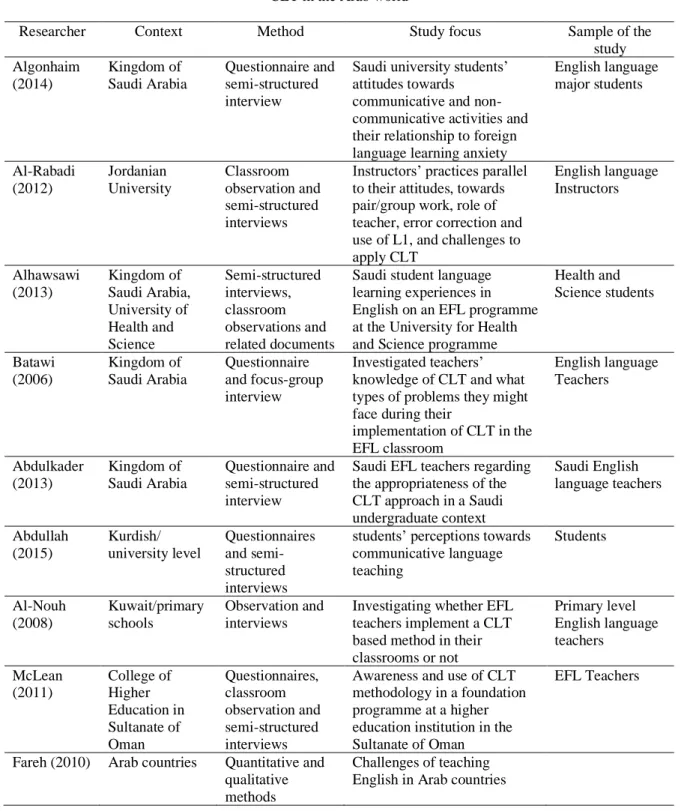
Table 3.4 Summary of the studies reviewed above in Arab EFL contexts. ... 88
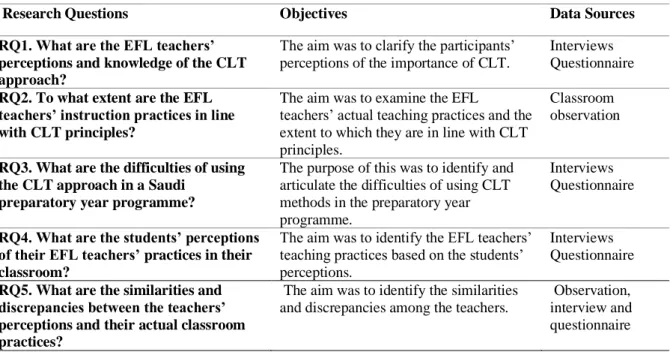
Table 4.1 Presentation of research objectives and data sources ... 94
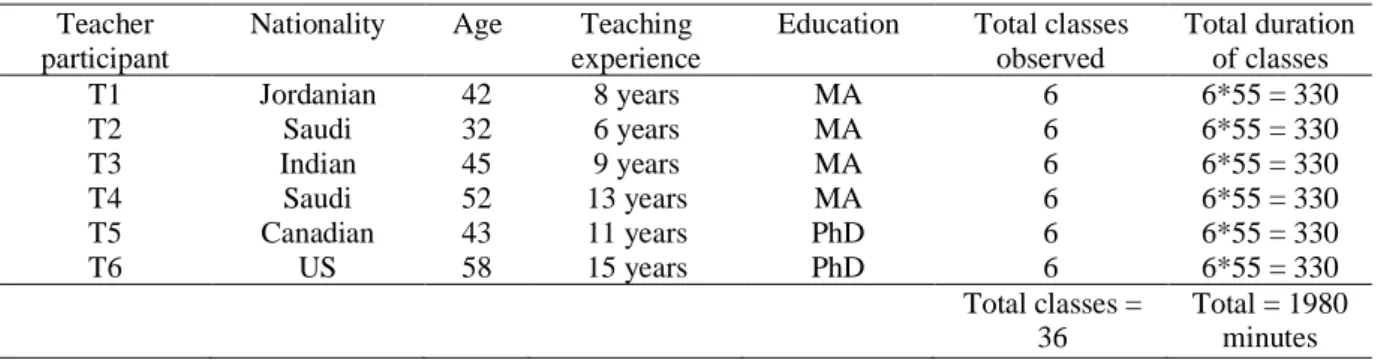
Table 4.2 EFL teachers’ sample for classroom observation and interviews ... 101
Table 4.3 Students' questionnaire sample according to age and language level ... 102
Table 4.4 Aspects of the modified observation schedule ... 115
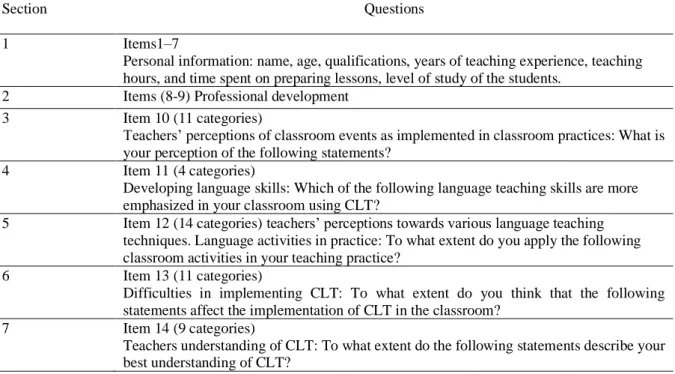
Table 4.5 Summary of the structure of the teachers' questionnaire ... 134
Table 4.6 Summary of the structure of the students' questionnaire ... 135
Table 5.1 Classroom observation and participants’ background information ... 143
Table 5.2 Teachers’ classroom teaching similarities and discrepancies ... 153
Table 5.3 Teachers’ use of classroom events ... 157
Table 5.4 Teacher-participant organization ... 159
Table 5.5 Types of activities teachers use in the classroom ... 160
Table 5.6 Types of functional activities used in classroom... 162
Table 5.7 The four English language skills ... 164
Table 5.8 Teachers use of materials ... 165
Table 5.9 Students’ modality ... 166
Table 6.1 Summary of the effect of teaching experience on the four language skills and teaching grammar explicitly ... 172
Table 6.2 Summary of the effect of teaching experience on drilling and repeating sentences, grammar rules and information gap activities ... 1855
Table 6.3 Summary of teachers' responses towards language practice (N = 47) ... 1877
Table 6.4 Summary of problems in implementing the CLT approach (N = 47) ... 1900
Table 6.5 Teachers' understanding and misunderstanding of CLT principles (N = 47) ... 1944
Table 6.6 Summary of students' responses on language teaching activities (N = 175) ... 2033
Table 6.7 Summary of students’ responses about teachers’ classroom practice (N = 175) 2111 Table 7.1 Summary of difficulties in implementing CLT in EFL context ... 24040
xiii LIST OF FIGURES
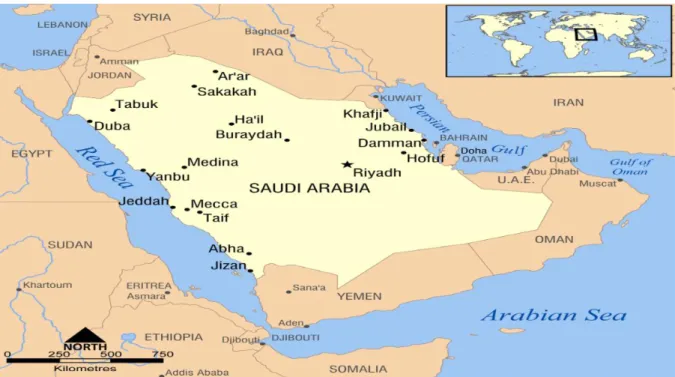
Figure 1.1 Map of Saudi Arabia ... 14
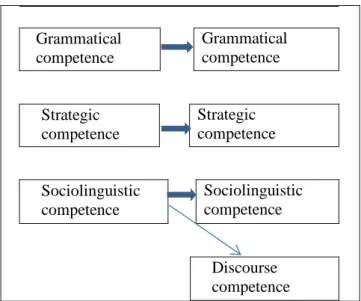
Figure 3.1 Communicative competence (adapted from Canale & Swain, 1980, 1983) ... 50
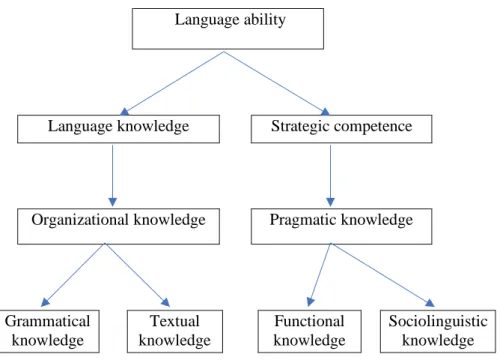
Figure 3.2 Model of communicative competence (Bachman & Palmer, 1996, p. 107) ... 51
Figure 6.1 Summary of the effect of teaching experience on the classroom activities ... 178
Figure 6.2 Summary of the effect of teaching experience on authentic materials, errors, use of Arabic and working alone ... 181
Figure 6.3 Summary of the effect of teaching experience on games, problem-solving activities and functional activities ... 186
Figure 6.4 Teachers' understanding of CLT principles ... 196
xiv LIST OF ABBREVIATIONS
ALM Audio-lingual method
CBI Content-based instruction
CC Communicative competence
CLT Communicative language teaching
EFL English as a foreign language
ELI English Language Institute
FLT Foreign language teaching
GTM Grammar-translation method L1 First language
L2 Second language MoE Ministry of Education
MoF Ministry of Finance
MoHE Ministry of Higher Education
1
CHAPTER 1: INTRODUCTION 1.1 Background to the study
Language teaching is a dynamic activity in the field of education in which great changes have been suggested and continuously implemented since communicative language teaching (CLT) was first proposed in the 1970s, now considered a major source of influence on language teaching practice (Richards, 2006; Tudor, 2001). Many researchers in foreign language teaching have argued that the main objective of language learning is to communicate effectively using the target language and thus to develop learners’ communicative competence (CC) through authentic language teaching, in other words to address the purpose of using language as a communicative tool in different contexts (Dornyei, 2005; Johnson, 1995; Richards & Rodgers, 2001; Ying, 2010). Currently, CLT is encouraged as a theoretically effective approach for English language teaching, aiming to develop learners’ communicative skills (Brown, 2014; Harmer, 2007; Littlewood, 2011, 2014; Nunan, 2003).
This has extended to include developing language learners’ CC in English as a foreign language (EFL) contexts (Larsen-Freeman & Anderson, 2011). Indeed, several studies have shown the importance of implementing the CLT approach in an EFL context in terms of developing language competence, not only in listening and speaking, but also in reading and writing (e.g. Anderson, 1993; Ellis, 1996; Li, 1998; Littlewood, 2007; Savignon & Wang, 2003; Wang, 1990). Similarly, Richards and Rodgers (2014) indicate that the impetus for change in the language teaching approach has mainly been to improve the speaking skills of foreign language learners and develop new ways of teaching. Moreover, teachers in numerous EFL contexts are required to use the CLT approach in their English teaching classes due to the high demand for improvements in language learners’ CC (Field, 2000; Richards, 2006). It has been argued that the language classroom is a central place that incorporates a variety of elements in terms of the methodologies used by teachers, teacher–student interaction in collaborative activities, the
2
ways in which teachers use different aids and how they are interpreted by learners and how lessons shift between teacher-fronted and group phases (Batstone, 2012: 459–460). These aspects in turn make a vital contribution to acquisition of the second language (L2) through selective attention and developing learners L2 processing capacity (Markee, 2019).
Teacher–student and student–student interaction is a key feature of CLT, engaging learners in enhancing their communicative capacities in various situations and constructing their identities through collaboration and negotiation (Brown, 2014; Hall, 2008). Ellis’s (1990: 12) view of interaction is that it is “meaning-focused and carried out to facilitate the exchange of information and prevent communication breakdowns”. The concept of language teaching and learning has shown considerable changes in the last 30 years and CLT is partly a response to these changes (Richards, 2006). For example, the kinds of classroom activities associated with CLT represent a movement away from traditional language teaching methods in which the focus was on mastering knowledge of specific grammatical rules through the systematic teaching of pre-selected structures and towards the use of pair and group activities.
The principles of CLT, highlighting effective use of the target language and authentic materials enhancing real-life communicative capacity, provide significant opportunities for language development in the EFL classroom (Ozverir & Herrington, 2011). However, researchers have also highlighted that the majority of EFL teachers do not consider classroom interaction to be an effective element of L2 learning due to certain perceived difficulties hampering the implementation of CLT in EFL contexts. These include the educational system, lack of teachers’ and learners’ English language proficiency, large classes and overly high teaching hours (Aleixo, 2003; Dailey, 2010; Li, 1998). In addition, there is often incompatibility between the principles of CLT on the one hand and embedded institutional practices on the other. The latter tend to be strongly aligned with traditional teaching approaches and have been found to be challenging in EFL contexts.
3
It can be argued that it is important for EFL teachers, particularly those at university level, to consider the importance of developing learners’ implicit knowledge, underlying the ability to communicate fluently and confidently in L2. It is this type of knowledge that should be the ultimate goal of any instructional programme (Ellis, 2005) and the application of CLT principles can be considered a main source of language input resulting in classroom interaction, which enhances students’ contributions to classroom dialogue (Ellis, 1990).
Investigations into teachers’ and learners’ perceptions of language teaching approaches and their contribution to learning emphasize the value of language teaching methods that facilitate a practical approach to L2 learning and in this regard teachers’ beliefs, knowledge, assumptions and theories play a powerful role in their teaching behaviour (Borg, 2015; Ikpeze, 2015; Phipps & Borg, 2009). Therefore, this study investigates whether EFL teachers’ teaching practices are in line with the principles of the CLT approach and the students’ perceptions of the extent to which their EFL teachers’ performance meets their expectations. The Saudi Arabia 2030 economic policy highlights the importance of transforming from an industrial economy largely dependent on oil to a powerful knowledge-based economy. This has led to a growth in the importance of English use in a variety of situations (AL-Zahrani, 2017). Therefore, the language teaching methodologies applied in Saudi higher education need to be reconsidered to boost CC in English among Saudi youth.
1.2 Motivation for the study
I was motivated to undertake the study: (i) to investigate PYP EFL teachers’ and students’ perceptions of CLT and whether teachers’ actual teaching practice reflects the principles of the approach and (ii) to explore students perceptions of the activities and materials used in the classroom and the extent to which they help or hinder development of the learners’ communicative skills. It was hoped that the findings of this research might contribute to
4
exploring points of strength and weakness in language classes in Saudi universities and overcome the obstacles that prevent learners’ involvement in the language learning process.
In Saudi Arabia, scholars have argued that English use is an obstacle for most students at university level due to many differences in the learning process at different levels of education (Alshehri, 2016). Specifically, students' previous language learning experiences at secondary school differ from those at university level in terms of teaching methods, the latter emphasizing the application of CLT, the use of L2 in classroom discourse and strategies that enhance the teaching and learning process (Alshehri, 2016; Al-Seghayer, 2011; Elyas & Al Grigri, 2014). Therefore, this study attempts to investigate the English language teaching methods currently used in the PYP as to the best of my knowledge there are no reports in the literature of investigations to determine teachers’ and students’ perceptions regarding the implementation of CLT in language teaching classrooms at this level. In addition, the findings of this study could be interesting and constructive in suggesting lines of enquiry for further studies of language teaching and learning approaches helpful in boosting Saudi (and perhaps other) EFL learners’ CC.
1.3 Statement of the problem
Despite the efforts of the MOE to improve the quality of English language teaching/learning, Saudi EFL learners’ language proficiency has been criticized for being below the standard required (Alhawsawi, 2013; Alrabai, 2014; Alrashidi & Phan, 2015; Elyas & Picard, 2010). EFL teachers in Saudi, as in other EFL contexts, are required to adopt the CLT approach. However, the teaching of English is often undertaken by means of conventional teaching methods, which tend to follow a heavily teacher-centred approach with the teacher dominating the English language learning setting (Al-Hazmi, 2003; Al-Johani, 2009; Alrabai, 2016; Khan, 2011; Rajab, 2013). This often leads to low motivation in English language learners and in turn to poor communicative performance when they use English in social and educational settings.
5
Ideally, as Nunan (1999) argued, “teachers should find out what their students think and feel about what they want to learn and how they want to learn” (p. 4). However, in educational settings such as that of the Saudi context, this may conflict with the institutional culture and the perceptions of teachers in terms of what an appropriate teaching approach is. Many studies have discussed the implementation of CLT, and various difficulties encountered (cf. 7.4) with the approach around the world (e.g. Canale & Swain, 1980; Littlewood, 2007; Raissi et al., 2013; Richards, 2006; Savignon, 1991; Savignon & Wang, 2003).
In addition, particularly in the Saudi language teaching context, Al-Abedalhaq and Samdi (1996) maintain that while Saudi students recognize the importance of English in the current era, their results in international examinations indicate poor performance (Cambridge Examination Centre, 2009; Educational Testing Services, 2003–2009). This has led to many questions concerning the teaching methodologies practised in universities (Farooq, 2015). It appears that there is a gap in the literature in relation to research that takes into consideration Saudi EFL teachers’ and learners’ perceptions regarding the appropriateness of the use of CLT in Saudi Arabia. However, some studies have considered the use of specific aspects of the application of CLT and of teaching English more broadly in Saudi Arabia. As Richards (2001: 54) stated, people learn better when what is being learned is perceived to be interesting and relevant to their needs and expectations.
Thus, bridging the gap in terms of identifying the EFL teachers’ perceptions and their actual classroom practices will help to meet the students’ English language communicative needs in a specific context. To the best of my knowledge, no investigation has been carried out to investigate the alignment of EFL teachers’ actual classroom practices with the principles of CLT in Saudi Arabia.
6 1.4Aims of the study
With the globalization of trade and economics, English is increasingly important as a means of international communication in various fields and is the focus of teaching especially in countries in which it is a foreign language (Crystal, 2012). Although English courses have become popular in Saudi Arabia and some universities offer general English courses for their students, language instruction has been limited for years to specialized terminologies and sentence structures, employing a teaching methodology that basically ignores some of the students’ language needs (i.e. CC). In response to these problems, this study seeks to achieve the following objectives:
1. To identify EFL teachers’ perceptions of CLT.
2. To investigate whether EFL teachers’ actual teaching practice is in line with CLT
principles.
3. To identify difficulties that teachers face in implementing CLT.
4. To identify students’ perceptions of their EFL teachers’ practice in their classroom.
1.5Significance of the study
The main purpose of CLT is to enable learners to use the target language communicatively in various social and professional situations. Larsen-Freeman (2011) states that the characteristics of the approach are that “almost everything ... is done with a communicative intent” (p. 129). However, in Saudi Arabia, English language teaching and learning outcomes do not indicate that the students’ needs for CC have been met. Therefore, this research aimed to examine the English language teaching approach used in the PYP in a Saudi university, more specifically to explore whether EFL teachers’ current language teaching practices are in line with the principles of CLT. The study aimed to explore EFL teachers’ and students’ perceptions of the teaching methods used in the classroom and their effects on developing the learners’ CC. For example, the study aimed to examine the extent to which group and pair work activities and
7
authentic materials were employed in the classroom as Rabab’ah (2005) states that the majority of Saudi students in the preparatory year show inadequate English communicative ability. Therefore, the investigation has the potential to help overcome the difficulties that Saudi EFL learners face in their preparatory year and make the classroom a more effective environment in enabling Saudi EFL students to develop their CC.
This study contributes to the debate concerning the Saudi English language teaching and learning context. It aims to add to the field of applied linguistics through the following steps: (i) identifying the main challenges that EFL teachers face in implementing CLT; (ii) identifying the gap between what takes place in the classroom and students’ language needs; (iii) contributing and suggesting appropriate solutions to suit the Saudi educational sphere, aiming to develop learners’ communicative competence; (iv) providing empirically based suggestions to bridge the gap between different aspects of language teaching methods and teachers’ perceptions; (v) increasing teachers’ awareness of CLT and thus ultimately improving learners’ CC.
1.6 Research questions
The focus of this study is on investigating practices in EFL teachers’ classes in Saudi Arabia as an initial step in determining how CLT is implemented in language teaching classrooms.
This study aimed to answer the following overarching question:
“To what extent are EFL teachers’ teaching practices in line with the principles of the communicative language teaching (CLT) approach?”
The following sub-questions were used to address the main research question:
1. What are the EFL teachers’ perceptions and knowledge of the CLT approach?
8
3. What are the difficulties of using the CLT approach in a Saudi PYP?
4. What are the students’ perceptions of their EFL teachers’ practices in their classroom?
5. What are the similarities and discrepancies between the teachers’ perceptions and their
actual classroom practices?
1.7 Organization of the thesis
The study consists of eight chapters: Chapter 1, as shown in the previous pages, deals with various components of the study, outlining the background, the motivation, the statement of the problem, the aims and objectives, the significance, the research questions and the research context. Chapter 2 provides a description of the research context (the Kingdom of Saudi Arabia) with respect to the Islamic religion and culture, then moves to the historical development of Saudi education in general and English language teaching and learning in all educational phases. The chapter also highlights the English language teaching policy implemented under the Ministry of Education (MoE) and Ministry of Higher Education (MoHE), as well as addressing the importance of English language teaching in Saudi Arabia, EFL teachers and learners, and language teaching methods and the curriculum in the Kingdom of Saudi Arabia.
Chapter 3 provides a review of the literature related to various language teaching methodologies: the grammar-translation method (GTM), the audio-lingual method (ALM) and the communicative language teaching (CLT) approach and its various principles, activities such as group and pair work and information gap activities, as well as language teaching materials. This chapter also discusses error correction in CLT, the role of the teacher and learners and alternative assessment. Within the discussion of CC as a theoretical framework, various components are highlighted, such as empirical studies in the implementation of CLT in various EFL contexts, the importance of in-service teacher training and the literature gap.
9
Chapter 4 is concerned with the methodology used in gathering the data for this study, discussing the research paradigm to provide a rationale for using the research methods. The chapter then highlights the types of research methods adopted (quantitative and qualitative), namely classroom observation, interviews and questionnaires, followed by discussing the approaches used to analyse the data. The chapter also discusses the reliability and validity of the study and also outlines ethical considerations.
Chapter 5 presents the results of analysis of the data collected from the classroom observations to answer the overarching research question. A close examination of the language teaching approach implemented in classrooms is provided. Chapter 6 provides analysis of the quantitative and qualitative data gathered from teachers’ and students’ questionnaires and interviews. Chapter 7 provides in-depth discussion of the key findings according to the research questions, employing relevant data regarding language teaching techniques used in classrooms by EFL teachers.
Chapter 8 presents a summary of the research and its implications from different perspectives concerning the teaching of English, i.e. those of teachers, students, and the institutional policy. To sum up, in this chapter, there is an attempt to explain as many issues as possible regarding the motivation of the study, statement of the problem, significance of the study, the aims and the contributions of the study, and a brief description of the historical trends in the Saudi Arabian education system to contextualize the study.
10
CHAPTER 2: CONTEXT OF THE STUDY 2.1 Introduction
The Kingdom of Saudi Arabia is the largest country situated in the Arabian Peninsula and is at the strategic crossroads of three continents: Europe, Africa and Asia. The country is bounded by the Red Sea to the west and the Arabian Gulf, the United Arab Emirates (UAE), the Kingdom of Bahrain and Qatar in the east. To the north, it is bordered by Jordan, Iraq and
Kuwait and to the south Yemen and Oman. It occupies approximately 2,149,790 km2, which
is almost 4/5 of the Arabian Peninsula (MoE, 2019). In 2006, according to the census, Saudi’s population was 27,019,731 million (MoE, 2019). However, since then, according to the 2018 census, the population increased dramatically to 33,413,660 million, of which 20,768,627 million comprised Saudis and 12,645,033 were non-Saudi (General Authority for Statistics,
2019).1 In addition, according to the World Bank, in 2019, the Saudi demographics stood at
34.14 million, which translates to a growth rate of 1.93% from 2018. Among the Saudi
population, 43.31% are female and 56.69% male.2
In terms of the religious and cultural setting, Saudi Arabia is a country that derives its constitution from the Quran (Holy Book) and Sunnah (Islamic law) for the management of state affairs. In Saudi Arabia, the society is religious and conservative, its culture being associated with Islamic values and heritage. Since Islam was revealed through the Prophet Mohammed (peace be upon him), more than 1,440 years ago, the Islamic religion has been embedded in various aspects of life – individual and societal – and Saudi culture is primarily determined by Islamic precepts. For example, religious morals take precedence in the social life of Saudi society. These moral values range from personal relations to tribal and extended
1https://www.stats.gov.sa/en
11
family values, all of which are part of a complex web of interlocking commitments assigned to individuals within the Quran (Oyaid, 2009). Indeed, all aspects of social and cultural life in Saudi are centred on Islam and the Islamic identity: the religion of Islam covers all aspects of people’s lives and places particular emphasis on education (Alzaidi, 2017). Islam has viewed learning as a legitimate right for males and females from the very beginning. This right is the cornerstone of education and the foundation upon which the state develops the education system; citizens are viewed as contributing to developing society based on this very foundation (Oyaid, 2009). As Al-Salloom (1989: 37) states, “the roots of education in Saudi Arabia therefore go deep into the Islamic education which started in the mosque and led to the establishment of schools and universities around their pillars”. Islam accords education very high status and it is not isolated from the Islamic concept and individuals’ daily behaviours and attitudes. In accordance with the practice of Islamic law, the education system in Saudi Arabia strictly imposes segregation between boys and girls at all levels of education. The education system and policy are discussed in the following section.
2.2 Historical development of education in Saudi Arabia
The Kingdom of Saudi Arabia was established by the King Abdulaziz Ibn Saud in 1932, the education system was transformed immensely in 1925, even before the unification of the whole country in 1932 (Alrashidi1 & Phan, 2015). The education system in Saudi Arabia is subject to the government and supervised throughout the main two educational agencies, the Ministry of education and the Ministry of higher education. Although, the two agencies have different operational roles, they complement each other to ensure the effectiveness and efficiency of the Saudi Arabian education system. (Alrashidi1 & Phan, 2015). Primarily, the education was limited, including religious schools, teaching Arabic literacy, reciting the holy Qur’an and Islamic law (Alrashidi1 & Phan, 2015; Ministry of Education, 2006). However, as noted by Wiseman et al. (2008), 90% of the Saudi population was illiterate in 1950 and as awareness of
12
this issue grew greater attention was paid to developing the country’s literacy, particularly among the country’s youth, to meet market requirements (Wiseman et al., 2008). Yet, the education was offered to boys only from the establishment of the educational system and was consisted of a few primary schools in some regions of the Kingdom (Albaiz, 2016). In the 1960s, the Saudi educational system officially allowed females to enrol in school (Albaiz, 2016; Alrashidi1 & Phan, 2015). However, girls’ education confronted strong opposition by society, who believed that girls’ education is worthless. However, this perception has been changed dramatically, and most of the population supported and encouraged girls’ education (Alharbi, 2014; Almutairi, 2008).
The educational system is segregated according to gender and comprises six years of primary schooling and three years for both intermediate and secondary schooling respectively. Since then, the Saudi government has recognized the importance of innovation in education in general and more specifically in higher education with a view to achieving a world-class standard through various disciplines directly relevant to the future social and economic growth of the country (Smith & Abouammoh, 2013). Therefore, the Saudi government has expanded educational institutes in the country and provides free education for boys and girls as Saudi citizens to meet the new evolution in political and economic levels since the discovery of oil (Alamri, 2011; Alseghayer, 2011). A new era of education in Saudi began when the MoE was established in 1953 and one of its responsibilities became to ensure educational efficiency to meet the religious, economic and social needs of the country (MoE, 2006). The government has supported students who enrol and attend school with free education and monthly allowances, in addition to books and transportation. The same advantages are provided to students studying at university level, for example through free education, living accommodation and allowances of around $250 per month, to encourage the pursuit of higher education (Alamri, 2011; Wiseman et al., 2008). This indicates that decision-makers are aware
13
of the importance of education in the means of developing Saudi youth's knowledge which supports sustainable development and economic growth (Alrashidi1 & Phan, 2015). The Saudi educational system needs to represent the cultural values, beliefs and ideology of Saudi nationals based on the Islamic educational heritage (Wiseman et al., 2008). To meet the country’s needs for educated youth, the educational system has been reorganized and according to Al-Baadi (1994, cited in Wiseman et al., 2008) aims to fulfil three main purposes:
(1) To provide basic education for all Saudis.
(2) To teach students basic Islamic principles.
(3) To prepare students for work in different fields.
With this in mind, the MoE in Saudi Arabia implements five-year plans to improve and expand the scope of education throughout the country (i.e. building new schools and improving the existing schools). In 2013, the educational situation changed dramatically, expressly when the government increased the budget for education to 25% of the total budget (Ministry of Finance, 2013). Furthermore, priority has been given for education in the means of increasing the budget since 2000 comparing to other organization in the country (Alrashidi & Phan, 2015). With its belief in investing in youth, the Saudi government established the King Abdullah scholarship in 2005 and the Ministry of Higher Education (MoHE) sent almost 70,000 Saudi students to developed countries around the world, (i.e. the United States [US], United Kingdom [UK], Australia and Canada; www.mohe.gov.sa) to attain baccalaureate, masters, and doctoral level qualifications in different disciplines. In 2013, the number of Saudi students studying abroad amounted to 148,000. The main goal of this programme was to enable those participating to address the shortfall in Saudi faculty members and meet the requirements of the labour markets in Saudi Arabia (Alamri, 2011; MoHE, 2013). In addition to overseas scholarships, the government also offered internal scholarships for Saudi students at private universities to
14
provide opportunities for those who could not afford the tuition fees of the local universities (Alamri, 2011). The following section will highlight on the role of the ministry of education and the ministry of higher education in the means of managing the education policy in Saudi education system.
Figure 1.1 Map of Saudi Arabia
2.2.1 Ministry of Education
The MoE was instituted in 1954, its main task being to direct the education system for boys and girls in relation to equipping schools, staff training and curriculum (MoE, 2005). Under the MoE, there are 42 educational districts throughout the country, each area supervised by a district office linked to the MoE and working to raise the quality of education at the level of public and private schools (Alrashidi & Phan, 2015; MoE, 2013; Oyaid, 2009). Of the ministry's affairs as well adult education, junior colleges and special needs (Alquraini, 2010). In addition to the above duties, the MoE oversees the Curriculum Department, which formulates and implements the curriculum, creating a unified education system throughout all
15
the districts of Saudi Arabia (Ministry of Education, 2014). Department of Curricula in the MOE also is responsible for the preparation of textbooks based on different educational grade and level requirements, in both private and public schools in the means of textbook that must be used (Alrashidi & Phan, 2015).
2.2.2 Ministry of Higher Education
The MoHE is the other branch of educational agency, that supervises and manage higher education in Saudi Arabia (Alrashidi1 & Phan, 2015; urRahman & Alhaisoni, 2013). The MoHE was established in 1975 as a separate unit from the Ministry of Education, which initially managed tertiary schools and universities. This agency also supervises educational offices abroad, international academic relations, and scholarships. In addition, the MoHE governs the twenty-five governmental and eight privet universities in the kingdom of Saudi Arabia. Despite of the MoHE supervision of the public and private universities, but they are fully independent regarding both academic scope and administrative matter (i.e. each university drafts its own course plans and is responsible for employing its staff (Alrashidi1 & Phan, 2015; MoHE, 2014). Although the MoHE is quite young, but 65% of the government universities were established under the umbrella of the MoHE across the country, while in the past there was only a few universities on the head of that King Saud University in Riyadh, which was founded in 1957 and King Abdulaziz university was founded in 1967 in Jeddah (see Figure 1.1) (MoHE, 2014). English language teaching in Saudi Arabia is discussed in the following section.
2.3 English language in Saudi Arabia
Saudi Arabia like other EFL settings, CLT has taken a range of controversy. Therefore, in this section different phases of English language teaching in general and the place of CLT and issues raised will be discussed.
16
2.3.1 The development of English language education in Saudi Arabia
According to Alseghayer (2014), English language has high status in Saudi education as a system and has been introduced in public schools at intermediate and secondary levels, in addition to all private school grades (Alseghayer, 2014). It is also used in various governmental institutes. In addition, English is used as a medium of instruction in most Saudi universities in most fields of study, such as science, engineering and medicine. Non-English major students are also required to take a course in English for the purpose of contributing to the message of Islam and serving humanity, in addition to communicating and understanding other cultures (Alseghayer, 2014, 2012). English has a long history in the Saudi education system and its development can be traced through different phases. It was first introduced in 1927 as a core subject at secondary level along with French, but with no clear learning objectives. Later, in 1984, English become an established subject with specific instructional objectives and syllabi
(Alseghayer, 2014, 2012).
This in turn reflects that the educational policy in Saudi Arabia emphasizes the importance of English language teaching in Saudi schools and universities, viewing it as a global language. The main concept of educational policy in Saudi Arabia, as described by Al Hajailan (2003), lies in:
“Furnishing the students with at least one of the living languages, in addition to their original language, to enable them to acquire knowledge and sciences from other communities and to participate in the service of Islam and humanity.” (p. 23)
The aforementioned goals of educational policy in teaching English in Saudi schools and universities are to enhance students’ awareness of the significance of English as an international language, not only at the level of transferring and sharing scientific, technological and advancements globally. There are also benefits to be derived from the achievements of other cultures, as well as introducing their own culture and tradition to others (Liton, 2012).
17
There was debate concerning the introduction of English language teaching at the primary level. There were those who were opposed the idea of teaching English in primary school because of the belief that teaching English might affect the students’ mother tongue. However, the majority of Saudi society agreed that more effort was needed to improve students’ language competence as most high school and college graduates were considered to have low proficiency in communicating using the target language (Aljohani, 2016). Consequently, the MoE made many changes to improve the quality of English language teaching in Saudi schools. For example, English was first introduced for Year 6 students in public school in 2005 and then for Year 4 students in 2009. Later on, in 2011, the English language teaching policy was changed and the MoE decided to introduce English from Grade 4 in primary schools for both boys and girls, with a new curriculum based on the communicative approach (Aljohani, 2016; Elyas, 2008).
The new plan in teaching language depends on international based curriculum, the MoE (2006) illustrated that curriculum target is to develop learners’ communicative competence in the four language skills speaking, listening, reading and writing in addition to linguistics aspects through collaborative class practices to measure learners’ fluency rather than accuracy. In addition, the assessment procedures are to focus on communicative competence through classroom periods in non-threatening manner rather than restricted to grammar focus assessment. The subject of the coursebook used in teaching English integrate all the language skills reading, writing, listening and speaking in addition to functional grammar and vocabulary (Alrashidi and Phan, 2015). As cited in Alrashidi and Phan (2015: 37-38), the MoE classified some general objectives of teaching English in Saudi schools:
(1) To acquire basic language skills (i.e., writing, reading, listening and speaking).
18
(3) To achieve the important linguistic competence needed in various professions.
(4) To develop positive attitudes towards the learning of the English language.
(5) To increase students’ awareness about the religious, economic, cultural and social issues of their society and ready them to take part in their solutions.
(6) To develop students’ linguistic competence that enables them to benefit from nations with citizens that speak the English language.
(7) To enable students to take part in transferring scientific and technological advances of
other countries to Saudi Arabia.
(8) To increase students’ knowledge regarding the significance of English as a medium of international communication.
(9) To develop students’ linguistic competence that enables them to benefit from nations with citizens that speak the English language, which increases the idea of cooperation, respect and understanding of differences in cultures between the nations (Alrashidi & Phan, 2015: 37–38).
2.4 The importance of English in the Saudi context
There is considerable interest in the use of English in Saudi Arabia, despite its status as a foreign language, as it serves several functions and has outstanding status in the government and private sector, including social, industrial, diplomatic, tourist and commercial applications (Al-Seghayer, 2012; Linton, 2013). Recognizing the importance of English in the sphere of education as the language of science, technology and research, the number of English departments has increased in Saudi universities and colleges and there has been a proliferation of language institutions offering English-related courses (Al-Seghayer, 2012). For example, English is taught as an additional language in the preparatory year for non-English subject
19
students in the humanities and is essential for some scientific courses, such as medicine and engineering, as a medium of interaction. In addition, at the King Fahad Petroleum and Mineral University (KFPMU) in the Eastern region and the King Abdullah University of Science and Technology (KAUST) in the western region of Saudi Arabia (see Figure1.1), associated with the largest oil company, English is the sole mode of teaching for all courses (Alrashidi & Phan, 2015; Elyas, 2014). In some major areas of the private sector, such as the ARAMCO and SABIC companies, English is a medium of interaction among employees (AlHarbi, 2017; Elyas, 2008). Furthermore, a number of technical and vocational institutes, as well as military academies, include English as a core subject in their curricula in recognition of its utility and importance. The demand for a command of English has increased in educational settings and careers due to globalization and the use of technology in all domains (AlHarbi, 2017; Elyas, 2008). Thus, the youth of Saudi Arabia has become increasingly keen on developing English language skills through studying at institutes to keep pace with the growth of technology globally and ensure career enhancement.
The same is true in various public and private organizations and establishments, which often set up training centres to teach English to their employees (Al-Seghayer, 2012). These include banks, airports and travel agencies, among other places in which English is used. Furthermore, the demand for recruiting and training additional Saudi EFL teachers, translators and better qualified graduates for various jobs that require English proficiency has grown significantly (Al-Seghayer, 2012). In addition, English has come to be used in the daily life of young Saudi people, in particular for social purposes and entertainment, such as video games and television (Al-Harbi, 2017; Elyas, 2008). Thus, it can be argued that English is an essential aspect of Saudi education and it is necessary to ensure that the teaching and learning attain adequate standards, helping Saudi youth to keep pace with the challenges and aid economic growth (Al-Hejailan, 2009).
20 2.5 English language in Saudi higher education
The era of oil exploration in Saudi Arabia has been considered a real milestone for the lifeblood of the Saudi economy and has become the focus of international companies (Mababaya, 2002). The trend towards oil production led to the growth of English language teaching and learning in the Kingdom of Saudi Arabia and the subject has been included as one of the key languages in terms of educational planning; indeed, it is now a compulsory subject throughout the education system (AlHarbi, 2017; Farooq, 2015; Javid et al., 2012).
In the 1980s, a four-year English programme was assigned to the English language departments of Saudi universities. The programme includes courses in English literature, linguistics, translation, teaching methodology and English language skills. However, the English departments in some universities need to specify and clarify their pedagogical aims and objectives, in particular that due to the low proportion of courses on methodology, which “represent no more than 10% of the total courses offered by English departments in colleges and universities” (Al-Seghayer (2014: 144). English departments in colleges and universities need to provide intensive in-service training in teaching methods, materials preparation and classroom management. A number of studies have reported that departments providing preparation for English language teaching do not offer effective programmes with regard to pedagogical knowledge in terms of content and technological and disciplinary awareness (AlHarbi, 2017; Al-Seghayer, 2014; Javid et al., 2012; Khan, 2011).
2.5.1 Aims and objectives of the higher education programme
The (PYP) at Saudi universities is designed to narrow the gap between high school and tertiary education by improving students’ level of English language proficiency, as well as enhancing their functional skills, moving into the university system (Al-Shehri, 2017). Therefore, Saudi universities attempt to achieve educational objectives that help students to meet their academic
21
and workplace language needs. In this study, the instructional objectives of the English PYP are listed below:
1. To promote language communication skills.
2. To help students become confident and competent in the use of spoken and written English.
3. To prepare students with a variety of common and high frequency vocabulary to practice reading for common, and information.
4. To introduce elementary, upper elementary, intermediate and advanced grammatical structure.
5. To help students to develop the four language skills (listening, speaking, reading and writing).
6. To prepare students for further studies in their specialised subject.
2.5.2 English language teaching materials and methods in Saudi Arabia
In recognition to the English status in Saudi education system, the government has reforms designed to raise the level English proficiency of Saudi learners. These reforms have involved increasing learners’ exposure to English instruction by modernizing the English syllabus, the teaching methodology and the teaching/learning materials (Moskovsky & Picard, 2018). The adopted English language teaching syllabus in Saudi universities is developed based on western culture and with up-to-date methods of language learning and teaching method that encourages the use of communicative approach in language classes (AlHarbi, 2017; Elyas, 2008).
The teaching English material in EFL contexts depends on extensive use of commercials materials in the form printed materials such as books, workbooks, worksheets or non-print materials such as audio materials, videos or computer-based material (Richards, 2001). In
22
Saudi universities, English teaching materials has become more "progressive and uses the communicative approach in terms of L2 learning", however, the actual problem is in using the textbooks activities (Alharbi, 2017), as the syllabus is to link to the integrated classroom practice for example, the four language skills, grammar, and vocabulary.
Over the years, EFL contexts have implemented numerous methods and approaches in teaching and learning English, but these, “each with its own understanding theoretical basis, have come and gone” (Griffiths & Parr, 2001: 274). In the Saudi EFL context, teacher-centred instruction (i.e. GTM) has been found to prevail, with teaching mainly undertaken through lectures, which results in a lack of communicative ability among students in the classroom (Ahmed, 2014; Al-Harbi, 2015; Al-Seghayer, 2007; Assalahi, 2013; Sofi, 2015). As pointed out by AlHarbi (2017), the GTM is centred around teaching rather than learning, which results in passive learners who mainly rely on their teachers. According to Moskovsky and Picard (2018: 20), this method of teaching “fostered teacher centeredness and lack of learner participation”.
This approach was criticized for its failure to encourage communication among students in class (Nunan, 2004; Richards & Rodgers, 2014). Scholars in second language teaching and learning point out the need to apply communicative activities to enhance learners’ communicative competence (e.g. Ellis, 1994; Flowerdew & Miller, 2005; Littlewood, 1981). Although teaching materials can enhance the integration of language teaching through communicative activities, the CLT approach is rarely applied in the classroom (Abdulkader, 2016; AlHarbi, 2017; Al-Nofaie, 2010; Rabab’ah, 2005). In Saudi universities teachers apply different teaching methodologies according to their lesson objectives. However, these are mostly utilise traditional approaches, as discussed in Chapter 3 (cf. 3.4). While some teachers may believe in applying a CLT approach, they face certain problems in implementing it appropriately, for example low student proficiency in English, a lack of interest in learning English and overcrowded classes (Alosaimi, 2007; Khan, 2011). From this, we can infer that
23
implementing an unsystematic teaching approach may result in inadequate teaching outcomes. This issue is discussed in more detail in Chapter 7 (also see section 8.2.5). In Saudi universities, the teaching is grounded in aspects of linguistics such grammar and syntax, with little or no attention paid to developing learners’ communication ability. However, this is no longer appropriate, as learners need to make a more active contribution in terms of communication in order to learn effectively in language classes, given the goals of language teaching and learning in the modern era (Alharbi, 2017).
Elyas (2014) emphasizes the importance of engaging students through intensive English language courses to develop their communicative competence. Furthermore, Al-Ghamdi (2015) argues that it is important for Saudi universities to develop English courses according to future work placement needs. He adds that to enhance students’ language capacity, programmes need to make “some revisions to make better use of existing opportunities” and “many aspects in language teaching and learning need to be considered, for example evaluation of the programme, focus on needs analysis, language teaching methods and assessment producers” (Al-Ghamdi, 2015: 239). Al-Alhawsawi (2013: 36) states that “the increased demand for using English in many Saudi universities is because they are trying to provide their graduates with up-to-date knowledge and to improve the graduates’ global employment opportunities”. The King Abdullah Scholarship Programme reflects the Saudi government’s attempts to develop English language teaching through sending large numbers of students abroad to undertake Bachelor’s, Master’s and PhD studies (AlHarbi, 2017).
The sections above have focused on education in general and English language teaching more specifically as paid great attention in the Saudi Arabian educational system. In addition, they have addressed the different phases of development of English language teaching in the country in terms of supporting and investing in youth through internal and external scholarships with a view to enhancing their contribution to various government and private disciplines. The