ISSN Online: 2327-5227 ISSN Print: 2327-5219
DOI: 10.4236/jcc.2019.710003 Oct. 11, 2019 21 Journal of Computer and Communications
Cloud Computing in Lebanese Enterprises:
Applying the Technology, Organization, and
Environment (TOE) Framework
Hala Sabbah
1, Hussein Trabulsi
1, Rida Chbib
1, Ibtissam Sabbah
2*1Faculty of Economic Sciences and Business Administration, Lebanese University, Nabatieh, Lebanon 2Faculty of Public Health, Lebanese University, Saida, Lebanon
Abstract
In the last few years, cloud computing (CC) has grown from being a promis-ing business concept to one of the fastest growpromis-ing segments of the IT indus-try. Many businesses including small, medium (SMEs) and large enterprises are migrating to this technology. The objective of this paper was to describe the opinions of enterprises about the benefits and challenges of cloud compu-ting services in the private and public companies in South Lebanon. During 2019, a cross-sectional study which enrolled 29 enterprises used CC was con-ducted. The survey included questions on socio-demographic characteristics of representative of companies, and companies’ factors in reference to the technology, organization, and environment (TOE) framework. Most (58.6%) of companies were private and micro and SMEs sized (86.8%). The cost sav-ing (75.0%), scalability and flexibility (75.9%), security (44.8%), and improved service delivery were the main benefits that cloud offer to the business. The security aspect, the cost, and the limited provision of infra-structure remain a challenge for the adoption of CC. In conclusion, the research reveals the po-tential for the development of CC and obstacles for successful implementa-tion of this new technology.
Keywords
Cloud Computing, SMEs, TOE Framework, Benefits of Cloud Computing
1. Introduction
Cloud computing (CC) is a growing data center technology in line with increas-ing traffic on the internet in the era of the Internet of Thincreas-ings [1]. It is typically a How to cite this paper: Sabbah, H.,
Tra-bulsi, H., Chbib, R. and Sabbah, I. (2019) Cloud Computing in Lebanese Enterprises: Applying the Technology, Organization, and Environment (TOE) Framework. Jour-nal of Computer and Communications, 7, 21-35.
https://doi.org/10.4236/jcc.2019.710003
Received: September 4, 2019 Accepted: October 8, 2019 Published: October 11, 2019
Copyright © 2019 by author(s) and Scientific Research Publishing Inc. This work is licensed under the Creative Commons Attribution International License (CC BY 4.0).
DOI: 10.4236/jcc.2019.710003 22 Journal of Computer and Communications recently conceived web base registering strategy and is the most favorite choice intended for the leasing of computing with the capacity in various domains [2]. Companies, both large and medium-sized as well as small-sized companies can leverage big data to gain a strategic competitive advantage [1] [3] [4].
CC has been captivating since 2007 the interest of the Information and Com-munications Technology (ICT) community ensuing in a massive amount of in-dustry developments [5]. Through 2018, Cloud adoption is accelerating faster than previously anticipated [6].
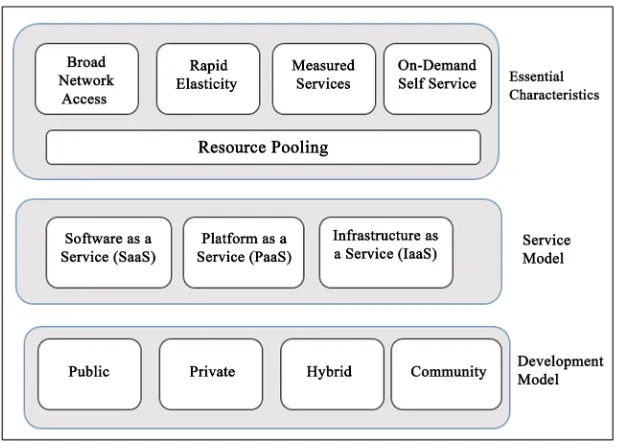
CC services are delivered through a network, usually the Internet [7]. CC ar-chitecture consists of many loosely coupled cloud components: Front End and Back End. The services provided by vendors can be classified in three models, Platform as a Service (PaaS), Software as a Service (SaaS) and Infrastructure as a Service (IaaS) that actually depict how services are being provided to the cus-tomers. Cloud can have any of the four types of access: Public, Private, Hybrid, and Community (Figure 1) [1] [8]-[15]. As essential characteristics of CC are: 1) on demand self-service, 2) broad network access, 3) resource pooling with other tenants, 4) rapid elasticity, and 5) measured services [9] [16] [17] [18] [19].
[image:2.595.219.530.485.709.2]The new economic model removes the need for the organization to invest a substantial sum of money for purchase of limited Information Technology (IT) resources that are internally managed, but rather the organization can outsource its IT resource requirements to a CC service provider and pay per use [8]. Spend-ing on CC infrastructure and platforms grew at a 30% compound annual growth rate from 2013 through 2018 compared with 5 percent growth for overall enter-prise IT, giving rise to the Cloud Access Security Broker market in the process [6]. CC is a topic that received a great deal of attention by individuals and organi-zations from different disciplines in the last decade. Besides, a various set of ap-plications like social networking sites, scientific workflow systems, multiplayer
DOI: 10.4236/jcc.2019.710003 23 Journal of Computer and Communications gaming portals, and enterprise applications have been deployed [20]. CC has been used by millions of people in various manifestations, including free email services (e.g., Yahoo Mail and Gmail) and free office productivity applications (e.g., Google Apps). Businesses of all sizes, industries, and geographies are turn-ing to cloud services [6]. It has been appreciated as a significant step after Grid computing [5]. Instead of running the applications on a Personal computers or a Local Area Network, they run on a shared multi-tenant. More Businesses are running all kinds of applications in the cloud nowadays, like Customer Rela-tionship Management Software (CRM), accounting, human resources (HR), custom-built applications [21], and health care systems [16]. It enables the users and consumers to integrate and combine many different services together that increase the creativity and productivity [22]. From business perspective, CC is in essence an economic model for a different way to acquire and manage IT re-sources [23] and enables companies to adopt ready-to-use application services through a “pay-as-you go” model that saves cost, resources and time [24]. CC has positive impact on the business organizations as it increases their revenue
[22] and helps them to achieve the business goals [4] [17] [23] [25].
This technology overcomes the weaknesses of conventional servers for speed, scalability, and efficiency [1]. Cloud-based applications cost less, since the com-panies don’t need to pay for all the hardware and software, facilities, or extensive configuration and maintenance of a full technology stack, to run them. Cloud provides the organizations with its unique features through more scalable, more reliable and more secure service [21], and also able to support the availability of data and services [1] [26]. It demonstrates compliance, speeding up decision making, expanding markets, agility, flexibility, economic advantage [26] and ac-celerating communication within organizations’ divisions [1].
In spite of all the potential advantages offered by CC, enterprises are raising many questions which are creating lot of obstacles in the adoption of CC [27]. There are still SMEs who are not sure of the benefits of cloud services [1]. The security aspect and the provision of limited internet connection infrastructure are still a challenge for the adoption of CC in SMEs [17]. Providers, developers, and end users must consider these challenges and risks to take good advantage and to reach strategic goals of CC [28] [29] [30].
Whilst CC is no longer an emerging technology in developed countries, it is still a relatively new paradigm in other countries, particularly in developing countries [31]. Existing studies have examined CC adoption in Arabic countries
[31] [32] [33] [34] and to a lesser extent in Lebanon. The Lebanese Ministry of Telecommunications launched the Vision of Digital Communications for 2020
DOI: 10.4236/jcc.2019.710003 24 Journal of Computer and Communications there may affect the deployment of CC [37]. So it is important to ensure the sur-vival of these companies and encourage them to grow.
Extant research has demonstrated that the technology, organization, and en-vironment (TOE) framework has broad applicability and possesses explanatory power across a number of technological, industrial, and national contexts. The TOE framework has been used to explain the adoption of CC [38]. In this study, the three elements of technology, organization, and environment may influence the way a firm identifies the need for, searches for, and adopts CC and the tech-nological innovation decision making. After reviewing the literature on CC adoption and related research, the objective of this paper is to: 1) explore and describe the opinions of enterprises in South Lebanon about the benefits of CC services in their business operations in reference to the TOE framework; 2) to explore the reasons why enterprises are trying to adopt or avoid CC technologies and services in the private and public sector in South Lebanon.
2. Research Methodology
The goal of the research is to examine factors impacting cloud computing adop-tion in companies of the public and private sector in Lebanon by implementing the TOE framework.
2.1. Study Design and Target Population
From June until July 2019, a cross-sectional study was conducted in a number of enterprises engaged in ICT industry in South Lebanon to collect initial informa-tion regarding the experience of its employees on CC adopinforma-tion in their organiza-tions. The inclusion criterion for this study focused on organizations that have implemented CC solutions for at least 1 month. The banking sector was ex-cluded from this study due to their confidentiality policies. A purpose sample was selected for the study. Managers and employees who were performing the role of frontline managers and were willing to participate were recruited. The research method is conducted by interviewing the representative (users of CC or the top management) of enterprises. All participants filled out the same ques-tionnaire sent by mail. The self-administered quesques-tionnaire returned means the consent of the respondents to participate in this study. Ethical approval for this study was granted by the ethics committee of the Lebanese University.
2.2. Data Collection Tool
The primary instrument that was used to collect data was a pretested self-administered questionnaire. The variables were chosen by review of previous studies. The questionnaire covered 4 types of data:
• Sociodemographic information concerning the respondents such as age, sex, and professional qualifications of the managers, including educational level, job title, years of work experience.
em-DOI: 10.4236/jcc.2019.710003 25 Journal of Computer and Communications ployees, type and sector of organization, owners of the organization, stack of the business, and top management support. The firm size is measured with the number of employees and companies are classified into four categories: micro, small, medium, and large. Micro-businesses have 10 employees or less, small businesses have 11 to 50 employees, medium sized businesses have 51 to 200 employees, and large businesses have 200 employees or more [37]. For instance, in Lebanon, a medium enterprise should simultaneously have between 50 and 100 employees [36].
• Technological data on CC: the characteristics of the CC server, availability, CC advantages and disadvantages, and the reasons for adopting and avoiding cloud based services. The date of implementation of CC and CC services providers were also collected.
• The environmental context includes, the technology support infrastructure (including the presence or absence of technology service providers), and the regulatory environment (type of Contract and pricing process).
2.3. Data Analysis
Statistical analysis involved the use of IBM SPSS Statistics version 23.0 (IBM, Armonk, NY). Participant demographic characteristics and the characteristics of the enterprises according three elements of technology, organization, and envi-ronment were analyzed using descriptive statistics based on TOE framework. The transcriptions and notes concerning the advantages and the disadvantages of the CC were subjected to a qualitative content analysis. Data verified for con-tent by the researchers. Coding of the full data set was then completed and a summary of topics of each interview was made. Constant discussion between the research team in developing the coding and analyzing the data was conducted. Codes were studied and collated in sub-categories, and then wider categories. Then, each of the response categories organized into one or more associated themes that give a deeper meaning to the data [39].
3. Results
3.1. Characteristics of the Respondents
Thirty-one organization approached to this study, 29 (93.54%) accepted to par-ticipate. The sample included 4 (13.8%) females. The mean age was 40.86 years (SD = 10.93; median = 38 years; min = 22 years; max = 65 years). By focusing on the years of work experience, the respondents had a working experience ranging from 1 to 40 years (mean = 15.86, SD = 10.67, median = 15). 13.8% were at the rank of owner or manager and 62.1% were either at the rank of engineer or IT officer; only seven (24.1%) were employees.
3.2. Characteristics of the Enterprises According to TOE Framework
DOI: 10.4236/jcc.2019.710003 26 Journal of Computer and Communications
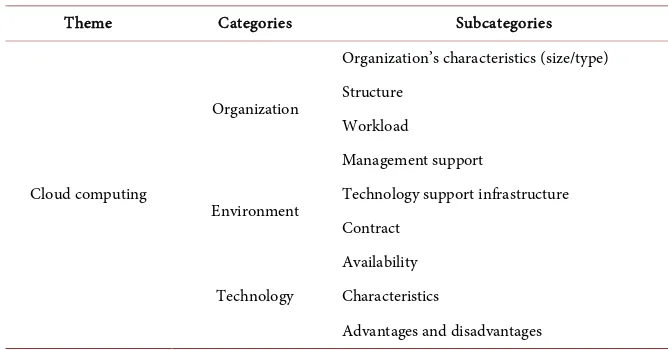
Table 1. Themes, categories and sub-categories of the cloud computing identified
ac-cording to TOE framework.
Theme Categories Subcategories
Cloud computing
Organization
Organization’s characteristics (size/type) Structure
Workload
Management support
Environment Technology support infrastructure Contract
Technology
Availability Characteristics
Advantages and disadvantages
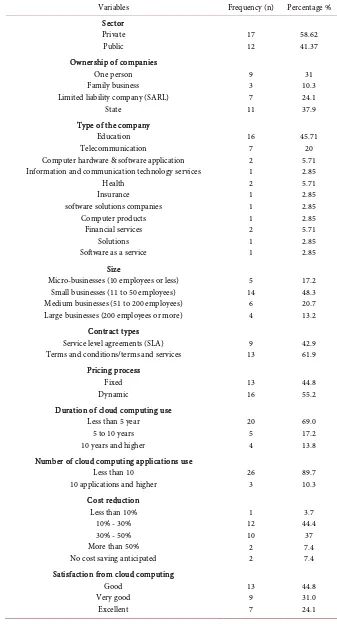
Most (58.6%) of the companies were private institutions. The ownership of companies was distributed as following: 40.1% among them owned by one per-son or by family, 36.1% owned by the state and 25.7% were Limited liability companies (SARL). One half (55.2%) were company belonged education and 21.6% were telecommunication companies. CC was also used in healthcare in 7.2% of case, conceived for hospital management, clinical information systems, and the use electronic hospital information and management systems CC could be the method of choice to reduce the escalating costs of data storing and shar-ing. The managers of one of this organizations plan to government initiated a paradigm shift to use electronic hospital information and management systems. The numbers of employees in the organizations ranged from 3 to 10,000 em-ployees (Mean = 1425.9; SD = 3085.1; median = 45 emem-ployees). Most (65.6%) of the organizations had micro and small sized organization (Table 2). No one de-clared the workload of their business. Concerning management support, the participants declared that top manager has significant impact for adopting new technology in organizations. “Top manager have sufficient information for cloud services” and “Top manager is responsible for developing the company, so they established reasonable and strategic goals for using CC”.
The CC Service Provider was presented in Figure 2. Fourteen (38.9%) of the companies used cloud computing services from Google Cloud Platform, 11 (30.6%) by Microsoft Azure, and 5 (13.9%) were supplied by Amazon Web Services.
DOI: 10.4236/jcc.2019.710003 27 Journal of Computer and Communications
Table 2. Characteristics of the organizations, technological, organizational and
environ-mental (TOE) data, and satisfaction of users from cloud computing (n = 29).
Variables Frequency (n) Percentage % Sector Private Public 17 12 58.62 41.37 Ownership of companies
One person Family business Limited liability company (SARL)
State 9 3 7 11 31 10.3 24.1 37.9 Type of the company
Education Telecommunication
Computer hardware & software application Information and communication technology services
Health Insurance software solutions companies
Computer products Financial services
Solutions Software as a service
16 7 2 1 2 1 1 1 2 1 1 45.71 20 5.71 2.85 5.71 2.85 2.85 2.85 5.71 2.85 2.85 Size
Micro-businesses (10 employees or less) Small businesses (11 to 50 employees) Medium businesses (51 to 200 employees) Large businesses (200 employees or more)
5 14 6 4 17.2 48.3 20.7 13.2 Contract types
Service level agreements (SLA)
Terms and conditions/terms and services 13 9 42.9 61.9 Pricing process
Fixed
Dynamic 13 16 44.8 55.2
Duration of cloud computing use Less than 5 year
5 to 10 years 10 years and higher
20 5 4 69.0 17.2 13.8 Number of cloud computing applications use
Less than 10 10 applications and higher
26 3
89.7 10.3 Cost reduction
Less than 10% 10% - 30% 30% - 50% More than 50% No cost saving anticipated
1 12 10 2 2 3.7 44.4 37 7.4 7.4 Satisfaction from cloud computing
DOI: 10.4236/jcc.2019.710003 28 Journal of Computer and Communications The majority (98.7%) used less than 10 applications (Table 2). The use of CC was mainly web-based e-mail services (75.9%) and data storage (72.4%) followed by Business Applications-Word processor (65.5%), CRM (55.2%), utility man-agement (antivirus/Spam/Backup) (41.4%) (Figure 3).
3.3. Perceived Benefits
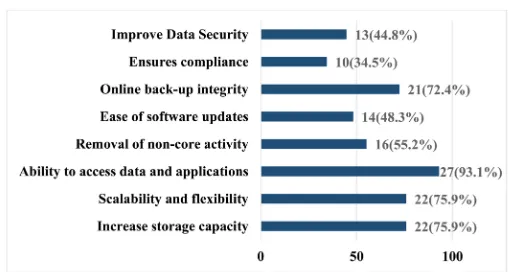
[image:8.595.241.506.264.397.2]CC offered number of advantages of cloud migration that motivated the busi-ness enterprises to adopt this change. Figure 4 showed that 44.8% of the res-pondents declared that business saw an improvement in security after switching to the CC and 75.9% said the cloud increased storage capacity. As an added se-curity measure, 72.4% of cloud user declared disaster recovery and online back-up integrity. Cloud makes easier to meet the scalability and flexibility where
[image:8.595.260.487.429.546.2]Figure 2. Cloud computing services providers n (%).
Figure 3. The expectation for using cloud computing.
[image:8.595.245.499.570.706.2]DOI: 10.4236/jcc.2019.710003 29 Journal of Computer and Communications a majority (75.9%) of respondents said “the ability to quickly meet business
de-mands” that was one of the most important reasons a business should move to a
cloud computing services. Finally, for 34.5% of respondents, CC can ensure compliance by declaring that: “where every time a company moves data from the internal storage to a cloud, it is faced with being compliant with industry regula-tions and laws. CC also improves the decision making process by providing ac-curate and reliable data with reduced time”.
The results found that the most perceived benefits of CC are cost savings because it can reduce capital expenditures, such as procurement of computers with high performance and purchase their own server (48.3%) and staff costs (51.7%). On the other hand, the service enhances the company’s internal organizational processes to accelerate decision making, expand markets, and speed up communication with customers by reducing the security (51.7%) and training costs (24.1%) (Figure 5).
3.4. Barriers for Using Cloud Computing
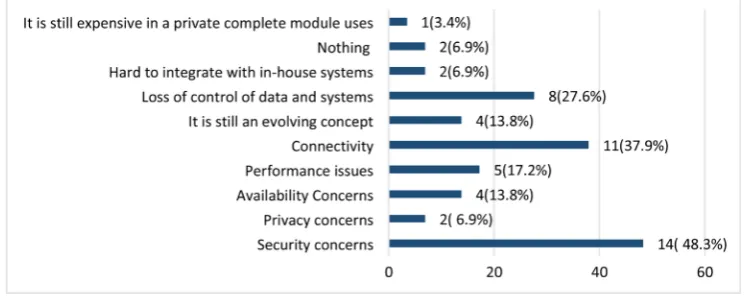
[image:9.595.237.507.383.526.2]Fourteen (48.3%) organizations have security concerns when it comes to adopt-ing a CC solution. The lack of trust of this new technology (27.6%), and the per-formance issues were declared by 27.6% and 17.2% respectively. A privacy con-cerns was declared by 6.9% of the respondents. The connection to internet was also a concern for users (37.9%) (Figure 6).
Figure 5. The benefits of cloud computing from economic views of companies.
[image:9.595.167.540.559.707.2]DOI: 10.4236/jcc.2019.710003 30 Journal of Computer and Communications One of the barriers for the technology support to adopt the CC in public healthcare setting was the cost of this new technology and legal aspects: “The use of the electronic hospital record using CC could be the method of choice to re-duce the escalating costs of data storing and sharing and to enhance the quality of care for the patients admitted in the Lebanese hospitals. But the project needs a budget that the ministry of health cannot able to pay for this time and law for service contracts”.
3.5. Satisfaction from CC Services
Overall, one third of respondents (44.8%) was a good satisfaction from CC, and 55.2% had a very good and excellent satisfaction (Table 2).
4. Discussion
The results of the study support the main thesis that cloud computing can gen-erate benefits to SMEs businesses, especially that micro and SMEs sized companies form a significant proportion of the number of companies in South Lebanon.
Our findings were in line with those of Chen et al. [37] that reported the dif-ferent types of CC produce difdif-ferent levels of business benefits across difdif-ferent sizes of businesses. As for European economy [13], it is evident that small and also the medium sized companies remain vital to the Lebanese economy. For in-stance, in Europe more than 99% of the firms are SMEs [3].
Similarly with European countries, the cost efficiency, scalability and flexibili-ty, sustainabiliflexibili-ty, maintenance by cloud provider, securiflexibili-ty, and improved service delivery were the main benefits that cloud offer to the business [13]. Dar [4]
found that CC is considered as an innovative and enhanced technology to run business organization where the providers offer more secure, more reliable and more scalable services to the customers. Kreslins [30] mentioned that flexibility, scalability and accessibility were the main advantages of CC, it is especially beneficial for SMEs. However, in our study, the impact of CC on business flex-ibility and scalability (75.9%) is greater than on cost saving (75%). The finding seems to concur with what Chen et al. [37] suggested. So, the study found that the decision over whether to adopt CC should not be based on cost only. Kreslins et al. [30] reported that the managerial factor would not be an impediment for cloud solutions if the IT personnel would support the shift to new technologies. This finding was in line with our results especially the human capabilities to deal with the CC innovation.
DOI: 10.4236/jcc.2019.710003 31 Journal of Computer and Communications systems of CC providers and considered them sufficient [30].
In similarities in our results, the problem of connectivity was identified in Ni-geria [40]. They have identified that SMEs in the big cities have higher accessi-bility to internet access but when they have to travel to remote areas their might be little or no internet connectivity [40]. Our data were in line with the Lebanese data where generally, there is a database that needs to have more privacy and must stay within the country [35]. The compliance is also one of the risks of CC facing the organizations. That is an issue for anyone using backup services or cloud storage. Every time a company moves data from the internal storage to a cloud, it is faced with being compliant with industry regulations and laws. In 2012, the Telecommunications Regulatory Authority laid out a local plan to protect and maintain the security of the cyberspace in Lebanon, while conduct-ing a thorough study of the necessary measures to protect the national commu-nications networks against piracy [35]. The limitation in Lebanon for IT devel-opment regarding implementation of the cloud also relates to the legal aspect
[35].
Concerning healthcare organizations, CC is accompanied by many challenges, particularly the management, technology, security, and legal aspects [41] [42]. In addition, the use of cloud encourages dependence on the Internet because it must have a network to access it [1]. Lena et al. [16] revealed that the Malaysian government initiated a paradigm shift to use electronic hospital information and management systems, and the CC could be the method of choice to reduce the escalating costs of data storing and sharing. These findings were in line with our results.
Survey Contribution and Limitations
This study is one of the first attempts to study CC adoption in Lebanon. It pro-vides a contribution to the body of knowledge about CC adoption in the in companies and especially the micro and SMEs in order to develop its technical characteristics and create an environment to be inconsistence with the technol-ogy development. This study is helpful for the companies to understand the main obstacles and the critical factors essential for implementing a successful cloud environment in the public and private sector in Lebanon.
While the study reveals several interesting findings, the results should be in-terpreted with caution. There are several limitations. First of all, the data source is from companies in South Lebanon, it was a small and a purpose sample since the number of businesses that adopted CC is very limited. Directly addressing the top managers and taking a broad approach to the subject matter provided both va-lidation of findings and extension of existing knowledge. Finally, the nature of cross-sectional data set limits the interpretation to that at one point in time.
5. Conclusions
espe-DOI: 10.4236/jcc.2019.710003 32 Journal of Computer and Communications cially the micro and SMEs. The majority of respondents were aware about the advantage of CC. Nevertheless, security concerns and lack of trust of this new technology still exist even among experienced users of the cloud. In addition, the lack of access to up-to-speed internet in South Lebanon constitutes a significant barrier for CC adoption. The company should plan an effective strategy to mi-nimize the challenges of the CC. Once the users are aware of the positive impacts of the technology, they can demonstrate their full cooperation to successfully adopt CC.
In conclusion, the industry of cloud computing and the micro and SMEs should carry out a wide range of various activities to facilitate the introduction of cloud solutions in the companies and to eliminate existing barriers.
Acknowledgements
We are grateful to the subjects who participated in this survey, to A. Gandour PhD for his advice on the manuscript, and to the top managers of companies who helped to carry out this study.
Authors’ Contributions
This work was conducted in collaboration between all the authors. HS designed the study, conducted literature searches, performed the statistical analysis, and wrote the first draft of the manuscript. HT, RC, IS, participated in the data anal-ysis, participated in interpretation of data of the study, and assisted with the writing. All authors read and approved the final manuscript.
Conflicts of Interest
The authors declare no conflicts of interest regarding the publication of this pa-per.
References
[1] Widyastuti, D. and Irwansyah, I. (2018) Benefits and Challenges of Cloud Compu-ting Technology Adoption in Small and Medium Enterprises (SMEs). Advances in Economics, Business and Management Research,41, 241-246.
[2] Sharma, T., Payal, M., Upadhyay, M. and Choudhary, M. (2018) Cloud Computing: A Study of Related Services. Journal on Recent Innovation in Cloud Computing,
Virtualization & Web Applications,2, 1-11.
[3] Vajjhala, N.R. and Ramollari, E. (2016) Big Data Using Cloud Compu-ting—Opportunities for Small and Medium-Sized Enterprises. European Journal of Economics and Business Studies,2, 130-138.
https://doi.org/10.26417/ejes.v4i1.p129-137
[4] Dar, A.A. (2018) Cloud Computing-Positive Impacts and Challenges in Business Perspective. Journal of Computer Science & Systems Biology,12, 15-18.
https://doi.org/10.4172/jcsb.1000294
[5] Grozev, N. and Buyya, R. (2014) Inter-Cloud Architectures and Application Bro-kering: Taxonomy and Survey. Software: Practice and Experience, 44, 369-390.
DOI: 10.4236/jcc.2019.710003 33 Journal of Computer and Communications
[6] Coles, C. (2018) 11 Advantages of Cloud Computing and How Your Business Can Benefit from Them.
https://www.skyhighnetworks.com/cloud-security-blog/11-advantages-of-cloud-co
mputing-and-how-your-business-can-benefit-from-them
[7] Hu, F., Qiu, M., Li, J., Grant, T., Tylor, D., McCaleb, S., Butler, L. and Hamner, R. (2011) A Review on Cloud Computing: Design Challenges in Architecture and Se-curity. Journal of Computing and Information Technology,19, 25-55.
https://doi.org/10.2498/cit.1001864
[8] Shimba, F. (2010) Cloud Computing: Strategies for Cloud Computing Adoption. PhD Thesis, Dublin Institute of Technology, Dublin.
[9] Mell, P. and Grance, T. (2011) The NIST Definition of Cloud Computing Recom-mendations of the National Institute of Standards and Technology. National Insti-tute of Standards and Technology Special Publication 800-145, U.S. Department of Commerce, Washington DC, 7 p.
[10] Youssef, A.E. (2012) Exploring Cloud Computing Services and Applications. Jour-nal of Emerging Trends in Computing and Information Sciences,3, 838-847. [11] Sharma, M., Husain, S. and Ali, S. (2017) Cloud Computing Risks and
Recommen-dations for Security. International Journal of Latest Research in Science and Tech-nology, 6,52-56.
[12] Mathew, S. (2012) Adoption of Cloud Computing to Enterprise—An Impediment.
International Conference on Emerging Trends in Computer and Electronics Engi-neering,Dubai, 24-25 March 2012, 9-12.
[13] Assantea, D., Castro, M., Hamburg, I. and Martin, S. (2016) The Use of Cloud Computing in SMEs. Second International Workshop on Mobile Cloud Computing systems, Management, and Security. Procedia Computer Science,83, 1207-1212.
https://doi.org/10.1016/j.procs.2016.04.250
[14] Srivastava, P. and Khan, R. (2018) A Review Paper on Cloud Computing. Interna-tional Journals of Advanced Research in Computer Science and Software Engineer-ing,8, 17-20.https://doi.org/10.23956/ijarcsse.v8i6.711
[15] El-Gazzar, R.F. (2014) A Literature Review on Cloud Computing Adoption Issues in Enterprises. IFIP Advances in Information and Communication Technology, Aal-borg, Jun 2014, 214-242.https://doi.org/10.1007/978-3-662-43459-8_14
[16] Lena, G., Prokosch, H.-U., Köpcke, F., Toddenroth, D., Christoph, J., Leb, I., Engel, I. and Sedlmayr, M. (2015) A Scoping Review of Cloud Computing in Healthcare.
BMC Medical Informatics and Decision Making,15, Article No. 17.
https://doi.org/10.1186/s12911-015-0145-7
[17] M’rhaoaurh, I., Okar, C., Namir, A. and Chafiq, N. (2018) Challenges of Cloud Computing Use: A Systematic Literature Review. MATEC Web of Conferences, 200, Article ID: 00007.https://doi.org/10.1051/matecconf/201820000007
[18] Bo, K.S. (2018) Cloud Computing for Business. International Journal of Advances in Scientific Research and Engineering,4, 156-160.
https://doi.org/10.31695/IJASRE.2018.32816
[19] Turab, N.M., Abu Taleb, A. and Masadeh, R.S. (2013) Cloud Computing Challenges and Solutions. International Journal of Computer Networks & Communications, 5, 209-216.https://doi.org/10.5121/ijcnc.2013.5515
[20] Chauhan, M.A., Babar, M.A. and Benatallah, B. (2016) Architecting Cloud-Enabled Systems: A Systematic Survey. Software: Practice and Experience, 47, 599-644.
DOI: 10.4236/jcc.2019.710003 34 Journal of Computer and Communications
[21] Devasena, C. (2014) Impact Study of Cloud Computing on Business. Operations Research and Applications: An International Journal,1, 1-7.
[22] Xue, C.T. and Xin, F.T. (2016) Benefits and Challenges of the Adoption of Cloud Computing in Business. International Journal on Cloud Computing: Services and Architecture,6, 1-15.https://doi.org/10.5121/ijccsa.2016.6601
[23] Lewis, G.A. (2018) Short Appraisal on Cloud Computing. Scientific Review, 4, 22-25.https://doi.org/10.1109/MCC.2017.29
[24] Buyya, R., Pandey, S. and Vecchiola, C. (2009) Cloudbus Toolkit for Market-Oriented Cloud Computing. IEEE International Conference on Cloud Computing, Beijing, 1-4 December 2009, Volume 5931, 24-44.
https://doi.org/10.1007/978-3-642-10665-1_4
[25] Zissis, D. and Lekkas, D. (2012) Addressing Cloud Computing Security Issues. Fu-ture Generation Computer Systems,28, 583-592.
https://doi.org/10.1016/j.future.2010.12.006
[26] Hassana, H. (2017) Organisational Factors Affecting Cloud Computing Adoption in Small and Medium Enterprises (SMEs) in Service Sector. Procedia Computer Science,121, 976-998.https://doi.org/10.1016/j.procs.2017.11.126
[27] Baker, J. (2012) The Technology-Organization-Environment Framework. In: Dwi-vedi, Y.K., Scott, L.M., Schneberger, L. and Systems, I.S., Eds., Information Systems Theory: Explaining and Predicting Our Digital Society, University of Hamburg, Hamburg, 232-243.https://doi.org/10.1007/978-1-4419-6108-2_12
[28] Voorsluys, W., Broberg, J. and Buyya, R. (2011) Introduction to Cloud Computing. In: Buyya, R., Broberg, J. and Goscinski, A., Eds., Cloud Computing: Principles and Paradigms, John Wiley & Sons Ltd., Hoboken, 34-37.
https://doi.org/10.1002/9780470940105.ch1
[29] Kim, W. (2009) Cloud Computing: Today and Tomorrow. Journal of Object Tech-nology,8, 65-72.https://doi.org/10.5381/jot.2009.8.1.c4
[30] Kreslins, K., Novik, D. and Vasiljeva, T. (2018) Challenge of Cloud Computing for SMEs: A Case of Baltic Countries. Journal of Innovation Management in Small & Medium Enterprises, 2018, Article ID: 238581.https://doi.org/10.5171/2018.238581
[31] Al-Ruithe, M., Benkhelifa, E. and Hameed, K. (2017) The 12th International Confe-rence on Future Networks and Communications (FNC 2017) Empirical Study in Major Public Sector Organizations: An Empirical Study in Major Public Sector Or-ganizations of Saudi Arabia (KSA). Procedia Computer Science,110, 378-385.
https://doi.org/10.1016/j.procs.2017.06.080
[32] Karim, F. and Rampersad, G. (2017) Cloud Computing in Education in Developing Countries. Computer and Information Science,10, 87-96.
https://doi.org/10.5539/cis.v10n2p87
[33] Mas’adeh, R. (2016) Cloud Computing Perceived Importance in the Middle Eastern Firms: The Cases of Jordan, Saudi Arabia and United Arab Emirates from the Op-erational Level. Communications and Network,8, 103-117.
https://doi.org/10.4236/cn.2016.83011
[34] Ellatif, H.A. (2016) Cloud Computing Services and Its Applications in Arab Envi-ronment. International Journal of Computational Engineering Research,6, 33-35. [35] El-Khoury, J. (2015) Cloud Computing in Arab States: Legal and Legislative
As-pects, Facts and Horizons. International Telecommunication Union Report. Inter-national Telecommunication Union, Beirut.
DOI: 10.4236/jcc.2019.710003 35 Journal of Computer and Communications
Ministry of Economy and Trade, Beirut, Lebanon.
https://www.economy.gov.lb/public/uploads/files/6833_5879_4642.pdf
[37] Chen, T., Chuang, T.-T. and Nakatani, K. (2016) The Perceived Business Benefit of Cloud Computing: An Exploratory Study. Journal of International Technology and Information Management,24, 101-122.
[38] Abdollahzadehgan, A., Hussin, A.R., Gohary, M.M. and Amini, M. (2014) The Or-ganizational Critical Success Factors for Adopting Cloud Computing in SMEs.
Journal of Information Systems Research and Innovation, 4, 67-74.
[39] O’Connor, H. and Gibson, N. (2003) A Step-by-Step Guide to Qualitative Data Analysis. Pimatiziwin: A Journal of Aboriginal and Indigenous Community Health, 1, 64-90.
[40] Otuka, R., Preston, D. and Pimenidis, E. (2014) The Use and Challenges of Cloud Computing Services in SMEs in Nigeria.
https://www.researchgate.net/publication/287193812
[41] Gaoa, F. and Sunyaevb, A. (2019) Context Matters: A Review of the Determinant Factors in the Decision to Adopt Cloud Computing in Healthcare. International Journal of Information Management,48,120-138.
https://doi.org/10.1016/j.ijinfomgt.2019.02.002