Proceedings of the Eighth Workshop on Cognitive Aspects of Computational Language Learning and Processing, pages 27–35 27
Multi-glance Reading Model for Text Understanding
Pengcheng Zhu1,2, Yujiu Yang1, Wenqiang Gao1, and Yi Liu2 Graduate School at Shenzhen, Tsinghua University1
Peking University Shenzhen Institute2
[email protected], [email protected],
[email protected], [email protected]
Abstract
In recent years, a variety of recurrent neu-ral networks have been proposed, e.g LST-M, however, existing models only read the text once, it cannot describe the situation of repeated reading in reading comprehen-sion. In fact, when reading or analyzing a text, we may read the text several times rather than once if we couldn’t well under-stand it. So, how to model this kind of the reading behavior? To address the issue, we propose a multi-glance mechanism (MG-M) for modeling the habit of reading be-havior. In the proposed framework, the ac-tual reading process can be fully simulat-ed, and then the obtained information can be consistent with the task. Based on the multi-glance mechanism, we design two types of recurrent neural network models for repeated reading: Glance Cell Model (GCM) and Glance Gate Model (GGM). Visualization analysis of the GCM and the GGM demonstrates the effectiveness of multi-glance mechanisms. Experiments results on the large-scale datasets show that the proposed methods can achieve bet-ter performance.
1 Introduction
Text understanding is one of the fundamental tasks in Natural Language Processing areas. These years we have seen significant progress in apply-ing neural networks to text analysis applications. Recurrent neural network is widely used because of its effective capability of capturing the sequen-tial information. Long short-term memory (LST-M) (Hochreiter and Schmidhuber,1997) and gated recurrent neural network (Chung et al.,2014) have achieved state-of-the-art performance in many
ar-eas, such as sentiment analysis (Tang et al.,2014; Chen et al.,2016), document classification (Yang et al.,2016) and neural machine translation (Bah-danau et al.,2014). Besides the success achieved by these basic recurrent neural models, there are also a lot of interesting research works conducted in text analysis (Kim, 2014;Zhang et al., 2015). Depending on the parsing tree structures, tree-LSTM (Tai et al.,2015) and recursive neural net-work(Socher et al., 2013) are proposed. Bidi-rectional recurrent neural networks (Schuster and Paliwal,1997) can get the backward features. In order to align the hidden states, attention mecha-nism is widely used in language processing (Bah-danau et al.,2014;Vaswani et al.,2017).
One of the common characteristics of these ex-isting models is to model only single reading pro-cessing and generate a sequence of hidden states ht, as a function of the previous hidden states ht−1and the current input (Sutskever et al.,2014;
Karpathy et al., 2015). However, the fact is that when we read a text only once, we may merely know the general idea of it, especially when the text is long and obscure. More often than not, we know that fast repeated reading is more effective than slow careful reading, so, for the obscure tex-t, our primary school teacher always teaches us to read several times to get the theme of the text. In addition, this kind of rereading can help us find some of the details that are ignored when we first glance.
Sentence g2h1 g2h2 g2hm
w1 w2 wm
g1h1 g1h2 g1hm
Multi-glance Mechanism
α1 α2 αm
Input Layer Glance Layer Output Layer
gnh1 gnh2 gnhm . . .
[image:2.595.126.467.70.243.2]. . .
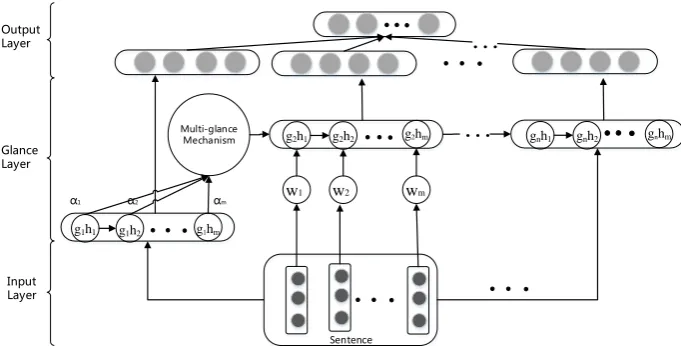
Figure 1: The architecture of Multi-glance Mechanism (MGM) model
Glance Cell Model (GCM) and Glance Gate Mod-el (GGM). GCM has a special cMod-ell to memorize the first impression information obtained after fin-ishing the first reading. GGM has a special gate to control current input and output in order to filter words that are not important. The main contribu-tions of this work are summarized as follows:
• We propose a novel multi-glance mechanis-m which mechanis-models the habit of reading. Comechanis-m- Com-paring to traditional sequential models, our proposed models can better simulate peo-ple’s reading process and better understand the content.
• Based on multi-glance mechanism, we pro-pose GCM which can takes the first impres-sion information into consideration. Glance cell model has a special cell to memorize the global impression information we obtain and add it into the current calculation.
• Based on multi-glance mechanism, we pro-pose GGM which adopts a extra gate to ig-nore the less important words and focus on details in the contents.
2 Related Work
Recurrent neural network has achieved great suc-cess because of its effective capability to capture the sequential information. The RNN handles the variable-length sequence by having a recurren-t hidden srecurren-tarecurren-te whose acrecurren-tivarecurren-tion arecurren-t each recurren-time srecurren-tep is dependent on that of the previous time. To re-duce the negative impact of gradient vanishing, a long short-term memory unit (Hochreiter and Schmidhuber, 1997), which has a more sophis-ticated activation function, was proposed.
Bidi-rectional recurrent neural networks (Schuster and Paliwal,1997), e.g bidirectional LSTM network-s (Augennetwork-stein et al.,2016), combine forward fea-tures as well as reverse feafea-tures of the text. Bidi-rectional networks, which get the forward features and the reverse features separately, are differen-t from our muldifferen-ti-glance mechanism. A Gadifferen-ted Re-current Unit (GRU) (Cho et al.,2014) is a good ex-tension of a LSTM unit, because GRU maintains the performance and makes the structure to be sim-pler. Comparing to a LSTM unit, a GRU has only two gates, an update gate and a reset gate, so it will be faster to train a GRU than a LSTM unit. Atten-tion mechanism (Bahdanau et al.,2014) is used to learn weights for every input, so it can reduce the impact of information redundancy. Now, attention mechanism is commonly used in various models.
3 Methods
In this section, we will introduce the proposed multi-glance mechanism models in detail. We first describe the basic framework of multi-glance mechanism. Afterwards, based on multi-glance mechanism, we describe two glance models, glance cell model and glance gate model.
3.1 Multi-glance Mechanism Model
When reading or analyzing a text, we may read it several times rather than once if we couldn’t fully understand its meaning. To model our read-ing habit, we propose the multi-glance mechanis-m. The core architecture of the proposed model is shown in Fig.1.
will readT many times. As shown in Fig. 1,nis the times we will read the text.
For the sake of convenience, we give an exam-ple of the 2-glance process here.
First, we glance through the text to capture a general meaning. We use the recurrent network to read the embedding of each word and calculate the hidden states{g1h1, g1h2,· · ·, g1hm}, where mis the length of the textT. After finishing read-ing it, we have an impression on the textT. Next, with the guidance of the impression, we give these hidden states weight parameters and feed them in-to the glance model in-to continue in-to read the text for the second time. As we can see, if we read the text only once and don’t adopt multi-glance mech-anism, this model can be simplified as traditional attention based recurrent model.
At the second time of reading, in view of the general idea of the content we have got, we may ignore the less interesting words and focus on some details in the text. So we utilize a novel glance recurrent model to read embedding T =
{w1, w2,· · · , wm}again and calculate the output
state {g2h1, g2h2,· · ·, g2hm}. Based on multi-glance mechanism, we propose two multi-glance recur-rent models: that is, Glance Cell Model(GCM)
andGlance Gate Model(GGM).
Comparing to basic recurrent model, glance cell model has a special cell to memorize the general meaning calculated after finishing the first time of reading. Besides, glance gate model has a bina-ry gate to filter the less important words. We de-scribe how two glance recurrent models operate in section 3.2and section 3.3. Fig.1gives the main process of the multi-glance mechanism.
3.2 Glance Cell Model
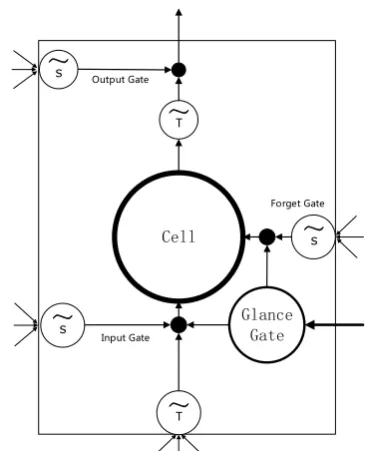
Based on multi-glance mechanism, we propose the glance cell model (GCM). After we finish reading the textT for the first time, we know any of the general meaning of it. This means we have some first impression information about the tex-t. As shown in Fig.2, comparing to the traditional recurrent network, the GCM has a special cell to keep the first impression information. LSTM has been widely adopted for text processing, so we use LSTM to calculate the hidden statesg1hi.
Thus the glance cell state gcct can be calcu-lated from the weighted sum of hidden states
Cell Glance Cell
~s
~s ~s
~T ~T
~s
Output Gate
Forget Gate
Input Gate
~T
Glance out Gate
~s
Glance Gate
[image:3.595.327.503.70.283.2]十
Figure 2: The block of GCM, whereT˜ stands for tanh()andS˜stands forsigmoid().
{g1h1, g1h2,· · ·, g1hm}:
gcct =
m
X
i=1
αi·g1hi (1)
whereαimeasures the impression ofithword for the current glance cell stategcct. Because GCM is a recurrent network as well, the current glance cell state gcct is also influenced by the previous state g2hct−1and the current inputwt. Thus the
impres-sionαican be defined as:
αi=
exp(f(g2hct−1, wt, g1hlstmi ))
Pm
i=1exp(f(g2htc−1, wt, g1hlstmi ))
(2)
wheref is the impression function and it can be defined as:
f(g2hct−1, wt, g1hlstmi ) =
gwTc ·tanh(Wgc·[g2htc−1, wt, g1hlstmi ] +bc) (3)
whereWc
g is the weight matrices andgwcT is the weight vector.
Besides, glance cell is used to memorize the pri-or knowledge, we also have a cell, at the second time reading in multi-glance mechanism, to read the text. We use three gates to update and output the cells states, and they can be defined as:
ict =σ(Wic·[g2hct−1, wt] +bci) (4) ftc=σ(Wfc·[g2hct−1, wt] +bcf) (5)
oct =σ(Woc·[g2hct−1, wt] +bco) (6)
˜
whereict,ftcandoct are the gates states,σ()is the sigmoid function andc˜ct stands for the input state. In GCM, in order to adopt the first impression knowledge in the current cell state calculation and output the glance cell state, we use glance input gate and output gate to connect the glance cell and the cell state. The two gates can be defined as:
gict = σ(Wgic ·[g2hct−1, wt, gcct] +bcgi) (8)
goct = σ(Wgoc ·[g2hct−1, wt, gcct] +bcgo) (9)
wheregictandgoctare the gate states.Thus the cell state can be calculated as:
cct = ftccct−1+itcc˜ct+gictgcct(10)
wherestands for element-wise multiplication. According to the function, when we read the text at the second time, the current cell state cct contains the previous cell statecct−1, current input state˜cctand the current glance cell stategcct, which is different from the existing recurrent models.
In view of two cells in GCM, the final output of a single block can be calculated as:
g2hct=octtanh(cct) +gocttanh(gcct) (11)
We feed the text T = {w1, w2,· · ·, wm} embedding into the glance cell model and then obtain the output hidden states g2hc =
{g2hc1, g2h2c,· · ·, g2hcm}.
3.3 Glance Gate Model
Based on multi-glance mechanism, we also pro-pose the Glance Gate Model (GGM). The main block of GGM is shown in Fig.3. When we read the text at the second time, in view of the first impression information we obtained, our habit is to ignore the less interesting words directly rather than still reading them again. However, existing RNN models, e.g. LSTM model, have an input gate to control the current input, it still can’t set less interesting or important information to zero.
In GGM, we use a binary glance gate to control the input, and it is defined as:
gatet=sof tmax(Wgg·[gg g
t, wt, g2hgt−1] +bg)(12)
where Wgg is the projection matrix, and softmax only output two states{0,1}. In glance gate mod-el (GGM),ggtg still models the impression of the text, and calculated by the weighted sum of hidden states{g1h1, g1h2,· · · , g1hm}:
gggt =
m
X
i=1
βi·hi (13)
Cell
Glance Gate
~s
~s ~s
~T ~T
Output Gate
Forget Gate
[image:4.595.321.504.63.289.2]Input Gate
Figure 3: The block of GGM, whereT˜stands for tanh()andS˜stands forsigmoid().
Whereβimeasures the impression ofithword for the current glance gate cell stateggtg. For brevi-ty, we will not repeat the function of impression weightβiand impression functionf here.
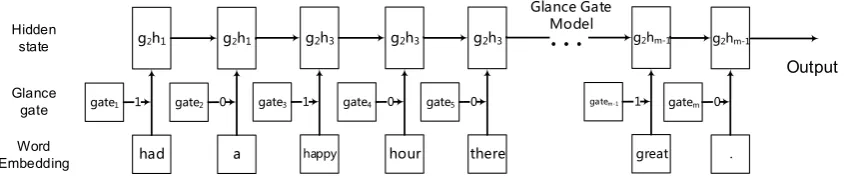
As shown in the Fig.4, here we give an example of the GGM to process a sentence. Comparing to the LSTM model’s input gate, the glance gate only has two states{0,1}. When we care about the cur-rent wordwi, we input the wordwiinto the GGM and update the hidden state. If the current word is meaningless, the GGM will directly discard the input word and keep the previous state without up-dating the hidden state. Thus the gates, cells states and output hidden states are defined as follows:
igt =σ(Wig·[g2hgt−1, wt] +bgi)gatet (14)
ftg=σ(Wfg·[g2hgt−1,wt]+bgf)gatet⊕(1−gatet)(15)
ogt =σ(Wog·[g2hgt−1, wt] +bgo)gatet (16)
˜
cgt = tanh(Wcg·[g2ht−1, wt] +bgc) (17) cgt =ftgcgt−1+igt ˜cgt (18)
g2hgt=o g
ttanh(c g
t)gatet+g2htg−1(1−gatet)(19)
where⊕stands for the element-wise addition. Note that when the GGM close the glance gate, gate={0}, the formulations above can be trans-formed as:
igt =0 ftg=1 ogt =0
cgt =ftgcgt−1+igt c˜gt =cgt−1
g2hgt=o g
ttanh(c g
t)gatet+g2hgt−1(1−gatet)
g2h1
had gate1 1
g2h1
a gate2 0
g2h3
happy gate3 1
g2h3
hour gate4 0
g2h3
there gate5 0
g2hm-1
great
gatem-1 1
Hidden state
Glance gate
Word Embedding
Output
g2hm-1
. gatem 0
...
Glance Gate [image:5.595.91.515.78.167.2]Model
Figure 4: An example of the proposed GGM to process a sentence. In this example, when the glance gate open, the current word will input into the GGM, then output the hidden state. When the glance gate close, the model will ignore the current inputted word and keep the previous hidden state.
so when the glance gate close, the GGM will keep the previous state unchanged. Besides, when the GGM open the glance gate, namely gate={1}, the formulations above can be transformed as:
igt =σ(Wig·[g2hgt−1, wt] +bgi)
ftg =σ(Wfg·[g2hgt−1, wt] +bgf)
ogt =σ(Wog·[g2hgt−1, wt] +bgo) cgt =ftgctg−1+it˜cgt
g2hgt =o g
ttanh(c
g t)
So the model can obtain the current input state˜cgt and update the cell state cgt. We feed the text T into the GGM and obtain the output hidden states g2hg ={g2hg1, g2hg2,· · · , g2hgm}.
3.4 Model Training
To train our multi-glance mechanism models, we adopt softmax layer to project the text representa-tion into the target space ofCclasses:
y=sof tmax(tanh(Ws·[ ˆg2h,gˆ1h] +bs)) (20)
where gˆ2h is the attention weighted sum of the
glance hidden states{g2h1, g2h2,· · · , g2hm},gˆ1h
is the attention weighted sum of the hidden states
{g1h1, g1h2,· · ·, g1hm}.
We use the cross-entropy as training loss:
L=−X
i
ˆ
yi·log(yi) +α|θ|2 (21)
whereyˆiis the gold distribution for texti,θ repre-sents all the parameters in the model.
4 Experiment
In this section, we conduct experiments on differ-ent datasets to evaluate the performance of multi-glance mechanism. We also visualize the multi-glance layers in both glance models.
4.1 Datasets and Experimental Setting
We evaluate the effectiveness of our glance mod-els on four different datasets . Yelp 2013 and Yelp2014 are obtained from the Yelp Dataset Challenge. IMDB dataset was built byTang et al. (2015). Amazon reviews are obtained from A-mazon Fine Food reviews. The statistics of the datasets are summarized in Table1.
datasets rank docs sensdocs vocs
IMDB 1-10 84,919 16.08 105373
Amazon 1-5 556,770 5.67 119870
Yelp2013 1-5 78,966 10.89 48957
Yelp2014 1-5 231,163 11.41 93197
Table 1: Statistical information of IMDB, Ama-zon, Yelp 2013, Yelp 2014 datasets
The datasets are split into training, validation and test sets with the proportion of 8:1:1. We use the Stanford CoreNLP for tokenization and sen-tence splitting. For training, we pre-train the word vector and set the dimension to be 200 with Skip-Gram (Mikolov et al.,2013). In our glance model-s, the dimensions of hidden states and cells states are set to 200 and the hidden states and cells states initialized randomly. We adopt AdaDelta (Zeiler, 2012) to train our models , select the best configu-ration based on the validation set, and evaluate the performance on the test set.
4.2 Baselines
We compare our glance models with the following baseline methods.
Trigram adopts unigrams, bigrams and trigrams
as text features and trains a SVM classifier.
TextFeature adopts more abundant features
Models
Datasets
IMDB Yelp2014 Yelp2013 Amazon
Trigram 39.9 57.7 56.9 54.3
TextFeature 40.2 57.2 55.6
-PVDM 34.1 56.4 55.4
-RNTN+RNN 40.0 58.2 57.4
-NSC 42.7 62.7 62.2 75.1
RNN+ATT 43.1 63.2 62.7 75.4
GGM 43.7 63.4 63.0 75.2
[image:6.595.85.511.62.206.2]GCM 44.2 64.2 63.6 76.7
Table 2: Text analysis results on IMDB, Yelp2014, yelp2013 and Amazon datasets. Evaluation metrics is Accuracy in percentage (higher the better). The best performance in each group is inbold.
... I'm giving this Xlear product only 2 stars because although itself has worked great for ... first
time second time
... two boxes of bars i received were so stable they were inedible the bar ... first
time second time
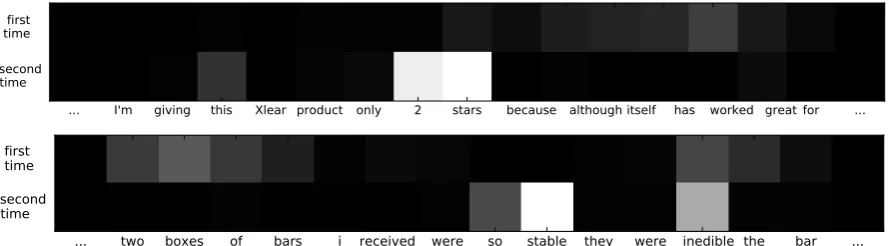
Figure 5: Visualization of the weights when we read the text twice with glance cell model (whiter color means higher weight).
trains a SVM classifier. (Kiritchenko et al., 2014)
RNTN+RNN uses Recursive Neural Neural
Ten-sor Network to represent the sentences and Recurrent Neural Network to document anal-ysis. (Socher et al.,2013)
PVDM leverages Paragraph Vector Distributed Memory (PVDM) algorithm for documen-t classificadocumen-tion.(Le and Mikolov,2014)
NSC regards the text as a sequence and uses max or average pooling of the hidden states as fea-tures for classification.(Chen et al.,2016)
RNN+ATT adopts attention mechanism to select
the important hidden states and represents the text as a weight sum of hidden states.
4.3 Model Comparisons
The experimental results are shown in Table 2. We can see that multi-glance mechanism based models, glance gate model (GGM) and glance cell model (GCM), achieve a better accuracy than tra-ditional recurrent models, because of the guidance of the overview meaning we obtain at the first time of reading. With that guidance, we will get a better understanding of the text. While comparing to our glance models, existing RNN models read the text
only once so they cannot have the general meaning to help them understand the text.
Comparing to attention-based recurrent model-s, the proposed glance cell model still has a bet-ter performance. The main reason for this is that when we read the text with the multi-glance mech-anism, the glance hidden states have a better un-derstanding of the text, so when we calculate the attention weight on each hidden states, the final output will also be better to represent the text.
When comparing the models we proposed, glance cell model gives a better performance than glance gate model. This is because we use multi-glance mechanism to filter words in multi-glance gate model while we use multi-glance mechanism to add general information in glance cell model. Even though we only ignore the less importan-t words in glance gaimportan-te model when importan-the gaimportan-te is closed, some information is still lost comparing to glance cell model.
4.4 Model Analysis for Glance Cell Model
[image:6.595.73.518.255.378.2]−1.5 −1.0 −0.5 0.0 0.5 1.0 1.5 2.0 −1.5
−1.0 −0.5 0.0 0.5 1.0 1.5
output
GCM hidden states simple hidden states
(a)
−1.5 −1.0 −0.5 0.0 0.5 1.0 1.5 2.0
−1.5 −1.0 −0.5 0.0 0.5 1.0 1.5
output
GCM hidden states simple hidden states
[image:7.595.68.507.64.232.2](b)
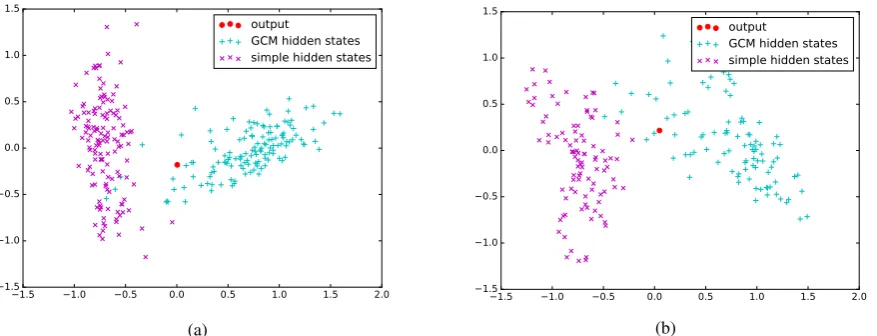
Figure 6: Visualization of the hidden states calculated by simple RNN model{g1h1, g1h2,· · ·, g1ht} (the purple spots), Glance Cell Model{g2hc1, g2hc2,· · ·, g2hct}(the blue spots) and the final text repre-sentation (the red spots).
actually i'm not sure whichfilm wasbettermeet the parents or meet thefockers.
both films wereequallyenjoyable. this movie is really funny. maybeit's because of a cast buteverything worksin this film. it'sprobablyone of thebest comedies made in this decade. Dustin Hoffman and BarbraStreisandbothdid greatas Gaylord's parents.every characterof this movie had it's own opinion and that waswell portrayed in theirdialogs. notlike theoriginal, this partismore making funofRobert de Nero's character thanof BenStiller 's character. i noticedthat this film has many similarities with it's prequelbut that's ok because itstillwasvery funny.
Figure 7: Visualization of the gate state in Glance Gate Model. The words in color (blue and red) are input into the GGM, that meas the gate state is open. The words in gray are ignored by the GGM.
is the visualization of the weights when we read the text at the first time, the second line is the vi-sualization that we read at the second time. Note that, whiter color means higher weight.
As shown in Fig.5, the first review has wrote the ranking stars in the text, which is a determin-ing factor in product reviews, but we ignore them when we read at the first time. Well, with the guid-ance of multi-glguid-ance mechanism, when we read them again, we can not only find the ranking stars, but also give them high weights.
In the second review, comparing the results we read at the first time and the second time, though we may focus on some of the same words, e.g. inedible, we will give them different weights. We can observe that when reading at the second time, we give word ‘inedible’ a higher weight and word ‘the’ a lower the weight. The glance cell model can increase the weights of important words, so we can focus on more useful words when using multi-glance mechanism and glance cell model.
Next, we also choose two reviews in the dataset and visualize the hidden states which calculated by the glance cell model and a traditional
recurren-t model. As aforemenrecurren-tioned in recurren-this paper, when using multi-glance mechanism, we will get the lo-cal information comparing to simple RNN model-s. As shown in Fig.6, the purple spots and the blue spots are the visualizations of the hidden states, and the purple spots belong to the simple RNN model while the blue spots belong to the glance cell model. The spot in red is the visualization of the final text representation. Note that, we use P-CA to reduce the dimensions of the hidden states here. We can see that the blue spots are much more closer to the red spots than the purple spots, which mean the glance cell hidden states are more clos-er to the final text representations. It is the local information that makes the difference. So we can obtain a more general idea when using the glance cell model we proposed.
4.5 Model Analysis for Glance Gate Model
i tried this tea in seattle two years
ago and just lovedit. it was unavailable
at my local health food store , but i found
it on amazon . their price and service are
excellent . i would definitely recommend
this tea!
(a) Model with Multi-glance Mechanism
i tried this tea in seattle two years ago and just loved it . it was unavailable at my local health food store , but i found
it on amazon . their price and service are
excellent . i would definitelyrecommend
this tea !
[image:8.595.90.272.182.317.2](b) Simple RNN with Attention Mechanism
Figure 9: Visualization of the multi-glance mechanism weights and the simple RNN attention mechanism weights.
the , . and a of to is in it thatthis as i 0
5000 10000 15000
20000 ignore words
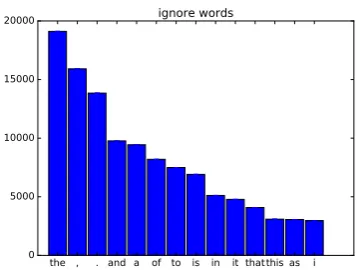
Figure 8: The statistics of the Top-ignored words in 1000 IMDB reviews.
when we read these words, the gates in GGM are closed. So these words are unable to pass through the gate. These words in color (blue and red) mean that the gates are open when we read these words. We can observe that when we read the text again, the glance gate model can ignore the less impor-tant words and focus on the more useful words. Surprisingly, the most important words are found, e.g. enjoyable, best comedies and funny (the red words in Fig.7). The model is able to find the ad-jectives, verbs and some nouns, which is more use-ful in the text understanding.
Besides, we also count the top-ignored words in 1000 IMDB reviews, and the results are shown in the Fig.8. We can see that most of the prepositions and adverds are ignored. Thus glance gate model can filter the less important words and concentrate on the more informative words.
4.6 Comparing to RNN with Attention
Mechanism
To demonstrate the effectiveness of the multi-glance mechanism, we choose a review in Amazon dataset and visualize the parameters of weights in multi-glance model and attention based RNN model. As shown in Fig.9, the words in color (red and blue) are the top 10 important words in the re-view the word in red color are the top 5 important
words. We can observe that multi-glance mecha-nism can find the more useful words, e.g. loved, excellent. What’s more, multi-glance mechansim also can give these important words higher weight-s comparing to weight-simple attention baweight-sed RNN mod-els which only read the review once.
5 Conclusion and Future work
In this paper, we propose a multi-glance mecha-nism in order to model the habit of reading. When we read a text, we may read it several times rather than once in order to gain a better understanding. Usually, we first read the text quickly and get a general idea. Under the guidance of this first im-pression, we will read many times until we get e-nough information we need. What’s more, based on the multi-glance mechanism, we also propose two glance models, glance cell model and glance gate model. The glance cell model has a special cell to memorize the first impression information we obtain and add it into the current calculation. The glance gate model adopts a special gate to ig-nore the less important words when we read the text at the second time with multi-glance mecha-nism. The experimental results show that when we use the multi-glance mechanism to read the tex-t, we are able to get a better understanding of the text. Besides, the glance cell model can memo-rise the first impression information and the glance gate model is able to filter the less important word-s, e.g. the, of. We will continue our work as fol-lows:
• How to construct the first impression infor-mation more effectively? As proposed in this paper, some of the words in the text are re-dundant for us to understand text. So, we will sample some words of the text when reading it at the first time.
Acknowledgments
This work was supported in part by the Research Fund for the development of s-trategic emerging industries by ShenZhen city (No.JCYJ20160331104524983 and No.JCYJ20170412170118573).
References
Isabelle Augenstein, Tim Rockt?schel, Andreas Vla-chos, and Kalina Bontcheva. 2016. Stance detection with bidirectional conditional encoding. pages 876– 885.
Dzmitry Bahdanau, Kyunghyun Cho, and Yoshua Ben-gio. 2014. Neural machine translation by jointly learning to align and translate. arXiv preprint arX-iv:1409.0473.
Huimin Chen, Maosong Sun, Cunchao Tu, Yankai Lin, and Zhiyuan Liu. 2016. Neural sentiment classifi-cation with user and product attention. In Proceed-ings of the 2016 Conference on Empirical Methods in Natural Language Processing, pages 1650–1659.
Kyunghyun Cho, Bart Van Merri¨enboer, Caglar Gul-cehre, Dzmitry Bahdanau, Fethi Bougares, Holger Schwenk, and Yoshua Bengio. 2014. Learning phrase representations using rnn encoder-decoder for statistical machine translation. arXiv preprint arXiv:1406.1078.
Junyoung Chung, Caglar Gulcehre, KyungHyun Cho, and Yoshua Bengio. 2014. Empirical evaluation of gated recurrent neural networks on sequence model-ing. arXiv preprint arXiv:1412.3555.
Bhuwan Dhingra, Hanxiao Liu, Zhilin Yang,
William W Cohen, and Ruslan Salakhutdinov. 2016. Gated-attention readers for text comprehen-sion.arXiv preprint arXiv:1606.01549.
Sepp Hochreiter and J¨urgen Schmidhuber. 1997. Long short-term memory. Neural Computation, 9(8):1735–1780.
Andrej Karpathy, Justin Johnson, and Li Fei-Fei. 2015. Visualizing and understanding recurrent networks.
arXiv preprint arXiv:1506.02078.
Yoon Kim. 2014. Convolutional neural network-s for network-sentence clanetwork-snetwork-sification. arXiv preprint arX-iv:1408.5882.
Svetlana Kiritchenko, Xiaodan Zhu, and Saif M Mo-hammad. 2014. Sentiment analysis of short in-formal texts. Journal of Artificial Intelligence Re-search, 50:723–762.
Quoc Le and Tomas Mikolov. 2014. Distributed rep-resentations of sentences and documents. In Inter-national Conference on Machine Learning, pages 1188–1196.
Tomas Mikolov, Kai Chen, Greg Corrado, and Jef-frey Dean. 2013. Efficient estimation of word rep-resentations in vector space. arXiv preprint arX-iv:1301.3781.
Mike Schuster and Kuldip K Paliwal. 1997. Bidirec-tional recurrent neural networks. IEEE Transactions on Signal Processing, 45(11):2673–2681.
Richard Socher, Alex Perelygin, Jean Wu, Jason Chuang, Christopher D Manning, Andrew Ng, and Christopher Potts. 2013. Recursive deep models for semantic compositionality over a sentiment tree-bank. In Proceedings of the 2013 conference on empirical methods in natural language processing, pages 1631–1642.
Ilya Sutskever, Oriol Vinyals, and Quoc V Le. 2014. Sequence to sequence learning with neural network-s. InAdvances in neural information processing sys-tems, pages 3104–3112.
Kai Sheng Tai, Richard Socher, and Christopher D. Manning. 2015. Improved semantic representation-s from tree-representation-structured long representation-short-term memory net-works. In Proceedings of the 53rd Annual Meet-ing of the Association for Computational LMeet-inguis- Linguis-tics, pages 1556–1566.
Duyu Tang, Bing Qin, and Ting Liu. 2015. Docu-ment modeling with gated recurrent neural network for sentiment classification. In Proceedings of the 2015 conference on empirical methods in natural language processing, pages 1422–1432.
Duyu Tang, Furu Wei, Nan Yang, Ming Zhou, Ting Li-u, and Bing Qin. 2014. Learning sentiment-specific word embedding for twitter sentiment classification. In Proceedings of the 52nd Annual Meeting of the Association for Computational Linguistics (Volume 1: Long Papers), volume 1, pages 1555–1565.
Ashish Vaswani, Noam Shazeer, Niki Parmar, Jakob Uszkoreit, Llion Jones, Aidan N Gomez, Łukasz Kaiser, and Illia Polosukhin. 2017. Attention is all you need. InAdvances in Neural Information Pro-cessing Systems, pages 6000–6010.
Zichao Yang, Diyi Yang, Chris Dyer, Xiaodong He, Alex Smola, and Eduard Hovy. 2016. Hierarchi-cal attention networks for document classification. InProceedings of the 2016 Conference of the North American Chapter of the Association for Computa-tional Linguistics: Human Language Technologies, pages 1480–1489.
Matthew D Zeiler. 2012. Adadelta: an adaptive learn-ing rate method.arXiv preprint arXiv:1212.5701.