Research to practice gap:
A qualitative study into the use of
visualisation when implementing a new
technology
Student: Angelique Olde Meierink
2016
Supervisors:
Professor Anneke Fitzgerald
Associate Professor Joanne Curry
Professor Erwin Hans
Dr Ingrid Vliegen Author:
1
Abstract
Introduction: This case research investigates how visualisation techniques can assist with bridging
the research to practice gap. Adapting and adopting new technologies is proven to be problematic in any organisation. This is well described in the implementation research literature. Research indicates that the majority of innovations fail to be adopted, particularly in healthcare. This is mainly due to implementation failure rather than to failure of the innovation itself. One solution for embedding a new technological solution may be the use of visualisation techniques such as ‘Patient Journey Modelling’ (PJM). This technique focusses on the human interactions when introduced to and asked to implement new technologies. To overcome the problem of failure to convince stakeholders to implement new technologies, this research investigates the effects of Essomenic, a patient journey modelling software. The primary objective of this study is to demonstrate the functionality of visualisation techniques (such as Essomenic) to assist with convincing stakeholders to implement a new scheduling technology, such as UltraGenda. In this context, technology is used to bridge the gap between research and practice.
Methodology: A comprehensive literature review and context description was undertaken as part of
background research. Further to extensive background research, a qualitative approach was employed to investigate how the visualisation technique, Essomenic, assists with the implementation of a scheduling software, UltraGenda. This case research focusses on the experiences of healthcare managers and clinicians who are charged with the change process and work toward successful adoption and implementation of new practices. To gain a better understanding of the research problem, nine face to face semi structured interviews were conducted. Two methods of explaining and introducing new software were presented, and the views and opinions of the use of patient journey modelling for the implementation of new software formed the basis of data gathering. Interview data was transcribed and text data was analysed using thematic analyses.
Findings: This research added to existing implementation process theory that using a visualisation
technique, such as Essomenic, can assist with the implementation of new software by putting the focus on human interaction. It found that implementation strategies should emphasise the preparation of the people involved and the preparation of their work environment. The preparation of people and their environment needs to be better articulated in the implementation plan. In addition, this research found that the use of patient journey modelling software is extremely powerful in visualising new practices and educating staff about the new practices to be adopted.
Conclusion: Patient journey modelling such as Essomenic that visualises human interactions with
2
improved understanding of complex technologies or softwares. Hence, Patient Journey Modelling is a suitable approach to aid the implementation of new technological interventions and demonstrate the functionality and improvements that UltraGenda may lead to. The focus on human interaction with the new processes assists with bridging the research to practice gap. In addition, patient journey models are of high value for the introduction and education of new technologies.
3
Table of Contents
Abstract ... 1
Table of Contents ... 3
List of tables ... 6
List of figures ... 7
Abbreviations ... 8
Statement of authorship ... 9
Acknowledgments ... 10
Chapter 1: Introduction ... 11
1 Introductory Chapter ... 12
1.1 Introduction ... 12
1.2 Background to the research ... 12
1.3 Research issues and contributions ... 12
1.4 Justification of the research ... 14
1.5 Methodology ... 14
1.6 Outline of the report ... 14
1.7 Definitions ... 15
1.8 Delimitations of scope and key assumptions ... 15
1.9 Summary... 15
Chapter 2: Literature review ... 17
2 Implementation of new technology: a literature review ... 18
2.1 Gap between knowledge and practice ... 18
2.2 Defining implementation research... 19
2.3 The implementation of innovation and innovative processes ... 19
2.4 Implementation process models ... 20
2.5 Visualisation techniques ... 22
2.6 Stakeholder identification and engagement ... 23
2.7 Summary... 25
Chapter 3: Context ... 26
3 Context description: Essomenic and UltraGenda ... 27
3.1 Essomenic ... 27
3.1.1 Advantages of Essomenic ... 27
3.1.2 Layers of Essomenic models ... 28
3.2 UltraGenda ... 30
4
3.2.2 UltraGenda Pro ... 31
3.2.3 Interaction between UltraGenda Broka and Pro... 31
3.2.4 Advantages of UltraGenda ... 31
3.2.5 Summary ... 32
Chapter 4: Methodology ... 33
4 Methodology ... 34
4.1 Method of knowledge creation ... 34
4.1.1 Justification ... 34
4.1.2 Ontological, epistemological and methodological implications ... 34
4.1.3 Etic and emic ... 35
4.1.4 Research design ... 35
Research procedure ... 37
4.2 Method of data gathering ... 39
4.2.1 Interviews ... 39
4.3 Method of data analysis ... 41
4.3.1 Validity and transferability ... 42
4.3.2 Limitations of the methodology ... 42
4.3.3 Bias ... 43
4.4 Summary... 43
Chapter 5: Findings ... 44
5 Findings... 45
5.1 Experienced difficulties in implementation ... 45
5.1.1 Lack of staff involvement ... 45
5.1.2 Lack of understanding ... 47
5.1.3 Insufficient training ... 48
5.1.4 Lack of time ... 51
5.2 Explaining UltraGenda with two different methods ... 52
5.2.1 Visualisation of new working process ... 52
5.2.2 Showing relationships between healthcare workers, patients and technology. ... 53
5.2.3 Visualisation as an educational technique ... 55
5.2.4 Visualisation techniques to aid convincingness ... 56
5.3 Interviewees’ example and preferred method ... 57
5.3.1 Summary ... 58
Chapter 6: Discussion and conclusion ... 59
6 Discussion and conclusion ... 60
5
6.2 Implications for theory ... 63
6.2.1 Stakeholder identification and engagement ... 64
6.2.2 Tipping Point ... 65
6.2.3 Implementation framework ... 66
6.3 Implications for policy and practice ... 70
6.3.1 Why, how, what? ... 70
6.3.2 Education ... 71
6.3.3 Common language ... 73
6.4 Limitations ... 74
6.5 Further research ... 75
6.6 Summary... 75
7 References ... 77
Appendix A: Search strategy ... 82
Appendix B: Recruitment email ... 83
Appendix C: Participant information sheet ... 84
Appendix D: Consent form ... 86
Appendix E: Ethics clearance ... 87
Appendix F: Example (even version) presentation interview ... 88
Appendix G: Example coding ... 96
Appendix H: Model Endoscopy current situation ... 97
Appendix I: Model Endoscopy new situation, with UltraGenda ... 102
Appendix I.1: Create endoscopy referral in UG Broka ... 106
Appendix J: Model Knee replacement current situation ... 108
6
List of tables
Table 1: Research questions ... 13
Table 2: Steps in case research ... 36
Table 3: Research questions and outcomes ... 60
Table 4: PARTI and Essomenic ... 68
7
List of figures
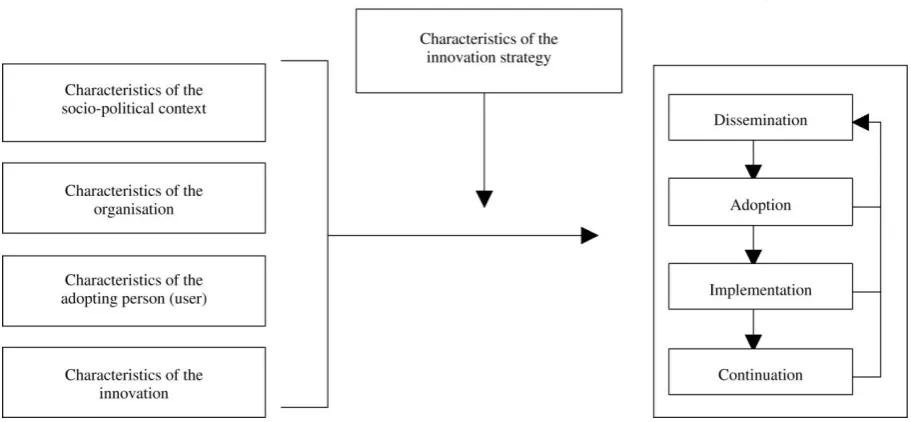
Figure 1:Framework representing the innovation process and related categories of determinants,
(Fleuren et al. 2004) ... 20
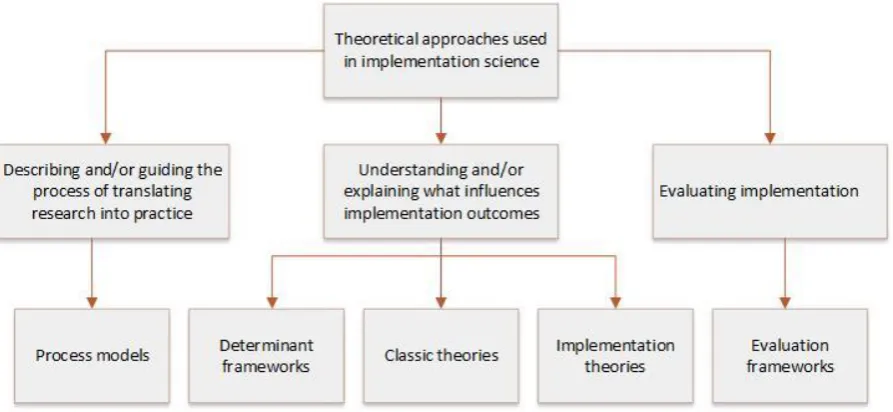
Figure 2: Three aims of the use of theoretical approaches in implementation science and the five categories of theories, models and frameworks (Nilsen, 2015) ... 21
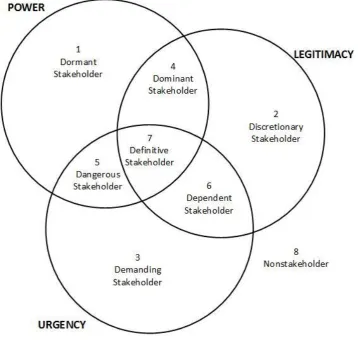
Figure 3: Stakeholder typology (Mitchell, Agle, & Wood, 1997) ... 23
Figure 4: Relationship of the Different Layers of Abstraction Involved in the delivery of Patient Journey Improvements in Healthcare (Curry, 2008). ... 29
Figure 5: Division of UltraGenda ... 30
Figure 6: Research procedure ... 37
Figure 7: Three phase coding ... 41
Figure 8: Overcoming the research to practice gap adapted from (Gleicher, 2012) ... 63
Figure 9: Diffusion of innovation adaption curve (Rogers, 2010) ... 65
Figure 10: Maloney's 16% rule (Maloney, 2010) ... 66
Figure 11: PARTI framework (Fitzgerald et al., 2016) ... 67
Figure 12: The approach of why, how, what ... 71
Figure 13: Perspective of view ((Westbrook, 2015)) ... 73
8
Abbreviations
CSC: Computer Science Consulting
GP: General practitioner
PJM: Patient journey modelling
UG: UltraGenda
QIF: Quality Improvement Framework
9
Statement of authorship
This work has not previously been submitted for a degree or diploma in any university. To the best of my knowledge and belief, the dissertation contains no material previously published or written by another person except where due reference is made in the dissertation itself.
Signed:
10
Acknowledgments
Undertaking this thesis has been challenging and would not have been possible without the support and encouragement from my family, supervisors, colleagues and friends.
To my parents, Henk and Charlotte, and my brothers, Michel, Patrick and Jeffrey, I thank you for your continued support, love, encouragement and patience.
To my supervisors in The Netherlands, Professor Erwin Hans, Dr Ir Ingrid Vliegen, and in Australia, Professor Anneke Fitzgerald and Associate Professor Joanne Curry, your support, guidance and encouragement have been invaluable.
To the employees of CSC Sydney and Brisbane, thank you for the opportunity to use their software and the critical thoughts about my models.
To Dr Ryan Gould and Dr Katrina Radford, I thank you for their advice and guidance and making my Australian adventure [drop] bearable.
To my Australian family, Wilma, Kimberley, Jonathan, Tana, Lilly-Janna, Chris, Jessica, Michael and Claire for letting me be part their lives. Thanks to you I have a great time in Australia and I never felt home sick.
To the research participants who gave up their time to attend the interviews.
Angelique Olde Meierink
11
12
1 Introductory Chapter
1.1
Introduction
This research focusses on the use of technology to implement another technology as one implementation strategy overcoming the research to practice gap. The research focus therefore is on implementation research. It is answering a theoretical question, that of reducing the “failure to implement” issue, and the use of the visualisation technique becomes the context to understand and advocate for use when implementing. The objective of this research is the use of a technology to implement another technology in order to overcome the research to practice gap. In this thesis, the visualisation tool that is used is Essomenic. The example investigated in this research is the first introduction to implement the scheduling software UltraGenda with the use of the patient journey modelling technique, Essomenic. This first chapter is the introduction to the entire thesis and gives an introductory description of the background, research issues and practical and theoretical contributions of this research. It also outlines the justification of this research. In addition, a description of the methodology and outline of this report is given, as well as the delimitations of this research.
1.2
Background to the research
One of the most consistent findings in research of healthcare services is the gap between research evidence and practice (Grol & Grimshaw, 2003). Implementation research is concerned with bridging this gap through the study of methods to promote the uptake of research into routine practice. Although the majority of innovations are shown to be effective in research, they often fail to be adopted in healthcare (Kuo, Gase, & Inkelas, 2015). According to the literature (Aarons, Hurlburt, & Horwitz, 2011; Greenhalgh, Robert, Macfarlane, Bate, & Kyriakidou, 2004), this is mainly due to implementation failure rather than to failures of the innovation itself. This might be a result of the lack of involvement of organisations and their staff in the implementation process, leading to an insufficient understanding of the intended benefits and outcomes of the innovation. In addition, this gap exists because of the extended time it takes for evidence based research to become operational. This gap hinders the implementation process of innovations, such as the implementation and uptake of the new scheduling technology UltraGenda, which is the focus of this research. Using visualisation techniques may be one answer for the problem. This thesis investigates to what extent visualisation techniques, such as Essomenic, are useful when adapting to new technology.
1.3
Research issues and contributions
13
or takes a long time to reach. Having a better understanding of difficulties in implementation research and visualisation tools, such as Patient Journey Modelling, will lead to a possible solution to bridge the gap between theory and practice. Essomenic is such a patient journey modelling technique.
The aim of this research is to investigate how technology can be implemented in healthcare facilities by using visualisation technologies, and how the use of the visualisation techniques can assist in convincing people to adopt a new technology. Therefore, the research question is:
“How can Patient Journey Modelling (PJM) assist in the implementation of new technologies in
healthcare organisations?”
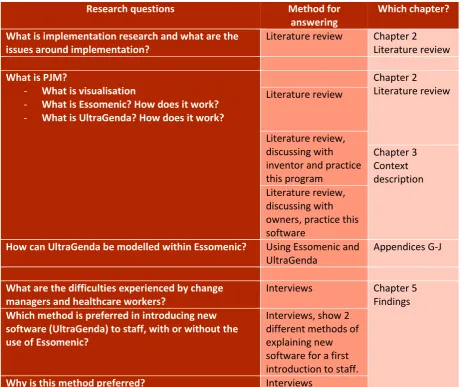
[image:14.595.65.527.344.731.2]Sub questions are formulated to assist in answering the main research question. These questions, the method to answer them and the belonging chapter are presented in table 1.
Table 1: Research questions
Research questions Method for
answering
Which chapter?
What is implementation research and what are the issues around implementation?
Literature review Chapter 2 Literature review What is PJM?
- What is visualisation
- What is Essomenic? How does it work? - What is UltraGenda? How does it work?
Chapter 2 Literature review Literature review
Literature review, discussing with inventor and practice this program Chapter 3 Context description Literature review, discussing with owners, practice this software
How can UltraGenda be modelled within Essomenic? Using Essomenic and UltraGenda
Appendices G-J
What are the difficulties experienced by change managers and healthcare workers?
Interviews Chapter 5
Findings Which method is preferred in introducing new
software (UltraGenda) to staff, with or without the use of Essomenic?
Interviews, show 2 different methods of explaining new software for a first introduction to staff.
14
1.4
Justification of the research
The literature is clear about the length of time to implement new interventions into practice (Green, Ottoson, Garcia, & Hiatt, 2009; Morris, Wooding, & Grant, 2011) and the average length of time is said to be 17 years. Thus the practice-theory gap remains lengthy and inconsistent. To date, no research has been undertaken to investigate visualisation as an aid for implementation. Therefore, the more we know about implementation of technology and use of visualisation techniques, the better we will understand how to implement innovations or new technologies. This research uses patient journey modelling technique, Essomenic, to implement new scheduling software, UltraGenda.
1.5
Methodology
This research is a retrospective theoretical exploration of possibilities for implementation of technologies. This case research studies the use of a technical intervention (Essomenic) to implement the software called UltraGenda. This research presents case research that uses a scenario toolbox. The methodology for this research arises from a pragmatic paradigm and has practical implications. The research protocol starts with background research meaning a thorough understanding of the existing literature, deep understanding of visual analysis technique using the patient journey modelling technique Essomenic and undertaking practical experience using Essomenic for the introduction of a new technology ‘UltraGenda’. The scheduling software UltraGenda will be modelled within two practical examples: 1) patient journey of endoscopic intervention, and 2) patient journey of a knee replacement. Firstly, using these practical examples, the current scheduling process is visualised using Essomenic. Secondly, the new scheduling software is modelled, showing the benefits to the patient journey when using the new scheduling software. These patient journey models are used in interviews to get insight in the use of visualisation for the implementation and first introduction of new technologies. This information forms the background to the research.
The next step was to interview nine stakeholders, consisting of people who work in the health industry as change champions and who had experience with change management techniques. Face to face semi structured interviews is the basis of the data source and a thematic analysis of the qualitative data followed. These outcomes are discussed in the findings chapter and linked back to existing implementation research. The full research plan is detailed in Chapter 4, Methodology.
1.6
Outline of the report
15
context of health. Chapter 3 gives a greater insight into the patient journey technique and software used for this research. Hence, chapter 2 and 3, literature and context chapters, are the background chapters to this research. Chapter 4 outlines the methodology and methods used to investigate the research problem. Chapter 5 outlines the findings and Chapter 6 addresses the implications for theory and practice, and concluding remarks.
1.7
Definitions
This section gives the definitions of the frequently used terms, implementation, patient journey modelling (such as Essomenic) and UltraGenda.
For the purpose of this research the term implementation is defined as “all the processes and outcomes which accrue to a strategic decision once authorisation has been given to go ahead and put
the decision into practice (Miller, Wilson & Hickson, 2004; p. 203).”
Patient journey modelling (PJM), such as Essomenic, is a visualisation modelling technique, which focusses on visualising healthcare processes creating a story board from the patient viewpoint. This technique is used in this research to map the patient journey using UltraGenda to schedule the patients in an Endoscopy unit, and patients who will undergo a knee replacement. These maps created two methods: one explanation using Essomenic to introduce new scheduling practices, UltraGenda, and one method that explains UltraGenda using the information manual provided by the company CSC.
1.8
Delimitations of scope and key assumptions
This research is limited to the context of the Australian health industry. It is also limited by the use of unique modelling technique ‘Essomenic’ as well as the software that is to be implemented, UltraGenda.
Further, the scope of this research is restricted to the length of time that I was able to do this research in and the willingness of the people working at the Computer Science Consulting company (CSC) that sponsored this research in-kind.
Some key assumptions that are in place when undertaking this research include: UltraGenda will be implemented, with or without visualisation techniques
Participants have knowledge about management of change in their healthcare environment.
1.9
Summary
16
17
18
2
Implementation of new technology: a literature review
This chapter discusses implementation research including implementation process models that can be used to assist with the introduction and adoption of a new technology. The search strategy and search terms can be found in Appendix A. First, I briefly discuss the gaps between knowledge and practice. Then, I will define implementation research in order to explain theoretical concepts that deal with the uptake of new interventions. Before I discuss process models, I will outline theory about the implementation of innovation and innovative processes. Further, I will discuss visualisation techniques which are in this research important in assisting users to adopt new interventions. Finally, I touch on stakeholder identification and engagement, which need to be considered for the implementation process of an intervention.
2.1
Gap between knowledge and practice
19
2.2
Defining implementation research
There is an increasing interest in the success of implementing innovations in a timely manner (Ellen et al., 2013). Hence, it is crucial to consider the definitions of implementation, implementation science and implementation research. When analysing the definitions that exist, I found that implementation science and implementation research is interchangeably used in literature (Eccles, Foy, Sales, Wensing, & Mittman, 2012; Wensing, 2015). As such, finding one definitive expression of implementation research was difficult to find and articulate.
For example, Miller et al. (2004) provides the following definition of implementation: Implementation is “all the processes and outcomes which accrue to a strategic decision once authorisation has been given to go ahead and put the decision into practice” (Miller et al., 2004; p.
203)
Implementation science can also be defined as “the scientific study of the methods to promote the uptake of research findings into routine practice” (Eccles et al., 2012; p. 2) Further to this definition,
Eccles et al. (2012) add that the aim of implementation science is to improve the quality and effectiveness of health promotion, health services, and healthcare (Eccles & Mittman, 2006; Tabak, Khoong, Chambers, & Brownson, 2012).
Further still, Peters et al. (2014) state that implementation research aims to understand how innovations work in practical settings, whereby it is important to consider the audience, the context wherein the implementation occurs, the audience that will use or implement the research and the factors that can influence the implementation process (Peters, Adam, Alonge, Agyepong, & Tran, 2014).
So putting the definitions and aims together, and for the purpose of this research, implementation research is the scientific study of processes used in the implementation of innovations and the consideration of contextual factors that affect these processes with the aim to overcome the research-to-practice gap. This thesis will focus on where support can bridge the gap in an implementation process.
2.3
The implementation of innovation and innovative processes
20
[image:21.595.70.526.181.392.2]process. In other words, the four phases are not mutually exclusive. Dissemination strategies and adoption strategies are essential for implementation, as is continual monitoring of success of intended outcomes. Figure 1 serves to explain that, whilst this thesis is about implementation, we cannot ignore that the act of implementation is a part of one whole: the innovation process. Hence, Fleuren’s framework is appropriate to show where implementation fits in the entire process.
Figure 1: Framework representing the innovation process and related categories of determinants, (Fleuren et al. 2004)
Whilst the theoretical model, depicted in Figure 1, outlines categories of determinants for implementation of innovations and processes for innovation, the practice of actual implementation is aided by frameworks and models. The next section outlines some theoretical approaches in implementation research that help provides a bridge between theory and practice.
2.4
Implementation process models
Implementation research has made progress with regards to the increased use of theoretical approaches to provide a better understanding and elucidation of why and how implementation fails or succeeds. According to Nilsen (2015) the used theoretical approaches in implementation research have three overachieving aims:
Description and guidance of the process of translating research into practice Understand and explain what factors will influences implementation results Evaluate the implementation (Nilsen, 2015)
21
Process models: specify steps, describe and/or guide the translation of research into practice,
e.g. QIF (Meyers, Durlak, & Wandersman, 2012).
Determinant frameworks: aim to predict or understand/explain influences on
implementation outcomes, e.g. CFIR (Damschroder & Hagedorn, 2011).
Classic theories: are theories originating outside implementation science that can be applied
to provide understanding or explanation, e.g. Theory of Diffusion (Rogers, 2010).
Implementation theories
:
Provide understanding and/or explanation of aspects of implementation, e.g. Normalization Process Theory (May & Finch, 2009). Evaluation frameworks: describe the aspects of implementation that could be evaluated to
determine implementation success, e.g. RE-AIM (Glasgow et al., 2012)
[image:22.595.77.524.378.584.2]However, these categories are not always recognised as separate types of approaches in the literature. This distribution of aims and categories of theoretical approaches used in implementation research is presented in Figure 2 below (Nilsen, 2015).
Figure 2: Three aims of the use of theoretical approaches in implementation science and the five categories of theories, models and frameworks (Nilsen, 2015)
22
The focus of this thesis will be describing and guiding practice, i.e. the process models. The reason for this is that Essomenic is about patient journey modelling (PJM), which concerns all processes in healthcare delivery from a patient’s point of view. PJM visualises processes in healthcare delivery, including scheduling practices provided by new technology: UltraGenda. Therefore, visualisation techniques are discussed in the next section.
2.5
Visualisation techniques
Visual analytics is the science of analytical reasoning, which is facilitated by interactive visual presentation (Thomas & Cook, 2006). It is an iterative process that combines the strengths of technologies and humans. Visual analytics techniques and techniques are used to combine information and acquire insight from large, dynamic, unclear, and often contradictory data. In addition, these techniques identify the expected and detect the unexpected. Furthermore, visual analytical techniques deliver appropriate, justifiable, and understandable assessments. Four main reasons show that technologies that are visual as well as interactive can be very helpful (Cook, Earnshaw, & Stasko, 2007). The first reason is that it is helpful for users to understand complex data and situations, whereas models alone are insufficient. Secondly, these techniques immediately discover trends, abnormalities and unexpected connections, and can evaluate hypotheses. Thirdly, these techniques can help the users in interpreting the information that is presented through the use of contextual suggestions. Lastly, these techniques stimulate users to engage with and examine big datasets that might otherwise be overwhelming (Wong et al., 2006). The strength of visual analytics is its pragmatism. Using graphical computer software, macro and micro processes can be depicted and modified, and subsequent effects can be identified.
23
In summary, implementation is one part of the innovation process which includes the dissemination of innovation, adoption of innovation, implementation of innovation and continuation. According to Nilsen’s (2012) theoretical categorisation of implementations, the use of technology to implement an innovation would fall under the ‘process theory’. The mode of implementation in this thesis is visualisation of the process. Hence, this research is novel in that it combines innovation theory, process theory and visualisation. To date I have not come across any literature doing the same. The next step is to understand the role of stakeholder identification and assessing who matter most.
2.6
Stakeholder identification and engagement
When implementing innovations, it is important to identify who is critical to the success of the implementation process (stakeholder identification) and how to involve them (stakeholder engagement).
[image:24.595.117.476.404.744.2]Stakeholder identification focusses on mapping all persons and organisations that have interest in the project. Identifying these stakeholders gives project managers an overview of their internal and external stakeholder environment. First steps in this process is identifying the key stakeholders (individual and organisation) who have an interest or impact in the process, and matter most.
24
The concept of stakeholder salience is an essential concept in understanding key stakeholders (Mitchell, Agle, & Wood, 1997). Stakeholder salience is defined as the degree to which managers give priority to competing stakeholder claims (Mitchell et al., 1997). Mitchell et al. (1997) suggested a theory of the stakeholder identification and stakeholder salience as a response to the many competing definitions of the stakeholder and the lack of agreement who and what really matters in an organisation. Considering the principle of who and what really matter, Mitchell et al. (1997) says that the first question requires a normative theory which defines who should be considered as stakeholders of an organisation. The second question asks for the descriptive theory of stakeholder salience, which explains the conditions when an organisation considers certain people or entities as stakeholders (Mitchell et al., 1997). A new normative theory for stakeholder identification is developed by Mitchell et al. (1997), which is based on three variables: power to influence an organisation, legitimacy of the stakeholders’ relationships with the organisation and the urgency of the stakeholders claim on the organisation (Mitchell et al., 1997), see Figure 3. The more a stakeholder owns these variables, the more attention an organisation must give to this stakeholder. It is possible for a stakeholder to only possess one of these variables, these are named the latent stakeholders (Mitchell et al., 1997). An organisation does not recognise these stakeholders as salient. Definitive stakeholders are the stakeholders that possess all the three variables and matter most. Once identified, an organisation must give priority to these stakeholders (Mitchell et al., 1997). All three variables are dynamic, as the position of a stakeholders could change in time. The salience is based on an organisation’s view and the stakeholder could or could not be aware that they own a particular quality or could not be willing or wish to act on that quality (Berg, 2001; Mitchell et al., 1997). Project managers should do a comprehensive stakeholder analysis to get a complete overview of their external stakeholder environment.
The second step is to focus on engaging with stakeholders and getting them to participate, either through acceptance or enabling them to exert a level of influence on the process and its outcome. Meaning, it is also important to focus directly on stakeholders during implementation (Bryson, 2004; Goggin, 1990).
25
and incorporating the ideas and opinions of stakeholders there is a higher chance of success in the implementation and maintenance phase. It is my premise that visualising how an innovation might assist with simplifying existing work processes will stir strong emotions, and engage stakeholders more quickly and readily.
2.7
Summary
In summary, there is a gap between research and practice, which is about managing change. Much is written about implementation frameworks and models, but less is known about how to use other techniques for implementing innovations. Existing frameworks on implementing innovations focus on ‘the what and how’ of the process. However, the act of implementing an innovation in healthcare is a human action.
26
27
3
Context description: Essomenic and UltraGenda
This chapter provides the context description of this research. The patient journey modelling technique Essomenic and the software UltraGenda, used in this research are discussed. Essomenic is a visualisation technique that focusses on visualisation of healthcare processes and creates a story board from a patient point of view. This technique is used in this research to map the patient journey using UltraGenda to schedule the patients in an Endoscopy unit, and patients who will undergo a knee replacement. These maps created two scenarios: one scenario without the use of UltraGenda, i.e. current situation, and one scenario with UltraGenda implemented in the patient journey of both case examples. These scenarios are used in the interviews as one of the methods to explain and introduce the software, UltraGenda. The other method explains UltraGenda using the information manual provided by the company. Section 3.1 discusses Essomenic and section 3.2 outlines UltraGenda.
3.1
Essomenic
Essomenic is Patient Journey Modelling and is a relatively new innovation in healthcare quality improvement (Curry, 2008; Curry, Fitzgerald, & Eljiz, 2011; Curry, Fitzgerald, Prodan, Dadich, & Sloan, 2014). Modelling the healthcare processes with Essomenic gives a clear view of the patient’s process through the healthcare system. Several contributing cross-discipline technologies have been developed to better understand workflows in hospitals. These are: Joint Application Development, Process reengineering, Lean Thinking and Workflow modelling. However, all these techniques have deficiencies in relation to Patient Journey Modelling as they were designed for other industries (Curry, 2008). Still, there are precise needs of healthcare transformation initiatives. For this reason, a new communication technique was developed, Essomenic. Essomenic is specially designed for the healthcare sector and its goal is supporting healthcare providers to develop new care processes to realise new and emerging models of care (Curry, 2008). These patient journey models can provide problem insights that would otherwise not be noted, e.g., interactions between patient and certain staff members, and showing where waiting time exist in the process. The goal of Essomenic is improving the healthcare quality by eliminating unproductivity and decreasing variability within the healthcare process.
3.1.1
Advantages of Essomenic
28
ambulatory care, chronic kidney diseases, lymphoma and osteoarthritis, Essomenic has shown added value (Curry & Prodan, 2013). Patient journey processes can be improved by (Curry, 2008):
Eliminating the excessive and unproductive activities Collecting the required information only once Compliance to evidence-based best practice
Eliminating or reducing unnecessary or duplicated activities
Decreasing the number of movements of a patient in the care process Decreasing duplicate activities
Providing clear information to the patient
Improving communications between patient, care takers and physicians involved with the particular journey
3.1.2
Layers of Essomenic models
29
Figure 4: Relationship of the Different Layers of Abstraction Involved in the delivery of Patient Journey Improvements in Healthcare (Curry, 2008).
Essomenic is easy and clear to understand. It is build up out multiple dimensions that are shown as individual layers, which are (Curry, 2008):
Patient movement; the patient dimension shows when, where and how often the patient
attends or is moved as part of its journey.
Staff roles; this second layer shows which staff members are involved and where they
interact in the process.
Processes; The third layers describes every step of the patient journey and relates the
processes that are involved in this journey.
Information creation/update; this layer presents where the information of the patient is
stored, e.g., medical record.
Patient needs/practice guidelines/policies; the fifth layer is used to show if there are any
patient needs, e.g., an interpreter, or guidelines are needed.
Measurement; the last layer explain the values of the measurements, e.g., how long the
waiting time is between two steps. These measurements can be used to determine the effectiveness of the patient journey.
30
3.2
UltraGenda
In the past, diagnoses and treatments were based on the knowledge and competency of the healthcare professionals. Nowadays, healthcare delivery becomes more and more a multidisciplinary approach, which results in an increasing complexity of the scheduling process. (UltraGenda, 2010). UltraGenda can be a technological solution in this complex scheduling of appointments.
UltraGenda is an enterprise scheduling solution which enables hospitals and outpatient clinics to manage the scheduling process across entire hospitals and hospitals departments. As presented in Figure 5, UltraGenda consists of several layers, which are:
UltraGenda Broka: booking or referring by GPs or referring practices UltraGenda Pro: scheduling of appointments or rooms
[image:31.595.98.502.352.610.2] UltraGenda Track Pro: follow up of patients UltraGenda Contact Store: reporting, analytics
Figure 5: Division of UltraGenda
31
3.2.1
UltraGenda Broka
UltraGenda Broka is a platform for online referrals and bookings. This software consists of two portal applications, one for the referrers and one for the patient. In such electronic referrals the decision making is central. By using the decision tree, the referrer is routed to initiate the correct clinical action with the right priority. UG Broka’s patient portal allows patients to pick up their referral and book an appointment themselves, and it allows patients to manage their appointments (UltraGenda, 2010).
3.2.2
UltraGenda Pro
UltraGenda Pro is software for planning of primary and secondary resources, such as appointments with physicians, or operating rooms and modalities. This software is clinically driven and rules based, ensuring the patient is seen by the correct clinician based on the patient’s reasons for having an appointment. Different types of appointments can be scheduled with UltraGenda Pro, these are single resource, multiple-resource appointments and an order set of consecutive appointments. Multiple-resource appointments are appointments that concern more than one schedule. Order sets appointments are sequential appointments, whereof the duration between each of the sequences is fixed. Rescheduling or cancelling is also possible with this software.
UltraGenda Pro provides specific questionnaires before scheduling an appointment, gives recommendations and offers instructions for the patient. After filling in these questions of the decision tree and receiving recommendations for an appointment type, UltraGenda presents which doctors are available for this certain type of disease. Site selection is another possible preference option. This automated specified selection of doctors makes it easier for the patient and administrator, because it saves a lot of unnecessary appointments and referrals. (UltraGenda, 2010).
3.2.3
Interaction between UltraGenda Broka and Pro
UltraGenda Broka interacts electronically with UltraGenda Pro. Referrals made in UG Broka are sent to UG Pro, and added to the external referral request list. In case the patient is not authorised, the patient can contact the hospital for their appointment or vice versa. If patients are authorised, they can pick up their referral and schedule an appointment online (UltraGenda, 2010).
3.2.4
Advantages of UltraGenda
UltraGenda is an enterprise scheduling solution for healthcare settings. The main advantages are listed below:
Multi (resource) appointments can be scheduled in one go: Multi-resource planning is
32
separately. Using UltraGenda will save a lot of time, because the patient does not need to contact all departments separately.
Multiple resource appointments can be scheduled on the same day: Hence, a patient can
schedule all appointments at different departments on the same day.
Recommendations give the correct physician, leading to prevent unnecessary appointments
and second correct referrals. UltraGenda Broka gives a questionnaire concerning the
complaints of patients. This questionnaire gives a recommendation for an appropriate doctor. This recommendation helps in deciding which physician to refer to. All physicians which are specialised with this medical complaint are shown. A result of this is that the patient will be referred to the correct specialist. Nowadays, if the administrator lacks the knowledge on the specialisms of the physicians, patients are referred to the wrong physician. Consequently, the patient needs to get a new referral via the general practitioner.
Time saving: Instead of booking appointments by phoning every department, and waiting
until you can speak to the administrator, appointments are booked digital. This saves time because unnecessary waiting on phone calls is gone (UltraGenda, 2010).
3.2.5
Summary
33
34
4
Methodology
As discussed in the literature review chapter, a gap between theory and practice exists. Visualisation techniques, e.g. Essomenic, is considered to be a useful technique for the implementation of a new technology in healthcare, e.g. UltraGenda. Hence, the goal of this thesis is to investigate if visualisation techniques would be appropriate to use to implement innovations.
This research is unconventional and the methodology chapter may look slightly different than what qualitative research traditionally dictates. Qualitative reports often include the use of the first person, which is accepted practice (Webb, 1992).
This chapter will describe and justify case research to demonstrate the use of visualisation to implement new software. In doing so, this chapter outlines the process of knowledge creation, including a description and justification of the methods for data collection, and outlines methods of analysis.
Section 4.1 presents a justification for the philosophical stance, pragmatism, and as such, it outlines the criteria for establishing valid and reliable knowledge, leading to the identification of a suitable methodology. Section 4.2 presents a stepwise protocol for the collection of data. Section 4.3 will outline the analysis and how I came to the conclusions.
4.1
Method of knowledge creation
4.1.1
Justification
This research is qualitative in nature. According to Hassar (1990) a qualitative methodology requires a research problem encompassing people's opinions, experiences and interpretations which have not previously been examined. Qualitative research involves detailed exploration and analysis of a particular topic. This research investigates the opinions of people about visualisation when implementing technology. Therefore, qualitative research is appropriate.
4.1.2
Ontological, epistemological and methodological implications
A qualitative research paradigm includes ontological, epistemological and methodological aspects (Guba & Lincoln, 1994).
35
philosophical stance for research that is real-world practice oriented, problem centred and looks at the consequences of actions (Creswell, 2009; p.6). The ontological assumptions of this research are based on pragmatism as the interpretations of the data collected from the participants will have implications for future practice.
Epistemology is philosophically allied to ontology, and concerns warranted knowledge (Bristow & Sauders, 2015), or how knowledge is created. Epistemology is about the ways of knowing what you know (Yin, 2011; p 18). Interpretivism underpins the epistemological assumptions of this research. In an interpretivist research the aim is to understand and interpret the implications of human behaviour rather than to generalise and predict causes and effects (Neuman & Wiegand, 2000). In this type of research, it is important to understand, opinions, explanations, motives and other subjective experiences that are context and time bound (Neuman & Wiegand, 2000). The role of the researcher, me, is to construct an impression of the world as the participants see it (Ratner, 2008). The participants own experiences are the main area of the research for this study and these experiences are interpreted by the researcher.
Thus the methodology for this research is underpinned by a pragmatic reality and interpretivist creation of knowledge. The combination of pragmatism and interpretivism guides the researcher to what she believes can be known (Guba & Lincoln, 1994). Methods refer to how evidence about the issues are collected. Methods refer to the protocol for data collection.
4.1.3
Etic and emic
When discussing a qualitative research methodology, the perspective of the researcher needs to be considered. The view can be etic or emic or both. In an etic study, the researcher keeps a certain distance from the object of research and views the phenomenon from the outside (Ellinger, Watkins, & Marsick, 2005). An emic research attempts to study a phenomenon from the inside, through the eyes of the participant culture that is being studied. In this research, I investigate the influence of the use of visualisation technology to implement a new technology in healthcare settings, which is an etic approach. However, as I am emerged in the technology, representing the method and representing the tools, it can be said that this research is also approached from an emic perspective. My being is influencing the research outcomes. My technique for data collection is influencing the research outcomes and therefore considered emic research. Applying etic and emic perspectives are operationalised by undertaking open-ended interviews and field observations.
4.1.4
Research design
36
(Essomenic) to implement a new technology: UltraGenda. This research presents case research that uses a scenario toolbox.
According to Yin (2011) case research
“investigates a contemporary phenomenon (the ‘case’) in depth and within its real-world context, especially when the boundaries between phenomenon and context may not be evident”. (Yin, 2014, p. 16) Existing circumstances are viewed by the case study to best answer the ‘how’ and ‘why research questions as argued by (Yin, 2004, 2009).
Qualitative case studies aim to promote and advance learning in contrast to the quantitative case study that tests a hypothesis (Flyvbjerg, 2006). It is therefore particularly suitable for ‘how’ and ‘why’ research questions focussing on a contemporary phenomenon with situations where the researcher cannot control behavioural events (Yin, 2011). Case research enables a holistic view to be obtained about the institutional complexity as a result of studying stakeholder behaviour in their natural context (Benbasat, Goldstein, & Mead, 1987).
Case research is most applicable in an exploratory type of research (Saunders, Lewis, & Thornhill, 2009). An exploratory research can be used if someone wants to determine “what is happening, to seek new insights, to ask questions, and to assess phenomena in a new light” (Robson, 2002, p. 59). The case under investigation in this thesis is the act of implementing UltraGenda, using patient journey modelling technique ‘Essomenic’. Hence, case research determines what problems are noticed by managers during the implementation process in the context of healthcare. The aim of this research is to investigate how technology can be implemented in healthcare facilities by using visualisation technologies. Therefore, this research is exploratory.
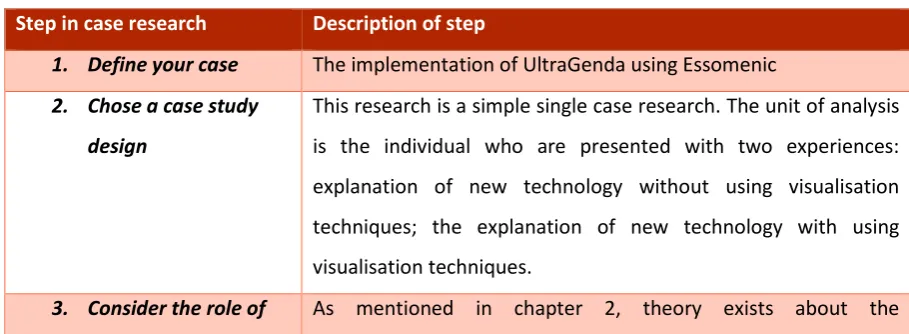
[image:37.595.63.518.599.766.2]According to Yin (2012) there are 5 defined steps in case research:
Table 2: Steps in case research
Step in case research Description of step
1. Define your case The implementation of UltraGenda using Essomenic 2. Chose a case study
design
This research is a simple single case research. The unit of analysis is the individual who are presented with two experiences: explanation of new technology without using visualisation techniques; the explanation of new technology with using visualisation techniques.
37
theory implementation of innovations in healthcare, however a gap between research and practice exists. In this research I am linking implementation research to assist with the implementation and uptake of new technology using visualisation techniques.
4. Triangulation of
evidence
In this research I am making use of source triangulation, given the fact that I have identified different groups of participants. Triangulation adds rigour, richness and depth to the design and to the data. Randomisation of the sources also adds rigour: the sequence of ‘with or without using visualisation techniques’ was randomly assigned.
5. Develop the protocol The research procedure and subsequent protocol is discussed in the next section.
Research procedure
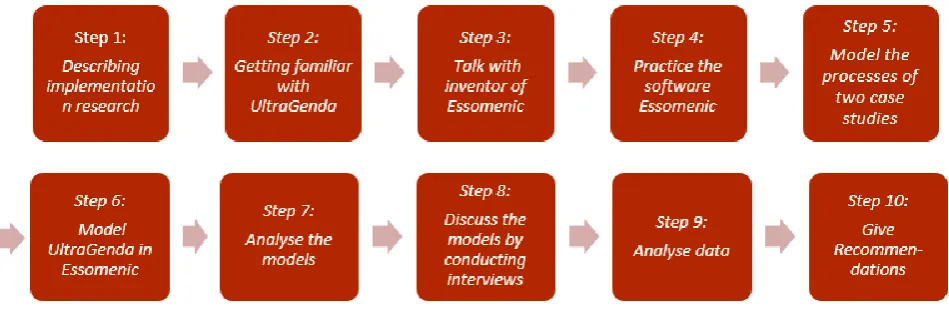
[image:38.595.74.549.433.594.2]This research is considered negligible risk to the Griffith University and gained full ethical clearance GU Ref No: 2016/147. This paragraph elaborates which steps are taken order to answer the research question. These steps are shown in Figure 6.
Figure 6: Research procedure
The steps of the research procedure in this research are as follows: Step 1: Describing implementation research
The first step in this study is describe what implementation research is about, and why this research is of added value.
38
The second step in this research is to learn about UltraGenda. It is necessary to fully understand this software and try to use the software.
Step 3: Talk with the inventor of Essomenic
The next step is to learn about Essomenic. What is the goal of Essomenic and how can it be used in different settings.
Step 4: Practice the software Essomenic
Fully understanding of the software is done by practice with the software. In this case it will be easier to understand where Essomenic can be used in this research. It support in understanding all parts of the software.
Step 5: Model the processes of two case examples. For this research, two cases will be
modelled (Appendix H and Appendix J) to show what the current healthcare process is of the patient with a certain medical complaint. In order to model the correct processes, these will be discussed with persons who are familiar with the process from experience of undergoing the procedure or working within this area. Hence, in other to improve the healthcare process and to know where UltraGenda interacts in the process, the current situation of the healthcare process of the case study is needed.
Step 6: Model UltraGenda in Essomenic
Thereafter, the process with the implementation of UltraGenda in the healthcare process will be modelled (Appendix I and Appendix K). It shows where UltraGenda is of influence in the process, and it helps in understanding how this software UltraGenda functions. I will verify these models with the clinicians and the people who are familiar with Essomenic and UltraGenda.
Step 7: Analyse the models
Once the processes without and with UltraGenda are modelled, these processes will be analysed. In this case I will understand where UltraGenda can be of importance of the healthcare process. This will help me in explaining with the use of Essomenic what UltraGenda is and what its advantages are in the healthcare process.
Step 8: Discuss the models by conducting interviews – the actual research
The next step is to discuss the models with practitioners who understand and are familiar with the problems around scheduling in healthcare. I will gather their thoughts about implementing technology without the use of Essomenic models and implementing technology with Essomenic models.
Step 9: Analyse data
39 Step 10: Give recommendations
After analysing the data, I will give recommendations about the analysed data, which will help me in given a deliberated answer on the research question.
4.2
Method of data gathering
This section of the methodology chapter describes and justifies how the data was gathered. As highlighted by (Creswell & Miller, 2000; Yin, 2004) a clear description of the data collection protocol is an important mechanism for creating ‘credibility’ in qualitative research. Stepwise research makes qualitative research scientific. According to Boeije (2009) qualitative research processes permits the researcher to “reinterpret the information while preserving the participants meaning” (Boeije, 2009; p.14).
4.2.1
Interviews
According to Yin (2011) the success and reliability of a research is created in the preparation and the evaluation of the (interview) data. This research uses semi-structured face to face interviews in order to gain further insight from the respondents (Yin, 2011). Whilst undertaking focus groups was a consideration, in this particular case, the research required individual responses to enhance the breadth of data gathered. Focus group data is fraud with ‘group think’ where people might agree with the most salient group member, when in reality their own opinions are not heard (Chioncel, Veen, Wildemeersch, & Jarvis, 2003). The cohort in this research – clinicians and managers – are also difficult to organise in groups. Hence, face to face interviewing was more appropriate.
4.2.1.1 Sampling method
40
4.2.1.2 Interview method
The research participant was informed about the purpose of the thesis, data collection, and the voluntary nature of participation in the interview. They then received the participant information sheet (Appendix C) and consent letter (Appendix D) outlining the purpose of the study, ensuring their confidentiality and anonymity. Also see ethical consideration in Appendix E.
At the introduction of the interview, I explained the goal of my research and the structure of the interview. Interviewees were asked to select a number between zero and twenty. Those who chose an even number were first offered an explanation of UltraGenda software without the visualisation technique ‘Essomenic’, before UltraGenda was explained with the aid of Essomenic. Those who chose an odd number first received the explanation of UltraGenda with Essomenic, and then the explanation without it. See Appendix F for the (even version) presentation used in the interviews. The interview contained of three distinct parts. First, I asked the questions: “Could you tell me something about your experience with implementing a new technology or other aid in healthcare?” I was particularly seeking examples of barriers and facilitators to implementation of a technology software. This line of questioning also prepared the interviewee for the next step.
Second, I used the two different ways of explaining UltraGenda, according to the randomisation exercise. I gave a short tutorial on the use of UltraGenda without and with the use of Essomenic. I then asked the interviewees which mode of explanation they preferred: with or without, and why. This gave me deeper insights into the utilisation of visualisation techniques and likely levels of adoption of new software. The randomised order of explanation methods of the software assured that sequence of explaining had no influence on the outcome.
Third, I asked the participants to think back to the example they mentioned in the first part of the interview and specifically focus on their previous experience. The question was if the participant thought that visualisation would have helped them with understanding, adopting and implementing technology when they had to implement it in the past. I then asked if they had any additional comments, issues or suggestions that they want to raise. I thank them for their time.
41
The interviews were conducted at a location preferred by the respondent. In this research it was either at their workplace, which is in most cases the hospital, or at their homes. The duration of the interviews is approximately 40 minutes.
4.3
Method of data analysis
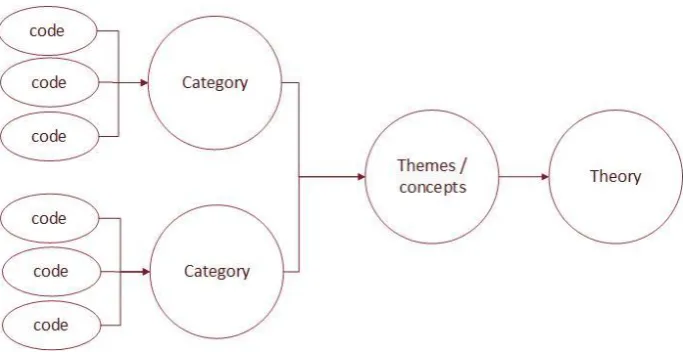
Typically in qualitative research, once the data has been collected, transcribed and read through, the transcripts are coded (Creswell, 2003). After transcribing the interview, I reread the transcripts. To analyse line by line the transcripts of the interview in order to identify initial codes within the data the method of constant comparison of Corbin & Strauss’ (1990) was used. This was accomplished through open coding by underlining the words and writing a phrase of three words that represented a short summary of each thought, opinion or view inside the text (Saldaña, 2015). Also see the Appendix G for an example of the coding. Defining these phrases was first done on paper, and added to excel later. Codes with a similar meaning were linked to the same category.
The interview consisted of three parts. First, I asked the interviewees to describe their experiences with managing change. Second, I presented two methods of explanation: one with the use of Essomenic, one without the use of Essomenic and I asked which mode of explanation was preferred and why. Third, I asked if using visualisation techniques would have assisted them in their example given to the first question. In analysing this data, I kept these three parts separately.
[image:42.595.127.469.499.675.2]From the categories that fit together, I formed themes. These themes were linked to theory, using the quotes of the research participants. This three phase coding is illustrated in Figure 7. Text data was analysed using thematic analysis.
42
4.3.1
Validity and transferability
Validity is an assessment to determine whether the findings of the research accurately represent what they supposed to be about (Saunders et al., 2009). In qualitative research, there is more of a focus on validity to determine whether the account provided by the researcher and the participants is accurate, can be trusted and is credible. To achieve validity in this research, first the models I created in Essomenic were verified with specialists inside the CSC and clinical specialists from outside CSC. Second, the interview questions where developed and discussed before the actual interviews, to ensure the right questions were asked in order to gather the right information. Third, to validate the responses, a summary of the interviews were sent back to the respondents in order to verify their original opinions. In addition to the validation techniques it is well known that face validity in qualitative research is always high.
In terms of reliability, qualitative research is by nature unreliable and as such reliability has limited meaning. In this research, reliability is somewhat strengthened by transcribing the interviews verbatim, including the pauses and overlap, giving a true picture of the data. In addition there was high degree of inter-coder agreement. I shared some of the transcripts with my supervisors and colleagues, and we had similar findings.
As opposed to quantitative research, qualitative research does not seek truth and generalisability. Generalisation is a word that should be reserved for survey questionnaires only (Silverman, 2013).
The claims we can make from qualitative data are ‘extrapolated’ rather than generalised and, therefore, research may be transferable to other contexts, but cannot be generalised
4.3.2
Limitations of the methodology
Some limitations are present in this research. First, the research environment is a controlled company setting. UltraGenda is a software developed by a company who is prejudiced about this technology. Nevertheless, this limitation is minimised by discussing the models with several people inside and outside the company CSC. Models in Essomenic were discussed in order to get the correct patient journey of the endoscopy procedure and knee replacement process (Appendices G-J).
43
Conducting the interview has also some limitations. The number of interviews, how the interview is conducted, and the questions posed all have influence on the outcome of the questioning. Nevertheless, these are common limitations of qualitative research and the depth of the data gained by doing interviews in this research outweighs the limitations of the small number of participants. In addition, as stated generalisations are not sought, but rather, a deeper understanding was the aim of this research. Regular reflections on own influences on the data gathering process assisted with ensuring minimised bias.
4.3.3
Bias
In order to minimise researcher bias, the research process and any conclusions were discussed, evaluated and confirmed during regular meetings with my supervisors. A reflective process allowed me to test my own biases by thinking deeply about the research results. Researcher bias was also minimised by checking if the models, and conclusions in the data analysis are correct and valid according to specialists.
4.4
Summary
This research methodology is underpinned by pragmatism and interpretivism. This chapter outlined the research protocol using scenarios created by Essomenic, on a topic of implementation of UltraGenda. Nine interviewees were presented with two methods: one that used Essomenic to visualise the way the new technology, UltraGenda would work in practice, and one where UltraGenda was explained without visual aids. Text data was analysed using thematic analysis. Some limitations exist, but are characteristic of any qualitative research.
44
45
5
Findings
This chapter reports the findings gathered from the interviews. A total of nine healthcare managers and practitioners were interviewed for this research. In their voice, section 5.1 describes the difficulties with implementing new technologies from participants’ experiences. Section 5.2 discusses the preferences of two different methods of explaining a new technology to the organisation’s staff. Section 5.3 explains the findings that visualisation techniques are deemed to be of great assistance and preferred when implementing a new technology.
5.1
Experienced difficulties in implementation
As previously reported, successful implementation of new technologies or softwares in healthcare organisations is difficult (Berg, 2001). Some of the difficulties experienced by the research participants concerned issues such as: lack of staff involvement, lack of understanding and insufficient training and lack of time. Each of these aspects are discussed below.
5.1.1
Lack of staff involvement
The perceived problem of lack of staff involvement might be twofold: due to a lack of engagement of staff by managers in the decision making processes, or due to a lack of involvement by staff because they are reluctant towards enacting changes.
Most participants advocated the lack of engagement. One participant noticed that some staff members simply do not want be engaged:
“…[implementation] impacts everybody and it was a program that involved
everybody from first right up. So that was, that is a challenge to engage that bulk
of people [staff] who don't want to be engaged.” (Participant 6)
However, the process of engagement is frequently not much focussed on the involvement of stakeholders, i.e. staff. Implementing new processes or technologies are often simply imposed by managers without considering the actual implementers (Konrad, 2006). A lack of engagement of stakeholders in the early implementation process can lead to stakeholders rejecting results that vary from their expectations. Likewise, failure to include salient stakeholders have similar results (Craig, 2010). This is also stated by one of the participants who said:
“But still people [staff] felt that the decision was already made. They were not
part of the decision making. And frankly the features were never used in the way