at twice the speed, one-fourth the cost.
Ampex punches more holes in current media conversion methods. You can put your computer back to full time computing. New Ampex OFF-LINE paper tape to magnetic tape conversion system saves you more time and money than any other method on high volume conversion requirements-and gives you error-free output tapes. The economical PTS helps you obtain maximum computer throughput while reducing your total processing costs. PTS Speed: Reads 5 to 8 level punched paper tape at 1,000 cps, converts data to computer ready 7 or 9 track IBM/ASCII compatible magnetic tape with density up to 800 cpi.
PTS added featllres: Operates off-line as an inexpensive, rugged work horse. Simple, unitized control panel requires only one operator. Programmable memory for any code to any code conversion. Manual or automatic block length setting. Automatic editing of special characters. .
PTS reliability: Extensive automatic system crosschecks assure that final data written on tape is error-free. Proven reliable paper tape reader and "no pinch roller" Ampex Single Capstan tape drive. PTS by Ampex: Direct sale for less than $25,000-or your choice of lease plans. Write for information on the PTS. From Ampex, a world leader in magnetic tape recording. Write Ampex Corporation, Redwood City, California.
CIRCLE 1 ON READER CARD
f
,-t
t
l
Your revised 1966
Reference Guide to CEC Analog
and Digital Magnetic Tape
Recorders and Accessories
This guide includes the important new
advances achieved by the DR-3000 Recorder
Type VR- 3600 - The dean of recorders, and the ultimate choice for the most de-manding pre- and post-detection and gen-eral purpose use.
!.!l 400 cps to 1.5 mc direct frequency response; and dc to 500 kc FM frequency response.
!.!l Bi-directional capability inciuding re-verse automatic phase equalizers - avail-able on special order.
!.!l 7- or 14-channel systems available as standard.
!.!l Available in"Universal" machine con-figurations for compatibility with lower bandwidth CEC recorders by switch selection.
[!] Accessories include monitor meters for display of bias, input and output signals, RFI certification to MIL-1-6181D.
Type VR-3800 - This data recorder offers the basic advantages of the VR-3600 at a modest price. Often referred to as the "work horse" of midband recorders.
!.!l 300 cps to 300 kc direct frequency re-sponse; dc to 40 kc FM frequency response with high-accuracy FM system. [!] Six speeds to 60 ips, instantly switch-able.
[!] All-metal-front-surface recording heads - reduce cleaning to a minimum; reduce tape and head wear.
[!] 7- or 14-channel systems available as standard.
VR·3600 VR·3800
2
[!] Direct system fully amplitude- and phase-equalized.
Type VR-2600 - Recognized as the finest, most versatile performer in its class.
[!] Available with any combination of four types of recording/reproducing elec-tronics and configurations (direct, FM, PDM, PCM).
[!] All solid-state electronics, pushbutton controlled for operation without readjust-ment at six (6) tape speeds.
[!] 600 kc direct, 80 kc FM, IRIG PDM, and 1000 bit-per-inch PCM capabilities.
[!] 7- and 14-track analog systems as well as 16-track PCM systems available as standard. Accessories include edge track voice recording/reproducing, shuttle con-trol and monitoring equipment, including both meter and oscilloscope presentation.
Type VR-3300 - Unmatched for appli-cations where ruggedness and mobility must be combined with outstanding per-formance.
[!] 100 cps to 300 kc direct frequency re-sponse; dc to 20 .kc FM frequency response.
[!] Dual capstan drive system provides closed-loop speed and tension control equal to standard laboratory systems.
[!] Interchangeable record and reproduce electronics and heads with CEC's Type VR-2800 laboratory recorder/reproducer
VR·3300
VR·2600
and VL-2810 continuous loop recorder! reproducer.
[!] Six-speed record/reproduce system. Type VR-2800 - A highly reliable wide-band system for use in laboratory environ-ments with direct and FM electronics. [!] Six-speed record/reproduce operation.
D 100 cps to 300 kc direct system and dc to 20 kc FM system.
[!] Up to 7 or 14 channels on ~" or I" tape respectively on 14" reels provide ex-tended record time. 32-channel, I" sys-tems also available on special order.
I!J Uses all-metal-front-surface magnetic heads, as do all CEC recorders, for long life and minimum tape wear.
Type PR-3300 - Designed for mobility at a modest cost.
I!J High-quality mobile magnetic tape re-corder/reproducer for standard 100 kilo-cycle work.
[!] 7 - or 14-channel systems on ~" and 1" tape respectively; 1 O~" diameter reels. [!] Handles information via direct, FM or PDM techniques in any combination. Like the VR-3300, this unit can be operated from ac or dc power sources using its accessory precision frequency power supply.
[!] Interchangeable electronics with CEC's GR-2800 and GL-2810 magnetic tape recorder/reproducer systems.
PR·3300
VR·2800
DATAMATION
VR·3600 VR·3800
TAPE SPEEDS 6 speeds 6 speeds to 120 ips to 60 ips
DIRECT 400 cps- 300
cps-FREQUENCY 1.5 mc 300 kc RESPONSE
FM FREQUENCY dc-
dc-RESPONSE 500 kc 40 kc
CHANNELS up to 14 up to 14 RECORDING Direct, FM Direct, FM METHODS
ELECTRONICS Solid·State Solid·State
Type GR-2800 - Commonly selected for general lab use in both industrial and mil-itary applications because of its operating economy, long life and reliability.
[!] General purpose laboratory recorder / reproducer system accommodating data in direct, FM or PDM recorded format in the frequency range from dc to 100 kc.
[!] Utilizes all solid-state electronics. [!] 7- or 14-channel operation on ;6." and 1" tape respectively, with reel diameters to 14".
[!] Closed-loop capstan drive system. [!] Precision capstan drive electronics and tape speed control servo provide tape speed accuracies to within ± 0.02 % of recorded speed.
Types GL-2810 & VL-2810-Specifically designed for data reduction or data mon-itoring and storage where machine work-load is heavy.
[!] Accommodate tape loop runs from 2 to 75 feet at six tape speeds from 1'Va to 60 ips.
[!] GL-2810 handles data in the range from dc to 10 kc via FM techniques, and from 100 cps to 100 kc employing direct techniques; GL-2810 handles dc to 20 kc FM and 100 cps to 300 kc via direct.
[!] Utilizes;6." tape for up to 7 channels, or 1" tape for up to 14 channels, using IRIG geometry.
[!] Accessories include selective erase equipment providing erasure of any com-bination of 7 to 14 tracks, without removal of the tape loop from the machine. Bulk erase equipment also available.
GR·2800 GL·2810
July 1966
VR·2600 VR·3300 VR·2800 PR·3300
7 speeds 6 speeds 6 speeds 6 speeds to 120 ips to 60 ips to 60 ips to 60 ips· (in two
ranges)
300 cps- 100 cps- 100 cps- dc-600 kc 300 kc 300 kc 100 kc
dc- dc-- dc-
dc-80 kc 20 kc 20 kc 10 kc
up to 14 up to 14 up to 14 up to 14 Direct, FM, Direct, FM, Direct, FM, Direct, FM,
PDM, PCM PDM PDM PDM
Solid·State Solid·State Solid·State Solid·State
Type DR-3000 - This "universal" re-corder offers unequalled versatility and performance - at the lowest cost of any comparable digital tape system. Additional recent advances have placed the DR-3000 in such a position as to virtually elimi-nate competition.
New Advantages:
[!J Standard choice of 3 tape speeds, 37;6., 75 and 112;6. ips, for complete IBM com-patibility. (Previous top, 75 ips.) Other speeds to 112;6. ips, on special order. [!] Simplified logistics and minimum spare parts requirements through interchange-ability of parts for both low, medium and high-speed systems.
[!] Mechanical head azimuth adjustment and individual forward and reverse static skew adjustments on read and write am-plifiers reduce system static skew to less than 0.25 microseconds.
Original Advantages:
7- or 9-channel formats including 200, 556, and 800 bpi recording densities or 1600 bpi phase-encoding density on spe-cial order.
Rigid performance specifications provide guaranteed machine-to-machine compat-ibility.
Straight line tape loading requires no threading. Easiest of all to load, entire
operation takes less than 10 seconds. Compact, rugged design with unique tape buffering provides the only high-speed sys-tem mountable in a 19" or 24" rack. Dual capstans with special self-adjusting actuators assure positive and gentle tape drive; eliminate tape slippage. And air bearings virtually eliminate tape friction.
DR·3000 CIRCLE 5 ON READER CARD
GR·2800 GL·2810 VL·2810 DR·3000
6 speeds 6 speeds 6 speeds From to 60 ips to 60 ips to 60 ips 371h to
112'12 ips
100 cps- 100 cps- 100 cps-100 kc 100 kc 300 kc
dc- dc-
dc-10 kc 20 kc 20 kc
up to 14 up to 14 up to 32 upto 9 Direct, FM, Direct, FM, Direct, FM, up to 800
PDM PDM PDM bpi NRZ
Solid·State Solid·State Solid·State Solid·State
CEC's DataTape®
Accessories
The Monitor Oscilloscope is used with tape recorder/reproducers, or any multi-channel instrumentation system to pro-vide visual display of electrical signals ranging in frequency from dc to 3,000,000 cps. Unique features of this unit include up to 500 kc sweep rate and modular con-struction.
The Type TD-2903 Automatic Tape Degausser is designed to erase data
sig-nals from magnetic tape wound on reels up to 14" in diameter and tape widths from ;6." to 2". A reel of 1" -wide instru-mentation tape recorded at saturation level is erased to a nominal 90 db below normal level.
The Dynamic Tape Tension Gage per-mits accurate tension measurements di-rectly while the recorder is in operation
. .. helps keep your recorder in proper operating condition through routine main-tenance adjustment. _
For complete information on any CEC Tape Recorder/Reproducer, write or call CEC for Bulletins in Kit 9009-Xl.
CEC
Dala Instruments Division
CONSOLI DATED
ELECTRODVNAM ICS
A SUBSIDIARY OF BEll & HOWELL/PASADENA, CALIF. 91109 INTERNATIONAL :;UlISIDIAIlIES: WOKING, SURREY, ENGLANDAND fHlfDlIlIlG (HESSEN), W. GERMANY
Now ... save
programming
steps
EFFECT OF PRODUCTION DECISION ON INVENTORY WITH FORECAST SALES
Before: 450 program steps. Now: 300 Before: 1000 program steps. Now: 700
CANAL CROSS SECTION
AND CONTOUR
Before: 600 program steps. Now: 500 Before: 54 program steps. Now: 14
• With the new Milgo Digital Plotting System, you output only the end points on lines to 42" long-the plotter does the rest ... with no deterioration of the plotter's normal dynamic accuracy. There is never a second tier subroutine to compute the length of a line! Result: re-duced computer programming, rere-duced computer output time, rere-duced plotting time.
The Milgo DPS-6 includes a choice of off-line readers, plus either a vertical or horizontal plotter. And the system provides for all standard digital iriputs plus straight analog. It accepts magnetic tapes recorded in either gapped, gapless or long record format. An optional core stor-age buffer allows up to 10,800 bits between gaps.
Send for a brochure-full of additional features on the Milgo DPS-6. Write or call Milgo Electronic Corporation 7620 .N. W. 36th Avenue, Miami, Florida 33147 .. Phone
305-691-1220. TWX 305-696-4489.
IlIliill
CIRCLE 6 ON READER CARD 4
volume 12
Publisher Editor
J
~~~~\:I
u,.L
J
1966
number 7
":c
RTAM;~Tfii~;;~l, ' '~
GARDNER F. LANDON ROBERT B. FOREST
Managing Editor & Art Director
Associate Editors
CLEVE MARIE BOUTELL EDWARD K. Y ASAKI WILLIAM J. ROLPH HEIDE E. HESS ANGELINE PANTAGES CHARLES WHITE HOWARD BROMBERG ROBERT V. HEAD PHIL HIRSCH ROBERT L. PATRICK
Assistant Editor Eastern Editor European Editor Contributing Editors
Washington Reporter
Editorial Adviser Technical Consultants
Production Manager
Director of Circulation Circulation Fulfillment
Eastern Distrid Manager.
DANIEL D. McCRACKEN LOWELL AMDAHL MARILEE PITMAN FRANK DeCARLO ALGENE TRAINA
JAMES M. MORRIS WARREN A. TIBBETTS
141 E ... th St., New York N.Y. 10017 [212] MUrray Hill 7-5180
New England District Manager & Vice President
WARREN A. TIBBETTS
112 West Haven Rd., Manchelter, N.H., [603] NAtional 5-9498
Midwest Distrid Manager JOHN BRENNAN
20.5 Welt Wacker Drive, Chicago, III. 60606
[312] Financial 6-1026
Western District Manager HAMILTON S., STYRON & Vice President 1830 W. Olympic Blvd., LOI Angeles, Cal., 90006 [213] 385-0474
iiTifi:
!YD!'
EDITORIAL OFFICES 1830 WEST OLYMPIC BLVD. LOS A N GEL E S , CAL IF. 9 0 00 6
Circulation audited by Business Publications Audit
Member, American Business Prell, Inc:.
DATAMATION is published monthly on or about the te~th day of every month by F. D. Thompson Publications, Inc., Frank D. Thompson, Chairman;. Gardner F. Landon, ~res
ident; Gilbert Thayer, Senior Vice President. Executive, Clrculat~on and Adve~tlsl.ng
offices 141 East 44th Street New York, New York 10017 (Murray Hili 7-5180). Edltonal offices: 1830 W. OlympiC Blvd., Los Angeles, California 90006. Published at Chicago,
~hAMATION
is circulated without charge by name and title to individualsw~o
qualify by our standards. and ar~ employed by manufact~rers0:
users of automatic information-handling equipment In all branches of bUSiness, Industry, government and the military. Available to others by subscription at t~~ rate of $15.00 a~nually;single issues (when available) $1.50. Reduced rate for qualified stUdents. Forelg~ s~b
scriptions are on a paid basis only at a rate of $25.00 annually .. No SUbScription agency is authorized by us to solicit o~ take orders for subscnptlons. Controlled circulation paid at Columbus, O. and Chicago, III.. Form 3579 to be sent. to F. D. Thompson Publications, Inc., 205 W. Wacker Dr., Chicago, III. 60606. COPYright 1~66,
F. D. Thompson Publications, Inc. Microfi 1m. copies of DATAMATI O~ l1)ay be obtained from University Microfilms, Inc.; 313 No. First St., Ann Arbor, Michigan. Printed by Beslow Associates, Inc.
This issue 62,800 copies
Series IV
Data
Recordingl
Computer Input
System
Rents for as I ittle as
$49
00
per month per recording location Price includes:
1. Standard Model SERIES IV full bank recorder, leased in quan-tities of 50 or more on three year basis
2. Off-line SERIES IV Converter/ Receiver which writes IBM
com-patible
Ih"
magnetic tape . 3. Maintenance Contract andm-stallation charges
SERIES IV now makes true Source Data Acquisition an economic reality by providing reliable, easy-to-operate source data recorders at an attrac-tively low per-station cost ... and high speed magnetic tape computer input as the end product of the system.
SERIES IV is designed for the user with requirements for data capture at multiple source locations. The system is magnetic tape oriented-including data recorders which write
%"
magnetic tape and hard copy ... and off-line%"
to%"
mag-netic tape receiver/converter units.July 1966
Additionally, SERIES IV offers data transmission capability at speeds of 60 cps on standard Data Phone subsets. Prices per recording station equipped with data Recorder, Trans-mitter, and Receiver (with
%"
tape output) run as low as $91.00 per month in quantities of 50 or more. Hardware flexibility is built in the Data Recording Unit. It can be cus-tomized to the application. A wide variety of options and keyboard con-figurations offer maximum systems flexibility. Standard features of the basic Recorder are: Error-free car-tridge loading %." tape deck D10-Column full bank keyboard and hard copy listing D Manual Clear
o
Automatic keyboard clear after recording D End-of-file and Void function keys D Machine lock-up atend of tape or power failure_ For a few extra dollars the follow-ing customizfollow-ing optional features can be added: Upper and Lower Accumulators for debit and credit entry and batch totals D Accumu-lator Display D Accumulation by selected field D Su pervisory key-board enforcing D Battery powered operation for applications requiring semi-portability
0
Motorized col-umns in data field 0 Choice of key-board field from 3 to 13 columnsD Data check with Record Quality Assurance circuitry.
Full information and price quota-tion for Recorders tailored to your application can be obtained by send-ing the coupon below_ Light weight, portable magnetic recorders are also available.
r-;O~':':;i:;:~form:;i~.~i;:::;;:;---"
I[§IUGC INSTRUMENTS, INC., 5610 Parkersburg Drive, Houston, Texas 77036 15!1 or Call SU 2-3030
NAM~E ____________________________ TITL~E __________________ ___
COMPANY: ________________________________________________ _ ADDRESS ___________________ CITY ___________ PHON~E __________ _ Interested in:
o
SERIES IV Full Bank 0 Data Transm'ission Recorders ShownAbove Number of
Recording Units _ _ _
o
DevelopmentCon-tract for Special Recorders Utilizing %" Mag Tape Medium
Number of
Transmitters, _ _ _ _ _
o
Have SystemsEngineer Call for Appointment
o
Portable Alpha-Numeric Recorders Number ofUnits---o
Send Literature OnlyL _________________________
~CIRCLE 7 ON READER CARD
Heads!
You don't pick precision magnetic tape this way, but we have the feeling that
some people do.
"How can you lose," we've heard
itmuttered, "one leading brandis as good
as another."
Well, like the song says,
"itain't necessarily so."
Take Computape users. They would rather be safe than sorry. And they've
found that, for long, reliable, error-free performance, Computape is about the
safest tape going.
Has to be. Not a reel of tape leaves the plant that hasn't been checked and
re-checked dozens of times for perfect quality and uniformity. And of course,
each reel has been meticulously produced to meet the individual specifications
of the equipment on which it will be used.
Nothing is completely sure in this life, but when you can come this close
with Computape, why tempt fate with some other brand?
CIRCLE 8 ON READER CARD
july
1966
volume 12
number 7
automatIc
information
processIng
for business
industry
~Vscience
July 1966
®
22 A REVIEW OF ELECTROMECHANICAL MASS STORAGE, by
John
S.
Craver.
An examination of mass storage now available, covering discs, drums, and removable media and including charts for comparison of characteristics.29 INSURANCE FOR DATA PROCESSING, by
Haig
G.Neville.
Relatively new types of insurance coverage are now available to cover several aspects of loss arising from damage, errors, or omissions involving computer op-erations. The nature of this coverage is discussed, along with the steps the user can take to avoid later trouble.32 FORMULA MANIPULATION COMPILER, by
Jean
E.
Sammet.
Experimental FORi\1AC system facilitates manipulation of algebraic and trig-onometric expressions on a computer. Examples of uses and structure of compiler are traced.44 DATA PROCESSING-1890 STYLE, by
Charles A. Springer.
Former employee at Census Bureau recounts experiences with early computing gear and their witty operators.45 COMPUTER EXPERIENCE AT THE CENSUS, by
Charles
B.Law-rence, Jr.
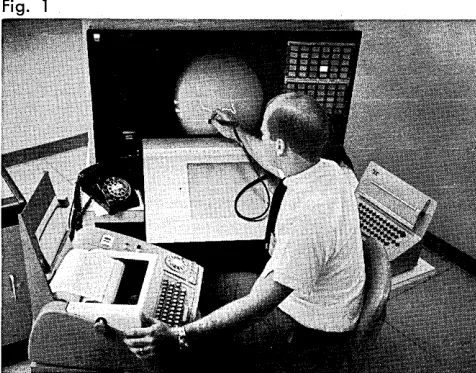
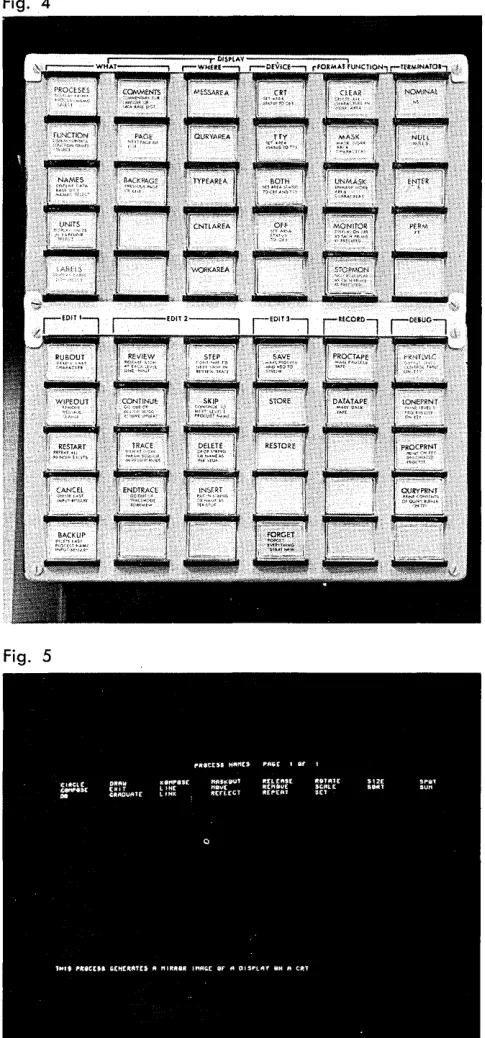
'With the distinction of being the oldest user of computers for data processing, the Census Bureau reports on its past and present activities.59 GENERAL PURPOSE DISPLAY SYSTEM, by
Alfred
H.Vorhaus.
Experimental system uses keyboard, Rand Tablet, and lightpen for input of data and commands, and permits manipulation of CRT image as well as stored data base.66 ARE SMALL, FREE-STANDING COMPUTERS
REALLY
HERE TO STAY? byMartin
B.Solomon, Jr.
A counterargument to the April Data-mation article forecasting a bright future for small mllchines.71 THE UNIVAC 9200
&
9300. Small and medium-scale computers start off a new family.73 COMPUTER CHARACTERISTICS, by
Roger
T.
Baust.
Quarterly tabulation of mainframes is updated and the role of small machines is outlined.75 BANKERS' AUTOMATION CONFERENCE REPORT.
106 WESCON '66. Western Electronic Show & Convention will be held in Los Angeles.
111 CANADIAN COMPUTER CONFERENCE REPORT.
datamation departments
11 Calendar
101
World Report12
Letters to the Editor109
Washington Report17
Look Ahead121
People21
The Editor's Readout125
Books81
News Briefs127
Dafamarf89
New Products130
Index fo Advertisers97
New Literature133
Tlw ForumThe newest
Burroug~s
500 System
Announcing the Burroughs B 6500
A new electronic data processing system
with software that is ready
The B 6500 will have the
kind of multiprocessing
abil-ity, dynamic modularity and
high through-put per dollar
proved in use by the B 5500.
In the B 6500, all these
ad-vantages are greatly enhanced
by new hardware technology.
The result: A system which is
ideally suited to engineering/
scientific jobs or business
applications or a combination
of both. A highly advanced
time-sharing system which
completely obsoletes the rigid
time allocations for on-site vs.
remote-site work. With the
B 6500, numerous jobs-all
completely different-can be
multiprocessed at the same
time~
regardless of origin.
And all, of course, under full
software control.
8
right now
High speed monolithic
integrated
circ~its
Fast memory speed
with thin film
The clock rate of the B 6500 is The memory cycle time of the
5 megacycles-an extremely B 6500 is 600 billionths of a
fast speed made possiple by second-so fast that it cannot
the system's monolithic inte-
be equalled except by giant
grated circuitry.
systems at a giant cost.
Consider our accelerating success with the unique B 5500 - or
better still, see it demonstrated. Now, for requirements that
extend beyond this already powerful computer, the hew B 6500
implements that same proven software and internal organization
by 5 times the processor speed, 7 times the memory speed,
up to 3 times the memory capacity, and twice the I/O capability.
Large memory
capacity
The B 6500 provides up to
106,496 words of thin film
memory. This extensive
ca-pacity is available in
func-tionally independent banks.
We can't show you the
hard-. ware todayhard-. But we
can
demonstrate the internal
organization and proven
soft-ware: A comprehensive
oper-ating system that schedules
and controls many jobs at
once. Simultaneous COBOL,
ALGOL and Fortran
compi-lations. Even a mixture of
batch and random access
processing plus time-sharing.
Your local Burroughs
repre-sentative will be glad to
I
t/O t
t
arrange such a demonstration
"Pu
u pu
or to discuss other Burroughs
Multiplexor
500 Systems. Or write us at
This is a device which pro- . Detroit, Michigan 48232.
vides up to eight high speed
input/output operations
simultaneous with each other
and one or both processors.
Burroughs
CIRCLE 9 ON READER CARD
10
From the original painting by Neil Boyle
SATURN
Saturn S-IVB responds to the instructions of STOL (Saturn Test-Oriented
Lan-guage), conceived, designed, implemented, and documented by a Douglas
Air-craft Compan.y IPlanning Research Corporation multi disciplined team. The
sponsoring agency was NASA's Marshall Space Flight Center. One of the reasons
for STOL's swift evolvement was that the software capability at Planning
Research is supported by independent and superior knowledge of computer
hardware engineering.
Planning Research system synthesis is complete.
Itbegins with analysis and
design - and ends with final checkout of any computer system. Applied, it saves
time or money or both. Write for a complimentary copy of Computer Systems
AnalysiS and Programming.
Address Dr. Alexander Wylly, Vice President for
Computer Sciences.
PLANNING RESEARCH CORPORATION
Including the merged capabilities of Mesa Scientific Corporation
Home office: 1100 Glendon Avenue, Los Angeles, California 90024
CIRCLE 20 ON READER CARD
c:o~ ~
\~
calendar
DATE TITLE
July 17-22 Meeting: Programmed Production
July 25-29 Course:
8800 Operation
July 25- Course: Control Aug. 5 Systems Technology
July 26-28 Course: Programming Problem. $195.
Aug. 1-5 Course: Digital Computation. $200.
Aug. 1-19 Course:
8400 Programming
Aug. 8-12 Course: Urban & Regional
LOCATION
Minneapolis
SPONSORS
Forest Products Research Society
Computing Center Electronic Princeton, N.J. Associates, Inc.
Los Angeles
Jack Tar Hotel San Francisco
Univ. of Calif. Extension
Computer Usage Education, Inc.
Computing Center Electronic Princeton, N.J. Associates, Inc.
Computing Center Princeton, N.J. EAI
Information Systems Los Angeles
Univ. of Calif. Extension
Aug. 9-11 Course: IBM S/360 Software. $195.
Aug. 11-13 Conference on DP
Aug. 18-19 Course:
Symbolic Control
Aug. 22-24 Symposium on
Information Systems
, Aug. 22-26 Course:
Aug. 22-Sept. 2
Aug. 22-Sept. 2
680 Operation. $200.
Course:
Control Theory. $275.
Course:
680 Maintenance
Aug. 23-26 Convention and Exhibition
Aug. 23-25 Course:
Aug. 29-Sept. 2
Aug. 29-Sept. 2
Time-Sharing. $195.
Course: Control Engineering. $185.
Course: Basic APT
Sept. 12-16 Course: Militran Language. $200.
Sept. 12- Course: Operations Dec. 19 Research. $85.
Sheraton Eastland Computer Usage Portland, Maine Education, Inc.
Seattle, Wash.
Chicago, Ill.
Northwest Computing Assn.
IIT Research Institute
Battelle Institute Battelle Institute Columbus, O. Ohio State Univ.
Office of Naval Research
Computing Center Electronic Princeton, N. J. Assoc., Inc.
Columbus, O. Ohio State Univ. Engineering Dept.
Computing Center Electronic Princeton, N.J. Assoc., Inc.
Los Angeles
Jack Tar Hotel San Francisco
Berkeley, Calif.
Chicago, IJ1.
Western Electronic Show and Convention
Computer Usage Education, Inc.
Univ. of California Engineering Extension
IIT Research Institute
Willard Hotel Culton Systems Washington, D.C. Research Croup, Inc.
Los Angeles Univ. of Calif. San Francisco Extension Offices Fullerton, Calif.
San Diego
HOW 3 FIRMS
ARE USING EDP
SYSTEMS TO CUT
MAILING
,COSTS
"Reduced our staff
by nearly
100
with
EDP-addressing
and high-speed
labeling"
Billy Graham Evangelistic Assoc.
lied 'worn out'
-addressed
on tape as
ls to avoid
60-mailingdefCkY"
"36,000
labels per
hour addressed on
electronic printer
0 0 0
applied by
Cheshire machines'"
Eastman Kodak Co.
• l'.l!1Zi'iI am r::::.:l c::::J c:::::J c.:::::r::3 ~ r;;:;r;;;J ~ •
:
Write for free case studies!
:
Each study contains
de-I
tailed information on the
I
I
ED P addressing system
I
I
used and specific savings
I
I
achieved over previous
I
I
method. They may show
I
I
how you can red uce your
I
I
mailing costs!
I
I
CHESHIRE, INc.1
I
408 Washington Blvd.I
• Mundelein, Illinois 60060 •$
letters
sessions & censures
Sir:
The SJCC in Boston was well adminis-tered; however, the technical "sessions at which papers published in the proceedings were read, were a com-plete waste of time. The reason one goes to the sessions is to obtain insight into the areas being discussed or to learn new techniques being applied in some areas-not to hear papers which he has in his hand being read (word for word in some cases) .
It's like the professor who wrote the text for the course and then lectured from his book. We knew he had some-thing worthwhile to say, but couldn't he at least use different words? KENNETH E. SHOSTACK
Everett, Massachusetts
pushbutton phone
Sir:
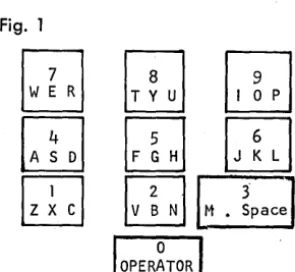
In "A Pushbutton Telephone for Al-phanumeric Input," by Leon David-son (April, p. 27), the author states correctly that an astronomically large number of different 12-button al-phanumeric layouts may be con-ceived . . . Since man is a creature of habit, and since we already have two standard keyboards with which almost everyone is familiar (the stand-ard IO-digit adding machine and the
Fig. 1
GLJ
IT
~
UI
~
[J] [J]
[JJ
rn
m
[~
.
~pace]
0
OPERATOR + Q
-standard typewriter keyboards), why not consider the enclosed layout, (Fig. 1) as a third preliminary choice? RALPH R. DUNHOWER
San Francisco, California
Author replies: The proposal that the telephone dial digits be laid out exactly as in the standard 10-digit office-machine keyboard is well taken.
If only two electrical connections are then re-versed inside the button-dial mechanism, such a phone would be fully compatible with the pres-ent pushbutton phones for dialing and input
12
purposes, and both types could be in simul-~aneous use on the same systems. I understand !hat an ASA committee is looking into this digit
arrangement with the industries involved. As for the proposal about arranging the letters to resemble the typewriter keyboard, however, there are at least two points against this. The major defect is that our existing touch-typing skills would not in fact carryover to this layout, since touch-typing is a muscular-memory skill and different finger patterns would have to be learned for any arrangement on 10 buttons instead of 44 keys. Moreover, the two-hand operation of standard touch-typing would not be either convenient or desirable in the telephone situ-ation, since the 10-key format is spaced out for one-hand usage, not for two.
where credit's due
Sir:
The Editor's Readout (April, p. 21) on the SHARE meeting omitted the ses-sion chairman's name.
Philip Dorn, manager of the SHARE PL/I project, in bringing this group of speakers together, undertook an effort only slightly less than that required for arranging an international summit conference. The smoothness with which the presentations proceeded at-tests to his success, and I believe some mention of his achievement is re-quired.
HERB VAN BRINK
Manager, SHARE FORTRAN Proiect
New York City
litter letter
Sir:
The "Information Implosion" (April FORUM, p. 184) by Robert V. Head beyond a doubt proves the old adage that we now know more . and more about less and less, and now it is faster and faster-and we have the paperwork paperwork as proof.
J.
ROBERT MAXEYIndianapolis, Indiana
dialogue in graphics
Sir:
I am afraid I van Sutherland's informa-tive article on computer graphics . (May, p. 22) might be used as a justification for the on-line KLUDG-TRAN programmers to pass their prob-lems to the user instead of solving them. He discusses the use of dialogue to help communicate the user's con-cept of the drawing structure to the system. This may be a good approach, but it can easily lead to the technique of having the user choose most of the program branches on-line before he can get his work done.
I believe a trial and error method with simple learning would be a better technique than dialogue. The program would look for a different or
more generalized structure when the user is dissatisfied with the results. The method would yield a smoother operation and provide more user satisfaction, especially in the early phases of development when a dia-logue method would be asking the wrong questions and would not be programmed to handle the right answers. The user would provide structure information by indicating when the system has made a wrong or insufficiently generalized decision. The programmers would not have to make value' judgments nor describe their structure algorithms in English suitable for dialogue.
. The on-line procedure to handle the structure problem of identifying the group of drawing units the user has in mind could be as follows: the user points his pen and requests the appropriate action (possibly identifi-cation only). The system indicates the units brieRy via some modulation technique and performs the action. The user then indicates if the re-sponse was correct, insufficiently in-clusive, or incorrect. If he makes progress and arrives at the desired result, the system can tell him if he didn't make use of the general principles in use, such as "point to the left-most item in a row." If a procedure is supplied to allow the user to specify the type of structure for an operation, some effort can be saved. An inexperienced user would not be required to know what they are since the system can tell him when he missed a shortcut.
STEPHEN W. CLOSS
Poughkeepsie, New York
Author replies: A well-designed man-machine system should make communication as fast and easy as possible-. Mr. Closs has correctly pointed out that a computer could respond to an a~ biguous command by making a guess at what was intended. By doing the most likely action, the computer in effect asks, "Is this what you wanted?" The man can say "yes" by going ahead. This is a fine form of dialogue for use in simple situations where the computer can usu-ally make a correct guess. It is not good if it is hard to correct a wrong guess. Systems which use guessing must provide for further dialogue in case the guess is wrong.
A well-designed man-machine system should have the ability to teach, and Mr. Closs has correctly pointed out that the machine should instruct the man so as to make him more fluent in the language they use. Faced with a mand which he cannot understand, the com-puter should tell exactly what. else is needed or show examples of well-formed commands. Too many of today's computer programs merely print out "error" without helping the user to fix it.
English is a poor language for man-machine dialogue. Today's typewriter-based man-. machine systems generally use conventional
languages based on the traditional algebraic
[image:14.624.45.193.487.623.2]programming languages. Drawing systems generally use a language composed of stylus motions and pictorial responses such as the pointing and flashing described by Mr. Closs. A "question" posed by the computer can take the form of blinking boxes. The man may "answer" by pointing to one of them. Dialogue can and should exist without English.
A well-designed man-machine system should be capable of accepting instruction. By this I mean the man should be able to define the meaning of new commands, thus molding the system to his own particular needs. In a very limited sense the computer has "learned" to serve the man better.
Unfortunately, computer learning in a more general sense is very difficult to program. We don't know how to make computer programs which can generalize from experience. It will be very hard to make a program which will recognize "progress" and tell its user which general principle he foiled to use. Programs that respond to ambiguous commands by guessing reflect the value judgments of the people who mode them. It will be very dif-ficult to make a program which will improve its guesses by recognizing the pattern of its errors. Nevertheless, I agree with Mr. Closs that progress toward these goals is worthwhile.
computers & schools Sir:
By accepting a view of the "school of tomorrow" as something resem-bling what schools are like today ("The Computer and the School of Tomorrow," May, p. 41), the best that Rogers and Cook can suggest is a solution to certain organizational problems, missing the point that the existence of computers may encour-age enough of a change in what we mean by "school" to make their proposal irrelevant. They are correct, of course, in saying Jhat "The mere avoidance of routine paperwork . . . is hardly to be regarded as an ad-vance in education." However, be-sides not really taking this point very seriously themselves, the authors show an insensitivity to most of the basic educational issues relating to the use of computers in schools. There are a number of present educational practices, for example, which they seem to accept on face value but which in fact do not stem from any carefully formulated educational theory; they are expedients which may now be re-examined in light of to day's computer technology.
Within the area of student evalua-tion, to pick a case at random, there are at least three developments tied directly to computer capability which may significantly change the way we evaluate school performance but which are substantially ignored by the authors' proposal. The first of these involves the vanishing distinc-tion between instrucdistinc-tion and evalua-tion within the context of programmed instruction and therefore within most
Unretouched characters
~
....~
Q R S T U V W X
Y Z O 1 2 3 4 5
II
YOU want unlimited symbOl style
written at up to
4
psec speed ...
A Tasker 401 Symbol Writer is for you. Its unique, patented stroke-writing technique can produce virtually any kind of symbol or character at speeds as fast as 4 fLsec per character! It can also be remotely located (up to 50 feet) and can drive as many as 50 nonparallel displays.
Dynamic, automatic control allows precision
shapes and sizes to be freely intermixed, as your pro-grams or control circuits command. You can mingle capitals, lower case letters, subscripts, italics, symbols, foreign alphabets ... even specify them tall and narrow or short and wide. And constant writing rate gives uniform line intensity and brightness throughout all symbols.
The basic 401 series . writes up to 64 symbols
(modularly expandable and alterable), including special symbols and gothic alpha-numerics conforming to MIL-c-18012A. Applicable to any CRT display system, models are available for 4/tSeC or slower speeds.
A 2-/tsec model is under development.
For symbol writing far in advance of the conven-tional, get in touch with Tasker.
"Tasker Instruments Corp.! 7838 Orion Ave.! Van Nuys, Calif. 91409! (213) 781-3150
letters
of the present work of C.A.I. A ques-tion not always simple to answer is, "When does an item teach and when does it test?" As the two functions be-come more and more interdependent
it becomes reasonable to re-explore the purposes and forms of evaluation. An extension of this idea leads nat-urally to the notion of monitoring stu-dent performance, not only to deter-mine the next step or branch to take in his instruction, but perhaps more importantly to provide him with a picture of the path he has followed through some instructional set-a sort of meta-evaluation of the student in-teracting with the substance of a dis-cipline.
A third interesting possibility con-cerns that old expedient called the "grade." Simply stated, the point here is that the power of the computer to
deal in a systematic way with natural language makes it feasible to explore replacing the grade with an English statement regarding student progress so that not only can we get away from unidimensionality, which leads to such things as "ranking," but so that we can bring the richness of nat-ural language to bear on what we say about children.
That Rogers and Cook ignore these and other basic issues such as whether or not the classroom or even the school building itself will in the future become vestigial because of computers-and the fact that they, in-stead, treat such trivial questions as whom one might hire as part-time employees in the school's machine center for the afternoon shift-is in-defensible at the very least. I think these difficulties arise mostly because they ask themselves an unimaginative question. Their concern seems to be to use what they know at the moment about teaching children to facilitate the application of computers to edu-cation. What they should be con-cerned with is the question of how the computer can be used to enhance
BIAX® MEMORIES NOW 1D¢ A BIT
RAYTHEON COMPUTER, 2700 South Fairview Street, Santa Ana, California 92704
CIRCLE 13 ON READER CARD
14
our knowledge of the process of edu-cation.
ALLAN B. ELLIS
Graduate School of Education Harvard U niver.sity
Cambridge, Massachusetts
Mr. Rogers replies: Mr. Ellis' comments are well taken. I do not think we "ignored" the issues he raises, however. Our acceptance of some current educational practices - such as the presence of a teacher in the classroom-was to show how CAl could function even with-in such a framework. With regard to student evaluation, the CAl system we described clear-ly could not work until the significant changes in this area referred to by Ellis have occurred. We tried to indicate the crucial role played by the computer monitoring of student perform-ance, not only for the selection of individual lesson material, but, of course, for its effect upon the instructional program design itself. The present use of the computer to enhance our knowledge of the educational process is a necessary condition of its future use in the process itself.
huddled warm bodies
Sir:
Your mention of the CUC scien-tific sub office in Washington (May, p. 19) leaves a somewhat misleading impression . . . Our "move was de-signed to concentrate the talents pres-ently available in our Washington office, and not concentrate all
cue
"scientific programming talent in one place." In fact, each of our 10operat-ing offices is currently engaged in varying degrees, in scientific program-ming.
CARL H. REYNOLDS
President
Computer Usage Development Corp.
M aunt Kisco, New York
"computing text
Sir:
Your World Report (May, P. 87) ref-erences a new IBM (U.K.) publica-tion, "Management Standards for Data Processing," which is actually a 1963 book by D. H. Brandon referenced in the IBM publication. The latter is called "System/360 Data Processing Standards."
F.
J.
ASHBrandon Applied Systems Inc. New York, New York
Datamation welcomes your correspondence concerning articles or items appearing in this magazine. letters should be double spaced ... and the briefer the better. We reserve the right to edit letters sub-mitted to us.
Now Cheaper
by
the Billion.
Introducing the Bryant Series 4000-2A real time mass memory system.
It
can store 3.8 billion bits. The largest single unit disc file capacity in the
world. And by far the lowest costing random aCCE?SS system available
today. All data is on-line, available within an average of 100 milliseconds.
A basic cabinet offers modular growth to capacity. Environmental
control reduces maintenance to a minimum. Dual access option offers
increased throughput. The 2A joins 190 Series 4000 files operating all
over the world. Deliveries begin in November, 1966. But don't wait
till then. Call your nearby Bryant Application Engineer now or write:
850 Ladd Road, Walled Lake, Michigan 48088.
BRYANT
COMPUTER PRODUCTS
July 1966
Jii""XLa
~~
EX·CELL·O CORPORATION
ASI
invites you to compare its new
ADVANCE 6130
... with the other 'compacts::""1700, 1800, 1130, 116.
16
Not really a "paper tiger" any longer, the 6130 is less paper and more
hardware. So if these other machine numbers are familiar to you and
you aren't expecting delivery of anyone of them in the next few
months, hold everything and investigate the 6130. The 6130 has been
designed to offer more capability at the same cost than any of the
other machines listed. In fact, we've got a comparison chart proving
just that.
To receive this comparison plus some additional 6130 data in a plain
brown and orange striped wrapper, contact any of the following:
BOSTON, One Garfield Circle, Burlington, 272-5400; WASHINGTON, D.C., 5012 College Ave., College Park, Maryland, 864-6340; DALLAS, Suite 1329, Frito-Lay Tower, 357-4086; HOUSTON, 1900 Southwest Tower, 225-1811; HUNTSVILLE, ALA., Suite 40, 3322 S. Memorial Parkway, 881-4822; NEW YORK, 475 Fifth Avenue, 679-5954; SUNNYVALE, CALIF., Suite 530,505 West Olive St., 245-3694; LOS ANGELES 15551 Cabrito Rd., Van Nuys, 782-7030; CHICAGO, Suite 208,119 E. Ogden Avenue, Hinsdale, Ill., 323-0450. ASI Computer Division, Electro-Mechanical Research, Inc.
ASI COMPUTER DIVISION , , , ' , ,
8001 Bloomington Freeway, Minneapolis, Minn. 55420
CIRCLE lS ON READER CARD
We also have openings in Sales,
Field Systems Support, Product
Planning and Engineering.
Contact Mr. E. B. Schultz,
Dept. SW -7, RCA Electronic Data
Processing., Bldg. 202-1, Cherry
Hill, Camden, New Jersey 0810l.
(8.
,in E,,,"t Opp""unUy Emptoycr M & F•
•
The Most Trusted
Nam9
in Electronics
®DATRMRTION
look
MERGER
OFF, BUY ON,
PEOPLE OUT, PROFITS IN
ahead
There's plenty of behihd-the-scenes action at CEIR
lately.
The company has ended merger talks with
Western Union, plans to acquire an L.A. 185-man data
reduction firm (Associated Aero Sciences), perhaps as
consolation for a futile bid to acquire Politz, which
went to CSC.
The top man at CEIR's American Research
Bureau has stepped aside, and Jack Moshman has left,
together with Drs. Richard Tauber and Walter Simonson,
implying a decreasing emphasis on fancy programming
services.
The company's top technical man, Moshman
was there
9~years.
He's taking over as head of
management sciences for EBS Management Consultants,
Inc., will operate out of Washington, D.C.
The service bureau franchise operation is moving
slowly: nine have signed so far, giving CEIR 14
centers in all.
But the firm wound up its best
quarter ever this month, with earnings about six times
the previous six months, added another
1~megabucks
by selling its last 20% share in CEIR U.K.
The stock
is selling at eight times earnings.
NO. 2 UNIVAC TRIES HARDER
AND TRIUMPHS
-NASA's recent $30 million award to Univac (passing
over CDC and GE) means that five 1108 II systems will
replace 39 computers and 48 remotes at the Marshall
Space Flight Center in Huntsville and Michoud/Slidell,
La.
The configurations, to be phased in by late 1968,
will include a total of seven 65K-word core memory
banks, 5.5 begacharacters of mass storage, and 60
remote terminals.
Applications span scientific,
commercial and remote batch processing, data
acquisition, and process control -- multiprogrammed
and/or multiprocessed in all combinations.
Univac,
solidly number 2 government computer supplier, has
also won a Weather Bureau order for an 1108 to
supplement CDC 6600 activity.
NEW COPYRIGHT BILL
MOvING ALONG
-A new copyright bill that in its present form would
have definite effects on the computer industry is
slated to be reported out by a House Judiciary
subcommittee this month.
The draft legislation would
prohibit the input of copyrighted material into a
computer without permission of the copyright holder.
Thus, the storing of full texts of such material in an
information retrieval system without permission would
be illegal.
.
The bill, which won't be enacted until next year,
does extend copyright protection to computer programs.
About 50 such programs have been registered so far,
including 30 in the last year.
It also allows federal
contractors to copyright programs they develop for the
government (although royalties can't be collected from
Uncle Sam).
Final legislation probably will include
both of these provisions; neither is controversial.
Whether computer program developers will be able
to use copyrighted material without paying a royalty
is likely to depend on how the cQurts interpret the
"Special" Pulse Generators are made to order at TI. :Modular construction allows assembly of the right building blocks to meet your requirements. Now, "specials" cost you no more, frequently cost less than conven-tional pulse generators.
For example, the 6613 is an eco-nomical general-purpose unit with PRF from 15 cps to 15 mc, priced at only $950. Another model, the 6325, is a ten-channel, word-bit pro-grammable unit operating up to 25 mc. The single unit does the job of ten discrete generators, at half the cost, and fits in a cabinet 23 in. wide, 38 in. high, 18 in. deep.
TI ·Pulse Generators give you out-standing performance: PRF's to 100 mc, fast rise and fall times, variable pulse width and delay, variable rise and fall times, plus and minus out-puts, pulse mixing, programmed and random word generation. You have your choice of portable or rack-mounting cases.
\Vhen you need special pulse gen-erator performance, choose one of the thousands of standard pulse gen-erator combinations from Texas In-struments. For more information, contact your nearest TI Authorized Representative or write to the Indus-trial Products Group in Houston.
INDUSTRIAL PRODUCTS GROUP
TEXAS)NSTRUMENTS
18
I N C O R P O R A T E D
P. o. BOX 66027 HOUSTON, TEXAS 77006 118 RUE du RHONE GENEVA, SWITZERLAND
CIRCLE 16 ON READER CARD
'750 C.RTRMATICN
INSIDE:
The Mind of a Programmer
OUTSIDE:
The Kinetic Personality
of a Marketing Man
ALL AROUND
Exciting Career Opportunitie
with IBM's Data Processing
C
We're talking about IBM's exciting ne field of Computer Applications-andthe type of programmer it takes to re~
"make it" in the field-perhaps you. Just what is "Computer Applications'
It's a mix of your programming expel and your ability to solve business
problems and advise business mana~
And it's a mix that can bring you unusual opportunities for personal 91 advancement and financial rewards. Best of all, IBM will train you in this new career. At full pay, of course. When you're through training, you'll your newly mixed talents to advise our customers on the most effective efficient ways to apply IBM's informc:: processing equipment to their businl problems.
For more information about how yOl discover a new "all around" career, write to: Dr. E. S. Savas, Dept. 065 IBM Corporation, 112 East Post Roa
White Plains, New York.
II
Equal Opportunity Employer I
DATAl
-look ahead
(Con#nu.ed from page 17)
DEFINING AN
EXCEPTIONAL CIRCUMSTANCE
SMALLER MACHINES
FOR BIGGER MARKETS
CASHING IN
ON CREDIT
July 1966
"fair use" doctrine.
If the programmer lifts only a
small portion of a copyrighted work, he probably
won't have to pay, provided the copyright holder's
potential market isn't reduced.
Greater use will, in
most cases, have to be paid for.
But section 109 of the draft bill represents an
important exception.
It allows any amount of
copyrighted material to be used, royalty-free, for
teaching in the classroom.
Suppliers of computerized
instruction programs are obvious beneficiaries of
this provision; however, it isn't likely to remain
in the bill. Publishers' groups have squawked loudly
about what they consider a serious loss of potential
revenue, and, as a subcommittee staffer puts it, "the
message has come through."
One giant question faces the FCC in its ruling that
Comsat customers must operate through common carriers
except in "unique and exceptional circumstances."
What are these circumstances? The FCC has told the
cc's to reduce their satellite channel rates to
"reflect the economies" satellites afford, but the
carriers can go just so far and still protect their
othe~
services, particularly cables.
Given this, will
the government decide ·certain projects -- such as
medical information networks -- are vital enough to
allow them to bypass the cc's, taking advantage of
lower tariffs from Comsat?
Observers also note another possible
"circumstance": the IBM-Comsat (sans carrier) bid to
operate a system for gathering and processing weather
satellite reports for the Dept. of Commerce.
In
addition to saving the carriers from the multitude of
firms moving to work directly with Comsat as
"authorized users," the ruling gives a boost to the
faltering stock activity at AT&T, affected by the FCC
investigation.
It also seems to bar Comsat from its
hotly contested proposal to add service for Puerto
Rico and the Virgin Islands.
Digital Equipment Corp., heady from the success of
their PDP-8 -- 500 orders so far -- will soon announce
a 4K-word (12-bit) system for under $lOK.
Program-compatible with and a redesign of the 8, the PDP-8S
is slower, has fewer options, and uses a serial
arithmetic unit. DEC expects 1000 sales the first
year, marketing initially at an nattractive discount"
to OEM for use in such areas as scientific research
and process control.
Basic system comes with
Teletype; memory is expandable to 32K.
Delivery will
be under three months.
.
In the offing this year are new 36-bit (a la
PDP-6) and l8-bit machines.
Cost· cuts and additions
of new peripherals and software, i.e., Fortran for an
8K system, are planned for the PDP-8 "family."
Meanwhile, a new company in Needick, Mass.,
called Business Information Technology -- or, steady
now, BIT -- is busy working on
a
low-cost, desktop
machine that might compete with the PDP-8S.
Potter
Instruments has a controlling interest in this
six-month-old firm.
The war for control of credit information is getting
hot.
Combatants include banks, credit bureaus, a
common carrier and a manufacturer.
An early battle
is shaping up in New York City, where three firms
--(Continued on page 105)
Doyouwant
real time sharing or just
a lot of conversation?
When most people talk about time sharing they mean the
conversa-tional kind-many.remote users talking with a central processor.
Sigma 7 does real time sharing.
All at the same time it can do real-time on-line control,
conver-sational time sharing, batch processing and high-speed input/output,
under a hierarchy of operating systems.
Sigma 7 can completely change its operating environment (both
hardware and program) in 6 microseconds.
It will never hang up or stall so that it cannot deal with an interrupt.
Yet every user sharing Sigma 7 is protected against loss or
inter-ference no matter how heavy the real-time demands may be.
Sigma 7 is an integrated system of hardware and software,
designed to do all the jobs of business, industry, engineering
and science on a time-shared basis.
No other computer system on the market can do what
Sigma 7 does. The only one that tries to costs six times as
much.
So when you're talking about time sharing, remember:
Real time sharing is more than just talk.
Scientific Data Systems
1649 Seventeenth Street, Santa Monica, California Offices in principal cities throughout the world
July 1966
editor's
read~/
ut
FOR WANT Of. A POLICY . . .
Ed Feigenbaum is upset.
You might say the soft-spoken director of the Stanford University Computation Center is downright unhappy. And with good reason. He's watching valuable computers at his university sit idle, while students are unable to use them.
The problem arises from a hassle over who is supposed to foot the bill for instructional use of computers at institutions supported by federal funds. The Bureau of the Budget stated its position in Circular A-21, a document designed to establish "the basis for a uniform approach to determining the costs applicable to research and development performed by educational institutions under grants from and contracts with the Federal Government."
The key statement (p. 37, section 2 b) says in essence that the charges to the government shall be no greater than those charged for other work; including "usage by the institution for internal purposes." And that, of course, means unsupported faculty research as well as instructional use. The BOB position-which might be stated, "We shouldn't be charged more than other users; education is the university's responsibility, not ours"-seems reasonable.
But Feigenbaum feels that what is on the surface a rational accounting procedure is stifling computer education. "We are wasting an important national resource at an enormous rate," he says. "The lost computer time is unrecover-able. It is gone forever." He points out that the computer is there, whether it's being used or not. The additional costs to nm student problems-some punched cards and some paper-are nominal. In the vacuum created by the absence of a national computer education policy, auditing principles have
become policy. He asks, "Do we really want our universities' computers to sit
idle one third of the time?
Part of the problem seems to ste~ from a government inability to recognize the varying values of different levels of service. 011 the other hand, it's not clear that the universities have done much to establish accounting principles which could lead to such distinctions.
There appear to be three possible solutions. One is a continuation of present practice: let the universities find the dollars to support instructional use of computers. Another is to establish clearly defined levels of service with varying rates, an indirect subsidization which would ease the ulliversities' financial bind. Or the government can develop a national computer education policy and establish a new fund to pay for student use.
Several interested parties-including the Committee 011 Governmental
Rela-tions of the National Association of College and Ulliversity Business Officers, and a panel of the President's Science Advisory COllllllittee-have been studying the problem, \) now being pondered by government procurement officials.
We hope they come up with a satisfactory solutioll. Two vital resources-students and computers-are involved. And we hope that the final solution is based on a policy which recognizes the importam·e of these two resources to our national welfare . . . and not merely on narrow, if necessary, account-ing procedures.