© 2019, IRJET | Impact Factor value: 7.211 | ISO 9001:2008 Certified Journal
| Page 3702
Load Frequency Control of a Wind Integrated Power System using
Conventional PID & Fuzzy PID Controller
Seema Berwal
1, Balvinder Singh
21
M. Tech Scholar EEE Department,
Govt. Women Engineering College, Ajmer
Student IEEE Member and HOD EEE Department, Govt. Women Engineering College, Ajmer
---***---
Abstract - In this area of energy crisis, renewable energy
is the most promising solution to man’s ever-increasing energy needs. But the power production by these sources cannot be controlled unlike in thermal plants. As a result, standalone operation of renewable energy is not reliable. Hence grid connection of these along with conventional plant is preferred due to the improved performance in response to dynamic load. It is observed that the fluctuations in frequency caused due to the load variations are low with increase in penetration of renewable sources. Load frequency control (LFC) including PID and FPID controllers are proposed in order to supress frequency deviation for a power system including wind, thermal and hydro plants owing to load and generating power fluctuations caused by the penetration of renewable sources. A system of four area, with each area consisting a wind, a hydro and two thermal plants is modelled giving step load perturbation (SLP) 1% in all areas using MATLAB /SIMULINK. Furthermore, a HVDC link is also connected parallel to AC line to improve dynamic response. From the simulation results it is observed that, system including renewable sources gives better dynamic response with FPID controller compared to a conventional sources system.
Keywords: Load Frequency Control (LFC), Proportional-Integral-Derivative(PID) Controller, Fuzzy-PID (FPID) Controller, Membership Function, Tie line Power deviation
1. INTRODUCTION
A modern power system is complex and sophisticated with multi area and diverse source of power generation. The control of electric energy with nominal system frequency and tie line power interchange within prescribed limits are very much important. The load frequency control play important role in power pool by maintaining scheduled system frequency and scheduled tie line power in normal operation and during small perturbation.
In a four-area system if any change of power occur in one area, is met by the increase in generating power in other three areas that are interconnected with that system. A multi area system consists of two or more single area systems, connected through a power called tie line. Among all the four areas, each control area can be
represented by an equivalent generator, turbine and governor system. The area control error as the controlled output of LFC is driven to zero in order to make the frequency and the tie line power deviations of control areas to zeros [1]. The environmental drive to promote green energy invites new renewable sources of power generation and their corresponding participation factor are more important for the study of LFC.
There is an evolution of intelligent techniques in recent years. Almost all new algorithms report better results than the previous ones in different engineering fields. Some algorithms give a better solution for some particular problems than others do. The intelligent controllers such as Particle Swarm Optimization based PID controller [1], Differential Evolution Algorithm based PID controller [2], Differential Evolution Particle Swarm Optimization based PID controller [3], Firefly optimized PID [4], Teaching Learning Based Optimization (TLBO) optimized PID [5].
The growth in size and complexity of electric power system due to nonlinear load characteristics and variable operating points has necessitated the use of fuzzy based methods to address satisfactorily the performance under small perturbations. A jaya algorithm optimized fuzzy pi controller [6], Adaptive Neuro Fuzzy Interface System controller containing SMES-TCPS [7], a Firefly algorithm (FA) optimized fuzzy PID controller [8], Fuzzy gain scheduled PI controller [9].
It has been observed in literature survey that most of the researchers adopt thermal-thermal or thermal hydro systems in LFC studies. The bulk power transmission through HVDC lines connected with AC lines possesses many advantages like fast controllability of HVDC lines through convertor control, ability to reduce the transient stability problem of AC lines and other economical and technical operation of power system.
© 2019, IRJET | Impact Factor value: 7.211 | ISO 9001:2008 Certified Journal
| Page 3703
perturbation in all areas.
(ii)To compare the dynamic performance of power system including renewable source with conventional power system.
This paper is organised in five sections; the
1st section is the introduction part which is explained
above. In section 2nd system investigation is done.
Section 3rd describes control methodology for
stabilization of frequency power systems. Section 4th is
devoted to the simulation models and simulation results.
Conclusion is derived in section 5th.
2. SYSTEM INVESTIGATION
In real practice the system of a single generator that feeds a large and complex area has rarely occurred. Several generators connected in parallel may be at a single location or at a different location to meet the load demand of such a large area. Large load areas are divided into several small areas and load demand is met accordingly by interconnected power systems. The aim of the control system now is to regulate the tie line power of the system at same instants as per intra area power contracts.
The two identical area power system interconnected by parallel AC-DC tie lines [10-13] which comprises more practical combination of generating units such as reheat thermal, hydro and gas units in each area. In the present study four equal areas of power system, one area having thermal, hydro and wind power plants participating in LFC is simulated by the proposed FPID controller using MATLAB Simulink. A dc link is also connected in the power system to improve the dynamic response of the system. For, the sake of simplicity only one area is shown in simulink model. Furthermore, the generators in each area may or may not participate in the LFC task and the participation rates are not same for all participating generators. The summation of participation factor of all participating generators is equal to unity in each control area. The nominal parameters of the power system are given in Appendix.
3. CONTROL METHODOLOGY
3.1 PID Controller
PID controller is a closed loop feedback mechanism widely used in industrial control systems. The PID controller involves three separate parameters, namely
and the weighted sum of these three actions is used to adjust the process via the final control element.
The transfer Function of a PID controller has the following form:
G c (s) = K p+ +K d s
Where K p, Ki, and K d are the proportional, integral, and
derivative gains, respectively.
The objective of any controller of load frequency is to produce a controlling signal which keeps the frequency of given system constant and power exchange between control areas at predetermined values. The area control error (ACE) is input to the PID controller.[14] The ACE signal includes the data about frequency error and tie line power error for the related control area. In this
control, ACE1 , ACE2, ACE3 and ACE4 aremade linear
combination of frequency and tie line power error[15]. They may be represented for areas,
ACE1 =ΔP12 +B1 ΔF1
ACE2 =ΔP23 +B2 ΔF2
ACE3 =ΔP34 +B3 ΔF3
ACE4 =ΔP41 +B4 ΔF4
3.2 FPID Controller
© 2019, IRJET | Impact Factor value: 7.211 | ISO 9001:2008 Certified Journal
| Page 3704
𝑑𝑢𝑑𝑡 Input
x
x x
𝑑𝑢 𝑑𝑡 1 𝑠
Output + +
+
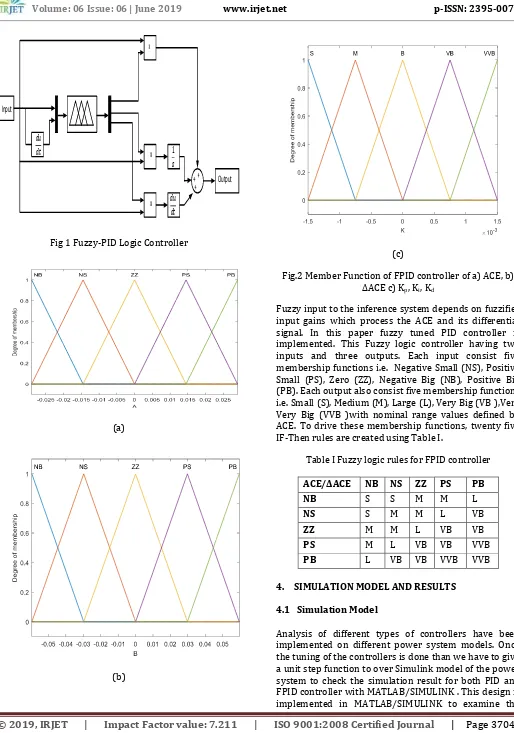
Fig 1 Fuzzy-PID Logic Controller
(a)
(b)
[image:3.595.39.553.62.795.2](c)
Fig.2 Member Function of FPID controller of a) ACE, b)
ΔACE c) Kp, Ki, Kd
[image:3.595.325.540.102.325.2]Fuzzy input to the inference system depends on fuzzifier input gains which process the ACE and its differential signal. In this paper fuzzy tuned PID controller is implemented. This Fuzzy logic controller having two inputs and three outputs. Each input consist five membership functions i.e. Negative Small (NS), Positive Small (PS), Zero (ZZ), Negative Big (NB), Positive Big (PB). Each output also consist five membership functions i.e. Small (S), Medium (M), Large (L), Very Big (VB ),Very Very Big (VVB )with nominal range values defined by ACE. To drive these membership functions, twenty five IF-Then rules are created using Table I.
Table I Fuzzy logic rules for FPID controller
ACE/ΔACE NB NS ZZ PS PB
NB S S M M L
NS S M M L VB
ZZ M M L VB VB
PS M L VB VB VVB
PB L VB VB VVB VVB
4. SIMULATION MODEL AND RESULTS
4.1 Simulation Model
© 2019, IRJET | Impact Factor value: 7.211 | ISO 9001:2008 Certified Journal
| Page 3705
1𝑇𝑠𝑔 .𝑠+1
𝐾𝑟 ∗𝑇𝑟 .𝑠+1 𝑇𝑟 .𝑠+1
1
𝑇𝑡 .𝑠+1 𝑇𝐾𝑝𝑠
𝑝𝑠 .𝑠+1
1 𝑇𝑠𝑔 .𝑠+1
𝐾𝑟 ∗𝑇𝑟 .𝑠+1 𝑇𝑟 .𝑠+1
1 𝑇𝑡 .𝑠+1
𝐾𝑤2 ∗𝑇𝑤1 .𝑠+1 𝑠+1 𝑇𝑟𝑠 .𝑠+1 𝑇𝑟 .𝑠+1
𝐾𝑤3 𝑠+1 1
𝑇𝑤2 .𝑠+1
−𝑇𝑤.𝑠+1 0.5∗𝑇𝑤 .𝑠+1
+
+
+
+ +
+ +
+
-
-
-
Controller
-
-
-
-
1 𝑇𝑔 .𝑠+1
SLP
++
a3
a4 a2
a1 Bi
+ +
1/R1
1/R2
1/R3
1/R4
2𝜋 𝑠
Δ
𝐹
1𝐾𝑑𝑐
𝑇𝑑𝑐 .𝑠+1
𝑇
𝑖𝑗 𝑁𝑗=1 𝑗≠𝑖
+
-
𝑇
𝑖𝑗 𝑁𝑗=1 𝑗≠𝑖
Δ𝑓
𝑗𝜂
𝑖=
Thermal Reheat Unit
Thermal Reheat Unit
Hydro Unit
Wind Unit
HVDC link
[image:4.595.330.541.120.333.2]Power
System
Fig 3 Simulink model of Four area multisource single unit
4.2 Simulation Results
[image:4.595.41.279.165.601.2]The model of the system under study has been developed in MATLAB/Simulink environment. The following simulations were performed on all areas with conventional PID and FPID controller with 1% SLP in all areas.
[image:4.595.329.542.358.572.2]Fig. 4 Frequency deviation of area 1
© 2019, IRJET | Impact Factor value: 7.211 | ISO 9001:2008 Certified Journal
| Page 3706
[image:5.595.50.296.97.457.2]Fig. 6 Frequency Deviation of Area 3
Fig. 7 Frequency Deviation of Area 4
(b) Tie Line Power Deviations
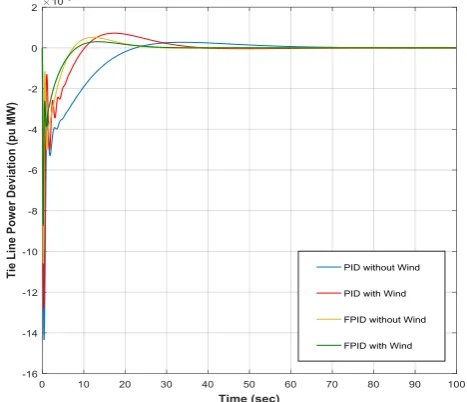
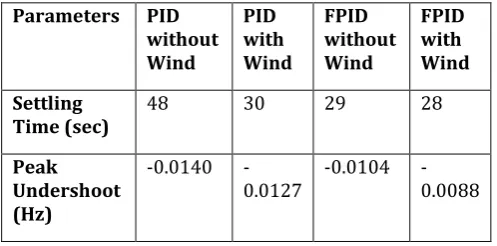
[image:5.595.329.563.106.307.2]Fig. 8 Tie Line Power Deviation of Area 1-2
Fig. 9 Tie Line Power Deviation of Area 2-3
Fig. 10 Tie Line Power Deviation of Area 3-4
[image:5.595.331.541.352.530.2]© 2019, IRJET | Impact Factor value: 7.211 | ISO 9001:2008 Certified Journal
| Page 3707
Wind Wind Wind Wind
Settling
Time (sec) 55 35 30 22
Peak Undershoot (Hz)
-0.0142
[image:6.595.314.563.115.238.2]-0.0122 -0.0104 -0.0085
Table-2 Frequency Response of area 2
Parameters PID without Wind PID with Wind FPID without Wind FPID with Wind Settling
Time (sec) 55 36 28 24
Peak Undershoot (Hz)
-0.0142
[image:6.595.37.281.137.261.2]-0.0121 -0.0104 -0.0085
Table 3- Frequency Response of area 3
Parameters PID without Wind PID with Wind FPID without Wind FPID with Wind Settling
Time (sec) 60 38 30 28
Peak Undershoot (Hz)
-0.0143
-0.0129 -0.0106 -0.0087
Table 4-Frequency Response of area 4
Parameters PID without Wind PID with Wind FPID without Wind FPID with Wind Settling
Time (sec) 50 28 27 26
Peak Undershoot (Hz)
-0.0140
-0.012 6
-0.0106
-0.008 7 Time (sec) Peak Undershoot (Hz)
-0.0140
-0.0127 -0.0104 -0.0088
Table 6- Tie Line Power Deviation of area 2-3
Parameters PID without Wind PID with Wind FPID without Wind FPID with Wind Settling
Time (sec) 54 30 29 27
Peak Undershoot (Hz)
-0.0142
[image:6.595.34.557.255.732.2]-0.0127 -0.0105 -0.0086
Table 7- Tie Line Power Deviation of area 3-4
Parameters PID without Wind PID with Wind FPID without Wind FPID with Wind Settling
Time (sec) 55 28 27 26
Peak Undershoot (Hz)
-0.0143
-0.0122 -0.0107 -0.0087
Table 8- Tie Line Power Deviation of area 4-1
Parameters PID without Wind PID with Wind FPID without Wind FPID with Wind Settling
Time (sec) 54 30 29 28
Peak Undershoot (Hz)
-0.0143
-0.0122 -0.0104 -0.0088
5. CONCLUSION
[image:6.595.315.562.270.392.2] [image:6.595.316.563.426.547.2]© 2019, IRJET | Impact Factor value: 7.211 | ISO 9001:2008 Certified Journal
| Page 3708
frequency control with considerable penetration of renewable has been analysed in the presence of Thermal, Hydro and Wind Systems with PID and FPID controllers. It is observed that frequency deviation is low when wind system is introduced in actual power system, and it is within the tolerable limits for fixed load variations. When FPID controller is compared to PID controller, FPID controller gives steady state error zero in less time than the other one.
APPENDIX
Parameters Description
Value Unit
B1, B2, B3, B4 Tie line
frequency bias in areas 1,2,3 &4
0.425 pu MW/Hz
R1, R2, R3, R4 Regulations
of governors in areas 1, 2,3 &4.
2.4 Hz/pu
MW
Tsg Speed
governor time constant
0.08 sec
Tt Steam
turbine time constant
0.3 sec
Tr Steam
turbine reheat time constant
10.2 sec
Kr Steam
turbine reheat constant
0.3 Thermal
unit
Tw Nominal
starting time of water in penstock
1.1 sec
Trs Hydro
turbine speed governor reset time
5 sec
Trh Hydro
turbine speed governor transient
28.75 sec
droop time constant
Tgh Hydro
turbine speed governor main servo time
constant
0.2 sec
Tw1, Tw2 Time
constant of hydraulic pitch
actuator of wind
turbine
0.6,
0.041 sec
Kw2 Hydraulic
pitch actuator constant
1.25 -
Kw3 Pitch
constant of wind
turbine
1.3 -
Kdc Gain of
HVDC system
1 -
Tdc Time
constant of HVDC system
0.2 sec
Kps Power
system constants in areas 1,2,3 &4
120 Hz/ pu
MW
Tps Power
system time constants in areas 1,2,3 &4
20 sec
ΔF Change in
frequency - Hz
ΔPD Change in
load 0.01 pu
a1,a2,a3,a4 Participation
Factor 0.4,0.4,
© 2019, IRJET | Impact Factor value: 7.211 | ISO 9001:2008 Certified Journal
| Page 3709
2016,pp. 1-4.
[2] S. Kumari , G. Shankar, S. Gupta, K. Kumari “Study of Load Frequency Control by using Differential Evolution Algorithm” 1st IEEE International Conference on Power Electronics. Intelligent Control and Energy Systems (ICPEICES), 2016, pp. 1-5.
[3] Nimai Charan Patel, Manoj Kumar Debnath, Durgesh Prasad Bagarty, Pranati Das “Load Frequency Control of a Non-Linear Power System with Optimal PID Controller with Derivative Filter” IEEE International Conference on Power, Control, Signals and Instrumentation Engineering (ICPCSI), 2017, pp. 1515-1520.
[4] Manmadha Kumar Boddepalli, Prema Kumar Navuri “Design and Analysis of Firefly Algorithm based PID Controller for Automatic Load Frequency Control Problem” IEEE International Conference on Technologies for Smart-City Energy Security and Power (ICSESP), March 28-30, 2018, Bhubaneswar, India, pp. 1-5.
[5] Jyoti Ranjan Nayak, Tridipta Kumar Pati, Binod Kumar Sahu, Sanjeeb Kumar Kar “Fuzzy-PID Controller Optimized TLBO Algorithm on Automatic Generation Control of a two-area Interconnected Power System” International Conference on Circuit, Power and Computing Technologies [ICCPCT], 2015, pp. 1-4.
[6] Priyambada Satyapathy, Manoj Kumar Debnath, Manjit Bahadur Singh, Pradeep Kumar Mohanty “Design of FPI controller for Load Frequency Control of a Nonlinear Power System”, IEEE International Conference on Technologies for Smart City Energy Security and Power (ICSESP), 2018, pp. 1-6.
[7] Abhijith Pappachen, A. Peer Fathima “Load Frequency Control in Deregulated Power System Integrated with SMES-TCPS Combination using ANFIS Controller”, Electrical Power and Energy Systems 82(2016), pp. 519-534
[8]Pratap Chandra Pradhan, Rabindra Kumar Sahu,
Sidhartha Panda “Firefly algorithm Optimized Fuzzy PID Controller for AGC of Multi-Area Multi-Source Power Systems with UPFC and SMES” Engineering Science and Technology, an International Journal 19, 2016, pp.338-354.
[9] Sathans, Akhilesh Swarup “Intelligent Load Frequency Control of Two-Area Multi Unit Power System with SMES” 21st International Conference on Systems Engineering, 2011, pp. 147-152.
Linear Power Systems Interconnected by AC/DC links”, Cogent Engineering (2018), 5:1422228.
[10] Ibraheem, N., Nizamuddin, & Bhatti, T. S. “AGC of Two Area Power System Interconnected by AC/DC links with Diverse Sources in Each Area”, International Journal of Electrical Power & Energy Systems, 2014, Vol. 55, pp. 297–304.
[11] Mohanty, B., Panda, S., & Hota, P. K. “Controller Parameters Tuning of Differential Evolution Algorithm and its Application to Load Frequency Control of Multi-Source Power System”, International Journal of Electrical Power &Energy Systems, 2014, Vol.54, pp.77–85.
[12] Parmar, K. P. S., Majhi, S., & Kothari, D. P. “Improvement of Dynamic Performance of LFC of the Two Area Power System: An Analysis using MATLAB”, International Journal of Computer Applications in
Technology, 2012a,Vol. 40, pp.28–32.
[14] Afshan Ilyas, Shagufta Jahan, Mohammad Ayyub, “Tuning Of Conventional PID And Fuzzy Logic Controller
Using Different Defuzzification Techniques”,
International journal of scientific & technology research, Vol. 2, issue 1, January-2013, pp.138-142
[16] Tripathi S C, Juengst K P, “Sampled Data Automatic Generation Control with Superconducting Magnetic Energy Storage in Power System”, IEEE Trans. Energy Converse 12(2), 1997, pp. 187-92.