A knowledge-level model for concurrent design.
BARKER, Robin.Available from Sheffield Hallam University Research Archive (SHURA) at:
http://shura.shu.ac.uk/19314/
This document is the author deposited version. You are advised to consult the publisher's version if you wish to cite from it.
Published version
BARKER, Robin. (2002). A knowledge-level model for concurrent design. Doctoral, Sheffield Hallam University (United Kingdom)..
Copyright and re-use policy
See http://shura.shu.ac.uk/information.html
Fines are charged at 50p per hour
- 9 AUG 2005
2 9
SEP
2006
J A
t > ( o l i l r t
ProQuest Number: 10694195
All rights reserved
INFORMATION TO ALL USERS
The qu ality of this repro d u ctio n is d e p e n d e n t upon the q u ality of the copy subm itted.
In the unlikely e v e n t that the a u th o r did not send a c o m p le te m anuscript and there are missing pages, these will be note d . Also, if m aterial had to be rem oved,
a n o te will in d ica te the deletion.
uest
ProQuest 10694195
Published by ProQuest LLC(2017). C op yrig ht of the Dissertation is held by the Author.
All rights reserved.
This work is protected against unauthorized copying under Title 17, United States C o d e M icroform Edition © ProQuest LLC.
ProQuest LLC.
789 East Eisenhower Parkway P.O. Box 1346
A knowledge-level model
for concurrent design
Robin Barker BEng (Hons), MSc
A thesis submitted in partial fulfilment o f the requirements of
Sheffield Hallam University for the degree o f Doctor o f
Philosophy
v
Abstract
The concurrent approach to engineering design, concurrent design, implies that expert knowledge regarding a number of different downstream life-cycle perspectives (such as assembly, manufacture, maintainability etc) should all be considered at the design stage of a product’s life-cycle.
Extensive and valuable work has been done in developing computer aids to both the design and concurrent design processes. However, a criticism of such tools is that their development has been driven by computational considerations and that the tools are not based on a generally accepted model of the design process. Different models of design have been developed that fall into a number of paradigms, including cognitive and knowledge-level models. However, while there is no generally accepted cognitive model describing the way designers and design teams think, the concept of the knowledge-level has enabled a more pragmatic approach to be taken to the development of models of problem-solving activity.
Different researchers have developed knowledge-level models for the design process, particularly as part of the CommonKADS methodology (one of the principal knowledge- based system development methodologies currently in use). These design models have significantly extended design thinking in this area. However, the models do not explicitly support the concurrent design process.
I have developed top-down knowledge-level models of the concurrent design process by analysis of published research and discussions with academics. However some researchers have criticised models for design that are not based on analysis of ‘real-life’ design. Hence I wished to validate my top-down models by analysing how concurrent design actually occurs in a real-life industrial setting.
Analysing concurrent design activity is a complex process and there are no definitive methodological guidelines as to the ‘right way’ to do it. Therefore I have developed and utilised a novel method of knowledge elicitation and analysis to develop ‘bottom-up’ models for concurrent design. This is based on a number of different approaches and was done in collaboration with a number of different design teams and organisations who are engaged in the concurrent design of mechanically based products.
My resulting knowledge-level models are an original contribution to knowledge. They suggest that the concurrent design process consists of a number of discrete sub-tasks of propose, critique and negotiate. These models have been instantiated as generic model templates, using the modelling formalisms specified by CommonKADS. These models have been implemented on a software tool, the CommonKADS workbench, in order to provide support for developers of computer-based systems for concurrent design.
Table of contents
A B S T R A C T ...1
T A B L E O F C O N T E N T S ... 2
L IS T O F F IG U R E S ... 10
L IS T O F T A B L E S ...14
D E C L A R A T IO N ... 16
1 IN T R O D U C T IO N TO T H E R E S E A R C H ... 17
1.1 In t r o d u c t io n... 17
1.2 Researchprogram meo rig in s...18
1.3 Modellingd e s ig n...19
1.3.1 Some definitions fo r design...19
1.3.2 Concurrent design...21
1.3.3 Paradigms to describe design... 21
1.3.4 Formal process models f o r design...23
1.3.5 Experimentally recording and analysing expert behaviour...24
1.4 Aimsa n dobjectivesoftheresearchpr o g r a m m e... 25
1.5 Achievementoftheo bje c t iv e s...26
1.5.1 The modelling formalisms u se d...26
1.5.2 Determine the methodology f o r model construction...26
1.5.3 A top-down, knowledge-level model f o r the concurrent design process...27
1.5.4 Case studies...28
1.5.5 Bottom-up modelling with the different case studies...28
1.5.6 Generality o f the models...29
1.5.7 Instantiating my generic models on the CommonKADS workbench...29
1.5.8 Validating the m odel...29
1.6 Chapter Su m m a r y... 30
2 M O D E L S F O R D E S IG N ... 31
2.1 In t r o d u c t io n... 31
2.2 Theimportanceofthedesig npro cess... 32
2.3 Theproductlife-c y c l e... 32
2.4 Concurrentengineering (C E )...34
2.5 Concurrentdesigna n dlife-cyclea s p e c t s... 36
2 .6 Concurrentdesigna n dtheu seof ‘m ulti-disciplinary’ know ledges o u r c e s... 36
2 .7 Modelsofd e s ig n... 39
2 .7.1 Rational prescriptive models f o r design...39
2.7.2 The ‘reflective’practitioner....41
2.8 Cognitivea n d Kno w led ge-levelm odelsofd e s ig n... 42
2.9 Artificialintelligence...44
2.1 0 Artificialintelligencea n dmodelsford e s ig n... 45
2.10.1 Product models f o r design...45
2.10.2 Process models f o r design...45
2.11 M o d e ls o f t h e d e s ig n p r o p o s a l t a s k ...48
2.1 2 Modelsofc r it iq u in g... 49
2.12.1 Definitions o f critiquing...49
2.12.2 Different types o f critic...50
2.12.3 Critiquing models and strategies...51
2.12.4 Other issues in modelling and implementing critiquing...52
2.12.5 Some conclusions regarding critiquing...53
2.13 Modelsforn e g o t ia t io n... 54
2.14 Chapter Su m m a r y...58
3 FORMALISED MODELS FOR DESIGN...61
3.1 In t r o d u c t io n... 61
3.2 Designmodelrepresentationinformala n dsemi-formals y s t e m s... 61
3.3 K AD S a n d CommonK A D S... 63
3.4 T h e CommonK A D S m o d e l s e t ... 64
3.5 The CommojvK A D S expertisem o de l... 64
3.6 Tasksa n d Problem ssolvingm ethodsin CommcwK A D S ...67
3.7 T h e CommonK A D S s u it e o f p r o b le m t y p e s ... 68
3.8 The KA D S expertiset a skmodelsford e s ig n... 71
3.9 T h e CommonK A D S e x p e r t is e t a s k m o d e ls f o r d e s ig n ... 74
3.10 A CRITICAL ANALYSIS OF COMMONKADS DESIGN MODELS AND CONCURRENCY...80
3.11 Constraintswithinm odelsford e s ig n...82
3.12 Know ledgerolesinputtothedesig np r o c e s s... 83
3.13 Formalisedmodelsforcritiquing... 84
3.14 Form alisedm odelsforn e g o t ia t io n... 85
3.15 Chapter Su m m a r y...86
4 COMPUTER SUPPORT FOR DESIGN... 88
4.1 In t r o d u c t io n... 88
4.2 System stod oorsupportd e sig n? ... 88
4.3 Computersupportforconcurrentengineering, designa n dco ncurrentd e s ig n...90
4.4 A DISCUSSION OF SOME EXISTING TOOLS TO SUPPORT DESIGN...91
4.5 A RECAP ON DESIGN MODELS, METHODOLOGIES AND TOOLS... 93
4.6 Theexperimentalb a sisforexistingk now ledge-levelm odelsford e s ig n...94
4 .7 Chapter Su m m a r y...95
5 METHODOLOGY... 97
5.1 In t r o d u c t io n... 97
5.1 Methodsthath avebeenu se dtoan a l y sedesig nb eh a v io u r...98
5.2 A BRIEF REVIEW OF KNOWLEDGE ACQUISITION AND ELICITATION TECHNIQUES...102
5.3 Bottom-uptechniquesforknow ledgeelicitatio n...105
5.3.1 Standard techniques f o r knowledge elicitation...105
5.3.2 Contrived techniques...107
5.3.3 Computer aided techniques...109
5.4 Top-do w napproachestoexpertisem odeld e v e l o pm en t...110
5.4.1 Select and modify approach....I l l 5.4.2 Compositional modelling from library elements...I l l 5.4.3 Refinement approaches...112
5.5 A SUMMARY ON TECHNIQUES AND APPROACHES TO KNOWLEDGE MODELLING... 112
5.6 Characteristicsrequiredofa nelicitationa n dmodellingtechnique...114
5.7 A NOVEL METHOD FOR KNOWLEDGE ELICITATION AND MODELLING... 116
5.8 Validationa n dverificationofm yinitialm o d e l s... 117
5.9 Techniquestou seintherefinem entoftheinitialm o d e l s...119
5.10 Fromdialoguetom o d e l... 120
5.11 Discussio nofthem ethodology... 121
5.12 Chapter Su m m a r y...122
6 TESTING AND USING THE NOVEL APPROACH WITH DIFFERENT CASE STUDIES 124 6.1 In t r o d u c t io n... 124
6.2 Cases t u d y 1 ... 124
6.3 Cases t u d y 2 ... 125
6.4 Casest u d y 3 ...125
6.5 Casestu d y 4 ... 125
6.6 Casest u d y 5 ... 126
6.7 Co m m onalityshow nb ythedifferentcasest u d ie s... 126
6.8 Testingm yapproachtok now ledgeelicitationa n dm o d e l lin g...126
6.9 Finding sfromtheuseofm yapproachwiththecases t u d ie s... 128
6.10 Usinggraphicalm odelstocom m unicatewithd esig ners...129
6.11 Anexam pleofa nexpertrefiningam o d e l... 130
6.12 Problemswithl a n g u a g e...132
6.13 Ad v a n t a g e sofm ya p p r o a c h... 133
6.14 Disadvan ta gesofm ya p p r o a c h...135
6.15 Chapter Su m m a r y...135
7 T H E D E V E L O P M E N T O F M Y IN IT IA L ‘T O P -D O W N ’ M O D E L F O R C O N C U R R E N T D E S IG N ... 137
7.1 In t r o d u c t io n... 137
7.2 H o w DOES THE PROCESS OF CONCURRENT DESIGN OCCUR?... 137
7.3 Concurrentdesig nas ’propose-critique-negotiate' ...140
7.4 Modelsforthecritiquings u b-t a s k...144
7.5 Mytop-do w nt a skm odelforcritiquing... 146
7.6 Neg o tiatio n...149
7.7 Mydevelopedtop-do w nmodelforconcurrentd e s ig n...150
7.8 Chapters u m m a r y... 151
8 D E S IG N M O D E L S - T H E R E A L IT Y ...153
8.1 In t r o d u c t io n... 153
8.2 Cases t u d y 1...154
8.2.1 Company 1 design m odels...154
8.2.2 Company 1 and the ‘generate’ sub-task...155
8.2.3 Company 1 and the ‘d eta il’ design sub-task...156
8.2.4 Case study 1 and propose-critique-negotiate...157
8.3 Casestu d y 2 ...159
8.3.2 The Company 2 overall design m odel...159
8.3.3 Company 2 and the ‘develop’ task...160
8.3.4 Company 2 and the ‘d eta il’ sub-task...161
8.3.5 Case study 2 and ‘Propose-critique-negotiate ’...162
8.4 Dis c u s sio n... 163
8.4.1 Confidentiality...163
8.4.2 Time-scales...164
8.5 Chaptersu m m a r y... 164
9 D E S IG N M O D E L S : T H E R E V IS E D R E A L IT Y ...166
9.1 In t r o d u c t io n... 166
9.2 Casest u d y 3 ...166
9.2.1 Designer 3 overall design model (1 )...167
9.2.2 Designer 3 overall design m odel (2 )...169
9.2.3. Designer 3 and propose-critique-negotiate...170
9.2.4 Critiquing...170
9.2.5 Negotiation and negotiating strategies...173
9.3 Cases t u d y 4 ... 177
9.3.1 Designer 4: Overall design m odel...177
9.3.2 Designer 4: Specification development m odel...179
9.3.3 Designer 4: Concept development m odel...179
9.3.4 Designer 4: D etail design m o d el...181
9.3.5 Designer 5: Overall design m odel...181
9.3.6 Designer 5: Specification development m odel...183
9.3.7 Designer 5: Concept development process...185
9.3.8 Designer 5: Detail design m o d el...186
9.3.9 Case study 5 and propose-critique-negotiate...187
9.3.10 Summary fo r case study 4...188
9.4 Casest u d y 5 ... 189
9.4.1 Designer 6: Overall m odel...189
9.4.2: Designer 6: ‘Cut bits o f f m odel...190
9.4.3 Propose - critique - negotiate...191
9.4.5 Summary f o r case study 5...191
9.5 Chapter Su m m a r y... 191
10 CONSTRUCTING GENERIC MODELS FOR DESIGN AND CONCURRENT DESIGN...193
10.1 In t r o d u c t io n...193
10.2 Theo rganisationalcontextoftheconcurrentdesignp r o c e s s...193
10.3 Then atur eoftheco ncurrentd e sig nt a s k... 195
10.4 Propose-critique-negotiate (frominterviewtranscripts) ...203
10.4.1 Propose methods...206
10.4.2 Critiquing...210
10.4.3 N egotiation...211
10.5 A GENERIC MODEL FOR CONCURRENT DESIGN... 213
10.6 Otherissuesfromthec ases t u d ie s... 215
10.6.1 Component andfunctional decomposition o f the design problem...215
10.6.2 Generic constraints from the case studies...216
10.6.3 Visualisation and terminology...218
10.6.4 M odelling...221
10.7 Dis c u s s io n...221
10.8 Chapter Su m m a r y... 223
11 MODEL TEMPLATES FOR CONCURRENT DESIGN...224
11.1 In t r o d u c t io n... 224
11.2 T h e CommonK A D S m o d e l s e t ... 225
11.2.1 Project management in Common/CLDiS'...226
11.2.2 Links between models in the CommonA^fDiS' model s e t...227
1 1 .3 T h e CommonK A D Sm o d e l s e t a n d m y g e n e r i c m o d e l t e m p l a t e s f o r c o n c u r r e n t d e s i g n .. 2 2 9
11.4 CommonK A D S O R G ANISATION M O D E L ...230
11.4.1 Global constituents o f my generic organisational m o d el...231
11.4.2 Variant constituents...233
11.5 CommcwK A D S TA SK M O D E L ... 244
11.5.1 Entities defined in my generic task model....245
11.5.2 Characteristics o f each task....247
11.6 CommonK AD S A G EN T M O D E L ...252
11.6.1 Generic agents...253
11.6.2 Characteristics o f an agent...254
11.7 CommonKAD S EXPERTISE M O D E L ...25 7 11.7.1 The Conceptual modelling language (CML)...264
11.8 CommonK AD S COM M UNICATION M O D E L ...265
11.8.1 Entities in the generic communication m odel...266
11.8.2 Transactions...268
11.8.3 Transaction plans...269
11.8.4 D iscourses... *...269
11.8.5 Information item s...270
11.8.6 Capabilities....271
11.9 Coa/moaK A D S D ESIG N M O D E L ...272
11.9.1 Architectural and platform design...272
11.9.2 Application design...273
11.10 Chapter Su m m a r y... 276
12 INSTANTIATING MY GENERIC MODEL TEMPLATES... 278
12.1 In t r o d u c t io n... 278
12.2 T w o DIFFERENT IMPLEMENTATION SCENARIOS...27 9 12.2.1 Scenario 1...279
12.2.2 Scenario 2...280
12.3 Instantiating Scenario 1 ... 281
12.3.1 Organisation model f o r scenario 1...281
12.3.2 Task model f o r scenario 1...284
12.3.3 Agent model f o r scenario 1...285
12.3.4 Communication M odel f o r scenario 1...288
12.3.5 Expertise model f o r scenario 1...290
12.4 Instantiating Scenario 2 ...293
12.4.1 Organisation model f o r scenario 2...293
12.4.2 Task M odel fo r scenario 2...296
12.4.3 Agent model f o r scenario 2...297
12.4.4 Communication M odel fo r scenario 2...299
12.4.5 Expertise model f o r scenario 2...300
12.5 CommonK AD S D e s ig n m o d e ls f o r s c e n a r io 1 a n d 2 ... 303
12.5.1 Scenario 1...303
12.5.2 Scenario 2...304
12.6 Dis c u s sio n... 307
12.6.1 Using the generic model tem plates...307
12.6.2 Using the Common KADS workbench...308
12.6.3 Limitations within CommonKADS...309
12.7 Chapter Su m m a r y...311
13 CONCLUSIONS AND FUTURE WORK... 313
13.1 In t r o d u c t io n... 313
13.2 Achievingtheaim sa n do bje c t iv e s... 315
13.2.1 The development o f a knowledge-level model f o r concurrent design...315
13.2.2 A novel knowledge analysis and elicitation method fo r concurrent design...320
13.3 Contributionsofthisre se a r c h...321
13.4 Contem poraryresearcha n drecom m endationsforfurtherw o r k...322
13.4.1 Problem-solving m ethods...323
13.4.2 Generality o f design expertise...325
13.4.3 Analysing design activity...326
13.5 Finalt h o u g h t s... 326
REFERENCES...328
APPENDIX A: KADS AND COMMONKADS GRAPHICAL TASK MODELS TO SUPPORT THE DESIGN PROCESS... 349
A . 1 The K A D S libraryofgenerict a skm o d e l s... 349
A .2 K A D S Hierarchicald e s ig n...350
A .3 K A D S Increm entald e sig n... 351
A .4 CommonK AD S A n a l y s is t a s k m o d e l s ...352
A .5 King sto n’smodelforexploratoryd e sig n... 358
APPENDIX B: SOFTWARE TOOLS TO SUPPORT THE DESIGN PROCESS...359
B .l Intro duc tio n...359
B.2 T o o l s t o su p p o r t C E...359
B.3 Expert Sy s t e m s...360
B .4 Expertsystem sind e s ig n... 360
B.5 Expert Critiquing Sy s t e m s... 361
B .6 Expertcritiquingsystem sind e s ig n... 362
B .7 Otherknow ledge-b a s e dsystem sind e s ig n... 362
B .8 ‘Ag en t’ b a seds y s t e m s... 363
B .9 Co n c l u sio n... 364
A P P E N D IX C: T H E C O M M O N K A D S W O R K B E N C H ... 365
C .l In tro duc tio n... 365
C.2 T h e CommonK A D S w o r k b e n c h ... 365
C.3 T h e CommonK A D Sm o d e l s e t ... 366
C.4 CommonK A D Sa n d p r o j e c t t e a m s ... 366
C.5 Helpfe atures... 367
C.6 Linksbetw eendifferentprojectsa n dm o d e l s...368
C .7 CommonK A D S E x p e r tis e m o d e l s u p p o r t...369
A P P E N D IX D: P U B L IC A T IO N S R E L E V A N T T O T H E R E S E A R C H ...371
Supporting Negotiationin Co ncurrent Desig n Te a m s... 371
Supporting Kno w ledge-b a s e d Processes Using Flexible Intelligent Ag e n t s...372
A KNOWLEDGE-LEVEL MODEL FOR CONCURRENT DESIGN...373
Supporting Concurrent Design Team swith Adjust ab ly Auto no m o us Ag e n t s... 374
To w ardsa Knowledge-level Modelfor Concurrent De s ig n... 375
Critiquinga n dthe Concurrent Design Pro cess...376
Integratingknow ledge-b a s e dsystem sintotheconcurrentdesig nt a s k...377
A LEARNING ENVIRONMENT FOR CONCURRENT ENGINEERING... 378
Re-Shaping Design Teach ing: A Strategyfo r Teachinga n d Lea r n in g...379
Modellingthe Co ncurrent Engineering Environm ent Using Artificial Intelligence Techniques...380
Anexpertteachingsystemforconcurrenteng ineerin g...381
A P P E N D IX E: A C R O N Y M S A N D N O M E N C L A T U R E ... 382
List Of Figures
Figure 1.1: The design process inherent in the ‘Design builder’ computer aided
learning tool...18
Figure 2.1: The serial approach to design and knowledge input...38
Figure 2.2: The concurrent approach to design and knowledge input ...38
Figure 3.1: Dependencies between modelling and design (adapted from Breuker [1994])... 70
Figure 3.2: Dependencies for the complete design cycle, (adapted from Breuker [1994])... 70
Figure 3.3: The CommonKADS suite of problem types (adapted from Breuker [1994])... 71
Figure 3.4: The original KADS task structure for the generic design task (adapted from Tansley and Hayball [1993])...73
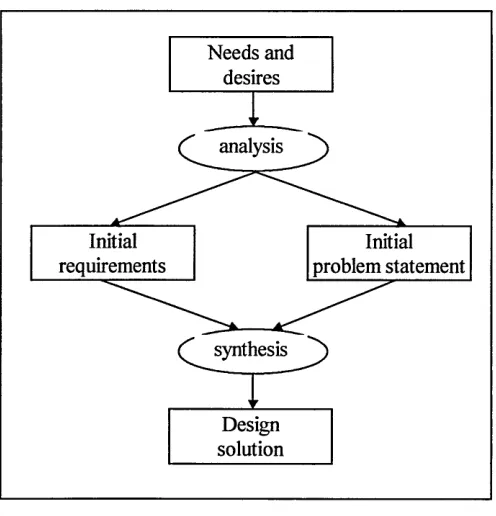
Figure 3.5: The CommonKADS task model for the analysis and synthesis stages of the overall design process... 76
Figure 3.6: The CommonKADS model for original design... 78
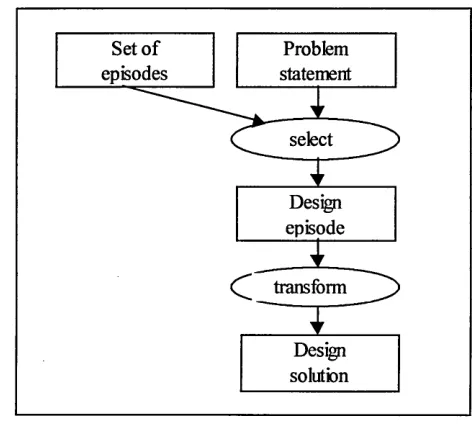
Figure 3.7: The design task being solved by application of a case-based problem solving method...79
Figure 3.8: Dependencies between CommonKADS problem types and the scope for further work (adapted from Breuker [1994])...81
Figure 5.1: From design teams to formal models... 121
Figure 6.1: Designer 3’s initial model for the ‘alter’ process... 131
Figure 6.2: A refined model for the ‘alter’ sub-task... 132
Figure 7.1: Task decomposition for concurrent design... 139
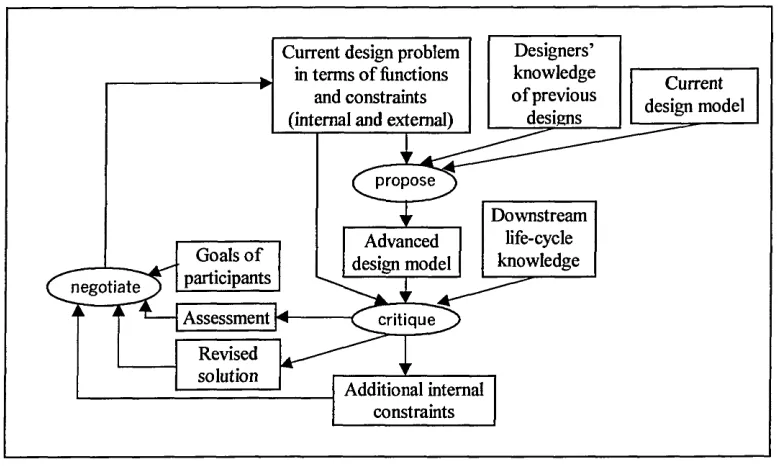
Figure 7.2: My initial expertise task model for propose - critique - negotiate... 140
Figure 7.3: The knowledge roles acting as input and output to my initial model for the ‘propose’ sub-task within concurrent design...143
Figure 7.4: A critiquing model - derived from Fruchter et al [1993]... 144
Figure 7.5 A Critiquing model for the differential mode from Fischer et al [1991b]. ...145
Figure 7.6 A critiquing model for the analytical mode from Fischer et al [1991b]... 146
Figure 7.7: My initial expertise task model for critiquing... 148
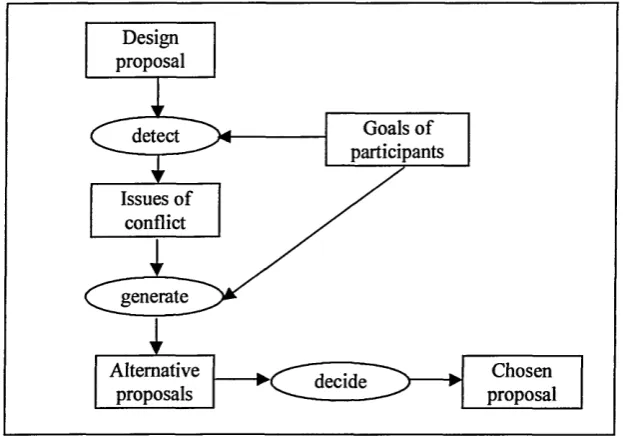
Figure 7.8: My initial model for negotiation based on the generation of alternative proposals as a negotiating strategy...149
Figure 7.9: An initial ’top-down’ model for concurrent design... 151
Figure 8.1: Company 1 overall design model... 155
Figure 8.2: The Company 1 ‘generate’ sub-task... 156
Figure 8.3: The Company 1 detail design model...157
Figure 8.4: Propose-critique from case study 2 ... 158
Figure 8.5: A ‘modify’ process from case study 2... 158
Figure 8.6: The Company 2 overall design model...160
Figure 8.7: Company 2 ‘develop’ sub-task...161
Figure 8.8: Company 2 ‘detail’ sub-task...162
Figure 9.1: The Designer 3 overall design model... 168
Figure 9.2: Designer 3 design model 2 ... 169
Figure 9.3: Designer 3 and design assessment...170
Figure 9.4: Response and modify process from case study 3... 172
Figure 9.5: Designer 3 ‘Thinking through’ a proposal... 172
Figure 9.6: Designer 3 and the justification for a design...173
Figure 9.7: Alternative ‘bright ideas’ in negotiation... 174
Figure 9.8: Designer 3 and important issues considered when changing a design.... 175
Figure 9.9: Designer 3 proposing new ideas... 176
Figure 9.10: The Designer 4 overall design model... 178
Figure 9.11: Designer 4 specification development model...179
Figure 9.12: The Designer 4 ‘modelling’ sub-task is an expansion of the ‘model’ task. 180 Figure 9.13: Designer 4 detail design model... 181
Figure 9.14: The Designer 5 overall design model...182
Figure 9.15: The designer 5 ’specification development’ model... 183
Figure 9.16: The designer 5 ’concept development’ model... 185
Figure 9.17: The Designer 5 'detail design’ model...186
Figure 9.18: Designer 4 looking for functional problems in a design... 187
Figure 9.19: Designer 5 offering a ‘new’ idea... 188
Figure 9.20: The designer 6 overall design model... 189
Figure 9.21: The Designer 6 ’cut bits off model... 190
Figure 10.1: The analysis stage of design...197
Figure 10.2: The synthesis stage of design...201
Figure 10.3: Designers and the design proposal task...208
Figure 10.4: Design proposal based on a previous design case... 209
Figure 10.5: Critiquing as a task model...210
Figure 10.6: Negotiation as a task model (consultation)... 211
Figure 10.7: Negotiation as a task model (appeasement)... 212
Figure 10.8: A generic model for propose-critique-negotiate... 214
Figure 10.9: The constraining effect of time-scale from case study 4... 217
Figure 10.10: Time-scales dictating downstream processes from case study 4...217
Figure 10.11: Interpret and critique from case study 4...219
Figure 10.12: Problems with terminology from case study 4...220
Figure 11.1: Project management and in CommonKADS... 227
Figure 11.2: Links between CommonKADS models... 228
Figure 11.3: Functionally-oriented organisational structures... 241
Figure 11.4: Project-oriented organisational structures... 242
Figure 11.5: The task decomposition for the generic critiquing task... 258
Figure 11.6: The task hierarchy for concurrent design and associated tasks... 259
Figure 11.7: The generic task decompositions for the propose, critique and negotiate tasks...260
Figure 11.8: Conflict avoidance by adding detail...262
Figure 11.9: Conflict avoidance by abandoning a goal...263
Figure 12.1: The organisational structure of organisation 1...283
Figure 12.3: The overall expertise task model employed by the electronics critiquing agent...291
Figure 12.4: The overall expertise task model employed by the manufacture critiquing agent... 302
Figure 12.5: The implemented architecture of the I3D system...304
Figure 12.6: A propose inference from a cost life-cycle perspective... 306
Figure 13.1: The CommonKADS design task problem types and my models...317
(adapted from Breuker [1994])...317
Figure A.1: The Common KADS Generic task Library... 349
Figure A.2: Hierarchical design... ...350
Figure A.3: Incremental design... ...351
Figure A.4: CommonKADS Analysis model 1 ... ...352
Figure A.5: CommonKADS Analysis model 2 ... ...352
Figure A.6: CommonKADS Analysis model 3 ... ...353
Figure A.7: CommonKADS Routine design... ...353
Figure A.8: CommonKADS Innovative design... ...354
Figure A.9: CommonKADS Original design... ...355
Figure A.10: CommonKADS Decomposition based design...356
Figure A.11: CommonKADS Case-based design... ...356
Figure A.12: CommonKADS Transformation based design...357
Figure A.13: CommonKADS Generic model design... ...357
Figure A.14: Kingston’s model for exploratory design...358
Figure C.l: The CommonKADS workbench interface to the CommonKADS model set... ...366
Figure C.2: The CommonKADS workbench and different user roles... 367
Figure C.3: The CommonKADS workbench Help and guidance tool...368
Figure C.4: The Import tool can be used to import model templates from previous projects... 369
Figure C.5: The linking tool can be used to link model entities within different models of the same project...369
Figure C.6: The CommonKADS workbench support for expertise modelling is currently mainly confined to assessment-type tasks... 370
List Of Tables
Table 10.1: Tasks and knowledge roles for the analysis stage... 196
Table 10.2: Tasks and knowledge roles for the conceptual stage... 199
Table 10.3: Tasks and knowledge roles for the detail stage... 200
Table 11.1: The generic problems and opportunities inherent in implementing KBS
support for concurrent design within an organisation... 232
Table 11.2: Generic factors within an organisation that can affect the successful
implementation of KBS solutions...233
Table 11.3: The properties of the stakeholders in the generic organisational model 236
Table 11.4: The Assemly critiquing knowledge knowledge item...237
Table 11.5: Some generic computing resources that may be found in organisations
that practice concurrent design...238
Table 11.6: The function fnc_ Assembly_Critique that critiques designs from an
assembly perspective... 239
Table 11.7: The power-authority relationships that exist between an assembly
critiquing agent and a designer agent... 243
Table 11.8: The entities comprising my generic task model... 247
Table 11.9: The major characteristics for the task tsk_Critique_Assembly... 248
Table 11.10: The task inputs and outputs for the task tsk_Critique_Assemb!y 249
Table 11.11: The performance parameters for the task tsk_Critique_Assembly 250
Table 11.12: The task assignment for the task tsk_Critique_Assembly... 251
Table 11.13: The generic agents defined in my generic agent model for concurrent
design... 254
Table 11.14: The major characteristics of the agent age_Critique_assemb!y 254
Table 11.15: The links to the information items links to the communication model
and links to the task model for the agent age_Critique_assembly... 255
Table 11.16: The entities comprising the CommonKADS communication model. ...265
Table 11.17: Entities of my generic communication model for concurrent design. ..267
Table 11.18: The transaction 'Trans_proposalf... 268
Table 11.19: The *pIan_Proposalf transaction plan... 269
Table 11.20: The fdisc_Propose* discourse entity...270
Table 11.21: The ’inf_Designjproposar information item...270
Table 11.22: The ’cap_Time_to_present’ capability... 271
Table 11.23: The generic high-level design model... 273
Table 11.24: The application architecture of the design model... 274
Table 11.25: The major characteristics, decomposition and detailed design of the ,sub_Propose_case_based' sub-system...275
Table 12.1: Problems, opportunities and the organisational context of the organisation model for scenario 1... 281
Table 12.2: The properties of the different stakeholders in the instantiation of scenario 1... 282
Table 12.3: Additional constituents of the organisation model for scenario 1...284
Table 12.4: The major characteristics for the task tsk_Critique_electronics in scenario 1... 285
Table 12.5: Scenario 1 agent model...286
Table 12.6: Important properties of the eIectronics_critiquing^_agent, modelled as a KBS within the given solution... 287
Table 12.7: The communication model transactions for scenario 1 ... 289
Table 12.8: The organisational context of the organisation model for scenario 2... 294
Table 12.9: The properties of the Designer stakeholder in the organisational model for scenario 2... 294
Table 12.10: Additional constituents of the organisation model for scenario 2... 296
Table 12.11: The major characteristics for the task tsk_manufacture_critique... 297
Table 12.12: Scenario 2 agent model... 298
Table 12.13: Important properties of the manufacture critiquing agent...299
Table 12.14: The communication model transactions for scenario 2...300
Declaration
I declare that while registered as a candidate for the University’s research Degree, I
have not been a registered candidate or enrolled student for another award of the
University or other Academic or Professional organisation. I further declare that no
material contained in this thesis has been used in any other submission for an academic
award.
1 Introduction to the research
1.1 Introduction
Design is a multi-faceted activity spanning many domains, including the different
engineering disciplines, software and architectural design. Computer-based tools have been
used successfully to support the design process for a number of years. In some cases, tools
such as CAD systems have become indispensable aids to the designer.
The ambitious aim o f many in the artificial intelligence and design communities is to
develop computer-based support for designers that either supplants the designer in some
way or aids the designer in the process of design itself. Given the expertise and design
knowledge currently utilised by human designers, this is clearly a very ambitious and
potentially difficult undertaking.
Concurrent engineering is an approach that is widely used in industry to reduce product
lead times, improve product quality and reduce costs. The design process associated with a
concurrent engineering approach is often termed ‘concurrent design’ (Finger et al [1992],
Hernandez et al [1991]). A key aspect of concurrent design is that knowledge of
downstream life-cycle perspectives is brought to bear on the design process.
This thesis is concerned with developing our understanding of the concurrent design
process based upon an analysis of concurrent design behaviour. In the remainder of this
introductory chapter I outline the background to the research and identify the objectives in
the work undertaken and highlight the original contributions that I have made.
I start by giving a general background to the research, my interest in computer support for
concurrent design and the modelling of the concurrent design process.
1.2 Research programme origins
The background to this research stems from work done on a separate project to develop a
computer aided learning (CAL) tool to familiarise engineering students with the concepts
of concurrent engineering and in particular, the design process implied by a concurrent
engineering approach, that is, concurrent design. The CAL tool, "Design Builder, features a
prescribed, staged model for the design process. This is outlined in Figure 1.1.
Requirements Concept Detail
definition
w
developmentW
designFigure 1.1: The design process inherent in the ‘Design builder’ computer aided
learning tool.
This utilises a three-stage design process of requirements definition, followed by the
development of concepts and the subsequent detail design of a selected concept.
* Details o f the CAL tool, named ‘Design Builder’, and it’s development are outlined in more detail in
Parkinson and Short [1994], Barker et al [1995], Barker et al [1996a] and Barker et al [1996b], The
development of the tool was funded as part of the UK governments’ TLTP (Teaching and Learning
Technology Programme) initiative. The rationale behind this project was to encourage the development and
take up by UK Universities of CAL technologies in order to improve the student learning experience and
reduce the reliance on traditional lecture and tutorial based teaching. The TLTP project has been partially
successful in this aim.
The ‘Design Builder’ software places the student or group o f students in the role of a designer working for a
company producing mechanically based products, which must be manufactured and assembled in some way.
The software leads the student through a structured design process, from the development o f a suitable
specification through to the detailed design of the product. The design process incorporated in the software
was influenced by established engineering design texts such as those by Pugh [1991], Pahl and Beitz [1984]
and Hubka [1982]. These texts advocate an essentially prescriptive approach to the design process whereby a
designer or design team produce a design, via a number of prescribed steps or tasks. ‘Design Builder’ is now
However during the development of the software and the resulting discussions with design
teachers and designers working in industry, it became clear that there is no consensus
about a widely established, prescriptive model of design that designers use. This
realisation, coupled with an interest in general knowledge-based computer support for the
design process (and in particular the concurrent design process implied by a concurrent
engineering approach) led me to an exploration as to how concurrent design occurs and the
methods and techniques used by designers and design teams operating in a concurrent
manner.
The aim of the exploration was to analyse and model the process of concurrent design,
both when practiced by single designers and by design teams. The research is situated
within the context of engineering design. As I have already noted, design as a process
spans a wider range of domains. As a result, while I focus on the domain of engineering
when discussing and analysing existing literature, I also reference existing literature from a
wider selection of domains where relevant.
1.3 Modelling design
Before considering models for design, it is interesting to document some perceptions about
what design is and outline some of the definitions that currently exist to describe the design
process.
1.3.1 Some definitions for design
• Chem [1991] suggests "Design is a process in which the designer builds artefacts to
satisfy given specifications".
• Ertas and Jones [1993] state "Engineering design is the process o f devising a system,
component or process to meet desired needs".
• Chandrasekaran [1990] suggests "the solution to the design problem consists o f a
complete specification o f a set o f components and their relations that together describe
an artefact that delivers the functions and satisfies the constraints".
• Brown and Birmingham [1997] "we loosely interpret design to be an information
processing activity that creates a description o f an engineered artefact (for example a
building or a software module) ".
• ‘The most essential design activity, therefore, is the production o f the final description
o f the artefact ‘ - Cross (1989).
• Top and Akkermans [1994] suggest "Design means conceiving a set o f structural
properties such that the required behavioural properties are realised".
• Kruger and Wielinga [1993] suggest a design problem is specified in terms of
functional requirements, non-functional requirements and constraints. "A solution is a
description o f a set o f components and their interrelations that satisfy the requirements
and constraints".
It must be noted that these definitions are drawn mainly from the fields of engineering and
artificial intelligence (Al.). As Lawson [1990] states “In different contexts the word design
can represent such varied situations ...a n engineer may be said to design a new gearbox
fo r a car while a fashion designer may be said to design a new dress”. However, as my
research is based in the fields of engineering and Al, these definitions have acted to form
my views and the research is based on design in this context
It must also be noted that the output from the design process is not the finished artefact. It
is a description in some terms of the final artefact or component. For example in the
engineering field this could consist of a set of engineering drawings with additional
material, such as a specification of a set of components and their assembly plan. Different
domains will have their own terminologies or ontologies to describe a design.
Design can also be seen as an iterative two-stage process of requirements definition
followed by solution generation. Bemaras and van de Welde [1994] characterise these two
stages as analysis and synthesis. The synthesis stage, where design solutions are generated,
forms the basis of this research.
1.3.2 Concurrent design
The given definitions of design focus on the generation of a description of an artefact (or a
sub-component comprising a complete artefact) as being at the core of the design process.
As we will see in the next chapter, concurrent design can be seen as a particular
specialisation or form of the design process and a number of different definitions for the
process of concurrent design are evident in the literature. The term concurrent engineering
or concurrent design started to come to prominence in the available literature from the
early 1990’s onwards. However, it can be convincingly argued that pracrtitioners o f design
have been utilising this form o f design prior to this time, see Jo et al [1991].
My views as to what constitutes concurrent design (and what differentiate it from more
‘conventional’ design) were greatly influenced by a number of texts, including Pugh
[1984], Desa and Schmitz [1991], Evans [1991]. In addition, discussions with academics
and engineers working in industry helped to crystallise these views. Essentially, I take
concurrent design to be a form of design where the consideration of downstream
perspectives (such as manufacture, assembly, maintenance and reliability) are considered,
and thus have a considerable influence, at the design stage of a products’ life-cycle. Where
I feel concurrent design differs from more traditional design is in the process model that is
utilised to reach the description of some artefact.
In order to help form my views on how the process of concurrent design can occur, it was
necessary to consider a number of different models for the design process and attempt to
reconcile these with my views on how concurrent design might occur.
1.3.3 Paradigms to describe design
Cognitive models for design attempt to model the actual cognitive processes utilised by
human designers when they work. However a number of researchers have outlined some of
the fundamental difficulties in trying to analyse cognitive processes in humans. While
extensive research is underway (see Lloyd and Scott [1994], Kolodner [1996] and Visser
[1996]), Smithers [1996] believes there is currently no generally accepted cognitive model
for the design process.
A number of procedural models for the engineering design process have been advocated by
different researchers. These include models from Hubka [1982], Pahl and Beitz [1984] and
Pugh[1991] and are expanded on in the next chapter. Typically, these models prescribe a
series of stages via which the design process proceeds, from the specification of design
requirements through to the detail design of the finished artefact. As such, they present a
high-level, prescriptive model for the design process. Such prescriptive models, while
being generally accepted methods in the wider engineering community, have their critics in
the more general field of design. Cross [1989] outlines why these models can be too
problem oriented, in that they focus on the requirements of the given problem definition at
the expense of the solution.
A paradigmatic difference observed in the researched models for design is that between
these so-called prescriptive models and those based on a ‘reflection-in-action’ model,
usually attributed to Schon [1991]. Schon argues that at a lower level of detail, the design
process (that is, the actions of personnel involved in the design process) proceed via a
process of reflection-in-action. Joseph [1996] presents a comprehensive critique of the
contrasting ‘prescriptive’ and reflection-in-action’ views of the design process.
The field of artificial intelligence also presents a number of models for how both the
design and concurrent design process can be modelled. In particular, the work of
Chandrasekaran [1990] has been very influential in this area. Chandrasekaran argues that
the design process proceeds via a number of lower level processes, or tasks, of propose,
critique and modify. Hence, while previously we have considered design as being the
process whereby design solutions are proposed or generated, Chandrasekaran makes
explicit two further processes or tasks, critique and modify, which are of importance. From
a concurrent design perspective, the process of critiquing was seen as being where the
views of different downstream life-cycle perspectives could be brought to bear on the
overall design process.
1.3.4 Formal process models for design
A number of the prescriptive models for design have been semi-formalised using different
modelling methodologies. In Europe, the development of knowledge-level models of
expertise has been formalised in a knowledge-based system development methodology
called CommonKADS (Breuker and Van de Welde [1994], Schreiber et al [1994a]).
Modelling at the knowledge-level can be seen as a more pragmatic approach to modelling
expertise for subsequent implementation in a computer-based system. The idea of a
‘knowledge-level’ is believed to have first been put forward by Newell [1982]. Smithers
[1996] contrasts Newell’s view of the knowledge-level with that subsequently used in
knowledge engineering methods, such as CommonKADS. Smithers goes on to state that
knowledge-level models ‘make no cognitive claims, that is, they do not attempt to say what
the human problem-solving behaviour must be’. I will discuss the concept of the
knowledge-level in more detail in Chapter 3. See also Newell [1982], Steels [1990]). The
way in which modelling at the knowledge-level is incorporated in the CommonKADS
methodology is described by Van de Welde [1993]. I was greatly influenced by work that
has been done as part of the CommonKADS methodology.
CommonKADS is designed to assist developers of knowledge-based systems in the
specification of knowledge-based systems. In order to achieve this aim, CommonKADS
incorporates a library of different problem-solving methods, which can be applied to
different tasks. The intention is that these models act as templates in a support-library for
developers of knowledge-based systems in a variety of different domains and for a number
of different problem types. Design is one of the problem types which is documented and
supported in the library. These models have been derived from work by earlier researchers,
including Chandrasekaran [1990], and have been clearly influenced by the prescriptive
design methods I have discussed.
However, analysis of the existing models in the CommonKADS library suggest that while
they provide a considerable level of support for what I term ‘traditional’ design, they do
not specifically provide support for the process of concurrent design. Smithers [1990]
argues, convincingly in my view, that knowledge-based systems to support processes (such
as concurrent design) should be based on accepted, knowledge-level models of the process.
It also became apparent that a considerable number of computer-based tools, in the form of
research-based systems and more commercially driven products have been developed to
support the concurrent design processes. However few, if any, are explicitly based on a
commonly accepted model for the concurrent design process. In fact, as will be shown in
Chapter 3, the development of such tools can be seen as being driven more by
technological issues than more fundamental methodological considerations.
Hence I began to see that a formally described, knowledge-level model for the process of
concurrent design would be a major asset to developers of computer (particularly
knowledge-based) systems to support the process of concurrent design. However, a
criticism of existing models developed to support the design (and other processes) is that
they have resulted from researchers thinking and reading about the processes, as indeed my
colleagues and I had been, rather than experimentally observing and analysing
pracrtitioners in the given domain.
1.3.5 Experimentally recording and analysing expert behaviour
One of the traditional bottlenecks in the development of knowledge-based systems has
been how to actually elicit and acquire knowledge from human expert sources. The field of
knowledge elicitation is concerned with the analysis and acquisition of knowledge for
subsequent incorporation in computer-based systems and is a huge field in its own right.
Wielinga et al [1990] discuss some important issues in this field. Because of it’s mutli-
disciplined nature, concurrent design presents a number of challenging issues to the
knowledge engineer wishing to analyse expertise in this area.
An analysis of the literature revealed a large number of different techniques and methods
that are available to the knowledge engineer to attempt to model this behaviour. However,
there are, as yet, no definitively agreed guidelines as to how this is best done and what
techniques are most suited to different tasks (CommonKADS also expands on the methods
available in the literature and prescribes a number of different methods for deriving models
of human expertise).
Two distinct approaches to knowledge-level model development are top-down and bottom-
up modelling. Via top-down modelling, a model of expertise is first hypothesised and then
compared with gathered data to refine and verify the hypothesised model. Bottom-up
modelling involves deriving models from the gathered data without any preconceived ideas
of the form of the eventual model. As will be shown, both approaches have their own
strengths and weaknesses.
Based on this introductory discussion, the overall aims and objectives of the research can
now be outlined.
1.4 Aims and objectives of the research programme
The overall aim o f this research is:
‘The development of a knowledge-level model for concurrent design’
This model will aid developers of knowledge-based systems intended to support the
concurrent design process. In order to achieve this overall objective, a series of
intermediate objectives is implied:
• To develop a top-down, theoretical model for concurrent design based on the available
literature.
• Develop a bottom-up model for concurrent design based on an evaluation of a number
of different case studies, involving organisations and individuals involved in the
concurrent design process.
• Relate and validate the two models.
This series of objectives implied other objectives that must also be fulfilled:
• Determine the formalisms to be used for the modelling.
• Determine the method by which the bottom-up model is to be constructed.
• Identify case studies and contexts.
1.5 Achievement of the objectives
The attainment of the aims and series of objectives outlined in the previous section is now
discussed.
1.5.1 The modelling formalisms used
In this chapter I have discussed a number of different paradigms for modelling processes or
tasks, in particular the design process. In order to model an process in some way implies
that some formalism is available or must be developed to actually structure the form of
developed models. CommonKADS provides a number of modelling formalisms for this
purpose. Essentially these comprise graphical structures which are used to model
knowledge and knowledge processes. Because CommonKADS is the principal knowledge-
based system development methodology currently in use, it was a logical choice to make
use of the formalisms provided by the methodology. Chapter 3 discusses the existing
CommonKADS models for design and also outlines the modelling formalisms used by the
methodology.
1.5.2 Determine the methodology for model construction
As I have discussed, a number of techniques and approaches have been used to analyse and
model the design process. However, there is no concensus as to the ‘correct’ approach to
use. The conclusion I came to, having researched and analysed these different techniques
and methods, was that a novel method for observing and analysing expert behaviour in the
context of concurrent design was required. Chapter 5 outlines the thinking behind the
development of this novel method, which is partly based on a number of the techniques
prescribed by CommonKADS.
1.5.3 A top-down, knowledge-level model for the concurrent design process
I have already outlined how research in a number of different areas had acted to form and
refine my views on how the process of concurrent design occurs. Based on the outlined
methodology, the next step was to use these findings and the results of my informal
discussions with academics and practicing engineers as input to the development of a top-
down model of how concurrent design occurs. The term top-down is used to describe
model development as it happens from deriving a general overview of the problem area. A
more bottom-up form of model development would proceed by using empirical,
experimentally derived data to drive model development. These issues are expanded on in
more detail in Chapters 5 to 7.
This initial knowledge-level model for concurrent design uses the graphical notation
advocated by the CommonKADS methodology. The work of Chandrasekaran and his view
of design as a process of propose-critique-modify was particularly influential in the
development of this initial model. The process of propose-critique tallied with my view of
how concurrent design could occur. However, I did not believe the modify process frilly
captured the essence of how contrasting critiques of a design would influence the process.
When different downstream perspectives critique a given design solution, these critiques
will often conflict. Hence there is clearly some intermediate process where these possibly
different critiques are reconciled. I began to see how important this process, which I term
negotiation, could be to the overall concurrent design process. Hence my initial model for
concurrent design consisted of a series o f sub-tasks of propose-critique-negotiate. Based on
the available literature, various plausible models for how the propose and critique tasks
could be modelled were considered. However, no detailed model for the negotiation
Hence by this stage, after extensive research of the literature and discussions with
academics and practicing engineers, a knowledge-level model for the concurrent design
process had been developed in a top-down manner. This was extensively modified and
refined before arriving at the final model. The details of this exploratory process are
outlined in Chapter 7. Having developed this model in relative isolation, I decided to
publish the findings of the research to a wider audience. This resulted in a number of
papers describing this initial model, see Barker et al [1996a] and Barker et al [1996b]. This
culminated in a more comprehensive paper describing the model development, Barker and
Meehan [1999].
1.5.4 Case studies
A bottom-up modelling approach depends on analysing experts ‘in the field’. I began to
look for a number of case studies which could be used to derive experimental data based
on the methodology I had developed. Using contacts in the field o f engineering, a number
of different designers and companies agreed to me analysing their design methods in a
work place setting. Details of the case studies are outlined in Chapter 6.
1.5.5 Bottom-up modelling with the different case studies
Having developed a top-down model for concurrent design, I then used the developed
model as a basis for discussing and experimentally observing designers and personnel
involved in the concurrent design task in an industrial setting. The resulting transcripts
from interviewing and observing these personnel were then used to drive the development
of more bottom-up models of the tasks associated with concurrent design. These bottom-up
models expanded on the original top-down model as well as giving more detail as to how
certain tasks were undertaken.
The results from this lengthy period of analysis and bottom-up modelling were a series of
task models, based on CommonKJiDS formalisms, showing how the process o f concurrent
design occurred in the different case studies. Chapters 8 and 9 outline this process in more
detail and also outline some of the problems inherent in attempting to analyse expert
1.5.6 Generality of the models
The expertise task models that resulted from the case studies exhibited a large number of
features in common. However, certain characteristics were specific to a particular case
study. What I wished to do was to derive more general, or generic models from the bottom-
up models of the case studies and also account for the differences between models. Chapter
10 outlines how generic models of expert problem-solving behaviour (and also the
organisational context in which the problem-solving behaviour took place) were derived.
1.5.7 Instantiating my generic models on the CommonKADS workbench
The CommonKADS workbench is a software tool, which supports the development of the
different models comprising the CommonKADS model set (see Kingston et al [1995]). To
this end, the workbench provides considerable support for the development of the different
models comprising the full CommonKADS model set. Up to this point, the main focus of
the research had been on the expertise modelling elements of the CommonKADS model
set. This chapter goes on to investigate issues such as modelling the organisational context
in which the models could be implemented.
This tool was used to instantiate the model templates supplied as part of CommonKADS
with details of the generic models derived from the case studies. Using the workbench in
this way ensured the models comply with the formalisms of the methodology and also
provide a series of templates, in a useable format. The intention is that these are available
to inform developers of systems to support concurrent design.
The instantiation of the generic models using the CommonKADS templates is described in
Chapter 11.
1.5.8 Validating the model
In order to validate and refine these generic model templates and also to illustrate how the
models could be used, I have instantiated the generic models with details o f two
of my case studies while the other scenario involved re-engineering an existing expert
system that has been extensively described in the literature. The findings from these
instantiations helped to refine and extend the model templates. This is described further in
Chapter 12.
1.6 Chapter Summaiy
In this chapter, I have outlined both the background to the research and the context in
which the research is set and introduced a discussion of models of design. The concepts of
cognitive and knowledge-level modelling are outlined as possible means of modelling
concurrent design activity. CommonKADS, which uses a knowledge-level modelling
approach, has been introduced as providing suitable modelling formalisms for the
development of models of human problem-solving expertise.
The following chapters will now give a detailed account of the development of a
knowledge-level model for the concurrent design process and how a novel knowledge
elicitation method has been used to elicit the knowledge, which has driven the model
2 Models for design
2.1 Introduction
In this chapter I begin by discussing the main characteristics o f concurrent design and in
particular, what differentiates this type of design from what can be seen as more
‘traditional’ design. I also discuss how concurrent design has been implemented in
different organisations.
Design is a wide ranging activity applied in many different domains, both in engineering
(mechanical, electrical, civil etc.) and other areas including software, architectural and
product design. However at an abstract level, design in these different domains can be seen
as having many characteristics in common. Hence design can be seen as being generic in
nature and largely independent of the domain in which it is practiced.
The process of design can be broken down into a number of more discrete processes or
sub-tasks. In particular, design can be seen as two distinct process of requirements
formulation and solution generation. These are sometimes termed the analysis and
synthesis stages of design. In this research I focus mainly on the synthesis stage of the
design process.
A number of paradigms exist for describing the design process. These include the so-called
prescriptive models and the rational pracrtitioner approach. In addition, cognitive-level and
knowledge-level modelling are presented as two approaches to modelling design
processes. This chapter goes on to present existing models for design (focussing on the
design synthesis task) and the various sub-tasks associated with this process. These have
been derived from research in a number of diverse domains although the main focus is on
![Figure 3.4: The original KADS task structure for the generic design task (adapted from Tansley and Hayball [1993]).](https://thumb-us.123doks.com/thumbv2/123dok_us/774642.583488/78.614.172.441.78.418/figure-original-structure-generic-design-adapted-tansley-hayball.webp)

![Figure 7.5 A Critiquing model for the differential mode from Fischer et al [1991b].](https://thumb-us.123doks.com/thumbv2/123dok_us/774642.583488/150.615.182.434.183.399/figure-critiquing-model-differential-mode-fischer-et-al.webp)
![Figure 7.6 A critiquing model for the analytical mode from Fischer et al [1991b].](https://thumb-us.123doks.com/thumbv2/123dok_us/774642.583488/151.617.214.404.60.224/figure-critiquing-model-analytical-mode-fischer-et-al.webp)