Activating Conflicts? Types of Intragroup Conflict and Their Effect on
Performance
Julian Elias Noormalal
University of Twente
Abstract
Beginning in 2017, a conflict with global scope kept the world in suspense: The so-called North-Korea Crisis. North-Korea’s demonstration of nuclear weapon capacity lead to increased tensions between the US and North-Korea. However, instead of resulting in constructively dealing with conflict issues, the conflict kept growing, spreading fear and hate. This North Korea crisis is an example of a conflict hindering effective procedure and causing negative
externalities, but is this the case for every conflict?
Theoretical Framework
Types of conflict.
In the history of conflict theory, several distinctions of conflict type exist (e.g. Aubert, 1963; Rahim, 1985; Smith & Gehl, 1974). Those entail for example differentiations between individual and group levels of conflicts (Rahim, 1985), approach or avoidance behavior shown by conflict participants (Smith & Gehl, 1974), or competition and dissensus as a characterization of conflict (Aubert, 1963). Whereas the aforementioned classifications emerged in different kinds of fields, intragroup conflict within an organizational setting is commonly classified by the conflict issue. This leads to a differentiation between task conflict and relationship conflict (De Dreu &
Weingart, 2003; de Wit et al., 2011; Guetzkow & Gyr, 1954; Jehn, 1995, 1997). While task conflict is defined as conflict about the content of a task, hence relating to a rather cognitive dissensus, relationship conflict is defined as conflict about non-work related, personal issues, thus relating to a more affective component. Although some literature also includes process conflicts, which are conflicts about procedural structure, this study focuses on the two main types of intragroup conflict: Task conflict and relationship conflict. However, although aforementioned are two distinct types of conflict, they might also influence each other (Edmondson & McLain Smith, 2006).
Conflict and behavioral activation.
Besides effects on group performance (e.g. Amason & Mooney, 1999; Jehn, 1995, 1997; Van de Vliert & de Dreu, 1994), further associated behavior of conflict type has been investigated in literature. Task conflict was shown to increase various active behavior such as advice seeking or knowledge sharing, as opposed to relationship conflict, which was shown to decrease
the explanation for this is that task conflict is evaluated to be relevant for one’s goal and therefore activation increases. Relationship conflict, on the other hand, is not able to do so, instead, motivation and moral decrease when it occurs (Vaux & Kirk, 2018), which ultimately inhibits behavior. Looking at those findings, one can argue that task conflict increases activation while relationship conflict decreases it. Specifically, behavioral activation (in case of task conflict) and behavioral inhibition (in case of relationship conflict) seem to underlie caused changes in behavioral activation.
Behavioral activation and behavioral inhibition.
In 2000, Gray and McNaughton created a revised version of the RST, including a third element: The Fight-Flight-Freeze System (FFFS), which is related to avoidance motivation as well. However, the focus of this paper is on a general distinction between behavioral activation and behavioral inhibition, making the inclusion of the FFFS superfluous.
Recapping the previous section, most studies on intragroup conflict focused on rather ultimate variables (e.g. Amason & Mooney, 1999; Jehn, 1995, 1997; Van de Vliert & de Dreu, 1994), but one characteristic shared by these is an increase in behavioral activation among task conflict and a decrease among relationship conflicts. A possible explanation for this would be that task conflict increases behavioral activation whereas relationship conflict decreases it, preceding changes in other behavior. Hence, the following hypotheses are assumed:
H1: Exposure to task conflict increases activation of the Behavioral Activation System.
H2: Exposure to task conflict decreases activation of the Behavioral Inhibition System.
H3: Exposure to relationship conflict increases activation of the Behavioral Inhibition System.
H4: Exposure to relationship conflict decreases activation of the Behavioral Activation System.
Conflict and performance.
Although the effect of task conflict and relationship conflict are not completely clear yet (De Dreu & Weingart, 2003; de Wit et al., 2011), literature supports the idea of task conflict exerting positive influence on performance (Chun & Choi, 2014; Jehn & Mannix, 2001; Jehn, Northcraft, & Neale, 1999). Relationship conflict, on the other hand, is assumed to negatively impact
H5: Exposure to task conflict increases performance.
H6: Exposure to relationship conflict decreases performance.
Further, I propose that also the widely examined effect of conflict type on performance (Chun & Choi, 2014; Jehn & Mannix, 2001; Lehmann-Willenbrock, Grohmann, & Kauffeld, 2011) would be mediated by changes in the BAS and BIS. Looking at the theorized positive effect of task conflict on performance, and the negative effect of relationship conflict of aforementioned, this would mean that task conflict increases behavioral activation, which then, in turn, increases performance. Relationship conflict, on the other hand, would, given this explanation, decrease behavioral activation, which then, in turn, decreases performance. Operationalizing this with the concepts of BAS and BIS, the assumptions arise:
H7: The positive effect of task conflict on performance is mediated by the Behavioral Activation
System, with task conflict increasing its activation which then, in turn, increases performance.
H8: The positive effect of task conflict on performance is mediated by the Behavioral Inhibition System, with task conflict decreasing its activation which then, in turn, increases performance.
H9: The negative effect of relationship conflict on performance is mediated by the Behavioral
Activation System, with relationship conflict decreasing its activation which then, in turn,
decreases performance.
H10: The negative effect of relationship conflict on performance is mediated by the Behavioral
Inhibition System, with relationship conflict increasing its activation which then, in turn,
Conflict intensity and the Too-Much-of-a-Good-Thing effect.
Besides the conflict type, conflict intensity could be shown to be a moderating factor concerning the effect of conflict types on activation (Todorova et al., 2014) and related behaviors (De Dreu, 2006; Farh, Lee, & Farh, 2010; Jehn & Mannix, 2001). Specifically, beneficial effects of task conflict such as innovation in teams or increased positive active emotions were shown to diminish among high-intensity task conflicts (De Dreu, 2006; Todorova et al., 2014), and
low-intensity task conflicts (De Dreu, 2006). Moderate levels of task conflict, on the other hand, were shown to support beneficial effects such as performance, specifically when appearing at the initial conflict stage (Jehn & Mannix, 2001). Also, innovation (De Dreu, 2006) was shown to increase among specifically moderate levels of task conflict. The latter is in this context
especially interesting since creative thinking was shown to be positively correlated to behavioral activation (De Dreu, Nijstad, & Baas, 2011). Findings by Todorova et al. (2014) show a more direct link to arousal among milder levels of task conflict as opposed to intense ones; positive active emotions increased only at mild levels of task conflict intensity. However, the employed dichotomous categorization of intensity into either mild or intense conflicts does not allow for inferences concerning intensity as a continuous variable.
The theorized curvilinear relationship is line with the proposal of the
‘Too-Much-of-a-Good-Thing’ effect by Pierce and Aguinis (2011), who argue that most simply positive appearing effects underlie an actual curvilinear effect. Further, the effect is supposed to account for ambivalent results in management theory, including the field of organizational behavior which also accounts for intragroup conflicts. In the context of this paper, the
Resuming on the idea that task conflict increases performance, it seems that this effect is further dependent on conflict intensity. As previously elaborated, moderate levels of task conflict seem to show beneficial effects of the former on behavioral activation, while mild and intense levels of task conflict appear to be ineffective. Based upon that, a curvilinear relationship between task conflict intensity and the effect of task conflict on behavioral activation is assumed, reaching its apex being among moderate levels of task conflict. Hence, three further hypotheses are:
H11: The positive effect of task conflict on the Behavioral Activation System is associated with conflict intensity in a curvilinear relationship, with its highest effect among moderate levels of
conflict intensity.
H12: The negative effect of task conflict on the Behavioral Inhibition System is associated with conflict intensity in a curvilinear relationship, with its lowest effect among moderate levels of
conflict intensity.
H13: The positive effect of task conflict on performance is associated with conflict intensity in a curvilinear relationship, with its highest effect among moderate levels of conflict intensity.
The current studies.
of those in the aforementioned effect. Additionally, the expected curvilinear relationship between task conflict intensity and the BIS, BAS, as well as performance will be tested.
The following framework is assumed:
Study 1
Methods
Participants and design.
The current study employed a between-subjects design with conflict type as the independent variable, entailing a task conflict, a relationship conflict, and a control group condition, and the BAS as well as the BIS as dependent variables. Participants were randomly assigned to each condition.
The participants were sampled by an availability sampling strategy targeting students of social sciences at the University of Twente. Participation ensued in exchange for partial course credits. 51 total responses were collected of which 7 had to be omitted due to incomplete data. The final sample consisted of 14 males and 30 females (Mage = 21.20, SDage = 2.22).
Procedure.
When starting the online study, participants were briefed that the purpose of the study is to explore ingroup behavior among workgroups. First, an informed consent was presented. After agreement with aforementioned, participants were asked to fill in information about gender, age, nationality, study programme and study year. Then, participants were introduced to a scenario of a project group work by text. It stated that the second meeting of a new project group with five fellow students just ended. Subsequently, participants in the task- or relationship conflict saw a video of a fellow project group member approaching the camera. A conflict conversation is started by the fellow student, either by stating proposing a different project work strategy (task conflict) or by stating that the participant is not fun to work with (relationship conflict) (verbal transcripts can be found in Appendix A). Due to frequent project work within studies and videos being recorded in project rooms participants were assumed to be vividly exposed to conflict. Participants in the control condition were asked to think themselves into the previously
were administered (Appendix B). As a manipulation check, participants were asked to recall what they experienced over the course of the study: a task-related conflict, person-related conflict, both, or none. Then, participants were asked to state their involvement in conflict. Finally, each participant was briefed about the specific purpose of the study.
Measures.
A revised version of the initial BIS/BAS scales by Carver and White (1994) including instructions and comments were used to measure BIS and BAS (Carver & White, 2013). The scale tests for the constructs BIS and BAS, with the scales of BIS (7 items, e.g. ‘Right now, criticism or scolding hurts me quite a bit’), and BAS (13 items, e.g. ‘If I would want something right now, I would go all-out to get it.’ Additionally, 4 filler items were added. The complete item list including order and respective subscale can be found in Appendix A. The initial items made for measuring dispositional BIS and BAS were changed into situational items by replacing frequency words such as ‘often’ or ‘rarely’ by the term ‘right now’. When scenarios were
induced by means of ‘if’ or ‘when’ statements, items were reformed by the word ‘would’, otherwise active verb forms were maintained to maintain involvement. Scores were indicated by a 7-option Likert scale, ranging from 1 = strongly disagree to 7 = strongly agree. Reliability was measured for the scales with α = 0.80, λ2 = 0.81 for BIS and α = 0.65, λ2 = 0.68 for BAS.
Results
Manipulation check.
Descriptive statistics.
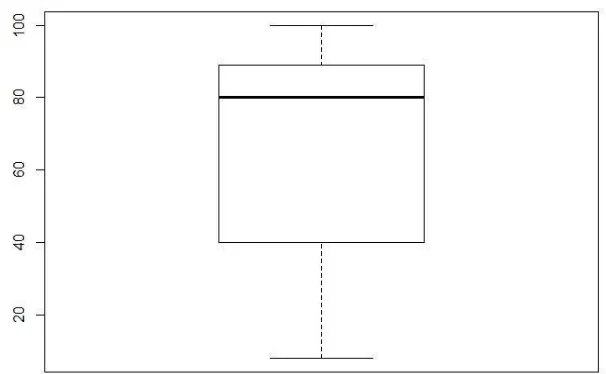
[image:13.612.67.545.273.360.2]The means and standard deviations of the BAS and BIS per condition can be seen in Table 1. All means of the BAS fell between 5.56 and 5.63, with standard deviations ranging from 0.51 to 0.69. Means for the BIS ranged from 4.99 to 5.13, with standard deviations between 0.74 and 1.11. Involvement was measured with a mean of 65.51 (SD = 28.34), the median being 80. A boxplot of the data can be seen in Figure 2.
Table 1.
Means (M) and standard deviations (SD) for BAS and BIS per condition.
Condition MBAS SDBAS MBIS SDBIS
Task 5.63a 0.69 4.99a 1.05
Relation 5.56a 0.51 5.12a 1.11
Control 5.64a 0.51 5.13a 0.74
[image:13.612.134.437.447.634.2]Note: Different superscripts indicate significant differences between means at a level of p < 0.05.
Behavioral activation.
Shapiro-Wilk tests show that normality can be assumed in either case with a probability of p = 0.71 for the BAS and p = 0.76 for the BIS. To investigate differences in behavioral activation among different types of conflict, an ANOVA with BAS as a dependent variable and conflict type as the independent variable was executed, showing no significant difference between groups, F(2,41) = 0.07, p = 0.93, with a power of 0.07. Therefore, hypotheses 1 and 4 are rejected. An ANOVA with conflict type as the independent variable and BIS as the dependent variable showed non-significant results too, F(2,41) = 0.09, p = 0.92, with a power of 0.08. Based on that, hypotheses 2 and 3 must be rejected.
Discussion
Study 1 showed no differences between groups that experience task conflict, relationship conflict, or no conflict at all when it comes to behavioral activation. This is contrary to expectations assuming that task conflict increases behavioral activation whereas relationship conflict decreases it. However, involvement of the participants was only moderate (M = 65.51) with high variance across participants (SD = 28.34), which could be a reason for contradictory findings. Therefore, in study 2 special attention is paid to involvement of participants.
Study 2
Methods
Participants and Design.
The second study employed a between-subjects design with conflict type and conflict intensity as independent variables, the BAS as well as the BIS as mediating variables, and performance as a dependent variable. Participants were randomly assigned to either the task conflict, relationship conflict, or control condition.
The participants were sampled by an availability sampling strategy targeting students of social sciences at the University of Twente. Participation ensued in exchange for partial course credits. 68 total responses were collected of which 22 had to be omitted due to incomplete data. The final sample consisted of 10 males and 36 females (Mage= 20.98, SDage= 2.22).
Procedure.
At the start of the online study, participants were briefed that the purpose of the study is to explore changes of conflict perception over time. When participants agreed with the informed consent, they were asked to fill in information about gender, age, nationality, study programme and study year. Then, participants were asked to recall a past conflict, either task conflict or relationship conflict, with an explanation of each type. They were asked to write a short summary of the experienced conflict. Participants in the control group were asked to recall a project group without any conflicts. Further, the task description stated that it is important for the study to relive that moment and become aware of feelings and thoughts at that situation. As a next step, the intragroup conflict scale was administered (Appendix C). Then, the retrospective state measure BIS/BAS scales were administered (Appendix D). Finally, the participants were asked about the received grade of the project work in which the conflicts appeared. Participants were asked if all data entered is true in nature. Finally, each subject was briefed about the
Measures. Conflict Scales.
For measuring task conflict intensity, the four items to assess task conflict are taken from the intragroup conflict scale by Jehn (1995). Items were adjusted by replacing ‘work unit’ by ‘project group’, which is the usual work situation encountered by the recruited university students, and verbs were changed into past tense to allow for retrospective measuring. One example of an adjusted item is ‘To what extent were there differences of opinion in your project group?’; the specific item list can be found in Appendix C. Further, three filler items were put in place 1, 4, and 7 to disguise the actual scale measurement, for example, ‘How often did you feel dissatisfied with the way of working within your project group?’. A 7-point Likert scale with anchors between 1 = None at all and 7 = A great deal was employed. The task conflict items showed statistics of α = 0.57 and λ2 = 0.63.
BIS/BAS Scales.
A revised version of the initial BIS/BAS scales by Carver and White (1994) including instructions and comments were used to measure BIS and BAS (Carver & White, 2013). The scale tests for the constructs BIS and BAS, with BIS being one single scale (7 items, e.g. ‘At that time, criticism or scolding hurts me quite a bit’), and BAS including the subscales Drive (4 items, e.g. ‘If I would have wanted something at that time, I would have gone all-out to get it.’),
Fun Seeking (4 items, e.g. ‘At that time, I did things for no other reason than that they might be fun.’) and Reward Responsiveness (5 items, e.g. ‘At that time, I had very few fears compared to my friends.’). Additionally, 4 filler items were added. The complete item list including order and respective subscale can be found in Appendix A. The initial items made for measuring
between 1 = None at all and 7 = A great deal. Reliability was measured for the scales with α =
0.70, λ2= 0.72 for BIS and α = 0.78, λ2 = 0.89 for BAS.
Results
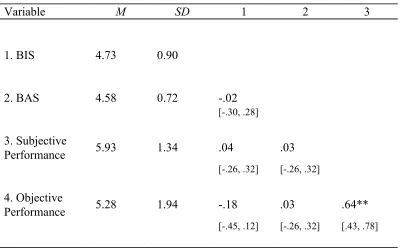
[image:17.612.66.543.449.535.2]Table E1 in Appendix E shows an overview of means, standard deviations, confidence intervals and correlations between variables. Significant correlations exist between gender and objective performance (-0.33, p < 0.05), with males achieving greater performance within the current sample. Subjective and objective performance showed a significant correlation as well (0.64, p < 0.01), whereas higher scores of one going hand in hand with higher scores among the other. Mean scores and standard deviations of the BIS and BAS per conflict type can be seen in Table 2.
Table 2.
Means (M) and standard deviations (SD) for BAS and BIS per condition.
Condition MBAS SDBAS MBIS SDBIS
Task 4.19a 0.75 4.58a 0.75
Relation 4.81b 0.54 4.73a 0.97
Control 4.80b 0.71 4.92a 1.00
Note: Different superscripts indicate significant differences between means at a level of p < 0.05.
The Effect of conflict type on the behavioral activation system.
significant results, χ 2(2) = 7.89, p < 0.03 (see also Table E2, Appendix E). Post hoc analyses
revealed significant differences between the task conflict group and the control group, χ 2(1) =
4.06, p < 0.05. This indicates that the task conflict group is significantly lower in activation of the BAS than the control group (4.80 versus 4.18, see also Table 3), hence hypothesis 1, stating that exposure to task conflict increases activation of the Behavioral Activation System, is
rejected. Further, results for differences between the relationship conflict and the control group, χ
2(1) = 0.11, p = 0.74, were non-significant, therefore hypothesis 4, proposing that exposure to
relationship conflict decreases activation of the Behavioral Activation System, is rejected. A significant difference between the task conflict condition and the relationship conflict condition exists as well, χ 2(1) = 7.13, p < 0.02, with task conflict experiencing a less activated BAS than
[image:18.612.65.516.410.475.2]the relationship conflict (4.18 versus 4.81, see also Table 3).
Table 3.
Means (M) and standard deviations (SD) for each condition concerning their BAS scores.
Control Task Relation
M 4.80a 4.18b 4.81a
SD 0.71 0.75 0.54
Note: Different superscripts indicate significant differences between means at a level of p < 0.05.
The effect of conflict type on the behavioral inhibition system.
Normality of data of the BIS could be assumed after performing a Shapiro-Wu test, p = 0.89. Results of an ANOVA involving all three conditions on BIS showed that there are no significant difference, F(2,42) = 0.53, p = 0.59. Therefore, hypothesis 2, assuming that task conflict
Rejection of aforementioned hypotheses inevitably lead to rejection of the mediational hypotheses 7-10 since the mediating role of the BAS and BIS could not be further supported from this evidence.
The effect of conflict type on performance.
Objective performance.
Testing for normality, the Shapiro-Wu test showed significance for objective performance (p < 0.02) and subjective performance (p < 0.01). Due to the nonparametric nature of data, single Kruskal-Wallis tests were implemented as displayed in Table E3 (Appendix E). A
Kruskal-Wallis test involving all types of conflict revealed significant differences, χ 2(2) = 8.36, p
< 0.03. Post Hoc Analyses showed that participants that experienced task conflict (M = 4.47, SD
= 2.24) showed lower performance that participants experiencing no conflict (M = 6.54, SD = 0.97), χ 2(1)= 7.18, p < 0.02. Moreover, participants that experienced relationship (M = 5.13, SD
= 1.75) showed lower performance than participants experiencing no conflict (M = 6.54, SD = 0.97) as well, χ 2(1) = 7.18, p < 0.02. No difference in objective performance was found between
the two conflict groups, χ 2(1) = 0.61, p = 0.43. Based on those results, hypothesis 5, stating that
[image:19.612.67.513.607.672.2]task conflict increases performance, is rejected, whereas hypothesis 6, stating that relationship conflict decreases performance, is supported.
Table 4.
Means (M) and standard deviations (SD) for each condition concerning their scores of objective performance.
Control Task Relation
M 6.54a 4.47b 5.13b
SD 0.97 2.24 1.75
Subjective performance.
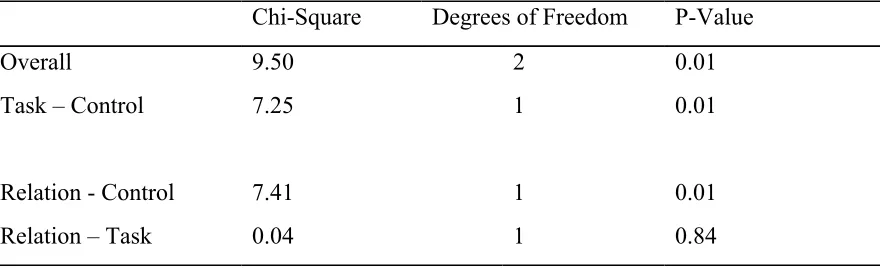
Results of the Kruskal-Wallis test involving all conflict types showed significant differences, χ
2(2) = 9.50, p < 0.02 (Table E4, Appendix E.). Post-hoc analyses showed that participants
experiencing task conflict showed lower subjective performance (M = 5.47, SD = 1.67) than those experiencing no conflict (M = 6.77, SD = 0.73), χ 2(1) = 7.25, p < 0.02. Furthermore,
participants in the relationship conflict condition showed lower subjective performance (M = 5.75, SD = 1.00) than participants experiencing no conflict, χ 2(1) = 7.41, p < 0.02. No significant
difference in subjective performance was found between the two conflict groups, χ 2(1) = 0.04, p
[image:20.612.67.514.425.491.2]= 0.84. Those results further oppose hypothesis 5, proposing that task conflict increases performance, and support hypothesis 6, proposing that exposure to relationship conflict decreases performance.
Table 5.
Means and standard deviations for each condition concerning their scores of subjective
performance.
Control Task Relation
M 6.77a 5.47b 5.75b
SD 0.73 1.67 1.00
Note: Different superscripts indicate significant differences between means at a level of p < 0.05.
Conflict intensity.
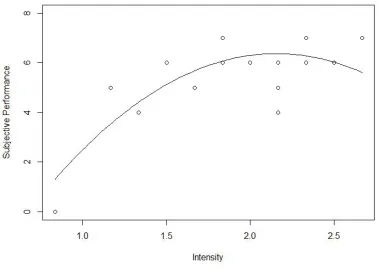
Figure 3.). However, it does not show any effect on objective performance, therefore hypothesis 13, stating a bell-curved relationship between task conflict intensity and performance, is rejected.
Figure 3. Quadratic regression of Subjective Performance on Task Conflict Intensity.
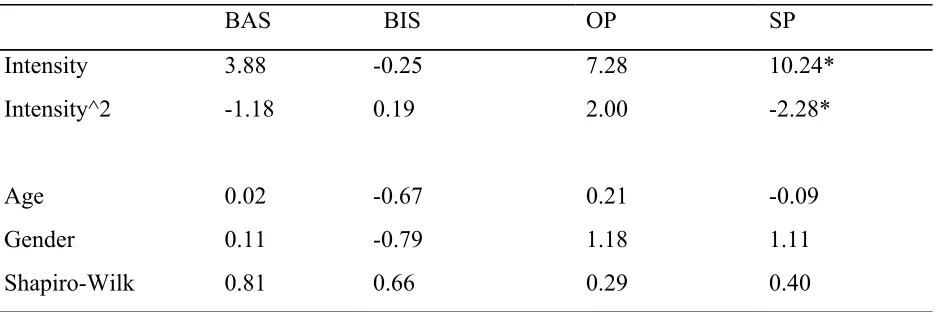
Table 6.
Results of regression analysis with the predictors of Intensity, its quadratic term, Age, Gender,
and a Shapiro-Wilk test to test for violation of normality. Each column shows the value for each
dependent variable, with significant results written boldly. Abbreviations entail BAS (Behavioral Activation System), BIS (Behavioral Inhibition System), OP (Objective Performance) and SP
(Subjective Performance).
BAS BIS OP SP
Intensity 3.88 -0.25 7.28 10.24*
Intensity^2 -1.18 0.19 2.00 -2.28*
Age 0.02 -0.67 0.21 -0.09
Gender 0.11 -0.79 1.18 1.11
Shapiro-Wilk 0.81 0.66 0.29 0.40
Note: * indicates coefficients at a level of p < .05.
Discussion
The results of study 2 showed that none of the hypothesized effects of conflict type on behavioral activation, whether relationship conflict or task conflict, held true. The only effect on behavioral activation could be seen among the BAS; although it was expected to increase after task conflict, it, in fact, decreased. Due to this, expected mediation of the effect of conflict type on
performance through behavioral activation cannot be further supported by findings of this study. Further, results showed performance decrease among either type of conflict. This held for objective as well as subjective performance. Additionally, analyses showed a curvilinear relationship between conflict intensity and subjective performance, taking the form of a bell-shaped relationship with its apex among moderate levels of task conflict. However, this is only concerning subjective performance; objective performance showed no significant
General Discussion
Results of the conducted studies could not validate any of the hypothesized changes in behavioral activations. Neither did task conflict increase behavioral activation, nor did relationship conflict decrease it. Furthermore, as expected, a negative effect of relationship conflict on performance was found. Task conflict exhibited the same negative effect on performance, albeit being hypothesized to actually increase performance. This applies to
objective as well as subjective performance. Additionally, a curvilinear relationship between task conflict intensity and subjective performance was validated. The relationship manifests itself through a bell-shaped form, with highest levels of performance among moderate levels of task conflict intensity and lower levels among high- and low-intensity task conflict. For objective performance, however, this effect could not be shown.
which could be an explanation why the same effect could not be validated for objective performance as well. Still, this shows ground for further research concerning the relationship between objective and subjective performance. Apparently, it may feel like moderate conflicts increase performance, but actually it does not.
Limitations
Limitations of this study can first be found in the sample size. Although a larger sample size is preferable in any case, an effective sample size of 44 and 46 students does not fulfill
requirements to fulfill the standard of a sound study as proposed by Simmons, Nelson, and Simonsohn (2011). Those proposed in their widely cited article a minimum sample size of 20 participants per condition, which could not be reached due to a dropout rate of 31%. Further, aforementioned authors argue that a significantly small sample size can lead to false positive findings. However, this could also account in this case for false negatives, which emphasizes the need for further research on this subject. This would mean that non-significant differences in behavioral activation could also simply be due to a lack of participants.
Additionally, several students of study 2 stated that some of the retrospective measurement questions of the BIS and BAS were confusing to them. Apparently, the transformation of the items into retrospective measures lead to confusion about the specific time meant in the items. More detailed explanation could have prevented that and would be a proper way to deal with this in future research. Moreover, study 2 did not control for the time between the conflict and the measurement. Memories are subject to distortion over time (Levine & Safer, 2002), thus
Overcoming the challenge of passed time since the conflict, study 1 induced conflicts directly by means of videos. The downside of this, however, was that manipulation did not happen to the extent it was intended since no real-life conflict was included as in study 2. This can be seen in only moderate involvement. Still, the drawbacks of each study, being involvement and
immediacy to the conflict, were tried to be counteracted by the complementary relationship of the two studies.
Implications for Science and Society
Looking at the findings of this study, implications for research as well as practice arise. First, replications of this study with proper sample size and more accurate measurements for the BIS and BAS could lead to more insight into the field of intragroup conflict theory. To specific, further development of the BIS and BAS scales according to Carver and White (2013) adjusted for retrospective measurement is proposed to prevent unclear questions, which could not be accounted for due to the limited scope of this study. Additionally, further research in the field is recommended in order to increase involvement and collect natural observations; whereas involvement was the drawback of study 1, natural observations could not take place in study 2 due to the retrospective context. Further, the found curvilinear relationship between task conflict intensity and subjective performance builds ground for further research. Validation of the
too-much-of-a-good-thing effect among subjective performance queries so far found effects in organizational theory and demands further examination. As could be shown, effects in
organizational theory are not always of linear nature. Therefore, replications of previous studies in organizational theory including non-linear models are suggested in order to gain more insight into the actual nature of effects.
Conclusion
Appendix A –Verbal Transcripts of the Videos
Task Conflict Condition
Hey! I wanted to talk to you about the project meeting, what you said… Because you mentioned that everyone should get his own part, he researches data for and writes it solely himself and whatever… But I actually think that we, if we brainstorm as a group, and we gather data and then we write it, everyone writes his own part but we brainstorm as a group… I think this would be way wetter, it would be a way better strategy, because uhm… I worked in a lot of project group and trust me, your way is not going to work out. I want to do that for the group, and I’m sure that the strategy I propose will be better and we can also discuss that later in the WhatsApp
groupchat, but I also think that… yeah, that the others should agree, but we will see about that later. See you later!
Relationship Conflict Condition
Appendix B – The BIS/BAS Scales (Adjusted for State Measures)
Instructions and Scales retrieved from Carver and White (2013), based upon initial scales developed in 1994 (Carver & White). BIS and BAS scale items were adjusted as situational items by the researcher.
---
Instructions: Each item of this questionnaire is a statement that a person may either agree with or disagree with. For each item, indicate how much you agree or disagree with what the item says. Please respond to all the items; do not leave any blank. Choose only one response to each statement. Please be as accurate and honest as you can be. Respond to each item as if it were the only item. That is, don't worry about being "consistent" in your responses. Choose from the following four response options:
1 = strongly disagree 2 = disagree
3= somewhat disagree
4 = neither disagree nor agree 5 = somewhat agree
6 = agree
7 = strongly agree
1. A person's family is the most important thing in life.
2. Even if something bad happened to me right now, I would barely experience fear or nervousness.
4. How I dress is important to me right now.
5. If I got something I want right now, I would feel excited and energized. 6. Right now, criticism or scolding hurts me quite a bit.
7. If I would want something right now, I would go all-out to get it. 8. Right now, I do things for no other reason than that they might be fun. 9. Right now, it's hard for me to find the time to do things such as get a haircut.
10. If I saw a chance to get something I want right now, I would move on it right away. 11. I would feel pretty worried or upset when I think or know somebody is angry at me right
now.
12. If I saw an opportunity for something I like right now, I would get excited right away. 13. Right now, I act on the spur of the moment.
14. If I think something unpleasant is going to happen right now, I would get pretty "worked up." 15. Right now, I wonder why people act the way they do.
16. When good things would happen to me right now, it would affect me strongly. 17. Right now, I would feel worried if I think I had done poorly at something important. 18. Right now, I crave excitement and new sensations.
19. When I would go after something right now, I would use a "no holds barred" approach. 20. Right now, I have very few fears compared to my friends.
21. Right now, it would excite me to win a contest. 22. Right now, I worry about making mistakes.
--- Items other than 2 and 20 are reverse-scored.
BAS Drive:3, 7, 10, 19 BAS Fun Seeking:8, 13, 18
BAS Reward Responsiveness: 5, 12, 16, 21
BIS:2, 6, 11, 14, 17, 20, 22
Appendix C – The Intragroup Conflict Scale (Items for Task Conflict + Fillers)
To what extent did you feel dissatisfied with the way of working within that project group? * To what extent did people in that project group disagree about opinions regarding the work being done?
To what extent have there been conflicts about your ideas in that project group? To what extent did communication problems appeared within that project group? * How much conflict about the work you did was there in that project group?
To what extent were there differences of opinion in that project group? To what extent did you feel pressured within that project group? *
Appendix D –The BIS/BAS Scales (Adjusted for State Measures/Retrospective)
Instructions and Scales retrieved from Carver and White (2013), based upon initial scales developed in 1994 (Carver & White). BIS and BAS scale items were adjusted as situational items by the researcher.
---
Instructions: Each item of this questionnaire is a statement that a person may either agree with or disagree with. For each item, indicate how much you agree or disagree with what the item says. Please respond to all the items; do not leave any blank. Choose only one response to each statement. Please be as accurate and honest as you can be. Respond to each item as if it were the only item. That is, don't worry about being "consistent" in your responses. Choose from the following four response options:
1 = strongly disagree 2 = disagree
3= somewhat disagree
4 = neither disagree nor agree 5 = somewhat agree
6 = agree
7 = strongly agree
1. A person's family is the most important thing in life.
2. Even if something bad would happen to me at that time, I would barely experience fear or nervousness.
3. At that time, I went out of my way to get things I want.
6. How I dress was important to me at that time.
7. If I would have gotten something I want at that time, I would have felt excited and energized. 8. At that time, criticism or scolding hurt me quite a bit.
9. If I would have wanted something at that time, I would have went all-out to get it. 10. At that time, I did things for no other reason than that they might be fun.
11. At that time, it was hard for me to find the time to do things such as getting a haircut.
12. If I would have seen a chance to get something I wanted at that time, I would have moved on it right away.
13. I would have felt pretty worried or upset when I thought or knew somebody is angry at me at that time.
14. If I would have seen an opportunity for something I liked at that time, I would have gotten excited right away.
15. At that time, I acted on the spur of the moment.
16. If I would have thought something unpleasant was going to happen at that time, I would have felt pretty "worked up."
17. At that time, I wondered why people act the way they do.
18. When good things would have happened to me at that time, it would have affected me strongly.
19. At that time, I would have felt worried if I thought I had done poorly at something important. 20. At that time, I craved excitement and new sensations.
21. When I would have went after something at that time, I would have used a "no holds barred" approach.
22. At that time, I had very few fears compared to my friends. 23. At that time, it would have excited me to win a contest. 24. At that time, I worried about making mistakes.
BAS Drive:3, 9, 12, 21
BAS Fun Seeking:5, 10, 15, 20
BAS Reward Responsiveness: 4, 7, 14, 18, 23
BIS:2, 8, 13, 166, 19, 22, 24
Appendix E – Additional Tables Results Study 2
Table E1.
Means (M), standard deviations (SD), and correlations with confidence intervals
Variable M SD 1 2 3
1. BIS 4.73 0.90
2. BAS 4.58 0.72 -.02
[-.30, .28]
3. Subjective
Performance 5.93 1.34 .04 .03
[-.26, .32] [-.26, .32]
4. Objective
Performance 5.28 1.94 -.18 .03 .64**
[-.45, .12] [-.26, .32] [.43, .78]
Table E2.
Results of the Kruskal-Wallis test with BAS as a dependent and the condition as an independent
variable. Chis-Square, degrees of freedom and the p-value are reported.
Chi-Square Degrees of Freedom P-Value
Overall 7.89 2 0.02
Task – Control 4.06 1 0.04
Relation - Control 0.11 1 0.74
[image:35.612.71.514.363.496.2]Task – Relation 7.13 1 0.01
Table E3.
Results of the Kruskal-Wallis test with objective performance as a dependent and the condition as an independent variable. Chis-Square, degrees of freedom and the p-value are reported.
Chi-Square Degrees of Freedom P-Value
Overall 8.36 2 0.02
Task – Control 7.18 1 0.01
Relation - Control 5.16 1 0.02
Relation – Task 0.61 1 0.43
Table E4.
Results of the Kruskal-Wallis test with subjective performance as a dependent and the condition
as an independent variable. Chis-Square, degrees of freedom and the p-value are reported.
Chi-Square Degrees of Freedom P-Value
Overall 9.50 2 0.01
Task – Control 7.25 1 0.01
Relation - Control 7.41 1 0.01
[image:35.612.72.512.575.709.2]References
Amason, A. C., & Mooney, A. C. (1999). The effects of past performance on top management
team conflict in strategic decision making. International Journal of Conflict
Management, 10(4), 340-359.
Aubert, V. (1963). Competition and dissensus: Two types of conflict and of conflict resolution.
Journal of Conflict Resolution, 7(1), 26-42. doi:10.1177/002200276300700105
Carver, C. S., & White, T. L. (1994). Behavioral Inhibition, Behavioral Activation, and Affective
Responses to Impending Reward and Punishment: The BIS/BAS Scales. Journal of
Personality and Social Psychology, 67(2), 319-333. doi:10.1037/0022-3514.67.2.319
Carver, C. S., & White, T. L. (2013). Behavioral Avoidance/Inhibition (BIS/BAS) Scales., from
Mesaurement Instrument Database for the Social Science
www.midss.ie
Chun, J. S., & Choi, J. N. (2014). Members’ needs, intragroup conflict, and group performance.
Journal of Applied Psychology, 99(3), 437-450. doi:10.1037/a0036363
De Dreu, C. K. W. (2006). When Too Little or Too Much Hurts: Evidence for a Curvilinear
Relationship Between Task Conflict and Innovation in Teams. Journal of Management,
32(1), 83-107. doi:10.1177/0149206305277795
De Dreu, C. K. W., Nijstad, B. A., & Baas, M. (2011). Behavioral activation links to creativity
because of increased cognitive flexibility. Social Psychological and Personality Science,
2(1), 72-80. doi:10.1177/1948550610381789
De Dreu, C. K. W., & Weingart, L. R. (2003). Task versus relationship conflict, team performance,
and team member satisfaction: A meta-analysis. Journal of Applied Psychology, 88(4),
741-749. doi:10.1037/0021-9010.88.4.741
de Wit, F., Greer, L., & Jehn, K. (2011). The Paradox of Intragroup Conflict: A Meta-Analysis (Vol.
97).
Edmondson, A., & McLain Smith, D. (2006). Too Hot To Handle? How to Manage Relationship
Farh, J.-L., Lee, C., & Farh, C. I. C. (2010). Task conflict and team creativity: A question of how
much and when. Journal of Applied Psychology, 95(6), 1173-1180.
doi:10.1037/a0020015
Gray, J. A. (1970). The psychophysiological basis of introversion-extraversion. Behaviour
Research and Therapy, 8(3), 249-266.
doi:https://doi.org/10.1016/0005-7967(70)90069-0
Gray, J. A. (1982). The neuropsychology of anxiety: An enquiry into the functions of the
septo-hippocampal system. New York, NY, US: Clarendon Press/Oxford University Press.
Gray, J. A., & McNaughton, N. (2000). The Neuropsychology of Anxiety: An enquiry into the
function of the septo-hippocampal system.
Guetzkow, H., & Gyr, J. (1954). An Analysis of Conflict in Decision-Making Groups. Human
Relations, 7(3), 367-382. doi:10.1177/001872675400700307
Jehn, K. A. (1995). A multimethod examination of the benefits and detriments of intragroup
conflict. Administrative science quarterly, 256-282.
Jehn, K. A. (1997). A Qualitative Analysis of Conflict Types and Dimensions in Organizational
Groups (Vol. 42).
Jehn, K. A., & Mannix, E. A. (2001). The Dynamic Nature of Conflict: A Longitudinal Study of
Intragroup Conflict and Group Performance. The Academy of Management Journal,
44(2), 238-251. doi:10.2307/3069453
Jehn, K. A., Northcraft, G. B., & Neale, M. A. (1999). Why Differences Make a Difference: A Field
Study of Diversity, Conflict, and Performance in Workgroups. Administrative science
quarterly, 44(4), 741-763. doi:10.2307/2667054
Lehmann-Willenbrock, N., Grohmann, A., & Kauffeld, S. (2011). Task and Relationship Conflict at
Work: Construct Validation of a German Version of Jehn’s Intragroup Conflict Scale (Vol.
27).
Leung, K., Lu, L., & Zhou, F. (2011). Effects of task and relationship conflicts on individual work
behaviors. International Journal of Conflict Management, 22(2), 131-150.
Levine, L. J., & Safer, M. A. (2002). Sources of bias in memory for emotions. Current Directions in
Psychological Science, 11(5), 169-173. doi:10.1111/1467-8721.00193
Marineau, J. E., Hood, A. C., & Labianca, G. J. (2018). Multiplex Conflict: Examining the Effects of
Overlapping Task and Relationship Conflict on Advice Seeking in Organizations. Journal
of Business and Psychology, 33(5), 595-610. doi:10.1007/s10869-017-9511-z
Martins, L. L., Schilpzand, M. C., Kirkman, B. L., Ivanaj, S., & Ivanaj, V. (2012). A Contingency
View of the Effects of Cognitive Diversity on Team Performance: The Moderating Roles
of Team Psychological Safety and Relationship Conflict. Small Group Research, 44(2),
96-126. doi:10.1177/1046496412466921
Pierce, J. R., & Aguinis, H. (2011). The Too-Much-of-a-Good-Thing Effect in Management.
Journal of Management, 39(2), 313-338. doi:10.1177/0149206311410060
Rahim, M. A. (1985). A Strategy for Managing Conflict in Complex Organizations. Human
Relations, 38(1), 81-89. doi:10.1177/001872678503800105
Simmons, J. P., Nelson, L. D., & Simonsohn, U. (2011). False-positive psychology: Undisclosed
flexibility in data collection and analysis allows presenting anything as significant.
Psychological Science, 22(11), 1359-1366. doi:10.1177/0956797611417632
Smith, B. D., & Gehl, L. (1974). Multiple-exposure effects of resolutions of four basic conflict
types. Journal of Experimental Psychology, 102(1), 50-55. doi:10.1037/h0035709
Todorova, G., Bear, J. B., & Weingart, L. R. (2014). Can conflict be energizing? a study of task
conflict, positive emotions, and job satisfaction. J Appl Psychol, 99(3), 451-467.
doi:10.1037/a0035134
Van de Vliert, E., & de Dreu, C. (1994). Optimising performance by stimulating conflict. Int J
Confl Manage, 5, 211-222.
Vaux, J. S., & Kirk, W. M. (2018). Relationship Conflict in Construction Management:
Performance and Productivity Problem. Journal of Construction Engineering and