A Comparable Study on Stabilization of Sub Grade
Soil Using Sugar Cane Bagasse Ash and Rice Husk
Ash
Ritu1, Akash Batra2, Pappu Sharma3
1
M. Tech Scholar, Civil Department, Indus Institute of Engg. And Technology-Jind, 126102, India
2
Assistant professor, Civil Department, Indus Institute of Engg. And Technology-Jind, 126102, India
3
Assistant professor, Civil Department, Indus Institute of Engg. And Technology-Jind, 126102, India
Abstract: Soil stabilization is used to strengthen road surfaces by enhancing the weight bearing capabilities of in-situ subsoil, sands and other waste materials. The research focuses on three main objectives, the first one is improving the properties of the soil at the construction site so it doesn’t bend under the pressure from the weight of the structure, while the other important part is try to use other materials which can do the same job, one of these materials is the rice husk ash and sugar cane bagasse ash, its production is increasing yearly and annually 20 million tons are produced, which quite large amount. Rice husk ash consist of 85%-90% silica, this is why it is a great replacement for silica in soil stabilization, silica is considered to be a great binding agent along with cement also, however due time its price is increasing, so new materials are used for the purpose of geotechnical works. There are three objectives of the research; one is to determine the Atterberg limits, maximum dry density, optimum moisture content and maximum shear strength of the soil without additives, another is to determine the maximum dry density and optimum moisture content of the soil with 0 %, 5%, 10%, and 15% of sugar cane bagasse ash and rice husk ash and lastly compare the results between the sample with additives and the sample without additives to determine what is the change that occurred.
Keywords: Soil Stabilization, Sugar Cane Bagasse, Rice Husk Ash, Dry Density , Moisture Content.
I. INTRODUCTION
Mobility is the basic human need. From the times immemorial, everyone travel either for food or leisure. A closely associated need is the transport of raw materials to a manufacturing unit or finished goods for consumption. Transportation fulfills these basic needs of humanity. Transportation plays a major role in the development of the human civilization and contributes to the economic, industrial, social, and cultural development of the country. For instance, one could easily observe the strong correlation between the evolution of human settlement and the proximity of transport facilities. The invention of wheel brought up the necessity of providing a hard surface for the movement of wheeled vehicles. Also, there is a strong correlation between the quality of transport facilities and standard of living, because of which society places a great expectation from transportation facilities. In other words, the solution to transportation problems must be analytically based, economically sound, socially credible, environmentally sensitive, practically acceptable and sustainable. In the present concept of transportation, the adequacy of transportation system of a country indicates its economic and social development. The inadequate transportation facilities retard the process of socio-economic development of the area. Land transportation refers to activities of physical movements of goods and passengers on land through highways, rail or pipe, etc.
A.Study Topic and its Importance
B. Objectives of the Study
The general objective of this study is to evaluate the suitability of sugarcane bagasse ash and rice husk ash as a stabilizing agent for different types of soils generally available in Haryana to evaluate their CBR value. This is achieved through the following specific objectives:
1) To evaluate the effect of sugarcane bagasse ash and rice husk ash on the properties of selected soils such as gradation, Atterberg limits, optimum moisture content (OMC), maximum dry density (MDD) and CBR value of the soils that are generally available in Haryana.
2) To mix these soils with varying proportion of sugarcane bagasse ash and rice husk ash and evaluate above mentioned properties of the mixes.
3) To compare the change in various properties of the selected soils with respect to the proportion of sugarcane bagasse ash and rice husk ash and discuss the results of the study.
4) To determine suitability of the admixtures for the soils selected for the study.
C. Scope of the Study
1) Procurement of the materials to be used in the study- soils, sugarcane bagasse ash and rice husk ash from different sources as per requirement of the study.
2) Determination of geotechnical properties of soil mixes with sugarcane bagasse ash and rice husk in different proportions as per study 0%, 5%, 10% and 15% by dry weight of soils by routine laboratory tests.
3) Determination of compaction characteristics of soil mixes with sugarcane bagasse ash and rice husk ash in different proportions as per study 0%, 5%, 10% and 15% like optimum moisture content (OMC) and maximum dry densit(
4) MDD).Determination of CBR value of soils mixes with sugarcane bagasse ash and rice husk ash at OMC for unsoaked condition in different proportions as per study 0%, 5%, 10% and 15%.
II. LITERATURE REVIEW
This chapter presents some theories and previous research regarding stabilization of soils as well as utilization of sugarcane bagasse ash and rice husk ash as a stabilizer. The literature review is divided into several sections including general discussion about literature review of previous studies, pavement and its types, method of design of flexible pavement, sub grade, its types and significance of sub grade, stabilization of sub grade and stabilization mechanism and also includes Indian standard classification of soil and general characteristics of soils of different groups.
Alhassan (2008) carried out extensive laboratory experiments to investigate the effect of lime and RHA on permeability and strength properties of lateritic soils. In his experiments A-7-6 lateritic soil(CH) was treated at British Standard Light (BSL) compaction energy with upto 8% lime content (by dry weight of soil) at 2% variations and each was admixed with upto 8% RHA at 2% variations. Effects of the ash on the soil lime mixtures were investigated with respect to Unconfined Compressive Strength (UCS) and coefficient of permeability. The UCS of the specimens increased with increasing RHA content at specified lime contents to their maximum values at 6% RHA and also the coefficient of permeability of cured specimens decreased with increase in ash content to their minimum values at 6% RHA content and beyond this point the permeability rises slightly. His findings indicate that no more than 6% RHA can be used to increase UCS and reduce permeability of lateritic soil.
Brooks (2009) upgrade expansive soil as a construction material using rice husk ash (RHA) and fly ash, which are waste materials. Remolded expansive clay was blended with RHA and fly ash and strength tests were conducted. The potential of RHA-flyash blend as a swell reduction layer between the footing of a foundation and subgrade was studied. In order to examine the importance of the study, a cost comparison was made for the preparation of the sub-base of a highway project with and without the admixture stabilizations. Stress strain behavior of unconfined compressive strength showed that failure stress and strains increased by 106% and 50% respectively when the fly ash content was increased from 0 to 25%. When the RHA content was increased from 0 to 12%, Unconfined Compressive Stress increased by 97% while CBR improved by 47%. Therefore, an RHA content of 12% and a fly ash content of 25% are recommended for strengthening the expansive subgrade soil. A fly ash content of 15% is recommended for blending into RHA for forming a swell reduction layer because of its satisfactory performance in the laboratory tests.
aggregate with up to 20% by Bagasse ash resulted in equivalent or higher compressive strength and reduced water permeability and chloride diffusion Chusilp, Likhitsripaiboon, and Jaturapitakkul, (2009).
Kiran and, Kiran (2013) carried out for different percentages (4%, 8% and 12%) of bagasse ash and additive mix proportions. The strength parameters like CBR, UCS were determined. It was observed that blend results of bagasse ash with different percentage of cement for black cotton soil gave change in density, CBR and UCS values. The density values got increased from 15.16 KN/m3 to 16.5 KN/m3 for addition of 8% bagasse ash with 8% cement, Then CBR values got increased from 2.12 to 5.43 for addition of 4% bagasse ash with 8% cement and UCS values got increased to 174.91 KN/m2 from 84.92 KN/m2 for addition of 8% bagasse ash with 8% cement.
Chittaranjan, and Keerthi, (2011) studied the ‘Agricultural wastes as soil stabilizers’. In this study Agricultural wastes such as sugar cane bagasse ash, rice husk ash and groundnut shell ash are used to stabilize the weak sub grade soil. The weak sub grade soil is treated with the above three wastes separately at 0%, 3%, 6%, 9%,12%and 15% and CBR test is carried out for each per cent .The results of these tests showed improvement in CBR value with the increase in percentage of waste.
III. MATERIALS USED
In this study, two different sub-grade soils from different area is used with two types of soil stabilizing material that is sugarcane bagasse ash and rice husk ash to improve the CBR value of these soils. Index properties of these subgrade soils are determined as per relevant Indian Standard and classification of soil is done on the basis of engineering properties of the soil.
A. Soil
Soil samples are taken from two different areas of district Jind (Haryana). One soil sample is taken from Jind City and another from Narwana.
B. Sugarcane Bagasse Ash
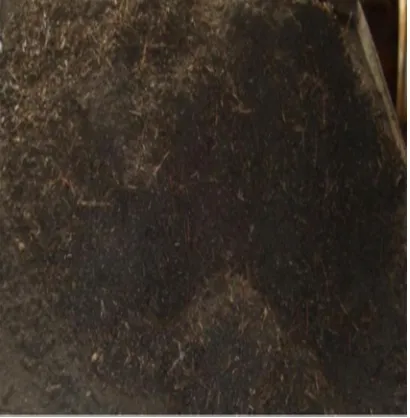
[image:3.612.191.396.460.669.2]The first stabilizer used in the study is sugarcane bagasse ash . The sugarcane bagasse ash used in the present study is collected from Cooperative sugar mill (Jind). The specific gravity of the used bagasse ash is obtained as 2.23. Bagasse is the fibrous residue obtained from sugarcane after the extraction of juice at sugar mill factories and previously was burnt as a means of solid waste disposal. However, as the cost of fuel oil, natural gas and electricity has increased, bagasse has become to be regarded as a fuel rather than refuse in the sugar mills. The fibrous residue used for this purpose leaves behind about 8-10% of bagasse ash, The figure 3.1 shows ash obtained from the incineration of fibrous residue of bagasse.
Fig 3.1 Sugarcane Bagasse ash
C. Rice Husk Ash
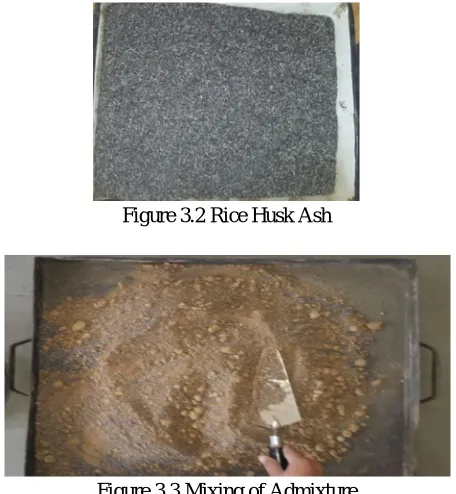
Figure 3.2 Rice Husk Ash
Figure 3.3 Mixing of Admixture
D. Water
Potable tap water is used for experimental work. Characteristics of the Soils Used
The index properties of these soils include the consistency limit, liquid limit, plastic limit and shrinkage limit as given below:
E. Plasticity Index
Plasticity index (IP) is the range of moisture content over which a soil exhibits plasticity. It is the numerical difference between the
liquid limit (WL) and the plastic limit (WP). Thus,
IP = WL – WP
When either WL or WP cannot be determined, the soil is called as non-plastic (NP). When the plastic limit is equal to or greater than
liquid limit, the plasticity index is reported as zero.
F. Flow Index
Flow Index (IF) is the slope of the flow curve obtained between the number of blows and water content in the Casagrande test for
determination of liquid limit. Thus,
I =( – ) ×
Where N1 and N2 are no. of blows required at water content W1 and W2.
The flow index indicates the rate of loss in shearing strength upon increase in water content. A soil with a higher value of flow index possesses lower shear strength when compared to a soil with a lower value of flow index.
G. Liquidity Index
Liquidity index (IL) is defined as the ratio of the difference between the natural water content of a soil and its plastic limit to its
plasticity index.
( ) ×
The liquidity index of a soil indicates the nearness of its water content to its liquid limit. When the soil is at its liquid limit, its liquidity index is 100% and it behaves as a liquid. When the soil is at the plastic limit, its liquidity index is zero. Negative values of the liquidity index indicate water content smaller than the plastic limit. The soil is than in solid (desiccated) state. The liquidity index is also known as Water-plasticity ratio.
H. Consistency Index
Consistency Index (IC) is defined as the ratio of the difference between the liquid limit and the natural water content of a soil to its
plasticity index.
= ( − ) ×
Where WN is the water content of the soil in natural condition The Consistency Index indicates the Consistency of a soil. It shows
the nearness of the water content of the soil to its plastic limit. A soil with a consistency index of zero is at the liquid limit. It is extremely soft and has negligible shear strength. On the other hand, a soil at a water content equal to the plastic limit has a consistency index of 100%, indicating that the soil is relatively firm. A consistency index of greater than 100% shows that the soil is relatively strong and is in the semi-solid state. A negative value of Consistency Index is also possible, which indicates that the water content is greater than the liquid limit. The Consistency Index is also known as relative consistency.
I. Specific Gravity
The specific gravity (G) of soil is defined as the ratio of the unit weight of a given volume of solids to the unit weight of an equal volume of water at 4°C. The formula for specific gravity can be given
by-=
Where,
G = Specific Gravity of the soil sample
γs = Unit weight of the soil sample γw = Unit weight of the water at 4oC
The specific gravity of solids for most of the natural soil fall in range of 2.65 to 2.80, it is determined with the help of Pycnometer bottle.
J. Consistency of Soil
Consistency of a soil is meant by the relative ease with which soil can be deformed. This is mostly used for fine grained soils for which the consistency is related to a large extent to water content. Consistency denotes degree of firmness of the soil which may be termed as soft, firm, stiff or hard. These terms are relative and may have different interpretation to different geotechnical engineers. For quantitative measurement of consistency, it is related to the shear strength and compressive strength.
Consistency is obtained through unconfined compressive strength (qu) or by the vane shear test. Table 3.1 gives the unconfined consistency strength of soil of different consistency.
The optimum moisture content for a specific compactive effort is the moisture content at which the maximum dry density is obtained. It is observed that dry density increases with the increase in the moisture content up to certain limit thereafter with the further increase in the moisture content the dry density decreases. A graph is plotted between the dry density & moisture content to find out OMC and MDD. The point of maximum dry density is obtained and corresponding to this maximum dry density, water content is known as optimum moisture content
IV. TEST PROGRAMME AND PROCEDURE
The CBR tests were conducted to evaluate the behavior of soils and soil mixed with different type of soil stabilizers i.e. sugarcane bagasse ash and rice husk ash. CBR tests were performed for unsoaked condition.
A. Grain size Distribution
Grain size distribution method is used to evaluate the uniformity of soil particles, and to classify soil type. The sieve analysis method is used in the present study for grain size distribution
Procedure
1) Take the required quantity of the sample passing 4.75mm IS sieve. Ovens dry it at 105º to 110ºC. Weigh it to 0.1% of the total mass.
2) Sieve the soil through the nest of fine sieves. The sieves should be agitated so that the sample rolls in irregular motion over the sieves. However, no particles should be pushed through the sieve.
3) Take the material retained on various sieves in a mortar. Rub it with rubber pestle, but do not try to break individual particles.
4) Resieve the material through the nest of sieves.
5) Collect the soil fraction retained on each sieve in a separate container. Take the mass.
[image:6.612.219.397.276.417.2]6) Determine the percentage retained, cumulative percentage retained and the percentage finer based on the total mass taken.
Figure 4.1 Hand Sieve Shaker Calculation Total weight of the sample = W gm.
Weight retained on 75 micron sieve (air-dried) = W1 gm.
% of material passing through 75 micron sieve = ( )×
B. Specific Gravity Test
The specific gravity of soil is frequently required for computation of several quantities such as void ratio, degree of saturation, unit weight of solids and unit weight of soil in various states. It is determined using a Pycnometer bottle as per IS: 2386 (Part 3) 1963. The Pycnometer bottle is shown in figure 5.2. The Specific gravity is dimension less.
Figure 4.2 Pycnometer Bottle
Procedure The procedure involves weighing first an empty, dried Pycnometer bottle, say, of weight (W1). Next about 300 gm of
[image:6.612.227.386.547.671.2]a glass rod. The Pycnometer is gradually filled with water carefully removing the entrapped air. Vacuum pump is also some time used to expel entrapped air. The Pycnometer with the soil is filled up to the top with water and weighed (W3).
Finally, the Pycnometer is emptied completely, cleaned and weighed after filling with water up to the top (W4).
Specific Gravity = ( ( ) ( ) ) W1 = weight of empty pycnometer bottle
W2 = weight of pycnometer bottle half filled with soil
W3 = weight of pycnometer bottle half filled with soil and rest with water
W4 = weight of pycnometer bottle filled with water
C. Liquid Limit Test
Liquid Limit is the water content in percentage, at which the two sides of a groove cut in the soil sample contained in the cup of a Casagrande device would touch over a length 0f 12mm after 25 impacts. The procedure of test is summarized as follow as per IS 2720: Part 5 (1985)
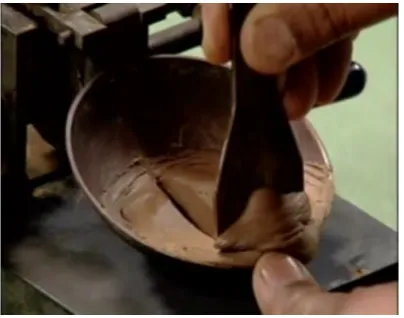
[image:7.612.207.409.479.638.2]About 120 gm of an air-dried sample passing through 425 µ IS sieve is taken in a dish and mixed with distilled water to form a uniform paste. A portion of this paste is placed in the cup of the liquid limit device, and the surface is smoothened and leveled with a spatula to a maximum depth of 1 cm. A groove is cut through the sample along the symmetrical axis of the cup, preferably in one stroke, using a standard grooving tool. IS: 2720-Part 5 recommends two types of grooving tools: (1) Casagrande’s tool, (2) ASTM tool. In this study, Casagrande’s tool has been used. The Casagrande’s tool cuts a groove of width 2 mm at the bottom, 11 mm at the top and 8 mm deep. After the soil pat has been cut by a proper grooving tool, the handle is turned at a rate of 2 revolutions per second until the two parts of the soil sample come into contact at the bottom of the groove along a distance of 12 mm. The groove should close by a flow of the soil, and not by slippage between the soil and the cup. When the groove closes by a flow, it indicates the failure of slopes formed on the two sides of the groove. The soil in the cup is again mixed, and the test is repeated until two consecutive tests give the same number of blows. About 20 gm of soil near the closed groove is taken for water content determination. The soil in the cup is transferred to the dish containing the soil paste and mixed thoroughly after adding more water. The soil sample is again taken in the cup of the liquid limit device and the test is repeated. The liquid limit is the water content at which the soil is sufficiently fluid to flow when the device is given 25 blows. As it is difficult to get exactly 25 blows for the sample to flow, the test is conducted at different water contents so as to get blows in the range of 15 to 35. A plot is made between the water content as ordinate and the number of blows on log-scale as abscissa. The plot is approximately a straight line. The plot is known as flow curve. The liquid limit is obtained, from the plot, corresponding to 25 blows; the liquid limit is expressed as the nearest whole number. The apparatus used for liquid limit test is given in Figure 5.3
Figure 4.3 Liquid Limit Test
D. Standard Proctor Test
To find out the optimum moisture content at which the maximum dry unit weight is attained. The tests provide a relationship between the water content and the dry density for a compactive effort. Proctor compaction test are done on the soil in the laboratory as per IS 2720: Part 7 (1980).
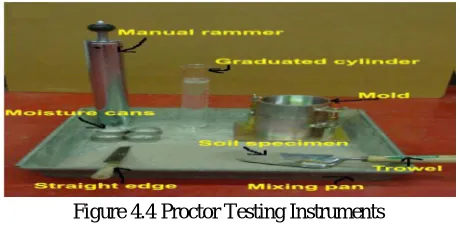
100 mm mould having a capacity of 1000 ml with an internal diameter of 100 mm and an internal effective height of 127.3 mm.
150 mm mould having a capacity of 2250 ml with an internal diameter of 150 mm and an internal effective height of 127.3 mm. The mould shall be fitted with a detachable base plate and a removable extension approximately 60mm height. The weight of the mould with the base plate attached shall be known. The internal surface of the mould shall be smooth.
For light compaction, the rammer shall have 50 mm diameter circular face, and weight 2.6 kg. The rammer shall be equipped with a suitable arrangement for controlling the drop of 310 mm.
For heavy compaction, the rammer shall have a 50 mm diameter circular face, and weight 4.89 kg. The rammer shall be equipped with a suitable arrangement for controlling the drops to 450 mm.
A mechanical type of apparatus may be used provided the essential dimensions of the rammer and mould are adhered to, and provided the rammers has a free vertical fall of the correct controlled height i.e. 310/450 mm. It is also essential that the design of machine is such that the mould rests on a heavy solid base.
Balance one of capacity 10 kg, sensitive to 1 g and another of capacity 200 g, sensitive to 0.01 gm. Steel Straight edge - about 30 cm in length and having one beveled edge.
[image:8.612.192.422.275.389.2]Sieves - 50 mm, 20 mm and 4.75 mm IS Sieves.
Figure 4.4 Proctor Testing Instruments
V. PRESENTATION AND ANALYSIS OF RESULTS
A series of tests have been conducted in the laboratory for evaluation of different selected soil mixed with rice husk ash and fly ash. Detailed experimental procedure has been explained in chapter 5. Experimental results and their analyses are presented in this chapter as per testing program. All the tests have been conducted as per the relevant guidelines of IS codes, IRC and MORTH specifications. Results are presented considering and comparing the effects of various soil admixtures on CBR value of the selected soils in the following sequence: Properties of Soils and Admixtures Used for the StudyTwo types of soils have been selected for the study from two places in Jind i.e. Jind city and Narwana. These soils and admixtures have different properties such as grain size, Atterberg’s limits, plasticity index, maximum dry density, optimum moisture content and California Bearing Ratio and soil classification. In the study we have used sugarcane bagasse ash as admixture for improving soil characteristics. The various test results on the soils are given below:
A. Index Properties of Jind City
No. of tests
Mix proportions
Liquid Limit Plastic Limit Plasticity Index Soil % SCBA % RHA %
1 100 0 0 27.38 24.02 3.36
2 95 5 0 23.90 20.88 3.02
3 90 10 0 20.52 17.32 2.20
4 85 15 0 16.90 15.50 1.40
5 100 0 0 27.38 24.02 3.36
6 95 0 5 26.50 23.43 3.07
8 85 0 15 28.52 25.80 2.72 Table 5.1 Index Properties of Jind City Soil
B. Maximum Dry Density and Optimum Moisture Content of Soil Mixes
[image:9.612.105.514.162.351.2]The maximum dry density (MDD) and optimum moisture content (OMC) of selected soils are found by adding SCBA and RHA in varying proportion from 0 % to 15 % through modified proctor test. The variation is presented in fig 6.1
Figure 5.1 Modified Proctor Test on ML Soil + SCBA
C. Effect on CBR Value
[image:9.612.138.481.410.609.2]The CBR Value of selected soils and mixing with SCBA and RHA separately in varying proportions from 0% to 15% are determined. Figure 6.7 shows the load penetration curves for obtaining CBR values of various soil mixes.
Figure 5.2 Load Penetration Curves for CBR Value of ML Soil + SCBA Mixes
Types of Soil Mixes CBR value (%) % increase in CBR
ML Soil Only 5.39 -
ML Soil + 5 % SCBA 6.78 25.78
ML Soil + 10 % SCBA 7.20 33.58
ML Soil + 15 % SCBA 7.97 47.86
ML Soil + 5 % RHA 5.68 5.38
1.895
1.956 1.976
1.936
1.851 1.874
1.894
1.86
1.766 1.79
1.822
1.783
1.709 1.73
1.755 1.705 1.65 1.67 1.69 1.71 1.73 1.75 1.77 1.79 1.81 1.83 1.85 1.87 1.89 1.91 1.93 1.95 1.97 1.99
6 8 10 12 14 16 18
D ry D e n si ty ( g/ cc )
Moisture Content (%)
ML Soil SOIL+5% SCBA SOIL+10%SCBA SOIL+15% SCBA 0 20 40 60 80 100 120 140 160
0.0 2.0 4.0 6.0 8.0 10.0 12.0 14.0
Lo ad (k g/ cm 2 ) Penetration (mm)
ML Soil ML Soil + 5% SCBA
ML Soil + 10 % RHA 6.05 12.24
ML Soil + 15 % RHA 6.46 19.85
Table 5.2 CBR value of ML soil mixes
VI. CONCLUSION AND FUTURE WORK
A. Conclusions
1) The selected soils belong to ML (silts of low plasticity) and SM (silty sand) types of soils.
2) The sand content in the ML and SM soils is found to be 26.5% and 73.5% respectively. The PI of ML soil is 3.36 and SM soil is non-plastic.
3) With the addition of SCBA in ML type soil the liquid limit and plasticity index decreases but on addition of RHA liquid limit increases and plasticity index decreases.
4) With addition of SCBA and RHA liquid limit of SM type soil increases but plasticity index cannot be determined because soil is a non-plastic soil.
5) The MDD of selected soils decreases and OMC of the soils increases with the addition of SCBA as well as RHA.
6) The addition of SCBA and RHA causes more reduction in MDD of ML type soil than SM type soil.
7) The addition of SCBA and RHA causes increase in OMC of the selected soil. OMC of ML type soil increases more when SCBA is added but when RHA is added OMC of SM type soil increases more.
8) CBR value of both soils increased with increasing proportion of and SCBA and RHA in the soil. The increase in CBR with same proportion of admixtures is more in case of SCBA than RHA.
9) The results of the study shows that waste materials both SCBA and RHA are suitable for enhancing properties of the soils that are generally available in Haryana which also decrease the environmental pollution causes by these two.
B. Recommendations for Further Research
1) The study can be carried out using other additives such as cement, fibers, bagasse ash and recron fiber etc.
2) The study can be carried out using additives separately. It can be conducted on lime- rice husk ash mix, lime- fly ash mix, cement-rice husk ash mix etc.
3) The present study has been carried on soils from plain terrain. The same study can be conducted on soils from hilly terrain.
4) The study is carried out through proctor compaction and CBR tests. It can be extended with tests such as unconfined compressive tests and tri-axial tests.
5) The study is carried out OMC. It can be extended with tests by increasing more water than OMC like 2% water + OMC, 4% water + OMC etc.
6) The study can be conducted by adding different varying dose rate of SCBA and RHA i.e. 15%, 20, 25% etc.
REFERENCES
[1] Arora K.R. (2008), Soil Mechanics and Foundation Engineering, Standard Publishers Distributers, New Delhi, Seventh Edition.
[2] Alavéz-Ramírez, R., Montes-García, P., Martínez-Reyes, J., Altamirano-Juárez, D. C., Gochi-Ponce, Y. (2012). The use of sugarcane bagasse ash and lime to improve the durability and mechanical properties of compacted soil blocks.
[3] Khanna S.K. & Justo C.E. (2011), “Highways Engineering,” Published by Nem Chand & Bros, Roorkee. [4] O’ Flaherty C.A. (1988), “Highways,” Third Edition Vol.2 “Highway Engineering” Edward Arnold, London. [5] Martin Rogers (2003), “Highways Engineering,” Published by Blackwell Publishing Ltd
[6] IS: 1498-1970, “Classification and Identification of Soils for General Engineering Purposes” [7] IS 2720: Part 3: 1980 Methods of Test for Soils (Determination of Specific Gravity) [8] IS 2720: Part 4: 1985 Methods of Test for Soils (Grain Size Analysis)
[9] IS 2720: Part 5: 1985 Methods of Test for Soils (Determination of Liquid and Plastic Limit)
[10] IS 2720: Part 7: 1980 Methods of Test for Soils (Determination of Water Content-Dry Density Relation Using Light Compaction) [11] IS 2720: Part 8: 1983 Methods of Test for Soils (Determination of Water Content-Dry Density Relation Using Heavy Compaction) [12] IS 2720: Part 16: 1987 Methods of Test for Soils (Laboratory Determination of CBR)
[13] IS 2720: Part 31: 1990 Methods of Test for Soils (Field Determination of CBR)
[14] Musa Alhassan (2008), “Potentials of Rice Husk Ash for Soil Stabilization”, AU J.T. 11(4): 246-250, 2008
[15] Laxmikant Yadu, Rajesh Kumar Tripathi and Dharamveer Singh 2011, “Comparison of SCBA and Rice Husk Ash Stabilized Black Cotton Soil”, International Journal of Earth Sciences and Engineering ISSN 0974-5904, Volume 04, No 06 SP
[17] M. Prakash and Dr. J. Jeyanthi, 2013, “Effect of Rice Husk Ash and SCBA on Engineering Properties of Expansive Soil”, Proceedings of Indian Geotechnical Conference, Roorke
[18] Mohammed Y. Fattah, Falah H. Rahil, Kawther and Y. H. Al-Soudany 2013. “Improvement of Clayey Soil Characteristics using Rice Husk Ash”, Journal of Civil Engineering and Urbanism Vol. 3 Issue 1: 12-18, 201
[19] Gyanen. Takhelmayum, Savitha.A.L, Krishna Gudi 2013, “Laboratory Study on Soil Stabilization Using Fly ash Mixtures”, International Journal of Engineering Science and Innovative Technology Vol. 2, Issue 1, 201
[20] Chittaranjan, M. V. & Keerthi, D. (2011). Agricultural wastes as soil stabilizers International Journal of Earth Sciences and Engineering, 4(6), 50-51.
[21] Pravin Patel and Dr. H. K. Mahiyar, “A Experimental Study of Black Cotton Soil, Stabilized with Rice Husk Ash, Fly Ash and Lime”, International Journal of Engineering Research & Technology ISSN: 2278-0181 Vol. 3 Issue 11, 2014Kama
[22] Khetarpal and Bharat Bhushan Jindal (2015), “Effect of Fly Ash on CBR Value of Sandy Soil”, SSRG International Journal of Civil Engineering (SSRG-IJCE) – EFES 201