Available Online at www.ijpret.com 127
INTERNATIONAL JOURNAL OF PURE AND
APPLIED RESEARCH IN ENGINEERING AND
TECHNOLOGY
A PATH FOR HORIZING YOUR INNOVATIVE WORK
PERFORMANCE ANALYSIS AND COVERAGE IMPROVEMENT OF
SENSOR DEPLOYMENT IN WIRELESS SENSOR NETWORK
BIRENBHAI V PATEL1, MR. MOHAMMED G VAYADA2
1.P.G. Student, Department of Electronics & Communication Engineering, Silver Oak College of Engineering & Technology, Ahmedabad, Gujarat, India.
2.Assistant Professor, Department of Electronics & Communication Engineering, Silver Oak College of Engineering & Technology, Ahmedabad, Gujarat, India.
Accepted Date: 22/05/2015; Published Date: 01/06/2015
\
Abstract:This Paper shows the details of ABC algorithm, which was proposed by Dervish Karaboga based on Foraging behavior of honey bees. This type of based on stochastic search method that mimics the natural evolution and social behavior of spices. These types of algorithms were developed to arrive at near optimum solution of multimodal optimization problems. This paper also describes implementation Binary Detection Model for The Dyanmic deployment of sensors
Keywords:ABC algorithm, Optimization algorithm, Dynamic Sensor deployment, Binary detection, Coverage Improvement
Corresponding Author: MR. BIRENBHAI V PATEL
Access Online On:
www.ijpret.com
How to Cite This Article:
Birenbhai V. Patel, IJPRET, 2015; Volume 3 (10): 127-134
Available Online at www.ijpret.com 128
INTRODUCTION
The ABC algorithm is swarm algorithm based on the foraging behavior of honey bee colonies. The bee colony contains three members: Scouts, onlooker and employed bees. The bee doing out random search is known as scout. The bee going to the food source which is visited by it previously is employed bee. The onlooker bee with scout is known as unemployed bee.[4]
The employed and unemployed bees search for the rich food sources around the beehive. The employed bees store the food source information and share the information with onlooker bees. The total food sources is equal to the number of employed bees and also equal to the number of onlooker bees. An employed bee whose solutions cannot be improved through a predetermined number of trials becomes scout and their solutions are abandoned [1, 3].
II. Fundamental of ABC [2]
Two Basic concepts, self-organization and division of labor, are necessary and sufficient properties to obtain swarm intelligent behavior such as distributed problem solving systems that self-organize and adapt to the given environment.
Self-organization can be defined as a set of dynamical mechanisms, which result instructors at the global level of a system by means of interactions with its components. These mechanisms organize basic rules for the interactions between the components of the system. The rules assure that the interactions are executed on the basis of purely local information without any relation to the global pattern. There are four basic properties on which self-organization relies: Positive response, Negative response, fluctuations and multiple interactions.
i)Positive Response is a simple behavioral “rules of thumb” that promotes the creation of favourable structures. Recruitment and reinforcement such as trail laying and following in some ant species or dances in bees can be shown as the examples of positive response.
ii)Negative response counterbalances positive response and helps to stabilize the collective pattern. In order to stop the saturation which might occur in terms of availability of foragers, food source exhaustion, crowding or competition at the food sources, a negative feedback mechanism is required.
Available Online at www.ijpret.com 129
iv)In Common, self-organization requires a minimal density of mutually tolerant individuals, enabling them to make use of the results from their own activities as well as others.
1. III WSN Dynamic deployment Problem
The real success of the network is depends only on the location of the sensor which is referred as a deployment. It directly affects the performance of the system. To decide the positions of the sensor is the main work in sensor deployment. And it also depends on the coverage area .In this dynamic deployment problem; sensors are located in the area randomly. And this sensor changes their positions by using their position knowledge, mobile sensor change their position and it try to improve the coverage rate of the sensors. Whereas stationary sensors do not have capability to change the positions. Sensors are deployed to maximize the content that they collect from the area .This all sensors can collect information about the area within its range of detection. They share the information with base station and other sensors.
For the Effective detection Covered area should be expanded and its position property is used. It is such type of sensor field having two dimensional grid. Each sensor knows its positions and they communicate this information with other.
CR =𝑈𝑐𝑖
𝐴 , 𝑖 ∈ 𝑆 (1)
There are mainly two methods used in wsn for finding out the effective coverage. One is Binary detection method and the other is Probabilistic detection method. for that we assume that k sensors are in random stage.the sensor having same detection range r.For the any point Euclidean distance is counted. And the binary sensor method is given by following equation
𝑐𝑥𝑦 𝑠𝑖 = 1, 𝑖𝑓 𝑑 𝑠𝑖, 𝑃 < 𝑟
0, 𝑜𝑡ℎ𝑒𝑟𝑤𝑖𝑠𝑒 (2)
2. IV Deployment using ABC algorithm
It is an optimization technique which used for the maximize the Coverage rate and also used for dynamic deployment.
We have taken the radius r
Available Online at www.ijpret.com 130
It consist only stationary type sensors.
The position of the food sources represents a possible solution of the problem and its nectar amount indicates the solution. so we referred deployment of the sensors in area as a food source. here we have taken the surface area as a Food source value and coverage rate is total covered area. In ABC method the main aim is to find the best solution.
First to initialize the parameter such as radios of detection , area and no of sensors
Deploy the sensors randomly in the area
To determine the positions of the sensor according to ABC
Measure the population size
Repeat the procedure for finding new available solution in around neighbour
Apply the Greedy selection process between two values
Then calculate the probability value and fitness function
Again memories the best source
Abandon the previous solution
This procedure will be continuing up to maximum no of cycle.
Finally we will get coverage at different no of cycle.
V SIMULATION AND RESULTS
Available Online at www.ijpret.com 131
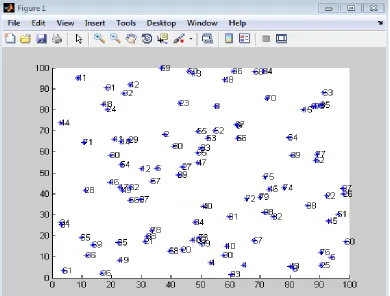
Figure 1 Generating node in grid with number
Available Online at www.ijpret.com 132
Figure 3 Deploying Sensor in network
Available Online at www.ijpret.com 133
Figure 5 Sensor Distribution at 100 cycle
Figure 6 Sensor Distribution at 1000 cycle
VI CONCLUSION AND FUTURE WORK
Available Online at www.ijpret.com 134
value after no. of cycle. & further Binary detection model is used for the dynamic deployment of sensor network. Output are taken at different no of cycle And increasing the no of cycle its coverage is improved compared to past result. Further its result can be compare with other algorithm.
VII REFERENCES
1. Balwant Kumar, Dharmendra Kumar “A Review on Artificial Bee Colony algorithm” IJET 2013.
2. Karaboga D, Basturk B “A powerful and efficient algorithm for numeric function optimization ABC Algorithm” Springer Science, April 2007.
3. Balwant Kumar, Dharmendra Kumar “ Optimization of Benchmark functions using ABC algorithm” IOSR Journal of engineering Issue 10, October 2013.