Copyright © 2018 (Hye Kyung Kim and Tae Kyoung Lee). Licensed under the Creative Commons Attribution Non-commercial No Derivatives (by-nc-nd). Available at http://ijoc.org.
Curious or Afraid of Using Study Drugs?
The Effects of Self-Referent Thoughts and Identification
on Anticipated Affect
HYE KYUNG KIM
1Nanyang Technological University, Singapore
TAE KYOUNG LEE
University of Utah, USA
This study examines 2 processes by which audience members relate to narratives that depict a character’s risky behavior and its harmful consequences: (1) narrative-stimulated thoughts about the audience’s self (self-referent thoughts) and (2) identification with the story character. In an experiment, college students read a story, written either from a first- or third-person perspective, in which a character illicitly used attention-deficit/hyperactivity disorder (ADHD) stimulants and experienced negative consequences. Compared with the third-person account, the first-person account increased antidrug (intended) self-referent thoughts, which in turn led to greater anticipation of negative affect after illicitly using ADHD stimulants. Although prodrug (unintended) self-referent thoughts were not influenced by the perspective of the story, they were positively associated with positive anticipated affect. As audience members identified with the story character, they were more likely to anticipate positive affect after the illicit stimulant usage. This study advances narrative persuasion theory by identifying different pathways through which narratives produce intended and unintended effects.
Keywords: self-referent thought, narrative perspective, identification, anticipated affect, unintended effects
Narrative messages that depict harmful consequences of a risky behavior have been widely used in risk communication campaigns to prevent audience members from engaging in the risky behavior (Dal Cin, Zanna, & Fong, 2004; Slater & Rouner, 2002). However, not all narrative-based media campaigns have achieved their goals, and some have even resulted in unintended effects (Byrne, Linz, & Potter,
Hye Kyung Kim: [email protected] Tae Kyoung Lee: [email protected] Date submitted: 2017–04–16
1 This work was supported by a Start-Up Grant [M4081367.606], Nanyang Technological University,
2009; Cho & Salmon, 2007; Hornik, Jacobsohn, Orwin, Piesse, & Kalton, 2008). For example, exposure to the National Youth Anti-Drug Campaign’s narrative-based advertisement reduced American youths’ intentions to avoid using marijuana and antidrug social norms (Hornik et al., 2008).
Although narrative messages in risk communication generally aim to exhibit the negative consequences of a risky behavior to discourage its performance, audience members sometimes miss this “intended” component and instead focus on “unintended” components in the narrative (Kreuter et al., 2007; Moyer-Gusé, Chung, & Jain, 2011). This study aims to improve understanding of when and how narratives designed to deliver risk information (hereafter referred to as a risk narrative) produce intended and unintended effects. In particular, we examine when a risk narrative leads to intended or unintended message effects, focusing on the experience of anticipated negative or positive affect after engaging in a risky behavior in the context of illicit study-drug use.
Prior research has shown that people engage in risky behaviors more as they experience positive anticipated affect (e.g., joy; Carrera, Caballero, & Muñoz, 2012) and less as they experience negative anticipated affect (e.g., regret; Richard, van der Pligt, & deVries, 1996; also see Rivis, Sheeran, & Armitage, 2009; Sandberg & Conner, 2008). Thus, an increase in negative anticipated affect (e.g., regret, guilt, fear) and a suppression of positive anticipated affect (e.g., comfort, happiness, elation) toward a risky behavior can reduce risky behaviors. Because a narrative message can describe what a person would feel after engaging in a risky behavior, narratives are a good message type to examine anticipated affect. However, little attention has been paid to anticipated affect about risky behaviors in narrative persuasion literature. To better understand when and how narratives produce intended or unintended anticipated affect, the current study examines the processes and factors that form different types of anticipated affect.
In this study, we propose two mechanisms that describe how audience members relate to narrative characters to examine how different types of anticipated affect are formed in response to a risk narrative: (1) self-referencing (Burnkrant & Unnava, 1989, 1995) and (2) identification (Cohen, 2001). When processing a narrative, audience members can relate themselves to a narrative character and imagine what the character feels (Cohen, 2001; Dunlop, Wakefield, & Kashima, 2010). This process enables audience members to anticipate their feelings after engaging in the risky behavior as the narrative protagonist does.
In the context of college students’ nonmedical use of attention-deficit/hyperactivity disorder (ADHD) stimulants, we propose that the narrative perspective (first person vs. third person) changes how audience members relate to and identify with a story character, which in turn produces different outcomes about positive and negative anticipated affect.
The Context: Nonmedical Use of ADHD Stimulants Among College Students
Enforcement Administration (DEA) classifies these stimulants as Schedule II substances—drugs with an accepted medical use, but with a high potential for abuse and dependency (DeSantis, Webb, & Noar, 2008). ADHD stimulants can cause sleep disorders, hyperactivity, jitters, headaches, and stomach problems. Overusing these drugs can lead to serious health consequences, including heart problems, psychosis, and even sudden death. However, many college students use them without a prescription to improve their academic performance (Brandt, Taverna, & Hallock, 2014; DeSantis et al., 2008; McCabe, Knight, Teter, & Wechser, 2005). According to a study, about 7% of full-time college students in the U.S. had used a study drug at least once without a prescription (McCabe et al., 2005). This high prevalence of use might have been attributed to college students’ belief that the illicit use of the stimulants was morally acceptable and physically harmless (DeSantis & Hane, 2010).
For educators and public health officials, it is thus important to educate college students about the negative consequences associated with taking ADHD stimulants without a prescription. A narrative approach would be useful to this end because narratives are capable of showing a sequence of connected events, such as cause-and-effect relationships (Kreuter et al., 2007).
Self-Referent Thoughts and Identification
When processing a narrative, audience members naturally relate themselves to narrative characters. To explain this process, media psychologists have suggested concepts such as self-referencing (Burnkrant & Unnava, 1989, 1995) and identification (Cohen, 2001). In the current study, we focus on self-referencing and identification, as these concepts have been most commonly used to explain persuasive mechanisms of narrative persuasion.
Intended and Unintended Self-Referent Thoughts
Self-referencing is an “experience that occurs when information is processed by relating it to aspects of oneself or one’s experiences” (Dunlop et al., 2010, p. 137). Several scholars have suggested that self-referencing is an important mechanism of narrative persuasion (de Graaf, 2014; Dunlop et al., 2010). When processing a narrative, self-referencing is triggered by reminding audience members of their prior experiences and encouraging them to think about what it would be like if the same events in the narrative happened to them (de Graaf, 2014; Dunlop et al., 2010; Larsen & Seilman, 1988). Self-referencing is distinguished from social comparison (Festinger, 1954) in that it does not necessarily involve evaluation by comparing oneself with another or others. Rather, in a narrative context, self-referencing is a process whereby audience members reflect on themselves while understanding a story. Research suggests that information linked to the self is more available and recalled than unrelated information, thus leading to more changes in beliefs and attitudes as intended (Burnkrant & Unnava, 1995).
audience members relate to a story, they cannot capture the qualitative aspects of self-referencing. Health campaigners expect audience members to learn the harmful consequences of a risky behavior to discourage the performance of the behavior. However, audience members may instead reflect on the positive expectancies of the risky behavior and, as a result, become interested in engaging in it. To capture how audience members relate themselves to a risky behavior, this study examines actual self-referent thoughts stimulated by a narrative message.
Persuasion scholars have long theorized that the amount and valence of message-stimulated thoughts are important determinants of the likelihood of persuasion (e.g., Petty & Cacioppo, 1986). In the narrative context, Slater and Rouner (2002) suggested that the net valence of narrative-stimulated thoughts predicts the outcome of narrative persuasion. Early work on narrative-stimulated thoughts focused on counterarguments, which refer to active refutation against a persuasive theme, to explain the efficacy of narratives at overcoming resistance to persuasion (e.g., Green & Brock, 2002; Moyer-Gusé, 2008; Slater & Rouner, 2002). In more recent studies, Niederdeppe and colleagues (Niederdeppe, Kim, Lundell, Fazili, & Frazier, 2012; Niederdeppe, Shapiro, Kim, Bartolo, & Porticella, 2014) have shown that thoughts about the intended persuasive outcome of a narrative explain unique variance in narrative persuasion, beyond counterarguments made against a message.
In the current study, self-referent thoughts refer to both retrospective and prospective thoughts that connect the self and a narrative. Applying the above-explained framework, self-referent thoughts can be categorized based on their alignment with the intended message of a risk narrative: (1) thoughts in line with the position implied in the narrative (intended self-referent thought) and (2) thoughts that run counter to the persuasive intent (unintended self-referent thought). In the context of a narrative designed to prevent college students’ use of study drugs, intended self-referent thoughts refer to any negative thoughts about using study drugs (e.g., “I don’t think I’d ever take those drugs”), whereas unintended self-referent thoughts refer to any positive thoughts about using study drugs (e.g., “Adderall has helped the few times I’ve taken it”).
Narrative perspective, a fundamental narrative feature, is likely to be an important factor that influences how audience members relate to and identify with a story character while processing a narrative.
Effects of Narrative Perspective
focalization). In first-person narratives, a character narrates his or her own experiences using internal focalization and first-person pronouns (“I”). On the other hand, an external observer narrates a character’s experiences using third-person pronouns (“she” or “he”) with varying levels of viewpoint representation in third-person narratives (Van Krieken et al., 2017). For this study, we adopt a linguistic definition of narrative perspective, focusing on the grammatical person (“I” vs, “she” or “he”), while keeping internal focalization in both first- and third-person narratives in describing a character’s perceptions and emotions.
Prior research has found inconsistent results on persuasive and processing outcomes, including a null effect (Nan, Futerfas, & Ma, 2017), a persuasive advantage of first-person over third-person narratives (e.g., Nan, Dahlstrom, Richards, & Rangarajan, 2015; Winterbottom, Bekker, Conner, & Mooney, 2008), and a conditional effect (Kaufman & Libby, 2012). In light of these inconsistencies, more research is warranted to better understand the boundary conditions and mechanisms for perspective effects.
Effects on Self-Referent Thoughts
Recent research in communication and social psychology has shown that the perspective from which a story is narrated can determine the degree to which audience members relate themselves to the story (Brunyé, Ditman, Mahoney, Augustyn, & Taylor, 2009; Chen, Bell, & Taylor, 2016; Kaufman & Libby, 2012). Because the use of first-person pronouns increases individual’s sense of identity or self-consciousness more than the use of other pronouns or agents (Wang & Hamilton, 2013; Wheeler, Jarvis, & Petty, 2001), the use of the first-person pronouns would implicitly prime the audience’s self-concept, thus making them think more about the relevance of the story content to themselves. Thus, a first-person narrative may lead audience members to better reflect on themselves, producing more self-referent thoughts as compared with a third-person narrative. We thus pose our first hypothesis as follows:
H1: First-person narratives will produce more self-referent thoughts than will third-person narratives.
It is largely unknown, however, what produces different types of self-referent thoughts. As we explained earlier, narrative persuasion should be influenced by the type of self-referent thoughts (intended vs. unintended) generated in response to a risk narrative. Narrative perspective might be one factor that influences whether audience members generate intended (antidrug) or unintended (prodrug) self-referent thoughts. To examine this possibility, we pose the following research question:
RQ1: Do first- and third-person narratives have different effects on intended and unintended self-referent thoughts?
Effects on Identification
Beentjes, 2012; Moyer-Gusé, 2008; Moyer-Gusé et al., 2011; Moyer-Gusé & Nabi, 2010, 2011). If the use of first-person pronouns (vs. third person) leads audience members to take the perspective of a story character, it should lead to greater identification. However, previous studies that varied the grammatical person in narratives have not reached a clear conclusion. In a study, when a story depicted an ingroup character (attending the same university as the participants) in the first-person perspective, participants assumed the identity of the character and were able to better imagine the character’s thoughts and emotions than when the story used the third-person perspective (Kaufman & Libby, 2012, Study 4). However, this study did not find the perspective effect when a story depicted an outgroup character (attending a different university than the participants), suggesting that a first-person narrative (vs. third-person) may not always lead to greater identification. Supporting this notion, a recent study found no perspective difference in identification in response to risk narratives (Nan et al., 2017). It is possible that a first-person narrative can help audience members relate themselves to a story (self-referencing), but not necessarily increase identification with a story character, which conceptually requires a character–audience merge. To explore this possibility, we pose a second research question:
RQ2: Do first- and third-person narratives have different effects on identification?
Relationship Between Self-Referent Thoughts and Identification
Audiences can experience narrative events either from the protagonist’s perspective by imaginatively sharing identity with the character (i.e., identification), or from their own perspective, by relating themselves to narrative events (i.e., self-referencing). Although self-referencing and identification explain the relations of audience members to the story character, they are conceptually distinctive from one another (de Graaf, 2014). In self-referencing, audience members reflect on their past and future expected experiences to understand the story while being aware of the self, whereas in the process of identification, audience members forget themselves as audience members as they merge their identity with a character— sharing the feelings, thoughts, and goals of the character.
Although self-referencing and identification are conceptually distinctive with regard to the involvement of self-awareness, they can occur sequentially, as audience members can move in and out of identification, shifting their roles from an external observer, which may involve self-referencing, to sharing identity with characters (Wilson, 1993). Moyer-Gusé (2008) theorizes that identification increases narrative persuasion by reducing the tendency for counterargument, because an immersive form of narrative engagement, like identification, takes up mental capacity. However, empirical evidence and conceptions pertaining to the relationship between identification and narrative-stimulated thoughts has been rather mixed, highlighting its complexity (e.g., Hoeken & Fikkers, 2014; Igartua & Casanova, 2016).
to be the case when audience members relate themselves negatively to the illicit use of ADHD stimulants, producing intended self-referent thoughts, while reading a narrative. On the other hand, when audience members relate positively to the illicit use of ADHD stimulants, producing unintended self-referent thoughts, they may be more capable of identifying with the story character who engages in the risky behavior. Because of a lack of empirical evidence, we pose a research question to examine these possibilities:
RQ3: How is identification associated with intended and unintended self-referent thoughts?
Anticipated Affect
Anticipated affect refers to “the prospect of feeling positive or negative emotions (e.g., exhilaration, regret) after performing or not performing a behavior” (Rivis et al., 2009, p. 2987). To experience anticipated affect, a decision maker should be able to imagine the possible outcomes of an action through identifying and evaluating the consequences of performing or not performing it (Bagozzi, Baumgartner, & Pieters, 1998). This cognitively based emotional reaction may not be in response to an immediate outcome, but one that is to be expected in the future and can be prompted during or after a narrative exposure. Expectation of emotions can motivate action (Frijda, 1986), and thus supplements cognition-based persuasion theories in predicting intentions to engage in risky behaviors (e.g., Rivis et al., 2009; Sandberg & Conner, 2008).
Affective responses, such as anticipated affect, have been suggested to influence risk decision making and volitional processes (e.g., Ortony & Turner, 1990; Rivis et al., 2009). Negative anticipated affect has been found to increase risk awareness, which causes people to become more risk averse and determined to do what is necessary to avoid risks. In one study, for instance, participants’ experience of negative anticipated affect after unprotected sex (e.g., regret) made these individuals less likely to have unprotected sex (Richard et al., 1996). On the other hand, positive anticipated affect was shown to promote risk-taking behaviors. In a study, intentions to engage in binge drinking increased with greater positive anticipated affect after binge drinking (e.g., joy; Carrera et al., 2012). Despite its critical role in persuasion, little is known about the processes by which anticipated affect is formed in response to a risk narrative. Here, we examine self-referent thoughts and identification as potential mechanisms.
The type of specific emotions elicited by a narrative would depend on how an audience member evaluates the story situation and applies it to him- or herself (Frijda, 1986). When audience members read a risk narrative, they are likely to imagine the possible consequences through identifying and evaluating positive and negative outcomes of a risky behavior. When their evaluation is overall positive, producing unintended self-referent thoughts, they would anticipate positive affect after engaging in the behavior. On the other hand, when the outcome evaluation is negative, producing intended self-referent thoughts, audience members would have negative anticipated affect.
H2: (a) Intended self-referent thoughts will be associated with an increase in negative anticipated affect, whereas (b) unintended self-referent thoughts will be associated with an increase in positive anticipated affect.
By imaginatively taking the perspective of a character, audience members are better able to anticipate emotions that could be experienced after engaging in a risky behavior. Although identification in general involves an intense emotional experience (Cohen, 2001), the valence of anticipated affect may be determined by the specific aspects of a character with which audience members identify. When a narrative describes a character’s negative behaviors, for instance, audience members can identify with the character who decides to engage in the risky behaviors and/or who suffers from its consequences. Once audience members identify with a story character, they may be predisposed to desire positive outcomes for that character, as it feels like their own experience. This raises a possibility that identification could also prompt positive anticipated affect after engaging in a risky behavior beyond the conventional understanding that identification promotes narrative persuasion (e.g., de Graaf et al., 2012; Moyer-Gusé, 2008). Because of a lack of empirical evidence, we ask the following research question:
RQ4: How is identification associated with negative and positive anticipated affect?
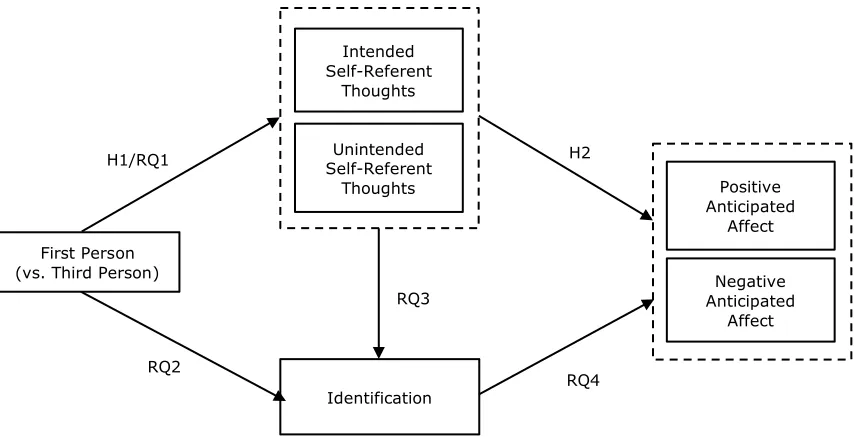
[image:8.612.94.521.385.604.2]Hypotheses and research questions are summarized in Figure 1.
Figure 1. Processes of intended and unintended narrative effects.
Positive Anticipated
Affect
Negative Anticipated
Affect Intended
Self-Referent Thoughts
Unintended Self-Referent
Thoughts
Identification First Person
(vs. Third Person) H1/RQ1
RQ2
H2
Method
We used data from two randomized experiments that manipulated narrative perspective. In the first experiment, participants were randomly assigned to one of the two perspective conditions (first person vs. third person). In the second experiment, participants were first instructed to read a story either analytically or experientially before being randomly assigned to one of the two perspective conditions. The reading instruction intended to induce different modes of narrative processing, and its detailed conceptions and effects, are reported elsewhere (Kim & Shapiro, 2016). Conceptually, this manipulation was not expected to influence current study variables and their relationships. As we expected, the reading instruction did not change any study variables (all pair-wise comparisons2 p > .05), and the covariance
between study variables did not change with or without the manipulation. Thus, we excluded this factor from the study.
Study procedures and materials were identical in the two studies, except for the reading instructions. In both studies, participants wrote up to five thoughts that they had in mind while they were reading the narrative, and rated identification and anticipated affect. When analyzed separately, the two data sets showed identical patterns for each hypothesis. To increase effect size, we thus combined two experimental data in reporting study results.
In total, 351 college students (Study 1, N = 134; Study 2, N = 217) at an East Coast university in the United States electronically participated in the study for extra course credits. Respondents were 72% female, of whom 63% identified as White. Ages ranged from 18 to 44 years (M = 19.73, SD = 1.84).
Narrative Perspective: First Person Versus Third Person
Participants were asked to read one version of the story, either a story written in the first-person perspective by using first-person pronouns (e.g., “I,” “my,” “me”) or a story written in the third-person perspective by using third-person pronouns (e.g., “Maggie,” “she,” “her”). Story content was identical in both story versions, except for the use of different pronouns. Based on newspaper reports on college students’ study-drug use (e.g., “Illicit ‘Study Drugs,’” 2005), the story described a relatable college student’s experience taking ADHD stimulants without a prescription, collapsing in a dorm bathroom, and waking up in an emergency room. The character is described as a hardworking, motivated student who happened to learn about the “study drug” and ended up being addicted to it. The story details the internal thoughts and emotions of the character, such as why she had to continue taking ADHD stimulants to enhance her academic performance (“because my [she thought her] grades and career depended on it”; “With the drug, I [she] was
2 The effect of reading instruction on intended (analytic vs. experiential, p = .63; analytic vs. no goal p =
more driven. I [She] focused. I [She] wasn’t distracted by anything else”). The story also described side effects of using study drugs, such as having jitters and trouble falling asleep.3
Measures
Self-Referent Thoughts
Using the thought-listing technique (Cacioppo & Petty, 1981), participants were asked to write down up to five thoughts they had while reading the story. Two trained coders independently coded thoughts written by participants. Hypotheses and experimental conditions were not revealed to the coders. Coders first decided whether or not each thought was self-referent. Any thoughts about participants’ own experiences or reflecting on themselves were coded as self-referent thoughts. Coders then further coded self-referent thoughts according to whether each was in line with the position implied in the narrative (i.e., antistudy drug; intended), ran counter to the persuasive intent (i.e., prostudy drug; unintended) or lacked an explicit position toward the issue addressed in the narrative (i.e., neutral). For instance, intended self-referent thoughts included “I don’t think I’d ever take those drugs” and “Probably a good thing I’ve never used Adderall.” Unintended self-referent thoughts included “I want to take it too” and “Adderall has helped the few times I’ve taken it.” Neutral self-referent thoughts included “Do I need drugs like those in my current situation?” and “Would I ever take Ritalin or Adderall?”
About 28% of the thoughts were double coded, and the first author resolved any disagreements between the coders. Intercoder reliability was reasonably good (self-relevant vs. not self-relevant, Krippendorff’s α = .88; intended vs. unintended vs. neutral, Krippendorff’s α = .74). Of the total coded thoughts (n = 1,398), 19% were self-referent thoughts. Within self-referent thoughts, 41% were intended thoughts, 10% were unintended thoughts, and the rest were neither. Because participants’ total intended, unintended, and neutral self-referent thoughts were positively skewed, to avoid violating statistical assumptions, we transformed the data into a binary variable, whether or not each participant created at least one thought in the categories. Among 351 participants, 161 participants created at least one self-referent thought (intended, n = 84; unintended, n = 20; neutral, n = 97). We performed parallel analyses with the continuous measures of self-referent thoughts, and found largely consistent patterns with the results using the dichotomized variable.
Identification
We used a 10-item identification scale adopted from Cohen (2001). For instance, items included “I think I have a good understanding of the main character” and “While reading the story I could feel the emotions the main character portrayed” (1 = not at all, 7 = very much). We averaged responses into an identification scale (Cronbach’s α = .91, M = 4.16, SD = 1.19).
Anticipated Affect
3 Message conditions can be found at
Derived from Rivis et al. (2009), participants rated how much they would feel (1) 11 types of negative affect (i.e., regret, guilty, gloomy, scared, paranoid, weary, embarrassed, frustrated, anxious, fearful, panic) and (2) 9 types of positive affect (i.e., comfortable, feeling high, joyful, happy, pleasant, vivacious, vigorous, energetic, elated) if they took ADHD stimulants without a prescription. We averaged 11 negative anticipated affect (Cronbach’s α = .93, M = 3.29, SD = .92) and 9 positive anticipated affect items (Cronbach’s α = .84, M = 2.74, SD = .67). We also created a binary index4 of
dominant anticipated affect to examine as a supplementary outcome (29.3% positive, 64.7% negative; 6% neutral or else treated as system missing).
Analytic Approach
We started the analyses by comparing data from the two experiments. Participants in the two studies did not differ in terms of age and study-drug-relevant experiences (p > .05). However, we had higher proportions of male (36%) and Asian (30%) participants in the first study than in the second one (respectively, 22%, χ² = 8.72, p = .01; 16%, χ² = 10.05, p = .002). Of the respondents, 20% had previously used ADHD stimulants (9% with a prescription), and 4% reported that they had medical problems after using the stimulants. Participants also reported how often they had used (M = 1.39, SD = .89) and were tempted5 (M = 1.85, SD = 1.13) to use ADHD stimulants on a 5-point scale (1 = never; 5
= very often). However, including factors like gender, Asian ethnicity, as well as study drug relevant attitudes and experiences in the analyses did not change the results from the analyses without those covariates. For the sake of simplicity, we thus report results from the analyses that excluded those covariates.
To examine H1 and RQ1, a series of binominal logistic regressions were performed entering narrative perspective as a predictor and three types of self-referent thoughts (i.e., total, intended, and unintended self-referent thoughts) as dependent factors. We performed a series of analyses of variance (ANOVAs) testing effects of narrative perspective (RQ2) and self-referent thoughts (H2, RQ3) on identification and anticipated affect. We used an analysis of covariance (ANCOVA) to examine the effect of identification on anticipated affect (RQ4). Although not hypothesized, we included neutral self-referent thoughts in the analyses and reported relevant findings.
4 To create an index of dominant anticipated affect, we first subtracted negative anticipated affect from
positive anticipated affect composite score. Then, we coded scores below zero as dominantly negative and those above zero as dominantly positive.
5 Prior attitude toward ADHD stimulants (being tempted to use) was positively associated with unintended
Results
Effects of Narrative Perspective
We expected that first-person narratives would produce more self-referent thoughts (H1) and identification (RQ2) than would third-person narratives. Results showed that the odds of a participant having self-referent thoughts were 1.54 times higher when the participant read a narrative in the first-person perspective than in the third-first-person perspective (B = .43, SE = .22, Wald χ² = 4.00, p < .05; H1 supported). Narrative perspective did not influence identification (M1st = 4.22, SD = 1.20; M3rd = 4.09, SD
= 1.19), F(1, 349) = 1.08, p = .30.
In addition, we asked if narrative perspective has effects on intended and unintended self-referent thoughts (RQ1). Compared with the third-person narrative, the first-person narrative was more likely to produce intended self-referent thoughts (OR = 1.82, B = .60, SE = .26, Wald χ² = 5.46, p = .02). However, there was no perspective difference on unintended (p = .08) or neutral self-referent thoughts (p = .67).
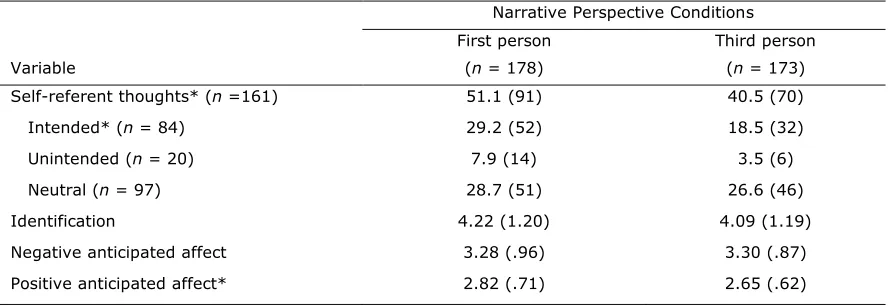
Although not hypothesized, first-person narratives (M = 2.82, SD = .71) produced significantly higher positive anticipated affect than did third-person narratives (M = 2.65, SD = .62), F(1, 346) = 5.15, p = .02, ηp2 = .02. There was no narrative perspective difference on negative anticipated affect (M1st =
[image:12.612.85.529.413.566.2]3.28, SD = .96; M3rd = 3.30, SD = .87), F(1, 347) = .04, p = .84. Table 1 presents these results.
Table 1. Self-Referent Thoughts, Identification, and Anticipated Affect by Perspectives. Narrative Perspective Conditions
Variable
First person (n = 178)
Third person (n = 173)
Self-referent thoughts* (n =161) 51.1 (91) 40.5 (70)
Intended* (n = 84) 29.2 (52) 18.5 (32)
Unintended (n = 20) 7.9 (14) 3.5 (6)
Neutral (n = 97) 28.7 (51) 26.6 (46)
Identification 4.22 (1.20) 4.09 (1.19)
Negative anticipated affect 3.28 (.96) 3.30 (.87)
Positive anticipated affect* 2.82 (.71) 2.65 (.62)
Note. Data are shown as % (n) for self-referent thoughts and as M (SD) for identification and anticipated affect.
Associations Between Self-Referent Thoughts and Identification
RQ3 asked about the relationship between identification and intended versus unintended self-referent thoughts. Participants identified more with the story character when they had self-self-referent thoughts (M = 4.36, SD = 1.19) than when they did not (M = 3.99, SD = 1.17), F(1, 349) = 8.83, p = .003, ηp2 = .03. When analyzed separately by the valence of self-referent thoughts, participants who had
unintended self-referent thoughts identified marginally more with the character (M = 4.57, SD = 1.24) than those who did not have unintended thoughts (M = 4.13, SD = 1.86), F(1, 349) = 2.54, p = .06 (one-tailed), ηp2 = .01. However, having intended self-referent thoughts was not associated with identification
(having intended thoughts: M = 4.21, SD = 1.21; not having intended thoughts: M = 4.14, SD = 1.19), F(1, 349) = .65, p = .65. Participants who had neutral self-referent thoughts (M = 4.52, SD = 1.17) rated significantly higher identification as compared with those who did not have neutral thoughts (M = 4.02, SD = 1.17), F(1, 349) = 13.08, p < .001, ηp2 = .04.
Correlates of Anticipated Affect
H2 predicted that (a) negative anticipated affect would be associated with an increase in intended self-referent thoughts, and (b) positive anticipated affect would be associated with an increase in unintended self-referent thoughts. As predicted, participants rated higher on negative anticipated affect when they had intended self-referent thoughts (M = 3.49, SD = .77) than when they did not (M = 3.22, SD = .95), F(1, 347) = 5.39, p = .02, ηp2 = .02. Participants rated higher on positive anticipated affect
when they had unintended self-referent thoughts (M = 3.07, SD = .85) than when they did not (M = 2.72, SD = .65), F(1, 347) = 5.31, p = .02, ηp2 = .02. Neutral self-referent thoughts were associated neither
with positive nor negative anticipated affect. Thus, H2 was supported.
RQ4 asked about the relationship between identification and negative and positive anticipated affect. We found a positive association between identification and positive anticipated affect (B = .07, SE = .03, p = .02). However, negative anticipated affect was not associated with identification (B = .01, SE = .04, p = .75).
We found consistent patterns with the binary coded dominant anticipated affect in regard to the relationship with self-referent thoughts. Participants who had intended self-referent thoughts were less likely to produce positive anticipated affect as a dominant response (OR = .48, B = −.75, SE = .31, Wald χ² = 5.81, p = .02). On the other hand, those who had unintended self-referent thoughts were more likely to produce positive anticipated affect as a dominant response (OR = 2.75, B = 1.01, SE = .49, Wald χ² = 4.23, p = .04). Neural self-referent thoughts (Wald χ² = .22, p = .64) and identification (Wald χ² = .42, p = .52) were not associated with dominant anticipated affect.
Post Hoc Mediation Analyses
to positive and negative anticipated affect (see Figure 1). Specifically, we examined two mediation pathways using the PROCESS macro for SPSS (Preacher & Hayes, 2008): (1) narrative perspective à intended self-referent thought à negative anticipated affect, and (2) unintended or neutral self-referent thought à identification à positive anticipated affect. Because the PROCESS macro does not allow entering binary mediators, we used the continuous measure of intended self-referent thought (log transformed to reduce the skew) in testing the first mediation path. Intended self-referent thought was a significant mediator between the effect of narrative perspective on negative anticipated affect, indirect effect 95% CI [−.14, −.01]. Identification was a significant mediator of the effect of neutral self-referent thoughts on positive anticipated affect, 95% CI [.01, .09], but not for the effect of unintended self-referent thoughts, indirect effect 95% CI [.002, −.11]. Instead, unintended self-referent thoughts had a direct associated with positive anticipated affect, 95% CI [.02, .62].
Discussion
This study examined the processes of how audience’s self-referent thoughts stimulated by first/third-person narratives led to positive or negative anticipated affect about the illicit use of ADHD stimulants. Compared with a third-person account, a first-person account increased intended (antidrug) self-referent thoughts, which enabled audiences to expect negative affect after illicitly using ADHD stimulants. Although unintended (prodrug) self-referent thoughts were not influenced by the narrative perspective, they were positively associated with positive anticipated affect. When audience members produced neutral self-referent thoughts, they were more likely to identify with the story character, which in turn made these individuals anticipate positive affect after the illicit stimulant usage.
This study advances narrative persuasion theory by identifying different pathways through which narratives produce intended and unintended effects. We proposed that self-referent thoughts constitute an important factor in determining how audience members identify with a character who engages in a risky behavior, and in forecasting their feelings after engaging in the risky behavior themselves. Our findings also shed some light on the persuasive mechanisms of first-person narratives (testimonials), which have been widely adopted in health campaigns. Finally, we offer plausible explanations for the inconsistent results reported on the relationship between narrative-stimulated thoughts and character identification.
Intended Self-Referent Thoughts as a Persuasive Mechanism
First-person narratives may activate different categories of self-referent thoughts depending on how the issue at hand is described in the narrative, or the specific narrative components that an audience member pays close attention to. In light of the general human tendency to maintain positive self-conceptions, audience members may be predisposed to elaborate on an issue that is consistent with their preferred self-concept (e.g., “I am not a person who engages in a risky behavior”) when their self is activated by the first-person narrative. In the current study, prior attitudes toward ADHD stimulants were positively associated with unintended self-referent thoughts, although prior attitudes did not change the effect of perspective on self-referent thoughts. Future work should further investigate the role of prior attitudes and experiences that prompt different categories of self-referent thoughts.
The results of this study showed that the first/third-person perspective, operationalized by using different pronouns to refer the protagonist, did not change identification, consistent with prior research findings (e.g., Kaufman & Libby, 2012; Nan et al., 2015). One possibility is that the use of first-person pronouns is more closely related to the activation of self-concept, and thus self-referencing. However, the use of first-person pronouns may not directly lead to identification, which involves the loss of self-awareness (Cohen, 2001). This speculative explanation, however, requires further research.
Relationship Between Narrative-Stimulated Thoughts and Identification
Scholars have addressed the complexity of the relationship between identification and narrative-stimulated thoughts (e.g., Hoeken & Fikkers, 2014; Igartua & Casanova, 2016). The inconsistent results reported in the literature could be attributed, at least in part, to the unique characteristics of the experience of identification. Scholars have noted that narrative audiences can shift their roles from an external observer to sharing identity with characters (Wilson, 1993). When audience members observe narrative events as external observers, they are likely to integrate narrative information with their own experiences and prior beliefs, engaging in self-referencing (Larsen & Seilman, 1988; Oatley, 1994, 1999). This process may change the extent to which an audience member identifies with a protagonist. In the current study, self-referent thoughts were positively associated with identification with the protagonist described as an individual who engages in a risky behavior. In particular, having neutral (and marginally unintended) self-referent thoughts was positively associated with identification, which in turn increased audience members’ positive anticipated affect. Producing neutral self-referent thoughts such as “Do I need drugs like those in my current situation?” could be an indication of focusing on incidental factors to the story’s persuasive goal while missing the intended persuasive message.
Anticipated Affect and Negative Implications of Identification With a Character
Many scholars have suggested that identification promotes narrative persuasion (e.g., Moyer-Gusé et al., 2011; Moyer-Moyer-Gusé & Nabi, 2010). Our results expand the research agenda by suggesting that identification may also lead to unintended effects producing positive anticipated affect after the performance of a risky behavior. Although audience members often find it difficult to identify with a character who has negative traits (e.g., Chung & Slater, 2013; Sestir & Green, 2010; Tal-Or & Cohen, 2010), once they take the character’s perspective through identification, they are likely to wish positive outcomes for the character, thus, anticipating positive affect after engaging in a risk behavior. This raises concerns over using narrative messages that describe protagonist’s risky behaviors. Nonetheless, this study examined one type of a risk narrative. More work is needed to better understand the boundary conditions for the unintended effect of risk narratives.
Because narrative reading inherently involves emotional experience, narrative researchers have emphasized the role of emotional responses in explaining narrative impact (Oatley, 2002). However, most studies focus on fear appeals or other negative affective responses, while neglecting positive affective responses that may explain unintended narrative effects. Furthermore, studies have examined immediate reactions to narratives, but anticipated affect has not been adequately addressed in the narrative persuasion literature. The experience of anticipated affect requires audience members to imagine possible outcomes by identifying and evaluating the consequences of performing a risky behavior for themselves. Thus, anticipated affect is likely to be an important outcome in narrative persuasion. Future work can examine discrete emotions associated with different action tendencies (Frijda, 1986) beyond binary categorization of anticipated affect. In addition, personality factors, such as consideration of future consequences (Strathman, Gleicher, Boninger, & Edwards, 1994), may be associated with different anticipated affect triggered by a risk narrative. Collectively, more work is warranted to better understand the role of anticipated affect, which constitutes an exciting new avenue for future research in narrative persuasion.
Limitations and Future Studies
Conclusions
When exposed to a risk narrative, audience members sometimes miss the “intended” message and instead focus on “unintended” components in the risk narrative. It is thus important to understand when and how a risk narrative leads to intended or unintended effects. The first/third-person perspective appears to be an important feature that changes how narrative audiences relate themselves to a character’s situations, which may directly or indirectly lead to differential persuasive outcomes. Although identification has been suggested as a key mechanism of narrative persuasion, it could lead to a counterproductive effect—increasing positive anticipated affect—depending on which narrative components audience members relate to. This study thus highlights the importance of character portrayals in producing intended persuasive effects.
References
Bagozzi, R. P., Baumgartner, H., & Pieters, R. (1998). Goal-directed emotions. Cognition & Emotion, 12(1), 1–26. doi:10.1080/026999398379754
Black, J. B., Turner, T. J., & Bower, G. H. (1979). Point of view in narrative comprehension, memory, and production. Journal of Verbal Learning and Verbal Behavior, 18(2), 187–198. doi:10.1016/S0022-5371(79)90118-X
Brandt, S. A., Taverna, E. C., & Hallock, R. M. (2014). A survey of nonmedical use of tranquilizers, stimulants, and pain relievers among college students: Patterns of use among users and factors related to abstinence in non-users. Drug and Alcohol Dependence, 143, 272–276.
doi:10.1016/j.drugalcdep.2014.07.034
Brooks, C., & Warren, R. P. (1972). Modern rhetoric. New York, NY: Harcourt Brace Jovanovich.
Brunyé, T. T., Ditman, T., Mahoney, C. R., Augustyn, J. S., & Taylor, H. A. (2009). When you and I share perspectives: Pronouns modulate perspective taking during narrative comprehension.
Psychological Science, 20(1), 27–32. doi:10.1111/j.1467-9280.2008.02249.x
Burnkrant, R. E., & Unnava, H. R. (1989). Self-referencing: A strategy for increasing processing of message content. Personality and Social Psychology Bulletin, 15(4), 628–638.
doi:10.1177/0146167289154015
Burnkrant, R. E., & Unnava, H. R. (1995). Effects of self-referencing on persuasion. Journal of Consumer Research, 22(1), 17–26. doi:10.1086/209432
Cacioppo, J. T., & Petty, R. E. (1981). Social psychological procedures for cognitive response assessment: The thought-listing technique. In T. V. Merluzzi, C. R. Class, & M. Genest (Eds.), Cognitive assessment (pp. 309–342). New York, NY: Guilford.
Carrera, P., Caballero, A., & Muñoz, D. (2012). Future-oriented emotions in the prediction of binge-drinking intention and expectation: The role of anticipated and anticipatory emotions.
Scandinavian Journal of Psychology, 53(3), 273–279. doi:10.1111/j.1467-9450.2012.00948.x
Chen, M., Bell, R. A., & Taylor, L. D. (2016). Narrator point of view and persuasion in health narratives: The role of protagonist-reader similarity, identification, and self-referencing. Journal of Health Communication, 21(8), 908–918. doi:10.1080/10810730.2016.1177147
Cho, H. Y., & Salmon, C. T. (2007). Unintended effects of health communication campaigns. Journal of Communication, 57(2), 293–317. doi:10.1111/j.1460-2466.2007.00344.x
Chung, A. H., & Slater, M. D. (2013). Reducing stigma and out-group distinctions through perspective-taking in narratives. Journal of Communication, 63(5), 894–911. doi:10.1111/jcom.12050
Cohen, J. (2001). Defining identification: A theoretical look at the identification of audiences with media characters. Mass Communication & Society, 4(3), 245–264.
doi:10.1207/S15327825MCS0403_01
Cohen, J., Tal-Or, N., & Mazor-Tregerman, M. (2015). The tempering effect of transportation: Exploring the effects of transportation and identification during exposure to controversial two-sided narratives. Journal of Communication, 65(2), 237–258. doi:10.1111/jcom.12144
Dal Cin, S., Zanna, M., & Fong, G. (2004). Narrative persuasion and overcoming resistance. In E. Knowles & J. Linn (Eds.), Resistance to persuasion (pp. 175–191). Mahwah, NJ: Erlbaum.
de Graaf, A. (2014). The effectiveness of adaptation of the protagonist in narrative impact: Similarity influences health beliefs through self-referencing. Human Communication Research, 40(1), 73– 90. doi:10.1111/hcre.12015
de Graaf, A., Hoeken, H., Sanders, J., & Beentjes, J. W. J. (2012). Identification as a mechanism of narrative persuasion. Communication Research, 39, 802–823. doi:10.1177/0093650211408594
DeSantis, A. D., & Hane, A. C. (2010). “Adderall is definitely not a drug”: Justifications for the illegal use of ADHD stimulants. Substance Use & Misuse, 45, 31–46.
Dunlop, S., Wakefield, M., & Kashima, Y. (2010). Pathways to persuasion: Cognitive and experiential responses to health-promoting mass media messages. Communication Research, 37(1), 133– 164. doi:10.1177/0093650209351912
Festinger, L. (1954). A theory of social comparison processes. Human Relations, 7(2), 117–140. doi:10.1177/001872675400700202
Frijda, N. (1986). The emotions. Cambridge, UK: Cambridge University Press.
Green, M. C., & Brock, T. C. (2002). In the mind’s eye: Transportation-imagery model of narrative persuasion. In M. C. Green & T. C. Brock (Eds.), Narrative impact: Social and cognitive foundations (pp. 315–341). Mahwah, NJ: Erlbaum.
Hoeken, H., & Fikkers, K. M. (2014). Issue-relevant thinking and identification as mechanisms of narrative persuasion. Poetics, 44, 84–99. doi:10.1016/j.poetic.2014.05.001
Hornik, R., Jacobsohn, L., Orwin, R., Piesse, A., & Kalton, G. (2008). Effects of the national youth anti-drug media campaign on youths. American Journal of Public Health, 98(12), 2229–2236. doi:10.2105/AJPH.2007.125849
Igartua, J.-J., & Casanova, J. V. (2016). Identification with characters, elaboration, and counterarguing in entertainment-education interventions through audiovisual fiction. Journal of Health
Communication, 21, 293–300. doi:10.1080/10810730.2015.1064494
Illicit “study drugs” tempting more students. (2005). ABC News. Retrieved from
http://abcnews.go.com/Primetime/Health/story?id=814896&page=1#.UJLN7Gk-
Kaufman, G. F., & Libby, L. K. (2012). Changing beliefs and behavior through experience-taking. Journal of Personality and Social Psychology, 103(1), 1–19. doi:10.1037/a0027525
Kim, H. K., & Shapiro, M. A. (2016). When bad things happen to a protagonist like you: The role of self in resistance to negatively framed health narratives. Journal of Health Communication, 21(12), 1227–1235. doi:10.1080/10810730.2016.1240268
Kreuter, M. W., Green, M. C., Cappella, J. N., Slater, M. D., Wise, M. E., Storey, D., . . . Woolley, S. (2007). Narrative communication in cancer prevention and control: A framework to guide research and application. Annals of Behavioral Medicine, 33(3), 221–235.
doi:10.1080/08836610701357922
Marett, E. G. (2015). When bad things happen to bad people: Using disposition theory to explore the effects of cautionary tales. Journal of Health Communication, 20(3), 266–274.
doi:10.1080/10810730.2014.921740
McCabe, S. E., Knight, J. R., Teter, C. J., & Wechser, H. (2005). Non-medical use of prescription stimulants among U.S. college students: Prevalence and correlates from a national survey. Addiction, 100(4), 96–106. doi:10.1111/j.1360-0443.2005.00944.x
Moyer-Gusé, E. (2008). Toward a theory of entertainment persuasion: Explaining the persuasive effects of entertainment-education messages. Communication Theory, 18, 407–425. doi:10.1111/j.1468-2885.2008.00328.x
Moyer-Gusé, E., Chung, A. H., & Jain, P. (2011). Identification with characters and discussion of taboo topics after exposure to an entertainment narrative about sexual health. Journal of
Communication, 61(3), 387–406. doi:10.1111/j.1460-2466.2011.01551.x
Moyer-Gusé, E., & Nabi, R. L. (2010). Explaining the effects of narrative in an entertainment television program: Overcoming resistance to persuasion. Human Communication Research, 36(1), 26–52. doi:10.1111/j.1468-2958.2009.01367.x
Moyer-Gusé, E., & Nabi, R. L. (2011). Comparing the effects of entertainment and educational television programming on risky sexual behavior. Health Communication, 26(5), 416–426.
doi:10.1080/10410236.2011.552481
Nan, X. L., Dahlstrom, M. F., Richards, A., & Rangarajan, S. (2015). Influence of evidence type and narrative type on HPV risk perception and intention to obtain the HPV vaccine. Health Communication, 30(3), 301–308. doi:10.1080/10410236.2014.888629
Nan, X., Futerfas, M., & Ma, Z. (2017). Role of narrative perspective and modality in the persuasiveness of public service advertisements promoting HPV vaccination. Health Communication, 32(3), 320– 328. doi:10.1080/10410236.2016.1138379
Niederdeppe, J., Kim, H. K., Lundell, H., Fazili, F., & Frazier, B. (2012). Beyond counterarguing: Simple elaboration, complex integration, and counterelaboration in response to variations in narrative focus and sidedness. Journal of Communication, 62(5), 758–777.
doi:10.1111/j.1460-2466.2012.01671.x
Niederdeppe, J., Shapiro, M. A., Kim, H. K., Bartolo, D., & Porticella, N. (2014). Narrative persuasion, causality, complex integration, and support for obesity policy. Health Communication, 29(5), 431–444. doi:10.1080/10410236.2012.761805
Oatley, K. (1999). Meetings of minds: Dialogue, sympathy, and identification, in reading fiction. Poetics, 26(5–6), 439–454. doi:10.1016/S0304-422X(99)00011-X
Oatley, K. (2002). Emotions and the story worlds of fiction. In M. C. Green, J. J. Strange, & T. C. Brock (Eds.), Narrative impact: Social and cognitive foundations (pp. 39–69). Mahwah, NJ: Erlbaum.
Ortony, A., & Turner, T. J. (1990). What’s basic about basic emotions? Psychological Review, 97(3), 315– 331.
Petty, R. E., & Cacioppo, J. T. (1986). The elaboration likelihood model of persuasion. In L. Berkowitz (Ed.), Advances in experimental social psychology (Vol. 19, pp. 123–205). New York, NY: Academic Press.
Preacher, K. J., & Hayes, A. F. (2008). Asymptotic and resampling strategies for assessing and comparing indirect effects in multiple mediator models. Behavior Research Methods, 40, 879–891.
doi:10.3758/BRM.40.3.879
Richard, R., van der Pligt, J., & de Vries, N. (1996). Anticipated regret and time perspective: Changing sexual risk-taking behavior. Journal of Behavioral Decision Making, 9(3), 185–199.
doi:10.1002/(SICI)1099-0771(199609)9:3<185::AID-BDM228>3.0.CO;2-5
Rivis, A., Sheeran, P., & Armitage, C. J. (2009). Expanding the affective and normative components of the theory of planned behavior: A meta-analysis of anticipated affect and moral norms. Journal of Applied Social Psychology, 39(12), 2985–3019. doi:10.1111/j.1559-1816.2009.00558.x
Sandberg, T., & Conner, M. (2008). Anticipated regret as an additional predictor in the theory of planned behaviour: A meta-analysis. British Journal of Social Psychology, 47, 589–606.
doi:10.1348/014466607X258704
Sestir, M., & Green, M. C. (2010). You are who you watch: Identification and transportation effects on temporary self-concept. Social Influence, 5(4), 272–288. doi:10.1080/15534510.2010.490672
Slater, M. D., & Rouner, D. (2002). Entertainment-education and elaboration likelihood: Understanding the processing of narrative persuasion. Communication Theory, 12(2), 173–191.
doi:10.1111/j.1468-2885.2002.tb00265.x
Strathman, A., Gleicher, F., Boninger, D. S., & Edwards, C. S. (1994). The consideration of future
consequences: Weighing immediate and distant outcomes of behavior. Journal of Personality and Social Psychology, 66(4), 742–752. doi:10.1037/0022-3514.66.4.742
Van Krieken, K., Hoeken, H., & Sanders, J. (2017). Evoking and measuring identification with narrative characters—A linguistic cues framework. Frontiers in Psychology, 8, 1190.
doi:10.3389/fpsyg.2017.01190
Wang, Y., & Hamilton, A. F. D. (2013). Understanding the role of the “self” in the social priming of mimicry. PLOS ONE, 8(4), doi:10.1371/journal.pone.0060249
Wheeler, S. C., Jarvis, W. B. G., & Petty, R. E. (2001). Think unto others: The self-destructive impact of negative racial stereotypes. Journal of Experimental Social Psychology, 37(2), 173–180. doi:10.1006/jesp.2000.1448
Wilson, T. (1993). Watching television. Cambridge, UK: Polity.