357
Abbreviations: BCT, beet curly top; BNYVV, Beet necrotic yellow vein virus; CMS, cytoplasmic male
sterility; GHG, greenhouse gases; QTL, quantitative trait loci; RRV, Red River Valley.
L. Panella, USDA-ARS, NPA, Crop Research Lab., 1701 Centre Dr., Fort Collins, CO 80526.
*Corresponding author ([email protected]).
S.R. Kaffka, Dep. of Plant Sciences, Univ. of California, Davis, CA 95616-8780 ([email protected]). R.T. Lewellen, USDA-ARS, Crop Improvement and Protection Research Unit, 1636 E. Alisal St.,
Salinas, CA 93905 ([email protected]).
J.M. McGrath, USDA-ARS, Sugarbeet and Bean Research Unit, Dep. of Plant, Soil, and Microbial
Sciences, 494 Plant & Soil Sci. Bldg., 1066 Bogue St., Michigan State Univ., East Lansing, MI 48824-1325 ([email protected]).
M. Metzger, Minn-Dak Farmer’s Cooperative, 7525 Red River Rd., Wahpeton, ND 58075
C.A. Strausbaugh, USDA-ARS, Northwest Irrigation and Soils Research Lab., 3793 North 3600
East, Kimberly, ID 83341-5076 ([email protected]).
doi:10.2135/cssaspecpub33.c13
Yield Gains in Major U.S. Field Crops. CSSA Special Publication 33. Stephen Smith, Brian Diers, James Specht, and Brett Carver, editors.
© 2014. ASA, CSSA, and SSSA, 5585 Guilford Rd., Madison, WI 53711-5801, USA.
13
Sugarbeet
Lee Panella,* Stephen R. Kaffka, Robert T. Lewellen,
J. Mitchell McGrath, Mike S. Metzger, and Carl A. Strausbaugh
A b S T R A C T
Sugarbeet (Beta vulgaris L. subsp. vulgaris) is an industrial crop grown commercially as a hybrid, with sucrose refined from the root as the plant constituent of interest. Yield of refined white sugar produced per unit area is a complex trait. Sugar yield is calculated by the root weight times the proportion of root that is sucrose, minus the amount of sucrose lost during processing, often expressed as percent loss to molas -ses or juice purity. Yields have risen in the last 100 yr from about 10% sucrose and 22.4 Mg ha−1 (10 t ac−1) to 18% sucrose and more than 65 Mg ha−1 (29.3 t ac−1). There
Sugarbeet
is an industrial crop. Neither the seed nor the foliage is the plant constituent of commercial interest—not even the root itself, but rather the sucrose refined from the root (an enlarged hypocotyl). Yield of refined white sugar produced per unit area is a complex trait. Sugar yield is calculated by the root weight times the proportion of root that is sucrose (usually expressed as the percentage of fresh weight), minus the amount of sucrose lost during process-ing (often expressed as the percentage of loss to molasses or juice purity). Loss to molasses arises from cations such as Na+, K+, and amino nitrogen (R-NH
3+)
balanc-ing the charge of the anion sucrose at physiological pH. The cations that interfere with the extraction of sucrose are related in a large extent to the plant nutrients in
the soil in which the sugarbeet is grown; however, the small amino-nitrogen
com-pounds (e.g., betaine) can be lowered by proper nitrogen fertilization (Follett et al., 1970). All of these components are variable in a population and can be improved
through selection and breeding (Biancardi et al., 2010).
Taxonomically, sugarbeet is ordered as Dicotyledoneae, Caryophyllidae (Cen
-trospermae), Amarantheaceae (formerly Chenopodiaceae), Beta vulgaris L. subsp. vulgaris (McGrath et al., 2011). Originally, it is likely that beet was domesticated as a pot herb, and leaves first harvested from the wild progenitor, sea beet [B. vul-garis L. subsp. maritima (L.) Arcang] for food (Biancardi et al., 2012; Ford-Lloyd et al., 1975; Lange et al., 1999). By the Middle Ages there is reference to the root being
used, both as a vegetable and medicinal herb (Biancardi et al., 2012; Goldman and
Navazio, 2008). William Morgan provided a historical account of the develop
-ment of fodder beet in 1822 (cited in Ford-Lloyd et al., 1975), which provided the gene pool for the original sugarbeet (Fischer, 1989). Beet has been grown exclu
-sively for sucrose only since the late 1700s, when it became possible to measure the sucrose present in the beet juice (Francis, 2006; McGrath and Fugate, 2012). Commercial-scale production of sucrose from beet was hastened in Napoleonic France, when that country was blockaded from its colonies and sucrose from sug
-arcane (Biancardi et al., 2010). The commercial beet crop harvested is the first year’s vegetative growth of a biennial plant. Beet has a complex breeding system. Flowering requires 10 to 16 wk at 4°C (i.e., vernalization), at which time the rosette "bolts" a flower stalk with indeterminate inflorescences. Flowers are perfect and wind pollinated. Cross-fertilization is enforced by a complex self-incompatibility
system (Biancardi et al., 2010).
Breeding has improved sugar yield markedly over the past 150 yr, from 4 to 6% at the onset of sucrose yield selection to >18% in modern hybrids and from a national average of just more than 20 Mg ha−1 in 1909 to a current average more
than 60 Mg ha−1. Progeny testing and recurrent selection for sucrose content
were employed, likely the first scientific application of these tools in common use today (Vilmorin, 1859, cited in Gayon and Zallen, 1998; Ware, 1880). Selec
the percent sucrose is positively correlated to the amount of solar radiation cap
-tured once the leaf canopy reaches full coverage (Elliott and Weston, 1993). Doney et al. (1981) demonstrated that roots with smaller cells give higher sucrose percentages than those with larger cells. Savitsky (1940) suggested three or four major genes control sucrose percentage in crosses of sugarbeet with diver
-gent types such as fodder and red beet (3–12% sucrose fresh weight each). Others suggest sucrose percentage is a quantitatively controlled trait with high heritabil
-ity (Culbertson, 1942; Zhao et al., 1997). Recent mapping of sucrose genes suggests at least five loci on five of the nine beet chromosomes contribute to final sucrose
content in a sugarbeet ´ sugarbeet population (Schneider et al., 2002). Root yield, on the other hand, is generally considered a nonadditive trait, and quantitative trait loci (QTL) analyses to date have shown only two loci with significant influ -ence over yield (Schneider et al., 2002).
The improvement in commercial cultivars in percent sucrose over the past 50
yr, although considerable, has not been as great as the increase in root yield. Over
the last 100 yr of sugarbeet production, an increase in both sucrose content, and
especially, root yield has been achieved through genetic improvement and
bet-ter crop management (Francis, 2006; Fig. 13–1). It is difficult to estimate, however, exactly how much of that improvement is due to genetic improvement.
All commercial sugarbeet cultivars currently grown in the United States are hybrid, generated using a single, vulnerable, and complex system of cyto
-plasmic male sterility (CMS) (Owen, 1945). Modern cultivars also are monogerm (i.e., a single flower borne per axil), which eliminates the need for labor to thin stands, as was required for open-pollinated multigerm sugarbeet cultivars (Sav
-itsky, 1950). New characters can be difficult to introgress into the inbreds that are hybrid parents. The pollinator parent of a hybrid often is selected out of a mul
-tigerm population that was selected for disease resistance. It can be easier to fix resistance alleles in pollinators than in the CMS (female) parent lines, because of the time invested in developing a maintainer line (O-type line) and female pair. It is necessary that the O-type maintainer be homozygous recessive at both of the loci that control the restoration of sterility in the female.
Current germplasm developed in U.S. public breeding programs and released to the seed companies is the product of several phases of development: early efforts to improve disease resistance in open-pollinated cultivars, followed by conversion of open-pollinated cultivars into genetic CMS parents for hybrid cultivar production (Biancardi et al., 2005); the mining of existing crop diversity
to manage emerging diseases and achieve desired agronomic traits (e.g.,
reduc-ing soil tare); and more recently the discovery and deployment of novel traits from crop wild relatives and unadapted genetic resources (Panella and Lewellen,
2007). Many sugarbeet breeding activities in the public breeding sector have been
focused on improving populations via mass selection of mother roots, harvested and vernalized for subsequent seed production, and releasing the improved pop
-ulations from these programs in the form of enhanced germplasm (Doney, 1995).
Foundations of U.S. Germplasm
Through World War I, most U.S. seed was imported from Europe or Russia as unadapted, open-pollinated cultivars, and the U.S. beet sugar industry struggled
with recurring disease problems using these materials (Lewellen, 1992; Panella
and Lewellen, 2007). The USDA’s Division of Sugar Plants responded by the devel
-opment of a sugarbeet research program that began almost 100 yr of collaboration that has been maintained among commercial, federal, and state researchers
and plant breeders. Through this collaboration there was the development and
release of cultivars resistant to Beet curly top virus for western growing regions (Coons et al., 1931) and later, for eastern growers, of cultivars resistant to apha -nomyces seedling and root diseases (caused by Apha-nomyces cochlioides Drechs.) (Coons et al., 1954). This distinction in germplasm persists today in modern hybrids (McGrath et al., 1999). Cercospora leaf spot (caused by Cercospora beticola
Sacc.) also was a major focus for sugarbeet germplasm enhancement, mainly in areas east of the Rocky Mountains, and the development of this germplasm has been reviewed recently (Panella and McGrath, 2010). Development of the two U.S. germplasm pools has not been summarized recently, and since these are founda
industry was beginning to expand in the western United States (Bennett, 1971; Carsner, 1924, 1926a; Murphy, 1946). This especially was true in California and Idaho (Fig. 13–2), where the beet leafhopper over-winters in weeds in the sur
-rounding foothills. In California between 1910 and 1930 there was a decrease
in root yield, sugar yield per acre, as well as a sharp drop in the area harvested
(Duffus, 1978; Wisler and Duffus, 2000) (Fig. 13–3 and 13–4). Survival of the sug
-arbeet industry in the western United States depended on being able to manage this devastating disease (Bennett, 1971; Panella, 2005). In the 1920s, the USDA-ARS, then called the Bureau of Plant Industry) joined the private sector sugarbeet breeding efforts to develop cultivars resistant to BCT (Bennett, 1971; Bennett and Leach, 1971; Carsner, 1926b; Coons et al., 1931; Coons, 1953; Murphy, 1942, 1946). A series of joint releases between USDA-ARS and the sugarbeet industry began with the release of ‘US 1,’ a curly top resistant open-pollinated cultivar (Cars
-ner, 1933; Owen et al., 1939). US 1 primarily had been derived from selections within European cultivars, the most important of which was R & G Old Type, also known as ‘KleinE’ (Lewellen 1992). Further increases in resistance to BCT resulted in ‘US 33’ and ‘US 34’ selected from heavily curly top infested fields of ‘US 1,’ and these eventually were replaced by ‘US 12’ and ‘US 22,’ which were fur
-ther improved as ‘US 22/2’ and ‘US22/3’ (Coons et al., 1955).
Aphanomyces became a serious threat to eastern U.S. sugarbeet grow
-ing areas by the early 1940s, primarily caus-ing a serious damp-ing-off problem (black-leg), but also a mature root rot. Both remain problems, but their occur
-rence is limited and sporadic, mainly being a problem in warmer, wetter soils. Bockstahler observed differential reactions to the chronic form of black-leg in 1941 (Henderson and Bockstahler, 1946). In A. cochlioides infested plots in Waseca, MN, a polycross cultivar designated as ‘1942 Minnesota Synthetic No. 1’ was cre
-ated, and additional populations were selected in subsequent years (Bockstahler
and Reece, 1948). Most aphanomyces-resistant germplasm was derived from selections within populations polycrossed in 1945 and 1946 from ‘US 215,’ ‘US 216,’ ‘US 200,’ ‘R-581,’ ‘NYA,’ ‘LaRoyale,’ ‘Cesena,’ ‘US 22,’ ‘SL 561,’ ‘SL 611,’ ‘SL 618,’ ‘American 0-701-0,’ ‘American 1,’ ‘American 3,’ ‘Minnesota Synthetic No. 1,’ as well as synthetics containing Italian varieties, Beta maritima [sic], and sucrose and yield selections. Much of this early germplasm had its roots in European open-pollinated cultivars, such as R&G Pioneer and Old Type, or in Great West
-ern open pollinated cultivars, such as GW304 and GW359, derived from some of
these European sources (Lewellen, 1992).
Four hundred four roots from 48 progenies of this family, as well as five related families, were intercrossed in 1947 as ‘48B3-00.’ The direct increase of this seed was released as ‘US 1177’. Fifty-four roots of ‘48B3–00’ were reselected in 1949, and named ‘50B3–0,’ and a direct increase was released as ‘US 400’ in 1954 (Coons et al., 1954), which had better aphanomyces black-leg resistance than ‘US 1177.’ By 1955, enough commercial seed of ‘US 400’ was available to plant 12,150 ha (30,000 ac). Selections of 105 roots from ‘50B3-0’ in nurseries at East Lansing, Blissfield, MI and Waseca, MN were interpollinated to produce ‘53AB3–0,’ which was released in 1955 as ‘US 401,’ with greater aphanomyces and cercospora leaf spot resistance than ‘US 400,’ and replaced it commercially. A second important lineage of releases from these materials differed in the method of selection. That is, ‘US 400’ and ‘US 401’ were derived from mass selection after the 1947 progeny selection, but the alternate lineage relied on selection of the best individual roots in the best families (i.e., mother root selection) from progeny of ‘53AB1,’ which was thrice selected from the 1946 Waseca selections for the highest combined black-leg, leaf spot, sucrose, and yield. These selections included the ‘02 clone’ selected from ‘53AB1–32’ (self-sterile but sib-fertile), which was released subse
-quently as ‘EL 40’ (Hogaboam et al., 1982). Collaborative work for cercospora leaf spot selection was centered in Beltsville, MD, where ‘SP 5460-0’ was released from ‘53AB1-65’ and ‘SP5481-0’ from combined progenies of ‘53AB1,’ and likely ‘SP 5822-0.’ SP 5822 likely was the progenitor of ‘SP 6322,’ which was the original pollinator of the historically important and widely cultivated hybrid ‘US H20’ (Coe and Hogaboam, 1971a,b).
Rhizomania is another yield limiting virus problem worldwide (Biancardi et
al., 2002), caused by the Beet necrotic yellow vein virus (BNYVV), which is vectored
by the plasmodiophorid, Polymyxa betae (Rush et al., 2006; Rush, 2003). Rhizoma
-nia infection causes a reduction of up to 50% in root yield and negatively affects sugar yield and processing quality (Büttner et al., 1995). In the United States, the virus first was discovered in 1983 in California (Duffus et al., 1984; Biancardi et al., 2002). The first documented and widely used source of resistance to BNYVV
was the gene, Rz1 (Lewellen et al., 1987). Rz1 is monogenic and although the
dom-inant allele does not confer immunity, it greatly reduces damage and symptom expression. Rz1 has been deployed in backcross and germplasm enhancement
programs worldwide and has become the major management tool against yield
loss by BNYVV (Asher et al., 2002; Francis et al., 1998; Pavli et al., 2011; Rush et al., 2006; Scholten et al., 1997).
Shortly after the discovery of Rz1, an additional resistance gene was found
in a sea beet (Beta vulgaris subspecies maritima) accession (WB42–PI 546385), des -ignated Rz2 (Lewellen, 1997; Scholten et al., 1999; Whitney, 1989). Cultivars with
Valley of California in the early 2000s. Extensive testing in 2004 and 2005 by USDA-ARS at Salinas, confirmed that resistance conditioned by the Rz1 gene had
been overcome (Liu et al., 2005; Liu and Lewellen, 2007; Rush et al., 2006). The Rz2
source of resistance, alone or in tandem with Rz1, has since become more
com-mon in commercial cultivars. Other sources of rhizomania resistance that have been identified are Rz3 from WB41 (Gidner et al., 2005, Lewellen et al., 2007), Rz4
derived from a composite of about 60 sea beet accessions from Europe and the
Middle East (Grimmer et al., 2007), and Rz5 from WB258 (PI 546426) (Grimmer et al., 2008). There is debate as to whether or not these sources of resistance repre -sent individual genes or simply alleles at the same locus, but all may be needed to
maintain genetic resistance to rhizomania (McGrann et al., 2009).
The U.S. beet seed industry initially was a cooperative effort among sugar fac
-tory districts, which always had conducted official cultivar trials for their growers; public breeders (USDA-ARS), who develop enhanced germplasm; private breed
-ers working for U.S. seed companies, often owned by the sugar processors; and approved cultivar multiplication, primarily done by the West Coast Beet Seed Co. of Salem, OR (Johnson and Burt, 1990). With the advent of hybrids, the commercial opportunities afforded by hybrid seed sales, and the reentry of large international seed companies into the U.S. market, a process which began again during the 1970s, public sector breeders have focused more on germplasm enhancement, while
commercial sugarbeet seed company breeders have come to dominate cultivar
development. Along with the recent assimilation of many small seed companies into larger corporations, this has led to a few companies supplying all of the seed to U.S. growers. This has been an important aspect in rising yields due to their affilia -tion with interna-tional seed companies, which have diverse germplasm collec-tions
and genetic marker and genetic engineering capabilities.
Some biolistic- and Agrobacterium-mediated transformation of sugarbeet
has occurred in the public sector, but this technology is largely subsumed by the commercial sector, and the only genetically engineered trait currently
commer-cialized is glyphosate [N-(phosphonomethyl)glycine] resistance for weed control. This trait initially was deregulated in 1998, but seed from that transformation event was never commercialized. The current glyphosate-resistant sugarbeet resulted from another transformation event (H7-1, U.S. Patent 7335816 B2) and was deregulated in March 2005, grown on a limited basis in Wyoming in 2007, and released across the United States in 2008. Commercial adoption rates quickly reached >98% by 1 yr after its official initial deregulation. A series of legal chal
-lenges resulted in partial re-regulation in 2010 and finally full deregulation in 2012. Although other bioengineered traits of interest are in development (varied disease resistances, increased water and nitrogen use efficiency, and winterbeet for more temperate climates), none have been commercialized.
Cultivation and beet Production
which failed (Theis, 1971). Finally in 1879, the factory built in Alvarado, CA in 1870 turned a profit. The industry then began to expand and by 1909, there were about 162,000 ha (400,000 ac) of sugarbeet harvested in the United States, with an average yield of about 22.4 Mg ha−1 (10 t ac−1), with 10% sucrose, processed in 41
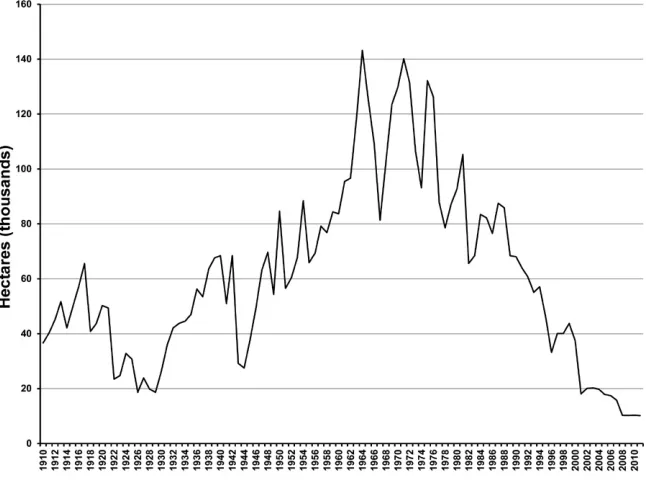
factories (Harris, 1919; USDA-NASS, 2013) (Fig. 13–1). From 1909 to present (Fig. 13–1), maximum acreage (1969) was about 607,500 ha (1.5 million acres) and cur
-rently varies between 400,000 and 510,000 ha (1.00 and 1.25 million acres). Both root yield (Fig. 13–1) and the percentage of sucrose in the root have risen (Fran
-cis, 2006), as has the capacity of the 21 currently operating sugarbeet processing factories to process sugarbeet. Today, U.S. farmers and processors are producing
much more sugar on less land.
By 1924, when the USDA-NASS began keeping records for most crops, sug
-arbeet was being cultivated in 20 states. The U.S. sug-arbeet crop grew as more
land was brought into cultivation in more areas; sugarbeet was cultivated at one
time or another in 28 states ranging from California to New York and from Maine to the semiarid southwest. Today, sugarbeet is cultivated in 10 states that often are grouped into five production regions: the West (California), the Intermoun
-tain Region (Idaho and eastern Oregon), the Great Plains (Colorado, Wyoming, Nebraska, and Montana), the Upper Midwest or Red River Valley (Minnesota and North Dakota), and the Great Lakes (Michigan). In Fig. 13–1, the area harvested data are shown for “irrigated” (West, Intermountain, and Great Plains regions) and rainfed (Upper Midwest and Great Lakes regions) areas from these 10 states, with the historical production from all the other states combined. It is clear from the changes in the area harvested (Fig. 13–1) that production was initially highest in the western United States, where the sugarbeet crop was irrigated, and that as the area under cultivation in the Red River Valley and Michigan increased, the area cultivated for sugarbeet peaked at the end of the 1960s, when the production in states other than the current 10 states began to fall. Disease pressure in some growing areas, fluctuations in environmental conditions, and economic fluctua
-tions in the price of sugar pushed many areas out of production. A serious lack of investment in factories to keep them efficiently operating with the latest technol
-ogy was also a major factor. Production also migrated to the rainfed areas, where cost of production is lower by avoiding the need to irrigate. As the area under
cultivation has dropped, yields have continued to rise, maintaining production
goals (Fig. 13–1).
In the United States root yield was variable and did not increase much dur
-ing the 20 yr from 1950 to 1970 (Fig. 13–1). However, since then the development and use of superior cultivars (resistance to BCT, bolting, Rhizoctonia solani Kühn,
Cercospora, downy mildew [Peronospora farinosa (Fr.:Fr.) Fr. f. sp. betae Byford] resis
-tance, and other pests and diseases), the introduction of hybrid cultivars with monogerm seed, greater use of new chemical protectants, better harvesting equip
-ment, and more advanced fertilization management have led to a steady increase of yield in the United States. This increase was mirrored in much of Europe (Zim
-mermann and Zeddies, 2000). Breeders and producers in each of the U.S. growing regions share best ideas for cultural practices and continued improvements in germplasm for cultivar development; however, each growing region has a unique set of challenges that often differs from other regions in the magnitude of the problem. For instance, curly top and yellowing virus problems are mainly con
problematic in the east, and rhizomania is a very serious problem in all grow
-ing regions. Thus, solutions achieved in areas of severe impact are transferred throughout the United States (and worldwide) as the situation demands.
California—The Western Region
Although the initial attempts to grow sugarbeet in the United States were made in the eastern part of the country as early as 1838 (Grant, 1871), it was in Califor
-nia that sugar production from beet first became successful. After a number of failures, E.H. Dyer was successful in establishing a factory that made a profit by 1879. This factory in Alvarado, CA is considered the first successful U.S. factory. In 1888, Claus Spreckels built a factory at Watsonville, CA, which produced 907 Mg (1000 t) of sugar in the first year, and by 1889, there were two sugarbeet pro
-cessing factories operating in the United States, both in central California (Harris, 1919; Theis, 1971). By 1899 California was the leader in beet sugar production, with
37% of the U.S. cultivated area. There was a severe drought from 1897 to 1900, and then tough economic times, which caused dramatic fluctuations in the pro
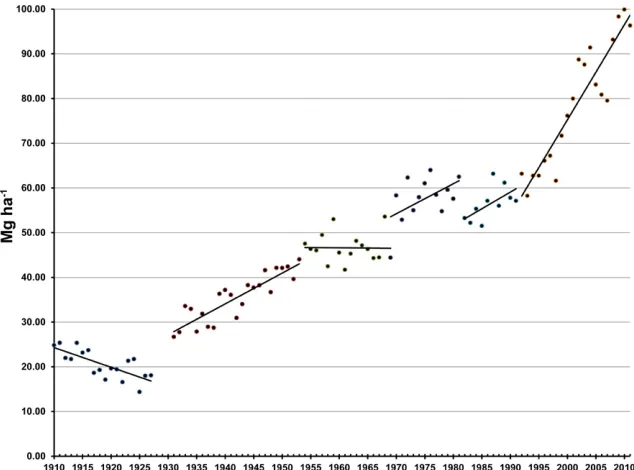
-duction and cultivation of sugarbeet in California (Souder, 1970). Nonetheless, by 1910, the area under cultivation had grown to about 36,650 ha (90,500 ac), with a yield of about 24.48 Mg ha−1 (11.08 t ac−1) (Fig. 13–3 and 13–4). Over the next 20 yr,
the disease pressure from BCT caused a steady drop in root yield, until the first curly top-resistant cultivars became available in the early 1930s (Fig. 13–3 and 13–4). Beet curly top affects the percentage of sucrose in the root as well, causing an even more drastic drop in gross sugar yield over the area harvested (see Fig. 1 of Duffus, 1978; Wisler and Duffus, 2000). With resistant cultivars available to
manage BCT, and improved crop cultural practices, the industry rebounded, and the area under cultivation, root yield, and gross sugar yield grew over the next 20 yr (Fig. 13–3 and 13–4) (Duffus, 1978; Wisler and Duffus, 2000) until there were nine sugarbeet processing factories active in California (United States Beet Sugar Association, 1936).
In 1951, the virus yellows complex was reported in California for the first time (Coons and Kotila, 1951). Virus yellows is term used to describe a complex of
yellows-inducing viruses including, Beet western yellows virus, Beet chlorosis virus,
Beet yellows virus, Beet mosaic virus and other aphid-transmitted viruses. With heavy infections of more virulent strains, root yield reductions of more than 50% and losses of up to two percentage points of sucrose have been reported (Bennett et al., 1957). Therefore, although U.S. yields trended upward (Fig. 13–1), it was clear that virus yellows limited yield progress in California, much as curly top had depressed yields three decades earlier (Fig. 13–4). The cycle of infection of yellow -ing viruses was sustained by continual (year-round) beet crops in the areas most
affected. With both fall-sown and spring-sown crops, aphid vectors could move the yellowing viruses from one crop to the next. This disease transmission cycle was broken when growers organized regionally to isolate old beet fields from young fields by “beet-free” periods in diverse regions of the state (Wisler and Duffus, 2000). With this cycle broken, the new, higher yielding hybrids; increased access to irrigation water; and economic changes, which favored sugarbeet being grown on more productive land, led to increased yields (Duffus, 1978).
In addition to the increasing area infested with BNYVV during the 1980s and early 1990s, a number of other problems affected California sugarbeet production. Changing economics of growing sugarbeet, sugarbeet cyst nematode (Heterodera schachtii Schmidt) pressure, and a number of whitefly (Bermisia spp.) vectored
diseases impacted both yields and acreage (Wisler and Duffus, 2000). The less productive areas in northern California were the first to lose sugarbeet in their rotations. California had about 25% of the U.S. sugarbeet area under cultivation in the 1960s and 1970s, but by the end of the 1990s it represented only 10% of the U.S. acreage, and today there only are about 10,100 ha (25,000 ac) in the Imperial Valley, where sugarbeet is grown as a fall-planted, summer-harvested crop (Fig. 13–3) (Wisler and Duffus, 2000).
Imperial Valley of California
The Imperial Valley of California deserves a brief discussion because it is a unique growing area for sugarbeet in the United States and has the highest gross sugar yields per area in the world. Sugarbeet has been grown in the Imperial Valley since 1932, shipped by rail to factories elsewhere in California or Chandler, AZ. The currently operating processing factory in Brawley was built by Holly Sugar Corporation at the end of the World War II and opened in 1947. Shipping of a por
-tion of the crop to other factories continued from then until the early 1990s, when rail shipment became uneconomical or factories closed. The factory in Brawley is the last one operating in California, where 24 (11 successful) factories have been constructed, operated, and eventually closed since the first successful commercial sugarbeet factory was opened in 1870 near San Jose (Harris, 1919; Souder, 1970).
The Imperial Valley is a low desert ecosystem with mild, sunny winters and hot summers. It receives the most sunlight of any location in the United States. Most soils are high in pH and calcareous, with large amounts of naturally occur
-ring gypsum. Most Imperial Valley fields are tile drained at 1.8 m (6 ft) in depth. Subsurface drainage maintains positive salt balances in the Imperial Valley soils, which otherwise would salinize. Water delivery to the Imperial Valley and power production is provided by the Imperial Irrigation District, first organized in 1911. The All American Canal conveys approximately 3.2074 billion m3 (2.6 million
ac ft−1) of water per year to 172,125 ha (425,000 ac) of farmland and seven cities
and towns. The canal runs along the Mexican border to the south. Water is then diverted through a series of canals northwards to towns and fields. Because the land slopes northwards toward the Salton Sea, little power is needed to move water. Imperial Irrigation District holds some of the most senior water rights to the Colorado River. The result for growers has been a relatively constant supply of water at low prices (currently ?$20 per 1233.6 m3 [ac ft−1]) in comparison to
many other irrigation districts in California.
Unlike all other U.S. growing regions where sugarbeet is a spring-planted crop, the Imperial Valley sugarbeet crop is planted from the middle of September
to early October, and harvest begins ?180 d later starting in early April. Harvest
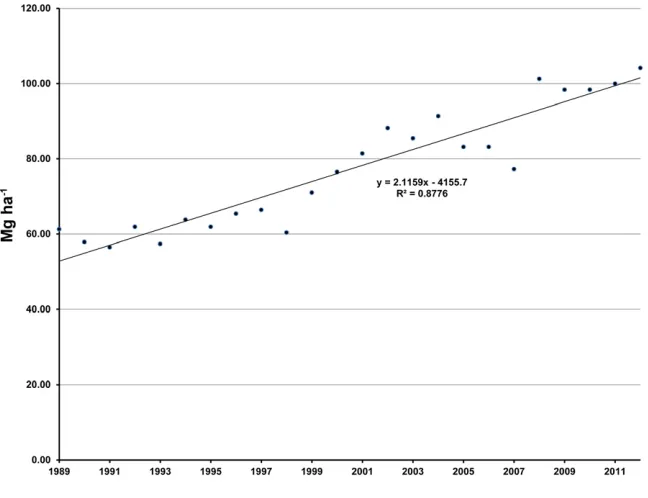
usually is concluded in July, but there has been a tendency in recent years to extend the harvest later in the month, often running into August. This has occurred due to increasingly larger sugarbeet yields, and at times due to operating difficulties in the factory. Harvest campaign length has tended to increase over the last 25 yr, but is not solely responsible for increased yields over that period. Examin
Imperial Valley (Fig. 13–5) compared to the California production since 1989 (Fig. 13–6), it is clear how much higher yields in the Imperial Valley have been. In 2012 in the Imperial Valley, another world-record sugarbeet crop was harvested on a 28.35-ha (70-ac) field. That field averaged 176.31 Mg ha−1 (78.71 t ac−1) with 15.89%
sugar (fresh weight) for a gross sugar yield of 11,356.4 kg ha−1 (25,014 lb ac−1) (Lil-leboe, 2012).
Yields in the Imperial Valley of California continue to increase. Sugarbeet crops increase tonnage during the spring period (April–June) at a greater rate than from establishment in fall to start of harvest in April. Dry matter more than doubles by the end of the last 4 mo of growth in late July and early August, com
-pared to the period from establishment in September until the start of harvest in April. A number of factors have combined to contribute to larger yields: improved performance of new hybrids, including improved rhizomania resistance; reduc -tion in losses to Lettuce infectious yellows virus starting in the early 1990s; better and wider selection of herbicides for the control of weeds (glyphosate-resistant cultivars had not been grown in the Imperial Valley, but they have been approved beginning in the 2013 growing season); the adoption of newer style harvesters allowing for harvest from wetter soil, permitting irrigation closer to harvest, and better management and timing of late season irrigations during the hottest weather; improved seed quality and stand establishment practices; and a partial shift to production on better quality soils in recent years due to recent increases in the profitability of sugarbeet. These factors have interacted to increase beet dry matter accumulation in the April to June period at a greater rate than observed during previous decades. During the same period, sugar concentration in roots
has remained relatively stable, so increased root yields have been primarily
responsible for increased sugar yields.
The rate of increase in root yield and decrease in sugar percentage both accel
-erate over time during the growing season in the IV. This is due to increasing
temperatures resulting in several disadvantages as the season progresses.
Year-round mild to hot temperatures makes it impossible to store sugarbeet in piles, as is done in other beet-producing regions with spring sown, fall harvested crops. In the IV, logistics are managed to process sugarbeet within 24 h of harvest, with the factory running 24 h, 7 d a week from April to July. Temperatures, especially
night time temperatures, and correlated respiratory sugar losses increase as the
season progresses, the costs of insect pest management and correlated losses increase, larger amounts of irrigation water are needed, and damage from nema
-todes and root rots becomes more common, especially in July and August. To operate the factory for a long enough season, late season inefficiencies and costs (especially water use) must be tolerated. Besides future genetic improvements (including the use of transgenic traits), the most likely technology that could help reduce losses late in the season and improve overall efficiency may be the adop
-tion of drip irriga-tion technology.
Intermountain Region (Idaho, Oregon)
Sugarbeet processing factories operated in the Intermountain Region (Idaho, Utah, eastern Oregon, and eastern Washington) beginning in the late 1800s, and by 1908 the Utah-Idaho Sugar Co. and the Amalgamated Sugar Company had
established themselves as the largest beet sugar processing companies in the
region. In the early 1920s, the Utah-Idaho Sugar Co. had 20 factories in four states (ID, UT, WA, OR), and Amalgamated Sugar Co. had eight factories in Idaho and Utah. During the 1920s and 1930s, a number of factories closed or ceased opera
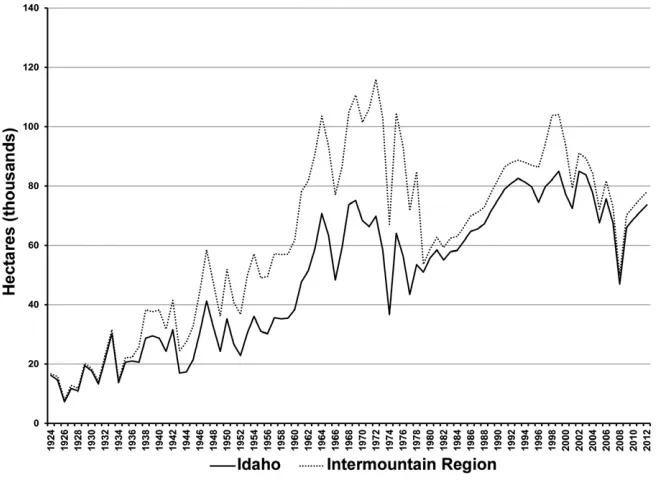
-tion because of drought and curly top, which caused large fluctua-tions in yield (Fig. 13–2) and area cultivated for sugarbeet (Fig. 13–7). Primarily due to BCT, by 1934, Amalgamated had only two operating factories. As BCT-resistant cul
-tivars became available in the early 1930s, yields improved, and Amalgamated resumed operation of five of eight factories. In 1966, the Utah-Idaho Sugar Co. had only five sugar factories left and by the late 1970s had closed all operations. In 1994, the Amalgamated Sugar Co. became a farmer owned cooperative (renamed Snake River Sugar Co.). In 2005, the Nyssa, OR factory was closed leaving only the Nampa, Paul, and Twin Falls factories still operating in the Intermountain region (in Idaho).
Commercial sugarbeet production areas in Idaho, Oregon, and Washington are all coordinated through the Snake River Sugar Co. During 2012, there were 74,058 ha (183,000 ac) (Fig. 13–7) planted in Idaho, all of which were in the south
-ern portion of the state, where over the last 30 yr, there has been a shift in acreage from Treasure Valley (southeast Oregon and southwestern Idaho) to Magic Val
-ley (south-central Idaho) and eastern Idaho. In Oregon, commercial production is concentrated in the eastern portion of the state, where 4411 ha (10,900 acres) were harvested in 2012. (Most seed production for sugarbeet in the United States also occurs in Oregon, but is concentrated in the Willamette Valley, west of the Cascade mountain range.) Sugarbeet production was widespread in central
Washington until a major reduction in acreage occurred in the mid-1970s with the closure of the factory at Moses Lake, WA (Fig. 13–7). The USDA-NASS survey last reported data for Washington in 2008 with only 647 ha (1600 ac). Although there still was a small acreage in Washington in 2012, it was too small to be included in the USDA-NASS survey.
Most production fields in this area are prepared by plowing with a mold
-board plow, roller harrowed (perhaps more than once), and then marked and/or bedded. Some growers will “drag off” the beds at planting to expose moist soil. Planting in lower elevation areas (610 m [2000 ft]) occurs as early as the first week of March, while higher elevation (1676 m [5500 ft]) areas typically are planted in mid to late April. The crop was thinned by hand or mechanically until the early 1990s, but now is planted to stand (14 cm [5.5 in] between plants). Before 2008, weed control was accomplished through tillage and about a dozen herbicides; however, since the release of glyphosate-resistant sugarbeet, weed control has shifted to the use of glyphosate. The use of glyphosate has eliminated problems associated with herbicide toxicity to sugarbeet seedlings and weather interfering with timely herbicide application. About 4000 ha (10,000 ac) are currently planted using strip tillage (20–30 cm wide), an additional management tool afforded by glyphosate-resistant sugarbeet, which is particularly useful in windy areas with
sandy ground prone to soil erosion and plant damage in the spring at planting
time and crop emergence. The entire crop is irrigated, but the method of irriga
-tion has changed considerably over the last 30 yr, with a 48% reduc-tion in gravity irrigation and a 49% increase in sprinkler irrigation (Fig. 13–8) due to reduced
labor costs, higher irrigation efficiency, less soil erosion and nutrient loss, and government programs that helped offset the cost of the equipment change.
The primary disease problems in this production area include two virus
dis-eases (BCT and rhizomania), various root rots (R. solani Kühn and some bacterial
rots), and powdery mildew (Erysiphe polyfoni DC). As in the rest of the United States, rhizomania is managed through the use of resistant cultivars. The use of chemi
-cal protectants often provides the yield stability needed to introduce new genetic improvements throughout the entire commercial genepool (e.g., rhizomania resis
-tance or glyphosate resis-tance), while the previous array of disease resis-tance is
being reconstituted.
A survey in the western United States in 2006 and 2007 indicated the primary species of BCT were Beet severe curly top virus and Beet mild curly top virus
(Straus-baugh et al., 2008). Since the mid 1930s host resistance has been the primary control
measure for this problem, but in 2006 clothianidin ([C(E)]-N-[(2-chloro-5-thiazolyl)
methyl]-N’-methyl-N’’-nitroguanidine; Poncho, NipsIt), a neonicotinoid insecti
-cide seed treatment, became available for sugarbeet (Strausbaugh et al., 2006). The clothianidin seed treatment along with thiamethoxam (3-[(2-chloro-5-thiazolyl) methyl]tetrahydro-5-methyl-N-nitro-4H-1,3,5-oxadiazin-4-imine, marketed as Cruiser) has become a valuable supplement to host resistance through control of the beet leafhopper vector (Strausbaugh et al., 2006, 2012). In Idaho, yields with
neonicotinoid seed treatments averaged 72.90 ± 3.79 Mg ha−1 (32.52 ± 1.69 t ac−1) from
2006 to 2010, a 17% increase when compared to the preceding 5 yr 60.57 ± 4.51 Mg
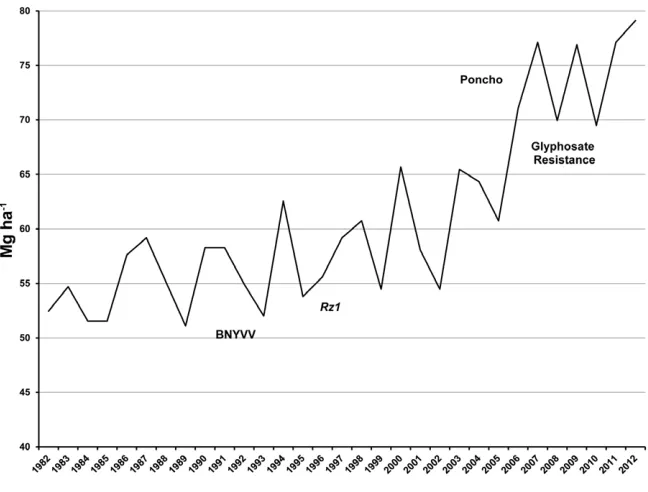
ha−1 (27.04 ± 2.01 t ac−1) (Strausbaugh et al., 2012). In 2008, glyphosate-resistant cul -tivars also were introduced but did not seem to lead to immediate yield increases,
although weather may have been a factor, as well (Fig. 13–9). Idaho yields for 2006–
2007 averaged 74.09 ± 4.28 Mg ha−1 (33.05 ± 1.91 t ac−1) and the first 3 yr (2008–2010)
with glyphosate yields averaged 72.12 ± 4.15 Mg ha−1 (32.17 ± 1.85 t ac−1) (Fig. 13–9).
In the first commercial glyphosate-resistant cultivars, the level of general disease resistance was not as high as in the previous cultivars. For example, the curly top resistance in some of the initial glyphosate cultivars tested before 2008 was worse than the susceptible check at the later evaluation dates (C.A. Strausbaugh, 2005, data not shown). Thus, the neonicotinoid seed treatments have helped make the transi -tion to glyphosate-resistant cultivars possible (Strausbaugh et al., 2012). Since the
initial introduction of glyphosate-resistant cultivars, the level of resistance to curly top and resistance to other diseases has improved steadily. With this improved dis
-ease resistance and favorable weather, yields again have incr-eased in Idaho during 2011 [77.11 Mg ha−1 (34.4 t ac−1)] and 2012 [79.13 Mg ha−1 (35.3 t ac−1)] (Fig. 13–9).
Another major concern in the Amalgamated production area has been vari
-ous root rots, such as rhizoctonia crown and root rot (Strausbaugh et al., 2011;
Strausbaugh and Gillen, 2009), bacterial root rot (Leuconostoc mesenteroides and others) (Strausbaugh and Gillen, 2008), and aphanomyces root rot (caused by
Aphanomyces cochlioides
Drechsler). Rhizoctonia root rot of mature roots is theprimary problem, and is caused by R. solani AG-2-2 IIIB strains (Bolton et al., 2010; Strausbaugh et al., 2011). However, the fungus initially seems only to penetrate the outer portion of the root (?5% of the root mass) and subsequent bacterial
invaders led by Leuconostoc mesenteroides can act synergistically to rot the
major-ity of the root mass (Strausbaugh and Eujayl, 2012; Strausbaugh et al., 2011). The Rhizoctonia–bacterial root rot complex is worse in the warmer longer grow
-ing season portion of the production area (Strausbaugh et al., 2011). The cooler, higher elevation area in eastern Idaho has very little problem with root rot. Cul -tivars with resistance to R. solani are available in limited numbers, but banding
on fungicides, crop rotation, and careful irrigation will continue to be necessary management practices (Bolton et al., 2010; Buhre et al., 2007; Kiewnick et al., 2001; Kirk et al., 2008; Rush and Winter, 1990; Strausbaugh et al., 2013a,b; Stump et al., 2004; Windels and Brantner, 2005). Aphanomyces root rot only recently has become a concern in eastern Oregon and now has been identified in a number of locations in southern Idaho. The management of these root rotting diseases will be critical for continued yield increases in this production region.
The primary pests limiting sugarbeet yield in the Amalgamated produc
-tion region include: beet leafhopper (vector for curly top), root maggot [Tetanops myopaeformis (Roder)], wireworms [Limonius californicus (Mann.) and others],
cut-worms (Agrotis spp. and others), root aphid (Pemphigus betae Doane), black bean aphid [Aphis fabae (Scopoli)], beet leafminer [Pegomya betae (Curt.)], and spider
mites (Tetranychus urticae Koch) (Strausbaugh et al., 2010). The neonicotinoid
(clothianidin and thiamethoxam [3-[(2-chloro-5-thiazolyl)methyl]tetrahydro-5-methyl-N-nitro-4H-1,3,5-oxadiazin-4-imine]) seed treatments provide good early season control of nonchewing pests, but also will provide considerable protection from chewing pests (Strausbaugh et al., 2010). Systemic and foliar insec
available. The loss of aldicarb (2-methyl-2-(methylthio)propanal O-[(methylamino) carbonyl]oxime) reduced the choice of systemic insecticides and also raised con -cerns over sugarbeet cyst nematode control. Thus, there is a push to increase the
number of commercial cultivars with nematode tolerance available. Currently each seed company has a few cultivars available.
Early season harvest (10% of crop) usually begins in mid September in all areas. Harvest in the longer season, lower elevation areas frequently stretches into November, while other areas try to complete harvest in October. In 2012, Idaho ranked second for total yield (5.829 million tonnes [6.425 million tons]) by state, while Oregon was ranked last (379,203 Mg [418,000 tons]) (Fig. 13–7). In this production area, approximately one-third of the crop is processed directly through the factory, while another third remains in short-term storage (<90 d)
under ambient conditions outdoors and the remaining one-third is placed in
long-term storage (>90 d) (Peterson et al., 1984). Piles for long-term storage typi -cally are covered and ventilated, and there also is some indoor storage. Piles are cooled with ambient air and prolonged rainy, unusually warm weather in the
winter months can have serious, deleterious effects on the quality of the sugar -beet in storage.
Great Plains Region (Colorado, Montana, Nebraska, Wyoming)
The first mention of sugarbeet as a potential crop in Colorado was in the mid 1800s. Because the crop could not be brought from food to table, it had not come with the first settlers, and a certain level of economic development had to be pres
-ent to provide the capital for the technology and facilities to refine sucrose from the sugarbeet. Nonetheless by the late 1800s, Colorado State Agricultural Col
-lege (now Colorado State University) had shown in test plots the suitability of the crop to the soils and climate of the Great Plains Region (Hamilton, 2009). The first sugar extracting factories were built right at the beginning of the 20th century, and the Great Western Sugar Company was founded in 1905. In 1907 there were 16 factories operating in Colorado, and by 1926, 22 factories were active in Colo
-rado (Hecker, 2004), and there were more than 81,000 ha (200,000 ac) of sugarbeet under cultivation (Fig. 13–10). Great Western Sugar Company became a major force in the sugar industry and owned 26 factories in six states (Kansas and Ohio in addition to the Great Plains states). It also had a strong research and seed culti -var development program that was very active in the Great Plains.
All sugarbeet grown in the Great Plains region is irrigated, and the climate is excellent for sugarbeet production, with long days, and cool nights due to the altitude. Nonetheless, there are a number of diseases that have had a severe effect on production in the Great Plains. Curly top certainly was a problem in some
years and could depress yields across the Great Plains region, especially in the
hot dry years of the Dust Bowl; even today, it still can be severe, especially during periods of early season drought. The years until the BCT-resistant cultivars were released showed lack of yield gain (Fig. 13–11) and yield fluctuations in the Great Plains but not as severe as the up and down cycles seen in California and Idaho (Fig. 13–2 and 13–4).
Fig. 13–10. Area of sugarbeet harvested in Colorado, Montana, Nebraska, and Wyo-ming from 1924 to 2012 based on statistics from the USDA-NASS.
a serious problem in Michigan and Ohio (Dahlberg et al., 1940). Resistant lines appeared beginning in 1937 with the release of ‘US 217’ and continued with a series of synthetic cultivars: ‘US 200 × 215,’ ‘US 215 × 216,’ ‘US 216 × 225,’ which were widely grown in these areas and alleviated to some extent the serious dam
-age done by this disease (reviewed by Panella and McGrath, 2010). From the end of World War II until the early 1980s, there was a general increase in yield as hybrid
sugarbeet became available and cultivars with monogerm seed were introduced
(Fig. 13–11). However, during this period there was a tremendous decrease in the area cultivated in Colorado (Fig. 13–10), and although area cultivated in the other
Great Plains states remained more constant, there has been a general decrease
to reach today’s levels in this region. In Colorado the decline in sugarbeet culti
-vation is directly tied to the slow demise of the Great Western Sugar Company, which was a result of the retirement of seasoned management after being sold in 1967 to a less experienced chief executive (Hamilton, 2009). The purchase by the Hunt brothers in 1974 and descent into bankruptcy in 1984 ended the Great West
-ern Sugar Company. It was purchased by Tate & Lyle in 1985, but because growers were not paid timely in 1984 for their crop, in 1985 only about 1000 ha (2500 ac) of sugarbeet was planted. Finally, in 2002, the processing company was sold to the growers in the four state region, and it has been stabilized as the Western Sugar Cooperative (Hamilton, 2009).
The decrease in area cultivated has had severe agronomic consequences, which include the shortening of rotations, leading to increased disease pressure. This was exacerbated by drought in the late 1990s and early 2000s and the appear
-ance of rhizomania in the early 1990s. Rhizomania was confirmed in Colorado and the Great Plains region by 1995, and it is managed almost exclusively with resistant germplasm. Along with resistance to rhizomania, came cultivars with improved resistance to sugarbeet cyst nematode, rhizoctonia root rot, fusarium
wilt (caused by Fusarium oxysporum f. sp. betae), aphanomyces black root, cerco
-spora leaf spot, BCT, and sugarbeet root aphid. During the last 10 yr, there also has been an increase in efficacy and diversity of protective chemical available for disease management. (For many soil borne pests and diseases, fumigation, espe
-cially with 1,3-Dichloropropene [Telone II], had been used in the past to prepare for planting sugarbeet. Although effective, there is a high cost to the grower, eco
-nomically and environmentally.) These improvements and the introduction of glyphosate-resistant cultivars have led to the steady rise of yields over the past 10 yr in the Great Plains of about 1.90 Mg ha−1 yr−1 (0.85 t ac−1 yr−1) (Fig. 13–12). Yields
have risen from a four state average of 42.6 Mg ha−1 (19 t ac−1) to an average of
almost 67.2 Mg ha−1 (30 t ac−1) (Fig. 13–12), and although the sucrose percentage has not risen appreciably, it has remained constant.
Upper Midwest Region (Eastern North Dakota,
Western Minnesota—Red River Valley)
Sugarbeet has been raised in the Red River Valley (RRV) Region of eastern North Dakota and western Minnesota since 1918 when the first sugarbeet crop was planted on a farm near Crookston, MN. The sugarbeet raised on this small acreage (under contract from the Minnesota Sugar Company) was sent by railcar to Chaska, MN for processing. Over the next few years, the area under cultiva
Fig. 13–12. In the past 10 yr average yield in the Great Plains region (Colorado, Nebraska, Montana, and Wyoming) has risen from an average of 42.6 Mg ha−1 (19 t ac−1) to an
aver-age of almost 67.2 Mg ha−1 (30 t ac−1) at a rate of about 1.90 Mg ha−1 yr−1 (0.85 t ac−1 yr−1).
Data are from USDA-NASS.
(completed in 1926). Processing plants in Crookston and Moorhead, MN soon fol
-lowed in 1948 and 1954, respectively, as sugarbeet acreage continued to expand rapidly, and another factory was built in 1965 near Drayton, ND.
Since the mid 1970s, when three independent grower-owned sugar
cooper-atives (American Crystal Sugar Company, which purchased the cooperative at Hillsboro after 1 yr of operation; Minn-Dak Farmers Cooperative; and Southern Minnesota Beet Sugar Cooperative) were formed, the RRV has become the largest production area of sugarbeet within the United States. This particular region rep
-resented 32% of the U.S. area cultivated to sugarbeet in 1978 (170,455 ha [421,200 ac]) (Fig. 13–13) and has increased steadily over the past three decades to 276,400 ha (683,000 ac), which was 56% of U.S. area sown during the 2012 growing season (USDA-NASS, 2013). One of the main reasons for the increased acreage and con
-tinued popularity of this specialty crop is the vital role that sugarbeet production plays in the regional economy. Expansion of acreage also is due to development of long-term storage technology that allows these factories to have the longest processing campaigns in the world—200 d and sometimes more than 250 d in
length. The total economic activity (direct and secondary impacts) generated by
the sugar industry of the RRV was nearly $4.9 billion in 2011 alone; or expressed alternatively, each hectare of sugarbeet planted generated about $18,542 ($7,507
ac−1) in total local business activity (Bangsund et al., 2012).
Fig. 13–14. Average yield per harvested area in the Upper Midwest region has increased 1.08 Mg ha−1 yr−1 (0.48 t ac−1 yr−1) in commercial fields and 0.74 Mg ha−1 yr−1 (0.33 t ac−1 yr−1)
During the last 25 yr, the sugar industry in the RRV has seen a steady upward trend in overall crop yield and quality. When looking specifically at crop
yield, total yield per harvested area has increased 1.08 Mg ha−1 yr−1 (0.48 t ac−1 yr−1) (Fig. 13–14) in commercial fields and 0.74 Mg ha−1 yr−1 (0.33 t ac−1 yr−1) in the
Official Variety Trials (replicated field trials established for the evaluation of vari
-etal performance and approval of sale within each cooperative). Combined with an increased level of quality, these increases equate to a 183 and 148 kg ha−1 yr−1
increase in recoverable white sugar per hectare for commercially grown fields and the official variety trials, respectively (Fig. 13–15). These average annual gains are a reflection of the increased genetic potential of the commercial cultivars, and also of agronomic advancements in technology, efficiency, and production prac -tices seen by the beet sugar industry over the last three decades.
Dynamic changes in the seed cultivars available to sugarbeet growers farming in the RRV have been one of the most important aspects of this upward trend in yield potential. Diseases such as rhizomania, aphanomyces, fusarium wilt, rhizoc
-tonia root rot, and cercospora leaf spot are endemic to the RRV sugarbeet growing region. Although there are many fungicides currently labeled for management of these diseases, they are viewed as supplemental tools to aid the genetic defense package of the individual cultivars. Continued advancements in the field of plant breeding and molecular genomics have made it possible to use “customized” cultivars specifically adapted to growing areas within this region. Without this
Fig. 13–15. Average root yield combined with an increased level of quality equate to an increase in recoverable white sugar per hectare of 183 and 148 kg ha−1 yr−1, for
combination of genetic resistance in the crop, supplemented by chemical protec
-tions, diseases like cercospora leaf spot can devastate the region (Khan and Smith, 2005). Continued research and development of genetic resistance to pathogens, insects, and varied environmental conditions has contributed to—and continues to contribute to—the sugarbeet crop’s success and progress in yield and quality.
In addition to improved genetics, one of the most notable developments con
-tributing to increased sugar production is that of improved machinery. Over the past 25 yr, farm machines have gotten larger, more powerful, and very much more efficient. In the late 1980s, many growers utilized 8- to 12-row (4.5‒6.7 m wide) equipment behind a 74,570 W (100-hp) row crop tractor (Shoptaugh, 1997). Today, sugarbeet growers in the RRV commonly use 24- to 36-row (13.4‒20.1 m wide) equipment (a 300% increase in implement size) pulled with row crop trac
-tors that often exceed 246,081 W (330-hp) and are able to guide the tractor from one end of the field to the other with sub-inch (<2.54 cm) accuracy via GPS guid
-ance systems. As a result, the sugarbeet crop is planted earlier, quicker, and is raised far more efficiently than ever before. Since about 1980 target plant popula -tion has nearly doubled, which has played an important role in improved yield
and quality.
Advancements in crop nutrition and fertilization (variable rate application is growing) also have contributed to improved crop yields. Scientific research
has provided the individual grower and their respective cooperative with a
much better understanding of the positive effects of fertilizers on sugarbeet quality and the detrimental effects of overuse. This newfound respect for opti
-mized fertility has led to the widespread implementation and refinement of soil sampling. This annual monitoring has transitioned from crude random soil samples to an organized and methodical grid, zone, and topographical soil analysis taking advantage of the integration of GPS technology. The end result is a sugarbeet crop that advances more quickly physiologically and is healthier and more uniform.
Annual sugarbeet production surveys conducted by North Dakota State Uni
-versity from 1983 to 2007 consistently listed weed control as the top response by growers as their “worst production issue” (Carlson et al., 2007). Multiple species of pigweeds (Amaranthus spp.), lambsquarters (Chenopodium album L.), and Kochia
[Bassia scoparia (L.) A.J. Scott] were among the weed species causing the largest problem, and they cost the cooperatives millions of dollars in lost revenue each year. Because of this, row crop cultivation and hand labor for weed control was a common practice throughout the growing season. Row crop cultivation was used by 99% of the respondents for each year from 1996 to 2007, while hand labor has steadily declined since the mid 1990s (62% of respondents used hand labor to thin the crop in 1996, 32% in 2002, and 20% in 2007) (Carlson et al., 2007). The addition of several new herbicide chemistries, and new application methodology (i.e., the Micro-Rate Program) (Rothe et al., 2004) were the main causes for the decline in
hand weeding.
In 2008, the sugarbeet industry in the RRV transitioned into the use of
glyphosate-resistant sugarbeet. Each cooperative held its grower membership to
grown in this region from 1988 to 2007 was 43.48 Mg ha−1. This average increased almost 9 Mg ha−1 after the introduction of glyphosate-resistant sugarbeet (52.46 Mg ha−1 average 2008–2012). The impact on quality is just as remarkable with
the average kilograms of recoverable white sugar per hectare increasing 1308 kg (1988–2007: 6562 kg ha−1; 2008–2012: 7870 kg ha−1) per harvested hectare.
The Great Lakes Region (Michigan, Ohio, and Ontario, Canada)
Michigan has a long history of sugarbeet promotion and production. In 1881, the Michigan legislature offered a temporary bounty of two cents per pound for sweeteners derived from corn (Zea mays L.), sorghum [Sorghum bicolor (L.)
Moench], and beet. However, it was not until 1890, when the Michigan Agri
-cultural College (now Michigan State University) in East Lansing, MI imported 800 pounds of seed of four sugarbeet cultivars (Kleinwanzlebener), Vilmorin Imperial, Austrian Wohanka, and White Silesian) for distribution to 400 Mich
-igan farmers, that interest was spurred in beet sugar production in Mich-igan. The Michigan Sugar Bounty Law of 1897 (Act no. 48) codified support for the nascent industry, and with help from the USDA in securing adequate quantities of seed from Europe, sugarbeet was produced in 64 counties with an average of 16% sugar at 83% purity, and interest in this new crop resulted in the distribution of 150 thousand copies of Bulletin 150 (Sugar Beets in Michigan in 1897) (Kedzie, 1901; Smith and Kedzie, 1987). Beet for sugar has been grown continuously in
Michigan since that time.
Up until World War I, seed was imported from Germany, the majority of seed from the cultivar Kleinwanzlebener (Cox and Hill, 1924). During and after the war, faculty and students at Michigan Agricultural College (e.g., F.A. Spragg, H.B. Smith, and E.E. Down) began selecting within commercial cultivars and European germplasm. By 1923, no fewer than 29 cultivars were being imported from varied suppliers, and eight of these were produced in Michigan or Ontario for the 1921 season (Down, 1925). In 1923, the USDA Bureau of Plant Investiga
-tions (currently USDA-ARS) transferred work on sugarbeet from Blissfield, MI to East Lansing, and charged E.E. Down with providing improved lines of sugar
-beet for the Michigan industry through a cooperative agreement with Michigan State College. From 1929, Kohls was the sugarbeet breeder for Michigan Agricul
-tural College and was responsible for ‘Michigan Hybrid 18,’ the original source of genetic monogermy discovered by V.F. Savitsky (Savitsky, 1952). Seed was sent to V.F. Savitsky in about 1945 and two plants he discovered were monogerm (none were ever found in Michigan) (H.L. Kohls, personal notes, circa 1950).
By 1956, most multigerm breeding had ceased at the USDA-ARS station in East Lansing, MI, and efforts were directed towards converting the black-leg- and leaf spot-resistant multigerm populations to monogerm and O-type maintain
-ers for the production of hybrid cultivars. The original source of monogerm and O-type germplasm for East Lansing is unclear; however, it likely involved mate
reselection. A combining ability test in 1962 compared 10 CMS parents. Ultimately, the combination of ‘SP 6822’ as pollinator (Coe and Hogaboam, 1971a) with selec
-tions for increased seed set from USDA Salt Lake City females ‘SLC 129’ and ‘SLC 133,’ which were released as ‘EL 44’ and ‘EL 45,’ respectively, were proved to be the most successful USDA hybrid for the Eastern growing regions, embodied in ‘US H20’ (Coe and Hogaboam, 1971b). The last USDA hybrid released for the Great Lakes growing region was ‘US H23,’ which used similar CMS material as ‘US H20,’ but used ‘EL 40’ as the pollinator for greater cercospora leaf spot resistance (Doney, 1995). Breeding for resistance to cercospora leaf spot, a perennial prob
-lem in the humid Great Lakes Region, has been recently summarized by Panella
and McGrath (2010).
Since about 1985, private seed company breeders have contributed all com
-mercial cultivars, while public breeders have focused on release of parental materials and germplasm enhancement. During the early years of commercial hybrids, performance was somewhat variable. Processors demanded higher sugar content, at the expense of good emergence and stand establishment, which is particularly important in the Great Lakes Region, and yields plummeted. Seed priming and greater attention to emergence genetics (McGrath et al., 2000) resulted in improving yields in the 21st century (Fig. 13–16). Plant populations, and hence yield, improved substantially. Since 2008, with the advent of glyphosate resistance and its attendant lack of injury to young beets from multi-application herbicide phytotoxicity and soil compaction, commercial yields have improved
dramatically. Although there has been a steady increase in yield during the last 25 yr, in the years since 2007 when glyphosate-resistant cultivars began to appear in official variety trials, the rate of yield increase has accelerated dramatically (Fig. 13–17). Although acreage has declined by about 10% sugar production actually
has increased in recent years, due to improved yields. Sucrose content of beets has remained relatively stable (Fig. 13–17).
The Great Lakes Region sugarbeet processors have consolidated over time. By the 1940s, there were more than 50 factories and 25 companies throughout Michigan, Ohio, and Ontario, Canada that were associated with the now defunct Farmers and Manufacturers Association. By 1980, two companies with five sugar factories remained, and sugarbeet was no longer grown in Ontario. Today, Michi
-gan Sugar Company is a grower-owned cooperative with four factories and more than 1000 growers in Michigan and Ontario producing beet on more than 56,700 ha (140,000 ac) (Fig. 13–18).
What Does the Future Hold?
How will Climate Change Impact Sugarbeet Production?
Climate change will impact every aspect of agriculture, including sugarbeet culti
-vation and yield (Bindi and Olesen, 2011; Hatfield et al., 2011) by increasing levels of CO2 and other greenhouse gases (GHG), increasing temperatures, and changing the patterns of precipitation (IPPC, 2008). Considerable uncertainty exists among
climate models (based on different GHG emission scenarios), although the direct effects of these three main impacts are well supported by modeling (IPCC, 2008). Also predicted are increased variability in rainfall intensity and an increase in
the number of sequential record high temperature days (Walthall et al., 2012; IPCC, 2008). Increased temperatures will mean faster snow melt and water that is available earlier in the season, at the expense of water currently stored through
-out the season as snow or glacial ice (Bindi and Olesen, 2011; Hatfield et al., 2011; IPCC, 2008; Jaggard et al., 2010; Peltonen-Sainio et al., 2010; Walthall et al., 2012). More intense precipitation events interacting with different soil types may lead to increased erosion and more rapid runoff, affecting water storage in the profile and increasing nutrient contamination in streams and watersheds (Walthall et al., 2012). Flooding may affect both planting and harvest times (Hatfield et al., 2011). Heat stress will affect different crops differently and will be especially important at seed set in grain crops (IPCC, 2008). Increased temperatures may require relo
-cating sugarbeet seed production areas, currently located in Western Oregon and similar environments where sugarbeet roots (stecklings) can be vernalized in situ with little chance of freezing damage (Kockelmann and Meyer, 2006).
Impacts of modifying complex agrobiological interactions are very difficult to predict (Newton et al., 2011). Very little is known about the impact of increased CO2, temperature, and altered rainfall patterns on the growth and development of crop pests and diseases. Disease will still be a problem (Hatfield et al., 2011; Newton et al., 2011; Savary et al., 2011; Walthall et al., 2012), but the delicately
balanced management schemes that have been achieved in the past may change.
For example, nematode pressure might increase with the increase in their number of reproductive cycles as a result of a longer growing season (Sticht et al., 2009). The changes also will affect the interactions of crop plants with weed species, native and invasive, and little research has been done to predict these impacts (Bradley et al., 2010; Walthall et al., 2012).
Experiments examining the effects of increased level of CO2 on growth,
photosynthesis, and dry matter accumulation in sugarbeet suggest increased productivity, but only with attention to different levels of inputs (e.g., Bunce, 1992; Demmers-Derks et al., 1998; Ford and Thorne, 1967; Ignatova et al., 2005; Romanova et al., 2002; Wolf, 1998; Ziska et al., 1995). Most results examined productivity in above-ambient CO2 concentrations in controlled environments,
where light intensity, in particular, may not correlate as well with field environ
-ments, or experiments in which plants have not been continuously exposed to high CO2 throughout their life cycle. Also there is the general conclusion that the yield benefit gained by CO2 enrichment is rapidly lost with nutrient stress,
par-ticularly with suboptimal nitrogen levels (e.g., Bunce, 1992; Demmers-Derks et al., 1998; Ford and Thorne, 1967; Ignatova et al., 2005; Romanova et al., 2002; Wolf, 1998; Ziska et al., 1995).
Sugarbeet was grown season long, without enclosure, under an enriched CO2 concentration in a free air CO2 enrichment (FACE) study in Braunschweig, Ger
-many (Burkart et al., 2009; Manderscheid et al., 2010). White sugar yield increased about 13% under the higher concentration of CO2, which was doubled (28%) when the sugarbeets were shaded, preventing a decrease in leaf area index, which often is seen under the elevated CO2 concentrations. They concluded that the
sugar-beet root was sink-limited under higher (than ambient) CO2 concentrations, and
therefore, the potential effect of elevated CO2 on sugarbeet yield was minimized (Burkart et al., 2009; Manderscheid et al., 2010). Based on the research to date, ele
-vated CO2 concentrations will be beneficial for sugarbeet production and yields, but there still is considerable uncertainty as to the magnitude of the benefits.
An additional predicted consequence of the rise in the concentration of GHGs is the increase of ozone in the atmosphere (Walthall et al., 2012; IPCC, 208). In a 2-yr study in an open topped chamber, sugarbeet exhibited a significant reduc
-tion of root yield of 6% and a slight reduc-tion of sucrose content, resulting in a 9% reduction of sugar yield per hectare (De Temmerman et al., 2007). Another study reported that capacity of sugarbeet to recover from ozone exposure was depen
-dent on the duration of exposure and the time in the plant’s life cycle when it was exposed (Köllner and Krause, 2003). Although chlorophyll and sucrose content in the leaves showed some recovery, longer lasting effects were found in taproot glucose levels (Köllner and Krause, 2003). Increased levels of ozone may reduce yield potential of sugarbeet cultivars, although this biennial crop appeared less
sensitive than annual crops such as potato (Solanum tuberosum L.) or wheat
(Triti-cum aestivum L.) (De Temmerman et al., 2007).
Water and heat stress often are considered together when looking at abiotic challenges to sugarbeet production, and reviews are available (Morillo-Velarde and Ober, 2006; Ober and Rajabi, 2010; Stevanato, 2005). Heat and drought are of greatest concern in rainfed areas in the United States (i.e., the Red River Valley
and Michigan), where access to irrigation to help alleviate water or heat stress is