Arockia Jenecius
St. Mary’s College, Tuticorin, Tamil Nadu Email: [email protected]
Address for correspondence
Access this article online www.japer.in
In vitro antioxidant potential of leaf extracts of the endemic
plant Becolepsis nervosa Decne. ex. Moq. (Periplocaceae)
INTRODUCTION
Free radical is a chemical species which contains an unpaired electron spinning on the peripheral layer around the nucleus. Free radicals generated from the oxygen are called Reactive oxygen species (ROS). In biological systems, during the cellular respiration, reactive oxygen species (ROS) like hydroxyl radical (.OH), superoxide anion (.O2−) and hydrogen peroxide (H2O2) are generated, as the natural consequence of
oxidation reactions. [1] Reactive oxygen species (ROS)
damage living cells causing lipid, protein, and DNA oxidation.[2] They are involved in the development of
various diseases such as diabetes, rheumatic disorders,[3] aging, cancer, cardiovascular or
neurodegenerative disorders [4,1], malaria and gastric ulcer.[5]
Antioxidants neutralize free radicals by donating one
of their own electrons. They act as scavengers and play the housekeeper’s role by mopping up free radicals. They can greatly reduce the damage by neutralizing the free radicals before they can attack the cells and prevent damage to lipids, proteins, enzymes, carbohydrates and DNA.[6] Antioxidants can
be classified into two major classes i.e., enzymatic and non-enzymatic. The enzymatic antioxidants are produced endogenously which include superoxide dismutase, catalase, and glutathione peroxidase. The non-enzymatic antioxidants include tocopherols, carotenoids, ascorbic acid, flavonoids and tannins which are obtained from natural plant sources.[7]
Although the human body produces antioxidant enzymes to neutralize free radicals,[8] a diet rich in
edible antioxidants is recommended to assist the human body to protect itself from free radicals. Many plants from nature possess antioxidant and antimicrobial activities. The interest in searching natural antioxidants has recently increased. These natural products could be used in food or in medicinal materials to replace synthetic antioxidants which are about to be restricted owing to their side effects such The aim of the present study was to investigate the antioxidant activity of petroleum ether, benzene, ethyl acetate, methanol and ethanol extracts of Becolepsis nervosa leaf. Antioxidant activity was evaluated by using in vitro antoxidant assay models like, DPPH radical scavenging activity, superoxide radical scavenging activity, hydroxyl radical scavenging activity, ABTS radical cation scavenging activity and reducing power assay. All the antioxidant activities were compared with standard antioxidant such as ascorbic acid. Ethanol extract of the plant showed effective DPPH radical scavenging activity superoxide radical scavenging activity and reducing power assay. Ethyl acetate extract showed effective hydroxyl radical scavenging activity and ABTS assay. IC50 values of all the extracts of B. nervosa were found to be low than ascorbic acid in DPPH radical scavenging activity model and ABTS assay. In addition, total phenolic content (TPC) and total flavonoid content (TFC) of the extract were evaluated. It was observed that the ethyl acetate extract contained high level of phenolic content that might have accounted for the strong activity observed against the free radicals. The results obtained in this study showed that the leaves of B. nervosa have antioxidant properties which provde a basis for the traditional use of the plant.
Keywords: Becolepsis nervosa, in vitro antioxidant activity, phenolics and flavonoids.
ABSTRACT Arockia Jenecius1 and
Veerabahu Ramasamy Mohan2*
1PG & Research Department of
Botany, St. Mary’s College, Tuticorin 628 001, Tamil Nadu, India.
2Ethnopharmacology Unit,
Research Department of Botany, V.O.Chidambaram College, Tuticorin 628 008, Tamil Nadu, India.
as carcinogenesis.[5] Many medicinal plants contain
large amounts of antioxidants, such as polyphenols, which can play an important role in adsorbing and neutralizing free radicals, in quenching singlet and triplet oxygen, or in decomposing peroxides.
The compounds that are responsible of antioxidant activity could be used for the prevention and treatment of free radical-related disorders.[9] Indeed,
the consumption of antioxidants prevents different diseases such as neurological degeneration, inflammatory disorders, coronary diseases, aging and cancers.[10] Hence, the studies on natural antioxidants
have gained increasingly greater importance. A large number of different plants have been studied as new sources of natural antioxidants.[11-14]
Becolepsis nervosa is one of the medicinally important
plants belonging to the family Periplocaceae. This plant is endemic to Nilgiri Biosphere Reserve, Western Ghats, Tamil Nadu. For the first time, we report here the antioxidant properties of leaf extracts of Becolepsis
nervosa. To our knowledge, there are no previous
reports concerning in vitro antioxidant activities of this plant part extracts. The purposes of this study were to determine the total phenolic and the total flavonoid contents and to evaluate a positive relationship between the antioxidant activity and the totoal phenolic and flavonoid content of the various solvent of Becolepsis nervosa leaf extracts.
MATERIALS AND METHODS
The leaves of Becolepsis nervosa Decne. ex. Moq. were freshly collected from Kothagiri, Nilgiri Biosphere Reserve, Western Ghats, Tamil Nadu. The plant specimen was identified and authenticated in Botanical Survey of India, Southern Circle, Coimbatore, Tamil Nadu, India. A voucher specimen was deposited in Ethnopharmacology unit, Research department of Botany, V. O. Chidambaram College, Tuticorin, Tamil Nadu.
Preparation of Plant extract
The leaves were shade dried, powdered and extracted with petroleum ether (BNPE), benzene (BNB), ethyl acetate (BNEA), methanol (BNM) and ethanol (BNE) respectively using cold extraction in shaker for 48h at room temperature. The extracts were concentrated in a rotary evaporator to obtain concentrated extracts which were then used for the estimation of total phenolic, flavonoid and the assessment of antioxidant activity.
Estimation of Total Phenolics
Total phenolic contents was estimated using Folin-Ciocalteau reagent based assay as previously described[15] with little modification. To 1mL of each
extract (100µg/mL) in methanol, 5mL of Folin-Ciocalteau reagent (dluted ten-fold) and 4mL (75g/L) of Na2CO3 were added. The mixture was allowed to
stand at 20ºC for 30min and the absorbance of the developed colour was recorded at 765nm using UV-VIS spectrophotometer. 1mL aliquots of 20, 40, 60, 80, 100 µg/mL methanolic gallic acid solutions were used as standard for calibration curve. The absorbance of solution was compared with gallic acid calibration curve. The total phenolic content was expressed as gallic acid equivalents (GAE g/100g dry weight of extract).
Estimation of Flavonoids
The total flavonoid content was determined according to Eom et al. [16] An aliquot of 0.5 mL of sample
(1mg/mL) was mixed with 0.1mL of 10% aluminium chloride and 0.1mL of potassium acetate (1M). In this mixture, 4.3mL of 80% methanol was added to make 5mL volume. The mixture was vortexted and the absorbance was measured spectrophotometrically at 415nm. The value of optical density was used to calculate the total flavonoid content present in the sample.
DPPH radical scavenging activity
presence of a hydrogen donating antioxidant due to the formation of the non radical form DPPH-H.[17]
The free radical scavenging activity of all the extracts was evaluated by 1, 1-diphenyl-2-picryl-hydrazyl (DPPH) according to the previously reported method.[17] Briefly, an 0.1mM solution of DPPH in
methanol was prepared, and 1mL of this solution was added to 3 ml of the solution of all extracts in methanol at different concentration (50,100,200,400 & 800μg/mL).The mixtures were shaken vigorously and allowed to stand at room temperature for 30 minutes. Then the absorbance was measured at 517 nm using a UV-VIS spectrophotometer (Genesys 10S UV: Thermo electron corporation). Ascorbic acid was used as the reference. Lower absorbance values of reaction mixture indicate higher free radical scavenging activity. The capability to scavenging the DPPH radical was calculated by using the following formula.
DPPH scavenging effect (% inhibition) = {(A0
–A1)/A0)*100}
Where, A0 is the absorbance of the control
reaction, and A1 is the absorbance in presence of all of
the extract samples and reference. All the tests were performed in triplicates and the results were averaged
Hydroxyl radical scavenging activity
The scavenging capacity for hydroxyl radical was measured according to the modified method of Halliwell.[18] Stock solutions of EDTA (1mM), FeCl3
(10mM), Ascorbic Acid (1mM), H2O2 (10mM) and
Deoxyribose (10 mM), were prepared in distilled deionized water.
The assay was performed by adding 0.1mL EDTA, 0.01mL of FeCl3,0.1mL H2O2, 0.36mL of
deoxyribose, 1.0mL of the extract of different concentration (50,100,200,400 &800μg/mL)dissolved in distilled water,0.33mL of phosphate buffer (50mM , pH 7.9), 0.1mL of ascorbic acid in sequence . The mixture was then incubated at 370C for 1 hour. 1.0mL
portion of the incubated mixture was mixed with 1.0mL of 10%TCA and 1.0mL of 0.5% TBA (in 0.025M NaOH containing 0.025% BHA) to develop the pink
chromogen measured at 532nm. The percentage inhibition was calculated by comparing the results of the test with those of the control using the above formula.
Superoxide radical scavenging activity
The superoxide anion scavenging activity was measured as described by Srinivasan et al.[19] The
superoxide anion radicals were generated in 3.0 ml of Tris – HCL buffer (16 mM, PH 8.0), containing 0.5 mL
of NBT (0.3mM), 0.5 ml NADH (0.936mM) solution, 1.0 mL extract of different concentration (50,100,200,400 & 800μg/mL), and 0.5 mL Tris – HCl buffer (16mM, PH 8.0). The reaction was started by
adding 0.5 mL PMS solution (0.12mM) to the mixture, incubated at 25oC for 5 min and the absorbance was
measured at 560 nm against a blank sample, ascorbic acid. The percentage inhibition was calculated by comparing the results of the test with those of the control using the above formula
Antioxidant activity by radical cation (ABTS. +)
ABTS assay was based on the slightly modified method of Huang et al.[20] ABTS radical
cation (ABTS+) was produced by reacting 7mM ABTS solution with 2.45 mM potassium persulphate and allowing the mixture to stand in the dark at room temperature for 12-16 h before use. The ABTS + Solution were diluted with ethanol to an absorbance of 0.70+0.02 at 734 nm. After addition of 100μL of sample or trolox standard to 3.9 mL of diluted ABTS+ solution, absorbance was measured at 734 nm by Genesys 10S UV-VIS (Thermo scientific) exactly after 6 minutes. Results were expressed as trolox equivalent antioxidant capacity (TEAC). The percentage inhibition was calculated by comparing the results of the test with those of the control using the above formula.
Reducing power
The reducing power of the extract was determined by the method of Kumar and Hemalatha.[21] 1.0 mL of solution containing
and potassium ferricyanide (5.0 mL, 1.0%): The mixture was incubated at 50oC for 20 minutes. Then
5mL of 10% trichloroacetic acid was added and centrifuged at 980 g (10 minutes at 5oC) in a
refrigerator centrifuge. The upper layer of the solution (5.0 mL) was diluted with 5.0 mL of distilled water and ferric chloride and absorbance read at 700 nm. The experiment was performed thrice and results were averaged.
Statistical analysis
Antioxidant activities like DPPH radical scavenging activity, hydroxyl radical scavenging activity, superoxide radical activity, ABTS radical cation scavenging activity and reducing powers were estimated in triplicate determinations. Data were analyzed using the statistical analysis system SPSS (SPSS software for windows release 17.5; SPSS Inc., Chicago IL, USA) Estimates of mean, standard error for aforesaid parameters were calculated.
RESULT AND DISCUSSION
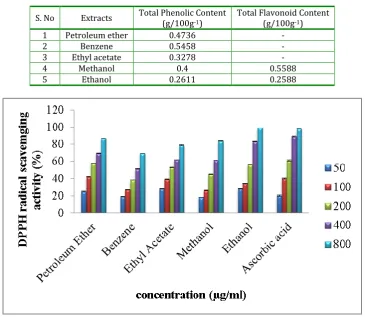
Table 1 shows the presence of total phenolic and total flavonoid contents in various extracts of B.
nervosa leaf. Phenolic contents expressed as gallic acid
equivalens varied from 0.26 to o.55 g 100 g-1. The
phenolic contents of the extracts decreased in the following order BNEA > BNP > BNM > BNB > BNE. The BNEA possessed the highest total phenolic contents (0.5458 g GAE/100g) while BNE comprised of lowest total phenolics content (0.2611 g GAE/100g) extract. The total flavonoid content in the extracts was expressed as g/100g quercetin equivalent. The methanol extract has more flavonoid content (0.5588 g 100 g-1) than ethanol extract (0.2588 g 100 g-1). In
the present study, the phenolic content was very less in ethanol extrac when compared to other solvents. Our result was supported by.[22] They reported that
ethanol and methanol showed lowest phenolic conent. Polyphenolic flavonoids are occurring ubiquitously in food and medicinal plants. They occur as glycosides and contain several phenolics hydroxyl groups. Many flavonoids are found to be strong
antioxidants effectively scavenging the reactive oxygen species because of their phenolics hydroxyl groups.Phenolic compounds possess a wide specrum of biological effects including antioxidant and free radical scavenging.[23] Results obtained from
experimental data revealed that there might be correlation between total phenolic and antoxidant capacity of different extracts of B. nervosa. However, some literature demonstrated that antioxidant was not soley dependent on phenolic content but it may be due to other phytoconstituents as tannins, triterpenoid or combine effect of them.
Free radicals are known to play a definite role in a wide variety of pathological manifestations. Antioxidants fight against free radicals and protect us from various diseases. They exert their action either by scavenging the reactive oxygen species or protecting the antioxidant defence mechanisms.[24] In
the present study, antioxidant capacity of various solvent of B. nervosa leaf extracts were examined using five different assays.
DPPH radical scavenging activity
1, 1 Diphenyl-2-picrylhydrazyl (DPPH) is a kind of stable organic free radical.[25] Compared with
other methods, the DPPH assay has multiple advantages such as good stability, credible sensitivity, simplicity and feasibility (Ozcelik et al., 2003).[26] In
this assay, the radical scavenger present in the sample extract will decolorized the purple coloured DPPH solution to yellow due to the reduction of the stable DPPH radicals to diphenyl picrylhydrazine in the presence of hydrogen donating antioxidant.[27]
The results of the DPPH radical scavenging activity of leaf extracts of B. nervosa is shown in Fig 1. IC50 is
often used to express the amount or concentration of extracts needed to scavenge 50% of the free radicals. IC50 value is inversely proportional to the scavenging
activity of leaf extracts. Smaller IC50 corresponds to a
higher antioxidant activity of the plant extract.[28] The
present study revealed that the ethanol extract of leaf had the highest scavenging activity with low IC50 value
lowest scavenging activity with high IC50 value of
23.18 µg/mL. The IC50 value of all the extracts was
found to be lower than those of ascorbic acid (26.16 µg/mL). It is because of the presence of phenolic compounds in these fractions. This showed that the B.
nervosa leaf extracts contained high amount of radical
scavenging compounds with proton donating ability. The different concentrations of various extracts of B.
nervosa showed antioxidant activities in a dose
dependent manner.
Superoxide radical scavenging activity
Superoxide radical is considered a major biological source of reactive oxygen species.[29]
Although superoxide anion is a weak oxidant, it gives rise to generation of powerful and dangerous hydroxyl radicals as well as singlet oxygen, both of which contribute to oxidative stress.[30] Superoxide
anions can be generated either form a membrane- associated NADPH oxidase [31] or as a result of
electron leakage from mitochondrial electron transport.[32]
In the present study, the superoxide radical scavenging effect of different extracts was compared with the same dose of ascorbic acid ranging from 50 to 800µg/ml. The IC50 values in superoxide scavenging
activities were in the order of BNM > BNE > BNB > BNPE > BNEA. Lesser the IC50 value for an extract is
considered to be associated with higher ability to donate hydrogen radical (i.e) antioxidant activity. A large decrease in the absorbance of the reaction mixture indicates significant free radical scavenging activity of the compound under test.[33] When
compared to ascorbic acid, the superoxide scavenging activity of the alcohol extracts (both methanol and ethanol) were found to be high (Fig. 2)
Hydroxyl radical scavenging activity
The hydroxyl radical is an extremely reactive free radical formed in biological systems and has been implicated as a highly damaging species in free radical pathology, capable of damaging almost every molecule found in living cells.[34] Hydroxyl radical scavenging
capacity of an extract is directly related to its
antioxidant activity. Among the reactive oxygen species, the hydroxyl radical is the most reactive and induces severe damage to the adjacent biomolecules.
[35]
The hydroxyl radical scavenging activity of various solvent extracts of B. nervosa was in the order of BNEA > BNE > BNM > BNPE > BNB respectively (Fig. 3). The IC50 values of various solvent leaf extracts
were 18.27 µg/mL, 21.41 µg/mL, 22.67 µg/mL, 23.41 µg/mL 24.22 µg/mL and ascorbic acid with IC50 value
of 20.16 µg/mL (Fig.6). Though the antioxidant potential of various solvent extracts was found to be lower than those of ascorbic acid, the present study revealed that ethyl acetate extract has prominent hydroxyl radical scavenging activity than the other solvent extract.
ABTS radical assay
ABTS radical scavenging assay involves a method that generates a blue/ green ABTS+
chromophore via the reaction of ABTS and potassium persulfate. The ABTS radical cation is generated by the oxidation of ABTS with potassium persulfate, its reduction in the presence of hydrogen donating antioxidants is measured.
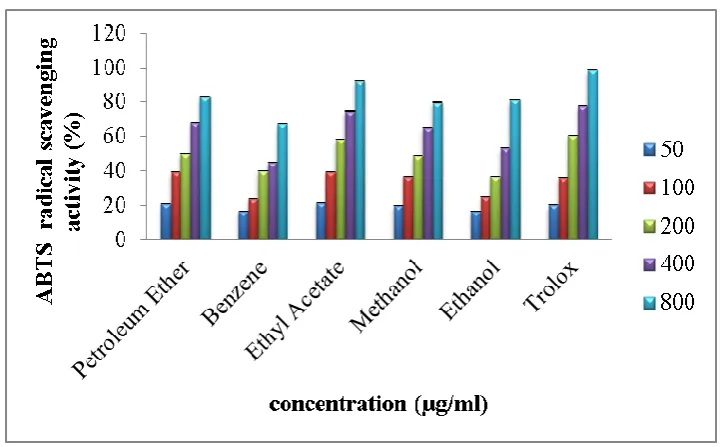
Differences for the ABTS radical cation scavenging capacities of various solvents and reference compound (ascorbic acid) was recorded in this study (Fig.4). Among various solvent extracts of B.
nervosa leaf, BNEA possessed the highest ABTS radical
scavenging activity (19.33μg/mL), while BNB showed the lowest ABTS radical scavenging activity (27.13 μg/mL). When compared to ascorbic acid, all the extracts possessed strong ABTS scavenging activity. Our observation is supported by other researchers.[36] Reducing power assay
The reducing capacity of the extract is another significant indicator of antioxidant activity. In the reducing power assay, the presence of antioxidant in the reduction of Fe3+ to Fe2+ by donating an electron.
Increasing absorbance at 700nm indicates an increase in reducing ability.[37] The antioxidant present in the
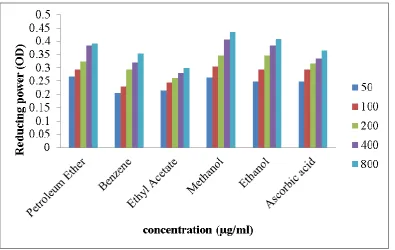
ferricyanide complex to the ferrous form and thus proved the reducing power. Figure 5 shows the dose response for the reducing power of various solvent extracts (50-800µg/ml) from B. nervosa. It was found that the reducing power of plant extract increases with increasing concentration of each solvent. The ranking order for reducing power was BNM > BNE > BNPE > BNB > BNEA respectively. Significantly higher reducing power was (0.436±0.61 at 800µg/ml) evident in BNM extract. Similar result was recorded by Jagadeeswari et al. [38] Previous reports suggested that
the reducing properties have been shown to exert antioxidant action by donating of a hydrogen atom to break the free radical chain.[39]
CONCLUSION
In the present investigation, leaf extract of B.
nervosa exhibited satisfactory scavenging effects on
DPPH, ABTS, hydroxyl radicals, superoxide radicals
and reducing power. It was observed that methanol extract of B. nervosa leaf showed concentration dependent free radical scavenging activity and this antioxidant effect may be due to higher content of phenolic and flavonoid compounds. However the exact compounds responsible for the antioxidant activity of B. nervosa are not clear. Therefore further work is necessary to isolate and characterize those constituents. From this study, it is concluded that, B.
nervosa leaf extract as promising natural sources of
antioxidants can be used in pharmaceutical fields for the prevention of free radical mediated diseases. However, pharmacological studies are suggested to confirm the antioxidant ability before going for commercialization. Further, detailed studies on isolation of phytoconstituents of the plant extracts are essential to characterize them as biological antioxidants.
Table 1: Total phenolic and flavonoid content of different extracts of Baeolepsis nervosa leaf.
S. No Extracts Total Phenolic Content (g/100g-1) Total Flavonoid Content (g/100g-1)
1 Petroleum ether 0.4736 -
2 Benzene 0.5458 -
3 Ethyl acetate 0.3278 -
4 Methanol 0.4 0.5588
5 Ethanol 0.2611 0.2588
Fig. 2: Hydroxyl radical scavenging activity of different extracts of Baeolepsis nervosa leaf.
Fig. 3: Superoxide radical scavenging activity of different extracts of Baeolepsis nervosa leaf.
Fig. 5: Reducing power ability of different extracts of Baeolepsis nervosa leaf.
Fig. 6: IC50 values of different extracts of Baeolepsis nervosa leaf.
REFERENCES
1. Tarnawski M., Depta K., Grejciun D., Szelepin B. HPLC determination of phenolic acids and antioxidant activity in concentrated peat extract - a natural immunomodulator. J. Pharmaceu. Biomed. Anal. 2006; Vol. 41:182–188.
2. Shukla K.K., Mahdi A.A., Ahmad M.K., Jaiswar S.P., Shankwar S.N., Tiwari S.C. Mucuna pruriens reduces stress and improves the quality of semen in infertile men. Evidence-based Complement. Alter Med. 2010; 7:137-144.
3. Luximon-Ramma A., Bahorun T., Soobrattee M.A., Aruoma O.I. Antioxidant activities of phenolic, proanthocyanidin, and flavonoid components in
extracts of Cassia fistula. J. Agric. Food Chem. 2002; 50:5042-5047
4. Ju E.M., Lee S.E., Hwang H.J., Kim J.H. Antioxidant and anticancer activity of extract from Betula platyphylla
var. japonica. Life Sci. 2004; 74:1013–1026
5. Gulçin I., Mshvildadze V., Gepdiremen A., Elias R. Screening of antiradical and antioxidant activity of monodesmosides and crude extract from Leontice smirnowii tuber. Phytomed. 2006;13: 343–351. 6. Fang Y., Yang S., Wu G. Free radicals, antioxidants
and nutrition. Nutri. 2002; 18:872-879.
8. Rimbach G., Fuchs J., Packer L. Application of nutrigenomics tools to analyze the role of oxidants and antioxidants in gene expression. In: Rimbach G, Fuchs J, Packer L (eds.), Nutrigenomics, Taylor and Francis Boca Raton Publishers, FL, USA, 2005, pp. 1-12.
9. Gomez-Caravaca A.M., Gomez-Romero M., Arraez-Roman D., Segura-Carretero A., Fernandez-Gutierrez A. Advances in the analysis of phenolic compounds in products derived from bees. J. Pharmaceu. Biomed. Anal. 2006; 41:1220–1234.
10. Djeridane A., Yousfi M., Nadjemi B., Boutassouna D., Stocker P., Vidal N. Antioxidant activity of some Algerian medicinal plants extracts containing phenolic compounds. Food Chem. 2006; 97:654–660 11. Cakir A., Mavi A., Yildirim A., Duru M.E., Harmandar
M., Kazaz C. Isolation and characterization of antioxidant phenolic compounds from the aerial parts of Hypericum hyssopifolium L. by activity-guided fractionation. J. Ethnopharmacol. 2003; 87:73–83
12. Lee K.Y., Weintraub S.T., Yu B.P. Isolation and identification of a phenolic antioxidant from Aloe barbadensis. Free Radical Biology & Medicine. 2000; 28:261–265
13. Kumaran A., Karunakaran R. Activity-guided isolation and identification of free radical-scavenging components from an aqueous extract of Coleus aromaticus. Food Chem. 2007; 100:356–361
14. Muanda F., Kone D., Dicko A., Soulimani R., Younos C. Phytochemical composition and antioxidant capacity of three Malian medicinal plant parts. Evidence-based Complemen. Alter. Med. 2009; 2011:1-8 15. McDonald S., Prenzler P.D, Antolovich M., Robards K.
Phenolic content and antioxidant activity of olive extracts. Food Chem. 2001; 73:73-84.
16. Eom S.H., Cheng W.J., Hyoung J.P., Kim E.H., Chung M.I., Kim M.J., Yu C., Cho D.H. Far infra red ray irradiation stimulates antioxidant activity in Vitis flexuosa Thunb. Berries. Kor J Med Crop Sci. 2007; 15: 319-323.
17. Shen Q., Zhang B., Xu R., Wang Y., Ding X., Li P. Antioxidant activity in vitro of selenium-contained protein from the se-enriched. Bifodobacterium animalis01. Anaerobe. 2010; 16:380-386.
18. Halliwell B., Gutteridge J.M.C., Aruoma O.I. The deoxyribose method: a simple test to be assay for
determination of rate constants for reaction of hydroxyl radicals. Ana. Biochem. 1987; 65:215-219. 19. Srinivasan R., Chandrasekar M.J.N., Nanjan M.J.,
Suresh B. Antioxidant activity of Caesalpiniadigyna
root. J. Ethnopharmacology. 2007; 113:284-291. 20. Huang M.H., Huang S.S., Wang B.S., Sheu M.J., Hou
W.C. Antioxidant and anti-inflammatory properties of Cardiospermum halicacabum and its reference
compounds ex vivo and in vivo. J.
Ethnopharmacology. 2011; 133:743-750.
21. Kumar R.S., Hemalatha S. In vitro antioxidant activity of alcoholic leaf extract and subfractions of
Alangiumlamarckii Thwaites. J. Chem and Pharm Res. 2011; 3:259-267.
22. Tatiya A.U., Tapadiya G.G., Kotecha S., Surana S.J. Effect of solvents on total phenolics, antioxidant and antimicrobial properties of Bridelia retusa Spreng. Stem bark. Ind. J. Nat. Prod.Res. 2011; 2:442-447. 23. Khanavi M., Aajimahmoodi M., Niromand M.C.,
Karger Z., Ajani Y., Hadjiakhoondi A., Oveisi M.R. Comparison of the antioxidant activity and total phenolic contents in some Stachys species. Afr. J. Biotechnol. 2009; 8:1143-1147.
24. Umamaheswari M., Chatterjee T. In vitro antioxidant activities of the fractions of Coccinia Grandis L. leaf extract. Afr. J. Trad. Comp. Alter. Med. 2008; 5:61-73. 25. Eklund P.C., Långvik O.K., Wärnå J.P., Salmi T.O.,
Willfor S.M., Sjoholm R.E. Chemical studies on antioxidant mechanisms and free radical scavenging properties of lignans. Org. Biomol. Chem. 2005; 3:3336-33347.
26. Ozcelik B., Lee J.H., Min D.B. Effects of light, oxygen, and pH on the absorbance of 2,2-diphenyl-1-picrylhydrazyl. J. Food Sci. 2003; 68:487-490. 27. Shon M.Y., Kim T.H., Sung N.J. Antioxidants and free
radical scavenging activity of Phellinus baumii
(Phellinus of Hymenochaetaceae) extracts. Food Chem. 2003; 82:593–597.
28. Maisuthisakul P., Suttajit M., Pongsawatmanit R. (2007). Assessment of phenolic content and free radical scavenging capacity of some Thai indigenous plants. Food Chem. 2007; 100: 1409-1418.
30. Meyer A.S., Isaksen A. Application of enzymes as food antioxidants. Trends Food Sci. Tech. 1995; 6:300-304.
31. Sabeur K., Ball B.A. Detection of superoxide anion generation by equine spermatozoa. Am. J. Vet. Res. 2006; 67:701-706.
32. Halliwell B., Gutteridge J.M.C. Free Radicals in Biology and Medicine, 3rd ed., UK: Oxford University Press; 2001.
33. Krishnaiah D., Sarbatly R., Nithyanandam, R. A review of the antioxidant potential of medicinal plant species. Food Bioprod. Process. 2011; 89:217-233. 34. Hagerman A. E., Riedl K. M., Jones G. A., Sovik K. N.,
Ritchard N. T., Hartzfeld P. W. High molecular weight plant polyphenolics (tannins) as biological antioxidants. J. Agricul. Food Chem. 1998; 46:1887– 1892.
35. Hochstein P., Atallah A.H. The nature of oxidants and antioxidant systems in the inhibition of mutation and cancer. Mut. Res. 1988; 202:363-375.
36. Sahreen S., Khan M.R., Khan R.A. Evaluation of antioxidant activities of various solvent extracts of
Carissa opaca fruits. Food Chem. 2010;122:1205-1211.
37. Olayinka A., Aiyegoro A.I., Okoh. Preliminary phytochemical screening and in vitro antioxidant activities of the aqueous extract of Helichrysum longifolium DC. BMC Compl Alter Med, Oxford University Press. 2010; 10: 21.
38. Jegadeeswari P., Daffodil E.D., Mohan V.R. Quantification of total phenolics, flavonoid and in vitro antioxidant activity of Aristolochia bracteata
Retz. Int. J. Pharm. Pharmaceu. Sci. 2014; 6:747-752. 39. Gordon MH (1990). The mechanism of antioxidant
action in vitro. In: BJF Hudson (Ed.), Food antioxidants Elsevier Applied Science, London, pp. 1– 18; 1990.
How to cite this article: Arockia Jenecius1 and
Veerabahu Ramasamy Mohan2*; In vitro antioxidant
potential of leaf extracts of the endemic plant
Becolepsis nervosa Decne. ex. Moq. (Periplocaceae); J.
Adv. Pharm. Edu. & Res. 2014: 4(2): 206-15.