Vo
l. 2010, 3(3)
Vol. 2010, 3(3)
CENTRE OF ANTITRUST AND REGULATORY STUDIES University of Warsaw
Y
EARBOOK of
A
NTITRUST and
R
EGULA
TO
RY
S
TUDIES
YEARBOOK OF ANTITRUST AND REGULATORY STUDIES
VOL. 2010, 3(3)
A
RTICLESDAWID MIĄSIK, Solvents to the rescue – a historical outline of the impact of EU law on the application of Polish competition law by Polish courts
MARCIN KOLASIŃSKI, Influence of general principles of Community law on the Polish antitrust procedure
MACIEJ BERNATT, Right to be heard or protection of the confidential information? Competing values of procedural fairness in the proceedings in front of the competition authority
TOMASZ KOZIEŁ, Commitment Decisions under the Polish Competition Act – Enforcement Practice and Future Perspectives
KONRAD KOHUTEK, Impact of the new approach to Article 102 TFEU on the enforcement of the Polish prohibition of dominant position abuse
JAROSŁAW SROCZYŃSKI, Permissibility of Exclusive Transactions: Few Remarks in the Context of Media Rights Exploitation
EWELINA D. SAGE, Who controls Polish transmission masts? At the intersection of antitrust and regulation
MARCIN KRÓL, Liberalization without a Regulator. The Rail Freight Transport Market in Poland in the years 1996–2009
C
ENTREO
FA
NTITRUSTANDR
EGULATORYS
TUDIES(CARS)
www.wz.uw.edu.pl/csair
CSAiR came into being by the order of the Council of the Faculty of Management of the University of Warsaw of 21 February 2007. It was founded in accordance with para. 20 of the University of Warsaw Statute of 21 June 2006 as an ‘other unit, listed in the faculty rule book, necessary to achieve the faculty’s objectives’. CARS conducts cross- and inter-disciplinary academic research and development as well as implementation projects concerning competition protection and sector-specific regulation in the market economy. It also prepares one-off and periodical publications, organises or participates in the organisation of conferences, seminars, work-shops and training courses. In the future CARS will also act as a patron of post-graduate studies.
CARS consists of Ordinary Members (academic staff of the Faculty of Management of the University of Warsaw), Associated Members (academic staff of other faculties of the University of Warsaw, mostly the Faculty of Law and Administration and the Faculty of Economics as well as other Polish and foreign universities and research institutes) and Permanent Co-operators (including employees of Polish and foreign companies and public and private institutions).
E
DITORIALB
OARDProf. Tadeusz Skoczny – Editor-in-Chief, CARS Director Dr. Agata Jurkowska-Gomułka – Editor, CARS Scientific Secretary
Prof. Krzysztof Klincewicz – Editor, University of Warsaw, Faculty of Management
Ewelina D. Sage, Ph.D. (OXON) – CARS International Co-ordinator Prof. Andrzej Szablewski – Editor, Technical University in Łódź Dr. Tomasz Zalega – Editor, University of Warsaw, Faculty of Management
A
DVISORYB
OARDProf. Anna Fornalczyk, Chairwoman – Technical University of Łódź; former President of the Antimonopoly Office
Prof. Dr. Stanisław Piątek, Vice-Chairman – University of Warsaw, Faculty of Management
Prof. Dr. Eleanor Fox – New York University, School of Law
Zbigniew Grycan – President of the Supervisory Board of “Grycan – Lody od pokoleń”
Prof. Dr. Janusz Lewandowski – Warsaw University of Technology, Institute of Heat Engineering
Prof. Johannes Masing – University of Freiburg; judge at the Federal Constitutional Court in Karlsruhe
Prof. Alojzy Z. Nowak – Dean of the Faculty of Management of the University of Warsaw
Prof. Jürgen Säcker – Free University of Berlin, Institute for German and European Business, Competition and Regulation Law
Prof. StanisławSołtysiński – Sołtysiński, Kawecki Szlęzak LPP Prof. Andrzej Sopoćko – University of Warsaw, Faculty of Management;
former President of the Competition and Consumer Protection Office Prof. Richard Whish – University of London, Kings College Prof. Marek Wierzbowski – University of Warsaw, Faculty of Law and
Administration; attorney-in-law
Prof. Irena Wiszniewska-Białecka – judge of the General Court of the European Union
Prof. Anna Zielińska-Głębocka – Univeristy of Gdańsk, Faculty of Economics; member of the Monetary Policy Council
[further Members of the Advisory Board to be confirmed]
E
DITORIALO
FFICECentre of Antitrust and Regulatory Studiem (CARS) University of Warsaw, Faculty of Management
PL – 02-678 Warszawa, 1/3 Szturmowa St. Tel. + 48 22 55 34 126; Fax. + 48 22 55 34 001
e-mail: [email protected] www.cars.wz.uw.edu.pl
YEARBOOK OF ANTITRUST AND REGULATORY STUDIES
Established 2008
R
ECOMMENDEDC
ITATIONYARS
I
NFORMATIONFORA
UTHORSManuscripts should be submitted to the Editor, accompanied by an assurance that the article has not been published or accepted elsewhere. Apart the main body, articles should include contents, abstracts, key-words and classifications,
and literature. Articles should not include information about the authors. Authors are expected to deliver proposed articles written in correct English
(British standard). Articles will be subjected to a double blind peer review procedure.
The maximum length of an article is 9000 words.
Manuscripts are expected to be submitted as electronic documents, formatted in MS Word (1998/2000/XP/2003) or in Open Office
C
OPYRIGHTThe acceptance of a manuscript for publications implies that the Author assigns to the Publisher the copyright to the contribution whereby the Publisher shall have exclusive right to publish it everywhere during the full term of copyright
and all renewals and extensions thereof. The rights include mechanical, electronic and visual reproductions, electronic storage and retrieval; and all
other forms of electronic publication including all subsidiary right. The Author retains the right to republish the article in any other publication one year after its publication in the journal, provided that the Author notifies the Publisher and ensures that the Publisher is properly credited and that the
relevant copyright notice is repeated verbatim.
D
ISTRIBUTIONEconomic Bookstore
PL – 02-094 Warsaw, 67 Grójecka St. Tel. (+48-22) 822-90-42; Fax (+48-22) 823-64-67
CENTRE OF ANTITRUST AND REGULATORY STUDIES University of Warsaw
Vol. 2010, 3(3)
Y
EARBOOK
of
A
NTITRUST
and
R
EGULATORY
Centre of Antitrust and Regulatory Studies
University of Warsaw, Faculty of Management
Eighth Publication of the Publishing Programme
Copyright by Wydawnictwo Naukowe Wydziału Zarządzania Uniwersytetu
Warszawskiego, Warszawa 2010
Cover: Dariusz Kondefer
ISSN 1689-9024
PUBLISHER University of Warsaw Faculty of Management Press PL – 02-678 Warsaw, 1/3 Szturmowa St.
Tel. (+48-22) 55-34-164 e-mail: [email protected]
www.wz.uw.edu.pl
LAYOUT ELIPSA Publishing House
YEARBOOK OF ANTITRUST AND REGULATORY STUDIES
VOL. 2010, 3(3)
Contents
Editorial foreword ... 7
List of acronyms ... 9
ARTICLES
DAWID MIĄSIK, Solvents to the Rescue – a Historical Outline of the Impact of EU Law on the Application of Polish Competition Law by Polish Courts ... MARCIN KOLASIŃSKI, Influence of General Principles
of Community Law on the Polish Antitrust Procedure ... MACIEJ BERNATT, Right to Be Heard or Protection
of the Confidential Information? Competing Values of Procedural Fairness in the Proceedings in Front of the Competition Authority ... TOMASZ KOZIEŁ, Commitment Decisions under the Polish Competition Act
– Enforcement Practice and Future Perspectives ... KONRAD KOHUTEK, Impact of the New Approach to Article 102 TFEU on
the Enforcement of the Polish Prohibition of Dominant
Position Abuse ... JAROSŁAW SROCZYŃSKI, Permissibility of Exclusive Transactions:
Few Remarks in the Context of Media Rights Exploitation ... EWELINA D. SAGE, Who Controls Polish Transmission Masts? At the
Intersectionof Antitrust and Regulation ... MARCIN KRÓL, Liberalization without a Regulator. The Rail Freight ...
LEGISLATION & CASE LAW REVIEWS
DAGMARA KOSKA, KRZYSZTOF KUIK, 2008 and 2009 EU Competition Law and Sector-specific Regulatory Case Law Developments with
a Nexus to Poland ... .
AGATA JURKOWSKA-GOMUŁKA, Polish Antitrust Legislation and Case Law Review 2009 ... KAMIL KOSMALA, 2009 Legislative and Juridical Developments
in Telecommunications ...
Filip Elżanowski, 2009 Amendments to the Polish Energy Law ...
KATARZYNA ZAWISZA, Legislative Developments in Rail Transport in 2009 ... FILIP CZERNICKI, Legislative Developments in the Aviation Sector
in 2009 ...
CASE COMMENTS
Possible objective justification of a network monopoly’s refusal to conclude an agreement on an interconnected market.
Case comment to the judgement of the Supreme Court of 14 January 2009 –Commune Rychwał (Ref. No. III SK 24/08)
Commented by JOANNA JEŻŻEWSKA ...
Does forcing services on suppliers constitute an abuse of a dominant position?
Case comment to the judgment of the Supreme Court of 19 February
2009 – DROP (Ref. No. III SK 31/08)
Commented by ANNA PISZCZ ...
Wide scope of administrative discretion justified by features of telecommunications markets.
Case comment to the judgment of the Polish Supreme Court of 2 April
2009 – TP SA v. the President of the Electronic Communications Office
(III SK 28/08)
Commented by MAŁGORZATA KOZAK ...
Does an undertaking’s reputation affect its market power on the relevant market?
Case comment to the judgment of the Supreme Court of 2 April 2009
– PPKS (Ref. No. III SK 30/08)
Commented by RAFAŁ STANKIEWICZ ...
Shall selective, above-cost price cutting in the newspaper market be qualified as anticompetitive exclusion?
Case comment to the judgement of the Supreme Court of 19 August
2009 – Marquard Media Polska (Ref. No. III SK 5/09)
Commented by KONRAD KOHUTEK ...
The control of Polish courts over the infringements of procedural rules by the national competition authority
Case comment to the judgement of the Supreme Court of 19 August
2009 – Marquard Media Polska (No. III SK 5/09)
Commented by MACIEJ BERNATT ... The publication of the European Commission’s guidelines in an official
language of a new Member State as a condition for their application. Case comment to the order of the Polish Supreme Court of
3 September 2009 (III SK 16/09) to refer a preliminary question to
the Court of Justice of the European Union (C-410/99 Polska Telefonia
Cyfrowa sp. z o.o. v Prezes Urzędu Komunikacji Elektronicznej)
Commented by KRYSTYNA KOWALIK-BAŃCZYK ...
BOOKS REVIEWS
Bartosz Michalski, Międzynarodowa koordynacja polityki konkurencji
[International co-ordination of competition policy], Wydawnictwo Difin, Warsaw 2009, 255 p.
Reviewed by RAJMUND MOLSKI ...
Grzegorz Materna, Pojęcie przedsiębiorcy w polskim i europejskim prawie
ochrony konkurencji [The notion of an entrepreneur in Polish and European competition law],Wolters Kluwer, Warszawa 2009, 296 p.
Reviewed by OSKAR FILIPOWSKI ...
Rafał Stasikowski, Funkcja regulacyjna administracji publicznej. Studium
z zakresu nauki prawa administracyjnego oraz nauki administracji [The regulatory function of public administration. A study of the science of administrative law and the science of administration] Branta Publishing Company, Bydgoszcz 2009, 336 p.
Reviewed by JUSTYNA NAWROT ...
CONFERENCE REPORTS
Competition Law – New Tendencies, New Tools and New Enforcement Methods from an EC and Polish Perspective - Conference of the Global
Competition Law Centre in the Natolin Campus of the College of Europe – Report.
Reported by MAŁGORZATA SZWAJ, ROBERT GAGO ...
ACTIVITIES OF CSAiR
CARS Activity Report 2009
Reported by AGATA JURKOWSKA-GOMUŁKA ...
BIBLIOGRAPHY 2009
Complied by AGATA JURKOWSKA-GOMUŁKA, ANNA WARZYBOK ...
Editorial foreword
The editorial board is pleased to present the third volume of the Yearbook
of Antitrust and Regulatory Studies (YARS 2010, 3(3)). We hope that it will remain of interest to our foreign readers primarily because the majority of its research papers deal with the most important current problems of competition law enforcement. These include the impact of European substantive and procedural competition rules on the national antitrust enforcement systems, especially considering Poland’s position as a “new” EU Member State as well as the challenges posed by the co-existence of antitrust enforcement and sector-specific regulation on infrastructure markets. We believe that this alone places our publication in line with the mainstream discussion of both European academics and professionals in the competition law field.
The main part of YARS 2010, 3(3) opens with a paper by D. Miąsik that
presents a detailed assessment of the influence exercised over the last 20 years by European competition law on the application of Polish antitrust rules by
national courts. In the next paper, M. Kolasiński emphasizes the meaning of
‘general principles of Community law’ for the de-centralized system of European competition rules enforcement under Regulation 1/2003 as well as for the Polish enforcement system including the standards applicable to the right of defence. The related paper by M. Bernatt is dedicated to the possible conflict between the various guarantees of procedural fairness that find their expression in the right to be heard and in the protection of confidential information. The
aim of the paper by T. Kozieł is to analyze the Polish commitments procedure
from its legal as well as economic perspective. The paper by K. Kohutek discusses the extent to which the modernized approach to Article 102 TFEU will influence the traditional approach to the abuse of a dominant position
employed by Polish antitrust and judiciary institutions. J. Sroczyński’s paper
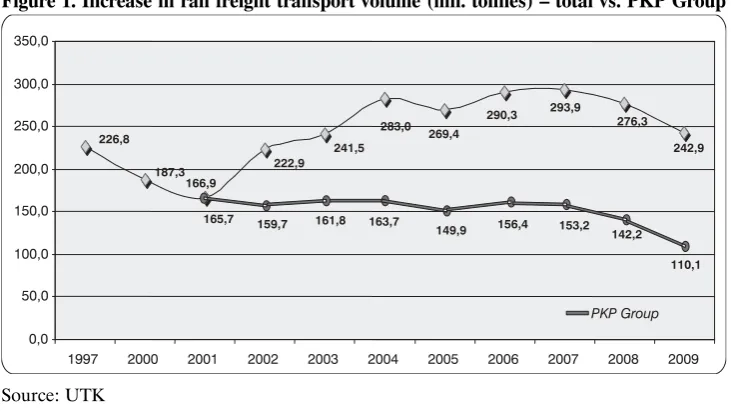
shows that the liberalization process of the railway freight transport market in Poland occurred between 1997 and 2009 not because of ‘effective regulation’ but despite its absence.
Aside from its research papers, the current volume of YARS also contains a series of detailed reviews of legislative amendments and case law developments in the antitrust field and in infrastructure sectors. Similarly to YARS 2008, 1(1), D. Koska and K. Kuik consider first the 2008-2009 developments in EU competition and regulatory case law with a nexus to Poland. The following reviews by A. Jurkowska and K. Kosmala were prepared according to a new concept that covers both legislative amendments and essential jurisprudence in the field of antitrust and telecoms regulation respectively. The key changes affecting Polish energy, railway and civil aviation legislation are presented next.
The following part covers the most important Polish antitrust jurisprudence of 2009 including the order of the Polish Supreme Court (III SK 16/09) to refer a preliminary question to the Court of Justice of the European Union
(C-410/99 Polska Telefonia Cyfrowa sp. z o.o. v Prezes Urzędu Komunikacji
Elektronicznej), concerning the publication of the Commission’s guidelines in an official language of a new Member State as a condition for their application. Reviews of Polish books on international co-ordination of competition policy, the antitrust notion of an undertaking and the regulatory function of public administration are presented later. YARS 2010, 3(3) closes with the 2009 CARS Activity Report and a report on the Conference of the Global Competition Law Centre in the Natolin Campus of the College of Europe concerning ‘Competition Law – New Tendencies, New Tools and New Enforcement Methods from an EC and Polish Perspective’.
Finally, the Editorial Board wishes to express its gratitude to the distinguished Professor Jürgen Säcker, Director of the Institute for German and European Business, Competition and Regulation Law at the FU Berlin, for his consent to join the Advisory Board of YARS.
The Editorial Board hopes that YARS will continue to enrich legal and economic libraries concerning antitrust and regulatory issues especially in that it will continue to provided its readers with up to date insights into the workings of antitrust and regulation in a ‘new’ EU Member State. Starting from 2011, we intended to open YARS to foreign authors and their contributions on the models, experiences and challenges facing antitrust and regulation in the emerging markets of Central and Eastern Europe.
Warsaw, December 2009. Tadeusz Skoczny
Editor-in-chief
List of acronyms
AUTHORITIES: AMW
(Agencja Mienia Wojskowego) – Military Property Agency
UOKiK
(Urząd Ochrony Konkurencji i Konsumentów)
– Office of Competition and Consumer Protection
SOKiK
(Sąd Ochrony Konkurencji i Konsumentów)
– Court of Competition and Consumer Protection
UKE
(Urząd Komunikacji Elektronicznej)
– Office of Electronic Communications
URE
(Urząd Regulacji Energetyki)
– Energy Regulatory Office
UTK
(Urząd Transportu Kolejowego) – Rail Transport Office
LEGAL ACTS:
Competition Act – Polish Competition and Consumers
Protection Act of 2007
KC
(Kodeks Cywilny)
– Polish Civil Code
KPA
(Kodeks Postępowania Administracyjnego)
– Polish Administrative Procedure Code
KPC
(Kodeks Postępowania Cywilnego)
– Polish Code of Civil Procedures
PT – Polish Telecommunications Law of
2004
A
R
T
I
C
L
E
S
Solvents
to the Rescue – a Historical Outline of the Impact of EU
Law on the Application of Polish Competition Law by Polish Courts
by
Dawid Mi
ą
sik
*CONTENTS
I. Different approaches to the application of EU law in competition proceedings before and after the accession
II. Providing a meaning to imprecise provisions III. Priority of purposive interpretation
IV. Structure of a competition analysis V. Determining the effect on competition
VI. Reception of legal institutions developed in EU law VII. Summary
Abstract
The article is devoted to the influence of European competition law on the application of Polish competition rules by Polish courts. It covers references to EU law that has been made throughout 20 years of its history. It aims at identifying various instances where EU law has been invoked to provide Polish competition rules with the actual content as well as different modes of referrals to EU law.
Résumé
L’article concerne l’influence de la loi européenne de la concurrence sur l’application des règles polonaises de concurrence par des tribunaux polonais. L’article couvre les références a la loi de l’UE développée au cours des 20 années de son histoire.
12 DAWID MIĄSIK
Son but est d’identifier des instances où la loi de l’EU a été invoquée pour donner aux règles polonaises de la concurrence le contenu actuel et les modes de référence a la loi de l’UE.
Key words: EU competition law; judicial application of competition law; Europe’s Agreement; spontaneous harmonization; relevant market; consumer detriment; restriction of competition
I. Different approaches to the application of EU law in competition
proceedings before and after the accession
The application of competition law is very apt for external (foreign) influences due to its specific history, its exportation from the United States to other legal cultures, creeping internationalization of rules as well as extra-territorial jurisdictional issues. Complex economic considerations and market regulation are coupled with the resulting restrictions of fundamental freedoms protected at the national, regional or international level. All these factors encourage both the authorities entrusted with the enforcement of competition rules as well as adjudicating courts to seek guidance on the methods of their application in more developed legal systems. Such an approach allows them to avoid potential instances of incorrect enforcement. It also enables the business community, at least to some extent, to gain clarity as to what types of market practices are likely to be questioned under antitrust rules. Any infant stage of a competition law regime benefits also from technical assistance from the representatives of more advanced jurisdictions. A significant degree of readiness to refer to the jurisprudence and legal doctrine of other legal systems follows such initial help.
Considering that the substantive provisions of Polish competition law have been modelled on Articles 101 and 102 TFEU, the EU has provided Poland with substantial level of technical assistance in the ambit of its national competition
law. Acquis communitaire is easily accessible and has drawn considerable
interest of Polish legal doctrine. Unsurprisingly, national jurisprudence has also frequently referred to EU competition rules in proceedings outside the
coverage of Article 3 Regulation 1/20031. This article reviews the influence of
EU law on the judicial application of Polish competition law. It will not cover
1 See examples listed by: T. Skoczny, Przeciwdziałanie praktykom monopolistycznym w świetle
SOLVENTS TO THE RESCUE – A HISTORICAL OUTLINE OF THE IMPACT… 13
issues resulting from the parallel application of EU and national competition rules in the same proceedings but try instead, to determine whether and to what an extent has Polish competition law been harmonized with EU law in practice.
The impact of EU law on the judicial application of Polish competition law is of significant practical importance due to the numerous references made to EU law both by the President of the Polish Competition and Consumer
Protection office (UOKiK President) and the scrutinized undertakings2.
The impact of EU law on the application of Polish competition rules by the antitrust authority is outside the scope of this study. This is so because of one of the peculiarities of the Polish antitrust enforcement system whereby the courts reviewing the decisions issued by UOKiK have full jurisdiction over the factual and legal considerations contained therein.
Article 68 and 69 of the European Agreement3 obliged Poland to
approximate, among other things, its competition rules4. However, legal
doctrine5 had inspired referrals to EU competition law long before the actual
entry into force of this act. At the time when national legal rules had been
interpreted, EU law had been in an auxiliary manner6. Polish courts continued
2 See for example the judgment of the Competition and Consumer Protection Court (SOKiK) of 29 May 2006, XVII Ama 9/05, UOKiK Official Journal 2006 No. 4, item 58, where some of the arguments raised against the UOKiK decisions dealt with its incompatibility with ‘European case-law’ on the non-compete obligation. In the judgment of 29 May 2008 (XVII Ama 53/07, UOKiK Official Journal 2008 No. 4, item 37), SOKiK did not accept the plea that the UOKiK decision imposing fines for the infringement of Polish competition rules was issued in breach of European guidelines on fine setting.
3 European Agreement establishing association between the Republic of Poland and European Communities and their Member States, Brussels 16 December 1991 (Journal of Laws 1994 No. 11, item 38).
4 G. Materna, Pojęcie przedsiębiorcy..., p. 193–194. More about duties stemming from Articles 68-69 of the Europe’s Agreement see: S. Sołtysiński, ‘Dostosowanie prawa polskiego do wymagań Układu Europejskiego’ (1996) 4–5 Państwo i Prawo 31, and regarding competition law in particular S. Sołtysiński, ‘Problematyka prawa antytrustowego w układzie o stowarzyszeniu między RP a EWG’ [in:] Rozprawy z polskiego i europejskiego prawa prywatnego, Kraków 1994, p. 445–461; M. Król-Bogomilska, Kary pieniężne w prawie antymonopolowym, Warszawa 2001, p. 27–30; E. Wojtaszek-Mik, Umowa franchisingu w świetle prawa konkurencji Wspólnoty Europejskiej i polskiego prawa antymonopolowego, Toruń 2002, p. 166–169; T. Skoczny, Die Angleichung..., p. 27–29.
5 T. Skoczny, Przeciwdziałanie praktykom..., p. 179; E. Nowińska, Reguły konkurencji
a umowy dystrybucyjne i serwisowe w zakresie pojazdów samochodowych, Warszawa 1995, p. 22; S. Sołtysiński, ‘Dostosowanie prawa…’, p. 40; I. Wiszniewska, ‘Dostosowanie polskiego prawa antymonopolowego do prawa europejskiego’, (1996) 1–4 Studia Prawnicze 142.
14 DAWID MIĄSIK
making references to EU law after Article 68 and 69 of the European Agreement entered into force. They have avoided somehow to make any
references to the approximation duty7. Caution in invoking the European
Agreement as a potential source of the duty to interpret Polish competition law inline with EU provisions law can be explained by the position of the Supreme Court. The latter has clearly stated in cases concerning intellectual property that the duty to approximate Polish law with European rules did not oblige national courts to use European standards when applying domestic
legislation in areas covered by Articles 68 and 698.
Following the accession, a cautious approach towards the Europeanization of Polish antitrust jurisprudence has been noted by the Supreme Court on
three occasions. In cases without an effect on intra-Community trade, acquis
communitare in the area of antitrust is said to serve only as ‘a source of intellectual inspiration, example of legal reasoning and understanding of certain legal institutions, which may be helpful in interpreting the provisions of Polish
law’9. Thus, there is no duty to apply Polish competition rules in conformity
with European jurisprudence in purely national cases. Therefore, the failure to deliver a judgment compatible with a specific judgment of the General Court or Court of Justice, or indeed Commission’s guidelines or notices, does not equal a recognizable infringement of the Polish equivalents of Articles 101
or 102 TFEU. This does not mean of course that references to EU law are
not necessary or are indeed unwelcome. Instead, there is a constant need to persuade the court that the deviance from European standards leads to the misapplication of Polish law.
Interestingly enough for a foreign reader, albeit not surprising for those familiar with the peculiarities of the Polish legal system, an alternative approach to the impact of EU law on purely national cases can also be identified. In this context, factual harmonization resulting from the ‘genetic’ bond between
exchange of goods, there should be no barriers – in the opinion of SOKiK – in interpreting the provisions of the antimonopoly act with due account of the positive experience of the European Union with such agreements’ – judgment of SOKiK of 8 January 1997, XVII Amr 65/96, (1998) 1 Wokanda, item 60; see also judgments of SOKiK of: 6 December 1995 (XVII Amr 47/95, (1997) 1 Wokanda, item 55) and 4 February 1998 (XVII Ama 66/97, LEX nr 56330, for further analysis see E. Wojtaszek-Mik, Umowa franchisingu..., p. 143.
7 Judgment of SOKiK of 8 January 1997, XVII Amr 65/96, (1998) 1 Wokanda, item 60 – ‘interpretation of Article 6 of the Antimonopoly Act should include – as far as possible – the legislation in force in the European Union, due to the fact of signing the Europe’s Agreement’.
8 Judgments of the Supreme Court of: 8 January 2003, III RN 239/01 and III RN 240/01, (2004) 3 OSNP, item 42; and 17 February 2004, I PK 386/03, (2005) 1 OSNP, item 6.
SOLVENTS TO THE RESCUE – A HISTORICAL OUTLINE OF THE IMPACT… 15
Polish and European competition rules is said to oblige Polish courts to fully
recognize acquis communitaire when applying relevant provisions of national
law10. This approach was adopted in at least one case concerning restrictive
agreements whereby SOKiK declined to hold a genuine agency agreement to be a competition restricting practice within the meaning of the Polish equivalent to Article 101 TFEU.
Such an approach is very debatable because the relationship between national and EU competition rules is governed by Regulation 1/2003. The latter act does not however contain a duty of a consistent interpretation and application of national competition rules in cases without an effect on intra-Community trade. The jurisprudence of the ECJ is also clear that such an obligation is applicable where national law directly refers to European competition rules
as a benchmark used to examine a specific market conduct11. Still, such an
approach is also very pragmatic. The application of different legal standards in European and national proceedings results in a divergent treatment of the
undertakings under investigation12, a fact that can by explained only in part
by the differences in the goals of the European and the Polish competition law regime.
Full referral to acquis communitaire when applying Polish antitrust rules
in domestic cases, is also supported by constitutional considerations13. The
divergence of the treatment of Polish undertakings in European and national proceedings leads in some cases to the application of stricter national rules and to their disapplication in others. It may be argued therefore that any restriction of the constitutional freedom of entrepreneurship resulting from a decision of the UOKiK President based on national law only, is not warranted by an important public interest within the meaning of Article 22 of
the Polish Constitution14. This is particularly true for restrictive agreements
where Article 3 Regulation 1/2003 precludes the application of stricter national
10 With direct reference to article 101 TFEU, judgment of SOKiK of 29 March 2006, XVII Ama 86/04, not reported.
11 C-217/05 Confederación Española de Empresarios de Estaciones de Servicio p. Compañía
Española de Petróleos SA [2006] ECR I-11987, para. 22.
12 See resolution of the Supreme Court of 23 July 2008, III CZP 52/08, (2009) 7–8
Orzecznictwo Sądów Polskich, item 86, annotated by R. Poździk, see also annotations by R. Trzaskowski, ‘Kompetencja sądu do ustalania nieważności czynności prawnych będących przejawem nadużywania pozycji dominującej oraz nieważności porozumień ograniczających konkurencję’ (2009) 9-10 Palestra 635–643 and A. Jurkowska-Gomułka, ‘W stronę umocnienia prywatnoprawnego wdrażania zakazów praktyk ograniczających konkurencję – glosa do uchwały SN z 25.07.2008 r. (III CZP 52/08)’ (2010) 5 Europejski Przegląd Sądowy 43.
13 This problem was noted by the Supreme Court in judgment of 6 December 2007, III SK 20/07, (2009) 3-4 OSNP, item 55.
14 See judgment of the Constitutional Court of 21 April 2004, K 33/03, (2004) 4 Orzecznictwo
16 DAWID MIĄSIK
provisions where an agreements is liable to affect intra-Community trade. This approach is not as convincing in abuse cases seeing as Article 3 Regulation 1/2003 clearly allows for the application of stricter national rules even in cases where an effect on EU trade is present but there is no violation of Article
102 TFEU15.
II. Providing a meaning to imprecise provisions
The judicial application of the notion of a dominant position provides one of the best examples of EU law referrals seeking guidance on how to properly
understand basic competition law institutions16. Polish law initially stated 17 that
an undertaking was dominant when it did ‘not meet with substantial competition on the national or local market’. Courts quickly pointed out that this provision failed to determine the essence of ‘market dominance’. In order to fill the gap, the Polish Court for Competition and Consumer Protection (SOKiK) decided
to refer to acquis communitaire18. On this basis, the definition of dominance
was read as concerning a market position allowing the undertaking concerned ‘to prevent effective competition on the relevant market by providing it with the ability of behaving to a significant extent independently of its competitors,
customers and ultimately consumers’19. Although minor changes were made
later on, this definition was ultimately introduced into the Competition and
Consumer Protection Act of 2000 (Competition Act of 2000)20.
15 T. Skoczny, ‘W sprawie modernizacji stosowania zakazu nadużycia pozycji dominującej’ [in:] C. Banasiński (ed.), Ochrona konkurencji i konsumentów w Polsce i Unii Europejskiej, Warszawa 2005, p. 107.
16 R. Janusz, M. Sachajko, T. Skoczny,‘Nowa ustawa o ochronie konkurencji i konsumentów’ (2001) 3 Kwartalnik Prawa Publicznego 186.
17 Article 2 point 6 Act of 24 February 1990 on Counteracting Monopolistic Practices and Consumer Protection (consolidated text: Journal of Laws 1997 No. 49, item 318 as amended; hereafter Antimonopoly Act).
18 Judgments of SOKiK of: 8 June 1994, XVII Amr 70/93, LEX no. 55924; 31 May 1995, XVII Amr 9/95, (1995) 6 Wokanda, item 55; 29 September 1999, XVII Ama 24/99, LEX no. 56385; 17 March 1999, XVII Ama 77/98, (2000) 8 Wokanda, item 58; 3 February 1999, XVII Ama 76/98, LEX no. 56157; 29 September 1999, XVII Ama 24/99, LEX no. 56385.
19 Judgments of SOKiK of: 8 June 1994, XVII Amr 70/93, LEX n. 55924; 31 May 1995, XVII Amr 9/95, (1995) 6 Wokanda, item 55; 29 September 1999, XVII Ama 24/99, LEX no. 56385; 17 March 1999, XVII Ama 77/98, (2000) 8 Wokanda, item 58; 3 February 1999, XVII Ama 76/98, LEX no. 56157.
SOLVENTS TO THE RESCUE – A HISTORICAL OUTLINE OF THE IMPACT… 17
Another example is provided by the judgment of SOKiK21 concerning
the notion of a ‘decision of association of undertakings’ taking the form of a resolution of the regional attorney’s chamber determining ‘the pattern of optimal service fees’ and ‘recommended price list’. When establishing whether such a resolution constitutes an act of the association of undertakings, SOKiK pointed out that pursuant to European jurisprudence ‘a recommendation of an association of undertakings which, regardless of its legal status (form), accurately states the policy of the association of coordinating the conduct of its members, constitutes a decision of such an association of undertakings
within the meaning of article 81 of the EC Treaty’22. In a similar manner, the
Supreme Court referred to EU law in its judgment of 9 August 200623 where
it accepted that competitors may adapt their policies to changing market conditions and the behaviour of their competitors, including pricing policies; however, price-matching with proof of prior contact between competitors was
declared to be covered by the notion of a prohibited price-fixing scheme24.
Most of the references to European law under this heading considered the delineation of the relevant market. They supported the conclusions drawn by the courts from the factual analysis of the cases under consideration. SOKiK
referred in its judgment of 14 February 200725to a decision of the European
Commission26 when declaring the national market for broadcasting rights to
the Polish football league to constitute the relevant market at stake. In the
judgment of 5 May 200827, it also followed closely one of the Commission’s
decisions28 when determining the geographical extent of the relevant market
under consideration. SOKiK ruled that no local market for grain shipment services exists that would include a single port-terminal only. Instead, it confirmed the existence of a national market for grain shipment services that included all sea terminals offering such services. In the same manner,
the judgment of 29 October 200929 followed the approach of the European
institutions pursuant to which ‘products such as the organization of airport services for carriers in a single airport may constitute a separate relevant
21 Judgment of SOKiK of 9 November 2006, XVII Ama 68/05, UOKiK Official Journal 2007 No. 2, item 20.
22 With reference to 45/85 Verband der Sachversicherer e.V. [1987] ECR 405.
23 Judgment of the Supreme Court of 9 August 2006, III SK 6/06, (2008) 1–2 OSNP, item 25.
24 Judgment of the CFI T-1/89 Rhône-Poulenc [1991] ECR II-867.
25 Judgment of SOKiK of 14 February 2007, XVII Ama 98/06, UOKiK Official Journal 2007 No. 2, item 22.
26 Decision of the EC of 2 April 2003, COMP/M.2876 – Newscorp/Telepiu. 27 Judgment of SOKiK of 5 May 2008, XVII Ama 103/07, not reported.
18 DAWID MIĄSIK
market, since when a carrier intends to offer its services on a given route, the access to the airport infrastructure situated on both ends of the route
constitutes an essential factor for the provision of such a service’30. As a result,
each of the three regional airports located in southern and south-eastern Poland (that is, Rzeszów, Krakow and Katowice) was to be considered as a separate relevant market for handling services.
III. Priority of purposive interpretation
Furthermore, references to EU law allowed Polish courts to depart from a literal interpretation of Polish competition rules. SOKiK ruled in its judgment
of 25 June 199731 that a textual interpretation of Article 4 section 4 of the
1990 Antimonopoly Act led to the conclusion that any vertical agreement establishing a distribution network is a competition restricting practice. On the
other hand, a teleological approach based on acquis communitaire led SOKiK
to the conclusion that exclusive distribution agreements are not anticompetitive
per se, even if they create distribution networks closed to other resellers. The Court rightly concluded that competition between producers takes place mainly at the retail level and takes the form of competition between the entire distribution networks. Their creation through agreements containing exclusivity clauses leads to ‘an increase of competition on the market and not its reduction’. It followed that that exclusive distribution agreements restricted competition only when competitors had been foreclosed from the substantial part of the market.
References to European standards led the courts to the conclusion occasionally that despite the statutory presumption, a 40% market share does not always amount to a dominant position. It is necessary instead to take into account the whole set of the circumstances of the case including the ‘business
environment in which the undertaking concerned operates’32. Pursuant to
this approach, the Courts of Appeals ruled that the financial strength of an undertaking does not warrant a dominant position on its own but that high
market shares must be sustained for a longer period of time33.
30 With references to C-179/90 Merci Convenzionali Porto di Genova [1991] ECR I-5889 and C-18/93 Corsica Ferries [1994] ECR I-1783.
SOLVENTS TO THE RESCUE – A HISTORICAL OUTLINE OF THE IMPACT… 19
In the same manner, the Supreme Court ruled on 21 February 200234 that
no restriction of competition occurred when a dominant producer and seller of oil and gasoline applied a unified countrywide wholesale price without taking due account of transportation cost differences. Such pricing policy did not aim at the elimination of the competitors of the dominant undertaking even though the latter was said to have enjoyed a competitive advantage over them resulting from its ‘earlier economic expansion in all potential trading levels of oil and gasoline distribution’. This judgment suggests that to establish abuse, it is not enough to show that a vertically integrated undertaking has an economic advantage resulting from its earlier, in comparison to its competitors on the wholesale or retail level, market entry and established market presence. The same applies to competitive advantages resulting from the economies of scope.
European competition law has surely greatly influenced the application of Article 6 of the Competition Act of 1990. This core provision prohibited both restrictive agreements and abuse (listed exhaustively in Articles 4 and 5) but only to the extent that they were ‘not necessary from a technical or economic point of view’. References to EU law led SOKiK to abandon the literal interpretation of this rule, which effectively allowed the interests of the scrutinized entity to be granted a very important role in adjudicating whether a restrictive practice was necessary for furthering the economic interests of the dominant undertaking. SOKiK ruled on several occasions that such an application of Article 6 of the Competition Act of 1990 would be unjust given
the incompatibility of such an interpretation with EU law35. Courts focused
on the impact of the scrutinized restrictive practices on consumer interests36.
This approach had a key practical consequence – the competition authority was obliged by the courts to ‘determine and assess whether and to what an extent can the restriction (...) of competition on the relevant market (...)
ultimately contribute to the improvement of consumer interests’37. As a result,
both the restrictive agreements and abuses listed in Articles 4 and 5 were examined from the point of view of their impact on the economic benefits of consumers. Practices that restricted market rivalry, but enabled the parties to the agreement or the dominant undertaking to better satisfy consumer needs, were thus declared to be admissible.
34 Judgment of the Supreme Court of 21 February 2002, I CKN 1041/99, (2003) 1 OSNC, item 16.
20 DAWID MIĄSIK
IV. Structure of a competition analysis
Another area of influence of EU law on the judicial application of Polish competition law is the methodology of application. References to EU law led the courts to apply, at least partially, the European method of competition analysis. Most of all, the courts stressed the importance of proper market definition since the very beginning of modern Polish antitrust. Relevant market delineation was considered to be the precondition of a proper legal
qualification of the business conduct under consideration38. In fact, not only
the was the definition of relevant market but also the practice of its strict
delimitation, established in Hofmann La Roche39, adopted from EU law.
Following economic fields were declared to constitute a relevant market: coal,
carbon coke, etyline, gas40, information and weather programs41; wholesale
market for the delivery of pay-tv channels carrying scientific and nature
programs in Polish42.
The practice of narrow market definition has continued after the accession. It was based on the argumentation that if a broader definition is accepted, then it may be difficult to identify undertakings with dominant position and that such difficulty may threaten the attainment of the goals of competition
law.43 Such reasoning is not convincing. The Court of Appeals has at least on
one occasion rightly pointed out that the relevant market must be established
not narrowly or widely, but properly.44
EU competition law was used by Polish courts to allocate the burden of proof in cases where the collaboration between undertakings took the form of concerted practice. The Supreme Court ruled on 9 August 2006 (III SK 6/06) that it is the competition authority that bears the burden of proving that a concerted price took place. On the other hand, it is up to the scrutinized
38 Judgment of SOKiK of 9 April 1997, XVII Ama 4/97, LEX nr 56458, with reference to 6/72 Europemballage & Continental Can [1973] ECR 215.
39 Judgments of SOKiK of 4 October 1993, XVII Amr 29/93, (1994) 3 Wokanda, item 54; 26 October 1994, XVII Amr 24/94, (1995) 8 Wokanda, item 55.
40 Judgment of SOKiK of 4 October 1993, XVII Amr 29/93, (1994) 3 Wokanda, item 54. 41 Judgment of SOKiK of 14 September 2006, XVII Ama 71/05, UOKiK Official Journal 2006 No. 4, item 61.
42 Judgment of SOKiK of 28 November 2008, XVII Ama 107/07, UOKiK Official Journal 2009 No. 1, item 6.
43 Judgments of SOKiK of 14 September 2006, XVII Ama 71/05, UOKiK Official Journal 2006 No. 4, item 61; 18 January 2007, XVII Ama 101/05, UOKiK Official Journal 2007 No. 3, item 33; 28 November 2008, XVII Ama 107/07, UOKiK Official Journal 2009 No. 1, item 6.
SOLVENTS TO THE RESCUE – A HISTORICAL OUTLINE OF THE IMPACT… 21
undertakings to provide evidence that the alignment of their pricing policies
resulted from parallel behaviour rather than a concerted practice45.
Polish courts adopted also from EU law the notion of agreements restricting competition by their object, before relevant statutory amendments
were introduced. In the judgment of 6 July 199446, SOKiK announced that
horizontal market sharing agreements restrict competition by the very aim of monopolizing the markets at stake by the participants to the agreement, without the need for the agreement to succeed in attaining its goals.
V. Determining the effect on competition
Reference to acquis communitaire is of greatest practical importance when
determining whether a certain conduct is capable of restricting competition. It is tempting for the business community, legal practitioners and academics to determine which practices in what circumstances are either anti- or pro-competitive under the prevailing standard applied in EU law. European jurisprudence delivers important suggestions as to how various practices can be analyzed or proven, how can the legal arguments presented by the parties and authorities be evaluated and thus, how can they influence the judgment. EU law’s influence in this context should always be welcomed seeing as it helps improve the quality of national jurisprudence. One should remain cautious however about their straightforward reception due to the existing differences in the legal goals of the two legal systems as well as their statutory language. The latter in particular may suggest that the Polish legislator wanted to achieve certain aims by defining given anticompetitive practices in such a way, that
their Europeanization could be considered as contra legem.
EU law has indeed made a considerable impact on Polish jurisprudence in their treatment of certain market practices as anticompetitive. It is worth mentioning however that Polish courts have managed to avoid the pitfalls of a direct reception of European standards concerning the notion of a ‘restriction of competition’ that prevailed in the initial stage of Polish competition
45 With reference to 48/69 Imperial Chemical Industries Ltd [1972] ECR 619, which was interpreted by the Supreme Court as proclaiming that undertakings invoking parallel behavior must prove that such a behavior results from other circumstances than collusion. The Supreme Court reasoned that a similar position in respect of the burden of proof was adopted by the CFI in T-305/94, T-306/94, T-307/94, T-313/94–T-316/94, T-318/94, T-325/94, T-328/94, T-329/94, T-335/94 Limburgse Vinyl Maatschappij and others [1999] ECR II-931 and then by the ECJ in C-199/92 Hüls AG [1999] ECR I-4287.
22 DAWID MIĄSIK
law. In most cases, they refused to equate the restriction of a freedom of
an individual with a restriction of competition47 in particular, in the field
of vertical agreements. SOKiK swiftly emphasized here the importance of
inter-brand competition48, consumer benefits resulting from distribution
agreements and the fact that such agreements were at that time subject to
a block-exemption from the prohibition of Article 101 section 1 TFEU49. As
a result, Polish jurisprudence saw exclusivity clauses contained in distribution
agreements as not anticompetitive per se (quite contrary to the strict reading
of the statutory language used at that time). SOKiK required proof of market foreclosure even though it did not specify whether this requirement applied to the foreclosure of other suppliers or those interested in entering wholesale or retail distribution. Polish jurisprudence was clear however that market foreclosure exists when ‘the majority of resellers, due to the existence of networks of exclusive agreements, are not accessible for undertakings
intending to enter a given product market’50. A careful examination of all legal
and factual circumstances was required in all cases51 resembling a full scale
‘rule of reason’ style of antitrust analysis. Agreements with the participation of a dominant undertaking were also accepted, provided that they allowed the
dominant undertaking to better serve consumers52.
It is feasible to try and generalize the impact of EU law on the determination of the anticompetitive character of different market practices. Three broad categories of cases can be identified in this context.
In the first group, the adjudicating court refers explicitly to a specific EU judgment or Commission decision, which would directly support its conclusions regarding the impact of a given practice on competition (negative, positive or
neutral). SOKiK declared for instance on the basis of Commercial Solvents53
that it is prohibited in Poland to refuse to supply another undertaking with input necessary for the production of a final product, if the dominant
47 See an extensive analysis of the case-law in this respect by R. Poździk, Dystrybucja
produktów na zasadzie wyłączności w Polsce i Unii Europejskiej, Lublin 2006, p. 250–262. 48 Judgment of SOKiK of 8 October 1997, XVII Ama 18/97, LEX nr 56576.
49 Judgments of SOKiK of 8 January 1997, XVII Amr 65/96, (1998) 1 Wokanda, item 60; 9 April 1997, XVII Ama 4/97, LEX nr 56458; 25 June 1997, XVII Ama 19/97, (1998) 7 Wokanda, item 47; 6 December 1995, XVII Amr 44/95, published in (1997) 1 Wokanda, item 49.
50 Judgment of SOKiK of 6 December 1995, XVII Amr 44/95, (1997) 1 Wokanda, item 49.
51 Judgment of SOKiK of 9 April 1997, XVII Ama 4/97, LEX nr 56458; 25 June 1997, XVII Ama 19/97, (1998) 7 Wokanda, item 47; 6 December 1995, XVII Amr 44/95, (1997) 1
Wokanda, item 49.
52 Judgment of SOKiK of 8 January 1997, XVII Amr 65/96, (1998) 1 Wokanda, item 60. 53 Citing judgment of the ECJ in 6-7/73 Instituto Chemioterapico Italiano S.p.A and
SOLVENTS TO THE RESCUE – A HISTORICAL OUTLINE OF THE IMPACT… 23
undertaking intends to enter the market for the final good by itself54. Referring
to British Sugar and Hoffmann la Roche, differential rebates were declared as
discriminatory55.
In the second category, an EU standard concerning a given anticompetitive practice is initially established. The Court refers then to it in order to strengthen the persuasive force of its reasoning. One of its finest examples is provided by
the judgment of SOKiK of 6 December 199556 examining whether a selective
distribution scheme for fertilizers met the conditions established in European
law. In another judgment57, SOKiK signalled that several clauses found in
franchising contracts were to be considered as restrictive under European
standards58. In the judgment of 4 February 199859, the Court emphasized
that ‘imposing in vertical agreements resale prices, minimum resale price in particular, is treated under EU law as one of the most grievous infringement of competition rules’. SOKiK was also influenced by European standards
regarding non-compete obligations. It rules on 29 May 200660 that ‘a
non-compete clause is justified when it protects the buyer entering the market occupied by the seller’. However, a non-compete clause is not justified when it is ‘not necessary to conclude the agreement to sell a business’. It is also not acceptable if the ‘term of the non-compete clause is too long’ particularly considering that ‘the longest non-compete obligation allowed in European jurisprudence cannot extend 5 years’. Last but no least, the Supreme Court pointed out in its judgment of 9 August 2006 (III SK 6/06) that price-fixing cartels are considered to be ‘one of the most serious infringements of the prohibition of competition restricting agreements’. They ‘have always been
treated very restrictively (...) in the jurisprudence of the ECJ’61.
In the third approach, references are made to the judgments of the ECJ or the General Court when establishing particular elements of a restrictive
practice. The judgment of the Supreme Court of 19 February 200962 is a good
54 Judgment of SOKiK of 27 November 1996, XVII Amr 45/96, (1998) 1 Wokanda, item 52.
55 Judgment of SOKiK of 3 August 1994, XVII Amr 18/94, (1995) 5 Wokanda, item 60. 56 Judgment of SOKiK of 6 December 1995, XVII Amr 47/95, (1997) 1 Wokanda, item 55.
57 Judgment of SOKiK of 6 December 1995, XVII Amr 44/95, (1997) 1 Wokanda, item 49.
58 Judgment of SOKiK of 21 July 1992, XVII Amr 12/92, (1993) 1 Wokanda, item 34. 59 Judgment of SOKiK of 4 February 1998, XVII Ama 53/97, (1999) 2 Wokanda, item 52. 60 Judgment of SOKiK of 29 May 2006, XVII Ama 9/05, UOKiK Official Journal 2006 No. 4, item 58.
24 DAWID MIĄSIK
example of this approach when determining under what conditions can
a dominant undertaking abuse its market position on a related market63. It was
declared there that such an abuse is possible in limited circumstances when the dominant undertaking is not present on the market affected by its practice. That is so particularly when it is preparing to enter this market and uses its market power held on the dominated market to control the competitive conditions in
the related field64. On the basis of that statement, the Supreme Court ruled
that lacking presence on the related market or the intention to enter it, the dominant purchaser of clutches could not have restricted competition on the market for veterinary services. Another example of this approach is delivered
by the judgment of SOKiK of 7 May 200965. The court ruled in this case that
in order for a restrictive practice to be established (determining a single retail resale price for roofing slates), it is sufficient that a certain price was agreed upon among the undertaking concerned. There is no need to determine
whether that price was actually applied by the undertakings concerned66.
VI. Reception of legal institutions developed in EU law
The fact that EU competition law has been in force for over 50 years means that many of its legal concepts have already been developed and commented on by the doctrine. This extensive experience could be helpful in applying national law, particularly when it deals with issues unrelated to the goals of competition law and policy or do not involve provisions that have been worded differently by national legislators. The impact of EU law on the application of national competition laws can in such cases be not only more visible but also more systematic and consistent. One of the instances were EU law served as a reference for the development of Polish jurisprudence was the judgment of
SOKiK of 29 March 200667 concerning a distribution agreement that restricted
63 The case concerned alleged abuse by the dominant purchaser of clutches for breeding chicks consisting of imposing upon the clutches farmers covered by purchasing agreements a requirement to have their clutches controlled by a veterenarian specified by the dominant purchase. The NCA claimed that this requirement restricted competition on the (general) market for veterinary services by foreclosing it to other veterinarians servicing the regional market where the breeders were located.
64 Citing judgment of the ECJ in 6-7/73 Instituto Chemioterapico Italiano S.p.A and
Commercial Solvents Corporation [1974] ECR 223.
65 Judgment of SOKiK of 7 May 2009, XVII Ama 140/07, not reported.
66 Citing judgment of the ECJ in 246/86 Belasco [1989] ECR 2117 and the judgment of the CFI in T-64/02 Heubach [2005] ECR 2005 II-5137.
SOLVENTS TO THE RESCUE – A HISTORICAL OUTLINE OF THE IMPACT… 25
the agent’s price setting ability. EU standards concerning genuine agency agreements were directly invoked by the court which ultimately decided that ‘the failure of the national legislature to exempt such agreements from the prohibition of competition restraining agreements cannot lead to the conclusion that national law is more restrictive in that respect than European law’.
A similar example is delivered by the judgment of 29 May 200868. SOKiK
referred in this case to C-204/00 Aalborg Portland et al.69 when deliberating
whether the required standard of proof in respect of the existence of an agreement was met in the circumstances of the case. Following the lead provided by the Court of Justice, SOKiK ruled that the participation in the restrictive scheme can be established by ‘single facts’ such as ‘the participation in meetings’ or the ‘silent approval of an unlawful initiative, without objecting to the scheme or whistle-blowing to the responsible authorities’. The court added that ‘the fact that the undertaking concerned does not commit itself to abide by the outcomes of the meeting concerning policy alignment, does not exempt it from the liability for the participation in a cartel, unless it clearly protested against such an alignment’. Only then did SOKiK apply this standard to the facts of the case and ruled that since there was no such an objection, other cartel participants could have correctly assumed that the scrutinized entity would behave loyally to the agreed strategy. EU law was used by the court to determine whether, and when, can an undertaking concerned be held liable for having participated in a cartel when there is no evidence that it had actually approved the restrictive scheme.
VII. Summary
Polish courts ruling on competition appeals have used, and are still using EU law in various ways in cases falling outside the scope of Regulation 1/2003. There is no doubt that such references influence the development of national jurisprudence and hence the understanding of domestic competition rules. It can be argued therefore that Polish jurisprudence has been ‘unionized’ to a great extent when it comes to the interpretation and application of the substantive provisions of its competition law.
The impact of European law on the application of Polish competition rules is rather selective. It seems that references to EU law are made primarily where solutions and arguments are being sought that would support the judicial
68 Judgment of SOKiK of 29 May 2008, XVII Ama 53/07, UOKiK Official Journal 2008 No. 4, item 37.
26 DAWID MIĄSIK
decision that has already been arrived to by the court. Therefore European law serves more as a practitioner’s handbook than an analytical guide.
Another, yet unwelcome result of the frequent referrals to EU law in national cases particularly when establishing anticompetitive effect, is that what determines the outcome of the assessments is often the legal name of the form of conduct under consideration, rather than the facts of the case. The fact can even be questioned, whether the impact of the established judicial
acquis communitaire is nowadays that beneficial considering the time-lag occurring between the attempts of the Commission to introduce an effect based approach incorporating a consumer welfare standard and its acceptance by the European Courts, which are then binding on the national judiciary.
Literature
Janusz R., Sachajko M., Skoczny T., ‘Nowa ustawa o ochronie konkurencji i konsumentów’ [‘New competition and consumer protection act’] (2001) 3 Kwartalnik Prawa Publicznego.
Jurkowska-Gomułka A., ‘W stronę umocnienia prywatnoprawnego wdrażania zakazów praktyk ograniczających konkurencję – glosa do uchwały SN z 25.07.2008 r. (III CZP 52/08)’ [‘Towards strengthening private enforcement of prohibitions of competition restricting practices – case comment to the resolution of the Supreme Court of July 25th 2008, III CZP 52/08’] (2010) 5 Europejski Przegląd Sądowy.
Król-Bogomilska M., Kary pieniężne w prawie antymonopolowym [Fines in antimonopoly law], Warszawa 2001.
Materna G., Pojęcie przedsiębiorcy w polskim i europejskim prawie ochrony konkurencji [The meaning of undertaking in Polish and European competition law], Warszawa 2009. Nowińska E., Reguły konkurencji a umowy dystrybucyjne i serwisowe w zakresie pojazdów
samochodowych [Competition rules and distribution and servicing agreements relating to motor vehicles], Warszawa 1995.
Poździk R., Dystrybucja produktów na zasadzie wyłączności w Polsce i Unii Europejskiej [Exclusive distribution in Poland and the European Union], Lublin 2006
S. Sołtysiński, ‘Dostosowanie prawa polskiego do wymagań Układu Europejskiego’ [‘Approximation of Polish law to EU law under the European Agreement’] (1996) 4–5 Państwo i Prawo.
Skoczny T., Die Angleichung der Wettbewerbsregeln in den neuen und zukuenftigen Mitgliedstaaten an das Gemeinschaftsrecht. Polen, Baden-Baden 2006.
Skoczny T., Przeciwdziałanie praktykom monopolistycznym w świetle orzecznictwa [Combatting monopolistic practices in the light of jurisprudence], Warszawa 1994.
SOLVENTS TO THE RESCUE – A HISTORICAL OUTLINE OF THE IMPACT… 27
Sołtysiński S., Problematyka prawa antytrustowego w układzie o stowarzyszeniu między RP a EWG, w: Rozprawy z polskiego i europejskiego prawa prywatnego [Antitrust law and the European Agreement], Kraków 1994.
Trzaskowski R., ‘Kompetencja sądu do ustalania nieważności czynności prawnych będących przejawem nadużywania pozycji dominującej oraz nieważności porozumień
ograniczających konkurencję’ [‘Court’s competence to determine nullity of arrangments resulting from abuses of dominant position and restrictive agreements’] (2009) 9-10 Palestra.
Wiszniewska I., ‘Dostosowanie polskiego prawa antymonopolowego do prawa europejskiego’ [‘Approximation of Polish antimonopoly law to European law’] (1996) 1–4 Studia Prawnicze.
Influence of the General Principles of Community Law
on Polish Antitrust Procedure
by
Marcin Kolasi
ń
ski*
CONTENTS
I. Introduction - new competences of the Polish antitrust authority to apply Community competition law directly
II. Obligations of national administrative bodies related to the application of Community law
III. General principles of Community law
1. Origin and nature of the general principles of Community law 2. General principles of Community law identified in antitrust cases;
right to a fair hearing (guaranteed by the statement of objections) IV. Right to a fair hearing in Polish antitrust proceedings based on
Community law
1. Lack of legal provisions
2. Right to a fair hearing in the first decisions of the UOKiK President based on Community law
V. Consequences of breaching general principles of Community law by the UOKiK President
1. Judicial review
2. Impact of general principles of Community law on the case law of the Supreme Court
VI. Conclusions
1. Comments on the changes needed in the procedure applied by the UOKiK President in cases based on Community law
2. Call for changes in the procedure applied in cases based on Polish competition law
INFLUENCE OF THE GENERAL PRINCIPLES OF COMMUNITY LAW … 29
Abstract
This article presents the new legal problems related to the decentralization of the enforcement of Community competition law. The study shows that Regulation 1/2003 did not only give national antitrust authorities new rights and competences in that context but obligated them also to respect the general principles of Community law1. This article contains an analysis of the first decisions issued by the UOKiK President on the basis of Community law and shows that the right of defence applicable to Polish proceedings differs from the standards developed by the European Commission and courts. The paper concludes with a number of suggestions concerning changes in Polish antitrust procedure regarding not only the application of Community law but also national provisions.
Résumé
Le présent article traite des problèmes liés à la décentralisation de l’application du droit communautaire de la concurrence. Une analyse démontre que le Règlement 1/2003 a attribué aux organismes nationaux de concurrence non seulement de nouveaux droits et de nouvelles compétences dans ce domaine, il les a également obligés à respecter les principes générales du droit communautaire. L’article comporte une analyse des premières décisions rendues par le Président de l’UOKiK sur le fondement du droit communautaire. Il démontre que le droit à la protection qui est appliqué dans les procédures polonaises diffère des standards développés par la Commission européenne et les juridictions. L’article se termine par des suggestions des modifications dans la procédure de concurrence polonaise portant non seulement sur l’application du droit communautaire mais aussi sur des dispositions légales nationales.
Classifications and key words: competition; general principles of Community law; Community proceedings; right of defence; right to a fair hearing; statement of objections; decentralisation.