Global estimates of the value of ecosystems and their services
in monetary units
Rudolf de Groot
a,n, Luke Brander
b,1, Sander van der Ploeg
a, Robert Costanza
c, Florence Bernard
d,
Leon Braat
e, Mike Christie
f, Neville Crossman
g,h, Andrea Ghermandi
i, Lars Hein
a, Salman Hussain
j,
Pushpam Kumar
k, Alistair McVittie
j, Rosimeiry Portela
l, Luis C. Rodriguez
g,h, Patrick ten Brink
m,
Pieter van Beukering
ba
Environmental Systems Analysis Group, Wageningen University, P.O. Box 47, 6700 AA Wageningen, The Netherlands b
Institute for Environmental Studies (IVM), VU University, Boelelaan 1087, 1081 HV Amsterdam, The Netherlands c
Institute for Sustainable Solutions (ISS), Portland State University, Portland, OR 97201, USA
dASB Partnership for the Tropical Forest Margins, World Agroforestry Centre (ICRAF), United Nations Avenue, Gigiri, P.O. Box 30677, Nairobi 00100, Kenya eAlterra, Wageningen University & Research Centre, Droevendaalsesteeg 3-3 A, 6708 PB Wageningen, The Netherlands
f
School of Management and Business, Aberystwyth University, Cledwyn Building, Aberystwyth SY23 3DD, UK g
CSIRO Ecosystem Sciences, PMB 2, Glen Osmond, South Australia 5064, Australia h
CSIRO Ecosystem Sciences, Bellenden Street, Crace, Canberra, ACT 2601, Australia i
Department of Natural Resources and Environmental Management, Graduate School of Management, University of Haifa, Mount Carmel, Haifa 31905, Israel jResource Economics and Biodiversity Team, Scottish Agricultural College, King’s Buildings, West Mains Road, Edinburgh EH9 3JG, UK
kDivision of Environmental Policy Implementation (DEPI), United Nations Environment Programme (UNEP), P.O. Box 30522, Nairobi 00100, Kenya l
Conservation International, 2011 Crystal Drive, Suite 500, Arlington, VA 22202, USA m
Institute for European Environmental Policy (IEEP), Quai au Foin 55/Hooikaai 55, 1000 Brussels, Belgium.
a r t i c l e
i n f o
Article history:
Received 24 March 2012 Received in revised form 6 July 2012
Accepted 7 July 2012 Available online 31 July 2012
Keywords:
Ecosystem services Monetary values Meta-analysis
a b s t r a c t
This paper gives an overview of the value of ecosystem services of 10 main biomes expressed in monetary units. In total, over 320 publications were screened covering over 300 case study locations. Approximately 1350 value estimates were coded and stored in a searchable Ecosystem Service Value Database (ESVD). A selection of 665 value estimates was used for the analysis.
Acknowledging the uncertainties and contextual nature of any valuation, the analysis shows that the total value of ecosystem services is considerable and ranges between 490 int$/year for the total bundle of ecosystem services that can potentially be provided by an ‘average’ hectare of open oceans to almost 350,000 int$/year for the potential services of an ‘average’ hectare of coral reefs.
More importantly, our results show that most of this value is outside the market and best considered as non-tradable public benefits. The continued over-exploitation of ecosystems thus comes at the expense of the livelihood of the poor and future generations. Given that many of the positive externalities of ecosystems are lost or strongly reduced after land use conversion better accounting for the public goods and services provided by ecosystems is crucial to improve decision making and institutions for biodiversity conservation and sustainable ecosystem management.
&2012 Elsevier B.V. All rights reserved.
1. Introduction
Ecosystems provide a range of services, many of which are of fundamental importance to human well-being, for health, liveli-hoods, and survival (Costanza et al., 1997;Millennium Ecosystem Assessment (MA), 2005;TEEB Foundations, 2010). Despite inter-national commitments (through among others the Convention on Biological Diversity (CBD, 2010)) global biodiversity continues to decline at unprecedented rates (TEEB Synthesis, 2010). Ecosystem degradation and the loss of biodiversity undermine ecosystem functioning and resilience and thus threaten the ability of ecosystems to continuously supply the flow of ecosystem services Contents lists available atSciVerse ScienceDirect
journal homepage:www.elsevier.com/locate/ecoser
Ecosystem Services
2212-0416/$ - see front matter&2012 Elsevier B.V. All rights reserved. http://dx.doi.org/10.1016/j.ecoser.2012.07.005
n
Corresponding author. Tel.:þ31 317 482247; fax:þ31 317 419000.
E-mail addresses:[email protected] (R. de Groot),
[email protected] (L. Brander), [email protected] (R. Costanza), [email protected] (F. Bernard), [email protected] (L. Braat),
[email protected] (M. Christie), [email protected] (N. Crossman), [email protected] (A. Ghermandi),
[email protected] (S. Hussain), [email protected] (P. Kumar), [email protected] (A. McVittie), [email protected] (R. Portela), [email protected] (L.C. Rodriguez), [email protected] (P. ten Brink), [email protected] (P. van Beukering).
1
for present and future generations. These threats are expected to become greater in the context of climate change and ever increasing human consumption of resources. Biodiversity and its associated ecosystem services can no longer be treated as inex-haustible and free ‘goods’ and their true value to society as well as the costs of their loss and degradation, need to be properly accounted for (Costanza et al., 1997; Blignaut and Moolman, 2006; Carpenter et al., 2006; TEEB in Policy, 2011; TEEB Synthesis, 2010).
Although the importance of ecosystems to human society has many dimensions (ecological, socio-cultural and economic), expressing the value of ecosystem services in monetary units is an important tool to raise awareness and convey the (relative) importance of ecosystems and biodiversity to policy makers. Information on monetary values2 enables more efficient use of limited funds through identifying where protection and restora-tion is economically most important and can be provided at lowest cost (Crossman and Bryan, 2009;Crossman et al., 2011). It can also assist the determination of the extent to which compensation should be paid for the loss of ecosystem services in liability regimes (Payne and Sand, 2011).
Expressing ecosystem service values in monetary units also provides guidance in understanding user preferences and the relative value current generations place on ecosystem services. These values help to make decisions about allocating resources between competing uses whereby it should be realised that monetary values that are based on market prices only, usually neglect the rights (values) of future generations (Farley, 2008). Furthermore, the measurement of the broad range of ecosystem service flows and their values in monetary units or otherwise is a fundamental step to improve incentives and generate expendi-tures needed for their conservation and sustainable use, such as systems of Payments or Rewards for Ecological Services (Farley and Costanza, 2010;Leimona, 2011). This information is critical for the implementation of the CBD’s programme of work on incentives and measures, as well as to promote the integration of such values into national accounting systems3(TEEB in Policy, 2011). We would like to underline that monetary valuation does not imply that economic incentives are the only solution but should be seen as an addition to other instruments such as spatial planning and regulation.
To support this message, and stimulate public debate and policy action, a global assessment of The Economics of Ecosys-tems and Biodiversity (TEEB) was launched in 2007 and the results published in 2010 and 2011 (TEEB Foundations, 2010; TEEB in Business, 2011;TEEB in Local Policy, 2011;TEEB in Policy, 2011;TEEB Synthesis, 2010).
As a contribution to the TEEB study, the authors of this article developed an Ecosystem Service Value Database (ESVD) with more than 1350 value-estimates. Here we give an overview and critical discussion of the main results of the analysis of the monetary values included in this database.
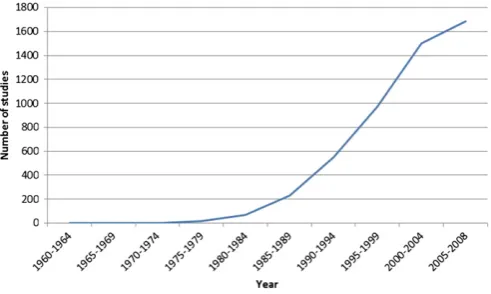
Research on the monetary valuation of ecosystem services dates back to the early 1960s but received wide attention with the publication ofCostanza et al. (1997)and since then there has
been a steady growth in the number of articles and reports on the monetary valuation of natural resources, ecosystem services and biodiversity (Fig. 1).
These publications cover a large number of ecosystems, types of landscapes, different definitions of services, different areas, different levels of scale, time and complexity and different valuation methods. In addition, a number of independent biblio-graphies and summaries for different ecosystems and methodol-ogies have been compiled by different authors or institutes (see Section 3for details).
In this paper, we present the results of an analysis of the monetary values of ecosystem services provided by 10 main biomes4(Open oceans, Coral reefs, Coastal systems, Coastal wet-lands, Inland wetwet-lands, Lakes, Tropical forests, Temperate forests, Woodlands, and Grasslands) based on local case studies across the world. For each biome, 22 ecosystem services were taken into account, following the ‘TEEB classification’ (De Groot et al., 2010a). In total, approximately 320 publications were screened and more than 1350 data-points from over 300 case study locations were stored in the Ecosystem Services Value Database (ESVD) (seeAppendix 1 for details). A selection of 665 of these value data points has been used for the analysis presented in this paper (seeSection 3for details on the data selection process). An earlier, partial analysis of the data was included as Appendix 3 in the TEEB book on Ecological and Economic Foundations (TEEB Foundations, 2010).
In order to make the information from all studies comparable and accessible, the collected data were systematically entered into the ESVD. Values were converted to a common set of units, namely 2007 ‘International’ $/ha/year, i.e. translated into US$ values on the basis of Purchasing Power Parity (PPP). The ESVD also contains site-, study- and context-specific information from the case studies (seeSection 2for details).
To our knowledge, the ESVD is one of the largest databases of its kind including actual values for a range of ecosystem services and biomes in which the value estimates are organized in monetary units/ha/year to allow easy retrieval for value transfer and meta-analysis. The ESVD can thus provide useful insights on the monetary value of specific ecosystem types or spatially defined areas (e.g. parks, watersheds, regions) and thus help to analyze the effects of different land use options, both through empirical research and value transfer exercises in the absence of
Fig. 1.Cumulative total of ecosystem services valuation studies sourced from EVRI from 1960 to 2008. Source: modified fromChristie et al., 2008.
2
Throughout this paper we use ‘monetary value’ or ‘monetary valuation’ as a shorthand for ALL values of ecosystem services expressed in monetary units, including market and non-market values.
3
The Convention on Biodiversity New Strategic Plan for 2020 requests that values for biodiversity be integrated into national development strategies and national accounts. Similarly, the EU Biodiversity Strategy for 2020 (Target 2, Action 5) requires Member States to assess the economic value of ecosystem services and integrate them into accounting systems at the national level. In addition, the World Bank has established the Global Partnership for Wealth Accounting and the Valuation of Ecosystem Services (WAVES) http://www. worldbank.org/programs/waves.
4
primary values. Notwithstanding the limitations and restrictions in the state-of-the-art of value transfer techniques (Brouwer, 2000; Johnston and Rosenberger, 2010; Defra, 2010), it is an increasingly attractive option for policy-makers facing time and budget constraints. The database is specifically designed to support the application of meta-analysis, i.e., a set of statistical tools for synthesizing the results from multiple studies and transferring values, which has been used for economic valuation of environmental resources in many instances, for example: wetlands (Brouwer et al., 1999; Woodward and Wui, 2001; Brander et al., 2006; Enjolras and Boisson, 2008; Ghermandi et al., 2010; Brander et al., 2011), coral reefs (Brander et al., 2007; Stoeckl et al., 2011), forests (Zandersen and Tol, 2009), woodland recreation (Bateman and Jones, 2003), biodiversity (Nijkamp and Vindigni, 2003), outdoor recreation (Rosenberger and Loomis, 2000;Shrestha and Loomis, 2001), water quality (Van Houtven et al., 2007), urban air pollution (Kaoru and Smith, 1995), urban open space (Brander and Koetse, 2011) and envir-onmental valuation studies (Gen, 2004). Nelson and Kennedy (2009) provide a critical overview of 140 meta-analyses in the field of natural resource economics. Note that we acknowledge the uncertainties related to value transfers, and discuss these further inSection 5.
In Section 2 of this paper, the database structure is briefly described.Section 3explains the approach used for collecting and analyzing the data, and gives the main descriptive statistics (e.g. number of value estimates per biome, geographical distribution and main determining factors of the values, such as influence of income level, population density, and proximity of user to the service). Also the valuation methods used are presented and discussed. Section 4 forms the core of the paper and gives a
detailed overview of the monetary values found for each biome (in Int. $/ha/year). The paper ends with a discussion of methodo-logical challenges involved in monetary valuation of ecosystems and their services and some conclusions on the importance and possible uses of the data presented in this paper.
2. The Ecosystem Service Valuation Database
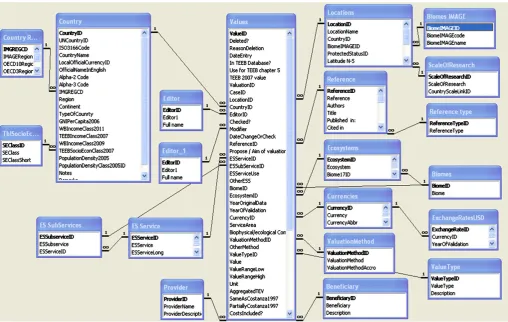
The Ecosystem Service Valuation Database (ESVD) was devel-oped to enable systematic data entry, processing and analysis of monetary estimates of ecosystem service values from different biomes in a way that it is readily usable by different end-users. The ESVD builds on the COPI Valuation Database (Braat et al., 2008), which formed the basis for the Costs of Policy Inaction reports (Ten Brink et al., 2009), and was modified following the recommendations from the TEEB Scoping the Science report (Balmford et al., 2008). The ESVD is a relational database, which links information on the publication, with the value estimates and the case study locations (Fig. 2). The relational links between tables make it possible to quickly and precisely extract valuation data on all value estimates or for a selection only e.g. by biome or ecosystem service.
A detailed description of the ESVD is given in Van der Ploeg et al. (2010). Below, we provide an overview of the main component tables included in the database.
Central to the ESVD is the ‘Values’ table, which describes the variables related to a single monetary value data point for an ecosystem service. The database now contains over 1350 unique value data points. The variables in this table are among others: the monetary value, the original units of measure (e.g. Yuan/ha,
US$/ha/yr), the valuation method, the value type (e.g. annual value, stock value, (net) present value), the year of estimation, the original currency of the estimate, the validation year, the discount rate and number of years over which values are discounted (if applicable) and some remarks on calculation procedure. The individual value data points are linked to a series of other tables that describe the site and context characteristics of the valuation study such as the area to which the service value relates (e.g. location, biome, ecosystem sub-service and services). These tables are briefly described below.
Each value observation is linked to a specific biome or ecosys-tem through the ‘Biomes’ table. The biome and ecosystem classi-fication scheme used is based on Chapter 1 in the TEEB Foundations report (De Groot et al., 2010a) which identifies 12 main biome types. TheBiomestable includes these 12 types and many more ‘sub-biomes’. This paper, however, only presents information on 10 key biomes (see Table 2): Desert and Polar regions were excluded from our analysis due to the low number of value data points; Cultivated Land and Urban Areas were excluded because they are human-dominated systems. These excluded biomes do produce ecosystem services but there were insufficient primary valuation studies to allow a meaningful analysis.
Each value data point is also linked to anEcosystem serviceand Ecosystem Sub-service table. The ecosystem service classification scheme was also taken from the TEEB Foundations report, Chap-ter 1 (De Groot et al., 2010a) which describes 22 services divided into four main categories: provisioning, regulating, habitat and
cultural services (seeTable 1). These 22 Ecosystem Services were further subdivided into 90 more specific sub-services to provide more information on the actual nature of the service (e.g. fish, bush meat etc. as sub-categories of the service ‘food’) (seeAppendix 1 provided as online supplementary information).
The database also gives information on thevaluation methodsused (Table 1) and contains information on the study location, which allows ecosystem service values to be linked to the socio-economic context of a study site (e.g. income and population density).
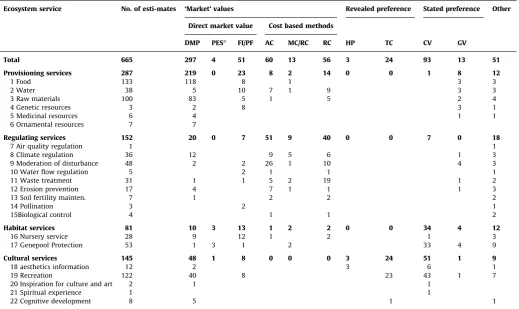
Note that inTable 1and our subsequent analysis, only 665 of the 1350 values in the database are used; these are the values for which we were able to calculate standardized per hectare values in 2007 International dollars (seeSection 3).
3. Data collection and methodology used for the analysis
3.1. Data sources and criteria for data selection
Information on the monetary value of ecosystem services were sourced from a number of existing databases including: COPI Valuation database (Braat et al., 2008; EVRI, 1997; ENVAlue, 2004), EcoValue (Wilson et al., 2004), ValueBaseSwe (Sundberg and S ¨oderqvist, 2004) and ESD-ARIES (UVM, 2008), as well as other relevant studies with data on ecosystem service values (Costanza et al., 1997;De Groot et al., 2002;Brander et al., 2006).
Table 1
The number of value estimates per valuation method and ecosystem service.
Source: compiled based on data presented inAppendix 1.
Ecosystem service No. of esti-mates ‘Market’ values Revealed preference Stated preference Other
Direct market value Cost based methods
DMP PESa
FI/PF AC MC/RC RC HP TC CV GV
Total 665 297 4 51 60 13 56 3 24 93 13 51
Provisioning services 287 219 0 23 8 2 14 0 0 1 8 12
1 Food 133 118 8 1 3 3
2 Water 38 5 10 7 1 9 3 3
3 Raw materials 100 83 5 1 5 2 4
4 Genetic resources 3 2 8 3 1
5 Medicinal resources 6 4 1 1
6 Ornamental resources 7 7
Regulating services 152 20 0 7 51 9 40 0 0 7 0 18
7 Air quality regulation 1 1
8 Climate regulation 36 12 9 5 6 1 3
9 Moderation of disturbance 48 2 2 26 1 10 4 3
10 Water flow regulation 5 2 1 1 1
11 Waste treatment 31 1 1 5 2 19 1 2
12 Erosion prevention 17 4 7 1 1 1 3
13 Soil fertility mainten. 7 1 2 2 2
14 Pollination 3 2 1
15Biological control 4 1 1 2
Habitat services 81 10 3 13 1 2 2 0 0 34 4 12
16 Nursery service 28 9 12 1 2 1 3
17 Genepool Protection 53 1 3 1 2 33 4 9
Cultural services 145 48 1 8 0 0 0 3 24 51 1 9
18 aesthetics information 12 2 3 6 1
19 Recreation 122 40 8 23 43 1 7
20 Inspiration for culture and art 2 1 1
21 Spiritual experience 1 1
22 Cognitive development 8 5 1 1
The acronyms for the valuation methods are DMP—Direct market pricing; PES—Payment for Ecosystem services; FI/PF—Factor Income/Production Function; AC—Avoided Cost; MC/RC—Mitigation and Restoration Cost; RC—Replacement cost; HP—Hedonic Pricing, TC—Travel Cost; CV—Contingent Valuation, GV—Group Valuation; Other—in most cases another method or a combination of methods.
a
All potential data on values were screened to ensure they contain suitable and sufficient information regarding the multiple dimensions of the ESVD for the analysis.
Criteria used for selecting data were that a study should (a) be an original case study, i.e. not based on value transfer; (b) provide a monetary value of a given ecosystem service or sub-service which can be attached to a specific biome/ecosystem and a specific time period; (c) provide information on the surface area to which the ecosystem service value applies in order to make it possible to convert the monetary value to per ha values; (d) provide information about the valuation method used; (e) provide the location of the case study site, the surface area and the scale of the study (local, country, region, continent and global).
3.2. Value standardization
In the literature, ecosystem service values have been reported in many different metrics and currencies for different time periods and price levels (e.g., WTP per household per year, capitalized value for a given time horizon, marginal value per acre, etc.).
The ecosystem service values contained in the ESVD are Values Estimated in Monetary units (VEM). These values are estimated using a range of approaches, including market prices, cost-based approaches, stated preference methods, revealed preference methods and production function approaches. They generally represent marginal values for a specific ecosystem service pro-vided by an individual ecosystem (they are marginal values in the sense that they represent the change in value for a small change in the overall provision of the specific ecosystem service). To aid direct comparison and aggregation, these values (VEM) have been standardised in the ESVD to common spatial, temporal and currency units, namely International dollars per hectare per year (Int$/ha/year).
To aid direct comparison and aggregation, these values (VEM) needed to be organized in a standardised and contextually explicit manner. The values in the data set were thus standar-dized into the common metric of 2007 International dollars5per hectare per year. If necessary the estimates were converted into the official local currency. The values were then adjusted to 2007 values using the GDP deflators of each country and then con-verted to international dollars using appropriate purchasing power parity (PPP) conversion factors relative to the year 2007. The official exchange rates, GDP deflators and PPP conversion factors were based on theWorld Bank (2009) ‘World Develop-ment Indicators’.6 WTP per person or household per year were converted to per hectare per year values given information on the case study area and the relevant population size as identified in the valuation studies. The implication of this unit-standardization was that we only used those studies and data-sources that enabled selection, or calculation, of estimates presented on a per hectare per year basis and for which the biome, ecosystem
service and location are explicitly specified. Of the original 1350 value points input into ESVD, only 665 had adequate information to convert into the standardised unit. Note that by only standar-dising values using GDP deflators and PPP conversion factors will not take into account changes in population, changes in scarcity of nature, marginal values of climate change mitigation which all lead to higher demand and/or scarcity of services and hence the values are likely to be underestimates.
4. Value of ecosystem services per biome in monetary units
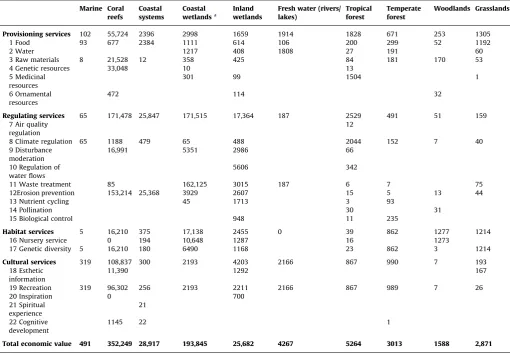
Table 2 shows a summary of the monetary values for each service per biome which are presented as ‘averages’7in this table. The ranges of these values are presented inTable 3 and Fig. 3, which also show the number of value data points found and used per biome. Most value data points were found for inland wetlands (25%), coastal wetlands (especially mangroves) (21%), tropical forests (14%) and coral reefs (14%). The geographic distribution of the valuation data included in the database shows a rather balanced distribution over the continents: 28% from Asia, 26% from Africa, 14% from Europe, 12% from Latin America and the Caribbean, 12% from North America, and 8% from Oceania.
4.1. Range and average of monetary values per biome
Table 3 gives a summary of the monetary values of the ecosystem services found for the 10 biomes. In the analysis presented in this paper we calculate the mean value for each ecosystem service within each biome category. We then summed the mean ES values across ES categories for each biome. This provides an estimate of the total mean value for the bundle of all services that can potentially be provided by a biome on a sustainable basis (albeit recognizing that not all ES for all biomes are represented in the ESVD).
The standard deviation of the mean, and the median, mini-mum and maximini-mum values were calculated for every ecosystem service to provide insight into the distribution of the values. This was done because no rigorous statistical analysis could be performed for every biome due to the lack of values per ecosys-tem service.Table 3shows a summary of these numbers.
It is important to keep in mind that value estimates are based on individual case studies and in some cases this leads to large value ranges. For example, the most economically important service of coral reefs is tourism which, based on 29 studies, represents an average monetary value of almost 96,300 Int$/ha/ year. The value range however is very big: from a little more than 0.1 Int$/ha/year (for small, remote reefs) to more than 1 million Int$/ha/y for heavily visited reefs. This implies that any extra-polation of values between different contexts or generalization to a larger scale must be done with great care. Due to increasing scarcity of pristine and undamaged reefs and a still growing human population even less accessible or less attractive reefs may, however, become more valuable in the future because demand for tourism and provision services (e.g. food, genetic material) will increase as well as the number of beneficiaries of other services such as natural hazard reduction by reefs. 5
The international dollar, or the Geary–Khamis dollar, is a hypothetical unit of currency that is used to standardize monetary values across countries by correcting to the same purchasing power that the U.S. dollar had in the United States at a given point in time. Figures expressed in international dollars cannot be converted to another country’s currency using current market exchange rates; instead they must be converted using the country’s PPP (purchasing power parity) exchange rate. 1 Int.$¼1 USD.
6
The World Bank Development Indicators series 2009 used for GDP deflators and purchasing power parity converters are respectively ‘GDP deflator (base year varies by country)’ and ‘PPP conversion factor, private consumption (LCU per international $)’. For the conversion to local currencies the series ‘Official exchange rate (LCU per USD, period average)’ was used. When rates/conversion factors for a country or year were not available in the series another official source was used (the Penn World Table, the US Federal Reserve Bank or other National Banks) or values were based on linear regression of the available values.
7
It is important to note that for most biomes less than half of the total number of services is represented in the data underlying the values shown inFig. 3. The values presented are therefore almost certainly an under-estimate of the economic importance of that biome/ecosystem.
On the other hand, if values across sites are characterized by a highly skewed distribution this results in a high average value, in
such cases the use of amedian valueof per hectare values might be appropriate for further analysis.8 Fig. 3shows that the total Table 2
Summary of monetary values for each service per biome (values in Int.$/ha/year, 2007 price levels).
Marine Coral reefs
Coastal systems
Coastal wetlandsa
Inland wetlands
Fresh water (rivers/ lakes)
Tropical forest
Temperate forest
Woodlands Grasslands
Provisioning services 102 55,724 2396 2998 1659 1914 1828 671 253 1305
1 Food 93 677 2384 1111 614 106 200 299 52 1192
2 Water 1217 408 1808 27 191 60
3 Raw materials 8 21,528 12 358 425 84 181 170 53
4 Genetic resources 33,048 10 13
5 Medicinal resources
301 99 1504 1
6 Ornamental resources
472 114 32
Regulating services 65 171,478 25,847 171,515 17,364 187 2529 491 51 159
7 Air quality regulation
12
8 Climate regulation 65 1188 479 65 488 2044 152 7 40
9 Disturbance moderation
16,991 5351 2986 66
10 Regulation of water flows
5606 342
11 Waste treatment 85 162,125 3015 187 6 7 75
12Erosion prevention 153,214 25,368 3929 2607 15 5 13 44
13 Nutrient cycling 45 1713 3 93
14 Pollination 30 31
15 Biological control 948 11 235
Habitat services 5 16,210 375 17,138 2455 0 39 862 1277 1214
16 Nursery service 0 194 10,648 1287 16 1273
17 Genetic diversity 5 16,210 180 6490 1168 23 862 3 1214
Cultural services 319 108,837 300 2193 4203 2166 867 990 7 193
18 Esthetic information
11,390 1292 167
19 Recreation 319 96,302 256 2193 2211 2166 867 989 7 26
20 Inspiration 0 700
21 Spiritual experience
21
22 Cognitive development
1145 22 1
Total economic value 491 352,249 28,917 193,845 25,682 4267 5264 3013 1588 2,871
Numbers in the cells are averages of the values found for a particular service and biome. Calculations are based on a total of 665 values. For details seeAppendix 1.
a
Coastal systems include estuaries, continental shelf area and sea grass, but exclude wetlands like tidal marsh, mangroves and salt water wetlands.
Table 3
Total monetary value of the bundle of ecosystem services per biome. (Values in Int.$/ha/year, 2007 price levels).
No. of estimates
Total of service mean values
Total of St. Dev. of means
Total of median values
Total of minimum values
Total of maximum values
Open oceans 14 491 762 135 85 1,664
Coral reefs 94 352,915 668,639 197,900 36,794 2,129,122
Coastal systems 28 28,917 5045 26,760 26,167 42,063
Coastal wetlands
139 193,845 384,192 12,163 300 887,828
Inland wetlands
168 25,682 36,585 16,534 3018 104,924
Rivers and lakes
15 4267 2771 3938 1446 7757
Tropical forest 96 5264 6526 2355 1581 20,851
Temparate forest
58 3013 5437 1127 278 16,406
Woodlands 21 1588 317 1522 1373 2188
Grasslands 32 2871 3860 2698 124 5930
More details of all original values in the database are shown inTable 2and inAppendix 1.
8When undertaking meta-regression analysis of values a log transformation
value ranges between 490 int$/year for the total bundle of ecosystem services that can potentially be provided by an ‘average’9 hectare of open oceans to almost 350,000 int$/year for the potential services of an ‘average’ hectare of coral reefs.
As the database grows, Fig. 3 can be made more context relevant, for example to better account for the socio-economic context by differentiating value-estimates from countries with different income levels.
4.2. Meta-analytic value function for inland wetlands
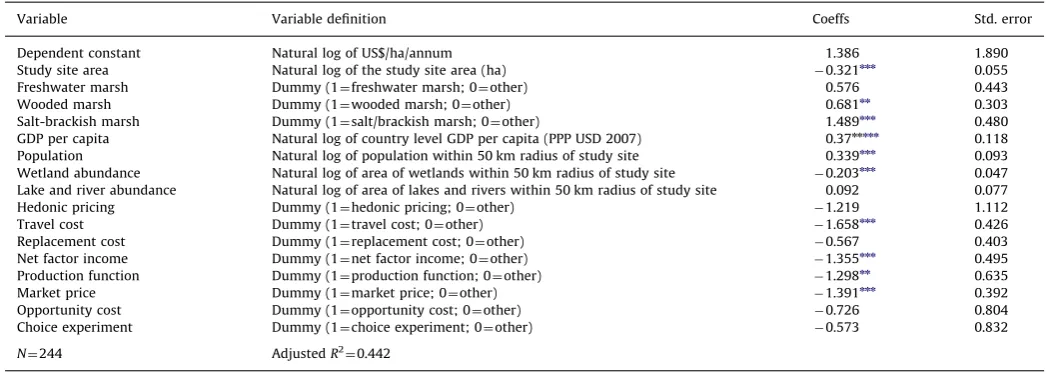
As an example of how the information contained in the ESVD may be used for conducting meta-analyses to estimate value functions, we present a meta-analysis of the value data for inland wetlands. The data used in this analysis is based on the ESVD and has been supplemented with additional variables representing context characteristics using a GIS. The specification of the estimated meta-regression model is
lnðyiÞ ¼aþbWXWiþbCXCiþbSXSiþui
where the dependent variable (y) is the vector of wetland values standardized to 2007 US$ per hectare per year. The subscripti assumes values from 1 to 244 (number of value observations), a is the constant term, bw, bc and bs are vectors containing the coefficients of the explanatory variables andu is the vector of residuals. The explanatory variables consist of three categories, namely characteristics of (i) the valued wetland XWi (study site area, wetland type); (ii) the socio-economic and geographical context XC (GDP per capita, population within 50 km of study site, wetland abundance within 50 km, and abundance of lakes and rivers within 50 km)10and (iii) the valuation studyXS (valuation method). Variable definitions together with the esti-mated OLS meta-regression model are presented inTable 4.
The estimated coefficients on the explanatory variables have expected signs but not all are statistically significant at the 5
percent level. In terms of study site characteristics, the negative effect of the study site area indicates diminishing returns to scale for wetland values. In other words, the value of an additional hectare to a large wetland is of lower value than an additional hectare to a small wetland.
Regarding socio-economic and geographical context, the posi-tive effect of the income variable (GDP per capita) indicates that most wetland ecosystem services have higher values in countries with higher incomes. This indicates that the demand for wetland ecosystem services increases with income; in other words (most) wetland ecosystem services are not ‘inferior goods’ for which demand falls as incomes rise. The positive effect of population on the value of wetland ecosystem services reflects the market size or demand for ecosystem services. A larger population in the vicinity of a wetland means that more people benefit from the ecosystem services that it provides. The positive effect of the area of lakes and rivers in the vicinity of a wetland indicates that lakes and rivers are complements to wetland ecosystem services, i.e., the combination of surface water bodies results in higher valued ecosystem services. The negative effect of the total area of other wetland sites in the vicinity of the study site indicates substitu-tion effects between wetlands. The ecosystem services from a specific wetland will be of higher value if there are fewer other wetlands in the vicinity.
In terms of study characteristics, the meta-regression results show that valuation methodology can have a significant influence on estimated values, with the travel cost, net factor income, production function, and market price methods all producing statistically significantly lower values than contingent valuation (the omitted dummy variable in the regression model).
In addition to providing a statistical synthesis and identifying general results across studies, meta-analysis is also of interest as a tool for transferring values from studied sites to new policy sites. A meta-analytic value function, such as the one presented here, can be combined with information on parameter values for the policy site to estimate values.
5. Discussion of caveats and potential uses
Although this paper explicitly focuses on expressing ecosys-tem values in monetary units as a tool to provide better insight into the economic benefits of ecosystem goods and services, we would like to stress that it is not the purpose of this study to underplay the shortcomings and limitations of monetary valua-tion, not only in relation to ecosystem services but also to
man-Fig. 3.Range and average of total monetary value of bundle of ecosystem services per biome (in Int. $/ha/yr 2007/PPP-corrected)).The total number of values per biome is given between brackets;the average of the value-range is shown as a star. For exact values seeTable 3.
(footnote continued)
distributions, i.e. there are a large number of very small sites and few very large sites.
9
Clearly, an ‘average’ ha is a theoretical construct (similar to the non-existing ‘average human being’) which is illustrated by the fact that for each biome there is a wide spread of values reflecting different site specificities (e.g. the monetary value of coral reefs ranges between a few hundred US$/ha/yr for small remote reefs to over 2 million US$/ha/yr for heavily visited reefs in the Caribbean).
10We defined the spatial variables using alternative neighborhood scales (10,
made goods and services (EPA, 2009;Defra, 2010), some of which are discussed below.
We also want to make clear that expressing the value of ecosystem services in monetary units does not suggest that the values should be used as a basis for establishing prices and does not mean that they should be treated as private commodities that can be traded in private markets. Most ecosystem services are public goods that cannot (or should not) be privatized. Their value in monetary terms is an estimate of their benefits to society—benefits that would be lost if they were destroyed or gained if they were restored. Thus, monetary valuations of the importance of ecosystem services to society can serve as a powerful and arguably essential communication tool to inform better, more balanced decisions regarding trade-offs involved in land use options and resource use. Ecosystem service valuations are best seen as complementary to conventional decision-making frameworks, in which the positive and negative externalities of the use or loss of many environmental goods and services are still not, or insufficiently acknowledged. Monetary valuation can help to make these externalities visible and complement the insights on the role and importance of nature gleaned via other quantita-tive and qualitaquantita-tive measures (TEEB Foundations, 2010). Respond-ing to the assessments of value can eventually internalize at least part of their economic importance in decision making, in eco-nomic accounting, and in policy responses, whether they use economic incentives, spatial planning or other regulatory responses.
The ESVD was designed to provide easy access to value data in monetary units on ecosystem services. With over 1350 data points presented in monetary values/ha/year for 22 services of 10 biomes it is one of the most extensive databases of its kind, potentially allowing more robust value transfer and meta-analy-sis. However, there were many methodological challenges that had to be solved during the development of ESVD. In this section we provide an overview of the main caveats when performing or interpreting the outcomes of ecosystem service assessment or meta-analysis, as well as the potential uses and need for further expansion and improvement of this database.
5.1. Data availability and reliability
The number of ecosystem services and estimates per biome varies significantly (seeTable 2andFig. 3andDe Groot et al., 2010b)
due to limitations in data availability and reliability. On average data was found for only about 12 services per biome (out of a potential maximum of 22 recognized services). This highlights the need for further research on some ecosystem services (e.g. genetic resources, ornamental resources, air quality control, regulation of water flows, pollination, biological control, nursery service and cultural services except recreation and tourism) and biomes (e.g. deserts, polar regions, cultivated land, and urban areas) that are currently poorly studied.
Also researchers should be much more aware of the need to provide sufficient information in their publications to allow for reproduction of their studies and inclusion of their data in databases. The UK government has recently published guidance on undertaking value transfer including a protocol for primary valuation (seeEftec, 2010).
5.2. Distribution of data on services and values over biomes
The number of ecosystem service value estimates used per biome differs greatly (e.g. 168 for inland wetlands but only 14 for marine ecosystems,Fig. 3). The main reasons are that there is a general dearth of data in the literature and the selection criteria and the standardization procedure (see Section 3) precluded a large number of values (more than 50%). Future work on the development of the ESVD will focus on obtaining values for those services and biomes which are now least well represented in the database.
5.3. Value heterogeneity and value range
In databases on ecosystem service values such as ESVD, data heterogeneity is a major concern (Nelson and Kennedy, 2009). The devised standardization procedure addresses some of the sources of heterogeneity, such as difference in purchasing power among countries and inflation across different years. Other issues, however, cannot be adequately addressed in a database which aims at being all-embracing of the environmental resource valuation literature. Such is, for instance, the important issue of the different conceptual models of values that are elicited in the valuation studies (Smith and Pattanayak, 2002). This should be considered in any application that makes use of the data collected in the ESVD.
Table 4
Meta-regression value function for inland wetlands.
Variable Variable definition Coeffs Std. error
Dependent constant Natural log of US$/ha/annum 1.386 1.890
Study site area Natural log of the study site area (ha) 0.321nnn
0.055 Freshwater marsh Dummy (1¼freshwater marsh; 0¼other) 0.576 0.443 Wooded marsh Dummy (1¼wooded marsh; 0¼other) 0.681nn
0.303 Salt-brackish marsh Dummy (1¼salt/brackish marsh; 0¼other) 1.489nnn
0.480 GDP per capita Natural log of country level GDP per capita (PPP USD 2007) 0.37nnnnn
0.118 Population Natural log of population within 50 km radius of study site 0.339nnn
0.093 Wetland abundance Natural log of area of wetlands within 50 km radius of study site 0.203nnn
0.047 Lake and river abundance Natural log of area of lakes and rivers within 50 km radius of study site 0.092 0.077 Hedonic pricing Dummy (1¼hedonic pricing; 0¼other) 1.219 1.112 Travel cost Dummy (1¼travel cost; 0¼other) 1.658nnn
0.426 Replacement cost Dummy (1¼replacement cost; 0¼other) 0.567 0.403 Net factor income Dummy (1¼net factor income; 0¼other) 1.355nnn
0.495 Production function Dummy (1¼production function; 0¼other) 1.298nn
0.635 Market price Dummy (1¼market price; 0¼other) 1.391nnn
0.392 Opportunity cost Dummy (1¼opportunity cost; 0¼other) 0.726 0.804 Choice experiment Dummy (1¼choice experiment; 0¼other) 0.573 0.832
N¼244 AdjustedR2
¼0.442
nn
Indicates statistical significance at the 5 percent levels.
nnn
The considerable range of values found can be attributed to five main causes. First, valuation studies come from a wide variation of locations and countries with different ecological and socio-economic characteristics (see also Section 5.5). Second, a wide variety of valuation methods has been used to obtain monetary values of ecosystem services. Third, the different studies relate to a variety of biomes (ecosystems) and sub-services. Fourth, it is sometimes difficult to isolate these service values without taking into account the benefits of other services, i.e. depending on the valuation methodology employed it is often impossible to attribute a value to a particular service or to apportion a ‘total’ value across a range of services. This may lead to double-counting when services values are aggregated. Fifth, the values of services are location and time specific; consequently the ‘nuance’ of the original case studies is blurred during aggregation of individual service values.
The values and the assessed ‘averages’ should therefore be seen as illustrative and when specific policy questions arise where valuation insights could contribute to better decision making, site specific assessment should be done, duly informed by a value transfer exercise to help scope this issue.
5.4. Choice of valuation method and preferred methods
We found that provisioning services are more often valued through direct market pricing methods (see Table 1), while regulating services are, in addition to direct market pricing, mainly valued using avoided cost and replacement cost. The habitat services are often valued through direct market pricing, factor income and contingent valuation while cultural services are often valued using direct market pricing and travel cost. The choice of the most appropriate valuation method for a given service depends on the purpose of the valuation and the socio-economic and environmental context. However, it should be noted that values derived from different valuation methods may not be measuring the same economic construct and therefore values from different methods may not be directly comparable.
5.5. Difference in socio-economic context
Monetary estimates for ecosystem services are generally applicable at local scales and used for local decision making. At the local level, the economic value of a service will be very different depending on the livelihood circumstances, income levels and other socio-economic conditions such as price levels, population density (see for exampleShrestha and Loomis (2001), Brander et al. (2006), Ghermandi et al. (2010) and Barrio and Loureiro (2010)), distances between beneficiaries and the resource, accessibility, and the presence of substitute and com-plementary sites (Ghermandi et al., 2010). These factors should be controlled when transferring values from one study site and context to another. An adequate characterization of the context of the valued ecosystems is a problematic task that has been investigated in several meta-analyses of ecosystem service values (Brander et al., 2006; Ghermandi et al., 2010; Brander et al., 2011). The ESVD was screened for context characteristics but there are still too few data-points per service to make a statisti-cally meaningful analysis and even with sufficient data it is questionable whether general conclusions can be drawn at the global level although meta-analysis techniques are increasingly able to identify such relationships.
An important issue in making comparisons or transferring values across socio-economic contexts is the level of dependence on the resource for critical services. For instance, many poor communities may depend directly on ecosystems for their sub-sistence (e.g., for provision of food or clean water) but a valuation
study focusing solely on market prices may fail to capture the importance of such services for local livelihoods. Similarly, WTP statements, if not properly put in the context of the socio-economic conditions of the population of beneficiaries, may understate the true value of ecosystem services for poor and vulnerable communities due to inability to pay (Kenter et al., 2011).
This underlines the need to use indicators of importance that build on quantitative (e.g. ecosystem service flows), spatial (i.e. mapping) and qualitative indicators (e.g. stakeholder perceptions and preferences).
5.6. Identification of beneficiaries at different scales
An important issue is the spatial scale at which services are provided to beneficiaries (e.g.Hein et al., 2006;TEEB Foundations, 2010), including directional components. For example as regards the issue of scale the value of the supply of tourism and recreational activities at a location does not necessarily accrue only to the local community. It is often the case that non-local or international visitors are the main beneficiaries of such services. For climate mitigation, which is provided locally through carbon sequestration, the benefits are mainly global. Similarly, the benefits from bio-prospecting from local resources mainly lead to high profits for international pharmaceutical companies. Inter-national treaties, such as the Climate Convention and Convention on Biological Diversity, increasingly aim to channel at least some of the benefits from the international community back to the local communities providing the service. On the other hand, the benefits from moderation of extreme events (e.g. storm surges), clean water supply and waste treatment generally directly accrue to the welfare of local communities as would pollination benefits often with a directional component i.e. only some members of the community benefit depending on the spatial interconnection between ecosystem, flow of services and beneficiary. Indeed the valuation studies themselves may differ by either concentrating entirely on local community values or by incorporating local values together with international ones.
5.7. Selection bias of value estimates
The ESVD, like any body of literature, may be affected by four main sources of selection bias (Johnston and Rosenberger, 2010). First, a research priority selection bias may exist in the collected data, arising from the higher likelihood of sites with (expected) high benefits to be selected for valuation than areas with little or no value (Woodward and Wui, 2001; Hoehn, 2006). Second, a publication bias may arise due to the publishing criteria of academic journals, which, for instance, tend to favor statistically significant results over inconclusive studies. Third, the process of selection of the studies sampled in the database may introduce a bias due to, for instance, the implemented value standardization procedure and in spite of our efforts for comprehensiveness in our search. Finally, as previously discussed, methodological charac-teristics are likely to affect the values elicited in the primary studies.
provides important information to come to better, more sustain-able decisions.
5.8. Interactions between service-use and influence of management
It is important to understand that ecosystem services cannot always coexist under particular management regimes (De Groot et al., 2010c). These are the so-called competing or non-compet-ing uses or services with trade-offs across services for different land use decisions. For example, forests managed for eco-tourism may not be usable for timber extraction; wetlands conserved for the maintenance of genetic information and nursery service cannot simultaneously be used for waste treatment or intensive fishery. For valuation case studies, however, it is not always possible to retrieve information on trade-offs between ecosystem services, in which case we used conservative estimates (i.e. the lower value) and in principle the values presented (Table 3) reflects the value of the total bundle of services that can be provided simultaneously by a given ecosystem in a sustainable manner.
5.9. Spatial heterogeneity
The supply of ecosystem services per unit area is rarely homogenous so care should be taken when interpreting ecosys-tem service values on a per hectare basis. The same bundle of services may not be, and usually is not, supplied equally by all units of each biome (Secretariat of the Convention on Biological Diversity (SCBD), 2001;Costanza et al., 2008). In many cases the supply of the service is also not proportional to ecosystem size. There is also a relationship between monetary values and the size of the area: e.g. Oteros-Rozas (pers. comm., 2010) found that many services in small forests are significantly higher valued than the same services in bigger forests per unit area. Decreasing returns to scale (i.e. lower average unit area values in larger ecosystems) have also been shown in a number of meta-analyses, including wetlands and coral reefs (Ghermandi et al., 2010; Brander et al., 2007): the loss or degradation of a resource with limited or no local substitutes will affect the wellbeing of the local community more strongly than the loss of a more abundant resource (Ghermandi et al., 2010).
Also the provision of services is affected by spatial aspects: a small area usually does not provide the same level and quality of services than a larger system, for example habitat and water related services. The provision of some services may require a minimum threshold of habitat area below which the ecosystem fails to deliver the service. How ecological functions are affected when systems shrink or expand is often not well known. Simi-larly, understanding of how changes in ecological functions subsequently affect the provision of goods and services is also limited. There are, of course, exceptions to the above. For climate mitigation, the benefits can be in direct relationship to the area (e.g. of forests, sea grass beds).
5.10. Changing perceptions and (time) preferences
The value of some services may not be recognized yet (e.g. carbon sequestration only became economically valuable during the past decade) thus leading to undervaluation of their impor-tance in decision making. Undervaluation of ecosystem services may lead to over-exploitation of the resource stocks that generate those services. This is the case, for instance, for overharvesting of service flows and consequent depletion of the resource stock that generates those services in the first place. On the other hand, scarcity combined with a high demand may lead to very high market prices, and thus also lead to overexploitation of the
service (e.g. ivory or rare ornamental species). When interpreting the value of ecosystem services in decision-making situations (e.g. land use conversion), these distortions should be taken into account by acknowledging the potential use of currently under-valued services, and the over-valuation of services that are used in a non-sustainable way.
These calculations, taking account of all ecosystem service values over a long time-period, can be used to compare values of an unsustainable use scenario versus a conservation or sustain-able use scenario to show the net welfare benefits (or costs) of both scenarios. For example, it has been shown that sustainable use of forests or wetlands is usually economically more beneficial than conversion to alternative land uses if all, or most services are taken into account (e.g.Balmford et al., 2002;van Beukering et al., 2003; Barbier, 2007; Costanza et al., 2008; Hanley and Barbier, 2009).
6. Conclusions
The ESVD with over 1350 values for 22 services of 10 biomes is one of the most extensive databases of its kind and designed to allow more robust value transfer and meta-analysis. Contrary to most other databases, this database will be open access and allow others to both retrieve and submit data (seewww.es-partnership. orgfor further information on access to, and development of, this database).
Although valuation of ecosystem services in monetary units still has many caveats, the outputs of ecosystem service assess-ments are increasingly important in the policy debate regarding exploitation versus sustainable use. It is therefore important to provide the best available information and engage in an open dialog on the advantages, disadvantages and limitations of mone-tary valuation of ecosystem services, and to pursue strategies to improve the various valuation approaches.
Studies like the one we present here are often criticized on the grounds that we cannot ‘value the priceless’ and that we cannot, or should not place monetary values on anything that is essential and non-substitutable (i.e. ‘of fundamental importance’). As much as we in principle agree with this point of view, in daily decision making practice (by governments, businesses and consumers) we explicitly or implicitly put a price on forests, wetlands, and other ecosystems. Often this price is very low, or even close to zero, not reflecting the variety of market and non-market ecosystem services supplied by these multi-functional systems which is why we convert them into plantations, shrimp farms and other mono-functional systems without, or only partially, considering the costs of the loss of their services.
replacement cost, contingent valuation, production functions, or other non-market valuation technique. These non-market values are still largely ignored but are nevertheless real: we all pay the price of the lost ecosystem services, or the cost of restoration, meaning that we still live at the expense of others, usually the poor and future generations.
Values in monetary units will never in themselves provide easy answers to difficult decisions, and should always be seen as additional information, complementing quantitative and qualita-tive assessments, to help decision makers by giving approxima-tions of the value of ecosystem services involved in the trade-off analysis. However, even if we do not have a ‘precise’ value for, for example, water purification we can assess broadly how valuable it is as an ecosystem service relative to other services, or the costs of the absence of that service, in a particular decision making situation.
Note that expressing values in monetary units can be a time and resource intensive exercise and often quantitative insights expressed in bio-physical units are sufficient to communicate benefits (e.g. number of people benefitting from clean water provision). Valuation should therefore only be done where it is needed. However, we believe that in almost all decision making situations trade-offs are involved and some form of valuation is needed.
Another important use of the database is to indicate which services may be most important in a given decision making context. The database can help to provide a first indication of the potential value of the most relevant services on the basis of which it can be decided which services need to be analyzed in more detail (i.e. a screening list). The database can provide information on both the change in value as a consequence of a policy decision as well as the loss of the total value in case the providing ecosystem is fully lost. As the amount and quality of data in the database increases it becomes possible to provide more accurate information on the benefits of conserva-tion policies and trade-offs involved in changes in land use, including the connection with poverty. This is due both to increasing insights from individual studies on ecosystem service provision and their value to the rural poor and to the possibility of demonstrating links of income levels, and hence income groups, to values within a value production function where there is a sufficient evidence base to allow statistical relationships to be developed.
Better knowledge about the monetary value of ecosystem services communicates important information to complement quantitative and qualitative insights and can help to make the positive and negative externalities of changes in ecosystems visible and eventually internalize at least part of their true economic and social importance in decision making, economic accounting and policy response.
Acknowledgments
The TEEB study in which the authors of this paper participated in various ways was funded by the EU and the German, UK, Dutch, Swedish, Norwegian and Japanese governments, and coordinated by UNEP and the TEEB-office at UFZ, Bonn, Germany, who provided financial and logistic support for the development of the database.
Appendix 1. Supporting information
Supplementary data associated with this article can be found in the online version athttp://dx.doi.org/10.1016/j.ecoser.2012.07.005.
References11
Balmford, A., Bruner, A., Cooper, P., Costanza, R., Farber, S., 2002. Economic reasons for conserving wild nature. Science 397, 950–953.
Balmford, A., Rodrigues, A.S.L., Walpole, M., ten Brink, P., Kettunen, M., Braat, L., De Groot, R.S., 2008. The Economics of Biodiversity and Ecosystems: Scoping the Science. European Commission, Cambridge, UK (Contract: ENV/070307/2007/ 486089/ETU/B2).
Barrio, M., Loureiro, M.L., 2010. A meta-analysis of contingent valuation forest studies. Ecological Economics 69, 1023–1030.
Barbier, E.B., 2007. Valuing ecosystem services as productive inputs. Economic Policy 22, 177–229.
Bateman, I.J., Jones, A.P., 2003. Contrasting conventional with multi-level model-ling approaches to meta-analysis: expectation consistency in UK woodland recreation values. Land Economics 79, 235–258.
Blignaut, J., Moolman, C., 2006. Quantifying the potential of restored natural capital to alleviate poverty and help conserve nature: a case study from South Africa. Journal for Nature Conservation 14, 237–248.
Braat, L., ten Brink, P., Bakkes, J., Bolt, K., Braeuer, I., ten Brink, B., Chiabai, A., Ding, H., Gerdes, H., Jeuken, M., Kettunen, M., Kirchholtes, U., Klok, C., Markandya, A., Nunes, P.A.L.D., van Oorschot, M., Peralta-Bezerra, N., Rayment, M., Travisi, C., Walpole, M., 2008. The Cost of Policy Inaction: The case of not Meeting the 2010 Biodiversity Target. Alterra Report 1718. Wageningen Report for the European Commission, Brussels, May 2008.
Brander, L.M., Florax, J.G.M., Vermaat, J.E., 2006. The empirics of wetland valua-tion: a comprehensive summary and meta-analysis of the literature. Environ-mental and Resource Economics 33, 223–250.
Brander, L.M., Van Beukering, P.J.H., Cesar, H.S.J., 2007. The recreational value of coral reefs: a meta-analysis. Ecological Economics 63, 209–218.
Brander, L.M., Brauer, I., Gerdes, H., Ghermandi, A., Kuik, O., Markandya, A., Navrud, S., Nunes, P.A.L.D., Schaafsma, M., Vos, H., Wagtendonk, A., 2011. Using meta-analysis and GIS for value transfer and scaling up: valuing climate change induced losses of European wetlands. Environmental and Resource Economics 52 (3), 395–413.
Brander, L.M., Koetse, M.J., 2011. The value of urban open space: meta-analyses of contingent valuation and hedonic pricing results. Journal of Environmental Management 92, 2763–2773.
Brouwer, R., Langford, I.H., Bateman, I.J., Turner, R.K., 1999. A meta-analysis of wetland contingent valuation studies. Regional Environmental Change 1, 47–57.
Brouwer, R., 2000. Environmental value transfer: state of the art and future prospects. Ecological Economics 32, 137–152.
Carpenter, S.R., DeFries, R., Dietz, T., Mooney, H.A., Polasky, S., Reid, W.V., Scholes, R.J., 2006. Millennium ecosystem assessment: research needs. Science 314, 257–258.
CBD, 2010. Decision X/2 on updating and revision of the strategic plan for the post-2010 period. Tenth Meeting of the Conference of the Parties to the Convention on Biological Diversity, advance unedited text. Available from:
/www.cbd.int/nagoya/outcomesS(accessed 15 November 2010).
Christie, M., Fazey, I., Cooper, R., Hyde, T., Deri, A., Hughes, L., Bush, G., Brander, L., Nahman, A., de Lange, W., Reyers, B., 2008. An Evaluation of Economic and Non-economic Techniques for Assessing the Importance of Biodiversity to People in Developing Countries. Defra, London.
Costanza, R., d’Arge, R., De Groot, R.S., Farber, S., Grasso, M., Hannon, B., Limburg, K., Naeem, S., O’Neill, R.V., Paruel, J., Raskin, R.G., Sutton, P., Van den Belt, M., 1997. The value of the world’s ecosystem service and natural capital. Nature 387, 253–260.
Costanza, R., Pe´rez-Maqueo, O., Martinez, M.L., Sutton, P., Anderson, S.J., Mulder, K., 2008. The value of coastal wetlands for hurricane protection. Ambio 37, 241–248.
Crossman, N.D., Bryan, B.A., 2009. Identifying cost-effective hotspots for restoring natural capital and enhancing landscape multi-functionality. Ecological Eco-nomics 68, 654–668.
Crossman, N.D., Bryan, B.A., Summers, D.M., 2011. Carbon payments and low-cost conservation. Conservation Biology 25, 835–845.
Defra, 2010. Improving the Use of Environmental Valuation in Policy Appraisal: A Value Transfer Strategy. Defra, London.
De Groot, R.S., Wilson, M.A., Boumans, R.M.J., 2002. A typology for the classifica-tion, description and valuation of ecosystem funcclassifica-tion, goods and services. Ecological Economics 41, 393–408.
De Groot, R.S., Fisher, B., Christie, M., Aronson, J., Braat, L.R., Haines-Young, Gowdy, J., Maltby, E., Neuville, A., Polasky, S., Portela, R., Ring, I., 2010a. Integrating the ecological and economic dimensions in biodiversity and ecosystem service valuation. In: Kumar, P. (Ed.), TEEB Foundations, The Economics of Ecosystems and Biodiversity: Ecological and Economic Foundations. Earthscan, London (Chapter 1).
De Groot, R.S., Kumar, P., van der Ploeg, S., Sukhdev, P., 2010b. Estimates of monetary values of ecosystem services. In: Kumar, P. (Ed.), TEEB Foundations, The Economics of Ecosystems and Biodiversity: Ecological and Economic Foundations, Eds. Earthscan, London (Annex 3).
11Note: The references of the case study publications in the Ecosystem
De Groot, R.S., Alkemade, R., Braat, L., Hein, L., Willemen, L., 2010c. Challenges in integrating the concept of ecosystem services and values in landscape planning, management and decision making. Ecological Complexity 7, 260–272.
Eftec, 2010. Valuing Environmental Impacts: Practical Guidelines for the Use of Value Transfer in Policy and Project Appraisal. Value transfer guidelines submitted to Defra. /http://archive.defra.gov.uk/environment/policy/natura l-environ/using/valuation/S.
Enjolras, G., Boisson, J., 2008. Valuing Lagoons Using a Meta-analytical Approach: Methodological and Practical Issues. Working Papers DR no. 2008-05. LAMETA Universite Montpellier 1, Montpelleir.
ENVAlue, 2004. Environmental Valuation Database. Developed by the New South Wales Environmental Protection Agency, New Zealand. Available from:
/http://www.environment.nsw.gov.au/envalue/S.
EPA, 2009. Valuing the Protection of Ecological Systems and Services. A Report of the EPA Science Advisory Committee, EPA-SAB-09-012. Science Advisory Board, U.S. Environmental Protection Agency, Washington. Available from:
/www.epa.gov/sabS.
EVRI, 1997. The Environmental Valuation Reference Inventory (EVRI). Developed by P. De Civita, F. Filion, J. Frehs of Environment Canada. Available from:
/www.evri.caS.
Farley, J., 2008. The role of prices in conserving critical natural capital. Conserva-tion Biology 22 (6), 1399–1408.
Farley, J., Costanza, R., 2010. Payments for ecosystem services: from local to global. Ecological Economics 69, 2060–2068.
Gen, S., 2004. Meta Analysis of Environmental Valuation Studies. Dissertation completed at the School of Public Policy, Georgia Institute of Technology. Ghermandi, A., van den Bergh, J.C.J.M., Brander, L.M., de Groot, H.L.F, Nunes,
P.A.L.D, 2010. The values of natural and human-made wetlands: a meta-analysis. Water Resources Research 46, W12516.
Hanley, N., Barbier, E.B., 2009. Valuing ecosystem services. Pricing Nature: Cost-benefit Analysis and Environmental Policy. Edward Elgar, London.
Hein, L., Van Koppen, K., de Groot, R.S., van Ierland, E.C., 2006. Spatial scales, stakeholders and the valuation of ecosystem services. Ecological Economics 57, 209–228.
Hoehn, J.P., 2006. Methods to address selection effects in the meta regression and transfer of ecosystem values. Ecological Economics 60, 389–398.
Johnston, R.J., Rosenberger, R.S., 2010. Methods, trends and controversies in contemporary benefit transfer. Journal of Economic Surveys 24, 479–510. Kaoru, Y., Smith, V.K., 1995. Can markets value air quality? A meta-analysis of
hedonic property values models. Journal of Political Economy 103, 209–227. Kenter, J., Hyde, T., Christie, M., Fazey, I., 2011. The importance of deliberation in
valuing ecosystem services in developing countries—evidence from the Solomon Islands. Global Environmental Change Human and Policy Dimensions 21 (2), 505–521.
Leimona, B., 2011. Fairly Efficient or Efficiently Fair: Success Factors and Con-straints of Payment and Reward Schemes for Environmental Services in Asia. Ph.D. Thesis. Wageningen University, The Netherlands, 163 pp.
Millennium Ecosystem Assessment (MA), 2005. Ecosystems and Human Well-Being: Synthesis. Island Press, Washington DC.
Nelson, J.P., Kennedy, P.E., 2009. The use (and abuse) of meta-analysis in environmental and natural resource economics: an assessment. Environmen-tal and Resource Economics 42, 345–377.
Nijkamp, P., Vindigni, G., 2003. The Economics of Biodiversity: A Multivariate Meta-analysis. Vrije Universiteit, Amsterdam.
Payne, C.R., Sand, P. (Eds.), 2011. Environmental liability: Gulf War Reparations and the UN Compensation Commission. Oxford University Press, London, New York.
Rosenberger, R.S., Loomis, J.B., 2000. Using meta-analysis for benefit transfer: in-sample convergent validity tests of an outdoor recreation database. Water Resources Research 36, 1097–1107.
Secretariat of the Convention on Biological Diversity (SCBD), 2001. Value of Forest Ecosystems. CBD Technical Series no. 4. Montreal.
Shrestha, R.K., Loomis, J.B., 2001. Testing a meta-analysis model for benefit transfer in international outdoor recreation. Ecological Economics 39, 67–83. Smith, V.K., Pattanayak, S.K., 2002. Is meta-analysis the Noah’s Ark for non market
valuation? Environmental and Resource Economics 22, 271–296.
Stoeckl, N., Hicks, C.C., Mills, M., Fabricius, K., Esparon, M., Kroon, F., Kaur, K., Costanza, R., 2011. The economic value of ecosystem services in the Great Barrier Reef: our state of knowledge. In: Costanza, R., Limburg, K., Kubiszewski, I. (Eds.), Ecological Economics Reviews, 1219. Academy of Sciences, Annals of the New York, pp. 113–133.
Sundberg, S., S ¨oderqvist, T., 2004. ValueBaseSWE: A Valuation Study Database for Environmental Change in Sweden. Beijer International Institute of Ecological Economics, The Royal Swedish Academy of Sciences, Stockholm. Available from:/www.beijer.kva.se/valuebase.htmS.
TEEB in Business, 2011. In: Bishop, J. (Ed.), The Economics of Ecosystems and Biodiversity in Business and Enterprise. Earthscan, London, Washington. TEEB in Local Policy, 2011. In: Wittmer, H., Gundimeda, H. (Eds.), The Economics of
Ecosystems and Biodiversity in Local and Regional Policy and Management. Earthscan, London, Washington.
TEEB in Policy, 2011. In: ten Brink., P. (Ed.), The Economics of Ecosystems and Biodiversity in National and International Policy Making. Earthscan, London, Washington.
TEEB Foundations, 2010. In: Kumar, P. (Ed.), The Economics of Ecosystems and Biodiversity: Ecological and Economic Foundations. Earthscan, London, Washington.
TEEB Synthesis, 2010. Mainstreaming the Economics of Nature: A Synthesis of the Approach Conclusions and Recommendations of TEEB. Earthscan, London, Washington.
ten Brink, P., Rayment, M., Br ¨auer, I., Braat, L., Bassi, S., Chiabai, A., Markandya, A., Nunes, P., ten Brink, B., van Oorschot, M., Gerdes, H., Stupak, N., Foo, V., Armstrong, J., Kettunen, M., Gantioler, S., 2009. Further Developing Assump-tions on Monetary Valuation of Biodiversity Cost of Policy Inaction (COPI). European Commission Project—Final Report. Institute for European Environ-mental Policy (IEEP), London/Brussels.
UVM, 2008. Ecosystem Service Database (ESD)/ARIES. Developed by University of Vermont, USA. Available from:/http://esd.uvm.edu/S.
van Beukering, P., Cesar, H., Janssen, M., 2003. Economic valuation of the Leuser National Park on Sumatra, Indonesia. Ecological Economics 44, 43–62. Van der Ploeg, S., Wang, Y., Gebre Weldmichael, T., De Groot, R.S., 2010. The TEEB
Valuation Database—A Searchable Database of 1251 Estimates of Monetary Values of Ecosystem Services. Wageningen University, the Netherlands (The database can be found on website of the Ecosystem Service Partnership:
/http://www.fsd.nl/esp/77979/5/0/30S).
Van Houtven, G., Powers, J., Pattanayak, S.K., 2007. Valuing water quality improvements in the United States using meta-analysis: is the glass half-full or half-empty for national policy analysis? Resource and Energy Economics 29, 206–228.
Wilson, M.A., Costanza, R., Troy, A., 2004. The EcoValue Project. Retrieved from the University of Vermont EcoValue. Available from:/http://ecovalue.uvm.eduS.
Woodward, R.T., Wui, Y.S., 2001. The economic value of wetland services: a meta-analysis. Ecological Economics 37, 257–270.
World Bank, 2009. World Development Indicators. World Bank Publications, ISBN: 0821369598.