IJBCP
International Journal of Basic & Clinical Pharmacology
Research Article
Study of antioxidant potential of malotilate in ethanol induced hepatic
dysfunction in Sprague Dawley rats
Kanchan Dnyanesh Borole
1*, Ravi Swami
2, Pradnya Hemant Padalkar
3INTRODUCTION
Malotilate, a sulphur-containing drug, has been reported as a potent hepatoprotective agent, which acts by stimulating hepatic blood flow and bile secretion and protects against the liver damage induced by agents such as allyl alcohol, bromobenzene, thioacetamide, carbon tetrachloride, paracetamol and D-galactosamine.1-3
Alcoholic liver disease (ALD), due to excessive alcohol intake, is now recognized as one of the major causes of morbidity and mortality worldwide; a life style associated
disorder which includes a wide spectrum of liver injury, ranging from simple steatosis to frank cirrhosis.3,4 According to World Health Organization (WHO), globally, alcohol consumption results in approximately 3.3 million deaths each year and is the third largest risk factor for disease and disability in the world. According to WHO, about 30% of Indians consume alcohol, out of which 4-13% are daily consumers and up to 50% of these, fall under the category of hazardous drinking. Cirrhosis is one of the leading causes of death among young and middle aged adults in India. Some indirect deaths/injuries attributed to alcoholism are also reported.
ABSTRACT
Background: Alcoholic liver disease (ALD) is one of the major causes of mortality and morbidity worldwide. Objective of the study was to elicit a preventive mechanism of malotilate, a reported potent hepatoprotective agent, against ethanol induced sub-acute hepatotoxicity. Both ethanol and malotilate were administered for 21 days to evaluate the toxicity and prevention by the drug molecule.
Methods: Thirty adult healthy Sprague Dawley rats of either sex, weighing 200-250 g selected for the study, were randomly divided into 5 groups; treated with ethanol, ethanol with vehicle carboxy methyl cellulose for malotilate solution and three different doses of malotilate having six rats in each group. All the treatments were given once a day for 21 days. On 22nd day, rats were sacrificed by cervical dislocation and dissected for collection of liver. The dissected livers were divided into two parts. One part was homogenized to assess oxidative stress marker enzymes malondialdehyde (MDA), superoxide dismutase (SOD), catalase (CAT) spectrophotometrically and second parts of the liver were processed for histopathological assessment i.e. histopathological scores (HPS) of liver damage.
Results: Malotilate (100, 50 and 25 mg/kg) significantly reduced MDA levels and increased SOD as well as CAT levels when compared with only ethanol treated group and ethanol with vehicle for drug solution treated groups suggested antioxidant activity. The malotilate treatment groups scored the lowest HPS suggested remarkable liver protection from alcohol induced injury.
Conclusions: The overall results, suggested the significant liver protection offered by malotilate by reducing oxidative stress in a dose-dependent manner. The histopathological scoring evidenced the prevention of hepatotoxicity by malotilate, which showed significant activity in 21 days of treatment. Future studies may be focussed on the molecular mechanism of the drug and its curative property as hepatoprotective action.
Keywords: ALD, Malotilate, Sprague Dawley Rats, MDA, SOD, CAT, Histopathology
DOI: http://dx.doi.org/10.18203/2319-2003.ijbcp20160749
1Department of Pharmacology,
Bharati Vidyapeeth Deemed University Medical College, Pune, Maharashtra, India,
2Department of Pathology,
Bharati Vidyapeeth Deemed University Medical College, Pune, Maharashtra, India,
3Department ofBiochemistry,
Bharati Vidyapeeth Deemed University Medical College, Pune, Maharashtra, India
Received: 11 January 2016
Accepted: 12 February 2016
*Correspondence to:
Dr. Kanchan D. Borole, Email: [email protected]
Nearly 25% of the road accidents and a significant risk factor for increased domestic violence are reported under the influence of alcohol. Some oncologists reported alcohol is causally related to different cancers like cancers of the mouth, oropharynx, liver, oesophagus and breast.5,6
Excessive ethanol consumption impairs fatty acid oxidation and thereby stimulates lipogenesis. It leads to steatosis which plays a major role in the progression to cirrhosis.7 Accumulation of fat in the liver tends to increase the sensitivity of the liver to the second hit that leads to inflammatory liver cell damage.8 Oxidative stress, endotoxins, and cytokines are considered to be the causes of the second hit and are related to the pathogenesis of ALD. The therapy of ALD varies according to the severity of liver damage and clinical condition of an individual.
Although, in the available literature, various mechanisms of preventive effect of malotilate against ethanol induced liver damage have been postulated, the evidence is needed to establish malotilate as promising hepatoprotective drug for management of ALD. One of the postulated mechanisms of malotilate is possible anti-oxidant potential and enhancement of fatty acid oxidation. With this hypothesis, this study was undertaken to evaluate preventive activity of the malotilate in vivo against oxidative stress caused by ethanol in rat hepatocytes. To evaluate the ethanol induction of hepato-toxicity and protection offered by malotilate both ethanol and malotilate were administered for 21 days.
METHODS
Drugs and chemicals
Malotilate 97% pure chemical was purchased from Bosche Scientific, 100 Jersey Ave, Building-D, 3rd floor, New Brunswick, NJ 08901, USA, Catalog No. - M 5724, CAS [59937-28-9]. Ethanol of GR grade, 99.8% pure, manufactured by E. Merck. D-6100 Darmstadt, F.R. Germony, was purchased from M/S Sharad Agencies, Pune. It was diluted with distilled water to get 40% v/v concentration. Carboxymethyl cellulose (CMC), commonly referred as Methyl Cellulose (MC), sodium salt high viscosity LR grade, Manufactured by Thomas Baker Chemicals Pvt. Ltd., Mumbai. Suspension 0.5% W/V in distilled water was prepared and was used as vehicle for Malotilate.
Animals
Thirty adult healthy Sprague Dawley rats of either sex, weighing 200-250 g were selected for the study. The study was conducted after approval of Institutional Animal Ethics Committee (CPCSEA Reg. No.258/2009), Bharati Vidyapeeth Deemed University Medical College, Pune, India. The animals were housed in plastic cages under controlled conditions of 12 h light/12 h dark cycle, 50% humidity and at 25°C. They all received a standard
Maharashtra, India) and water ad libitum. The study was performed as per CPCSEA guidelines.
Experimental design
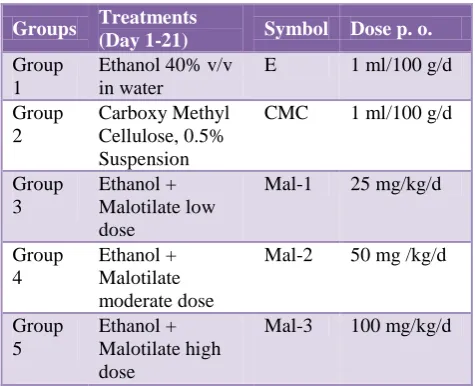
[image:2.595.311.549.289.482.2]Ethanol (40% v/v) was administered in the dose of 1 ml/100 g per day orally for 21 days for induction of hepatotoxicity in all the groups. CMC (0.5% W/V in distilled water) suspension was used as vehicle for malotilate administered orally in the dose 1 ml/kg/day in vehicle control group. For three doses of Malotilate; low, moderate and high, three different suspensions of different strengths viz. 2.5, 5 and 10 mg/ml were prepared with methyl cellulose and were administered in the dose of 25, 50 and 100 mg/kg body weight per day orally.
Table 1: Groups and drug treatments.
Groups Treatments
(Day 1-21) Symbol Dose p. o.
Group 1
Ethanol 40% v/v in water
E 1 ml/100 g/d
Group 2
Carboxy Methyl Cellulose, 0.5% Suspension
CMC 1 ml/100 g/d
Group 3
Ethanol + Malotilate low dose
Mal-1 25 mg/kg/d
Group 4
Ethanol + Malotilate moderate dose
Mal-2 50 mg /kg/d
Group 5
Ethanol + Malotilate high dose
Mal-3 100 mg/kg/d
The animals were then sacrificed by cervical dislocation and the livers were dissected and cut into two parts. One part of liver embedded in 10% formalin solution and histopathological assessment of liver damage was performed. The other parts of livers were collected in TC 199 media in the tissue sample bottles and were taken to biochemistry laboratory to assess oxidative stress marker enzymes malondialdehyde (MDA), superoxide dismutase (SOD), catalase (CAT) spectrophotometrically. The liver tissue sections were homogenized with specified buffers. The cell homogenate then was centrifuged at 3000× g for 10 min at 4oC (Remi Industries Ltd, Remi Laboratory Instruments, Cooling Centrifuge, C-24 BL is low volume high speed model in table top design) to remove debris and nuclei. The supernatant which consists of cytosolic and mitochondrial fractions was stored at -80oC. They were used for determination of MDA,9SOD,10 and CAT11 activities using UV Visible spectrophotometer, Model Lambda 35, Manufactured by Perkin Elmer Inc. USA.
Histopathological assessment
the liver was dissected and fixed in 10% formalin solution for 24 h. The fixed tissues were embedded in paraffin, sectioned to 3-5 μm thickness, deparaffinized, and rehydrated using standard techniques. The extent of alcohol-induced necrosis and steatosis was evaluated by assessing morphological changes in liver sections stained with hematoxylin and eosin using standard techniques. The scoring system comprised various histological features and it suggests the extent of liver injury.
Histopathological scoring of liver damage3 1. Portal fibrosis (PF: 0-6).
2. Lobular infiltration and Necrosis (LIN: 0-3). 3. Mallory bodies (MB: 0-3).
4. Hepatocyte ballooning (HB: 0-3). 5. Perisinusoidal Fibrosis (PSF: 0-3). 6. Fatty changes (FC: 0-3).
Addition of all scores was taken as “Total Score” of histopathological (HPS= Histo-Pathology Score) parameter for one animal. Higher score indicated more liver damage (Range from 0 in normal to 21 with maximum damage).
Statistical analysis
All the data were expressed as mean ± SD. The results were evaluated using One Way ANOVA – Nonparametric- Kruskal Wallis test, Post test- Dunns (Compare all pairs of columns) using Graph Pad Prism -5 software.
Table 2: Histopathological scoring.
Scores 0 to 6 for portal fibrosis (PF)
0 Indicates no abnormality 1 to 2 Mild injuries
3 to 4 Moderate injury 5 to 6 Severe liver injury
Scores 0 to 3 for other parameters
0 No abnormality
1 Mild
2 Moderate
3 Severe liver injury
[image:3.595.52.544.426.512.2]RESULTS
Table 3: Effect of Malotilate on MDA, SOD and CAT levels in liver tissue of ethanol-induced hepatic dysfunction in rats.
Parameters→
Groups↓ (n=6) MDA (nmol/g) SOD (nmol/g) CAT (nmol/g)
Group 1 (E) 12.27 ± 1.22 1.33 ± 0.10 25.9 ± 1.13 Group 2 (CMC) 11.98 ± 1.43 1.8 ± 0.11 25.35 ± 2.81 Group 3 (Mal-1) 8.28 ± 0.86 $$$, @@@ 2.83 ± 0.17 $$$, @@@ 36.57 ± 0.96 $$$, @@@ Group 4 (Mal-2) 7.79 ± 0.52 $$$, @@@ 3.75 ± 0.21$$$, @@@, £££ 41.51 ± 1.45 $$$, @@@, £££ Group 5 (Mal-3) 6.27 ± 0.34$$$, @@@, ££ 4.7 ± 0.22$$$, @@@, £££, ϒϒϒ 46.75 ± 1.28$$$ @@@ £££, ϒϒϒ
Nonparametric - Wilcoxan matched signed rank test. Values- mean ± SD. (n=6) comparisons were made between ethanol vs. other groups $ - P <0.05, $$ - P <0.01, $$$ - P <0.001; between Vehicle Vs Drugs @ - P <0.05, @@ - P<0.01, @@@ - P<0.001; between Mal-1 Vs Mal-2 / Mal-3 £ - P <0.05, ££ - P <0.01, £££ - P <0.001; between Mal-2 and Mal-3 ϒ - P <0.05, ϒϒ - P <0.01, ϒϒϒ - P <0.001.
[image:3.595.53.550.599.716.2]
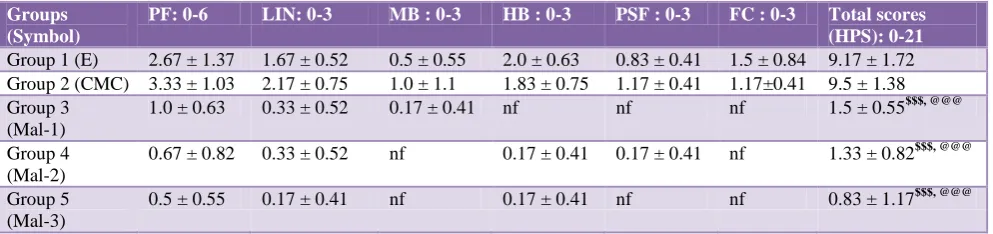
Table 4: Effect of Malotilate on liver histopathology of ethanol-induced hepatic dysfunction in rats.
Groups (Symbol)
PF: 0-6 LIN: 0-3 MB : 0-3 HB : 0-3 PSF : 0-3 FC : 0-3 Total scores
(HPS): 0-21
Group 1 (E) 2.67 ± 1.37 1.67 ± 0.52 0.5 ± 0.55 2.0 ± 0.63 0.83 ± 0.41 1.5 ± 0.84 9.17 ± 1.72 Group 2 (CMC) 3.33 ± 1.03 2.17 ± 0.75 1.0 ± 1.1 1.83 ± 0.75 1.17 ± 0.41 1.17±0.41 9.5 ± 1.38 Group 3
(Mal-1)
1.0 ± 0.63 0.33 ± 0.52 0.17 ± 0.41 nf nf nf 1.5 ± 0.55$$$, @@@
Group 4 (Mal-2)
0.67 ± 0.82 0.33 ± 0.52 nf 0.17 ± 0.41 0.17 ± 0.41 nf 1.33 ± 0.82$$$, @@@
Group 5 (Mal-3)
0.5 ± 0.55 0.17 ± 0.41 nf 0.17 ± 0.41 nf nf 0.83 ± 1.17$$$, @@@
One Way ANOVA – Nonparametric- Kruskal Wallis test, Post test- Dunns (Compare all pairs of columns).
MDA, SOD and CAT levels (nmol/g) of the liver tissue homogenates of different groups were estimated on day 22 [Table 3]. The data were compared and analysed statistically within the different groups. The maximum MDA levels (12.27 ± 1.22 nmol/g) and minimum SOD (1.33 ± 0.10 nmol/g) and CAT (25.9 ± 1.13 nmol/g) levels in ethanol treated group confirmed severe liver injury. Similar results were also found in CMC; the ethanol with vehicle treated group. Amongst the three doses of malotilate, Mal-3, the highest dose (100 mg/kg) significantly reduced MDA levels (6.27 ± 0.34 nmol/g, p <0.001) and increased SOD (4.7 ± 0.22 nmol/g, p <0.001) as well as CAT (46.75 ± 1.28 nmol/g, p <0.001) levels when compared with only ethanol treated, ethanol with vehicle treated and even lower dose of malotilate treated groups. Other two doses showed significant anti-oxidant activity in terms of reduction in MDA, whereas, increase in SOD and CAT levels when compared to only ethanol treated and ethanol with vehicle treated groups.
The liver damage was assessed in terms of HPS (Histo-Pathology Scores) on the 22nd day of the treatments [Table 4]. The highest dose of malotilate treatment group (Mal-3) scored the lowest HPS (0.83 ± 1.17, p <0.001) among the three drug treated groups proved amazing liver protection by malotilate from alcohol induced injury. The other two groups (Mal-1 and Mal-2) also showed significant prevention of liver damage (1.5 ± 0.55 and 1.33 ± 0.82, respectively). Whereas, statistically significantly higher HPS values (9.17 ± 1.72) in ethanol treated group and (9.5 ± 1.38) in ethanol with vehicle CMC treated group are suggestive of severe damage in rat liver tissues. Some individual scores were nullified with the three different doses of malotilate (Mal-3: MB, PSF and FC; Mal-2: MB and FC; Mal-1: HB, PSF and FC) which portrayed the prevention of liver injury by the drug treatment.
DISCUSSION
Malotilate, a sulphur-containing potent hepatoprotective agent, protects against the liver damage induced by various hepatotoxins. Some researchers reported the role of ethanol in increasing oxidative stress which contributes to the pathogenesis of ALD.3 Excessive ethanol consumption causes steatosis which plays a major role in the progression to cirrhosis.7
In this study, the preventive effect of malotilate against ethanol induced sub-acute hepatotoxicity was studied. Thus, both ethanol (40% v/v 1ml/100g/d) and malotilate (25, 50 and 100 mg/kg/d) were administered for 21 days to evaluate the toxicity induced by ethanol and prevention offered by malotilate. MDA, SOD and CAT (parameters for antioxidant activity) enzyme levels were estimated from the liver homogenates on the day-22 after sacrifice. Assessment of HPS indicated the prevention of ethanol induced liver damage by malotilate.
Malonedialdehyde is a breakdown product of poly unsaturated fatty acids and serves as a convenient indicator for determining the extent of the lipid peroxidation reaction and in turn increase in oxidative stress. Prevention of formation and neutralization of the generated highly reactive oxidative species is carried out by the endogenous anti-oxidant enzymes, such as Superoxide Dismutase (SOD), Catalase (CAT), Glutathione peroxidase(GPX ) and Glutathione reductase(GR). When balance between ROS (Reactive Oxygen Species) production and antioxidant defence is lost, 'oxidative stress' results. Remarkably high MDA levels and significantly low SOD and CAT levels indicated impairment of lipid peroxidation leading to increase in oxidative stress in hepatocytes by ethanol.
Highest value of MDA was found in ethanol treated group as well as vehicle; CMC treated group. Malotilate treated three groups showed significantly low (p <0.001) MDA levels. Significant increase in both SOD and CAT levels in malotilate treated three groups support the protective activity of the drug on liver tissues against severe oxidative stress. When the effects of three doses were compared to each other they showed significant different values in MDA, SOD and CAT levels. The high dose (Mal-3) was significantly more effective than moderate dose (Mal-2) and low dose (Mal-1). Similarly moderate dose (Mal-2) was more effective than low dose (Mal-1). These results indicate that malotilate produces hepatoprotective effect mediated through anti-oxidant action in a dose dependent manner. Similar kind of changes in MDA, SOD and CAT levels involved in increasing oxidative stress and anti-oxidant defence were reported by other researchers.12-14
The severity of liver damage assessed by calculating histopathological scores (HPS) on 22nd day in all groups considering various histological features suggested the extent of liver injury.3,15 Significantly high HPS in ethanol and ethanol with vehicle; CMC treated groups is the marker of severe liver injury. The statistical comparison of histopathology scores of individual parameters in these two groups revealed no significant difference. In all three groups treated with different doses of malotilate total histopathology scores were significantly low. On the contrary, some of the markers of liver injury such as Mallory body, hepatocyte ballooning, perisinusoidal fibrosis and fatty changes were not found in these groups [Table 4]. These results reveal preventive and protective potential of malotilate at all doses.
CONCLUSION
terms of low HPS in the groups treated with malotilate is the evidence of prevention of hepatotoxicity which was administered for moderate duration (subacute period). Future studies may be focussed on the molecular mechanism of the malotilate and its curative property in ethanol induced liver damage.
ACKNOWLEDGMENTS
The authors acknowledge the help and incidence of teaching and non-teaching staff of Department of Pharmacology, Pathology, Biochemistry and Central Animal House in completing this research work.
Funding: No funding sources Conflict of interest: None declared
Ethical approval: The study was approved by the Institutional Animal Ethics Committee
REFERENCES
1. Zhang J, Gao Y, Qian S, Liu X, Zu H. Physicochemical and pharmacokinetic characterization of a spray-dried malotilate emulsion. Int J Pharm. 2011;414(1-2):186-92.
2. Younes M, Siegers CP. Effect of Malotilate on paracetomol induced hepatotoxicity. Toxicol Lett. 1985;25(2):143-6.
3. Borole KD, Bodhankar SL. Preventive effect of malotilate on ethanol induced hepatic dysfunction in rats. Int J Pharm Bio Sci. 2014;5(1):151-7.
4. Nand N, Malhotra P, Dhoot DK. Clinical Profile of Alcoholic Liver Disease in a Tertiary Care Centre and its Correlation with Type, Amount and Duration of Alcohol Consumption. J Assoc Physicians India. 2015;63(6):14-20.
5. Alcohol consumption rising fast in India: OECD report. http://indianexpress.com/article/india/india- others/alcohol-consumption-rising-fast-in-india-oecd-report/#sthash.HAfHXtwD.dpuf. Accessed on 26 February 2016.
6. WHO Global Status Report on alcohol and health, 2014. http://www.who.int/substance_abuse/ publications/global_alcohol_report/en. Accessed on 26 February 2016.
7. Rasineni K, Casey CA. Molecular mechanism of alcoholic fatty liver. Indian J Pharmacol. 2012;44(3):299-303.
8. Corrao G, Torchio P, Zambon A, D’Amicis A, Lepore AR, di Orio F. Alcohol consumption and micronutrient intake as risk factors for liver cirrhosis: a case control study. Ann Epidemiol. 1998;8(3):154. 9. D Dahiru1 and O Obidoa. Pretreatment of albino rats
with aqueous leaf extract of Ziziphus mauritiana protects against alcohol-linduced liver damage Tropical Journal of Pharmaceutical Research. 2007;6(2):705-10.
10. Mark E. Cleasby, Nicolas Dzamko, Bronwyn D. Hegarty, Gregory J. Cooney, Edward W. Kraegen, and Ji-Ming Ye. Metformin Prevents the Development of Acute Lipid-Induced Insulin Resistance in the Rat Through Altered Hepatic Signaling Mechanisms. Diabetes 2004;53:3258-66. 11. Angela C. Smith, Kerry L. Mullen,1 Kathryn A.
Junkin, Jennifer Nickerson, Adrian Chabowski, Arend Bonen, and David J. Dyck. Metformin and exercise reduce muscle FAT/CD36 and lipid accumulation and blunt the progression of high-fat diet-induced hyperglycemia. Am J Physiol Endocrinol Metab. 2007;293:E172-81.
12. Aliahmat NS, Noor MRM, Yusof WJW, Makpol S, Ngah WZW, Yusof YAM. Antioxidant enzyme activity and malondialdehyde levels can be modulated by Piper betle, tocotrienol rich fraction and Chlorella vulgaris in aging C57BL/6 mice. Clinics (Sao Paulo). 2012;67(12):1447-54.
13. Yayalacı Y, Celik I, Batı B. Hepatoprotective and antioxidant activity of linden (Tilia platyphyllos L.) infusion against ethanol-induced oxidative stress in rats. J Membr Biol. 2014;247(2):181-8.
14. Li S, Tan H-Y, Wang N, Zhang Z-J, Lao L, Wong C-W, et al. The Role of Oxidative Stress and Antioxidants in Liver Diseases. Int J Mol Sci. 2015;16:26087-124.
15. Takahashi Y, Fukusato T. Histopathology of nonalcoholic fatty liver disease/non-alcoholic steatohepatitis. World J Gastroenterol. 2014;20(42):15539-48.