
EFFECT OF THE PREPARATION OF SOLID DISPERSION METHOD ON THE SOLUBILITY AND CRYSTALLINITY OF SULFASALAZINE
7
0
0
Full text
(2) Asija Rajesh et al. IRJP 2 (4) 2011 200-206 CD was dispersed. Conversely, in the surface-attached method, HP-β-CD and DOSS were dissolved in 300 ml water, and sulfasalazine was dispersed. They were then delivered to the nozzle (0.7mm diameter) at a flow rate of 5ml/min using a peristaltic pump and spray-dried at 125 oC inlet temperature and 65–70 oC outlet temperature. The pressure of the sprayed air was 4 kg/cm2 and the flow rate of the drying air was maintained at the aspirator setting of 10 which indicated the pressure of the aspirator filter vessel as -25 mbar. The direction of air flow was the same as that of sprayed products. Aqueous solubility Excess of sulfasalazine powder (about 10 mg) were added to 10 ml of 1% carriers shown in Table 1. Furthermore, excessive amount of solid dispersions (about 20 mg) were added to 10 ml of water. They were shaken in a water bath for 3 days, centrifuged at 3000×g for 10 min (Remi, India) and filtered through a membrane filter (0.45µm). The concentration of sulfasalazine in the resulting solution was then analyzed by HPLC as described below. Dissolution Three solid dispersions equivalent to 1mg of sulfasalazine were inserted into a sinker and placed in the dissolution tester (Electrolab, India) 5,6. A dissolution test was performed at 37± 0.5oC using the paddle method at 50 rpm with 500 ml 0.005% hydroxypropyl cellulose solution adjusted to pH 4.5 with phosphoric acid. At predetermined intervals, 3ml of the medium was sampled and filtered through a membrane filter (0.45µm). Then, the concentration of sulfasalazine in the supernatant layer was analyzed by HPLC. The resulting solution (2 ml) was mixed with 0.5 ml of acetonitrile solution, vortexed for 2 min and centrifuged at 10,000×g for 10 min. Then, 100µl of the supernatant layer was analyzed by HPLC (Cyberlab, USA) equipped with a Supecosil and UV detector. The mobile phase consisted of water, acetonitrile and isopropanol (7/2/1, v/v/v). The eluent was monitored at 210nm with a flow rate of 0.4 ml/min7. Shape and surface morphology The shape and surface morphology of the three sulfasalazine loaded solid dispersions were examined using a scanning electron microscope (S-4100, Hitachi, Japan). The powders were fixed on a brass specimen club using double-side adhesive tape and made electrically conductive by coating in a vacuum (6 Pa) with platinum (6 nm/min) using a Hitachi Iron Sputter (E−1030) for 300 s at 15mA8.. IRJP 2 (4) 2011. Thermal characteristics and crystallinity The thermal characteristics of sulfasalazine powder, carriers and solid dispersions were investigated using a differential scanning calorimeter (DSC-2010, TA Instruments, USA). Samples of about 2 mg were placed in sealed aluminium pans, before heating under a nitrogen flow (25 ml/min) at a heating rate of 10oC/min from 30 to 215oC. Furthermore, the crystallinity of the powder, carriers and solid dispersions were assessed by X-ray powder diffraction (D/MAX-2500, Rigacu, Japan) conducted at 25oC using monochromatic Cu Kαradiation (λ = 1.54178 A0) at 40mA and 40 kV in the region of 2.5o ≤2θ ≤40 o with an angular increment of 0.02o/s. RESULTS To select a polymer and surfactant as carriers suitable for sulfasalazine-loaded solid dispersion, the solubility of sulfasalazine in the distilled water containing 1% carriers (Table 1). The aqueous solubility of sulfasalazine was about 0.6µg/ml, which indicated that this drug was poorly water-soluble9. Among the polymers tested, HPβ-CD showed maximum solubility of drug. Furthermore, among the surfactants tested, the solubility of sulfasalazine at DOSS was highest as about 189.94µg/ml. Thus, HP-β-CD and DOSS were selected as carriers in the preparation of sulfasalazine-loaded solid dispersions. The sulfasalazine-loaded solid dispersions were prepared with 1 g sulfasalazine, 1–8 g HP-β-CD and 0.01 g DOSS using solvent evaporation method. The effect of HP-βCD on the aqueous solubility of sulfasalazine in the solid dispersions was then investigated (Fig. 1). In the preparation of solid dispersion, DOSS was used to avoid attaching solid-dispersions to the inner wall of spray drying chamber 4. Furthermore, this material could improve the solubility of poorly water-soluble drugs in the development of solid dispersion 5. The aqueous solubility of sulfasalazine in the solid dispersion was significantly increased with increased amount of HP-βCD. Thus, the sulfasalazine-loaded solid dispersion composed of sulfasalazine, HP-β-CD and DOSS with a weight ratio of 1/8/0.1 was selected for further study. In the solvent-evaporation method, they were dissolved in methylene chloride/ethanol mixture 2. In the solventwetting method, sulfasalazine and DOSS were dissolved in ethanol, and HP-β-CD was dispersed 3. Conversely, in the surface-attached method, HP-β-CD and DOSS were dissolved in water, and sulfasalazine was dispersed 4, 10, 11 . All the resulting productions were spray-dried under. Page 200-206.
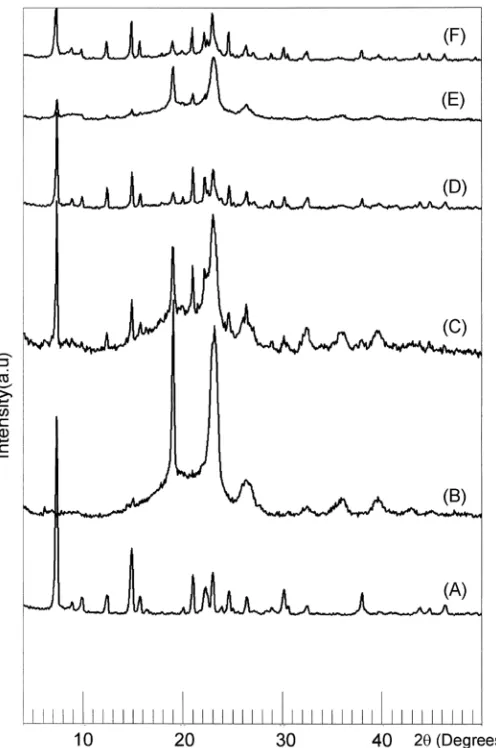
(3) Asija Rajesh et al. IRJP 2 (4) 2011 200-206 the same conditions, leading to the production of three different sulfasalazine-loaded solid dispersions. The aqueous solubility of sulfasalazine in these solid dispersions is given in Fig. 2. All the solid dispersions increased the drug solubility over that of the drug powder. Furthermore, the aqueous solubility of the drug was significantly improved in the order of the sulfasalazine-loaded solid dispersion prepared by: solvent evaporation method > solvent-wetting method > surface-attached method. In particular, the solid dispersion prepared by the solvent evaporation method improved about 900-fold the solubility of the drug compared to drug powder. To evaluate the dissolution of the drug from the solid dispersions, the dissolution test on three sulfasalazineloaded solid dispersions was carried out (Fig. 3). Similarly, all the solid dispersions gave higher dissolution rates compared to the drug powder. Among the solid dispersions tested, the solid dispersion prepared by the solvent-evaporation method with the highest drug solubility gave the significantly highest dissolution rate of the drug 12,13. The dissolution amount of drug from it at 60 min was about 15-fold higher compared to the drug powder (69.80±4.69% vs. 4.38±0.48%). Scanning electron micrographs of sulfasalazine powder and solid dispersions are shown in Fig. 4. Sulfasalazine powder (Fig. 4A) appeared as smooth-surfaced rectangular crystals in shape 3. The solid dispersion prepared by the solvent-evaporation method (Fig. 4B) gave an aggregated form with a smooth surface. However, the solid dispersion prepared by the solventwetting method (Fig. 4C) gave a relatively rough surface and showed that the soluble drug might be attached onto the surface of the undissolved carrier. Similarly, the solid dispersion prepared by the surface-attached method (Fig. 4D) has a relatively rough surface and showed that the soluble carrier might be attached to the surface of the undissolved drug. The thermal behaviour of the drug powder, carriers and solid dispersion are presented in Fig. 5. The DSC curve shows that sulfasalzine has an endothermic peak at about 1300C corresponding to its melting, indicating its crystalline nature (Fig. 5A). HP-β-CD (Fig. 5B) and DOSS (Fig. 5C) had no intrinsic peaks. Furthermore, a relatively weak peak corresponding to the drug was also observed in the physical mixture (Fig. 5D). The physical mixture was prepared by simply mixing sulfasalzine, HP-β-CD and DOSS in the weight ratio of 1/8/0.1. However, a sharp peak corresponding to the drug has. IRJP 2 (4) 2011. disappeared and no peak was observed in the solid dispersion prepared by the solvent-evaporation method (Fig. 5E) and the solvent-wetting method (Fig. 5F), suggesting that the drug was present in an amorphous state. The solid dispersion prepared by the surfaceattached method gave a characteristic peak corresponding to the drug (Fig. 5G), indicating the drug was present in an unchanged crystalline state 4. The powder X-ray diffractometry patterns are shown in Fig. 6. Sulfasalazine gave sharp peaks at diffraction angles showing a typical crystalline pattern3 (Fig. 6A). All major characteristic crystalline peaks were observed in the physical mixture (Fig. 6C). However, they were hardly observed in the solid dispersion prepared by the solvent-evaporation method (Fig. 6D) and the solventwetting method (Fig. 6E). Thus, like the DSC results, the drug was present in an amorphous state. Like the drug and the physical mixture, the characteristic crystalline peaks appeared in the solid dispersion prepared by the surface-attached method (Fig. 6F). Similarly, the drug was present in an unchanged crystalline state in this solid dispersion. DISCUSSION The sulfasalazine-loaded preparations composed of sulfasalazine, HP-β-CD and DOSS with a weight ratio of 1/8/0.1 were prepared using three different soliddispersion methods. In this study, solid state characterization such as SEM, DSC and powder X-ray diffractometry did not prove that sulfasalazine formed inclusion complexes with HP-β-CD. Thus, our results suggested that these preparations were not inclusion compounds but simple solid-dispersion systems. In the solvent-evaporation method, the drug and carriers were dissolved in organic solvents and spray-dried, leading to production of a sulfasalazine-loaded solid dispersion. This solid dispersion appeared as an irregular aggregate form with smooth surfaces. It changed the drug crystalline to an amorphous form, since the drug was soluble in the organic solvent followed by recrystallizing through the elimination of solvents. In the solvent-wetting method, the drug was dissolved and the carrier was dispersed in the solvent, and spraydried, resulting in another sulfasalazine-loaded solid dispersion. In this solid dispersion, the dissolved drug was attached to the surface of dispersed carriers. Like the solvent-evaporation method, the drug was transferred in an amorphous state, as it was soluble in the organic solvent followed by re-crystallizing onto the carrier surface by the elimination of solvents. However, the. Page 200-206.
(4) Asija Rajesh et al. IRJP 2 (4) 2011 200-206 solid dispersion prepared by this method gave significantly lower solubility and dissolution of sulfasalazine than did that prepared by the solvent evaporation method. In the solvent-evaporation method, the drugs were dissolved together with polymeric carriers in the organic solvent followed by re-crystallizing together with the carrier by the elimination of solvents. Thus, in the preparation of solid dispersion, polymeric carriers dissolved and re-crystallized together with dissolved drugs in the solvent-evaporation method may give significantly lower solubility and dissolution compared to non-dissolved polymeric carriers due to achievement of higher levels of particle size reduction and surface area enhancement. In the surface-attached method, the carrier was dissolved and the drug was dispersed in water. The resulting dispersion was spray-dried, resulting in the production of the other solid dispersion. Unlike the other soliddispersion methods, it did not change the crystallinity of drug. Simply, it changed the drug from being hydrophobic to hydrophilic, because the dissolved carrier was attached to the surface of dispersed drug particles. Among the solid dispersions tested, the solid dispersion prepared by the solvent-evaporation method gave the highest solubility and dissolution. Thus, the most enhanced solubility of poorly water-soluble sulfasalazine was due to the transformation of drug crystallinity into the amorphous state and its reduced particle size, increased surface area and close contact between the hydrophilic carrier and drug resulting from dissolving and re-crystallizing of the drug in the organic solvents. The solid dispersion prepared by the surface-attached method improved the drug’s solubility and dissolution less than the other methods did. However, as water was used as a solvent unlike the other solid-dispersion methods, this solid-dispersion method had several advantages over other methods on an industrial scale, such as there is no necessity to remove an organic solvent and the ease of meeting strict legally required airquality controls, less potential toxicity and no danger of explosion of organic solvents. CONCLUSION In the solvent-evaporation and solvent-wetting methods, the drug in the solid dispersions was converted to an amorphous form. However, in the surface-attached method, the drug was not changed. It only changed the drug from being hydrophobic to hydrophilic, because the dissolved carrier was attached to the surface of the dispersed drugs. The solid dispersion prepared by the. IRJP 2 (4) 2011. solvent-evaporation method gave the highest solubility and dissolution. However, even if the solid dispersion prepared by the surface-attached method enhanced the drug’s solubility and dissolution less than the other methods, it had several advantages, because water was used as a solvent unlike the other solid dispersion methods. Thus, in the development of a solid-dispersion system containing poorly water-soluble drugs, the preparation method plays an important role in the solubility and crystallinity of the drugs. REFERENCES 1. Miller DA, McConville JT, Yang W, Williams RO, McGinity JW. Hot-melt extrusion for enhanced delivery of drug particles. J Pharm Sci 2007; 96:361–376. 2. Leuner C, Dressman JImproving drug solubility for oral delivery using solid dispersions. Eur J Pharm Biopharm 2000; 50:47–60. 3. Yamashita K, Nakate T, Okimoto K, Ohike A, Tokunaga Y, Ibuki R et al. Establishment of new preparation method for solid dispersion formulation of sulfasalazine. Int J Pharm 2003; 267:79–91. 4. Li DX, Oh YK, Lim SJ, Kim JO, Yang HJ, Sung JH et al. Novel gelatin microcapsule with bioavailability enhancement of ibuprofen using spray drying technique. Int J Pharm 2008; 355:277–284. 5. Park YJ, Ryu DS, Li DX, Quan QZ, Oh DH, Kim JO et al. Physicochemical characterization of sulfasalazineloaded solid dispersion with sodium carboxylmethyl cellulose and sodium lauryl sulfate. Arch Pharm Res 2009; 32:893–898. 6. Choi HG, Oh YK, Kim CK. In situ gelling and mucoadhesive liquid suppository containing acetaminophen: enhanced bioavailability. Int J Pharm 1998; 165:23–32. 7. Moyano MA, Simionato LD, Pizzorno MT, Segall AI. Validation of a liquid chromatographic method for determination of sulfasalazine in pharmaceutical dosage forms. J AOAC Int 2006; 89:1547–1551. 8. Newa M, Bhandari KH, Li DX, Kwon TH, Kim JA, Yoo BK et al. Preparation, characterization and in vivo evaluation of ibuprofen binary solid dispersions with poloxamer 188. Int J Pharm 2007; 343:228–237. 9. Watts AB, Williams RO, Peters JI. Recent developments in drug delivery to prolong allograft survival in lung transplant patients. Drug Dev Ind Pharm 2009; 35:259–271. 10. Choi HG, Lee BJ, Yong CS, Rhee JD, Han JH, Lee MK et al. Terfenadine-β-cyclodextrin inclusion complex with the antihistaminic activity enhancement. Drug Dev Ind Pharm 2001; 27:857–862. 11. Yong CS, Yang CH, Rhee JD, Lee BJ, Kim DC, Kim DD Kim CK et al. Enhanced rectal bioavailability of ibuprofen in rats by poloxamer 188 and menthol. Int J Pharm 2004; 269:169–176. 12. Craig DQM. The mechanisms of drug release from solid dispersions in water soluble polymers. Int J Pharm 2002; 231: 131–144. 13. Arima H, Yunomae K, Miyake K, Irie T, Hirayama F, Uekama K. Comparative studies of the enhancing effects of cyclodextrins on the solubility and oral bioavailability of sulfasalazine in rats. J Pharm Sci 2001; 90:690–701.. Page 200-206.
(5) Asija Rajesh et al. IRJP 2 (4) 2011 200-206 TABLE 1: AQUEOUS SOLUBILITY OF SULFASALZINE Aqueous S.no. Carriers solubility (µg/ml) 1. Water 0.57 ± 0.20 2.. Polymeric carrier. a.. Sodium carboxymethyl cellulose. 6.91 ± 1.30. b.. Hydroxypropyl methyl cellulose. 1.85 ± 0.15. c.. Hydroxypropyl-β-cyclodextrin. 13.95 ± 1.37. 3.. Surfactants. a.. Polyethylene glycol 6000. 1.00 ± 0.15. b.. Poloxamer 188. 2.19 ± 0.20. c.. Dioctyl sulfosuccinate. 189.94 ± 21.27. Each value means the solubility of sulfasalzine in the distilled water containing 1% polymeric carrier or surfactant. Each value represents the mean ± SE (n = 5).. Fig. 2. Effect of the solid-dispersion method on the aqueous solubility of sulfasalzine. All solid dispersions were composed of sulfasalzine, HP-β-CD and DOSS in the weight ratio of 1/8/0.1. Each value represents the mean ± SD (n = 5). Fig. 3. Effect of the solid-dispersion method on the dissolution of sulfasalzine. All solid dispersions were composed of sulfasalzine, HP-β-CD and DOSS in the weight ratio of 1/8/0.1. Each value represents the mean±SD (n = 6). Fig. 1 Effect of HP-β-CD on the aqueous solubility of sulfasalzine. All solid dispersions were composed of sulfasalzine, HP-β-CD and DOSS. Each value represents the mean ± SD (n = 5).. IRJP 2 (4) 2011. Page 200-206.
(6) Asija Rajesh et al. IRJP 2 (4) 2011 200-206. Fig. 4. Scanning electron micrographs: (A) sulfasalazine powder (600×), (B) solid dispersion prepared by the solvent-evaporation method (4000×), (C) solid dispersion prepared by the solvent-wetting method (4000×) and (D) solid dispersion prepared by the surface-attached method (4000×). All solid dispersions were composed of sulfasalazine, HP-βCD and DOSS in the weight ratio of 1/8/0.1.. Fig. 5. Differential scanning calorimetric thermograms: (A) sulfasalazine powder, (B) HP-β-CD, (C) DOSS, (D) physical mixture, (E) solid dispersion prepared by the solventevaporation method, (F) solid dispersion prepared by the solvent-wetting method and (G) solid dispersion prepared by the surface-attached method. The physical mixture was prepared by simply mixing sulfasalazine, HP-β-CD and DOSS in the weight ratio of 1/8/0.1.. IRJP 2 (4) 2011. Page 200-206.
(7) Asija Rajesh et al. IRJP 2 (4) 2011 200-206. Fig. 6. X-ray powder diffraction: (A) sulfasalazine powder, (B) HP-β-CD, (C) physical mixture, (D) solid dispersion prepared by the solvent-evaporation method, (E) solid dispersion prepared by the solvent-wetting method and (F) solid dispersion prepared by the surface-attached method. The physical mixture was prepared by simply mixing sulfasalazine, HP-β-CD and DOSS in the weight ratio of 1/8/0.1.. Source of support: Nil, Conflict of interest: None Declared. IRJP 2 (4) 2011. Page 200-206.
(8)
Figure


Related documents
The Last Gentlemen: Southern Conservative Superfluity and the Work of William Alexander Percy, Walker Percy, and Peter Taylor.. William
The most important contributions of this paper are (i) the proposal of a concern mining approach for KDM, what may encourage other groups to start researching on
Results show that a GPR signal analysis method based on a dual‑criteria (relative permittivity and EM wave attenuation) is more effective in analyzing the
We assume that, at the bank default time τ, an exceptional (e.g. operational) loss occurs and wipes out any residual risk capital (shareholder capital at risk and risk margin)
(2014) [ 63 ] QI + SQ (Hong Kong) Positive: Accessible/ efficient user-system interaction /interface; System flexibility and reliability. Negativ e: Impact on patient interaction
If shown to be effective, this balance program has the potential to improve the balance, mobility and function of future rehabilitation inpatients both at the study site and
Institutional review board approval was obtained at Nanjing Drum Tower Hospital, Jiangsu Province Hospital, Jiangsu Cancer Hospital and Zhongda Hospital Southeast University for
It was decided that with the presence of such significant red flag signs that she should undergo advanced imaging, in this case an MRI, that revealed an underlying malignancy, which
