Global Journal of Advance Engineering Technologies and Sciences
PERFORMANCE ANALYSIS OF IMAGE COMPRESSION USING
DIFFERENT MODULATION WITH HAAR-WAVELET TRANSFORM
Anjali Nigam
1, Neha Namdev
2, Prof. A. C. Tiwari
3M. Tech. Scholar
1, Asst. Prof.
2, Prof. & HOD
3Department of Electronics and Communication Engineering
Lakshmi Narain College of Technology, Indore (M.P.) India
[email protected]
ABSTRACT
Image compression is now essential for applications such as transmission and storage in data bases. Image processing for wireless transmission is a challenging task, because of the amount of image data that need to be processed in real time, the restriction of transmission bandwidth, and other limited resources of the wireless network. Wireless face recognition is a particular interesting application of image processing for communications, where face recognition is implemented at the application layer, and a customized processing on face images helps correct or tolerate the transmission errors at the lower layers, namely the network layer, the MAC layer, and the physical layer.
In this paper we compression techniques and wireless transmission, some type of noise is also induced in compressed image. So we need improving image quality measured by such parameter. These are done by using de-noising filter such as Wiener filter and Median filter at receiving end. The accuracy of compression methods is measured by CR and PSNR, with QPSK and 8-PSK modulation on AWGN Channel. Performance of these systems is measured by BER plot with respect to SNR. The experimental result shows that the proposed scheme maintains the accuracy of compression, transmission and decompression of image.
Keyword: Haar-wavelet, Wiener filter, Median filter, Image compression, PSK, AWGN.
I. INTRODUCTION OF WAVELET
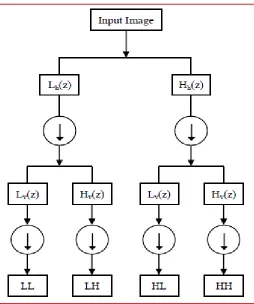
Fig. 1: Image bands LL, LH, HL and HH of the first scale
A. HAAR WAVELET
The Haar sequence was proposed in 1909 by Alfred Haar [3]. Haar used these functions to give an example of a countable other normal system for the space of square integral functions on the real line. The study of wavelets, and even the term "wavelet", did not come until much later. As a special case of the Daubechies wavelet, it is also known as D2. The Haar wavelet is also the simplest possible wavelet. The technical disadvantage of the Haar wavelet is that it is not continuous, and therefore not differentiable. This property can, however, be an advantage for the analysis of signals with sudden transitions, such as monitoring of tool failure in machines.
II. COMPRESSION RATIO (CR)
The ratio of the size of original data set to the size of the compressed data set, compression ratio is find out, defined in equation 1. Compression ratio is defined as the ratio between the original image size and compressed image size. Comprassion ratio =XY× 100 (1)
Where X = Number of Bytes in the original data set, Y = Number of Bytes in the Compressed data set. It is clearer by this example. Example: An image, 1024 pixel×1024 pixel×24 bit, without compression, would require 3 MB of storage. If after compression storage requirement is reduced to 300 KB, so by using formula we find the compression ratio as 10:1.
III. BIT-ERROR-RATE (BER)
When number of bits error occurs within one second in transmitted signal then we called Bit Error Rate (BER). In another sentence Bit Error rate is one type of parameter which used to access the system that can transmit digital signal from one end to other end. We can define BER as follows:
If transmitter and receiver’s medium are good in a particular time and Signal-to-Noise Ratio is high, then Bit Error rate is very low. In our thesis simulation we generated random signal when noise occurs after that we got the value of Bit error rate.
IV. PEAK SIGNAL-TO-NOISE RATIO (PSNR)
The peak signal-to-noise ratio, often abbreviated PSNR, is an term used for the ratio between the maximum possible power of a signal and the power of corrupting noise that affects the fidelity of its representation. So by the ratio of signal variance and reconstruction error variance, PSNR can be defined[14].It is also explained as the ratio between the maximum possible power of a signal and the power of corrupting noise. Because many signals have a very wide dynamic range, PSNR is usually expressed in terms of the logarithmic decibel scale. So it is most used as a measure of quality of reproduction of image compression etc. PSNR is easily defined which for two 𝑚 × 𝑛 monochrome images I and K where one of the images is considered noisy.
The PSNR is defined in equation 3 as:
PSNR = 10. log10
MAXi2
MSE = 20. log10
MAXi
√MSE (3)
V. RESULT
During our simulation we used Wavelet Transform (Haar and Daubechies) wavelet algorithms and different filters (Winar and Median) also used modulation in QPSK and 8-PSK techniques through MATLAB R2013a simulation toll used, with the help of above modulation techniques we got the analysis parameters like the SNR versus BER, with different communication channel (AWGN and multipath fading channel). The different methods were discussed to improve the compression ratio (CR), Bit error performance and result is obtained by their individual and combined performance such as CR and BER. The parameter involved in this thesis was PSNR, CR, MSE, BER and SNR. BER is applicable of radio data links as well as fiber optics data systems. It should be minimum for good communication system. Improved BER performance also improves quality of system in another word BER is reduced and SNR is increased.
A. AWGN CHANNEL ON QPSK AND 8-PSK MODULATION WITH HARR TRANSFORM
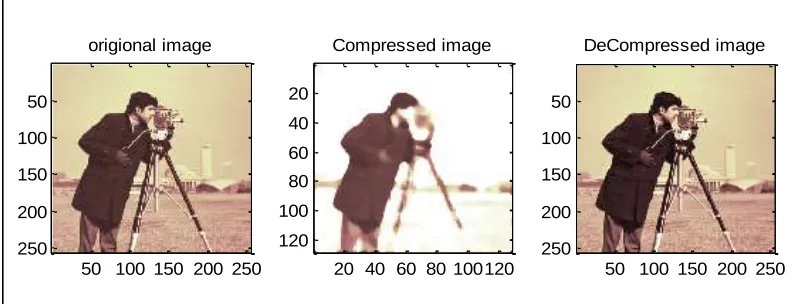
The simulation result presented in the thesis focuses mainly on Compression ratio and PSNR which typically affects the picture quality. In this performance we consider AWGN channel on different modulation techniques with Harr wavelet transform. Most of the times as researchers go on increasing the compression ratio the quality of the resulting image use to go down for the proposed technique, test image “Cameraman.tif” size 256 × 256.
Fig. 2(a) Original image, (b) Compressed image and (c) De-compressed image
origional image
50 100 150 200 250 50
100
150
200
250
Compressed image
20 40 60 80 100120 20
40
60
80
100
120
DeCompressed image
50 100 150 200 250 50
100
150
200
Fig 3: Performance of Harr Wavelet Transformer QPSK Modulation with AWGN Channel
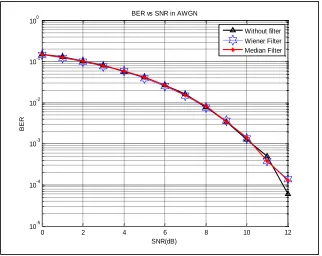
Fig 4: Performance of Harr Wavelet Transformer on 8-PSK Modulation with AWGN Channel
Table 1: Image Compression ratio with different filter
0 1 2 3 4 5 6 7 8 9 10
10-6 10-5 10-4 10-3 10-2 10-1 100
BER vs SNR in AWGN
SNR(dB)
BER
Without Filter Winar Filter Midean Filter
0 2 4 6 8 10 12
10-5 10-4 10-3 10-2 10-1 100
BER vs SNR in AWGN
SNR(dB)
BER
Without filter Wiener Filter Median Filter
S. No. Wavelet Modulation Channel CR
Without filter
Wiener filter
Median filter
1 Haar QPSK AWGN 7.4237 6.2214 8.0736
Table 2: PAPR Calculation ratio with different filter
VI. CONCLUSION
We get results of different wavelet image compression techniques Haar wavelet are presented and compared their effect. We also compare the result of de-noising filter (Wiener filter and Median filter). Our focus on increase Compression Ratio (CR) and Pick to signal ratio (PSNR) and decrease BER also get simulated result of wireless channels model (AWGN channel and Flat fading channel) with QPSK and 8-PSK modulation techniques and compared their effect, focus on decrease Bit Error Rate (BER).We find that that if we increase SNR value, BER performance is improved. We have notice that wiener filter with Haar wavelet compression ratio 8.1746 and with PSNR is 15.5734 by using AWGN Channel of 8-PSK.
REFERENCES
[1] Douak, RedhaBenzid, NabilBenoudjit, “Color image compression algorithm based on the DCT transform combined to an adaptive block scanning”, Int. J. Electron. Commun. (AEU¨), 65(2011), Page16–26, 1434-8411
& 2010 Elsevier GmbH, doi:10.1016/j.aeue.2010.03.003.
[2] Henning Lars Zimmer, “PDE-based Image Compression using Corner Information”, September 17, 2007.
[3] Ramandeep KaurGrewal, Navneetrandhawa, “Image Compression Using Discrete Cosine Transform & Discrete Wavelet Transform”, International Journal of Computing & Business Research ISSN (Online):
2229-6166, at GKU, Talwandi Sabo Bathinda (Punjab), Proceedings of ‘I-Society 2012’.
[4] Jagadish H. Pujar, Lohit M. Kadlaskar, “A New Lossless Method of Image Compression and Decompression Using Huffman Coding Techniques”, Journal of Theoretical and Applied Information Technology © 2005 -
2010 JATIT.
[5] Guojin Liu, Xiaoping Zeng, FengchunTian, KadriChaibou, ZanZheng, “A novel direction-adaptive wavelet based image compression”, Int. J. Electron. Commun. (AEÜ) 64 (2010), Page 531–539, 1434-8411/2009
Elsevier GmbH. Doi: 10.1016/j.aeue.2009.03.004.
[6] Md. Sipon Miah “Performance Comparison of AWGN, Flat Fading and Frequency Selective Fading Channel for Wireless Communication System using 4QPSK” 2011 IJCIT, ISSN 2078-5828 (PRINT), VOLUME 01, ISSUE 02.
[7] K. Khelil , A. Hussainb, R.E. Bekkac, F. Berrezzeka, “Improved multiple description wavelet based image coding using subband uniform quantization”, Int. J. Electron. Commun. (AEÜ) 65 (2011), Page 967– 974,
1434-8411/2011, Elsevier GmbH.doi:10.1016/j.aeue.2011.03.011.
[8] Sandeep Kumar, “Image Compression Based On Improved Spiht and Region Of Interest”, Dept. of Electronics
& Communication Engineering Thapar University, Patiala, June 2011.
[9] Vincent Lecuire, Cristian Duran-Faundez, and Nicolas Krommenacker; “Energy-Efficient Transmission of Wavelet- Based Images in Wireless Sensor Networks” , Hindawi Publishing Corporation EURASIP Journal on
Image and Video Processing Volume 2007, Article ID 47345, 11 pages doi:10.1155/2007/47345.
[10]Michel Misiti Yves Misiti Georges Oppenheim Jean-Michel Poggi, “Wavelet Toolbox”, For Use with
MATLAB.
[11] Dr.BEswara Reddy and K VenkataNarayana; “A Lossless Image Compression Using Traditional and Lifting Based Wavelets”, Signal & Image Processing : An International Journal (SIPIJ) Vol.3, No.2, April 2012.
S. No.
Channel model
PSK modulation
order
Wavelet technique
PSNR
Without filter Wiener filter
Median filter
1 AWGN QPSK Haar 16.5144 16.7301 17.1295