* To whom all correspondence should be addressed. Mob.: +91-9412412731;
E. mail: [email protected], [email protected]
Characterization and Identification of F
1Hybrids in
Eucalyptus by PCR Study using Random Primers
Vikash S. Jadon1*, Vikas Sharma2, Barkha Kamal1 and H.S. Ginwal3
1Department of Biotechnology, Sardar Bhagwan Singh (PG) Institute of Biomedical Sciences and Research, Balawala, Dehradun - 248 161, India 2Department of Biotechnology, Arni University, Kathgarh, Indora , India. 3Division of Genetics and Tree Propagation, Forest Research Institute, Dehradun, India.
dx.doi.org/10.13005/bbra/1274
(Received: 05 January 2014; accepted: 26 January 2014)
A differential pattern in the RAPD profile of Eucalyptus F1 natural hybrids FRI-4 (E. terticornis x E. camaldulensis), FRI-5 (E. camaldulensis X E. tereticornis) and controlled reciprocal crosses FRI-14 (E. torelliana X E. citriodora) along with their parental combinations was assessed through Polymerase Chain Reaction using commercially available primers. After electrophoresis of PCR product the RAPD banding pattern generated DNA fragments with 0.2 ~2.0 kbp as molecular weight. Out of the 17 primers used six were found to be polymorphic. Out of the 6 polymorphic primers, the primer M-122 was found to be the most polymorphic, generating 24 bands in three genotypes of FRI-14 and 15 in the parental combinations involved in its hybridization. The banding profile generated male specific loci confirming the hybrid status of the F1 genotypes. Further few hybrid specific loci were also observed when the amplification was carried out using the six polymorphic primers that can be used as a marker for the identification of hybrids at nursery stage.
Key words:Eucalyptus, hybrids, Polymerase chain reaction, Random Amplified Polymorphic DNA.
The genus Eucalyptus L. Herit. belongs to the family Myrtaceae and comprises about 700 species. These species show a lot of genetic diversity both with regard to qualitative and quantitative traits. Eucalyptus is of increasing commercial importance to the developing world for their multipurpose uses like pulpwood, sawn timber, fencing poles, extraction of essential oils for the use in pharmaceutical industries and bark of certain species yield fatty acids like oxalic acid and tannins.
The development of improved cultivars through hybridization has made a major contribution to
increased productivity and quality of Eucalyptus
species for which the hybridization of genetically different parents is carried out for the generation of F1 hybrid cultivars. The importance of hybrids in
tree improvement programs is well documented1.
Based on the crossability pattern in the genus
Eucalyptus, several inter-specific controlled as well
as spontaneous hybrid combinations have been produced at the campus of Forest Research Institute, Dehradun, India. In the present context, differential heterotic reciprocal crosses have been made and F1 hybrids produced using four parental species
i.e. Eucalyptus tereticornis, E. camaldulensis, E. citriodora and E. torelliana. Out of these F1
hybrids belonging to the 1970 reciprocal species crosses, are natural hybrids FRI-4 (E. terticornis
x E. camaldulensis), FRI-5 (E. camaldulensis X
citriodora X E. torelliana). These hybrids have displayed pronounced degree of hybrid vigour both with respect to height and diameter, the two main parameters contributing towards the volume yield. Hence these hybrids appear to be an ideal system for clonal multiplication and for enhancing the productivity of the biomass in the limited land use. The tree improvement work in India, which is based on phenotypic selection, propagation (sexually or asexually), progeny testing, followed by selection of superior progeny and repeating the cycle, is time consuming and at present could not produce desired results. The DNA based molecular markers has become an increasingly popular tool in genetic studies and in making genetic linkage maps for forest tree and plant species2-5. Random amplified polymorphic DNA
(RAPD) assay have been used by several groups as
efficient tools for identification of markers linked
to important traits. The applications of RAPD
and their related modified markers in variability analysis and individual specific genotyping has
largely been carried out. This technique can be used to determine taxonomic identity, assess kinship relationship, detect interspecific gene
flow, analyze hybrid speciation and create specific
probes. Advantages of RAPD includes suitability for work on anonymous genomes, applicability to
work where limited DNA is available, efficiency
and low expenses5. It is also useful in distinguishing
individual, cultivars or accessions5. The analysis
of the fragment polymorphism in total genomic DNA through Polymerase chain reaction (PCR) would provide a valuable tool for resolving the relationship between the population and in the conformation of the hybrid status of the said F1
hybrids through molecular genetic markers6.
Previous studies on the said hybrids have focused on the use of morphological markers for the identification and confirmation of the hybrid status. These morphological traits are governed by the multigene family and are altered by the environmental deviations. On the other hand the molecular markers are not deviated by
environmental factors and reflect the actual pattern
of genetic status. Thus, the objective of the study was to characterize the said F1 hybrids along with their parental combinations to analyze the male
specific loci that could be used for the confirmation
of the hybrid status at the nursery stages.
MATERIAL AND METHODS
Plant material
The study was conducted on the natural
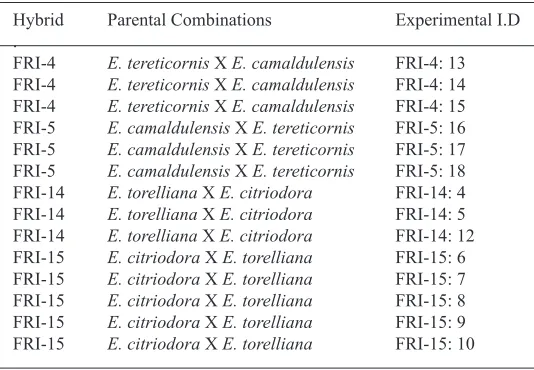
as well as spontaneous inter-specific F1 hybrids as well as the parental combinations of Eucalyptus, situated in the campus of Forest Research Institute, Dehradun, India (altitude 610, latitude 30 N and longitude 78 E and annual rain fall 216 cm). These hybrids were produced in 1986 based on the crossability pattern in the genus Eucalyptus. The combinations of the species involved in crossing are given in Table 1. Foliage samples from the three genotypes each of FRI-4, FRI-5, FRI-14 and FRI-15 along with their parental combinations
were used to analyze the RAPD amplification. The
selection of the genotypes was based on the vigour
of the hybrids reflecting the best height and mass.
Methods
Extraction of total DNA
Genomic DNA was extracted from young needles using the protocol described by Doyle and Doyle (1987)7 with slight modification. Leaf
material (250 mg) was ground using a mortar and
pestle to fine powder by liquid N2 and suspended in
1 ml of extraction buffer (2% CTAB, 1.42 M NaCl, 20 mM EDTA, 100 mM Tris HCl, pH 8.0, 2% w/v PVP40, 5 mM ascorbic acid, and freshly added 3 µl
b-mercaptoethanol) added to 2 ml centrifuge tubes. The mixture was incubated at 60°C for about 30 min. Following incubation, 500 µl of chloroform: isoamyl alcohol (24: 1) was added, mixed to form an emulsion and centrifuged at 14,000 rpm for 10 min. The top aqueous phase was taken out in a fresh autoclaved centrifuge tube, and DNA was precipitated by addition of equal volume of cold iso-propanol. The precipitated DNA was precipitated by centrifugation at 10,000 rpm for 10 min. The DNA pellet was washed with wash buffer (76% ethanol, 10 mM ammonium acetate) and dried. The pellet was further treated with 5 µl RNase A (10 mg/l). The pellet was incubated and washed with cold 70% ethanol, dried and resuspended in 100 µl of TE buffer (10 mM Tris HCl; 1 mM EDTA; pH 8.0). The isolated DNA was
quantified and all the samples were brought down
to a uniform concentration of 5 ng/µl to be used as template DNA for Polymerase Chain reaction.
Determining the concentration of DNA
the samples was determined by measuring the absorbance ratio at 260/ 280 nm using Eppendroff Bio Photometer. Making different dilutions of DNA solution made the optimum concentrations of DNA for RAPD analysis.
RAPD Analysis
Primer Sequences Used for PCR Amplification
A total of 20 decamer primers were used for PCR amplification of F1 hybrids and their parental combinations. The primer sequences used
for the amplification are shown in Table 2.
Optimization of PCR components
Amplification was checked using 1 mg,
1.5 mg, 2 mg, 3mg and 4mg concentrations of DNA samples. The concentration was optimized in order
to get the maximum product yield of the amplified
intergenic spacer.
PCR Amplification conditions
PCR amplification was carried out in 25
ml of reaction mixture in PCR tubes, in MyCycler Thermalcycler (Bio Rad). The reaction mixture contained 2.5 mM of each dNTP (Sigma), 1X Taq
polymerase buffer (Fermentas), 25 mM MgCl2, 25 mm primer, 5 ng DNA template and 1 unit of
Taq DNA polymerase (Fermentas). The reaction
was overlaid with mineral oil and amplification was performed. The amplification was performed
by initial denaturation of template DNA at 94°C for 1min followed by 41 cycles of 1min, 94°C;
1min, 34°C; 0.45 min, 72°C and final cycle having the final extension time of 8min at 72°C, using
the fastest possible transmission between each temperature.
Electrophoresis
Amplified fragments generated following
RADP amplification were separated on 1.5% agarose gel using 1X TBE buffer and ethidium bromide at the concentration of 5mg/ml. The gel was visualized under UV light using UVP Gel Documentation system.
Analysis
A total of 20 primers were used to get clear reproducible results used in the study. All bands scored were scored as present or absent for each DNA sample and the molecular weight was estimated using Labworks 4.5 software. Further the RAPD profiles were analyzed for the F1
hybrids and their parental combinations to confirm the hybridity and to detect the genotype specific markers. Estimating the amplification of parental
loci in the F1 hybrids did the comparison of parent and F1 genotypes.
RESULTS AND DISCUSSION
Out of the 17 decamer primers used for the RAPD analysis, only 6 primers viz. M-188, M-119, M-31, M-33, M-122 and M-191 yielded the
best amplification products. The amplified products
were scored on the basis of presence or absence of bands. Consistent and reproducible results were considered for screening. Each RAPD band was considered as an independent character/locus in terms of base pair length. RAPD banding pattern among parents and their F1 hybrid genotypes was compared to assess the hybridity at the DNA level.
Table 1. Details of Eucalyptus F1 hybrids involved in the study
Hybrid Parental Combinations Experimental I.D .
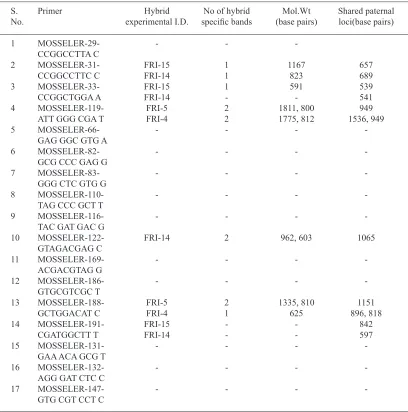
Table 2. Sequence, hybrid specific and male specific PCR products amplification of RAPD primers.
S. Primer Hybrid No of hybrid Mol.Wt Shared paternal No. experimental I.D. specific bands (base pairs) loci(base pairs)
1 MOSSELER-29- - - -
CCGGCCTTA C
2 MOSSELER-31- FRI-15 1 1167 657
CCGGCCTTC C FRI-14 1 823 689
3 MOSSELER-33- FRI-15 1 591 539
CCGGCTGGA A FRI-14 - - 541
4 MOSSELER-119- FRI-5 2 1811, 800 949
ATT GGG CGA T FRI-4 2 1775, 812 1536, 949
5 MOSSELER-66- - - -
-GAG GGC GTG A
6 MOSSELER-82- - - -
-GCG CCC GAG G
7 MOSSELER-83- - - -
-GGG CTC GTG G
8 MOSSELER-110- - - -
-TAG CCC GCT T
9 MOSSELER-116- - - -
-TAC GAT GAC G
10 MOSSELER-122- FRI-14 2 962, 603 1065
GTAGACGAG C
11 MOSSELER-169- - - -
-ACGACGTAG G
12 MOSSELER-186- - - -
-GTGCGTCGC T
13 MOSSELER-188- FRI-5 2 1335, 810 1151
GCTGGACAT C FRI-4 1 625 896, 818
14 MOSSELER-191- FRI-15 - - 842
CGATGGCTT T FRI-14 - - 597
15 MOSSELER-131- - - -
-GAA ACA GCG T
16 MOSSELER-132- - - -
-AGG GAT CTC C
17 MOSSELER-147- - - -
-GTG CGT CCT C
The RAPD profile generated through agarose gel electrophoresis was used to determine the
male specific (pollen donor) band sharing in the
F1 hybrids, maternal loci in F1 hybrids and in the
identification of reproducible F1 hybrid specific
loci. The results showed that these primers were useful in generating at least one single band that was shared between the male parent (i.e. pollen donor in hybridization) and offspring. Though we observed considerable difference in the intensity of the bands, such qualitative differences were not considered in the present data analysis. Using 6 polymorphic primers a total of 159 and 78
bands were amplified in all F1 genotypes and four parental species respectively. Table 3 shows the
locus of the pollen donor that has been amplified
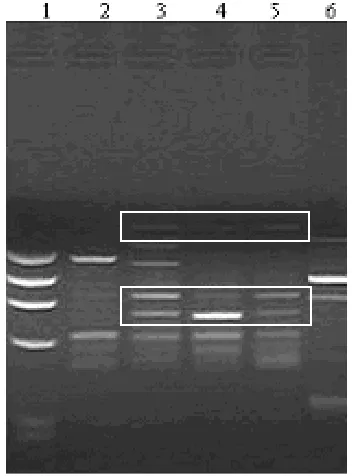
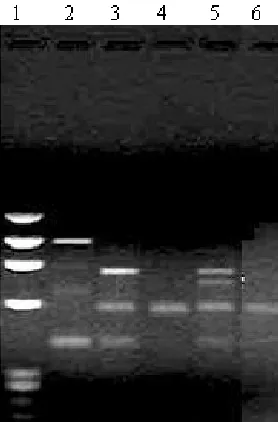
in the F1 genotypes. Out of the 6 polymorphic primers, the primer M-122 was found to be the most polymorphic, generating 24 bands in three genotypes of FRI-14 and 15 in the parental combinations involved in its hybridization Figure 1 and 2.
fertilization8,9 or might be the result of crossing over
during meiosis that may result in the loss of priming
sites and thus amplification was seen in parents but
not in the hybrids10. Eucalyptus being the highly
open cross-pollinated and heterozygous species can be expected for high degree of segregation of characters in the progenies. Therefore it is expected
to find all bands from each parent not present
in the hybrid of Eucalyptus species. The RAPD
fingerprints generated by polymorphic primers confirm the hybridity in the Eucalyptus species
(Table 2). The similar studies have been reported by various other workers mentioning the usefulness
of RAPD profiling in the identification, registration
Table 3. Total number of amplification products using six polymorphic primers in parental species and F1 hybrids
Hybrid-Primer No. of bands No. of bands No. of combination (hybrids) (parental species) polymorphic loci
FRI-4-M-188 24 9 2
FRI-4-M-119 19 7 1
FRI-5-M-188 15 7 2
FRI-4-M-119 16 6 4
FRI-14-M-31 15 6
-FRI-14-M-33 5 6
-FRI-14-M-122 24 15
-FRI-14-M-191 8 4 1
FRI-15-M-31 14 6 3
FRI-15-M-33 10 7 1
FRI-15-M-119 9 5 1
Fig. 1. RAPD profile of FRI-5 genotypes along with their parental combinations as amplified with M-119 primer. Lane: 1- DNA Ladder (Phi X174 / Hae III
digest), Lane: 2- E. camaldulensis (seed parent), Lane: 3- FRI-5: 16, Lane: 4- FRI-5: 17, Lane: 5- FRI-5: 17, Lane: 6- E. tereticornis (pollen donor)
Fig. 2. RAPD profile of FRI-5 genotypes along with their parental combinations as amplified with M-188 primer. Lane: 1- DNA Ladder (Phi X174 / Hae III
digest), Lane: 2- E. tereticornis (pollen donor) Lane: 3- FRI-5: 16, Lane: 4- FRI-5: 17, Lane: 5- FRI-5: 18,
and protection of plant species11-13. Molecular
characterization of the Eucalyptus F1 hybrids using
RAPD markers has also been reported by Masako
et al. (1997)14 in analysis of E. globus, E. citriodora
and E. gunni and in other plants also15.
The RAPD fingerprinting of the F1 hybrids showed few bands that were specific for the F1 hybrids and were not amplified in the parental
combinations used. In few combinations as FRI-4,
FRI-5 and FRI-14 there were two hybrid specific loci amplified using M-119, M-118 and M-122
respectively, while in the rest combinations only
one hybrid specific loci per primer was amplified
(Table 3). In all the cases there was no overlapping of the base-pair loci within the hybrid crosses or within the primers used. Therefore the information obtained through characterization using RAPD
will be useful in the identification of hybrid for
the above-mentioned species at nursery stage. In contrast to the molecular markers, qualitative pattern of isoenzymes was also used for the
confirmation of the hybridity in the said hybrids
but was not found suitable as it generated very low level of polymorphism and more maternal inheritance was observed for the peroxidase loci. But in present study, it was evident that the
Fig. 3. RAPD profile of FRI-14 genotypes along with their parental combinations as amplified with M-122 primer. Lane: 1- E. torelliana (seed parent), Lane: 2- FRI-14: 4, Lane: 3- FRI-14: 5, Lane: 4- FRI-14: 12,
Lane: 5- E. citriodora (pollen donor), Lane: 6- DNA Ladder (Phi X174 / Hae III digest)
Fig. 4. RAPD profile of FRI-14 genotypes along with their parental combinations as amplified with M-191
primer. Lane: 1- DNA Ladder (Phi X174 / Hae III
digest), Lane: 2- E. torelliana (seed parent), Lane: 3- FRI-14: 4, Lane: 4- FRI-14: 5, Lane: 5- FRI-14: 12,
Lane: 6- E. citriodora (pollen donor)
percentage of shared loci was more of seed parent but the effect was minimized due high level of polymorphism and dominant expression of RAPD markers.
CONCLUSION
This is evident from the results of present study that this technique can be adopted for large scale screening of hybrids in heterogeneous systems like Eucalyptus and other open pollinated forest tree species having a long rotation period which is in accordance with the previous studies16. Also, confirmation of the hybrids through markers
diagnostic of male parent and production of hybrid
specific markers could be practical, economical and
time saving in case of forest tree species.
ACKNOWLEDGEMENTS
REFERENCES
1. Mergen, F., Lester, D.T., Furnival, G.M., Burley, J. Discriminant analysis of Eucalyptus cinera X
Eucalyptus maculosa hybrids. Silv. Geneti., 1966; 15:148-154.
2. Byrne, M., Murrell, J.C., Allen, B., Moran, G.F. An integrated genetic linkage map for Eucalyptus using RFLP, RAPD and isozyme markers. Theo. and Appl. Gene., 1995; 91: 869-875.
3. Welsh, J., Mcclelland, M. Fingerprinting genome using PCR with arbitrary primers. Nucle. Acid Res., 1990; 18: 7213-7215.
4. Cheliak, W.M., Rogers, D.L. Integrating biotechnology into tree improvement programs.
Can. J. Forestry Res., 1990; 20: 452- 463. 5. Kurane, J., Shinde, V., Harsulkar, A. Application
of ISSR marker in pharmacognosy: Current update. Pharma. Rev., 2009; 3(6):216- 228. 6. Sheng, C.H., Chu, C.T., Chiann, S.S. Genetic
analysis of Chrysanthemum hybrids based on RAPD molecular markers. Bot. Bull. Acad. Sin.,
2000; 41: 257-262.
7. Doyle, J.J., Doyle, J.L. A rapid DNA isolation procedure from small quantities of fresh leaf tissue. Phytochem. Bull., 1987; 19: 11-5. 8. Darnell, J.E., Baltimore, D., Lodish, I.I.F.
Molecular and cellular Biology, Scientific American Books., New York, 1990; pp 56-159. 9. Huchett, B.I., Botha, F.C. Stability and potential use of RAPD markers in sugarcane genealogy.
Euphytica.,1995;86:117-125.
10. Smith, J.F., Burke, C.C., Wangner, W.L. Interspecific hybridization in natural populations
of cyrtandra (Gesneriaceae) on the Hawaiian Islands: Evidence from RAPD markers. Plant System. Evol., 1996; 200: 61-77.
11. George, J.K., Ganga, G., Varme, R.S., Sasikumar, B., Saji, V.K. Identification of hybrids in black pepper (Piper nigram L.) using male parent-specific RAPD markers. Current Science., 2005; 88(2): 216-218.
12. Wagner, D.B. Nuclear, Chloroplast and mitochondrial DNA polymorphism as biochemical markers in population genetics analysis of forest trees. New Forest., 1992;6: 373-390.
13. Lin, J., Wang, X.C., Chang, Y.H., Fang, J.G. Development of a novel and efficient strategy for practical identification of Pyrus spp (Rosaceae) cultivars using RAPD fingerprints. Gen. and Mole. Res., 2011; 10: 932-942.
14. Masako, I., Eiji, K., Manabu, M., et al. Random amplified ploymorphic DNA observed in Eucalyptus b PCR study with random primers. Nucleic Acid Symposium Series No. 37., Tokyo, Japan, 1997;pp.167-168.
15. Kaul, K., Karthigeyan, S., Dhyani, D., Kaur, N., Sharma, R.K., Ahuja, P.S. Morphological and molecular analyses of Rosa damascene õ R. bourboniana interspeciûc hybrids. Scie. Horti.,2009;122: 258-263.