Review Article
Health workforce in India: opportunities and challenges
Kesavan Sreekantan Nair*
INTRODUCTION
Adequate availability of appropriate health workforce is a necessary pre-requisite for achieving desired health outcomes in any country. World Health Organization (WHO) defines health workforce as “the stock of all individuals engaged in the promotion, protection or improvement of population health”. This includes both public and private sectors and different domains of health systems, such as curative and preventive care, non-personal public health interventions, disease prevention, health promotion services, research, management and support services.1 Available estimates show that density of health workforce in India is much below the norms of 22.8 skilled professionals per 10000 population as recommended by the WHO.2,3 In developing countries like India the shortage of workforce in health system is a reality. Many countries face the problems of composition and its distribution across various geographical areas and population groups.
The last decade witnessed a significant change in the size and composition of health workforce in India. The health sector reforms undertaken during the decade, particularly with the launch of the National Rural Health Mission (NRHM), subsequently renamed as the National Health Mission (NHM) have emphasized on strengthening health workforce in the government health system.4,5 Under the NRHM, both central and state governments initiated strategies towards appointment of doctors in public health facilities in the rural areas. In order to bridge the gap in health workforce in rural areas, most state governments made contractual arrangements with private health sector and non-governmental organizations (NGOs). The decade also witnessed a rapid increase in the medical, nursing and paramedical institutions as well as admission capacity in various disciplines.
Health workforce in India comprise of a range of personnel who delivers health services in various specialties’ of medicines which broadly include allopathic doctors, AYUSH doctors (comprising ABSTRACT
Health system reforms in India during the past decade yielded an impressive growth of medical, dental and nursing education opportunities, but health workforce density remains low in comparison to the World Health Organization (WHO) norms. Apart from shortage, retaining qualified health workforce in the rural and underserved areas remains a huge challenge. This crisis is likely to persist until and unless health system addresses the fundamental requirements of health workers as envisaged in health policies. Concerted attention and long term political commitments are required to overcome health system barriers to achieve rural recruitment and retention across various cadres in states. As the major share of health workforce belongs to the private sector, their resources need to be harnessed to meet health system goals through partnerships and collaborations. There is an urgent need for better regulation and enforcement of standards in medical education and delivery of health services across the public and private sectors.
Keywords: Health workforce, Public health sector, Private health sector, Medical education
Department of Health Administration, College of Public Health and Health Informatics, Qassim University, Saudi Arabia
Received: 09 August 2019
Accepted: 10 September 2019
*Correspondence:
Dr. Kesavan Sreekantan Nair, E-mail: [email protected]
Copyright: © the author(s), publisher and licensee Medip Academy. This is an open-access article distributed under the terms of the Creative Commons Attribution Non-Commercial License, which permits unrestricted non-commercial use, distribution, and reproduction in any medium, provided the original work is properly cited.
Ayurveda, Yoga, Unani, Siddha and Homeopathy), dentists, nurses, auxillary midwives, pharmacists, technicians and allied health personnel, community health workers, yoga and naturopathy, registered medical practitioners (RMPs), traditional medical practitioners and healers. Allopathic system consists of physicians, surgeons, specialists and medical graduates with a bachelor’s or postgraduate specialist diploma or degree, who registered with the Medical Council of India (MCI). Dentists hold a bachelor’s or postgraduate degree or specialist diplomas are registered with the Dental Council of India (DCI). AYUSH doctors who are an integral part of health workforce hold bachelor or postgraduate degree in AYUSH and are registered with the Central Council of Indian Medicine or the Central Council of Homoeopathy, and are authorized to dispense medicines and conduct surgery using their respective fields of specialization.2,3,6 RMPs act as the first point of contact for treatment of a significant proportion of population living in rural and far flung areas.7 Nurses have a diploma in general nursing and midwifery or a bachelor’s degree or a postgraduate degree registered with the Indian Nursing Council (INC). Another group of health workforce consists of auxiliary nurses and midwives (ANMs), who work as subordinates to the main nurse, possess a diploma in auxiliary nurse midwifery. Also there are also community health workers who after 10 years of formal education and undergo a short training course.7 Other categories include physiotherapists, diagnostic and other technicians with varied levels of diploma and certificate perform vital activities as healthcare workers.
METHODS
This paper is based on review of the latest information available through government documents; websites and studies related of the health workforce in India. Data on registered health professionals were collected from the websites of MCI, DCI, INC, Pharmacy Council of India, Indian Association of Physiotherapists, and the Ministry of Health and Family Welfare (MOHFW). Pertinently, these data suffer from various deficiencies like duplication of registrations, delisting of inactive
workforce or those not available for work due to migration, disability, death etc. The existing publications of MOHFW provides number of major categories of health workforce namely, doctors, surgeons, AYUSH doctors, dentist, nurses, pharmacists and community health workers employed in the public health system. However, data related to health workforce in the private sector is seldom available in the public domain. Two major sources of information on health workforce actively employed in the health sector are available through census of India and the surveys of National Sample Survey Organization (NSSO). These sources classify the workforce by the national industrial classification (NIC) and national classification of occupation (NCO) and are updated with international systems. The estimates of health workforce based on these sources undertaken by recent studies have been used extensively.
HEALTH WORKFORCE IN INDIA: CURRENT STATUS
Size and composition
Currently there are no reliable and systematic information on the size and composition of health workforce in India and prevailing estimates were based on census of India and surveys of NSSO. Existing studies have shown a significant change in the size and composition of health workforce in India in the last decade. Motkuri and Mishra (2018) estimated the size of workforce in India based on NIC of workers for the past three census years.8 According to their estimate there were 1.9 million workers engaged in health sector in 1991 that has increased to 2.35 million in 2001 and 4.6 million in 2011 (Table 1). The addition to total workforce in health sector was only 0.45 million in 2001, but there was rapid increase in health workforce during 2001-2011 which might be due to declining population growth in the decade.
Table 1: Health workforce in India as per census 1991, 2001 and 2011.
Location Population (in millions) Health workforce (in millions) Health workers per 1000 population
1991 2001 2011 1991 2001 2011 1991 2001 2011
All 846.3 1028.6 1210.9 1.9 2.35 4.6 2.25 2.28 3.80
Rural 628.7 742.5 833.7 0.76 0.9 2.11 1.21 1.21 2.53
Urban 217.6 286.1 377.1 1.14 1.45 2.49 5.24 5.08 6.60 Source: Adopted from Motkuri and Mishra (2018).
Using Census 2001 and the NSSO data 2004 -2005, Rao et al (2012) estimated that India had nearly 2.2 million heath workers in 2005.6 Another estimate by Rao et al (2016) based on post reform data of NSSO (2011–2012) showed there were 2.5 million health workers in India.9 It was found that 56.4% of all health workforce were unqualified which included 42.3% of allopathic physicians, 27.5% of dentists, 56% of AYUSH
Table 2: Stock of health workforce in India by broad categories -based on NSSO data 2016.
Category Estimated number Health workforce registered up to 2017
% of estimated to registered Allopathic doctors 770277 1023413 75.26
Dental practice 95959 197734 48.53
AYUSH system 530919 771468# 68.82
Physiotherapy, diagnosis and others 86508 60000* 144.18
Nursing and midwife 1317669 1980536 66.53
Pharmacists 214744 907132 23.67
Health associate professionals 811744 NA NA
ANM NA 811279 NA
All health workforce 3827820 5751562 66.55
Source: Second column estimate is based on NSSO data by Karan A et al (2018), third column data on registered health workforce taken from publications and records of respective associations and the Ministry of Health & Family Welfare, Government of India. *figure for 2015. #Out of 7,71,468 AYUSH practitioners in 2016, there were 4,19,217 ayurvedic doctors,48,196 unani practitioners, 8528 siddha, 2220 naturopathy, and 2,93,307 homeopathy practioners.
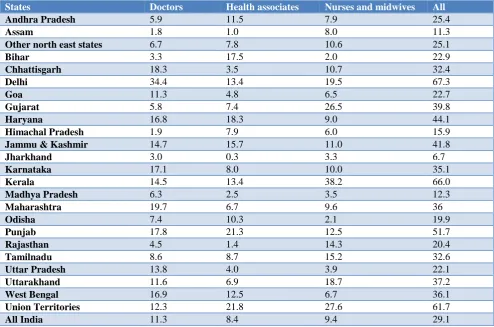
Table 3: Health worker density per 10000 population in states–estimates based on NSSO 2011-2012.
States Doctors Health associates Nurses and midwives All
Andhra Pradesh 5.9 11.5 7.9 25.4
Assam 1.8 1.0 8.0 11.3
Other north east states 6.7 7.8 10.6 25.1
Bihar 3.3 17.5 2.0 22.9
Chhattisgarh 18.3 3.5 10.7 32.4
Delhi 34.4 13.4 19.5 67.3
Goa 11.3 4.8 6.5 22.7
Gujarat 5.8 7.4 26.5 39.8
Haryana 16.8 18.3 9.0 44.1
Himachal Pradesh 1.9 7.9 6.0 15.9
Jammu & Kashmir 14.7 15.7 11.0 41.8
Jharkhand 3.0 0.3 3.3 6.7
Karnataka 17.1 8.0 10.0 35.1
Kerala 14.5 13.4 38.2 66.0
Madhya Pradesh 6.3 2.5 3.5 12.3
Maharashtra 19.7 6.7 9.6 36
Odisha 7.4 10.3 2.1 19.9
Punjab 17.8 21.3 12.5 51.7
Rajasthan 4.5 1.4 14.3 20.4
Tamilnadu 8.6 8.7 15.2 32.6
Uttar Pradesh 13.8 4.0 3.9 22.1
Uttarakhand 11.6 6.9 18.7 37.2
West Bengal 16.9 12.5 6.7 36.1
Union Territories 12.3 21.8 27.6 61.7
All India 11.3 8.4 9.4 29.1
Source: Estimates based on NSSO data 2011-12 by Karan A et al (2019).
Density of health workforce
Rao et al (2012) estimated India’s health workforce density of 20 workers per 10000 populations in 2005.6 The study based on NSSO (2011–2012) data estimated the density of 20.9 workers per 10000 population in India.9 After adjusting for the right qualifications, density of health workforce reduced to 9.1 workers per 10000 population. Karan et al (2019) in their broad estimate of
Regional variations
Regional distribution of health workforce reveals a huge variation across various states in India. Table 3 shows the number of health workers available per 1000 population based on NSSO data 2011-12 in different states in India. The estimates show that the density of doctors including dental and AYUSH practitioners per 10,000 population is much lower in states like Assam, Bihar, Himachal Pradesh Jharkhand and Rajasthan (Table 3). While Delhi recorded highest density of doctors (34), Kerala has recorded highest density of nurses and midwife (38).
Public-private distribution
Distribution of health workforce across the country shows that a huge share of them is employed in the private sector. The share of private sector among
allopathic physicians, AYUSH and dental practitioners is huge in comparison to nurses and other categories. In contrast to public sector, India’s private sector consists of wide range of service providers ranging from individual practitioners to for-profit hospitals, not-for-profit hospitals, non-government organizations, charitable trust institutions.10,11 The estimate based on NSSO data for 2016 shows almost 53% of health workforce in the private sector is self-employed. More than 80% of doctors and 70% of nurses and midwives were employed in the private sector (Figure 1).
Rural-urban distribution
There is disproportionately higher concentration of health work force in urban areas. While rural areas constitute about 71% of the population in 2016, only 36% of health workforce was available in rural areas (Figure 2).
Figure 1: Distribution of health workforce between public and private sectors.
Figure 2: Distribution of health workforce between rural and urban areas.
0 20 40 60 80 100
Allopathic Physician & Surgeon AYUSH
Dental Other Specialists Health Assistants Nurses & Widwives
Total
19.6 6.4
8.3 23.7 22.1
44.8 27.6
80.4 93.6
91.7 76.3 77.9
55.2 72.4
Public Private
0 10 20 30 40 50 60 70 80 90 100
Allopathic Physician & Surgeon Dental AYUSH Health Associates & Assistants Nurses & Widwives Physiotherpy, diagnostic and others Pharmacists All health workers
34.1 3.2
35.8 45.3 33 14.7
41.1 36.3
65.9 96.8
64.2 54.7 67 85.3
58.9 63.7
HEALTH WORKFORCE SUPPLY
Last decade witnessed a steady expansion in medical and dental education in India. Presently India has 476 medical colleges, 313 dental colleges for bachelor and 249 colleges for masters of dental surgery (Figure 3).12 Over the last two and a half decades, students’ admissions to medical colleges increased from 22438 in 1991 to 52,646 in 2017.12 Admissions in dental colleges’ increased from 3100 to 33293 during the same period. As far as AYUSH systems are concerned there are 622 undergraduate colleges and 201 post graduate colleges with the
admission capacity of 40151 and 5486 respectively. The number of recognized nursing colleges offering the bachelor degree in nursing has increased from 165 in 2004 to 1936 in 2017 with the admission capacity of 96475. There are 643 colleges providing admission to post graduate courses in nursing, 775 colleges for post basic degree nursing and 292 colleges for post basic diplomas and all these together provided admission to 41163 students in 2017. Besides there are 777 pharmacy institutions in the country imparting diploma to 46795 students.
Figure 3: Growth of medical and dental colleges in India post NRHM period.
Figure 4: Admission capacity in medical and dental institutions–post NRHM period.
One of the major changes in the medical education has been a notable increase in the private sector’s involvement in medical education. The number of private
medical colleges recognized or approved by the MCI has increased from 30% (43 out of 144 colleges) in 1991 to 54.4% (259 out of 476 colleges) in 2017. Due to
262 266 289 300 314
356 381 381 398
412
462 476
238 267
282 290 288
291 297 301
305 308
309 313
0 100 200 300 400 500 600 700 800 900
2006-07 2007-08 2008-09 2009-10 2010-11 2011-12 2012-13 2013-14 2014-15 2015-16 2016-17 2017-18
No.of Medical Colleges No. of Dental Colleges
25058
30290 32815 34084 29263
38210
43576
48567
45456 48855
56748 52646
18120
20910
22650 23570
23330
23870
24640
25320 26240 26530
26790 27060
1764
2069
2365 2643 2833
3418
4594
5029 5505 5866
6019
6233
0 10000 20000 30000 40000 50000 60000 70000 80000 90000 100000
2006-07 2007-08 2008-09 2009-10 2010-11 2011-12 2012-13 2013-14 2014-15 2015-16 2016-17 2017-18
increasing demand for nurses nationally and internationally, India has witnessed a dramatic proliferation of nursing education institutions in the recent years. Almost 91% of nurses’ education (ANM, GNM and BSc) is being delivered in the private sector.
The post NRHM era has seen major advances in expansion of medical education in India. This include amendment of regulations by MCI, revising norms for setting up of medical colleges and increasing number of PG seats, increased funding of state government medical colleges, establishment of AIIMS-like institutions and strengthening of state government medical colleges which resulted in increase in admission capacity (Figure 4). In order to strengthen nursing education, a number of
initiatives were taken to upgrade nursing schools attached to medical colleges into nursing colleges, improved capacities and a faculty development program for nursing colleges, revision of norms for setting up nursing schools and colleges etc. Despite fast expansion in educational institutions in the country, there are gross deficiencies in medical institutions and admission capacity in different states (Table 4). For instance, larger states of Uttar Pradesh, Bihar, Rajasthan and West Bengal together account for 44.3% of population (census 2011) have 21.73% of medical admissions whereas five south Indian states like Andhra Pradesh, Telangana, Karnataka, Kerala and Tamil Nadu which account for 20.77% of population together has 42.89% of all medical admissions in the country.
Table 4: State-wise distribution of medical colleges by ownership and admission capacity.
State/union territory No. of medical colleges
Government owned
Admission capacity
Share of
population (2011)
Share of medical seats A & N Islands 01 01 100 0.03 0.16
Andhra Pradesh 31 12 4450 4.07 7.28
Assam 06 05 726 2.58 1.18
Bihar 13 10 1350 8.58 2.21
Chandigarh 01 01 100 0.09 0.16
Chhattisgarh 10 07 950 2.11 1.56
Delhi 09 07 1050 1.38 1.72
Goa 01 01 150 0.12 0.24
Gujarat 24 09 3830 4.99 6.27
Haryana 11 05 1000 2.09 1.63
Himachal Pradesh 06 05 650 0.57 1.06
Jammu and Kashmir 04 03 500 1.04 0.82
Jharkhand 03 03 300 2.72 0.49
Karnataka 57 18 8695 5.05 14.24
Kerala 34 10 3450 2.76 5.65
Madhya Pradesh 19 07 2100 6.0 3.44
Maharashtra 50 22 6970 9.24 11.41
Manipur 02 02 200 0.22 0.33
Meghalaya 01 01 50 0.24 0.08
Odisha 10 06 1350 3.47 2.21
Puduchery 09 02 1400 0.10 2.29
Punjab 08 03 1125 2.29 1.84
Rajasthan 17 09 2400 5.67 3.92
Sikkim 01 0 50 0.05 0.08
Tamil Nadu 49 24 6400 5.96 10.48
Telangana 25 07 3200 2.93 5.24
Tripura 02 01 200 0.30 0.33
Uttar Pradesh 47 17 5124 16.49 8.39
Uttarakhand 07 04 900 0.84 1.47
West Bengal 18 15 2300 7.55 3.77
All India 476 217 61070 100
DISCUSSION
Despite manifold increase in supply of health workforce, India faces a huge shortage of health workforce particularly doctors and specialist in the rural areas of many states which is evident from the vacancy positions
values of service, professional interests, co-location with spouses, and availability of education for children are factors at the individual level that influence health-worker retention in rural areas. Poor financial remuneration, lack of good clinical infrastructure in rural areas, and organizational policies and management are some of the key challenges in rural retention of health workers. Studies have established that decision to join rural health service were strongly associated with rural background and attachment with community.16 Yet, these decisions were challenged by factors such as poor working and living conditions in rural areas, low salary and incentives, and lack of professional growth and appreciation. In order to attract and retain health workforce in rural health systems many initiatives have been introduced by states. Preference in postgraduate admission for those serving in rural areas has been incorporated in the rules of a large number of states. This seems to be a very effective method of attracting doctors to rural areas for a fixed period as PG admission has been a priority for many young doctors. Increased remuneration to doctors willing to serve in rural areas has also been a principle followed in states with good results. Another initiative was identifying health facilities which are located at difficult or inaccessible places in every state and is introducing incentives for staff working there. The continuous efforts at skill development among the ASHA’s and systems of getting them priority admission to ANM and nursing schools will be able to secure resident health workers in remote areas. New courses like the 18-week emergency obstetric and life-saving anesthetist skills and training programs to skill MBBS doctors with select specialist skills are innovative solutions to find specialist skills for rural areas.
There are criticisms against the present medical education system from various corners with respect to imparting knowledge, acquisition of professionals’ skills, attitudes, and ethics and value.18-22 Most part of teaching and training are at the tertiary care setting without exposure to rural and community settings. Quality of medical education is influenced many factors such as its setting, quality of the students, expertise of faculty and teaching methods, course curriculum, evaluation systems, teaching learning environment and the management of the institution.18-20 The present education system is plagued with issues like low student–teacher ratios, inappropriate pedagogy, obsolete and irrelevant syllabi, inadequate library and online resources, substandard teaching faculty, lack of periodic appraisal of faculty and declining academic autonomy. Further, lack of skill and competence based training and inadequate emphasis on critical thinking has resulted in producing undergraduates who are incapable of delivering appropriate care. Commercialization of medical education and mushrooming of for-profit medical education institutions have further added to the complexities. Nevertheless, the government’s effort to medical education reforms including initiatives to teach within the community settings, reservations for marginalized communities and
harnessing of local and rural talent, changes to the medical curriculum, formal training of teachers, improvements in teaching– learning methods, modification of the examination systems, reorganization of universities, compulsory rural service, etc., have not produced any significant improvements in the health system,
Privatization of medical education helped to overcome the inadequacies of the training capacity in the public sector, but it has also raised issues related to the quality of medical education. With expansion of medical educational infrastructures, consistent increase in health workforce production, vacancies in government health facilities in rural areas remain unfilled. There are issues related to gross inequality in the distribution of the educational institutions in few states as these institutions are primarily clustered in few states where health workforce shortages are relatively less. There is also mismatch between production of health workforce and distribution in public health facilities within states which suggests that urgent need to adopt sustained and innovative strategies to address the current health-workforce crisis.
Migration of health workforce also depletes the available stock as well as availability of teaching staff which further hinders the production of medical professionals.23,24 India has been the biggest exporter of physicians, accounting for about 4.9% of American and nearly 10 % of British Physicians. Nearly 54% of medical students who graduated from All India Institute of Medical Sciences (AIIMS) during 1989-2000 now reside outside India.24 Though considerable information exists on the number of doctors emigrating from India to other countries, adequate information is not available on quality of those medical professionals who migrate, and compared to those who remain.
in rural areas. Strategies such as task shifting, multi skilling, training, and development of multidisciplinary team should be adopted to meet the holistic needs of population. Initiation of courses in areas of public health and rural health services should be conducted on priority basis. Finally implementation of continuing medical education program, computer networking of training institutions, promotion of IT-based e-health, tele-consultancy, tele-radiology and tele-pathology should be promoted.
CONCLUSION
Post NRHM witnessed a rapid increase in number of medical institutions and admission capacities across states. Existing estimates suggest that India does not meet the standard requirements of skilled workforce in the health system. There has been a severe shortage of health workforce in rural areas and challenges remain in bringing qualified human resources to rural, remote and underserved areas. Apart from taking efforts to increase numerical availability of human resources in rural areas across states with poor health outcomes, it is imminent to strengthen competencies of these workers at all levels.
Funding: No funding sources Conflict of interest: None declared Ethical approval: Not required
REFERENCES
1. World Health Organization. 2006. Working together for health–World Health Report 2006, in World Health Report. Geneva, Switzerland: World Health Organization.
2. Anand S, Fan V. The health workforce in India. Geneva: World Health Organization; 2016. Human Resources for Health Observer Series No.16. Available at: http://www. who. int/ hrh/ resources/ 16058health_ workforce_ India_ pdf? ua=1. Accessed on 17 March 2019.
3. Rao M, Rao KD, Kumar AKS, Chatterjee M, Sundararaman T. Human resources for health in India. Lancet. 2011;377:587–98.
4. Ministry of Health and Family Welfare. National Rural Health Mission, Ministry of Health and Family Welfare, Government of India: New Delhi, 2005.
5. Ministry of Health and Family Welfare. National Health Policy. Ministry of Health and Family Welfare, Government of India: New Delhi, 2017. 6. Rao KD, Bhatnagar A, Berman P. So many, yet
few: Human resources for health in India. Hum Resour Health. 2012;10:19.
7. Karan A, Negandhi H, Nair R, Sharma A, Tiwari R, Zodpey S. Size, composition and distribution of human resource for health in India: new estimates using National Sample Survey and Registry data. BMJ Open. 2019;9:e025979.
8. Motkuri V, Mishra US. Human Resources in Healthcare and Health Outcomes in India MPRA Paper No. 85217 Available at: https://mpra.ub.uni-muenchen.de/85217. Accessed on 17 March 2019. 9. Rao KD, Shahrawat R, Bhatnagar A. Composition
and distribution of the health workforce in India: estimates based on data from the National Sample Survey. WHO South East Asia J Public Health. 2016;5:133–40.
10. National commission on Macroeconomics and Health. Report of The National commission on Macroeconomics and Health. New Delhi: Ministry of Health and Family Welfare, Government of India; 2005.
11. Mackintosh M, Channon A, Karan A. Selvaraj S, Cavagnero E, Zhao H. What is the private sector? Understanding private provision in the health systems of low-income and middle-income countries. Lancet. 2016;388:596–605.
12. Government of India. National Health Profile 2017. Ministry of Health and Family Welfare; New Delhi. 2017
13. Ministry of Health and Family Welfare. Rural Health Statistics 2018. Health Management Information System. Government of India; 2018. 14. Hazarika I. Health workforce in India: assessment of
availability, production and distribution. WHO South East Asia J Public Health. 2013;2:106–12. 15. Goel S, Angeli F, Bhatnagar N. Retaining health
workforce in rural and underserved areas of India: What works and what doesn't? A critical interpretative synthesis. National Med J India. 2016; 29(4):212-8.
16. Rajbahanghsi PR, Nambiar D, Choudhury N. Rural recruitment and retention of health workers across cadres and types of contract in north-east India: A qualitative study. South East Asia J Public Health. 2017;6(2):51-9.
17. World Health Organization. Increasing access to health workers in remote and rural areas through improved retention-global policy recommendations, WHO. 2010; Available at: http://www.searo.who. int/nepal/mediacentre/2010_increasing_access_to_h ealth_workers_in_remote_and_rural_areas.pdf. Accessed on 17 March 2019.
18. Jacob KS. Politics of medical education in India. Economic and Political Weekly. 2016;51(12):12-5. 19. Chakravarthi I, Roy B, Mukhopadhyay I, Brria S.
Investing in Health: Healthcare Industry in India, Economic and Political Weekly. 2017;52(45):11. 20. Raha S, Berman P, Bhatnagar A. Some priority
challenges of the nursing sector in India. Indian Health Beat. 2009.
21. Catrin E, Rafath R, Elaine C. Building nurse education capacity in India: Insights from a faculty development programme in Andhra Pradesh. BMC Nurs. 2013;12:8.
curriculum focusing on primary care- Recommendations of a joint working group. J Family Med Pri Care. 2018;7(3):489–94.
23. Mullan F, Doctors for the World: Indian Physician Emigration, Health Affairs, Published online March 22, 2006. Available at: https://www.healthaffairs. org/doi/ full/10.1377/hlthaff.25.2.380. Accessed on 17 March 2019.
24. Kaushik M, Jaiswal A, Shah N, Mahal A. High end physician migration from India, Bulletin of World Health Organization. 2008;86(1):40-5.