Karthikeyan et al. World Journal of Engineering Research and Technology
IMPROVING NAVIGATION FOR BLIND PEOPLE BY USING SMART
HELMET
S. Karthikeyan*1, R. Karthi2, P. Boopalan3, V. Srinivasan4 and A. Sharadha5
1,2,3,4
Final Year of Electrical & Electronics Engineering, AVS Engineering College,
Ammapet, Salem 636003.
5
Assistant Professor, Electrical and Electronics Engineering, AVS Engineering College,
Ammapet Salem 636003.
Article Received on 17/01/2019 Article Revised on 07/02/2019 Article Accepted on 28/02/2019
ABSTRACT
The Main Objective Of This Project Is Modify Blind Aid Stick In To
Smart Helmet To Give Safety For Blind In Public Transport Vehicles
And No Man Lands. In Present Situation Un Sight People Are Using
Digital Aided Stick But This Is Some Time Unconventional Because
Tracking For Blind People Is Very Difficult How Means The GPS And
GSM Placed To Inside Of Blind Aided Stick. In Worst Case Blind Peoples Are Missing
Blind Aided Stick In Panic Situation. There For We Are Replace The Blind Aided Stick Into
Smart Helmet And Integrating Some Features. That System We Have Panic Alerts System
With IR Sensor And Internet Of Things Applications. Once Panic Alert Raised Our System
Automatically Send To The Web Page, Track The Location And Send The Information To
The Police Station Or Some Other Information Center. This Research Paper Is Carried Over
Through Embedded Technology. In This Project We Are Using PIC Microcontroller In The
Hub. In This Paper We Inserting GPS Module For Finding The Area From Blind People. Our
Earth Is Enclosed By The 24 Satellites. GPS Receiver Will Communicate With Any Of The
Three Satellites Then It Will Calculate The Latitude And The Longitude. With The Help Of
The GSM Module The Current Latitude And The Longitude Can Be Sending To The
Corresponding Tracking Center. The PIC Microcontroller Displays The Area In The Liquid
Crystal Display According To The Place. Data Are Received In Universal Asynchronous
Receiver Communication Scheme. Operating Voltage Of The PIC Microcontroller Controller
World Journal of Engineering Research and Technology
WJERT
www.wjert.org
SJIF Impact Factor: 5.218*Corresponding Author
S. Karthikeyan
Final Year of Electrical &
Electronics Engineering,
AVS Engineering College,
Is Five Volt This Is Get From Power Supply Unit. The Power Supply Unit Contain Various
Parameters By Purpose Of Reducing Ripple From Incoming Direct Current. The Primary
Aim Of The System Is To Provide A Convenient Size Helmet And Easy To Navigation Aid
For Unsighted Which Helps In Artificial Visualization By Providing Facts About The
Environmental Scenario Of Standing And Forceful Objects Around Them. The Proposed
Research Paper Is Using Embedded C Algorithms And Result Will Be Obtained MPLAB.
KEYWORDS: Panic, GPS, GSM, PICMC, MAX232.
1. INTRODUCTION
Moving Through An Unidentified Surroundings Becomes A Real Challenge When One Can’t
Rely On Their Individual Eyes. Since Forceful Obstacles Regularly Generate Sounds While
Moving, Sightless People Develop A Keen Sense Of Hearing Distance To Concentrate
Them.[2] A Sight Less Person Generally Uses A White Cane Or Walking Stick For
Direction-Finding. The Walking Stick Is A Humble And Chastely Mechanical Scheme To Detect
Motionless Objects On The Ground, Uneven Exteriors, Fleabags And Steps Through Simple
Tangible Response. The Expedient Is Light And Portable But Its Range Is Imperfect To Its
Own Size And Is Not Usable For Forceful Components. Another Option That Provides The
Best Aid Is Guide Dogs.[7] Based On The Interdependent Relationship Between The Holder
And The Dog And Its Physical Activity, The Dog Is Able To Detect And Analyse Complex
Circumstances Such As Cross Walks, Stairs, Probable Danger, Traffic Flow Signals And
More.[4] Most Of The Intimation Is Passed Through Tangible View By The Handle Fixed On The Dog’s Lapel. The Holder/User Is Able Tofeel The Boldness And The Stand Of His Dog,
Analyse The Condition, And Give Correspondingly Suitable Orders. But Guide Dogs Are
Still Not Very Concise Friendly, And Their Usual Life Is Limited. Above Research Detail Is
Fundamental Helping For Sight Less People Not Applicable In This Scheme.[6] Blindness Or
Visually Impaired Is Used For Complete Or Nearly Comprehensive Visualisation Loss.
Visual Impairment May Cause People Problems With Normal Daily Doings Such As
Driving, Understanding, Socializing, And Walking. Sightlessness Occurs When An
Insufficient Amount Of Nimble Hits The Retina, Or The Information Has Not Been
Conveyed To The Brain Properly. Complete Sightlessness: It Is Characterized By A
Complete And Total Loss Of Sight.[1] Colour Loss Of Sight People Who Have Colour Loss
Of Sight, Also Called Dyschromatopsia, Are Incompetent To Tell Apart Certain Colours.
Not Normally Consequence In A Complete Lack Of Visualisation But Suggestively Impaired
Vision. The Blind Wake Up Stick Helps The Visually Diminished People To Guide During
They Walk. The Nifty Walking Stick.[15] Protection And Effective Mobility For Un Sight
People Using Smart Stick For Blinds, It Is Challenging To Walk And Know Their
Surrounding Devoid Of The Help A Stick. This Research Paper Targeting At Assisting Blind
Person To Move Around Without Hand Aided Blind Stick And Empower To Recognize
Important Objects. Visually Compromised People Are The People Who Can't Identify
Smallest Detail With In Good Physical Shape Eyes.[10] Those Who Have The Visual Acuity
Of 6/60 Or The Straight Extent Of The Visual Meadow With Both Eyes Open Minimum
Than Or Equal To 20 Degrees, These People Are Reflected Blind. Such People Are In Need
Of Aiding Devices For Sightlessness Related Disabilities.[9,5] As Described In 18% Of Blind
Have No Usable Perception At All To Help Them Move Around Autonomously And
Safely.[14,8] Visually Imperfect People Find Troubles Detecting Stumbling Block In Front Of
Them, During Hiking In The Road, Which Makes It Hazardous. The Internet Of Things
Aiding Devices Are Aimed To Solve Such Problem. Visualization Is One Of The Most Vital
Senses Of As Most Of The Information Humans Gets From The Environment Is Via Sight.[8]
World Health Organization Reported That In August 2014, About 288 Million People Suffer
From Lack Of Visualization. It Is Estimated Worldwide: 42 Million Are Blind And 248
Million Have Less Visualization. Around 95% Of The Visually Weakened Live In Low
Income Conditions. 87% Of People Living With Sightlessness Are Around 50 And Above.
Internationally, Uncorrected Refractive Errors Are The Main Cause Of Moderate And Severe
Visual Injury; Cataract Is The Leading Cause Of Blindness In Middle-And Low-Income
Nations.[2,8] The Number Of People Visually Impaired From Communicable Diseases Has
Reduced In The Last 25 Years According To International Estimates Work. 83% Of The
Visual Impairments Can Be Prohibited Or Cured. The Basic Problem And Difficulties Which
Every Blind Person Faces Is With Regard To Commutation And Navigation In Day To Day
Life. The Most Basic Fundamental Tools For Them Are Walking Cane And Guide Dogs And
Also On Kindness Of Parallel Commuters.[13] The Most Regularly Used Tool Is Still The
Blind Stick. The Blind Aided Stick Is Some Years Before Not Digitalized. It Suffers From
Negatives Like Lots Of Rehearsal, Range Of Indication, Less Dependability In Terms Of
Dynamic Steeplechases And Also Range Detection. But Now Days Various Research And
Development Is Using Embedded Technology Consequently Blind Aided Stick Is
Digitalized. Also Some Updating Will Try To Modify This Cane With Advanced Electronic
Developments Can Help In Non-Natural And Accurate Navigation. Our Scheme Uses GPS
Technology Along By Way Of Bluetooth Segment Which Then Will Inductee An Android
Application Which Will Connect To Google Maps For Navigation.[13] In Addition We Have
Used Ultrasonic And IR Sensors Which Help In Stumbling Block Detection And On Hurdle
Recognition Will Ring The Speaker For Different Durations To Indicate Different
Distances.[7,9] We Wish At Presenting An Inexpensive And Less Weight And Optimized
Model Which Helps In Effortless Navigating For The Blind. Distress Mechanism Will Send
Places Of Longitude And Latitude To Preregistered Transportable Numbers In Situations Of
Anxiety. The Smart Helmet Comes As A Projected Resolution To Enable Them To
Recognise The World Around. We Propose A Resolution, Represented In A Smart Helmet
With Internet Of Things Applications To Identify The , Obstacles And Panic Alert Key Is To
Make Alarm Or Give Intimation In Panic Situation .The Helmet Is Capable Of Finding All
Stumbling Block In The Range 1 Meter During 1s And Gives A Apposite Respect Message
Permit Blind To Move Twice His Normal Speed And Also Using Free Hands Because
She/He Feels Safe. The Smart Helmet Is Of Low Cost, Fast Response, Low Power
Consumption, Less Weight, Size Also Very Small And Ability To Wear Easily.
2. METHODOLOGY AND MATERIAL
Figure 1: Typical Block Diagram For Smart Helmet System, Processing And Analysis.
The Novel Smart Helmeting System For Blind People Includes Two Or Three Stages Viz.
Detail Acquisition, Pre-Processing, Signal Operational And Also Using Different Types Of
Components. These Are Listed Based On Some Functions Such As Power Supply Unit Also
Contain Many Converter Parts There Are Step Down Transformer By Using Step Down The
Because PICMC Only Receive Direct Current Only Consequently Bridge Rectifier Output Of
Direct Current Flow To Filter Circuit Because Bridge Rectifier Generate Direct Current With
Ripple Content Therefor Filter Circuit Eliminated Ripple Content From Direct Current
Output Finally The Dc Power Flow To Voltage Regulator And PICMC Vss Pin Shown In
Figure 1. Reaming Parts Is Art Of This Project IR Sensor By Purpose Of Sensing Stumbling
Block, Panic Alert Key Purpose Right Time To Generate Alarm Or Intimation Sending
Corresponding Position And Also Using MAX 232 Is Using Serial Port Purpose, GSM, GPS
Module For Communication Purpose, The PICMC Only Work For Panic Situation Not For
Normal Condition. Panic Alert After The Message Will Be Send Police Station Or Particular
Mobile Number Or Web Page.
3. PIC MC Pin Configuration with Interfacing Line
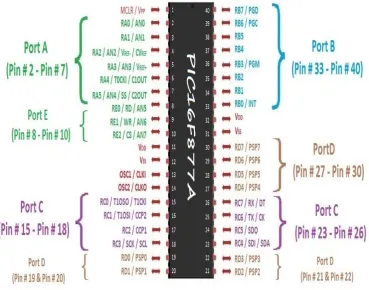
PIC Microcontroller Is The Smallest Microcontrollers And Also Have Some Advanced
Features That Can Be Programmed To Carry Out A Enormous Range Of Tasks Shown
Figure 2. These Microcontrollers Are Found In Many Electronic Devices Such As Phones,
Computer Control Systems, Alarm Systems, And Also Various Types Of PIC
Microcontroller Have Various Types Like Wise PIC16, PIC17 But In Our Convenient We
Are Using PIC16F877A. Everypic16f77a Microcontroller Architecture Consists Of Some
Registers And Stack Where Registers Function As Random Access Memory (RAM) And
Stack Saves The Return Addresses. The Main Parts Of PIC Microcontrollers Are RAM,
Flash Memory, Timers/Counters, EEPROM, I/O Ports, USART, CCP (Capture/Compare/
PWM Module), SSP, Comparator, ADC (Analog To Digital Converter), PSP (Parallel Slave
Port), LCD And ICSP. The 8-Bit PIC Microcontroller Is Divided Into Four Types On The
Basis Of Internal Architecture Such As Base Line PIC, Mid-Range PIC, Enhanced Midrange
PIC And PIC18. In Our Project We Are Using Various Pins To Connected With External
Components Likewise IR Sensor Output Pin Was Connected PICMC RC0, Voice Chip PIN
During PIC RC1 Consequently GPS Module Connected With PIC RC7,. MAXA 232 Is Also
Connected PIC RC6, GSM Also Connected With, Liquid Crystal Display Connected To PIC
Figure 2: PICMC Pin Configuration.
4. Novel Smart Helmeting System for Blind People
Replacement The Already Prevailing System To Improving Blind People Navigation System.
This Novel Scheme Consists Of Digital Display, IRSensor, Panic Alert System, MAX232,
WI-FI Module, GPS And GSM Module Interfacing With PIC MC. The IR Sensor LED And
Phototransistor Brace Is Generate Light Beam Switch Will Be Measuring Obstacles After
The Light Beam Will Be Reflected Back On To Detector. PIC Microcontroller Is
Programmed In Embedded C There For Reflected Light Beam Distance Condition Will
Inserted Embedded C Program In Particular Condition For Reflected Light Beam Is
Equalized Already Fitted Condition At Rime PIC MC Will Be Act As Center Source
Likewise Send Message And Alarm, And GPS Will Be Used Tracking Area. GSM Module Is
Figure 3: PICMC With Interfacing External Peripherals.
5. RESULTS AND DISCUSSION
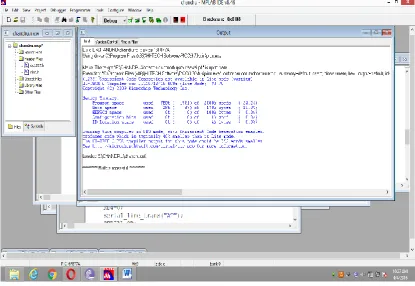
The Results Which Are Obtained From Software And The Hardware Work Done Are
Discussed Below- The Program Which Is Obtained From MPLAB Is Divided Into Various
Parts But We Only Representing Coding Screen Shown In Figure 4.
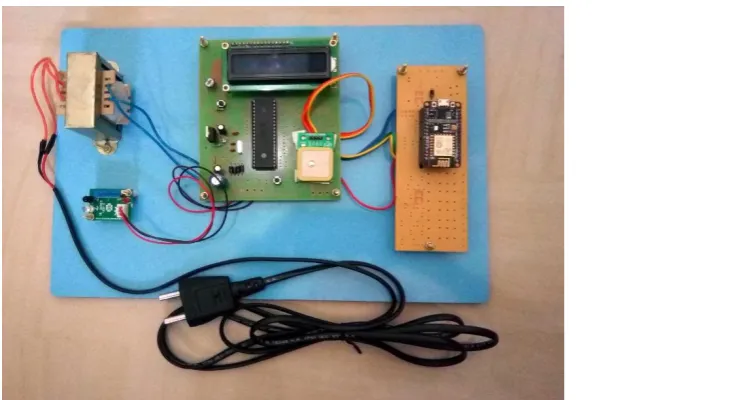
Figure 5: Novel Prototype Model Smart Helmeting System For Blind People.
The Novel Prototype Model Smart Helmeting System For Blind People Is Shown In Figure 5,
Which Shows The Interfacing With PIC MC And Some External Peripherals Likewise Relay,
IR Sensor GSM, MAX 232, WI-FI Module Etc. One Of The Primary Aim Is To Reduce The
Wastage Memory From PIC MC And Free Handily Blind People Will Be Walk Without
Blind Aid Stick. For This Various Signal Functioning Methodology Are Being Adopted.
6. CONCLUSION
This Paper Presents An Without Blind Aid Stick Blind People Will Be Walk Freely By Using
Smart Helmet. This Is Based On Embedded C Process, To Meet The Requirement Of Current
Major Security Application Of The Blind People Protection Purpose. There Are Advantages
As Follows. The Functioning Signal Can Be Privacy Is An Issue And Also Low Cost Design
They Can Be Invulnerable, It Can Stop Depending For Supporting Stick. This Project Main
Part Of IR Sensor By Sense The Environment Periodically Static And Dynamic Obstacles. In
Order To Make Use Of Modern Technology, We Have Proposed Android Based
Direction-Finding Shoes System. Wearable Microelectronic Helmet Is Proposed. Main Target Of This
Suggested System Is To Provide Navigation Assistance For This Visually Sight Less Person.
Microelectronic System Will Detect Stumbling Block Our Methodology Is Make Easy
Functional Application To Make Visually Sight Less Person To Live Autonomously.
REFERENCES
1. C. Magnusson, K. Rassmus-Grohn, C. Sjostrom, H Danielsson, "Navigation And
Recognition In Complex Haptic Virtual Environments- Reports From An Extensive Study
2. C. Sjostrom, "Touch Access For People With Disabilities", CERTEC Lund University
Sweden, 1999.
3. Visual Impairment And Blindness: Factsheet N282 Http://Www.Who.Int/ Mediacentre/
Factsheets/Fs282/En/.
4. Chumkamon, S.Tuvaphanthaphiphat, P.Keeratiwintakorn, "A Blind Navigation System
Using RFID For Indoor Environments," In Proceedings Of 5th International Conference
On Electrical Engineering/Electronics, Computer, 2008; 765-768.
5. Portable Camera-Based Assistive Text And Productlabel Reading From Hand-Held
Objects For Blind Persons Chucai Yi, Student Member, IEEE, Yingli Tian, Senior
Member, IEEE And Aries Arditi.
6. Mobile Camera Based Text Detection And Translation Derek Ma, Department Of
Electrical Engineering Stanford University Qiuhau Lin Department Of Electrical
Engineering Stanford University, Tong Zhang Department Of Mechanical Engineering
Stanford University.
7. J Suryaprasad, B O Praveen Kumar, D Roopa, A K Arjun, "A Novel Low-Cost Intelligent
Shopping Cart", Proceedings Of The 2nd IEEE International Conference On Networked
Embedded Systems For Enterprise Applications NESEA 2011, December 8–9, 2011.
8. Zeeshan Ali, Reena Sonkusare “RFID Based Smart Shopping And Billing- An Overview
“Information Communication And Embedded Systems (ICICES), 2014 International
Conference On Year, 2014.
9. Rupali Sawant, Kripa Krishnan, Shweta Bhokre, Priyanka Bhosale, “The RFID Based
Smart Shopping Cart” International Journal Of Engineering Research And General
Science Marchapril, 2015; 3(2). ISSN 2091-2730.E, And Aries Arditi.
10.Chandra Sekar.P Sangeetha.T “Smart Shopping Cart With Automatic Billing System
Through RFID And Zig-Bee “Information Communication And Embedded Systems
(ICICES), International Conference, 2014.
11.Yathisha L, Abhishek A, Harshith R, Darshan Koundinya S R & Srinidhi K M,
“Automation Of Shopping Cart To Ease Queues In Malls Using RFID” International
Research Journal Of Engineering And Technology, 2015; 2(3).
12.J. Sales, J. V. Marti, R. Marin, E. Cervera, And P. J. Sanz, Comparob: The Shopping Cart
Assistance Robot, Int. J. Distributed Sensors Networks, 2016; 15. Article ID 4781280.
13.S. Sai Santhosh, T. Sasiprabha, R. Jeberson, "BLI – NAV Embedded Navigation System
14.A. R. García, R. Fonseca. A. Durán. "Electronic Long Cane For Locomotion Improving
On Visual Impaired People." IEEE, 2011; 58-61.
15.Alshbatat, Abdel Ilahnour. "Automated Mobility And Orientation System For Blind Or
Partially.", 2013; 568-582.
16.Mahdi Safaa A., Muhsinasaad H. And Al-Mosawi Ali I. "Using Ultrasonic Sensor For
Blind And Deaf Persons Combines Voice." International Science Congress Association,
2012; 50-52.
17.Harshadgirishlele, Viten Vilas Lonkar, Varunvasantmarathe, Mrunmayi Mohan Modak.
"Electronic Path Guidance For Visually Impaired People." The International Journal Of
Engineering And Science (IJES), 2013; 09-14.
18.K. Steed-Terry, “Integrating GIS And The Global Positioning System,” 2nd Ed. ESRI