African Journal of Reproductive Health June 2019; 23 (2):110
ORIGINAL RESEARCH ARTICLE
Assessment of the Implementation of Comprehensive Sexuality
Education in Kenya
DOI: 10.29063/ajrh2019/v23i2.11
Mercelline A. Ogolla* and Miriam Ondia
Institute of Public Health and Management at Clarke International University, Kampala
*For Correspondence: Email: [email protected]
;
Phone: +254-710-271516Abstract
This study sought to establish the awareness, perception and implementation of comprehensive sexuality education (CSE), by 170 teachers in 11 secondary schools in Kisumu central sub-county, Kenya. Purposive and simple random sampling techniques were used. Quantitative data was collected using a self- administered questionnaire and an observation checklist, while qualitative data was collected through key informant interviews using a semi-structured interview guide. Quantitative data was analyzed using SPSS version 21. Qualitative data was analyzed using a thematic approach. The study found low awareness in key topics such as HIV/STIs, condom use, benefits of abstinence and contraception. Most teachers were not trained in CSE, and CSE is not included in the curriculum. Personal biases, opinions and values related to sexuality education threaten the delivery of CSE. Resource materials are also unavailable. The study concluded that teachers acknowledged the need for CSE. However, its delivery is severely inhibited by lack of training, non-inclusion of CSE in the curriculum, inadequate time allocation for CSE lessons, and lack of teaching resources. (Afr J Reprod Health 2019; 23[2]: 110-120).
Keywords: Comprehensive sexuality education, awareness, perceptions, delivery, teachers, Kenya
Résumé
Cette étude visait à établir la sensibilisation, la perception et la mise en œuvre d'une éducation à la sexualité complète (ESC) auprès de 170 enseignants dans 11 écoles secondaires du sous-comité central de Kisumu, au Kenya. Des techniques d'échantillonnage aléatoires simples et volontaires ont été utilisées. Les données quantitatives ont été collectées à l'aide d'un questionnaire auto-administré et d'une liste de contrôle des observations, tandis que les données qualitatives ont été collectées lors d'entretiens avec des informateurs clés à l'aide d'un guide d'entretien semi-structuré. Les données quantitatives ont été analysées à l'aide de SPSS version 21. Les données qualitatives ont été analysées à l'aide d'une approche thématique. L'étude a révélé une faible sensibilisation sur des sujets clés tels que le VIH / IST, l'utilisation du préservatif, les avantages de l'abstinence et la contraception. La plupart des enseignants n'ont pas été formés en ESC, et l‘ESC n'est pas incluse dans le programme. Les préjugés personnels, les opinions et les valeurs liées à l'éducation sexuelle menacent la prestation de l'ESC. Les ressources documentaires sont également indisponibles. L'étude a conclu que les enseignants reconnaissaient la nécessité de l‘ESC. Cependant, son exécution est sérieusement entravée par le manque de formation, l'absence d'inclusion de l'ESC dans les programmes, l'insuffisance de temps réservé à ses cours et le manque de ressources pédagogiques. (Afr J Reprod Health 2019; 23[2]: 110-120).
Mots-clés: Education sexuelle complète, sensibilisation, perceptions, diffusion, enseignants, Kenya
Introduction
There is evidence to show that comprehensive sexuality education (CSE) that is life skills based, age appropriate, culturally and gender sensitive, and scientifically accurate provides young people
African Journal of Reproductive Health June 2019; 23 (2):111 enables children and young people to acquire
accurate information, explore and nurture positive values and attitudes and develop life skills that encourage critical thinking, communication, negotiation and decision making1.
In 2000, HIV & AIDS was introduced into the Kenyan school curriculum. This was followed by the development of an education sector policy on HIV/AIDS in 2004which provided an enabling environment for HIV prevention, treatment and care for all learners and education sector personnel, and freedom from stigma and discrimination. Thus, HIV&AIDS was included in the curriculum and training materials for pre and in-service teachers. In 2013, a revision to this policy was made to include emerging issues such as the reducing age of sexual debut, needs of learners living with HIV and provision of age-appropriate CSE. This was affected under the National Education Sector Plan 2014/18 which incorporated age appropriate CSE supported by teacher training materials in the curriculum2.
When the CSE curriculum in Kenya was examined vis-à-vis the 2009 International Technical Guidance on Sexuality Education
(ITGSE) by UNESCO, information on condoms and contraception was totally absent while multiple other topics were poorly addressed. Most notably, the only information on the prevention of pregnancy therein was abstinence-related3. Very little information about sexuality was taught in schools, an indication that teachers were ill equipped to provide CSE4. Yet if young people are not equipped with adequate information concerning sexuality there will be a higher likelihood of them becoming victims of unwanted pregnancies, unsafe abortions, untreated STDs, school dropouts and with all the associated socio-economic problems.
According to the Kenya AIDS Progress Report5 young people aged 15-24 years contributed 51% of adult new HIV infections, a rise from 29% in 20136. Prevalence amongst young women was significantly higher (33%) as compared to that of young men (16%) despite an increase in knowledge of HIV prevention from
55% to 82% amongst males aged 15-24 and 48% to 73% amongst females of the same age group6. HIV prevalence in Kisumu County where the study was conducted is 3.4 times higher than the national prevalence at 19.9%6. Adolescents aged 10-19 years and young people aged 15-24 years contributed to 52% and 28% of all new HIV infections in the County respectively7. Yet within this cohort, there is restriction on contraceptive use from a practical perspective for those aged 10-14 despite a significant number of these girls being married, in unions, and already child bearing.
The Kenya Demographic Health Survey statistics further indicated that the sexual debut for young people nationally has declined to about 15 years old. Sad to note is that of the 46% of females and 58% of males under 18 years who had sex, only 20% used protection thus significantly increasing their risk of STIs and HIV infections as well as early pregnancies. The unmet needs of contraception among young girls between the age of 15 to 19 years stands at 20%. Furthermore, 20% of girls in this same age group have begun child bearing and most of these pregnancies are usually unintended6.
Lack of access to contraception and sexual health services that young people require means that many of these pregnancies end in abortions. A 2013 nationally-representative study by African Population and Health Research Center, Ministry of Health [Kenya], Ipas, & Guttmacher Institute, estimated that nearly half a million induced abortions occurred in Kenya in 2012. The study reported an induced abortion rate of 48 abortions per 1000 women of reproductive age and an induced abortion ratio of 30 abortions per 100 births for Kenya). The study also showed that young people constituted almost half of patients treated for complications of unsafe abortions8.
African Journal of Reproductive Health June 2019; 23 (2):112 knowledge and skills to make responsible choices
in their social and sexual lives through CSE. This study examined the awareness, perception and implementation of CSE by teachers in secondary schools in Kisumu central sub-county, Kenya.
Methods
This cross-sectional study collected data at one point in time without any further follow up of respondents, while also incorporating a descriptive exploratory design. The descriptive arm examined the responsiveness of teachers in Kisumu County. The exploratory studies provided in-depth exploration of CSE in secondary schools. The study population comprised of 170 teachers from 11 secondary schools in Kisumu Central Sub-County, with more than one year of teaching experience, who were available in the school during data collection and consented to participate in the study were included in the study.
Conceptual framework
Teachers need appropriate training to be able to handle CSE in secondary schools. Similarly, teachers‘ perception towards CSE affect how they will deliver it to the students. Finally, utilization of proper methodologies can lead to effective delivery of CSE.
Sample size determination
The sample size was determined by using Morgan - Krejcie table with computed values of the formula S = X2 NP (1-P)/d2(N-1) +X2P(1-P). Whereby: N is total population and S is the sample size
The population size (N) of teachers in all the 12 secondary schools in Kisumu Central Sub-County was approximately 317 at the time.
The sample size (S) was determined to be 175.
Sampling procedure
All 12 secondary schools in Kisumu Central sub-county were considered as the sampling frame. Proportionate sampling was used to determine the
number of teachers from each school. Purposive and simple random sampling techniques were applied in obtaining respondents in each school.
Sources of data
Primary data was collected from Head teachers/Deputy Heads, teachers in charge of career guidance and counseling, any other teachers and the researcher‘s observations of the environment for CSE related messages.
Data collection tools
Data was collected using a self- administered questionnaire, an observation checklist and a semi-structured interview guide. The researcher also used an observation checklist to capture observable data.
Data collection procedure
The questionnaire was self -administered in the presence of the research assistant. For KIIs, data was collected by means of note-taking and audio recording. Observation was also used.
Data analysis procedure
Quantitative data was analyzed using the Statistical Package for Social Sciences (SPSS) version 21. Descriptive statistical analysis was used to identify frequencies and percentages to answer all the questions in the questionnaire. Percentages reported correspond to the total number of responses received.
For qualitative data, the researcher used thematic approach to analyze the data collected. The transcripts were then annotated, and emerging themes were identified. The data was coded into thematic areas. Findings were then presented using, pie charts, narratives, and triangulated with qualitative data in verbatim form.
Results
African Journal of Reproductive Health June 2019; 23 (2):113
Independent variable 1 Awareness status of teachers on issues of CSE
Independent variable 2 Perception of teachers towards the delivery of CSE to students
Figure 1: Conceptual framework
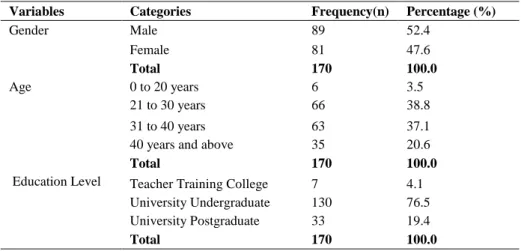
Table 1: General information on teachers in Kisumu, Kenya n=170
Variables Categories Frequency(n) Percentage (%)
Gender Male 89 52.4
Female 81 47.6
Total 170 100.0
Age 0 to 20 years 6 3.5
21 to 30 years 66 38.8
31 to 40 years 63 37.1
40 years and above 35 20.6
Total 170 100.0
Education Level Teacher Training College 7 4.1
University Undergraduate 130 76.5 University Postgraduate 33 19.4
Total 170 100.0
Dependent Variable
Delivery of CSE
Benefits of abstinence
HIV/AIDs/STI infection
Preventio n.
Contraceptio n
Communication and
Negotiation Skills Decision making
Outcomes
Reduction in unwanted pregnancies and Abortion rates amongst
Adolescent s
Effecting SRH rights
Adaptive behaviors
African Journal of Reproductive Health June 2019; 23 (2):114
Figure 2: Topics covered in Comprehensive Sexuality Education (CSE)
teachers (n=170), a response rate of 97.1% in 11 out of the expected 12 schools while qualitative data was collected from 11 respondents in 7 out of the 11 schools.
General information on respondents
Slightly more than half (52.4%) of the respondents were males. 38.8% of the respondents were aged 21-30 years, and 76.5% had completed undergraduate education
Awareness of CSE issues
Results showed that only 24.1% of the respondents had received CSE training, 54.1% of those trained reported no curriculum for sexual education. 46.5% revealed that the training addressed the educators‘ values, bias and opinions.
Topics covered under CSE
From Figure 2, only 4.4% and 5.5% of the respondents identified sexual reproductive health and sexual behavior as topics covered under CSE.
Knowledge on HIV/STI
30.6% of the respondents stated that a person with HIV always looks emaciated, 7.6% did not know
that a person can take a test to establish their HIV status; and 5.9% did not know that there are other diseases transmitted through sexual intercourse apart from HIV. While 89.4% know that a person can take a simple test to establish their HIV status, 76.5% and 75.3% of the respondents did not know any sign/symptom of STI in men and women, respectively.
Knowledge on condom use
16.6% of the respondents said that condoms can slip off the man and disappear inside the woman‘s body. Only 3.2% indicated that condoms can be used to prevent pregnancy and 6.7% indicated that condoms are an effective way of protecting against HIV/AIDs and STIs if correctly used. Interesting to note is that 28.1% of the respondents indicated that condoms can be used more than once.
Knowledge on benefits of abstinence
33% stated that abstinence is an effective method of family planning, and 11% stated that abstinence can help avoid the emotional consequences of teen sex especially if the relationship does not work out. However, only 4% feel that abstinence is an effective way of preventing unwanted pregnancies,
11.8% 13.2% 11.7%
10.6%
4.4% 13.4%
8.4% 8.4%
5.5% 12.6%
African Journal of Reproductive Health June 2019; 23 (2):115 10% felt that abstinence is an effective way of
preventing the spread of HIV/STIs.
Knowledge on contraception
Spontaneous knowledge on contraception by teachers indicated that 74.7% knew about pills, 80.6% about injections, 87.6% about male condom, and 72.9% knew about emergency pills. However, only 14.1% and 19.2% knew about the IUD and implant, respectively.
Perceptions towards delivery of CSE
The perception was assessed by asking them to indicate whether they agreed or disagreed with certain statements.
90.6% stated that sexuality education helps learners to protect themselves against unwanted pregnancies, HIV and STIs; 50.6% of them were apprehensive in raising certain topics in the class room; 53.4% of the teachers were conscious of their own sexual attitudes and beliefs when discussing sexuality education with learners; 56.8% said sexuality education delays active sexual engagement by learner; and 84.7% felt it was the teacher‘s role in personally making a difference in helping learners make responsible sexual choices.
Approaches utilized in the delivery of CSE
In the implementation of CSE, 52.9% reported having taught CSE and 61.2% indicated non- integration into extra curricula activities. 67.1% of the respondents reported no standard text book available to support CSE and 77.6% of the respondents said that the time allocated for CSE is inadequate.
CSE is delivered using a mix of methodologies. 17.2% used mobile technology and 4.9% used guidance and counselling. In terms of specific methods of teaching, 18.9% used personal reflection, 20.2% used participatory reflection and analysis, 11.5% used group discussions (informal, panel) and one on one sessions, and 18.0% used creative play games, role play and poetry.
Discussion
Awareness status of CSE
Teacher‘s awareness status on issues of CSE is important in ensuring the passing of such knowledge to the students in an appropriate manner. However, the study found that only 24.1% of teachers had been trained. This finding is in line with a report by Abobo and Orodho9 which revealed that in Kenya most teachers had not been trained on Life Skills Education as well. Without adequate preparation in the form of training, teachers cannot effectively deliver CSE.
The findings indicated that 54.1% were not aware of the designed curriculum for sexuality education in secondary school. Besides, even in in-service training, sexuality programs were not covered as indicated by 47.6% of the respondents. This indicates that despite the need for CSE, most teacher training programs do not provide CSE training as per the existing curriculum. Hence resulting in lack of preparedness among teachers to deliver CSE to the students.
Only 46.5% of the teachers felt that the training addresses the educator‘s values, bias and opinions. This view was also pointed out by Boler
et al10 whose study revealed that though teachers played a major role in giving young people information on HIV/AIDS and sexuality, they were constrained by social and cultural factors. If these factors are not adequately addressed, the result is that teachers will restrict themselves to teaching topics they feel comfortable to handle. Githinji11 also concurs with the same view as his study revealed that teachers found it difficult to explain and teach some of the ways in which AIDS is spread.
African Journal of Reproductive Health June 2019; 23 (2):116 UNESCO12 on the six core learning areas of CSE
which revealed that there was lack of adequate information on sex and sexuality, condoms, and contraception, with sexuality also referred to in a negative way. This is also supported by a report by Sidze et al13 which found that while teachers reported that three-fourths of schools cover all topics that constitute a comprehensive curriculum, only 2% of students reported learning about all of them.
Some of the teachers demonstrated low knowledge of HIV/AIDs. 30.6% indicated that a person with HIV always looks emaciated; 7.6% did not know that a person can take a test to establish their HIV status; and 5.9% did not know that there are other diseases transmitted through sexual intercourse apart from HIV. In addition, 76.5% could not identify the signs and symptoms of STIs in men, and 75.3% could not identify the signs and symptoms of STIs in women. This points to a lack of knowledge on basic information about HIV/STI. As such, adolescents may not receive scientifically accurate information regarding HIV/STIs. This finding agrees with a report by Wambua14 which revealed that majority of teachers had adequate knowledge on HIV/AIDS and STIs but a substantial proportion of them had
misconceptions about HIV. Similarly,
Madzivanyika15 found that while most of the teachers (75%) had knowledge of HIV/AIDS and 80% took part in HIV/AIDS prevention, there were some who still did not understand the basic concepts in the subject of HIV/AIDS.
There was an indication of inappropriate knowledge on condom use by some teachers as 16.6% reported that condoms can slip off the man and disappear in the woman‘s body and 28.1% reported that condoms can be used more than once. This implies that teachers will not provide accurate information regarding condom use nor promote condom use to the adolescents, even though research has shown that condoms are effective in preventing pregnancies, HIV and STIs. Kiragu et al16, found that teachers in Kenya had relatively good levels of knowledge but still had significant misconceptions on condom use. This
finding is also supported by an assessment of the CSE curriculum in Kenya by UNESCO, which revealed that information on condoms and contraception was totally absent while multiple other topics were poorly addressed3.
Similarly, the study revealed low level of knowledge regarding the benefits of abstinence. 4% stated that abstinence is effective in preventing pregnancy, 33% indicated that abstinence is an effective family planning method and only 10% knew that abstinence is effective in preventing HIV/AIDS and other STIs. This is shocking because since 1999, there has been Life Skills Education in primary and secondary schools which stressed abstinence as the most effective way to prevent pregnancies and infections. While this finding does not agree with the findings from a report on the state of sexuality education in Kenya which found that 91% of the teachers covered abstinence during their classes13, this implies that a majority of teachers do not understand the benefits of abstinence.
In addition, teachers‘ knowledge of other methods of contraception was low as results showed that only 14.1% knew about the intra uterine device (IUD) and only 19.2% knew about implants. This is in line with a report by Sidze et al13which found that 62% of the teachers also held the misconception that making contraceptives available encourages young people to have sex. This indicates that teachers rarely discuss issues of contraception with students. No wonder, according to the report by KDHS6, the statistics of unintended teenage pregnancy among 15 to 19-year-old girls in Kisumu County is at 33.3 %, well above the national average of 18 percent.
Perceptions towards delivery of CSE
African Journal of Reproductive Health June 2019; 23 (2):117 pregnancies, HIV and STIs and 56.8% of the
respondents agreed that sexuality education delayed active sexual engagement. This concurs with research conducted by UNESCO which showed that sexuality education programmes can help adolescents to abstain from or delay the debut of sexual relations, reduce the frequency of unprotected sexual activity, reduce the number of sexual partners, and increase the use of protection against unintended pregnancy and STIs during sexual intercourse17 This means that teachers understand the need and importance of CSE in influencing the health outcomes of young people.
Among the contextual factors cited as necessitating sexuality education in secondary schools today are the rise in teenage pregnancies, rise in cross-generational relationships (men-girl or boy-women), rise in same sex relationships, lack of guidance by parents, peer pressure, poverty, and HIV /AIDS. 84.7% said that it is the teachers‘ role to bridge the gap between the lack of information on sexuality from parents, and information available in the society with correct information on sexuality. This is in line with findings from a study in Tanzania18 which found that teachers supported the provision of school-based sexuality education. According to a respondent, since parents have downplayed their role in imparting sexuality education at home, teachers need to use this opportunity to bridge the gap in information. Thus, teachers are ready and willing to deliver sexuality education in schools.
Personal biases, values and beliefs often affect teachers‘ comfort, willingness and ability to teach sensitive topics in the appropriate language. The study also found that while 53.4% of the respondents were conscious of their own sexual attitudes and beliefs when discussing sexuality education with learners, 50.6% of the respondents were apprehensive in raising certain topics in the class room. This finding agrees with a study in Tanzania cited in a report by IPPF 19 which demonstrated that teachers‘ own bias, as well as community beliefs, prevented them from discussing issues relating to sexuality, sex, condom use and family planning, masturbation,
sexual pleasure and same-sex attraction. This therefore means that adolescents may receive the information that the teacher is comfortable handling.
Most teachers recommended the
introduction of CSE at primary school level with the content tailored to specific ages. This is like the findings of the above-mentioned Tanzanian study which also found that most teachers wanted sexuality education to begin early (during primary education (ages 10-13) rather than during secondary education (ages 14 and above). CSE should be timely to achieve its goal of impacting decisions made by young people regarding their sexuality and sexual reproductive health. This study found that teacher is ready and willing to implement CSE but there is an absence of a support structure to ensure that teachers have the information, support and resources necessary to confidently and effectively teach sensitive topics.
Approaches in the delivery of CSE
There are various issues that impact implementation of CSE. This study revealed that while 52.9% of the respondents had ever taught CSE, it was not clear how they did this. According to some teachers, in languages and humanities there are CSE related topics that have been infused into the course books that are taught. The current course books have articles that touch on reproductive health education, and these become quite handy in bringing up the issues of sexuality. While this may not be comprehensive, awareness is created on reproductive health, HIV/AIDs, and STIs.
African Journal of Reproductive Health June 2019; 23 (2):118 accorded CSE by both teachers and students is
because it is not yet incorporated into the syllabus and is not examinable. In his report, Abobo9 indicated that a lot of value is placed on assessment in the form of examination due to the certifications received. Thus, teachers and students pay more attention to examinable subjects that are thought to promote academic excellence. This finding is also supported by Rooth20 in a study which found that life skills education was not taken seriously because it was not examinable. Without a structure, the delivery of CSE is dependent upon the teacher‘s personal discretion and initiative. One can therefore not ascertain whether adolescents have received CSE.
Coupled with this, is the lack of CSE materials as indicated by 67.1% of the respondents. This means that different schools use different materials provided by the NGOs, are specific and rarely cover all content areas in CSE. As such there is no uniformity in the information being passed. Thus, adolescents may receive bits and pieces of information related to CSE, yet all the components are vital in shaping their sexual and reproductive health and general well-being.
The study also found that teachers used a mix of approaches to deliver CSE. The most frequently mentioned approaches were non-participatory in nature -use of mobile technology 17.2%. This implies that teachers may not be comfortable initiating sexuality education but prefer learners explore and then ask questions on the same. While peer education was only used by 9.6%, research suggests that many young people are more likely change their attitudes and behaviors not only based on what they know, but also on the opinions and actions of their peers. This is because they believe they share similar characteristics with them. Peer education provides flexibility in handling a wide variety of young peoples‘ needs and uses the power of role modelling 21. Surprisingly, guidance and counselling were the least frequently mentioned 4.9% despite the task of CSE having been left to teachers in the guidance and counselling department.
Even as the key informant interview showed that use of participatory methods generated more discussions on the issues of CSE as opposed to the other methods, the study also revealed that participatory reflection and analysis was the most commonly used method at 20.2% while group discussions, informal panel, and one on one sessions were the least used methods at 11.5%. This finding agrees with a review of HIV education in Eastern and Southern Africa found that teachers frequently focused on knowledge rather than skills and used didactic approaches rather than engaging pupils through participatory approaches1. This implies that for successful delivery of CSE, teachers need to use participatory approaches that engage the learners.
Further research should be conducted to establish the most effective strategies for implementation of CSE at scale as well as the existing challenges in employing such approaches in policy and practice.
Limitations of the Study
Given that this study was exploratory in nature, the findings of this study are not guaranteed to be representative enough and not generalizable because the research was conducted on a small sample size that was restricted to 170 teachers.
Conclusion
There is a knowledge gap in key topics in CSE such as HIV/STIs, condom use, benefits of abstinence and contraception as most teachers had not been trained in CSE.
Personal biases, opinions and values of teachers related to sexuality education, including their competency to handle CSE, threaten the delivery of CSE as most teachers opt to handle only topics, they are comfortable with.
African Journal of Reproductive Health June 2019; 23 (2):119 to deliver CSE as compared to participatory
approaches.
Resource materials for teaching CSE are not available thus there is no uniformity in the information being delivered to students.
Recommendations
All teachers should be trained in CSE. This will ensure that all teachers are able to support the delivery of CSE.
Key topics in CSE such as HIV/STIs, condom use, benefits of abstinence and contraception, Value clarification and Attitude transformation (VCAT) to deal with biases and perceptions, should be included in the pre-service teachers‘ course and CSE incorporated into the in-service teacher trainings. This will help the teachers acquire accurate and scientific knowledge related to the topics and be better able to handle the topics while teaching students.
The Ministry of Education should support teachers to implement CSE by incorporating it in the secondary school curriculum. This will mean that there is a structured way of teaching and time allocated for CSE and will enhance its delivery.
The teacher training on CSE should include diverse participatory teaching methods with more emphasis on promoting practical skills and confidence in the teacher to deliver CSE appropriately.
The MOE should ensure that resource materials (teaching guides, and student‘s manuals) are available in all schools by enhancing partnerships with non-governmental organizations with interest in the field of reproductive health. This will ensure that standardized information is communicated to the students across the country.
Suggested Follow Up Studies
Since this was basically an exploratory study that covered schools within a central business district (CBD), a follow up study should be done in a mixture of the rural schools and the CBD, basically town schools.
Since the teachers basically were sampled from those with more than 1-year experience with no upper limit, a follow up study should consider the gender of the teachers and how it impacts the delivery of CSE.
Contribution of Authors
Mercelline A Ogolla- Designed the study, developed data collection tools, collected and analyzed data; presented findings as part of a fulfillment for a Master of Science degree in Public health and prepared the manuscript. Miriam Ondia-Supervised and guided the student during this research study. All the authors have participated in the writing and reading, and all agree to the final version of this manuscript.
References
1. UNFPA. Operational Guidance for Comprehensive Sexuality Education: A focus on human rights and gender. New York. UNFPA. 2014.
2. Republic of Kenya Ministry of Education, Science and Technology. Education sector policy on HIV/AIDS, 2nd edition 2013.
3. UNFPA. Status Report on Adolescents and Young People in Sub-Saharan Africa: Opportunities and Challenges. Johanesburg: UNFPA. 2012.
4. Network for Adolescents and Youth of Africa (NAYA). Rapid Assessment on the Effectiveness of Life Skills Education in Kenya. Nairobi: Network for Adolescents and Youth of Africa, 2011.
5. National AIDS and STI Control Programme
(NASCOP). Kenya AIDS Indicator Survey Final Report. Nairobi, Kenya: NASCOP; 2016
6. National Bureau of Statistics-Kenya and ICF
International. 2014 KDHS Key Findings. Rockville, Maryland, USA: KNBS and ICF International.2015.
7. National AIDS and STI Control Programme
(NASCOP). Kenya HIV Estimates 2015 Report. Nairobi, Kenya: NASCOP; 2016.
8. African Population and Health Research Center (APHRC), Ministry of Health (MOH), Ipas, and Guttmacher Institute. Incidence and complications of unsafe abortions in Kenya: Key findings of a national study. Nairobi: APHRC, MOH, Ipas, Guttmacher Institute; 2013.
African Journal of Reproductive Health June 2019; 23 (2):120
from
http://ir-library.ku.ac.ke/handle/123456789/12354
10. Boler T., Ibrahim A., Ados, R. and Shaw, M. Sound of Silence. Difficulties in communicating HIV/AIDS in schools – Experience from India and Kenya, Action Aid.2003. 1:1-4.
11. Githinji F. Perceptions of Primary School Teachers and Pupils on Adequacy of HIV/AIDS Life Skills Education in Nairobi and Thika Districts, Kenya. IOSR Journal of Humanities and Social Science (IOSR-JHSS) Volume 19, Issue 9; 2014
12. UNESCO. Young People Today. Time to Act Now. Why adolescents and young people need comprehensive sexuality education and sexual reproductive health services in Eastern and Southern Africa. United Nations Educational, Scientific and Cultural Organization.2013.
13. Sidze E.M, Stillman M, Keogh S, Mulupi S, Egesa C.P, Leong E, Mutua M, Muga W, Bankole A and Izugbara C.O. From Paper to Practice: Sexuality Education Policies and Their Implementation in Kenya, New York: Guttmacher Institute.2017 14. Wambua E. Knowledge attitudes and beliefs about
STD/HIV/Aids education among primary and secondary school teachers in Nairobi and Machakos districts, Kenya. 2001. Retrieved from [email protected]
15. Madzivanyika G. Knowledge levels and perceptions of
teachers of HIV/AIDs and their roles in HIV/AIDs prevention; a case study of primary schools in Seke, Chitungwiza in Zimbabwe. 2013. Retrieved from http://scholar.sun.ac.za
16. Kiragu S. W. Exploring Sexuality Education and the Burdened Teacher: A Participatory Approach in a Rural Primary School in Kenya, Pastoral Care in Education, 25:3, 5-15, DOI: 10.1111/j.1468-0122.2007.00411.x
17. UNESCO. International Technical Guidance on Sexuality Education: An evidence-informed approach for schools, teachers and health educators. Paris: United Nations Educational, Scientific and Cultural Organization. 2009.
18. Kitila A. M. Teachers‘ attitudes towards and comfort about teaching School-based sexuality education in urban and rural Tanzania. Global Journal of Health Science; 2012 Vol. 4, No. 4;
19. IPPF. Everyone‘s right to know: Delivering
comprehensive sexuality education for all. London: International Planned Parenthood Federation 2016. 20. Rooth E. An investigation of the status and practice of
Life Orientation in South African schools in two provinces. Unpublished PhD Thesis, University of Western Cape, Cape Town.2005.