The Impact of Breastfeeding as a Strategy to Reducing Disparities in Infant Mortality Rates Among North Carolina’s African American Population
By
Kavita Davé Coombe
A Master’s Paper submitted to the faculty of the University of North Carolina at Chapel Hill
In partial fulfillment of the requirements for the degree of Master of Public Health in
the Public Health Leadership Program.
ABSTRACT
Kavita Davé Coombe: The Impact of Breastfeeding as a Strategy to Reducing Disparities in Infant Mortality Rates Among North Carolina’s African American Population
(under the direction of Miriam Labbok, William A. Sollecito)
Background: A clear disparity exists in reproductive health parameters between White
and African American women in North Carolina. African American women experience
higher fertility rates and higher infant mortality rates than their White counterparts.
Purpose: In this paper we estimate the number of potential ‘lives saved’ from increased
breastfeeding practices as a possible strategy to reduce disparities in infant mortality.
Methods: We evaluated the published, secondary data for North Carolina’s African
American population in regards to Infant Mortality Rates (IMR) and breastfeeding
practices.
Results: Our findings suggest that improved practices in breastfeeding can positively
impact infant mortality rates. Among the African American population, improved
breastfeeding practices are estimated to reduce IMR by as much as 17%. The findings
suggested in this report can provide important information for evidence-based strategies
Preface
This paper is developed for consideration for support of breastfeeding as part of
the child survival approach in North Carolina. It is not presented as definitive research
on this issue; in order to fully calculate the potential impact of optimal infant feeding on
child mortality in North Carolina, it would be necessary to further examine the current
practices for each sub-groupings of age, race and socio-economic status in each setting
across the state, to survey the current practices in statewide Neonatal Intensive Care Units
(NICU) and related services, and to know the feeding status among those who died of
specific causes. Due to necessary sample size and difficulties in obtaining such data, and
minimal funding available to address this issue, there are few studies of mortality by
feeding practice available for these settings. Therefore, this document uses existing data
and findings from similar studies to project the potential impact of optimal breastfeeding
TABLE OF CONTENTS
Background………....….1
Methods……….………...…...3
Findings……….………….….7
Neonatal………..…………...10
Post Neonatal……….……....12
Table 1.1……….……….…9
Table 1.2………...………...14
Summary of Findings……….…...16
Graph 2.0………...17
Discussion………..18
Conclusion………...23
BACKGROUND:
Infant mortality is declining in both the United States and North Carolina. This is
encouraging news for addressing the child survival goals of Healthy People 2010 and
other North Carolina initiatives. However, infant mortality still affects about 1,000 North
Carolina babies and their families each year. In 2006, the state of North Carolina
reported about 127,646 births and 1033 infant deaths for an infant mortality rate (IMR) of
8.11. This is in contrast to a national IMR of 6.9. Furthermore, North Carolina has a
higher reported infant mortality than the US in both neonatal (n=712, 2006 IMR 5.6 vs.
US 4.6) and post neonatal (n=321, 2006 IMR 2.5 vs. US 2.2) mortality.2 There is more
the state can do to further decrease infant mortality if the reasons for this disparity are
better understood.
One explanatory factor for these observed differences in rates between North
Carolina and the US may be that disparities exist among racial groups in North Carolina.
Each year, the Office of Minority Health and Health Disparities and the North Carolina
State Center for Health Statistics (SCHS) releases the Racial and Ethnic Health
Disparities Report Card to rank the health status of racial and ethic groups by health
indicators. African Americans receive a very low grade on most health indicators (C-F),
reflecting an overall poorer health status.3 African American women in North Carolina
frequently self-report poor or fair health, experience worse health status (obesity,
nutrition, exercise, disease risk and exposures), and are more than twice as likely to
experience fetal death.4 The infant mortality rate for African American infants from
decrease in infant mortality rates in North Carolina can occur from concentrating
resources and efforts to the most vulnerable segments of the population.
Differences in health behaviors have been shown to contribute to the racial
differences observed in North Carolina. For example, breastfeeding practices have been
associated with decreases in mortality. 6,7,8,9 One way to address infant mortality among
African American women and their babies is to improve the rates of breastfeeding.
Breastfeeding initiation rates in North Carolina are similar to that of the US on average
and are moving towards reaching the HP 2010 goals. However, breastfeeding practices
for African American women remain much lower than their White counterparts.
Initiation of breastfeeding among African American women in North Carolina is only
55.2% compared to 75.6% for all races and rates of exclusive breastfeeding at 8 weeks
are only 36.1% vs. 42.3% overall.10 The American Academy of Pediatrics (AAP)
recommends immediate skin-to-skin contact and breastfeeding to avoid hypothermia,
exclusive breastfeeding to 6 months, and continued breastfeeding for at least one year.
There is a significant amount of literature on the impact of improved breastfeeding
practices on child health outcomes in North American and European settings, and
massive amounts of literature on the impact of breastfeeding on survival in developing
country settings. Globally, it is estimated that about 15% of all preventable child deaths,
or about 4000 daily, could be prevented by optimal breastfeeding.11
In this paper we estimate the number of potential ‘lives saved’ based on an
increase in breastfeeding as a possible strategy to reduce disparities in infant mortality.
The data on the relationship between breastfeeding and infant mortality are limited and
in health among African American populations specifically. Ethical limitations and the
large sample size required make randomized clinical trials difficult but survey data can
help to provide data on behaviors to make inferences about different racial and ethnic
groups. While there are numerous factors that affect infant mortality, some of the major
causes of preventable infant deaths, such as Sudden Infant Death Syndrome (SIDS),
infectious and parasitic diseases, respiratory infections, NEC, and prematurity/low birth
weight, can be reduced by improved practices in breastfeeding.12 Evaluating the available
data for North Carolina’s overall and African American populations in regards to IMR
and breastfeeding practices will provide important information for evidence-based
strategies that inform policies and design more effective health programs.
METHODS:
In order to estimate the impact of optimal breastfeeding on infant survival in
North Carolina, this paper considers existing studies and applies them to the NC
population-level data. Based on this, conservative estimates of the potential impact of
breastfeeding/human milk feeding in North Carolina are calculated.
Each year the North Carolina State Center for Health Statistics (SCHS) collects
and maintains a comprehensive collection of health statistics, including infant mortality,
the total number of live births, total number of deaths, and data from a number of
surveys. The North Carolina Vital Records Unit registers all births, deaths, and fetal
deaths that occur in the state. The infant mortality data is matched to birth records
approximately 19 months after the data has been collected. The 2006 North Carolina
Vital Records were used to provide the total number of live birth and infant deaths for
statistics upon query by race, year, age, and cause of death.13 For this paper, we obtained
the cause-specific infant mortality information by query. It is important to note that
birth/death records do not currently collect data on breastfeeding. Since this information
is not collected, it is impossible to directly link breastfeeding information to the
birth/death data and different sources must be used.
We evaluated multiple national and state surveys that collect data on self-reported
maternal practices and behaviors. The North Carolina Pregnancy Risk Assessment
Monitoring Survey (PRAMS) is a Center for Disease Control initiative to reduce infant
mortality and low birth weight within the state. This survey is intended to identify
vulnerable populations of women and infants to better target programs and inform
policies aimed at reducing health disparities. PRAMS randomly sample approximately
2,400 new mothers each year 2-3 months after the infant’s date of birth. The monthly
sample is stratified by birth weight to over-sample women with low birth weight babies.
Since 92% of births in 2005 were of normal birth weight, this allows for adequate
information to be gathered on the low birth weight infants and assure representation of
this population.14 These surveys do not collect exclusive breastfeeding information for
longer than 8 weeks. In addition, the sample size is relatively small when compared to
national survey data. However, since the NC PRAMS data is considered the most
generalizable and representative sample of all North Carolina women, we compared
PRAMS (2002-2004 used for larger sample size) breastfeeding percentages to national
survey data from the Centers for Disease Control National Immunization Survey (2004
The Centers for Disease Control - National Immunization Survey (CDC-NIS) is a
large nation-wide survey that can be generalized to the US population. CDC-NIS
collects information within all 50 states from randomly sampled women of reproductive
age whose children are 19-35 months old at the time of the interview. Data are presented
according to the year of the child’s birth, regardless of the year of data collection. It is
important to note that the breastfeeding questions were revised in January 2006 to more
accurately assess exclusive breastfeeding. For example, one new question asked “How
old was [child] when (he/she) was first fed formula?” The new questions had a
significant effect on rates of exclusive breastfeeding and are considered to be a more
accurate representation of behavior.15 The data used in this brief are the revised figures
based on these new questions.
Next, we identified data on cause-specific infant deaths. In 2007, the Agency for
Healthcare Research and Quality (AHRQ) published an important analysis of existing
literature from developed country settings to assess the impact of any/exclusive
breastfeeding on infant and maternal mortality.16 This comprehensive analysis included
information from meta-analysis and other published studies on breastfeeding to provide
compiled data on risk that were considered to be statistically significant. Although a
number of measures were used in the AHRQ report to assess the reporting quality, it is
important to note that the validity of these studies is difficult to reliably state without
knowing the details of the samples used in the primary studies. Although this is a
limitation to using this data, the AHRQ report used the same grading scale to rank
For neonatal mortality, published observational studies are limited. Often, preterm
infants and low birth weight babies are unable to breastfeed but can be supplemented by
human donor milk programs. Many studies looking at breastfeeding exclude neonatal
infants because infants sick from birth are often unable to breastfeed and the mother may
not be able to produce sufficient breast milk. Also, there are many confounders that can
affect survival among this population. However, it would be important to include
estimates on neonatal infants when looking at the potential impact increased
breastfeeding could have on mortality since proper nutrition can greatly affect birth
outcome from the neonatal period. Three studies were selected19,20,17 to provide
information on the protective effects of breastfeeding on reducing neonatal mortality and
are discussed in detail below.
We used the studies from these analysis to obtain the Odd Ratios (OR) and Risk
Ratios (RR) to estimate the level of reduced risk from improvements in breastfeeding
practices applied to the non-breastfeeding population. Since mortality is rare, we can
apply OR similarly to a RR to interpret the reduced risk that may result from a change in
the measured behavior. Therefore, we used cumulative OR for not breastfeeding to
calculate potential lives that could be saved from cause-specific deaths if the
non-breastfeeding percent of the population were supported to succeed in non-breastfeeding. The
non-breastfeeding population was determined from PRAMS and NIS data on initiation
and exclusive breastfeeding rates. For neonatal estimates, an assumption was made that
30% of these infants are unable to be fed human milk due to sickness or illness. In
addition, since human milk/breastfeeding would reduce the occurrence of mortality, the
cause-specific mortality . We have chosen not to adjust for these to allow for very conservative
estimates on the potential number of ‘lives saved’ and to account for potential
confounders.
The strongest statement on the impact of human milk/breastfeeding on mortality
in North Carolina can be based on available studies on post neonatal mortality, mortality
due to NEC and septicemia and other factors associated with prematurity and low birth
weight. Due to the ethical limitations of Randomized Control Trials on breastfeeding and
the huge sample size required, it is nearly impossible to conduct rigorous case/control
studies that compare exclusive breastfeeding to formula. Therefore, statistical
information from representative, generalizable surveys and published data on OR can
help to inform local, state and national positions on health indicators.
Both the CDC-NIS and PRAMS datasets are used to estimate breastfeeding rates
in North Carolina. CDC-NIS is a large representative sample that can be generalized to
the US and the population of NC. Since PRAMS does not collect breastfeeding
information >8weeks, this allows us to apply the national figures on breastfeeding
information to make conservative representations of women in North Carolina on
breastfeeding information for initiation and exclusive breastfeeding to 3 months.
In addition, estimates of disability-adjusted life years and potential cost savings
are offered.
FINDINGS:
Our findings suggest that improvements in rates of breastfeeding/human milk
causes. The greatest impact could occur within the African American population that
suffers the largest disparities in health.
The breastfeeding rates are much lower among African American women both for
initiation of breastfeeding and for exclusive breastfeeding. A comparison of the rates for
initiation, exclusive breastfeeding at 4 weeks and 8 weeks from PRAMS data and
exclusive breastfeeding at 3 and 6 months from CDC-NIS suggest that rates follow a
trend (Table 1.1). In addition, the rates suggest that a higher IMR is associated with a
lower birth weight and lower breastfeeding rates. While these trends do not determine a
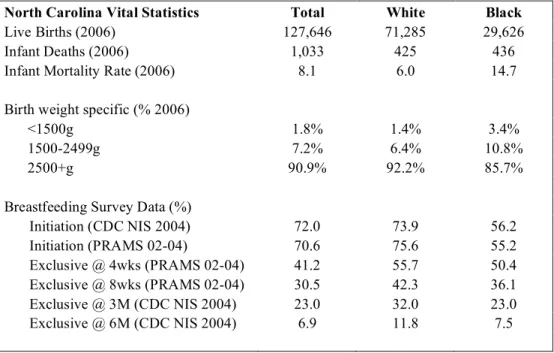
Table 1.1: North Carolina Vital Statistics Registry
PRAMS 2002-2004 Survey data, CDC-NIS 2004 population data
North Carolina Vital Statistics Total White Black
Live Births (2006) 127,646 71,285 29,626
Infant Deaths (2006) 1,033 425 436
Infant Mortality Rate (2006) 8.1 6.0 14.7
Birth weight specific (% 2006)
<1500g 1.8% 1.4% 3.4%
1500-2499g 7.2% 6.4% 10.8%
2500+g 90.9% 92.2% 85.7%
Breastfeeding Survey Data (%)
Initiation (CDC NIS 2004) 72.0 73.9 56.2
Initiation (PRAMS 02-04) 70.6 75.6 55.2
Exclusive @ 4wks (PRAMS 02-04) 41.2 55.7 50.4
Exclusive @ 8wks (PRAMS 02-04) 30.5 42.3 36.1
Exclusive @ 3M (CDC NIS 2004) 23.0 32.0 23.0
Exclusive @ 6M (CDC NIS 2004) 6.9 11.8 7.5
Source: SCHS 2006 NC Infant Mortality Report by Race/ethnicity, Table 11. Matched birth/death file CDC-NIS Breastfeeding report card 2007: www.cdc.gov/breastfeeding/data/report_card2.htm PRAMS Survey Data:
NEONATAL:
The neonatal period is defined as the first 28 days of an infant’s life and is the
period after birth where the infant is most vulnerable and can be most impacted by
adequate feeding to thrive. Some of the significant causes of neonatal death that can be
addressed after birth include general prematurity and low birth weight, respiratory
infection, and NEC. Human milk feeding and continued breastfeeding have been shown
to lower each of these. In a study looking at evidence-based, cost-effective interventions,
the impact of breastfeeding on infant survival was evaluated. The study reported that any
breastfeeding could have 55% up to an 87% reduction in all-cause neonatal mortality.17
Assuming that feeding of human milk/breastfeeding would reduce the occurrence and
mortality from these causes, and assuming that 30% or so are never breastfed based on
available data, it could be estimated that there would be a reduction of the total number of
deaths by 41-64 potential ‘lives saved’. For the African American population the
breastfeeding initiation rate is around 55% so we are assuming that the non-breastfed
population in this group specifically is around 45%. These estimates among the African
American population could result in 32-51 potential deaths averted (see Table 1.2).
It is reported that African American women are burdened by a much larger
proportion of the very preterm and small-for-gestational age births and are much less
likely to breastfeed. The 2006 North Carolina vital statistics data reported that 3.4% of
African American babies had a birth weight under 1500g in comparison to white infants
with only 1.4% of babies with birth weight under 1500g (Table 1.1). Prematurity/low
greatest contributor to the excess mortality experienced by African American infants and
should be considered when looking at infant mortality in this population.18
A study looking at extremely low birth weight infants (<1000grams) reported that
human milk feeding reduced risk of death by OR 57.5 95% CI 7-474; p=.0002.19 In
2006, about 10% of infant births were low birth weight (<2500g) and mortality from
prematurity/low birth weight resulted in 224 infant deaths. Approximately 15% of low
birth weight infant mortality (34 of 224 babies) is categorized as extremely low birth
weight (<1500 g) (Table 1.1). There are no available data on the rates of human milk
feeding among premature infants in North Carolina, so estimating from the datasets cited,
we assume that 30% of these infants are given human milk. Therefore, we are assuming
that 70% of this population (34 babies) that experienced mortality from extremely low
birth weight, if fed human milk, could reduce risk of mortality from this cause (Table 1.2,
column ‘Population not currently BF’). If we apply the reduction in risk as reported in
the Boo et al study, this suggests that breastfeeding can save about 14 lives, or almost
half of infant mortality from extremely low birth weight and about 7 lives among African
American population could be averted (Table 1.2).
In looking at mortality due to Necrotizing Enterocolitis (NEC) alone, a
meta-analysis by Boyd et al found that donor milk given as the sole diet was associated with a
lower risk of NEC compared to formula (combined evidence shows 79% reduction in risk
RR 0.21 95%CI 0.06-.76).20 Using the same assumptions as above, if fed human milk, the
reduction in risk to the number of deaths due to NEC would allow for a small additional
number of potential lives saved (9 overall; 6 among African American population). If a
of deaths due to NEC (n=21) are never breastfed, if this population initiated breastfeeding
then it could be estimated that there would be a reduction of the total number of deaths by
4-5 (All races: 21 x 0.30 x 0.79, African American population: 15 x 0.30 x 0.79). This
latter estimate is not included in Table 1.2.
POSTNEONATAL:
The primary causes of preventable death in the post neonatal period, defined as 28
days to 1 year of age, are associated with SIDS, infections and parasitic disease and
respiratory infections. Chen and Rogan21 calculated that any vs. never breastfeeding is
associated with a 21% decrease in post neonatal death, primarily due to decreased SIDS
and infectious disease deaths. In 2006, there were 321 post neonatal deaths in NC. SIDS
accounted for 94 deaths and infectious diseases accounted for about 67 of the 1,033 total
infant deaths in North Carolina22. Assuming that feeding of human milk/breastfeeding
would reduce the occurrence and mortality from these causes, we estimate a 70% overall
breastfeeding initiation rate (55% initiation rate in African Americans, Table 1.1) from
PRAMS and NIS data.
Therefore, assuming that a reduction would apply to the remaining 30% of this
population (non-breastfed population), it is reasonable to estimate that increased
breastfeeding can reduce post neonatal mortality by 96 x 21%, or ‘prevent’ about 20
deaths each year. Additionally, the African American population represents 23% of the
total population surveyed in PRAMS. The same strategy applied here (45%
non-breastfed population) would provide a conservative estimate of 33 x 21% or potentially
If we only examine Sudden Infant Death Syndrome (SIDS) deaths, the AHRQ
report found a statistically significant association between breastfeeding and a reduced
risk of SIDS from ever vs. never breastfeeding (Overall adjusted OR 0.64, 95%CI
0.51-0.81). We do not have data on how many SIDS deaths in NC occurred among
breastfeeding women, however, ecologically, it has been shown that most counties with
higher SIDS have lower breastfeeding rates.23 Therefore, assuming that we could apply
this to at least half of the SIDS deaths, it is reasonable to propose that increased
breastfeeding could reduce deaths from SIDS by approximately 36% (AHRQ reported
pooled OR), or about 17 deaths overall and 7 among African Americans (Table 1.2).
Finally, respiratory infections are a common medical problem for infants and
children. A meta-analysis showed an overall 72% reduction in risk of hospitalization
from respiratory diseases in infants who were exclusively breastfed for 4 or more months
compared with formula feeding.24 If we apply this percentage to the population of
women in North Carolina that are not currently breastfeeding (assume approximately
only 20% exclusively breastfeed at 4 months from PRAMS and NIS data, Table 1.1), this
could prevent 43 deaths if all these women were to exclusively breastfed to 4 or more
months and 17 deaths averted among the African American population. As stated above,
the rates of breastfeeding are likely even lower among the population that experiences
mortality by these causes but have chosen not to adjust for this. Hence, our estimate of
non-breastfed children who experienced mortality is very conservative and our projected
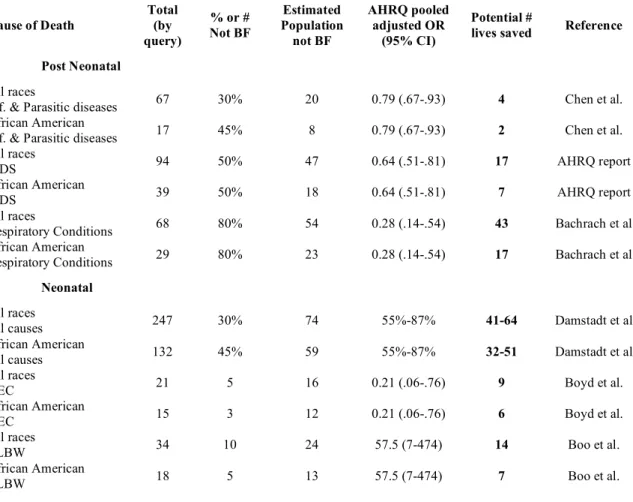
Table 1.2: Potential ‘number of lives saved’ from improved practices in breastfeeding among non-breastfeeding population
Cause Specific Mortality by indicators, NC Vital Statistics Registry
Cause of Death
Total (by query)
% or # Not BF Estimated Population not BF AHRQ pooled adjusted OR (95% CI) Potential #
lives saved Reference
Post Neonatal
All races
Inf. & Parasitic diseases 67 30% 20 0.79 (.67-.93) 4 Chen et al. African American
Inf. & Parasitic diseases 17 45% 8 0.79 (.67-.93) 2 Chen et al. All races
SIDS 94 50% 47 0.64 (.51-.81) 17 AHRQ report
African American
SIDS 39 50% 18 0.64 (.51-.81) 7 AHRQ report
All races
Respiratory Conditions 68 80% 54 0.28 (.14-.54) 43 Bachrach et al African American
Respiratory Conditions 29 80% 23 0.28 (.14-.54) 17 Bachrach et al
Neonatal
All races
All causes 247 30% 74 55%-87% 41-64 Damstadt et al
African American
All causes 132 45% 59 55%-87% 32-51 Damstadt et al
All races
NEC 21 5 16 0.21 (.06-.76) 9 Boyd et al.
African American
NEC 15 3 12 0.21 (.06-.76) 6 Boyd et al.
All races
ELBW 34 10 24 57.5 (7-474) 14 Boo et al.
African American
ELBW 18 5 13 57.5 (7-474) 7 Boo et al.
DALYs:
An extensive analysis and study of disability adjusted life years (DALYs) carried
out in Holland found that, combining all the risks and benefits of breastfeeding found in
the literature, 6 months of any breastfeeding would prevent 33 years of disability/illness
per 1000 persons per year.25 While this does not include mortality, the burden of this
excess illness (which includes illnesses such as diabetes, respiratory illnesses, and
cancers) certainly indicates the potential for a profound impact on quality of life and
potential for early death. Given that the population of North Carolina is about 8.7 million,
if we could increase the breastfeeding to this level for the remainder of North
Carolinians, this could eliminate more than 180,000 unnecessary years of illness and
reduced productivity annually.
Cost savings:
Interventions aimed at preventing infant deaths often focus on education during
preconception, prenatal and postpartum periods as well as address access to prenatal care
and newborn intensive care. Human milk is known to carry all the nutrients for babies’
optimal health for at least the first six months, and also provides many immunologic
factors important to babies’ growth and development. There are significant cost savings
that can be accrued by supporting human milk and breastfeeding especially for
low-income women. There are at least three studies that have considered the economic
impact of consistent and exclusive breastfeeding, and all of them show considerable
savings. One such study indicated that the excess morbidity due to lack of human milk in
the NICU would result in excess care costing nearly $10,000 per patient, while the cost of
most about 10% of this cost.26 Another study based on nation-wide data found that the
cost savings from the reduction in major diseases would be more than enough to train
health personnel in lactation support skills and cover two lactation visits per infant.27
Since most interventions rely on the availability of public funds, the relatively low costs
(compared to health-related expenses) support additional programs to advocate for
support of lactation consultants and Baby-friendly hospitals.
Summary of findings:
Using the estimates above, a conservative estimate of the total number of
‘potential lives saved’ from neonatal and post neonatal mortality through improved
breastfeeding practices may be 61- 128, or more. If we look at the African American
population specifically, we may ‘potentially save’ 39 – 77 deaths from improved
breastfeeding practices among this population. This is important when considering the
higher burden of mortality among the African American population.
Conservatively, improved breastfeeding could reduce the number of infant deaths
from 1033 to 972, and this would lower the IMR to 7.6, a 5% reduction. Another less
conservative estimate is that breastfeeding could result in the number of infant deaths
reduced to 905, and this would lower the IMR to 7.1, a >12% reduction (Graph 2.0). If
deaths due to chronic diseases and cancers were included, the IMR and child mortality
rates would be further lowered.
The high mortality rate among the African American population could be lowered
from 436 to 397 infant deaths reducing the IMR from 14.7 to 13.4, a reduction of 9%. A
less conservative estimate would reflect a decrease to 359 lowering the IMR to 12.1, a
Graph 2.0: Potential impact of improved breastfeeding on Infant Mortality Rates in North Carolina from conservative estimates.
State Center for Health Statistics, IMR reported by race
DISCUSSION:
North Carolina has already made significant investments in reducing the causes of
infant mortality through improvements in prenatal, maternity, and safe sleeping practices.
It may now be time to consider areas that have not been addressed. The disparity in
health among the different racial groups in North Carolina is an important area to
consider when thinking about implications for public health. The excess mortality
experienced by African Americans highlight the need to focus on this population,
specifically. In this report we have discussed improved breastfeeding as an effective
strategy to save lives in North Carolina, especially among specific racial groups.
Our main objectives were to 1) consider disparities in health among African
Americans compared to their White counterparts, 2) evaluate differences in mortality,
and 3) explore causative factors for infant mortality. The primary tools that we used were
the available data from the AHRQ report and other published studies, PRAMS survey
data, CDC-NIS survey data and information from the North Carolina vital statistics
registry. As was stated above, African Americans report an overall poorer health status
and this status are reflected in the NC Health disparities report card. We concluded that
improvements in exclusive breastfeeding practices among African American women can
greatly influence infant mortality rates and also improve mortality rates overall.
Evaluating survey data is important to creating a strong evidence base to inform policies
on breastfeeding at the local, national and even international levels.
As an intervention, breastfeeding is a very cost-effective strategy for reducing risk
from causes of infant mortality, and research has reported numerous benefits of
the ideal nourishment for infants for the first six months of life, it also transfers immunity
to the infant and has protective effects against a number of infant infections. We
presented data on the cost-effectiveness of breastfeeding when compared to health care
costs due to preventable illness, lost dollars in NICU, data on DALYs, and other related
expenses. A focus on breastfeeding would not only impact public health but also provide
less expensive alternatives in preterm birth and neonatal healthcare.
Unfortunately, exclusive breastfeeding remains a rarity, and durations of any
breastfeeding remain well below those called for in the Healthy People 2010 goals.
Nationally, the Healthy People 2010 breastfeeding specific goals are to increase the
proportion of mothers who breastfeed postpartum and out to 6 months and 12 months.
The recent midcourse review added two new sub-objectives to breastfeeding goals for
exclusive breastfeeding at 3 months and 6 months. North Carolina is moving in the right
direction towards lowering infant mortality rates with a number of programs and
measures as tools for creating an evidence base. The PRAMS and BRFSS are key data
collection tools to provide information on the NC population.29 This secondary data
provides important measures to track progress towards achieving the HP2010 goals and
to highlight the most vulnerable populations where current methods may fall short. The
information suggested in this report has important implications for the existing HP 2010
goals and to inform goal setting for future 2020 objectives.
There are significant limitations to applying rates found in the literature to
determine the potential reduction in risk from breastfeeding. However, given the ethical
limitations to conduct a Randomized Control Trial (RCT) in this population, most of the
potential impact of breastfeeding in reducing infant death. Any application of secondary
data is subject to a variety of benefits and risks and potential bias, however, given this
this type of data is informative to highlight disparities in health and inform policies and
future programs on prevention.
By making conservative estimates of preventable cause of mortality, we can
attempt to account for potential confounders due to sex, race, age, health status and
socioeconomic status. For example, we made no adjustment for the probable skew
towards non-breastfeeding among those who died of a specific cause. By assuming that
the cause specific deaths were fed similarly to the general population, despite the known
increased risk among non-breastfed infants, we may be underestimating the potential
impact of breastfeeding on reducing these specific rates. Hence, our final estimates on the
potential reduction of mortality are very conservative and our projected “lives saved” is
lower than if such an adjustment were made.
Other limitations include the potential problems in applying survey data to
specific populations. The populations used in the referenced studies are nationally
representative samples, which means that although they are considered generalizable,
they may not fully represent the North Carolina population. Care has been taken to make
these estimates as conservative as possible. Additionally, recall bias related to
self-reported survey information can affect the accuracy of survey data. We are able to
mitigate this issue by using the national exclusive breastfeeding rates, which have a large
sample size compared to the North Carolina surveys. This increased sample size gives us
An additional potential weakness of this analysis using survey data is that the
African American population experiences a significantly higher proportion of
preterm/low birth weight babies (and consequently greater infant mortality), but we do
not know the actual rate of human milk feeding in local health care. For this population in
particular, it would be informative to have feeding data. It is further recognized that
infant health outcome is dependent on many factors such as maternal health status,
socio-economic status, education, and age. To date, there is little information to assess the
impact breastfeeding may have on low birth weight and preterm infants.
It would be helpful to have data on low birth weight/ prematurity and
breastfeeding practices in future surveys. As the PRAMS information only collects
breastfeeding information up to 8 weeks, this is less susceptible to recall bias than the
national data. However, to make improvements towards the HP2010 goals, it would be
important to collect this information for longer (3 and 6 months for exclusive
breastfeeding). This information could be added as a component of questions regarding
breastfeeding and would be important for further improvement in health outcomes
through breastfeeding messages and policy changes. Additionally, a behavioral study
could be designed to evaluate these factors within this population.
Most comparison studies of breastfeeding in North Carolina have focused on
Latino women. It is interesting that Latino women have reduced their infant mortality
rates and improved their health status to match those of non-Hispanic white women.
While this improvement may be due to a number of factors, this could imply that the
focus on this ethnic minority group may have contributed to the significant improvement
NC African American population is needed and further focus is warranted for developing
and implementing breastfeeding-friendly health care for this population.
Finally, the Center for Infant and Young Child Feeding and Care at the University
of North Carolina focuses on promoting issues of the mother/child dyad. One emphasis
of their research is to highlight target areas to build the evidence base for public health
action, such as focusing on racial groups that experience disparities in health. There
exists supportive legislation on breastfeeding at both the national level and state levels,
however, the implementation of this legislature requires much stronger advocacy. In
1993, North Carolina exempted breastfeeding from the criminal statutes, and at the same
time, clarified that women have the right to breastfeed in public, even if there is exposure
of the breast.30 Educating and mobilizing interventions are needed to create an enabling
environment for women of all racial groups in North Carolina to feel comfortable and at
ease while breastfeeding their babies.
The disparity in health indicators between African American women and other
racial groups in North Carolina are significant. A number of studies support evidence of
disparities in chronic disease and health risk factors between African American and
White populations. An interesting evaluation of infant mortality by Declerque et al used
the World Health Organization defined Perinatal Periods of Risk Analysis (PPOR), a
scale to rank mortality, to compare African American women in NC vs. White
non-Hispanic women to evaluate excess mortality and showed a striking disparity in health
outcome.31 The resulting impact on health outcome is that African American women
education and care have important implications for public health in regard to disease
prevention.
CONCLUSIONS:
There is little question that lack of breastfeeding is associated with excess illness
and excess years of disability in the US. However, calculations of impact on mortality are
scarce. While not definitive in linking breastfeeding directly to levels of infant mortality
among African Americans in North Carolina, this analysis of secondary data provides a
model for applying data from US meta-analysis to the situation at a state level, with
attention to the difference in practices among sub-groups at increased risk. This paper
clearly indicates the need for further investigation of the relationship between
breastfeeding and infant mortality. Ideally, this type of investigation would include a
carefully monitored and evaluated program intervention to achieve equity while
collecting primary data to measure the dynamics of these associations, with direct control
for potentially confounding factors where feasible. The goal of such research would be to
provide more precise estimates of the reduction in infant mortality that could be achieved
by increases in rates of breastfeeding among all populations and specifically among
African Americans in North Carolina. Nonetheless, these conservative estimates provide
one possible explanation for at least part of the racial differences seen in infant morbidity
and mortality, and reflect the possibility of significantly lowering the infant mortality rate
Bibliography
12006 North Carolina Infant Mortality Report, Table 3. NC Department of Health & Human
Services State Center for Health Statistics, 16AUG2006
2 NC-SCHS, Selected Vital statistics for 2006 and 2002-2006. www.schs.state.nc.us/SCHS/vital
stats/volume1/2006/nc.html. (Accessed February 2008).
3 Racial and Ethnic Health Disparities in North Carolina, Report Card 2006. Office of Minority
Health and Health Disparities and State Center for Health Statistics. NC-DHHS.
4 Behavioral Risk Factor Surveillance System (BRFSS).
http://www.schs.state.nc.us/SCHS/brfss/2006/nc/afam/topics.html (Accessed February, 2008)
5 2002-2006 NC IMR /1000 live births, NC population & health data by race and ethnicity;
prepared 1/28/08.
6Din-Dzietham R, Hertz-Picciotto I. Infant Mortality Differences between Whites and African
Americans: The Effect of Maternal Education. American Journal of Public Health 1998 April;
88(4): 651-656.
7Leslie JC, Galvin SL, Diehl SJ, Bennett TA, Buescher PA. Infant mortality, low birth weight,
and prematurity among Hispanic, white, and African American women in North Carolina. Am J
Obstet Gynecol 2003 May; 188(5): 1238-1240.
8Buescher PA, Mittal M. Racial Disparities in Birth Outcomes Increase with Maternal Age:
Recent Data from North Carolina. NC Med J 2006 Jan/Feb; 67(1): 16-20.
9Wolf J. Low Breastfeeding Rates and Public Health in the United States. American Journal of
Public Health. 2003 December; 93(12): 2000-2010.
10 NC-SCHS, Pregnancy Risk Assessment and Monitoring Survey (PRAMS) 2002-2004.
11 Jones G, Steketee RW, Black RE, Bhutta ZA, Morris SS, Bellagio Child Survival Study Group.
How many child deaths can we prevent this year? The Lancet 2003 Jul 5; 362(9377): 65-71.
12 Vitaglione T. There is Life (and Death) Beyond the Infant Year: North Carolina’s Recent
Experience in Reducing Child Deaths. NC Med J. 2004 May/June; 65(3): 173-176.
13 North Carolina State Center for Health Statistics, North Carolina Detailed Mortality Statistics.
http://www.schs.state.nc.us/SCHS/data/dms/dms.cfm (Accessed February, 2008).
14 North Carolina State Center for Health Statistics, Pregnancy Risk Assessment and Monitoring
Survey (PRAMS), Data collection and analysis methods.
http://www.schs.state.nc.us/SCHS/prams/dataca.html. (Accessed February 2008).
15 Centers for Disease Control National Immunization Survey.
16 Ip S et al. Breastfeeding and Maternal and Infant Health Outcomes in Developed Countries.
http://www.ahrq.gov/clinic/tp/brfouttp.htm. (Accessed September 2007).
17 Damstadt GL, Bhutta ZA, Cousens S, Adam T, Walker N, Bernis L. Evidence-based,
cost-effective interventions: how many newborn babies can we save? The Lancet 2005 Mar; 365:
977-988.
18 Hogan V.K. Addressing Perinatal Health Disparities: Another Place for a Paradigm Shift. NC
Med J. 2004 May/June; 65(3): 159-162.
19 Boo NY, Puah CH, Lye MS. The role of expressed breastmilk and continuous positive airway
pressure as predictors of survival in extremely low birthweight infants. B J Trop Pediatr 2000
Feb; 46(1): 15-20.
20Boyd CA, Quigley MA, Brocklehurst P. Donor breast milk versus infant formula for preterm
infants: systematic review and meta-analysis. Arch Dis Chile Fetal Neonatal Ed 2007; 92:
F169-F175.
21 Chen A, Rogan WJ. Breastfeeding and the risk of post-neonatal death in the United States.
Pediatrics. 2004 May; 113(5): e435-9.
22 NC Vital Statistics Volume 2, Leading Causes of Death – 2005
http://www.schs.state.nc.us/SCHS/deaths/lcd/2005/pdf/TblsA-F.pdf
23 Labbok M. Presentation to State Child Fatality Task Force and State SIDS committee, 2007
24 Bachrach VR, Schwarz E, Bachrach LR. Breastfeeding and the risk of hospitalization for
respiratory disease in infancy: A meta-analysis. Arch Pediatr Adolesc Med 2003 Mar; 157(3):
237-43.
25 Van Rossum C. Quantification of health effects of breastfeeding, RIVM report, 2006
26 Wight N.E. Donor Human Milk for Preterm Infants. Journal of Perinatology. 2001; 21:
249-254.
27 Labbok M. Cost Benefit Analysis for Breastfeeding in the United States: Is supporting
exclusive breastfeeding worth the costs? Breastfeeding Annual International 2001, Michaels D,
ed., Platypus Media Press, 2001 pp187-194.
28 Mathews M, MacDorman M. Infant Mortality Statistics from the 2004 Period Linked
Birth/Infant Death Data Set. National Vital Statistics Reports, Volume 55, Number 14 May 2,
2007 http://www.cdc.gov/nchs/data/nvsr/nvsr55/nvsr55_14.pdf
29 North Carolina is moving in the Right Direction. NC Med J. 2004 May/June;65(3): 14 -146.
30 . La Leche League International. Summary of breastfeeding legislation in the United States
http://www.llli.org/Law/Bills31.html (Accessed November, 2007)