M.S. in I.S. degree. April, 2009. 35 pages. Advisor: Jeffery Lawrence Loo.
Physicians’ use of handheld computers is increasing, but still incomplete. Device usability is a commonly cited adoption barrier. This study explores
physicians’ usability evaluations and adoption preferences for handheld computers. We conducted a randomized crossover study to compare the Apple iPod Touch and Palm Tungsten C. The study was conducted in a laboratory setting with 23 internal medicine resident physicians from Duke Medical Center. Participants used each device to respond to clinical questions based on hypothetical cases and completed a survey based on the extended Technology Acceptance Model. The iPod Touch had significantly higher ratings than the Tungsten C for perceived ease of use, perceived usefulness, subjective norm, image, and intention to use. Perceived ease of use was an important determinant of participants’ intention to use handheld computers. Improving ease of use may encourage handheld computer adoption among physicians.
Headings:
Portable computers Personal digital assistants
Use studies ‐‐ Information systems Technology adoption
by
Anthony Joseph
A Master’s paper submitted to the faculty of the School of Information and Library Science of the University of North Carolina at Chapel Hill
in partial fulfillment of the requirements for the degree of Master of Science in
Information Science.
Chapel Hill, North Carolina
April 2009
Approved by
Table of Contents
Introduction ... 2
Methods... 8
Results ... 11
Discussion ... 17
References ... 23
Appendix ... 27
Introduction
For years, physicians have used handheld computers to retrieve information
and apply computing power at the point of care 1. In the last decade there has been
an increasing trend in handheld computer use by physicians, with adoption rates
ranging from 45 to 85% in recent years 2. Some studies suggest that handheld
computers are underutilized by physicians 3 and have yet to be fully implemented in
health care 4. Several studies have explored the barriers to adoption of these devices
by physicians 5‐7, with many reports citing usability as a key obstacle 8‐10. This
research explores how usability and other factors may contribute to handheld
computer adoption by physicians.
Background
A body of research has examined the uses and benefits of handheld
computers in medicine. Applications for decision support and information retrieval
– including pharmacopeias, medical calculators, and medical references – are the
most popular among physicians 7 10‐13. Pharmacopeias have the highest prevalence
(69 – 100%†) 14‐19. This trend corresponds with the perception that handheld
computers increase patient safety by providing appropriate drug dosing
recommendations and decreasing medication errors 14 20 21. Studies showing
reductions in drug interactions in the outpatient setting 22 and reductions in
†
length of stay and antibiotic prescribing in the critical care unit 23 corroborate this
perceived benefit.
Medical reference materials – including text books, journals, and practice
guidelines – are also popular among physicians (38 – 66%) 14‐19. This trend
corresponds with another perception that handheld computers provide quick and
easy access to relevant medical resources 6 14, thereby improving patient care 5 21.
This perceived benefit is confirmed by studies showing improved evidence‐based
practice 24 and adherence to treatment and diagnosis guidelines 25 with handheld
computers.
Physicians use handheld computers for other tasks beyond pharmacopeia
and medical reference research. Medical calculators are widely used (61 – 89%)
along with scheduling, contact management, and note‐taking tools that come pre‐
loaded on most devices (42 – 92%) 14‐17. Patient tracking, medical billing and coding,
web browsing, email, and electronic prescribing applications are also used, but
much less frequently 7 14‐17. Even so, these and other tools may contribute to the
perception among some physicians that handheld computers improve efficiency and
14 and enhance productivity 26. For collecting clinical research data, randomized
studies show increased speed and data integrity with handheld computers when
compared to paper‐based instruments 27 28. Additionally, research examining novel
uses such as voluntary medication event reporting 29 and automated triage for
bioterrorist disasters 30 have yielded positive results.
Adoption barriers
Despite the numerous uses and benefits of medical handheld computing,
recent studies suggest that adoption by physicians is incomplete 3 4. Several studies
have examined the adoption barriers of these devices. While organizational barriers
– including security and privacy concerns related to HIPAA – are prevalent 12 31‐33,
the majority of obstacles involve the usability of handheld computers. Ease of use is
a key issue. Physicians frequently cite poor user interfaces 6 8 24 and difficult data
entry 3 8 9 14 24 32 as major impediments to adoption. They also cite limitations in
computer memory 3 14 34, battery life 3 6 9, device speed 3 6 14 24, and screen size 3 9 14 24
as significant barriers.
Along with ease of use, usefulness is important for usability. Some
physicians question whether handheld computers are useful in medicine. The lack of
need or motivation is often cited as a barrier to adoption 3 5 9 34. This is bolstered by
concerns about the accuracy and completeness of clinical tools for handheld devices
6 32 34 – as well as reliability of the devices themselves 6 14. When we consider
additional barriers such as cost 6 12 and low comfort with technology 3 7, we begin to
understand why handheld computers may be underutilized.
Study purpose
To explore how usability and other factors may contribute to handheld
computer adoption by physicians, we compared a newer platform (Apple™ iPod
Touch) to a more established platform (Palm™ Tungsten C) through a randomized
crossover trial to determine whether physicians consider one interface to be more
show it is the dominant platform among physicians (74 – 90%†) compared to
Windows Mobile™ (9 – 16%†) 14 16 17 35. We chose the Apple platform as our
emerging interface because of its innovative design and multi‐touch functionality as
well as the relative lack of research on Apple handheld computers in medicine.
Technology Acceptance Model
We used a modified version of the Technology Acceptance Model (TAM) to
collect physicians’ usability evaluations and adoption preferences for the two
platforms. The original TAM is well established for relating and measuring
perceived usefulness, perceived ease of use, and intention to adopt new technology
36‐38. However, additional measures may be necessary when evaluating technologies
in a healthcare setting 39.
We based our data collection instrument on an extended TAM that also
measures subjective norm, image, job relevance, and result demonstrability 40.
Subjective norm refers to the perception of the technology in the eyes of people that
the user deems as important. Image is the perception that the technology will offer
social standing. Job relevance refers to the perception of how applicable the
technology is to a user’s job. Finally, result demonstrability is the perception of
tangible results due to technology use 40.
While some elements of the extended TAM are not fully supported when
applied to healthcare professionals 41‐43, this model is better than other behavioral
models for studying health technology adoption 44. Studies have tested TAM and its
variants in the healthcare setting with positive results 45‐48.
Hypotheses
We made the following hypotheses in our comparison of the traditional
interface (Palm Tungsten C) with the emerging interface (Apple iPod Touch).
Table 1. Hypotheses
Construct Hypotheses
Perceived Ease of Use H1: Participants will rate the Apple iPod Touch higher than the Palm Tungsten C for perceived ease of use.
Perceived Usefulness H2: Participants will rate the Apple iPod Touch higher than the Palm Tungsten C for perceived usefulness.
Subjective Norm H3: Participants will rate the Apple iPod Touch the same as the Palm Tungsten C for subjective norm.
Image H4: Participants will rate the Apple iPod Touch higher than the Palm Tungsten C for image.
Job Relevance H5: Participants will rate the Apple iPod Touch the same as the Palm Tungsten C for job relevance.
Result Demonstrability H6: Participants will rate the Apple iPod Touch the same as the Palm Tungsten C for result demonstrability.
Intention to Use
H7: Participants will rate the Apple iPod Touch higher than the Palm Tungsten C for intention to use.
H8: Perceived ease of use will be positively associated with intention to use.
H9: Perceived usefulness will be positively associated with intention to use.
H1 and H2 stem from the improved interface and navigation features for
which the Apple device is widely recognized. H5, and H6 arise because we test a
nearly identical functionality in both devices that should give the same user results.
H3 assumes participants have not been influenced by their superiors regarding the
two devices. On the other hand, H4 assumes that the novelty of the Apple device may
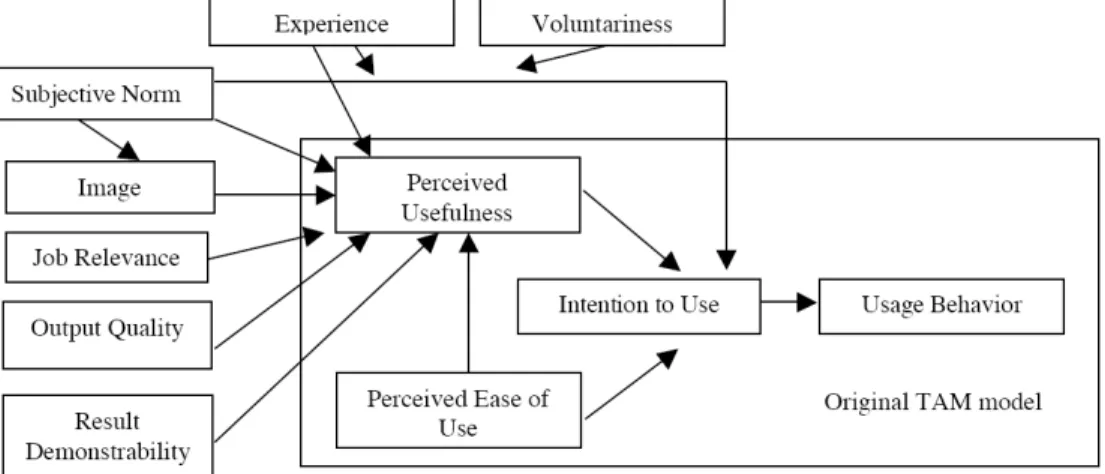
H8 and H9 arise from assumptions derived from the extended TAM illustrated
in Figure 1 40. They are the most significant for this study given our focus on
usability perceptions and their effect on technology adoption. We did not examine
experience or voluntariness in our study because we tested the devices in a
laboratory setting. We also excluded output quality because we controlled
participant’s interactions with both devices to yield comparable results.
Figure 1. Extension of Technology Acceptance Model 40
Significance
This study contributes to the understanding of Apple handheld computers in
healthcare. As a recently released technology, there is a research gap for these
devices. Additionally, the majority of research on physicians’ handheld computer
use is descriptive – rather than comparative – with little evidence‐based guidelines 1
12. Through randomized crossover trial evidence, we compare usability evaluations
and adoption preferences for Palm and Apple devices in order to gain insight into
whether the emerging Apple interface might overcome the adoption barriers of
Methods
Design Overview
This study compared the Apple iPod Touch and the Palm Tungsten C in a
randomized crossover trial that examined their usability evaluation and adoption
preference among resident internists.
Setting and Participants
The study was conducted in the Department of Medicine Library at Duke
University Medical Center in March 2009. Only house staff from the internal
medicine residency program were recruited including categorical, preliminary,
medicine‐psychiatry, and medicine‐pediatrics residents – there were no other
exclusion criteria. We recruited primarily via email and word of mouth. Participants
received 25 dollars compensation and a complimentary meal upon completion.
Randomization and Intervention
The study coordinator enrolled research participants via email and an online
scheduling web application. Participants arrived at the Department of Medicine
Library at the scheduled time. Upon consent, participants were randomly assigned
to a sequence order for examining the devices: test the Apple iPod Touch first and
then the Palm Tungsten C, or vice versa. Participants were randomized by drawing
numbers from a bag; there was equal probability of drawing either device.
After receiving either the iPod Touch or the Tungsten C, participants used the
Epocrates medical reference software on the device to respond to clinical questions
based on a hypothetical case. The questions required participants to carry out a
software suite. Participants then exchanged their devices for their second handheld
platform ‐ those with an iPod Touch received a Tungsten C and vice versa – to
respond to a comparable set of clinical questions. Due to strong similarities between
the versions of Epocrates for the iPod Touch and the Tungsten C, different case
studies were generated for each device (Appendices E and F).
Outcomes
Participants completed a brief survey to collect background details.
Following each case study, participants completed a questionnaire evaluating their
experiences with the device (Appendix A). The questionnaire was based on the
extended version of the Technology Acceptance Model (TAM). The primary
measured outcomes were intention to use, perceived usefulness, perceived ease of
use, subjective norm, image, job relevance, and result demonstrability. These
outcomes were measured with a seven‐point Likert scale (1 = Strongly Disagree, 4 =
Neutral, 7 = Strongly Agree).
After using both handheld platforms, participants responded to open‐ended
questions regarding their opinions on technology adoption and their experiences.
All surveys and questionnaires were administered via laptop computers using
Qualtrics web software.
Statistical Analysis
We compared measured outcomes between the iPod Touch and Palm
Tungsten C using independent two‐sample t‐tests. We conducted multiple linear
constructs illustrated in Figure 1. All statistical analyses were conducted with JMP
statistical software.
Ethical Considerations
The Duke University Health System Institutional Review Board and the
University of North Carolina at Chapel Hill Behavioral Institutional Review Board
determined that our protocol met the criteria for exemption as described in 45 CFR
46.101(b)(2). A trained research assistant obtained consent from all participants.
See Appendices B through D for supporting documentation.
Role of the Funding Source
The study was supported by the Haynes IT Adoption Fund in the Department
of Medicine, Duke University. The funding source had no role in the design, conduct,
Results
Baseline Characteristics
We recruited 23 participants from the 163 Duke Medicine residents eligible
for the research, and all completed the study. Participants were predominantly
male and were early in their residency training (Postgraduate year mean = 1.78, SD
= 0.90). The majority of participants had already incorporated handheld computers
into their clinical practice, and almost all had previous experience with handheld
computers (Table 2). Additionally, nearly all participants had previously used the
Epocrates drug database in its web or handheld formats.
Table 2. Baseline Characteristics
Characteristic, n (%) Study Group
(n = 23)
Gender
Male Female
17 (74) 6 (26)
Postgraduate Year
PGY1 PGY2 PGY3 PGY4
11 (48) 7 (30) 4 (17) 1 (4)
Handheld Computer Experience
Clinical Setting Any Setting
14 (61) 21 (91)
Previous Epocrates Use 21 (91)
First Device Assignment
Apple iPod Touch Palm Tungsten C
13 (57) 10 (43)
Comparison of Handheld Computers
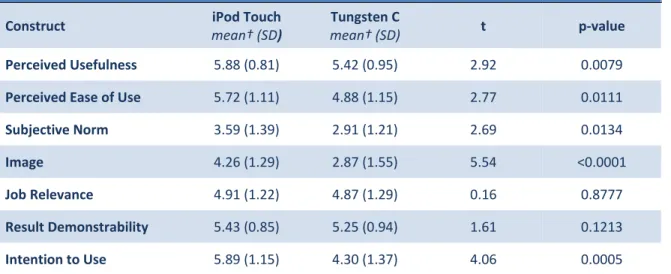
Table 3 compares participant ratings for the extended TAM constructs
between the two devices. On average, participants rated the iPod Touch significantly
higher than the Tungsten C for measures of perceived usefulness, perceived ease of
use, subjective norm, image, and intention to use (p < 0.05 for all constructs). There
were no significant differences between the two devices for measures of job
relevance and result demonstrability. See Appendix A for the average participant
ratings for each survey question.
Table 3. Comparison of Participant Ratings for Handheld Computers
Construct iPod Touch
mean† (SD)
Tungsten C
mean† (SD) t p‐value
Perceived Usefulness 5.88 (0.81) 5.42 (0.95) 2.92 0.0079
Perceived Ease of Use 5.72 (1.11) 4.88 (1.15) 2.77 0.0111
Subjective Norm 3.59 (1.39) 2.91 (1.21) 2.69 0.0134
Image 4.26 (1.29) 2.87 (1.55) 5.54 <0.0001
Job Relevance 4.91 (1.22) 4.87 (1.29) 0.16 0.8777
Result Demonstrability 5.43 (0.85) 5.25 (0.94) 1.61 0.1213
Intention to Use 5.89 (1.15) 4.30 (1.37) 4.06 0.0005
†Rating on a seven‐point Likert scale (1 = Strongly Disagree, 4 = Neutral, 7 = Strongly Agree)
Relationships between Constructs
Multiple regression analysis was conducted to confirm the relationships
between constructs put forth in the extended TAM (Figure 1).
Table 4 shows the effects of perceived usefulness, perceived ease of use, and
subjective norm on the intention to use for each device. Perceived ease of use was a
statistically significant determinant of intention to use for the iPod Touch (p < 0.05),
were not statistically significant determinants of intention to use for both devices.
The extended TAM could account for 53% of the variance in usage intentions for the
iPod Touch and 32% of the variance in usage intentions for the Tungsten C.
*p < 0.05, ** p < 0.01, *** p < 0.001, † p < 0.1. Adjusted R2s are shown. β: standardized regression coefficients
Table 4 also shows the effects of subjective norm, image, job relevance, result
demonstrability, and perceived ease of use on perceived usefulness. For the iPod
Touch, perceived ease of use was a significant determinant of perceived usefulness
(p < 0.01) as was job relevance (p < 0.05). The extended TAM could account for 66%
of the variance in perceived usefulness for the iPod Touch. For the Tungsten C, only
subjective norm was a significant determinant of perceived usefulness (p < 0.05).
The extended TAM could account for 42% of the variance in perceived usefulness
for the Tungsten C.
Lastly, subjective norm was a statistically significant determinant of image
for both the iPod Touch (p < 0.001) and the Tungsten C (p < 0.05). The extended
Table 4. Regression Analysis of Extended TAM Constructs
Construct Explained Apple iPod Touch
R2 β
Palm Tungsten C
R2 β
Intention to Use 0.53 0.32
Perceived Usefulness Perceived Ease of Use Subjective Norm
0.21 0.59*
0.16
0.44 0.45† 0.44†
Perceived Usefulness 0.66 0.42
Subjective Norm Image
Job Relevance
Result Demonstrability Perceived Ease of Use
(0.02) (0.15) 0.20*
0.21
0.44**
(0.42)* 0.06 (0.05)
0.39 0.24
Image 0.46 0.22
TAM could account for 46% and 22% of the variance in image for the iPod Touch
and Tungsten C respectively (Table 4).
Qualitative Results
Participants’ qualitative responses were analyzed for common themes in
handheld computer adoption and experiences (Table 5). Consistent with other
studies, pharmacopeias were the most commonly used resource by participants
already using handheld computers for clinical practice. Furthermore, perceptions of
quick and easy access to information were seen as the primary benefits of clinical
handheld computing.
Many participants (n = 14, 61%) indicated that perceived ease of use is the
most important variable in the extended TAM for device adoption decision making,
followed by perceived usefulness (n = 7, 30%), and job relevance (n = 2, 9%).
Several participants (n = 11, 48%) suggested that cost – a factor excluded in the
model – is an important determinant of intention to use.
When asked about their iPod Touch experience, participants had positive
remarks about the device’s ease of use, speed, portability, interface, and image.
Twenty‐one of the 23 residents (91%) indicated they would choose an iPod Touch
over a Tungsten C because of those characteristics. However, some participants
complained of difficulty typing with the iPod’s touch screen keyboard. However,
these criticisms may be an issue of familiarity: an Apple handheld computer user
reported difficulties using the Tungsten C, while a Palm user found the iPod Touch
to be more difficult.
Another common theme was the perception that the iPod Touch would be
easier to use in non‐clinical applications, such as playing music and web browsing.
While many felt this trait might could increase the adoption of the iPod Touch in
healthcare settings, one participant saw a negative consequence – that non‐clinical
applications might distract physicians from their clinical responsibilities.
When asked about their Tungsten C experiences, participants had criticisms
about the device’s ease of use. Even so, one resident said he preferred the Tungsten
C over the Windows Mobile device he received at the beginning of his residency
Table 5. Summary of Qualitative Responses
Topic Top Responses
(in decreasing order)
Past experience with handheld computers for clinical use
Pharmacopeia Text references Medical calculators
Perceived benefits of handheld computers for clinical use
Provides quick access to information Save time
Perceived barriers to handheld computers for clinical use
Preference for other tools and resources Difficult to use
Unreliable Lack of need
Lack of exposure to devices Poor battery life
Devices are heavy
Experience with Palm Tungsten C
Pros
Effective for information retrieval Easy data entry with keypad
Cons
Dated design Difficult to use Has too many buttons
Experience with Apple iPod Touch Pros Easy to use
Offers non‐clinical functionality Good user interface
Fast system speed Portable
Cons
Text entry was difficult Non‐clinical functions could be distracting
Important factors missing from the extended Technology Acceptance Model
Cost
Non‐clinical utility of device Look and feel of device in hand
training. Also of note, one participant found the Tungsten C to be more difficult to
use than other Palm platform devices. Two participants (9%) indicated a preference
for the Tungsten C over an iPod Touch because they were already familiar with
Palm devices and preferred the full keyboard for data entry.
Some participants were skeptical about the value of any handheld computer
in a clinical setting. One participant believed that handheld computing in medicine is
a good idea, but the devices are too difficult to use to be practical. Residents who
were not using handheld devices in clinical practice cited a preference for resources
in either print or desktop computer formats. Others felt handheld computers were
not “absolutely necessary” in most contexts, and there were complaints that the
devices were not fully integrated into hospital record systems. Some participants
went further, regarding the reliance on handheld computers as a reflection of poor
medical knowledge. Perceptions of the utility of handheld computers in medicine
did not change significantly from before the intervention (mean rating = 5.70 on a
seven‐point Likert scale) to after (mean rating = 5.90, t = 1.42, p = 0.17).
Discussion
Comparison of Apple iPod Touch and Palm Tungsten C
This study confirmed several of our hypotheses (Table 1). Participants rated
the iPod Touch more favorably for perceived ease of use and perceived usefulness
(H1, H2), possibly because of its novel interface and navigation features. This
preference was further validated by participants’ positive remarks about the iPod
Touch’s superior interface and potential usefulness in clinical as well as non‐clinical
settings. Additionally, we suggested that the novelty of the iPod Touch would
positively affect users’ perceptions of its image (H4). This was supported by our
comparative analysis and substantiated by participants’ qualitative descriptions of
the “cool” and “attractive” iPod Touch.
We proposed that participants’ ratings of job relevance and result
demonstrability would not differ between the two platforms since we tested nearly
identical functionalities that would yield similar results on both devices (H5, H6).
Our findings support this premise, and participants commented that both devices
were similar in effectiveness for using the Epocrates application.
We were mistaken in our assertion that users’ ratings of subjective norm
would be similar for the two platforms (H3). We assumed that participants would
not be significantly influenced by superiors or colleagues for the choice of handheld
computing platforms, but our comparative analysis did not support this notion.
Participants felt that people important to them would prefer the iPod Touch over
For intention to use, we suggested participants would rate the iPod Touch
more favorably than the Tungsten C (H7). This hypothesis was strongly supported
by our comparative analysis, while 91% of participants (21 of the 23 residents)
indicated an intention to use the iPod Touch before a Tungsten C in their qualitative
remarks.
Relationships between Constructs
Our regression analysis confirmed only one of the relationships put forth by
the extended TAM: perceived ease of use is positively associated with intention to
use (H8). This association was statistically significant for the iPod Touch only.
Participants also reported in their qualitative responses that perceived ease of use
was the most important construct for determining intention to use. In addition, we
hypothesized that perceived usefulness would be positively associated with
intention to use (H9), but these results were not significant.
We saw a statistically significant negative association between subjective
norm and perceived usefulness for the Tungsten C. This unexpected finding is
counterintuitive: it suggests that when highly regarded physicians prefer the
Tungsten C, the participants will perceive the device as less useful. Perhaps
participants might have had poor experiences with handheld devices similar to the
Palm Tungsten C despite positive recommendations from their superiors and
colleagues. Some participants reported receiving handheld computers at the
beginning of medical school or residency, and most of them reported negative
recommendations from superiors and colleagues, especially for traditional
interfaces.
Implications for Practice
According to our findings, perceived ease of use is the most important factor
determining physicians’ intentions to use handheld computers. Participants
recognized the devices’ potential usefulness and job relevance in clinical practice,
but they were deterred by difficult to use interfaces. This may explain participants’
preference for the iPod Touch over the Tungsten C. Several participants were
impressed by the iPod’s large touch screen and intuitive navigation scheme, while
noting that the Palm design was difficult to use. At the same time, results indicated
that both devices were similarly relevant to clinical work. Health organizations
wishing to encourage handheld computer adoption by physicians should identify
the platform that maximizes ease of use and functionality.
Factors not measured by the extended TAM may offer insight into physicians’
technology acceptance preferences. One factor is cost since nearly half of all
respondents cited this as a major hindrance to handheld adoption. Additionally,
participants discussed the importance of non‐job related functionality. If devices
could be clinically useful as well as offer functions such as web browsing and
multimedia entertainment, this may encourage adoption by physicians. Participants
repeatedly cited this point in their discussion of the iPod Touch. Finally, the
compatibility with existing hospital systems and workflow may be an important
determinant of intention to use. For example, one participant noted the importance
frequently accessing patient files on desktop computers, they are less motivated to
carry a separate computing device. Another participant reinforced this idea, noting
that all preferred resources are already available in print and desktop computer
formats, so the handheld computer must offer easier access in order to encourage
adoption.
Limitations
The study sample size was small, which limited the power of the statistical
analyses. Participants with prior handheld computing experience were not excluded
and this may have led to bias. As an experimental study in a controlled laboratory
setting, participants evaluated the devices for a short period of time, which might
not simulate daily clinical use. This could limit the generalizability of the results.
Moreover, participants only used the Epocrates application, and did not test other
functionalities, such as web surfing or word processing. Therefore, findings may be
attributed to the Epocrates interface rather than the hardware itself. We intended to
include an online browsing activity for this study, but our hospital environment did
not support wireless network access for Palm devices due to security reasons.
Future Research
To foster handheld computer adoption in medicine, we recommend further
comparative studies on the usability evaluations and adoption preferences of
physicians. A next step is conducting larger trials over extended periods of time in
clinical settings and to include print and desktop references as a control.
Furthermore, there should be testing of additional platforms in the marketplace,
in their selection of a handheld platform as well as provide handheld computer
manufacturers and software programmers with evidence for improved clinical
design and applications.
We also recommend focusing on objective measures when determining the
value of handheld computers in medicine. While many studies have suggested
potential and perceived benefits of handheld computers, very few report measured
outcomes to validate these benefits. Researchers could conduct large scale trials to
determine financial, safety, efficiency, and behavioral outcomes. Further evidence of
their benefit will hopefully encourage physicians to adopt handheld computers.
Conclusion
We evaluated the usability of an emerging handheld platform (the Apple iPod
Touch) and a traditional platform (Palm Tungsten C) to determine if and why
physicians have a preference for one of these devices. We intended to shed light on
usability as an adoption factor for handheld computers in clinical settings.
Our results indicated that participants perceived the iPod Touch to be easier
to use and more useful than Tungsten C, despite similar job relevance ratings for the
two devices. Participants were more likely to use the iPod Touch in their clinical
practice, largely due to a perceived ease of use. Indeed, ease of use was the chief
determining factor in physicians’ intentions to use a handheld computer. This study
encourages further comparative research in clinical settings as well as objective
measures of the benefits of handheld computers in medicine.
Acknowledgments
This research would not have been possible without the unwavering
support of my advisors, Dr. Martha Adams from the Department of Internal
Medicine at Duke University Medical Center and Jeffery Loo from the School of
Information and Library Science at the University of North Carolina at Chapel
Hill. Both individuals generously contributed their time and expertise to ensure
References
1. Kuziemsky CE, Laul F, Leung RC. A review on diffusion of personal digital assistants in healthcare. J Med Syst 2005;29(4):335‐42.
2. Garritty C, El Emam K. Who's using PDAs? Estimates of PDA use by health care providers: a systematic review of surveys. J Med Internet Res 2006;8(2):e7.
3. Phua J, Lim TK. How residents and interns utilise and perceive the personal digital assistant and UpToDate. BMC Med Educ 2008;8:39.
4. Lindquist AM, Johansson PE, Petersson GI, Saveman BI, Nilsson GC. The use of the Personal Digital Assistant (PDA) among personnel and students in health care: a review. J Med Internet Res 2008;10(4):e31.
5. McAlearney AS, Schweikhart SB, Medow MA. Doctors' experience with handheld computers in clinical practice: qualitative study. BMJ 2004;328(7449):1162.
6. Axelson C, Wardh I, Strender LE, Nilsson G. Using medical knowledge sources on handheld computers‐‐a qualitative study among junior doctors. Med Teach 2007;29(6):611‐8.
7. Honeybourne C, Sutton S, Ward L. Knowledge in the Palm of your hands: PDAs in the clinical setting. Health Info Libr J 2006;23(1):51‐9.
8. Jao C, Hier DB, Su J. Evaluating a digital Resident Diagnosis Log: reasons for limited acceptance of a PDA solution. AMIA Annu Symp Proc 2003:876.
9. Lu YC, Lee JK, Xiao Y, Sears A, Jacko JA, Charters K. Why don't physicians use their personal digital assistants? AMIA Annu Symp Proc 2003:405‐4.
10. Lu YC, Xiao Y, Sears A, Jacko JA. A review and a framework of handheld computer adoption in healthcare. Int J Med Inform 2005;74(5):409‐22.
11. Carroll AE, Christakis DA. Pediatricians and personal digital assistants: what type are they using? AMIA Annu Symp Proc 2003:130‐4.
13. Yu F, Houston TK, Ray MN, Garner DQ, Berner ES. Patterns of use of handheld clinical decision support tools in the clinical setting. Med Decis Making 2007;27(6):744‐53.
14. Carroll AE, Christakis DA. Pediatricians' use of and attitudes about personal digital assistants. Pediatrics 2004;113(2):238‐42.
15. De Groote SL, Doranski M. The use of personal digital assistants in the health sciences: results of a survey. J Med Libr Assoc 2004;92(3):341‐8.
16. Khan AN, Frank J, Geria R, Davidson S. Utilization of personal digital assistants (PDAS) by pediatric and emergency medicine residents. J Emerg Med 2007;32(4):423‐8.
17. Morris CG, Church L, Vincent C, Rao A. PDA usage and training: targeting curriculum for residents and faculty. Fam Med 2007;39(6):419‐24.
18. Blair R, Waton K. Like it? Yes. Need It? Yes. Buy it? Nah. Health Manag Technol 2005;26(9):20‐2, 24‐5.
19. Jotkowitz A, Oh J, Tu C, Elkin D, Pollack LA, Kerpen H. The use of personal digital assistants among medical residents. Med Teach 2006;28(4):382‐4.
20. Galt KA, Rule AM, Houghton B, Young DO, Remington G. Personal digital assistant‐based drug information sources: potential to improve medication safety. J Med Libr Assoc 2005;93(2):229‐36.
21. Rothschild JM, Fang E, Liu V, Litvak I, Yoon C, Bates DW. Use and perceived benefits of handheld computer‐based clinical references. J Am Med Inform
Assoc 2006;13(6):619‐26.
22. Dallenbach MF, Bovier PA, Desmeules J. Detecting drug interactions using personal digital assistants in an out‐patient clinic. QJM 2007;100(11):691‐7.
23. Sintchenko V, Iredell JR, Gilbert GL, Coiera E. Handheld computer‐based decision support reduces patient length of stay and antibiotic prescribing in critical care. J Am Med Inform Assoc 2005;12(4):398‐402.
24. Hauser SE, Demner‐Fushman D, Jacobs JL, Humphrey SM, Ford G, Thoma GR. Using wireless handheld computers to seek information at the point of care: an evaluation by clinicians. J Am Med Inform Assoc 2007;14(6):807‐15.
25. Price M. Can hand‐held computers improve adherence to guidelines? A (Palm) Pilot study of family doctors in British Columbia. Can Fam Physician 2005;51:1506‐7.
26. McAlearney AS, Schweikhart SB, Medow MA. Organizational and physician perspectives about facilitating handheld computer use in clinical practice: results of a cross‐site qualitative study. J Am Med Inform Assoc 2005;12(5):568‐75.
27. Lane SJ, Heddle NM, Arnold E, Walker I. A review of randomized controlled trials comparing the effectiveness of hand held computers with paper methods for data collection. BMC Med Inform Decis Mak 2006;6:23.
28. Rivera ML, Donnelly J, Parry BA, Dinizio A, Johnson CL, Kline JA, et al. Prospective, randomized evaluation of a personal digital assistant‐based research tool in the emergency department. BMC Med Inform Decis Mak 2008;8:3.
29. Dollarhide AW, Rutledge T, Weinger MB, Dresselhaus TR. Use of a handheld computer application for voluntary medication event reporting by inpatient nurses and physicians. J Gen Intern Med 2008;23(4):418‐22.
30. Schell CL, Wohl R, Rathe R, Schell WJ. Automated vs manual triage for bioterrorist disaster: a blinded crossover feasibility study comparing personal digital assistant to paper‐based triage. Am J Emerg Med 2006;24(7):843‐6.
31. Al‐Ubaydli M. Handheld computers. BMJ 2004;328(7449):1181‐4.
32. Barrett JR, Strayer SM, Schubart JR. Assessing medical residents' usage and perceived needs for personal digital assistants. Int J Med Inform 2004;73(1):25‐34.
33. Bush H. Technology. Cutting‐edge portable devices raise concerns. Hosp Health
Netw 2007;81(8):22.
34. Ranson SL, Boothby J, Mazmanian PE, Alvanzo A. Use of personal digital assistants (PDAs) in reflection on learning and practice. J Contin Educ Health
Prof 2007;27(4):227‐33.
35. McLeod TG, Ebbert JO, Lymp JF. Survey assessment of personal digital assistant use among trainees and attending physicians. J Am Med Inform Assoc 2003;10(6):605‐7.
36. Davis F. A technology acceptance model for empirically testing new enduser
information systems: theory and results: Massachusetts Institute of Technology Cambridge, 1985.
37. Davis F. Perceived usefulness, perceived ease of use, and user acceptance of information technology. MIS quarterly 1989:319‐40.
38. Davis F, Bagozzi R, Warshaw P. User acceptance of computer technology: a comparison of two theoretical models. Management science 1989:982‐1003.
39. Hu P, Chau P, Sheng O, Tam K. Examining the technology acceptance model using physician acceptance of telemedicine technology. Journal of Management
Information Systems 1999;16(2):91‐112.
40. Venkatesh V, Davis F. A theoretical extension of the technology acceptance model: four longitudinal field studies. Management science 2000:186‐204.
41. Chau P, Hu P. Information Technology Acceptance by Individual Professionals: A Model Comparison Approach*. Decision Sciences 2001;32(4):699‐719.
42. Test of the technology acceptance model for the internet in pediatrics; 2002. American Medical Informatics Association.
43. Does the extended technology acceptance model apply to physicians; 2003.
44. Chau P, Hu P. Investigating healthcare professionals’ decisions to accept telemedicine technology: an empirical test of competing theories. Information & management 2002;39(4):297‐311.
45. Development and comparison of user acceptance of advanced comprehensive triage PDA support system with a traditional terminal alternative system; 2003. American Medical Informatics Association.
46. Day M, Demiris G, Oliver D, Courtney K, Hensel B. Exploring underutilization of videophones in hospice settings. Telemedicine and ehealth 2007;13(1):25‐ 32.
47. Tung F, Chang S, Chou C. An extension of trust and TAM model with IDT in the adoption of the electronic logistics information system in HIS in the medical industry. International journal of medical informatics 2008;77(5):324‐35.
48. Wu J, Shen W, Lin L, Greenes R, Bates D. Testing the technology acceptance model for evaluating healthcare professionals' intention to use an adverse event reporting system. International Journal for Quality in Health Care 2008;20(2):123.
Appendices
Appendix A. Participant Ratings for Extended TAM Constructs
Construct, mean (SD) Apple
iPod Touch
Palm Tungsten C
Intention to Use
1. Assuming that significant barriers to use of [device] are overcome, I intend to adopt [device]. 2. If significant barriers did not exist, I predict I would use a [device]. 5.70 (1.29) 6.09 (1.08) 4.04 (1.40) 4.57 (1.47)
Perceived Usefulness
1. [Device] could increase my productivity. 2. [Device] could improve the quality of the care I deliver. 3. [Device] could enhance my effectiveness. 4. [Device] could be useful in my job. 5.87 (0.87) 5.70 (0.93) 5.78 (0.90) 6.17 (0.78) 5.30 (0.88) 5.30 (0.93) 5.43 (1.12) 5.65 (1.15)
Perceived Ease of Use
1. My interaction with [device] will be clear and understandable. 2. [Device] will be easy to use. 3. Interacting with [device] will not require a lot of mental effort. 4. It is easy to get [device] to do what I want it to do. 5.78 (1.09) 5.74 (1.18) 5.83 (1.27) 5.52 (1.41) 5.04 (1.07) 5.00 (1.13) 4.74 (1.54) 4.74 (1.39)
Subjective Norm
1. Physicians who influence my behavior think I should use [device]. 2. Physicians who are important to me think I should use [device]. 3.57 (1.44) 3.61 (1.37) 2.83 (1.23) 3.00 (1.24)
Image
1. Having [device] will be a status symbol. 2. Physicians who use [device] have more prestige than those who do not. 3. Physicians who use [device] have a high profile. 5.04 (1.30) 3.70 (1.66) 4.04 (1.55) 3.00 (1.71) 2.87 (1.66) 2.74 (1.54)
Job Relevance
1. Usage of [device] is relevant to the delivery of patient care. 2. Usage of [device] is important to the delivery of patient care. 5.09 (1.31) 4.74 (1.21) 5.09 (1.38) 4.65 (1.30)
Result Demonstrability
Appendix B. Duke University Health System IRB Notice
Appendix C. University of North Carolina at Chapel Hill IRB Notice
Appendix D. Participant Consent Form
Appendix E. Clinical Case for iPod Touch
Appendix F. Clinical Case for Tungsten C