The Practice of Breastfeeding and Maternal HIV Status:
Trend Analysis in Kenya
By Essete Solomon Kebede
A paper presented to the faculty of the University of North Carolina at
Chapel Hill in partial fulfillment of the requirements for the
Degree of Master of Public Health in the Department of Maternal and
Child Health
Chapel Hill, N.C.
(11/18/2011)
Approved by:
Advisor
1
Table of Contents
Page
CHAPTER ONE: INTRODUCTION ……… 3
1.1 Background Information ……… 3
1.2 Prior Studies ……… 5
1.3 Study Rationale ……… 8
1.4 Research Question & Hypothesis ……… 9
1.5 Conceptual Model ……… 9
CHAPTER TWO: METHODOLOGY ……… 11
2.1 Design and Sample Size ………..……….. 11
2.2 Study Variables ……… 12
2.3 Data Analysis ……… 13
CHAPTER THREE: RESULTS ……… 14
3.1 Descriptive Statistics ……… 14
3.2 Inferential Statistics ……… 18
3.3 Mothers Who Know their HIV Status ……… 22
CHAPTER FOUR: DISCUSSION AND CONCLUSION ……… 26
4.1 Discussion ……… 26
4.2 Study Strengths and Limitations ……….. 29
4.3 Conclusion ………. 29
References ……… 31
2 Abstract
Objectives: The main objective of this study is to assess change in practice of breastfeeding among HIV-positive mothers between 2003 and 2008/9.
Methods: The study is based on analysis of the Kenya Demographic and Health Survey (KDHS) data for 2003 and 2008/9. In this study mothers with children age 0-23 months and had been tested for HIV are included from the KDHS data.
Results: The Fisher’s exact tests and the logistic regression analysis show that in 2003, there was no association between HIV status and practice of breastfeeding. However, in 2008/9, HIV status of mothers has influenced current breastfeeding status. HIV-positive mothers are less likely to breastfeed their children in 2008/9 than 2003.
3
CHAPTER ONE: INTRODUCTION
1.1 Background Information
The human immunodeficiency virus (HIV) has been a global public health challenge since the first case emerged in the 1970s. Every year, half a million children become infected with HIV and nearly 90% of these children live in Sub-Saharan Africa (1). The major source of child infection is transmission via HIV infected mothers during labor, delivery and/or through breastfeeding. About 10 – 20% of children born to HIV infected mothers contract the virus through breast milk, if breastfeeding continues until two years of age (2). Ceasing breastfeeding can reduce the risk of HIV infection (3). However, in resource constrained settings, ceasing breastfeeding is competing against other causes of infant mortality such as diarrhea and pneumonia (3). Globally,
breastfeeding is responsible for approximately 300,000 HIV infections per year while formula feeding with contaminated water is responsible for 1.5 million child deaths per year (3).
4
needed (6). Mixed feeding is giving other liquids or solids in addition to breast milk. In 2006, WHO revised the previous guidelines and recommended HIV-positive mothers to exclusively breastfeed for the first 6 months unless replacement feeding is acceptable, feasible, affordable, sustainable and safe (7). At 6 months, to continue breastfeeding with additional complementary food if replacement feeding is not met (7). Where breastfeeding is judged to be the best option, the 2010 WHO revised guidelines
recommended HIV infected mothers to exclusively breastfeed for the first 6 months and continue breastfeeding until 12 months of age and wean gradually within 1 month after age one (7).
5 1.2 Prior Studies
Several experimental and observational studies explored safety and efficacy of infant feeding alternatives to prevent postnatal HIV transmission via breast milk (3). Evidence has shown that exclusive breastfeeding during the first six months of life is associated with lower rates of HIV transmission than mixed feeding (2, 3). However, few studies have assessed the compliance of HIV infected mothers, in resource-poor
settings, with the recommended infant feeding options.
Prior studies illustrated that lack of appropriate knowledge on infant feeding options and fear of breast milk affected the practice of exclusive breastfeeding among HIV positive mothers (10). A longitudinal study by Doherty et al. assessed rates of exclusive breastfeeding and the barriers to exclusive breastfeeding in rural areas of high HIV prevalence, in South Africa (10). The results showed that almost one third of
mothers who chose breastfeeding had all the basic conditions appropriate for formula feeding (10). Appropriate conditions for formula feeding were defined as piped water in the house or yard; electricity, gas or paraffin for cooking fuel; disclosure of HIV status by 3 weeks after birth; having someone in the household employed and access to a fridge for storage of prepared formula (10). Two thirds of mothers who chose formula feeding did not have the appropriate conditions for safe formula use; among these mothers, the risk of HIV transmission increased three-fold compared with appropriate formula
6
confusing and challenging (11). The fear of breast milk as a vehicle of HIV transmission greatly affected mothers’ decisions and practices of breastfeeding (11). Some of the health professionals themselves were not convinced to promote breastfeeding as an option for HIV-positive mothers (11).
Maternal factors such as educational status, employment status, and age can influence breastfeeding decisions. Yet in patriarchal societies, such as the Sub-Saharan African, women have little autonomy over their life. In addition to individual motivation of the mother to breastfeed, the larger context of her interaction with partner and extended family influence her practices. In 2006, 234 women who were at least six months postpartum participated in the Morga et al. study in Kenya (12). The study demonstrated that mothers’ decisions to stop or continue breastfeeding were affected by educational level, employment status, reliance on others for income, partner and family support, and local norms about breastfeeding (12).
The community in which the HIV-positive mothers live can also be a determining factor. In most Sub-Saharan countries, mixed feeding is a common infant feeding
practice. Thus, promotion of exclusive breastfeeding often goes against traditional practices (13). Additionally, stigma and discrimination are impediments to achieving proven infant feeding recommendations. In 2001-2002, a randomized trial conducted by Shapiro et al. investigated the low adherence to the recommended infant feeding
7
mothers preferred mixed feeding rather than formula feeding to avoid disclosure of their HIV status by using formula feeding (14). In Ivory Coast, Traore et al. conducted a qualitative survey which involved 33 HIV-positive women and their male partners to assess decision making processes towards infant feeding options (13). Almost all the males convinced themselves that artificial feedings was the best option for their infants; but for mothers, the image of a ‘good mother’ and judgments of other people around them influenced their decisions to not breastfeed (13).
Financial constraints to purchase artificial feeding and/or transportation cost to collect free formula compelled some mothers to opt out of the artificial feeding option. In 2005, Chivonivoni et al. conducted a small study with 55 prenatal attendants in one of Zimbabwe’s hospitals (15). Nearly half of the mothers did not know the likelihood of HIV transmission through breastfeeding (15). Yet, knowledge of the likelihood of
transmission and availability of free formula would not lead mothers to wean their babies for the reason of lack of money to pay for transport to collect free formula (16). The Koricho’s Study also found the influence of financial constraints; HIV-positive mothers were worried about the financial cost of cow milk and formula to replace breastfeeding (11).
Prior findings have produced similar results that HIV infected mothers are facing a feeding dilemma whether to breastfeed their children or not. Other than global
8 1.3 Study Rationale
In settings where mixed breastfeeding is more predominant than exclusive breastfeeding, studies demonstrate that HIV infected mothers are facing an infant feeding dilemma. In a region where breastfeeding is vital for child survival, researchers have contributed to the understanding of factors influencing the practice of
breastfeeding. Some studies applied a qualitative survey approach, mainly in-depth interviews (12, 13, 15). The one-on-one interview design was better suited to delving deep into the issues and challenges. Nevertheless, most of the prior studies are either small-scale studies (12, 13) or based on unrepresentative samples (10, 11, 12, 13, 14). Most studies used data generated from self-reports of non-representative samples. The general HIV positive population was not targeted; informants were identified either through prevention of mother-to-child transmission programs (11, 12, 13) or antenatal/ postpartum visits (10, 15). Such designs create selection bias.
Prior studies illustrate that socio-cultural and economic barriers surrounding HIV infected mothers have been influencing the practice of breastfeeding for decades. To my knowledge, studies have not been conducted after the 2006 WHO’s
9
This study will add knowledge to the practice of breastfeeding among HIV infected mothers through analyzing the Kenya 2003 and 2008/9 Demographic Health Survey (KDHS) data. The data will be explored to test if there has been any change in breastfeeding practices among HIV-positive women; additionally, associations between breastfeeding status and maternal factors will be examined.
1.4 Research Question and Hypothesis
The research question is: “Has the practice of breastfeeding among HIV-positive mothers changed between 2003 and 2008/9 in Kenya?” This investigation hypothesizes that breastfeeding practices among HIV infected mothers increased in the 2008/9 study period because of increased adoption on WHO guidelines.
1.5 Conceptual Framework
10
This study will be guided by a conceptual framework that has a purpose to assess trends in the practice of breastfeeding among HIV infected mothers based on the 2003 and 2008/9 KDHS. Between these two periods, WHO recommended HIV-positive mothers in resource-poor settings to exclusively breastfeed unless replacement is feasible (4, 7). In Kenya, the government promoted exclusive breastfeeding through infant feeding counselors; voluntary counseling and testing expanded; and knowledge on HIV/AIDS related issues improved (8, 9). The diagram below demonstrates variables that can ultimately determine breastfeeding practices among HIV-positive mothers.
Conceptual Framework
‘
Practice of breastfeeding Maternal Factors
- Educational level - Marital status - Wealth status - Place of residence
Knowledge on HIV transmission
Access to clean water
Policy/Recommendations -WHO’ s recommendations -MOH’s policy
Knowledge of HIV status Infrastructure
- Access to health care - Perception of health workers
Community Factors - Cultural norms - Stigmatization
DISTAL FACTORS PROXIMATE FACTORS OUTCOME
Partner/Family support
11
CHAPTER TWO: METHODOLOGY
2.1 Design and Sample Size
This study is a secondary data analysis based on the 2003 and 2008/9 KDHSs. In each survey, nearly 10,000 households were sampled from populations residing in households in the country (8, 16). Both the 2003 and 2008/9 Kenya DHS applied a two-stage sampling design. In the first two-stage, clusters were identified from a national master sample; and in the second stage, households were selected from a list of all households. In each sampled household, eligible women age 15-49 years were interviewed and asked to provide a blood sample for HIV status. With the support of health workers, blood samples were collected during field data collection (8, 16).
12 2.2 Study Variables
Dependent, independent and intermediate variables are identified to answer the research question.
Dependent Variable: The main outcome of the study is practice of breastfeeding among
mothers. Three variables are used to measure practice of breastfeeding: whether or not the mother ever breastfed her child; whether she is currently breastfeeding; and
exclusively breastfeeding.
Independent Variable: The key predictor is HIV status of mothers. This variable refers to
HIV-positive and HIV-negative mothers.
Intermediate Variables: Place of residence, household wealth, maternal education,
13
Conceptual Model
2.3 Data analysis
Descriptive statistics particularly frequency distributions and cross tabulations are used to describe the study variables. Inferential statistics such as Fisher exact tests, chi-square tests and logistic regression analyses are applied to test associations
between key predictors and outcome indicators. A separate analysis is conducted to measure the practice of breastfeeding among women who already know their HIV status.
-
-
-
-
+ / -
-
Residence (Rural)
Household wealth (Poorest)
Educational level (No education)
Marital Status (Married) HIV Status
(Positive)
Access to clean water
Practice of Breastfeeding
14
CHAPTER THREE: RESULTS
3.1 Descriptive Statistics
15
Table 1: Characteristics of the study population
Variable 2003 (N = 889) 2008/9 (N=1043)
n % n %
HIV status
Positive 69 7.76 88 8.44
Negative 820 92.24 955 91.56
Access to safe water 230 25.87 295 28.28
Place of residence:
Urban 213 23.96 264 25.31 Rural 676 76.04 779 74.69 Wealth status
Poorest 216 24.30 281 26.94 Poorer 190 21.37 201 19.27 Middle 171 19.24 153 14.67 Richer 134 15.07 178 17.07 Richest 178 20.02 230 22.05 Marital status:
Married 663 74.58 807 77.37 Other (divorced, widowed…) 226 25.42 236 22.63 Educational status:
no education 168 18.90 183 17.55 Primary 525 59.06 596 57.14 Secondary 162 18.22 210 20.13 Higher 34 3.82 54 5.18
Ever breastfed 834 93.81 981 94.06
Currently breastfeeding 783 88.08 890 85.33 Exclusively breastfeeding 31 9.14 134 33.09
16
Table 2: MaternalKnowledge on routes of mother-to-child HIV transmission Variable 2003 (N=889) 2008/9 (N=1043)
n % N %
Know AIDS transmit:
during pregnancy 580 65.24 522 52.92
during delivery 549 61.75 731 70.09 by breastfeeding 626 70.41 883 84.66 Ever been tested for HIV 144 16.20 853 81.78 Received the test results 128 14.40 823 78.90
17
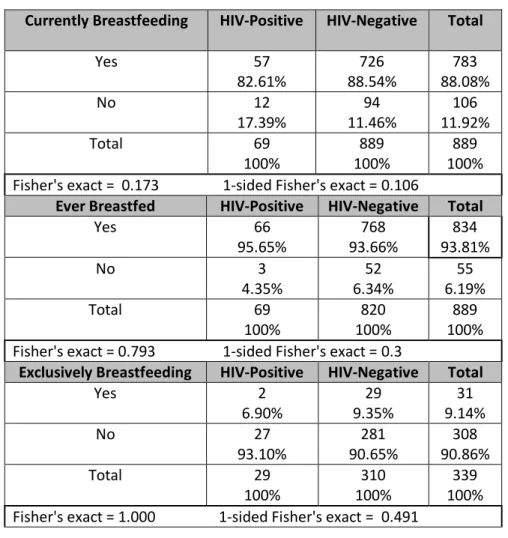
Table 3: Maternal HIV status & practice of breastfeeding in 2003 Currently Breastfeeding HIV-Positive HIV-Negative Total
Yes 57
82.61%
726 88.54%
783 88.08%
No 12
17.39%
94 11.46%
106 11.92%
Total 69
100%
889 100%
889 100% Fisher's exact = 0.173 1-sided Fisher's exact = 0.106
Ever Breastfed HIV-Positive HIV-Negative Total
Yes 66
95.65%
768 93.66%
834 93.81%
No 3
4.35%
52 6.34%
55 6.19%
Total 69
100%
820 100%
889 100% Fisher's exact = 0.793 1-sided Fisher's exact = 0.3
Exclusively Breastfeeding HIV-Positive HIV-Negative Total
Yes 2
6.90%
29 9.35%
31 9.14%
No 27
93.10%
281 90.65%
308 90.86%
Total 29
100%
310 100%
339 100% Fisher's exact = 1.000 1-sided Fisher's exact = 0.491
18
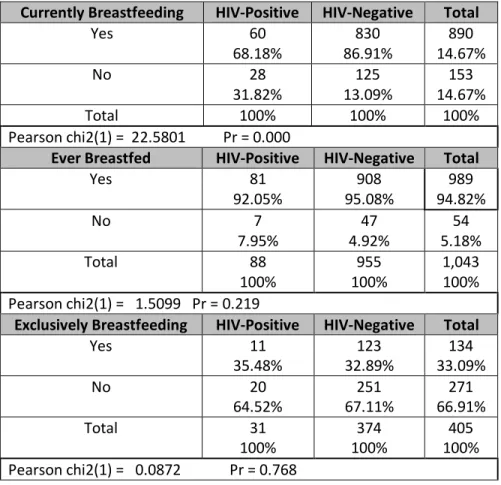
Table 4: Maternal HIV status & practice of breastfeeding in 2008/9 Currently Breastfeeding HIV-Positive HIV-Negative Total
Yes 60
68.18%
830 86.91%
890 14.67%
No 28
31.82%
125 13.09%
153 14.67%
Total 100% 100% 100%
Pearson chi2(1) = 22.5801 Pr = 0.000
Ever Breastfed HIV-Positive HIV-Negative Total
Yes 81
92.05%
908 95.08%
989 94.82%
No 7
7.95%
47 4.92%
54 5.18%
Total 88
100%
955 100%
1,043 100% Pearson chi2(1) = 1.5099 Pr = 0.219
Exclusively Breastfeeding HIV-Positive HIV-Negative Total
Yes 11
35.48%
123 32.89%
134 33.09%
No 20
64.52%
251 67.11%
271 66.91%
Total 31
100%
374 100%
405 100% Pearson chi2(1) = 0.0872 Pr = 0.768
3.2 Inferential Statistics
19
Table 5: Association between HIV status and practice of breastfeeding in 2003 Variable Odds Ratio P-value 95% CI
Currently Breastfeeding
HIV status 0.62 0.15 0.32 – 1.19
Variable Odds Ratio P-value 95% CI Ever Breastfed
HIV status 1.49 0.51 0.45 – 4.90
Variable Odds Ratio P-value 95% CI Exclusively Breastfeeding
HIV status 0.72 0.66 0.16 – 3.17
20
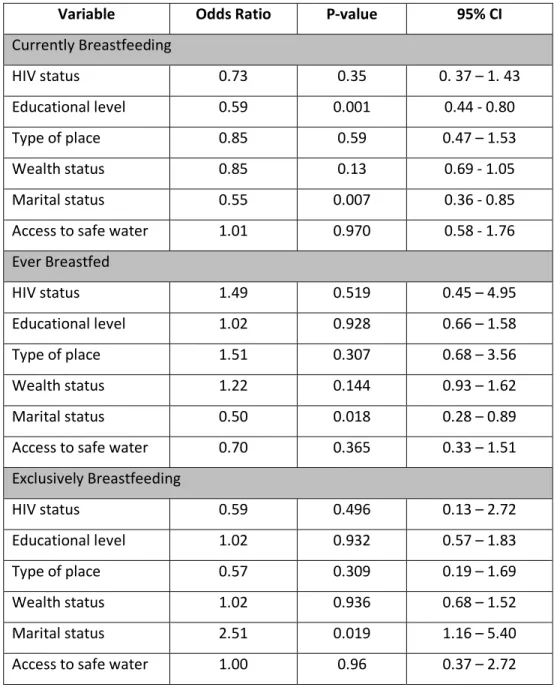
Table 6: Association between HIV status and practice of breastfeeding in 2003 (adjusting for confounders)
Variable Odds Ratio P-value 95% CI
Currently Breastfeeding
HIV status 0.73 0.35 0. 37 – 1. 43
Educational level 0.59 0.001 0.44 - 0.80
Type of place 0.85 0.59 0.47 – 1.53
Wealth status 0.85 0.13 0.69 - 1.05
Marital status 0.55 0.007 0.36 - 0.85
Access to safe water 1.01 0.970 0.58 - 1.76
Ever Breastfed
HIV status 1.49 0.519 0.45 – 4.95
Educational level 1.02 0.928 0.66 – 1.58
Type of place 1.51 0.307 0.68 – 3.56
Wealth status 1.22 0.144 0.93 – 1.62
Marital status 0.50 0.018 0.28 – 0.89
Access to safe water 0.70 0.365 0.33 – 1.51
Exclusively Breastfeeding
HIV status 0.59 0.496 0.13 – 2.72
Educational level 1.02 0.932 0.57 – 1.83
Type of place 0.57 0.309 0.19 – 1.69
Wealth status 1.02 0.936 0.68 – 1.52
Marital status 2.51 0.019 1.16 – 5.40
Access to safe water 1.00 0.96 0.37 – 2.72
21
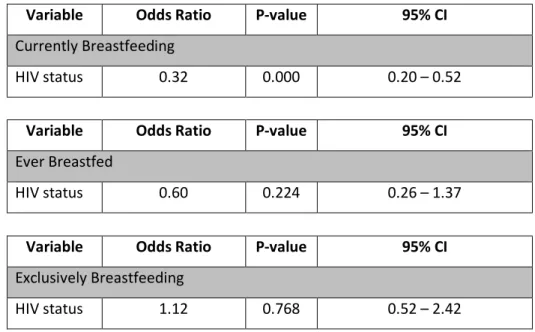
children. Nevertheless, ever breastfeeding and exclusive breastfeeding do not show statistically significant associations with HIV status.
Table 7: Association between HIV status and current breastfeeding status in 2008/9 Variable Odds Ratio P-value 95% CI
Currently Breastfeeding
HIV status 0.32 0.000 0.20 – 0.52
Variable Odds Ratio P-value 95% CI
Ever Breastfed
HIV status 0.60 0.224 0.26 – 1.37
Variable Odds Ratio P-value 95% CI
Exclusively Breastfeeding
HIV status 1.12 0.768 0.52 – 2.42
22
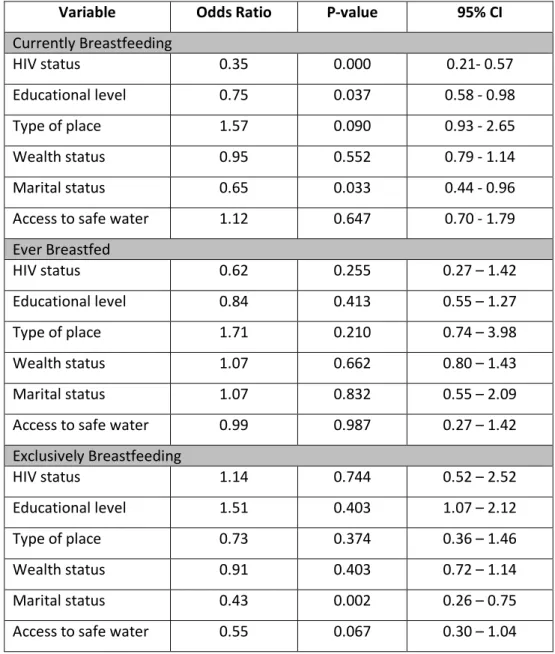
Table 8: Association between HIV status and current breastfeeding status in 2008/9 ( adjusting for confounders)
Variable Odds Ratio P-value 95% CI
Currently Breastfeeding
HIV status 0.35 0.000 0.21- 0.57
Educational level 0.75 0.037 0.58 - 0.98
Type of place 1.57 0.090 0.93 - 2.65
Wealth status 0.95 0.552 0.79 - 1.14
Marital status 0.65 0.033 0.44 - 0.96
Access to safe water 1.12 0.647 0.70 - 1.79
Ever Breastfed
HIV status 0.62 0.255 0.27 – 1.42
Educational level 0.84 0.413 0.55 – 1.27
Type of place 1.71 0.210 0.74 – 3.98
Wealth status 1.07 0.662 0.80 – 1.43
Marital status 1.07 0.832 0.55 – 2.09
Access to safe water 0.99 0.987 0.27 – 1.42
Exclusively Breastfeeding
HIV status 1.14 0.744 0.52 – 2.52
Educational level 1.51 0.403 1.07 – 2.12
Type of place 0.73 0.374 0.36 – 1.46
Wealth status 0.91 0.403 0.72 – 1.14
Marital status 0.43 0.002 0.26 – 0.75
Access to safe water 0.55 0.067 0.30 – 1.04
3.3 Practice of Breastfeeding among Mothers Who Know their HIV Status
23
breastfeeding, ever breastfed and exclusively breastfed are used to demonstrate the practice of breastfeeding in 2003 and 2008/9.
In table 9, the Fisher’s exact tests show that there was no statistically significant association between practice of breastfeeding and HIV status in 2003. The cross
tabulations show a similar pattern between HIV-positive and HIV-negative mothers. Proportions of ever breastfed and currently breastfeeding are high in both groups (HIV-positive and HIV-negative). But, the proportion who are practicing exclusive
breastfeeding is very low in both groups.
Table 9: Maternal HIV status & practice of breastfeeding among women who know their HIV status in 2003
Currently Breastfeeding HIV-Positive HIV-Negative Total
Yes 11
91.67%
98 84.48%
109 85.16%
No 1
8.33%
18 15.52%
19 14.84%
Total 12
100%
116 100%
128 100% Fisher's exact = 1.000 1-sided Fisher's exact = 0.439
Ever Breastfed HIV-Positive HIV-Negative Total
Yes 12
100%
113 97.4%
125 97.7%
No 0
0%
3 2.6%
3 2.3%
Total 12
100%
116 100%
128 100% Fisher's exact = 1.000 1-sided Fisher's exact = 0.742
Exclusively Breastfeeding HIV-Positive HIV-Negative Total
Yes 0
0%
2 3.8%
2 3.5%
No 5
100%
51 96.2%
56 96.5%
Total 5
100%
53 100%
24
Table 10 presents the practice of breastfeeding among mothers who already knew their HIV status in 2008/9. The Fisher’s exact tests show that there is a statistically significant association between HIV status and current breastfeeding status. However, HIV status has no statistically significant association either with mother who ever breastfed or exclusively breastfeeding.
Table 10: Maternal HIV status & practice of breastfeeding among women who know their HIV status in 2008/9
Currently Breastfeeding HIV-Positive HIV-Negative Total
Yes 49
67.12%
646 86.13%
695 84.45%
No 24
32.88%
104 13.87%
128 15.55%
Total 73
100%
750 100%
823 100% Fisher's exact = 0.000 1-sided Fisher's exact = 0.000
Ever Breastfed HIV-Positive HIV-Negative Total
Yes 70
95.9%
734 97.9%
804 97.7%
No 3
4.1%
16 2.1%
19 2.3%
Total 73
100%
750 100%
823 100% Fisher's exact = 0.233 1-sided Fisher's exact = 0.233
Exclusively Breastfeeding HIV-Positive HIV-Negative Total
Yes 11
40.7%
98 33.22%
109 33.9%
No 16
59.3%
197 66.8%
213 66.1%
Total 27
100%
295 100%
322 100% Fisher's exact = 0.524 1-sided Fisher's exact = 0.278
25
However, in 2008/9, a statistically significant association is observed between current breastfeeding status and HIV status. Table 11 presents the significant association before and after adjusting for confounders (maternal education, type of place, wealth status, marital status and access to safe water). The association remains the same after adjusting for confounders. The practice of mothers, who ever breastfed and who are exclusively breastfeeding, does not have an association with their HIV status (results are not shown).
Table 11: Association between HIV status and current breastfeeding status among mothers with Known HIV status in 2008/9
Variable Odds Ratio P-value 95% CI
HIV status 0.24 0.000 0.13 – 0.45
Variable Adjusted Odds Ratio P-value 95% CI
26
CHAPTER FOUR: DISCUSSION AND CONCLUSION
4.1 Discussion
In 2003, HIV status was not a significant predictor of the practice of
breastfeeding among sampled mothers in Kenya. The practice of breastfeeding includes mothers who ever breastfed, are currently breastfeeding and exclusively breastfeeding. The association was tested among mothers who may not know their HIV status (but their status is known to this investigation) and among mothers who know their HIV status. In both cases, the practice of breastfeeding was not associated with maternal HIV status. The study results show similar patterns to the nation’s breastfeeding norm; mothers give mixed feeding rather than exclusive breastfeeding irrespective of their HIV status.
Five years later, in 2008/9, the study found that maternal HIV status has become a significant predictor of status of current breastfeeding. Similar results are observed among mothers who may not know their HIV status and among mothers who know their HIV status. In both groups, HIV-positive mothers are less likely to breastfeed their children than HIV-negative mothers. Nevertheless, no statistically significant association is observed between HIV status and ever breastfeeding and exclusively breastfeeding. Practice of breastfeeding among mothers who may not know their HIV status and mothers who know their HIV status is not associated with their HIV status except for current breastfeeding status.
27
for replacement feeding to be the better option. In such settings, breastfeeding is judged to be the best option. However, the findings deviate from national and international recommendations. The potential explanations of these findings are discussed in the following paragraphs.
In areas of HIV/AIDS, numerous changes have occurred globally and nationally between 2003 and 2008/9. In 2006, WHO developed the revised infant feeding
guidelines which recommended that HIV positive mothers who reside in resource-constrained countries to exclusively breastfeed their children for the first six months unless replacement feeding is acceptable, feasible, affordable, sustainable and safe. Same year (2006), the Kenyan National Guidelines on Nutrition and HIV/AIDS stated actions to support exclusive breastfeeding for the first 6 months of age and continuation of breastfeeding until age one (17).
Voluntary testing and counseling is one of the HIV prevention strategies. In Kenya, the proportion of women who know their HIV status has increased from 13% in 2003, to 57% in 2008/9 (8, 16). A similar trend is observed among the study samples. In 2003, only 14% of the recent mothers knew their HIV status; whereas in 2008/9, 79% knew their HIV status. This huge gap is considered as a potential reason for the
28
Kenyan national guidelines. The 2008/9 findings show that HIV-positive mothers are less likely to breastfeed their children.
Knowledge on mother-to-child transmission via breast milk may raise fear to an extent of avoiding breast milk. In DHS reports, knowledge of women about mother-to-child transmission through breastfeeding has increased from 72% in 2003 to 87% in 2008/9 (8). A similar trend is observed in this study as well; knowledge of women about mother-to-child transmission through breastfeeding has increased from 70% (2003) to 85% (2008/9). Stigma towards people with HIV/AIDS can be another potential
determinant of breastfeeding. The DHS reports show that in spite of the 6%
improvement, accepting attitudes towards those living with HIV/AIDS is still low (8). Compared to men, women expressed their lower acceptance of individuals with
HIV/AIDS (8). Mothers may fear breaking mixed feeding norm due to the association of exclusive breastfeeding with disclosure of their HIV status and exposure to stigma and discrimination.
29 4.2 Strengths and Limitations
The study drew its samples from nationally representative probability sample surveys. Unlike prior studies, the strength of the study is that samples are not limited to prevention of mother-to-child transmission or antenatal care attendants. Using a general population may have yielded different results. Another strength of the study is its reproducibility in other nations using similar DHS data. The results can be compared and contrasted with other Sub-Saharan countries.
The major limitation of this study is the small sample size of mothers who know their HIV status. Particularly in 2003, sample size limited this study from applying logistic regression. A similar limitation is faced on the analysis of exclusive breastfeeding due to the small number of women with a child age 0-5 months of age.
Another limitation of the study is that current breastfeeding, one of the key
predictors, could result in misclassification. Mothers who are coded as not breastfeeding might have just weaned breast milk.
4.3 Conclusions
A similar pattern is observed among mothers who may not know their HIV status and among mothers who know their HIV status. In both groups, HIV positive mothers do not comply with the current infant feeding recommendations. These women are
30
31 References
1. UNAIDS. Report on the global AIDS epidemic: Executive summary. Geneva: UNAIDS, 2008. Available at
http://www.unaids.org/en/KnowledgeCentre/HIVData/GlobalReport/2008/2008_Global_report .asp. Accessed in September, 2011.
2. UNICEF. HIV and Infant Feeding. Available at
http://www.unicef.org/nutrition/index_24827.html . Accessed in September, 2011.
3. Wilfert C, and Fowler M. Balancing Maternal and Infant Benefits and the Consequences of Breast-Feeding in the Developing World during the Era of HIV Infection. The Journal of Infectious Diseases. 2007;195:165–7
4. World Health Organization. HIV and infant feeding technical consultation consensus statement. October 25–27, 2006. Geneva: World Health Organization.
5. WHO, UNICEF, UNAIDS and UNFPA. HIV and Infant Feeding: Update based in the technical consultation held on behalf of the inter-agency task team on prevention of HIV infection in pregnant women, mothers and their infants. Geneva, 25-27 October 2006.
6.WHO http://www.who.int/nutrition/topics/infantfeeding_recommendation/en/index.html 7. WHO. Antiretroviral drugs for treating pregnant women and preventing HIV infection in infants. Version 2010. Available at
http://whqlibdoc.who.int/publications/2010/9789241599818_eng.pdf accessed in September, 2011.
8. Kenya National Bureau of Statistics (KNBS) and ICF Macro. Kenya Demographic and Health Survey 2008-09. Calverton, Maryland. 2010.
9. United Nations General Assembly Special Session on HIV and AIDS (UNGASS). Country Report: Kenya. 2010.
10. Doherty T, Chopra M, Jackson D, Goga A, Colvin M and Persson LA. Effectiveness of the WHO/UNICEF guidelines on infant feeding for HIV-positive women: results from a prospective cohort study in South Africa. AIDS 2007;21:1791–7.
11. Koricho, A. The fear of mother’s milk in the era of HIV: A qualitative study among HIV positive mothers and health professionals. Master’s Thesis. Centre for International Health. Bergen: University of Bergen. 2008
12. Morgana M, Masabab R, Nyikurib M and Thomasc T. Factors affecting breastfeeding
cessation after discontinuation of antiretroviral therapy to prevent mother-to-child transmission of HIV. AIDS Care. 2010 July; 22 (7): 866-873
32
14. Shapiro R, Lockman S, Thior I, Stocking L, Kebaabetswe P and Westr C. Low adherence to recommended infant feeding strategies among HIV-infected women: results from the pilot phase of randomized trial to prevent mother-to-child transmission in Botswana. AIDS Educ. Prev. 2003 Jun; 15(3):221-230
15. Chivonivoni a C, Ehlers V and Roos J. Mothers’ attitudes towards using services preventing mother-to-child HIV/AIDS transmission in Zimbabwe: An interview survey. International Journal of Nursing Studies. 2008;45:1618–1624
16. Central Bureau of Statistics (CBS) [Kenya], Ministry of Health (MOH) [Kenya], and ORC Macro. Demographic and Health Survey 2003.Calverton, Maryland: CBS, MOH, and ORC Macro. Kenya, 2004.
17. Republic of Kenya Ministry of Health. Kenyan National Guidelines on Nutrition and HIV/AIDS. 2006. Available at http://www.fantaproject.org/publications/kenyan_guidelines2006.shtml accessed on October 27, 2011.
33
Acknowledgements
First of all I would like to thank God who brought me this far!
It is a pleasure to thank the many people who made this thesis possible. I would like to express my gratitude especially to my academic advisor Dr. Ilene Seizer for her guidance and as well as the support she has given me since I joined the Maternal and Health Department. I would also like to thank Dr. Jon Hussey for accepting to be a second reader to this master paper. I am indebted to Yvette Thompson who encouraged me to finish my study earlier than I anticipated.
I wish to thank my parents and my mother-in-law for their prayers and encouragement.