0
A Master’s Paper submitted to the faculty of
the University of North Carolina at Chapel Hill
in partial fulfillment of the requirements for
the degree of Master of Public Health in
the Public Health Leadership Program
Chapel Hill
2012
[Signature]
______________________________
Advisor
[Printed Name]
______________________________
Date
[Signature]
______________________________
Second Reader
[Printed Name]
______________________________
Date DIET AND EXERCISE BEHAVIORAL INTERVENTIONS
TO MODIFY OBESITY RISK IN THE POST-PARTUM PERIOD: A SYSTEMATIC
REVIEW By
1
Abstract
Background: Obesity is a growing health problem and is closely associated with the leading
causes of death and illness in the US. The reproductive years and specifically pregnancy are a
critical period for the development of obesity in women.
Objectives: To review the literature on the effects of exercise, dietary, and exclusive
breastfeeding interventions in the post-partum period on women at managing their weight over
one year.
Eligibility Criteria: English language, human randomized controlled trials with >50% of women
within one year of pregnancy were included with any length of follow-up.
Data Sources: The review was conducted from December 2011 to May 2012. MEDLINE,
Cochrane, CINAHL, EMBASE were systematically searched for relevant articles from database
inception to December 2011; authors and experts were queried to find other relevant studies and
reference lists to review.
Data Extraction: The review of the literature yielded 122 unique abstracts.
Study Selection: Two reviewers independently screened 122 abstracts and 26 full-text articles to
identify randomized controlled trials (RCTs) of exercise, dietary, exclusive breastfeeding
interventions among post-partum women that reported weight related outcomes. Trials were
independently critically appraised by two reviewers to include only good- or fair-quality trials.
Interventions: The authors considered behavioral interventions that included at least one of
2
Study Appraisal and Synthesis Methods: Overall, the included evidence was of fair to good
quality.
Results: We included 12 studies. One RCT (n=141) reviewed breastfeeding interventions, three
(n=139) examined exercise only interventions, one (n=151) examined nutrition/diet only
interventions and seven (n=922) examined combination nutrition/diet and exercise interventions.
The exclusive breastfeeding intervention and nutrition only study were of poor quality and were
excluded from our review. The evidence was mixed for exercise interventions with only one of
the three reported a statistically significant reduction in weight that was greater in the
intervention group compared to the control. All seven combination interventions led to greater
weight loss in the intervention group versus the control with varying levels of weight loss (0.17
to7.3 kg weight loss) compared to control lost over varying periods of time (12 weeks to 12
months).
Limitations: Interventions, subjects, and methods of intervention were heterogeneous. Data on
potential harms of interventions were scant and often not reported, and there was little discussion
of adherence or the theoretical basis for interventions or if the interventions were evidence based.
Conclusions and Implications of Key Findings: The results of this review suggest that there is
minimal evidence for exercise interventions, insufficient evidence for exclusive breastfeeding
interventions, insufficient evidence for nutrition/diet interventions, and moderate evidence
supporting combination nutrition/diet and exercise interventions for weight management in
post-partum women. Behavioral interventions that combine counseling with exercise and diet are a
3
Introduction
Dietary excess and obesity have been associated with the leading causes of death and
illness in the United States (US) including stroke, heart disease, hypertension, osteoarthritis,
cancer (endometrial, breast, and colon) and diabetes mellitus. The prevalence of overweight and
obese populations has increased rapidly over the last 30 years. The age-adjusted prevalence of
obesity among adults 20 years old or older in the United States (US) is now 35.7%2. With an
increase in obesity comes an increase in the associated leading causes of death and illness.
Women are obese at a similar rate to men (35.8% versus 35.5% of adults) and for women the
post-partum period is a key time for developing obesity104 105 106 107 108 109 110. With this
introduction we will discuss the obesity epidemic, pregnancy’s role in developing obesity, and
interventions that are used in the non-pregnant female and adult male population to prevent and
treat obesity. We will then systematically review the literature to determine what we know about
whether behavioral interventions involving diet and exercise modify obesity risk in the
post-partum period.
Definition of Overweight and Obesity
The World Health Organization (WHO) defines obesity as an abnormal or excessive fat
accumulation that may impair health and is most commonly assessed with the body mass index
(BMI) 1. A BMI is an index of weight-for- height and is defined as a person’s weight in
kilograms divided by the square of his height in meters (kg/m2). A normal adult BMI is between
18.5 and 24.9 kg/m2. While BMI is intended primarily as a population health measure, a person
with a BMI greater than or equal to 25 kg/m2 is labeled overweight while a BMI of 30 kg/m2 or
4
Organization (WHO); with increasing class number corresponding to increased severity of
obesity. Class I has a BMI of 30.0-34.9 kg/m2, class II a BMI of 35.0 – 39.9 kg/m2, and class III
a BMI ≥ 40.0 kg/m2 in a patient1 .
The worldwide obesity prevalence has doubled since 19801. It is predicted that if current
trends continue, by 2030, 86.3% of adults will be overweight or obese, with 51.1% obese3.
Under this trajectory the health care costs related to caring for the illnesses of the obese and
overweight would grow exponentially. By 2030 16-18% of all US health care costs3 would be
directly attributable to obesity and overweight. Women are obese at similar levels as men with
obesity rates of 35.8% and 35.5% respectively2. Over the last 40 years, women have had an
annual increase in weight as determined by BMI greater than that of men; with women having an
annual increase in BMI of 0.911 percentage points versus men with an annual increase in BMI of
0.653 percentage points3. An analysis by Youfa Wang and colleagues at Johns Hopkins and the
Agency for Healthcare Research and Quality (AHRQ) 3 estimated that by 2030, 87.2% of US
women will be overweight or obese. Obesity is one of the leading causes of premature death in
US women4. The obesity epidemic is more prevalent in minorities, with 78% African American
women being obese or overweight3. In the future minorities will continue to be the most affected
with Black women and Mexican American men predicted to be overweight or obese at rates of
96.9% and 91.1% respectively by 2030. As obesity rates and their associated illnesses increase,
minorities will be unduly affected.
Pregnancy and Post-Partum Weight Retention
The reproductive years are a critical period for the development of overweight and
5
obese with 33.2% being obese2. Many women enter their childbearing years as overweight and
obese. Most women lose about half of their gestational weight gain in the first 6 weeks after
delivery, and continue to lose weight at a slower rate throughout the first 6 month period
postpartum6 105 106 107 108 109 110. However, most women will retain some weight after each
pregnancy. One study found that maternal weight retention averages 0.9-3.3 kg at 1yr
post-partum7, while a review of the literature calculated at least 10% of women would have maternal
weight retention of at least 6.6 kg8
. The weight retained in pregnancy exceeds that found in
comparable non-pregnant women over the same period of time10
. A systematic review11
found
that while there was a decline in mean body weight within the first year postpartum, there is little
data on body weight later than 12 months postpartum.
Influences on Post-Partum Weight Retention
Several factors may be associated with postpartum weight retention, including gestational
weight gain, race, lifestyle behaviors, age, timing of weight gain and loss, and lactation7 12 13 14 15.
The amount of weight gained during pregnancy (gestational weight gain) is the most
significant predictor of the amount of weight retained after pregnancy7 16. Thus those who gain
appropriate amounts of weight during pregnancy17
are the least likely to experience excessive
maternal weight retention. Excessive postpartum weight retention is more prevalent in minority
women12 compared to whites. Controlling for pre-pregnancy BMI and the amount of weight
gained during pregnancy, black women retain more weight than whites13
.
Several behavioral factors have been identified that could be associated with weight
retention in post-partum women. Low physical activity (sedentary lifestyle, television watching)
6
who retained more weight 1 year postpartum were less likely to report regular exercise activities,
and more likely to report inconsistent meals and between-meal snacking19 20
. Smoking cessation
around pregnancy leads to women retaining weight at a higher rate21. High physical activity is associated with less weight retention post-pregnancy22
. Most women’s weight, physical activity
and nutrition trajectories remain identical during and after pregnancy23
. Lactation may be
associated with lactating women returning to pre-pregnancy weight more quickly than those who
are not breast-feeding24 14
. Moreover, weight loss up to 2.0 kg per month by overweight lactating
women is unlikely to affect the volume of milk produced or infant growth17
.
The timing of the weight gain or loss in relation to the postpartum period and the
pregnancy may be associated with the way women retain weight after pregnancy. Those women
who returned to their pre-pregnancy weight within 6 months of delivery were less likely to see
long-term weight gain than those who did not, with a 2.4 kg weight gain and 8.3 kg weight gain
respectively25 in one large cohort study. Women who had significant increase in weight with their
first pregnancy and/or retained that weight after delivery were at a significantly greater risk of
repeating that in subsequent pregnancies. These women would have a significantly increased
long term risk for obesity15. Similarly failure to lose weight in the postpartum period may be
associated with higher BMI long term12
. By understanding what may be associated with
post-partum weight retention we can better approach interventions that will help women manage their
weight.
Obesity Interventions in Non-Pregnant Populations
To help those who are obese or overweight in the non-pregnant population to lose weight
7
information and recommendations for the general public there are no US recommendations or
consensus for the post-pregnancy period. Thus, there is a need to summarize and pool the
available peer-reviewed research into a review for the post-partum population. Our review will
focus on exercise, dietary, and exclusive breastfeeding interventions. We will also examine the
interventions for behavioral and cognitive strategies for weight management which include goal
setting, group based education sessions, self-monitoring of physical activity and food intake, and
printed self-help materials26
. Interventions can be on-on-one, through the internet, or in groups.
New mothers often report receiving less social and practical support during the postpartum
period than they anticipated, indicating potential amicability to group formats for interventions27
28
.
Behavioral Strategies
Behavioral strategies to prevent and treat obesity in the general population use principles
of behavioral therapy to help patients make lifestyle changes. Most interventions are conducted
via face-to-face individual and in person group sessions. The goal of behavioral therapy is to
assist patients in making long-term changes in their eating behavior by making adjustments to
and monitoring their caloric intake and physical activity and controlling cues and stimuli in their
environment that trigger poor eating habits. These interventions are often coupled with exercise
activity and restriction of caloric intake.
There are several components in behavioral interventions. Most behavioral approaches to
weight loss utilize a combination of several standard tools. These include behavioral contracting
and reinforcement, realistic goal setting, stimulus control, social support, self-monitoring,
8
Table 1: Behavioral intervention elements
Behavioral Intervention Elements
Definition
Behavioral Contracting
A detailed document with expectations of the participant and how they will behave. Signed by the participant.
Reinforcement Strengthening a directly measurable dimension of behavior as a function of a stimulus.
Realistic Goal Setting
The process of identifying goals that are small and can be realistically achieved
Stimulus Control
A stimulus increasing the probability of a behavior because of a history of that behavior being differentially reinforced in the presence of the stimulus.
Social Support The creation of a supportive social network to supply resources including emotional, tangible, informational and companionship.
Self
Monitoring
Equips participants to learn to identify and increase positive behaviors.
Nutrition Education
A process of educating participants on nutritional knowledge and then assessing their ability to incorporate that knowledge into practice
Meal Planning Planning out meals for a period of time.
In addition to the face-to-face interventions there are numerous internet-based programs
for weight management in the general population. These programs can be easily implemented in
resource-poor regions and may help us reach more sedentary adults in a cost-effective way.
Another option for delivering interventions is the use of telemedicine in which electronic
information and communications technologies are used to provide behavioral strategies for
patients located in remote or rural areas.
Dietary Interventions
For the average adult 22 to 25 kcal/kg is required to maintain one kilogram of body
weight. Therefore for a 100 kg woman a diet of 2200 to 2500 kcal/day is required. Weight loss
may be achieved by reducing caloric intake. The patient can accomplish this with
9
augment the caloric restriction and offer advice. There are several varieties of dietary restriction
including the Mediterranean diet, low carbohydrate diets, low-fat diets, and balanced low-calorie
diets/portion-controlled diets.
There are many barriers to dietary weight loss program participants losing weight. Some
of those barriers are adherence to the diet and accurate recordings of caloric intake. Adherence
and accurate recording of caloric intake are highly variable and dictated by a person’s weight
status. The reporting of calories may vary by the weight status of the participant. Overweight
people under-reported by 30% or more their caloric intake while most normal weight people
underreported what they eat by 10-30%55
in one review of the literature. Just as there is variability
in recording of caloric intake another barrier to dietary interventions are that there is difficulty in
adequately measuring energy requirements. Caloric use is influenced by gender, genetics, age
and small movements (fidgeting). Metabolic rate declines by 2% per decade leading to older
subjects having less energy expenditure and therefore having greater difficulty losing weight.
Man and women differ in their ability to lose weight. Women have less lean body mass and
more body fat percentage and therefore have lower energy expenditure. Therefore women will
find it more difficult to lose weight than a man of similar height and weight56. As patients limit
their caloric intake, they can expect a deficit of 500 kcal/day to lead to an initial loss of 0.5
kg/week. Despite these initial changes, the body eventually adapts and the body will eventually
show diminished ongoing weight loss57.
Many participants in dietary weight loss programs struggle to maintain the weight loss
after they begin the program. Maintenance of weight loss is challenging given the adaptation in
energy expenditure that occurs during weight loss58
. In addition to changes in energy
10
restriction. Ghrelin (a gastrointestinal peptide which stimulates appetite) increases during
periods of caloric restriction. As a patient gets further into their diet changed in Ghrelin and
other hormones counteract the patient’s efforts.
Exercise Interventions
Physical activity is any activity that involves raising the heart rate and using at least one
large muscle group. There is a direct relationship between the amount of exercise activity an
adult female patient gets and their long-term weight loss maintenance60. Therefore physical
activity may have a role in weight management programs.
In the general population exercise helps patients lose weight41 and those who don’t get
much physical activity are more likely to gain weight61
. During the transition from young
adulthood to middle age where pregnancy occurs, those with higher levels of physical activity
over time gained less weight62. Young and/or normal weight patients need significantly less
physical activity to prevent weight gain compared to older and/or obese patients63
.
Combined Interventions
Lifestyle interventions involve combining behavioral intervention, dietary restriction and
exercise activity. One successful lifestyle intervention program is the Diabetes Prevention
program (DPP)65
. The DPP program has two major components, a minimum of 150 minutes of
exercise per week and a minimum of 7 percent weight loss. Those completing DPP were found
to achieve greater weight loss than those on metformin alone. Reinforcement of lifestyle
interventions is vital to ensure long-term weight loss maintenance66
. Both individual65
and group38
therapies have been found to be effective. Due to the cost of therapists, the group setting is
11
Lifestyle interventions have been effective in limiting risk factors for cardiovascular disease, by
promoting weight loss, and thus reducing cardiovascular disease risk67
.
Justification for a Systematic Review of Obesity Interventions and Post-Pregnancy
Limited analysis has been performed to compare and identify the effectiveness of
behavioral interventions for promoting a healthy postpartum lifestyle. To this point there have
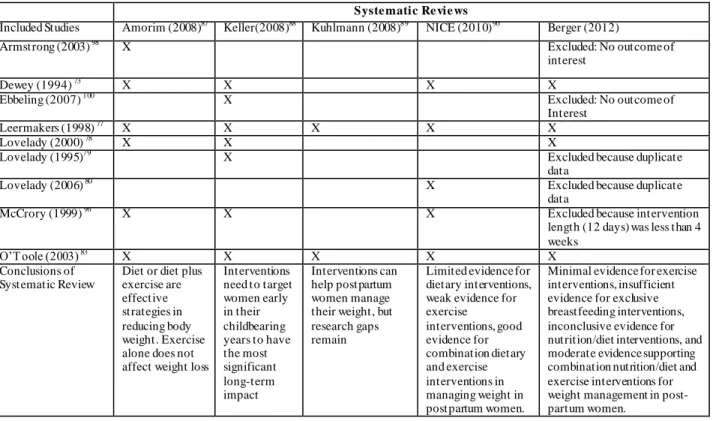
been a few limited systematic reviews of the literature87 88 89 90 . Those that have been conducted
do not include the more recent publications on the topic, lack analysis of harms and costs of
interventions, and lack diversity in the participants of the interventions they included.
Furthermore, while there are guidelines in the United Kingdom91 there are no accepted standards
in and no recommended therapy for women in the post-partum period in the US. To select an
effective intervention strategy, an examination and comparison of postpartum combined (diet
and exercise) interventions is required. We conducted a systematic review of the literature on
the effects of post-partum behavioral interventions targeted at weight loss to synthesize the
medical knowledge and better make recommendations to women facing this growing problem.
There is one key question for the systematic review. What is the evidence that diet
and/or exercise behavioral interventions after pregnancy lead to decreased obesity as measured
12
Methods
Theoretical Framework and Key questions
There focused question that this systematic review will address is “To what extent do diet
and/or exercise behavioral interventions after pregnancy lead to decreased obesity compared to
usual care or control as measured by weight or BMI, or abdominal circumference, or hip to waist
ratio, or skinfold thickness.
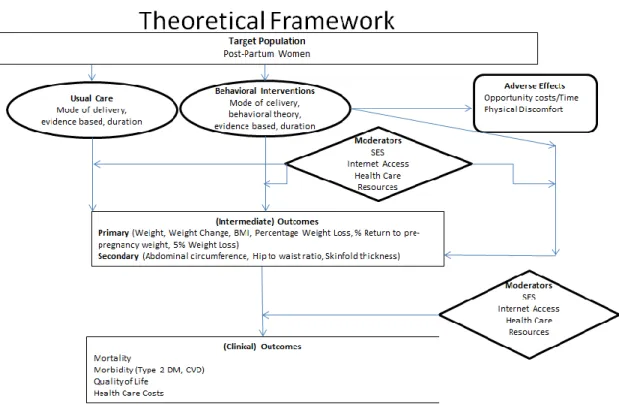
Staff of the University of North Carolina Center for Women’s Health Research and
Department of Obstetrics and Gynecology Division of Women’s Primary Care developed a
theoretical framework (figure 1) to guide the work of producing this systematic evidence review
(SER). The framework illustrates the relationship between the target population (post-partum
women) and the intermediate outcomes. The framework accounts for the influence of behavioral
interventions and standard of care on this relationship. At the same time it illustrates the adverse
effects of these care modalities and potential moderators to the relationships. Lastly the model
13
FIGURE 1 Theoretical framework for behavioral interventions and weight reduction. The framework concerns the effect of behavioral interventions (including dietary and exercise) on weight reduction. Populations of interest are noted in the top rectangle, exposure in the oval, outcomes in the rounded rectangles, and effect modifiers in the diamond. Connecting lines indicate associations and effects.
Eligibility Criteria
The question in PICOTTSS format is presented in Table 2 and the eligibility criteria with
inclusion/exclusion criteria for included studies for the systematic review are presented in table
3. In summary the population was women within one year of pregnancy, follow up was at least
1 month after initiation of intervention, all available publication years were considered,
publication language was English, and study design was randomized controlled trial (RCT). We
limited all searches to “human” populations. We chose to examine dietary and nutrition
interventions that included behavioral elements (Table 1). The interventions had to have at least
14
counseling, individualized nutrition plans and caloric restriction. Exercise components included
individualized exercise plans, exercise classes, and walking programs. Exclusive breastfeeding
interventions were examined as well for their behavioral components.
Table 2: Defining PICOTTSS framework for systematic review of behavioral interventions for weight reduction in the post-partum period
Category Inclusion Criteria
Population Post-partum women of any age, any race, and any nationality; Studeies from any country. Subgroups of interest: African American, Mulitparous v. Primiparous.
Intervention Interventions that begin within one year after delivery (post-partum period) (with at least 50% of women enrolled within one year postpartum) and any length of time with one or more dietary or exercise components.
Interventions occurred at any site and by any mode of delivery (ie in-person, mail correspondence, web/internet).
Comparators Usual care, other dietary or exercise behavioral interventions
Outcomes Primary outcomes (Weight, Weight Change, BMI, Percentage Weight Loss,
% Return to pre-pregnancy weight, 5% Weight Loss)
Secondary Outcomes (Abdominal circumference, Waist to hip ratio,
Skinfold thickness)
Potential adverse effects of interventions (Discomfort (Pain scores, # of
emergency visits, MSK injuries)), Usage of Hospital or Physician Services,
Opportunity costs/Time, Cost)
Timing of effect Beginning within one year after pregnancy and ending at any point. Outcomes assessed at any point.
Timing of search Since database inception-to present
Setting Any setting or country
15
Table 3. Inclusion/exclusion criteria
Category
Criteria
Inclusion Exclusion
Population Women within one year after pregnancy (no greater than 50% recruited after one year)
After one year
post-pregnancy(no greater than 50% recruited after one year)
Geography No limits
Time period No limits
Length of followup/int ervention
At least 1 month (4 weeks) Fewer than 4 weeks
Settings Any None
Interventions As defined above in the PICOTTS Pharmacotherapy and surgical
studies
Outcomes Listed above under the PICOTTSS
Publication language
English All other languages†
Admissible evidence (study design and other criteria)
Original research; eligible study designs include:
Randomized controlled trials, .
We will include controlled trials for all outcomes. If we discover gaps in the trial literature for the KQ, we will search for nonrandomized controlled trials with an eligible comparison group.
We will include studies that assign subjects to a behavioral intervention vs. another behavioral intervention, no intervention, or usual care.
Case series Case reports
Observational Studies
Reviews (either systematic or nonsystematic)
Meta-Analyses Editorials
Letters to the editor Articles rated poor during
quality assessment
Studies with historical, rather than concurrent, control groups
† Due to limited time and resources, we only included studies published in English.
Abbreviations: KQ = key question; PICOTTSS = populations, interventions, comparators, outcomes, timing of effect and search, setting, and study design.
Search Strategy
Information sources for the systematic review were MEDLINE, COCHRANE,
Cumulative Index to Nursing and Allied Health Literature(CINAHL), EMBASE (Excerpta
16
MEDLINE was last searched December 28th 2011, using all available dates in search.
COCHRANE, was last searched December 28th 2011, using all available dates in search.
CINAHL was last searched January 5th 2012, using all available dates in search. EMBASE was
last searched January 7th 2012, using all available dates in search. We systematically searched,
reviewed, and analyzed the scientific evidence for the key questions. The steps that we took to
accomplish the literature review are described below.
To identify articles relevant to the key questions, we began with a focused MEDLINE
search on diet and exercise behavioral interventions post-pregnancy by using a variety of terms,
medical subject headings (MeSH), and major headings and limiting the search to
English-language and human-only studies. Relevant terms are listed in Table 4. We also searched the
Cochrane Library, the Cochrane Central Trials Registry, CINAHL, and EMBASE by using
analogous search terms. We conducted quality checks to ensure that the known studies (i.e.,
studies identified through prior literature review and discussion with experts in the field) are
identified by the search. To accomplish this we contacted three experts in the field (Dr Truls
Ostybe, Dr. Wanda K. Nicholson, Dr. Colleen Keller) and conducted a literature review to
compile a list of landmark articles. After the systematic review was conducted we compared this
list with the articles generated by the systematic review. We searched all the literature published
regardless of publication date. We reviewed our search strategy with experts in the field (Drs.
Keller, Ostybe, and Nicholson) including health science librarians and supplemented it as needed
according to their recommendations. This included refining search terms and using additional
17
Table 4. MEDLINE literature search terms
Population "Post Partum Period"[Mesh] OR "Post-Pregnancy"
Interventions "Postpartum period [MeSH]" OR "postpartum" OR “post partum” OR
"Post pregnancy" AND
“Intervention” OR “behavior” [MeSH] OR “behavioral” OR "Life
Style"[Mesh] OR "lifestyle" OR "life style" or "Exercise Therapy"[MeSH] OR "Exercise"[MeSH] OR "Diet"[Mesh] or “Exercise Therapy” [MeSH] or “Exercise” [MeSH]
AND
“Body Mass Index” [MeSH] OR “Weight Loss” [MeSH] OR “Hip AND Waist AND Ratio” OR “Abdominal and Circumference” OR “Skinfold Thickness” [MeSH]
Limits Humans
Female
Randomized Controlled Trial English language
Study Selection
We began the study selection with an abstract review. We distributed the abstracts
identified through the search strategy to two reviewers (Alex Berger and Dr. Rachel
Peragallo-Urrutia) with each reviewing them against the predefined eligibility criteria. Articles that did not
meet eligibility criteria from both reviewers were excluded. Articles that did meet eligibility
criteria from both reviewers were included in the full text review level. If the reviewers
disagreed on the inclusion, it was resolved by discussion and consensus or by consulting a third
member (Dr. Wanda K. Nicholson) of the review team. All results were tracked in an EndNote®
18
During the full text review the full contents of all the articles included from the abstract
review were considered. Each article was reviewed by two reviewers against predefined
eligibility criteria. Articles that did not meet eligibility criteria from both reviewers were
excluded. Articles that did meet eligibility criteria from both reviewers were included for data
abstraction. If the reviewers disagreed on the inclusion, it was resolved by discussion and
consensus or by consulting a third member of the review team.
Assessing the Methodological Quality of Individual Studies
Internal Validity
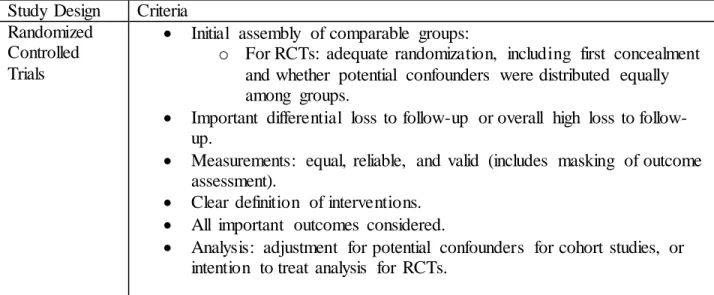
To assess the quality (internal validity) of studies, we used predefined criteria based on
those developed by the USPSTF (ratings: good, fair, poor) and the University of York Centre for
Reviews and Dissemination68 69. In general terms, a “good” study has the least potential for bias,
and its results are considered to be valid. A “fair” study is susceptible to some potential for bias
but probably not sufficient enough to invalidate its results. A “poor” study has significant
potential for bias (e.g., stemming from serious errors in design or analysis) that may invalidate its
19
Table 5. Criteria for grading the internal validity of Randomized Controlled Trials70
Study Design Criteria
Randomized Controlled Trials
Initial assembly of comparable groups:
o For RCTs: adequate randomization, including first concealment and whether potential confounders were distributed equally among groups.
Important differential loss to up or overall high loss to follow-up.
Measurements: equal, reliable, and valid (includes masking of outcome assessment).
Clear definition of interventions. All important outcomes considered.
Analysis: adjustment for potential confounders for cohort studies, or intention to treat analysis for RCTs.
Table 6. Ratings of internal validity for Randomized Controlled Trials (USPSTF VII)
Study Design Ratings
Randomized Controlled Trials
Good: Meets all criteria: Comparable groups are assembled initially and maintained throughout the study (follow-up at least 80 percent); reliable and valid measurement instruments are used and applied equally to the groups; interventions are spelled out clearly; all important outcomes are considered; and appropriate attention to confounders in analysis. In addition, for RCTs, intention to treat analysis is used.
Fair: Studies will be graded "fair" if any or all of the following problems occur, without the fatal flaws noted in the "poor" category below: Generally comparable groups are assembled initially but some question remains whether some (although not major) differences occurred with follow-up; measurement instruments are acceptable (although not the best) and generally applied
equally; some but not all important outcomes are considered; and some but not all potential confounders are accounted for. Intention to treat analysis is done for RCTs.
20 External Validity
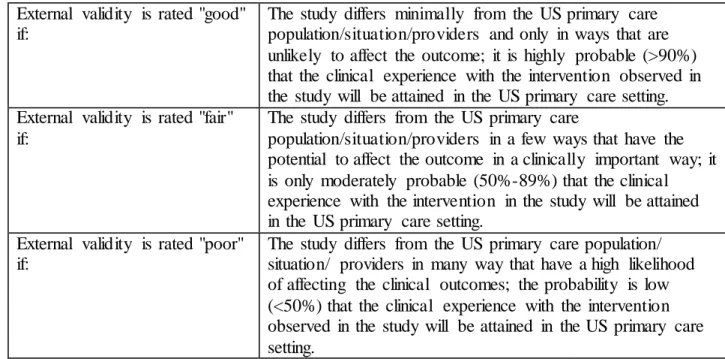
The external validity of each study was also determined using U.S. Preventive Services
Task Force71 criteria. Studies were rated “good” if the study differed minimally from the US primary care population/situation/providers; “fair” if the study differed from the US primary care
population/situation/providers in a few ways that had the potential to affect the outcome in a
clinically important way; or “poor” if the study differed from the US primary care
population/situation/providers in many ways that had a high likelihood of affecting the clinical
outcomes(USPSTF). These criteria are illustrated in depth in table 6.
Table 6. Criteria for rating external validity71
External validity is rated "good" if:
The study differs minimally from the US primary care population/situation/providers and only in ways that are unlikely to affect the outcome; it is highly probable (>90%) that the clinical experience with the intervention observed in the study will be attained in the US primary care setting. External validity is rated "fair"
if:
The study differs from the US primary care
population/situation/providers in a few ways that have the potential to affect the outcome in a clinically important way; it is only moderately probable (50%-89%) that the clinical experience with the intervention in the study will be attained in the US primary care setting.
External validity is rated "poor" if:
The study differs from the US primary care population/ situation/ providers in many way that have a high likelihood of affecting the clinical outcomes; the probability is low (<50%) that the clinical experience with the intervention observed in the study will be attained in the US primary care setting.
Two independent reviewers (Mr. Berger and Dr. Urrutia) assigned quality ratings for
each study. Disagreements between the two reviewers were resolved by discussion and
consensus or by consulting a third member (Dr. Nicholson) of the team. We gave a good quality
21
fulfill all quality criteria but do not report their methods sufficiently to answer all of our
questions. We will give a poor quality rating to studies that have a fatal flaw (defined as a
methodological shortcoming that leads to a very high risk of bias) in one or more categories and
will exclude them from our analyses.
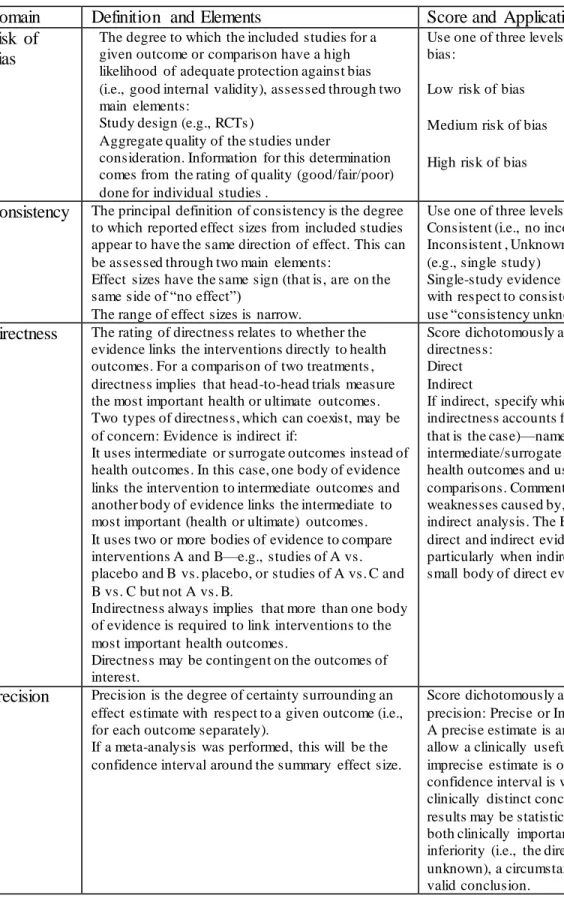
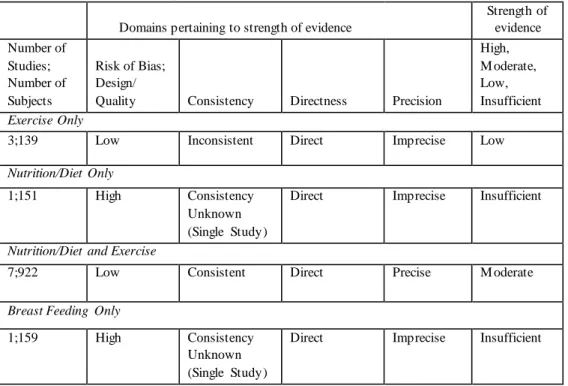
Strength of the evidence for an intervention modality was assessed using the GRADE
criteria from the AHRQ103. Rankings of “insufficient” “low,” “moderate,” and “high” were
assigned based on the risk of bias, consistency, directness, and precision of the evidence. The
domains definition, elements, score and application are summarized in table 7. Risk of bias was
rated as low, medium or high and included assessments of the study design and aggregate quality
of the studies under consideration. Consistency was scored as consistent, inconsistent or
unknown. Consistency rankings were based on the degree to which reported effect sizes from
included studies appear to have the same direction of effect and included assessments of effect
sizes having the same size and the range of effect sizes being narrow. Directness was ranked as
direct or indirect. The ratings of directness relates to whether the evidence links the
interventions directly to health outcomes. Precision was ranked as precise or imprecise and was
assigned based on the degree of certainty surrounding an effect estimate with respect to a given
22
Table 7: GRADE Strength Required Domains and Their Definitions
Domain Definition and Elements Score and Application
Risk of Bias
The degree to which the included studies for a given outcome or comparison have a high likelihood of adequate protection against bias (i.e., good internal validity), assessed through two main elements:
Study design (e.g., RCTs)
Aggregate quality of the studies under
consideration. Information for this determination comes from the rating of quality (good/fair/poor) done for individual studies .
Use one of three levels of aggregate risk of bias:
Low risk of bias
Medium risk of bias
High risk of bias
Consistency The principal definition of consistency is the degree to which reported effect sizes from included studies appear to have the same direction of effect. This can be assessed through two main elements:
Effect sizes have the same sign (that is, are on the same side of “no effect”)
The range of effect sizes is narrow.
Use one of three levels of consistency: Consistent (i.e., no inconsistency), Inconsistent , Unknown or not applicable (e.g., single study)
Single-study evidence bases cannot be judged with respect to consistency. In that instance, use “consistency unknown (single study).”
Directness The rating of directness relates to whether the evidence links the interventions directly to health outcomes. For a comparison of two treatments , directness implies that head-to-head trials measure the most important health or ultimate outcomes. Two types of directness, which can coexist, may be of concern: Evidence is indirect if:
It uses intermediate or surrogate outcomes instead of health outcomes. In this case, one body of evidence links the intervention to intermediate outcomes and another body of evidence links the intermediate to most important (health or ultimate) outcomes. It uses two or more bodies of evidence to compare interventions A and B—e.g., studies of A vs. placebo and B vs. placebo, or studies of A vs. C and B vs. C but not A vs. B.
Indirectness always implies that more than one body of evidence is required to link interventions to the most important health outcomes.
Directness may be contingent on the outcomes of interest.
Score dichotomously as one of two levels of directness:
Direct Indirect
If indirect, specify which of the two types of indirectness accounts for the rating (or both, if that is the case)—namely, use of
intermediate/surrogate outcomes rather than health outcomes and use of indirect
comparisons. Comment on the potential weaknesses caused by, or inherent in, the indirect analysis. The EPC should note if both direct and indirect evidence was available, particularly when indirect evidence supports a small body of direct evidence.
Precision Precision is the degree of certainty surrounding an effect estimate with respect to a given outcome (i.e., for each outcome separately).
If a meta-analysis was performed, this will be the confidence interval around the summary effect size.
Score dichotomously as one of two levels of precision: Precise or Imprecise
A precise estimate is an estimate that would allow a clinically useful conclusion. An imprecise estimate is one for which the confidence interval is wide enough to include clinically distinct conclusions. For example, results may be statistically compatible with both clinically important superiority and inferiority (i.e., the direction of effect is unknown), a circumstance that will preclude a valid conclusion.
23 Data Abstraction
For this systematic review I performed data abstraction while a second reviewer (Dr.
Peragallo-Urrutia) separately reviewed the data extraction forms for accuracy and completeness.
For each study, the following information was extracted (appendix 1): general information
(including date of data extraction, article title and author(s), country of origin, source of
funding); eligibility (inclusion and exclusion criteria); study question and study objective(s);
research design; source population; study population and general characteristics; initia l
comparability of groups; arms of research (description of intervention(s) and control(s)); results;
costs and harms; clinical/public health importance; and quality (internal validity). A standardized
form was constructed and used to evaluate each study using these criteria (appendix 1).
Clinically important weight loss was defined as greater than 4 kg111 112 113 115. Clinically
important decrease in BMI was defined as 1 percentage point114.
Results
Study Selection
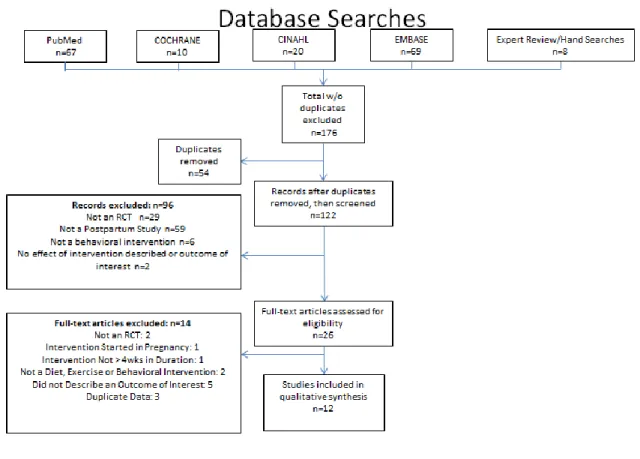
Figure 2 shows the PRIMSA flow diagram explaining the justification for exclusion from
the review and the relevant numbers of articles. After removal of duplicates, the expert
review/hand searches and searches of MEDLINE, Cochrane, CINAHL, and EMBASE yielded
122 articles. After title and abstract review 96 articles were excluded. Twenty nine were
excluded because they were not an RCT, 59 were excluded because they were not a postpartum
study, 6 were excluded because they were not behavioral intervention, 2 were excluded because
no effect of the intervention was described or there was not an outcome of interest. 26 studies
24
After full text review 14 articles were excluded. Of those excluded 2 were excluded
because they were not RCTs, 1 because the intervention was started in pregnancy, 1 because the
intervention was not greater than 4 weeks in duration, 2 because the intervention was not a diet,
exercise or behavioral intervention, 5 because they did not describe an outcome of interest, and 3
because they were duplicate data. These three papers reported results from other studies included
in the review. After discussions with the authors of the studies, experts in the field, and
reviewing the articles, Lovelady 199579
and Dewey 199473
which described the effects of aerobic
exercise among women during lactation, were considered as a single study. Similarly, we
considered articles by Lovelady 200078, Lovelady 200181, Lovelady 200680 which described the
effect of energy restriction and exercise among breastfeeding women, as a single study. After
25
Figure 2. Flow Diagram explaining the justification for exclusion from the review and the
relevant numbers of excluded articles.
Study characteristics
The characteristics and demographics of the selected studies are presented in table 8. The
studies were classified into four types: breastfeeding only, exercise only, nutrition/diet only, and
exercise and nutrition/diet. Six of the studies involved overweight, obese, or sedentary women73
83 72 78 82 92
while the other six involved post-partum women of any weight. The duration of the
interventions ranged from 10 wks to 12 months. Of the twelve studies, one study 74 discussed the
26
studies of women receiving an exclusive breastfeeding intervention. One involved primiparous
women, while the other involved women that gave birth to low birth weight (LBW) infants.
Three studies 86 85 73 discussed the results of exercise only interventions. One study 76 discussed
the findings from a nutrition/diet only intervention. Seven studies 77 83 7275 78 82 92 described the
results of interventions that included nutrition/diet and exercise. The twelve studies ranged in
number of subjects from 33 to 450 with the majority (10) being between 40 and 190 participants.
The patient population for the studies differed in racial makeup. There was an overall
lack of racial diversity in the interventions. Only three studies included African Americans 82 78
83
while one study76 did not report racial information but took place in a population that
traditionally has a high percentage of minorities. Three reported non-Caucasian participants92 72
77
but either did not have African Americans 92 or did not report on the type of non-Caucasian 72
77
One study reported no African Americans 73. The remaining studies did not report racial
information. The interventions were conducted primarily in the US with one study conducted in
Honduras74, one in Greece86, one in Iran85, one in the UK72, and one in Taiwan75. While there
was some diversity in the countries where the study was conducted, there was an overall lack of
racial diversity in the participants of the interventions.
The method of delivery, the arms of intervention and presence of control group varied
within the twelve interventions. One study involved solely instructions on breastfeeding for the
intervention group74. Within the exercise only interventions, two were supervised86 73 while one
was self-montored85. The nutrition/diet only study involved counseling with a dietitian,
facilitated discussion groups and feedback. Among the nutrition/diet combined with exercise
interventions there was wide variation in the exercise and nutrition/diet components. Most
27
Table 8. Characteristics of Interventions (RCTs)
Interventi on T ype
Author (Year)
PatientsR acial infoa
Study Population (Key Exclusion/inclusion criteria)
Arms of Intervention Durati on of Interv ention
Method of Delivery
Exercise Only
Zourladan i (2011) 86
40 NR
Primaparous Greek women
Exercise class versus control (no exercise class)
12 wks
Exercise class (aerobic, stretching, and strength training) run by instructor for an hour 3 times a week for 12 week Maturi
(2011) 85 66 NR
Normal BMI or overweight physically inactive post-partum women in Iran who are breastfeeding
T ailored pedometer based exercise program versus routine postpartum care
12 wks
Pedometer based walking program with baseline counseling session, cell phone and text reminders and counseling feedback through phone
Dewey (1994) 73
33 No AAs
Sedentary US women whose infants were exclusively breast fed.
Exercise versus usual care (<2 aerobic exercise activities per week)
12 wks
Individually tailored and supervised aerobic activity to achieve 60-70% heart rate reserve. 45 min-5 times a wk Nutrition/
Diet Only
Krummel (2010) 76
151 High AA pop but NR
Post -partum US women on WIC in Monongalia county West Virginia.
Peer versus self wt management (one counseling session with dietitian and monthly newsletter)
12 mos
Counseling with dietitian, and facilitated discussion group (10 sessions). Monthly personalized feedback on self-monitoring records
Nutrition/ Diet and Exercise Leermake rs (1998) 77 90 3% non white Non-lactating US postpartum women. Behavioral correspondence for diet and exercise vs. information brochure on health eating and exercise
6 mos Group sessions, correspondence lessons, telephone follow-up on exercise and nutrition O’T oole
(2003) 83 40 1/40 were AA
St. Louis Missouri US area women who were overweight prior to pregnancy.
Structured/personalized diet + exercise vs. self directed (one education session of diet and activity, booklets)
6-10 mos
Sessions met once a week for 12 wk, biweekly for following 2 months and monthly up to 1 yr postpartum. Food activity diary versus one session, and brochures for control
Craigie
(2011) 72 53 3/52 were
non-white
Low socioeconomic status overweight or obese postpartum women in the UK.
Counseling and resources for diet and exercise vs. pamphlet (control)
12 wks
Face to face counseling (2 sessions) and over the phone reinforcement. Resources.
Huang (2011) 75
189 NR but doubt many AA’s
T aiwanese women post-partum.
T hree groups:Pregnant intervention, post-pregnancy, usual care
6 mo for post -partu m group
Individualized dietary and physical activity plans with 6 (pregn) or 3 sessions (postpreg).
Lovelady (2000) 78 40 3.5%
were AA
Overweight (BMI 25-30), exclusively breastfeeding US women.
Diet + exercise versus usual care
10 wks
Caloric restriction and exercise (4-43min sessions at 65-80% of heart rate)
Ostbye (2009) 82
450 44.9% interventi on, 45.3% control were AA
450 obese or overweight US women in Durham NC area.
Diet, exercise, counseling intervention versus biweekly pamphlets
9 mos Offered eight healthy eating classes, ten physical activity classes, and six telephone-counseling session over 9 months
Davenport
(2011) 92 60 85% of
med intensity, 85% of low intensity and 90% of control were white . No AAs
Obese or overweight or retained > 5kg from pregnancy US women.
RCT with matched controls Nutrition plus low intensity vs. nutrition plus moderate-intensity vs. pamphlets on eating and activity
16 wks
Walking program with HR monitoring+ individualized diet.
Breastfee ding Only
Dewey (2001) 74
141, 118 NR
T wo studies: Primaparous, non-working, healthy, low income, with healthy infant Honduran women.
Exclusive breastfeeding versus not
(supplementation with baby foods)
2 mos Instructions on breastfeeding exclusively versus not.
a
28 Risk of bias (internal validity) and External Validity
The internal and external validity the interventions were evaluated and the results are
presented in tables 9 and 10. Potential for selection bias, measurement bias, and confounding
were rated on a scale of low (*) to high (***). In evaluating selection bias overall there was
fairly strong randomization technique and acquisition and allocation of participants, but some
differential loss to follow up with dropouts that may have differed from those who remained in
the studies in baseline demographics that may have influenced the outcomes of interest. There
were also some concerns regarding the relative lack of concealment to allocation. Regarding
measurement bias overall the interventions used measurements that were equal, valid and
reliable between the arms of the study. There were some concerns regarding the relative lack of
blinding of measurement associates. Overall potential confounding was limited. The studies
accounted for potential confounders and controlled for them with randomization.
There was wide variability in internal and external validity of the studies included in this
review. Overall the studies ranged in quality (internal validity) from poor to good. The
breastfeeding only74 and nutrition/diet study only76 were limited by their poor internal validity
while the exercise only 86 85 73 and combination nutrition/diet and exercise interventions77 83 72 75 78
82 92
had internal validity that ranged from fair to good, with the majority being good. The
breastfeeding only study for example had poor randomization technique, no discussion of drop
outs, cross overs, or adherence to group assignment. The study randomized participants by week
of birth rather than a strong randomization technique.
Overall the studies ranged in external validity from poor to good. The breastfeeding only
29
and had no discussion of demographics making it hard to believe it reflected the general US
primary care population. The exercise only 86 85 73 had poor to fair external validity. One study86
was conducted in a Greek population and no demographic information was given while a
second85 lacked racial information and was conducted in a country (Iran) that made it very
unlikely to reflect the general US primary care population, and the third73 had a large amount of
women choosing not to participate due to time constraints (33/88), making it likely those that did
participate were a subset of the population with lots of time and therefore did not reflect the
general US population. The nutrition/diet only intervention76 had fair external validity. The
intervention used a sample of WIC patients that is fairly reflective of the US primary care
setting. The combination nutrition/diet and exercise interventions77 83 72 75 78 82 92 had internal
validity that ranged from fair to good, with the majority being good. For the most part these
30 Interventi
on T ype
Author (Year) Potential for Selection Bias
Comments Potential for
Measurement Bias
Comments Potential for Confounding
Comments
Exercise Only
Zourladan
i (2011) 86 ** Choosing: alternating sequence randomization is flawed, no information regarding how the women were
recruited. Losing: drop-outs, but no information regarding them
** Lack of information on how the measurements were taken and by whom
* Many potential confounders identified. Controlled via randomization.
Maturi(20 11) 85
* Choosing: Standard and valid method of acquiring participants,
Losing: Some dropouts occurred, but there was no discussion of how the dropouts may have differed from those that remained in features that may have influenced the outcome
* Measurements were equal, valid and reliable
* Many potential confounders identified. Controlled via randomization.
Dewey 73
(1994)
* Choosing: T here may be additional factors that influence the outcomes that were not similar among the groups. Losing: Some drop out. Groups were comparable and drop outs were comparable. Concerned that so many women declined to participate because of time constraints. Were they only studying women with time?
* Description of body composition was standard. Equal, reliable and valid in terms of measuring the outcomes and confounders. Some concern over whether researchers taking measurements were blinded to allocation.
* Unlikely to have confounding. Randomization helps control for potential confounders
Nutrition/ Diet Only
Krummel (2010) 76
** Choosing: Solid selection methodology.
Losing: T here was significant drop out and those that dropped out differed statistically significantly from those who did not in baseline characteristics that may influence outcomes of interest
* Some validity issues with measuring people with clothes on. But for the most part measurements were equal, valid and reliable
* Identified stress and depressive score as potential
mediators/confounders. Controlled for by randomization.
Nutrition/ Diet and Exercise Leermake rs (1998) 77
** Choosing: Several areas that may affect outcomes were not equal between the two groups. Unclear how participants were recruited Losing: Drop outs differed in areas that may affect the outcomes.
* For the most part measurements were equal, reliable and valid
* Several potential confounders were identified by the researchers (age, pre-study weight, race). Controlled for by randomization.
O’T oole(2 003) 83
* Choosing: the groups were set up in an appropriate way through acquisition of participants and randomization. More information (ie a flow chart) regarding the amount excluded via what specific criteria would be helpful. Losing: T here were many drop outs but the study reported their baseline characteristics and there were no difference in key baseline characteristics between those that dropped out and those who remained
* Equal, reliable and valid in terms of measuring the outcomes and for the most part potential confounders.
* Assessed and controlled via randomization
Craigie 72 (2011)
* Choosing: Low opportunity for selection bias. Randomization helped make concern for selection bias
* No reason to suspect more than minor
31 low. Losing: Some drop out/loss to follow up. Loss to follow up was 24% in the intervention group, 39% in the comparison group.Would like to know if those who were lost to follow up were different than those not
measurement bias. Equal, reliable and valid in terms of measuring the outcomes and for the most part potential confounders.
blinding of participants. T herefore they knew which wing of the study they were in and thus were disappointed with allocation if in no intervention group. T his could have influenced their motivation and effort to lose weight. Ie those in it may have been more motivated bc of their allocation not the program itself Huang(20
11) 75
* Choosing: Groups similar at baseline. There may be additional factors that influence the outcomes that were not similar among the groups. Losing: Some drop (51/240) out and it was not reported how these may have differed. Groups were fairly comparable
* RA was blinded, and measurements were assessed using standards that were equal, reliable and valid.
* Randomization helped control for potential confounders.
Lovelady (2000) 78
** Choosing: Little discussion of how patients were enrolled. Losing: Some drop out, and drop outs did differ in variables that may have affected the outcome.
* Used standard methods. Believed to be equal, valid and reliable
* Accounted for many potential confounders and used randomization
Ostbye (2009) 82
* Choosing: Low potential for selection bias.
Randomization was adequate and helped make concern for selection bias low. Losing: High drop out. Groups were fairly comparable. Would like to know if those who were lost to follow up were different than those not in baseline measures that may have affected outcomes of interest.
* Measures equal, valid and reliable
* Controlled for via randomization. Study also stratified their randomization for parity and race. Accounted for many possible confounders
Davenport
(2011) 92 * Choosing: Low opportunity for selection bias. Randomization was adequate and helped make concern
for selection bias low. Losing: Some drop out. Would like to know if those who were lost to follow up were different than those not.
* Equal, valid and reliable measurement
* Controlled for by randomization
Breastfee ding Only
Dewey(20 01) 74
*** Choosing: Little is mentioned about how the patients were selected. Poor randomization technique (week of birth). Losing: no discussion of drop-outs
* Minimal. Concerns that the measurers may not have been blinded. No discussion of who measured. However measures were reliable, valid, and equal among wings of study
32
Table 10: Internal and External Validity
Intervent ion T ype
Author (Year)
Quality (Internal Validity)
Comments External
Validity
Comments
Exercise Only
Zourladan
i (2011) 86 Fair Concerns over selection bias, measurement bias and poor randomization. Little information provided on the control groups
amount of exercise and if crossing over occurred
Fair Study conducted in Greece and without demographic information the study has limited external validity.
Maturi(20 11) 85
Good Low measurement and selection bias. Comparable groups were assembled initially and maintained throughout the study.
Poor T he lack of racial information and location of the study (Iran) limit its applicability to the general US population
Dewey 73
(1994)
Good Low measurement and selection bias. Low risk of confounding. Some concern for differential loss to follow up
Fair With so many women choosing not to participate due to time constraints, we must wonder if we are really assessing results for the general population or just those with lots of time
Nutrition /Diet Only
Krummel (2010) 76
Poor Severe concerns with differential dropout and the lack of women who actually participated in the intervention
Fair WIC population is moderately reflective of the US primary care setting
Nutrition /Diet and Exercise Leermake rs (1998) 77
Fair Differential dropout was concerning in selection bias limiting internal validity
Good Reflects the general US primary care population
O’T oole(2 003) 83
Good Low measurement and selection bias, minimal confounding, and solid study design with randomization. Some concerns about moderate follow-up
Good T he selection process led to a sample that reflects that of the general US population. Good internal validity supports strong external validity.
Craigie 72
(2011)
Fair While comparable groups were assembled initially there are concerns with differences occurring with follow-up
Fair A UK population that was entirely disadvantaged only fairly reflects the general US primary care population.
Huang(20 11) 75
Good Low selection and measurement bias and limited confounding support good internal validity
Fair Limited to fair because this is a T aiwanese population with limited diversity that does not mirror the US population
Lovelady (2000) 78
Fair Concerns with selection bias with differential dropout and little discussion of enrollment procedures. Low measurement bias and confounding.
Good Methodologically led to providers and population reflect that of the US primary care population
Ostbye (2009) 82
Good Few potential biases and confounders and a study design with solid randomization
Good Strong internal validity and diverse patient population in a US community help convince us the applicability to the general US population. Some concerns that the study did not include non-English speakers Davenport
(2011) 92 Good Despite some concerns about a non-randomized control group the study has low biases and potential confounding Fair T his Canadian study lacked racial diversity. Extensive maternity leave and childcare available do not reflect the typical situation in the US primary care
population Breastfe
eding Only
Dewey(20 01) 74
Poor Poor randomization, no discussion of drop out s, cross overs, adherence to group assignment, or masking
33
The results for the outcomes of interest are presented in table 11. In some cases p values
were directly reported in the study but in others P values were reported as either below or above
a significance value (ie 0.05). We will discuss the results in terms of method of intervention and
report results of both the primary and secondary/other outcomes of interest.
Breastfeeding versus Control
One trial 74 examined the effect of an exclusive breastfeeding intervention on weight
management in post-partum women. The trial was of poor quality and was thus excluded.
Exercise versus Control
Three studies 86 85 73 examined exercise only interventions compared to controls.
Primary Outcomes
Weight change was assessed in three studies86 85 73 and BMI in one85. Of the three, only
one85 showed those in the exercise intervention lost statistically significantly more weight than
women who received usual care (n=66; -2.1 kg versus 0.0 kg, P<0.001) over a period of three
months, a difference that is clinically significant. The other two studies showed a
non-statistically significant loss86 (n=40, -3.3 v. -1.3, P=0.667), and no difference73 (n=33, 1.6 v.
-1.6, P>0.05) respectively between women in the exercise intervention and controls. The one
study85 that examined BMI revealed that those women in the exercise intervention had a
statistically significant decrease in BMI (N-66, -0.81 v. 0.1 kg/m2,P<0.001) over a three month
period, that approached clinical significance.
34
One study85 examined the waist-to-hip ratio. The study found that those in the exercise
intervention had a statistically significant decrease in waist-to-hip ratio compared to controls
(N=66, -0.02 v. 0.01, P=0.02).
Nutrition/diet versus Control
One study 76 examined the effect of a nutrition/diet intervention on weight management
in post-partum women.
Primary Outcomes
The study examined both weight change and BMI. Women in the intervention did not
lose weight compared to those in the control group (n=155, -2.9 v. -2.9, P>0.05), and did not
have a decrease in BMI different from the difference in BMI of the control group (n=155, -0.54
v. -0.54, P>0.05).
Secondary Outcomes
No secondary outcomes were measures in the nutrition/diet only intervention.
Nutrition/diet and Exercise versus Control
Seven trials examined the effect of a combined nutrition/diet intervention with an
exercise intervention on weight management in post-partum women.
Primary Outcomes
Weight Change, BMI, percent weight loss, percent return to pre-pregnancy weight, and
5% weight loss were reported in the trials. All seven reported weight change data, three72 78 92