cART INITIATION DURING PREGNANCY AMONG HIV-INFECTED WOMEN IN LUSAKA, ZAMBIA: THE IMPACT OF DURATION OF cART ON PREGNANCY
OUTCOMES AND PREDICTING POSTPARTUM LOSS TO FOLLOW UP
Angela Marie Bengtson
A dissertation submitted to the faculty at the University of North Carolina at Chapel Hill in partial fulfillment of the requirements for the degree of Doctor of Philosophy in the Department
of Epidemiology in the Gillings School of Global Public Health.
Chapel Hill 2015
ii © 2015
iii ABSTRACT
Angela Marie Bengtson: cART initiation during pregnancy among HIV-infected women in Lusaka, Zambia: the impact of duration of cART on pregnancy outcomes and predicting
postpartum loss to follow up (Under the direction of Audrey Pettifor)
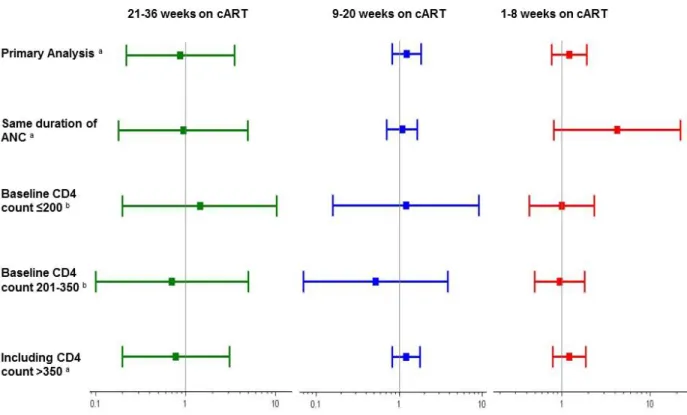
Treatment guidelines for HIV-infected pregnant and breastfeeding women have shifted in recent years towards lifelong maternal cART. These changes have led to important reductions in MTCT and are expected to improve maternal HIV outcomes. However, the increasing use of cART during pregnancy has led to challenges. cART’s role in causing adverse pregnancy outcomes has been of concern, as has improving postpartum retention in care. In Aim 1a, we evaluated duration of cART during pregnancy’s association with LBW due to growth restriction. We found no evidence of an increased risk of LBW for women receiving cART for <8 weeks (RR 1.22, 95% CI: 0.77, 1.91), 9-20 weeks (RR 1.23, 95% CI: 0.82, 1.83), or 21-36 weeks (RR 0.87, 95% CI: 0.22, 3.46), compared to women who never initiated treatment. In Aim 1b, we examined the association between duration of cART during pregnancy through 32 weeks
iv
cut-point of 11, (42nd percentile) had 85% sensitivity (95% CI 0.82, 0.88) and 22% specificity (95% CI 0.20, 0.24) to detect women LTFU. A risk score cut-point of 18, (69th percentile) identified the 23% of women with the highest probability of LTFU and had sensitivity 32% (95% CI 28%, 36%) and specificity 80% (95% CI 78%, 82%). As lifelong cART increasingly becomes the standard of care, efforts to reduce postpartum LTFU and understand the
v
vi
ACKNOWLEDGEMENTS
There were so many people who made this dissertation successful. I am grateful to my dissertation committee for their dedication, insight and guidance throughout this process. To my adviser and chair Audrey Pettifor, who made my transition to the Department of Epidemiology possible, and has supported me in countless ways throughout my time at UNC - thank you. To Bill Miller, Daniel Westreich, Ben Chi, Allen Wilcox and Brian Pence, thank you for your input, time and encouragement. I have learned so much from each of you. I would also like to thank colleagues at the Centre for Infectious Disease Research in Zambia (CIDRZ) who collected the data I used for my dissertation research and helped me to understand it during my eight months in Zambia.
My dissertation research was supported by the HIV/STD training grant, which has been an incredible source of support and learning over the past two years – both from Bill Miller and my fellow trainees. To the faculty and staff in the Department of Epidemiology, particularly Nancy Colvin, Carmen Woody and Valerie Hudock, thank you for making this department an incredible place to be for the last five years.
vii
viii
TABLE OF CONTENTS
LIST OF TABLES ... xii
LIST OF FIGURES ... xiii
LIST OF ABBREVIATIONS ... xiv
INTRODUCTION ... 1
A. Significance ... 1
B. Innovation ... 6
CHAPTER I. REVIEW OF THE LITERATURE ... 8
A. Aim 1 – Duration of cART during pregnancy and pregnancy outcomes ... 8
B. Aim 2 – Predicting postpartum LTFU among HIV-infected women who initiate cART during pregnancy ... 19
CHAPTER II. STATEMENT OF SPECIFIC AIMS... 31
A. Rationale ... 31
B. Specific aims and hypotheses ... 32
CHAPTER III. METHODS ... 34
A. Aim 1 – Duration of cART before delivery and pregnancy outcomes ... 34
A1. Overview and Study Design ... 34
A2. Study Population ... 35
A2a. Eligibility criteria ... 35
A3. Exposure, Outcome and Confounder Assessment ... 37
A3a. Exposure Assessment ... 37
A3b. Outcome Assessment: ... 38
A3c. Confounder Assessment: ... 38
A4. Statistical Analyses ... 39
A4a. Preliminary data exploration ... 39
A4b. Approach and model choice ... 39
ix
A4d. Confounder selection ... 43
A4e. Multivariable analyses... 45
A4f. Sensitivity Analyses... 46
B. Aim 2 – Predicting postpartum LTFU among HIV-infected women initiating cART during pregnancy ... 51
B1. Overview and Study Design ... 51
B2. Study Population and Eligibility ... 52
B3. Outcome and Covariate Assessment ... 53
B3a. Outcome Assessment... 53
B3b. Covariates Assessment ... 53
B4. Statistical Analyses ... 54
B4a. Preliminary data exploration ... 54
B4b. Descriptive analyses ... 54
B4c. Risk score development – bivariable and multivariable analyses ... 55
B4d. Risk score validation ... 56
B4e. Sensitivity analyses ... 57
B5. Limitations and Challenges ... 57
C. Data Collection, Quality and Management – Aim 1 and 2 ... 58
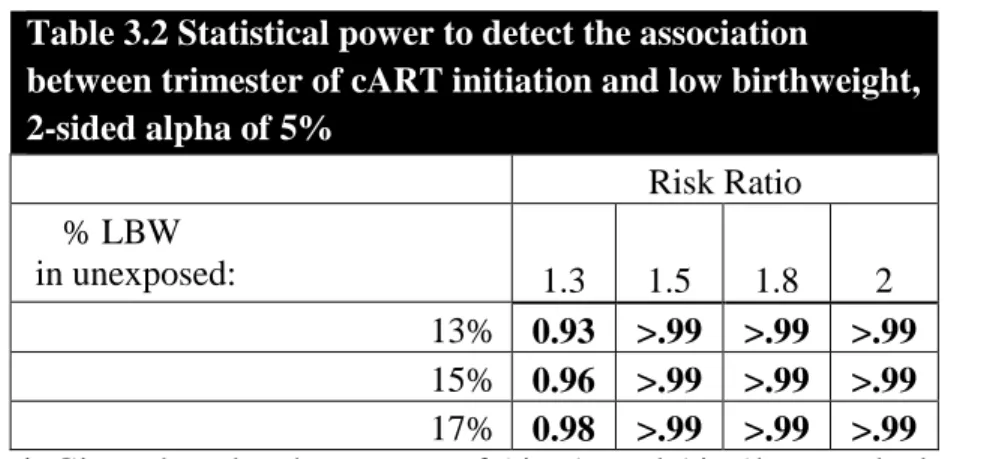
D. Power and Sample Size ... 59
D1. Aim 1 ... 59
D2. Aim 2 ... 60
CHAPTER IV. AIM 1A - DURATION OF CART BEFORE DELIVERY AND LOW INFANT BIRTHWEIGHT AMONG HIV-INFECTED WOMEN IN LUSAKA, ZAMBIA ... 63
A. Introduction ... 63
B. Materials and Methods ... 64
B1. Study Design and Setting ... 64
B2. Study Population ... 65
B3. Definitions... 65
B4. Statistical analyses ... 67
C. Results ... 68
x
C2. Sensitivity analyses and imputation of missing data ... 69
D. Discussion ... 70
D1. Main findings ... 70
D2. Limitations and Strengths ... 70
D3. Interpretation ... 71
E. Conclusion ... 73
F. Tables and Figures ... 74
CHAPTER V. AIM 1B - THE RELATIONSHIP BETWEEN DURATION OF CART BEFORE DELIVERY AND PREGNANCY OUTCOMES: MULTIPLE OVERIMPUTATION AS A METHOD TO ADDRESS MISSING DATA AND MEASUREMENT ERROR ... 80
A. Introduction ... 80
B. Methods ... 81
B1. Multiple overimputation ... 81
B2. Duration of cART and SGA – An example of multiple overimputation ... 84
B2a. Definitions ... 85
B2b. Assessment of Measurement Error in Gestational Age ... 86
B2c. Statistical Analyses ... 87
C. Results ... 88
D. Discussion ... 90
E. Tables and Figures ... 94
CHAPTER VI. AIM 2 - IDENTIFYING HIV-INFECTED WOMEN AT HIGHEST RISK OF POSTPARTUM LOSS TO FOLLOW UP: DEVELOPMENT OF A CLINICAL RISK SCORE ... 101
A. Introduction ... 101
B. Methods ... 102
B1. Study design and population ... 102
B2. Outcome and predictor definitions ... 102
B3. Statistical analysis ... 103
C. Results ... 105
C1. Model development ... 105
xi
E. Conclusions ... 108
F. Tables and Figures ... 113
CHAPTER VII. CONCLUSIONS ... 121
A. Summary of main findings ... 121
B. Public health importance ... 124
C. Limitations and Strengths ... 131
D. Future Directions ... 134
E. Summary and Conclusions ... 138
xii
LIST OF TABLES
Table 3.1 Maternal and obstetrical characteristics of 115,522 pregnancies
recorded in ZEPRS in Lusaka, Zambia: 2007-2010………. 34 Table 3.2 Statistical power to detect the association between
trimester of cART initiation and low birthweight, 2-sided alpha of 5% ... 59 Table 4.1. Sociodemographic and obstetric characteristics of 4,474 HIV-infected women eligible for cART initiation during
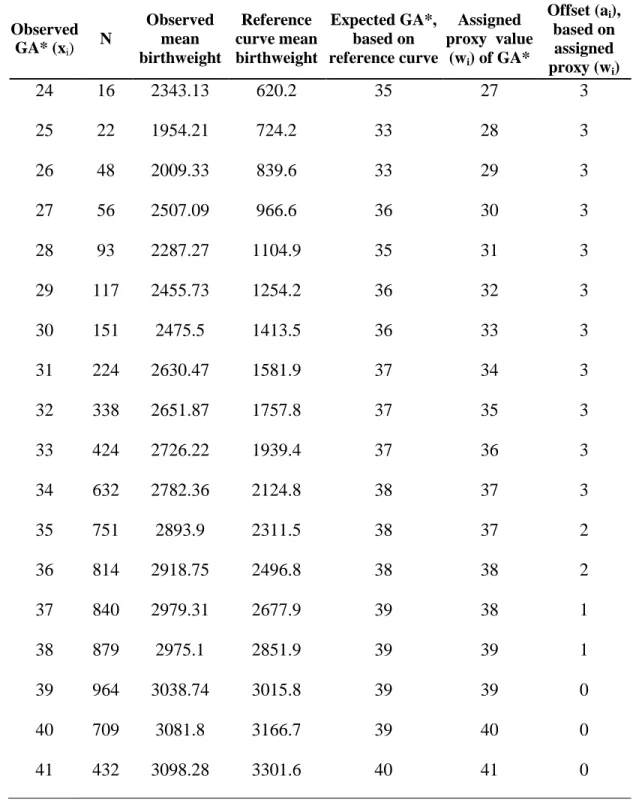
pregnancy in Lusaka, Zambia 2009-2013. ... 74 Table 4.2. Results for the association between duration of cART before delivery and low birthweight. ... 75 Table 4.3. Multivariable results for the association between duration of cART and before delivery and birthweight. ... 75 Table 5.1. Sociodemographic and obstetric characteristics of 9,529 HIV-infected women eligible for cART initiation during pregnancy in Lusaka, Zambia 2009-2013. ... 94 Table 5.2. Assigned proxy and offset values for each gestational age week. ... 95 Table 6.1. Clinical characteristics of 2,029 HIV-infected
women who initiated cART during pregnancy in Lusaka, Zambia 2009-2010. ... 113 Table 6.2. Predictors of loss to follow-up from HIV care at 6 months postpartum among HIV-infected Zambian women
xiii
LIST OF FIGURES
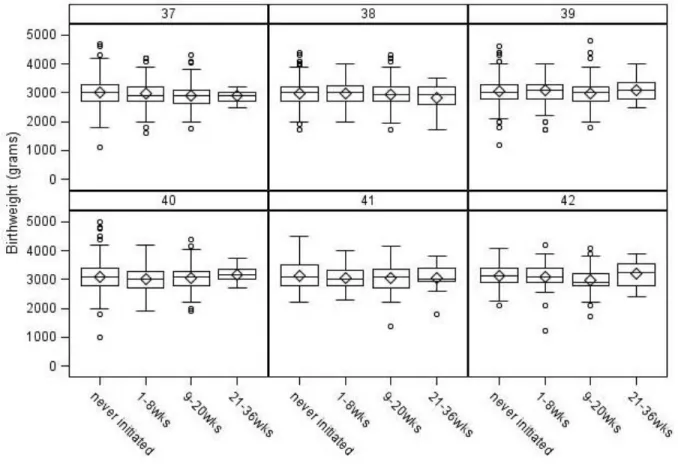
Figure 4.1. Inclusion criteria for 4,747 term births among HIV-infected pregnant women included in the study population. ... 76 Figure 4.2. Boxplots of infant birthweight by duration of cART, for each week of gestational age at birth (weeks 37 through 42). ... 77 Figure 4.3. Risk ratios and 95% confidence intervals for the
association between duration of cART and LBW, among term infants ... 78 Figure 4.4. Comparison of gestational age data with reference curve values, adjusted to a Zambian population. ... 79 Figure 5.1. Observed versus expected gestational age of 9,529 HIV-infected women in Lusaka, Zambia 2009-2013. ... 96 Figure 5.2. Estimated offset (ai) and proxy gestational age values (wi) for 9,529 HIV-infected women in Lusaka, Zambia 2009-2013. ... 97 Figure 5.3. Associations between duration of cART before delivery with SGA and preterm birth (RRs and 95% CIs). ... 98 Figure 5.4. Gestational age at birth by mean birthweight for 9,529 HIV-infected women in Lusaka, Zambia 2009-2013 in the observed,
multiply imputed and multiply overimputed data. ... 99 Figure 5.5. Histograms of infant birthweight (in grams) for each
observed week of gestational age at birth. ... 100 Figure 6.1. Timing of loss to follow-up among 222 women returned to HIV care after delivery and who were subsequently lost to follow-up. ... 117 Figure 6.2. Sensitivity (solid line) and specificity (dotted line) at each risk score cut-off (range 3-26) to predict LTFU at 6-months postpartum among 2,029 HIV-infected Zambian women who initiated cART during pregnancy. ... 118 Figure 6.3. Positive predictive value (PPV; dashed line) and
xiv
LIST OF ABBREVIATIONS ANC antenatal care
ART antiretroviral therapy BMI body mass index
cART combination antiretroviral therapy CI confidence interval
CIDRZ The Center for Infectious Disease Research in Zambia ECS The European Collaborative Study
LBW low birthweight LTFU lost to follow-up MI multiple imputation MO multiple overimputation MTCT mother to child transmission
NRTI nucleoside reverse transcriptase inhibitor PI protease inhibitor
PMTCT prevention of mother to child transmission RR risk ratio
SGA small for gestational age SSA Sub-Saharan Africa
WHO World Health Organization
1
INTRODUCTION
A. Significance
Nearly 8 million people are now accessing cART in the developing world.[1] In Zambia, antiretroviral coverage for HIV-infected pregnant women is near 80%.[2] Access to cART during pregnancy has long been recognized as effective for reducing MTCT.[3-6] The maternal health impact of increasing cART use during pregnancy is less clear. Earlier cART initiation during pregnancy may impact pregnancy outcomes and reduce LTFU from HIV care. In light of recent policy shifts towards lifelong treatment for all HIV-infected pregnant women, evidence is needed on how expanding cART use during pregnancy will impact pregnancy and retention in HIV care outcomes.
The impact of cART during pregnancy on adverse pregnancy outcomes.
Pregnant women are increasingly a priority population for early cART initiation. Starting in 2010, the WHO recommended initiation of lifelong cART for pregnant women with CD4 count ≤350. Women with higher CD4 counts receive either cART throughout pregnancy and breastfeeding or an abbreviated prophylactic antiretroviral regime to prevent vertical
2
need for evidence on how proposed policy changes are likely to impact pregnancy outcomes, including LBW, preterm birth and SGA.
Scaling up cART access for pregnant women will, over time, lead to cART exposure earlier during gestation for fetuses. In SSA, presentation to ANC and treatment initiation for HIV-infected women typically occurs after the first trimester. In Zambia, 56% of women present to ANC during their second trimester.[14] As lifelong cART is expanded to all pregnant women, over time more women will begin subsequent pregnancies already on cART. Additionally, interventions aimed at earlier entry into ANC and cART initiation during pregnancy are likely to be a part of public health efforts to scale up cART access under Option B+. Longer duration of cART use during pregnancy has been associated with a reduced risk of vertical transmission,[15] but may pose risks for pregnancy outcomes.[16-18] How duration of cART impacts pregnancy outcomes and postpartum LTFU from HIV care remains unclear.
Preterm birth, LBW and SGA are major contributors to childhood mortality in the developing world. Preterm birth is defined as delivery prior to 37 weeks gestation, LBW as birthweight <2,500 grams and SGA as birthweight below the 10th percentile for a given
3
HIV-infected women are at a higher risk of having an adverse pregnancy outcome, including LBW, preterm birth and SGA. HIV-infected women have consistently been shown to have a higher incidence of LBW, preterm birth and SGA, compared to HIV-uninfected
women.[25-28] Advanced HIV disease, indicated by lower CD4 count and higher viral load, has been associated with an even greater risk of poor pregnancy outcomes.[28-31]
The impact of cART during pregnancy on the risk of an adverse pregnancy outcome remains unclear. The biologic mechanism by which cART use may affect pregnancy outcomes is not clear and associations between cART and pregnancy outcomes have been reported on both sides of the null.[32-40] cART use has more consistently been linked to an increased risk of preterm birth.[32, 33, 35, 36, 38] However, being born too early is also one reason a baby may be LBW. Therefore hypothesized mechanisms for cART’s impact on preterm birth may also be relevant for LBW or SGA. cART has been hypothesized to increase the risk of preterm birth by disrupting the maternal cytokine environment and elevating the Th1 immune response during pregnancy.[41, 42] Elevated levels of cytokines associated with the Th1 immune response during pregnancy have been associated with a range of adverse pregnancy outcomes,[43, 44] including preterm birth among HIV-infected women.[41] Changes to the cytokine environment and Th1 response due to maternal cART use could impact fetal growth and length of gestation,[41] however little evidence exists how maternal immunologic changes impacts pregnancy outcomes for HIV-infected women.
4
pregnancy increases the likelihood of viral suppression by delivery. Low BMI is also an
indicator of advanced HIV disease and is associated with LBW.[49-52] Initiation of cART leads to improvement in maternal nutritional status and BMI over time.[53, 54] The impact of
nutritional gains associated with cART initiation may be even greater for women in SSA, many of whom may be undernourished.[55, 56] The immunological and nutritional benefits resulting from longer duration of cART may have the potential to translate into reductions in LBW and SGA.
The association between cART and multiple pregnancy outcomes has been investigated in several studies comparing women initiating cART during pregnancy, to women initiating less efficacious regimens (i.e. mono or dual therapy) or to women who began cART before
pregnancy.[16, 32, 33, 35, 39, 57, 58] Women initiating cART during pregnancy tend to have more advanced HIV than women receiving mono or dual therapy, introducing the possibility of confounding by indication for treatment.[33, 57, 58] Women who initiate cART before
pregnancy represent survivors only of early cART treatment, and therefore are also not directly comparable to women initiating cART during pregnancy.[59] It is possible that reported adverse associations between cART and poor pregnancy outcomes are biased due to confounding by indication for treatment or survivor bias.[33]
Restricting to a population of women eligible to initiate cART reduces bias by design. Examining cART’s impact on pregnancy outcomes among a population of new cART users with the same indication for treatment [7, 60] avoids confounding by indication and survival bias. By utilizing appropriate comparison groups, such an approach offers new insight into the
5
Retention in care among HIV-infected pregnant women
Successfully retaining individuals in HIV care is critical to optimizing HIV outcomes. As the proportion of HIV-infected individuals on lifelong treatment increases, HIV associated mortality and transmission are expected to decline over time, provided those individuals remain in care.[61-64] Substantial LTFU after cART initiation has also contributed to growing concerns over antiretroviral drug resistance and the need for second line drug regimes.[65, 66] Drug resistance testing is expensive and second line regimes are not widely available in most
developing country settings.[67] LTFU in care is highest within the first 12 months of initiating treatment for HIV-infected individuals.[68] Expanding access to cART in SSA will only
translate into improved clinical outcomes if individuals are retained in HIV care,[69] particularly through the first year of treatment.[70]
Pregnancy is associated with LTFU up among HIV-infected women.[71-73] The reasons for higher LTFU after pregnancy are not well understood and may be related to late presentation to ANC and inadequate preparation before starting cART. ANC presentation after 20 weeks gestation has been associated with LTFU after delivery.[74] Having to transfer HIV care from a maternity clinic to an HIV clinic after delivery,[75] may also contribute to LTFU. Reducing LTFU among postpartum women has been recognized as key component to successfully scaling-up cART treatment.[70, 73, 76]
6
issues are predictors of being lost to care.[77-81] Disclosure of HIV status has been linked to improved retention in care.[82-84] Women who initiate treatment and HIV care earlier during pregnancy may have more time to address barriers to care during pregnancy and may be less likely to be LTFU after delivery.
B. Innovation
This dissertation expands our current understanding of HIV and pregnancy by
investigating how duration of cART during pregnancy impacts important pregnancy and HIV outcomes. Preventing vertical transmission has been the focus of much of the research on cART use during pregnancy. Our understanding of cART’s impact on pregnancy outcomes and
strategies to reduce postpartum LTFU remain limited. This project fills important gaps in our knowledge on the association between duration of cART and pregnancy outcomes, as well as options for targeting women most likely to be LTFU after delivery, in several innovative ways:
First, this dissertation expands our knowledge of cART’s impact on pregnancy outcomes by focusing on duration of treatment. Whether different types of antiretroviral drugs impact the risk adverse pregnancy outcomes has been the focus of several previous studies. However, less attention has been paid to how timing or duration of treatment during pregnancy may impact pregnancy outcomes.
7
Third, we demonstrate the use of a novel method, multiple overimputation, to address missing data and measurement error. This work not only introduces and demonstrates the use of multiple overimputation to an epidemiologic audience, but provides an example investigating how associations between duration of cART and preterm birth and SGA change under differing assumptions about measurement error in gestational age.
Finally, this project develops the first risk score to identify women who initiated cART during pregnancy with a high likelihood of postpartum LTFU. As lifelong cART is scaled up, the increased costs to health systems of providing treatment to HIV-infected pregnant and
8
CHAPTER I. REVIEW OF THE LITERATURE
A. Aim 1 – Duration of cART during pregnancy and pregnancy outcomes
The impact of ART during pregnancy has long been studied due to toxicity and teratogenicity concerns. Early animal studies suggested that zidovudine, or AZT, may have detrimental effects to the development of fetuses, but that deficits disappeared over time.[85] Beginning in 1994, AZT, and later neverapine, were recognized as a safe and effective for reduced the risk of MTCT.[86-88] After the introduction of antiretroviral drugs during pregnancy, no significant differences in prevalence of birth defects, physical growth,
immunologic parameters or cognitive and developmental function were seen among children exposed in-utero to ART, compared to HIV-exposed children who did not receive prenatal ART exposure.[89-93] Maternal toxicities associated with ART use during pregnancy have also been low; anemia being the most prominent.[16, 94] Limited evidence suggests that efavirenz may increase the risk of neural tube defects if used during the first trimester of pregnancy.[95-97] However in 2012 the WHO published a technical update reviewing the evidence on efavirenz use in early pregnancy and concluded it was safe and effective to use.[98] There is ongoing
monitoring for teratogenicity or toxicities associated with ART use in pregnancy in both the developed and developing world.[93, 99-101]
The association between cART use during pregnancy with LBW, preterm birth, and SGA
Preliminary evidence from Europe
9
risk of LBW (<2,500 grams), SGA (birthweight <10th percentile) and preterm birth (delivery prior to 37 weeks gestation) has been of greatest concern.
A possible adverse association between ART and pregnancy outcomes was first
suggested by results published from a small Swiss cohort (hereafter Swiss Cohort) in 1998. The results indicated that 29 out of 37 women on ART therapy during pregnancy containing at least two reverse transcriptase inhibitors experienced an adverse event.[36] The largest proportion of adverse events was attributable to anemia; however 10 of the events were preterm births. Comparing women receiving cART (3+ antiretroviral drugs), to HIV-infected women not receiving therapy, an OR of 2.30 for preterm birth (95% CI 1.17-7.10) was observed after adjustment for confounders, including HIV clinical stage. Birthweight for all 30 infants in the study was in the normal range.[36]
In contrast to the results from the Swiss Cohort, in 1998 results of AZT’s impact on birthweight and preterm birth were published by the European Collaborative Study (ECS).[102] Among 2,229 mothers across seven sites in Europe, women who took AZT during pregnancy were significantly less likely to have a LBW baby (OR 0.55; 95% CI 0.39–0.79) or a preterm birth (OR 0.76; 95% CI 0.53–1.09).[102] These results suggested the AZT used during
pregnancy may improve pregnancy outcomes. However residual confounding by disease status could not be ruled out. High viral load and CD4 count are associated with an increased risk of LBW and preterm birth.[103, 104] While the study attempted to control for CD4 count, only about 50% of women had a CD4 count available.[102]
10
were considered.[35] An increased odds of preterm birth associated with cART (OR 1.82; 95% CI 1.13, 2.92), compared to no treatment, was observed. The OR for preterm birth for cART with a PI was 2.60 (95% CI 1.43, 4.75), compared to no treatment, after adjustment for CD4 count. There was no increased odds of preterm birth associated with monotherapy, compared to no therapy (OR 1.03; 95% CI 0.70, 1.50). There were also no significant differences in birthweight by type of ART. However, in a separate ecological analysis the authors note that the prevalence of LBW and very LBW rose between 1985 and 1999, when ART use during pregnancy was being scaled up.[38]
The ECS and Swiss Cohort study were among the first to highlight the possible increased risk of preterm birth associated with PIs. This relationship was again examined using data from a population-based surveillance system of HIV-infected pregnant women in the UK and Ireland. cART (with or without a PI), compared to monotherapy, was associated with preterm birth (OR 1.39; 95% CI1.05–1.83), among the 81% of women with a CD4 count available.[58] The authors note that the proportion of preterm births was higher among pregnancies with missing CD4 cell count, compared to those with CD4 count (17% vs 12%). A German/Austrian cohort also noted an association between PI-based cART and preterm birth (OR for preterm birth of 3.40; 95% CI 1.13-10.2), compared with monotherapy.[105] While the link between cART and preterm birth was concerning, the possibility of confounding by indication for treatment was noted by authors of the UK/Ireland study. During the study period (1990-2005), no clear guidelines for treatment of pregnancy women existed.[58]
11
or dual therapy (2 antiretroviral drugs): cART –0.06 and mono/dual therapy 0.06.[58] In the German/Austrian cohort, the mean birthweight z-score for children exposed to PI-based cART (+0.46; 95% CI 0.01-0.92) and dual therapy (+0.43; 95% CI 0.03-0.82) was higher, compared with those exposed to monotherapy.[105] A French study of 8,192 mother-infant pairs also found no associations between ART of any type (e.g. cART, mono or dual therapy) and SGA. Infants exposed to cART had lower mean birthweight z-scores (-0.09, 95% Cl -0.15, -0.02), compared to infants exposed to monotherapy. However, when time was taking into account, there was no difference in mean birthweight z-scores during periods of predominate cART exposure (2005-2006) compared with periods of monotherapy (1999-2004).[106]
Contradictory evidence from the US
As evidence was growing in Europe that cART during pregnancy increased the risk of preterm birth, and possibly LBW, several studies in the United States (US) came out with
contradictory findings. In 2002, a study of 1,598 women in the US and found that cART (with or without a PI – both groups combined) was not associated preterm birth or LBW (OR 1.08 and 1.03, respectively), compared to monotherapy. cART (without a PI) compared to monotherapy was slightly protective against LBW, although not statistically significant (OR 0.86; 95% CI (0.51–1.42).[39] Comparisons of cART with a PI compared to monotherapy, or to cART without a PI were above the null for both preterm birth and LBW, although none of the results were significant. An association between cART with a PI, compared to cART with no PI was
12
count, but did not have information on HIV clinical stage or viral load, again raising the possibility of confounding by indication for cART.
The lack of an association between either cART or monotherapy with preterm birth or LBW birthweight among women in the US was again confirmed by the Women and Infants Transmission (WITS) study.[16] cART with a PI did not significantly predict preterm birth or LBW in multivariable analyses. Bivariable analyses showed several regimens, including cART with a PI, with associations below the null (suggesting a possible protective effect).[16].
The findings from the WITS were confirmed by Schulte et al., who reported no
association between cART during pregnancy and preterm birth or LBW for women in the US. In fact, reporting data from 14,464 infants who were enrolled in Pediatric Spectrum cohort, LBW among HIV-exposed infants decreased from 35% to 21% between 1989 and 2004 and preterm birth decreased from 35% to 22%.[107] In multivariable analysis, no form of treatment (mono, dual or cART) predicted LBW. Having symptomatic HIV (OR 1.43; 95% CI 1.18–1.72) and having an HIV-infected child 1.34 (1.12–1.60) were associated with LBW. cART with a PI was the only type of combination therapy associated with preterm birth (OR 1.21; 95% CI 1.04– 1.40), as was having an HIV infected child (OR 1.65 (1.38–1.97) and symptomatic HIV infection (OR 1.34; 95% CI 1.10–1.62).[107] These results suggest that, with possible exception of PI’s, advanced HIV disease, often an indication for cART use, rather than cART use itself may cause LBW and preterm birth. Further, as ART use scaled-up over time, the proportion of LBW and preterm births decreased. However, it is important to note that inference at the individual level cannot be drawn from an ecological (aggregate) analysis.
13
an OR 1.8 (95% CI 1.1-3.0), after adjustment for multiple confounders. No other comparison of ART (mono, dual or cART) was associated with preterm birth, nor was any ART use versus no ART use. For LBW, no type of ART was associated with LBW and ORs were below the null (range 0.7-0.9), although not statistically significant.[33]
To try to resolve the disparate results between European and US studies, in 2010 data was pooled to investigate the association between cART and preterm birth. Pooling across two
European studies and one US study, cART was associated with increased odds of preterm birth (OR 1.5; 95% CI 1.19, 1.87), compared to dual therapy.[108] Due to heterogeneity in studies, the investigators were not able to pool data comparing cART to monotherapy. In individual
analyses, an increased odds of preterm birth was observed in the two European studies (OR 2.40; 95% CI 1.49, 3.86 and OR 1.43; 95% CI 1.10, 1.86), but not the US-based study (OR 0.92; 95% CI 0.67, 1.26).[108]
14
before becoming pregnancy. The authors also note the large degree of heterogeneity between studies and several researchers have questions the validity of their results.[110, 111]
Pregnancy outcomes for women in the developing world
15
1.5; 95% CI 1.2, 1.9) and preterm birth (OR 1.4; 95% CI 1.2, 1.8), compared with
monotherapy.[32] Among women in Brazil, pre-conception cART was associated with an increased odds of LBW (OR 3.6; 95% CI 1.7, 7.7) and preterm birth (OR 5.0; 95% CI 1.5, 17.0), compared with monotherapy.[114]
Timing of cART initiation
The WITS was the first study to look at timing of cART initiation during pregnancy. In the WITS, timing was categorized as early initiation (≤25 weeks gestation study visit) or late initiation (≥32 weeks gestation study visit or delivery). Late use of ART without AZT
16
cART and fetal growth: Special concern for women in sub-Saharan Africa?
For women in SSA, cART use during pregnancy may have a greater impact on fetal growth than for women in the US and Europe. An association between cART and birthweight has more consistently been reported in the developing world, than among women in developed countries.[32, 34, 40] One reason for this may be the different nutritional and HIV disease status of women during pregnancy in SSA, compared with the US or Europe. Women in SSA may be more likely to be anemic or be underweight at the start of pregnancy or not gain sufficient weight during pregnancy.[49-52, 116, 117] Such factors could increase the risk of intrauterine growth restriction, which has been associated with an increased risk of iatrogenic preterm birth in HIV-infected women.[118] Women in developing countries may also be less likely to be virally suppressed and have lower CD4 counts coming into pregnancy, than women in the US and Europe.[7, 8, 119] Low BMI, low CD4 count and detectable viral load are all predictors of poor pregnancy outcomes.[45-47, 120, 121] However, cART use is associated with an increase in BMI and CD4 count, and decrease in viral load.[54, 122] Therefore while women in SSA may have a higher risk of an adverse pregnancy outcome coming into pregnancy, the use of cART during pregnancy may also confer greater advantages for improving fetal growth than for women in in the developed world.
Methodological considerations and challenges to causal inference
Key challenges to interference about the impact of cART during pregnancy on pregnancy outcomes are confounding by indication for treatment and flawed comparison groups. As
17
pregnancy outcomes.[28-31, 45] To the extent that sicker women are more likely to receive cART, particularly PI-based cART, adverse associations may reflect bias from confounding by indication for cART treatment.[58, 123, 124] Controlling for maternal HIV disease stage could mitigate such bias, however many studies have been limited to information on clinical stage or CD4 count,[58] and did not have information on viral load.[16, 35, 39]
Including women who initiated cART treatment before pregnancy has also complicated inference.[34, 125] Women who initiate cART before pregnancy represent survivors only of early cART treatment, and therefore may differ from women initiating cART during pregnancy. The differences between two such groups is known as survivor bias.[59] Patel et al. attempted to limit survivor bias and confounding by indication by restricting their study population to women who initiated therapy during pregnancy and by controlling for viral load, CD4 count and clinical stage. They found slightly elevated odds of both preterm birth (OR 1.22; 95% CI0.70, 2.12) and LBW (OR: 1.36, 95% CI: 0.76, 2.44).associated with cART with a PI compared to mono or cART without a PI.[57] The attenuation of the ORs for cART use associated with preterm birth and LBW in that study, compared to earlier published European studies.[35, 36, 38, 58, 108] may suggest fundamental differences between US and European cohorts or suggest confounding by indication and survivor bias in effect estimates.
Gaps in Knowledge
The relationship between cART and adverse pregnancy outcomes involves many
unanswered questions. Chief among them is an understanding of the biological mechanism(s) by which cART influences pregnancy outcomes. Several mechanisms have been proposed,
18
perspective, whether timing or duration of treatment during pregnancy affects pregnancy outcomes has been an important concern. However, answering questions related to how timing of treatment impacts pregnancy outcomes is challenging, because length of treatment and length of gestation are correlated. Women who initiate cART later during pregnancy may appear to be less likely to have a preterm birth, for example, when in actuality they simply were closer (and therefore more likely to reach) term by the time they began treatment.
One way to mitigate the dependency between timing of treatment and length of gestation has been to assess LBW as an outcome, instead of preterm birth. However, infants may be LBW because they were born too early (preterm) or they were born to small (intrauterine growth restriction). Consequently, evaluating how timing or duration of cART impacts LBW (when both term and preterm births are included) does not distinguish whether cART affects fetal growth, length of gestation, or both.
Summary and Conclusions
Despite receiving considerable research attention, whether cART increases the risk of an adverse pregnancy outcome remains unclear. Hypothesized reasons for disparate results between studies include: differences in study population characteristics, confounding by indication or survivor bias. On the whole, cART has most consistently been associated with an increased risk of preterm birth. There is less evidence that cART increases the risk of SGA or LBW for women in the developed world, but may increase the risk of LBW or SGA for women in the developing world.
19
outcomes, as well as if duration of cART during pregnancy impacts pregnancy outcomes remains unclear. Preterm birth, LBW and SGA are an important infant and public health outcome in the developing world. As cART use during pregnancy is rapidly being scaled up throughout SSA, it is important to assess how these changes are likely to impact pregnancy outcomes.
B. Aim 2 – Predicting postpartum LTFU among HIV-infected women who initiate cART during pregnancy
With over 8 million people on cART in SSA, retaining individuals in HIV care has emerged as a critical public health issue.[4, 62] LTFU along the HIV treatment cascade between HIV testing and viral suppression is well documented in the United States. According to the Centers for Disease Control, only 51% of HIV-infected individuals are estimated to be retained in ongoing HIV care and only 28% are virally suppressed.[132] In SSA, limited healthcare infrastructure, resources and personnel pose further challenges to reducing LTFU along the HIV treatment cascade. A systematic review of retention in care in SSA estimated that only 66% of individuals eligible for treatment initiate cART and that overall only 24% of individuals eligible for treatment are engaged in ongoing care.[80] Women staring HIV treatment during pregnancy are at an ever greater risk of LTFU. In a study in South Africa, 57.5% of HIV-infected pregnant women were LTFU between HIV testing and six months after delivery.[72] Increasingly, effective engagement and retention of individuals in HIV care has been recognized as critical to improving HIV outcomes on a population level.[133, 134]
The importance of retention in care to improve HIV outcomes
20
regimes.[65, 66] Drug resistance testing is expensive and second line regimes are not widely available in most developing country settings.[67] The WHO has recognized improved retention in care as critical to improving clinical outcomes as cART is scaled up throughout SSA.[69] Factors associated with loss to follow-up and improved retention in HIV care
LTFU in HIV care has been associated with a number of factors at both the individual and structural level. At the individual level, having a CD4 count ≥200 at treatment initiation has been associated with an increased risk of LTFU (HR 1.74; 955 CI 1.09, 2.78), as has being <25 years of age (HR 1.87; 95% CI 1.15, 3.05) and initiating treatment as an inpatient in the hospital (HR 1.89; 95% CI 1.06, 3.38).[71] Side effects due to medication toxicity have been cited as a reason for LTFU among patients on cART.[137, 138] At the structural level, barriers to care, including inconvenient clinic hours, long lines at the clinic and difficulty in scheduling an appointment, have been associated with LTFU.[77, 79] Stigma associated with being HIV-infected is also a barrier for many individuals to remaining in HIV care.[77, 139, 140]
Disclosure of HIV status has been shown to reduce LTFU. Having disclosed one’s HIV status to a member of their social network was the strongest predictor of retention in HIV care (OR 1.5; 95% CI 1.1, 1.9) in a study of Latino and African American men who have sex with men.[84] Disclosure was strongly associated with retention in care at 2 years in another US-based study (OR 16.0; 95% CI 1.7, 148), although the confidence intervals reflect the small sample size (N=36).[141] Among HIV-infected adolescents in West Africa, disclosure of status to HIV-infected adolescents was associated with a reduced risk of LTFU or death (HR 0.23; 95% CI: 0.13–0.39).[82] However, in Nigeria disclosure of HIV status was associated with a
21
Early enrollment in HIV care has also been shown to reduce LTFU. Among individuals in a rural South African, being in pre-ART care for at least 6 months before starting cART reduced the risk of LTFU by half (HR 0.49; 95% CI 0.24, 1.00).[71] In addition to pre-ART care, initiating cART at a higher CD4 counts has also been shown to reduce LTFU. In a study in Lesotho, individuals who initiated cART at CD4 count >200, compared to ≤200, were 39% less likely to be LTFU (HR0.61; 95% CI 0.43, 0.87).[144]
Pregnancy and loss to follow-up
Pregnancy is associated with loss to follow-up after cART initiation among HIV-infected women. In a cohort of HIV-infected individuals in South Africa, women who initiated cART during pregnancy were three times as likely to be LTFU over a 4 years study period, compared to all other individuals who initiated cART (HR 3.20; 95% CI 1.86, 5.51).[71] A separate study in South Africa found similar results for the association between pregnancy and retention in HIV care at 6 months (HR 3.75; 95% CI 1.53,9.16).[73] Pregnancy at the time of cART initiation has also been associated with LTFU at 3 years after initiation (32% of pregnant women vs. 13% of non-pregnant women; p-value <0.001).[70] Reducing LTFU among postpartum women has been recognized as a key component to successfully scaling-up cART treatment.[73, 145]
The reasons for high LTFU after pregnancy are not well understood and may be related to late presentation to antenatal care, delays in clinical HIV assessments or inadequate
22
correlate with late presentation to ANC), predicted LTFU during the first year postpartum.[149] Delays between clinical staging or CD4 assessment and cART initiation may also contribute to LTFU during pregnancy. Among HIV-infected pregnant women in Malawi, the median time between CD4 count assessment and cART initiation fell from 41 days to 15 days between 2006 and 2009; during the same time period retention in care at 6 months after delivery improved from 17% to 65%.[75] Women who initiate cART while pregnant may also have only recently tested positive for HIV at antenatal care and therefore may be unprepared to initiate lifelong
treatment.[70, 150] However, rapid initiation of lifelong cART was acceptable to women diagnosed with HIV during pregnancy in a pilot study in South Africa.[151]
As lifelong cART for pregnant and breastfeeding women is scaled up across SSA, there has been concern about the ability to retain women in care.[63, 64, 69]. Unfortunately, LTFU during and after pregnancy is common [152]. In Malawi, 17% of women initiating lifelong cART during pregnancy were LTFU by 6 months after treatment initiation and retention at 12 months was lower among pregnant women than other adults initiating cART [153, 154]. In South Africa, 32% of women initiating cART during pregnancy were lost by 6 months postpartum [147]. Early evidence from Option B+ implementation in several countries suggests that more women are initiating cART during pregnancy under option B+ [154, 155], but that those initiating treatment at CD4 counts >350 are at a substantially higher risk of LTFU.[153, 156] However among non-pregnant HIV-infected adults, initiating treatment at CD4 counts >350 has not been shown to increase LTFU or decrease viral suppression by 48 weeks after
23 Interventions to reduce loss to follow-up in HIV care
Numerous interventions to reduce LTFU in cART programs have been proposed, including improving patient preparation, community-based care and adherence support, technological innovations and structural interventions to reduce barriers to attending care. Despite this range of proposed interventions, few have focused exclusively on reducing LTFU among pregnant women. However, a number of trials are currently underway to evaluate different packages of services to improve retention in care among HIV-infected pregnant women.[158-163] No one strategy alone will improve retention in care, but rather the
interventions described below are often part a package of services designed to reduce LTFU. Improved patient preparation
Patient preparedness for cART initiation has been recognized as important to retaining individuals in HIV care. Coetzee et al. reported on a patient-centered preparation program for individuals initiating cART at a primary care clinic in South Africa, where individuals were enrolled into comprehensive HIV care before starting cART and developed relationships with the clinical care team. The program led to an overall survival probability of 86.3% and viral
suppression of 69.7% at 24 months after initiation.[164] In a separate cART preparation program in rural South Africa, patients underwent a minimum of 3 individual counseling sessions and participated in ongoing support groups before starting cART. Of the 1,803 individuals who initiated cART between 2005 and 2009, 82.4% were in care or had transferred and only 6.5% were LTFU by the end of the study period.[71]
Community-based care and adherence support
24
reducing LTFU. In rural Malawi, a program that included home-based care for opportunistic infections, adherence support from CHWs and defaulter tracing when patients missed their HIV clinic appointments significantly reduced to risk of LTFU (RR 0.02; 95% CI 0.00, 0.12),
compared to those that did not receive the intervention.[165] In another program that included 13,391 patients initiating cART across 27 treatment facilities in 8 countries, only 1% of patients were LTFU at clinics that offered home visits, supervision by a community nurse, adherence counseling and other services, compared with 14% LTFU at clinics that only offered adherence counseling.[142] In Rwanda, patients who received daily home visits from CHWs who watched them take their medication, nutritional support and transportation stipends were more likely to be retained in care and virally suppressed 1 year after cART initiation (RR 1.15; 95% CI, 1.03, 1.27).[78] Finally, in Zambia training community volunteers to provide adherence support at the health facility and community level led to a 15% drop in LTFU in the 12 months after the intervention was implemented.[143]
Technological innovations
Technological innovations, including using mobile phones and electronic medical records systems to contact patients also reduces LTFU. With mobile phone use rapidly increasing in SSA, text messaging interventions have led to improvements in cART adherence in SSA,[166] and hold promise for also improving retention in care.[162, 163] In one study in Uganda, over 64% of HIV-infected patients on cART had access to a mobile phone. Patients enrolled in the intervention were contacted by mobile phone or text message if they missed a clinic
appointment. After missing a clinic visit, 79% of patients presented for treatment within an average of 2.2 days (SD 1.2 days) after being contacted on their mobile phone.[167] A
25
that requires patients to ‘check-in’ with a healthcare provider within 48 hours is now underway in Kenya to see if it improves retention in care during the first year on cART.[168] Electronic medical record systems that can quickly flag patients who have missed their HIV appointments for tracing are also critical to reducing LTFU in cART programs.[71, 169]
Reducing structural barriers to remaining in HIV care
Reducing structural barriers to HIV care, such as financial constraints, lack of transport and distance from cART services, has also been the focus of several interventions to reduce LTFU. In one study of LTFU in South Africa, of 182 patients who had missed a HIV
appointment, 34% cited financial limitations as the reason, with transportation being the largest monetary cost.[170] Reducing patient costs or providing cART free of charge in
resource-constrained settings has been identified as key to linking and retaining patients in HIV care.[133, 170] One strategy to reduce cART program costs has been to decentralize cART services from district hospitals to community clinics. Decentralizing cART services has the added benefit of reducing transportation time and costs for patients.[71]
Once patients initiate cART, interventions that help them navigate the healthcare system and address mental health and substance abuse may further help to reduce LTFU. A review of interventions to improve retention in care in the United States found that having a peer navigator accompany patients through HIV care improved retention in care.[79] Addressing other
26
twice as likely to miss an HIV care appointment within a 12 month period, compared to patients who were not depressed (OR 2.01; 95% CI 1.01,3.99).[172]
Methodological issues in measuring loss to follow up Defining loss to follow-up
A central methodological challenge to evaluating cART programs is that no universal definition for LTFU exists.[173] For example, in one cART program in rural South Africa, LTFU was defined as no patient contact for >6 months.[71] In another study in Nigeria, LTFU was defined as any patient who did not return to the clinic >60 days from their last scheduled visit.[83] In an analysis from Malawi and Zambia, LTFU was defined as not having attended a cART clinic visit for >90 days from the last scheduled appointment.[68] Defining LTFU
includes several dimensions, including whether it is measured prospectively (from last scheduled appointment) or retrospectively (within a number of days from study end), includes only clinic visits or clinic and pharmacy visits or whether it is considered the date of a missed appointment or the date that definition of LTFU is met.[174]
How LTFU is defined can lead to dramatic variation in the cumulative incidence of LTFU within a given program. In one analysis that assessed the sensitivity of results to 17 different definitions of LTFU, the proportion of patients lost by 2 years after treatment initiation varied from 22% to 84%.[174] In another, LTFU at 12 months after initiation ranged from 14% to 34%, depending on the definition of LTFU.[175]
The rate of LTFU also varies over time and is often highest during the first 6-12 months of treatment. High rates of LTFU at the beginning of treatment may reflect challenges in
27
through the first 12 months of treatment was 84.1% and 79.9% respectively. However, among patients who were retained through the first year, retention at 24 months was 95.3% and 95.2%.[68] Similarly in a study in South Africa, patient retention increased from 80% at 6 months after treatment initiation, to 95% between 6 and 12 months.[176]
A number of universal definitions for LTFU have been proposed. Based on empirical work from Zambia, ≥60 days since the last scheduled clinic appointment has been suggested as a reasonable definition for LTFU.[177] Analyzing data from 180,718 patients from 111 health facilities in 19 countries, Chi et al. recommended ≥180 days since last patient encounter as a universal definition for LTFU to standardize monitoring and reporting efforts globally.[178] Shepherd et al. point out that while guidance on a universal definition for LTFU is helpful, no one definition of LTFU will fit every cART program and definitions should be guided by how often patients are scheduled to receive HIV care.[174]
Competing Risks
When LTFU is the outcome of interest, competing risks due to death need to be taken into account, since patients who die can no longer be LTFU. In time-to-event analyses where competing risks are present, estimation of the cumulative incidence of an event (i.e. the
cumulative incidence function (CIF)), rather than the survival function, is often desirable.[179] In time-to-event analyses without competing events, the CIF is simply the complement of the survival curve (i.e.1-survival function). Standard Kaplan-Meier survival curves treat competing risks as censoring events and assume the probability of LTFU is the same for those who
28
settings where mortality after cART initiation may be high, failing to account for competing risks can appreciably bias estimates of LTFU. For example, the cumulative incidence of LTFU at 3.5 years among individuals starting cART with a CD4 count <100 in Zambia was 29.3% with traditional Kaplan-Meier analysis, but only 22.9% when competing risks were taken into account.[180]
Cause-specific proportional hazard models and Fine and Gray’s subdistribution proportional hazards model are two methods that can be used to account for competing risks.[181-183] Cause-specific proportional hazards models allow for the estimation of cause specific hazard ratios for both the primary event of interest and the competing event by removing competing events from subsequent risk sets for the primary event. This approach is analogous censoring competing risks in traditional survival analysis.[183] Unlike traditional survival analysis however, the cause-specific hazard is not directly related to the CIF, unless
independence between the primary outcome and competing event is assumed.[184-186] Cause-specific hazard ratios therefore cannot be directly interpreted as increasing or decreasing the probability of an event, but rather as an association of two ‘instantaneous rates’ (hazards) for a specific outcome in the presence of a competing risk and are better suited to studying the etiology of disease.[183]
29
censoring due to a competing event.[182] While it may seem counterintuitive for individuals who had a competing event to remain in the risk set, these individuals can be thought of as representing those individuals in the population who can no longer experience the primary event of interest.[183]
Gaps in Knowledge
30 Summary and Conclusions
31
CHAPTER II. STATEMENT OF SPECIFIC AIMS
A. Rationale
In SSA, nearly 14 million women are living with HIV and the prevalence of HIV among pregnant women remains above 20% in many countries.[194, 195] Preventing mother to child transmission of HIV requires early initiation of cART during pregnancy.[7, 8] However, cART initiation during pregnancy also has implications for maternal health. Longer duration of cART during pregnancy may impact pregnancy outcomes and help to improve postpartum retention in HIV care.
Longer duration of cART use during pregnancy reduces the risk of vertical transmission and may improve pregnancy outcomes.[15, 16, 40, 108] Measures of advanced HIV disease status, such as low CD4 count, unsuppressed viral load and poor nutritional status are associated with an increased risk of adverse pregnancy outcomes.[40, 45] Early initiation of cART during pregnancy may improve immune function and nutritional status prior to delivery,[46, 47]and lead to improved pregnancy outcomes. Reducing LBW, preterm birth and SGA among HIV-exposed infants would significantly improve neonatal mortality and infant health outcomes in SSA.[22, 24]
32
predictors of LTFU to identify women at delivery with the highest likelihood of postpartum LTFU to target for retention in care interventions.
Currently, many countries in SSA have revised national guidelines to place all HIV-infected pregnant and breastfeeding women on lifelong cART.[12] Policymakers face a paucity of information on how these changes are likely to impact pregnancy and retention in care outcomes. The proposed study uses existing data collected under a policy of cART initiation during pregnancy for women with a CD4 count ≤350 to provide insight into how scaling up lifetime cART treatment for HIV-infected pregnant women in SSA may impact future pregnancy and retention in HIV care outcomes:
B. Specific aims and hypotheses
Specific Aim 1a: To estimate the association between duration of cART use during pregnancy and low birthweight (< 2500g), among HIV-infected women with a CD4 count ≤350 with term pregnancies who deliver in a healthcare facility.
Hypothesis 1a: We hypothesize that for women in SSA with a CD4 count ≤350 who deliver at term, longer duration of cART will be associated with a decreased risk of LBW.
33
Hypothesis 1b: We hypothesize that that longer duration of cART may increase the risk of preterm birth, but not SGA. Further, we hypothesize that effect estimates may
appreciably vary under different assumptions about measurement error in gestational age. Specific Aim 2: To develop a risk score that can be used at delivery to identify women who initiated cART during pregnancy with a high likelihood of LTFU by 6 months postpartum.
34
Characteristic N (%) Characteristic N (%)
Age, years Gestational at enrollment visit, weeks
<15 years 515 (0.4) <20 weeks 29,390 (25.4)
15–19 years 19,827 (17.2) 20-27 weeks 64,081 (55.5)
20–24 years 37,113 (32.1) 28-31 weeks 15,416 (13.3)
25–29 years 30,892 (26.7) 32-35 weeks 5,048 (4.4)
30–34 years 18,607 (16.1) ≥36 weeks 1,617 (1.4)
35–39 years 7,227 (6.3) Missing
-≥40 years 1371 (1.2) Birthweight, grams
Missing - <2500 12,401 (10.8)
Education ≥2500 102,171 (89.2)
None 4,070 (4.1) Missing 980
Primary 43,580 (43.7) Agreed to HIV testing 111,108 (96.2)
Secondary 47,883 (48.0) Among 23,392 HIV+ women:
Tertiary 4,122 (4.1) CD4 Screening 18,928 (79.1)
Missing 15897 CD4 Count
Marital status ≤350 9,419 (49.8)
Single 10,053 (9.0) >350 9,509 (50.2)
Married or cohabitating 100,542 (90.5) Missing 5004
Divorced or widowed 545 (0.5) HIV+ women prescribed
Missing 4412 HAART 4,384 (18.4)
Table 3.1. Maternal and Obstetric Characteristics of 115,552 Pregnancies recorded in ZEPRS in Lusaka, Zambia: 2007-2010
Adapted from Chi et al. 2011.
CHAPTER III. METHODS
A. Aim 1 – Duration of cART before delivery and pregnancy outcomes A1. Overview and Study Design
This study draws on the existing clinical data collected by the Zambian Ministry of Health in collaboration with CIDRZ to define a unique study population and statistical analysis for each sub-aim and aim. CIDRZ maintains ZEPRS, a clinical obstetric database in operation since 2007 with information on over 115,000 pregnancies86, as well as a clinical HIV database. Data collected between 2007 and 2011 can be linked between the obstetric and HIV databases. Together these databases represent a rich and existing resource with longitudinal,
sociodemographic, obstetric, HIV clinical and treatment information to investigate the maternal health impact of cART use during pregnancy.
The associations between duration of cART during pregnancy and
35
between 2009 and 2013, duration of cART during pregnancy and preterm birth, LBW and SGA status was assessed at birth.
A2. Study Population
Starting in 2007, women presenting for ANC care to public health clinics in the Lusaka district of Zambia were entered into the ZEPRS electronic medical records system. In Lusaka, coverage of ANC is near universal (94%),[197] as is HIV testing (96%) and CD4 count screening (79%) at ANC (Table 3.1), suggesting that ZEPRS has good population coverage of HIV-infected pregnant women in Lusaka.[14] For the purposes of Aim 1a and Aim 1b, data from ZEPRS was used to investigate the association between duration of cART during pregnancy and pregnancy outcomes.
A2a. Eligibility criteria
For the purposes of investigating associations between duration of cART during
pregnancy with LBW, preterm birth and SGA, HIV-infected women with singleton pregnancies at gestational age ≥28 weeks, a valid CD4 count measure of ≤350 during pregnancy, who are not on cART at the time of presentation to ANC, deliver in a health facility between 2009- 2013, and who have no major health conditions, such as diabetes, heart disease or hypertension, were eligible for inclusion.
36
to women delivering term (>37 weeks gestation) infants. This approach allowed us to focus on the potential relationship between duration of cART and LBW due to growth restriction.
Aim 1b – Duration of cART during pregnancy and preterm birth and SGA. In order to evaluate preterm birth and SGA outcomes, women delivering both term and preterm infants were included in the analysis for Aim 1b.
Women who initiate cART before pregnancy were not included in either Aim 1a or Aim 1b to avoid comparing survivors of ongoing cART therapy to new users of cART. Women who were eligible to initiate cART treatment but do not do comprised a substantial proportion of women with CD4 counts < 350 and therefore were included in the study populations for both Aim 1a and Aim 1b.
Generalizability – Findings from Aim 1a are generalizable to HIV infected pregnant women with a CD4 count ≤350 and who delivered a term infant at >37 gestational weeks at a health facility in SSA. Findings from Aim 1b are generalizable to a similar population of women, but additionally include preterm infants. Lusaka is an urban area where CD4 screening, ANC use and delivering in a health facility are high. Results may be less generalizable to settings with low CD4 screening, ANC uptake, fewer facility-based deliveries or a lower risk of preterm birth.
37 A3. Exposure, Outcome and Confounder Assessment
A3a. Exposure Assessment
For Aim 1a, the exposure of interest was duration of cART before delivery, measured in completed weeks by delivery and categorized as never initiated (referent), ≤8 weeks, 9-20 weeks, and 21-36 weeks. Category cut-points were based on the functional form of the relationship between the exposure and outcome, as well as clinical considerations to approximately
correspond with cART initiation in early, mid and late pregnancy. We also considered duration of cART before delivery as a continuous measure of weeks on cART.
For Aim 1b, the exposure of interest was duration of cART before delivery, measured in completed weeks and assessed at 32 weeks gestation. Duration of cART during pregnancy is intrinsically linked to length of gestation. Consequently, longer duration of treatment may appear protective against preterm birth or SGA simply by being a marker of longer gestation. To
mitigate the connection between duration of treatment and duration of gestation and allow the majority of women to complete their exposure duration before delivery, we assessed cART duration at 32 weeks. Duration of cART was categorized into never initiated or did not initiate by 32 weeks gestation (referent), 1-8 weeks and 9-32 weeks. Category cut-points were based on the functional form of the relationship between the exposure and outcome, as well as clinical considerations to approximately correspond with early and mid-to-late pregnancy.
38
weeks of each other, the date based on the LMP was used. If not, the fundal height–derived gestational age was used.
A3b. Outcome Assessment:
For Aim 1a, the primary outcome was a binary measure of LBW, defined as <2,500 grams.[199] Mean birthweight as a continuous measure was assessed as a secondary outcome.
For Aim 1b, SGA was considered the primary outcome and defined as birthweight below the 10th percentile for each week of gestational age at birth (weeks 28-41). The reference curve used to define SGA was based on fetal weight and adjusted to account for lower overall
birthweights in a Zambian population.[200] Preterm birth (delivery <37 weeks gestation) was considered as a secondary outcome.
A3c. Confounder Assessment:
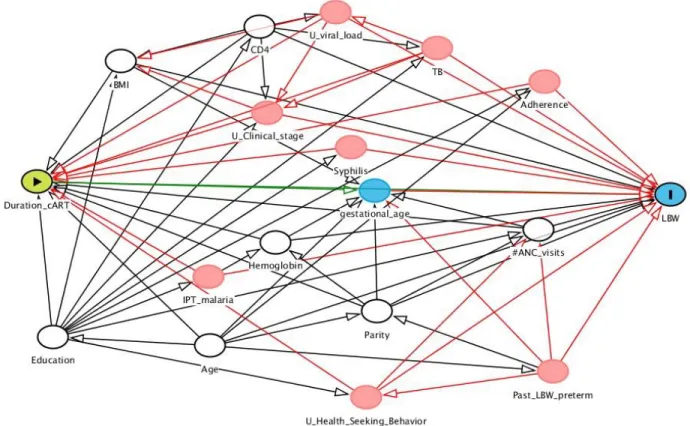
For Aim 1a, confounding variables were identified using directed acyclic graphs[201, 202] and included age, baseline BMI, baseline CD4 count, baseline hemoglobin, education, parity, previous preterm birth (<37 weeks gestation), number of ANC visits and gestational age at birth. Number of ANC visits and education were used as proxies for health seeking
behavior.[203-205] The functional form of the relationship between continuous confounders and outcome was assessed and confounders were modeled either as linear terms (age, CD4 count and gestational age at birth) or using restricted quadratic splines (BMI and hemoglobin).[206]
Information on viral load, WHO clinical stage, drug regimen and antiretroviral adherence was not available in ZEPRS.
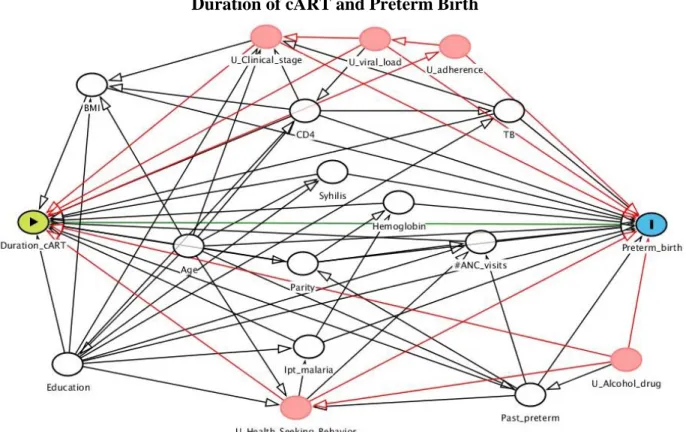
For Aim 1b, the same methods for confounder selection were used and the same
39
not considered a confounder in the Aim 1b analysis because it is used to define both preterm birth and SGA outcomes.
A4. Statistical Analyses
A4a. Preliminary data exploration
The distribution of all exposure, outcome and confounding variables was assessed for outliers, implausible values and proportion of missing data before statistical analyses began. Potential confounders were identified from literature review and based on known biologic mechanisms. To ensure appropriate and efficient coding of all covariates, the functional forms of each covariate’s relationship with the outcome was assessed. Continuous, ordinal, categorical, polynomials and splines coding schemes were considered.
A4b. Approach and model choice
For Aim 1a, In the primary analysis Poisson models with robust variance estimators [207] were used to estimate RRs for the association between duration of cART and LBW (<2500 grams; binary outcome). As a secondary analysis, linear regression was used to estimate mean changes in birthweight (continuous outcome) associated with category of cART duration and duration of cART as a continuous measure. We note that effect estimates are interpretable as associations and not causal effects because not all women are under observation from a uniform time point at the beginning of pregnancy (e.g. there is left truncation in the data) and due to unmeasured confounding.
40
to identify any associations between duration of cART during pregnancy and birthweight, which may be seen when cART is scaled up to all HIV-infected pregnant women in Zambia.
For Aim 1b, We used Poisson models with robust variance estimators,[207] to estimate RRs and 95% CIs, for the associations of duration of cART with SGA and preterm birth in three separate analyses. First, we conducted a complete-case analysis using only the observed data (naïve-analysis). Second, we used MI to impute missing data for all confounders, the exposure and the gestational age as a continuous measure (used to define both outcomes). The imputation model included predictors of any missing data (not only missing gestational age), all
confounders, the exposure and the outcome. Third, we used MO to impute missing confounder and exposure information and to overimpute gestational age. Due to the fact that the data arise from routine clinical care and not all women are under observation from a uniform time point in pregnancy and the likely presence of unmeasured confounding, we note that reported effect estimates are interpretable as associations and not causal effects.
In the MO analysis, Bayesian observation-level priors were specified for all measured values of gestational age, with a mean of wi and a variance due to the measurement error in gestational age. The mean of the prior distribution (wi) was calculated by taking the observed value of gestational age (xi) and adding an off-set (ai), equal to the difference between the observed and expected values of gestational age. A range of variances due to measurement error were considered, corresponding to 15%, 30% and 60% of the variance in gestational age. MO was performed using the Amelia II package in R (R Development Core Team Vienna,
Austria).[208]
41
associations 2) to identify any associations between duration of cART during pregnancy and preterm birth and SGA, which may be seen when cART is scaled up to all HIV-infected pregnant women in Zambia.
Multiple Overimputation – an overview
MO is a recently proposed general-purpose method from political science literature [208-210] to address missing data and measurement error. Briefly, with MO missing data are
addressed in the same way as multiple imputation. Missing values are multiply imputed based on observed covariates. Observed, but mismeasured, values are handled slightly differently.
Mismeasured values are overimputed (replaced) with multiply imputed values based on observed covariates, with the additional step of observed mismeasured value serving as observation-level Bayesian priors in the imputation model.[210] In this way, the available prior information (in the form of the observed value xi) about the true value x*I is incorporated into the imputation model. Whereas multiple imputation rests on the assumption that that data are missing at random,
conditional on observed covariates, MO rests on a weaker assumption that measurement error for an observed value is random, conditional on the observation-level prior and observed
covariates.[210]
The goal of specifying observation-level Bayesian prior is to incorporate prior
42
Specifying observation-level Bayesian priors involves two parts: specifying the mean of prior distribution and the variance due to measurement error. The mean of the prior distribution is set to a proxy value (wi) most likely to reflect x*i, since x*i is unknown.[210]. After the mean of the prior distribution has been specified, to appropriately account for uncertainty about x*i , we must specify a variance around wi. The variance around wi can be conceptualized as the variance due to measurement error, and is chosen or estimated in one of three ways. The value of the variance due to measurement error may be chosen based on published estimates.[211] If repeated measures of the mismeasured covariate are available, the variance due to measurement error can be directly estimated from the data.[210] Finally, if repeated measures or published information is not available, the variance due to measurement error can be conceptualized as the proportion of the observed covariate’s (x) variance due to measurement error and estimated from the data. The proportion of variance due to measurement error is an arbitrary value assigned by the investigator and therefore is best considered as a range of values (e.g. 30%-70%).
A4c. Descriptive Analyses
For Aim 1a, in addition to presenting descriptive statistics for duration of cART and confounders in tabular format, we investigated the following descriptively:
1. Frequency and proportion of women eligible to initiate cART who do not initiate during pregnancy.
2. Frequency and proportion of women eligible to initiate cART, who do not deliver in a facility.