RUNNING ECONOMY DURING THE LAST LEG OF INTERNATIONAL TRIATHLON UNIION DUATHLON RACE SIMULATION IN A LABORATORY SETTING
Isaac Zebadiah Lee
A Thesis Submitted to the Faculty of the University of North Carolina at Chapel Hill in Partial Fulfillment of the Requirements of the Degree of Master of Arts in the Department of
Exercise and Sport Science (Exercise Physiology) in the University of North Carolina at Chapel Hill.
Chapel Hill 2014
ABSTRACT
Isaac Lee: Running Economy During the Last Leg of a ITU Duathlon Race Simulation in a Laboratory Setting (Under the direction of Bonita Marks)
iv
ACKNOWLEDGEMENTS
I would first like to thank God who gives me strength and has always stayed close to me. I would also like to thank my lovely family for their unbelievable support throughout my academic endeavor. Without their support I would not have made it this far.
I would also like to thank my committee advisor, Dr. Bonita Marks, and members of my committee, Dr. Claudio Battaglini and Dr. Edgar Shields, who all gave me a tremendous amount of support and encouragement along the way.
I want to thank the many friends in my native Korea who have given me their thoughts and prayers of support and encouragement every step of the way.
TABLE OF CONTENTS
LIST OF TABLES...vii
LIST OF FIGURES...viii
DEFINITIONS OF TERMS AND ABBREVIATIONS...ix
CHAPTER I. INTRODUCTION………..……….……...1
Statement of Purpose………3
Research Question and Hypothesis………..…………..……..3
Limitations……..……….4
Delimitations……….4
Assumptions……….5
Significance……….5
II. REVIEW OF LITERATURE………..……….6
Maximal Oxygen Consumption ...6
Running Economy………...8
Measurement of Running Economy...9
Calculation of Running Economy…………...10
Running Economy and Endurance Performance...10
vi
III. METHODOLOGY...12
Subjects...12
Instrumentation...13
General Procedures...13
Trial 1………...14
Trial 3………...15
Research Design and Statistical Analyses………...16
IV. RESULTS………....18
Descriptive Information……….…18
Repeated Measures ANOVA Analysis………....20
V. DISCUSSION…...24
Study Limitations………26
VI. CONCLUSION………... ...…...27
Summary……….….27
Conclusion ………..27
Practical Application……….……...28
LIST OF TABLES
Table 1: ANOVA Analysis………..……….…20
Table 2: Confidence intervals for Intensity………...………..20
Table 3: Confidence intervals for Trial………21
Table 4: Confidence intervals for interaction (Intensity * Trial)……….….21
Table 5: Paired Samples Statistics……….………..…21
Table 6: Running Economy (VO2) for each Intensity Category (Speed) for Trial 1 vs. Trial 3………..23
viii
LIST OF FIGURES
Figure 1: Mean Distribution (n = 7) VO2 max (ml/kg/min) for Trial 1...19
Figure 2: Mean distribution (n = 7) VO2 max (ml/kg/min) for Trial 3……….19
DEFINITION OF TERMS AND ABBREVIATIONS
Euhydration: Normal daily body water content, measured by urine specific gravity (USg). Normal USg values range from 1.010 to 1.030.
International Triathlon Union (ITU) Duathlon: A 10 km run, 40 km cycling time trial and 5 km run performed in immediate and successive order.
Maximal Oxygen Uptake (VO2max): The maximal amount of oxygen that can be
utilized during exercise, measured in milliliters of oxygen consumed per minute per kilogram of body weight (ml/kg/min).
Submaximal Oxygen Uptake (VO2submax): An estimation of VO2max during submaximal exercise testing.
Maximal Treadmill Protocol Test: An exercise test which provides incremental increases in intensity up to maximum capacity for aerobic exercise. In this study we used a cycle ergometer and treadmill protocol for the test, which was done in the lab. Running Economy (RE): A measure of the energy demand of running at a set
submaximal speed. Runners with good RE use less energy and less oxygen than runners with poor RE, which is reflected in a lower level of oxygen uptake at any given speed.
Speed-Only VO2max (SOVO2max): a protocol for measuring VO2max using incremental increases in speed while maintaining a constant grade of 0%.
Ventilatory Threshold (VT): The point at which pulmonary ventilation increases
1 CHAPTER I
INTRODUCTION
The duathlon, a run-bike-run competition, is a time honored multi-sport event dating back to the early 1970s. At that time duathlons, initially termed biathlons, were popular as informal local competitions which in subsequent decades led to more formalized and
structured competitions sponsored by large corporations (ITU, 2012). In the 1980s duathlons experienced a surge in popularity, but this resurgence was later overshadowed by the sport of triathlon, which included swimming along with running and biking and attracted larger numbers of competitors (ITU, 2012). Today the duathlon remains a popular sport although it is still not officially recognized by the International Olympic Committee.
In the United States, the recognized governing body for the duathlon is USA Triathlon, whose duties include certifying duathlons and setting rules for competition.
International duathlon events are governed by the International Triathlon Union (ITU), which also certifies races and set rules for competition on a global level (ITU, 2012).
and previous conditioning), psychological factors, geographic factors (altitude, weather conditions during the event) and the physical characteristics of the race route itself (Saunders et al., 2004).
As in any sports event, athletes and coaches involved in duathlons everywhere are concerned with the age-old question of how to maximize an athlete’s performance to confer an advantage over that of the competition. To that end, various physiological measures and performance tests have been adapted in an effort to develop and perfect training
methodologies. One of the most important of these metrics includes testing for maximal oxygen uptake (VO2max), which represents the maximal capacity to utilize oxygen during exercise,and is typically done on a treadmill. The results of the VO2max test reflect an athlete’s level of cardiopulmonary fitness and can be used not only to design exercise training programs and to prescribe the level of training intensity, but also to monitor training load, so as not to overly stress an athlete beyond his or her capabilities (Balady et al. 2010).
Running economy (RE), which can be thought of as one measure of optimal running performance, is a metric which has been defined in many different terms. The simplest definition of RE is the most descriptive: RE is the oxygen uptake (VO2) at submaximal intensities. Runners with good running economy are those who have lower oxygen uptake at any given speed (Davies et al., 1997). In other words, they are able to utilize oxygen more efficiently during sustained long distance running. Running economy has been demonstrated to be a better metric than VO2max for predicting performance in elite long distance runners who have comparable capacities for oxygen uptake (Saunders et al. 2004). In spite of this, RE has been less well studied than other factors in the field of running performance (Foster and Lucia, 2007).
3
Vanhoy (2012), examined the effects of two different graded treadmill protocols on VO2max in highly trained distance runners. Results showed that training specificity has no effect on performance during treadmill protocols of various grades. De Vito et al. (1995) examined the effects of the swim and cycling bouts on running performance using an Olympic distance triathlon simulation and in 2003. Vallier et al. investigated the compounding effects of the run-cycle-run transitions on the final run performance of a duathlon. The field therefore remains wide open for further research into the area of duathlon competition and running performance and the factors which affect it.
Statement of Purpose
The purpose of this study was to examine the effects of a 10 km run followed by a 30 km cycling bout on the running economy of the last 5 km of an ITU duathlon simulation race performed in a laboratory setting.
Research Question
Research Question: Is the running economy of an elite athlete’s performance in a 10-30-5 duathlon affected by the compounding physiological effects of the two run- and cycle-legs of the race which precede the final 5 km run?
Hypothesis
Hypothesis 1: There will be no difference in running economy between Trial 1 and Trial 3 at 5 mph.
Hypothesis 2: There will be no significance difference in running economy between Trial 1 and Trial 3 at 7 mph.
Limitations
This was a retrospective study and as such was bound by the previous study’s limitations, (Berry, 2012), including:
The study did not control for the training phase each subject was undergoing at the time of the study; subjects were not synced with regard to their training phases during the course of the study, which may have affected the results.
Although the cycle ergometer was set up and adjusted for each subject, the bike positioning on the ergometer may have produced limitations on the riding mechanics of each athlete.
Levels of fatigue and dietary status were monitored prior to each testing trial using self-report questionnaires. There is always a level of uncertainty introduced when using questionnaires for assessment of parameters in any clinical trial (Bowling A. 2005).
Delimitations
This was a retrospective study and as such was bound by the previous study’s delimitations, (Berry, 2012), including:
All participants in this study were highly trained multi-sport athletes.
Each subject’s hydration status was monitored utilizing urine specific gravity tests before the start of each trial.
Subjects were provided pre-testing information and completed a questionnaire before each trial to assess whether dietary patterns were consistent with normal daily intake. Start times for all trials were consistent for each subject – trials were scheduled for
5 hormonal fluctuations.
In the laboratory setting, a 40 km ride at an intensity of between 95-98% of
ventilatory threshold takes an average of 35-45 minutes longer than cycling the same distance outdoors at a variable pace. Therefore, for this study, the 40 km cycling distance prescribed by the ITU was shortened to 30 km in order to more closely replicate the total time of an actual duathlon.
Assumptions
Subjects in this trial self-reported abstinence from all alcohol, drugs, or any other substances that otherwise might have affected the results of the study for 48 hours to 7 days prior to testing (see General Procedures section below).
Subjects avoided making changes in their standard dietary regimens between trials and consumed the same foods and liquids and in approximately the same amounts that they would normally consume prior to a competition.
Subjects answered the training history questionnaire and pre-trial questionnaires to the best of their knowledge and as accurately as possible(Berry, 2013).
Significance
The physiological changes that occur with the fatigue and depletion experienced by most competitors at the last leg of a duathlon race are significant and can affect race
CHAPTER II
REVIEW OF LITERATURE
This literature review covers three main topics pertinent to this retrospective study: maximal oxygen consumption, running economy (RE)and a discussion of performance interventions used to improve overall running economy.
Maximal Oxygen Consumption (VO2max
)
Past studies have demonstrated that VO2max is one of the best measures of
cardiopulmonary endurance and aerobic fitness when it comes to endurance sports like long distance running (Abe et al. 1998, Blomstrand et al. 1997). Oxygen consumption is the rate at which the body can uptake and metabolize oxygen, which is a complex physiological process and is dependent on many factors.A complete discussion of these processes is beyond the scope of this current study but thorough reviews can be found in exercise physiology textbooks such as Brooks et al. (2005).
Previous research has shown that testing for VO2max can provide precise knowledge of an athlete’s strengths and weaknesses (Saunders et al. 2004, Foster and Lucia, 2007). VO2max testing also defines baseline physiological measurements from which not only
7
(Brooks et al., 2005). Expected values for VO2max in highly trained multisport athletes of various disciplines range from the high fifties to nearly 70 ml/kg/min (57.9 ± 5.7 to 68.9 ± 7.4) (Millet et al., 2011).
Various studies have shown that highly trained single-sport athletes demonstrate a higher VO2max than highly trained multi-sport athletes when tested in their specific discipline (Bouckaert et al. 1990, Millet et al. 2009). However, while highly-trained multi-sport athletes have high VO2maxvalues, these values are lower than that of highly-trained athletes who specializes in one event (Sleivert and Rowlands, 1996). So, single event athletes are more efficient in utilizing oxygen during competition than their multi-sport event counterparts, and therefore may have a competitive advantage in this respect.
An athlete’s VO2max is usually determined based on attainment of at least three of the four following objective criteria (Brooks et al., 2005). 1) a plateau in VO2, or no increase in VO2 with an increase in workload (i.e., approximately three consecutive 15-second VO2 measurements within ± 2 ml/kg/min of each other); 2) a respiratory exchange ratio (RER)
greater than 1.15; 3) elevated levels of blood lactic acid greater than 8 millimoles per liter (mmol/L); 4) Rated Perceived Exertion (RPE) ≥ 17; and/or 5) achievement of an age-predicted maximal heart rate (±10 bpm).
Past research has examined possible ways to improve the accuracy of VO2max testing. For example, Kasch et al., (1982) showed that there can be as much as a ± 5.6% biological variability between subjects. Noakes (1998) reported that VO2max measurements will change with differences in use of selected muscle groups, altitude and exercise duration. Lastly, Bassett and Howley (1997) reported that sport-specific VO2max testing showed cyclists
During competition, multiple factors contribute to the performance of athletes including: the psychological profile of the athlete, the percentage of VO2max at which the athlete can perform and the duration of time the athlete can sustain maximal performance (Saunders et al., 2004). According to Bosquet et al. (2002), VO2max alone is not sufficient to precisely predict the performance in athletic competition, but it is nevertheless considered a strong predictor of successful endurance running. In summary, measurement of VO2max can provide an indication of an athlete’s true ability and potential, especially with respect to endurance. Measurement of VO2max can be used in the calculation of RE and thus provide a more precise determination of an athlete’s cardiopulmonary fitness performance potential.
Running Economy (RE)
Running economy (RE) is a measurement of an athlete’s efficiency of oxygen utilization while running at a given pace. It is a metric widely used in the field of long distance running performance and has been defined as a measure of the energy required during submaximal running at a given velocity on a treadmill (Saunders et al., 2004).
Running economy can also be defined as oxygen uptake (VO2) at submaximal intensities and has been shown to be a good predictor of running performance. In distance running, such as in a triathlon or duathlon, athletes can potentially improve their running performance by noting trends in measured RE during training and altering training strategies accordingly. Running economy can be a better predictor than VO2max of running performance, especially for high level endurance runners (Saunders et al., 2004).
9 Measurement of Running Economy
Previous research studies have compared the energy costs of running over ground with running on a treadmill in a laboratory setting (Hausswirth et al. 1997; Kubukeli et al. 2002). Measurement of metabolic parameters in the field has the potential to introduce environmental variables into the data, such as air and wind resistance, which can negatively impact the results. These variables can be controlled for when done in a simulated laboratory setting on a treadmill, which was the method used in this study. For example, Pugh (1970) studied 5000 meter track runs and found that 8% of the total energy cost was expended overcoming air resistance. A telemetric system was used in another study to measure RE over ground in the field (Hausswirth et al., 1997). However, the system did not include the
capability of measuring energy expenditure during either sub-maximal or maximal exercise.
Measuring RE while running on a treadmill has been shown to be highly correlated to outdoor ground running RE (Saunders et al., 2004). In the RE test, an individual is monitored while running under standardized thermo neutral laboratory conditions. While treadmill running is not identical to outdoor ground running, it is still a useful indicator of RE (Saunders, Pyne, Telford, & Hawley, 2004). Shifts in measured RE can be traced to
quantifiable factors which can be used to modify training regimens with the ultimate goal of improving performance.
Establishment of a high degree of standardization in testing is necessary to measure changes in RE through repeated testing. Running economy changes over time, and is
Calculation of Running Economy
Calculation of RE can be done using various methods. In some studies, RE was calculated by dividing the oxygen consumption corresponding to a submaximal velocity by that velocity, expressed as milliliters of O2 consumed per kg per minute (ml/kg/min). Davis et
al. (1997) calculated RE as the ratio of an individual’s VO2 in liters per minute (L/min) divided by body mass (BM) in kilograms. However, this measurement has the potential to introduce error in comparisons between subjects because oxygen consumption does not proportionally increase with increases in body mass (Bergh et al., 1991). Because there are so many variations in RE determination, this current study, decided to use VO2max at various running intensities to represent RE.
Running Economy: Performance and Endurance
Runners who have good RE expend less energy and use less oxygen than runners who have poor running economy at the same velocity. Running economy is strongly
associated with distance running performance and is a greater predictor of performance than VO2max among elite runners with similar levels of VO2max (Saunders, et al., 2004). VO2max is thereby a valuable measure of the upper limit of endurance performance in athletes.
The primary limiting factor for VO2max in humans is oxygen delivery to the tissues, including skeletal muscle tissue. Endurance training results in metabolic adaptations in skeletal muscle tissue through alterations in mitochondrial enzymes, among other
11
A combination of factors influence running performance. The degree to which an athlete can take up and utilize oxygen is a limiting factor for performance, but training can improve an athlete’s level of performance overall. In other words, while VO2max may be a limiting factor of endurance performance, the use of appropriate training raises this level. Training produces an increase in VO2max through an increase in maximal cardiac output (Bassett & Howley, 2000).
Conditioning is an important factor in running performance. The training typically undertaken by each runner has been found to have significant positive effects on RE and can contribute to increases in running endurance (Saunders, et al., 2004). Various elements of training have been found to impact RE. Stretching prior to an endurance event, for example, has been found to lower endurance performance while at the same time raising the energy cost of running (Wilson et. al., 2010). Therefore, it is important to factor in conditioning when designing a program to improve RE.
Performance Interventions
Specific training programs designed to improve RE vary widely. The general goal is to improve an athlete’s VO2max. Improvements in endurance and muscular conditioning are also important. Paavolainen et al. (1999) studied the impact of concurrent endurance training and explosive-strength training on physical performance characteristics. Results showed that the simultaneous application of these two training options resulted in an increase in maximal anaerobic ability and greater RE, which was attributed to improved neuromuscular
CHAPTER III
METHODOLOGY
This study was a retrospective analyses of data obtained from a clinical study by Nathaniel T. Berry (2012) in the UNC exercise physiology laboratory under the direction of Dr. Claudio L. Battaglini (Thesis Title: The effects of a 10 km run and 30 km cycling ti me-trial on ventilatory threshold during the final running leg of an ITU Duathlon in
highly-trained multi-sport athletes. IRB #12-0199). This retrospective study was designed to
extend the analyses of existing data to include measurement of running economy (RE) during the final leg of a 10-30- 5 km duathlon. Only methods information directly relevant to this current study ispresented in detail. For a more complete description of the original study, please refer to the published master thesis of Berry (2012).
Subjects
Six highly-trained multi-sport male athletes, ranging in age from 18-45 years, were recruited to participate in the original study conducted by Berry (2012). An additional subject was added to the study at a later date, so data from a total of seven subjects were used for analysis in this current study. Prior to enrollment in the study, all subjects had been training a minimum of 15 hours per week for a minimum of six months. Before any evaluation or form completion, subjects signed informed consent which was approved by the University’s Office of Human Research Ethics Institutional Review Board.
13
being accepted for admission in the study. Samples of these forms are contained in Berry’s
Appendices section (2012). All subjects were found to be healthy – defined as low risk individuals for participation in maximal exercise testing based on the guidelines set forth by the American College of Sports Medicine (2010), and had no prior orthopedic injuries. Subjects were required to have an organized dietary and nutritional plan during the study, with consistency in number of meals and caloric intake each day.
Instrumentation
Height and weight were recorded using a stature meter (Perspective MO, USA) and Detecto 2381 balance beam scale (Detecto, Webb City, MO, USA). Urine specific gravity (USg) was assessed with a refractometer (TS Meter, American Optical Corp, Keene, NH, USA).
Oxygen consumption (VO2), expired carbon dioxide (VCO2), ventilation (VE), ventilatory threshold VT and respiratory exchange ratio (RER) were assessed using a Parvo Medics TrueMax® 2300 Metabolic gas analyses system (Parvo Medics, Salt Lake City, UT, USA). A Lactate Plus lactate analyzer (Sports Resource Group, Hawthorne, NY) was used to determine blood lactate values. The Borg 6-20 scale (Borg, 1970) was used to quantify rating of perceived exertion (RPE) throughout each of the three trials. Heart rate (HR) was
monitored with a Pacer model of polar heart rate monitor to measure heart rate during each trial (Polar, Lake Success, NY, USA)
General Procedures Relevant for the Current Study
The original study (Berry, 2012) consisted of three testing trials, all performed in a
completed within 21 days of the first trial.
In the laboratory setting, a 40 km ride at an intensity of between 95-98% of VT takes an average of 35-45 minutes longer than cycling the same distance outdoors at a variable pace. Therefore, for this study, the 40 km cycling distance prescribed by the ITU was shortened to 30 km in order to more closely replicate the total time of an actual duathlon.
Prior to testing, subjects were given pre-trial testing guidelines listed below:
1. No eating 4 hours prior to testing. 2. Void completely before testing
3. Maintain proper hydration prior to testing.
4. Please wear appropriate clothing/shoes for testing (running shorts/shirt/shoes) 5. No exercise 12 hours prior to testing.
6. No alcohol consumption 48 hours prior to testing. 7. No diuretic medications 7 days prior to testing.
8. To control for circadian rhythm and any variation that could affect the results of this study, each additional session was scheduled at a similar time of day (± 2 hours).
Trial 1. Each subject performed a speed-only VO2max (SOVO2max) treadmill testing protocol. Although only VO2 was used to determine RE, other metabolic factors such as VCO2, VE, HR, and the RER were measured every 15 seconds throughout the testing session to corroborate the physiological intensity.
15
in Berry’s thesis publication (2012). Each subject was then weighed and submitted a urine sample for assessment of hydration status using a refractometer. Subjects were required to have a urine specific gravity (USg) reading between 1.010 to 1.030 to confirm a euhydrated state (i.e., not dehydrated). After all screenings were completed, subjects received more detailed information regarding the study protocol and requirements.
Testing consisted of an incremental treadmill test to assess VO2max. Measurement of VO2maxwas performed using a speed-only protocol (SOVO2max) consisting of one minute stages, beginning at 5mph and increased by 1mph each minute until a speed of 11mph was reached. At that point, speed was increased by 0.5mph per minute. The measured
physiological variables includedVO2, VCO2, VE and RERevery 15 seconds throughout the testing session. The rating of perceived exertion (RPE) was taken at the conclusion of each stage and at the conclusion of the testing protocol. Heart rate (HR) was monitored and a blood sample for lactate levels was taken by finger stick three minutes after the end of the final stage. Results from Trial 1were used to compare VO2max and VT observed during a
single bout of maximal exercise to those values obtained during Trial 3.
Trial 3. Trial 3 consisted of a10 km run and a 30 km cycling time-trial followed by Vanhoy’s (2012) treadmill SOVO2max testing protocol. Subjects completed the 10 km run and 30 km cycling time trial on a treadmill and cycle ergometer; each of these exercise bouts were performed at VO2max. Subjects were taken on and off the metabolic cart throughout various times of the exercise bouts in order to assess and monitor exercise intensity. Criteria used for determining VO2maxwas the same in all trials.
Per standard VO2 max determination criteria (Brooks et al., 2005), subjects were required to achieve a minimum of three of the following five criteria for the trial to be
1) RER ≥1.15
2) RPE ≥ 17
3) HR within 10 beats of maximum predicted for age
4) VO2 plateau within ± 2ml/kg/min or decline of VO2 with increased workload 5) Blood lactate ≥ 8mmol/L
Trial 3 simulated an ITU Duathlon. Similar to Trial 1, each subject completed pre-trial questionnaire and submitted a urine sample to assure proper hydration status before VO2max testing. This third trial consisted of a 10 km run, a 30 km cycling time-trial and the same treadmill SOVO2max protocol described earlier. These were performed in immediate and successive order. The initial 10 km run and succeeding 30 km cycling time trial were performed at an intensity equal to 95-98 of VT. During the 10 km run, this intensity was
equated to a specific running speed while exercise intensity on the cycle ergometer was
equated to a specific workload measured in Watts (W). During both the 10 km run and 30 km
cycling time trial, the same physiologic data as Trial 1 were collected at the same specified intervals in order to assess and monitor exercise intensity. Upon completion of these two
exercise bouts, the subjects transitioned back onto the treadmill to complete the SOVO2max
protocol. Oxygen uptake and VE were measured every 15 seconds throughout the trial while
simultaneously monitoring HR. RPE was recorded at the end of each stage. A blood lactacte sample obtained via fingerstick was obtained three minutes after the completion of the
SOVO2max protocol.
Research Design Statistical Analyses
17
RE = VO2submax (ml/kg/min): The recorded submaximal O2 uptake (ml/kg) at a given speed (in minutes) (Davis et al., 1997).
The independent variables for this current study were running intensity (low @ 5 mph, medium @ 7 mph and high @ 10 mph) and trial (Trial 1 vs. Trial 3). The
CHAPTER IV
RESULTS
The purpose of this retrospective study was to examine the effects of a 10 km run followed by a 30 km cycling bout on RE during the last 5 km of an ITU duathlon simulation race performed on a laboratory setting, as measured by the change in VO2.
Descriptive Information
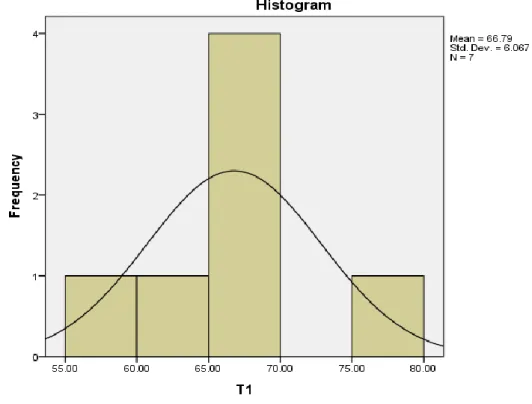
Seven highly-trained male multi-sport athletes participated in this study. Their mean descriptive information was as follows: age 34 (±9 years), height 177.7 (±3.7 cm), and weight 74.2 (±2.6 kg). To determine if the subjects’ maximum aerobic capacities were normally distributed within each trial, the data were plotted on histograms and visually examined for possible influential outliers. As seen in the histogram plots of Trial 1and Trial 3 (Figures 1 & 2) the individual aerobic maximum capacities attained from the VO2max tests were similar within each trial. A complete set of data is available in the thesis of Nathanial Berry (2012).
On the histogram frequency data output (Figures 1 and 2 below), the mean and
19
Figure 1. Mean Distribution (n = 7) VO2 max (ml/kg/min) for Trial 1
Repeated Measures ANOVA Analysis
The hypothesis for this retrospective thesis stated, “There will be a significant
decrease in running economy (RE) at three different levels of running intensity (low = 5mph,
moderate = 7mph and high = 10mph) at final VO2max (Trial 3) when compared to same
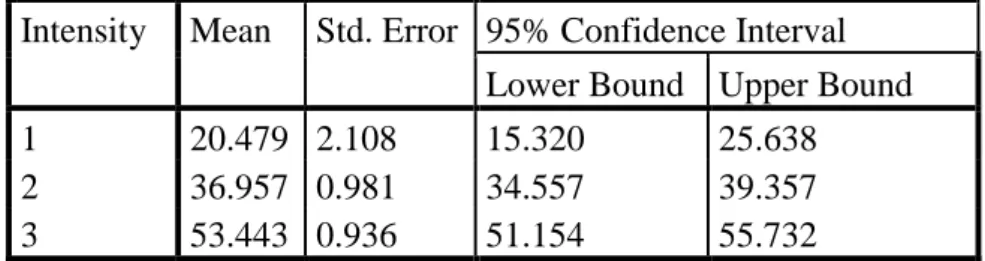
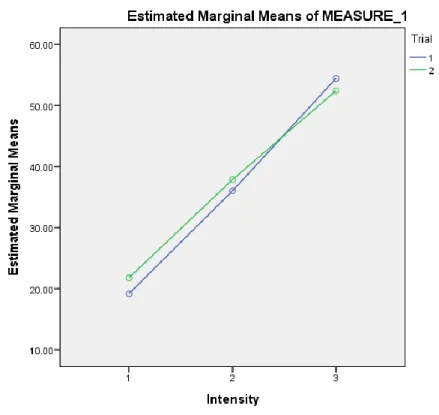
intensities of the VO2max test performed in Trial 1.” The hypothesis was tested using a 3 x 2 repeated measures ANOVA with two factors. Factor 1 was the independent variable named exercise intensity (3 intensity speeds: low (5mph), moderate (7mph), and high (10mph). Factor 2 was the trial (2 trials). The dependent variable was running economy (RE) for each of the 2 trials, and was represented by the measured VO2max (ml/kg/min) value. Table 1 shows the results of the analyses of the 3 x 2 repeated measures ANOVA model. Tables 1 through 4 and Figure 3 show the 95% confidence intervals for intensity, trial, and interaction
(respectively).
Table 1. ANOVA Analysis
Source Df MS Critical F Value Significance
(p value)
Intensity 2 3803.255 187.683 0.000
Trial 1 6.800 0.479 0.515
Intensity * Trial 2 21.537 3.988 0.047
Table 2. Confidence intervals for Intensity Estimates
21 Table 3. Confidence intervals for Trial
Trial Mean Std. Error 95% Confidence Interval Lower Bound Upper Bound
1 36.557 0.918 34.310 38.804
2 37.362 1.446 33.824 40.900
Table 4. Confidence intervals for interaction (Intensity * Trial)
Intensity Trial Mean Std. Error
95% Confidence Interval
Lower Bound Upper Bound
1 1 19.186 1.405 15.748 22.624
2 21.771 3.128 14.118 29.425
2 1 36.029 1.072 33.406 38.651
2 37.886 1.037 35.349 40.423
3 1 54.457 0.884 52.293 56.621
2 52.429 1.170 49.565 55.292
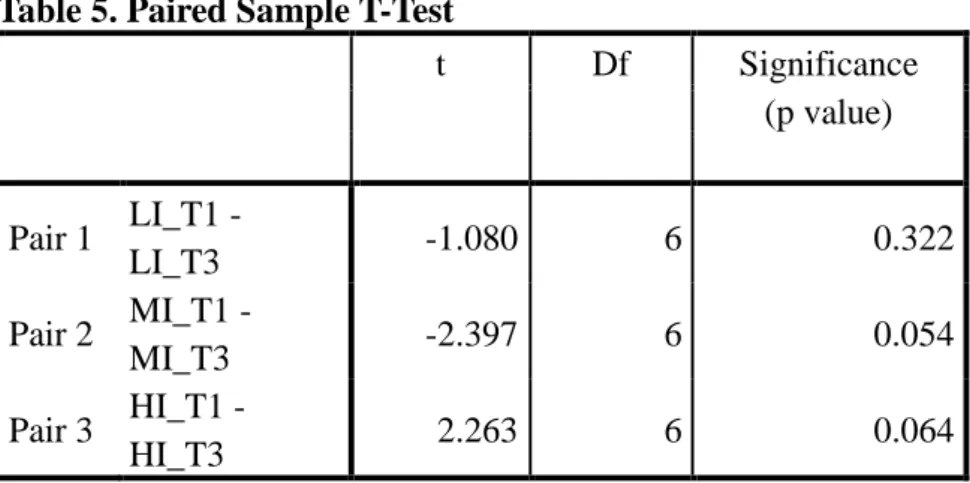
Table 5. Paired Sample T-Test
t Df Significance (p value)
Pair 1 LI_T1 -
LI_T3 -1.080 6 0.322
Pair 2 MI_T1 -
MI_T3 -2.397 6 0.054
Pair 3 HI_T1 -
Figure 3. The plot of the marginal means for intensity by trial
As shown in the data analysis tables and Figure 3 above, the overall repeated
23
Table 6. Descriptive statistics for the 3x2 repeated measures ANOVA (N=7)
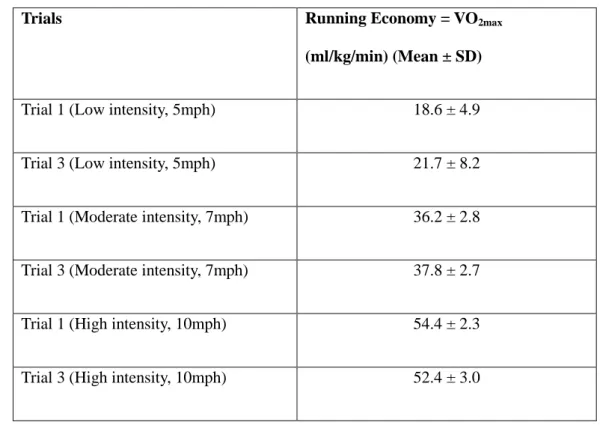
The results of the post hoc analyses showed no significant difference in RE between Trial 1 and Trial 3 for RE calculated at 5mph (p = 0.32). However, a moderate (7mph) and high (10mph) intensities the results of the analyses approached significance (Moderate Intensity, p = 0.054 and High Intensity, p = 0.064, respectively).
Trials Running Economy = VO2max
(ml/kg/min) (Mean ± SD)
Trial 1 (Low intensity, 5mph) 18.6 ± 4.9
Trial 3 (Low intensity, 5mph) 21.7 ± 8.2
Trial 1 (Moderate intensity, 7mph) 36.2 ± 2.8
Trial 3 (Moderate intensity, 7mph) 37.8 ± 2.7
Trial 1 (High intensity, 10mph) 54.4 ± 2.3
CHAPTER V
DISCUSSION
The purpose of this retrospective study was to examine the effects of a10 km run followed by a 30 km cycling bout on the RE of the last 5 km of an ITU duathlon simulation race on seven highly-trained male multi-sport athletes.
It was hypothesized that there would be a significant decrease in RE, which can be thought of as the rate at which the volume of oxygen (VO2) is used at a specific speed during the final leg of a simulated duathlon. This result would be due mainly to the compounding physiological effects of the two run and cycle legs of the race which precede the final 5 km run. In this study, RE was quantified using VO2max (ml/kg/min) at three different levels of running intensity (low = 5mph, moderate = 7mph and high = 10mph).
25
Running economy, as stated earlier, can be defined as submaximal oxygen uptake (VO2submax) for a given speed. This current study utilized VO2 values attained at different running speeds. Runners with good running economy were those who had a lower level of oxygen uptake at any given speed (Davies et al., 1997). In other words, they were able to utilize oxygen more efficiently during sustained long distance running.
To date, there have been only two studies investigating the compounding effects of a multi-sport competition on running performance. De Vito et al. (1995) examined the effects of the swim and cycling bouts on running performance of six male triathletes using an Olympic distance triathlon simulation, and found an impairment in endurance performance which was attributed to the physiologic effects on athletes of the first two segments of the race.In contrast, Vallier et al. (2003) investigated the compounding effects of the run-cycle-run transitions on the final run-cycle-run performance of a duathlon and found no significant difference in the energy cost of running between the first and final leg of the simulated duathlon.
of a triathlon and a marathon. His research team found a decrease in running efficiency which they attributed not only to kinematic parameters, but also to “global alterations of many different parameters.” Published results like those of Hausmann et al. (1997) appear to support the hypothesis presented here: that there will be a significant decrease in running economy during the final 5km run of a 10-30-5 km simulated duathlon when compared to the running economy of the initial 10 km run tested in a laboratory setting.
Study Limitations
Certain limitations of this study may have factored into the results of this current retrospective analyses, most notably, the small sample size. A larger sample may have yield more power to detect clearly significant differences rather than “trends” toward significance for the planned comparisons. Furthermore, although all subjects had been training a minimum of 15 hours per week for a minimum of six months prior to enrollment, the design of the study did not control for the training phase each subject was undergoing at the time of the study, so subjects were not synced with regard to their training phases. Additionally, even though the cycle ergometer was set up and adjusted for each subject, the bike positioning on the ergometer may have produced limitations on the riding mechanics of each athlete.
Subjects in this study also self-reported abstinence from all alcohol, drugs, or any other substances that otherwise might have affected the results of the study for 48 hours to 7 days prior to testing. Again, the utilization of self-reporting is sometimes unreliable. Diet, both the type and amount of food consumed, has been shown to play a significant role in sport performance, which was not controlled for in this study. To minimize these known self-reporting issues, subjects reported avoiding making any changes in their standard dietary regimens between trials and reported consuming the same foods and liquids and in
27 CHAPTER VI
CONCLUSION
Summary
One of many ways of optimizing an athlete’s performance is to increase his or her running economy, the efficiency with which an athlete uptakes and utilizes oxygen during activity. This study examined the effects of a 10 km run and 30 km cycling on the running economy in the last 5 km of a simulated duathlon executed by seven experienced male athletes. After measuring the final maximal oxygen consumption following a 5, 7, and 10 mph running phase, the researchers drew conclusions about the multiple athletes’ running economy. The results of the overall 3 x 2 ANOVA showed a significant main effect for
intensity (p < 0.0001) plus a significant interaction effect between trials * intensity (p = 0.047). The planned comparisons using dependent t-tests produced near-significant
differences that warrant the drawing of conclusions about the running economy, even in this small sample size. Specifically, dependent tests approached significance (nearing p ˂ 0.05) for both the moderate (7mph) and high intensities (10mph). This suggests a possible statistical trend toward support for the hypothesis, had a larger sample of subjects been used in this study.
Conclusions
of 7mph and 10mph. However, due the relatively small more research is warranted to confirm and results the results of this study.
Practical Application
This research is important for assisting coaches and multi-sport athletes to design training plans aimed to minimize as much as possible the apparent decline in RE during the last leg of a duathlon race demonstrated by this study. With the results of this study, coaches may be able to not only design training plans aimed to maximize running performance during a duathlon race, but also determine racing strategies that allow the athlete to maximize
29
REFERENCES
Abe, D., Yanagawa, K., Yamanobe, K., and Tamura, K. (1998). Assessment of middle-distance running performance in sub-elite young runners using energy cost of running. Eur. J. Appl. Physiol. 77: 320-325.
American College of Sports Medicine (ACSM) (2010). ACSM's Guidelines for Exercise Testing and Prescription (8th ed). Philadelphia: Lippincott Williams and Wilkins. Armstrong, L. E., et al. (1994). Urinary indices of hydration status. Int. J. Sport. Nutr.
4: 265-279.
Balady, G. J., et al. (2010). Clinician’s Guide to Cardiopulmonary Exercise Testing in Adults: A Scientific Statement from the American Heart Association. Circ.122: 191–225. Bassett, D. R., and Howley, E. T. (1997). Maximal oxygen uptake: “classical” versus
“contemporary” viewpoints. Med. Sci. Sports Exerc. 29: 591-603.
Bassett, D. R., and Howley, E. T. (2000). Limiting factors for maximum oxygen uptake and determinants of endurance performance. Med. Sci. Sports Exerc. 32: 70-84. Berry, N. T. (2012). The effects of a 10 km run and 30 km cycling time-trial on ventilatory
threshold during the final running leg of an ITU Duathlon in highly-trained multi-sport athletes. Master’s Thesis, University of North Carolina at Chapel Hill.
Blomstrand, E., Radergran, G., and Saltin, B. (1997). Maximum rate of oxygen uptake by human skeletal muscle in relation to maximal activities of enzymes in the Krebs cycle. J. Physiol. (London) 501: 455-460.
Borg, G. (1970). Perceived Exertion as an indicator of somatic stress. Scandinavian journal of Rehabilitation Medicine, 2(2), 92-98.
Bosquet, L., Leger, L. and Legros, P. (2002). Methods to determine aerobic endurance.
Sports Med.11: 675-700.
Bouckaert J., et al. (1990). Effect ofspecific test procedures on plasma lactate concentration on peak oxygen uptake in endurance athletes. J. Sports Med. Phys. Fitness. 30: 13-18. Bowling A. (2005). Mode of questionnaire administration can have serious effects on data
quality. J. Pub. Health. 27: 281-291.
Brooks G. A., Fahey, T. and Baldwin K. (2005). Exercise Physiology: Human bioenergetics
and its applications. Boston: McGraw Hill.
Casa D. J., et al. (2000). National Athletic Trainers’ Association: Position statement: Fluid replacement for athletes. J. Athl. Train. 35: 212–224.
De Vito G., et al. (1995). Decrease in endurance performance during Olympic triathlon.
Ferrauti, A., Bergermann, M., and Fernandez-Fernandez, J. (2010). Effects of a concurrent strength and endurance training on running performance and running economy in recreational marathon runners. J. Strength Cond. Res. 24, 2770-2778.
Guezennec C. Y., Vallier J. M., Bigard A. X., and Durey A. (1996). Increase in energy cost of running at the end of a triathlon. Eur. J. Appl. Physiol. Occup. Physiol. 73:440-5. Hausswirth C, Bigard A. X, and Guezennec C.Y. (1997). Relationships between running
mechanics and energy cost of running at the end of a triathlon and a marathon.
Int. J. Sports Med. 18:330-9.
ITU, International Triathlon Union (2012). Triathlon – International Triathlon Union. Retrieved from http://www.triathlon.org/multisports/duathlon. Last accessed: 11/27/2013.
Kasch F. W., et al. (1976). VO2max during horizontal and inclined treadmill running.
J. Appl. Physiol. 40: 982-983.
Kubukeli, Z. N., Noakes, T. D., and Dennis, S. C. (2002). Training techniques to improve endurance exercise performances. Sports Med. 32: 489-509.
MacDougall, J. D. and Wenger, H. A. (1982). Physiological Testing of the Elite Athlete. Ithaca, NY: Movement Publications.
Millet G. P., and Vleck, V. E. (2000).Physiological and biomechanical adaptations to the cycle to run transition in Olympic triathlon: review and practical recommendations for training, Br. J. Sports Med. 34: 384-390.
Millet G., Vleck, V. E., and Bentley D. J. (2009). Physiological differences between cycling and running. Sports Med. 30: 179-206.
Millet G. P., Vleck, V. E., and Bentley D. J. (2011). Physiological requirements in triathlon.
J. Hum. Sport Exerc. 6:184-204.
Noakes, T. D. (1988). Implications of exercise testing for prediction of athletic performance: A contemporary perspective. Med. Sci. Sports Exerc.20: 319-330.
Paavolainen, L., et al. (1999). Explosive-strength training improves 5-km running time by improving running economy and muscle power. J Appl. Physiol. 86: 1527-1533. Saunders, P. U., Pyne D. B., Telford R. D., and Hawley J. A. (2004). Factors affecting
running economy in trained distance runners. Sports Med.465-485.
Sleivert G. G. and Rowlands D. S. (1996). Physical and physiological factors associated with success in the triathlon. Sports Med. 22: 8-18.
31
Vallier J. M.,et al. (2003). Energy cost of running during a specific transition in duathlon.
Can. J. Appl. Physiol. 28: 673-84.
Vanhoy, R. A. (2012). A comparison of two different treadmill protocols in measuring maximal oxygen consumption in highly trained distance runners. Master’s Thesis,
University of North Carolina at Chapel Hill.
Wilmore, J. H., Costill, D. L., and Kenney W. L. (2008) Physiology of Sport and Exercise (5th Ed). Human Kinetics Publishers.
Wilson, J. M., et al. (2010). Effects of static stretching on energy cost and running endurance performance. J. Strength Cond. Res. 24: 2274-2279.
Zamora, A. J., et al. (1995). Mitochondria changes in human muscle after prolonged exercise, endurance training and selenium supplementation. Eur. J. Appl. Physiol. Occup. physiol.