CHASING MR. C: EARLY MOTION-PICTURE EXHIBITION IN ROBESON COUNTY, NORTH CAROLINA (1896-1950)
Christopher J. McKenna
A dissertation submitted to the faculty of the University of North Carolina at Chapel Hill in partial fulfillment of the requirements for the degree of Doctor of Philosophy in the
Department of English and Comparative Literature.
Chapel Hill 2012
Approved by: Dr. Timothy Marr
Dr. Linda Wagner-Martin
Dr. John McGowan Dr. Robert C. Allen
2012
ABSTRACT
CHRISTOPHER J. MCKENNA: Chasing Mr. C: Early Motion-Picture Exhibition in Robeson County, North Carolina (1896-1950)
(Under the direction of Timothy Marr)
This dissertation seeks to document the development of early moviegoing in a specific North Carolina county during the first half-century of commercial film exhibitions. Several local factors resulted in exhibition developments that often did not conform—or only partially conformed—to the metro-centric narratives that have dominated U.S. cinema history. Instead, Robeson’s exhibitors and audiences faced a series of economic, socio-cultural, and racial challenges that shaped the highly-contingent and inescapably public activity of moviegoing in the county’s rural, highly-decentralized, socially conservative, and racially discriminatory small-town communities. This study depicts local moviegoing as neither a ubiquitous nor fully accessible leisure activity due to:
Local demographic factors that delayed the implementation of core commercial
infrastructures and slowed the introduction and stabilization of local exhibitions until long after several notable exhibition trends that never meaningfully applied to Robeson had long since reshaped metropolitan moviegoing.
The concerns of local civic and religious leaders that nearly resulted in the imposition of a cinema-censorship structure based on a legislative proposal during the 1921 General Assembly that had been co-sponsored by a Robeson County delegate.
To the former and current residents of Robeson County, who graciously shared their memories and their history with a complete stranger.
To Ken and Marion, who remain the friends of a lifetime. To Tom and Alice, who provided the core foundation.
ACKNOWLEDGMENTS
I would like to thank the members of my dissertation committee for participating in a project which, though it ranges far from the roots of most English-affiliated dissertations, seemed to me to offer an opportunity to develop an interesting—and at times compelling— set of historical narratives. Despite the project’s more obvious alignment with American, Cultural, and Media Studies, it remains rooted in the rhetorical analyses that remain the stock in trade of English scholars.
Bobby Allen’s course on early moviegoing represented one of those completely serendipitous turns in academia for me. It introduced me to the lonesome yet oddly
rewarding world of archival research, to an intriguing set of multi-disciplinary scholarship, and to an eclectic set of scholars attempting to reclaim largely ignored elements of cinema history. I’ve found Bobby’s work on early cinema in general, and on the development of moviegoing in North Carolina in particular, to be both influential and instructive. I applaud him for helping to lead a charge for more empirically based cinema scholarship and for seeking a more thoroughgoing awareness of the role that motion pictures and moviegoing did (or did not) play in the “lived experience” of local community members.
I am extremely grateful to have found in Tim Marr a director whose open-mindedness and willing championship of a social history based on moviegoing has been not only
thoroughness of his chapter reviews, combine to form a welcome haven for graduate students pursuing interdisciplinary scholarship.
In his Philosophy of Language course, John McGowan introduced me to a useful philosophic touchstone: Wittgenstein’s “rough ground” of cultural formation. In pursuing this project, I came to view Robeson’s tri-racial theaters as an example of rough ground, one where I hoped to discover transgressions against social boundaries performed through the sort of “everyday life” practices chronicled by Michel de Certeau. I suspect that Dr.
McGowan, perhaps the most rigorous logician I’ve ever met, supports the critique of master narratives that perhaps have lost touch with the “rough ground,” and I am hopeful that this study’s engagement with certain historical exhibition trends meets with his approval.
At a time when this project was struggling to understand the experiences of Native American moviegoers within the context of Robesonian tri-racialism, Malinda Maynor-Lowery provided me with an introduction to several extraordinarily helpful contacts in the Lumbee community. In addition, her own investigations into Lumbee history represent a welcome analysis of the ways in which Robeson’s Indians sought to protect their social identity in an environment which, for all too many generations, failed to acknowledge or deter a wide range of political and economic shenanigans locally implemented to marginalize Native Americans.
While not participating directly in the dissertation panel, several other scholars played a formative role in its development. Though the attempt to develop a meaningful historical narrative out of disparate sources and sets of evidence, I was fortunate to have studied with both John and Joy Kasson, whose works on Coney Island and Buffalo Bill Cody
(respectively) provided models of what a project like this might become. Well into the project, I came across cinema historian Jane Gaines’ ruminations on “counter-ideological phenomena.” Her recognition that what we seek versus what we find during historical research remains as much a product of ourselves—of our hopes, fears, prejudices, and desires—than a product of the evidence we actually find and select to incorporate into our work seemed to me a bracing if necessary admission required of anyone who attempts to construct an historical narrative.
If the ghost of Walter Wishart casts the largest shadow over the first several chapters of this work, its latter chapters were heavily influenced by the existentialism inherent in C. Vann Woodward’s studies of Jim Crow. Just as Woodward demonstrated a long series of individual and collective choices—rather than racial essentialism—largely restructured Southern life after the American Civil War, I hope that readers of this work will come to see that the development of Robeson’s tri-segregated movie theaters was by no means an
historical inevitability. It was a process, one in which specific choices were made, and a set of physical and social architectures and technologies were implemented, to achieve a
phenomenon, their interior composition would have been significantly different had certain other choices been made.
In expressing my thanks to the Robeson County residents who aided this project over the year, special thanks are due Donnie Douglas. As the Editor of the Robesonian, Donnie provided enthusiastic support in Lumberton, and his local knowledge led to especially useful interviews with John Wishart Campbell and John Clayton Townsend. Several of the
Carolina Civic Center’s directors shared their time and documents to contribute to this study, including Michael Bloomer, Angela Carter, and Richard Sceiford. Though no longer
Robeson residents at the time, Alex Rivera and Jesse Oxendine offered exceptionally helpful insights into the experiences of non-white moviegoers in a tri-racial community. Equally invaluable was the assistance of Henry A. McKinnon, a distinguished former Robeson County legislator and jurist who shared his deep knowledge of local history with me. Judge McKinnon fulfilled the role of a local community historian so well that it is difficult to imagine in the wake of his passing who in Robeson County might possibly replace him. This study’s attempt to document the “lived” experience of Robeson County moviegoers could not have succeeded without the assistance of someone like Judge McKinnon, who encouraged the project while acting as both a sounding board and a reasonability check. I sorely regret that I was unable to finish it before he had a chance to read it.
PREFACE
As difficult as it can be to explain to friends and relatives why I’ve spent several years of my life analyzing and documenting the history of early moviegoing in Robeson County, I consider the project to have been a fortunate accident. Specifically, it encouraged me to combine a longstanding interest in history with an entirely new scholarly experience: archival research. In addition, it has offered me the opportunity to engage in original scholarship leading to the development of socio-cultural narratives based largely upon close readings of several different kinds of texts that, as a student of American literature, I was previously unfamiliar with.
“Chasing Mr. C” came to represent for me an entrée into cultural histories and/or tensions of which I had only been dimly aware. These included the history of film exhibition in the United States, the behavioral practices that either constituted or were generated as a result of theatrical moviegoing, the conflicted relationship between religious fundamentalists and the cinema, the totalizing impact of race on daily life during the Jim Crow period, and key socio-economic and cultural differences between the rural South and the industrial and financial centers of the Northeast where I was raised.
scholars in several disciplines will find the narratives, anecdotes and data presented within this case study to be useful, including in the fields of Cinema, American, Cultural, Native American, African American, Southern, and Censorship Studies, as well as Religious,
Economic, Political, and Architectural History, Sociology, Ethnography, Public Space Theory, Reception Theory, and Popular Culture.
In addition, I set myself the challenge fairly early on in this project of marking out a single rural county from whose relatively finite, scattered, and difficult-to-access collection of archival materials I would attempt to develop as “deep and broad” a set of narratives as I could construct from them. The process of constructing those narratives often led me in unexpected directions. For example, I would not have expected at the project’s outset that it would become either desirable or necessary to investigate a series of local and state cinema censorship battles; to compare a series of ethnographic studies to understand the different social constraints placed on African and Native Americans during Jim Crow; to contemplate how Robesonian moviegoing conditions compared to those of apartheid-era South Africa; to incorporate theories of public space and cultural memory in forecasts about the possible fate of a former picture palace; or to develop a mini-biography of a local cinema exhibitor who died more than sixty years ago.
I leave it to the judgment of this dissertation’s readers to determine to what degree it succeeds as a scholarly work. In its defense, I will point out that—as is true of all historical writing—that the evidence that has been collected, analyzed, and documented within it has been derived from an imperfect and incomplete set of source texts. In addition, while I have remained sensitive to the many potential historical connotations embedded within these texts, I intentionally adopted a highly conservative approach in leveraging them within the
narratives that follow; specifically, I have refrained from basing any arguments on singular pieces of (necessarily interpreted) evidence that could not be corroborated from other primary or secondary sources.
aggressively consistent local implementation of tri-racial theaters. However, I do believe that the history of small-town moviegoing remains a relatively underrepresented domain within cinema studies, and remain convinced that in-depth case studies like this one, though they can be painfully slow to develop due to a debilitating scarcity of digitized archives, represent the surest means to uncover the evidence required to produce a powerful set of
TABLE OF CONTENTS
TABLE OF FIGURES ... xvi Chapter
I. INTRODUCTION ... 1 II. THE ”NEW WONDER:” MOTION PICTURES ARRIVE IN ROBESON COUNTY ... 45 III. CHASING ”MR. C:” WALTER WISHART, ITINERANT THEATER
MANAGER ... 69 IV. THE DEVELOPMENT OF SMALL-TOWN EXHIBITION IN
ROBESON COUNTY ... 145 V. AMBIVALENCE AND APPROPRIATION: CONSERVATIVE
CHRISTIANITY AND MOTION-PICTURE CENSORSHIP (1914 TO
THE 1930s) ... 211 VI. SUBJECT MINORITIES: NON-WHITE MOVIEGOING IN ROBESON
COUNTY ... 311 VII. WHO WILL MOURN THE CAROLINA THEATRE? CULTURAL
MEMORY AND THE LEGACIES OF ROBESONIAN MOVIEGOING ... 399
TABLE OF FIGURES
Figure 1.1: Township Map of Robeson County... 3
Figure 2.1: Confirmation of the first motion-picture exhibition in Lumberton, North Carolina ... 45
Figure 2.2: Lumberton’s former Opera House (circa 1966) ... 48
Figure 2.3: Map of Robeson County (circa 1910) ... 49
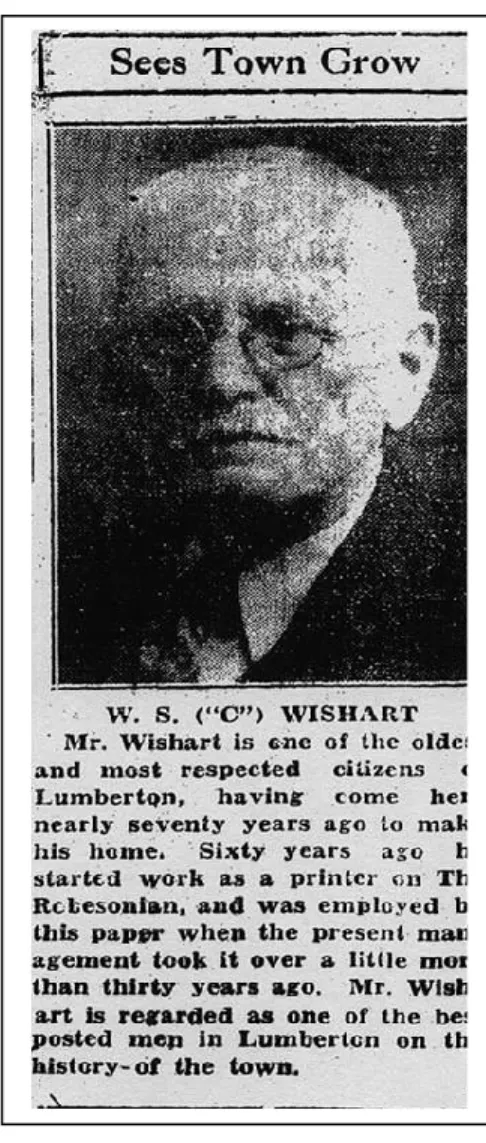
Figure 3.1: Walter S. (‘C’) Wishart (circa 1937) ... 69
Figure 3.2: An advertisement for a (relatively expensive) Opera House “road show” production ... 86
Figure 3.3: Walter Wishart (circa 1915) during his tenure as manager of both Lumberton’s Pastime Theatre and the town’s original Opera House ... 88
Figure 3.4: A street-front view of Lumberton’s Pastime Theatre (circa 1943) ... 92
Figure 3.5: Advertisement for the Pastime’s Shetland-Pony Contest... 96
Figure 3.6: A sample advertisement for non-cinematic fare at the Lumbee Theatre ... 99
Figure 3.7: Star Theatre ad for The Master Key ... 103
Figure 3.8: Note the similarities between these contiguously placed theater advertisements... 104
Figure 3.9: An advertisement for a film featuring “America’s Sweetheart,” Mary Pickford ... 105
Figure 3.10: A last-ditch effort by the Worths soliciting local support for the Arcade Theatre ... 110
Figure 3.11: Present-day map illustrating the Carolina communities in which Walter Wishart is known to have managed movie theaters ... 119
Figure 3.12: Walter Wishart (circa 1940) ... 127
Figure 3.13: Advertisement for the 1941 Grand Reopening of the Pastime Theatre ... 129
Figure 4.2: GIS-based map showing the relative position of Robeson County’s
largest towns today ... 153
Figure 5.1: Advertisement for “Where Are My Children?” ... 212
Figure 5.2: Advertisement for My Soldier Girl ... 237
Figure 5.3: Advertisement for Oh! Sammy! ... 240
Figure 6.1: A typically “Robesonian” film advertisement ... 311
Figure 6.2: Regional balcony-development timeline ... 322
Figure 6.3: Undated newspaper photo of Carolina Theatre balcony ... 323
Figure 6.4: Exterior photo of Carolina Theatre’s “North” or segregated door ... 325
Figure 6.5: Interior view of the Carolina Theatre’s segregated stairwell ... 326
Figure 6.6: Interior view of the colored and Indian seating areas within the Carolina Theatre... 327
Figure 6.7: Confirmation of Rowland Theatre’s seating configuration ... 328
Figure 6.8: All three of the Rowland Theatre’s race-specific entrances are visible ... 329
Figure 6.9: Riverside advertisement with race-tiered ticket prices... 331
Figure 6.10: Tri-segregated CSP exhibition schedule ... 357
Figure 6.11: Pastime Theatre’s “Indian” Balcony advertisement (1934) ... 359
Figure 6.12: Revised Pastime Theatre “Colored” Balcony advertisement ... 360
Figure 6.13: Map featuring Robeson County’s principal regional rail lines ... 365
Figure 6.14: Tri-segregated ticket-pricing ladder ... 382
Figure 7.1: Gap representing the former site of Fairmont’s “New” Capitol Theatre ... 400
Figure 7.2: Aerial Overview of Theatre Sites in Historic Downtown Lumberton ... 402
Figure 7.3: Former site of the Rowland Theatre ... 401
CHAPTER I
INTRODUCTION.
We don’t watch movies the way we used to. The development of personal digital technologies, their attendant reshaping of cinematic distribution, and the relative ubiquity of cinema-exhibition outlets have expanded non-theatrical cinema consumption possibilities towards “on demand” availability.1 However, during the first several generations of
American moviegoing the consumption of motion-picture entertainment required most film patrons to engage in an inherently social activity: moviegoing. For “small-town” American audiences in particular, moviegoing usually involved a visit to the theater located near the center of the closest downtown commercial and municipal district. Potential moviegoers who lived far from these centers bore additional attendance costs that extended well beyond the nickels or dimes saved to cover the price of admission. In the late-1930s, for example, farm families in North Carolina’s Robeson County willing to travel ten or fifteen miles by foot, horse, or wagon to reach town could appreciate why one local theater operator erected a hitching post adjacent to his theater’s parking lot.2 The relentless local agricultural cycle that required daily farm labor usually restricted trips to town to Saturdays—and these visits were often limited to heads-of-households conducting critical farm-related business. In reality, opportunities for moviegoing remained particularly rare for rural women, children, and other farm laborers.
moviegoing. In many cases, these factors either partly or fully precluded moviegoing engagements by the members of specific local sub-communities. However, the cultural contexts that erected and sustained local barriers to moviegoing were neither static, nor did they apply with equal force across all community members. Rather, a complex set of competing economic interests and social hegemonies influenced the course of local
moviegoing and cinema exhibition developments. For instance, some cinematic exhibitions were sponsored by a set of state-affiliated civic institutions to improve rural hygiene, even as North Carolina’s General Assembly sought to impose onerous cinema-exhibition regulations informed by the moral sensibilities of local Christian conservatives. Theatrical exhibitors confronting the interference of these cultural guardians struggled to eke out a reasonable living in an industry fraught with the financial uncertainties of adopting rapidly changing projection technologies; furthermore, highly constrained film-distribution contracts limited the ability of local operators to shape their exhibitions to suit local tastes. In seeking to augment their gate revenues in communities subject to the segregationist imperatives of Jim Crowism, exhibitors were forced to invest additional capital to sub-divide their theatrical spaces racially. Theater managers were placed in the unenviable position of defending a new commercial-leisure technology from the charges of immorality levied against it by politicians and churchmen wary of cinematic entertainment. While their reactions to the growing
Figure 1.1: Township Map of Robeson County.3
As they developed, Robeson’s population centers became widely dispersed across a territory divided by a host of watersheds, swamps, dikes and ditches that drained into the meandering and often impassible Drowning Creek (later renamed the Lumber River). These watercourses so dominated the landscape that several of the county’s more isolated
townships derived their names from local swamplands.5 The local scarcity of roads or railroads that could have simplified the navigation of these natural barriers only served to reinforce the extraordinary degree of autonomy exercised within Robeson villages—whose largest institutions, specifically their Methodist, Baptist, and Presbyterian churches, exerted greater social and political influence locally than did any of the county or state governmental agencies located in Lumberton (the county seat) or in Raleigh.
As white Europeans, often transplanted Scots congregating in communities like Maxton (a concatenation of “Mac’s town”), distributed themselves throughout Robeson, they discovered that their neighbors often included a sizable number of Native Americans. At one time, in fact, a handful of Robeson’s wealthier Indian landowners owned African or African-American slaves, as did several local white planters. In this tri-racial community, most of the county’s African-American population residents had emigrated from Virginia as “free
22%.7 However, if Robeson’s combined non-white population has long outnumbered its white population, the latter exercised an overwhelmingly disproportionate level of economic, political, and social control locally throughout most of the twentieth century. White residents often maintained their power due to the economic dependence of non-whites who, while living as tenant farmers or sharecroppers on white-owned land, were constrained by leases that included a rigorous set of conditions and payment obligations providing them little (if any) economic or homestead security. Despite the fact that extreme or widespread racial violence remained rare events in Robeson, each racial sub-group tended to self-segregate, and until the 1930s few non-whites lived within the city limits of any of Robeson’s larger towns. Even though the town of Pembroke was situated near the center of the region’s most densely populated cluster of Indian communities, Pembroke remained a predominantly “white” town (even from the perspective of local Indians) for the first several decades of the twentieth century. In fact, Indians tended to bypass towns like Fairmont, Maxton, Rowland, St. Pauls, Red Springs, and Lumberton altogether in order to avoid a confrontation with the second-class citizenship they imposed on all non-whites.
When motion-picture exhibitions arrived in Robeson on a permanent basis by the early 1910s, the county’s racial confluence, its conservative Christian heritage, low
population density, and labor-intensive agronomic base constricted the local development of exhibition spaces and of moviegoing generally. The handful of exhibitors who managed to keep operating during periodic recessions also had to negotiate the social boundaries
established by local racial and religious dogma. Those who persevered in the face of outright condemnation by “church people” who considered moviegoing to be sinful were
that had been either denied, or offered only highly restricted, access to public spaces generally reserved for use by the county’s more privileged castes. In all of Robeson’s theaters, moviegoers were forced to navigate a set of highly contingent zones in which local cultural identities were variously reified and contested. Some of the exhibition solutions that acknowledged Robesonian demographics were not only highly unusual, but the consistency of their application within all of Robeson’s local moviegoing communities may have been unique within the annals of American cinema.
Framed within these broader considerations, this dissertation recounts key
developments during the first three generations of Robesonian moviegoing. It examines a surprisingly rich set of social negotiations, cultural contestations, accommodations, barriers to entry, moral uncertainties, and socio-political alliances amid a wide-ranging set of public and private dialogues, disputes, challenges, calls to action, charges, countercharges, and both tactical and strategic retreats. Its chapters have been divided into two logical segments: Chapters II-IV document the historical development of mainline (and principally white) small-town exhibition spaces and moviegoing locally within Robeson, while Chapters V-VII analyze the roles played by religion and race during the development of local moviegoing in Robeson, as well as the potential impact of public moviegoing memories on the fate of the last early exhibition site still operating in Robeson. In order to provide a methodological and analytical framework for the chapters that follow, this introduction will address the following questions:
1. Why attempt a history of Robesonian moviegoing?
4. What intellectual frameworks have informed this study and its conclusions? 5. What broader impacts might an account of Robesonian moviegoing have
within the context of cinema, cultural and Southern studies?
One of this study’s more unusual characteristics is that it was undertaken by a researcher with no personal or family ties to Robeson County and whose principal academic interests involve American literature. This account of Robeson’s moviegoing history was initiated during an American Studies seminar on cinema history—a seminar which the author had mistakenly assumed involved a review of film theory, rather than a series of research projects detailing early moviegoing developments in a series of smaller North Carolina cities. However, the randomly selected city of Lumberton led the author to a series of intriguing archival discoveries, the first and perhaps most significant of which was a faded microfilm image of a newspaper clipping describing a set of “improvements” at the local Opera House that represented an early implementation of local segregationist architecture within
Lumberton’s first cinema-exhibition site. Similar artifacts encouraged a reconsideration of the county’s tri-racial experiences through the lens of historical moviegoing. In that investigation, the author hoped to find that Robeson’s unusual demographics resulted in a local overthrow of Jim Crow-style segregation earlier than 1963 (when federal officials began heavily lobbying Southern exhibitors to integrate motion-picture theaters) thanks to the presence of a “third” racial sub-population that might have encouraged cash-strapped exhibitors to abandon non-white separatism ahead of Title II of the landmark 1964 Civil Rights Act, which outlawed segregation in a list of specific “public accommodations” including theaters.
demonstrating the extent to which racial factors physically and socially “architected” Southern life.8 In this study, the term “architected” refers to the development of specialized features in Robeson theaters that represented an intentional and physical manifestation of the underlying racial dogma that structured local social hierarchies and led to the discrimination of multiple subject minorities in theaters and other shared public spaces. These architectural developments help retrospectively to expose the racial insensitivity of those inclined to praise the film industry for its presumptive historical engagement in (and lionization of) narratives of equal opportunity in America. For instance, theatrical historian David Naylor has
documented multiple cases in which industry representatives touted Main Street motion-picture theaters as “the local gathering spots, the centers of downtown nightlife” where “a ticket to a show was a passport to lives and cultures otherwise beyond reach.”9 Convinced that “no form of entertainment had ever been as accessible or popular” as the cinema, theater architects “saw their role in a different light” from peers who designed massive commercial structures and/or majestic residences for wealthy private citizens.10 Instead, theater
members from transgressing the tri-racial boundaries implemented to preserve Robeson’s social hierarchies.
Robesonian moviegoing also represented an opportunity to participate in a kind of grass-roots movement that is seeking to re-assess the historical nature of cinemagoing. Instead of assuming that historical cinema consumption necessarily represented a passive experience whose outcomes were predetermined by the intentions and interests of the producing auteur, some cinema scholars have increasingly viewed moviegoing as a complex set of interactions divorceable neither from local social contexts nor from the broad set of individual and group behaviors engaged in by audience members before, during, and after a given film exhibition. As a Southern social history, this Robesonian moviegoing study has reconstructed a set of historical moviegoing narratives that remain fully informed by C. Vann Woodward’s research into the historical contingency of Jim Crowism. Just as the key
milestones on the road to legalized segregation were (in Woodward’s view) neither pre-ordained nor inevitable,12 tri-segregated theaters were neither a necessary nor inevitable outcome—even in Robeson County. Rather, the establishment of a totalizing tripartheidism within Robesonian moviegoing was a product of the re-inscription of racial dogma on a community that was effected through the specific choices made by local exhibitors and moviegoers.
operator/exhibitors whose efforts as the final link in the chain of cinematic production and consumption have often been passed over by cinema scholars in favor of the film industry’s founding inventors, producers, directors, distributors, and stars. As a local exhibition pioneer, Walter Wishart doggedly labored for several decades to establish and manage theaters in small, sparsely populated communities on both sides of the North and South Carolina border; indeed, at the close of a long career Wishart stood in the sweltering heat of a downtown Lumberton side-street for up to ten hours a day in order to manage a flow of raced bodies into the county’s grandest theater. Yet Mr. C accomplished a great deal more as a theatrical manager than his denouement as a colored-balcony attendant might otherwise suggest, for Walter Wishart made moviegoing possible for thousands of rural residents despite the toll that his managerial activities took on his personal finances and his home life. The challenges Wishart faced in attempting to operate successful theaters in racially-divided communities were compounded by periodic confrontations with some of the region’s
Christian fundamentalists, whose efforts to discourage and, if possible, to regulate moviegoing further limited the size of his potential audiences. In spite these difficulties, Wishart remained a motion-picture exhibitor for three decades—and who only retired after having passed his eightieth birthday.
The opportunities this project offered to investigate case studies of racial segregation, religious fundamentalism, cinema censorship, and the economic development of rural
contemporaries represented just some of the materials supporting an evaluation of
Robesonian moviegoing along several axes of interrogation. The chapters that follow, many of which feature events from Wishart’s career, have been structured to highlight the
economic and social headwinds that severely limited the ability of small-town exhibitors to host large-scale, multi-racial exhibitions to maximize their revenues within a Robesonian context; to foreground the implacability of the color bar and the role of cinema exhibition in the perpetuation of Jim Crow; to illustrate the performative nature of personal and group identities as those identities were defined or resisted during the social act of moviegoing; to incorporate regional economic differences into a consideration of the comparatively slow arrival of moviegoing to rural and small-town America; and to examine how and why a popular leisure technology so incited local conservative sensibilities as to result in the near-imposition in 1921 of a cinema-censorship office in the state of North Carolina.
to uncover the ways in which the specific circumstances and social contexts of viewership can impact the interpretation of artistic forms and mediums.14
Given the longstanding research affinities between literary and film scholars, clear parallels exist between cinema-studies practitioners who reject a theoretical assumption of audience passivity and literary critics who resist privileging the interpretive function of the artist-producer. Both groups have expanded the set of “textual objects” used to interrogate the experiences of historically situated consumers. Along these lines, Jan Radway’s study of romance-novel readers directly influenced this study through its insistence that textual analyses of romance novels could not account for the full set of meanings derived from the consumption of fictional works, particularly since (in Radway’s case) these reading acts occurred amid a complex web of social interactions that were influenced by numerous institutional processes.15 Radway’s conclusion that if the traditional object of literary studies, i.e., a work of literature, is “to be treated as a document in the study of culture,” then “it is first necessary to know
influenced by, reception studies.17 Bordwell would likely concur with Radway’s assessment that consumers (or audience members) rarely if ever arrive at a common set of meanings after experiencing an individual text, and that the meanings derived from the event may have little or nothing to do with the contents of the text (or film) consumed. Based on her account of Book-of-the-Month club members, Radway would in turn likely acknowledge the validity of
Bordwell’s claim that a “consideration of advertising campaigns, exhibition circumstances, and the multifarious discourses that circulate through a culture” about a film or about film exhibition in general represents a potentially fruitful area of investigation by cinema and cultural
historians.18
of ideological priorities more closely aligned with racial rather than with gender bias.22 Nevertheless, scholars thinking beyond a set of images flickering on a theater screen are positioned to describe and analyze a larger cinematic event and to account for the external influences that both color film interpretations and shape moviegoing experiences more broadly. In consciously attempting to re-imagine “the spectator [who] enters these studies as a consumer, as a member of a demographically diverse audience,” this study has largely abandoned what Hansen has referred to as the normative “psychoanalytic-semiotic framework” common within film studies in favor of considering the “culturally specific and historically variable aspects of reception.”23
Yet despite the potential promise of moviegoing studies grounded in reception and/or spectatorship theory, the scarcity of records documenting actual audience experiences remains a critical evidentiary impediment to recreating historical film reception. While the intellectual interests and methodological positioning of reception studies may overlap with those of an expanded cinema studies, reconstructing the experiences of any actual historical film audience member remains an elusive and largely unrealizable objective. Even if such a reconstruction were possible, there is no practical way to determine whether or not a particular audience member’s response would have been typical for an entire historical audience. What this
challenge appears to require of historical moviegoing studies is, first, a definitional expansion of moviegoing to include objects of investigation for which documentary evidence does exist— namely, evidence of cinematic exhibitions, of actual exhibition venues, and of the public and private discourses that surrounded cinemagoing. Second, it requires an imaginative
exercises. Though historically grounded, they will be historically incomplete. Even so, this study follows the lead of cinema historian Tom Gunning, who maintains that the study of history involves more than the sum of identifiable historical “facts.” For Gunning,
historiography involves an imaginative reassembly of the available facts in ways that continue to engage contemporary observers, scholars, and analysts: “History is never simply the surviving records of the past, but always a creative and imaginative act of trying to understand the past” based on “a belief that it says something to us.”24
This cinema history represents a combination of social, cultural, cinema, religious, and racial/ethnic history grounded in a set of behaviors and practices tied to a specific set of
practices of the American movie industry.”27 Putnam’s recognition of the complex
interactions between community leaders and theater operators nudged this study towards an interrogation of local power structures and the manner in which theater buildings enforced (or, as in the case of Pembroke theaters, may have challenged or reshaped) these local power structures.
street walkers engaged in a set of pedestrian enunciations that represented the personal projection of an alternative and individualized public rhetoric.30 After street-walkers first “read” the pre-arranged landscapes before them, they would in turn “write” their way through public space using their own preferred set of turns, crossings, and ambulatory tropes. Within the context of Robesonian moviegoing, Certeau would likely have been particularly attracted to Pembroke’s Indian theaters, where Indians reappropriated a space typically devoted to their socio-cultural subordination during a daily leisure activity that generated and maintained an entirely different set of social hierarchies than elsewhere in Robeson.
Methodologically, this study has engaged in a range of sociological, anthropological, ethnological, philosophical, semiotic, aesthetic, and rhetorical inquiries which, when taken together, represent an instance of the interpretive bricolage favored by Certeau.31 As an analysis of an “everyday” activity like moviegoing, this study has sought “to make explicit the systems of operational combination (les combinatores d’opérations) which compose a ‘culture,’ and to bring to light the models of action characteristic of users whose status as the dominated element in society (a status that does not mean that they are either passive or docile) is concealed by the euphemistic term ‘consumers.’”32 Within this study, for example, the discriminatory appeals voiced by Hansel Holmes in the Pastime Theatre or by Indian youths who perceived themselves to have been inappropriately discriminated against in the Pembroke Theatre reflect their status as non-passive consumers whose “daily life” resistance to imposed social identities, when combined with the subsequent re-architecting of theater balconies in Pembroke, affirm Certeau’s observation that cultural consumers often engage in “practices by means of which users reappropriate the space organized by techniques of sociocultural
Note that this observation suggests that the space in which consumption occurs may represent an important point of contestation, and within the context of cinema studies this possibility opens up an avenue for scholars to investigate the cultural effect of moviegoing activities even in the absence of first-hand accounts describing those activities. Indeed, even if an extensive set of individual moviegoing responses were available—say, through audience testimonials recorded outside a Lumberton movie house in 1920—this evidence could never encapsulate the full set of meanings generated as a result of that collective set of moviegoing experiences.34 For an analysis of moviegoer polls available from the 1920s has led film
historians Lee Grieveson and Peter Kramer to conclude that the polled responses of most theater patrons foregrounded the extra-textual aspects of moviegoing, many of which continue to occur well after an actual cinema consumption event.35 Similarly, Barbara Klinger’s study of non-theatrical cinematic exhibitions indicates that in many cases “the specific film may matter less to viewers than the accompanying milieu” of spectatorship.36 Therefore, though this study cannot rely upon an extensive set of oral or written accounts of individual moviegoing experiences in Robeson County, it can and does interrogate moviegoing as a social practice by leveraging archival materials and oral histories in order to re-create imaginatively the conditions and contexts within which local residents and exhibitors interacted in and around cinematic space.
the University of North Carolina at Pembroke (Pembroke, North Carolina); and the Robeson County Public Library (Lumberton, North Carolina). The project’s core research involved a painstaking visual review of all extant Robeson County newspapers from approximately 1895 to 1940, as well as additional weekly and monthly scans from 1940 to 1950. The county’s principal newspaper, the Lumberton-based Robesonian, offers a near-continuous record of county events from 1900 onwards, and though most of the paper’s pre-1900 records were destroyed in a warehouse fire, several pre-1900 records linked to the arrival of motion pictures in the region have managed to survive.38 Scans of the Robesonian were undertaken after the construction of an initial exhibition timeline generated during a review of city telephone directories and fire insurance maps that had been published locally approximately every ten to fifteen years. Additional newspaper sources supporting this study include the Raleigh News and Observer’s detailed accounts of the General Assembly debate concerning a state cinema-censorship program proposed during the 1921 legislative term. Finally, an incomplete set of microfilms of issues of the Pembroke Progress published during the late-1940s provide additional contemporary contextualizations of the experiences of Robeson’s Native Americans at the time when Pembroke’s second motion-picture theater opened.
could also be extracted and sorted to provide additional, theme-specific temporal
frameworks.39 These sorted spreadsheets permitted the subsequent assembly of detailed exhibition-development narratives encompassing specific sites, towns, or the entire region. They also supported extensive analyses of the project’s chapter-specific themes, particularly the relationship between cinemagoing and race relations or between conservative
Christianity, local film exhibition, and censorship. More than four-hundred database entries were supplemented by additional documentation sources that included building permits, deed transfers, tax records, wills, local histories, biographies, newspaper “clipping” files, personal journals, photographs, postcards, maps, legislative records, and other court documents. In addition, federal census records, published and unpublished scholarship, and local
sociological studies provided contextual information critical to understanding the ways in which local racial demographics helped to structure Robesonian theaters.40 Long-term changes in the general social conditions in Robeson were partially re-constructed through the assistance of periodic “historical” newspaper editions, many of which featured commentaries and/or personal reflections on earlier modes of community life.41
Although anecdotal evidence indicates that one or more African American newspapers may once have been published in Robeson, the whereabouts of any extant repository for them remains unknown. As a result, the history of African American moviegoing in Robeson (and the South generally) remains extraordinarily difficult to reconstruct.43 The same is true of Indian moviegoing, for even in North Carolina, home to more Native Americans than any state throughout the Northeastern, Mid-Atlantic, and Southeastern regions (indeed, home to more Native Americans than any state east of the Mississippi except Wisconsin), the hometown newspaper published near the center of the most heavily populated set of Indian communities in Robeson, i.e., the Pembroke Progress, was also a white-owned and largely white-consumed news organ.44 In any event, significant microfilm records of the Progress exist only for the last two years of the period under review, and the county’s most Indian-centric newspaper, the Carolina Indian Voice, did not begin publishing until the mid-1970s.
Robeson includes an oral account of how Native Americans implemented the segregation of African Americans in Pembroke theaters because the oral history upon which it is based is consistent with several scholarly accounts that confirm the fractious social relationships that often existed between Robeson’s blacks and Indians during the period under review.
Additional first-person testimonies exhumed from within a variety of manuscripts, personal diaries, and contemporary academic studies offer extensive insights into the impact of religious conservativism and/or racial dogma on local cinema exhibitions. Two documents play particularly crucial evidentiary roles in Chapters V and VI, respectively: the personal diaries and newspaper submissions of the Rev. Samuel L. Morgan, a one-time Robeson County minister who initially attacked (and subsequently sought to appropriate) cinematic exhibitions to bolster local religious devotionalism, and the collected papers of Dr. Guy Benton Johnson, a University of North Carolina sociologist whose field notes include useful third-party observations about the state of contemporary race relations in Robeson.45 While Morgan’s journal demonstrates the ambivalence shown by church leaders in their
confrontations with cinematic leisure, Johnson’s papers confirm that initially the Pembroke Theatre segregated both blacks and Indians from the site’s white patrons. The subsequent social re-architecting of that theater space meaningfully complicates the history of racial segregation in Robeson County theaters.
Finally, though most of Robeson’s early theaters have either been torn down,
been extended to commercial leisure. In addition, their architectural features help to underscore the segregationist role of public facilities throughout the American South. Though no two Robeson theaters were identical, each structure recreated (and in rare cases, challenged) normative local patterns of tri-segregation. To confirm that this pattern extended across Robeson, this study produced local development narratives for each of the seven Robeson communities whose populations exceeded one-thousand residents by 1950. These narratives affirm the evidentiary and methodological viability of performing “deep dive” reconstructions of exhibition histories in rural communities despite the severe evidentiary challenges posed in small towns and villages lacking a hometown newspaper. If it is true that the narratives in this study which target the towns of Fairmont and Rowland are less rich than those pertaining to Lumberton and Pembroke, they still manage to corroborate—or complicate—regional patterns despite the incomplete and fragmentary data from which they have been constructed. For example, though the segregation imposed on Robeson’s Indians in local white theaters seems consistent with the experiences of non-white moviegoers both regionally and nationally, the relative hospitability of Pembroke theaters to Indians
discriminated against in other Robeson County sites suggests that theaters remained active sites of cultural contestation regardless of which racial group had attained local demographic dominance.
and metropolitan moviegoing that has resulted from the relative abundance of archival sources available in major cities. By driving out the details of local exhibition in
demographically and geographically disparate environments, historiographers can unearth the information necessary with which to construct broader comparative studies of
cinemagoing, thereby enabling a richer understanding of the disparate patterns of consumption centered upon an important cultural product, i.e., motion pictures, without simultaneously eliding the differentiation between local experiences.
revitalizing early exhibition facilities and those historically marginalized groups who previously had been forced to accept a socially subordinate position within them.
The interleaving of cinema and social history within this study is not accidental. Much of the project’s historical “spade work” coincided with a joint Duke/UNC film-historiography symposium titled “Local Color: A Conference on Moviegoing in the American South.”47 In his introductory conference address, Robert Allen challenged cinema historians to transcend an abiding urban (or gothamcentric) bias in historical cinema studies that tended to elide significant regional-moviegoing differences.48 Noting that most Americans lived in rural rather than urban communities until approximately 1920 (and that most Southerners continued to reside in rural communities until the 1970s), Allen reported that his ongoing studies of small-town North Carolina moviegoing have indicated that historical moviegoing represented a complicated and highly contingent social practice . Moreover, Allen advocated “a more thoroughgoing historiographic and conceptual decentering” of early moviegoing studies in order to foreground the importance of “race, class, gender, community, religion, urbanity” and ethnicity within historical cinemagoing.49
All Robesonian operators had to determine whether to welcome or deny African American and Native American patronage, and each was expected to prevent the unwanted
commingling of specific patron sets in order to maintain group-identity boundaries. These identities were performative in nature, since the access to Robeson theaters required non-white groups in particular to acknowledge in a distinctly public setting —and therefore symbolically to endorse (even temporarily)—specific despised and stigmatizing signifiers of racial identity. This kind of passive endorsement of second-class citizenship remained largely untenable for local Indians in particular, and their resistance to the constraints placed upon them in local exhibition spaces led to threats of theater boycotts followed by a re-architecting of Pembroke exhibition sites in which the balconies universally designated elsewhere in Robeson as “non-white” (i.e., as Native and African American) space were redefined specifically as “black” (i.e., African American) space. In both concrete and symbolic terms, none of Robeson’s theaters—including its Pembroke theaters—simply hosted motion-picture exhibitions; rather, they yoked cinemagoing to social structures
requiring that the perpetuation of racial prejudice could not be left behind at the theater door. The emotional and psychological stresses involved in negotiating these venues for non-whites in particular were rarely if ever fully offset by the enjoyment derived from a projected set of flickering images. In the end, these tensions almost certainly depressed attendance figures in every Robeson theater for at least three moviegoing generations, while the
oppressive economic legacy of racial discrimination likely depressed non-white moviegoing figures for significantly longer than that.
encouraging film historians to consider reconstituting the principal object of cinema studies as the end-to-end experience of cinematic “space.” In leveraging Marxist geographer Doreen Massey’s assertion that spatial representation is “relational,” “entails multiplicity,” and is “always in process,” Allen has insisted that “the experience of cinema does not exist outside the experience of space, and as such, it is the product of historically specific, embedded material practices—of performance, of display, of exchange, of architecture, of social
interaction, of remembering, as well as of signification and cinematic representation.”52 Any thoughtful consideration of Robeson theaters that were so obviously a product of racial tripartheidism cannot fail to imagine what these particular spaces meant to those who were variously welcomed into, denied access to, actively discouraged from attending, or
grudgingly allowed to attend venues whose internal partitioning symbolically reinforced the implacability of local social hierarchies.
Like Gomery, Kathy Fuller has documented the relationships between local operators and their audiences in works including At the Picture Show: Small-Town Audiences and the Creation of Movie Fan Culture, which features an in-depth analysis of the ways in which small-town audiences developed a taste for moviegoing.54 Through scholarship that has included a history of theatrical exhibitions in Richmond, Virginia55 as well as an account of cinema developments in both small and large communities across the country, Fuller directly influenced this study’s reconsideration of the applicability of temporal exhibition labels like “nickelodeon age” to rural Robeson through her suggestion that the historical timeframes for itinerant and nickelodeon exhibitions in small towns likely extended far beyond the
boundaries generally applied to these terms within an urban context.56 In fact, if one defines the nickelodeon period as an exhibition-development stage characterized by aggressive competition between small theaters and picture shows clustered along commercial city streets, then the nickelodeon age effectively bypassed virtually all of Robeson’s smaller communities, almost none of whose potential audience populations proved capable of supporting multiple venues. Indeed, the town of Maxton—once the county’s largest
community, and home to Robeson’s first commercial film exhibition—appears never to have supported more than a single downtown theater through 1950.57 Instead, during the first several decades of the twentieth century Maxton rarely supported a single local theater of its own, and its residents were required to travel to neighboring towns in order to attend a cinema exhibition.
presumed-sinful leisure activities like dancing and gambling.58 Several of Robeson ministers and civic leaders responded to film exhibitions in a similar manner, though they often based their objections on evidence limited to posters and handbills rather than on actual cinema viewings59 before calling upon local and state officials to institute forms of cinema censorship. Finally, Fuller’s account of the diversity of regional exhibition practices acknowledges the complex series of balcony arrangements that housed African American patrons in the South, as well as the development of African American-specific (or “colored”) theaters—topics often overlooked or only briefly mentioned in early exhibition histories.60 However, much of Fuller’s work in At the Picture Show focuses on small-town exhibitions in the Northeast, Midwest, and Mid-Atlantic regions, while her most extensive Southern work concerns a large city (i.e., Richmond) rather than the sort of small rural communities found in Robeson.61 In addition, while At the Picture Show chronicles some of the discriminatory treatment faced by multiple minority groups (including African Americans, as well as Mexican, Chinese and Japanese immigrants), it provides little information regarding the moviegoing experiences of Native Americans.
In an account that moves closer to rural Southern moviegoing, Gregory Waller has recounted the early exhibition history of a regional trading hub that served a cluster of rural agricultural communities in his study of Lexington, Kentucky entitled Main Street
exhibition practices (a theme commonly foregrounded in urban-industrial moviegoing studies) while favoring investigations into the influence of racial codes on local theater operations. Other exhibition-development patterns and themes noted by Waller that reappear within this study include the relative lag in the development of permanent local exhibition sites in small towns and the impact of Jim Crow policies on theater development. Yet even in the South, regional and racial differences could result in distinctive exhibition patterns. Robeson’s exhibitors and audiences faced a more complex set of racial considerations than did their counterparts in the largely biracial Lexington community. Moreover, while Lexington operators actively courted non-white patrons fairly early on due to the large number of blacks living in close proximity to downtown, not a single Robeson theatrical advertisement targeted African American patrons until the mid-1930s, and not a single theater catering specifically to African Americans succeeded on even a short-term basis in Robeson until after World War II.
Nonetheless, Waller’s attention to the relationship between motion-picture exhibition, radio stations and hillbilly music in south-central Kentucky in the 1930sunderscores the diversity of regional exhibition practices, 64 a diversity typically elided during analyses of non-differentiating evidence like national box-office receipts.65 Waller’s regional focus also prompted this study to look beyond movie houses in Lumberton alone—even though
audience-segregation patterns, namely the Indian alternative to normative “non-white” moviegoing established in Pembroke theaters.
Though principally a micro-regional study, this work also seeks to place Robesonian moviegoing within the broader context of Southern studies, including Janna Jones’s set of exhibition histories collected in half a dozen medium- to large-sized cities across several Southern states.66 Though all of the locales chronicled The Southern Movie Palace were vastly more metropolitan than any Robeson County town has ever been, her analysis of Southern theaters as the consistent product of Jim Crow-era social conflict helped to prompt this study’s set of multi-community/multi-theater investigations. In addition, Jones’
reflections on the manner in which different communities either choose to memorialize segregation, or to elide all signs pointing to a given theater’s segregationist history, encouraged this study to examine more recent debates regarding the fate of the Carolina Theatre—a former Lumberton picture palace currently redeployed as a regional performing-arts center, and a site whose operational budget depends upon the continuation of politically uncertain commitments in a community still coming to terms with its own (as well as the Carolina Theatre’s) racial history.
In taking up the challenge of broadening the available set of film-exhibition histories, scholars like Gomery, Fuller-Seeley, and Waller have found sympathetic partners in two international cinema historians and editors: Melvyn Stokes and Richard Maltby. Often assisted by Allen, Stokes and Maltby continue to publish investigations into how, when and why audiences attend the cinema; into the nature of local, regional, national, and
social commentators.67 An early version of this study’s account of the development of Robeson’s tri-racial theaters was introduced to a larger cinema-studies community thanks to Stokes and Maltby.68 Their cinema history collections tend to avoid the sort of panoramic grand narratives developed in monographs like Robert Sklar’s Movie-Made America, whose account of early exhibitions generally focuses on the experiences of urban, working-class audiences.69 Moreover, in order to reflect the diversity of historical cinema exhibitions, it is necessary to examine cases where marginalized or socially peripheral groups experienced non-normative exhibition conditions, so that in time a critical mass of local exhibition studies will enable the construction of a moviegoing history that will lay to rest any hypotheses suggesting, for example, that all Americans were dedicated moviegoers consuming the same cinematic content in precisely the same manner as moviegoers elsewhere.
For as Stokes, Maltby, Allen and others have demonstrated, this simply has not been the case. In Robeson, the act of “going to the movies” involved navigating complex
networks of potentially problematic social relationships and interactions involving family members, schoolmates, friends, work associates, fellow churchgoers, and less well-known (though generally recognizable) county residents. The local prohibitions that discouraged residents from interacting with the members of different social or racial groups in Robeson County moviegoing support cinema historian Barbara Klinger’s claim that “the transactions between social groups and mass culture thus provide a means for investigating the hierarchies and principles that inform group identities as well as their function in society.”70
first half of the twentieth century. As an example of this study’s interdisciplinary utility, its account of Robeson’s distinctive theaters will provide architectural historians a basis for investigating structures that acted simultaneously as socio-spatial markers and as engineered impositions of cultural difference.71 Theaters in towns like Red Springs, Rowland and Lumberton were a form of “race-spacing” technology that poses a perhaps unexpected qualification to documentarian and film historian James Forsher’s claim that local
entertainment districts historically centered upon movie houses created their “own sense of community, one with its own architectural style, rules of social engagement, geographies and rules of economy,”72 especially since these locations intentionally relegated approximately sixty percent of the local population to a zone of second-class participation. Architectural and social historians examining these materials might also wish to qualify Kevin J. Corbett’s assertion that throughout their history, motion-picture theaters both provided and were themselves examples of major advances in cinematic and non-cinematic technology.73 If movie theaters in Robeson represented a kind of technology which, true to the spirit of Corbett’s account of the market imperative to upgrade a theater’s projection and sound equipment in order to maintain technological currency, they also undeniably represented a kind of “social” technology, one constantly being upgraded in response to local demographic conditions.
In short, Robeson’s movie houses represent a potentially rich set of materials opening up fruitful interdisciplinary dialogues between cinema historians, critical race theorists, and urban sociologists. For scholars seeking to deconstruct notions of racial essentialism,
brick-and-mortar) institutionalization of social customs and prejudices. These sites confirm the utility of urban sociologist Henri Lefebvre’s “sociospatial” investigations into the public identities of individuals whose “everyday life is organized according to the cultural symbols and material objects which are part of the built environment.”74 Just as theaters in Lumberton validate Lefebvre’s claim that social power relations exert an extraordinary amount of “influence on decisions about how space is allocated and structured,” the pattern of exhibition developments this study traces within Pembroke theaters offers a case study of Indians seeking to “alter existing spatial arrangements and construct new spaces to express their needs and desires.”75
Even so, this dissertation’s collection of moviegoing histories culled from multiple rural, conservative, and tri-racial communities highlights how the uneven and multifaceted
highly contingent and less-than-fully participatory experience for non-whites whose physical movements were, in effect, fully circumscribed from start to finish.
If it is true, as Lee Grieveson has claimed, that cinema historians are responsible for “delineating the multiple forces that have shaped cinema and, in turn, the way cinema has participated in the shaping of culture,”78 then this study has attempted to document some of the ways in which motion-picture exhibitions were influenced by, and in turn occasionally influenced, the local economic, social, racial, and religious conditions in rural, small-town America. Stokes and Maltby would likely regard its attempt to reconstruct “the social context and consequences of moviegoing” as an example of “an historical return to the prevailing concerns of the earliest studies of cinema.”79 In deemphasizing analyses of decontextualized film texts in favor of their publication of historically grounded research, Stokes and Maltby hope to reorient film studies towards a broader-based cinema studies by transforming the former into “an object of sociological and psychological enquiry, rather than the object of aesthetic, critical and interpretive enquiry that has ensued from the
construction of film studies as an academic discipline in the humanities.”80 In responding to Allen’s call for a re-inscription of “the rural experience of moviegoing into American film history,”81 this study also offers up a rich set of evidence to indicate the ways in which a host of local pressures can and did coalesce around the sole movie-house that typically operated on the Main Streets of rural, small-town America.
Chapter II charts the cinema’s arrival in Robeson County up through the transition of local exhibition sites from itinerant operations into semi-permanent venues.
Chapter III traces the career of Walter S. Wishart, the individual most responsible for establishing moviegoing in Robeson County, and the founder of the county’s first dedicated motion-picture theater in Lumberton.
Chapter IV examines the extension of moviegoing beyond Lumberton to Robeson’s larger communities and compares the resulting exhibition narratives (and timeframes) with traditional characterizations of the “nickelodeon” and “picture palace” eras.
Chapter V documents several attempts by civic and church leaders to establish local and state cinema censorship facilities in North Carolina. Based on evidence including a series of public debates in Lumberton and Raleigh, as well as on the personal
memoirs of a local Baptist preacher, this chapter offers several reasons why local censorship initiatives in the American South may have lost their momentum, and considers the proposed appropriation of cinema technologies by former censorship advocates.
Chapter VI analyzes the Robeson-specific exhibition developments that most clearly demonstrate the inescapable influence of racial prejudice on cinemagoing in the Jim Crow South: the extension of tri-racial theaters throughout Robeson, as well as the inversion of local racial hierarchies attempted by Indians in Pembroke theaters.
As supplemental material, Appendix I summarizes Robeson’s key demographic trends during the period covered by this study, while Appendix II’s “heat map” provides a graphical representation of the decade-by-decade exhibition milestones of Robeson’s seven largest communities.
Collectively, these chapters confirm Haidee Wasson’s contention that motion-picture theaters were “complex sites” that (on an historical basis) have been “interwoven with the struggles that constitute the socio-political contests undergirding public life and leisure more
generally.”82
Yet if we can say that we no longer tend to watch movies the way we used to, it is also true that motion-picture exhibition did not develop according to a single national pattern. If exhibitors and audiences everywhere were called upon to respond to the local
ENDNOTES
1 For treatments of the film industry’s reorientation towards home- and family-based exhibition and marketing
practices, as well as an extended treatment of non-theatrical moviegoing generally, see
Robert Clyde Allen, “Home Alone Together: Hollywood and the ‘Family Film’,” Identifying Hollywood’s Audiences: Cultural Identity and the Movies, eds. Richard Maltby and Melvyn Stokes (London: BFI Publishing, 1999), and Barbara Klinger, Beyond the Multiplex: Cinema, New Technologies, and the Home (Berkeley: University of California Press, 2006).
2 As verified by Jesse Oxendine, son of the operator of the Pembroke Theatre, where Oxendine served several
years as a house projectionist.
3 Map image originally sourced from materials developed by the United States Census Bureau (2000) and
modified by Wikipedia user “Ruhrfisch.” See Ruhrfisch, Map of Robeson County North Carolina with Municipal and Township Labels. Wikipedia, June 2007. Web. 6 June 2010
<http://en.wikipedia.org/wiki/File:Map_of_Robeson_County_North_Carolina_With_Municipal_and_Township _Labels.PNG>.
4 Consisting of approximately 950 square miles, Robeson represents in geographic terms the largest of North
Carolina’s one hundred counties.
5 For example, note in Figure 1.1 the line of “swamp” townships—e.g. Burnt, Raft, and Back Swamps—running
through the county’s central north-south axis.
6 A note on racial qualifiers: To be consistent with the historical labels used at least until mid-century in
Robeson County, in this study Caucasians will be termed “white,” Native Americans “Indian,” and African Americans as either “colored,” “black,” or “Negro,” depending on the racial label used in contemporary source materials. It is useful to note that these labels were used as fastidiously as possible in Robeson County. As early as 1900, for example, Robeson’s telephone directory was divided into sections for “white,” “colored,” and “Croatan” (or Indian) residents. However, the latter term (which sought to link local Indians to Sir Walter Raleigh’s original ‘Lost Colony’ of Roanoke) fell into severe disfavor with the members of Robeson’s Indian community. Robeson’s Indian population (who have designated themselves as “Lumbee” Indians) consider the word “Croatan” to represent a highly derogatory and historically unverifiable race label. It will be avoided in this study unless it has been specifically cited in archive materials. In fact, calling a Lumbee Indian a “Croatan” (or worse, a “Cro”) would elicit a reaction today similar to that of an African-American being called a “Nigger.”
7 Robeson’s demographic trends have been summarized in Appendix I.
8 For this study, the verb-form architected has been borrowed from the community of computer technicians and
systems designers who use it as an adjective foregrounding the intention to design and produce an environment within which all individual components seamlessly interoperate. Based on a pre-defined series of component standards, object hierarchies, and operational assumptions, systems architects hope to effect a kind of unthinking developmental holism, one which promotes the freedom of individual developers to produce internally complex objects and processes that can subsequently be integrated with little effort into larger systems environments—thereby freeing the production process from the limitations of systems which, in order to maintain an internal consistency, have to be designed, built, tested and implemented by a single individual. The strict conformance by each member of the group to externally imposed environmental standards allows for faster development speeds and reduced integration risks.
9 David Naylor, American Picture Palaces: The Architecture of Fantasy (New York: Van Nostrand Reinhold,