i
MULTIPLE SOURCES OF PAH EXPOSURE, DNA METHYLATION AND BREAST
CANCER
Alexandra J. White
A dissertation submitted to the faculty at the University of North Carolina at Chapel Hill
in partial fulfillment of the requirements for the degree of Doctor of Philosophy in the
Gillings School of Global Public Health (Epidemiology).
Chapel Hill
2015
Approved by:
Marilie Gammon
Larry Engel
Kathleen Conway-Dorsey
Amy Herring
©
© 2015
ABSTRACT
Alexandra J. White: Multiple Sources of PAH Exposure, DNA Methylation and Breast
Cancer
(Under the direction of Marilie D. Gammon)
Purpose. Epidemiologic studies have consistently linked long-term exposure to single-source polycyclic aromatic hydrocarbons (PAHs) to increased breast cancer incidence. It is unclear whether single sources, specific groups, or all PAH sources should be targeted for breast cancer risk reduction. Aberrant methylation may be an early event in carcinogenesis, but whether PAHs influence the epigenome is unclear. Few studies have evaluated whether PAHs are associated with methylation, particularly in breast tumors where methylation changes are
particularly relevant. Methods. In a population-based case-control study (N=1,508 cases/1,556
use, OR=1.45, 95%CrI=1.02, 2.04), were associated with increased breast cancer incidence. When comparing methylated versus unmethylated genes in tumor tissue, synthetic log use, residential ETS, current smoking and vehicular traffic were associated with both increased and decreased odds of methylation at a number of breast cancer-related genes. In controls,
synthetic log use was inversely associated with LINE-1 methylation (OR=0.59,
95%CI=0.41-0.86). Conclusions. Groups ofPAH sources, especially those for ingestion and indoor sources,
were associated with a 30-50% increase in breast cancer incidence. PAH exposure is
v
TABLE OF CONTENTS
LIST OF TABLES ... vii
LIST OF FIGURES ... ix
LIST OF ABBREVIATIONS ... x
CHAPTER I. BACKGROUND ... 1
1.1 Biology and Epidemiology of Breast Cancer Incidence ... 2
1.2 Biology and Epidemiology of Polycyclic Aromatic Hydrocarbons (PAH) ...15
1.3 Biology and Epidemiology of DNA Methylation ...40
1.4 Summary and Conclusions ...60
1.5 Research Aims, Hypotheses and Study Rational ...62
1.6 Potential Public Health Impact ...64
CHAPTER II. MATERIALS AND METHODS ...74
2.1 Study Population and Design: The Long Island Breast Cancer Study Project (LIBCSP) ..74
2.2 PAH Exposure Assessment and Variable Definitions...81
2.3 Outcome Assessment ...85
2.4 DNA Methylation Assessment and Variable Definitions ...85
2.5 PAH-DNA Adducts Assessment ...91
2.6 Other Covariate Assessment ...91
2.7 Statistical Analysis ...92
2.8 Strengths and Limitations ...97
2.9 Summary and Conclusions ... 102
CHAPTER III. EXPOSURE TO MULTIPLE SOURCES OF POLYCYCLIC AROMATIC HYDROCARBONS AND BREAST CANCER INCIDENCE ... 112
v
i
3.2 Methods ... 113
3.3 Results ... 119
3.4 Discussion ... .121
CHAPTER IV. SOURCES OF POLYCYCLIC AROMATIC HYDROCARBONS ARE ASSOCIATED WITH GENE-SPECIFIC PROMOTER METHYLATION IN WOMEN WITH BREAST CANCER ... .130
4.1 Introduction ... 130
4.2 Materials and Methods ... 131
4.3 Results ... 136
4.4 Discussion ... 137
CHAPTER V. DISCUSSION ... 147
5.1 Summary of Results ... 147
5.2 Strengths and Limitations ... 149
5.3 Public Health Impact ... 154
5.4 Future Directions. ... .156
5.5 Conclusions……….………..…………...158
APPENDIX I: TABLES ... 159
APPENDIX II: FIGURES ... 166
v
ii
LIST OF TABLES
Table 1.1 Previous epidemiologic investigations of PAH sources in
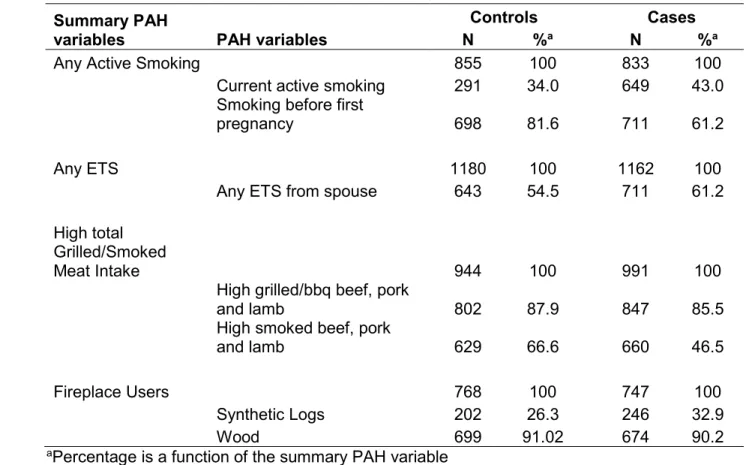
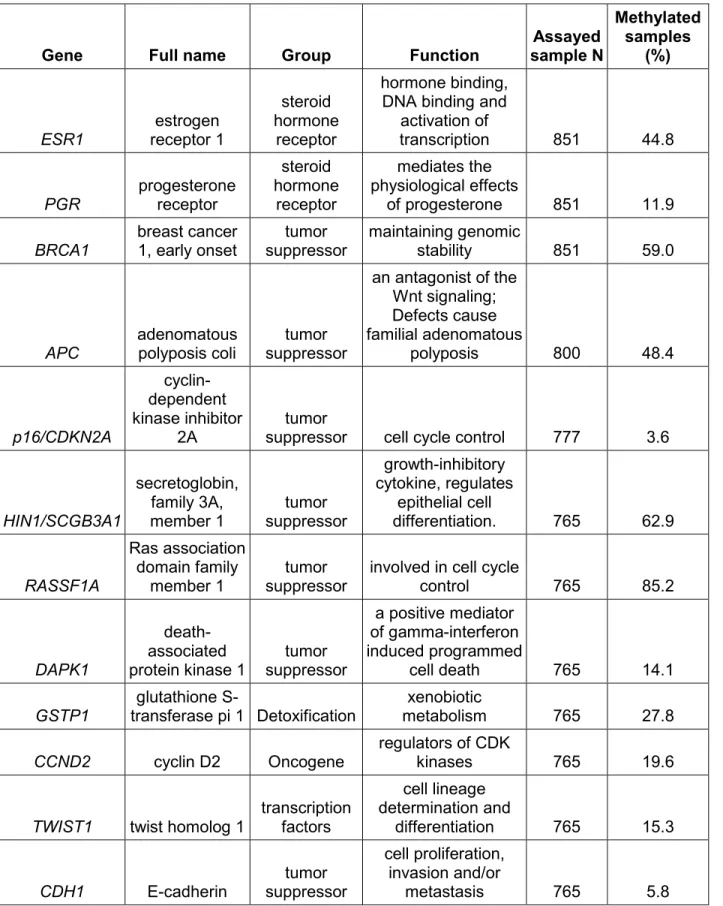
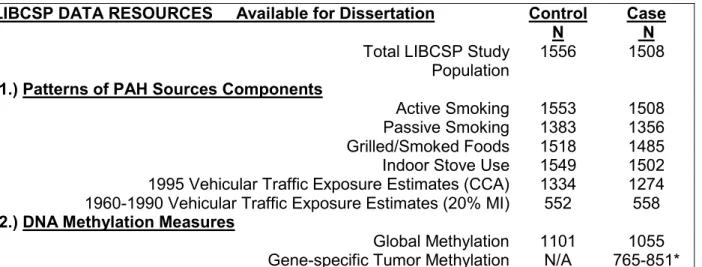
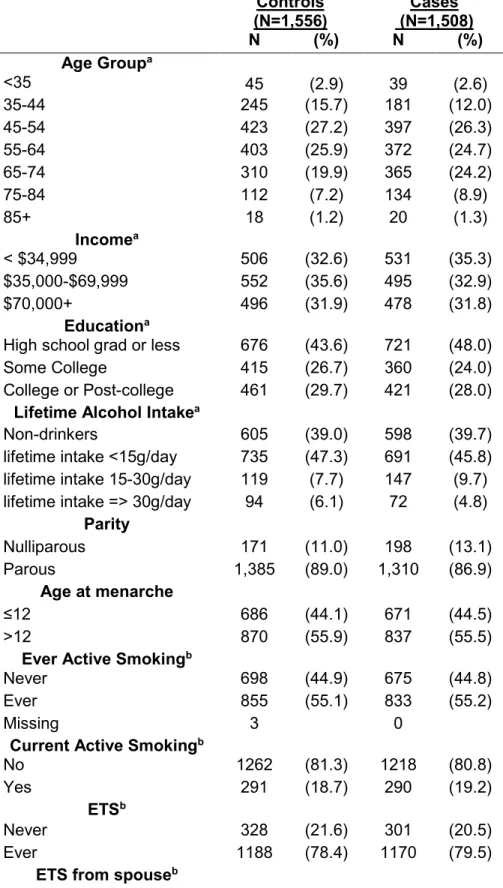
association with breast cancer risk not in the LIBCSP study population ...65 Table 1.2 Evidence of estrogen and anti-estrogen activity of selected PAH compounds by PAH exposure source. ...71 Table 2.1 Study participant characteristics (n[%]) for the Long Island Breast Cancer Study Project, Long Island, New York, 1996-1997 (from Gammon et al., 2002 [52]) ... 104 Table 2.2 Overlap of PAH exposure variables by PAH source and case status. ... 107 Table 2.3 Genes selected for methylation analysis and their putative functions (from Xu et al. 2011 [415]) ... 108 Table 2.4 LIBCSP participants with data on: (1) PAH sources for patterns of exposure; (2) DNA methylation measures (*with variable N as shown in TABLE 2.2) and (3) key covariates to define susceptibility. ... 110 Table 3.1 Distribution of demographic characteristics and PAH exposure measures for study participants, by case-control status, LIBCSP 1996-1997. ... 125 Table 3.2. Adjusted odds ratios (OR), 95% credible intervals (CrI) and credible limit ratios (CrLR) for multiple long-term PAH source exposures and breast cancer incidence using single exposure, multivariable and
hierarchical analyses, LIBCSP 1996-1997a. ... 127 Table 3.3. Fixed effects odds ratios (OR) and 95% credible intervals (CrI) from hierarchical logistic regression models for the association between long-term PAH exposure, grouped by exposure sources, and breast cancer incidence, LIBCSP 1996-1997a. ... 128 Table 3.4. Odds ratios (OR) and 95% credible intervals (CI) from hierarchical regression models for the association between PAH exposure profiles and breast cancer incidence, LIBCSP 1996-1996a ... 129 Table 4.1 Odds of gene specific promoter methylation in tumor of cases in association with average lifetime intake of grilled/barbecued/smoked meat intake, LIBCSP 1996-1997a ... 142 Table 4.2 Odds of gene specific promoter methylation in tumor of cases in association with long-term residential environmental tobacco smoke (ETS), LIBCSP 1996-1997a ... 143 Table 4.3 Odds of gene specific promoter methylation in tumor of cases in
Table 4.5 Odds of gene specific promoter methylation in tumor of cases in
association with vehicular traffic exposure, LIBCSP 1996-1997a ... 146 Table A.1 Z matrix for hierarchical model for PAH variables and sources. ... 159 Table A.2 Matrix for PAH profile definitions used in hierarchical regression analysesa. ... 160 Table A.3 Odds Ratios (OR) and 95% credible interval (CrI) from a hierarchical model for the association with breast cancer incidence
using Z-matrix for route of PAH exposure, inhalation and ingestion, LIBCSP 1996-1997a ... 161
Table A.4 Odds of gene specific promoter methylation in tumor of cases in association with current active smoking, LIBCSP 1996-1997a ... 162 Table A.5 Association between PAH sources and global methylation in
control women without breast cancer measured by LINE-1 and LUMA, LIBCSP 1996-1997a . 163
Table A.6 Associations between PAH sources and global methylation measured by LINE-1 with breast cancer risk when limited to those breast
cancer case participants with blood samples prior to chemotherapy, LIBCSP 1996-1997a ... 164
LIST OF FIGURES
LIST OF ABBREVIATIONS
1-OHP 1-hydroxypyrene
5-hmc 5-hydroxymethylcytosine
5meC 5-methylcytosine
AR absolute risk
APC adenomatous polyposis coli
BBQ barbecue
B[a]P benzo[a]pyrene
B[a]PDE benzo[a]pyrene diolepoxide
BMI body mass index
BRCA1 breast cancer 1, early onset
CCA complete case analysis
CGI CpG islands
CpG cytosine base preceding a guanine base
CCND2 Cyclin D2
p16/CDNKN2a cyclin-dependent kinase inhibitor 2a
COX cyclooxygenase
DAPK1 death-associated protein kinase 1
DAG Directed acyclic graph
DNMT DNA-methyltransferase
CHD1 E-cadherin
ETS Environmental tobacco smoke
ELISA enzyme-linked immunosorbent assay
ER/PR estrogen and progesterone receptor
ER estrogen receptor
ESR1 estrogen receptor 1
FFQ food frequency questionnaires
GSTP1 Glutathione S-transferase pi 1
GST gluthathionine-S-transferase
HR hazard ratio
HR hormone receptor
HRT hormone replacement therapy
HER2 human epidermal growth factor receptor 2
HPV human papillomavirus
IOM Institute of Medicine
IGF insulin-like growth factor
IGF-BPs insulin-like growth factor binding proteins
IARC International Agency for Research on Cancer
LINE1 Long Interspersed Nucleotide Element 1
LIBCSP Long Island Breast Cancer Study Project
LUMA LUminometric Methylation Assay
NSAIDs Non-Steroid Inflammatory Drugs
OR odds ratio
OC oral contraceptive
PM particulate matter
PAHs polycyclic aromatic hydrocarbons
PGR progesterone receptor
PR progesterone receptor
RASSF1a Ras association domain family member 1
ROR Ratio of the Odds Ratio
RR relative risk
RERI relative excess ratio interactions
Sat2 Satellite 2 repeat
HIN1/SCGB3A1 secretoglobin, family 3a, member 1
SHBG sex-hormone-binding globulin
SINEs short interspersed elements
SNPs single nucleotide polymorphisms
SES socioeconomic status
SDs standard deviations
TSP total suspended particulates
TE transposable elements
TWIST Twist homolog 1
U.S. United States
US EPA United States Environmental Protection Agency
WEB Western New York Exposures and Breast Cancer Study
CHAPTER I. BACKGROUND
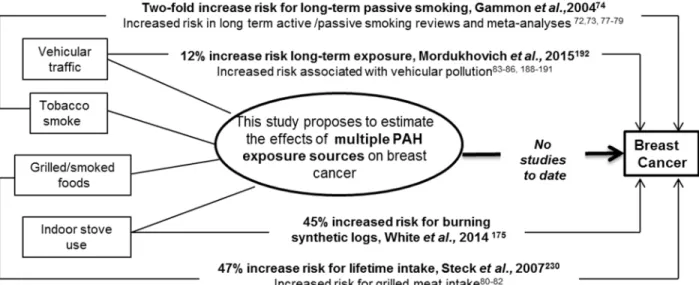
This dissertation aimed to examine the association between multiple sources of polycyclic aromatic hydrocarbon (PAH) exposure and breast cancer risk and to investigate the role of global and gene-specific DNA methylation. This dissertation investigated multiple PAH sources, and groups of sources, assessed throughout the life course (tobacco smoke, grilled/smoked meat intake, vehicular traffic emissions and indoor stove/fireplace use) and examined the association with breast cancer risk. Further goals of this research involved investigation of the role of global and gene-specific promoter DNA methylation in the PAH-breast cancer
association.
1.1 Biology and Epidemiology of Breast Cancer Incidence
Although many risk factors for breast cancer have been identified, many, such as reproductive history and genetics are not easily modified to reduce cancer risk [1]. Other lifestyle factors, such as physical activity, postmenopausal obesity and weight gain, may also not be easily modified for all women [2]. Therefore, there is an interest in identifying other modifiable breast cancer risk factors that impact all women [1]. Environmental risk factors are widespread and thought to be potentially modifiable risk factors [3]. Polycyclic aromatic hydrocarbons (PAHs) are a potential environmental risk factor that may be important for breast cancer risk [4]. Elucidating the association between PAHs and breast cancer and identifying potential epigenetic markers that influence how PAHs are associated with breast cancer risk could advance the knowledge of breast cancer etiology and provide rationale to reduce exposure to ambient PAH in the general population. The follow section outlines trends in breast cancer incidence, risk factors for the disease and potential mechanisms.
1.1.1 Trends in Breast Cancer Incidence
Breast cancer is the most common cancer among women in the United States (US), excluding non-melanoma skin cancer [5]. It is also the second-leading cancer-related cause of death among women in the US. It is estimated that in 2015, there will be 231,840 new cases of
invasive breast cancer and 40,000 deaths related to breast cancer [6] . In addition, there was an
estimated 64,640 new cases of in situ breast cancer in women in 2013 [5]. Breast cancer
Summary. Breast cancer is the most commonly diagnosed cancer in the United States.
Despite efforts to reduce the incidence, breast cancer remains a large burden, with 1 in 8 women projected to be diagnosed with breast cancer [5, 8]. Therefore, it is of interest to identify additional risk factors for breast cancer than can be intervened upon in order to lessen breast cancer incidence [1].
1.1.2 Breast Cancer Risk Factor Epidemiology
Numerous breast cancer risk factors have been previously identified, including demographic [7], reproductive and nutritional factors [7] as well as medical conditions/clinical characteristics [7]
and environmental exposures [9].
Demographic factors.Age. Age, race and family history are all non-modifiable risk factors for breast cancer incidence. As with many cancers, the risk of breast cancer generally increases with increasing age. The incidence is highest among women 75-79 years of age, and a decrease is observed for women 80 years of age and older [7]. The median age of breast cancer diagnosis in 2004-2008 was 61 years [7]. As women age, they accumulate cellular and molecular changes that can result in deterioration of genome integrity [10]. This underscores the need to control for age as a confounder in epidemiologic analyses as well as to consider that exposures throughout the life course can influence the rate and type of molecular and cellular alterations and thus contribute to breast cancer risk [11].
and ethnic populations.
Family history. Family history of breast cancer represents both shared genetics as well as lifestyle and environmental factors and is a confirmed risk factor for the disease [7]. This is especially true in the case of having a first-degree relative with a history of breast cancer, or when more than one relative has been diagnosed [7]. However, most women who are
diagnosed with breast cancer do not have a family history of the disease (estimated prevalence of first-degree family history is approximately 12%) [7]. Thus, while genetics may play a role in breast cancer development, other exogenous factors such as lifestyle and environment also influence breast cancer risk and remain of strong interest.
Reproductive factors. Early menarche, late menopause, late age at first birth, low parity or nulliparity, little or no lactation. Many established breast cancer risk factors are related to reproductive hormones, which may increase cell proliferation and thus, increasing the possibility of uncorrected DNA damage [7, 9]. Early menarche and later age at menopause increases the lifetime exposure to reproductive hormones in the body [14, 15]. Later age at first birth as well as nulliparity or having fewer births has also been associated with an increase risk in breast cancer [14]. Additionally, a late age at menarche and an early age at first birth reduces the time that the breast is developing and may be most susceptible to carcinogens [1]. These reproductive factors are associated with modest increases in breast risk, with odds ratios (ORs) in the magnitude of 1.3-2 [14]. Breastfeeding decreases the risk of breast cancer by reducing ovulatory frequency; a dose-response association is observed with a longer duration of breastfeeding conferring a larger decrease in risk [16]. Reproductive risk factors are all reflections of increased endogenous estrogen exposure and were among the first established risk factors [14] and gave support to the interest in associations with environmental chemicals that may either result in an increase endogenous estrogens or act as exogenous estrogens[3].
Alcohol use. Alcohol intake may increase estrogen and androgen levels [21]; a meta-analysis found an excess breast cancer risk of 22% for alcohol drinking [17]. Along with
increasing hormone levels, alcohol may also be directly carcinogenic to the breast or possibly it may increase the levels of insulin-like growth factor (IGF) in circulation, which may function to promote breast carcinogenesis [22]. In the LIBCSP, average lifetime alcohol intake was
associated with breast cancer risk and no evidence was found for an increase in risk for specific time periods of exposure [23]. This result emphasizes the need to consider long-term exposures but is not consistent with the windows of susceptibility hypothesis.
Dietary intake. Despite years of study, most dietary factors have not been linked to breast cancer risk including intake of fat, fruit and vegetables and anti-oxidants[18]. For example, a pooled analysis of cohort studies reported no significant inverse association between fruit or vegetable intake and breast cancer risk [24] although some studies have reported a decrease in breast cancer risk [25-27]. An association with breast cancer risk has been reported in some dietary factors, in particular soy intake in Asian populations [28] and flavonoid intake among western populations [29] being associated with breast cancer risk. Exposure misclassification of dietary intake, similar to that of environmental risk factors [30], is a significant concern and may in part explain the inconclusive nature of results [31].
Postmenopausal obesity. Obesity increases the risk of breast cancer in postmenopausal women, but may be inversely associated with premenopausal breast cancer [7]. In
The recent increases in obesity prevalence [35] may substantially influence breast cancer trends in coming years.
Physical inactivity.Physical activity has a modest inverse association with breast cancer
risk and is observed most consistently in women who are postmenopausal at diagnosis [20, 36, 37]. In the LIBCSP, physical activity is more strongly associated with postmenopausal breast cancer [38]. Physical activity may impact breast cancer risk by influencing insulin uptake, decreasing inflammation and oxidative stress [39], as well as by directly impacting body size [40]. Epidemiologic studies on the associations of obesity and physical activity suggest that other pathways, besides hormonal mechanisms, may be important for breast cancer - which is relevant in this dissertation as PAHs are known to have oxidative and genotoxic mechanisms as well [41-43].
Medical conditions/clinical characteristics. Hormone replacement therapy (HRT) use.
HRT is often used to control symptoms of menopause [44]. A Cochrane review of double-blind, randomized trials found an increased breast cancer risk for 5.6 years of combined continuous HRT use (absolute risk (AR) =23 per 1000 women, 95%CI 4-11); however, they did not find an association with breast cancer for estrogen-only therapy [45]. This result is consistent with a summary estimate reported by the U.S. Preventative Task Force for estrogen plus progestin use (hazard ratio (HR)=1.25, 95% confidence interval (CI): 1.07-1.46), which is equivalent to
approximately 8 more cases per 10,000 woman-year [44]. Current or recent exposure to HRT was found to be most relevant; with increasing years since cessation of HRT use the hazard ratios for breast cancer risk becomes attenuated to the null [44].
an important finding that supported the hypothesis that for some risk factors, relatively recent or current exposure levels, similar to HRT use, may be the most important for breast cancer risk.
Non-Steroid Inflammatory Drugs (NSAIDs). NSAID use has been found to reduce overall cancer risk, and in particular breast cancer [47]. A meta-analysis of 38 studies found that NSAID use was associated with reduced risk for breast cancer (RR=0.88 (0.84-0.93)) and results were similar across specific NSAIDs, aspirin and ibuprofen [47]. NSAIDs are thought to reduce breast cancer risk by inhibiting cyclooxygenase (COX) enzyme, which is the rate-limiting enzyme of prostaglandin synthesis [48]. Prostaglandins encourage proliferation of cells and breast cancer tissue has been demonstrated to have higher levels of prostaglandins [49].
Mammographically dense breasts. Most studies conducted have found that having dense breast tissue (defined as more than 60% of the breast tissue) is associated with a 4-6 fold increase in risk of breast cancer compared to women with less dense breast tissue [7, 50]. Mammographic breast density is hypothesized to be a measure of the number of at-risk cells in the breast tissue [1]; the more dense tissue may represent more at-risk cells.
Medical radiation. High-dose radiation therapy as treatment, specifically between the ages of 10 and 30 years, has been linked to secondary breast cancer among childhood cancer survivors [7, 51]. One study reported a standardized incidence ratio for breast cancer of 24.7 (95%CI: 19.3-31.0) for childhood cancer survivors who were treated with chest radiation therapy [51]. Evidence of associations with medical radiation also strengthens the biologic plausibility for environmental ionizing radiation.
Environmental Exposures. Environmental chemicals are often suggested, especially
associations; and, (3) the changing, complex mixtures of chemicals that individuals are ubiquitously exposed to over the life course, which makes it difficult to determine and contrast exposure levels [3].
Radiation. Ionizing radiation is one of the few environmental risk factors to be
consistently linked to breast cancer and this association has been demonstrated in studies of atomic bomb survivors [53, 54]. Radiation can directly result in DNA damage, inducing mutations that may be initiation events in carcinogenesis [1]. While associated with a notably strong increase in risk of breast cancer, the number of women who are exposure to high levels of ionizing radiation exposure through atomic bombs or intense radiation therapy for childhood cancers and other disorders is low [55]. Non-ionizing radiation, such as low frequency electric and magnetic fields, although hypothesized to contribute to breast cancer risk, have not been linked to the disease according to a recent meta-analysis of 15 case-control studies [56].
Light at night. Electric light at night, which disturbs circadian rhythm and melatonin production, has been associated with to breast cancer [57, 58]. A meta-analysis of 13 studies of ‘shift work’ at night estimated a risk ratio (RR) with breast cancer of 1.48 (95%CI: 1.36-1.61) [58]. Lower levels of melatonin may be related to breast cancer by resulting in increased estrogen production and disruption of the estrogen receptor [59] as well as other potential immune and anti-oxidant pathways [60]. Exposure to light at night is another example of a breast cancer risk factor with mechanisms in addition to hormones that may contribute to the observed increased risk.
Polycyclic aromatic hydrocarbons (PAH). PAHs are formed from incomplete combustion of organic materials [66, 67] and are established carcinogens on the lung [68] and can induce mammary tumors in animal models [69]. PAHs have demonstrated estrogenic, anti-estrogenic, oxidative and genotoxic capabilities that may be relevant to breast carcinogenesis [70, 71]. Individuals in the general population are continuously exposed to ambient levels of PAHs from numerous sources [41]. Previous studies have demonstrated associations between single PAH exposure sources (including active smoking [72], environmental tobacco smoke [73-79],
grilled/smoked meat intake [80-82] and vehicular traffic emissions [83-86]) with breast cancer risk. In addition, PAH biomarkers (i.e. PAH-DNA adducts), are one of the few environmental risk factors to be consistently linked to breast cancer [87-92]. However, previous studies have been limited by not considering the multiple PAH sources women are exposed to, which is necessary in order to better estimate the association between PAHs and breast cancer. Despite evidence from single PAH sources and with biomarkers of PAH exposure, the relationship of PAH on the human breast remains unclear and is the subject of this investigation. PAH exposure sources, previous epidemiologic studies investigating relationships with breast cancer risk, and
hypothesized mechanisms, will be further explored in much greater detail later in this chapter (Section 1.2).
Known modifiable risk factors for breast cancer (including postmenopausal obesity, HRT use, little to no breastfeeding, alcohol consumption and lack of physical activity) account for only approximately 25%-50% of all breast cancer cases [93, 94]. Many other breast cancer risk factors are not modifiable, such as reproductive history and genetic [1]. There is more research needed to determine additional modifiable risk factors, such as environmental contaminants that may impact all women [3], and to better understand how these risk factors act on the human breast across the life course. PAHs are a potentially important environmental risk factor for breast cancer risk; while individual PAH sources have been associated with breast cancer, research that incorporates multiple PAH sources is needed.
1.1.3 Variability by Breast Cancer Outcome: Menopausal Status and Tumor Subtype Risk factor profile variability by menopausal status at diagnosis. Breast cancer risk profiles, and tumor subtype distributions [12], differ by menopausal status at diagnosis [95-97]. An exponential increase in rates of breast cancer is observed until menopause, which is often approximated by age 50 years, followed by a slower rate of increase[10]. This inflection point is referred to as Clemmesen’s Hook, suggesting two different rate curves for early and late onset tumors [10]. As discussed above, obesity is a risk factor for postmenopausal women but has been found to be inversely associated with premenopausal breast cancer risk [7].
breast cancer can also be further categorized into basal-like (ER-, PR-, HER2-, CK5/6+ or EGFR+) and unclassified (ER-, PR-, HER2-, CK5/6-, EGFR-) subtypes [102, 103].
Although yet to be firmly established, research suggests that triple negative breast cancers may differ in etiology from hormone-receptor positive cancer and that reproductive patterns are more strongly associated with the risk of hormone receptor-positive breast cancer compared to triple negative [100, 103]. Contrary to associations typically observed in breast cancer research, positive associations have been reported between parity and premenopausal body mass index with triple-negative breast cancer [102, 104]. Luminal A and luminal B tumors, or hormone receptor positive tumors, are the most common breast cancer subtype regardless of race [105]. The prevalence of hormone receptor-positive subtypes is particularly high among white, postmenopausal women in the U.S. [103, 106]. In contrast, triple negative breast cancer accounts for approximately 11% [105] of breast cancers and is most common among premenopausal and African American women [12, 103, 105]. Triple negative breast cancers are usually aggressive and have a poorer
prognosis compared to hormone receptor-positive subtypes [12, 103]. Divergent incidence trends for hormone receptor-positive vs. hormone receptor-negative tumors demonstrate that the incidence of these tumors are shifting over time in response to changing
distributions of breast cancer risk factors and thus, supports the hypothesis of differential etiology by hormone receptor status [107].
Summary. Breast cancer risk factor profiles may differ by hormone receptor status [99],
1.1.4 Breast Cancer Mechanisms
While not completely understood, there are several hypothesized biologic mechanisms for breast cancer. Prolonged exposure to circulating estrogen and progestin has long been hypothesized to be the prominent mechanism in breast carcinogenesis after the importance of reproductive history and the resulting impact on endogenous estrogen levels was established [14]. Increased hormone levels result in increased cell proliferation- a process that occurs from initiation to tumor metastasis [9]. This increased proliferation results in more frequent events of spontaneous DNA replication errors and the resulting DNA damage would more likely go
uncorrected by DNA repair mechanisms [9, 108]. Further, it is hypothesized that estrogens may promote the growth of existing small tumors or initiated cells [9, 108]. Many established breast cancer risk factors work through this hormone pathway [1]. Early age at menarche and late age at menopause both increase the number of ovulatory cycles, and thus endogenous estrogen levels[1]. Alcohol consumption also results in an increase in estrogen levels [21], consistent with the increase in breast cancer risk observed among regular drinkers [17]. Similarly, oral
contraceptives have both estrogenic and progestin effects [46]. In contrast, breastfeeding and parity decrease the frequency of ovulation, reducing endogenous estrogen levels and thus reducing breast cancer risk [1]. Among postmenopausal women, adiposity and the use of HRT both result in increased hormone levels in the body [1]. Estrogen exposure may be more important early in life, as demonstrated by age at menarche, which is known to increase risk decades later [1]. In contrast, cessation of estrogen exposures later in life, as observed with postmenopausal hormone use and oral contraceptives can result in the risk being reduced relatively quickly [1].
Another potential mechanism is increased breast cancer risk via polymorphisms in breast cancer susceptibility genes. Confirmed genetic susceptibility genes can be defined as
being rare and high-penetrance mutations (BRCA1, BRCA2, TP53, CDH1, PTEN, and STK11),
penetrance and common single nucleotide polymorphisms (SNPs) [109]. Multiple low-penetrance, common mutations may interact together and be important factor in hereditary breast cancer on a population-level [109]. Current research has focused on finding these common, low penetrance polymorphisms which may confer a slight increase in risk.
With a similar mechanism proposed for estrogen, insulin and IGF have been
hypothesized to impact breast cancer risk via increased cell proliferation and apoptosis [1]. Insulin is positively associated with breast cancer [110]; insulin levels in the body are influenced by physical activity and central adiposity [110, 111]. Insulin reduces the synthesis in the liver of sex-hormone-binding globulin (SHBG), which functions to bind and transport estradiol [112]. With less SHBG present, there is more bioavailable estradiol [112]. Increased levels of insulin also result in increased IGF-1 levels and decreased levels of insulin-like growth factor binding proteins (IGF-BPs), which together inhibit apoptosis and encourage the progression of
neoplastic mammary cells [112]. Physical activity and lower body weight both result in increased insulin resistance [111] and physical activity may increase levels of IGF-BP, decreasing IGF-1 levels and thus lowering the levels of endogenous estrogen [113]. Additionally, alcohol may also contribute to the production of insulin-like growth factors, consistent with its observed
association with an increase in breast cancer risk [22].
Inflammation is another potential breast cancer pathway [114]. Chronic inflammation is associated with obesity, as well as metabolic syndrome, both of which are relevant to breast cancer [32]. Inflammation may result in changes in the cell microenvironment, increased
proliferation and increased oxidative stress [114]. Oxidative damage from both inflammation and metabolism results in increased DNA damage [33]. As oxidative damage may be important, dietary antioxidants such as fruit and vegetables [115] may reduce risk [1]. Physical activity is also associated with decreased oxidative damage and inflammation [113].
[116]. Light at night and physical activity have both been hypothesized to impact breast cancer risk via immune response [40, 60, 113]. Other potential breast cancer mechanisms, including DNA damage and epigenetic alterations via DNA methylation, could be particularly relevant to the relationship between PAH exposure and breast cancer risk. These will be explored later in this chapter.
Summary. There are multiple potential mechanisms linking established and suspected
risk factors with breast cancer risk [1]. The most commonly studied and well-understood mechanism involves increases in endogenous estrogen exposure, which increases cell
proliferation rates and increases the likelihood that an induced mutation will go uncorrected [9]. Other potential biological mechanisms that influence breast cancer risk include genetic
determinants [109], metabolic dysregulation and insulin resistance [1], oxidative stress [33], inflammation [114] and immune response [116]. The fact that there are numerous mechanisms influencing breast cancer underscore the fact that breast cancer is a multifactorial disease and a single risk factor, such as PAHs, may act in multiple mechanistic processes in order to influence a woman’s risk of developing breast cancer.
1.1.5 Summary and Conclusions
Breast cancer is the most common cause of cancer among women in the U.S., except non-melanoma skin cancers and is the second leading cause of cancer-related death in women [8]. Therefore, it is of high importance to determine potentially modifiable risk factors for breast cancer because of the high incidence and resulting mortality from breast cancer [1]. The risk factors for breast cancer are not completely understood, however many have been identified. Established risk factors include age [7], genetics (e.g., BRCA1 or BRCA2 mutations [7] and
single nucleotide polymorphisms (SNPs)[109]), a family history of breast cancer [7],
external hormone use (hormone replacement therapy use [44, 45], recent oral contraceptive use [46]), alcohol intake [17] and exposure to ionizing radiation [7, 99]. These risk factors are
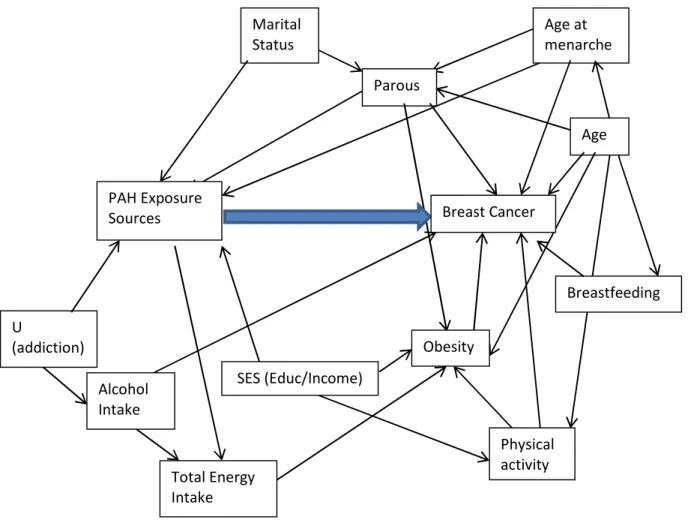
important to consider to best determine how to categorize PAH exposure for this dissertation as well as how to address different definitions of breast cancer as an outcome. Also, a better understanding of established breast cancer risk factors informs a directed acyclic graph of the relationship between PAH exposure and breast cancer risk as these may be confounders or intermediates of the association.
While mechanisms of breast carcinogenesis are not completely elucidated, it is proposed that exogenous hormone exposure and genomic integrity may be relevant
mechanisms [1]. Additional mechanisms, including insulin-resistance, inflammation, oxidative stress and immune response are less well understood but supported by associations between physical activity, obesity and alcohol among other risk factors [22, 40, 114]. These pathways are important for PAH exposure, as it may act upon multiple breast cancer mechanisms [70, 71, 117, 118]. In the following section, I describe the many sources of PAH exposure that have been investigated with breast cancer risk. Finally, I review DNA methylation which may play an important role in the etiology of breast cancer and provide rationale for examining the
relationship between PAHs and DNA methylation with breast cancer risk.
1.2 Biology and Epidemiology of Polycyclic Aromatic Hydrocarbons (PAH) PAHs are a large class of organic compounds which are widespread environmental
via inhalation of ambient and indoor air, ingestion from food sources and dermal absorption [42, 120].
PAHs have been observed to cause tumors in animal models [41, 69]. Due to extensive
research with PAHs and lung cancer, specific individual PAHs have been classified as
confirmed, possible and probable carcinogens [41, 68]. However, the relationship between PAH and the human breast remains unclear [4]. Previous research has been hindered by the fact that PAH exposure often occurs in mixtures of PAH and non-PAH chemicals, with varying levels of mutagenicity [41, 120]. Individuals are exposed to a wide-range of PAH sources across the life course, the extent of which is difficult to capture. Finally, differing individual susceptibility factors may alter the PAH-breast cancer relationship and may be highly variable across study
populations resulting in variable estimates of association [41].
1.2.1 Occupational PAH Sources
Occupational exposure to PAHs occurs in several industries, including aluminum, coke production, coal gasification, iron and steel foundry, firefighting and in professions highly exposed to vehicular exhaust (such as toll booth operators, professional drivers, road workers) among others [4, 41, 68, 120]. There is a wide range of exposure levels for occupational PAH
exposure (ranging from 0.1 to 100,000 ng/m3) [68, 121].
benzene exposure and therefore these associations could not be directly attributable to PAH [91]. Another study found that occupational PAH exposure to petroleum after age 36 years conferred an increase in postmenopausal breast cancer (OR=2.38, 1.00, 5.67) and specifically among ER+PR+ tumors (OR=3.00, 1.10, 8.13)[124]. Four studies found little or no increased risk of breast cancer with occupational exposure to PAHs or PAH sources [122, 123, 129, 130].
Summary. Occupational exposure to PAHs occurs across many different professions [4,
41, 68, 120]; however, there has been limited research on occupational exposure to PAHs and the association with breast cancer at least in part due to the sparse women included in
occupational studies [122-128]. There has been some suggestive evidence that occupational exposures to PAHs is associated with breast cancer [124, 125], but results have been
inconclusive [122, 123, 129, 130]. The suggested possible association between occupational PAH exposure and breast cancer found in occupational settings where exposure level is much higher bolsters the need to better understand the association between PAH exposures and risk of breast cancer among women who are ubiquitously exposed, although at a lower exposure level, in the general population [131].
1.2.2 Biomarker PAH-DNA Adducts
A biomarker is an evaluation of an agent’s exposure that is obtained by measuring either the agent itself or it’s metabolites in human tissue, blood or urine [132]. PAH-DNA adducts, one of the biomarkers used to assess PAH exposure [132], have been measured in blood cells, human breast tumor tissue and in breast milk [41]. Other existing biomarkers often rely on blood-protein adducts or urinary PAH metabolites (specifically 1-hydroxypyrene (1-OHP))[41, 121].
individual differences absorption and distribution of PAHs; metabolism into DNA reactive forms, detoxification to reactive intermediates and repair of resulting DNA damage [132]. Due to cell turnover rates, PAH-DNA adducts measured in lymphocytes represent recent exposures occurring in the order of months [121, 135]. However, PAHs are lipophilic in nature and can thus accumulate in adipose tissue and therefore, PAH adducts may also be released from adipose tissue over time [90]. It is unclear if adducts represent long-term exposure as well.
Laboratory methods that have been utilized to measure PAH-DNA adduct levels with
breast cancer include 32P-postlabeling of modified nucleotides, immunohistochemistry and
competitive enzyme-linked immunosorbent assay (ELISA) assay. 32P-postlabeling is not specific
to PAH-DNA adducts and measures bulky aromatic ring hydrophobic DNA adducts [121]. ELISA, in contrast, uses targeted antibodies to specifically measure the PAH diol epoxide adducts that form at the N2 position of the guanine base [41, 89].
A pooled analysis found a significant correlation between monitored personal exposure to ambient benzo[a]pyrene (B[a]P) levels and blood PAH-DNA adduct levels [121]. This
correlation was highest when using the ELISA assay, which is the method utilized in this
investigation, compared to 32P-postlabeling [121]. Associations between other PAH sources,
vary with the same exposure levels, indicating that adduct formation is influenced by individual susceptibility factors [89]. Therefore, this suggests that an individual’s ability to detoxify
carcinogens, repair DNA damage and other lifestyle, environmental and dietary factors may contribute to the differential formation of adducts given similar levels of exposure [136].
LIBCSP has found associations with adduct levels and current and past smoking status and soil B[a]P levels [134]. In addition, among women with detectable adducts there was an association reported with outdoor air pollution [133]. Inconsistent or lack of associations were reported between PAH-DNA adducts and smoked and grilled foods, dietary B[a]P intake and a smoking variable that considered active and passive smoke exposure together [134].
Consistent associations between adduct levels and breast cancer has been observed in hospital-based and population-based studies [74, 87-91]. Two small hospital-based case-control studies reported higher DNA adduct level in breast cancer cases compared to women without
tumors undergoing breast surgery [87, 91]. A similar result was reported by Rundle et al., 2000,
another hospital-based study that found that women with breast cancer (n=100) were more likely to have elevated adduct levels in tumor tissue compared to normal tissue of women with benign breast disease (n=105) (OR=2.56; 95%CI 1.05-6.24)[90]. Although not significant, a higher level of adducts was also measured in non-tumor tissue of cases compared to controls [90]. A non-significant increase in risk between adducts and breast cancer (detectable vs. undetectable, OR=1.14, 95%CI 1.15 (0.67-1.93) was reported in an Italian nested-case control study of 292 cases and 292 controls when assessing bulky DNA adducts in peripheral
leukocytes at enrollment [144]. This study had a smaller sample size than the LIBCSP and used
a different detection method (32P-postlabeling), which is not specific for PAH-DNA adducts
[144].
95% CI: 1.05, 1.58) [92]. Using the ELISA method, adduct levels were measured in circulating mononuclear cells rather than in tumor tissue as in previous research, which could explain in part the attenuated results [145]. The larger sample size in the LIBCSP relative to the hospital-based studies may have also improved the stability of the estimates [92]. The lack of a dose-response relationship between PAH-DNA adduct levels with breast cancer risk could indicate a threshold effect or a non-linear relationship [92].
Summary. PAH-DNA adducts are a useful biomarker of PAH exposure and resulting
DNA damage [132] and have been consistently associated with breast cancer risk in other study populations [74, 87-91] as well as in the LIBCSP [92]. PAH-DNA adducts are not consistently associated with PAH source exposures, and thus may vary by PAH source type, timing of exposure and by individual susceptibility factors [121, 133, 134, 136-143]. The biomarker likely reflects recent exposure [121, 135] and does not provide information about long-term
exposures. Therefore using other measures of PAH exposure, including self-report over extended periods of time, may be more relevant to understand breast cancer risk.
1.2.3 Ambient PAH Sources: Exposure in the General Population
relative insolubility of PAHs and effective water treatment procedures [68]. It has been
previously estimated that on average the total PAH exposure from all sources is approximately 3 µg per day [121].
Environmental ambient PAH is monitored relatively infrequently, unlike US
Environmental Protection Agency (EPA) criteria pollutants [41]. Measurement of ambient PAHs requires collection on specialized filters, extraction using organic solvents and analysis with gas chromatography/mass spectrometry or high performance liquid chromatography [68, 121, 152-154]. In order to measure specific PAH compounds, extensive separation schemes are
required [68]. In epidemiologic studies, ambient PAHs have also been measured using personal monitors or biomarkers [68]. However, personal monitors are expensive and difficult to conduct on a large scale. Although biomarkers are also used to asses ambient PAH exposure, as previously discussed, the limitations of PAH-DNA adduct biomarkers are difficulty in
interpretation due to variations in PAH exposure types, timing and dose over time relative to study assessment and variability based on individual-level susceptibility factors [134].
Studies that do measure ambient PAHs usually are only equipped to measure and report on a relatively small number of specific PAHs, which could potentially exclude PAHs that may be most relevant [41, 68, 121]. There is also little consistency across reports with investigators measuring different specific PAHs, as PAH profiles vary based on the exposure source of interest [41, 68, 121]. Many researchers rely on B[a]P as a surrogate marker for all ambient PAH [41, 121]. However, this measurement does not fully account for the complex mixture of PAHs and thus likely results in some exposure misclassification [41, 121]. Despite this, B[a]P is common to all ambient PAH sources and is one of the PAHs with the most demonstrated carcinogenic activity [41, 121]. Similarly, the LIBCSP has reported that soil B[a]P levels are strongly correlated with other high molecular weight soil PAHs, which tend to be more
indoor air pollution, vehicular traffic, tobacco smoke and grilled/smoked meat intake. Later in the chapter, I will discuss the relative contributions of the PAH sources as well as possible
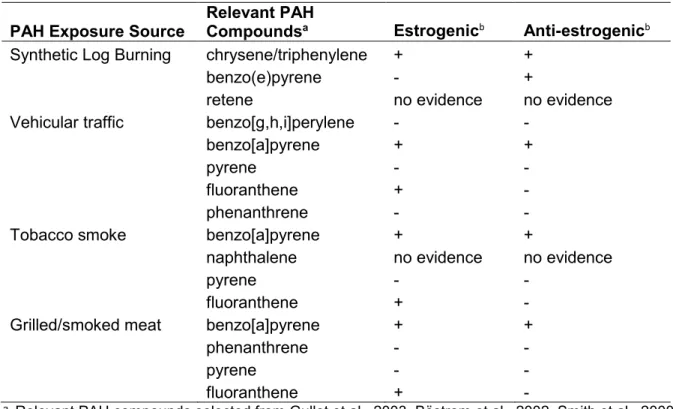
mechanisms to explain associations reported between PAHs and breast cancer. Associations between the PAH sources, indoor and outdoor air pollution, active smoking and environmental tobacco smoke and grilled/smoked meat intake in other study populations are included in Table 1.1.
Summary. Exposure to PAH is ubiquitous, including indoor and outdoor air pollution
from industrial emissions, traffic and heating [41, 68, 147], tobacco smoke [148] and grilled, smoked or broiled foods [119]. Environmental ambient PAH is monitored relatively infrequently, unlike US EPA criteria pollutants [41]. PAHs can be measured using personal monitoring
systems[68] or by the biomarker PAH-DNA adducts [134]. Studies can often only measure a few specific PAH compounds, usually B[a]P, but with little consistency across studies [41, 68, 121]. However, these methods are not accounting for the fact that PAHs often occur as a complex mixture and thus, may result in misclassification [41, 121].
1.2.4 Indoor Air Pollution
Indoor air pollution, or household air pollution, is a major PAH source and is of significant world-wide public health concern [155]. As of 2010, less than 20% of the population in the Americas and Europe rely mainly on solid fuels, whereas use is highest in Africa and Southeast Asia, at approximately 60% [156]. Wood burning for fuel and domestic heating releases many known genotoxic PAHs [157]. Homes burning wood stoves for heating purposes have more high molecular-weight PAHs indoors than measured outside the home [158]. Additionally, other materials burned in homes, such as coal, gas and synthetic logs may result in exposure to specific PAHs with carcinogenic activity [41, 157, 159]. Outdoor air pollution, house
PAH emissions from wood stoves are estimated to range from 1.7-12.6 µg/m3 [131]. There has been limited testing on the emission profiles of synthetic logs, consisting of wax and sawdust, compared to natural logs. A report by Gullet et al. [159] measured emission factors of various pollutants (including polychlorinated dibenzodioxins and dibenzofurans, polychlorinated biphenyls, hexacholorbenzene, particulate matter (PM) and PAHs) from fireplace and
woodstove combustion emissions. Synthetic log burning produced elevated levels (mg/kg) of almost all measured PAHs compared to the combustion of wood, but not higher levels of the other pollutants measured [159]. Specific PAHs that were particularly high in concentration in the synthetic log emissions included chrysene/triphenylene, benzo(e)pyrene and retene [159]. Chrysene in particular is a documented tumorgenic PAH [41]. Another emission analysis also reported higher PAH levels and a wider range of specific PAH compounds present in synthetic log emissions compared to wood emissions [161]; similarly, another report found a specific brand of artificial logs to have higher PAH emission factors compared to cordwood [162]. These results suggest that PAHs may be one of the more relevant emission factors from synthetic log burning for breast cancer risk. However, other reports have found similar PAH levels across synthetic logs and natural wood logs or possibly lower PAH levels for synthetic logs [163, 164]. These inconsistencies could be due to differing synthetic log components or testing conditions, and thus variable emission characteristics [165].
air [168]. Open fireplace use has also been associated with increased DNA adduct levels in both mothers and their newborns [169].
Surrogate measures of PAH exposure from indoor air pollution are often measured in epidemiologic research using air samples, personal monitors or self-reported use of indoor stoves and fireplaces [68]. However, personal monitors and current air samples do not
represent historical exposures needed for studies focused on cancer etiology and are logistically challenging for large-scale epidemiologic research. Monitoring of specific PAHs is especially challenging and studies often rely on measuring a small, variable number of PAHs which may not include those that are biologically relevant [41, 68, 121]. This is further complicated as PAH profiles tend to differ by exposure source and temperature of combustion [41, 68, 121].
Previous research on the health impacts of indoor air pollution has predominantly focused on outcomes of respiratory health effects or cancer outcomes in developing countries where exposure levels are high compared to the United States [170]. Indoor air pollution, from burning of wood or coal, has been associated with cancers of the lung according to an
international pooled study [171], upper aero-digestive tract in India [172] and been observed to interact with human papillomavirus (HPV) in association with cervical cancer [173] in South America Although much of the research on indoor air pollution is occurring outside of the U.S., solid fuel remains the primary heating source for approximately 6.5 million U.S. citizens [174].
Based on findings in the LIBCSP, a 45% increase in risk of breast cancer was observed for women who had ever burned synthetic logs in their homes (OR=1.45, 95%CI 1.17, 1.80), but no association was found for wood burning alone (OR=0.93, 95%CI 0.79, 1.08) [175]. The risk
associated with synthetic log burning increased with 7 or more years of use and among p53
-mutation-negative tumors, but was not found to vary by menopausal status at diagnosis,
Summary. Indoor air pollution, from the burning of wood, coal, gas and synthetic logs in
the home, increases indoor PAH exposure levels and is a public health concern world-wide [155]. Indoor PAH exposure is often measured using air samples, personal monitors or self-reported use of indoor stoves and fireplaces [68]. Previous research on indoor air pollution has been relatively limited; investigating respiratory health effects or cancer outcomes is mainly in developing countries where exposure levels are higher than in the U.S. [170]. Indoor
stove/fireplace use, in particular burning of synthetic logs, but not wood, has been associated with breast cancer in this study population [175].
1.2.5 Outdoor Air Pollution and Traffic Emissions
Vehicular traffic emissions are often considered to be the most predominant source of airborne PAH in urban and suburban areas [41, 176-178]. Outdoor air pollution infiltrates indoor spaces quite effectively [179], suggesting that outdoor air pollution is also a contributor to indoor PAHs
[133, 160, 176]. Typical measured levels of total ambient PAHs range from 1 to 30 ng/m3 for
total ambient PAHs, excluding naphthalene [68]. Vehicles emit a mixture of by-products such as carbon monoxide, nitrogen oxides, sulfur dioxide, PM, and volatile organic compounds [178, 180]. Traffic emissions also include significant concentrations of the following PAHs:
benzo[g,h,i]perylene, pyrene, fluoranthene, phenanthrene and other PAHs [41].
In general, there has been a decreasing trend in ambient PAH levels in the U.S. mainly due to the introduction of catalytic converters in gasoline vehicles [41]. However, increased vehicle use has tempered this decrease in emissions [181]. Although there is overall less PAH exposure from vehicular traffic in the U.S., vehicular traffic emissions remain high in other countries [182, 183]. Despite these decreases in emissions, women who live in high traffic density areas may still have high PAH exposure levels.
conditions, traffic patterns, fuel characteristics and vehicular properties all affect emissions [178, 180]. For example, higher emissions are associated with both low and high speeds [186]. Traffic emissions are higher at intersections because of the acceleration and deceleration [133, 181] and are higher under cold-engine compared to warm-engine conditions [41, 133, 181-183]. Studies suggest that gasoline engines are the major source of heavy mass PAHs and that diesel engine PAH emissions are comprised of less carcinogenic lighter weight PAHs [41, 181]. Gasoline vehicular emissions are reduced by more than 10-fold in vehicles with catalytic
converters [178].
Adequate measurement of ambient PAHs when investigating health outcomes is undoubtedly challenging, as ambient PAH is not monitored in a similar manner to US EPA criteria pollutants [41]. Some studies have used personal monitoring of PAH [187]. Other studies have used PM and some other traffic-related pollutants as surrogates of ambient PAH or traffic exposure [86]. To measure exposure to traffic specifically, previous studies have used
measures such as distance to major roads or traffic density [85]. This crude measurement may not adequately capture exposure levels and doesn’t capture other PAH sources to which women are ambiently exposed.
In the LIBCSP, a modest increase in risk of breast cancer was associated with recent vehicular traffic exposure (OR=1.14; 95%CI 0.80-1.64) and results were stronger, but less
precise for long-term PAH exposures [192]. A significant interaction was found between fruit and
vegetable intake, with the association of vehicular traffic strongest among women with low levels of fruit and vegetable intake. This association was also most prominent among
premenopausal women, women with ER-/PR- tumor subtype and in situ breast cancers [192].
Summary. Vehicular traffic emissions are an important PAH source, particularly in urban
areas [41, 176-178]. Vehicle emissions of PAHs depend on a variety of factors, including season, driving conditions, traffic patterns, fuel characteristics and vehicular properties [178, 180]. To measure PAH exposure from vehicular traffic emissions, some studies have relied on personal monitoring of PAH [187], proxy measures of other traffic-related compounds [86] and crude measures such as distance to major roads or traffic density. Studies have consistently reported positive, modest association between vehicular traffic and breast cancer risk [83-86, 188-190] and correlations between US traffic density patterns and breast cancer trends over time [189, 190]. Findings in the LIBCSP are consistent with previous studies, with an increase in breast cancer risk for higher PAH exposure measured using a sophisticated traffic model [133, 192].
1.2.6 Tobacco Smoke
Tobacco smoke is a known and prevalent PAH source and contains several specific PAH compounds, including benzo[a]pyrene, naphthalene, pyrene and fluoranthene among others [193], which are potent mammary carcinogens in experimental research [69, 194]. Tobacco
smoke also contains non-PAH carcinogenic chemicals such as aromatic amines and N
as the mainstream smoke that is exhaled from smokers [195]. Active smokers and those
exposed to ETS have increased urinary levels of the PAH metabolite, 1-hydroxypyrene [68, 78]. Much of the existing laboratory evidence on the carcinogenicity of PAHs has relied on
cigarette smoke. Both active smoking and ETS induces DNA damage according to in vivo and
in vitro studies [196]. Benzo[a]pyrene from cigarette smoke induces neoplastic transformation of human breast epithelial cells in vitro [197]. Specific PAHs, including those found in cigarette smoke [69], are highly carcinogenic to the mammary gland in laboratory animals [117, 194, 198]. In addition to being carcinogenic, PAHs exhibit weak estrogenic activity [117] and interact with the estrogen receptor [199]. However, smoke exposure is also associated with
antiestrogenic properties as found in both in vitro and in vivo experimental research [117, 199-201]. It is been previously hypothesized that the antiestrogenic properties of smoking may hinder the detection of any association with breast cancer [72]. For example, active smokers have an earlier age at menopause, which is believed to result from toxic effects of smoke exposure on ovarian function [117, 200, 201]. Smoking has been associated with decreased overall exposure to estrogens from early initiation of menopause and altered hormone metabolism [202]. However, a recent pooled analysis found moderately higher levels of hormones, including estrogen, in current, heavy smokers compared to never smokers [203]. Therefore, the association between estrogen levels and smoking is not yet well-established or understood [72].
It is known that metabolites and chemicals from cigarette smoke reach the breast, as both nicotine and cotinine have been detected in breast fluid [69]. Smoking has been
associated with PAH-DNA adducts measured in breast tissue and blood [69, 87, 89, 91] and
p53 mutation smoking signatures have been detected in breast tissue [204]. In support of this,
Cigarette smoking history should be investigated if possible using information on timing, frequency, intensity, duration and time since quitting [78]. Because epidemiologic studies almost exclusively rely on self-report to assess an individual’s history of active cigarette smoking, the data is often subject to recall bias and social desirability bias [206]. However, there is evidence to suggest that self-reported smoking history is a valid measurement, with over 80% sensitivity and specificity according to a meta-analysis [207]. Self-reported smoking levels have been validated using the metabolite cotinine [108], which reflects recent smoking. However, cotinine measurements cannot provide evidence on intensity or long-term history of smoking [208].
Both the California and the Canadian Panel concluded that regular exposure to passive smoke is causally related to breast cancer among premenopausal women [210, 219]. However, many of these studies have relied on using ever/never definitions which has made it difficult to make strong conclusions on the subject [211]. Long-term residential ETS tends to have more consistent associations [73, 74, 77]. In addition, more consistently positive associations have been reported among susceptible subgroups, including women who smoked before first live
birth, women with NAT2 slow acetylators and other genetic polymorphisms [76, 78]. A 2013
meta-analysis did not conclude that there was an association between ever passive smoking and breast cancer; however, the analysis was unable to consider long-term exposure histories [220]. Studies published since this meta-analysis uniformly report an increase in breast cancer risk with environmental tobacco smoke exposure [213, 214, 216, 221, 222].
A 2004 meta-analysis did not find evidence of heterogeneity of the association between tobacco smoke and breast cancer by subtype [98]. However individual investigations have reported evidence of differential associations of smoking by tumor subtype, with recent studies reporting stronger associations among hormone receptor positive breast cancer [74, 101, 213, 217, 221]. Although cigarette smoking has been associated with the presence of breast tumor
p53 mutations [204, 223], this relationship was not replicated in the LIBCSP investigation, which
had more power [224].
Summary. Tobacco smoke is a known and prevalent PAH source which contains
several specific PAH compounds as well as non-PAH carcinogens [193]. Tobacco smoke exposure can be inhaled from both active and environmental tobacco smoke. Epidemiologic studies most often use self-report history of cigarette smoking and environmental tobacco smoke [206], which is considered to be a valid measurement [207]. Recent studies have reported an increase in breast cancer risk for active smoking [72]. Additionally, studies investigating long-term residential exposure to environmental tobacco smoke or living with a
smoking spouse have more consistently reported associations with breast cancer risk[73, 74,
77, 225-228].The research on long-term environmental tobacco smoke is consistent with findings in the LIBCSP study population, which reported an increase in breast cancer for long-term exposure to environmental tobacco smoke of a spouse [74].
1.2.7 Grilled and Smoked Meat Intake
Dietary intake in epidemiologic studies is largely collected using dietary questionnaires, in particular food frequency questionnaires (FFQ). Questionnaires can be used to assess dietary PAH exposure with questions on intake of PAH-containing foods and cooking methods. From the responses to these questions and in conjunction with a database of measured PAH concentrations, a dietary PAH exposure index can be created [230, 231].
There are some important limitations to dietary questionnaires. Specifically, recall error may result in misclassification of the dietary exposure [31]. Although recall error is often assumed to be non-differential in a cohort study [31], recall is often assumed to be biased in a case-control study. Regardless of the study design, if the dietary exposure variable is multi-level, which is the usual approach in nutritional epidemiology, the resulting bias could be difficult to predict and may be towards or away from the null [230]. In addition, many dietary questions focus on eating habits of the previous year, whereas more long-term exposure may be the more relevant time period for breast cancer. Another important limitation is that many food frequency questionnaires do not assess meat cooking methods, and if they do, the assessment is not consistent across questionnaires [230, 235]. As the cooking method, in particular whether meat is grilled, smoked or barbecued, is indicative of the PAH content, this could result in instability of effect estimates for the association between meat intake and breast cancer risk.
year [80-82]. In one study, the association observed with grilled meat and breast cancer risk was attenuated when other cooking methods were considered [81].
In the LIBCSP, lifetime intake of grilled and smoked foods was assessed using a structured questionnaire including four categories of grilled, barbecued or smoked meats over each decade of life since teenage years [230]. An association was reported between lifetime intake and postmenopausal breast cancer and was most pronounced in women with low intake of fruit and vegetables [230].
Summary. Grilled, barbecued and smoked meats are a notable PAH source [230]. PAH
content may vary by the type of meat, the portion size, the cooking method, length of time cooked and the level of doneness [231]. FFQs and other dietary questionnaires are used to assess grilled/smoked meat intake in epidemiological studies. Unfortunately, many
questionnaires do not assess cooking method which is an important factor in PAH formation [230, 235]. The few studies that have taking into account whether meat was grilled, barbecued or charred have had inconsistent findings with breast cancer risk, although more recent studies have found modest associations [80-82, 235-238]. This study population took into account grilled/smoked meat across the life course, which is important for the etiology of breast cancer, and found an increase in breast cancer risk associated with lifetime intake [230].
1.2.8 Relative Contributions of Ambient PAH Sources
cities [41] and during periods of high traffic [150]. As well, studies suggest that outdoor pollutants may also dominate indoor PAHs [41].
Smokers may have the highest PAH dose [131]. Studies have consistently demonstrated that PAH uptake from diet may be the largest source of PAH exposure, or dose, among non-smokers, ranging from several nanograms to several micrograms per day [41, 68, 119, 240]. Grilled, smoked and barbecued foods are the largest source from the diet, but PAH exposure levels can be increased by PAH intake from contaminated food sources, such as fruit,
vegetables, dairy products and seafood, as well as other foods that have been processed or preserved [68, 240]. PAH dose from inhalation of indoor and outdoor air pollution is estimated to be lower, only a fraction of the dose from diet (5-10%) [241]. For example, one investigation calculated that among male non-smokers, dietary contributions to PAH dose were 96.2%, whereas ambient sources were 1.6% relying on previously published concentrations of ambient PAH sources [68, 131]. Similarly, a study conducted in the U.S. using benzo[a]pyrene levels as a marker of PAH exposure levels, estimated that among nonsmokers who did not burn coal in their homes, 70% of PAH exposure occurred from the diet [119]. However, active smoking may double PAH dose, making active smoking the most predominant source [131].
Summary. Relative contributions of PAH sources to total PAH dose is not well
established and varies by geographic location and lifestyle [41]. Studies suggest that wood-burning and vehicular traffic are the largest sources for airborne PAH [41]. Despite this, diet sources appear to be the largest PAH contributor among non-smokers [41]. Smokers may have double the PAH dose compared to non-smokers [131]. Additionally, while the importance of exposure routes on the carcinogenicity are also not well established [41], some animal studies suggest inhalation may be the most important route [131, 242]. So while diet may be the largest exposure source, dose via inhalation may be the most relevant to breast cancer risk. These variations across exposure type and route of exposure support the need to consider multiple PAH sources when evaluating the relationship between PAH and breast cancer risk.
1.2.9 PAH and Breast Cancer Mechanisms
As discussed previously, women are exposed to PAHs from numerous sources, including indoor and outdoor air pollution, active smoking and environmental tobacco smoke and intake of grilled and smoked foods [41]. Many of these PAH sources have been associated with breast cancer risk in epidemiologic studies [72, 74, 86, 230]. The evidence for the relationship between PAHs and breast cancer is also biologically plausible [4]; PAHs may act upon the carcinogenic process in numerous ways [70, 71, 117].
PAHs can be rapidly absorbed into the human body after inhalation, ingestion or skin contact, and are soon released into the general circulation [68, 243-246]. Ambient PAHs, from indoor and outdoor air pollution and cigarette smoke, are absorbed through airway epithelium, whereas ingested PAHs, such as those from grilled and smoked foods or from deposition of ambient PAH, are absorbed by diffusion through the gastrointestinal tract epithelium[68]. Absorption timing is influenced, among other factors, by PAH size and number of aromatic rings, with the larger molecules been absorbed more slowly [68]. The impact of different
study in animal models suggested that carcinogenic potency varies by route of exposure and may be highest for inhalation [242].
After being distributed to the circulation and other tissues, PAHs are metabolized through activation and detoxification pathways [4, 41, 121]. PAHs are distributed preferentially in fatty tissues[68], such as the breast[7]. PAHs are lipophilic and can accumulate in adipose tissue of the breast to be released over time and redistributed to breast epithelial cells[90]. Experimental studies suggest that PAHs can be metabolized by human mammary epithelial cells in vitro [41, 42, 78] as well as in the mammary gland in animal models.
Phase I enzymes, predominately cytochrome p450 enzymes, break down PAHs to reactive metabolites which can then be detoxified by Phase II metabolic pathways (e.g., the
GSTs) [4, 42, 68, 247, 248]. When exposure levels are high, or detoxification processes are not
adequate, these reactive PAH metabolites produced from Phase I metabolism may
subsequently bind to DNA to form bulky adducts [4]. If DNA repair processes are unable to rectify this DNA damage, it can ultimately lead to somatic mutations in breast cancer-related genes, an initiation step of carcinogenesis [41]. Metabolism of PAHs in relation to breast cancer risk is displayed in Figure 1.1.
There are several mechanisms that could be relevant to the association between PAHs and breast cancer risk. There has been experimental evidence suggesting that PAHs are direct carcinogens in animal models as well as in humans [41]. PAHs have many properties that may be relevant to breast carcinogenesis, including the induction of DNA damage, both by formation of PAH-DNA adducts and via oxidative stress-related mechanisms [249]. Further, it has been
hypothesized that PAHs may interact with DNA repair pathways and GST variants to influence
breast cancer risk [4]. These pathways will be summarized and discussed below.
![Figure 1.1. Metabolism of polycyclic aromatic hydrocarbons in relation to breast cancer risk (adapted from Hecht 2002 [69])](https://thumb-us.123doks.com/thumbv2/123dok_us/8263848.2189274/84.918.119.812.144.513/figure-metabolism-polycyclic-aromatic-hydrocarbons-relation-breast-adapted.webp)
![Table 2.1 Study participant characteristics (n[%]) for the Long Island Breast Cancer Study Project, Long Island, New York, 1996-1997 (from Gammon et al., 2002 [52])](https://thumb-us.123doks.com/thumbv2/123dok_us/8263848.2189274/116.918.103.716.162.1085/participant-characteristics-island-breast-cancer-project-island-gammon.webp)