An Exploratory Study into the Nonprofit Communication Profession - A Job Description Content Analysis
Mary Lindsaye Boyd
A thesis submitted to the faculty of the University of North Carolina at Chapel Hill in partial fulfillment of the requirements for the degree of Master of Arts in the School of Media and
Journalism Strategic Communication curriculum.
Chapel Hill 2017
ABSTRACT
Mary Lindsaye Boyd: An Exploratory Study into the Nonprofit Communication Profession - A Job Description Content Analysis
(Under the direction of Lois Boynton)
Nonprofit public relations and role theory have both been studied in-depth, but this study seeks to employ an innovative method that will not only answer research questions on nonprofit public relations but also has the potential to change the way researchers study public relations and nonprofit public relations role theories (Dozier & Broom, 2006; Dyer, Harrison, & Weber, 2002; Grunig, 2006). A content analysis of job descriptions from nonprofit organizations for
communications positions was conducted to study the responsibilities and tasks the organizations want to emphasize. Specifically, this study illuminates the tasks that are common within
nonprofit public relations roles and examine tasks that are unique to public relations like
ACKNOWLEDGEMENTS
I would like to sincerely thank my committee who have supported and encouraged me throughout this project. I want to thank Lois Boynton for her guidance in this project and through other classes and for her enthusiasm especially regarding the nonprofit realm. I also want to thank Adam Saffer for his contagious passion for research and the many hours he spent guiding me through the interworking of content analyses and intercoder reliability. I want to thank Lizzy Adams as well from The Salvation Army who has shown me by example how to be a
TABLE OF CONTENTS
I. LIST OF TABLES………..vi
II. LIST OF FIGURES……….…..vii
III. CHAPTER 1: NONPROFIT COMMUNICATION JOB DESCRIPTIONS - INTRODUCTION……….……...……1
IV. LITERATURE REVIEW………3
V. RESEARCH QUESTIONS………...……18
VI. CHAPTER 2: METHOD……….……….20
VII. CHAPTER 3: RESULTS………..……25
VIII. CHAPTER 4: DISCUSSION………34
IX. LIMITATIONS, FUTURE RESEARCH, AND CONCLUSION.……..…………..……41
X. APPENDIX A: CONTENT ANALYSIS JOB DESCRIPTIONS CODING INSTRUCTIONS……….45
XI. APPENDIX B: CODING DOCUMENT EXPORTED FROM QUALTRICS………….55
XII. APPENDIX C: FINAL INTERCODER RELIABILITY RESULTS……...……….63
XIII. APPENDIX D: PREVIOUS INTERCODER RELIABILITY RESULTS……...……….64
LIST OF TABLES
Table 1: Titles Within Job Descriptions……….………...26
Table 2: Tasks Within Job Descriptions……….………...27
Table 3: Types of Nonprofits……….29
Table 4: Percentages of Management and Technician Positions ………..31
Table 5: Managerial Categories (Fieseler et al., 2015)..……….. ……….32
LIST OF FIGURES
Figure 1 – Factor loadings for technician role……….………7
Figure 2 – Factor loadings for technician role (2) ………..8
Figure 3 – Role indicators………..………..9
Chapter 1: Nonprofit Communication Job Descriptions - Introduction
The role of public relations in nonprofit organizations has the potential to encompass fundraising, event management, marketing, volunteer management and so much more despite having limited funding resources (Dyer, Buell, Harrison, & Weber, 2002). For public relations practitioners at nonprofits, this breadth often equates to fundraising, marketing, and more
encroaching upon other public relations responsibilities, a problem they face daily (Kelly, 1994). Practitioners at nonprofits find themselves doing jobs that one might not include in a “typical” public relations job description. To address this issue, Dyer and colleagues’ (2002) interviewed nonprofit public relations practitioners to better understand the many tasks included in the job. Yet, not many studies since then were found to have specifically studied nonprofit practitioners’ jobs despite the significant changes in public relations practice.
This exploratory study will content analyze job descriptions to reveal the most and least common expectations for today’s nonprofit public relations practitioners. To do so, the study introduces a novel approach to studying practitioners’ jobs in a way that can connect scholars’ theorizing of nonprofits to what practitioners are expected to do in their roles. This study can help nonprofits gain a better understanding of what other nonprofits are expecting of
practitioners. At the same time, this study can also inform educators about what should be taught to prepare students for their jobs as practitioners.
(1952) and researched in depth by Broom and Smith (1979), Dozier (1992) and Dozier and Broom (1995). The secondary purpose is to explore the many tasks which are included in a typical nonprofit public relations practitioner’s job through the use of role research. The
nonprofit sector is very substantial in the U.S. and quickly growing even more. There were about 1.5 million nonprofits in 2013 registered with the Internal Revenue Service (McKeever, 2015).
Literature Review
Nonprofit Public Relations Overview
The public relations literature on nonprofits has grown with approximately 200 articles since 2013 (Sisco, Pressgrove, & Collins, 2013). There is also much research from the public relations literature that could be applied to nonprofits. This study begins by considering how scholars have viewed practitioners’ roles (Broom and Smith, 1979; Dozier and Broom, 1995). Specifically, this study builds on Dyer et al.’s (2002) findings of what is included in a nonprofit public relations job. Kelly (1991) did much work showing the connection between public
relations and fundraising and arguing that fundraising is a subset of public relations. Practitioners in nonprofits may be charged with fundraising while also managing volunteers or overseeing events. Researchers have even used public relations roles to define and study fundraising
(Tindall, Waters, & Kelly, 2015). This study investigates those expectations by looking at the job descriptions for practitioners at nonprofits. Thus, the final portion of the literature review
presents a very brief background of how human relations departments (or staff) use job descriptions and the standardization that has arisen.
subcategory of theory building. Sisco, Pressgrove, and Collins (2013) then conducted an
introspective study that content analyzed the nonprofit public relations scholarly articles from the creation of the journal with the earliest being in 1951 until December 2012 and found that only 8% of all articles were on nonprofits, totaling 206 articles. These articles are continually increasing in number and percentage. One reason why research on nonprofits has been limited, according to Sisco et al. (2013), is because of the assumptions that research done for corporate public relations can and should be applied to nonprofits. While nonprofits can most definitely take from corporate public relations literature, there are certain factors that make nonprofit public relations quite distinct.
Role Theory within Public Relations and the Necessity of the Managerial Role
Organizations use public relations in a number of ways. Scholars have developed a plethora of theories that consider the most-effective uses of organizational public relations (Grunig, 1992). Such research and theorizing of public relations practitioner’s roles has
emphasized the importance of the management function and the managerial role. The managerial role and the management function refer to when the public relations department is included in the decision making for the organization. Roles theory also encompasses the managerial function and the managerial role but specifically focuses on the array of roles of public relations
practitioners in organizations (Dozier & Broom, 2006).
Dominant Coalition. Grunig (2006) presented the strategic management paradigm for public relations as part of his Excellence Theory (Grunig, 1992). Within this Excellence Theory research is a specific area that studies the role of public relations practitioners within the
department in order to efficiently practice the trade. The first approach of becoming a strategic public relations manager is to ensure that public relations is in the dominant coalition of the organization. Robbins (1990) refers to the term dominant coalition as those with decision-making capabilities within an organization. In a continuation of the Excellence Study (Grunig, 1992), Grunig (2006) evaluated the role within the dominant coalition by looking at whether or not the public relations department participated in “regular research activities, research to answer specific questions, other formal approaches to gathering information, informal approaches to gathering information, contacts with knowledgeable people outside the organization, and judgment based on experience” (p. 161). If the head of the public relations department was participating in any of these areas, he or she was seen as working within the dominant coalition. Public relations practitioners must think futuristically and be the leaders the organization needs in order to gain a seat in the dominant coalition (McLaughlin, 2006).
Managerial Role within Roles Theory. Broom and Smith (1979) researched role theory to explain the roles in which a public relations practitioner could fit. Broom originally found that there were five main roles but Broom and Smith condensed them to four that fit this description based on the tasks they completed: expert prescriber, communication facilitator, problem-solving process facilitator, and communication technician. The expert prescriber is seen as a public relations expert who can give advice as to the next course of action. The communication facilitator ensures that the communication between the dominant coalition and the publics is sound. The problem-solving process facilitator works with the dominant coalition to analyze and assist in solving any and all problems that may arise. Lastly, those in the technician role
combined those managerial roles to create a manager and technician dichotomy and emphasized the importance of the managerial role. They also defined the various roles and showed that specific roles were needed. For them, the technician and managerial roles were required for a well-functioning public relations department, but these roles should be separate if at all possible. There has been criticism that this dichotomy is too simplistic. Because of this, some researchers continue to use the four-role model. Tindall, Waters, and Kelly (2015) studied within which roles fundraising minorities were located. They used the four roles of communication.
Manager versus technician. As mentioned before, Broom and Smith’s (1979) four
models for public relations roles were condensed by Dozier (1992) and Dozier and Broom (1995) into the two roles of manager and technician. Grunig (2006) explains that a strategic manager should be the head of the public relations department instead of someone in a technician role. The technician role refers to the person who is creating the tactics and materials for the department like press releases instead of making the majority of the decisions. Oftentimes, managers are doing technician work as well. Leichty and Springston (1996) found that less-traditional managers often do technician work in addition to their managerial responsibilities. More recently, DeSanto, Moss, and Newman (2007) found three main sections of the public relations role in the United States, one of which included key policy advice and strategic counsel. The managerial role is significant for the United States, but there is still some overlap with the technician role. DeSanto et al. hypothesize that one reason for this would be limited staffing (DeSanto, Moss, & Newman, 2007). This limitation would most apply to nonprofits that often do not have the funds for a large public relations department, and many nonprofits are small.
summary, Grunig and Grunig (2008) explained that for the most impact, public relations
practitioners must be in a management position, communication programs should be planned and carried out with strategy, and this person should be in the dominant coalition. Grunig (2006) holds fast to the fact that 40 years later, public relations as a strategic management function is the best and most-effective way for public relations to exist.
A survey conducted in 1965 by Harmon gives a brief overview of what job
responsibilities were for public relations practitioners at that time. With press releases, magazine articles, and media relations at the very top of the list, it is obvious that this job title has shifted dramatically. Most of the job responsibilities that were the least frequent still involved writing in some capacity. The jobs of public relations practitioners have changed for those in corporations and nonprofits.
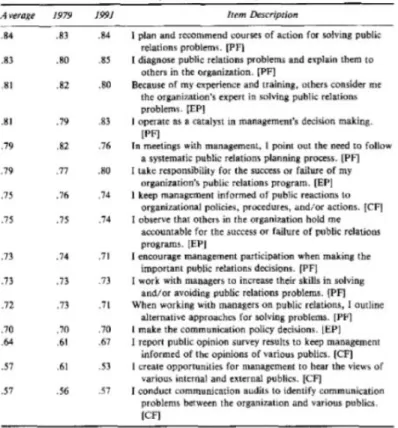
There has also been research on what tasks are typical for a public relations practitioner. Broom and Smith (1979) developed the original list of 24 items to evaluate where a position fits into his four-role model. Dozier and Broom later developed factor loadings which would be used for the manager/technician dichotomy (See Figures 1 and 2).
Figure 2- Factor loadings for technician role (Dozier & Broom, 1995)
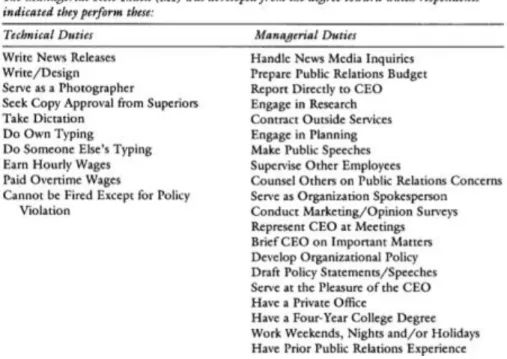
Figure 3 - Role indicators (Guth, 1995, p 129)
These lists can help inform what tasks to look for in order to classify a job as managerial or practitioner or even classify the job as outside the realm of a typical public relations
practitioner’s role.
Managerial Categories. Fieseler, Lutz, and Meckel (2015) extended research done by
Dozier and Broom (1995) in order to find the subcategories within the management function of a
public relations role. Through the use of factor and cluster analysis, a study completed in Europe
found that four specific subcategories emerged within the management role: diagnosis,
coaching, liaison, and execution (Fieseler, Lutz, & Meckel, 2015). Diagnosis is the most common of these four categories. This role makes the primary decisions and decides on
position includes all media relations and communication with stakeholders. This would also include donor relations. The liaison is similar to Broom and Smith’s (1979) communication facilitator role. The execution role handles any problems including crisis management or internal issues. This is similar to Broom and Smith’s (1979) problem-solving process facilitator role.
These four types of management positions clarify this role even further by adding the diagnosis
category.
Nonprofit jobs have undergone significant changes in the past few decades including job roles that are not as specific as before, especially because of the addition of technology
(McLaughlin, 2006). Sometimes roles for those in nonprofit organizations can merge to include tasks that would not normally be included within a public relations job, like fundraising (Dyer et al., 2003) and marketing, despite Grunig and Grunig’s (2008) recommendation to keep the management function separate from other functions. Kelly (1995) found in her study that 63% of nonprofit organizations described their fundraising departments as having a seat with the
technician role if an organization combines the departments. Though the research has consistently emphasized that public relations is best carried out if it has a member in the dominant coalition, this is not always what happens in corporations or nonprofits. This study seeks to discover how many communication jobs, especially those involving public relations, are in some type of management position. The roles and responsibilities highlighted within the research are a good way to explore the job descriptions and evaluate the managerial status as well. Role theory contains much-needed background information to study the public relations practitioner’s job. This job, however, varies by the sector, meaning that practitioners in nonprofits may have different responsibilities than those in for-profit organizations. Public Relations Practitioners’ Roles in Nonprofits
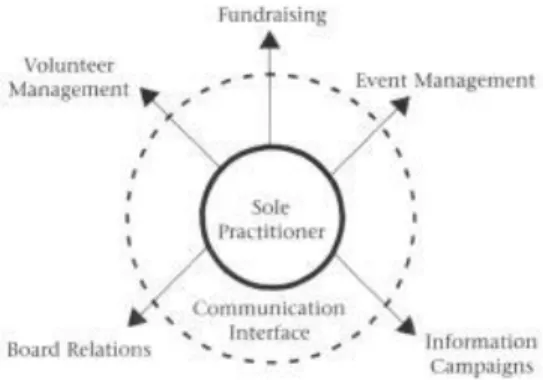
Figure 4 - Sole Practitioner Model (Dyer et al., 2002, page 16)
A job with many hats. Dyer et al.’s (2002) study provides a breakdown of what is
included in the jobs of public relations practitioners who work for nonprofit organizations. The “sole practitioner” model illustrated above and used in the original study is a great example of what a public relations executive’s job includes and supports the “many hats” theory of how multifaceted the job can be (Dyer et al., 2002). This study seeks to provide more research into this area.
Getting the word out. The newest way nonprofits are “getting the word out” is through
“communication continuum” for those who seek information lead to more likelihood of participation (McKeever, 2013). This communication continuum occurs because those who search for the information have a higher chance of participating because they feel more invested.
Volunteerism. Volunteerism is another concept that is associated with nonprofits. This task, similar to marketing and fundraising, can sometimes be included within public relations, like Dyer et al. (2002) found. Whether or not it is included within the public relations
department, communication is key to maintaining these relationships. Volunteers are essential to help both large and small nonprofits spread the word and accomplish tasks if staff resources are limited. The Bureau of Labor Statistics (2016) found that around 62.6 million people volunteered for a nonprofit from September 2014 through September 2015. Volunteers have more of a drive and want to continue volunteering when they feel included and have a high-quality relationship with the organization (Bortree, 2014). While feeling included and good relationship with the organization are universal, volunteers are not all the same and cannot be treated exactly alike. Managers need to take the time to understand their volunteers in order to increase retention. Communication theories can be applied to decide how to approach communication with volunteers (Waters & Bortree, 2011).
long-term donors (O’Neil, 2008). The fundraising aspect is one of key importance and is addressed next.
Fundraising and public relations in nonprofits. It is difficult to discuss nonprofits and not mention fundraising because it is an innate part of that sector. It is typically an ongoing concern, which is why fundraising is so imperative and found its way into public relations literature (Kelly, 1991; Waters, 2014). The role of fundraising can be problematic to define or categorize within a specific section because organizations do this in various ways. Dyer et al. (2002) found that most nonprofit public relations practitioners’ jobs continue to have an emphasis on fundraising. Sallot et al. (2003) also found that fundraising was established as a category within public relations in their content analysis on public relations literature.
It is debated, however, as to whether fundraising should be considered a public relations task or a separate department. Kelly (1991) contends that separating public relations and
fundraising could potentially make the organization vulnerable by separating donor publics and other publics. She specifically thought that separating the two would cause gaps in
communication and dissimilarity among tactics employed by the two departments. Grunig and Hunt (1984) also view fundraising as a specialized form of public relations and emphasize not dividing the publics.
The opposing viewpoint is backed by Cutlip (1990) who believes the two should be separate though it is essential that both public relations and fundraising work very closely together. Newsom, Scott, and Turk (1989) also maintain this perspective within their textbook for public relations. Within Kelly’s (1992) study there were 55% of respondents who believed fundraising should be a separate function. Kelly (1991) also explains that public relations practitioners do not view fundraising as part of their responsibilities and even see it as
“mysterious,” “demeaning,” or even “shady.” The communication within the fundraising could change this perspective, however, depending on whether asymmetrical or symmetrical
communication is implemented (Kelly, 1995). Communication in fundraising is often seen as asymmetrical or not seeing the value in using the public’s feedback. The added perspective of public relations could lead to more two-way symmetrical communication even within the fundraising communication by valuing the feedback of publics and using that information in creating strategy.
Fundraising is seen as closely related to public relations even among those who believe it should be a separate function. Because of this, it is necessary to further look at how these two can best work together to benefit the organization. The first stride would be through training, whether through university degree and certificate programs, online continuing education, or hands-on experience.
Kelly and Rosenstein (2010) found “that investor relations is highest paid specialization of public relations.” This investor relations role for corporations is similar to the nonprofit sector’s role of fundraising based on the comparable job functions like the donor/investor
(2010) advocate for an increase in cross-training of investor relations and public relations practitioners. If fundraising is included within the public relations umbrella, this cross-training would be absolutely necessary.
Similar to marketing encroachment in the for-profit realm, nonprofit public relations can often experience fundraising encroachment in addition to marketing encroachment. This
fundraising encroachment can have dire consequences if the fundraising department is
superseding the communication section of public relations if the organization’s communication efforts are not well coordinated. One of these consequences includes the donor publics taking preference over other publics like board members, employees, and those whom the organization is benefiting (Kelly, 1995). Kelly (1994) found that 23% of organizations were experiencing fundraising encroachment into its communication efforts and that 57% of the organizations have these two jobs linked together in some way. Dyer et al. (2002) echoed this finding and even extended it, with public relations practitioners explaining that fundraising has been and will continue to be a large focus of their job.
Maintaining relationships with all publics is a necessary function for nonprofit
organizations. Public relations can benefit fundraising if they work together by helping in the long-term donor relationships (O’Neil, 2008). Fundraising deals with primarily one public, donors, but this public can be subdivided into multiple groups including individuals,
coalition. Fundraising is one of the most-important sections of nonprofits, and if it is associated with public relations, which directly affects how the publics see the nonprofit, that should be reason enough for these two necessary functions to coordinate within the organization. Potential job applicants should be aware of this information, and organizations should keep it in mind as they prepare to hire for the communications department.
Hiring and a Standardization of Job Descriptions
According to Burke and Cooper (2012) the nonprofit world has consistently been slow adapters to how the corporate world has been operating. A formally organized human resource department whose function is to handle hiring was not seen as necessary in the nonprofit world until around the 1980s. This department became important because they wanted to ensure they were attracting the most highly qualified staff in the most organized fashion.
Standardization of job descriptions became extremely useful to these departments. The
introduction of the Dictionary of Occupational Titles by the U.S. Employment Service was
instrumental in unifying job descriptions and titles by creating over 12,000 job requirements and
a system for how to describe jobs. This older system has been replaced with the O*NET and
continues to maintain a standardized way of creating job descriptions (Ployhart, 2006). Users
may search the database for jobs and see how they are being defined and the general tasks that
are associated with the job. Though not all corporations or nonprofits use this system, this
standardization is extremely beneficial for this research study because it provides a basis on
which comparison can be made. This standardized job descriptions system will also allow for
Research Questions
Though there has been much research conducted on public relations role theory, there has been less on nonprofit public relations roles. Tindall, Waters, and Kelly (2015) looked at
nonprofit fundraising using the public relations roles theory lens to search for managerial
functions. This study seeks to add to this literature related to understanding the practitioner roles and responsibilities for nonprofits’ public relations employees. The answers to the following research questions benefit both academia and practitioners.
RQ1 – What responsibilities are included in job descriptions for nonprofit public relations practitioners?
RQ2 – How do the expectations identified in the job descriptions for public relations practitioners vary by type of organization?
RQ3 – What evidence of managerial versus technician roles within the organization exists within the job descriptions?
A content analysis of public relations job descriptions issued by nonprofit organizations is an innovative way to answer each of the above research questions. No other content analysis on job descriptions has been found in public relations research to explore job responsibilities and how they are presented to potential nonprofit practitioners. This study will provide ample data to answer the questions above and provide opportunity for future research.
include the words director, supervisor, manager, etc. Evaluating this information provides background on how much a managerial role public relations plays in the nonprofit field. Items listed in the job descriptions were assessed for indicators of a managerial role and whether or not the majority of the jobs are included in the dominant coalition.
Answers to this research question can benefit human resource departments at nonprofits, public relations practitioners, those looking for jobs in public relations, academic instruction in nonprofit public relations, and open a new area for research within nonprofit public relations literature.
Chapter 2: Method
The top four job search engines according to Forbes were used to gather the data (Adams, 2012). Each of these search engines contributed to this study in its own way. Indeed.com has 70 million unique visitors worldwide and 1.5 billion job searches a month. LinkedIn.com is the “largest professional networking site” (Adams, 2012). Monster.com is one of the oldest search engines for jobs. Lastly, Idealist.com was used because it is the “nation’s largest employment board for nonprofits” (Adams, 2012). Any duplicates were noted and omitted during the coding process. This study only focused on nonprofits within the United States.
“nonprofit.” All job descriptions that fit the criteria explained below and were available between Jan. 1 and 31 were collected, and not just those that were newly posted within Jan. 1-31.
The search engines pulled all job listings that included the word communication within the entire job description and not just in the title or listing name. The preliminary test run in December revealed that job titles included multiple disciplines like marketing, public relations, fundraising, and others for a plethora of organization types like healthcare, government,
churches, human rights nonprofits, and more. Job listings were saved if they involved public relations, communication, marketing, development, or fundraising. Titles did not necessarily include the term “public relations” but the job itself might encompass multiple public relations tasks. Volunteer and part-time positions were not included. Positions at for-profit agencies (even those who specifically do work for nonprofits) also were not included. Job postings from third-party recruiters were included as long as the jobs themselves were for nonprofit organization. This totaled only six job descriptions. A sample study of 30% of the collected data was
conducted. After ruling out the job descriptions that said communication or public relations but did not fit the criteria to be studied, there were 71% of the allotted sample articles for analysis (n=419).
The responsibilities of each position were the focus of the coding. Tasks taken from Dozier and Broom’s (1995) study as well as from public relations textbooks were included. Gregory (2010) and Guth (2006) list multiple responsibilities included within a public relations job: graphic design, fundraising, volunteer management, internal/ employees, corporate, media including website and social media, community, financial/investor, public affairs, volunteer management, marketing communications, writing, editing, producing messages, media relations, campaigns, event planning, making communication policy decisions, evaluation, research, meeting with clients/executives, budgets, supervising, and counseling management.
In addition to responsibilities and tasks, the job descriptions were evaluated and coded for managerial aspects. The job title containing director, leader, manager, etc., is a good indication that the position has decision making capabilities. The job descriptions were evaluated for managerial responsibilities as well. Fieseler et al.’s (2015) four subcategories of the managerial role -- diagnosis, coaching, liaison and execution -- were also used to decide whether or not a position should be categorized within the managerial role. These terms and explanations were provided to coders through training and within the codebook (See Appendix A).
Some coding categories included the option for “other” if the term is different from those already defined. An example would be coding the position title. There are multiple choices offered, but if the position title does not contain any of the words listed, coders listed the word under “other.” If items entered in the “other” category were frequently listed, those items were made into their own categories. Descriptive statistics were run to find frequencies, along with chi-square and correlations.
A total of 2,358 job descriptions were collected over the one-month period. LinkedIn yielded 89 postings, Monster yielded 740 postings, Idealist yielded 995 postings, and Indeed yielded 534 postings. Stratified sampling was used to determine which data sets would be used for this study. To do this, a random number generator was used to go through each search engine to gather the data. It was done on a percentage scale so that each engine would be accurately represented as it would have been if a census study took place. After sampling, LinkedIn yielded 27 postings, Monster yielded 222 postings, Idealist yielded 299 postings, and Indeed yielded 161 postings.
intercoder reliability. The variables that did not receive reliability hovered around 75% (See Appendix D.)
Chapter 3: Results
A total of 419 job descriptions were analyzed. By recording general demographic information, interesting results emerged. There were significantly more postings for the three areas of California (n=58, 14%), New York (n=89, 21%), and District of Columbia (n=66, 16%). All other states made up for 5% or less of the data each. Additionally, a little over 76% (n=319) of job descriptions did not include the website for the organization. This was especially
surprising due to the technological shift that has been occurring.
A bachelor’s degree is required in over 82% (n=344) of the job descriptions. Though 80% (n=337) of job descriptions do not list a preferred level of education, over 17% (n=70) of jobs prefer a master’s degree. Both of these facts show the importance of a college education for nonprofit communication departments and even show there are many positions in this field that prefer a master’s degree.
A total of 83% of job descriptions defined the level of experience required, which ranged from 1 year (in over 7% (n=30) of postings) to 10 years (over 4% (n=17) of postings). The mode of years of experience was three, which occurred in over 23% (n=98) of job descriptions with the next most frequent being 5 with over 21% (n=88) of postings. The mean was 3.3 years.
between $40,000 and $49,999 in over 32% (n=32) of postings. The range of $40,000-$59,999 accounts for over 60% (n=48) of postings.
Not all of the job descriptions contained education, experience, and salary information. For those that did not, there was an option for N/A.
Job Responsibilities
The titles of the positions varied but Communication appeared in over 62% (n=262) of the job descriptions. See Table 1 below for full results. Marketing and Development were the second most frequent titles appearing within 23% (n=97) and 13% (n=55) of job descriptions, respectively. Other functions included often in the position titles are Digital Media, Executive Director, Outreach.
Table 1: Titles within Job Descriptions (N= 419)
Title % included in Job
Descriptions
Number of Job Descriptions
Communications 62.53% 262
Marketing 23.15% 97
Development 13.13% 55
Digital Media 4% 17
Outreach 3.10% 13
Executive Director/President/CEO 2.63% 11
Events 2.39% 10
Media Relations 2.39% 10
Public Relations 2.39% 10
Social Media 2.15% 9
Programs 2% 8
Engagement 1.43% 6
Fundraising 1.19% 5
Copy Writer 0.72% 3
Donor Relations 0.72% 3
Research 0.72% 3
Administrative 0.48% 2
Assistant 0.48% 2
Brand 0.24% 1
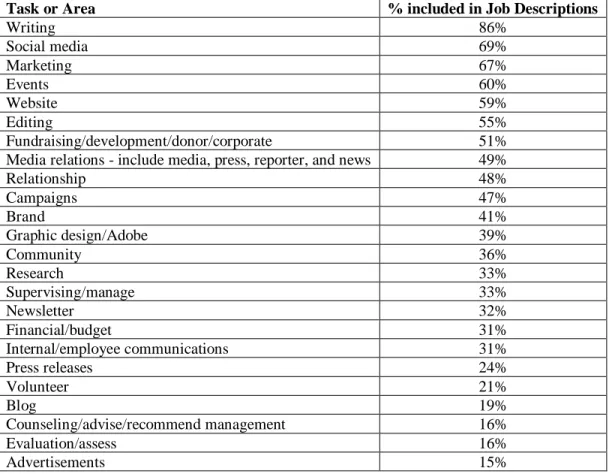
Coders searched job descriptions for 24 tasks. The most-prominent tasks were writing and social media. Marketing and events were the next most common tasks. The next two popular tasks were website and editing both of which are commonly included in public relations.
Fundraising is the seventh-most-common task chosen in the job descriptions. The next four common tasks are all related to public relations. Volunteer management also appeared in quite a few descriptions but was not as prominent. (See Table 2 for exact percentages.)
Table 2: Tasks within Job Descriptions (N= 419)
Task or Area % included in Job Descriptions
Writing 86%
Social media 69%
Marketing 67%
Events 60%
Website 59%
Editing 55%
Fundraising/development/donor/corporate 51% Media relations - include media, press, reporter, and news 49%
Relationship 48%
Campaigns 47%
Brand 41%
Graphic design/Adobe 39%
Community 36%
Research 33%
Supervising/manage 33%
Newsletter 32%
Financial/budget 31%
Internal/employee communications 31%
Press releases 24%
Volunteer 21%
Blog 19%
Counseling/advise/recommend management 16%
Evaluation/assess 16%
Advertisements 15%
Types of Nonprofits
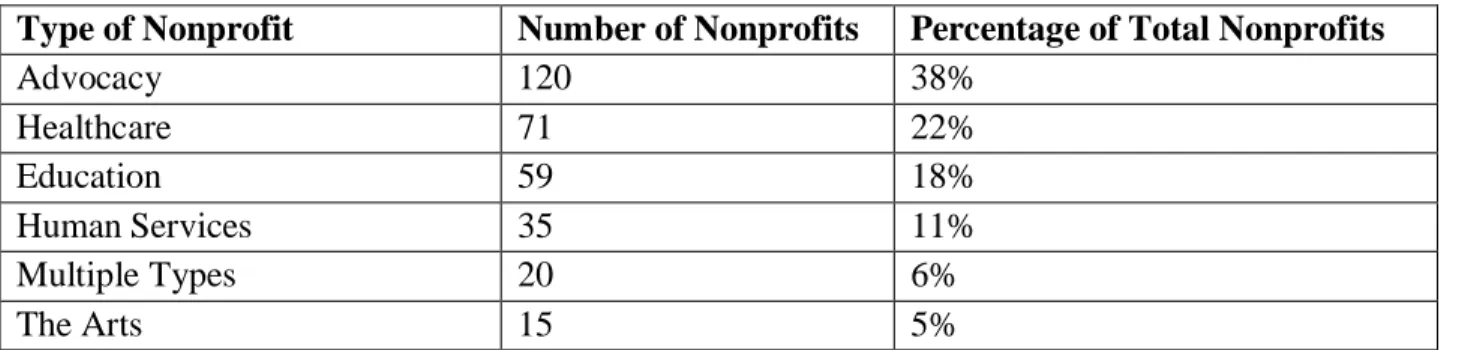
There were six types of nonprofits identified in these job descriptions: healthcare, education, advocacy, human services, the arts, and multiple types (See Table 3). Multiple-type nonprofits are organizations that focus on more than one nonprofit category. These include foundations and organizations like United Way and The Salvation Army, which may include healthcare, human services, and education, for example. Types were decided by how the
nonprofit self-identified. If they did not self-identify, then the coders evaluated the description to decide where it best fit. More than one-third of the job descriptions were from advocacy
organizations, which include nonprofits that focus on advocating for others or promoting a need not addressed in other category types. Healthcare, which included nonprofit hospitals and other medical centers, was the focus of almost one-quarter of the sampled job descriptions. It is distinct from human services, which includes organizations addressing basic human needs such as housing and food, and, similar to the arts, represented a small percentage of the sample. About one-fifth of the job descriptions were for nonprofit education organizations.
Table 3: Types of Nonprofits
Type of Nonprofit Number of Nonprofits Percentage of Total Nonprofits
Advocacy 120 38%
Healthcare 71 22%
Education 59 18%
Human Services 35 11%
Multiple Types 20 6%
The Arts 15 5%
Managerial versus Technician Roles
Coders were asked to identify if the job fit into the category of only technician, mix of technician and management, or only management. There were 415 job descriptions that were coded as fitting into one of these three categories. Management duties can include supervising staff, controlling budgets, creating communication strategy, advising senior management and other management characteristics. All types of nonprofits contained more job descriptions that fit within the mixed category than in either only technician or only management categories. See Table 4 below. This indicates that public relations practitioners are typically doing a mix of management and technician work.
Table 4: Percentages of Management and Technician Positions
Type Percentage (%) n
A mix of technician and managerial
45.30% 188
Only technician 40.24% 167
Only managerial 14.46% 60
Job descriptions that included decision-making responsibilities consisting of management-only and management-technician-mix were further coded for the type of
Table 5: Managerial Categories (Fieseler et al., 2015)
Category n %
Coaching - advising including advising management and coaching employees
102 42%
Liaison – communication with stakeholders; includes media relations and donor relations
84 35%
Diagnosis – makes primary decisions about communication strategy and policy
53 22%
Execution – crisis management or internal issues 2 1%
Total 241 100%
Job descriptions coded as coaching included such activities as coaching employees with how to answer media questions or advising management about communication decisions. Those coded as liaison dealt with stakeholders including media, donors, or the board of directors for the organization. The job descriptions coded as diagnosis included responsibilities of deciding communication strategy as well as what should be included within internal communication policy. Those coded as execution included handling crisis situations as well as any other communication problems that might arise.
A cross-tabulation of the management categories and type of nonprofit showed that the liaison management style was the most prevalent in healthcare with 45% of the postings. Coaching had the most job descriptions in education with 46% of postings. Advocacy was closely divided among coaching, liaison, and diagnosis. Human services was closely divided as well, but the liaison position was the most common with 39%. Diagnosis was the management style most prevalent for both the arts and multiple type nonprofits. This test is approaching significance with a p-value of 0.06. See Table 6 below for complete table.
There were 49 instances where the number of people being managed was listed in the job description. Though a public relations practitioner does not need to manage others to be
involves employee supervision. In these cases, the majority ranged from 1-4 supervised
employees, though the total range was between 0-12 employees. These instances made it easier to determine the scope of the managerial duties and ensured that the position was included within the coaching management type.
Table 6: Cross Tabulation of Type of Nonprofit and Type of Management Healthcare Education Advocacy Human
Services
The Arts
Multiple Types
Total
Diagnosis 16 16 30 8 7 9 86
Coaching 23 27 47 13 3 6 119
Liaison 32 14 43 14 5 5 113
Execution 0 2 0 0 0 0 2
Total 71 59 120 35 15 20 320
Chapter 4: Discussion
The results of this study provide data that can add a new dimension to public relations and nonprofit role theories by analyzing nonprofit public relations job descriptions. Though this study situated itself into nonprofit public relations, there are greater implications for this type of research. The roles of public relations practitioners and their management qualities have been studied by surveys and focus groups for decades, but this study introduces a way to compare the results of previous studies and add a new depth to the understanding of how a public relations practitioner’s responsibilities fit within their department and even their organization. This study is just the start of how a content analysis of public relations job descriptions can contribute to the profession and academic literature.
After collecting the data and analyzing the results, the three research questions were consulted again. Each of the research questions is listed again for reference followed by an explanation of how the data answered them.
RQ1 – What responsibilities are included in job descriptions for nonprofit public relations practitioners?
establish a preconceived notion of what should be included in the following text. Looking at the results, Marketing and Development are extremely important to nonprofit communications departments. It also may confirm Marketing and Development (also called fundraising) encroachment, which is when one function begins to overrun or dominate over the initial function (Kelly, 1994). While more research would need to be conducted on these specific variables, the data collected in this study could provide an alternative way of perceiving marketing and fundraising encroachment.
Additionally, the titles of Digital Media and Programs were not originally words chosen from previous research to be options for titles, but since these words were so prominent in the assessed job descriptions, they were made into their own categories. This finding could be because of the age of the textbooks and research studies used to identify these responsibilities. Digital Media could have been so frequent because of the shift to the increased use of online technology.
determine if more tasks could be added to the current list of 24 to get an even better understanding of the responsibilities important to the communication departments.
Writing and Social Media were the tasks that appeared most often, as expected.
Marketing and Events were the next most frequent. Though both marketing and events functions could fall in the communication realm, they are not necessarily direct public relations tasks. These are examples of how public relations might be combining with other functions.
Practitioners may also see how many more times marketing is mentioned above public relations to help them gauge the job’s focus.
Fundraising was the seventh-most-common task in job descriptions. This shows, along with the appearance of fundraising or development in the title of the posting, that fundraising is a huge part of communication jobs in many nonprofits. This study does not specifically look at the relationship between the two departments, but instead confirms the combination can exist. The events within the job descriptions could be related to this fundraising role as well. This emphasis on fundraising should make communication directors aware of the importance of the
communication and fundraising personnel working well together if they are different departments.
This is important for potential employees, nonprofit employers, educators, and academic researchers to take note. This study confirms that a plethora of tasks are being performed by those in public relations roles. It, however, did not study the motivation behind having so many roles within the communications department, which can be the subject of subsequent research. RQ2 – How do the expectations identified in the job descriptions for public relations practitioners vary by organization?
The type of nonprofit is extremely helpful in analyzing the rest of the study. Despite low intercoder reliability, it appears that the type of nonprofit might influence the management or technician qualities of the job. There is a statistical significance with the words that appear in the title of the nonprofit and the type of nonprofit. Education and advocacy organizations have high percentages of titles with the word “development” in the communication job descriptions. Advocacy also contained the majority of “President or executive director” positions. It is important to note that advocacy organizations were the most frequent with the collected job descriptions. Ideally, another coding training would have been conducted to ensure intercoder reliability for this variable.
Fieseler et al.’s (2015) categories of diagnosis, coaching, liaison, and execution were also quite intriguing when divided by the type of organization. According to the results gathered, the type of organization relates with the type of management responsibilities. The execution type of management only appeared in two job descriptions and both were in education nonprofits. More data would need to be collected for further analysis, but if this trend continued it could mean that either educational institutions are better prepared to deal with communication problems,
both the arts and multiple type nonprofits. It could be that since multiple type nonprofits are managing a variety of causes, they need the management type that will direct and ensure communication is clear for the organization.
RQ3 – What evidence of managerial versus technician roles within the organization exists within the job descriptions?
The management and technician dichotomy was explored. There were more job
descriptions that fit within the mixed management-technician category than the only-technician or only-management categories. This was one of the variables that did not pass intercoder reliability. After acknowledging that fact, looking at the number of only managerial and only technician jobs makes it obvious that there are more technician-only jobs being advertised by far than management-only jobs. What cannot be determined by this study is whether or not these positions are adding the management element into the jobs more or less than was previously done. This study’s finding of managerial characteristics in 60% of the job descriptions supports prior research that emphasized the importance of the managerial role.
Though the intercoder reliability should have been higher for the type of organization, managerial tendencies, and mix of management, the type of management did meet the reliability baseline. Even if only looking at the type of management being employed, those results are quite insightful showing how these positions structure the managerial responsibilities of the public relations practitioners. Those jobs with managerial responsibilities were studied with Fieseler et al.’s (2015) four categories, and among those four, coaching and liaison were most prevalent with execution being used very little.
Positions that manage others and advise management would fit into the coaching
media relations. These two responsibilities are basic public relations needs that have always been prioritized. The liaison refers to those dealing with outside stakeholders. The fact that the liaison position was the second highest is congruent with the task research listed above since both development/fundraising and media relations were high on the task list.
The most-prevalent types of management coaching and liaison show how important these are to public relations practitioners. More emphasis on these areas should help practitioners fine-tune these skills. Cross-trainings could also be conducted to equip more people to interact with media and donors, for example. Knowing that these two types of management are the most common should be used by educators to ensure students not only see these responsibilities as management but possess the skill-set to do well in these areas.
The lower number of diagnosis types of management within the job descriptions could indicate a lack of decision-making expectations of the positions being advertised and should be researched more. It also shows that dealing with stakeholders and coaching other employees are seen as more valuable than communication policy or internal communication.
Execution, which would include identifying and solving communication problems as well as crisis management, was only found in two of the job descriptions. Execution may not be included in the job descriptions because the organizations do not want potential employees thinking that their organization will be riddled with problems. This may not be the best approach, however, because practitioners could be attracted to a job that is willing to be open and proactive about any potential problems that could occur. Since dealing with crises is necessary,
employees who may become important contributors in their organization. These job descriptions need to be written in a way that not only lists the tasks the practitioner is responsible for, but also so that the practitioner knows what is important within that position whether it be media
relations, cultivating donors, leading strategy, etc. Furthermore, this study illuminates the many tasks that are expected of today’s public relations practitioners. It provides a type of checklist of items to help potential employees to be prepared for their work with nonprofits. It can also be beneficial to the established public relations departments. The head of the departments can evaluate how their departments compare with the results of this study. They can then decide if there is a better organizational strategy to conquer all of the tasks that need to be accomplished. In addition, it could encourage them to evaluate the department using the four management types to ensure that all are present somewhere within their department.
This study was not able to go in depth with many of the variables but rather explored the types of variables that could be studied through the method of content analysis on job
Limitations and Future Research
There are limitations to this study as there are to any exploratory study. The first is that the data were collected for one month out of the year. Though the month was determined to be one which would yield a sizable number of job descriptions (Smith, 2012) and was expected to be representative, a larger time period could potentially offer different results. Looking at other months would also be representative to nonprofits with fiscal years ending in June or other months.
Additionally, not all job descriptions included the same information. Some job
descriptions are a paragraph long while others are pages long. Even though this variation could be seen as a problem, it is important to remember that job description is what the organization is presenting in order to find potential employees. These job descriptions are how the companies are presenting themselves and how they are planning to attract employees who will then be the future of those companies.
Another limitation could be using only four job search engines. These specific search engines were chosen based on research (e.g. – ID the research), but there could be jobs that were not included within these search engines.
difficult to categorize them into one singular type. When intercoder reliability was not being reached, categories were condensed. These new categories were decided upon after discussions about how certain nonprofits would fit into the categories. There was a time constraint on this project, so more robust intercoder reliability could have been achieved with another coding training.
This exploratory study has opened up the possibility for additional research, not only regarding nonprofit roles, but also by employing content analysis of job descriptions as a way to explore what is expected of public relations practitioners in nonprofit, public, and corporate sectors. A similar study could be conducted using more data gathered from these or other search engines and data from multiple months to evaluate whether or not the type of job descriptions vary by month.
A word frequencyanalysis could be run on the job titles for key terms such as “manager” or “supervisor” to determine how often organizations are utilizing these specific titles. Many of the job titles contained words like “manager” or “supervisor,” but the positions did not require the practitioner manage other people and did not fit into Fieseler et al.’s (2015) four management categories. A word frequency analysis could show how prevalent these terms are. A word
frequency analysis could also be conducted on the job descriptions themselves searching for a number of items like education, salary, experience, etc.
A detailed qualitative study on the communication management power and the role of the communication department within an organization could be studied using these data as well. The job descriptions that were classified as coaching or diagnosis would be an especially good
would work. Not all job descriptions included this information, but it did appear in many of them.
Fundraising and public relations have been studied in detail, but this study revealed that fundraising or development is oftentimes included in the communication role. A more-detailed look into how these two functions coexist could benefit nonprofits and practitioners alike. Though fundraising has been studied within the nonprofit realm (e.g., Kelly, 1991; Kelly, 1994; Hall, 2002), marketing encroachment in nonprofits has not been studied as vigorously. Even though marketing and public relations are generally considered separate functions, it appears through this study that since they are both considered communication functions, they are often grouped together. One way of studying the two departments’ relationships with public relations would be to examine to whom the position would directly report. Over 50% of the job
descriptions in this sample contained that information. It can also be useful in evaluating management roles and responsibility.
Another beneficial study would be to add qualitative analysis like interviews or focus groups to learn more about the tasks and management responsibilities of nonprofit public relations practitioners. Interviews could be conducted with both the practitioner and the person to whom the practitioner reports. These interviews could then be compared to evaluate the similarities and differences of the perceptions of the tasks of the job using coorientation theory (Broom, 1977; Springston & Keyton, 2001). This research could add a deeper context to the information which would be even more beneficial to practitioners and educators.
job tasks included in the standardized examples and compare them to how the majority of job descriptions are structured and the information included. It would show how closely nonprofit communication departments are staying with the standardized examples and what differs. The items that differ could show that those nonprofits want to emphasize certain elements above and beyond the necessary information.
Conclusion
This exploratory study provided evidence that nonprofit public relations practitioners are responsible for a variety of types of tasks, many of which have not been classified as public relations. Marketing and fundraising were identified as potentially encroaching upon public relations or at least being combined with this role. The type of nonprofit is correlated to a variety of the elements within a public relations job description. This study also identified how
APPENDIX A
UPDATED CONTENT ANALYSIS OF NONPROFIT PUBLIC RELATIONS JOB DESCRIPTIONS CODING INSTRUCTIONS
What are we looking for?
We are collecting many of the items found within the job descriptions that nonprofits are posting. Background organizational information, information about the job, and task information will all be included in a Qualtrics survey. Each job description will require a separate survey.
You are requested to code each job description for information about the organization, position title, position description, qualifications, and position tasks, as well as for background
information including the type of nonprofit organization. You will also record the web address of the organization, the date that the job was posted on the site and the title of the contact person. All of this information is listed and described in detail below.
The key word that was used for the search in the job search engines was “nonprofit” combined with “communications.” The search engines pulled all job listings which included the word communication anywhere within the entire job description. Job listings were saved if they involved public relations, communication, marketing, development, or fundraising. Titles will not necessarily be “public relations” but the job itself may encompass multiple public relations tasks. Volunteer and part-time positions will not be included. Positions at for-profit agencies (even those who specifically do work for nonprofits) will also not be included. Jobs posted through job recruiters like Careers in Nonprofits will be accepted only if the position is a
nonprofit. Include the title of the recruiter as the organization name and be sure to check the box to say it is a job recruiter.
Because not all of the job search engines have advanced settings, some job descriptions may be included that are not nonprofit. Job descriptions that do not contain public relations tasks should be discarded as well as any agency, government, or for-profit jobs. If you are unsure whether or not an organization is a nonprofit, do a Google search for the organization’s website. This information should be easily found there. If the organization is unclear about its nonprofit status, check this IRS website:
https://apps.irs.gov/app/eos/mainSearch.do?mainSearchChoice=pub78&dispatchMethod=selectS earch. It’s a bit cumbersome so use that as a last resort. While coding, if certain information is not available, choose n/a. We want to discover how nonprofits are presenting jobs, and if there is certain information that appears in all or does not appear in a majority of job descriptions, that could be intentional. You should not consult outside sources other than to determine whether or not an organization is a nonprofit.
Be sure to include the full name of the organization and position title to ensure any duplicates can be eliminated. Type these exactly as they appear. If you encounter duplicates that come from separate job search engines, code them as separate.
managerial elements. Words like strategy and advisor are good indicators that these tasks or areas are managerial.
In addition to looking for the tasks within the job descriptions, the job descriptions will be evaluated to decide whether or not they include managerial aspects. If the job title contains director or leader, that is a good indication that the position has decision making capabilities. Fieseler et al.’s (2015) four subcategories of the managerial role including diagnosis, coaching, liaison, and execution can also be used to decide whether or not a position should be categorized within the managerial role.
A technician’s role is to provide the managers with the appropriate materials to carry out their work. When deciding whether or not a job is management or technician, look at the wording. Managing, leading, overseeing are words for management. Technician would be a lower level job that does not oversee others. Technicians also do not typically influence decision making. Below are each of the questions with details on how to answer each. If you have any other questions that are not answered within these, please ask.
Intercoder Reliability
Intercoder reliability is imperative. During training, 5% of the data will be tested for intercoder reliability. Changes will be made if needed and then 5% more will be checked for intercoder reliability. Recal3, which is described by Deen Freelon on his website, dfreelon.org, will be used to calculate intercoder reliability. An intercoder reliability percentage of 80% will be the goal. Most of the information being coded is whether or not certain words appear in the job
Coding
An Exploratory Study into Nonprofit Communication - New Introductory Questions
Q1 Please select your name. Jennifer Harker (1) Jordan Morehouse (2) Rachel McMahan (3) Mary Lindsaye Boyd (4)
Q2 Type the job posting unique identifier. This will be the title of the document and will include the search engine, the date and the number. Format: number within census_source_number within source_date. For example, it will look like Monster_Jan1_1
Q3 Is this job description valid? To answer this question, all of the following statements must be true: 1) This organization is a nonprofit. To determine whether or not the organization is a nonprofit, search in their website for the term nonprofit and look in the boilerplate of press releases. The about section of the website could also be consulted. If the website does not include this information, assume the organization is not a nonprofit.
AND 2) This job position is a full-time, paid position (and not volunteer, part-time, or an internship)
AND 3) This job position involves communication. Yes (1)
No (2)
If there are job descriptions that are incomplete or not viewable, the job description should be coded as invalid. You should not search for the job description.
Condition: No Is Selected. Skip To: End of Survey. Organization Information
Q4 First, you will gather some organizational information.
Q5 Type the full name of the organization. Copy and paste from the job description, if possible. Leave off any inc, or llc suffixes.
Q6 Was this job posted by a third-party job recruiter? (For example, Careers in Nonprofits is a job recruiter.)
Yes (1) No (2)
Alabama (1) Alaska (2) Arizona (3) Arkansas (4) California (5) Colorado (6) Connecticut (7) Delaware (8) Florida (9) Georgia (10) Hawaii (11) Idaho (12) Illinois (13) Indiana (14) Iowa (15) Kansas (16) Kentucky (17) Louisiana (18)
Maine (19) Maryland (20) Massachusetts (21) Michigan (22) Minnesota (23) Mississippi (24) Missouri (25) Montana (26) Nebraska (27) Nevada (28)
New Hampshire (29) New Jersey (30) New Mexico (31) New York (32) North Carolina (33) North Dakota (34) Ohio (35)
Oklahoma (36)
Oregon (37) Pennsylvania (38) Rhode Island (39) South Carolina (40) South Dakota (41) Tennessee (42) Texas (43) Utah (44) Vermont (45) Virginia (46) Washington (47) West Virginia (48) Wisconsin (49) Wyoming (50) District of Columbia
(51)
Q8 Is the web address of the organization included in the job description? You no longer need to key in the web address. Just address whether or not it is included on the job description.
Yes (1) No (2)
Q9 Select the time period in which the date posted fits. Use the date listed on the job description. If not included on the job description, use given date which will be included in the name of the file. Make sure you are using the posted date, not the date the application is due.
Before Jan. 1 (1) Jan. 1-7 (2) Jan. 8-14 (3) Jan. 15-21 (4) Jan. 22-28 (5) Jan. 29-31 (6)
Q11 Select one of the following that best describes the type of nonprofit. Choose which type of organization it is based on information in the job description. You should not have to search out this information from outside sources.
Healthcare (This includes hospitals or other facilities that administer healthcare) (1)
Education (This includes schools, colleges, universities, tutoring centers, etc. This category deals with all types of education) (2)
Advocacy (This includes nonprofits that focus on advocating for others like adoption services, minority organizations, organizations that are specifically promoting a need or information that does not include the other categories) (3)
Human Services (This includes the basic human needs of housing and food which would include homeless shelters, food pantries, organizations that help with abuse, rehabilitation centers, etc) (4)
The Arts (This includes music, museums, dance, art galleries, etc) (5)
Multiple Types (If the organization has multiple main focuses that are of equal importance and span, choose this) (6)
Job Information
Q12 Now, you are going to review the position details.
Q13 Type the position title. Copy and paste from the job description, if possible.
Administrative (1) Assistant (2) Brand (3)
Communications (4) Copy Writer (5) Development (6) Donor Relations (7) Engagement (8)
Events (9) Executive
Director/President/CE O (10)
Fundraising (11) Marketing (12) Media Relations (13) Outreach (14)
Promotions (15) Public Relations (16) Research (17)
Social Media (18) Other: Please list (19)
___________________
Q15 What is the minimum requirement of education? If education is mentioned at all, it will be assumed it is the minimum.
No minimum requirement (1) High school grad/GED (2) Associate's degree (3) Bachelor's degree (4) Master's degree (5)
Q16 What is the highest preference of education? When two types of education are listed, use one as the minimum and the other as the highest.
High school grad/GED (1) Associate's degree (2) Bachelor's degree (3) Master's degree (4) N/A (5)
Q17 What is the minimum number of years of experience desired as stated on the job
N/A (1) 1 (2) 2 (3) 3 (4) 4 (5) 5 (6) 6 (7) 7 (8)
8 (9) 9 (10) 10 (11) 11 (12) 12 (13) 13 (14) 14 (15) 15 (16)
16 (17) 17 (18) 18 (19) 19 (20) 20 (21)
More than 20 (22)
Q18 What is the minimum salary listed in the job description? If not listed, choose N/A. N/A (1)
Less than $10,000 (2) $10,000 to $19,999 (3) $20,000 to $29,999 (4) $30,000 to $39,999 (5) $40,000 to $49,999 (6) $50,000 to $59,999 (7) $60,000 to $69,999 (8) $70,000 to $79,999 (9) $80,000 to $89,999
(10)
$90,000 to $99,999 (11)
$100,000 to $149,999 (12)
Q19 Does this position include the following areas or tasks? Choose yes or no to each. The position may include more than one area. This information will be found in the description of the job listing. You are looking for these specific words.
Click to write Column 1
Yes (1) No (2)
Advertisements (Ads)
Blog (Blog)
Campaigns (Camp)
Community (Comm)
Counseling/advise/reccommnd
management (Manag)
Editing (Edit)
Evaluation/assess (Eval)
Events (Event)
Financial/budget (Finan)
Fundraising/development/donor/corporate
(Fund)
Graphic design/Adobe (Design)
Internal/employee communications
(Intern)
Marketing (Market)
Media relations - include media, press,
reporter, and news (Media)
Press releases (PressR)
Relationship (Relation)
Research (Research)
Social media (SocialMedia)
Supervising/manage (Superv)
Volunteer (Volunt)
Website (Web)
Writing (Writ)
Managerial role
Q24 Is this position a management or technician position?
Choose management if the position has ANY managerial duties. Technician would be someone who is only doing tasks assigned with no decision-making abilities.
If this position manages other people, it is management. If it does not, does it fit into one of these types?
Diagnosis – This role makes the primary decisions. This role decides on strategies and makes decisions for communication for the organization.
Coaching – This role refers to any type of advising. This would include being the advocate for the public relations department and advising management with what to do. It also includes coaching employees for media inquiries and management of the employees in general. Liaison – This role includes all media relations and communication with stakeholders. This would also include donor relations.
Execution – This role handles any problems including crisis management or internal issues. Management (1)
Technician (2)