EXPOSURE TO ZOONOTIC STAPHYLOCOCCUS AUREUS AMONG INDUSTRIAL HOG OPERATION WORKERS AND THEIR HOUSEHOLD CONTACTS IN NORTH CAROLINA,
AND DISSEMINATION INTO THE HOUSEHOLD ENVIRONMENT
Maya Nadimpalli
A dissertation submitted to the faculty at the University of North Carolina at Chapel Hill in partial fulfillment of the requirements for the degree of Doctor of Philosophy in the Department of
Environmental Sciences and Engineering in the Gillings School of Global Public Health.
Chapel Hill 2015
Approved by: Jill Stewart
Christopher Heaney Steve Wing
iii ABSTRACT
Maya Nadimpalli: Exposure to zoonotic Staphylococcus aureus among industrial hog operation workers and their household contacts in North Carolina, and dissemination into the household
environment
(Under the direction of Jill Stewart)
Industrialized systems of food animal production are a potential source of exposure to antibiotic-resistant Staphylococcus aureus that can be transmitted between animals and
humans. In the United States, there is little information regarding occurrence and persistence of exposure to S. aureus among healthy individuals who have frequent contact with intensively-raised livestock, or about occupational activities that may be associated with exposure, health implications of exposure, or dissemination of these bacteria into the household environment. This dissertation sought to address these research gaps. In Chapter 2, I describe findings from a 14-day, repeated measures pilot study in which we observed persistent nasal carriage with zoonotic S. aureus among industrial hog operation workers, even during time away from work. In Chapters 3 and 4, I describe findings from a four month repeated-measures study of workers and their household members, in which we observed that (1) infrequent face mask use was a predictor of workers’ nasal carriage with zoonotic S. aureus, (2) presence of zoonotic S. aureus in workers’ noses may be associated with recently reported symptoms of skin and soft tissue infection, (3) workers in North Carolina frequently carry a S. aureus strain type commonly detected in Asia (CC9), and (4) zoonotic S. aureus may be shared between workers and their household members. In Chapter 5, I describe findings from a household environmental
iv
v
vi
ACKNOWLEDGMENTS
I owe special thanks to my mentors, peers, friends, and family who have made this work possible. I have been privileged to work with and learn from Drs. Jill Stewart and Chris Heaney, who have been great mentors and role models during the course of my graduate work. Thank you to Dr. Steve Wing, Dr. Mike Aitken, and Dr. Rebecca Fry for your insightful comments and input throughout this research process. Much of my work over the past several years has been conducted along with Jessica Rinsky (UNC Epidemiology), who has taught me so much about the merits of interdisciplinary collaboration. I have very much enjoyed working with and learning from members of REACH, in particular Devon Hall, Sherri Basnight, Norma M., and Martha P. Some of my best memories over the past few years have been in and around the REACH office.
I owe many of my accomplishments to members of our lab group, in particular Sarah Hatcher, Betsy Pierce, Sarah Rhodes, and Kevin Myers. Betsy led sample processing efforts for the four-month repeated measures study described in Chapters 3 and 4, assisted with sample processing for the 14-day study described in Chapter 2, and assisted with the S. aureus survival study described in Appendix A. Sarah Rhodes was instrumental in organizing and conducting the spatial analyses described in Chapter 5. Numerous undergraduates have assisted with molecular and phenotypic analyses over the past few years, including Thao Le, Sharon Jiang, and Connor Ifkovits. Dr. Nora Pisanic (Johns Hopkins) has also been a great collaborator.
vii
TABLE OF CONTENTS
LIST OF TABLES ... xii
LIST OF FIGURES ... xiv
LIST OF ABBREVIATIONS ... xvi
CHAPTER ONE: INTRODUCTION AND LITERATURE REVIEW... 1
INTRODUCTION ... 1
RESEARCH OBJECTIVES AND RATIONALE ... 3
LITERATURE REVIEW ... 7
Industrial food animal production in the United States ... 7
Staphylococcus aureus ... 10
Routes for exposure to S. aureus associated with food animal production ... 19
Surveillance studies among food animal production workers ... 23
Public health significance ... 26
CHAPTER TWO: PERSISTENCE OF LIVESTOCK-ASSOCIATED ANTIBIOTIC-RESISTANT STAPHYLOCOCCUS AUREUS AMONG INDUSTRIAL HOG OPERATION WORKERS IN NORTH CAROLINA OVER 14 DAYS ... 28
SUMMARY ... 28
INTRODUCTION ... 29
METHODS... 31
Data Collection ... 31
Detection of S. aureus and MRSA ... 32
Antibiotic susceptibility testing ... 33
viii
Assessment of livestock-associated S. aureus ... 34
Statistical analysis ... 35
RESULTS ... 36
Participant characteristics ... 36
Occurrence of S. aureus, MRSA, and MDRSA ... 36
Antibiotic resistance phenotypes ... 37
Distribution of S. aureus clonal complexes ... 37
Livestock-associated S. aureus, MRSA, MDRSA ... 37
DISCUSSION ... 38
TABLES ... 44
FIGURES ... 47
CHAPTER THREE: NASAL CARRIAGE OF LIVESTOCK- ASSOCIATED, ANTIBIOTIC-RESISTANT STAPHYLOCOCCUS AUREUS AND SYMPTOMS OF SKIN AND SOFT TISSUE INFECTION AMONG INDUSTRIAL HOG OPERATION WORKERS AND HOUSEHOLD CONTACTS IN NORTH CAROLINA ... 50
SUMMARY ... 50
INTRODUCTION ... 51
MATERIALS AND METHODS ... 52
Data collection ... 52
Detection of S. aureus and MRSA ... 53
Assessment of antibiotic susceptibility ... 54
Molecular analysis ... 55
Indicators of livestock association ... 55
Definition of infection outcome ... 55
Statistical analysis ... 56
ix
Participant and household characteristics ... 58
Prevalence of S. aureus, MRSA, and MDRSA ... 59
Antibiotic resistance patterns... 60
Distribution of spa types and evidence of household transmission ... 60
Occupational and environmental risk factors for nasal carriage ... 60
Prevalence of and risk factors for reported symptoms of SSTI ... 61
DISCUSSION ... 64
TABLES ... 68
CHAPTER FOUR: DYNAMICS OF LIVESTOCK-ASSOCIATED, ANTIBIOTIC-RESISTANT STAPHYLOCOCCUS AUREUS NASAL CARRIAGE AMONG INDUSTRIAL HOG OPERATION WORKERS AND HOUSEHOLD CONTACTS IN NORTH CAROLINA OVER FOUR MONTHS ... 72
SUMMARY ... 72
INTRODUCTION ... 73
MATERIALS AND METHODS ... 75
Data Collection ... 75
Detection of S. aureus and MRSA ... 76
Assessment of antibiotic susceptibility ... 77
Molecular analysis ... 78
Indicators of livestock association ... 78
Statistical Analysis ... 78
RESULTS ... 82
Study population ... 82
Persistence of nasal carriage with S. aureus, MRSA, MDRSA, and S. aureus with indicators of livestock association ... 83
Quantitative differences in S. aureus recovery by nasal carriage state ... 84
x
Within-worker effects of occupational exposures on within-worker
nasal carriage of S. aureus and related outcomes ... 86
Symptoms of skin and soft tissue infection and associations with S. aureus nasal carriage ... 87
Within-household transmission of S. aureus spa types over the four month period ... 88
DISCUSSION ... 90
TABLES ... 99
FIGURES ... 104
CHAPTER FIVE: RECOVERY OF ANTIBIOTIC-RESISTANT STAPHYLOCOCCUS AUREUS FROM INDUSTRIAL HOG OPERATION WORKERS’ HOUSEHOLDS ... 108
SUMMARY ... 108
INTRODUCTION ... 109
MATERIALS AND METHODS ... 110
Study design ... 110
Data collection ... 111
Identification of S. aureus and MRSA ... 112
Antibiotic Susceptibility ... 113
Molecular analyses ... 113
Indicators of livestock association ... 113
Determination of household-level relative exposure to industrial hog operations ... 114
Statistical analysis ... 115
RESULTS ... 118
Prevalence of S. aureus, MRSA, MDRSA, and related outcomes in households ... 118
xi
Concordance between S. aureus spa types from the household
environment and participants’ noses ... 120
Other risk factors for presence of S. aureus and related outcomes in the household environment ... 121
DISCUSSION ... 121
TABLES ... 127
FIGURES ... 129
CHAPTER SIX: CONCLUSION ... 133
APPENDIX A: CHAPTER 2 SUPPLEMENTARY MATERIAL ... 138
APPENDIX B: CHAPTER 3 SUPPLEMENTARY MATERIAL ... 147
APPENDIX C: CHAPTER 4 SUPPLEMENTARY MATERIAL ... 153
APPENDIX D: CHAPTER 5 SUPPLEMENTARY MATERIAL ... 157
xii
LIST OF TABLES
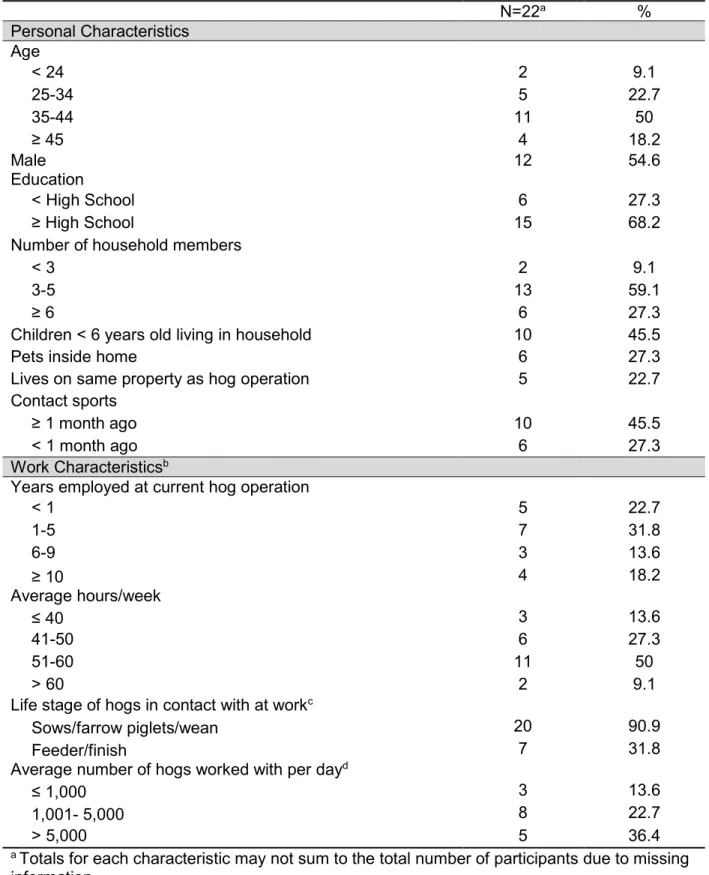
Table 2.1. Distribution of characteristics among 22 industrial hog operation
workers, North Carolina. ... 44
Table 2.2. Overall occurrence of nasal carriage, mean daily prevalence, and carriage states with various S. aureus-related outcomes among 22
industrial hog operation workers, North Carolina. ... 46
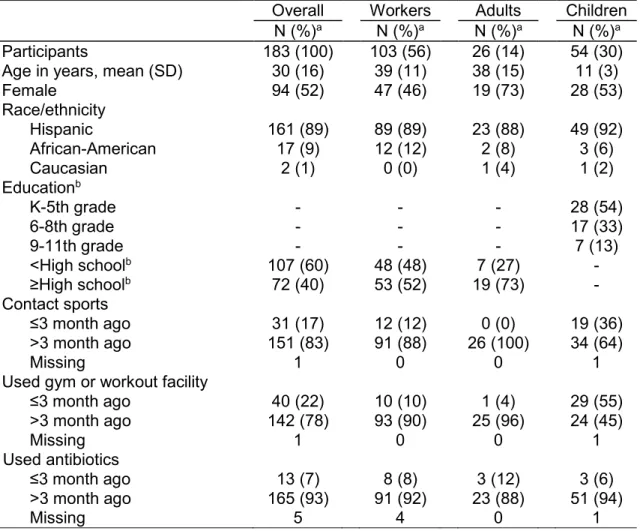
Table 3.1. Baseline characteristics of 183 industrial hog operation workers and household members participating in a cohort study of S. aureus nasal
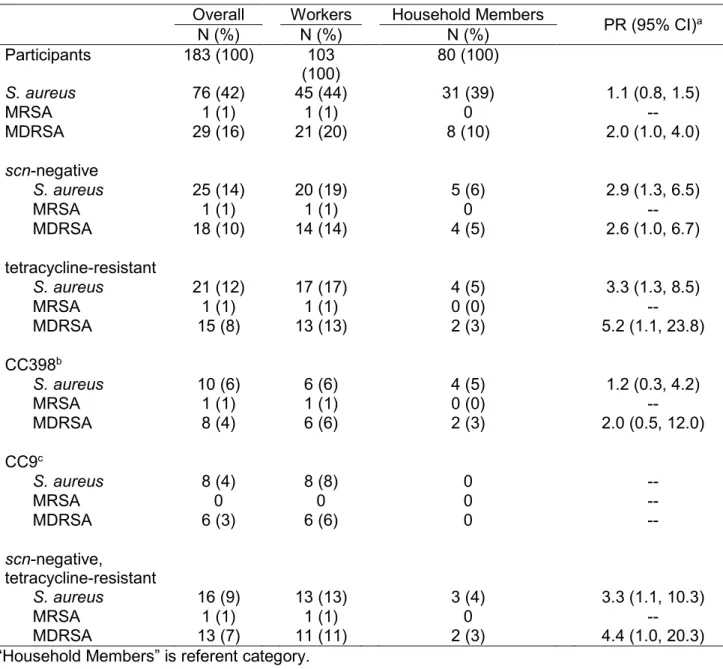
carriage in North Carolina, 2013-2014. ... 68 Table 3.2. Prevalence and distribution of S. aureus nasal carriage patterns
among 183 industrial hog operation workers and household members. ... 69
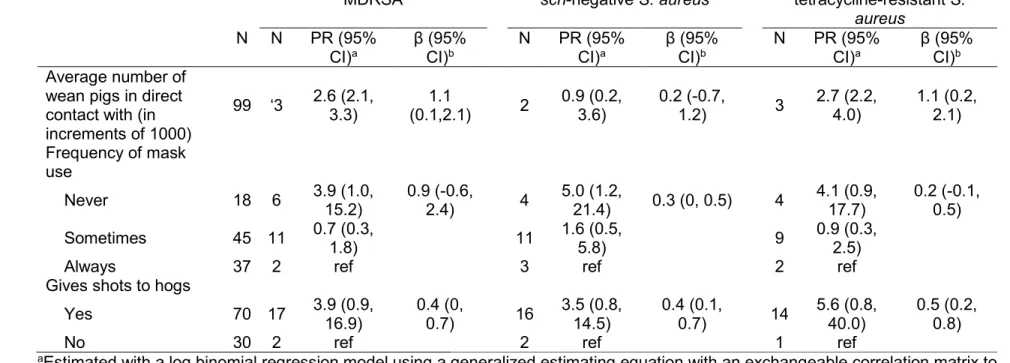
Table 3.3. Associations between reported work activities and nasal carriage of MDRSA, scn-negative S. aureus, and tetracycline-resistant S. aureus
among industrial hog operation workers in North Carolina, 2013-2014. ... 70
Table 4.1. Predictors of persistence of nasal carriage with S. aureus and related outcomes among 98 hog operation workers sampled bi-weekly
over four months in North Carolina, 2013-2014 ... 99
Table 4.2. Predictors of persistence of nasal carriage with S. aureus and related outcomes among 77 household contacts sampled bi-weekly over
four months in North Carolina, 2013-2014. ... 100
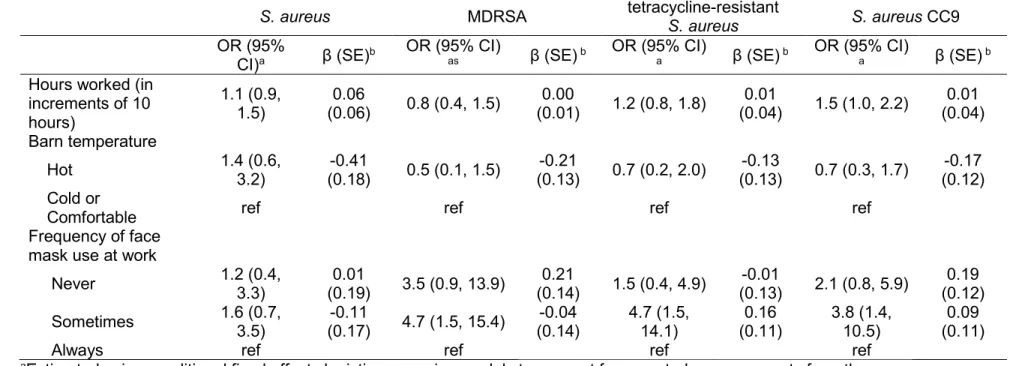
Table 4.3. Associations between average within-worker changes in personal and occupational exposures the week prior to nasal sampling and average within-worker changes in nasal carriage of S. aureus and related outcomes, as measured among 98 industrial hog operation
workers sampled bi-weekly over four months in North Carolina, 2013-2014. ... 101
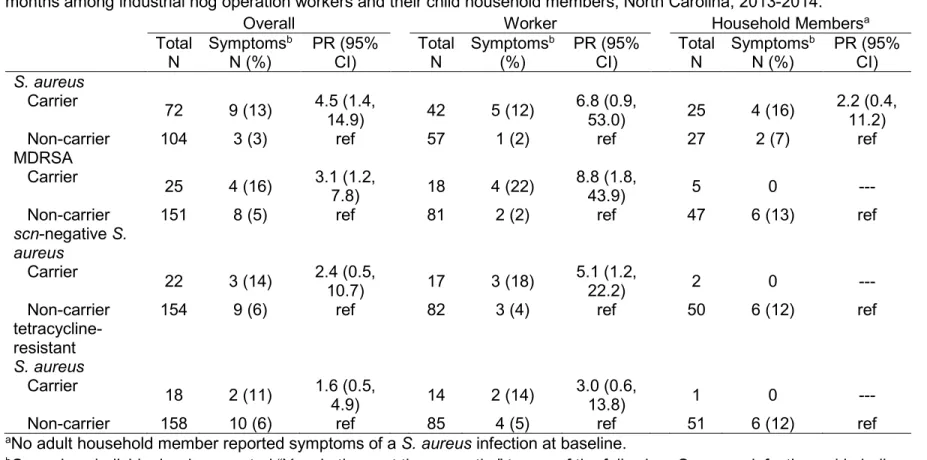
Table 4.4. Associations between persistence of nasal carriage with S. aureus and related outcomes over four months and reported skin and soft tissue infections in the three months prior to baseline among 98 industrial hog operation workers and 77 household contacts in
North Carolina, 2013-2014. ... 102
Table 4.5. Associations between persistence of nasal carriage with S. aureus and related outcomes and ever-reported symptoms of skin and soft tissue over four months among 98 industrial hog operation workers and 77
xiii
Table 5.1. Characteristics of 26 households participating in a household
environmental sampling study in North Carolina, 2014... 127
Table 5.2. Distribution of households and household environmental samples positive for S. aureus and related outcomes in
xiv
LIST OF FIGURES
Figure 2.1. Occurrence of (a) S. aureus, (b) MRSA, and (c) MDRSA among 22 industrial hog operation workers in North Carolina over a
14-day study period. ... 47
Figure 2.2. Distribution of clonal complex and tetracycline resistance among S. aureus isolated from 22 industrial hog operation workers in North Carolina over a 14-day study period, stratified by presence
or absence of the scn gene. ... 48
Figure 2.3. Distribution of clonal complex and tetracycline resistance among MDRSA isolated from 22 industrial hog operation workers in North Carolina over a 14-day study period, stratified by presence or
absence of the scn gene. ... 49
Figure 4.1. Distribution of S. aureus, MRSA, and MDRSA nasal carriage indices among 98 industrial hog operation workers and 77 household
contacts cultured bi-weekly over four months in North Carolina, 2013-2014. ... 104
Figure 4.2. Distribution of nasal carriage indices of S. aureus with indicators of livestock association among 98 industrial hog operation workers and 77 household contacts cultured bi-weekly over four months
in North Carolina, 2013-2014. ... 105
Figure 4.3. Average difference in S. aureus colony forming units (CFU) among persistent and intermittent nasal carriers of S. aureus and related
outcomes relative to non-carriers, 2013-2014. ... 107
Figure 5.1. Proposed role of the household environment in transmission of livestock-associated S. aureus among industrial hog operations, people who work at industrial hog operations, and household members
in regions with a high density of industrial hog operations. ... 129
Figure 5.2. Associations between increases in the interquartile range of households’ environmental exposure to industrial hog operations and the percentage of household environmental surfaces positive for S. aureus
and related outcomes. ... 130
Figure 5.3. Overlap of S. aureus spa types between S. aureus isolates recovered from the household environment and S. aureus isolates recovered from household members’ noses ≤2 weeks prior to
xv
Figure 5.4. Unadjusted associations between household-level carrier indices for S. aureus and related outcomes and percent of household
xvi
LIST OF ABBREVIATIONS
CAFO Confined animal feeding operation CC Clonal complex
CFU Colony forming unit
CoNS Coagulase-negative staphylococci CSA CHROMagar™ Staph aureus
MDRSA Multidrug-resistant Staphylococcus aureus MLST Multilocus sequence typing
MLVA Multilocus variable number tandem repeat analysis MRSA Methicillin-resistant Staphylococcus aureus
MSSA Methicillin-susceptible Staphylococcus aureus PBP Penicillin binding protein
PCR Polymerase chain reaction PFGE Pulse-field gel electrophoresis PPE Personal protective equipment
REACH Rural Empowerment for Community Help SCCmec Staphylococcal cassette chromosome mec
ST Sequence type
1
CHAPTER ONE: INTRODUCTION AND LITERATURE REVIEW
INTRODUCTION
Industrialized systems of food animal production are a potential source of exposure to zoonotic bacteria, including bacteria that can be transmitted between animals and humans. Healthy individuals who have frequent contact with industrially-produced livestock, such as industrial hog workers, may be at an increased risk of exposure to zoonotic bacteria and may serve as a bridging population for cross-species exposure, adaptation, and transmission to the community. The bacterium Staphylococcus aureus is a pathogen of clinical and public health significance to which livestock workers may be exposed through their work activities.
Despite recognition of the potential health risks associated with exposure to S. aureus (Tara C. Smith & Pearson, 2011), there is limited surveillance of livestock workers and their household contacts in regions where industrial livestock production is particularly concentrated in the United States, such as in eastern North Carolina. Thus, there is little information regarding occurrence and persistence of exposure to S. aureus among this population, or about
occupational activities that may be associated with exposure, health implications of exposure, or dissemination of these bacteria into the household environment.
2
used findings from this pilot study to inform the design of a four-month, repeated-measures study of nasal carriage of zoonotic S. aureus among a larger cohort of livestock workers as well as their household contacts. Finally, we conducted a cross-sectional household sampling study nested within this four-month study in order to provide insight into the role of the household environment as a reservoir for zoonotic bacteria exposure.
The work was possible by leveraging existing collaborations between investigators at UNC-Chapel Hill and the Rural Empowerment Association for Community Help (REACH), a community-based organization located in eastern North Carolina. Through ongoing community outreach efforts, REACH has earned the trust of industrial livestock workers and their household members, a population that would otherwise be prohibitively difficult for researchers to engage for surveillance studies. This work is timely and important given the limited understanding of the burden of exposure to zoonotic S. aureus among industrial livestock workers and their
3 RESEARCH OBJECTIVES AND RATIONALE
The overall purpose of this research was to improve the knowledge base regarding occurrence and persistence of exposure to antibiotic-resistant S. aureus among livestock workers and their household members in the United States. Specifically, we aimed to improve our understanding of occupational activities that may be associated with exposure, health implications of exposure, and dissemination of these bacteria into the household environment. These goals were achieved through four main research objectives.
Objective 1. To examine the occurrence and persistence of livestock-associated S. aureus
nasal carriage among up to 25 workers at industrial hog production operations before, during, and after at least 24 hours away from work by:
a. Genetically and phenotypically characterizing S. aureus detected on nasal swabs during a 14-day study period,
b. Assessing whether time away from work is associated with changes in livestock-associated S. aureus nasal carriage during this 14-day study period,
c. Assessing whether fixed personal and/or occupational exposures are associated with persistence of nasal carriage,
d. Assessing whether livestock-associated S. aureus nasal carriage is associated with symptoms of infection, if such symptoms are reported.
Rationale
4
linked to an increased risk of infection in clinical settings (Wertheim et al., 2005). Understanding the ability of livestock-associated, antibiotic-resistant S. aureus to persistently colonize the human nose, particularly during time away from work, is therefore essential in determining the magnitude and severity of the public health risk posed by transmission of these bacteria.
Because this research question has never been investigated in the United States, we determined that a pilot study was the most practical way to assess the potential for losses in nasal colonization following short times away from work, before expanding to a larger study.
Objective 2. To examine baseline occurrence of livestock-associated S. aureus nasal carriage
among up to 200 industrial hog operation workers and their household contacts by: a. Examining the baseline prevalence and distribution of S. aureus-related outcomes, including S. aureus with indicators of livestock-association;
b. Assessing whether certain personal and/or occupational exposures are associated with binary and quantitative baseline S. aureus nasal carriage,
c. Assessing whether baseline binary and quantitative S. aureus nasal carriage is
associated with symptoms of recent skin and soft tissue infection among workers and their household contacts, if such symptoms are reported.
Rationale
We designed a four month, repeated-measures study to assess S. aureus nasal carriage among industrial livestock operation workers and household members in response to findings from the 14-day repeated measures study of 22 industrial hog operation workers in North
5
associations between S. aureus nasal carriage and exposures that vary over time (e.g. time away from work) or exposures that remain fixed over time (e.g. personal characteristics). Thus, our results suggested that a study among a larger cohort of workers, for whom S. aureus nasal carriage is quantified rather than evaluated as present vs. absent, may be necessary to
evaluate measures of association between nasal carriage and fixed personal/occupational exposures.
In order to introduce the cohort which participated in the four month longitudinal study and to present our novel evaluation of S. aureus nasal carriage among hog operation workers as a continuous rather than binary outcome, we first chose to evaluate these research questions in the context of the baseline data alone.
Objective 3. To examine persistence of livestock-associated S. aureus nasal carriage among
up to 200 industrial hog operation workers and their household contacts sampled bi-weekly over four months by:
a. Examining the prevalence and distribution of S. aureus-related nasal carriage states (e.g. persistent, intermittent, non-carrier) among workers and their household contacts; b. Assessing differences in bacterial loads between non-carriers, intermittent carriers, and
persistent carriers,
c. Assessing whether typical personal and/or occupational exposures are associated with persistence of nasal carriage,
d. Evaluating whether average within-worker changes in personal and occupational exposures the week prior to nasal sampling are associated with average within-worker changes in nasal carriage of S. aureus and related outcomes over four months;
6 Rationale
At the time of this study’s inception, the temporal dynamics of S. aureus nasal carriage had never before been evaluated among a livestock-exposed cohort of this size in the United States. Four months of follow-up was determined to be sufficient time to capture major changes in occupational exposures (e.g. herd replacements at the hog operation, switching employment to a different hog operation, or ending employment at the hog operation) that could affect nasal carriage of livestock-associated S. aureus. We hypothesized that the higher power afforded by increased sample size, a repeated-measures study design, and evaluation of S. aureus as a continuous outcome would improve our ability to evaluate measures of association between nasal carriage and fixed personal/occupational exposures.
Objective 4. To investigate the household environment as a potential reservoir of
antibiotic-resistant S. aureus with indicators of livestock-association by:
a. Genetically and phenotypically characterizing S. aureus detected on surface samples from a subset of up to 30 households participating in the four-month longitudinal study; b. Evaluating whether households’ relative geographic exposure to these operations is
associated with the percent of household environmental surfaces contaminated with S. aureus and related outcomes; and
c. Examining concordance between S. aureus spa types recovered from the household environment and S. aureus spa types recovered from the noses of household members ≤ two weeks prior to household environmental sampling.
Rationale
Although previous work has shown that S. aureus can persist in the household
7
Investigation of the household environment as a potential reservoir is particularly critical among livestock workers in North Carolina, given pilot data suggesting persistence of nasal carriage occurs even during time away from work (collected for Aim 1), and the density of industrial food animal production facilities (hog, turkey, poultry) in the region where participants in this study lived and worked. Contamination of the household environment could play an important and as of yet uninvestigated role in the transmission dynamics of livestock-associated S. aureus.
LITERATURE REVIEW
Industrialized systems of food animal production are a potential source of exposure to bacterial pathogens, including those that can be transmitted between animals and humans (Chomel et al., 2007). Healthy individuals who have frequent contact with industrially-produced livestock, such as industrial hog and poultry workers, may be at an increased risk of exposure to zoonotic pathogens and may serve as a bridging population for cross-species exposure,
adaptation, and transmission to their households and to the broader community. The bacterium Staphylococcus aureus is a pathogen of clinical and public health significance to which livestock workers may be exposed to through their work activities.
Industrial food animal production in the United States
8
number of animals per hog operation increased by 180%, while the number of chickens per broiler operation increased by 130% (Pew Charitable Trusts, 2008). By raising more animals within a confined space, hog and poultry corporations are able to create “economies of scale,” shorten the time between birth and slaughter, increase their profit margins, and respond to the growing global demand for meat.
Changes in the production process have resulted in changes in the size and composition of the labor force on food animal production operations, as well. As family farms have converted to or been replaced by large, industrial-scale operations, the percent of operations relying on hired farm workers has increased (Martin & Taylor, 2013). However, increases in hired labor have been vastly outpaced by increases in animal inventory. Therefore, despite a higher
number of average employees per farm, workers at industrial food animal production operations in the United States are exposed to a greater number of food animals per capita than ever before.
Antibiotic use in industrial food animal production
9
nontherapeutic purposes by livestock each year is excreted (Chee-Sanford et al., 2009). Industrial food animal production has thus been linked to an increased animal and
environmental reservoir of novel antibiotic-resistant bacterial pathogens that may cause disease in humans (Aarestrup, 1995; Mathew et al., 1999).
Industrial food animal production in North Carolina
Industrial food animal production has grown rapidly in North Carolina in the past few decades, with the state moving from fifteenth (in 1982) to second (in 2007) in hog production nationally, and from fourth to third in poultry production. As of 2007, an estimated 10 million hogs are grown annually on approximately 2,500 hog operations in North Carolina (Census of Agriculture, 2007; Wing et al., 2000). The number of individuals working on hog production operations in North Carolina is difficult to determine, but census data suggest that approximately 6,000 workers are employed at the 938 hog operations that report hired labor (Census of
Agriculture, 2007). North Carolina’s hog CAFOs are concentrated in the southern Piedmont and in the eastern coastal plain of the state, with the highest densities occurring in Duplin and Sampson counties. Together, hog production in these two counties accounts for nearly half of the state’s total production. The hog-to-resident ratio in Duplin County is reported to be one of the highest in the world. Growth in the hog industry has leveled off in the past several years due to a 1997 moratorium on permitting new hog CAFO liquid waste storage lagoons (North
10 Staphylococcus aureus
Staphylococci are ubiquitous, gram-positive cocci that tend to cluster in chains and are capable of surviving under both aerobic and anaerobic conditions. Staphylococci can
asymptomatically colonize the skin, skin glands, and mucous membranes of warm-blooded animals (Crossley & Archer, 1997), but are also opportunistic pathogens that can cause invasive infections. Of at least 32 species of staphylococci, Staphylococcus aureus is the most pathogenic among humans.
The structure of S. aureus and its production of virulence factors and exotoxins are critically related to its fitness as a human pathogen. Like all staphylococci, S. aureus have a thick cell wall composed of peptidoglycan, and several serotypes also have a protective polysaccharide capsule that facilitates adherence to surfaces and evasion of the immune system (Murray et al., 2002). Several strains of S. aureus are capable of producing a variety of exotoxins, including TSST-1 (associated with toxic shock syndrome), exfoliative toxins
(associated with staphylococcal scaled skin syndrome), staphylococcal enterotoxin B (associated with food poisoning), and α toxin, β toxin, and Panton-Valentine leukocidin (all associated with necrotizing pneumonia) (Lowy, 1998). The production of these toxins allows S. aureus to cause a wide range of invasive and potentially lethal infections.
Antibiotic resistance
11
S. aureus can carry resistance genes inserted at other sites on the chromosome, such as on transposons or phages, as well as on circular plasmids (Deurenberg et al., 2007). Resistance genes carried by transposons, phages, and plasmids can encode proteins that disrupt the normal function of antibiotics through a variety of mechanisms, including active efflux of the antibiotic from the cell, elimination or reduction of antibiotic binding to the cell target, enzymatic cleavage or modification of the antibiotic in order to inactivate it, metabolic bypass by the cell of the pathway inhibited by the antibiotic, and overproduction of the antibiotic’s target, among other mechanisms (Mayers et al., 2009). Additionally, S. aureus can develop resistance through random mutation of existing genes. Such mutations require selective pressure to maintain themselves in subsequent generations.
Epidemiology of S. aureus carriage in humans and animals
Humans
12
Nasal carriage of methicillin-resistant strains of S. aureus is far less common than nasal carriage of S. aureus in general. As of 2005, MRSA was estimated to be present in the noses of 1.5% of the US population, though rates were steadily increasing (Gorwitz et al., 2008). Risk factors for MRSA acquisition include hospitalization, use of antibiotics, previous colonization with MRSA, drug use, old age, low socioeconomic status (Charlebois et al., 2002; Gorwitz et al., 2008), imprisonment (Aiello et al., 2006), use of work-out gyms (Kirkland & Adams, 2008), and pig farming (Voss et al., 2005). While hospital-acquired MRSA strains were once predominant in the US, they are largely being replaced by community-acquired strains, particularly in the
hospital setting. Animals
The epidemiology of S. aureus carriage among animals is poorly understood. S. aureus is thought to be a commensal organism of at least pigs and cows, and a transient colonizer of many other domesticated mammals. Among pigs, cross-sectional studies of S. aureus nasal carriage have revealed prevalence estimates between 1-39% (De Neeling et al., 2007; Neela et al., 2009). S. aureus infections among pigs, such as pyemia (microabscesses), are uncommon; the prevalence of pyemia among pigs in Denmark is 0.4% (Nielsen et al., 2009). Among cattle, cross-sectional studies of S. aureus nasal carriage have revealed prevalence estimates
between 0%-28% (Graveland et al., 2010; Weese et al., 2012). Bovine mastitis, often caused by S. aureus, is a common infection among cattle.
13
aureus and MRSA (Baptiste et al., 2005). Humans who work in healthcare settings are more likely to transmit S. aureus, including MRSA, to dogs in their households (Boost et al., 2008). S. aureus survival in the environment
Though warm-blooded animals are its primary reservoir, S. aureus has also been
detected in air (Bassetti et al., 2005), in drinking and waste waters (Lechevallier & Seidler, 1980; Rosenberg-Goldstein, 2010), and in food (Loir et al., 2003). It has been demonstrated that S. aureus can persist in river and sea water for up to two weeks (Tolba et al., 2008), as well as on dry surfaces for days to months (Kramer et al., 2006). S. aureus has also been detected in hog and poultry waste (Dimitracopoulos et al., 1977; Graham et al., 2009). Humans can transmit S. aureus to their surrounding environment through direct contact, shedding of skin cells, aerosol discharge (e.g. sneezing) , and/or gastrointestinal routes (Davis, Iverson, et al., 2012).
Simultaneously, S. aureus in the environment can be transferred to the nose or other colonization sites via the hands (Wertheim et al., 2005). Contamination of hospital and
household environments with S. aureus has been linked to recurrent colonization and infection among susceptible populations (Dancer, 2009; Fritz et al., 2014).
The environmental hardiness of S. aureus is likely related to its ability to withstand desiccation for extended periods of time. Staphylococci are unusually resistant to desiccation (Clements & Foster, 1999). Desiccation tolerance among S. aureus is believed to be regulated by the production of three specific proteins: clpX, sigB and yjbH, which are involved in protein turnover and stress response. Temperature, humidity, the stage of S. aureus growth at the time of exposure to dry conditions (lag phase, log phase, post-exponential growth), and the density of S. aureus cell contamination affect S. aureus survival in the environment (Chaibenjawong & Foster, 2011). Depending on these conditions, culturable S. aureus may survive in the
14
et al., 1997), mattresses (Sexton et al., 2006), blood pressure cuffs (Boyce et al., 1997), and the ambient air (Sexton et al., 2006), among other surfaces. Studies have linked improved cleaning practices with reduced risk of acquiring antibiotic-resistant S. aureus infections in the hospital environment (Dancer, 2009; Rampling et al., 2001). Indeed, stringent infection control practices, including hand and hospital hygiene, are credited for the low rate of hospital-acquired MRSA infections in several Northern European countries (Borg et al., 2014).
The household environment may also play a role in recurrent S. aureus nasal
colonization and skin and soft tissue infection (Davis, Iverson, et al., 2012; Fritz et al., 2014), although the directionality of the exchange of S. aureus between humans and their household environments is often unclear (Milstone, 2014). Some case reports of S. aureus infection indicate successful treatment only after decolonization of household surfaces and/or household pets (Ferreira et al., 2011; Kniehl et al., 2005; Masterton et al., 1995). In the household
environment, S. aureus has been recovered from touch sites (e.g. TV remotes, game
controllers, microwave handles), sites with heavy face and nose contact (e.g. pillows, sheets, towels), and air deposition sites (e.g. top of refrigerator, back of entertainment unit) (Davis, Iverson, et al., 2012). The household environment is thought to serve as reservoir for epidemic S. aureus strains, including USA300 (Uhlemann et al., 2011). There is some evidence that epidemic strains can survive longer in the environment than sporadic strains (Wagenvoort et al., 2000).
Detection and molecular typing
Detection
S. aureus is usually detected through a combination of identification via S.
15
(multiple manufacturers), Vogel-Johnson agar (multiple manufacturers), and RAPID Staph (Bio-Rad Laboratories, Hercules, CA).
Biochemical identification of S. aureus usually involves a combination of gram-positive staining (all gram-positive bacteria produce a positive result), catalase testing (catalase
catalyzes the decomposition of H2O2 to water and oxygen and is produced by all staphylococci), and coagulase testing (coagulase binds fibrinogen in the blood and converts it to insoluble fibrin; among staphylococci, only S. aureus produces coagulase).
Molecular detection of S. aureus-specific genes is considered the gold standard for S. aureus identification. Genes that are often targeted include: a factor essential for the expression of methicillin-resistance (femA), surface protein A (spa; encodes a cell-wall bound protein involved in increased pathogenicity), staphylococcal nuclease (nuc; encodes an enzyme involved in cleavage of the phosphodiester bonds between the nucleotide subunits of nucleic acids), and clumping factor A (clfA; encodes a surface protein that promotes binding to blood clots and traumatized tissue). Among confirmed S. aureus, molecular detection of the mecA gene is the gold standard for MRSA identification.
Molecular Typing
Molecular typing allows researchers to track the dissemination of S. aureus and MRSA strains into local, regional and global populations. The typing methods that will be discussed here are: multilocus sequence typing (MLST), multilocus variable number tandem repeat analysis (MLVA), and typing of the variable tandem repeat region of surface protein A (spa typing), although multiple other typing methods exist. These methods are highlighted because they tend to be highly discriminatory and are used globally.
Multilocus Sequence Typing. MLST is a relatively new typing method that is useful for
16
correspond to distinct alleles for each housekeeping gene. Each allele is assigned a unique number; any S. aureus isolate can be identified by its allele profile for these seven genes, also known as its “sequence type.” Currently, there exists one global database containing all known sequence types (http://mlst.net), to which any researcher can upload new alleles. Global epidemiological investigations of MRSA and MSSA infection are thus possible using MLST. Unfortunately, MLST is time-consuming and expensive.
MLST’s greatest utility is its ability to provide insight into the clonal evolution of S.
aureus. S. aureus strains are grouped into the same “clonal complex” (CC) when 5 out of their 7 housekeeping genes have identical sequences. The founder of a CC is calculated as the ST that differs from the largest number of other STs at only a single locus, rather than the ST that is detected most frequently (as this is subject to sampling bias). This methodology for determining a CC founder takes into account the way clones actually emerge and diversify. Subgroup
founders are single-locus or double-locus variants of a CC founder. These variants may become prevalent in the population, and may diversify independently to produce their own set of single-locus and double-single-locus variants (Deurenberg et al., 2007). A constantly updated diagram depicting all known clonal complexes and their relationships to one another is available at http://eburst.mlst.net.
Multilocus variable number tandem repeat analysis. MLVA is a more discriminatory typing
17
number corresponds to a unique allele number. A S. aureus isolate can be identified by its allelic profile for the 5+ loci that have been amplified. The more loci that are amplified to
comprise an allelic profile, the more discriminatory the typing protocol. Despite its discriminatory power, the utility of MLVA for international surveillance is limited as MLVA protocols for typing of S. aureus are not harmonized or standardized.
There have recently been efforts to standardize protocols for MLVA typing of S. aureus. A recent paper by Schouls et al. (2009) describes a rapid MLVA protocol involving amplification of 8 loci via two multiplex PCRs, DNA sequencing, and allele assignment by software (Schouls et al., 2009). The method described proved equally as discriminatory as pulse-field gel
electrophoresis (PFGE) and allowed for clustering of strains into clonal complexes that
compared well with MLST clonal complexes. However, widespread acceptance of this protocol may be hampered as other MLVA protocols for S. aureus typing continue to be published in the literature (Pourcel et al., 2009; Sobral et al., 2012).
Spa typing. Spa typing is more discriminatory than MLST and similar in discriminatory power to
18
this typing method is used widely in hospitals and research labs (Deurenberg et al., 2007; Sørum, 2011).
Proposed markers of livestock association
There are currently no established markers for livestock-associated S. aureus. Several have been proposed, including clonal complex, absence of the bacteriophage-encoded
staphylococcal complement inhibitor (scn) gene, and tetracycline resistance.
Since its initial detection among humans in contact with livestock, CC398 has commonly been referred to as “livestock-associated.” However, phylogentic evidence indicates two distinct reservoirs of CC398: livestock-adapted CC398, which primarily circulates among pigs, and livestock-independent CC398, which is primarily transmitted among humans (Price et al., 2012). Phylogentically distinct human and livestock clades have been detected among other CCs as well, including CC5, CC97, and CC8 (Lowder et al., 2009; Resch et al., 2013; Spoor et al., 2013). These findings indicate that while clonal complex may be a useful indicator of livestock-association, it cannot be used as a sole marker; other indicators are needed in combination with CC to distinguish livestock-adapted from human-adapted isolates.
CC9 is the most commonly recovered strain type from pigs and pig workers in multiple Asian countries (Chuang & Huang, 2015; Larsen et al., 2012; Patchanee et al., 2014), and is frequently detected among hog CAFO workers in eastern North Carolina (Nadimpalli et al., 2014b; Rinsky et al., 2013). Phylogenetic analysis of a global collection of human and animal CC9 isolates has not been conducted; thus, it is unclear whether S. aureus CC9 recovered from the livestock environment is truly livestock-adapted, or whether these bacteria reflect
widespread circulation of a human-adapted clone among animals. Still, the unusual dominance of this strain type among livestock and individuals in contact with livestock in multiple countries merits consideration of CC9 as a presumptive indicator of livestock association.
19
almost universally (99-100%) among livestock-associated isolates (Lowder et al., 2009; Price et al., 2012; Resch et al., 2013; Spoor et al., 2013). scn and other phage-encoded genes sak and chp comprise the human immune evasion cluster (IEC), which can make S. aureus strains highly pathogenic among humans. The IEC provides no clear advantage among S. aureus circulating among livestock, which may explain its loss among livestock-adapted isolates. The speed with which loss occurs is unknown, as are the factors that might induce this loss, besides antibiotic use (Allen et al., 2011). Thus, absence of scn may be a useful indicator of livestock-association in combination with CC and/or other indicators (Rinsky et al., 2013).
Tetracycline is heavily used in food animal production in the United States (Love et al., 2011). Tetracycline resistance has been identified in the literature as a marker of livestock-association among isolates belonging to CC398 (Price et al., 2012), but not among other CCs. However, recent evidence suggests that phenotypic tetracycline resistance co-occurs frequently with absence of the scn gene, even beyond the scope of CC398 . Although further research is needed, this finding suggests that tetracycline resistance may be a more broadly-applicable indictor of livestock-associated S. aureus.
Routes for exposure to S. aureus associated with food animal production Occupational exposure
20
exposures, worker use is not consistent and may not be remedial once symptoms have already begun (Cole et al., 2000).
Bioaerosols
Within confinement buildings, workers can be exposed to organic dust generated from animal dander, feces, and feed; airborne microbial pathogens; and microbe-bearing
particulates, known collectively as “bioaerosols.” Airborne microbial pathogens and microbe-bearing particulates originate from fecal shedding, decomposing waste (Nehme et al., 2008) and animal activity (e.g., coughing and sneezing) (Cole et al., 2000). Bioaerosols ranging from 1-5 μm in size can be inhaled or swallowed and 1-2 μm particles can be retained in the lung alveoli; thus, bioaerosols of these diameters pose the greatest health risk to livestock operation workers (Salem & Gardner, 1994). Numerous microbial pathogens have been identified in the ambient air of confinement buildings, including bacteria belonging to the species Enterococcus, Streptococcus, Bacillus, Listeria, Moraxella, Acinetobacter, Pseudomonas, Nocardia,
Lactobacillus, Clostridia, and Staphylococcus (Chapin et al., 2005; Cormier et al., 1990; Gibbs et al., 2006; Nehme et al., 2008; Predicala et al., 2002; Sapkota et al., 2006; Scarpino & Quinn, 1998). Gram-positive bacteria such as Enterococcus and Streptococcus are often dominant in this environment (Cole et al., 2000).
Direct animal-to-human transmission
21
rhusiopathiae, Brucella suis, Campylobacter, Streptococcus suis, Hepatitis E virus, and influenza virus (Cole et al., 2000; Gilchrist et al., 2007; Myers et al., 2006).
Environmental exposure
Individuals living in regions with a high density of CAFOs may be environmentally exposed to zoonotic pathogens through bioaerosol emissions (Ferguson, 2012; Gibbs et al., 2006; Green et al., 2006), direct spraying of liquid manure (Casey, Curriero, et al., 2013), contaminated soil (Schulz et al., 2012), and contaminated insects or other pests (Ahmad et al., 2011; Van De Giessen et al., 2009). Extreme weather events (e.g. flooding) may exacerbate some of these exposures (Wing et al., 2002).
Several studies have observed higher rates of infection with antibiotic-resistant S. aureus among individuals living in regions with a high density of hog operations, compared to the general population (Feingold et al., 2012; Lekkerkerk et al., 2015; Van Rijen et al., 2014). Some have speculated that an environmental route of exposure may be responsible for
increased infection rates (Casey, Curriero, et al., 2013; Feingold et al., 2012), although no study published thus far has examined this hypothesis directly. Children (Febriani et al., 2009),
pregnant women, and elderly persons living proximal to CAFOs may be at particular risk for infection with zoonotic pathogens transmitted via environmental pathways.
Bioaerosols
22
S. aureus emissions across increasing distances to the point of non-detection. Other airborne microorganisms observed downwind of confinement buildings include Salmonella spp. and fecal coliforms (Gibbs et al., 2004; Green et al., 2006).
Direct spraying of liquid manure
In North Carolina, liquid manure produced on CAFOs is flushed into storage lagoons, then periodically sprayed onto nearby fields for disposal. Zoonotic pathogens present in liquid manure can enter surrounding streams and water bodies through runoff or could be aerosolized and dispersed via the spraying process. In North Carolina, hog CAFOs and lagoons built after 1995 are required to be at least 1,500 feet from occupied homes, 2,500 feet from schools, hospitals, or churches, and at least 500 feet from any property boundary (North Carolina General Assembly, 1995); however, most hog CAFOs operating in North Carolina were built before 1995 (due to a 1997 moratorium on permitting new hog CAFO liquid waste storage lagoons). Community residents living near hog CAFOs in eastern North Carolina have reported liquid manure sprayed directly onto their residential property, including on homes, cars, and laundry hanging to dry (Wing, 2002). Living proximal to hog manure spray fields has been linked to an increased risk for S. aureus, MRSA, and skin and soft tissue infection (Casey, Curriero, et al., 2013).
Contamination by soil, insects, or other pests
Soil near and downwind of CAFOs may be contaminated with zoonotic bacteria that can be tracked into the household environment by humans, pets, or pests. Soils on which liquid manure is disposed can be contaminated with bacteria and antibiotic-resistance genes (Chee-Sanford et al., 2009). Staphylococcus spp., Clostridium perfringens, and fecal coliforms have been observed at higher levels in soils frequently irrigated with liquid hog manure compared to
nearby soils that have not been sprayed (Mclaughlin et al., 2010). A recent study suggests that
23
deposition of airborne bacteria emitted from confinement barns’ ventilation systems (Schulz et al., 2012).
Flies (Ahmad et al., 2011; Graham et al., 2009), cockroaches (Ahmad et al., 2011), rats (Van De Giessen et al., 2009), and other pests detected on or near CAFOs can carry antibiotic-resistant S. aureus and other bacteria in their digestive tracts or on their exterior surfaces. Insects and pests may transfer antibiotic-resistant bacteria from CAFO barns and lagoons to proximal households through physical contact or fecal shedding. Previous work has established a link between density of house fly and cockroach populations and household-level incidence of foodborne illness (Ahmad et al., 2011). Community residents living near hog CAFOs in eastern North Carolina have described high concentrations of flies in and around their homes (Tajik et al., 2008).
Surveillance studies among food animal production workers
Surveillance of pathogen exposure among food animal production workers allows for early detection of potentially novel zoonoses and the implementation of measures to prevent transmission. Several European countries survey S. aureus nasal carriage and/or infection among those accessing health care; surveillance for neither S. aureus nasal carriage nor S. aureus infection occurs on a national scale in the United States.
Surveillance methods
There are two main methods for pathogen surveillance: (a) passive, healthcare provider-based surveillance, also known as “sentinel surveillance,” and (b) active, population-provider-based surveillance. Both methods of surveillance are critical to guiding the public health response to emergent zoonotic pathogens.
24
compared to other surveillance methods. However, there are several disadvantages. First, passive surveillance only detects symptomatic cases that are severe enough to prompt an individual to seek health care. Therefore, mild or non-symptomatic exposures to zoonotic pathogens could easily be missed. Second, the effectiveness of passive surveillance is
incumbent on the assumption that persons with illness will seek health care. However, access to health care is limited for many populations in the US (particularly in rural areas), meaning many symptomatic cases may go unreported. Third, because cases are not reported from a clearly defined population, it is difficult to calculate population prevalence and disease burden estimates.
Population-based surveillance involves active surveillance of a cohort for exposure to a specific pathogen(s). While more costly and resource-intensive, there are numerous advantages to population-based surveillance compared to passive surveillance. First, exposures to zoonotic pathogens can be detected among persons who may not normally seek health care (whether due to time constraints, financial constraints, or cultural preferences). Second, active
surveillance can identify mild or non-symptomatic exposures to zoonotic pathogens. Third, because the population from which cases are identified is well defined, it is possible to calculate pathogen burden, prevalence of infection, and to assess household transmission dynamics. Often, some or all of these parameters must be evaluated in order to determine whether measures should be implemented to prevent transmission. Despite these advantages,
population-based surveillance may not be sustainable in the long-term without stable financial and political support.
Surveillance for S. aureus in the United States and globally
25
Infectious Disease Control). Data on employment in livestock production operations is often collected as part of passive surveillance protocols. Numerous active surveillance studies of S. aureus exposure among clearly defined cohorts of livestock workers have also been conducted in several European countries (Denis et al., 2009; Geenen et al., 2013; Huber et al., 2010; Morcillo et al., 2012).
To the best of our knowledge, passive surveillance of S. aureus nasal carriage and infection does not occur on a national scale in the United States. Passive surveillance of S. aureus nasal carriage and infection is conducted by some individual health care providers, including providers in North Carolina, but data collection is largely for on-site infection control and is not reported to a centralized database or public health organization. Only one active surveillance study of S. aureus exposure has been conducted in the United States among a clearly defined cohort of livestock workers (Smith et al., 2009) .
Public health risks associated with livestock-associated S. aureus
Livestock-associated S. aureus and MRSA are responsible for a growing number of infections in several European countries, including the Netherlands, Germany, and Denmark (Smith et al., 2011; Statens Serum Institut et al., 2010). However, because livestock-associated S. aureus tend to lack human-specific genes and MGEs that are involved in invasive human infection (Price et al., 2012), the percent of extremely serious infections (such as bacteremia) caused by livestock-associated S. aureus and MRSA is low (Köck, Brandt, et al., 2012). Transmission of livestock-associated S. aureus between humans is also relatively rare, even within the hospital setting (Wassenberg et al., 2011).
26
in the clinical setting (Wertheim et al., 2005). However, few studies have examined persistence of carriage of livestock-associated S. aureus, and those conducted have yielded differing results (Frana et al., 2013; Graveland et al., 2011; Köck, Loth, et al., 2012; Van Cleef et al., 2011; Verkade et al., 2013). An experimental study has shown that livestock-associated S. aureus can persist in the human nose for at least as long as a human-adapted strain (7 to 21 days for the human strain used), and that livestock-associated S. aureus can successfully compete with human-adapted S. aureus as a nasal colonizer (Slingerland et al., 2012). However,
observational studies assessing individuals with short-term exposure to livestock (e.g. visiting students, researchers) report that livestock-associated MRSA do not persist in the human nose after 24 hours of non-exposure to colonized animals (Frana et al., 2013; Van Cleef et al., 2011). Conversely, individuals with more frequent exposure to livestock (e.g. farmers, veterinarians) demonstrate inconsistent results including persistent carriage for up to two years (Köck, Loth, et al., 2012; Verkade et al., 2013), and some loss of carriage following periods of low or no
exposure to animals (13 days on average) (Graveland et al., 2011). No studies have examined persistence of livestock-associated S. aureus among workers at CAFOs in North Carolina, where most workers are exposed to intensively-raised livestock >50 hours/week, with no more than one to two days off per month (see Chapter 2). Further studies evaluating the potential for livestock-associated S. aureus to persistently colonize the human nose must be conducted in order for the public health risk of exposure to these bacteria to be evaluated.
Public health significance
27
28
CHAPTER TWO: PERSISTENCE OF LIVESTOCK-ASSOCIATED ANTIBIOTIC-RESISTANT STAPHYLOCOCCUS AUREUS AMONG INDUSTRIAL HOG OPERATION WORKERS IN
NORTH CAROLINA OVER 14 DAYS1
SUMMARY
Objective: This study aimed to evaluate the persistence of nasal carriage of Staphylococcus aureus, methicillin-resistant S. aureus and multidrug-resistant S. aureus over 14 days of follow-up among industrial hog operation workers in North Carolina. Methods: Workers anticipating at least 24 hours away from work were enrolled June–August 2012. Participants self-collected a nasal swab and completed a study journal on the evening of day 1, and each morning and evening on days 2–7 and 14 of the study. S. aureus isolated from nasal swabs were assessed for antibiotic susceptibility, spa type and absence of the scn gene. Livestock association was defined by absence of scn. Results: Twenty-two workers provided 327 samples. S. aureus carriage end points did not change with time away from work (mean 49 h; range >0–96 h). Ten workers were persistent and six were intermittent carriers of livestock-associated S. aureus. Six workers were persistent and three intermittent carriers of livestock-associated
multidrug-resistant S. aureus. One worker persistently carried livestock-associated methicillin-multidrug-resistant S. aureus. Six workers were non-carriers of livestock-associated S. aureus. Eighty-two per cent of associated S. aureus demonstrated resistance to tetracycline. A majority of livestock-associated S. aureus isolates (n=169) were CC398 (68%) while 31% were CC9. No CC398 and one CC9 isolate was detected among scn-positive isolates. Conclusions: Nasal carriage of livestock-associated S. aureus, multidrug-resistant S. aureus and methicillin-resistant S. aureus
29
can persist among industrial hog operation workers over a 14-day period, which included up to 96 hours away from work.
INTRODUCTION
Staphylococcus aureus is an opportunistic pathogen and an important cause of global morbidity and mortality (Lowy, 1998). Most infections caused by S. aureus manifest as skin and soft tissue infections, but invasive and sometimes fatal disease is also possible.
Some strains of S. aureus are adapted to colonize and infect livestock and poultry. Livestock-associated strains of S. aureus, including methicillin-resistant (MRSA) and multidrug-resistant (MDRSA) strains, can be transmitted to humans who are in close contact with livestock (Harrison et al., 2013; Price et al., 2012). In 2005, a novel strain of livestock-associated MRSA belonging to multi-locus sequence typing clonal complex (CC) 398 was detected for the first time among hogs and hog farmers in France and the Netherlands (Armand-Lefevre et al., 2005; Voss et al., 2005). Nasal carriage of MRSA CC398 is now prevalent among individuals in contact with hogs and/or other livestock in many European countries (Smith et al., 2011), and has been detected among livestock workers in the United States (Rinsky et al., 2013; Smith et al., 2009) and Canada (Khanna et al., 2008) as well.
Understanding the persistence of nasal carriage of livestock-associated S. aureus among individuals regularly exposed to livestock is essential in determining the magnitude and severity of the public health risk posed by the dissemination of these bacteria. However, studies examining this outcome have yielded conflicting results. Some epidemiological studies have found that nasal carriage of livestock-associated S. aureus is transient among those with sporadic, short-term exposure to livestock (e.g. visiting students, field workers), and that these bacteria are unable to persist in the human nose after periods of low or no exposure to
30
aureus remain positive after periods of low to no exposure (Graveland et al., 2011; Köck, Loth, et al., 2012; Verkade et al., 2013). A laboratory-based study has also determined that livestock-associated S. aureus can persist in the human nose for at least as long as a human-adapted, community-associated strain of S. aureus, and that these strains can successfully compete with human-associated S. aureus as a nasal colonizer (Slingerland et al., 2012).
There are several additional gaps in our present understanding of the persistence of livestock-associated S. aureus among individuals exposed to livestock. First, the majority of published studies examining persistence of livestock-associated S. aureus have focused exclusively on the presence and absence of CC398, although other markers of livestock-association (including absence of the phage-encoded scn gene (Sung et al., 2008; Verkaik et al., 2011) and specific resistance patterns (Price et al., 2012)) may be present among bacteria transmitted from livestock to workers. Additionally, most studies have only examined
persistence of nasal carriage of MRSA (Frana et al., 2013; Graveland et al., 2011; Köck, Loth, et al., 2012; Van Cleef et al., 2011), although livestock-associated MDRSA is known to be present among livestock workers and also has important implications for clinical and public health (Rinsky et al., 2013). Furthermore, in the United States specifically, the question of persistence of carriage of livestock-associated S. aureus has not been well-examined. One published study has examined persistence of nasal carriage of MRSA CC398 among individuals sporadically exposed to livestock (Frana et al., 2013), but no study has examined persistence of carriage among those with more frequent and prolonged exposure, such as industrial livestock workers.
31
industrial hog operation; and, 3) whether carriage states (persistent, intermittent, or non-carriage) were associated with personal or occupational exposures.
METHODS
Data were collected between June and August 2012 in North Carolina by researchers from the University of North Carolina at Chapel Hill (UNC) with community organizers from the Rural Empowerment Association for Community Help (REACH). The UNC Public Health-Nursing institutional review board approved this study (IRB: 12-0712). Before participating, workers provided written informed consent.
Data Collection
Community organizers from REACH recruited volunteers who fit the following inclusion criteria: worked at an industrial hog operation; resided in North Carolina; were at least 18 years old; could speak and read English or Spanish; had access to a refrigerator; and anticipated at least 24 hours away from work during the first seven days of the study. Participants were enrolled in four cycles. Upon enrollment, participants responded to a baseline questionnaire administered by the community organizer. The baseline questionnaire assessed demographic information, household member characteristics, pet ownership, work activities, medical history, and risk factors for exposure to S. aureus, including MRSA. Because of concerns about privacy and confidentiality with respect to employment, no identifying information about livestock operations was collected.
On day one of the 14-day study, each cycle of participants attended a training session where study protocols were reviewed and participants received instruction about how to
complete study activities. After receiving instruction from researchers, participants self-collected a baseline nasal swab during the training session. For the next six days of the study,
32
the 14th day of the study. In total, up to 15 swabs were collected per participant. At the same time each swab was collected, participants recorded information about exposures, symptoms, and work activities, including time away from work, in a study journal. Community organizers regularly checked in with participants during the 14-day period to answer questions and assist with data collection (Appendix A, Figure A1).
Detection of S. aureus and MRSA
Baseline nasal swabs were transported to UNC at 4°C within 24 hours of collection. Swabs collected between the second and 14th day of the study were stored in participants’ refrigerators and picked up on the 8th and 14th day of study by a REACH community organizer. These swabs were transported to UNC at 4°C within eight days of participant self-collection. An experiment was conducted prior to beginning this study to confirm survival of S. aureus on the swabs during an eight-day holding period (Appendix A).
Upon arrival in the laboratory, swabs were inoculated into 10 ml of Mueller-Hinton broth containing 6.5% NaCl, then incubated overnight at 37°C. To isolate presumptive S. aureus, a loopful of Mueller-Hinton broth was streaked onto Baird Parker and CHROMagar™ Staph aureus media (BD, Franklin Lakes, NJ) and incubated at 37°C for 24 hours. Both media were used in parallel to increase detection of S. aureus from our study population (Nadimpalli et al., 2013). Colonies with morphological characteristics of S. aureus were confirmed through
catalase testing, tube coagulase testing with rabbit plasma (BD BBLTM, Franklin Lakes, NJ), and multiplex PCR detection of a Staphylococcus-specific region of the 16S rRNA gene and the S. aureus-specific nuc gene (Poulsen et al., 2003). S. aureus isolates that were positive for mecA were classified as MRSA.
33
thawed and assessed for S. aureus and MRSA using the same procedures as above. Laboratory protocols and training of personnel were identical in both labs. We observed no systematic differences in the data produced.
Antibiotic susceptibility testing
One isolate from each S. aureus-positive nasal swab was assessed for susceptibility to 12 classes of antibiotics: aminoglycosides, β-lactams, cephalosporins, floroquinolones,
glycopeptides, lincosamides, macrolides, oxazolidones, rifamycin, streptogramins,
sulfonamide/methoprim, and tetracyclines (see Appendix A: Table A2 for a listing of antibiotics used). Among S. aureus isolates identified at UNC-Chapel Hill (n=151), the Kirby-Bauer disk diffusion method was used to assess susceptibility to all given antibiotic classes except
glycopeptides (assessed using brain heart infusion agar supplemented with 5 mg/L teicoplanin (Fitzgibbon et al., 2007)). Diameter interpretations were based on Clinical and Laboratory Standards Institute (CLSI) guidelines (Clinical and Laboratory Standards Institute, 2010). Inducible clindamycin resistance was evaluated in erythromycin-resistant isolates using the D-zone test (Steward et al., 2005). Among S. aureus isolates identified at Johns Hopkins
University (n=67), the Phoenix Automated Microbiology System (BD Diagnostic Systems, Sparks, MD) was used to assess susceptibility to all 12 antibiotic classes (Carroll et al., 2006). Testing was completed by the Clinical Microbiology Laboratory at the Johns Hopkins Hospital. S. aureus that demonstrated complete resistance to three or more classes of antibiotics were classified as MDRSA (Magiorakos et al., 2012). MRSA isolates meeting the definition of MDRSA were classified as multidrug-resistant MRSA.
Molecular analyses
34
Ridom SpaServer (http://spa.ridom.de/index.shtml). The putative clonal complex (CC) to which each spa type belonged was inferred based on the existing literature. Clonal complexes are groups of closely-related strains that likely evolved from a single founder; CC can provide
insight into the epidemiology and geographic origin of a specific strain. Isolates that could not be assigned to a putative CC with a high degree of certainty based on spa type and the existing literature alone were additionally analyzed by multilocus-sequence typing (MLST) (Enright et al., 2000). For these isolates, CCs were determined using eBURST (version 3;
http://eburst.mlst.net) and the stringent group definition (6/7 shared alleles) (Feil et al., 2004).
We used PCR to determine whether the scn gene was absent from S. aureus isolates (Van Wamel et al., 2006). We also used PCR to determine whether the tet(M) gene was present among S. aureus isolates, as tet(M) is a proposed marker of livestock association among
CC398 isolates, specifically (Warsa et al., 1996). Both targets were assessed simultaneously in one isolate from each S. aureus-positive nasal swab using a novel duplex PCR assay (the same isolate for which we tested antibiotic susceptibility) (Stegger et al., 2013).
Assessment of livestock-associated S. aureus
There are currently no established markers for livestock-associated S. aureus. Although CC398 is commonly used, this marker may not be specific or sensitive in identifying livestock-associated isolates (Price et al., 2012). However, studies that have examined S. aureus CCs with phylogentically distinct human and livestock clades (e.g. CC398, CC5, CC97, or CC8) have detected near universal loss of scn (99-100%) among livestock-associated isolates (Lowder et al., 2009; Price et al., 2012; Resch et al., 2013; Spoor et al., 2013). Thus, we considered absence of scn to be a proxy for livestock association among all S. aureus isolates.
35
among isolates belonging to CC398 (Price et al., 2012) but not among other CCs (Love et al., 2011).
Statistical analysis
Based on nasal carriage definitions used by van Belkum et al. (Van Belkum et al., 2009), we defined persistent carriage with S. aureus, MRSA, MDRSA, and scn-negative S. aureus as positivity for the outcome of interest for all, or all but one, collected nasal swab (i.e., 15/15 or 14/15); intermittent carriage as positivity for 1/15 to 13/15 collected nasal swabs; and non-carriage as negativity for the outcome for all collected nasal swabs. Our definition of persistent carriage allowed for one negative swab in order to minimize misclassifications resulting from laboratory or sampling error (Van Belkum et al., 2009). Baseline swabs for three participants could not be analyzed due to contamination during collection, resulting in 14 collected swabs (instead of 15). The aforementioned definitions were adjusted accordingly for these individuals.
We described the distribution of personal characteristics (age, gender, education, use of antibiotics, recent hospitalization, participation in contact sports) (Cohen, 2008; Gorwitz et al., 2008; Mainous et al., 2006), household characteristics (number and age of household