Molecular composition and volatility of isoprene
photochemical oxidation secondary organic
aerosol under low- and high-NO
x
conditions
Emma L. D’Ambro1,2, Ben H. Lee1, Jiumeng Liu3, John E. Shilling3,4, Cassandra J. Gaston1,a,
Felipe D. Lopez-Hilfiker1,b, Siegfried Schobesberger1, Rahul A. Zaveri3, Claudia Mohr1,c, Anna Lutz5,
Zhenfa Zhang6, Avram Gold6, Jason D. Surratt6, Jean C. Rivera-Rios7, Frank N. Keutsch7, and Joel A. Thornton1,2 1Department of Atmospheric Sciences, University of Washington, Seattle, WA 98195, USA
2Department of Chemistry, University of Washington, Seattle, WA 98195, USA
3Atmospheric Sciences and Global Change Division, Pacific Northwest National Laboratory, Richland, WA 99352, USA 4Environmental Molecular Sciences Laboratory, Pacific Northwest National Laboratory, Richland, WA 99352, USA 5Department of Chemistry, Atmospheric Science, University of Gothenburg, Gothenburg, Sweden
6Department of Environmental Sciences and Engineering, Gillings School of Global and Public Health,
University of North Carolina, Chapel Hill, NC 27599, USA
7John A. Paulson School of Engineering and Applied Sciences and Department of Chemistry and Chemical Biology, Harvard
University, Cambridge, MA, USA
anow at: Rosenstiel School of Marine & Atmospheric Science, University of Miami, FL 33149, USA bnow at: Laboratory of Atmospheric Chemistry, Paul Scherrer Institute, Zurich, Switzerland
cnow at: Institute of Meteorology and Climate Research, Karlsruhe Institute of Technology, Karlsruhe, Germany
Correspondence to:Joel A. Thornton ([email protected])
Received: 28 July 2016 – Published in Atmos. Chem. Phys. Discuss.: 8 August 2016 Revised: 23 November 2016 – Accepted: 5 December 2016 – Published: 4 January 2017
Abstract. We present measurements of secondary organic aerosol (SOA) formation from isoprene photochemical oxi-dation in an environmental simulation chamber at a variety of oxidant conditions and using dry neutral seed particles to suppress acid-catalyzed multiphase chemistry. A high-resolution time-of-flight chemical ionization mass spectrom-eter (HR-ToF-CIMS) utilizing iodide-adduct ionization cou-pled to the Filter Inlet for Gases and Aerosols (FIGAERO) allowed for simultaneous online sampling of the gas and particle composition. Under high-HO2 and low-NO
condi-tions, highly oxygenated (O : C≥1) C5compounds were
ma-jor components (∼50 %) of SOA. The SOA composition and effective volatility evolved both as a function of time and as a function of input NO concentrations. Organic nitrates creased in both the gas and particle phases as input NO in-creased, but the dominant non-nitrate particle-phase compo-nents monotonically decreased. We use comparisons of mea-sured and predicted gas-particle partitioning of individual
1 Introduction
Atmospheric aerosol particles reduce visibility, adversely af-fect human health, and have uncertain overall efaf-fects on global climate (Pöschl, 2005), with particles smaller than 1 µm in diameter playing important roles. Submicron parti-cles typically contain a significant fraction of organic mate-rial, on the order of 20–90 % (Jimenez et al., 2009; Zhang et al., 2007). Particulate organic material can be emitted di-rectly to the atmosphere, known as primary organic aerosol, or formed from the gas-to-particle conversion of volatile or-ganic compound (VOC) oxidation products, which can par-tition (Donahue et al., 2011; Riipinen et al., 2011) or re-act heterogeneously (Docherty et al., 2005; Gaston et al., 2014; Jang et al., 2002; Surratt et al., 2006, 2007) on ex-isting particles or homogeneously nucleate to form new par-ticles (Kirkby et al., 2016). This condensed phase organic material arising from gas-to-particle conversion is known as secondary organic aerosol (SOA).
Biogenic VOCs (BVOCs) contribute significantly to SOA. Emitted at rates of 500 TgC yr−1(Guenther et al., 2012) and with a high reactivity, isoprene (C5H8) has the potential to
contribute substantially to SOA, even if the overall conver-sion is inefficient. Initially, the observed products of isoprene oxidation were of high volatility, which led to the hypothe-sis that isoprene did not generate SOA (Pandis et al., 1991). However, subsequent chamber experiments showed that the yield of SOA from isoprene photochemical oxidation can range from < 1 to 29 %, with the highest yields achieved ei-ther with acidic aqueous seed particles (Surratt et al., 2010) or as a transient during successive oxidative aging (Kroll et al., 2006). Chemically speciated measurements of atmo-spheric aerosol components in an isoprene-rich environment identified polyol compounds likely formed from isoprene ox-idation (Claeys et al., 2004; Paulot et al., 2009b). Subsequent chamber studies have shown that, under low-NO conditions, isoprene reacts with OH followed by HO2to form a hydroxy
hydroperoxide, ISOPOOH, which further reacts with OH to form the isoprene epoxy diol, IEPOX (see Scheme 1) (Paulot et al., 2009a, b). Both laboratory and field studies suggest that IEPOX plays an important role in the formation of iso-prene SOA (iSOA) via acid-catalyzed heterogeneous reac-tions on deliquesced particles (Gaston et al., 2014; Lin et al., 2012, 2013a, b, 2014; Paulot et al., 2009b; Surratt et al., 2006, 2010). In the absence of acidic seed particles, iSOA yields have generally been low, but functional group anal-yses suggest a significant contribution of peroxide moieties and a complex dependence upon NOx(Dommen et al., 2006; King et al., 2010; Kroll et al., 2005, 2006; Sato et al., 2011; Xu et al., 2014; Zhang et al., 2011). Despite these advances, a comprehensive molecular characterization of photochemical iSOA has been lacking.
Much attention has been focused on the formation of SOA derived from IEPOX chemistry; however, understanding the formation of SOA from pathways other than IEPOX is
im-37 1022
1023
Scheme 1. A simplified schematic of isoprene and its major oxidation products. Products formed
1024
in the presence of NOx are identified with blue arrows. 1025
1026 1027 1028 1029 1030 1031 1032 1033 1034 1035 1036 1037 1038 1039 1040 1041 1042 1043 1044 1045
Scheme 1.A simplified schematic of isoprene and its major oxida-tion products. Products formed in the presence of NOxare identified with blue arrows.
portant for quantifying SOA in environments where SOA is likely formed via other mechanisms due to the lack of acidic seed. Three recent studies performed photochemical oxida-tion on either ISOPOOH (Krechmer et al., 2015; Riva et al., 2016) or both isoprene and ISOPOOH (Liu et al., 2016) in the absence of wet acidic seed in order to study the mech-anism of iSOA formation when the IEPOX pathway is sup-pressed. These studies identified several C5H8−12O4−8
com-pounds in both the gas (Krechmer et al., 2015) and particle (Liu et al., 2016; Riva et al., 2016) phases. Liu et al. (2016) found that under the photochemical conditions of their cham-ber, the most abundant compound in the particle phase was C5H12O6, ISOP(OOH)2, presumed to be a dihydroxy
di-hydroperoxide formed from the reaction of an organic per-oxy radical (RO2) derived from ISOPOOH+OH followed
by further reaction with hydroperoxy radicals (HO2) (see
Scheme 1) (Liu et al., 2016). However, the iSOA yields start-ing from isoprene reported by Liu et al. (2016) were sub-stantially higher than those starting from ISOPOOH alone as reported by Krechmer et al. (2015), and they were generally higher than most previous iSOA studies in the absence of del-iquesced acidic seed particles (Dommen et al., 2006; King et al., 2010; Xu et al., 2014; Nguyen et al., 2015).
ad-tant to further quantify (a) the branching between the for-mation of the C5H11O6peroxy radical versus the formation
of IEPOX from the reaction between ISOPOOH and OH, (b) the fate of the C5H11O6peroxy radical under various
en-vironmental conditions, as well as (c) the volatility of the SOA formed under various environmental conditions, and (d) the role of the broader suite of oxidation products in the formation of this non-IEPOX SOA.
We present laboratory chamber studies of the gas- and particle-phase composition resulting from both the low- and high-NOxphotochemical oxidation of isoprene with the goal of better understanding the chemical mechanisms of iSOA formation and the evolution of its volatility and composition over time, specifically points (c) and (d) above. We com-pare the observed gas-particle partitioning of several oxida-tion products to an assumpoxida-tion of equilibrium partioxida-tioning theory. In this analysis, we use the measured thermograms of particle-phase components to assess commonly used group-contribution methods for estimating saturation vapor concen-trations, C∗. Moreover, we use a combined composition– volatility framework (Lopez-Hilfiker et al., 2015) to quantify the presence of more refractory oligomer-like components of SOA. From these analyses we find (i) that the direct effect of higher NOx (i.e., all else being constant) is a suppres-sion of iSOA yields at very high input NO concentrations (50 ppb); (ii) a large shift to more refractory components and N-containing products with increasing NOx; and (iii) a generally important role for oligomerization reactions and other multiphase chemistry irrespective of NOx concentra-tions, even at relatively low precursor concentraconcentra-tions, likely involving a broad suite of isoprene oxidation products.
2 Experimental methods
2.1 Chamber operation
Experiments were performed in the Pacific Northwest Na-tional Laboratory’s (PNNL) 10.6 m3polytetrafluoroethylene (PTFE) environmental chamber. The chamber has been de-scribed in detail elsewhere (Liu et al., 2012), and a portion of the data discussed herein were obtained from the same experiments described in Liu et al. (2016). Additional exper-iments with identical chamber operation were conducted to examine a wider range of oxidant conditions. The chamber was primarily operated in continuous-flow mode where reac-tants were continuously delivered at a constant rate to allow reaction precursors and products to reach steady-state con-centrations (Shilling et al., 2008). The extent of reaction is controlled by oxidant concentrations and the residence time of air within the chamber, typically 5.2 h. We also discuss a time-dependent “batch mode” experiment also performed
turning on the UV-VIS lights.
Isoprene was delivered into the chamber via a calibrated cylinder (Matheson, 20 ppm in nitrogen) and mass flow con-troller. OH radicals were generated by the photolysis of H2O2. An aqueous solution of H2O2was introduced into the
chamber via an automated syringe operated at various flow rates to achieve a range of H2O2, and therefore OH and HO2,
concentrations. Quasi-monodispersed, effloresced 50 nm di-ameter solid ammonium sulfate seed particles were contin-ually added to facilitate the partitioning of oxidized VOC onto particle surfaces as opposed to chamber walls (Zhang et al., 2014) for the formation of SOA. When desired, NO was added via a calibrated cylinder (Matheson, 500 ppm in nitrogen) and mass flow controller. During the continuous-flow experiments relative humidity (RH) was controlled to
∼50 %, while the batch mode experiment was performed un-der dry conditions (∼10 % RH).
2.2 Instrumentation
A suite of online instruments were utilized to monitor gas-and particle-phase composition. Ozone gas-and NO/NO2/NOx concentrations were measured using commercial instru-ments (Thermo Environmental Instruinstru-ments models 49C and 42C, respectively). Aerosol number and volume concentra-tions were measured with a scanning mobility particle sizer (SMPS, TSI model 3936). An Aerodyne high-resolution time-of-flight aerosol mass spectrometer (HR-ToF-AMS) monitored bulk submicron organic and inorganic aerosol composition. The evolution of isoprene was monitored with an Ionicon proton-transfer-reaction mass spectrometer (PTR-MS).
a portion of the flow after dilution to maintain linearity of response in the chemical ionization. After a particle collec-tion period, gas-phase analysis ended and the filter contain-ing collected particles was actuated to a location downstream of an ultra-high-purity (UHP) N2source and immediately
up-stream of an orifice into the HR-ToF-CIMS. UHP N2,
con-tinually passed across the filter at 2.5 slpm, was heated at a rate of 10 or 15◦C min−1 to 200◦C for a temperature-programmed thermal desorption and then kept at 200◦C for the remainder of the desorption time (60 min total 2014, 70 min 2015, 40 min batch). The coupled FIGAERO–HR-ToF-CIMS will be referred to hereafter as the FIGAERO-CIMS. The temperature axis of the FIGAERO thermograms was calibrated using compounds with known enthalpies of sublimation (Lopez-Hilfiker et al., 2014). Lopez-Hilfiker et al. (2014) showed that pure compounds, or mixtures of non-interacting compounds, have consistent thermogram shapes throughout time and reach a maximum signal at character-istic temperature (Tmax), which can be related to their
en-thalpies of sublimation and therefore sub-cooled pure com-ponent vapor pressures. In this way, the Tmax of detected
compounds can be used to estimate theirC∗at ambient con-ditions even if the structure is unknown.
2.3 Experimental overview
Figure 1 presents a time series of all steady-state experi-ments. The left and right columns contain experiments con-ducted in May of 2014 and 2015, respectively. The top panels show the input concentrations of isoprene, hydrogen peroxide, and NO, as well as the isoprene and C5H10O3
(ISOPOOH+IEPOX) concentrations measured at the cham-ber output. The phrases “input NO”, “input H2O2”, and
“in-put isoprene” refer to the concentration of precursor that was in the chamber if there were no loss mechanisms ex-cept for dilution. For example, in Fig. 1, top, the input iso-prene (dashed green line) is flat, while the amount of isoiso-prene remaining in the chamber, i.e., what is measured with the PTR-MS (solid green line), varies depending on the chamber chemical environment. Thus, while we state that we input 0–50 ppb NO in the chamber, in reality steady-state NO con-centrations in the chamber are much lower for the majority of the chamber residence time. In fact, they are usually below the detection limit of the NO analyzer due to loss mecha-nisms such as photochemical conversion to NO2and nitrate
formation.
In Fig. 1 (top row) we show the time series of gas-phase species: input concentrations of isoprene, which were gener-ally similar across both years (26 ppbv 2014, 20 ppbv 2015); NO; H2O2; gas-phase measurements of the isoprene
remain-ing in the chamber; and C5H10O3. As discussed above, the
HR-ToF-CIMS cannot differentiate isobaric compounds and thus C5H10O3represents the sum of ISOPOOH and IEPOX.
It is important to note that while we are suppressing the up-take of IEPOX into the particle phase, it is still produced
at a yield of about 70–80 % (St. Clair et al., 2016) from the reaction of ISOPOOH+OH. The middle row shows the organic aerosol (OA) as measured by the AMS, with the AMS blanks highlighted in black squares. Steady-state pe-riods for analysis were determined by an unchanging OA concentration over a period of 2 h or more typically at least 24 h after an intentional change in experimental conditions. The bottom panels show the time series of a few dominant particle-phase components as measured by the FIGAERO-CIMS: C5H12O6, C5H12O5, and C5H11NO7. The organic
ni-trate is scaled by a factor of 20 to show its time series on the same scale, although it is near zero when NO is not added to the chamber. The grey shaded areas in the left column indicate when there was a chamber cleaning followed by a dark NO3+isoprene experiment that is not discussed here.
By systematically scanning H2O2and NO concentrations
in-dependently, we were able to test the response and compo-sition of SOA across a range of oxidant conditions, ranging from more pristine to polluted in terms of NOx concentra-tions.
All AMS and particle-phase FIGAERO-CIMS data were multiplied by a factor of 1.5 to correct for particle wall losses as described in Liu et al. (2016). We also describe the effect of seed particle surface area concentrations on SOA mass yields from this system in order to assess indirectly the role of vapor wall loss. The effect of added seed was minimal and as such data shown here were not corrected for vapor wall losses. Operating the chamber in continuous-flow mode pos-sibly reduces the net flux of organic compounds to the walls, at least for low-volatility to semivolatile compounds, as some degree of equilibration can occur (Liu et al., 2016; Shilling et al., 2008). Nonetheless, our vapor concentration data may be biased low due to some amount of loss to the walls.
3 Results and discussion
3.1 Effect of NOxon major gas- and particle-phase species
The gas- (Krechmer et al., 2015) and particle-phase (Liu et al., 2016; Riva et al., 2016) species detected from isoprene photochemical oxidation when examining the non-IEPOX SOA pathway were discussed previously. These studies iden-tified several C5H8−12O4−8 compounds, among many
Figure 1.Overview of the 2014 and 2015 measurements taken at the PNNL. The left column is data from the 2014 campaign, and the right column is 2015. The top row shows gas-phase compounds measured by the PTR-MS and FIGAERO-CIMS as well as input concentrations of H2O2, NO, and isoprene. Middle row shows the OA as measured by the AMS. Steady-state periods are shown within magenta circles,
AMS blanks as black squares. Select particle-phase species measured by the FIGAERO-CIMS are in the bottom row. Grey shaded areas in each column indicate when chamber lights were off for chamber cleaning and a dark NO3experiment (in 2014) that is not discussed here.
Note that the axis limits are not the same due to a wide range in concentrations across years, while C5H12O5has been enhanced 5×and C5H11NO7has been enhanced 20×in the bottom rows to clearly show the behavior of each species on the same axis.
Figure 2. Mass spectra for compounds with the compositions CxHyOzI−(green) and CxHyNOzI−(blue) at low- (left) and high-(right) NO input in both the gas (top) and particle (bottom) phases. Bars are sized by the square root of signal (counts s−1for the gas phase, counts for the particle phase) to show the dynamic range. Major components are labeled with letters corresponding to those found in Table 1.
that dinitrates were measured, but due to their occurrence at masses where non-nitrates would be observed, they are diffi-cult to conclusively identify and are thus not presented here. Major peaks are labeled with letters corresponding to com-pounds in Table 1. It is important to note that while the same molecular composition may be present in both the gas and particle phases, we do not suggest that they all exist as the same structure in each phase, although some likely do. We will discuss this further in later sections.
From Fig. 2, the two largest signals detected by the FIGAERO-CIMS in the gas phase at both low and high in-put NO are CH2O2(presumably formic acid) and C5H10O3
(presumably the sum of IEPOX and ISOPOOH). With the addition of NO, the CH2O2signal becomes noticeably larger
than that of C5H10O3, likely due to increased fragmentation.
Even without adding NO to the chamber there is still a small amount of NOx present, likely from photolysis of inorganic nitrate on the chamber walls, as we measure non-negligible OrgN concentrations, even though the signal is very small relative to organics. The amount of OrgN in the gas phase in-creases with increased NO addition as expected. The major-ity of the OrgN compounds have five or fewer carbons and no one component dominates the OrgN. Notable signals include for example C4H7NO5and C5H9NO5−6. The two largest
sig-nals detected by the FIGAERO-CIMS in the particle phase at both low and high input NO are C5H12O6and C5H12O5. Other compounds, such as C5H10O4−7, with the isoprene
C5backbone but one degree of unsaturation also represent
some of the largest signals at low NOx. As in the gas phase, no one component dominates the particle-phase OrgN, al-though one of the strongest signals is C5H11NO7, the nitrate
analogue to C5H12O6, formed from the same C5H11O6
per-oxy radical (see Scheme 1). Compounds with the formula C5H7,9,11NO4−8are all observed in the particle phase,
con-sistent with field observations from an isoprene-emitting for-est during the Southern Oxidant and Aerosol Study campaign (Lee et al., 2016). For compounds that are detected in the par-ticle phase, theirTmaxand thermogram shape are also listed
in Table 1 and lend information on the nature of these com-pounds, which will be discussed in further detail later on.
The general effect of NOx on the SOA in this system has been described previously (Liu et al., 2016). Here we highlight the effect of input-NO concentrations on individ-ual compounds by focusing on three of the most promi-nent particle-phase species (Fig. 3, top). As the input-NO concentration increases, C5H12O6 and C5H12O5
de-crease nonlinearly. C5H11NO7, presumably produced from
ini-Table 1.Gas- and particle-phase compounds detailed in the mass spectra in Fig. 2 (top). Many molecular compositions are observed in both the gas and particle phases. If the composition is observed in the particle phase, aTmaxis listed at both low (0 ppb input NO) and high (20 ppb
input NO) NOx. The desorption shape is also listed and is consistent across NOxconditions. The significance of theTmaxand desorption
shape are discussed in detail in the text. If the compound is only detected in the gas phase, “NA” is listed in theTmaxand thermogram
columns, indicating that those values are not applicable.
Letter Mass Molecular Particle-phase Particle-phase Thermogram composition Tmax, low NOx Tmax, high NOx shape
a 172.9105 CH2O2I- 87 94 broad
b 202.9211 C2H4O3I- 113 115 broad
c 216.9367 C3H6O3I- 76 100 broad
d 230.9524 C4H8O3I- 87 115 broad
e 244.968 C5H10O3I- NA NA NA
f 258.9473 C5H8O4I- 76, 111 70, 115 double
g 275.9374 C4H7NO5I- 88 115 broad
h 289.9531 C5H9NO5I- NA NA NA
i 305.948 C5H9NO6I- NA NA NA
j 246.9473 C4H8O4I- 95 110 broad
k 278.9735 C5H12O5I- 60 48 Gaussian
l 294.9684 C5H12O6I- 63 56 Gaussian
m 323.9586 C5H11NO7I- 72 50 Gaussian
n 339.9535 C5H11NO8I- 53 45 Gaussian
Figure 3. Top: normalized signals of C5H12O6 and C5H11NO7,
believed to originate in the gas phase from the same C5H11O6
per-oxy radical and C5H12O5, as a function of input NO. Signal is nor-malized to maximum signal for each compound to show the rela-tive behaviors. Bottom: the mass fraction of organic nitrates as a function of NO. Mass fraction refers to the mass concentration of FIGAERO-CIMS-measured OrgN relative to the total mass concen-tration of organics (non-nitrogen containing+OrgN) measured by the FIGAERO-CIMS.
tially with increasing NO addition. Above moderate NO in-put (> 10 ppb), C5H11NO7, a nitrate, begins to decrease with
further increases in NO addition, likely a result of ISOPOOH also decreasing as the C5H9O3 peroxy radical reacts more
with NO as opposed to HO2. This behavior supports
previ-ous observations of low-isoprene SOA yields at high NOx (Kroll et al., 2005, 2006; Lane et al., 2008; Xu et al., 2014; Zhang et al., 2011), though we note a monotonic NOx de-pendence of SOA yield in our experiments (Liu et al., 2016).
The bottom panel of Fig. 3 depicts the mass fraction of OrgN as a function of input NO. The mass fraction of OrgN in-creases rapidly between 0 and 10 ppb NO input and more modestly above that. At the highest input NO concentration, OrgN make up∼40 % of the organic aerosol mass detected by the FIGAERO-CIMS. This estimate carries uncertainty due to the inability to calibrate to every OrgN compound, as well as a lack of a single dominant OrgN. At the highest input NO, the AMS measurements also indicate that OrgN make up∼40 % of the SOA mass, assuming a molecular weight of the typical OrgN of 148 g mol−1based on the measured
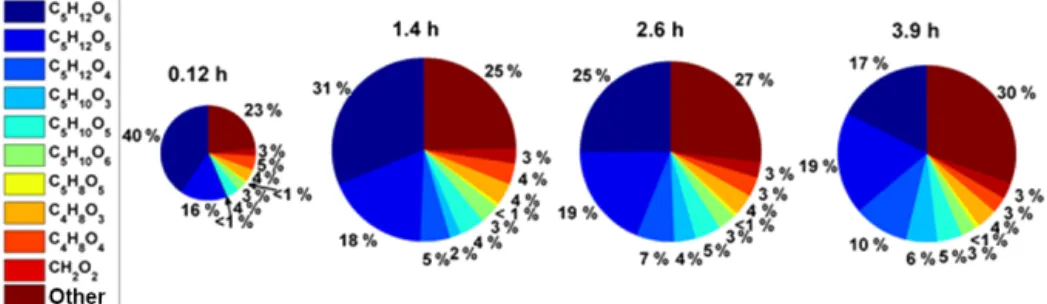
Figure 4.Time evolution of particle-phase concentrations in a batch mode isoprene photochemical oxidation experiment at low NOx. Time increases from left to right and the size of the pies is proportional to the amount of OA present, which is 5.6, 10.8, 10.6, and 10.4 µg m−3 from left to right.
3.2 Time evolution of low-NOxisoprene SOA composition
To examine how isoprene photochemical SOA evolves over time, a time-dependent experiment was conducted (Fig. 4), similar to a previous batch mode study (Kroll et al., 2006). In this “batch mode” experiment, isoprene, H2O2, and solid
ammonium sulfate seed were injected into the chamber, and then the lights were turned on. The chemistry of the closed system was allowed to evolve in time without further input of reactants. Each pie chart represents a FIGAERO-CIMS particle-phase desorption measurement over the course of the experiment. The data are converted to mass concentration as discussed previously (Lee et al., 2016; Liu et al., 2016), the overall size of each pie chart is proportional to the amount of AMS-measured OA (5.6, 10.8, 10.6, 10.4 µg m−3 from left to right, corrected for particle wall loss), and the time is the mid-point of the particle collection period (which lasted 25 min) relative to the initiation of the chemistry. The desorp-tion just prior to the isoprene injecdesorp-tion is used as the baseline, and the corresponding mass spectra are subtracted from the succeeding desorption. Unlike the work of Kroll et al. (2006), who saw SOA volume maximize after∼3–4 h of oxidation followed by a large decrease in total volume attributed to photochemical processing, the measurements presented here did not follow the reaction progress long after the maximum OA concentration was achieved (< 1 h) and thus we did not observe a significant decrease in mass.
The absolute and relative concentration of C5H12O6 in
the particle phase decreases from 40 % of the particle-phase SOA to 17 % over the 4 h of oxidation. The absolute mass of SOA also changes, primarily increasing, during the ex-periment, reaching a peak of 11.6 µg m−3 att=4.3 h. This
suggests that C5H12O6is transforming either within the
par-ticle phase via hydrolysis or other mechanisms, or in the gas phase, with efficient gas-particle equilibration due to reac-tion with OH or photolysis (Baasandorj et al., 2010; Hsieh et al., 2014; Roehl et al., 2007), with a particle-phase half-life of∼4 h. Gas-phase oxidation seems unlikely given that typically greater than 95 % of the C5H12O6is found in the
particle phase (Fig. 5) when OA > 2 µg m−3. While many of the detected compounds are present at constant mass frac-tions throughout time, C5H12O5, C5H12O4, and C5H10O3
increase. C5H12O5has been observed previously in the gas
phase from ISOPOOH oxidation (Krechmer et al., 2015), and was also shown to be a large fraction of the particle phase from isoprene oxidation (Liu et al., 2016), but its produc-tion mechanism is uncertain. Krechmer et al. (2015) suggest it could be formed from the oxidation of an impurity in the ISOPOOH, although the experiments presented here use iso-prene as the BVOC precursor, ruling out this explanation. In these experiments, C5H12O5 is observed within the first
hour of isoprene oxidation and increases to ∼18 % of the OA mass within 1.5 h, becoming relatively stable thereafter. Two possible sources of this compound are the reaction of the ISOPOOH-derived peroxy radical (C5H11O6) with RO2, or
a dihydroxy alkene undergoing reaction with OH and O2to
form a dihydroxy peroxy radical, followed by reaction with HO2. It is also possible that C5H12O5could be formed in the
condensed phase from hydrolysis reactions. Further work is required to understand the source of this compound.
The other two compounds that increase with time, C5H12O4 and C5H10O3, likely isomers of 2-methyl tetrols
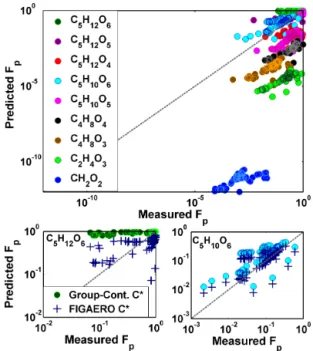
Figure 5.Top: predicted versus measured fraction in the particle phase (Fp). PredictedFpis obtained from Eq. (1) whereC∗s were
calculated with the EVAPORATION group-contribution method (Compernolle et al., 2011) labeled as “Group-Cont.C∗” in the bot-tom panels. Measured Fpis the direct measurement from the
FI-GAERO. Bottom: theFpcan also be predicted based on the
cali-brated FIGAERO temperature axis as discussed in the methods and is shown as the predictedFphere. Agreement can be reached for
two representative compounds where theFpis over and correctly
predicted (left and right, respectively).
(Edney et al., 2005; Kleindienst et al., 2009). C5H12O4and
C5H10O3are less than 1 % of the SOA for the first 2 h and
then gradually increase to 10 and 6 % of the SOA, respec-tively, after 4 h. Interestingly, the FIGAERO-CIMS thermo-grams for these tracers have broad maxima at much higher Tmaxthan would be consistent with their elemental
compo-sition. Lopez-Hilfiker et al. (2016b) noted two modes in the thermogram of C5H12O4, one with aTmaxas expected based
on its structure and another with a higherTmaxindicating an
effectively lower-volatility component thermally decompos-ing. These two tracers are also observed in the NOx-addition experiments performed in continuous-flow mode, though at lower concentrations. In these experiments there was not enough NO to completely suppress ISOPOOH formation and therefore IEPOX formation from ISOPOOH+OH. More-over, IEPOX can also form, albeit at lower yields, from OH reactions with the first-generation isoprene hydroxy nitrate (Jacobs et al., 2014; L. Lee et al., 2014; St. Clair et al., 2016). However, the formation of IEPOX SOA tracers is more puz-zling given the very low reactive uptake of IEPOX expected on solid inorganic seed coated with isoprene SOA (Gaston et al., 2014; Riedel et al., 2015). Perhaps nitric-acid-catalyzed IEPOX multiphase chemistry contributes to the formation of
these tracers at high NOx. That said, observation of these tracers, also in the absence of NOx addition, indicates that this explanation is not sufficient.
The chemical mechanism leading to the measurement of these tracers in the particle phase is unknown, but given that the experimental conditions strongly suppressed the tra-ditional acid-catalyzed aqueous IEPOX chemistry, perhaps these tracers are not solely derived from aqueous IEPOX chemistry but isoprene photochemical oxidation more gen-erally. In conclusion, C5H12O6 condenses rapidly and
ini-tially and makes up the majority of the SOA mass, but over time its contribution decreases as other compounds such as C5H12O5, C5H12O4, and C5H10O3 increase. Our data
sug-gest these compounds may be formed in the particle phase from heterogeneous reactions and/or during the thermal des-orption analysis, but more work is required to determine their sources.
3.3 Gas-particle partitioning: saturation vapor concentrations and oligomeric content
The volatility of the products generated from the non-IEPOX C5H12O6pathway (Krechmer et al., 2015; Liu et al., 2016;
Riva et al., 2016) will be a crucial aspect of its contribution to SOA formation and the lifetime of the resulting SOA against dilution, gas-phase oxidation, and depositional losses. The capability of the FIGAERO-CIMS to measure the concentra-tion of individual species in both the gas and particle phases allows for a direct measurement of the particle-phase frac-tion (Fp), which is the particle-phase concentration relative
to the gas- and particle-phase concentrations per volume of air. The Fp can also be calculated from an assumption of
equilibrium absorptive partitioning theory first described by Pankow (1994) using Eq. (1) as first reported by Donahue et al. (2006), whereC∗is the saturation vapor concentration (µg m−3) of the pure substance andCOAis the concentration
of organic aerosol (µg m−3).
Fp=
1+ C
∗
COA
−1
MeasuredFpwere determined using the FIGAERO-CIMS
for a subset of major particle-phase components from 2015 (Fig. 5). A short (1–2 m) laminar flow Teflon inlet line with a short residence time (< 1 s) was coupled to the chamber for the detection of gases by the FIGAERO-CIMS. The largest source of error in the measured Fp, beyond thermal
de-composition during desorption, is diffusion-controlled vapor losses in the inlet, which were corrected for by assuming a diffusivity of 0.05–0.1 cm2s−1, although the variability is not discernable on the log scale. Inlet losses are 25–44 % for the range of diffusivities, a small effect on the comparison of measured and predictedFpas we show below.
Fp were predicted using Eq. (1) with COA measured by
the AMS andC∗calculated via the EVAPORATION group-contribution method (Compernolle et al., 2011), which gen-erally gave similar estimates as the Capouet and Muller ap-proach (2006). The Nannoolal method (2008) was also ex-plored, but it gave C∗ estimates that varied by several or-ders of magnitude for structurally similar compounds, as well as estimates that were unexpectedly low based on FIGAERO-CIMS measurements and what one would expect based on molecular structure, consistent with previous find-ings (Kurten et al., 2016). The SIMPOL method of Pankow and Asher (2008) was also applied to select compounds and is discussed below. A major limitation of this analysis is that we do not know the structure of the molecules detected, only the elemental composition, and so we make assump-tions based on the most likely functional groups expected from the chemical conditions of the chamber and from the el-emental composition (e.g., degrees of unsaturation, oxygen-to-carbon ratio). In many cases these assumptions have little impact on our conclusions since the inferred errors are far larger than expected from possible isomers.
If the SOA formed according to equilibrium partitioning theory as first described by Pankow (1994), the Fp
mea-sured by the FIGAERO-CIMS and theC∗ calculated using group-contribution methods should be in agreement over a range of organic aerosol mass concentrations. Figure 5 indi-cates two immediate challenges in testing partitioning the-ory. First, a large number of mostly small carbon number compounds have a much higher measuredFprelative to the
predicted Fp based on their group-contribution-determined
C∗. The C∗ estimates would have to be in error by 5 or more orders of magnitude, which is likely not the case since there are many measurements of vapor pressures for simi-lar compounds. Furthermore, the thermograms of these com-pounds appear broad, not Gaussian as expected for individ-ual non-interacting compounds (Lopez-Hilfiker et al., 2014), and they do not peak until ∼85◦C or higher, see Table 1, which is also inconsistent with the calibrated composition and enthalpy of sublimation relationship scaled for the FI-GAERO used here (Lopez-Hilfiker et al., 2014). We attribute
previous studies of IEPOX SOA tracers in the southeastern US (Lopez-Hilfiker et al., 2016b),α-pinene-derived cham-ber SOA (Lopez-Hilfiker et al., 2015), and biomass burning organic aerosol in the northwestern US (Gaston et al., 2016). That is, the disagreement between measured and predicted Fpfor these compounds is not necessarily a failure of
equi-librium partitioning theory, nor evidence that equiequi-librium had not been achieved, but rather that the compounds desorb-ing were actually part of another larger molecular weight oligomerization product, the C∗ and gas-phase concentra-tions of which are unknown.
The second challenge to testing gas-particle partitioning is illustrated in theFp for two representative compounds,
C5H12O6and C5H10O6(Fig. 5, bottom panels). That there
is reasonable agreement between measured and predictedFp
(Fig. 5, bottom right, circles) for C5H10O6suggests that
equi-librium partitioning is potentially achieved in the chamber. However, the disagreement for C5H12O6(Fig. 5, bottom left,
circles) cannot be explained solely by thermal decomposition of lower-volatility material for two reasons: the thermogram shape is nearly Gaussian and therefore behaves like a single component and the predictedFp is much larger than
mea-sured (opposite to the situation above). This behavior implies inaccurateC∗derived from the group-contribution methods as opposed to thermal decomposition.
The EVAPORATION group-contribution method (Com-pernolle et al., 2011) used in Fig. 5 and that of Capouet and Muller (2006) both produce a C∗ of 0.03 µg m−3 for C5H12O6 when assuming it is a dihydroxy
dihydroperox-ide, while the SIMPOL method predicts 2 µg m−3 (Pankow
and Asher, 2008). For C5H10O6, assumed to be a hydroxy
dihydroperoxy aldehyde, EVAPORATION (Compernolle et al., 2011) predicts 4 µg m−3, the Capouet and Muller (2006) method predicts 2 µg m−3, and SIMPOL (Pankow and Asher, 2008) suggests 20 µg m−3. That the C5H12O6 values vary
by 2 orders of magnitude while the C5H10O6 values vary
by a factor of 10 suggests the need for better experimental constraints. Using the measuredTmaxfrom the
FIGAERO-CIMS thermograms, theC∗of C5H12O6and C5H10O6were
determined to be 0.7 and 7 µg m−3, respectively. These val-ues were then used to re-calculate the predicted Fp using
Eq. (1). The original group-contribution-calculated Fp is
shown alongside the adjusted points in the bottom panels of Fig. 5 as navy crosses. The root mean square error of both C5H12O6 and C5H10O6 is minimized when comparing the
measurements with the adjustedFp, indicating that the
cal-ibrated FIGAERO-CIMS temperature axis can more accu-rately determine theC∗.
There are a number of possible reasons why measured and predictedFp do not agree, with one being that our
thermo-grams, independently of the measuredFp, thereby allowing
for a more robust assessment of whether (i) the assumption of gas-particle equilibrium is reasonable, (ii) there are possible biases in the measuredFpdue to thermal decomposition, or
(iii) theC∗estimation methods are valid. The analysis above demonstrates that all possibilities arise in this data set.
In the case of C5H12O6the FIGAERO-CIMS-determined
C∗ is much closer to the SIMPOL estimation and sig-nificantly higher than that estimated by the other group-contribution methods. We suspect the large differences be-tween measured and group-contribution method estimates of C∗ in this case are due to the lack of vapor pressure data on compounds with hydroperoxide groups, specifically multifunctional hydroperoxides: there are only data on four hydroperoxide-containing compounds on which these meth-ods are based (Capouet and Muller, 2006; Compernolle et al., 2011). It can be argued that -OH and -OOH groups will lower the C∗relative to the precursor by a comparable amount, with the possibility that a -OOH group could lower it slightly more due to the additional oxygen. For example, the C∗ of 2-methyl-1,2,3,4-butanol (C5H12O4) was
calcu-lated to be 9 to 34 µg m−3, depending on the method used (Capouet and Muller, 2006; Compernolle et al., 2011), which is roughly 250–1000 times greater than theC∗estimates for C5H12O6. That is, a molecule with the same number of
dis-tinct -OH-containing functional groups is predicted to have a very different C∗ because the vapor pressure lowering of -OOH groups assumed by these group-contribution methods is larger than that for an -OH group. Our observations sug-gest that this assumption is incorrect, at least to the extent employed in these methods. This is supported by previous work that found that group-contribution methods predicted significantly lower C∗ than two computational models, the conductor-like screening model for real solvents (COSMO-RS) (Kurten et al., 2016) and the generator for explicit chem-istry and kinetics of organics in the atmosphere (GECKO-A) (Valorso et al., 2011), did for compounds with multiple func-tionalities. Conversely, we assume C5H10O6is a hydroxy
di-hydroperoxy aldehyde, also with two –OOH groups, but the group contribution methods accurately predicted aC∗ con-sistent with that inferred from the FIGAERO-CIMS Tmax.
This agreement may be a coincidence or indicative of the fact that multifunctional compounds with slightly different func-tional groups can have significantly different intramolecular interactions, leading to significantly different saturation va-por concentrations (Compernolle et al., 2011).
Figure 5 leads to two main conclusions. The first is that testing equilibrium partitioning theory is a challenge without a direct constraint on theC∗like the FIGAERO-CIMS des-orptionTmaxdue to possibly large systematic errors in theC∗
predicted from group-contribution methods. Moreover, ther-mal decomposition of higher molecular weight compounds, such as oligomers, into smaller molecular weight compounds generates uncertainty in the measuredFpin that theC∗
de-rived from FIGAERO-CIMS Tmax does not correspond in
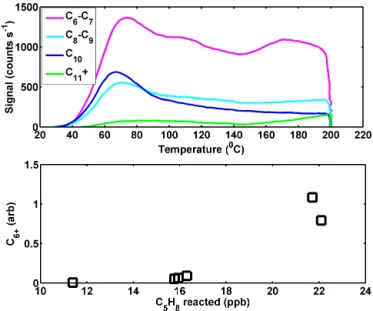
Figure 6.Top: sum of the thermogram signal for compounds with the formula CxHyOzI−, wherexis varied across each thermogram and represents compounds with six or more carbons. Bottom: the sum off the mass concentration of all compounds with six or more carbons relative to the mass concentration of organic aerosol as a function of reacted isoprene.
such cases to the observed molecule. This result leads to our second conclusion: a surprisingly large fraction of the iSOA is resistant to evaporation, indicating it will have a longer lifetime against dilution (Kroll et al., 2006). Approxi-mately 30–45 % of the SOA mass detected by the FIGAERO-CIMS desorbs at temperatures greater than 80◦C, much of that above 100◦C, which corresponds to effective enthalpies of sublimation > 150 kJ mol−1 in our FIGAERO-CIMS as-suming no diffusion limitations on evaporation from the par-ticles that exist at these temperatures (for example, due to highly viscous phases). We note that Kroll et al. (2006) also found evidence for a significant mass fraction of large molec-ular weight compounds when applying the AMS to low-NOx non-IEPOX iSOA. We conclude that oligomerization products are the cause of this more refractory SOA compo-nent, but we cannot determine from the thermograms alone whether the oligomerization process is reversible at ambi-ent temperatures on longer timescales than the∼1 h desorp-tion. That the SOA yield from isoprene is significantly higher for similar organic mass loadings than that reported from ISOPOOH only suggests an important role for the broader distribution of oxidation products formed in addition to those from ISOPOOH. One possible reason is that these mostly semivolatile products can contribute to lower-volatility prod-ucts via oligomerization chemistry (Jathar et al., 2016; Sato et al., 2011; Tsai et al., 2015).
The sum of thermogram signals across all ions with the formula CxHyOzN0−1I- is presented in Fig. 6, with the value
non-Compounds with six to seven carbons make up a major-ity of the signal for compounds with greater than five car-bons, though we also detected significant signal in C8–C10
compounds, themselves making up 3–8 % of detected mass. We measure a monoterpene impurity at 0.3 % of the iso-prene concentration in our gas cylinder, which could result in∼0.05–0.1 µg m−3 of monoterpene SOA, i.e., 0.3–2.8 % of the SOA mass, which is significantly lower than the sum of all compounds with six or more carbons as well as the sum of just C8−10compounds. Furthermore, the ratio of C6−7
to C10 compounds is 5–10 times higher than we detected
in monoterpene+OH experiments performed in the same chamber with the same FIGAERO-CIMS. We also note that a previous study similar to the ones presented here detected C10H20−22O6−9compounds, as well as a fragment ion in the
AMS at m/z91 corresponding to C7H7+, which was
ten-tatively attributed to thermal decomposition of dimers and oligomers on the vaporizer, among other possibilities (Riva et al., 2016). The mass concentration of these compounds with six or more carbons was found to increase with reacted iso-prene (Fig. 6, bottom). At the highest reacted isoiso-prene, com-pounds with six or more carbons contribute on order 25 % to the total OA mass detected.
3.4 Role of NOx in iSOA volatility
Previous studies using thermal denuders and either an AMS or a tandem differential mobility measurement of particle size distributions have found that iSOA formed in the pres-ence of NOx is less volatile relative to that formed in HO2
-dominant regimes (Kleindienst et al., 2009; Xu et al., 2014). We compare the iSOA volatility under different regimes by looking at the sum thermograms for compounds with the for-mula CxHyOzN0−1I−. These sum thermograms are plotted
as a function of temperature for both low- and high-NOx con-ditions in Fig. 7, bottom left and right, respectively. Since C5H12O6is a large portion of the SOA mass concentration
in these experiments (e.g., Fig. 4), it is shown separately in dark green, with the remainder of the summed signal shown in light green. C5H12O6is clearly a large contribution to the
sum signal in both the low- and high-NOx cases, although more so in the low-NOxregime, with the remaining thermo-gram signal primarily located in the lower-volatility (higher temperature) “tail” of the desorption. We have also shown in the bottom left low-NOx figure a sum of the thermograms for all compounds with six or more carbons, i.e., the sum of all thermograms in Fig. 6. We note that the sum of these compounds makes up∼6 % of the total signal. At high NOx, there are two clear modes remaining in the thermogram af-ter removing the C5H12O6 contribution (light green): one
mode at roughly the sameTmax, and therefore volatility, of
C5H12O6, and the other mode at a higher Tmax, ∼110◦C,
Figure 7.Top: sum thermograms of α-pinene+O3compared to isoprene (C5H8) photooxidation with and without NOx. Theα -pinene sum thermogram was reported previously (Lopez-Hilfiker et al. (2015), Fig. 5). Bottom: the sum thermograms at low (left) and high (right) input NO. The thermogram of C5H12O6, the largest
signal in both cases, is separated out (dark green) and the sum of the remaining signal minus C5H12O6is displayed as the remaining
signal (light green). At low-NO input, the sum of compounds with six or more carbons is specified (pink triangle and line), while at high-NO input the sum of OrgN and the sum of non-nitrate organ-ics are plotted (dashed lines, independent of solid lines) to show the relative thermogram features.
suggesting that a larger fraction of detected iSOA mass at high NOx is resistant to evaporation compared to the low-NOx case. We also note that the Tmax of individual
com-pounds shifts to higher values with the addition of NOx ex-cept for the highest mass compounds (see Table 1). Although the thermograms for many of these compounds do not have a distinct Gaussian shape, making determination of theTmax
uncertain or undefined, the shift to higherTmaxfor the same
compounds could indicate not just lower-volatility products in the form of oligomers but also potentially a change in the overall particle viscosity, causing the iSOA to be more resis-tant to evaporation with the addition of NOx.
photo-chemical oxidation, although isoprene photophoto-chemical SOA has components in the same volatility ranges of α-pinene ozonolysis SOA, and the relative size of the various modes and location in temperature space is dependent on the amount of NOx.
The contribution of the effectively lower-volatility com-ponents inferred from thermograms in Fig. 7 is likely un-derestimated in both the low- and high- NOx cases because the thermograms are presented as ion signal not mass con-centration. If we converted into mass concentration units prior to calculating the summed thermogram, the contribu-tion of C5H12O6 would be significantly less than implied
in Fig. 7. The integrated contribution of C5H12O6 would
instead be more similar to that shown in Fig. 4 for which we applied calibration estimates based on ISOPOOH and a range of other oxygenated compounds, together with the ion–molecule collision-limited sensitivity discussed previ-ously (Liu et al., 2016; Lopez-Hilfiker et al., 2016a). In con-clusion, the low-NOx SOA has an overall higher volatility and the addition of NOx results in lower-volatility material making up a larger fraction of the SOA, although the total SOA yield is lower (Liu et al., 2016), in general agreement with previous studies showing that increasing NOx leads to lower-volatility SOA (Kleindienst et al., 2009), likely by en-hancing oligomerization (Dommen et al., 2006; Xu et al., 2014; Nguyen et al., 2015). However, many of these previ-ous studies were carried out in very different concentration regimes with different detection techniques, so that the data we present offers an additional contribution to the general importance of oligomerization.
4 Conclusions
We have explored the composition and volatility of isoprene SOA at low- and high-NOx concentrations, utilizing efflo-resced ammonium sulfate seed to prevent IEPOX uptake and thus suppress IEPOX multiphase chemistry. We measured compositions of products reported in previous works of sim-ilar experiments (Krechmer et al., 2015; Liu et al., 2016; Riva et al., 2016), in particular C5H12O6and related highly
oxidized compounds. We note that these compounds have also been observed in the atmosphere in isoprene-rich re-gions (Riva et al., 2016). We examined the saturation va-por concentrations of several of the most dominant particle-phase signals and tested the accuracy of various group-contribution methods in determining the C∗. Of the three group-contribution methods assessed, the SIMPOL approach (Pankow and Asher, 2008) gave the closest estimates ofC∗ compared to those determined from the thermograms. The vapor pressure lowering effect of -OOH groups, assumed to be abundantly present in this system, appears to be greatly overestimated in two commonly used methods (Capouet and Muller, 2006; Compernolle et al., 2011). Through these anal-yses we found that a significant fraction of SOA
compo-nents we measured are likely thermal decomposition frag-ments, characterized by broad thermograms and higher-than-expectedTmax.
That such a large fraction (30–45 %) of the non-IEPOX iSOA is of low volatility implies that the lifetime of non-IEPOX iSOA is longer than would previously be expected. Together with the thermal decomposition fragments, we also observe compounds with six or greater carbons, supporting an important role for oligomerization chemistry. These find-ings suggest that experiments that assess the SOA formation potential of isoprene or one of its oxidation products alone likely underestimate the overall potential due to the partici-pation of a broad suite of products in oligomerization chem-istry. Further work on the role of oligomerization chemistry in this system is needed to verify that the higher iSOA yield observed by Liu et al. (2016) from isoprene is indeed caused by semivolatile products participating in oligomerization re-actions. Furthermore, we show here that the addition of NO has a strong effect on the amount of C5H12O6produced, and
while the overall volatility of the OA decreases with NOx, the total amount of OA also decreases (Liu et al., 2016), indicat-ing that in polluted regions the amount of SOA formed from this pathway will be diminished, but the SOA will be longer lived against dilution. In conclusion, due to the high yield of IEPOX from ISOPOOH+OH, it has been assumed to be the most important pathway for the formation of iSOA; however, its relatively high volatility (∼2×10⁴µg m−3; Compernolle et al., 2011) and the fact that it requires such specific con-ditions to form SOA efficiently implies that the formation of SOA from the non-IEPOX pathway discussed herein can also play an important role in many environments regardless of sulfate aerosol concentrations.
Acknowledgements. This work was supported by the US Depart-ment of Energy ASR grants DE-SC0011791. Emma L. D’Ambro was supported by the National Science Foundation Graduate Research Fellowship under grant no. DGE-1256082. Ben H. Lee was supported by the National Oceanic and Atmospheric Ad-ministration (NOAA) Climate and Global Change Postdoctoral Fellowship Program. Frank N. Keutsch and Jean C. Rivera-Rios were supported by the National Science Foundation (AGS 1628491 and 1628530). PNNL authors were supported by the US Depart-ment of Energy, Office of Biological and EnvironDepart-mental Research as part of the ASR program. The Pacific Northwest National Laboratory is operated for DOE by Battelle Memorial Institute under contract DE-AC05-76RL01830. We thank J. D. Crounse for useful discussions.
Edited by: K. Tsigaridis
S., and Burkholder, J. B.: (CH3)(3)COOH (tert-butyl
hydroper-oxide): OH reaction rate coefficients between 206 and 375 K and the OH photolysis quantum yield at 248 nm, Phys. Chem. Chem. Phys., 12, 12101–12111, doi:10.1039/c0cp00463d, 2010. Capouet, M. and Müller, J.-F.: A group contribution method for
es-timating the vapour pressures of a-pinene oxidation products, At-mos. Chem. Phys., 6, 1455–1467, doi:10.5194/acp-6-1455-2006, 2006.
Claeys, M., Graham, B., Vas, G., Wang, W., Vermeylen, R., Pashyn-ska, V., Cafmeyer, J., Guyon, P., Andreae, M. O., Artaxo, P., and Maenhaut, W.: Formation of secondary organic aerosols through photooxidation of isoprene, Science, 303, 1173–1176, doi:10.1126/science.1092805, 2004.
Compernolle, S., Ceulemans, K., and Müller, J.-F.: EVAPORA-TION: a new vapour pressure estimation methodfor organic molecules including non-additivity and intramolecular interac-tions, Atmos. Chem. Phys., 11, 9431–9450, doi:10.5194/acp-11-9431-2011, 2011.
Ding, X., Zheng, M., Yu, L. P., Zhang, X. L., Weber, R. J., Yan, B., Russell, A. G., Edgerton, E. S., and Wang, X. M.: Spatial and seasonal trends in biogenic secondary organic aerosol tracers and water-soluble organic carbon in the southeastern United States, Environ. Sci. Technol., 42, 5171–5176, doi:10.1021/es7032636, 2008.
Docherty, K. S., Wu, W., Lim, Y. B., and Ziemann, P. J.: Contri-butions of organic peroxides to secondary aerosol formed from reactions of monoterpenes with O3, Environ. Sci. Technol., 39,
4049–4059, doi:10.1021/es050228s, 2005.
Dommen, J., Metzger, A., Duplissy, J., Kalberer, M., Alfarra, M. R., Gascho, A., Weingartner, E., Prevot, A. S. H., Verheggen, B., and Baltensperger, U.: Laboratory observation of oligomers in the aerosol from isoprene/NOx photooxidation, Geophys. Res. Lett., 33, L13805, doi:10.1029/2006GL026523, 2006.
Donahue, N. M., Robinson, A. L., Stanier, C. O., and Pandis, S. N.: Coupled partitioning, dilution, and chemical aging of semivolatile organics, Environ. Sci. Technol., 40, 2635–2643, doi:10.1021/es052297c, 2006.
Donahue, N. M., Trump, E. R., Pierce, J. R., and Riipinen, I.: Theo-retical constraints on pure vapor-pressure driven condensation of organics to ultrafine particles, Geophys. Res. Lett., 38, L16801, doi:10.1029/2011GL048115, 2011.
Edney, E. O., Kleindienst, T. E., Jaoui, M., Lewandowski, M., Offenberg, J. H., Wang, W., and Claeys, M.: Formation of 2-methyl tetrols and 2-2-methylglyceric acid in secondary organic aerosol from laboratory irradiated isoprene/NOx/SO2/air
mix-tures and their detection in ambient PM2.5 samples collected
in the eastern United States, Atmos. Environ., 39, 5281–5289, doi:10.1016/j.atmosenv.2005.05.031, 2005.
Gaston, C. J., Riedel, T. P., Zhang, Z. F., Gold, A., Surratt, J. D., and Thornton, J. A.: Reactive Uptake of an Isoprene-Derived Epoxy-diol to Submicron Aerosol Particles, Environ. Sci. Technol., 48, 11178–11186, doi:10.1021/es5034266, 2014.
Gaston, C. J., Lopez-Hilfiker, F. D., Whybrew, L. E., Hadley, O., McNair, F., Gao, H., Jaffe, D. A., and Thornton, J. A.: Online molecular characterization of fine particulate mat-ter in Port Angeles, WA: Evidence for a major impact
of Gases and Aerosols from Nature version 2.1 (MEGAN2.1): an extended and updated framework for modeling biogenic emis-sions, Geosci. Model Dev., 5, 1471–1492, doi:10.5194/gmd-5-1471-2012, 2012.
Hsieh, S., Vushe, R., Tun, Y. M. T., and Vallejo, J. L.: Trends in or-ganic hydroperoxide photodissociation and absorption cross sec-tions between 266 and 377 nm, Chem. Phys. Lett., 591, 99–102, doi:10.1016/j.cplett.2013.11.008, 2014.
Jacobs, M. I., Burke, W. J., and Elrod, M. J.: Kinetics of the re-actions of isoprene-derived hydroxynitrates: gas phase epoxide formation and solution phase hydrolysis, Atmos. Chem. Phys., 14, 8933–8946, doi:10.5194/acp-14-8933-2014, 2014.
Jang, M. S., Czoschke, N. M., Lee, S., and Kamens, R. M.: Heterogeneous atmospheric aerosol production by acid-catalyzed particle-phase reactions, Science, 298, 814–817, doi:10.1126/science.1075798, 2002.
Jathar, S. H., Cappa, C. D., Wexler, A. S., Seinfeld, J. H., and Klee-man, M. J.: Simulating secondary organic aerosol in a regional air quality model using the statistical oxidation model – Part 1: Assessing the influence of constrained multi-generational age-ing, Atmos. Chem. Phys., 16, 2309–2322, doi:10.5194/acp-16-2309-2016, 2016.
Jimenez, J. L., Canagaratna, M. R., Donahue, N. M., Prevot, A. S. H., Zhang, Q., Kroll, J. H., DeCarlo, P. F., Allan, J. D., Coe, H., Ng, N. L., Aiken, A. C., Docherty, K. S., Ulbrich, I. M., Grieshop, A. P., Robinson, A. L., Duplissy, J., Smith, J. D., Wil-son, K. R., Lanz, V. A., Hueglin, C., Sun, Y. L., Tian, J., Laak-sonen, A., Raatikainen, T., Rautiainen, J., Vaattovaara, P., Ehn, M., Kulmala, M., Tomlinson, J. M., Collins, D. R., Cubison, M. J., Dunlea, E. J., Huffman, J. A., Onasch, T. B., Alfarra, M. R., Williams, P. I., Bower, K., Kondo, Y., Schneider, J., Drewnick, F., Borrmann, S., Weimer, S., Demerjian, K., Salcedo, D., Cot-trell, L., Griffin, R., Takami, A., Miyoshi, T., Hatakeyama, S., Shimono, A., Sun, J. Y., Zhang, Y. M., Dzepina, K., Kimmel, J. R., Sueper, D., Jayne, J. T., Herndon, S. C., Trimborn, A. M., Williams, L. R., Wood, E. C., Middlebrook, A. M., Kolb, C. E., Baltensperger, U., and Worsnop, D. R.: Evolution of Or-ganic Aerosols in the Atmosphere, Science, 326, 1525–1529, doi:10.1126/science.1180353, 2009.
King, S. M., Rosenoern, T., Shilling, J. E., Chen, Q., Wang, Z., Biskos, G., McKinney, K. A., Pöschl, U., and Martin, S. T.: Cloud droplet activation of mixed organic-sulfate particles pro-duced by the photooxidation of isoprene, Atmos. Chem. Phys., 10, 3953–3964, doi:10.5194/acp-10-3953-2010, 2010.
S., Scott, C. E., Seinfeld, J. H., Sipila, M., Steiner, G., Stozhkov, Y., Stratmann, F., Tome, A., Virtanen, A., Vogel, A. L., Wagner, A. C., Wagner, P. E., Weingartner, E., Wimmer, D., Winkler, P. M., Ye, P. L., Zhang, X., Hansel, A., Dommen, J., Donahue, N. M., Worsnop, D. R., Baltensperger, U., Kulmala, M., Carslaw, K. S., and Curtius, J.: Ion-induced nucleation of pure biogenic par-ticles, Nature, 533, 521–526, doi:10.1038/nature17953, 2016. Kleindienst, T. E., Lewandowski, M., Offenberg, J. H., Jaoui, M.,
and Edney, E. O.: The formation of secondary organic aerosol from the isoprene + OH reaction in the absence of NOx, At-mos. Chem. Phys., 9, 6541–6558, doi:10.5194/acp-9-6541-2009, 2009.
Kourtchev, I., Ruuskanen, T., Maenhaut, W., Kulmala, M., and Claeys, M.: Observation of 2-methyltetrols and related photo-oxidation products of isoprene in boreal forest aerosols from Hyytiälä, Finland, Atmos. Chem. Phys., 5, 2761–2770, doi:10.5194/acp-5-2761-2005, 2005.
Krechmer, J. E., Coggon, M. M., Massoli, P., Nguyen, T. B., Crounse, J. D., Hu, W. W., Day, D. A., Tyndall, G. S., Henze, D. K., Rivera-Rios, J. C., Nowak, J. B., Kimmel, J. R., Mauldin, R. L., Stark, H., Jayne, J. T., Sipila, M., Junninen, H., Clair, J. M. S., Zhang, X., Feiner, P. A., Zhang, L., Miller, D. O., Brune, W. H., Keutsch, F. N., Wennberg, P. O., Seinfeld, J. H., Worsnop, D. R., Jimenez, J. L., and Canagaratna, M. R.: Formation of Low Volatility Organic Compounds and Sec-ondary Organic Aerosol from Isoprene Hydroxyhydroperoxide Low-NO Oxidation, Environ. Sci. Technol., 49, 10330–10339, doi:10.1021/acs.est.5b02031, 2015.
Kroll, J. H., Ng, N. L., Murphy, S. M., Flagan, R. C., and Seinfeld, J. H.: Secondary organic aerosol formation from isoprene pho-tooxidation under high-NOxconditions, Geophys. Res. Lett., 32, L18808, doi:10.1029/2005GL023637, 2005.
Kroll, J. H., Ng, N. L., Murphy, S. M., Flagan, R. C., and Se-infeld, J. H.: Secondary organic aerosol formation from iso-prene photooxidation, Environ. Sci. Technol., 40, 1869–1877, doi:10.1021/es0524301, 2006.
Kurten, T., Tiusanen, K., Roldin, P., Rissanen, M., Luy, J. N., Boy, M., Ehn, M., and Donahue, N.: alpha-Pinene Autoxidation Prod-ucts May Not Have Extremely Low Saturation Vapor Pressures Despite High O : C Ratios, J. Phys. Chem. A, 120, 2569–2582, doi:10.1021/acs.jpca.6b02196, 2016.
Lane, T. E., Donahue, N. M., and Pandis, S. N.: Effect of NOx on secondary organic aerosol concentrations, Environ. Sci. Tech-nol., 42, 6022-6027, doi:10.1021/es703225a, 2008.
Lee, B. H., Lopez-Hilfiker, F. D., Mohr, C., Kurten, T., Worsnop, D. R., and Thornton, J. A.: An iodide-adduct high-resolution time-of-flight chemical-ionization mass spectrometer: applica-tion to atmospheric inorganic and organic compounds, Environ. Sci. Technol., 48, 6309–6317, doi:10.1021/es500362a, 2014. Lee, B. H., Mohr, C., Lopez-Hilfiker, F. D., Lutz, A., Hallquist, M.,
Lee, L., Romer, P., Cohen, R. C., Iyer, S., Kurtén, T., Hu, W., Day, D. A., Campuzano-Jost, P., Jimenez, J. L., Xu, L., Ng, N. L., Guo, H., Weber, R. J., Wild, R. J., Brown, S. S., Koss, A., de Gouw, J., Olson, K., Goldstein, A. H., Seco, R., Kim, S., McAvey, K., Shepson, P. B., Starn, T., Baumann, K., Edgerton, E. S., Liu, J., Shilling, J. E., Miller, D. O., Brune, W., Schobesberger, S., D’Ambro, E. L., and Thornton, J. A.: Highly functionalized or-ganic nitrates in the southeast United States: Contribution to sec-ondary organic aerosol and reactive nitrogen budgets, P. Natl.
Acad. Sci. USA, 113, 1516–1521 doi:10.1073/pnas.1508108113, 2016.
Lee, L., Teng, A. P., Wennberg, P. O., Crounse, J. D., and Cohen, R. C.: On rates and mechanisms of OH and O3reactions with
isoprene-derived hydroxy nitrates, J. Phys. Chem. A, 118, 1622– 1637, doi:10.1021/jp4107603, 2014.
Lin, Y.-H., Zhang, Z. F., Docherty, K. S., Zhang, H. F., Bud-isulistiorini, S. H., Rubitschun, C. L., Shaw, S. L., Knipping, E. M., Edgerton, E. S., Kleindienst, T. E., Gold, A., and Sur-ratt, J. D.: Isoprene Epoxydiols as Precursors to Secondary Or-ganic Aerosol Formation: Acid-Catalyzed Reactive Uptake Stud-ies with Authentic Compounds, Environ. Sci. Technol., 46, 250– 258, doi:10.1021/es202554c, 2012.
Lin, Y.-H., Knipping, E. M., Edgerton, E. S., Shaw, S. L., and Sur-ratt, J. D.: Investigating the influences of SO2and NH3levels on
isoprene-derived secondary organic aerosol formation using con-ditional sampling approaches, Atmos. Chem. Phys., 13, 8457– 8470, doi:10.5194/acp-13-8457-2013, 2013a.
Lin, Y.-H., Zhang, H. F., Pye, H. O. T., Zhang, Z. F., Marth, W. J., Park, S., Arashiro, M., Cui, T. Q., Budisulistiorini, H., Sexton, K. G., Vizuete, W., Xie, Y., Luecken, D. J., Piletic, I. R., Edney, E. O., Bartolotti, L. J., Gold, A., and Surratt, J. D.: Epoxide as a precursor to secondary organic aerosol formation from isoprene photooxidation in the presence of nitrogen oxides, P. Natl. Acad. Sci. USA, 110, 6718–6723, doi:10.1073/pnas.1221150110, 2013b.
Lin, Y.-H., Budisulistiorini, H., Chu, K., Siejack, R. A., Zhang, H. F., Riva, M., Zhang, Z. F., Gold, A., Kautzman, K. E., and Surratt, J. D.: Light-Absorbing Oligomer Formation in Secondary Or-ganic Aerosol from Reactive Uptake of Isoprene Epoxydiols, En-viron. Sci. Technol., 48, 12012–12021, doi:10.1021/es503142b, 2014.
Liu, J. M., D’Ambro, E. L., Lee, B. H., Lopez-Hilfiker, F. D., Zaveri, R. A., Rivera-Rios, J. C., Keutsch, F. N., Iyer, S., Kurten, T., Zhang, Z. F., Gold, A., Surratt,J. D., Shilling, J. E., and Thornton, J. A.: Efficient Isoprene Secondary Organic Aerosol Formation from a Non-IEPOX Pathway, Environ. Sci. Technol., 50, 9872– 9880, doi:10.1021/acs.est.6b01872, 2016.
Liu, S., Shilling, J. E., Song, C., Hiranuma, N., Zaveri, R. A., and Russell, L. M.: Hydrolysis of Organonitrate Functional Groups in Aerosol Particles, Aerosol Sci. Technol., 46, 1359–1369, doi:10.1080/02786826.2012.716175, 2012.
Liu, Y., Kuwata, M., Strick, B. F., Geiger, F. M., Thomson, R. J., McKinney, K. A., and Martin, S. T.: Uptake of Epoxydiol Iso-mers Accounts for Half of the Particle-Phase Material Produced from Isoprene Photooxidation via the HO Pathway, Environ. Sci. Technol., 49, 250–258, doi:10.1021/es5034298, 2014.
Lopez-Hilfiker, F. D., Mohr, C., Ehn, M., Rubach, F., Kleist, E., Wildt, J., Mentel, Th. F., Lutz, A., Hallquist, M., Worsnop, D., and Thornton, J. A.: A novel method for online analysis of gas and particle composition: description and evaluation of a Filter Inlet for Gases and AEROsols (FIGAERO), Atmos. Meas. Tech., 7, 983–1001, doi:10.5194/amt-7-983-2014, 2014.
of iodide adduct chemical ionization mass spectrometry to mul-tifunctional organic molecules using the collision limit and ther-modynamic stability of iodide ion adducts, Atmos. Meas. Tech., 9, 1505–1512, doi:10.5194/amt-9-1505-2016, 2016a.
Lopez-Hilfiker, F. D., Mohr, C., D’Ambro, E. L., Lutz, A., Riedel, T. P., Gaston, C. J., Iyer, S., Zhang, Z., Gold, A., Surratt, J. D., Lee, B. H., Kurten, T., Hu, W. W., Jimenez, J., Hallquist, M., and Thornton, J. A.: Molecular Composition and Volatil-ity of Organic Aerosol in the Southeastern US: Implications for IEPOX Derived SOA, Environ. Sci. Technol., 50, 2200–2209, doi:10.1021/acs.est.5b04769, 2016b.
Nannoolal, Y., Rarey, J., and Ramjugernath, D.: Estimation of pure component properties – Part 3: Estimation of the vapor pres-sure of non-electrolyte organic compounds via group contribu-tions and group interaccontribu-tions, Fluid Phase Equilibr., 269, 117– 133, doi:10.1016/j.fluid.2008.04.020, 2008.
Nguyen, T. B., Coggon, M. M., Bates, K. H., Zhang, X., Schwantes, R. H., Schilling, K. A., Loza, C. L., Flagan, R. C., Wennberg, P. O., and Seinfeld, J. H.: Organic aerosol formation from the reactive uptake of isoprene epoxydiols (IEPOX) onto non-acidified inorganic seeds, Atmos. Chem. Phys., 14, 3497–3510, doi:10.5194/acp-14-3497-2014, 2014.
Nguyen, T. B., Bates, K. H., Crounse, J. D., Schwantes, R. H., Zhang, X., Kjaergaard, H. G., Surratt, J. D., Lin, P., Laskin, A., Seinfeld, J. H., and Wennberg, P. O.: Mechanism of the hy-droxyl radical oxidation of methacryloyl peroxynitrate (MPAN) and its pathway toward secondary organic aerosol formation in the atmosphere, Phys. Chem. Chem. Phys., 17, 17914–17926, doi:10.1039/c5cp02001h, 2015.
Pandis, S. N., Paulson, S. E., Seinfeld, J. H., and Flagan, R. C.: Aerosol formation in the photooxidation of isoprene and beta-pinene, Atmos. Environ. A, 25, 997–1008, doi:10.1016/0960-1686(91)90141-s, 1991.
Pankow, J. F.: An absorption-model of gas-particle partitioning of organic-compounds in the atmosphere, Atmos. Environ., 28, 185–188, doi:10.1016/1352-2310(94)90093-0, 1994.
Pankow, J. F. and Asher, W. E.: SIMPOL.1: a simple group contribution method for predicting vapor pressures and en-thalpies of vaporization of multifunctional organic compounds, Atmos. Chem. Phys., 8, 2773–2796, doi:10.5194/acp-8-2773-2008, 2008.
Paulot, F., Crounse, J. D., Kjaergaard, H. G., Kroll, J. H., Seinfeld, J. H., and Wennberg, P. O.: Isoprene photooxidation: new insights into the production of acids and organic nitrates, Atmos. Chem. Phys., 9, 1479–1501, doi:10.5194/acp-9-1479-2009, 2009a. Paulot, F., Crounse, J. D., Kjaergaard, H. G., Kurten, A., St Clair,
J. M., Seinfeld, J. H., and Wennberg, P. O.: Unexpected Epoxide Formation in the Gas-Phase Photooxidation of Isoprene, Science, 325, 730–733, doi:10.1126/science.1172910, 2009b.
Pöschl, U.: Atmospheric aerosols: Composition, transformation, climate and health effects, Angew. Chem.-Int. Edit., 44, 7520– 7540, doi:10.1002/anie.200501122, 2005.
Riedel, T. P., Lin, Y. H., Budisulistiorini, H., Gaston, C. J., Thornton, J. A., Zhang, Z. F., Vizuete, W., Gold, A., and Surratt, J. D.: Heterogeneous Reactions of Isoprene-Derived
S., Ehn, M., Junninen, H., Lehtipalo, K., Petaja, T., Slowik, J., Chang, R., Shantz, N. C., Abbatt, J., Leaitch, W. R., Kerminen, V. M., Worsnop, D. R., Pandis, S. N., Donahue, N. M., and Kul-mala, M.: Organic condensation: a vital link connecting aerosol formation to cloud condensation nuclei (CCN) concentrations, Atmos. Chem. Phys., 11, 3865–3878, doi:10.5194/acp-11-3865-2011, 2011.
Riva, M., Budisulistiorini, S. H., Chen, Y. Z., Zhang, Z. F., D’Ambro, E. L., Zhang, X., Gold, A., Turpin, B. J., Thornton, J. A., Canagaratna, M. R., and Surratt, J. D.: Chemical Characteri-zation of Secondary Organic Aerosol from Oxidation of Isoprene Hydroxyhydroperoxides, Environ. Sci. Technol., 50, 9889–9899, doi:10.1021/acs.est.6b02511, 2016.
Roehl, C. M., Marka, Z., Fry, J. L., and Wennberg, P. O.: Near-UV photolysis cross sections of CH3OOH and HOCH2OOH deter-mined via action spectroscopy, Atmos. Chem. Phys., 7, 713–720, doi:10.5194/acp-7-713-2007, 2007.
Sato, K., Nakao, S., Clark, C. H., Qi, L., and Cocker III, D. R.: Secondary organic aerosol formation from the photooxidation of isoprene, 1,3-butadiene, and 2,3-dimethyl-1,3-butadiene un-der high NOxconditions, Atmos. Chem. Phys., 11, 7301–7317, doi:10.5194/acp-11-7301-2011, 2011.
Shilling, J. E., Chen, Q., King, S. M., Rosenoern, T., Kroll, J. H., Worsnop, D. R., McKinney, K. A., and Martin, S. T.: Particle mass yield in secondary organic aerosol formed by the dark ozonolysis of α-pinene, Atmos. Chem. Phys., 8, 2073–2088, doi:10.5194/acp-8-2073-2008, 2008.
Shilling, J. E., Zaveri, R. A., Fast, J. D., Kleinman, L., Alexander, M. L., Canagaratna, M. R., Fortner, E., Hubbe, J. M., Jayne, J. T., Sedlacek, A., Setyan, A., Springston, S., Worsnop, D. R., and Zhang, Q.: Enhanced SOA formation from mixed anthro-pogenic and biogenic emissions during the CARES campaign, Atmos. Chem. Phys., 13, 2091–2113, doi:10.5194/acp-13-2091-2013, 2013.
St. Clair, J. M., Rivera-Rios, J. C., Crounse, J. D., Knap, H. C., Bates, K. H., Teng, A. P., Jorgensen, S., Kjaergaard, H. G., Keutsch, F. N., and Wennberg, P. O.: Kinetics and Products of the Reaction of the First-Generation Isoprene Hydroxy Hydroperox-ide (ISOPOOH) with OH, J. Phys. Chem. A, 120, 1441–1451, doi:10.1021/acs.jpca.5b06532, 2016.
Surratt, J. D., Murphy, S. M., Kroll, J. H., Ng, N. L., Hildebrandt, L., Sorooshian, A., Szmigielski, R., Vermeylen, R., Maenhaut, W., Claeys, M., Flagan, R. C., and Seinfeld, J. H.: Chemical composition of secondary organic aerosol formed from the pho-tooxidation of isoprene, J. Phys. Chem. A, 110, 9665–9690, doi:10.1021/jp061734m, 2006.
Surratt, J. D., Lewandowski, M., Offenberg, J. H., Jaoui, M., Klein-dienst, T. E., Edney, E. O., and Seinfeld, J. H.: Effect of acidity on secondary organic aerosol formation from isoprene, Environ. Sci. Technol., 41, 5363–5369, doi:10.1021/es0704176, 2007. Surratt, J. D., Chan, A. W. H., Eddingsaas, N. C., Chan,
from isoprene, P. Natl. Acad. Sci. USA, 107, 6640–6645, doi:10.1073/pnas.0911114107, 2010.
Tsai, I. C., Chen, J. P., Lung, C. S. C., N. Li, Chen, W. N., Fu, T. M., Chang, C. C., and Hwang, G. D.: Sources and formation pathways of organic aerosol in a subtropi-cal metropolis during summer, Atmos. Environ., 117, 51–60, doi:10.1016/j.atmosenv.2015.07.005, 2015.
Valorso, R., Aumont, B., Camredon, M., Raventos-Duran, T., Mouchel-Vallon, C., Ng, N. L., Seinfeld, J. H., Lee-Taylor, J., and Madronich, S.: Explicit modelling of SOA formation from
α-pinene photooxidation: sensitivity to vapour pressure estima-tion, Atmos. Chem. Phys., 11, 6895–6910, doi:10.5194/acp-11-6895-2011, 2011.
Weber, R. J., Sullivan, A. P., Peltier, R. E., Russell, A., Yan, B., Zheng, M., de Gouw, J., Warneke, C., Brock, C., Holloway, J. S., Atlas, E. L., and Edgerton, E.: A study of secondary or-ganic aerosol formation in the anthropogenic-influenced south-eastern United States, J. Geophys. Res.-Atmos., 112, D13302, doi:10.1029/2007JD008408, 2007.
Xia, X. and Hopke, P. K.: Seasonal variation of 2-methyltetrols in ambient air samples, Environ. Sci. Technol., 40, 6934–6937, doi:10.1021/es060988i, 2006.
Xu, L., Kollman, M. S., Song, C., Shilling, J. E., and Ng, N. L.: Effects of NOx on the volatility of secondary organic aerosol from isoprene photooxidation, Environ. Sci. Technol., 48, 2253– 2262, doi:10.1021/es404842g, 2014.
Xu, L., Guo, H. Y., Boyd, C. M., Klein, M., Bougiatioti, A., Cerully, K. M., Hite, J. R., Isaacman-VanWertz, G., Kreisberg, N. M., Knote, C., Olson, K., Koss, A., Goldstein, A. H., Hering, S. V., de Gouw, J., Baumann, K., Lee, S. H., Nenes, A., Weber, R. J., and Ng, N. L.: Effects of anthropogenic emissions on aerosol formation from isoprene and monoterpenes in the south-eastern United States, P. Natl. Acad. Sci. USA, 112, 37–42, doi:10.1073/pnas.1417609112, 2015.
Zhang, H., Surratt, J. D., Lin, Y. H., Bapat, J., and Kamens, R. M.: Effect of relative humidity on SOA formation from isoprene/NO photooxidation: enhancement of 2-methylglyceric acid and its corresponding oligoesters under dry conditions, Atmos. Chem. Phys., 11, 6411–6424, doi:10.5194/acp-11-6411-2011, 2011. Zhang, Q., Jimenez, J. L., Canagaratna, M. R., Allan, J. D., Coe,
H., Ulbrich, I., Alfarra, M. R., Takami, A., Middlebrook, A. M., Sun, Y. L., Dzepina, K., Dunlea, E., Docherty, K., De-Carlo, P. F., Salcedo, D., Onasch, T., Jayne, J. T., Miyoshi, T., Shimono, A., Hatakeyama, S., Takegawa, N., Kondo, Y., Schneider, J., Drewnick, F., Borrmann, S., Weimer, S., Demer-jian, K., Williams, P., Bower, K., Bahreini, R., Cottrell, L., Griffin, R. J., Rautiainen, J., Sun, J. Y., Zhang, Y. M., and Worsnop, D. R.: Ubiquity and dominance of oxygenated species in organic aerosols in anthropogenically-influenced Northern Hemisphere midlatitudes, Geophys. Res. Lett., 34, L13801, doi:10.1029/2007GL029979, 2007.