Towards a Conceptual Framework for Persistent Use:
A Technical Plan to Achieve Semantic Interoperability within Electronic
Health Record Systems
Shellon M. Blackman Nova Southeastern University
Abstract
Semantic interoperability within the health care sector requires that patient data be fully available and shared without ambiguity across participating health facilities. Ongoing discussions to achieve interoperability within the health care industry continue to emphasize the need for healthcare facilities to successfully adopt and implement Electronic Health Record (EHR) systems. Reluctance by the healthcare industry to implement these EHRs for the purpose of achieving interoperability has led to the proposed research problem where it was determined that there is no existing single data standardization structure that can effectively share and interpret patient data within heterogeneous systems.
The proposed research proposes a master data standardization and translation (MDST) model –
XDataRDF -- which incorporates the use of the
Resource Description Framework (RDF) that will allow for the seamless exchange of healthcare data among multiple facilities. Using RDF will allow multiple data models and vocabularies to be easily combined and interrelated within a single environment thereby reducing data definition ambiguity.
1. Introduction
The successful adoption and implementation of EHR systems is crucial to the health care industry [36]. With the enactment of the Affordable Care Act (2010), the push for a national health information database continues to be a key discussion point at various levels. However, the reluctance to adopt a comprehensive EHR solution is also very prevalent. One of the primary reasons for this reluctance is the inability of the EHRs to interlink and communicate with each other due to the lack of a comprehensive data standard that facilitates the exchange of data using a common data model [3]. The decision to adopt a common data structure within the health facility to promote
interoperability has previously been met with reluctance due to financial concerns as well as barriers related to changes to the existing work flow and training of their staff [13]. Further, while health facilities are making substantial efforts toward the adoption and implementation of health information technology solutions, more effort needs to be applied to improve the health information exchange capabilities.
The existence of several independent data standards repositories such as International Classification of Diseases (ICD), Logical Observation Identifiers, Names, and Codes (LOINC), and Systematized Nomenclature of Medicine (SNOWMED), health care facilities cannot successfully achieve interoperability since there is no cohesive standardization format that can act as a single comprehensive standard for data interpretation and translation of medical terminologies and vocabularies [31]. Interoperability of electronic information remains a tremendous challenge especially with over 100 electronic healthcare information standards that currently exist [25]. Each standard serves as a standalone structure with its own unique mapping algorithm which can lead to duplication of meaning and interpretation. Due to this challenge of achieving interoperability, there exists a necessity for a common information format where all participants could speak the same language (standards) and interpret similar processes and vocabularies (translation) thus providing the opportunity to achieve seamless exchange of clinical EHR data among health care entities.
Given the rate of acquisitions and mergers that take place today, health facilities are reluctant to change their way of operation thus opting to keep their current practices [19]. As a result, the notion of a common information model implementation and use becomes illusive. Healthcare facilities tend to adopt their own independent data standards repository which presents a hindrance to the overall goal of achieving interoperability [25]. The complete awareness of a patient’s state of health is critical to the effective Proceedings of the 50th Hawaii International Conference on System Sciences | 2017
diagnosis and treatment of that patient [10]. As such, the push for data exchange and accessibility by the Affordable Care Act (2010) and the implementation of the proposed Meaningful Use which uses electronic health record technology to improve the quality and efficiency of patient care have become critical factors. The proposed solution to implement a common information model aims to provide a central repository where the data can be translated (regardless of data standard used) without compromise to the integrity of the data, thus facilitating the seamless exchange of patient data within healthcare facilities.
2. Research problem
There is currently no single source data standardization model to achieve semantic health data interoperability between heterogeneous systems [31], [41]. Clinical information systems currently use different data standardization terminology repositories (HL7, LOINC, SNOMED) for the exchange of health data and information which is a major barrier to EHR interoperability [31].
Data interoperability is a key factor for seamless information exchange among health information systems [19]. Data interoperability is also impossible to accomplish in the current state due to the lack of a relationship between healthcare data and the different health information systems, a growing concern for healthcare practitioners and facilities since it prevents the provision of better patient care [19]. According to the federal regulation mandate of Health Information Technology for Economic and Clinical Health (HITECH, 2009), data-level interoperability is critical to today’s practice which includes frequent exchange and storage of patient data between healthcare systems to provide optimal patient care and experience.
In 2014, [50] conducted research in the area of semantic interoperability between clinical systems and the practical application of a reference architecture to the exchange of health information. The research showed that there is no single source practical guideline that will allow semantic interoperability based on the availability of data standardization methods, relevant vocabularies, and standards for interpretation. The researchers further noted that while there has been previous research that indicated a similar problem [5], [28], there still exists no model that is currently implemented to support the different vocabularies, data interpretation algorithms, and mapping tools in a single source environment; they are all stand-alone applications that hinder interoperability among heterogeneous systems.
As the need to exchange healthcare data continues to grow, the inability to share and communicate patient
data across these systems becomes impossible due to the varying data standardization models that are adopted by the health systems which can only ensure interoperability within its own operational domain [31].
The significance of data interoperability between health systems is critical to providing efficient patient care that can improve the accuracy of diagnoses, reduction in the number of duplicated tests results, minimize the occurrence of readmission, and prevent medication errors [12]. Despite the progress that was substantially evident with the enactment of HITECH (2009), still quite a large number of hospitals and healthcare organizations do not electronically exchange clinical data summaries and other patient information. This lack of interoperability, the researchers explained, limits the goal of patient care optimization and coordination across several entities.
One of the major barriers to electronic health information interoperability is the heterogeneity of clinical data sources that operate on the foundation of data standard models that restrict the exchange of data external to its domain [11]. The research problem hinders the integration of multiple systems that can and are willing to share patient information. A suggested solution to resolving this problem is the combined use of standardized information models (single source concept) that incorporates specific domain concept definitions instead of the generic concepts that are currently included in the EHR architectures [11]. The conceptual basis of the problem outlined in this research can therefore be defined as the lack of a single source for data reference and standardization that will allow seamless data exchange – semantic interoperability -- between different healthcare systems within and outside an organization’s domain. The information systems theory that best explains the presence of the research problem defined is the organizational information processing theory which identifies the following concepts as its foundational basis: “information processing needs, information processing capability, and the fit between the two to obtain optimal performance” ([27], 263).
In 2013, [32] proposed a framework for data standardization of cardiovascular risk stratification at the domain level into the EHR that will automate the workflow process of the clinicians. The framework was based on biomedical ontologies derived from the conceptual model of SNOMED and the heart rate turbulence (HRT) domain. It was explained that the combination of the two structures allowed for new concepts such as ventricular tachograms and sinus oscillation for turbulence slope to be generated, which further allowed for better patient service and performance by the clinicians to provide optimal care.
Further, in order for this framework to be effective and for the semantic interoperability be achieved, the hospital information system must integrate the factors needed for HRT recording as well as the processing algorithms necessary to interpret the SNOMED concepts.
Expanding on the study conducted by [32] the proposed research seeks to develop a common information model based on the medical observations, diagnoses, and medications ontologies derived from multiple data standardization models (HL7, SNOMED, LOINC). The framework proposed would target the workflow of clinicians at the patient registration and encounter domain levels of multiple facilities that use different data standardization models for data translation and standardization. To achieve interoperability through a common data standardization structure within a single environment, where multiple independent data models can coexist, the translation mechanism would need to incorporate the use of the Resource Description Framework (RDF). RDF is a universal healthcare exchange language that allows multiple data models and vocabularies to be easily combined and interrelated within a single environment thus reducing data definition [40]. The outcome of the proposed model would depend on the implementation of the solution at a hospital corporation that would integrate the registration and encounter processes to ensure data consolidation occurs within the single environment.
2.1 Research questions
The proposed research will seek to answer the following questions:
1. What functionality should the translation model provide to capture the collection and translation of patient data?
2. What evidence of semantic interoperability demonstrates the existence of that functionality?
3. Research goal
The goal of the proposed research is to design and develop a master data translation model based on RDF. The translation model provides a framework to exchange patient data that have shared meaning with no ambiguity within the health systems. According to the Healthcare Information and Management Systems Society (HIMSS), semantic interoperability involves the use of data models to communicate data in a way that can be interpreted in the same manner by both the sender and receiver. Thus, the RDF based translation
model provides a framework which will seek to address two main issues that hinder semantic interoperability – a need for a central standards repository and the ability to effectively translate data between various data models and vocabularies to provide a singular interpretation across entities.
As a universal healthcare exchange language, RDF is ideally suited for data translation and has been identified as an acceptable candidate for data exchange by leaders in healthcare and health [40]. The primary strengths of RDF are that it allows diverse data to coexist, allows data models and vocabularies to evolve, and facilitates data transformation in a multi-schema friendly environment [35], [1]. The positive factors of RDF highlighted by these researchers further reinforces the decision to use RDF to develop a robust interoperable solution that will provide the capability to freely exchange patient data within the healthcare sector thus allowing healthcare professionals to make better decisions for each patient is still unmet.
4. Research impact
As the body of knowledge was examined, it was determined that various researchers have also explored this conceptual basis of the problem of EHR interoperability – the lack of a comprehensive data standards model to promote interoperability [1], [2], [38], [41], [18], [16], [39], [9]. While many researched this problem from the perspective of varied concentrated areas of interest, the general consensus remains the same; there still remains a deficiency in the way health information can be exchanged within multiple healthcare organizations across states or even locally.
The impact of the research problem defined can be felt across many healthcare entities especially since the implementation of HITECH (2009), a federal regulation that insists on the need to promote and adopt the exchange of health information data at a national level by ensuring that electronic health record systems are interoperable. A national survey of hospitals conducted between 2008 and 2012 showed a significant increase in the patient data exchange activity while the clinical data exchange with participants outside the hospital has doubled [12]. According to the U.S. Department of Health and Human Services, the enactment of the HITECH Act of 2009 insists on the need to promote and adopt the exchange of health information data at a national level by incorporating meaningful use of interoperable electronic health record systems. The need to provide complete and optimal care to patients by having complete access to their health records requires that patient data is available and can be shared without
ambiguity across participating health facilities. The lack of interoperability among healthcare systems has triggered many discussions and attempts towards finding a solution. Several data mapping standards have been created as a result of those discussions which lead us to the current problem identified in this research, which is, there is no single, comprehensive standard that can satisfy the factors of data exchange within the healthcare environment.
The research proposed is relevant and significant to the goal of providing an interoperable solution that will facilitate the exchange of healthcare data thus providing the best care to patients, a factor that is now a requirement based on the Affordable Care Act (2010). The EHR/Health Information Exchange (HIE) Interoperability Workgroup – a group consisting of participants from 19 US states, EHR and HIE vendors – was formed to ensure that the existing standards and guidelines for interoperability between HIE applications can be integrated and be compatible from state to state. This group has identified the issues of interoperability based on the lack of standards and integration protocols that would accomplish the cross communication of health data exchange across multiple platforms and users. The proposed solution – a common information model for data standardization and translation – will add to the body of knowledge, a framework that can be expanded to incorporate varying data structures seeking to become interoperable.
5. Review of the literature
The organization of the literature review proceeds by examining key factors that are necessary for the development of a comprehensive information model to achieve EHR semantic interoperability. An analysis of the articles compiled for the literature review provides a conclusion that the implementation of a viable EHR interoperability solution would involve significant factors of data standardization and translation which will allow for the exploration of: (a) the current healthcare based standards of EHR interoperability [18], [20], [31], [1], [4]; (b) technical infrastructure which focuses on the back-end infrastructure [2], [19]; (c) modification and optimal changes in process and workflows which consider the current operational practices [7], [14], [22]; and (d) how existing EHR interoperability solutions are implemented [24], [29], [30].
Semantic interoperability of healthcare data can significantly improve the quality and efficiency of patient care delivery and improve the overall performance of the healthcare systems within the United States [17]. As such, the foundation of the
research stresses the importance of achieving semantic interoperability within the healthcare sector.
Based on the review of the literature, these factors serve as the foundational benchmark for the research study.
5.1. Data standardization
The major barrier to EHR interoperability where
clinical information systems use different data models and terminology repositories was investigated by [31]. For this reason, the issue of interoperability persists since data within these systems are stand-alone and therefore not interoperable. The research study also indicated that there is no common understanding or descriptive characteristic of the data represented within these information systems which contributes to the barrier to interoperability. Although there have been several proposed solutions (Federal Health Information Model, Study Data Tabulation Model, Domain Analysis Model, Common Data Model) to solve this issue, [31] explained that they are considered to be data dictionaries or abstract data models which can only ensure interoperability within the boundaries of the operational domain. As such, the limitation of these models prohibit the query services, analysis methods, and the data exchange protocols from achieving a broader range of interoperability because they are designed to run within the data model that is specifically defined by a set of core data elements.
The conclusions drawn by the researchers reiterated
the point that in order to facilitate interoperability at a broader scale, CDEs should be directly linked with other proposed CDEs through the federated MDR framework. This approach has the potential to address interoperability challenges across different domains, primarily the interoperability challenge associated with the sharing of EHR clinical data across different information systems [31]. Future work in the area of the application of Resource Description Framework (RDF) descriptions – a semantic web standard – be applied to other CDEs standards was suggested. Further research where the HL7 Model Interchange Format can be represented in the Web Ontology Language (OWL) was also suggested.
Another research study by [25] elaborated on the premise that there is a need for standards that would dictate the seamless exchange of clinical EHR data among participating entities. The research looked at the impact of adopting a common data model for the purpose of data collection and exchange. The foundational framework of the study was based on comparative research studies (CER) that require data from clinical information systems. This investigation added much needed information to the body of
knowledge (health care cost reduction, improving health policy decisions, and advancement of health research) since CER studies are heavily dependent on clinical data stored within EHRs and they seek to provide answers to patient details such as treatment, intervention, and exposure on outcomes.
In this comparative analysis study, existing models being implemented by organizations associated with clinical research such as the Observational Medical Outcomes Partnership (OMOP), Analysis Data Model (ADaM), Biomedical Research Integrated Domain Group (BRIDG), the Clinical Data Interchange Standards Consortium (CDISC), and the US Food and Drug Administration (FDA) were compared. In addition to comparing the models to determine their strengths (schema and terminology standardization) and weaknesses (unmapped data and information loss) in the analysis for clinical data for the purpose of syntactic and semantic interoperability, the standards of the different models were also compared based on whether they can be extended, can adequately capture patient personal and clinical data, can be understood by clinical researchers and data analysts, have the capability to use standardized vocabularies, and have analytic methods that were well defined.
The results of the study showed that while most of the models adequately captured patient demographic and clinical data (drugs, procedures, observations, providers, benefit plans, patients details), the data models demonstrated a common weakness, that is, access to the translation vocabularies did require improvement. This observation is evident in the presence of standardized vocabularies and data dictionaries in the OMOP model but the evidence showed that these structures would need to be further defined in the BRIDG and ADaM models. However, the issues related to the successful achievement of semantic interoperability, information loss, and data mediation using the data models would require further exploration.
5.2. Process/workflow standardization
The research by [7] explored whether or not the
exchange of Consolidated Clinical Document Architecture (C-CDA) documents can be used to achieve semantic interoperability among EHRs. Currently, even with the C-CDA data exchange capability, health care providers are rarely able to send patient care summaries to external providers or patients. With the introduction of the federal mandate, Meaningful Use (Stage 1 in 2011; Stage 2 in 2014), that requires the implementation and use of C-CDA data exchange as part of EHR interoperability, the problem targets the readiness of EHR vendors and
health care providers to be compliant. The research did not include a formal theoretical or conceptual framework, although they may have been guided by one. Based on the findings presented in the research, the diffusion of innovation theory best supports the existence of this research problem.
To accomplish the descriptive qualitative research
study, the participation of 107 certified EHRs and other health information technology vendors using the Substitutable Medical Applications and Reusable Technology (SMART) C-CDA collaborative platform was solicited. Participants were required to submit a single C-CDA document sample that contained de-identified patient data from which 91 samples were derived. The SMART platform was used because it brought together various EHR participants with the goal of improving and simplifying data exchange based on the C-CDA standards. Using a parsing tool called BlueButton.js, the document samples were tested for semantic correctness and consistency. The analysis of the samples yielded 615 observations of error and data expression variations. The errors and variations were mapped to six mutually exclusive categories – incorrect data within XML elements, misuse or omission of terminology, inappropriate XML organization or identifiers, version omission of optional elements, problematic reference to the text within the document, and incorrect representation of the data.
The conclusion drawn by [7] indicated that while
previous progress has been made, the expectation to ultimately use C-CDA documents to provide complete and consistent patient care data is too early to determine. Based on the analysis conducted, current processing of C-CDA documents showed a tendency to omit critical clinical information and at times required manual input of data reconciliation during the document exchange. The research found several limitations that question the readiness of C-CDA documents for interoperability. First, since the requirements of Meaningful Use Stage 2 had not yet been implemented at the time the research was conducted, the data analyzed did not capture the real case implementation by the participants. Second, the research only examined seven clinical domains which suggested that additional errors might be found if the data collection scope is broadened to include more domains.
The use of archetypes to build clinical models
toward achieving semantic interoperability was the focus of the research study since the clinical archetypes represent the consensus on best practices involving the collection and recording of clinical data structures [34]. Further, as explained in the research, archetypes specify the knowledge data and their relationships with
other structures which serve to define how clinical information should be organized and communicated between an EHR and other systems. The researchers’ goal was to introduce the concept of clinical archetype which they explained is a “formal and agreed” way of interpreting and representing clinical information for the purpose of interoperability across EHR systems. Integrating clinical information is an existing health informatics challenge for which researchers have been trying to find a viable solution for the last 20 years [34].
To conduct the research, a descriptive case study methodology was used. Research conducted over the last 20 years by various health care informatics projects as well as research conducted by the openEHR foundation were reviewed. The findings of some of these research studies have shown that there are challenges to semantic interoperability for EHRs in that the data structure definitions cannot be easily interpreted and therefore cannot map their terminologies to a common standard. For this reason, the current state of the models will lead to inconsistencies of data interpretation by multiple vendors using multiple systems since there are varying ways in which the current clinical data is represented. Findings on other research analyzed showed that while the EHR information architectures have incorporated standards stipulated by ISO 18308 and ISO 13606, the generic form of the EHR architecture (which currently exists) cannot guarantee that the clinical meaning of the patient information from various heterogeneous systems can be effectively or reliably translated by the systems that are the recipient of this information. As such, [34] suggested that clinical archetypes should be used as a viable solution with the intent that the archetypes will standardize the representation of the clinical data within the EHR.
The conclusion drawn by [34] suggests that the acceptance of archetypes by EHR vendors is increasing especially with the inclusion of the international standards that further define the structures as the best supported methodology. However, more work is needed to expand the scope of archetype models to cover larger domain and to also provide comprehensive sets of clinical data models.
5.3. Technological optimization and
modification
Currently, no tool exists that provides a solution for defining semantic alignment of clinical information between different databases [1]. The problem explored in this research sought to provide a solution that would enhance existing alignment techniques by implementing the Resource Description Framework
(RDF) schema that will target context-dependent semantic elements allowing for a more expressive alignment within the data structure. Most of the existing database integration tools only address the semantic integration segments at a schema level rather than at a domain level in which elements are linked semantically with other elements that belong to the same source or object within the ontology. The research problem affects the integration technique of current tools that can only map element-to-element (e2e), a 1:1 mapping between single primitive elements within their context [1].
To conduct the research a design and develop methodology was used to build and test a software tool that implements a view-oriented approach for aligning RDF-based biomedical repositories. The goal of the research was to create a technological framework that would integrate clinical data in order to develop personalized drugs and therapies for cancer patients based on their genetic profile. A view-oriented tool was used to integrate different RDF-based databases that included clinical trials repositories and Digital Imaging and Communications in Medicine (DICOM) images using the Health Data Ontology Trunk (HDOT) as the target schema. The composition of each alignment consisted of a set of entries each containing one RDF-based view from the physical database and another from the HDOT. The graphical view that was constructed with the tool showed the mappings of two RDF paths – one for the patient (BiopsyAfter) undergoes biopsy and biopsy precedes chemotherapy - which existed on different data sources and the other for the patient (BiopsyBefore) precedes Chemotherapy. Compared to the e2e mapping, which currently exists in other sources, [1] explained that their tool has incorporated the semantic layers (RDF sub-graphs) regarding whether the patient’s biopsy was performed before or after chemotherapy whereas the e2e based approach failed to sufficiently represent the data at a similar level. The results of the test conducted in the research showed that while traditional tools are limited to mapping elements within a single domain, the application of RDF-based models resulted in files that were used from different sources that were successfully translated from data stored in the physical databases into the HDOT common format provided.
5.4. Current EHR solution implementation
Research by [29] examined the current EHR practices being implemented within the Department of Veteran’s Affairs (VA) and Department of Defense (DoD) health systems. The problem explored in this research stated that integrated systems such as clinical
decision support (CDS) systems have not been effectively implemented and have failed to apply key strategies and practices in the areas of usability testing, work process redesign and integration, and inconsistent implementation of their EHRs. The current EHR implementation is deficient especially with the anticipation of emerging opportunities with the enactment of the Affordable Care Act (2010). For instance, the current system will not adequately process patient records that were generated from multiple sources such as VA, DoD, or non-VA/DoD providers and patients.
To conduct the research, 31 operational, clinical, and informatics people in leadership positions were invited to participate in the study; 14 agreed to be interviewed. 30 minutes telephone interviews on topics related to EHRs within the VA and DoD were conducted. The data collected was analyzed and the responses were integrated into meaningful patterns that were placed into two specific common themes/categories which described varying areas of EHR innovation. Among the areas of EHR innovations identified – cognitive support (interface, workflow), information synthesis, teamwork/communication, interoperability, data availability, interface usability, customization, managing information and overall vision – [29] emphasized the factor of interoperability as being the highest priority. The responses received from participants indicated that there is a general consensus among many of the leaders who stressed the importance for the VA and DoD information systems to be interoperable.
The conclusions drawn by [29] explained that while they were able to identify consistent themes that were critical factors to the enhancement of the VA’s EHR systems, research is still needed to examine the role of organizational and other contextual factors that will be considered in the redesign of the next-generation EHR. These factors will enhance the revised care delivery system and business processes that will meet the challenges of the present as well as the next generation interoperability solution.
Another research study conducted by [24] focused on the factors related to the reluctance of physicians and hospitals to implement electronic health record systems for the purpose of patient data sharing and exchange. The slow implementation of EHR systems is directly related to the reluctance by the physicians and facilities to begin using the systems. However, it was further explained that once the system is adopted, the users expressed satisfaction, citing “improved quality, safety, communication, and access” to patient data. [24] also noted that the providers’ impressions of converting from paper to electronic management of patient data may have been influenced by reactions to
the fact that many previous studies have indicated that they will be required to change some of their well- established patterns of operation. The study, therefore, focused on the efficacy of EHR implementation by evaluating the reactions of providers at a new health center.
To conduct the study, a semi-structured interview format followed by a structured analysis was used. The 60 minutes telephone interview was conducted at a health center with participants that have various levels of EHR experience and included 16 clinical staff members and seven physicians. The interview questions were based on the impact an EHR implementation in a newly developed physician practice has on the following factors– patient flow, communication, patient satisfaction, productivity, documentation, and quality of care.
The results of the study varied. Some participants expressed that the EHR impacted patient flow while the patient is in the office but improved communication was evident after the patient’s visit. Other participants indicated that the initial data entry of patient details was burdensome, however, once the data had been entered, the process of tracing the patient was improved. The largest theme overall was the factor of training for new users of EHRs. The results indicated that the success of EHR implementation relies on the training of the employees who will be using the system. The major training issues identified included lack of specificity available to training different employees for specific roles, inadequate training time allocated, and subsequent training for those employees who were hired after the initial vendor training. The conclusion drawn by the researchers indicated that they concur with previous studies that have shown that paper-to-electronic transition of patient data has been impacted by reluctance of physicians and facilities to implement EHRs at a faster rate. This study suggested that those difficulties are real and not just a negative reaction to change. The researchers’ expectation is that both the positive and negative effects of EHR are necessary since the awareness of the negative will allow for better resolution and ultimately lead to more favorable view of EHR implementation.
6. Proposed solution
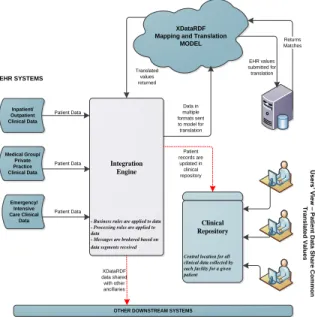
The design and development approach maintained through the creation of XDataRDF will adopt the design science research methodology (DSRM), a commonly accepted framework used in design science research [26]. XdataRDF demonstrate the flow of patient data from multiple sources through the EHRs
via an integration engine to the target systems. DSRM focuses on the following phases to successfully design and develop a solution – problem identification and motivation, objectives of the solution, design and development, demonstration, evaluation, and communication. To effectively and thoroughly address the research questions, an organized research approach will be taken. Figure 1 outlines the high-level methodology process to be followed based on DSRM.
To address the research questions, the proposed high level technical design of the research artifact illustrated in Figure 1 seeks to provide the answer. The functional specification of the design will capture the flow of data from the EHR systems (data input) to the clinical repository (transformed data output). The process specification of the design will demonstrate the flow of data from the EHRs to the integration engine to the mapping and translation model.
EHR values submitted for translation XDataRDF
Mapping and Translation MODEL
Integration Engine
- Business rules are applied to data - Processing rules are applied to data
- Messages are brokered based on data segments received
Clinical Repository
Central location for all clinical data collected by each facility for a given patient EHR SYSTEMS Returns Matches Inpatient/ Outpatient Clinical Data Medical Group/ Private Practice Clinical Data Emergency/ Intensive Care Clinical Data
OTHER DOWNSTREAM SYSTEMS
XDataRDF data shared with other ancillaries Translated values returned Patient records are updated in clinical repository D A T A S O U R C E S IN D IF F E R E N T F O R M A T S Data in multiple formats sent to model for translation Patient Data Patient Data Patient Data U s e rs ’ V ie w – P a tie n t D a ta S h a re C o m m o n T ra n s la te d V a lu e s
Figure 1. Proposed High Level Technical Design of XDataRDF Model
As the analysis of the RDF specifications proceeds, the factors to be considered in the design of the XDataRDF will include the RDF definitions, matching based on defined rules, matching based on name constructs, and matching based on common value inference. The translation of the data will reuse the RDF definitions of the W3C standards which makes the manipulation and transformation of data “homogeneous to a common RDF semantic model” ([37], 189). The ability to create a common translation model will be based on the semantic schema of RDF to determine the characteristics of the data vocabularies’ domains and ranges of their properties. Using the RDF
classes and properties schema, XDataRDF will make data inferences, leading to a common interpretation, based on the data vocabulary values stored in the SQL tables.
7. Summary
The review of the literature demonstrated that interoperability solutions previously proposed were primarily based on healthcare standards such as openEHR archetypes [6], [21], [23], [42], ISO 13606, semantic ontology using OWL mapping [18], [31], and HL7 standards [18], [33]. RDF, as a standard to achieve interoperability, was not incorporated in any of the proposed solution reviewed in the literature. While these solutions facilitated some interoperability functionality, they were proven to be limited and not scalable enough to allow for the application of new scenarios thus hindering the effective achievement of a broader scope of semantic interoperability [6]. Further, many researchers still claim that semantic interoperability within the healthcare sector has yet to be fully accomplished even with the implementation of the existing systems [8], [15], [18], [31], [42].
Compared to the existing systems, the proposed solution incorporates RDF as its foundation to achieve semantic interoperability. The proposed model unlike the previous solutions provides a complete package for health systems to achieve true interoperability. The application of RDF to achieve interoperability will allow for multiple data models and vocabularies to be easily combined and interrelate within a single health environment thereby reducing the chances of data ambiguity. Data accuracy and continuity of mappings provide the building blocks of semantic interoperability [31]. These factors are evident in the core of the RDF standard. Accuracy not only refers to the raw data but also includes the conformance with federal laws that apply to the achievement of semantic interoperability of healthcare data. Continuity of data mapping refers to the ability to incorporate any changes that occur in a standard over time, as a result of updates to the standards or federal mandate, and reflecting these changes in the mapping [15]. Overall, using RDF within the proposed translation model will ensure that the validity of the data mapped meets the level of accuracy necessary for the transformation of different health care standards within that environment thus promoting semantic interoperability.
While the suggested research focuses on the development of a single, common information model, further research opportunities and recommendations can include investigations into the implementation of
these types of artifacts within a single environment at a multi-facility hospital entity.
8. References
[1] Anguita, A., Garcia-Remesal, M., de la Iglesia, D., Graf, N., & Maojo, V. (2014). Toward a view-oriented approach for aligning RDF-based biomedical repositories. Methods of Information in Medicine, 53(4).
[2] Bahga, A., & Madisetti, V. K. (2013). A cloud-based approach for interoperable electronic health records (EHRs). IEEE Journal of Biomedical and Health Informatics, 17(5), 894-906.
[3] Bowles, K. H., Potashnik, S., Ratcliffe, S. J., Rosenberg, M., Shih, N.-W., Topaz, M., . . . Naylor, M. D. (2013). Conducting research using the electronic health record across multi-hospital systems: Semantic harmonization implications for administrators. Journal of Nursing Administration, 43(6), 355-360.
[4] Bravo, C., Suarez, C., Gonzalez, C., Lopez, D., & Blobel, B. (2014). Conceptual model formalization in a semantic interoperability service framework: Transforming relational database schemas to OWL. Studies in Health Technology Informatics, 200, 35-41.
[5] Cimino, J. J. (2007). Collect once, use many: Enabling the reuse of clinical data through controlled terminologies. Journal of AHIMA, 78(2), 24-29.
[6] Costa, C. M., Menárguez-Tortosa, M., & Fernández-Breis, J. T. (2011). Clinical data interoperability based on archetype transformation. Journal of Biomedical Informatics, 44(5), 869-880.
[7] D'Amore, J. D., Mandel, J. C., Kreda, D. A., Swain, A., Koromia, G. A., Sundareswaran, S., . . . Ramoni, R. B. (2014). Are Meaningful Use Stage 2 certified EHRs ready for interoperability? Findings from the SMART C-CDA Collaborative. Journal of the American Medical Informatics Association : JAMIA, 21(6), 1060-1068
[8] Dixon, B. E., Vreeman, D. J., & Grannis, S. J. (2014). The long road to semantic interoperability in support of public health: Experiences from two states. Journal of biomedical informatics, 49, 3-8.
[9] Duftschmid, G., Rinner, C., Kohler, M., Huebner-Bloder, G., Saboor, S., & Ammenwerth, E. (2013). The EHR-ARCHE project: satisfying clinical information needs in a shared electronic health record system based on IHE XDS and Archetypes. International Journal of Medical Informatics, 82, 1195-1207.
[10] EHR/HIE Interoperability Workgroup. (2014). Retrieved September 29, 2014, from
http://www.interopwg.org
[11] Fernández-Breis, J. T., Maldonado, J. A., Marcos, M., Legaz-García, M. D. C., Moner, D., Torres-Sospedra, J., . . . Robles, M. (2013). Leveraging electronic healthcare record standards and semantic web technologies for the identification of patient cohorts. Journal of the American Medical Informatics Association, 20(e2), e288-296.
[12] Furukawa, M. F., Patel, V., Charles, D., Swain, M., & Mostashari, F. (2013). Hospital electronic health information exchange grew substantially in 2008-12. Health affairs (Project Hope), 32(8), 1346-1354.
[13] Gabriel, M. H., Jones, E. B., Samy, L., & King, J. (2014). Progress and challenges: Implementation and use of health information technology among critical-access hospitals. Health Affairs, 33(7), 1262-1270.
[14] Goossen, W. T. F. (2014). Detailed clinical models: representing knowledge, data and semantics in healthcare information technology. Healthcare Informatics Research, 20(3),163-172.
[15] Hammami, R., Bellaaj, H., & Kacem, A. H. (2014). Interoperability for medical information systems: An overview. Health Technology, 4, 261-272.
[16] Hosapujari, A. B., & Verma, A. (2013). Development of a hub and spoke model for bus transit route network design. Procedia - Social and Behavioral Sciences, 104(0), 835-844. [17] Hufnagel S. P. (2009). National electronic health record interoperability chronology. Military Medicine, 5(35), 35-42.
[18] Khan, W. A., Hussain, M., Afzal, M., Amin, M. B., Saleem, M. A., & Lee, S. (2013). Personalized-detailed clinical model for data interoperability among clinical standards. Telemedicine Journal and E-health : The official Journal of the American Telemedicine Association, 19(8), 632-642.
[19] Khan, W. A., Khattak, A. M., Hussain, M., Amin, M. B., Afzal, M., Nugent, C., & Lee, S. (2014). An adaptive semantic based mediation system for data interoperability among Health Information Systems. Journal of Medical Systems, 38(8), 28
[20] Kobayashi, S., Kimura, E., & Ishihara, K. (2013). Archetype model-driven development framework for EHR web system. Healthcare Informatics Research, 19(4), 271-277.
[21] Laleci, G. B., Yuksel, M., & Dogac, A. (2013).
Providing semantic interoperability between clinical care and clinical research domains. IEEE Journal of Biomedical and Health Informatics, 17(2), 356-369.
[22] Martinez, D., Otegi, A., Soroa, A., & Agirre, E. (2014). Improving search over Electronic Health Records using UMLS-based query expansion through random walks. Journal of Biomedical Informatics, 51(0), 100-106.
[23] Menarguez-Tortosa, M. & Fernandez-Breis, J. T. (2013). OWL-based reasoning methods for validating archetypes. Journal of Biomedical Informatics, 46 (2), 304-317.
[24] Noblin, A., Cortelyou-Ward, K., Cantiello, J., Breyer, T., Oliveira, L., Dangiolo, M., . . . Berman, S. (2013). EHR implementation in a new clinic: a case study of clinician perceptions. Journal of Medical Systems, 37(4), 9955 [25] Ogunyemi, O. I., Meeker, D., Kim, H.-E., Ashish, N., Farzaneh, S., & Boxwala, A. (2013). Identifying appropriate reference data models for comparative effectiveness research (CER) studies based on data from clinical information systems. Medical Care, 51(8), S45-52.
[26] Peffers, K., Tuunanen, T., Rothenberger, M. A., & Chatterjee, S. (2007). A design science research methodology for information systems research.
Journal of Management Information Systems, 24(3), 45-77
[27] Premkumar, G., Ramamurthy, K., & Saunders, C. S. (2005). Information processing view of organizations: an exploratory examination of fit in the context of inter-organizational relationships. Journal of Management Information Systems, 22(1), 257-294.
[28] Prokosch, H., Ries, M., Beyer, A., Schwenk, M., Seggewies, C., Kopcke, F., … Burkle, T. (2011). IT infrastructure components to support clinical care and translational research projects in a comprehensive cancer center. Studies in Health Technology and Informatics, 169, 892-896.
[29] Saleem, J. J., Flanagan, M. E., Wilck, N. R., Demetriades, J., & Doebbeling, B. N. (2013). The next-generation electronic health record: perspectives of key leaders from the US Department of Veterans Affairs. Journal of the American Medical Informatics Association : JAMIA, 20, e175-e177.
[30] Sao, D., Gupta, A., & Gantz, D. A. (2013). Interoperable electronic health care record: a case for adoption of a national standard to stem the ongoing health care crisis. Journal of Legal Medicine, 34(1), 55-90
[31] Sinaci, A. A., & Laleci Erturkmen, G. B. (2013). A federated semantic metadata registry framework for enabling interoperability across clinical research and care domains. Journal of Biomedical Informatics, 46(5), 784-794. [32] Soguero-Ruiz, C., Lechuga-Suárez, L., Mora-Jiménez, I., Ramos-López, J., Barquero-Pérez, Ó., García-Alberola, A., & Rojo-Álvarez, J. L. (2013). Ontology for heart rate
turbulence domain from the conceptual model of SNOMED-CT. IEEE transactions on Bio-Medical Engineering, 60(7), 1825-1833.
[33] Song, T., Hyeoun-Ae, P., & Jin, D. (2014). Development of health information search engine based on metada and ontology. Healthcare Informatics Research, 20(2), 88-98.
[34] Tapuria, A., Kalra, D., & Kobayashi, S. (2013). Contribution of clinical archetypes, and the challenges towards achieving semantic interoperability for EHRs. Healthcare Informatics Research, 19(4), 286-292.
[35] Tao, C., Pathak, J., Solbrig, H. R., Wei, W., & Chute, C. G. (2011). LexRDF model: an RDF-based unified model for heterogeneous biomedical ontologies. CEUR Workshop Proceedings, 521(3), 1-8.
[36] United States Department of Health and Human Services. (2014). Health information policy. Retrieved September 29, 2014, from
http://www.hhs.gov/ocr/privacy/hipaa/administrative/enforce mentrule/hitechenforcementifr.html.
[37] Vion-Dury, J. (2013). Using RDFs/OWL to ease semantic integration of structured documents. ACM: DocEng ’13 Proceedings of the 2013 ACM symposium on Document Engineering, 189-192
[38] Weng, C., Li, Y., Berhe, S., Boland, M. R., Gao, J., Hurby, G. W., … Bigger, J. T. (2013). An Integrated Model for Patient Care and Clinical Trials (IMPACT) to support clinical research visit scheduling workflow for future learning health systems. Journal of Biomedical Informatics, 46(4), 642-652.
[39] Willighagen, E. L., Waagmeester, A., Spjuth, O., Ansell, P., Williams, A. J., Tkachenko, V., . . . Wild, D. J. (2013). The ChEMBL database as linked open data. Journal of Cheminformatics, 5, 1-12.
[40] World Wide Web Consortium (W3C). Retrieved September 29, 2014, from https://www.w3.org/TR/rdf-schema/
[41] Yu, C. H., & Hunter, J. (2013). Documenting and sharing comparative analyses of 3D digital museum artifacts through semantic web annotations. ACM Journal on Computing and Cultural Heritage, 6(4), 1-20.
[42] Zunner, C., Ganslandt, T., Prokosch, H. U., & Burkle, T. (2014). A reference architecture for semantic interoperability and its practical application. Studies in Health Technology and Informatics, 198, 40-46