City, University of London Institutional Repository
Citation:
Brook, J. ORCID: 0000-0002-8867-0150, Rayment, J., Bryar, R. and Olander, E. K. ORCID: 0000-0001-7792-9895 (2018). Midwifery students' experiences in a health visiting placement: An interview study. Journal of Health Visiting, 6(11), pp. 552-559. doi:10.12968/johv.2018.6.11.552
This is the accepted version of the paper.
This version of the publication may differ from the final published
version.
Permanent repository link:
https://openaccess.city.ac.uk/id/eprint/21306/Link to published version:
10.12968/johv.2018.6.11.552Copyright and reuse: City Research Online aims to make research
outputs of City, University of London available to a wider audience.
Copyright and Moral Rights remain with the author(s) and/or copyright
holders. URLs from City Research Online may be freely distributed and
linked to.
City Research Online: http://openaccess.city.ac.uk/ [email protected]
City Research Online
1
Title Page
MIDWIFERY STUDENTS’ EXPERIENCES IN A HEALTH VISITING PLACEMENT: AN INTERVIEW STUDY WITH STUDENTS AND MENTORS
Word count: 4574
Judy Brook – Corresponding Authora, Juliet Raymentc, Rosamund M Bryard, Ellinor
Olanderb
aStrategic Head of Practice and Senior Lecturer in Health Visiting, School of Health Sciences,
City, University of London, Northampton Square, London EC1V 0HB, United Kingdom
+44 20 7040 0361
bSenior Lecturer in Maternal and Child Health, School of Health Sciences, City, University of
London, United Kingdom
+44 20 7040 5468
cResearch Associate in the Centre for Maternal and Child Health Research, City, University of
London, United Kingdom
[email protected] 07764499361.
dProfessor Emeritus, Centre for Maternal and Child Health Research, City, University of
London, United Kingdom
Funding: This research did not receive any specific grant from funding agencies in the public, commercial, or not-for-profit sectors.
Declaration of interest: The authors report no conflicts of interest. The authors alone are responsible for the content and writing of this article.
Acknowledgements: We would like to thank the students and mentors who generously contributed their time to participate in this study.
Key words: Interprofessional working, collaborative working, midwifery students, health visitors, clinical practice placements
2 ABSTRACT
In the UK, there is a clear remit for midwives and health visitors to work collaboratively to care for pregnant women and new mothers. This study evaluated a clinical placement for midwifery students with health visitor mentors. The evaluation explored the experience of mentors and students during the placement, the effect on understanding of the different roles and potential effect on collaborative working in the future. Results indicated students developed their knowledge of the health visitor role and learned transferrable skills to take back to midwifery. They saw little collaborative practice but identified ways to incorporate interprofessional working into their practice once qualified. Mentors were positive about sharing health visiting practice and the potential impact on relationships in the future.
Key Points
There is a clear policy remit for health visitors and midwives to work collaboratively but this is not common practice
Midwifery students know very little about the role of the health visitor, which may impact on their motivation to work collaboratively once qualified
A short placement for midwifery students with health visitor teams enabled them to learn about the health visitor role and a holistic, social model of health.
Health visitor mentors valued the opportunity to dispel negative stereotypes and demonstrate health visiting practice.
There is a need to supplement clinical practice placements with the inclusion of interprofessional learning between the midwives and health visitors in education curricula.
3
Health visitors, Midwifery students, clinical practice placements, collaborative working, Students, Interprofessional working
4 INTRODUCTION AND BACKGROUND
Improved collaborative working between health professionals is a longstanding international priority to mitigate pressures on the health workforce (World Health Organisation (WHO) 2010). In the UK, there are areas of significant overlap between the work of midwives and health visitors and a clear policy remit for partnership working between the professions (Department of Health, 2009, Welsh Government, 2011, NHS England, 2014, Scottish Government, 2017) to collectively deliver safe and personalised care for families. In addition, women highlight the importance of professionals working together to deliver seamless care (NHS England 2016). Both sets of professionals are regulated by the Nursing and Midwifery Council (NMC) Code (NMC, 2016) and are required to
demonstrate skills in collaborative working as part of their professional standards (NMC, 2009). Despite this shared population and regulatory agenda, a recent systematic review (Aquino et al., 2016) found that in clinical practice, collaboration between health visitors and midwives was challenging; although collaborative work was valued by individual practitioners, evidence suggested that interprofessional working to support families perinatally was rare and of limited success.
If, as WHO suggest, collaborative practice occurs when ‘multiple health workers from different professional backgrounds work together with patients, families, carers and
communities to deliver the highest quality of care’ (WHO, 2010 P7), this can be promoted by health and education systems working together to coordinate health workforce strategies. Key to success is the resolve to shift attitudes of health workers, leading to a change in culture across professions. Interprofessional education plays an important role in enhancing
5
healthcare students’ attitudes and perceptions towards collaboration and clinical decision making (Lapkin et al., 2011; Coster et al., 2008) and there is a substantial body of evidence to support the impact of educational preparation on pre-registration students’
interprofessional working (Murdock et al., 2017). Many healthcare education programmes incorporate placements, where students spend time in clinical environments, learn clinical skills and experience the reality of the clinical context. As such, placement experience plays a key part in socialising the student (Pollard, et al., 2012). It is therefore important to ensure that the quality of students’ experience of interprofessional collaborative working in practice is high, particularly to avoid the reinforcement of negative stereotypes.
Despite support for interprofessional education, there are still significant gaps in the evidence base, particularly whether interprofessional as opposed to single discipline
education has a greater influence on students’ attitudes towards other disciplines (Kent and Keating (2015), and support for interprofessional education in maternity services (Davies et al., 2016) that takes into account the specific context of maternity care. Interprofessional placements have been used to maximise placement opportunities for healthcare students but more evaluation is needed to clarify whether this is an effective approach (Smith and Seeley, 2010). Given the complex mix of professionals working closely together in with pregnant women and new mothers, there are few practice examples of how partnership working between health visitors and midwives can be promoted within higher education. Notable exceptions are an evaluation of an interprofessional working project between midwifery and public health nursing students in Norway (Aune and Olufsen 2013), and an example of integrated collaborative working in the first year of a UK undergraduate
6
working in the theoretical element of the programmes and there are few published studies exploring the experiences of learning from the perspective of interprofessional facilitators (Atrill et al., 2018). The clinical practice component has an equally significant influence on future working practice (Doyle et al., 2017) and is particularly important as students feel they gain most benefit from practice-based activities (Illingworth and Chelvanayagam, 2017).
This paper reports on a study that evaluated the experiences of midwifery students who undertook a one-week educational clinical practice placement within health visiting teams. The placement was implemented as one way to try to enhance interprofessional working between health visitors and midwives. Whilst health visiting placements are widely used in pre-registration nurse training, they are less common in midwifery training. The placements were arranged in partnership with clinical practice providers and as such demonstrated joint workforce strategy. The evaluation was implemented in order to better consider the utility of such placement to promote more effective collaboration following qualification as a midwife and involved interviews with participating students and mentors. The focus is on three key areas:
1. The understanding that students developed of the health visitor role
2. The experience students reported of interprofessional collaboration in practice 3. The potential impact of this learning on collaboration between midwives and health
visitors in practice
7
Educational setting
The student participants were in the first year of a three-year, full time, direct-entry midwifery programme leading to a Bachelor of Science degree (BSc) in Midwifery. The health visiting placements were scheduled in their first placement block, within six months of the start of their course. The students had previously experienced midwifery placements such as delivery suite, postnatal ward or community midwifery practice but these differed between students. The placement with a health visiting team lasted five consecutive days and was intended to give students insight in to the health visiting service. Students were invited to participate if they had attended the placement.
The students were each allocated a mentor, as per NMC standards to support learning and assessment in practice (NMC 2008), who was employed in one of a number of different health visiting teams based in health centres and children’s centres in East London. Mentors were invited to take part in the study if they had supported one of the midwifery students.
Sampling and data collection
Students
All the student midwives who had attended the week-long placement (n=18) were invited by email to participate in this study. After a follow up reminder email, ten students
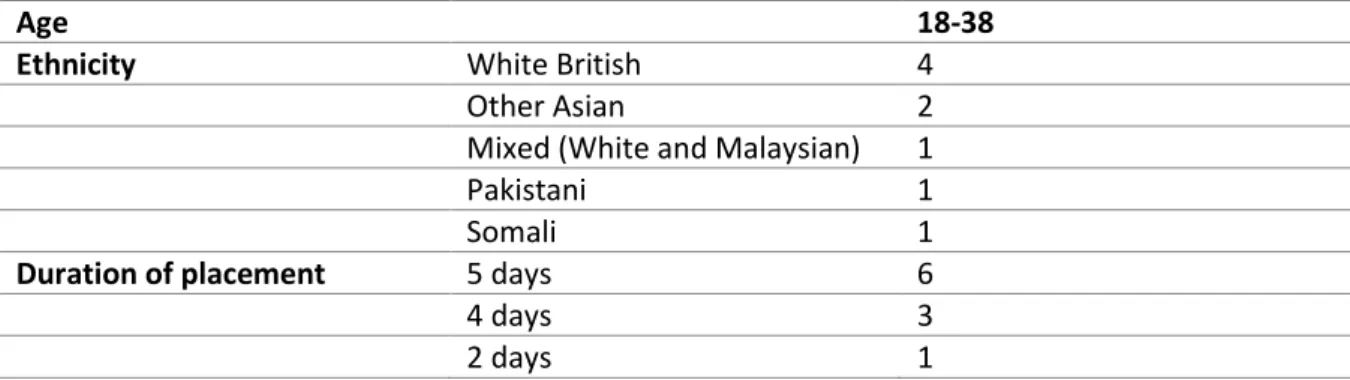
volunteered to participate. Details of the students can be found in Table 1.
Semi-structured interviews lasting between 10 and 60 minutes were conducted within five weeks of the end of the placement. Eight interviews were conducted via telephone, one interview was conducted face-to-face, and one student responded by email. All interviews
8
were audio recorded and transcribed. Students were offered a £5 online shopping voucher to thank them for their time. Questions were designed to explore students’ knowledge of health visiting and subsequent learning, their expectations and experiences of the
placement.
Mentors
Mentors were invited to take part in the study via email. Fifteen out of 18 mentors took part in an interview. Twelve of the mentors’ interviews were audio recorded and
transcribed. Three were recorded using written notes. Further details of the mentors can be found in Table 2.
The focus of the mentors’ interviews included positive and negative aspects of the mentor’s experience with the student and benefits of the placements regarding student learning.
Ethical considerations
The project was granted ethical approval by the authors’ University Research Ethics Committee (reference MCH/PR/Staff/16-17/07) and by the Associate Medical Director of the relevant NHS organisation. An experienced, independent researcher carried out 9/10 of the student interviews to encourage open and honest dialogue as they were independent of the midwifery team and students may have felt less obliged to give positive feedback. The mentors were interviewed by two health visitor members of the research team. All
participants gave informed consent before participating in the study.
Analysis
Transcripts were checked for accuracy, anonymised and then sifted and coded using NVivo software. Analysis followed the six-phase guide outlined by Braun and Clarke (2006) as this
9
allowed access to the ‘thick description’ of the data set and uncovered insights in to the perspectives of the student midwives and mentors. Iterative reading of transcripts led to identification of codes and agreement of dominant themes. Analysis was conducted by the independent member of the research team with further scrutiny and corroboration of the themes by other members of the research team.
The analytic process of coding and writing generated a hierarchy of themes, which form the structure of the following results section and are illustrated in Figure 1.
RESULTS
Four themes were identified in the analysis that linked to interprofessional working: skills and learning, the value of the placement, relationships between health visitors and midwives and the potential impact of learning on collaboration. These and the associated sub-themes are described below and will be further discussed in relation to the aims of the study in the discussion section.
1. Skills and learning Knowledge of Health Visiting
Before the placement, students’ knowledge and understanding of the role of health visitors was limited. Some students had never heard of health visiting and others’ understanding was limited only to the universal services such as baby weighing or infant feeding, or shaped by their own experiences as parents:
10
I didn’t really know what they did, just that they were there to help with the immunisations…I went in with no expectations, no idea of what to expect (Student A).
Students reported surprise at the diversity and scope of the health visitors’ role, which in these placement experiences included domestic violence, housing, children with special needs, mental health, public health and a variety of multi-agency collaborations.
For many students, the placement was their first direct encounter with families’ deprived living conditions: ‘I mean some people’s homes you walked into and you just thought, oh my God, I can’t believe people actually live like this’ (Student O). Others found that their time with the health visitor challenged their assumptions in unexpected ways:
In that one day we visited that mum [living in deprived circumstances] and then in the, in the next visit, we visited someone in a house worth like half a million pounds and (the first) mum was quite comfortable and (the second) mum had real issues: completely two different ends of the spectrum. (Student G)
Transferable skills
When asked about aspects of health visiting that might be relevant to midwifery, many mentors focussed on antenatal or new birth visits and gave examples of discussions with students and with families about birth, examination of young babies, breastfeeding, minor illnesses and other more obvious areas of overlap. However, other mentors also recognised that some core health visiting skills were transferable to midwifery, particularly having a holistic perspective on a mother and her family:
11
As health visitors we have to basically do a thorough assessment. It’s not just about what we see or what, it’s not about what clients would say to us, it’s about how we observe everything… So, I’m hoping that she learnt how to do a thorough
assessment and … use her eyes mainly and look around the environment and also see how the child’s responding and how parents are reacting with the child as well. (Mentor 2)
Similarly, when asked what they had learned about midwifery from their placement, many students referred to more directly related topics such as the content of new birth visits, documentation and breastfeeding support. Others, however, found the holistic, public health perspective of health visiting to be potentially valuable, and contrasted it with their experiences in midwifery, which was often more narrowly concerned with the physical health of the mother and baby. In one powerful example, a student described the impact of this new perspective:
Before I went to my health visiting [placement], my mind was just focused on pregnancy, pregnancy, pregnancy and mums. But after I went to health visiting (…) I’d go outside the clinic and then just jot down some points. From my one there was lots of mosques and chip shops and then how that influences obesity, young
population, pregnancy, teen pregnancy and then we had discussions at the end of the week on how this could influence the care that the health visitors give for instance. (…) That made me think outside maternity, which was good. (Student C)
Students noted observing other health visiting skills, for example communication, that were relevant to their midwifery practice:
12
Before they did something they would always ask the woman, ‘can I do this, can I do this? Are you happy, are you comfortable?’ in open questions (…)There was an open pathway I suppose for them to communicate back to me about what their worries was and that, I suppose. (Student C)
However, one student, felt that her mentor communicated in a way that as a midwife, she had been taught to avoid:
I do think they were telling people what to do, as opposed to trying to say ‘what do you think you should do?’ and try and find out, giving them more and more options. They were sort of: ‘you need to do this, you need to do that’, and it was finite, there was no arguing with me [the health visitor] (Student O).
Mentors valued the placement as they felt it would help students to learn about the role of the health visitor and that this in turn would help their midwifery practice when facilitating the transition of a patient from one service to the other.
I think that for the students, spending some time with us (….), they are able to pass that information to the parent to say, oh this is what health visitors do, they follow you up to this stage, up to five, they understand the activities they might be able to do with you. So I believe that that is very big advantage because at least they’ve seen the other part of our roles. (Mentor 6)
2. The value of the placement
Overall, the placements received positive feedback from both students and mentors. Students recommended expanding the programme:
13
I think they should do it, everyone should get the opportunity [to attend health visiting placement]. Because I know only a select few got that opportunity in this block of placement. And I think it is, it’s good, it’s, it’s a good insight and it’s invaluable knowledge (Student G)
I think what it did it helped, when I came back to community after health visiting it made me feel more confident and all rounded and it particularly helped me enhance my communication skills because often with midwifery you just have a list of things that you say to every woman but with health visiting it was so unique. (Student N)
Not all of the students’ feedback was positive. The most important factor influencing
whether a student enjoyed their placement was the use of their time and mentors’ advance planning. Students appreciated those mentors who had scheduled activities in advance, including collaborating with colleagues to ensure the student was constantly engaged:
My mentor, she was lovely. She knew that I was only there for a week and she wanted me to see everything. (…) So she gave me a really holistic view of what health visitors do in a week. (Student N)
Despite these efforts, students struggled with observing practice when in clinical midwifery placements they were used to taking a more active role. Mentors also recognised the limits to students’ activities during placements.
Sometimes there was very little to do apart from watch people do admin. You couldn't really get involved practically as you are not training to be a Health Visitor (Student L)
14
Students reported seeing very little interaction between practising midwives and health visitors, either in their midwifery or health visiting placements. Any interactions were limited to short phone calls or reading each other’s documentation. Student H explained:
I felt like there’s barriers there, I can’t put my finger on it, there is a bit of barriers between health visitors and midwives, (…)I think just sometimes it’s almost like I feel like everyone needs a big training on what everyone does just so everyone can respect and understand each other a bit more. (Student H)
However, both mentors and students acknowledged the importance of relationships between health visitors and midwives, even if they had not seen it in clinical practice, and felt that collaborative working should be more prevalent. A good working relationship was felt to support communication between both sets of professionals and to enhance the continuity of care given to families, deemed particularly important where the families had additional needs.
I don’t feel there’s much interaction between either of them, I feel like the midwives hand over work to the health visitors and it might be one call then that’s as far as it goes, I don’t feel there’s any further contact. And I think there should be…it would be good if health visitors and the midwives were there at the same time to give continuity for the client, rather than we’re done with you and now it’s the health visitor. (Student A)
When things aren’t right like with safeguarding I think it’s good for midwives and health visitors to have a relationship with each other. But generally I think they write in the same books but never cross paths. (Student I)
15
4. The potential impact of learning on collaboration
Many mentors were cautiously optimistic that the placement may make a difference in the future by enhancing midwives’ understanding of the health visitor’s role:
I definitely felt that it would give an insight into what we do and I would hope that it would encourage more, yeah more, more liaison, I guess. But I think, whether in reality it turns into a really big thing, I’m not certain, because of the time restraints that, that we all work under. (Mentor 1)
However, some consideration needs to be given to the timing of the placement, as one mentor suggested: ‘By the time they’ve finished, how much of health visiting would they actually remember? Only having that week in that first year?’ (Mentor 3).
Students felt thatalthough collaborative working was valuable and should be encouraged, there were systemic barriers that prevented effective interprofessional working. These were linked to different service remits, data systems and resources such as time.
There was no actual connection in any way at all. Even on the computer systems, the notes or anything, nothing. (…) If they were looking or trying to find or locate a woman, they had to do it independently as in go through and check her previous notes in relation to the health visiting side of it, they didn’t get into contact with midwifery or anything. (Student A)
Despite these challenges, students reported that understanding the role of the health visitor through the placement would change the way they worked in the future:
It was good to see when we went to visit the new born babies because then that gave me a little bit further knowledge on what health visitor’s done once the
16
midwife had finished (...) So that was good for me to know, so if mum then says, what is the health visitor going to do, I can say, well, they’ll do X, Y and Z. (Student G)
Both students and mentors acknowledged the importance of interprofessional working and the positive contribution that this placement could make to influencing collaborative practice.
DISCUSSION
The aim of this exploratory study was to identify students’ understanding of the health visitor role, the experience students reported of interprofessional collaboration and the potential impact of this learning on collaboration between midwives and health visitors in clinical practice. Students in this study had limited knowledge of the health visitor role prior to their placement. Aquino et al., (2016) found that poor knowledge of each other’s role was a significant impediment to collaboration between health visitors and midwives, a finding reiterated by Olander et al., (2018) when evaluating multiprofessional collaborative workshops. If professionals do not work regularly together, segregation can lead to
misunderstanding and adoption of negative stereotypes, which can be reinforced by poor experiences or relationships between professions (Barnes et al., 2010). One benefit of this placement was the opportunity for mentors and students to experience each other’s roles, increase their understanding and counter prejudice. Given the students’ lack of knowledge about health visiting, and the length of the clinical placement, understanding of role could also be reinforced through academic teaching to prepare the midwifery students prior to the placement.
17
Mentors are key to mediating learning, using language that offers positive concepts of collaboration and professional identity, and in scaffolding learning through reflection on difference (Nowell et al., 2017). Students who were able to build on their existing
knowledge to construct and internalise a new concept of the profession may be more likely to sustain their motivation to work interprofessionally on qualification. Although there is limited evidence of the benefits of pre-qualifying interprofessional education (Kent and Keating, 2015; Davies et al., 2016), Pollard et al. (2012) reported that students who engaged in interprofessional learning only realised the value of their experience once they were in practice after qualification, when they understood its contribution to their preparation for their role and it had a direct impact on the way they delivered services. This may explain some of the less positive comments, particularly around the pace of service delivery or not having enough to do. It is possible that the students were not supported to unpick the complexity and nuance of health visitor practice (van Iersel et al., 2016).
The results indicate that the value students and mentors placed on their relationship
impacted on perceptions of success. The enthusiasm of both parties was seen to be integral to an enjoyable and productive placement. The participants in this study were a
self-selecting sample and it is not surprising that we predominantly attracted those students who had enjoyed at least part of their experience. It is likely that there were others who did not enjoy the placement and declined to take part, and may have offered different
perspectives.
The nature of this interpersonal relationship has been linked to the development of the student’s trust, empathy and ability to relate to patients (Rebeiro et al., 2015), and in turn, their development of communication skills such as compassion (Lin et al., 2013) and
18
emotional intelligence (Barriball et al., 2011; Bauvais et al., 2011). The interactions that the mentor role models will shape the professional identity of the student (Bryan et al., 2013) and support them to develop transferrable skills for midwifery practice. This was evident in the comments from students about whether or not they felt they observed good
communication skills demonstrated by their mentors and aligned to perceiving mentors to be skilled, autonomous and credible (Baillie, 1993).
Students reported seeing little collaborative working between health visitors and midwives in practice. Considering the centrality of placement learning in midwifery students’
education (forming 50% of the programme in the UK) and its impact on student learning, observing good interprofessional working is important. Priest et al., (2011) reiterate the importance of implementing strategies to enhance collaborative working at the earliest opportunity to prevent negative stereotypes developing, which supports the inclusion of these placements in the first year of the midwifery programme. Embedding this learning is likely to depend on continued role modelling by mentors and other staff (Felstead and Springett, 2016) so it is concerning that students had not consistently observed good collaboration between midwives and health visitors. Mentors as role models play a
significant role in the socialisation process and shaping the future workforce (Vinales, 2015). These findings reiterate the need to monitor placement quality and ensure mentors are aware of the impact their professional behaviour and attitudes have on students’ future practice.
Challenges to collaborative working include allegiance to professional cultures, leadership, responsibility and conflicts around different approaches to care delivery (Aquino et al., 2016; Cheng, et al., 2018) and it would seem that some of these barriers were evident to the
19
students in placement. Indeed, one student identified that midwives and health visitors worked to ‘different agendas’, which may be attributed to the underpinning paradigms of the two professions, compounded by a health service performance culture driven by
predetermined outcome measures. Aquino et al. (2016) cited divergent philosophies of care as a barrier to collaboration, leading to fragmented service delivery. This divide could be countered by the extent to which health visitor and midwifery students are taught together in university. Current practice is more often for professions to be taught separately in Higher Education Institutes, reinforcing the idea that health visitors and midwives are two
unconnected services (Ridley and Smith, 2016). Opportunities to learn together create opportunities for collaboration, sharing knowledge of each other’s role and gaining confidence with interprofessional communication (Illingworth and Chelvanayagam, 2017).
One ambition of this study was to explore the potential effect of the placement on collaborative working between midwives and health visitors. It was difficult to judge the impact this type of placement might have on these interactions, especially with a small number of participants. As the students were in their first year of training, any impact the placement might have on their work as qualified midwives will take a number of years to become apparent. As knowledge of the roles of different professionals enhances the likelihood of working effectively together and reduces professional stereotyping (Barnes et al., 2010), and students’ awareness of the value of collaborative working for patient
outcomes was raised by this short placement, there is the potential for a more effective collaborative culture to flourish.
Reassuringly, both students and mentors acknowledged the importance of interprofessional working and the positive contribution that this placement could make to influencing
20
collaborative practice, with students citing ways that they would work differently in the future. With the clear policy agenda for midwives and health visitors to work together and train together (NHS England, 2016) as a mechanism for generating respect between
professions, the door is opened for incorporating interprofessional learning in academic curricula to both prepare for and reinforce the value of working more closely together in clinical practice. With a parallel approach to interprofessional learning in practice and in academia, significant advances could be made towards collaboration of the future workforce.
Strengths and limitations
This study has several strengths. First, all except one of the interviews were conducted by researchers independent of the midwifery teaching team, allowing participants to feel more able to share their true feelings about the placement. Second, this study adds to the
existing but limited literature on student learning about collaborative working between midwives and health visitors by reiterating the positive impact and benefits of this approach.
This is a small, exploratory study and participants were a self-selecting sample. We
predominantly attracted those students who had enjoyed at least part of their experience. It is likely that there were others who did not enjoy the placement and declined to take part, supported by comments by some mentors who described the students as being disengaged or uninterested. Additionally, not all students completed the 5 day placement for a variety of reasons including sickness and personal issues, and this may have impacted on their perspective of the placements and the conclusions that we can draw.
21
This study sought to explore the experiences of midwifery students who undertook a short educational clinical practice placement within health visiting teams. The findings suggest that students valued the placement because it allowed them to learn about the health visitor role and gave them insight in to a holistic, social model of health. Their enjoyment of the placement was mediated by the role of the mentors, who reported positively on the opportunity to dispel negative stereotypes and demonstrate health visiting practice. Students reported limited examples of collaboration between health visitors and midwives, reiterating the need to supplement clinical practice placements with the inclusion of
22 REFERENCES
Aquino M. R. J., Olander E. K., Needle J. and Bryar R. M. (2016) Midwives’ and health visitors’ collaborative relationships: A systematic review of qualitative and quantitative studies International Journal of Nursing Studies 62 193–206
Atrill, S., Brebner, C. and Marsh, C. (2018) Learning from students: Facilitators’ learning in interprofessional placements, Journal of Interprofessional Care,
DOI:10.1080/13561820.2018.1470497
Aune, I. and Olufsen, V. (2014) ‘From fragmented to interdisciplinary understanding of integrated antenatal and postnatal care’—An interprofessional project between public health nursing students and midwifery students, Midwifery, Volume 30, Issue 3, March 2014, Pages 353-358
Baillie, L. (1993) Factors affecting student nurses’ learning in community placements: A phenomenological study. Journal of Advanced Nursing, 18(7) 1043-1053
Barnes D., Carpenter J. and Dickinson C. (2010) Interprofessional education for community mental health: Attitudes to community care and professional stereotypes, Social Work Education Volume 19, Issue 6 565-583
Barriball, L., Fitzpatrick, J., Roberts, J., (2011) Emotional intelligence: its relationship to stress, coping, well-being and professional performance in nursing students. Nurse Educ. Today 31 (8), 855–860.
Bauvais, A.M., Barclay, L., Farrington, C. and kildea, S. (2012) From hospital to home: the quality and safety of a postnatal discharge system used for remote dwelling Aboriginal mothers and infants in the top end of Australia. Midwifery. 28 (3), 366-373
Braun V. and Clarke V. (2006) Using thematic analysis in psychology. Qualitative Research in Psychology, 3 (2). pp. 77-101. ISSN1478-0887
Bryan, V.D., Weaver, S., Anderson-Johnson, P., Lindo, J.M.L., (2013) The effect of
interpersonal relationships between nursing students and lecturers on learning outcomes at a Jamaican nursing school. Caribbean Journal of Nursing 1 (1), 41–48.
Cheng, H.C., de Costa, C. and Woods, C. (2018) Medical students and midwives – How do they view each other?, Aust N Z J Obstet Gynaecol 2018; 1–4, DOI: 10.1111/ajo.12803 Coster S., Norman, I., Murrells, T., Kitchen, S., Meerabeau, E., Sooboodoo, E. and d'Avery, L. (2008) Interprofessional attitudes amongst undergraduate students in the health
professions: A longitudinal questionnaire survey. International Journal of Nursing Studies 45: 1667-1681.
Davies, N., Fletcher S., and Reeves S. (2016) Interprofessional education in maternity services: Is there evidence to support policy? Journal of Interprofessional care 30.6: 812-815.
23
Department of Health (2009) Healthy Child Programme: Pregnancy and the first five years of life Available at: https://www.gov.uk/government/publications/healthy-child-programme-pregnancy-and-the-first-5-years-of-life Accessed 09.06.17
Doyle, K., Sainsbury, K., Cleary, S., Parkinson, L., Vindigni, D., McGrath, I. and Cruikshank, M. (2017) Happy to help/happy to be here: Identifying components of successful clinical
placements for undergraduate nursing students, Nurse Education Today, 49, PP27-32 Felstead, I.S. and Springett, K. (2016) An exploration of role model influence on adult nursing students’ professional development: A phenomenological research study, Nurse Education Today, 37 (2016) 66–70, http://dx.doi.org/10.1016/j.nedt.2015.11.014
Illingworth, P. and Chelvanayagam, S. (2017) The benefits of interprofessional education 10 years on, British Journal of Nursing, 2017, Vol 26, No 14, PP813-818
Kent, F. and Keating, J.L. (2015) Interprofessional education in primary health care for entry level students — A systematic literature review, Nurse Education Today, Volume 35, Issue 12, December 2015, Pages 1221-1231. https://doi.org/10.1016/j.nedt.2015.05.005
Lapkin S., Levett-Jones T. and Gilligan C. (2013) A systematic review of the effectiveness of interprofessional education in health professional programs, Nurse Education Today 33, 90– 102
Lin, E.C.-L., Chen, S.-L., Chao, S.-Y., Chen, Y.-C., (2013) Using standardized patient with immediate feedback and group discussion to teach interpersonal and communication skills to advanced practice nursing students. Nurse Educ. Today 33 (6), 677–683.
Murdock, N.L., Epp, S. and Vinek, J. (2017) Teaching and learning activities to educate nursing students for interprofessional collaboration: A scoping review, Journal of Interprofessional Care, VOL. 31, NO. 6, 744–753
https://doi.org/10.1080/13561820.2017.1356807
NHS England (2014) 2015 – 16 National Heath Visiting Core Service Specification, Available
at: https://www.england.nhs.uk/?s=health+visitors Accessed 09.06.17
NHS England (2016) The National Maternity Review, Available at:
www.england.nhs.uk/ourwork/futurenhs/mat-review, Accessed 09.06.17
Nowell, L., Norris, J. M., Mrklas, K. & White, D. E., (2017) A literature review of mentorship programs in academic nursing. Journal of Professional Nursing, Volume 33, pp. 334-344. Nursing and Midwifery Council (2016) The Code: Professional standards of practice and behaviour for nurses and midwives, Available at: https://www.nmc.org.uk/standards/code/ Nursing and Midwifery Council (2009) Standards of competence for registered midwives, Available at: https://www.nmc.org.uk/standards/additional-standards/standards-of-competence-for-registered-midwives/
24
Nursing and Midwifery Council (2008) Standards to support learning and assessment in practice, Available at:
https://www.nmc.org.uk/standards-for-education-and-training/standards-to-support-learning-and-assessment-in-practice/
Olander, E.K., Rayment, J., Bryar, R. and Brook, J. (2018) Midwifery students in health visitor placements: the importance of student-mentor relationships, Midwifery 62 (2018) 49–51,
https://doi.org/10.1016/j.midw.2018.03.014
Pollard K., Miers E. and Rickaby C. (2012) “Oh why didn’t I take more notice?” Professionals’ views and perceptions of pre-qualifying preparation for interprofessional working in practice Journal of Interprofessional Care, 2012, 26: 355–361
Priest, H., Roberts, P., Dent, H., Hunt, T., Weston, D., Chell, A., Blincoe, C. and Armstrong, C. (2011) Preparing for collaborative working in mental health: an interprofessional education project with clinical psychology trainees and nursing students, The Journal of Mental Health Training, Education and Practice, Vol. 6 Issue: 1, pp.47-57,
https://doi.org/10.1108/17556221111136161
Rabeiro, G., Edward, K-L., Chapman, R. and Evans, A. (2015) Interpersonal relationships between registered nurses and student nurses in the clinical setting—A systematic integrative review, Nurse Education Today 35 (2015) 1206–1211,
http://dx.doi.org/10.1016/j.nedt.2015.06.012
Ridley, N. and Smith, C. (2016) The case for collaborative learning: Introducing opportunities in the higher education setting. British Journal of Midwifery, 24 (4). pp. 282-285.
Scottish Government (2017) The Best Start: A Five-Year Forward Plan for Maternity and Neonatal Care in Scotland Available at:
http://www.gov.scot/Publications/2017/01/3303/downloads [Accessed 09.07.18]
Smith, P.M. and Seeley, J. (2010) A review of the evidence for the maximization of clinical placement opportunities through interprofessional collaboration, Journal of
Interprofessional Care, 24(6) 690-698
van Iersel, M., Latour C.H.M, de Vos R., Kirschner P.A. and Scholte op Reimer, W.J.M (2016) Nursing students’ perceptions of community care and other areas of nursing practice – A review of the literature, International Journal of Nursing Studies 61, 1–19
Vinales J. J. (2015) The mentor as a role model and the importance of belongingness, British Journal of Nursing, Vol 24, No 10
Welsh Government (2011) A Strategic Vision for Maternity Services in Wales, Available at: https://gov.wales/topics/health/professionals/nursing/early/?lang=en [Accessed 09.07.18] World Health Organisation (2010) Framework for Action on Interprofessional Education and Collaborative Practice (WHO/HRH/HPN/10.3) (Geneva, Switzerland).
25
Figure 1: Diagrammatic representation of themes from thematic analysis
Skills and learning Value of the placement Relationship between health visitors and midwives Impact of learning on collaboration Knowledge of health visiting Transferrable skills
26 Table 1: Students’ Demographic Information
Age 18-38
Ethnicity White British 4
Other Asian 2
Mixed (White and Malaysian) 1
Pakistani 1
Somali 1
Duration of placement 5 days 6
4 days 3
2 days 1
Table 2: Mentors’ Demographic Information
Age 26-57
Ethnicity Black African 4
Black British 2 Black Caribbean 1 African 1 White British 1
Length of time in health visiting
2-16 years
Previous Profession Nursing 9