BIROn - Birkbeck Institutional Research Online
Skovgaard-Olsen, N. and Kellen, D. and Hahn, Ulrike and Klauer, K.C. (2019)
Norm conflicts and conditionals. Psychological Review 126 (5), pp. 611-633.
ISSN 0033-295X.
Downloaded from:
Usage Guidelines:
Please refer to usage guidelines at or alternatively
Norm Conflicts and Conditionals
Niels Skovgaard-Olsen University of Göttingen
David Kellen Syracuse University
Ulrike Hahn Birkbeck University Karl Christoph Klauer
Albert-Ludwigs-Universität Freiburg
Author Note
Niels Skovgaard-Olsen, Department of Psychology, Cognition and Decision Making, University of Göttingen, Göttingen, Germany. David Kellen, Department of Psychology, Syracuse University, USA. Ulrike Hahn, Department of Psychology, Birkbeck University, UK. Karl Christoph Klauer, Department of Psychology, Albert-Ludwigs-Universität Freiburg, Freiburg Germany.
This work was supported by grants to Wolfgang Spohn and Karl Christoph Klauer from the Deutsche Forschungsgemeinschaft (DFG) as part of the priority program “New Frameworks of Rationality” (SPP 1516). David Kellen received support from Swiss National Science Foundation Grant 100014_165591. Ulrike Hahn received support from the Humboldt Foundation.
Correspondence concerning this article should be addressed to Niels Skovgaard-Olsen ([email protected], [email protected]).
2 Abstract
Suppose that two competing norms, N1 and N2, can be identified such that a given person’s
response can be interpreted as correct according to N1 but incorrect according to N2. Which of
these two norms, if any, should one use to interpret such a response? In this paper we seek to address this fundamental problem by studying individual variation in the interpretation of conditionals by establishing individual profiles of the participants based on their case judgments and reflective attitudes. To investigate the participants’ reflective attitudes we introduce a new experimental paradigm called the Scorekeeping Task. As a case study, we identify the participants who follow the Suppositional Theory of conditionals (N1) versus
Inferentialism (N2) and investigate to what extent internally consistent competence models
can be reconstructed for the participants on this basis. After extensive empirical
investigations, an apparent reasoning error with and-to-if inferences was found in one of these two groups. The implications of this case study for debates on the proper role of normative considerations in psychology are discussed.
Keywords: problem of arbitration, conditionals, and-to-if inferences, relevance,
3 Norm Conflicts and Conditionals1
In this paper we put forward an experimental framework for dealing with cases of conflicting norm in psychological research. This problem arises when multiple norms can be applied to reasoning tasks, which yield conflicting verdicts on what counts as correct
reasoning. A good example is Wason’s selection task (Wason, 1968), in which participants are asked to select which of four cards to turn over in order to find out whether a certain conditional rule (that is a rule with the structure ‘'if A, then C') is true or false. In its original version, Wason’s task was only solved as intended by a small minority of the most
cognitively able participants (ca. 10%). Many variations of this classical task have been explored in more than 300 published articles (Ragni, Kola, and Johnson-Laird, 2017). Most importantly, however, the exceedingly poor performance of participants observed by Wason prompted the development of alternative theoretical accounts that, based on information theory (Oaksford and Chater, 1994; Klauer, 1999) or a different semantics of the conditional (Baratgin, Over, and Politzer, 2013), recast the majority of the responses as rational. Recently, Elqayam & Evans (2011) criticized such developments by arguing that they involve a
fallacious “is-to-ought’ inference: one cannot infer from the fact that something is the case
that it should be the case (e.g., the fact that cash payments to avoid taxes are common does not imply that tax avoidance is legitimate). In other words, descriptive facts about what is or is not the case do not license normative conclusions about what ought to be the case. This characterization of what have been extremely influential developments in the study of
reasoning is a central plank in Elqayam and Evans’ (2011) argument against a central role for
1
4 normative considerations in the study of higher level cognition more generally. Elqayam and Evans argue that theories of higher mental processing would be better off if freed from normative considerations, not just in the area of reasoning, but also in judgement and decision-making.
This recommendation is not only at odds with long research traditions in those areas, but also comes after two decades of expansion of normatively oriented approaches and explanations within domains such as categorization, language processing, language learning, memory processes, and perception, in the form of ideal observer models (e.g., Geisler, 2011), Bayesian models of cognition (Griffiths, Chater, Kemp, Perfors, & Tenenbaum, 2010) or “rational analysis” (Anderson, 1991; Chater & Oaksford, 1998). It is thus unsurprising that Elqayam and Evans’ suggestions prompted vigorous debate (see e.g. the open peer
commentary to Elqayam & Evans, 2011; or the papers in Elqayam & Over, 2016). This debate is itself part of a wider foundational discussion not just about psychological methods, but also about the quality and nature of psychological theorizing and explanation (see e.g., Gigerenzer, 1998; Jones & Love, 2011; Bowers & Davis, 2012; Chater et al., 2006; Chater, 2009; Hahn, 2014; Chater et al., 2018).
In this paper, we seek to advance this debate by focusing on a central issue for normatively oriented theorizing across these areas, namely the issue of arbitration between competing norms with respect to participant performance. Specifically, we seek to provide both conceptual clarification vis a vis charges of fallacious is-to-ought inference and provide a novel methodological tool for use in these contexts. The tool is a new experimental task we have called the Scorekeeping Task, which is used in tandem with Bayesian mixture models to develop profiles of the participants at the individual level. We use this task in a case study: investigation of how individuals think about indicative conditionals, natural language
5 application of the Scorekeeping Task to a currently contentious issue in the study of
conditional reasoning, we will show how this method defuses arguments about the inappropriate use of normative considerations, how it clarifies the respective roles of
normative and descriptive considerations, and how it provides novel empirical and theoretical insights into a core question of how conditionals are represented and used by people.
The paper proceeds in three parts: In the first, we detail further the normative debate and conceptual issues. In the second part, we describe the empirical case study and its findings. In the third and final part, we discuss the wider implications not just to the study of reasoning but to examples of norm conflict in other areas of cognition.
The Normative Foundation
6 The normative foundation of our individual-profiling approach to the problem of arbitration has two legs to stand on. The first is the Principle of Charity, which says roughly that we should choose as a default interpretation the one that renders participants rational, when the data allow for a choice (Thagard and Nisbett, 1983; C. J. Lee, 2006). The second is a modification of Carnap's (1937) Principle of Tolerance. According to Carnap, only external, pragmatic reasons can be given for adopting a particular logical framework, but each logical system should be well-formed and come with its own framework-internal notion of what counts as correct reasoning (Steinberger, 2016). We have argued elsewhere that those ‘pragmatic reasons’ ideally need to be formally elucidated themselves (see e.g., Corner & Hahn, 2013; Hahn, 2014), an issue we return to later in this paper. However, in this paper, we are not interested in making claims about the normative status of the formal theories per se. We note only that we believe, in general, that people may value different epistemic goods and so could rationally come to choose different rational norms. In keeping with this, our
modified Principle of Tolerance permits different participants to adopt divergent norms when approaching a reasoning task.
Chater and Oaksford's (2012) focus on the consistency conditions imposed by
7 selection of formal language, b) its semantics, and c) a definition of valid arguments in the language. Their point is that before we can even begin to assess the performance of
participants, we need to gain independent evidence of the participants’ choices with respect to a), b), and c) in order to have a well-defined problem. Ultimately, their goal is to show that there is wide individual variation concerning these parameter settings, and that once we map out these sources of individual variation, much of what has been diagnostized as reasoning errors (e.g. in the Wason selection task) will diminish.
To take another much discussed example, in the literature on the conjunction fallacy, measures have been taken to ensure that participants have the right understanding of
probability (Hertwig and Gigerenzer, 1999), and accept basic entailments (‘A and B ⊨ A?’) (Tentori, Bonini, and Osherson, 2004) that would commit them to the requirement that P(A and B) ≤ P(A). The present approach goes further by virtue of its focus on individual variation and in its recommendation that the attribution of reasoning errors should only be made based on independent evidence concerning the adherence of each individual to a given set of norms.
The moderate relativism underlying relative attributions of reasoning errors constitutes a radical departure from the tradition in psychology of designing experiments with one
preconceived notion of correct reasoning. Such a moderate relativism is also found in the approaches of Elqayam (2012) or Stupple and Ball (2014). Our own approach differs from those in a number of ways, however. First, as this paper seeks to argue, we believe there is a unique role for normative theories in the study of cognition, whereas the grounded-rationality approach in Elqayam (2012) takes an essentially descriptive stance to psychology.
8 participants adopt.2 As we will discuss below, one of the key arguments in the literature on the normative foundations of Bayesianism demonstrates how, for a particular measure of inaccuracy, minimizing the inaccuracy of one’s beliefs requires “being Bayesian”, that is, assigning subjective degrees of belief in line with the probability calculus and using Bayes’ rule for belief revision (Pettigrew, 2016). What is at issue here is a wider point: ‘norm endorsement’, as Elqayam envisions it, may indeed provide a basis for “ought”: “I ought to exercise, because I feel I ought to exercise” is one potential way of providing a descriptive basis for a normative claim in order to bridge the difficulty of is to ought inference (for more detailed discussion see Corner & Hahn, 2013). However, such endorsement or ‘norm
adoption’ does not have to be bestowed in a piece by piece fashion, because putatively normative formal systems are exactly that, systems. This means that anyone who wishes to assign probabilities is, on some level or other, normatively committed to assigning coherent probabilities (i.e., in line with the axioms of probability theory, see e.g., Jaynes, 2003), because that is what “probability” means. To illustrate with simple examples, someone who wishes to assign probabilities to events must, on some level accept the fact that the
conjunction fallacy is an error, that is, a norm violation.3 And this is true even for a resource limited cognitive agent who generates the conjunction fallacy only due to some internal noise (Costello & Watts, 2014), or because they are using a cheap and cheerful averaging strategy which suffices for their present needs given their aims and resource constraints (Juslin, Nilson & Winman, 2009). In other words, the reasoner might not care much about the error itself, or even be able to realistically do much about it, and such considerations should certainly be
2
For instance, Costello and Watts (2014) argue that individuals will conform to the axioms of probability theory when generating probability estimates based on the count of retrieved instances as these conform to the basic principles of set theory that underlie probabilities.
3
9 included in one’s evaluation of the system. But the conjunction error will still be an error, by
virtue of the fact that the agent has agreed to assign probabilities in the first place.
These considerations reveal the fundamental role of consistency in evaluating not just reasoning, but also argumentation, judgment, or decision-making performance. Consequently, we constrain relativism on a theoretical level through the requirement that the competence models should be well-formed formal systems and should meet minimal consistency
requirements, and that these systems ultimately have a well-founded pragmatic justification. And on a practical level, consistency is a cornerstone of our tests.
Eliciting Reflective Attitudes through the Scorekeeping Task
One way of guarding against attributing reasoning errors based on a mere case of miscommunication between the participant and the experimenter (Hilton, 1995) is to use the participants' considered judgments as a basis for the assessment. Tversky and Kahneman (1983) treated judgments as fallacies (as opposed to 'errors', or 'misunderstandings') only when participants were disposed to accept (after suitable explanation) that they had made a non-trivial, conceptual error; an error which the participants had the competence to avoid. In other words, Tversky and Kahneman (1983) consider it to be diagnostic of the presence of a fallacy that the participants could be brought to realize that they have made a mistake based on a conceptual misunderstanding.4 Similar requirements concerning the need for the agents’ considered judgments figure in the discussion of apparent violations of decision theory in Macnamara (1986), Spohn (1993), and Bermudez (2011, Chap. 2).
4
But as pointed out by a reviewer, Tversky and Kahneman may not have implemented this requirement generally in their other work on cognitive illusions outside the conjunction fallacy. However, Slovic & Tversky (1974) adopted a related approach when studying
10 Implicit here is the assumption that it is the considered judgments/choices, or
reflective attitudes, of a participant that reveals the normative principles that this person is committed to (Stein, 1996, Chap. 5). As part of a charitable assessment, it is therefore worth exploring new ways of designing experiments for eliciting participants' reflective attitudes.
One influential method of eliciting reflective attitudes is through reflective equilibrium (Goodman, 1965; Rawls, 1971). Reflective equilibrium is a method for arriving at considered judgments based on the coherence of case judgments and endorsed principles. The goal is to strike a balance between having to accept counterintuitive judgments of cases based on endorsed principles and judging contrasting cases in a way which can be consistently codified in a set of principles. In Spohn (1993), it is argued that normative principles are the outcome of a reflective equilibrium and that these normative principles enter into a wider reflective equilibrium with a charitable interpretation of the participants’ responses. The method of reflective equilibrium is appropriate for eliciting considered judgments in academic disciplines, but requires a level of cognitive resources that makes it less suited for naive participants (but see Stupple and Ball, 2014).
A different approach to eliciting the participants' reflective attitudes is adopted by Kneer and Machery (2019). In relation to moral judgments, they argue that isolated case judgments in between-subject designs are prone to the influences of performance errors like hindsight bias. As a solution, they propose a test of participants' moral competence based on the considered judgments they make when comparing multiple cases that differ in important conceptual dimensions (for related concerns, see Birnbaum, 1999). In addition, Kneer and Machery also investigated the participants' endorsement of abstract principles and found it to be moderately correlated with their other measures.
Given well-known findings showing that participants often lack introspective access to the psychological processes that lead to their responses and tend to confabulate a
11 Chap. 7), we believe that participants' explicit avowals of normative principles is not by itself a reliable source. This also becomes vivid in the presence of moral dumbfounding when it is investigated whether people can provide reasons and articulate moral principles matching their judgments and endorsed principles (McHugh, McGann, Igou, & Kinsella, 2018).
Moreover, to avoid participants displaying one reflective attitude when presented with one pair of cases, and another when presented with a different pair with no attempt at
integration, we seek to elicit commitments through the participants' own normative behavior. To do this, we introduce a novel scorekeeping task where we put participants in the position of judging how well their peers argued for their mutually incompatible responses and where we equip the participants with normative actions. The task of participants consists in applying sanctions and assigning burden of proofs to the one of their peers who has provided the weakest advocacy of his or her responses.
We take the commitments the participants adopt in this argumentative setting as binding, in the sense that they can be used as a basis for attributing reasoning errors to the participants. This is based on the simple principle that it is always appropriate to hold a person responsible to the norms that he/she uses to criticize her peers with–itself a kind of
consistency requirement. For example, Brandom (1994) has argued that agents can be held responsible to comply with norms only insofar as they express some sort of recognition of being bound by these norms. In particular, Brandom has emphasized that one implicit way of recognizing boundedness to a norm, which does not rely on explicitly avowing normative principles, consists in criticizing and sanctioning others based on violations of this norm. This thought then opens up a new avenue of psychological research into which norms the
12 The experimental framework provided by the Scorekeeping Task is used as a means for probing into the participants’ own understanding of the task, their goals in completing it, and their understanding of the logical concepts involved in it. Throughout the task, the participants’ own reflective attitudes are elicited. This enables a comparison between the participants’ reflective attitudes and their case judgments to investigate their agreement and to initiate a search for covariates that characterize the participants who are classified into
different profiles of reflective attitudes and case judgments. Finally, reasoning errors can be defined and studied as cases in which the participants fail to comply with the logical
consequences of the norms they hold their peers accountable to.
We next illustrate these various tools by putting them to use in a case study.
Case Study: Norms and the Interpretation of Indicative Conditionals
Research on conditionals appears in Elqayam and Evans’s (2011) critique as one of the areas in the psychology of reasoning that is plagued by the existence of multiple
normative accounts and seemingly fallacious ‘is-to-ought’ inferences. Therefore, it constitutes an ideal case study for our individual profiling approach.
Conditionals play a key role in reasoning and argumentation in general. For instance, when identifying the type of questions that are amenable to experimental research, Kirk (2013) notes in his book on experimental design that they "should be reducible to the form, if A, then B". But despite this prominence, the meaning of the natural language conditional is a
matter of longstanding theoretical debate that is far from resolved, with many competing views (Nickerson, 2015). Our case study will contrast two of these views and seek to
demonstrate tools for adjudicating between them. The non-specialist reader may simply take this fact at face value.
13 this prominent view, the probability of an indicative conditional is evaluated by the Ramsey Test:
RAMSEY TEST: to evaluate 'if A, then C' add the antecedent (i.e. A) to the
background beliefs, make minimal adjustments to secure consistency, and evaluate the consequent (i.e. C) on the basis of this temporarily augmented background beliefs. Quantitatively, this introduces the following equivalence prediction:
P(if A, then C) = P(C|A),
which is referred to as the conditional-probability hypothesis.5 This equivalence implies the inequality
P(if A, then C) ≥ P(A,C), as P(C|A) ≥ P(A,C) holds by probability theory.
Much of the recent work in psychology of reasoning has been strongly influenced by these views of the conditional (Evans & Over, 2004; Oaksford & Chater, 2007; Baratgin, Over, and Politzer, 2013; Pfeifer, 2013), which we will here refer to as the Suppositional Theory of Conditionals (henceforth ST). Inspired by the conditional probability hypothesis
and the Ramsey test, Evans and Over (2004) express the view that ‘if’ is a linguistic device
for triggering a process of hypothetical or suppositional reasoning. In addition, Evans and Over (2004) embed ST within a dual-process framework that seeks to distinguish heuristic and analytic processes. But here we just take ST as denoting the theses above, which share a wider appeal. Indeed, in a recent introduction to conditionals in cognitive science,the conditional probability hypothesis is presented as "fundamental" to a new probabilistic paradigm in cognitive psychology (Nickerson, 2015, p.199), and in Oaksford and Chater (2017) it is said to be "at the heart of the probabilistic new paradigm in reasoning" (p. 330).
5
14 The Ramsey Test was a direct source of inspiration for several further theories in belief revision and conditional logics (Arlo-Costa, 2007). For theories inspired by the Ramsey test, the ⊤⊤ cell of truth tables, where both the antecedent and the consequent take the value 'True', functions as a trivial instance in which the conditional is true. Testing whether the consequent is true under the supposition that the antecedent is true reduces to testing whether the consequent is true, whenever the antecedent is already known to be true. Accordingly, inferences from conjunctions (‘A and C’) to conditionals (‘If A, then C’), the so-called and-to-if inferences, are valid for theories of conditionals based on the Ramsey test.
An example of an and-to-if inference is inferring ‘if Craig pays for the dinner, then Matthew will invite Craig out to the movies’ from observing ‘Craig paying for the dinner and Matthew inviting Craig out to the movies’. As Edgington (1995b) points out, we may not have much need to infer a conditional if we already know that the conjunction is true. But this does not mean that we are permitted to consider the conditional false, either. Indeed,
Edgington argues that someone rejecting the conditional, ‘if Craig pays for the dinner, then Matthew will invite Craig out to the movies’, would have to admit that they were wrong, if it turned out to be true that Craig pays for the dinner and Matthew invites Craig out to the movies. According to ST, the participants are predicted to conform to the following inequality in the so-called uncertain and-to-if inference, where they are presented with ‘A and C’ as a premise and ‘if A, then C’ as a conclusion and asked to assign probabilities to each:
P(Conclusion) ≥ P(Premise)
This prediction was directly tested by Cruz et al. (2015), who found that participants conformed to this inequality at above-chance levels.6
6
15 However, not all agree that P(if A, then C) = P(C|A) applies universally to all
sentences with the syntactic form of a conditional. As pointed out by Edgington (1995a), one common objection is that the conditional probability hypothesis does not apply to conditionals containing sentences that are mutually irrelevant like ‘If Napoleon is dead, Oxford is in
England’. These conditionals, which have come to be known as missing-link conditionals, represent an explanatory challenge for ST (Douven, 2017).
According to a rivaling approach known as inferentialism, the oddness of missing-link conditionals is interpreted as indicating that conditionals express reason relations or
condensed arguments (Ryle, 1950; Rott, 1986; Strawson, 1986; Brandom, 1994; Read, 1995; Rescher, 2007; Spohn, 2013; Olsen, 2014; Douven, 2015; Krzyżanowska, 2015; Skovgaard-Olsen, 2016b). Proponents of inferentialism are also inclined to point out that inferences from and-to-if become a lot less plausible once missing-link conditionals are considered. Suppose we learn some irrelevant fact about Craig in the example above, which is unknown to
Matthew. Say, Craig’s grandmother has a dog. And suppose further that it is still the case that Matthew invites Craig out to the movies. In that case, the conditional ‘If Craig’s grandmother has a dog, then Matthew will invite Craig out to the movies’ sounds bizarre to someone who tends to view the conditional as expressing a reason relation, although we know that the conjunction happens to be true. With the introduction of inferentialism to the psychology of reasoning, there is currently a considerable interest in and-to-if inferences. According to Over and Cruz (2018), these inferences represent "an important high-level dividing line between theories of conditionals". In Skovgaard-Olsen, Singmann, and Klauer (2016) a probabilistic implementation of inferentialism was given as a descriptive thesis, which employs the following explication of the reason relation, following Spohn (2012, Chap. 6):
16 For ΔP = P(C|A) - P(C|¬A)
The underlying intuition is that what we mean when we say that A is a reason for C is that A raises the probability of C. When we assume that A is the case, C becomes more likely as compared to when we assume that A is not the case. In the case of irrelevance, we can either assume A or ¬A, and the probability of C will stay the same, because A makes no difference for our degree of belief in C. The theory here follows Spohn’s (1991, 2012) explication of the reason relation in terms of probability difference making, which treats causality as a special case of the generic reason relation. In Hahn and Oaksford (2007) similar ideas were applied to analysing informal arguments. Moreover, in the psychological literature on causation, ΔP > 0 has likewise been taken to be a necessary, but not sufficient, condition for judging causality. Or rather: the causal power, WC, is a scaled version of ΔP (Cheng, 1997):
for E = effect, C = cause
Theories emphasizing causal interpretations of indicative conditionals, like Ali et al. (2010) and van Rooji & Schulz (2018), could be cast as special cases of an inferentialist approach to conditionals. The inferentialist approach is more general, however, because it applies equally well to diagnostic inferences from effects to causes, correlations in common cause scenarios, context-specific correlations in the absence of stable causal relations, and non-causal
deductive inferences. Skovgaard-Olsen (2016a) moreover established a connection between the inferentialist view and Rescorla and Wagner's work on classical conditioning. Skovgaard-Olsen argued that one of the central functions of indicative conditionals is to culturally transmit information about contingency relationships, which would otherwise have to be tediously acquired by each subject on their own through associative learning.
17 evaluating P(if A, then C). According to the above explication of the reason relation, this requires at least two things: (a) assessing whether A is positively relevant for C, and (b) assessing the sufficiency of A as a reason for C by means of P(C|A). Moreover, DP postulates that participants make the default assumption that (a) is satisfied, which reduces their task of assessing P(if A, then C) to an assessment of P(C|A). However, when participants are
negatively surprised by a violation of this default assumption, such as when they are presented with stimulus materials implementing the negative relevance (ΔP < 0) or irrelevance category (ΔP = 0), they apply a penalty to their estimate of P(if A, then C) as a way of reacting to the conditional’s failure to express that A is a reason for C. An example would be the conditional ‘If Oxford is in England, then Napoleon is dead’, which sounds defective to the extent that the antecedent is obviously irrelevant for the consequent, as noted above.
Skovgaard-Olsen et al. (2016) reported empirical evidence in support of DP, showing that P(if A, then C) = P(C|A) only holds when A is positively relevant for C in virtue of raising its probability. When A is negatively relevant by lowering C’s probability, and when A is irrelevant for C by leaving its probability unchanged, violations of the conditional probability hypothesis occurred. These findings were replicated by Skovgaard-Olsen et al. (2017b), who observed an average estimate of P(if A, then C) of .38, along with P(C|A) = 1. Moreover, Skovgaard-Olsen et al. (2017a) found that Cruz et al.’s (2015) finding of an above-chance conformity to the inequality P(Conclusion) ≥ P(Premise) in the uncertain and-to-if inference task only holds for positive relevance. In negative relevance and irrelevance conditions, participants actually perform at below-chance levels. For instance in the
18 between the effect of relevance on the P(Conclusion) ≥ P(Premise) and P(C|A) ≥ P(A,C) can be reconciled under ST’s assumption that P(if A, then C) = P(C|A).
Given the theoretical status of the inequality P(Conclusion) ≥ P(Premise), it is critical that we understand the nature of the lack conformity to it under certain relevance conditions. One possibility is that individuals are adhering to ST but just so happen to be committing reasoning errors. Alternatively, it is possible that individuals are in fact adhering to an alternative interpretation of conditionals like DP, under which their responses are not only justified but expected. Unfortunately, this interpretational ambiguity cannot be resolved with the currently available studies, as they only enable an evaluation at the aggregate-group level. Ultimately, we want to be able to establish individual profiles that characterize each
participant’s reflective attitudes, and use them to evaluate the correctness of their judgments.
In order to achieve this goal, we developed a novel experimental paradigm, the Scorekeeping Task, along with a Bayesian mixture model that was tailored to characterize the data coming from it.7
Experiments
The scorekeeping task is implemented in three different studies, and used to establish individual profiles according to their classification as followers of the Suppositional Theory (ST) or the Default and Penalty Hypothesis (DP). These profiles were then used to investigate whether participants are committing reasoning errors, relative to their own interpretation of the conditional. In Experiments 1 and 2, we focused on the uncertain and-to-if inference task, whereas Experiment 3 focused on the acceptance of entailment relations. Additionally, we tested whether individuals classified as adhering to ST and DP differed with respect to their interpretation of probabilities (Experiment 1), production of conjunction fallacies (Experiment 1), or argumentative skills (Experiment 2).
7
19 Experiments 1 and 2
The goal of the first two experiments is to use the participants’ responses in the Scorekeeping Task in order to establish individual profiles of the participants based on whether they can be classified as following the Suppositional theory (ST) or the Default and Penalty Hypothesis (DP). But due to their similarity, both experiments are reported together. However, it should be highlighted that one of the main motivations of Experiment 2 was to replicate some of the results from Experiment 1. The key differences between the two
experiments concern the use of novel scenarios in Phase 4 (instead of the same scenarios from Phase 1), and the type of individual judgments being evaluated in Phase 4 (Experiment 1: conjunction fallacy and interpretation of probabilities; Experiment 2: argumentation skills). Given the similarity of the main results obtained with Experiment 2, we will only present the figures for results from Experiment 1 (for the results of phase 4 of both experiments, and the results of Experiment 2, see Online Supplementary Materials).
Method
Participants
Participants from the USA, UK, Canada, and Australia took part in these experiments, which were launched over the Internet (via Mechanical Turk) to obtain a large and
demographically diverse sample. 354 persons took part in the first Experiment, 552 in the second.
Participants were paid a small amount of money for their participation. The following exclusion criteria were used: not having English as native language, completing the
20 years, ranging from 20 to 75, 66% were female, 66% indicated that the highest level of
education that they had completed was an undergraduate degree or higher. The demographic measures of the participants differed only minimally before and after the exclusion. The demographic variables in Experiment 2 were very similar.
Design
The experiments implemented a within-subject design with two factors varied within participants: relevance (with two levels: positive relevance, irrelevance) and priors (with four levels: HH, HL, LH, LL, meaning, for example, that P(A) = low and P(C) = high for LH). Materials and Procedure
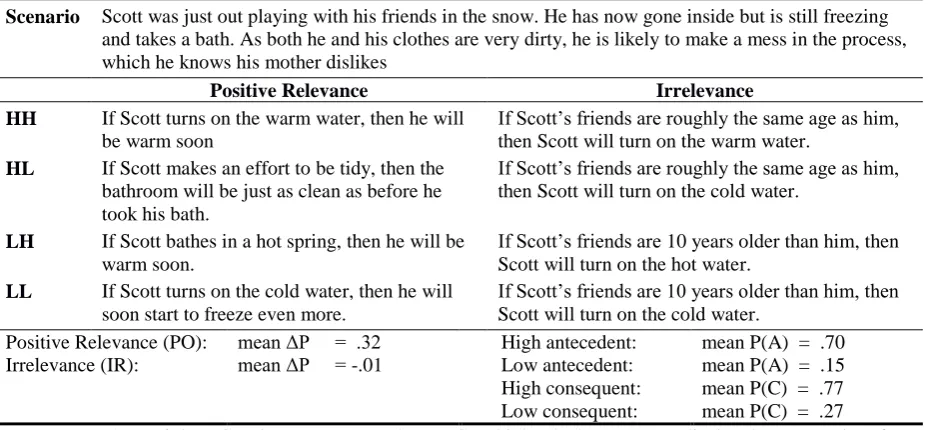
[image:21.595.68.533.500.715.2]We used a slightly modified version of 12 of the different scenarios presented in Skovgaard-Olsen et al. (2016) (see Supplementary Materials). They have been pretested to manipulate the reason relations defined above. This allows us to vary the presence and absence of specific reason relation orthogonally to other psychological factors of interest. To illustrate, Table 1 displays target positive relevance and irrelevance conditionals for the Scott scenario:
Table 1. Stimulus Materials, Scott Scenario
Scenario Scott was just out playing with his friends in the snow. He has now gone inside but is still freezing and takes a bath. As both he and his clothes are very dirty, he is likely to make a mess in the process, which he knows his mother dislikes
Positive Relevance Irrelevance
HH If Scott turns on the warm water, then he will be warm soon
If Scott’s friends are roughly the same age as him, then Scott will turn on the warm water.
HL If Scott makes an effort to be tidy, then the bathroom will be just as clean as before he took his bath.
If Scott’s friends are roughly the same age as him, then Scott will turn on the cold water.
LH If Scott bathes in a hot spring, then he will be warm soon.
If Scott’s friends are 10 years older than him, then Scott will turn on the hot water.
LL If Scott turns on the cold water, then he will soon start to freeze even more.
If Scott’s friends are 10 years older than him, then Scott will turn on the cold water.
Positive Relevance (PO): Irrelevance (IR):
mean ΔP = .32 mean ΔP = -.01
High antecedent: Low antecedent: High consequent:
21 For each scenario we had 8 conditions according to our design (i.e., 4 conditions for positive relevance [i.e., HH, HL, LH, LL], 4 conditions for irrelevance). Each participant worked on one randomly selected (without replacement) scenario for each of the 8 within-subjects conditions such that each participant saw a different scenario for each condition.
Experiments were split into four phases. The precise formulation of all the questions and instructions can be found in the Supplementary Materials. Here we focus on conveying the conceptual ideas.
Phase 1: Case Judgments.
The first phase contained eight blocks, one for each within-subjects condition. The order of the blocks was randomized anew for each participant and there were no breaks between the blocks. Within each block, the participants were presented with four pages. On the first page, the participants were shown a scenario text like the above Scott scenario. To introduce the eight within-subjects conditions for the scenario above we, inter alia, exploited the fact that the participants assume that Scott’s turning on the warm water raises the probability of Scott being warm soon. In the terms introduced above, Scott’s turning on the warm water is in other words positively relevant for (or a reason for) believing that Scott will be warm soon (positive relevance). In contrast, Scott’s friends being roughly the same age as Scott is irrelevant for whether Scott will turn on the warm water (irrelevance). The first sentence in other words leaves the probability of the second sentence unchanged, as verified in Skovgaard-Olsen et al. (2017a). In this study, we use such irrelevance items to present the participants with missing-link conditionals.
The scenario text was repeated on each of the following three pages which measured P(A and C), P(C|A), and P(if A, then C) in random order. Throughout the experiment,
22 Suppose Scott’s friends are roughly the same age as Scott.
Under this assumption, how probable is it that the following sentence is true on a scale from 0 to 100%:
Scott will turn on the warm water. Phase 2: The Scorekeeping Task.
In this phase the participants were first presented with a new irrelevance item to be rated in the same way as the items in phase 1. The missing-link conditional took the following form and it was evaluated in the context of a dating scenario describing Stephen’s
preparations for a date with Sara: ‘If Stephen’s neighbour prefers to put milk on his
cornflakes, then Stephen will wear some of his best clothes on the date’. Then the participants were presented with the following instruction:
When given the task you just completed, John and Robert responded very differently to some of the scenarios as outlined below.
And it was explained that John and Robert responded in the following way to the “if-then sentence” and the “suppose-sentence” (where the “suppose-sentence” had been identified for the participants as the type of question quoted above for measuring P(C|A)):
John assigned 99% to the suppose-sentence and 1% to the if_then sentence. Robert assigned 90% to the suppose-sentence and 90% to the if_then sentence. In order to reduce the processing demands of this task, these values were repeated on each of the following four pages along with the irrelevance item. Note that although John and Robert are fictive participants, these values were based on actual data provided by other participants in response to the irrelevance item in previous studies.
As part of the Scorekeeping Task, the participants were instructed to apply a sanction to John or Robert’s response based on its adequacy. Given their large divergence, the
23 ecologically valid sanction for the participants would be not to have a task (called a “HIT”)
approved. Because the approval of HITs on Mechanical Turk determines whether the participants are paid for a completed task (and moreover counts towards their reputation, which determines whether they can participate in future HITs), it is our experience that the participants on Mechanical Turk care a lot about the approval of their HITs. We therefore expected that applying the sanction of not approving either John or Robert’s HIT based on its adequacy would be a contextually salient sanction, which the participants would be highly motivated to reason about.
Next the participants were asked to state the reasons that they could think of which could be given for or against John and Robert’s responses in an open entry question, included for exploratory purposes.
On the two pages that followed, the participants were presented with John’s criticism of Robert and Robert’s criticism of John in random order. Robert made the following
complaint about John’s response:
Robert's no difference justification: “There is no difference between the
two questions. So why do you give a lower probability to:
'IF Stephen’s neighbour prefers to put milk on his cornflakes, THEN
Stephen will wear some of his best clothes on the date’
than you gave to:
'Stephen will wear some of his best clothes on the date' under the
assumption that 'Stephen’s neighbour prefers to put milk on his cornflakes'?
This makes no sense!”
John in turn made the following complaint about Robert’s response:
John's irrelevance justification: “Whether 'Stephen’s neighbour prefers
24 wear some of his best clothes on the date'. So why do you give such a high
probability to: ‘IF Stephen’s neighbour prefers to put milk on his
cornflakes, THEN Stephen will wear some of his best clothes on the date'?
This makes no sense!”
In each case, the participants were asked to indicate using a binary ‘yes/no’ answer whether they agreed with the statements:
- John’s irrelevance justification [/Robert’s no difference justification] shows that Robert's [/John’s] response is wrong.
- Robert [/John] needs to come up with a very good response to John's [/Robert’s] criticism, if his HIT is to be approved.
Finally, after having seen the justifications from both sides, the participants were asked which justification they found most convincing by choosing between the following options presented in random order:
The two justifications are equally convincing John’s irrelevance justification
Robert’s no difference justification
Moreover, the participants were asked to indicate whose HIT deserves to be approved based on their justifications by selecting one of the following options presented in random order:
None of their HITs should be approved Robert’s HIT should be approved John’s HIT should be approved
Phase 3: The Uncertain And-to-If Inference.
25 Phase 3 contained 8 blocks implementing the same within-subjects conditions as phase 1. In Experiment 1, for each participant, the same permutations of scenarios and
within-subject conditions that had been randomly generated in phase 1 were displayed again in random order. In Experiment 2, new scenarios were used. First the participants were instructed that they would be presented with short arguments based on the scenario texts. They were told that the premise and the conclusion of the arguments could be uncertain and that it was their task to evaluate their probabilities. On the top of the page the scenario text was placed as a reminder. Below the participants were instructed to read an argument containing the conjunction as a premise and the conditional as a conclusion, employing sentences that they assigned probabilities to in phase 1. Furthermore, the actual value of the probability that they had assigned to the premise in phase 1 was displayed to the participants in a salient blue color. We here illustrate it using the example above from phase 1 of a positive relevance item:
Premise: Scott turns on the warm water AND Scott will be warm soon
Conclusion: IF Scott’s turns on the warm water, THEN Scott will be
warm soon
You have estimated the probability of the premise as: 90%
Please rate the probability of the statement in the conclusion on a scale from 0 to 100%.
Phase 4: Individual Variation.
26 2) participants in the DP group pay more attention to reason relations because they possess stronger argumentative skills than ST participants. The first of these is introduced as an alternative hypothesis in Skovgaard-Olsen et al. (2017a), and it echoes results by Tentori, Crupi, and Russo (2013), who found that the participants committing the conjunction fallacy are misled by the degree of confirmation of the added conjunct. However, neither hypothesis could be supported by our results; it therefore appears that the differences we tap into when investigating the opposition between ST and DP are orthogonal to differences in these further variables.
Results and Discussion
Bayesian Mixture Model
In order to investigate the participants’ interpretation of the conditional, the probability judgments produced in phase 1 were classified as coming from one of two latent classes using a Bayesian Mixture Model (see Online Supplementary Materials). When individuals follow ST, the generated P(if A, then C) are expected to follow P(C|A) in both the positive relevance and irrelevance conditions. In contrast, when individuals follow DP, the generated P(if A, then C) are expected to follow P(C|A) in the positive relevance condition, and a penalized version of P(C|A) in the irrelevance condition (each participant i has a penalty parameter, θ):
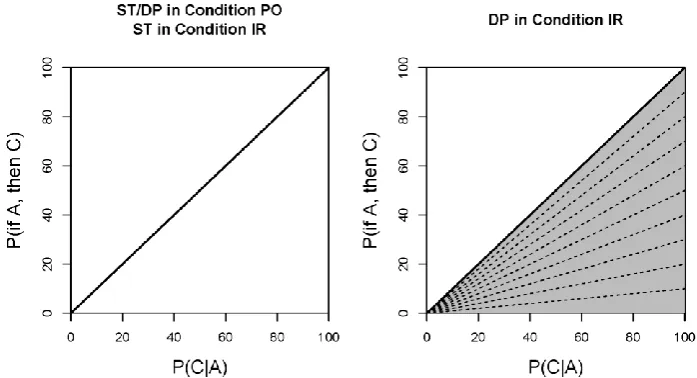
Figure 1 displays the predictions of these two models for the irrelevance condition. Note that when θ = 1, the ST and DP models coincide, although the implied predictions are not really in
27 Figure 1. Predictions. The Suppositional Theory (ST) equates P(if A then C) and
P(C|A). The Default-Penalty Hypothesis (DP) makes the same prediction only for positive relevance (PO). For irrelevance (IR), it expects a function that lies below the diagonal. Here we assume for our classificatory purposes that the DP predictions in IR correspond to a linear function with a slope between 0 and 1.
In the positive relevance condition, where ST and DP coincide, classifications were made using two classes: One that expects the elicited P(if A, then C) to be equivalent to the elicited P(C|A), as expected by both ST and DP, and a second “saturated” class which establishes one parameter per data point:
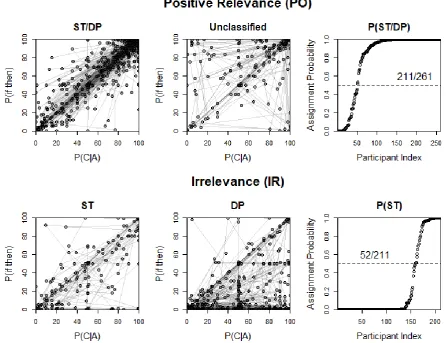
28 Phase 1. The individual-level classifications shown in Figure 2 show that the probabilities
29
Figure 2. Left and Center Panels: Individual data associated to the phase 1 classifications in Experiment 1. Right Panels: Individuals’ posterior classifications (note that in the irrelevance condition, only participants classified as ST/DP in the positive relevance condition were considered).
Phase 2. Next we classified the participants based on the reflective attitudes the participants’
30 In this classification we considered 1) their support for one of the fictive characters and 2) their HIT attribution. Individuals were classified as DP/ST when they judged the fictive character of DP/ST to be most convincing and attributed him the HIT.
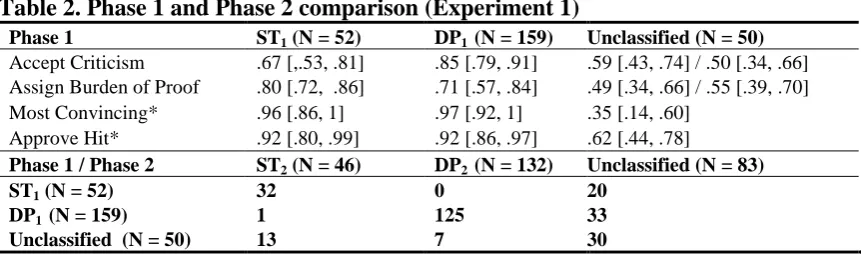
Table 2. Phase 1 and Phase 2 comparison (Experiment 1)
Phase 1 ST1 (N = 52) DP1 (N = 159) Unclassified (N = 50) Accept Criticism .67 [,.53, .81] .85 [.79, .91] .59 [.43, .74] / .50 [.34, .66] Assign Burden of Proof .80 [.72, .86] .71 [.57, .84] .49 [.34, .66] / .55 [.39, .70] Most Convincing* .96 [.86, 1] .97 [.92, 1] .35 [.14, .60]
Approve Hit* .92 [.80, .99] .92 [.86, .97] .62 [.44, .78]
Phase 1 / Phase 2 ST2 (N = 46) DP2 (N = 132) Unclassified (N = 83)
ST1 (N = 52) 32 0 20
DP1 (N = 159) 1 125 33
Unclassified (N = 50) 13 7 30
Note. The top rows show the posterior probabilities of ST1 and DP1 participants, following their assigned
interpretation for each phase 2 question. In the column ‘Unclassified’, we report two estimates, corresponding to the subjects that would have been classified as ST/DP in the irrelevance condition (left/right). Rows ‘Most Convincing’ and ‘Approve HIT’ indicate the posterior probability that consistent preference was expressed; conditional on the presence of a preference (e.g., subject did not express indifference). The phase 2 classification in the bottom row is based on the participants’ responses to who had the most convincing justification, and whose HIT should be approved, after having seen the
justification from both sides.
As shown in Table 2, the match between the phase 1 and 2 classifications is large and systematically above .50. Unclassified participants distributed their responses roughly equally across Robert and John. Although the overlap between phase-1 and phase-2 classifications was considerable (157 participants out of 211), it was not perfect. This was mainly due to the circumstance that there was a substantial proportion of the participants (73), who found the two fictive characters equally convincing and a few participants (21), who chose to assign a HIT to neither. But for those who did, their judgments were closely aligned with their phase 1 classification.
Phase 3. We now turn to the participants’ conformity to the two inequalities associated with
31 P(Conclusion) ≥ P(Premise)
P(C|A) ≥ P(A,C)
Figure 3 depicts the posterior distributions of these deviations from chance on an effect-size scale, with positive values indicating an above-chance conformity to the inequalities (for details, see Online Supplementary Materials): In the positive relevance condition (left panel), the participants conformed to both inequalities at above-chance levels. This result is
[image:32.595.69.514.75.401.2]represented by the posterior distributions placed with virtually all of their mass above zero (i.e., BP ≈ 0). This pattern of results held for both individuals classified as adhering to ST and DP. However, the posterior distributions for ST are more dispersed due to the small number of participants classified as such. Differences were found in the irrelevance condition, since individuals classified as following ST conformed to both inequalities at above-chance rates,
32 whereas individuals classified as following DP followed P(Conclusion) ≥ P(Premise) at
below-chance rates. This difference is germane given that P(Conclusion) ≥ P(Premise) is not
expected to hold under DP when there is no positive reason relation between the antecedent and the consequent. Note that P(C|A) ≥ P(A,C) is expected to hold across accounts and relevance conditions; this prediction also held empirically.
Experiment 3
So far we have been concerned with interpretations of the conditionals that the participants commit to when making probabilistic assessments. This evaluation can be extended to other types of judgments, such as the acceptance of entailments. A central empirical adequacy criterion of semantic theories in general is that they respect intuitive entailment judgments (Winter, 2016). Indeed, such judgments make up one of the primary sources of data for semantic theories. The goal of Experiment 3 is to investigate how robust and stable the participants' interpretations of conditionals under different task constraints are.
As previously discussed, individuals following ST are expected to infer a conditional ‘If A, then C’ when using the conjunction ‘A and C’ as a premise. In other words, they are
expected to produce and-to-if inferences. No such expectation holds for individuals reasoning according to DP, at least in the absence of a reason relation between A and C. In the context of Experiments 1 and 2, we showed that individuals’ classification in the Scorekeeping Task as ST or DP was consistent with whether or not they conformed to the inequality P(if A, then C) ≥ P(A and C) in the uncertain-and-to-if task. This differential conformity has implications for the acceptance of entailments. For instance, it would be inconsistent for reasoners
33 A ⊨ B only if P(B) ≥ P(A)
Hence,
A and C ⊨ if A, then C only if P(if A, then C) ≥ P(A and C) In order to evaluate conformity to this consistency requirement, Experiment 3 is comprised of two sessions: The first session is essentially a replication of Experiment 1 that allows us to classify individuals as adhering to ST or DP with the Scorekeeping Task.
In the second session, individuals were presented with different scenarios in which two speakers disagreed on whether a certain conclusion followed from a given premise. We considered three types of inferences under positive relevance and irrelevance conditions: First, the aforementioned and-to-if inference, that one is expected to follow depending on the interpretation of the conditional adhered to:
A and C ⊨ if A, then C.
Specifically, we expect individuals conforming to ST to accept that ‘if A, then C’ is entailed by ‘A and C’, whereas no such acceptance is expected for individuals adhering to DP across relevance conditions. We also considered two other inferences, namely and-to-A inferences, which are uncontroversially valid,
A and C ⊨ A,
and A-to-and inferences, which are uncontroversially invalid8 A ⊨ A and C.
Method
Participants
Experiment 3 was run over Mechanical Turk and used the same exclusion criteria as Experiment 1. A total of 811 people participated in the first session 1. Of these a total of 610
8
34 participated in session 2, which was run approximately 10 days later. In addition to the
exclusion criteria from Experiment 1, we checked their identity in session 2 by requiring them to provide once again some personal information (e.g., first letter of your favorite color, first letter of mother’s name) to generate codes like 'AS6G1P', which preserved the anonymity of the participants. In the end, we were left with a final sample of 552 participants, with similar demographic characteristics as in Experiment 1 and 2. Of these, 515 could be classified as following either DP or ST in the Scorekeeping Task. In the analysis below, we focus on these 515 participants (330 DP; 186 ST).
Design
The first session of Experiment 3 had the same design as Experiment 1, with additional questions for prior probabilities. However, in contrast with Experiment 1, the participants were now presented with the Scorekeeping Task as a two-alternative forced-choice task, where they either had to take sides with one of the two fictive characters (i.e., they cannot deem them equally convincing). The second session presented the same eight within-subject conditions as Experiment 1. In addition to the entailment judgments, we also collected the participants’ self-reported consistency in session 2 with their judgments in session 1.
Materials and Procedure
35 In the following you are going to see a short conversation, where Louis
accuses Samuel of saying two things that cannot both be true. Whether you agree with Samuel's assertions is beside the point. What we are interested in is just the extent to which you agree with Louis that Samuel is saying two things that cannot both be true. When you read the sentences please pay attention to small differences in their content, so that we don't unfairly accuse Samuel of making a mistake.
After a few practice items, the participants were presented with the same randomly selected scenarios as in Experiment 1, and on the three pages that followed, Samuel would assert the premise of each of the three types of inferences described above and deny its conclusion. Consider the following example, using the Scott scenario in Table 1 and one of the irrelevance items:
Samuel: Scott’s friends are roughly the same age as him AND Scott will turn on the warm water.
... but it would be wrong to think that IF Scott’s friends are roughly the same age as him, THEN Scott will turn on the warm water.
To which his interlocutor replied:
Louis: Wait, you've now said two things that can't both be true.
The task of the participants was to indicate the degree to which they agreed or disagreed with Louis' statement on a five-point Likert scale with levels strongly disagree, disagree, neutral, agree, and strongly agree. Agreeing with Louis in that Samuel had said two things that cannot
both be true counts as accepting the corresponding entailment.
Results
Entailment Judgments. The design had replicates for each participant and item. It could
36 intercepts and slopes by participants and by scenarios (Baayen, Davidson, and Bates, 2008). This analysis was conducted using the statistical programming language R (R Core Team, 2013), and the package brms for mixed-effects models in Bayesian statistics (Bürkner, 2017). In order to examine the rating of entailments for the three types of inferences, we relied on the following models:
Model M1 modelled the rating as a function of factor ‘inference’ (coding the three
different types of inferences), factor ‘relevance’, the factor ‘individual classification’ (as ST, DP, based on the Scorekeeping Task), and their interactions.
Model M2 builds upon M1 but without the ‘individual classification’ factor and its
interactions.
Finally, model M3 builds upon M2 but without the ‘relevance’ factor and its
interactions.
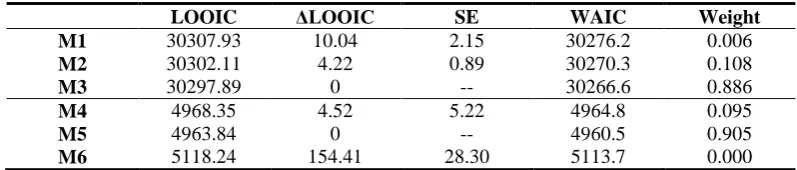
In line with the previous studies, these models were implemented in a Bayesian framework with weakly informative priors, using the R package brms (Bürkner, 2017). Since the responses obtained from the five-point Likert scale are ordinal responses, the responses were modelled as generated by thresholds set on a latent continuous scale with a cumulative likelihood function and a logit link function (Bürkner & Vuorre, 2018). The upper part of Table 5 reports the performance of the models as quantified by the leave-one-out cross validation criterion and WAIC.
Table 5. Model Comparison
LOOIC ΔLOOIC SE WAIC Weight
M1 30307.93 10.04 2.15 30276.2 0.006
M2 30302.11 4.22 0.89 30270.3 0.108
M3 30297.89 0 -- 30266.6 0.886
M4 4968.35 4.52 5.22 4964.8 0.095
M5 4963.84 0 -- 4960.5 0.905
M6 5118.24 154.41 28.30 5113.7 0.000
Note. LOOIC = leave-one-out cross-validation information criterion. WAIC = Watanabe-Akaike information criterion. Weight = Akaike weight of LOO.
[image:37.595.95.494.612.697.2]37 models. This indicates that overall, the entailments the participants accept do not appear to be based on the relevance condition of the items, nor on which interpretation of the conditional the participants committed to in session 1. We thus find Bayes factors in the range of [19, 51] in favour of H0 when setting coefficients involving the relevance factor in M1 equal to 0. For
instance, bPositiveRelevance:ANDIF:ST = 0.12, 95%-CI [-0.33, 0.57], BFH0H1 = 19.47 and bPositiveRelevance = -0.04, 95%-CI [-0.22, 0.14], BFH0H1 = 50.64. Furthermore, we find Bayes factors in the range of [6, 31] in favour of H0 when setting coefficients involving the individual classification factor
in M1 equal to 0.
[image:38.595.83.523.423.519.2]Examining the posterior predictive distribution of the winning model M3 illustrated in Figure 4, it is clear that most of the participants accept the valid and-to-A inferences, and that most reject the and-to-if inferences to the similar degree to which they reject the invalid A-to-and inferences.
Figure 4. Predictions for Sampling from the Posterior Distribution of M3
Note: The plot shows the relative proportions of the posterior predictions of the winning model (M3). ANDA = and-to-A inference, ANDIF = and-to-if inference, AAND = A-to-and inference.
And-to-if inference. Given that the phase 2 classification does not predict the participants’
38 perceived consistency, a factor was formed based on the quantiles low (≤ 40%), middle (41-61%), high (≥ 62%):
Model M4 described the probability of accepting the and-to-if entailment as a function
of the acceptance of the and-to-A inference, the A-to-and inference, the participant’s self-reported degree of consistency, and their respective interactions.
M5 builds on M4 but does not include the acceptance of the and-to-A inference factor. M6 builds on M5 but does not include acceptance of the A-to-and inference factor.
Since acceptance of an entailment is a binary variable, a binominal likelihood function was used with a logit link function and weakly informative priors, using the R package brms
(Bürkner, 2017). The results shown in the lower part of Table 5 indicate that there is a strong effect of the acceptance of (the invalid) A-to-and inferences on the probability of accepting and-to-if inferences. Figure 5 reports the expectations of the posterior predictions of models M4-M6 weighted by their Akaike weights from Table 5 for a new participant.
Figure 5. Posterior predictions for New Participants
Note. The posterior predictions for acceptance of the and-to-if inference (ANDIF) for new participants based on their acceptance of the invalid a-to-and inferences (AAND) and low/middle/high quantiles of perceived consistency across sessions 1 and 2. The posterior predictions of the models have been weighted by the Akaike weight from Table 5.
The effect indicates that the participants are more likely to accept the and-to-if inference if they incorrectly accepted the A-to-and inference (bAAND_accept = 0.57, 95%CI [0.658,
39 of 36% chance of accepting the and-if-inference based on accepting the invalid A-to-and inference. In contrast, there is only a weak effect for the acceptance of the and-to-if inference based on acceptance of the valid and-to-A inference (bANDA_accept = 0.09, 95%-CI [-0.001,
0.184], BFH0H1 = 17.17), which makes M5 the second most preferred model.
Discussion
Overall, the results show that participants' endorsed interpretation of the conditional in the Scorekeeping Task and their own judgments of internal consistency across the two
sessions were poor predictors of accepted entailments. In general, the participants accepted an uncontroversial example of a valid inference rule (A and C ⊨ A?), and rejected an
uncontroversial example of an invalid inference rule (A ⊨ A and C?), across relevance
conditions. It was found that the participants’ performance with and-to-if inferences (A and C
⊨ if A, then C?) resembled their performance for the invalid A-to-and inferences more than
for the valid and-to-A inferences. Moreover, the results indicated that the participants' acceptance of and-to-if entailments was most strongly predicted by their acceptance of the invalid A-to-and entailment.
40 little room for reconstructing the participants’ performance as rational. The problem is that we cannot conceive of a competence model under which the acceptance of A-to-and entailments can be considered as anything but a reasoning error.
Summary of Case Study
The literature on formal systems of reasoning has branched out into a series of competing frameworks. Insofar as psychology seeks to model realistic reasoning performance,
psychological investigations need to come to terms with the fact that there is often more than one competence model that could plausibly be applied to the participants’ performance.
In this paper, we put forward a normative and experimental framework for studying reasoning performance in a multiple-norms environment. We applied the Principle of Charity when obtaining independent evidence of the participants’ parameter settings before evaluating their reasoning performance. Using Bayesian mixture modeling we classifed the participants’ interpretations of conditionals at the individual level. Moreover, we elicit the participants’ reflective attitudes through a novel Scorekeeping Task, where the participants commit themselves to a particular interpretation in a case of norm conflicts by criticizing and
sanctioning their peers. We apply the Principle of Tolerance by permitting the participants to approach the reasoning tasks with multiple competing formal frameworks while enforcing the requirement that the participants are at least internally consistent in order for them to count as competently implementing any one of them.
41 profiles across relevance conditions, we find that both groups conform to the theorem of probability theory that P(C|A) ≥ P(A,C) at above-chance levels, but only one of the groups conforms to P(if A, then C) ≥ P(A,C) across relevance conditions. This behavior matches the interpretations of the conditionals that the participants were assigned to at the individual level.
In addition, the Online Supplementary Materials reports data showing that the alternative hypothesis that the DP participants were following a defective interpretation of probabilities, which would make them more inclined to commit the conjunction fallacy, could not be supported by the results.
Based on the results from Experiment 1, it then appears that what could look like a reasoning error at the group level in an earlier study (Skovgaard-Olsen et al., 2017a) disguises two distinct interpretations of the conditional at the individual level, each of which is
consistently followed by different participants in the uncertain and-to-if inference task. Experiment 2 replicated the main findings from Experiment 1 and showed that they can be generalized to novel items in the irrelevance condition (see Online Supplementary Materials).
In Experiment 3, we evaluated the cross-task consistency of our results by conducting an experiment with both the Scorekeeping Task and entailment judgments. Results showed that participants, irrespective of their classification as adhering to ST or DP, largely rejected and-to-if entailments. In fact, the acceptance of such entailments was well predicted by the acceptance of the invalid A-to-and inference. Together, these results suggest that for individuals classified as ST, it is likely that they are committing a reasoning error.
42 possibility of 'if A then C' being false while 'A and C' is true in session 2. However, if the ST participants were performing the Ramsey test, then the conditional should be trivially true when considering a situation where the conjunction is true and so it still counts as an error. One possible explanation for these results is that adherence to ST is less stable than adherence to DP.
Another anticipated reaction to these results consists in pointing to pragmatic processes modulating the semantic content postulated by ST. However, these pragmatic processes need to be fleshed out and receive independent validation. In Skovgaard-Olsen et al. (2019), the most popular of such approaches, based on conversational implicatures, was found not to be supported by the results. Instead, Skovgaard-Olsen et al. argue that the data from numerous experiments are most consistent with a conventional implicature interpretation. Conventional implicatures make up a second layer of semantic content as lexicalized parts of the meaning of the sentences in which they occur (Potts, 2007). Since conventional
implicatures do not affect the primary truth conditions of these sentences, they are expected to enrich the conditions of rational assertability beyond truth evaluations. Accordingly, if the participants in Experiment 3 interpreted the task as concerning preservation of rational assertability rather than truth preservation, it is possible to account for the results based on a conventional implicature. But in that case, it would be a conventional implicature pointing towards the DP interpretation of the conditional and the interpretation assigned to the ST group would still have been found to be less stable.
Implications for Rationality Research
43 environments. As part of their argument, Schurz and Hertwig assume that the problem of arbitrating between norms based on conflicting intuitions may be insolvable.
The focus of this paper is not on the evaluative question of which formal system is the most optimal way of reasoning. Instead, we approached the problem of how to assign norm-adherence to participants when multiple conflicting norms are possible—facing the problem of arbitration head-on. The case study illustrates how this normative issue may be approached empirically, and how this can lead to novel, empirical insight. In the final part of the paper, we draw out the key lessons from the case study and set these in the wider context of the role of normative theories in research on human cognition.
Whereas traditional normative research in the psychology of reasoning has largely been focused on developing experimental tasks that have one correct solution so that absolute attributions of reasoning errors can be made, this reorientation permits designing tasks where the availability of competing approaches only permit relative attributions of reasoning errors based on independent evidence of the participants’ own parameter settings (see also Stenning and van Lambalgen, 2008; Elqayam, 2012).
Consequently we seek to empirically reconstruct the participants' subjective standpoints in order to assess the participants' performance based on their own internal standards. We use empirical data to investigate the extent to which we can use people’s normative behaviour towards others to reconstruct internally-consistent competence models. In general, normative theories can be evaluated from an external perspective by considering which theory is best justified as encoding the correct principles of reasoning, or by attempting to identify a theory-neutral notion of cognitive success (Schurz, 2014). Alternatively,