ScholarWorks @ Georgia State University
ScholarWorks @ Georgia State University
Communication Sciences and Disorders
Dissertations Department of Communication Sciences and Disorders Fall 8-21-2014
Effects of Phrase-Reading Ability, Syntactic Awareness, and
Effects of Phrase-Reading Ability, Syntactic Awareness, and
Reading Rate on Reading Comprehension of Adolescent Readers
Reading Rate on Reading Comprehension of Adolescent Readers
in an Alternative Setting
in an Alternative Setting
Patsy Nomvete
Follow this and additional works at: https://scholarworks.gsu.edu/epse_diss
Recommended Citation Recommended Citation
Nomvete, Patsy, "Effects of Phrase-Reading Ability, Syntactic Awareness, and Reading Rate on Reading Comprehension of Adolescent Readers in an Alternative Setting." Dissertation, Georgia State University, 2014.
https://scholarworks.gsu.edu/epse_diss/96
ACCEPTANCE
This dissertation, EFFECTS OF PHRASE-READING ABILITY, SYNTACTIC
AWARENESS, AND READING RATE ON READING COMPREHENSION OF
ADOLESCENT READERS IN AN ALTERNATIVE SETTING, by PATSY THOMAS
NOMVETE, was prepared under the direction of the candidate’s Dissertation Advisory
Committee. It is accepted by the committee members in partial fulfillment of the requirements
for the degree, Doctor of Philosophy, in the College of Education, Georgia State University. The
Dissertation Advisory Committee and the student’s Department Chairperson, as representatives
of the faculty, certify that this dissertation has met all standards of excellence and scholarship as
determined by the faculty. The Dean of the College of Education concurs.
_________________________________ Susan R. Easterbrooks, Ed.D.
Committee Co- Chair
______________________________ _____________________________________ Laura D. Fredrick, Ph.D. Peggy A. Gallagher, Ph.D.
Committee Co-Chair Committee Member
______________________________ Bridget V. Dever, Ph.D. Committee Member
_________________________ Date
______________________________ Laura D. Fredrick, Ph.D.
Chairperson, Department of Educational Psychology, Special Education, and Communication Disorders
______________________________ Paul A. Alberto, Ph.D.
AUTHOR’S STATEMENT
By presenting this dissertation as a partial fulfillment of the requirements for the
advanced degree from Georgia State University, I agree that the library of Georgia State
University shall make it available for inspection and circulation in accordance with its
regulations governing materials of this type. I agree that permission to quote, to copy from, or to
publish this dissertation may be granted by the professor under whose direction it was written, by
the College of Education’s Director of Graduate Studies, or by me. Such quoting, copying, or
publishing must be solely for scholarly purposes and will not involve potential financial gain. It
is understood that any copying from or publication of this dissertation which involves potential
NOTICE TO BORROWERS
All dissertations deposited in the Georgia State University library must be used in accordance
with the stipulations prescribed by the author in the preceding statement. The author of this
dissertation is:
Patsy Thomas Nomvete
Educational Psychology, Special Education, and Communication Disorders College of Education
Georgia State University P.O. Box 3979 Atlanta, GA 30302-3979
The directors of this dissertation are:
Dr. Susan R. Easterbrooks and Dr. Laura D. Fredrick
Educational Psychology, Special Education and Communication Disorders College of Education
CURRICULUM VITAE
Patsy Thomas Nomvete
Email ADDRESS: [email protected]
EDUCATION:
PROFESSIONAL EXPERIENCE:
2013-present
2005-2006
Special Education Teacher Douglas County Schools Douglasville, GA
2006-2013 Graduate Research Assistant Georgia State University Atlanta, GA
2004-2005 Special Education Teacher Cobb County Schools Marietta, GA
Ph.D. 2014 Georgia State University Educational Psychology and Special Education
M.Ed. 1996 North Georgia College and State University
Special Education
PRESENTATIONS AND PUBLICATIONS:
Waller, K. S., Houchins, D. E., & Nomvete, P. T. (2011). Establishing a school-based mentoring program for youth who are transitioning from a secure facility. Beyond Behavior, 19, 30-35.
Nomvete, P. T., Duchaine, E., & Jolivette, K. (2011, March). Class-wide secondary tier reading interventions: Increasing reading comprehension/engagement with secondary students.
8th International Conference on Positive Behavior Support, Denver, CO.
Duchaine, E., Kearley, R., & Nomvete, P. (2011, March). Class-wide secondary interventions for secondary teachers: Overlapping strategies to increase student engagement. 8th
International Conference on Positive Behavior Support, Denver, CO.
Nomvete, P. T. (2010). School discipline in Florida: Discipline practices leave many children behind. Atlanta, GA: U. S. Commission on Civil Rights
Shippen, M. E., Houchins, D. E., & Nomvete, P. (2010). Reading assessment and instruction for students at-risk (5th ed.). In R. Colaru6-sso & C. O’Rourke (Eds.), Special education for all teachers. Dubuque, IA; Kendall Hunt Publishing Company
Duchaine, E., & Nomvete, P. (2010, Dec). Universal implementation with secondary tier interventions: Teaching challenging students in alternative classrooms. GAPBS Conference, Atlanta, GA.
Nomvete, P. T., & Duchaine, E. (2010, Dec.). Check-in/Check-out: Effectively implementing a secondary tier intervention. GAPBS Conference, Atlanta, GA.
Nomvete, P. T., Houchins, D., Jolivette, K., & Waller, K. S. (2010, April) Self-regulated strategy development: Elementary students in a psychoeducational residential facility. CEC 2010 Annual Convention & Expo, Nashville, TN.
Waller, K., Houchins, D., Jolivette, K., & Nomvete, P. (2010, April) Improving reading fluency for students with EBD using self-guided, computer-based repeated reading. CEC 2010 Annual Convention & Expo, Nashville, TN.
Nomvete, P. T., Josephs, N. L., Waller, K. S., & White, M. W. (2009, April.). Academic
Nomvete, P. T., & Waller, K. S., Houchins, D., & Jolivette, K. (2009, Oct). The effects of procedural facilitators on story elements for students with emotional and behavior disorders in a residential setting. TECBD Conference, Phoenix, AZ.
Waller, K. S., Nomvete, P. T., Houchins, D., Jolivette, K., & Miltenberger, S. (2008, Oct).
Ending the pipeline to prison through effective reading instruction. The Prison Pipeline: The Intersection of Childhood and the Criminal Justice system Conference, Athens, GA. Jolivette, K., Houchins, D.E., Josephs, N., Waller, K, Hall, T., & Nomvete, P. (2008). Providing
educational services in secure settings. L.M. Bullock & R.A. Gable (Eds.), Ensuring a brighter future for troubled children/youth: Challenges and solutions (pp. 193-263). Council for Children with Behavioral Disorders. Arlington, VA: Council for Exceptional Children.
Houchins, D.E., Jolivette, K., Nomvette, P., Waller, K., Hall, T., Josephs, N., & White, M. (2007, Oct.). Implications of research in juvenile justice settings: Academic, behavior, and transition considerations for students with special needs. International Conference on Children and Youth with Behavioral Disorders, Dallas, TX.
White, M., Nomvete, P. T., & Josephs, N. L. (2007, Oct). No child left behind bars: Research-based reading and behavior interventions for youth in corrections. Georgia Depart of Juvenile Justice: A Prescription for Successful Teaching, Macon, GA.
Nomvete, P. T., Waller, K. S., & White, M. (2007, July). No child left behind bars. Correctional Education Association International Conference: Excellence in education, Atlanta, GA. Hall, W. T., Josephs, N. L., Nomvete, P. T. & Waller, K. S. (2006, March). No child left behind
bars. CEC State Conference, Macon, GA.
PROFESSIONAL SOCIETIES AND ORGANIZATIONS
2006-2012 Council for Exceptional Children
Council for Children with Behavior Disorders
2010-Present Society for the Scientific Study of Reading
2007-2009 Educational Advocacy Council
EFFECTS OF PHRASE-READING ABILITY, SYNTACTIC AWARENESS, AND READING
RATE ON READING COMPREHENSION OFADOLESCENT READERS IN AN
ALTERNATIVE SETTING
by
PATSY THOMAS NOMVETE
Under the Direction of Dr. Susan Easterbrooks and Dr. Laura D. Fredrick
ABSTRACT
Many adolescent readers do not acquire adequate reading skills, and over the past 40
years reading scores for adolescent students have not improved (Edmonds, Vaughn, Wexler,
Reutebuch, & Cable, 2009; Lee, Grigg, & Donahue, 2007). The purposes of this study were (a)
to explore the relationships among phrase-reading ability, passage reading rate, syntactic
awareness and reading comprehension of students attending an alternative school, and (b) to
investigate whether phrase-reading ability serves as a mediator (i.e., the mechanism that accounts
for the relationship between the predictor and the criterion) between reading rate and
comprehension, and between syntactic awareness and reading comprehension. Theories of
(Koriat, Greenberg, & Kreiner, 2002) provide the theoretical basis for this investigation. To
investigate the relation among reading rate, syntactic awareness, phrase-reading ability, and
comprehension, a series of assessments was conducted with 70 students who attend an
alternative school. The resulting data were analyzed using correlation analysis, hierarchical
regression (Pedhazur, 1997), and mediation regression (Baron & Kenny, 1984). The hypotheses
for adolescent readers in an alternative setting are: (a) Phrase-reading ability, syntactic
awareness, passage reading rate, and reading comprehension will have a positive, significant
correlation; (b) Language related variables (i.e., phrasing ability, syntactic awareness) will
account for more of the variance in reading comprehension than passage reading rate; (c)
Phrase-reading ability, as measured by phrase-level prosody, provides a mechanism or at least
partially mediates how passage reading rate affects reading comprehension; (d) Phrase-reading
ability, as measured by phrase-level prosody, provides a mechanism or at least partially mediates
how syntactic awareness affects reading comprehension. Findings confirmed all hypotheses.
Based on these findings, researchers should further investigate contributions that language
related skills such as phrase-reading ability and syntactic awareness make to reading
comprehension for adolescent readers and whether these findings when disaggregated hold true
for students with disabilities and struggling adolescent readers. This investigation brought
attention to the need for a standardized terminology concerning reading fluency.
INDEX WORDS: Adolescent readers, Students in alternative schools, Students with disabilities, Struggling adolescent readers, Phrase-reading ability, Reading rate, Syntactic awareness,
EFFECTS OF PHRASE-READING ABILITY, SYNTACTIC AWARENESS, AND READING
RATE ON READING COMPREHENSION OFADOLESCENT READERS IN AN
ALTERNATIVE SETTING
by
PATSY NOMVETE
A Dissertation
Presented in Partial Fulfillment of Requirements for the
Degree of
Doctor of Philosophy
in
Education of Students with Exceptionalities
in
Department of Educational Psychology and Special Education
in
College of Education Georgia State University
Copyright by Patsy T. Nomvete
DEDICATION
This dissertation is dedicated to my husband, Thozamile “Thozi” Nomvete.
U Tata Mkhonde,
You saw something in me that I did not see in myself, as you interpreted my tendency to root
tenaciously around a problem as evidence that I was a researcher at heart. Your insistent
encouragement emboldened me to pursue this Ph.D.
This is no surprise to anyone who knows you. You are a promulgator of progress, a master of
encouragement, and a cheerleader for all who make even a tentative effort to rise above
perceived limitations or step around real obstacles.
Back in South Africa you were so small, maybe only 4 years old, riding in the donkey-drawn
wagon with your parents on that dark night. Jolted from sleep you saw that all of the wagons
were mired and struggling to cross the river. When your wagon jerked free of the muck and
jostled toward the river bank you stood as yelled. “Zawel’ezethu! Zawel’ezethu!” “Ours are
crossing! Ours are crossing!”
U Mkhonde, I am so happy to be crossing life’s obstacle with you. Zawel’ezethu!
Your wife and friend,
ii
ACKNOWLEDGMENTS
Over the last few years, this dissertation became much more than a file on a computer. It
was nearby at holidays and family birthdays. No matter where I went, near or far, it was close, at
least in thought. Through the years I watched as it grew and changed. At times it was like an
awkward adolescent or a rebellious teenager, trying to find its path. As expected, there were
missteps and setbacks and as its guardian I often felt inadequate to bring this creation to
maturity. But thankfully I was not alone. My husband Thozi was there to give me loving
encouragement and to take all the daily cares of mundane household chores and cooking off my
radar screen. My children were flexible and never complained about this new inanimate child
who demanded all my attention. Ty and Nina, Will and Abby, Hannah and Rajesh, Nyameka and
Lee, and Tandeka showed support and appreciation for what I was doing all along the way. This
meant more than they can know.
During the process, I had incredible people to come into my life and provide me with
positive energy. Dr. Gwen Benson and Dr. Susan Ogletree are two such people. They gave me
meaningful work and encouragement along the way. Dr. Laura Fredrick provided guidance and
encouragement all through my doctoral years. I cannot say enough for my former advisor Dr.
Kathryn Heller, whose kind spirit meant more than she can know. I wish her all the best in her
retirement from academia and in her new endeavors as a hospice nurse. I whole heartedly thank
Dr. Bridget Dever for continuing on my committee despite her new assignment at Lehigh
University. Dr. Peggy Gallagher as always has been encouraging and available to me.
This long journey through my Ph.D. program brought me at last to Dr. Susan
Easterbrooks as my advisor. How fortuitous for me. She was able to step in at the “11th hour”
iii
demeanor gave me the confidence that we would get this done. With her help, I brought this
beloved inanimate child of mine, which some people may call a dissertation, into maturity. I
think it is well balanced, logical, and provides a fresh look at reading fluency. Some may say I
am biased in my evaluation. And I say, of course I am, as any proud parent would be.
Many others helped me along the way. Katie Cott, provided an often needed voice of
reason, a keen eye, and a friendship that will outlive our doctoral years. Millicent Carmouche
participated in all forms of data collection with ever present enthusiasm. Dr. Laures Gore
assisted with fidelity of training materials and Ellen Duchaine served as long-distant encourager
and friend.
Finally, I would like to thank the following entities for providing funding for my
research:
• The Georgia State University Dissertation Grant Program.
• The College of Education Doctoral Dissertation Award
• Project PRIDE, An Educational Leadership Grant Program, Office of Special
Education and Rehabilitative Services, United States Department of Education,
Principal Investigator: Dr. David Houchins
iii
TABLE OF CONTENTS
LIST OF TABLES ...v
LIST OF FIGURES ... vi
1 PHRASE-READING, SYNTACTIC AWARENESS, READING RATE, AND READING COMPREHENSION ABILITIES OF ADOLESCENT READERS IN AN ALTERNATIVE SETTING ...1
Adolescent Readers ... 1
Adolescent Students in Alternative Schools: Characteristics ... 4
Outcomes for Adolescent Students in Alternative Settings ... 7
Reading Comprehension ... 8
Relationship between Reading Comprehension and Reading Fluency ... 10
Construct of Reading Fluency ... 14
Syntactic Awareness and Phrase-Reading Ability ... 33
Conclusion ... 36
References ... 37
2 ROLE OF PHRASE-READING ABILITY IN READING COMPREHENSION FOR ADOLESCENT READERS IN AN ALTERNATIVE SETTING ...51
Reading Comprehension ... 53
Phrase-Reading Ability ... 54
Syntactic Awareness and Phrasing Ability ... 56
Passage Reading Rate and Phrase-Reading Ability ... 58
Syntactic Awareness, Passage Reading Rate, and Phrase-Reading Ability ... 59
iv
Results ... 81
Discussion ... 88
References ... 96
v
LIST OF TABLES
Table Page
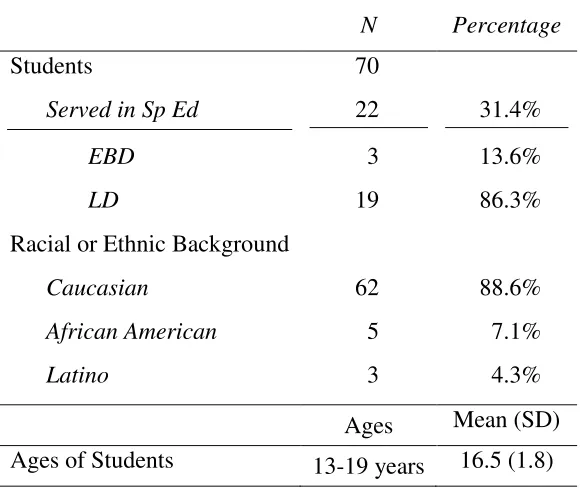
1 Student Demographics ...61
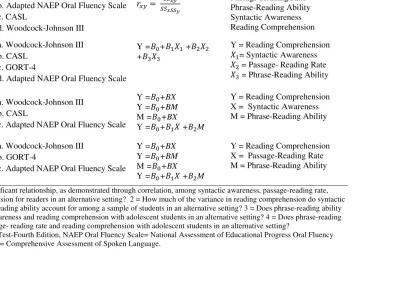
2 Research Questions and Instruments ...64
3 Statistical Design, Instruments, and Formulas ...74
4 Summary of Correlations, Means, and Standard Deviations ...83
5 Hierarchical Regressions: Contributions to Variance of Reading Comprehension ...85
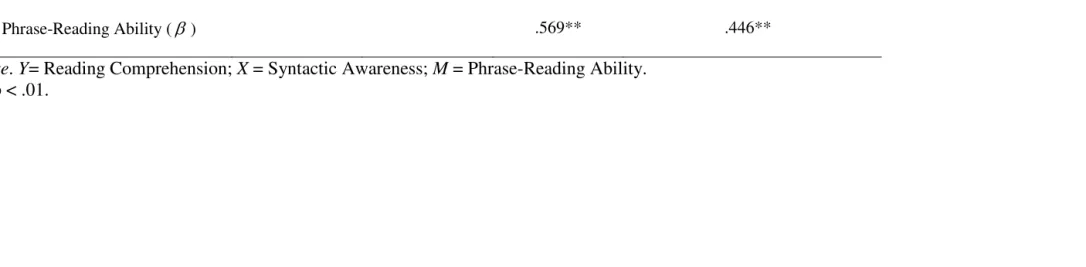
6 Mediation Effects of Phrase-Reading Ability between Syntactic Awareness and Reading Comprehension ...87
vi
LIST OF FIGURES
Figure Page
1 Graphic depiction of mediation model for syntactic awareness, reading rate
1 PHRASE-READING, SYNTACTIC AWARENESS, READING RATE, AND
READING COMPREHENSION ABILITIES OF ADOLESCENT READERS IN AN
ALTERNATIVE SETTING
Literacy is broadly defined as the “ability to identify, understand, interpret, create,
communicate, compute, and use printed and written materials associated with varying contexts”
(United Nations Educational, Scientific and Cultural Organization: UNESCO Education Sector,
2004, p.13), within a framework that includes “beliefs, attitudes, and social practices” (Rueda,
2011, p. 84). In addition, the acquisition of literacy provides a venue for “individuals to achieve
their goals, to develop their knowledge and potential, and to participate fully in their community
and wider society” (UNESCO Education Sector, 2004, p. 13). Acquiring literacy is central to
achieving economic improvement (Snow, Burns, & Griffin, 1998; UNESCO Education Sector,
2004) and to experiencing a fulfilling life (Anderson, Hiebert, Wilkinson, & Scott, 1985; Moore,
Bean, Birdyshaw, & Rycik, 1999). Those without adequate literacy skills experience academic,
economic, and social marginalization (Blackorby & Wagner, 1996; Snow et al., 1998). Central to
the development of literacy is the need to acquire adequate reading skills, which can be
characterized as processes used to decode and comprehend written text (Rueda, 2011).
Adolescent Readers
Poor reading ability may lead to a wide range of problems across one’s lifetime
(Blackorby & Wagner, 1996). Failure to acquire adequate reading skills may place a student on a
troubled-life trajectory with increased risk for school dropout, court-involvement, and mental
health issues (Blackorby & Wagner, 1996; Daniel et al., 2006; Leone, Krezmien, Mason, &
Meisel, 2005). Daniel et al. (2006) found that adolescents who were poor readers were
Many adolescent readers have poor reading skills and may not receive adequate
instructional preparation in reading (Edmonds et al., 2009). According to the National
Assessment of Educational Progress (NAEP), a congressionally mandated criteria-based
academic assessment of fourth and eighth graders administered through the U.S. Department of
Education, a significant number of students experience reading failure (Daane, Campbell, Grigg,
Goodman, & Oranje, 2005). In 2007, of the eighth graders (N=160,700) who participated in the
NAEP national assessment, 27% scored below the basic level of reading, 43% scored at the basic
level, and only 29% scored at or above the proficient level. NAEP defines the basic level of
reading achievement as a “partial mastery of prerequisite knowledge and skills that are
fundamental for proficient work at a given grade level” (Lee, Grigg, & Donahue, 2007, p. 6).
This indicates that in 2007, 70% of eighth graders had either only partial or no mastery of skills
required to meet grade-level expectations. Additionally troubling is that the percentage of
students scoring at the basic or below basic levels has not changed significantly since NAEP
began regular national assessments of fourth and eighth graders in 1992 (Lee et al., 2007).
NAEP conducted a long-term trend assessment of reading abilities of students ages 9, 13,
and 17, a total of twelve times between 1971 and 2007 (Edmonds et al., 2009). Reading scores
for 9 year olds significantly improved; reading scores for 13 year olds at the 75th and 90th
percentile showed improvement between 1971 and 2007, but no improvement between 1999 and
2007. Over that 36 year time span, reading scores of 17 year olds did not improve. According to
Edmonds et al. (2009), these findings suggest that adolescents are not receiving adequate
preparation in the area of reading. Denton and Vaughn (2008) called for a sense of urgency
surrounding the topic of adolescent reading failure as improvements in reading ability can
adolescent reading failure involves learning more about struggling readers’ performance along a
range of reading subcomponent skills (e.g., decoding ability, word identification, fluency) and
how those subcomponent skills relate to reading comprehension.
Hock et al. (2009) conducted a descriptive study to explore three subcomponents of
reading comprehension (i.e., vocabulary, reading rate, word level) with a sample of 345 eighth-
and ninth-grade students in urban high schools. Students who scored below the 40th percentile in
comprehension on the Gray Oral Reading Test - 4 (GORT-4; Wiederholt & Bryant, 2001) were
considered struggling readers (n = 202) and those who scored above the 40th percentile were
considered proficient readers (n = 143). Results indicated that of the struggling readers (a) 61%
were low in all subcomponents of reading comprehension measured (i.e., vocabulary, reading
rate, word level); (b) 13% scored low in vocabulary and reading rate but high in word level
skills; (c) 9% scored low in passage reading rate but high in word level skills and vocabulary; (d)
7% scored low in vocabulary but high in word level skills and passage reading rate; (e) 5%
scored low in word level skills and reading rate but high in vocabulary; and (f) 4% scored high in
vocabulary, reading rate, and word level skills yet still scored low in comprehension. These
findings suggest that adolescent students with low comprehension skills are a heterogeneous
group who experience various subcomponent weaknesses that interfere with reading
comprehension abilities (Hock et al., 2009).
The importance of addressing the needs of adolescent struggling readers is highlighted by
(a) the wide ranging problems that result from reading failure (Blackorby & Wagner, 1996;
Snow et al., 1998), (b) the documented high level of reading failure experienced by adolescent
students (Lee et al., 2007), and (c) the apparent lack of adequate instructional preparation
identify specific weaknesses not present or not identified in primary school, reading screening
should continue from pre-adolescence (Leach, Scarborough, & Rescorla, 2003) through
adolescence (Hock et al., 2009). Future researchers should view adolescent readers as a
heterogeneous group and investigate reading subcomponents that may interfere with their ability
to comprehend (Hock et al., 2009). Gaining a greater understanding about the various
subcomponents that contribute to reading comprehension may provide valuable information
leading to more effective and efficient intervention strategies for adolescent struggling readers
(Catts, Hogan, & Adolf, 2005; Catts, Hogan, & Fey, 2003). Future researchers should
investigate how to align students' reading weaknesses with appropriate interventions (Edmonds
et al., 2009).
Adolescent Students in Alternative Schools: Characteristics
Struggling adolescent readers may find themselves in alternative education schools.
These programs are designed for students who have experienced school failure due to a variety
of factors including poor grades, absenteeism, and disruptive behaviors (Carver & Lewis, 2010).
During 2007 and 2008, 645,500 students attended an alternative school setting. According to a
survey conducted by Carver and Lewis (2010), 57% of the districts responding indicated students
could be placed in alternative school solely for ongoing academic failure.
In 2009, Beken, Williams, Combs, and Slate conducted a descriptive study to investigate
differences between the academic functioning of students in academic alternative schools and
traditional high schools with large populations (70%) of at-risk students. The researchers used
archival data from 84 alternative schools and 86 traditional high schools in Texas over a two year
period. They used the English/Language Arts Texas Assessment of Knowledge and Skills high
traditional high schools with large at-risk populations scored significantly higher on the
English/Language exit exam (M = 78.82, SD = 8.08) than students in alternative schools (M = 75.7, SD = 22.49). The researchers found similar results in the 2005-2006 data as students in traditional high schools with large at-risk populations scored significantly higher in English and
Language (M = 77.72, SD = 8.35) than students in alternative schools (M = 68.5, SD = 17.1). Thus, there is an important relationship between the language and reading abilities of students
and their likelihood of placement in alternative schools.
Findings of lower language and reading abilities of students in alternative schools
compared with typical schools may be explained by the overrepresentation of students with mild
disabilities (i.e., learning disabilities, emotional behavior disorders), students with economic
disadvantage, and students who have experienced continual academic failure (Carver & Lewis,
2010; Wasburn-Moses, 2009). Results from studies designed to provide percentages of students
with disabilities in alternative settings vary widely. A national survey found that the percentages
of students with disabilities in alternative schools (i.e., 12%) were statistically equal to those in
traditional school settings (13%). However, the researchers found wide variability in that 29% of
districts had only 3% of students identified with a disability, while 34% had 20% of students
identified with a disability. One statewide survey (Unruh, Bullis, Todis, Waintrup, & Atkins,
2007) found that 32% of students in alternative settings were identified with a disability. Another
statewide survey (Wasburn-Moses, 2011) found that 22% of students in alternative settings were
identified with a disability. Taken together these studies indicate that students with disabilities
are overrepresented in many alternative school settings (Kleiner, Porch, & Farris, 2002).
However, researchers have called on increased data collection on students with disabilities
Learning disabilities (LD) and emotional behavior disorders (EBD) are the most
commonly served disability categories of students in alternative schools (Lehr et al., 2009;
Wasburn-Moses, 2011). Students in these two disability groups have similar profiles related to
reading difficulties. Both are likely to have lower reading scores than their peers without
disabilities (Benner, Nelson, Ralston, & Mooney, 2010; Lane, Gresham, & O’Shaughnessy,
2002), and both are likely to have significant language deficits (Benner, Mattison, Nelson, &
Ralston, 2009; Mann, 2006; Nelson, Benner, & Cheney, 2005).
Reading and language deficits are also associated with the economic conditions of
students. Ackerman, Smith, and Kobak (2009) found that economic disadvantage was predictive
of reading and language deficits. Wasburn-Moses (2011) surveyed a Midwestern state and found
that economically disadvantaged students made up 58% of the students. Additionally, 68% of
students were placed in an alternative schools because of continual academic failure which is
thought to be largely due to reading deficits (Wasburn-Moses, 2011).
Overall, students in alternative school settings have lower reading and language abilities
than students in typical high schools (Beken, Williams, Combs, & Slate, 2009). Students who are
at-risk of dropping out of high school often enter alternative schools as a last chance to acquire
academic and reading skills required for high school graduation (Carver & Lewis, 2010).
Reading deficits place alternative school students at risk of school dropout (Christle, Jolivette, &
Nelson, 2005). Once students drop out of high school they are at risk for other serious
consequences such as living with poverty, experiencing family disruptions, court involvement,
Outcomes for Adolescent Students in Alternative Settings
Exclusionary discipline including alternative school placement (Nomvete, 2010) and
academic problems, particularly reading failure, contribute to school detachment, which is a
significant risk for becoming a school dropout (Christle & Yell, 2008). Since reading is the basis
of literacy development (Rueda, 2011) and literacy development is central to participating fully
in society and to achieving a more fulfilling life (Moore et al., 1999; UNESCO Education Sector,
2004), it is obvious that the reading deficits of adolescent students in alternative settings should
receive serious and sustained attention (Beken et al., 2009; Lehr et al., 2009; Unruh et al., 2007).
Dropping out of school holds significant long-term consequences for students, including loss of
income, marginalization, court involvement and incarceration (Blackorby & Wagner, 1996).
According to the Department of Justice, 49% of prison inmates do not have a high school
diploma or a GED (Harlow, 2003).
Conversely, language acquisition and reading ability are powerful protective factors
against school disengagement, school dropout, and court involvement (Christle & Yell, 2008).
Reading and academic successes increase one's self-efficacy, which can lead to the reciprocal
effect of greater academic success (Bandura, 1993). To provide effective instruction to struggling
adolescent students in alternative settings, it is important to understand the reading process more
fully, especially the reading process related to adolescent reading ability. This literature review is
designed to explore the reading process to better understand how to address the reading deficits
of adolescent students with and without disabilities so that the ultimate goal of reading
Reading Comprehension
Since mid-1900 there has been a decrease in the need for unskilled labor and an increase
in the need for skilled labor in the workforce of the United States (Akerman et al., 2009). Having
adequate reading skills is necessary for most skilled jobs. Adequate reading skill is measured by
the ability to comprehend the text being read (Edmonds et al., 2009). Reading comprehension
according to the Rand Reading Study Group (RRSG, 2002) is “the process of simultaneously
extracting and constructing meaning through interaction and involvement with written language”
(p. xiii).
An instructional theory proposed by Hoover and Gough (1990), the simple view of
reading (SVR), categorizes reading ability into two sets of skills (1) the ability to decode words
and (2) the ability to comprehend what those words mean. Hoover and Gough hypothesized that
“if reading (r), decoding (d), and comprehension (c) are considered as skills that range from zero
to one, then reading must be the product of decoding and comprehension” (Gough, Hoover, &
Peterson, 1996, p. 3). Algebraically the relationship among reading, decoding, and
comprehension is stated, r = d x c. This multiplicative relationship, requires that if either factor is
zero then the product is zero. To apply this concretely to the reading process, if a student has
either no decoding ability or no comprehension ability then there is no reading ability.
Comprehension is measured by having a person read or decode the words on the page. This
makes separation of the two skills difficult. Hoover and Gough suggested that listening
comprehension calls on the same linguistic skills as reading comprehension without the need to
decode. By using listening comprehension as a measure of the linguistic skills needed for reading
the researchers were able to separate decoding and comprehension. The SVR states that decoding
skills must be called upon to understand what is being read. A sampling of linguistic skills
needed for comprehension include (a) knowing the meanings of words and being able to choose
among multiple meanings, (b) drawing on prior knowledge to decipher inferences, and (c) being
able to parse sentences into phrases according to syntactic elements (Gough et al., 1996).
Viewing reading development through the lens of the SVR may help explain how decoding and
linguistic abilities interact with the development of reading comprehension for adolescent
readers. For instance, according to a meta-analysis of 17 reading studies, Gough et al. (1996)
found that decoding ability was significantly correlated with reading comprehension at all grades
from 1 to 6. However, the strength of the correlation and the associated effect sizes declined over
time. The students were divided into four groups: (a) grades 1-2, (b) grades 3-4, (c) grades 5-6,
and (d) college level. The correlations between decoding and comprehension across grade levels
were .61, .53, .48, and .39, respectively. Effect sizes declined in magnitude across grade levels (d
= 1.51, 1.24, 1.09, .81). Comprehension, when measured free of decoding (i.e., listening
comprehension), showed significant correlations with reading comprehension. However, the
strength of the correlation and the associated effect sizes increased over time, opposite to the
pattern found in the correlation of decoding and reading comprehension. The correlations
between comprehension, measured free of decoding, and reading comprehension across grade
levels were .41, .50, .72, .68, respectively. Effect sizes increased in magnitude across grade
levels (d = 90, 1.13, 2.06, 1.80). These patterns provide evidence of a changing relationship
among decoding skills, linguistic skills, and comprehension across grade levels, one in which
linguistic skills increase in importance to comprehension and decoding skills decrease in
importance to comprehension (Gough et al., 1996). Therefore, both decoding and linguistics
construct of reading fluency is closely associated with reading comprehension and encompasses
both decoding and linguistic skills (Kuhn & Stahl, 2003).
Relationship between Reading Comprehension and Reading Fluency
Reading fluency serves as a bridge between individual word reading ability and reading
comprehension (Allington, 1983; Chall, 1996; Kuhn & Stahl, 2003; Schwanenflugel, Hamilton,
Kuhn, Wisenbaker, & Stahl, 2004). According to Chall (1996) reading fluency describes a stage
of reading development where the reader gains “comfort with print, thereby enabling the
transition from learning to read to reading to learn” (Kuhn & Stahl, 2003, p.4). Snow, Burns, and
Griffin (1998) identified reading fluency as one of three key areas (i.e., alphabetic principle,
fluency, comprehension) that if taught appropriately, would help prevent or remedy reading
problems even in adolescence (Kamil, 2003). Fluency research is at a disadvantage as there is
not a consistent agreed upon definition within or across the fields of education and psychology.
Definitions of reading fluency include the ability to read connected text (a) with automaticity
(Fuchs, Fuchs, Hosp, & Jenkins, 2001; Kame’enui & Simmons, 2001; Wolf & Katzir-Cohen,
2001), (b) with prosody (i.e., with phrasing and expression) (Daane et al., 2005; Hudson, Lane,
& Pullen, 2005; LaBerge & Samuels, 1974; National Reading Panel, 2000; Pinnell, et al., 1995),
and/or (c) while comprehending what is being read (Pikulski & Chard, 2005; Samuels, 2006).
Kuhn, Schwanenflugel, and Meisinger (2010) offered perhaps the most complete definition:
Fluency combines accuracy, automaticity, and oral reading prosody, which, taken
together, facilitate the reader’s construction of meaning. It is demonstrated during oral
reading through ease of word recognition, appropriate pacing, phrasing, and intonation. It
Wolf and Katzir-Cohen (2001) suggested:
…there are still no consensual definitions of what is meant by fluency and what that
relation might be to the subset of time-related terms most frequently related to it (e.g.,
automaticity, speed of processing, reading rate/speed, and word recognition
rate/proficiency). (p. 213)
Inconsistencies among fluency definitions are reflected in a variety of ways. Fluency may
refer to automaticity (Fuchs et al., 2001), prosody (Pinnell et al., 1995), or a combination of both
prosody and automaticity (Matheson, Allington, & Solic, 2006). To alleviate confusion
surrounding the terms associated with the characteristics of oral reading, the following terms will
be used in this review:
• Passage reading rate will be used when oral reading of a passage is measured by
rate and accuracy or by correct words per minutes (CWPM);
• Word-list reading rate will be used when oral reading of a list of words is measured by
CWPM;
• Phrase-reading ability will be used when measuring phrase-level prosody;
• Expressive prosody will refer to emotive characteristics of oral reading;
• Fluency will refer to a broad concept such as that described by Chall (1996) in her stage
theory of reading development, which includes both automaticity (i.e., rate, accuracy) and
the ability to read with phrasing and expression.
Although prosody is included in most definitions of reading fluency, the most common
focus of fluency instruction and assessment is automaticity as measured by passage reading rate
(Hasbrouck & Tindal, 2006; Matheson et al., 2006). There is evidence that reading rate may be
that the relation between passage reading rate and reading comprehension, as measured by the
Woodcock Reading Mastery Passage Comprehension subtest (Woodcock, 1997) was strong for
grades 1 to 4. Rasinski et al. (2005) conducted a study to determine the relation between the
passage reading rate and comprehension measures from a high school graduation test of 303
ninth graders. The correlation was significant and moderately strong.
Over time the relation between comprehension and word reading diminishes while the
relation between comprehension and passage reading rate increases. Denton et al. (2011)
conducted a study to determine the relation among word list reading rate, passage reading rate,
and reading comprehension. Participants included 1,421 middle school students, 54% of whom
were struggling readers. Passage reading rate and word list reading rate were measured using
Oral Reading Fluency Curriculum-based Measurement Passage Fluency and Word Fluency
(University of Houston, 2008). Reading comprehension was measured using (a) the Passage
Comprehension subtest of the WJIII (Woodcock, McGrew, & Mather, 2001), (b) the Group
Reading Assessment and Diagnostic Evaluation (Williams, 2001), and (c) the reading subtest of
the Texas Academic Accountability test (Texas Education Agency, 2004). Results indicated that
passage reading rate (.50-.51) was more strongly related to the three reading comprehension
measures than was word list reading rate (.32-.37). These findings indicate that the relation
between word list reading rate and reading comprehension weakens as students get older
(Denton et al., 2011). Edmonds et al. (2009) suggested this relation weakens as students get older
because they are faced with more complex texts having more complex linguistic requirements.
Wexler, Vaughn, Edmonds, and Reutebuch (2008) conducted a research synthesis of 19
studies concerning fluency instruction and secondary readers and concluded that the ability to
comprehend the text. However, Wexler et al. also stated that “being able to read text fluently…
is not necessarily sufficient for secondary students to be able to comprehend the complex text
they encounter” (p. 342). The correlation between reading rate and comprehension appears to be
strongest in the elementary years and may decrease for adolescent readers as linguistic skills
(e.g., syntactic and semantic development, prior knowledge) increase in importance (Wexler et
al., 2008). Wexler et al. suggested that future research efforts should investigate effective means
to increase the ability of adolescent readers to comprehend what they read.
The findings of other researchers (Edmonds et al., 2009; Leach et al., 2003) supported
those of Wexler et al. (2008). Edmonds et al. (2009) conducted a synthesis of reading research
studies conducted between 1999 and 2004 with adolescent students (i.e., grades 6-12). Findings
indicated that from late elementary, word-list reading and passage-level reading rates, although
essential for the reading process, have a diminishing relationship with comprehension. Providing
additional support for the idea of a developmental shift in the relation between word reading and
comprehension, Leach et al. (2003) found that correlations were stronger between word-level
reading rate and reading comprehension in the third grade (r =.75) than in the fourth grade (r
=.48). There is little disagreement that adequate passage reading rate is essential to the reading
process; however, it may be a necessary though insufficient condition for reading comprehension
(Hoover & Gough, 1990), especially as students move into adolescence (Wexler et al., 2008) and
encounter reading materials with greater syntactic complexity (Leach et al., 2003). Since reading
comprehension is the end goal of reading instruction, more research is needed to better
understand the relations among the ability to read words efficiently in the passage, grasp the
Passage reading rate measures the ability of an individual to decode a text automatically
and prosody measures the ability of an individual to linguistically interpret the text (Kuhn et al.,
2010). Passage reading rate is measured by CWPM, while prosody is measured from verbal
contours of oral reading (e.g., phrasing, stress, and intonation) (Kuhn et al., 2010). Therefore, the
construct of fluency encompasses two groups of skills, reading rate and prosody, which are
vastly different from each other. An over emphasis of one area of fluency (i.e., passage-level or
word-list reading rate) and neglect of the other (i.e., prosodic expression and phrasing) has
informed our understanding of the reading process, resulting in inadequate instructional practices
especially for adolescent struggling readers. A deeper understanding of the role fluency plays in
the development of reading comprehension is needed.
Construct of Reading Fluency
Despite the diversity of definitions, there is general consensus that fluency, however
defined, serves as a bridge linking the skills of decoding and word attack to the more complex
skill of reading comprehension (Allington, 1983; Chall, 1996; Kuhn & Stahl, 2003;
Schwanenflugel et al., 2004). Theoretical perspectives surrounding automaticity and prosody
provide a framework around which the relation between fluency and reading comprehension can
be explored (Kuhn et al., 2010). Understanding this relation provides a foundation for identifying
gaps or weaknesses within the reading process that interfere with reading comprehension for
adolescent struggling readers with and without disabilities
Automaticity
To understand automaticity better, it is important to know about its properties and the
theories related to its acquisition. Automaticity has been defined a number of ways including as a
effort (LaBerge & Samuels, 1974), and the confirmation of what the reader already knows
(Chall, 1996). The ability to read words automatically on a page is central to understanding the
role fluency plays in reading comprehension (Kuhn et al., 2010; Samuels, 2006). The
development of automaticity is thought to free cognitive resources necessary for the
comprehension process (LaBerge & Samuels, 1974). Perfetti (1985) suggested that as lower level
skills such as decoding, word reading, and phrase reading become more efficient or automatic
the limited resources of working memory are freed for higher level processes such as inferences,
integration of prior knowledge, and other processes related to comprehension (Hudson, Pullen,
Lane, & Torgesen, 2009).
Evidence of automaticity. Four criteria are generally accepted as evidence of
automaticity including rate, effortlessness, autonomy, and a lack of conscious effort (LaBerge &
Samuels, 1974; Logan, 1997).
Reading rate. An increase in reading rate indicates a decrease in reaction time (Logan,
1997) and develops along with accuracy through reading practice (Kuhn et al., 2010). The
impact of practice on reading rate is greatest when the skill is first introduced, but an increase in
reading rate is not limitless. Power law, as defined by Logan (1997), describes a learning curve
in which practice has a diminishing return as rate increases. For instance, according to norms of
passage reading rates established by Hasbrouck and Tindal (2006), a first-grade student reading
at the 50th percentile may be expected to increase reading rate by 30 words from winter to spring
yet an eighth-grade student at the 50th percentile during the same period would be expected to
increase reading rate by only 5 words per minute (Kuhn et al., 2010). The learning curve as put
because while practice improves reading rate, practice solely for the purpose of increasing rate
will have a diminishing return as rate improves.
Effortlessness. Another characteristic of automaticity is effortlessness, which is the
ability to read with ease as well as the ability to process more than one thing at a time (LaBerge
& Samuels, 1974; Logan, 1997). As individuals engage in reading practice, words are read with
less effort due, in part, to unitization (Kuhn et al., 2010). Unitization describes a hierarchic
process within which lower level elements such as letters and syllables are processed within the
higher order word unit (Healy, 1994). A reader processes only enough elements within a word to
identify it, and then moves onto the next segment of text (Healy, 1994). Unitization also can be
described as a collapsing of sequential steps into a single-step retrieval from memory
(Cummingham, Healy, Kanengiser, Chizzich, & Willitts, 1988). Unitization can occur at the
word or phrase level (Healy, 1994; Kuhn et al., 2010). At the word level, unitization allows the
reader to move from decoding each letter or syllable to retrieving the word from memory in a
single step. At the phrase level, unitization allows the reader to move from reading each word in
a phrase individually to collapsing the words into a single phrase unit. Unitization at the word
and phrase level aids effortless reading; thus, freeing cognitive resources for understanding the
meaning of the text. Phrase-level unitization is not typically a focus of oral reading fluency
practice because of the assumption that as readers develop word-level effortlessness the ability to
group words into appropriate phrases develops naturally (LaBerge & Samuels, 1974). However,
breaking sentences into syntactically correct phrasal units is a problem for many readers
(Chomsky, 1976; Fuchs et al., 2001; LeVasseur, Macaruso, Palumbo, & Shankweiler, 2006;
Raskinski, 1994; Schreiber, 1980, 1991), indicating that phrase-level effortlessness does not
Autonomy. Automaticity has the quality of autonomy, which means that readers have no
control over whether they recognize a word or not. Beginning readers, whether at the elementary
or secondary level, must intentionally process a word to recognize it (Logan, 1997), while skilled
readers do not need this step. The Stroop effect provides an example of autonomy (Cohen,
Dunbar, & McClelland, 1990). To illustrate the Stroop effect, words are mismatched with a
pictorial representation. For instance the word red may be filled in with the color blue.
Participants are asked to read the mismatched color words in a list, then asked to identify the
color of the mismatched color words in a list. Identifying the color of the word took significantly
longer reading the words. An individual who has developed word reading automaticity
experiences interference stating the color of the word since the word is recognized without
conscious effort. There is evidence that the Stroop effect develops with practice as automaticity
develops and that students just learning to read experience less interference from the effect
(Logan, 1997). The move from intentional processing to processing autonomy frees cognitive
resources, allowing the reader to focus those resources on the meaning of the text.
Lack of conscious effort. In addition to increased rate, effortlessness, and autonomy, as
the reader acquires automaticity, a lack of conscious awareness of the subskills that make up the
reading component develops (Logan, 1997). Disfluent readers are slow and deliberate in their
efforts to read and are cognizant each step they take; whereas, fluent readers carry out their
reading processes without awareness of how they are doing it (Kuhn et al., 2010). The lack of
conscious awareness of the reading processes implies that cognitive resources are not involved,
thus freeing cognitive resources to be directed elsewhere, such as engaging with the process of
drawing inferences. However, if a skill is practiced incorrectly to the point that lack of conscious
practice (Ericsson, Krampe, & Tesch-Romer, 1993). This highlights the importance of being well
informed about how fluency increases reading comprehension so that practice will have the
desired outcome (i.e., reading comprehension).
Learning to read involves moving from intentional to unintentional actions at each level
of the reading process including letter, syllable, word, and phrase. Phrase-level instruction has
received some attention, but it is not typically a focus of automaticity practice (LeVasseur et al.,
2006). Instructors and students strive to increase passage reading rate. However, without
awareness that phrasal automaticity also is important, phrasal units may be ignored in an effort to
increase rate. Consequently, practice that focuses solely on rate may help develop automaticity at
the word level but hinder automaticity at the phrasal level, which is important for extracting
meaning from the sentence (Carnie, 2002).
Each of the criteria for identifying automaticity (i.e., rate, effortlessness, autonomy, lack
of conscious awareness) provides a window into cognitive processes. Gaining a greater
understanding about how automaticity develops increases the chance of designing instructional
practices that will facilitate its development in appropriate ways. However, to design effective
instructional practices in fluency it is important to know what the relationship is among the
components of fluency (i.e., rate, accuracy, phrasing, expression) and to what extent those
components contribute to comprehension. Adolescent struggling readers with and without
disabilities develop incorrect habits due to ineffective instruction and lack of appropriate
corrective feedback. These incorrect habits become automatic and require intensive targeted
remediation to correct. Increasing our understanding of processes necessary for reading
comprehension will assist in development of reading practices which foster automaticity and
Acquiring automaticity. Along with being able to identify automaticity it is important to know how it is acquired. Automaticity develops through practice (Kuhn et al., 2010; Logan,
1997; Samuels, 2006) of consistent tasks (Schneider & Fish, 1982). Automaticity of individual
words is important in the development of fluency (Levy, Abello, & Lysynchuk, 1997). However,
to read connected text (i.e., sentences, passages) fluently, students must integrate automatic word
reading with information from various sources (e.g., phrasal units) (Kuhn et al., 2010; Kuhn et
al., 2003). Research efforts to identify underlying mechanisms of automaticity acquisition have
resulted in the development of a number of theories. Categories of theories of automaticity
include those based on (a) strengthening the connections between stimulus and response, (b)
reducing the number of steps by chunking stimulus and response elements, and (c) storing and
retrieving memory (Logan, 1997).
Strengthening connections. The theory of automaticity introduced by LaBerge and
Samuels (1974) suggests that automaticity is developed via strengthening the connection
between the stimulus (i.e., visual presentation) and the response (i.e., recognition) (Logan, 1997).
LaBerge and Samuels suggest that this connection is strengthened by distributed practice (i.e.,
practice over time) along with feedback concerning time taken to execute the task. Providing
students the opportunity to compare previously well-learned tasks with newly-learned tasks helps
to monitor the strength of stimulus/response connections associated with the newly learned tasks
(e.g., progress monitoring graphs). Automaticity is strengthened through consistent practice,
although the rate of acquisition will be affected by the cognitive load (i.e., the level of demand
placed on working memory) of the task (Schneider, & Shiffrin. 1977; Shriffrin, & Dumais,
Exploring the theory of automaticity, Eldredge (2005) studied possible causal
relationships of the subskills of fluency (i.e., letter/sound correspondence, word blending, word
recognition) and the development of word list reading rate and passage reading rate. The
researchers assessed 233 first- through third-graders nine-months apart. They found a directional
relationship in which phonics knowledge in February had a causal effect on word knowledge
improvements in November. They also found that word knowledge in February had a causal
effect on passage reading rate improvements in November. This directional relationship supports
the proposition put forth by LaBerge and Samuels (1974) that microlevel subskills (e.g.,
letter-sound correspondence, word blending, word attack) must be automatic before macrolevel skills
(e.g., quick and accurage passage reading, prosodic reading) become automatic. Additionally,
LaBerge and Samuels (1974) explained that readers will begin to organize individual words into
phrases as microlevel subskills become automatic. The understanding that microlevel subskills
must become automatic before macrolevel skills become automatic, provides a basis for
assessing the reading abilities of adolescent struggling readers across microlevel skills (e.g.,
letter, word) and macrolevel skills (e.g., phrase reading). Interventions at the lower level skills
are necessary to develop automaticity at a macrolevel skill. LaBerge and Samuels suggested that
phrase reading would emerge naturally when word level skills became automatic, but the
mechanism for the transition from word reading to phrase reading was not explained. Chunking
theories provide an explanation of possible mechanisms that account for the development of
phrase reading.
Chunking. Chunking theories, previously referred to as unitization (Kuhn et al., 2010)
provide an explanation of how fluent readers may organize individual letters into words and
(Anderson & Lebiere, 1998; MacWhinney, 2002; Schunk, 2008). Anderson (1992) described
how the number of steps associated with a particular task is reduced until the task is perceived as
one step. Rosenbloom and Newell’s (1981) chunking theory accounts for mechanisms that allow
a series of actions to be stored as a single unit (MacWhinney, 2002). When a series of actions is
stored as a single unit, reading becomes smoother and quicker and therefore more fluent. The
chunking of phrases also allows a series of words to be held in short-term memory as one unit
rather than as a series of single words, thus making reading more efficient (Koriat, Greenberg, &
Kreiner, 2002).
Storing and retrieving memory. Memory storage and retrieval provide the foundation for
instance theory (Logan, 1997). This theory posits that learning is a function of attention.
According to Logan (1997) each occurrence of a particular task produces a memory trace. As the
individual practices the task, more traces are produced, making it easier to retrieve the task from
memory. However, power law dictates a diminishing return for practice. For instance, practice
adds more traces in memory, thus increasing the chance that the task will be retrieved from one
of the traces. However, adding 1 trace to 10 has a greater effect on memory retrieval than adding
1 trace to 100. Instance theory maintains that automaticity is achieved when the task is retrieved
solely from memory stores without the need for thinking or reasoning (Logan, 1997).
In contrast to the theory of automaticity (LaBerge & Samuels, 1974) that suggests
automaticity is gradually developed after many repetitions, instance theory suggests that
automaticity can occur as the result of a single trial and that automaticity occurs at every level of
the reading process (i.e., letter, words, phrases, ideas). According to instance theory, automaticity
at the phrase-level of sentence reading can be achieved as long as attention is directed to the task
not facilitate phrase-level automaticity. Fluency instruction that focuses attention solely on rate
and accuracy may be inadvertently interfering with the student’s ability to develop phrase-level
automaticity, an important process for extracting meaning from connected text (LeVasseur,
Macaruso, & Shankweiler, 2008; Rasinski, 1994).
In summary, automaticity in reading connected text provides the foundation for
comprehending what one is reading. Acquiring automaticity may be described as the move
beyond serial processing (i.e., processing one task at a time) to parallel processing (i.e.,
processing multiple tasks at once) of information from multiple sources. To develop reading
automaticity, students need to attend to the relevant task (Logan, 1997) and have opportunities to
practice reading connected text (Kuhn et al., 2010; Schwanenflugel et al., 2004). However,
practice based on an incomplete understanding of reading fluency may develop automaticity of
inadequate models of reading fluency. Reading fluency instruction generally emphasizes rate and
accuracy, but not phrase-level automaticity, which is essential for extracting meaning from the
text (LeVasseur et al., 2008; Rasinski, 1994). For instance, graphing a student’s reading rate is
standard practice for providing a measure of reading progress. Yet, phrases require pauses and
actually slow down reading rate (Matheson et al., 2006; Zutell & Rasinski, 1991). An
unintentional result of measuring and graphing reading rate may be to encourage students to read
through phrases, ignoring an essential element of comprehension. Interventions for struggling
adolescent readers with and without disabilities should be designed to provide those students
with experiences that build automaticity at every level of the reading process. Automaticity is
central to the development of fluent reading and is closely associated with the ability to
component (Matheson et al., 2006) of reading fluency is prosody, which includes phrase-level
reading (Kuhn et al., 2010).
Prosody
In addition to automaticity, the construct of fluency includes prosody, which can be
thought of as an expression of meaning as well as an expression of syntactic structure (Klauda &
Guthrie, 2008). To better understand prosody it is important to know about its constituent
features as well as research concerning its relationship to reading comprehension. Prosody
represents a complex concept with multiple components. Across various research studies,
prosody has been described as reading with proper “expression approximating normal speech”
(Young & Bowers, 1995, p. 435), reading with “the musical quality of language” (Benjamin &
Schwanenflugel, 2010, p. 388), and reading with “appropriate expression or intonation coupled
with phrasing that allows for the maintenance of meaning” (Kuhn et al., 2010, p. 233). More
technically, prosody is a broad term that describes an aspect of phonology (i.e., the study of the
sound system of language). Phonology is divided between (a) segmental phonology which
focuses on individual sounds, and (b) suprasegmental phonology (i.e., prosody) which focuses on
features that are layered onto and across individual segments (i.e., letter combinations, words,
phrases) (Schreiber, 1991, p159).
Researchers have identified various prosodic suprasegmental features thought to be oral
cues with various meanings. These cues include stress (i.e., emphasis on particular syllables),
intonation (i.e., the rise and fall of pitch), duration (i.e., the length of time to pronounce a sound)
(Schreiber, 1991), pause, and appropriate phrasing (i.e., the grouping of two or more words that
act as one unit) (Miller & Schwanenflugel, 2006). These cues provide a window into the
al., 2010). For instance, happiness and sadness can be distinguished by the rate, pitch, and onset
of utterances, while topic changes, informational emphasis, and contrast are conveyed by pitch,
pauses, and stress changes (Kuhn et al., 2010). For a sentence to be read with intonation it is
necessary to assign syntactic roles to the words in a sentence (Chafe, 1988; Kuhn & Stahl, 2003).
Assigning syntactic roles is necessary to chunk a sentence into meaningful units (Kuhn & Stahl,
2003), which is essential for comprehending the ideas put forth in the sentence (Walker,
Mokhtari, & Sargent, 2006). Over the past decade there has been growing interest in prosody and
its relationship with reading comprehension. Areas of particular interest include the relationship
between automatic word reading and prosody development, and the contribution prosody makes
to reading comprehension (Dowhower, 1991; Kuhn et al., 2010). It is prosody that taps into the
linguistic skills that provide meaning to the words. Recent research indicates early problems with
linguistic competence as a key diagnostic feature of students with EBD (Benner, Nelson, &
Epstein, 2002) and students with LD (Gage, Lieheimer, & Goran, 2012). Thus not only are
students with disabilities not taught to chunk linguistically, they also struggle with the underlying
linguistic competence needed to benefit from such instruction. Perhaps a better understanding of
the linguistic skills associated with prosodic reading would lead to better instructional methods,
better assessment measures, and stronger links to reading comprehension for struggling
adolescent readers with and without disabilities.
Assessing prosody. The construct of reading prosody has not received the level of
research as that of automaticity (Dowhower, 1991; Matheson et al., 2006). One explanation for
the paucity of prosody research is the lack of agreement on how to measure it. Direct
measurement using spectrographic technology and indirect measurement using rating scales are
of oral reading to be translated into graphical depictions that can be carefully analyzed according
to various prosodic features (Schwanenflugel et al., 2004). Spectrographic analysis of prosody
can be quantified and provides a less subjective measurement than rating scales (Miller &
Schwanenflugel, 2008). However, rating scales are easier and more accessible to use, and may be
better at capturing phrase reading (Miller & Schwanenflugel, 2008). Three commonly used
rating scales include (a) National Assessment of Education Progress Oral Reading Fluency Scale
(NAEP; 1994) 4-point rating scale, (b) Allington’s 6-point rating scale (Allington, 1983), and (c)
Zutell and Raskinsk’s (1991) rating scale divided into three 4-point scales.
Spectrographic research. Schwanenflugel et al. (2004) studied 120 second- and
third-grade students to determine whether prosody was a function of decoding skill development and
whether there was a reciprocal relationship between prosody and reading comprehension. Only
students whose first language was English and who were able to read at least 90% of the words
of the passage were included. Using spectrographic analysis the students’ oral readings were
analyzed and compared to adult intonation contours. The researchers found that decoding skills
were related to prosodic pause structures within sentences and between sentences. Also they
found that decoding skills were related to child/adult intonation matching. They did not find a
relationship between prosodic features and reading comprehension, but suggested that the full
range of prosodic features may not have been captured by the oral reading of simple
straightforward passages used in the study. Suggestions for future research included the
employment of passages with greater syntactic complexity, while keeping the text at an
appropriate decoding level.
Miller and Schwanenflugel (2008) conducted a study with 80 third graders to investigate
accuracy, and reading comprehension. The inclusion of syntactically complex sentences
addressed a limitation from Schwanenflugel et al. (2004). They also investigated whether or not
prosody emerges as a function of reading skill (i.e., accuracy, rate) improvement. Using
spectrographic technology, students’ oral readings were compared to each other along a set of
targeted prosodic features. The features included pause and pitch changes under the following
linguistic conditions: (a) at the end of a declarative sentence, (b) at the end of a declarative
quotative, (c) at the end of a Wh question, (d) at the end of a yes-no question, (e) after complex
adjectival phrase commas, and (f) after a phrase-final comma. Miller and Schwanenflugel found
statistically significant pitch changes related to reading skill level at the end of declarative
sentences (R² = .099), F(1,79) = 8.54, p = .005 and at the end of yes-no questions (R² = .117),
F(1,79) = 10.316, p = .002. Prosody was found to be a significant predictor of reading
comprehension beyond that of accuracy and rate t (78) = 2.93, p = .005. With the use of passages with syntactically complex sentences at a 3.26 grade level, which was close to the students
reading level, researchers were able to capture greater prosodic expression than the passages in
Schwanenflugel et al. Miller and Schwanenflugel suggested future researchers should take into
account that different aspects of prosody may be related to different aspects of the reading
process. For instance, long pauses may indicate students are struggling with decoding, whereas
pitch changes at the end of sentences that align with adult pitch changes may indicate good
comprehension.
Miller and Schwanenflugel (2008) conducted a longitudinal study with 92 first-grade
students. Only students who were not receiving services as English language learners and who
could read the passage at a level that prosodic analysis could be completed were included. The