Middle-Secondary Education and Instructional Technology Dissertations
Department of Middle-Secondary Education and Instructional Technology (no new uploads as of Jan. 2015)
7-3-2007
An Investigation of Conceptual Knowledge: Urban African
An Investigation of Conceptual Knowledge: Urban African
American Middle School Students' Use of Fraction
American Middle School Students' Use of Fraction
Representations and Fraction Computations in
Representations and Fraction Computations in
Performance-Based Tasks
Based Tasks
Sandra Ann Canterbury
Follow this and additional works at: https://scholarworks.gsu.edu/msit_diss
Part of the Education Commons
Recommended Citation Recommended Citation
Canterbury, Sandra Ann, "An Investigation of Conceptual Knowledge: Urban African American Middle School Students' Use of Fraction Representations and Fraction Computations in Performance-Based Tasks." Dissertation, Georgia State University, 2007.
https://scholarworks.gsu.edu/msit_diss/22
This Dissertation is brought to you for free and open access by the Department of Middle-Secondary Education and Instructional Technology (no new uploads as of Jan. 2015) at ScholarWorks @ Georgia State University. It has been accepted for inclusion in Middle-Secondary Education and Instructional Technology Dissertations by an authorized administrator of ScholarWorks @ Georgia State University. For more information, please contact
This dissertation, AN INVESTIGATION OF CONCEPTUAL KNOWLEDGE: URBAN AFRICAN AMERICAN MIDDLE SCHOOL STUDENTS’ USE OF FRACTION
REPRESENTATIONS AND COMPUTATIONS IN PERFORMANCE-BASED TASKS, by SANDRA ANN CANTERBURY, was prepared under the direction of the candidate’s Dissertation Advisory Committee. It is accepted by the committee members in partial fulfillment of the requirements for the degree Doctor of Philosophy in the College of Education, Georgia State University.
The dissertation Advisory Committee and the student’s Department Chair, as representatives of the faculty, certify that this dissertation has met all standards of excellence and scholarship as determined by the faculty. The Dean of the college of Education concurs.
_______________________________ _______________________________ Christine Thomas, Ph.D. Barbara Kawulich, Ph.D.
Dissertation Chair Committee Member
_______________________________ _______________________________ Deborah Najee-Ullah, Ph.D. Clara Nosegbe-Okoka, Ph.D.
Committee Member Committee Member
_______________________________ Pier Junor-Clarke, Ph.D.
Committee Member
_______________________________ Date
______________________________________________________________ Christine Thomas, Ph.D.
Associate Chair
Department of Middle-Secondary Education & Instructional Technology
_______________________________ Ronald P. Colarusso, Ed.D.
By presenting this dissertation as a partial fulfillment of the requirements for the
advanced degree from Georgia State University, I agree that the library of Georgia State University shall make it available for inspection and circulation in accordance with its regulations governing materials of this type. I agree that permission to quote, copy from, or to publish this dissertation may be granted by the professor under whose direction it was written, by the College of Education’s director of graduate studies and research, or by me. Such quoting, copying, or publishing must be solely for scholarly purposes and will not involve potential for financial gain. It is understood that any copying from or publication of this dissertation which involves potential gain will not be allowed without my written permission.
All dissertations deposited in the Georgia State University library must be used in
accordance with the stipulations prescribed by the author in the preceding statement. The author of this dissertation is:
Sandra Ann Canterbury 3625 Sharon Drive Powder Springs, Georgia 30127
The director of this dissertation is:
Dr. Christine Thomas
Department of Middle-Secondary & Instructional Technology College of Education Building
Sandra A. Canterbury
ADDRESS: 3625 Sharon Drive
Powder Springs, Georgia 30127
EDUCATION:
Ph.D. 2007 Georgia State University
Teaching and Learning (Mathematics Education)\ Ed.S 1999 Mercer University
Middle Grades Education in Mathematics Education M.S.E. 1990 Pace University
Curriculum and Instruction in Technology Education B.S.E 1986 New York University
Computer Applications and Information Systems A.S 1984 LaGuardia Community College
Computer Science
PROFESSIONAL EXPERIENCE:
2005 Certified by the National Boards for Professional Teaching Standards in Early Adolescence/Mathematics
1995 – present Teacher, Atlanta Public Schools, Georgia
PRESENTATIONS:
Canterbury, S. (2005, October). Japan Fulbright Memorial Fund for Teachers Program. Presentation to the meeting of the Georgia Council of Teachers of Mathematics, Eatonton, GA.
Canterbury, S. (1998, April). Hands-on algebra. Presentation at the spring conference of the League of Professional Schools, University of Georgia, Athens.
PUBLICATIONS:
Canterbury, S. (2000). A grade six observation. In F. R.Curcio (Ed.), Proceedings of the professional activities of the mathematics education delegation to the Republic of South Africa (pp. 41-42). New York: Queens College of the City University of
New York.
mathematics education delegation to the People’s Republic of China (p. 26).
New York: New York University.
PROFESSIONAL ORGANIZATIONS, SOCIETIES, AND SERVICE: National Council of Teachers of Mathematics.
Georgia Council of Teachers of Mathematics.
Pi Lambda Theta International Honor Society and Professional Association in Education.
Kappa Delta Pi International Honor Society for Education.
Doctoral Fellows, College of Education, Georgia State University.
Delegation Member: People to People Ambassador Programs Mathematics Delegation to the People’s Republic of China, and to Hong Kong.
Teacher Leader: People to People Student Ambassador Programs; Cultural and educational tour to Australia and New Zealand.
Delegation Member: People to People Ambassador Programs Mathematics Delegation to South Africa.
AN INVESTIGATION OF CONCEPTUAL KNOWLEDGE:
URBAN AFRICAN AMERICAN MIDDLE SCHOOL STUDENTS’ USE OF FRACTION REPRESENTATIONS AND COMPUTATIONS IN
PERFORMANCE-BASED TASKS by
SANDRA A. CANTERBURY
A relatively large number of 8th-grade public middle school students in the
United States, particularly in urban communities, are not performing at acceptable levels
in mathematics. One concept that poses significant difficulty for these students and
negatively affects their overall mathematics achievement is fractions. Many researchers
have attributed these difficulties primarily to traditional fraction instruction that
emphasizes procedural rather than conceptual knowledge. Therefore this study was
designed to investigate how students use their computational and conceptual knowledge
and fraction representations to solve fraction-related performance-based mathematical
tasks. Social constructivism was used as the theoretical framework in examining
conceptual knowledge related to learning fractions.
This qualitative study was implemented in an urban middle school in the
southeast. It involved an initial sample of 37, 8th-grade, African American pre-algebra
students who completed a fraction interest questionnaire and two fraction pretests. During
the implementation period, 34 students in the researcher’s pre-algebra class completed
three performance-based tasks, three reflection logs, and participated in an interview after
notes, and artifacts (student work) were utilized to facilitate triangulation of the data.
The findings of the study indicated the informants could compute fractions with
an average of 85% of mastery but could conceptualize fractions only to a small extent.
This validated prior findings and led to the conclusion that student deficiency with
fractions results primarily from their level of conceptual knowledge. In the investigation
of the ways in which 8th-grade students use fraction representations, this study found the
informants used representations to develop a visual map of their mathematical thinking
and reasoning and to check the accuracy of their computations. Therefore, this study
suggests, when students’ mathematical learning experiences relative to fractions have not
emphasized the use of representations to develop conceptual knowledge, they may not be
REPRESENTATIONS AND COMPUTATIONS IN PERFORMANCE-BASED TASKS
by
Sandra A. Canterbury
A Dissertation
Presented in Partial Fulfillment of Requirements for the Degree of
Doctor of Philosophy in
Teaching and Learning in
the Department of Middle-Secondary Education & Instructional Technology in
the College of Education Georgia State University
Copyright by Sandra A. Canterbury
ACKNOWLEDGMENTS
This dissertation could not have been completed without the help of several people. First, I thank my former students whose excitement about participating and understanding mathematics better, made working on the dissertation a fulfilling experience.
I also express appreciation for the contributions made by the committee chair Dr. Christine Thomas, as well as those of the other committee members;
Dr. Deborah Najee-Ullah, Dr. Clara Nosegbe-Okoka, and Dr. Pier Junor-Clarke. Without their guidance, help, suggestions and constructive criticisms, the completion of this dissertation would not have been possible. A special thank you to Dr. Barbara Kawulich for her constant support, encouraging words and even laughter when it was most needed.
Last but by no means, I thank my family. To my husband Stanley I express my deepest gratitude for your unflinching support, concern, willingness to take over at home when I “lived” at the library or computer lab, and for understanding when I needed to take my work and my lap-top on our family trips. I truly appreciate all that you did to make completing this process easier. To my children who did not have my full attention for five years, I say thank you for still loving me, supporting me and doing what you had to do during my frequent absences from home. You will all reap the benefits of these sacrifices in the near future. I love each and every one of you.
iii
TABLE OF CONTENTS
Page
List of Tables ...v
List of Figures ... vi
Abbreviations... vii
Chapter 1 INTRODUCTION ...1
Statement of the Problem...3
Purpose of the Study ...4
Rationale of the Study...4
Significance of the Study...8
Theoretical Framework...13
Summary ...16
2 REVIEW OF THE LITERATURE ...19
Mathematics Education in the United States: 1950s to Present...21
Mathematics Performance and the Achievement Gap: Equity for All? ...24
Constructivism and Social Constructivism...32
Fractions: A History of Difficulties ...38
Difficulties with Fractions: Elementary School Students in the United States ...46
Difficulties with Fractions: Middle School Students in the United States ...55
Alternatives to Traditional Fraction Instructional Approaches ...61
Summary ...80
3 METHODOLOGY ...82
Purpose of the Study ...82
Research Questions...82
Rationale for Using a Qualitative Research Paradigm ...83
Rationale for Using a Case Study Strategy of Inquiry...84
Research Paradigm...86
Research Setting...88
Selection of Participants ...91
Data Sources ...99
Instrumentation ...100
Data Collection ...100
Implementation of Study...110
How the Data Answer the Research Question...114
Researcher’s Role ...115
iv
Data Analysis ...117
Trustworthiness of the Data ...125
Summary ...130
4 RESULTS ...131
Themes...131
Efficiency of Using Fraction Representations ...132
Participants’ Confidence About Their Abilities to Compute Fractions...135
Recognizing the Connection Between Key Words and Fraction Procedures...133
The Value of Using Fraction Representations ...136
Influences on Participants’ Decisions to Use Fraction Representations...137
Participants’ Ratings of Tasks Versus the Scores Obtained for the Tasks ...138
Liza ...140
Allan...156
Ray ...174
Comparison of the Three Participants...189
Summary ...192
5 CONCLUSIONS AND RECOMMENDATIONS ...193
Statement of the Problem...193
Review of the Methodology...194
Summary of the Results ...195
Extent of the Participants’ Computation Skills...197
Extent of the Participants’ Conceptualization Skills ...199
Participants’ Use of Fraction Representation to Solve Tasks...202
Discussion...204
Theory Revisited...210
Recommendations for Practices...214
Summary ...216
References...218
v
LIST OF TABLES
Table ...Page
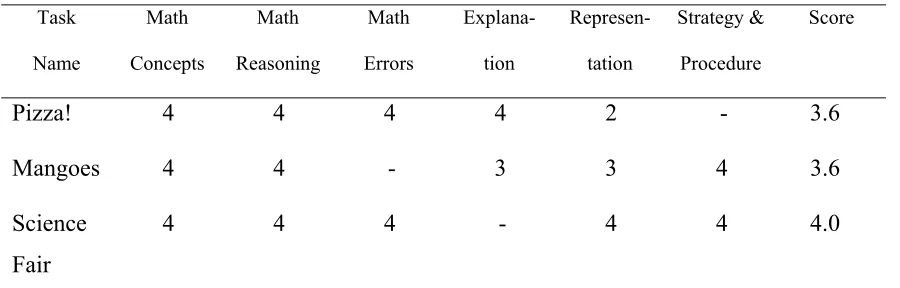
1 Attitude Toward Fractions Inventory Questionnaire: Liza’s Scores ...141
2 Fraction Computation and Fraction Concepts Pretests: Liza’s Scores ...142
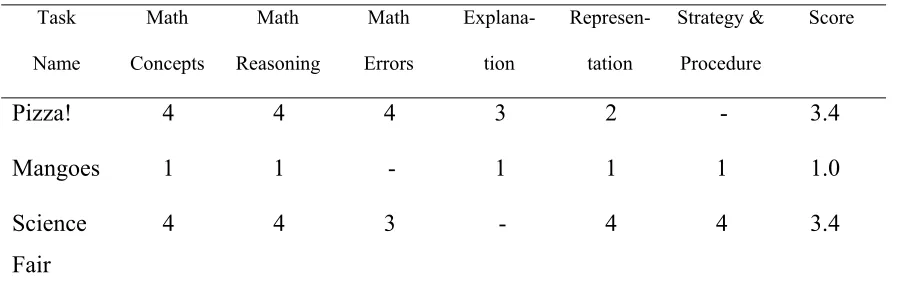
3 Performance Task Results: Liza ...143
4 Attitude Toward Fractions Inventory Questionnaire: Allan’s Scores...157
5 Fraction Computation and Fraction Concepts Pretests: Allan’s Scores ...158
6 Performance Task Results: Allan...159
7 Attitude Toward Fractions Inventory Questionnaire: Ray’s Scores ...176
8 Fraction Computation and Fraction Concepts Pretests: Ray’s Scores...176
vi
LIST OF FIGURES
Figure ...Page
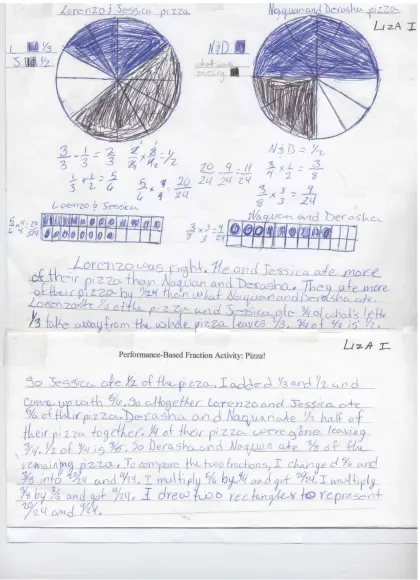
1 Liza’s Work on Pizza!...144
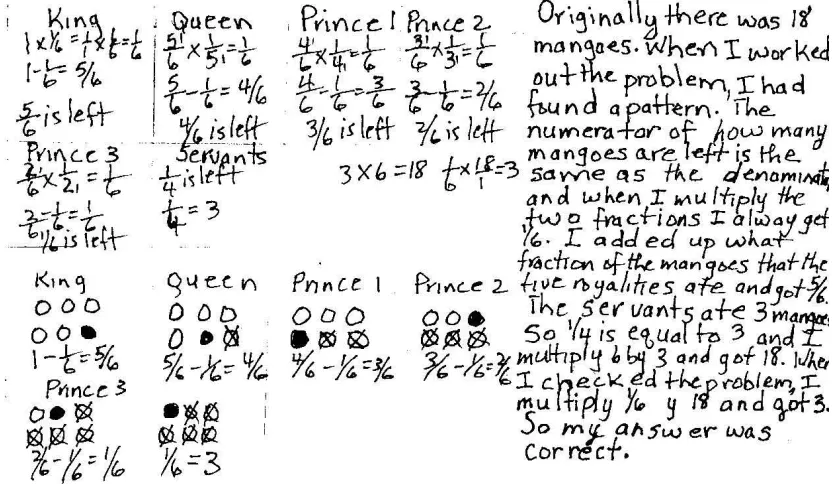
2 Liza’s Work on The Mangoes Problem...150
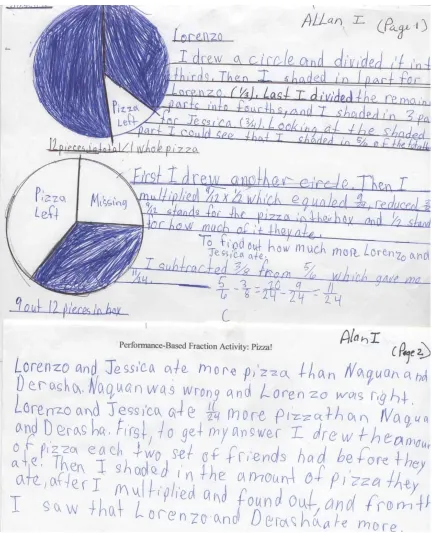
3 Allan’s Work on Pizza!...160
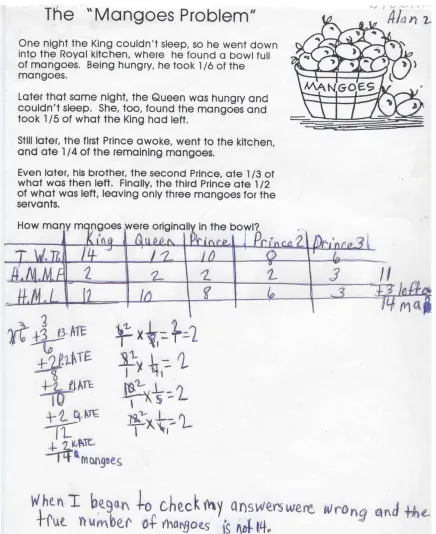
4 Allan’s Work on The Mangoes Problem...166
5 Ray’s Work on Pizza!...178
vii
ABBREVIATIONS
ATFI Attitude Toward Fractions Inventory
CAF Confidence About Fractions
CRCT Criterion-Reference Competency Test
EWF Enjoyment With Fractions
MAF Motivation About Fractions
NAEP National Assessment of Educational Progress
NCES National Center of Educational Statistics
NCLB No Child Left Behind (Act)
NCTM National Council of Teachers of Mathematics
NRC National Research Council
TIMSS Trends in International Mathematics and Science Study
VFM Value of Fractions to Mathematics
1 CHAPTER 1
INTRODUCTION
Almost three decades ago, the leading national mathematics organization, the
National Council of Teachers of Mathematics (NCTM, 1980) called for reform in the
way mathematics is taught in order to improve student performance in public schools in
the United States. In addition, the NCTM also outlined a 10-year reform program that
challenged mathematics educators to shift the focus of instruction and content beyond
basic skills objectives to objectives that facilitate more of a problem-solving conception
of mathematics.
In 1986, ton continue its push for a better quality of school mathematics and to
provide guidelines to help educators to accomplishing this, the Board of Directors of the
NCTM established the Commission on the Standards for School Mathematics. The
commission’s responsibility was to create a coherent vision of what it meant to be
mathematically literate and a set of standards to guide the revision of the school
mathematics curriculum. Three years later, the NCTM (1989) and the National Research
Council (NRC; 1989) called for a closer look at the way students think about and learn
mathematics and at mathematics instruction and helped to revitalize mathematics
education reform. As a direct result, many public school systems across the United States
responded by implementing a variety of reform programs. These programs aimed at
improving mathematics instruction in general, instruction for difficult mathematics
However, a perusal of the literature pertaining to mathematics achievement, and
in particular the achievement of urban African American students attending public
schools in the United States, indicates that during the past several decades, these students
have, in general, continuously performed at unsatisfactory levels (Oakes, 1990a, 1990b,
1999; Secada, 1992; Secada & Meyer, 1991) in comparison to their peers in countries
abroad (Ferrini-Mundy & Schmidt, 2005; Sheldon & Epstein, 2005). In addition, the
literature also indicates that one area of mathematics which has proved to be difficult for
many of these students to learn and understand is fractions. This negatively affects their
overall performance in mathematics (Test & Ellis, 2005; Wearne & Kouba, 2000) and
results in subpar achievement levels in this subject.
This dissertation presents the results of a qualitative study which focused on
student performance with fractions through the analysis and assessment of the
participants’ thought processes, work, and explanations as they sought to find solutions to
three performance-based mathematical tasks. I used a case study strategy to determine
(a) the extent to which three urban African American 8th-grade students could
conceptualize and compute fractions and (b) the ways in which these students used
fraction representations (symbolic expressions, physical models, and diagrams that are
used to replace fractions) to organize and communicate their mathematical thinking and
reasoning when they worked on the three fraction-related performance-based tasks. A
performance task is an instructional tool that the NCTM has identified as an important
component of the performance-based and standards-based mathematics curricula that
have been implemented in states across the United States as a part of mathematics
purpose. They are used as an assessment or an instructional tool, and they can be scored
in a nontraditional way via scoring rubrics, which facilitate more effective analysis of the
students’ thought processes (Danielson, 1997).
Statement of the Problem
In general, in the United States, a large number of public school students and
particularly urban African American students are not performing at acceptable levels in
mathematics (NCTM, 2005; National Center of Educational Statistics [NCES], 2004;
Oakes, 1999; Secada, 1992; Secada & Meyer, 1991). Data obtained from a recent
administration of the National Assessment of Educational Progress (NAEP) indicated that
African American students performed at a level significantly below expectations and
below that of their White peers, and that the achievement gap was wider between White
and Black students (NCES). These findings were similar to those reported earlier by
Oakes (1990a, 1990b, 1999) and provided evidence that traditional mathematics
instruction was still proving to be ineffective for a relatively large percentage of
8th-grade public middle school students and in particular, urban African American middle
school students.
Research has indicated that one contributing factor to many students’
unsatisfactory performance levels in mathematics is their difficulty with learning and
mastering the concept of fractions. This difficulty affects negatively the overall
performance and achievement of a large number of middle school students in this subject
(Saxe, Taylor, McIntosh, & Gearhart, 2005; Test & Ellis, 2005). Further, a significant
number of researchers who have done extensive studies in this area of mathematics have
emphasizes the memorization and application of rules and procedures for performing
primarily computations rather than that which emphasizes conceptual knowledge – the
why of mathematics and the mathematical knowledge that integrates the concepts
underlying the procedures (Groff, 1994, 1996; Lamon, 1996; Moss & Case, 1999; Post,
Cramer, Behr, Lesh, & Harel, 1992; Wearne & Kouba, 2000). The information in the
next section offers an insight into the factors that influenced the study.
Purpose of the Study
The purpose of this study was two-fold. I sought to determine (a) the extent to
which urban African American 8th-grade middle school students could compute and
conceptualize fractions and (b) the ways in which these students use fraction
representations to organize and communicate their mathematical thinking and reasoning
when finding solutions to fraction-related, performance-based tasks. As a means of
accomplishing this, two research questions guided this study:
1. To what extent do urban African American middle school 8th-grade
students compute and conceptualize fractions when working on
fraction-related, performance-based tasks?
2. In what ways do urban African American middle school 8th-grade
students use fraction representations to organize and communicate their
mathematical thinking and reasoning when working on fraction-related
performance-based tasks?
Rationale of the Study
To describe the rationale for this study, I focus on three issues concerning public
particular, 8th-grade African American middle school students. These are (1)
unsatisfactory student performance from an international and national perspective, (2)
student difficulties with learning fractions and the impact that this has on their overall
mathematics performance, and (3) the Black-White achievement gap in mathematics and
the need for reform-based mathematics instruction that meets the needs of these urban
African American students.
Unsatisfactory Student Performance in Mathematics in the United States
Students in schools across the United States are taught and expected to learn
mathematics, beginning with number recognition in kindergarten. However, international
and national studies and achievement assessments continue to suggest that by the middle
grades students in the United States perform mathematics at an unsatisfactory level and
know less mathematics than their peers in Asian and European Countries (Sheldon &
Epstein, 2005). Results from the most recent Trends in International Mathematics and
Science Study (TIMSS) comparative achievement study highlighted these deficiencies.
Despite the fact that for the first time 8th-grade middle school students from the
United States performed above the level of the international average in all content areas,
their performances nevertheless placed them at an unsatisfactory achievement level and
below that of their peers from abroad (Ferrin-Mundy & Schmidt. 2005; Sheldon &
Epstein). On the national front, results from studies done by the National Center of
Educational Statistics indicated that though the performance of 8th-grade middle school
students who participated in the two most recent NAEP mathematics assessments showed
some improvement over their performance in previous assessments, their overall
2005). These findings indicate that there is still a definite need for research studies that
can shed light on what should be done to improve or rectify this situation, particularly as
it pertains to more effective mathematics instructional approaches for African American
students attending urban public middle schools.
This study, viewed through the lens of constructivism, facilitated a close
examination of (a) the social environment of the classroom in an urban middle school
environment, (b) the connections between what is transpiring in the classroom and the
constructivist view of how students learn, and (c) the participants’ use of fraction
representations as they work with the fractions embedded in performance-based tasks.
These facets of the study are aligned with the suggestions made by Simon (1994), who
stated that educators should use meaningful theories of mathematics learning and should
plan and implement various types of instructional approaches that are aligned with the
needs of their students. Therefore, as educators implement mathematics reform programs
in their middle schools, it is important that they identify the instructional modalities that
are best suited to their students’ needs, and factors which positively affect student
learning, especially the learning of difficult mathematics concepts such as fractions.
Fraction Difficulties and Middle School Students
As far back as the late 1970s, researchers led by Hasemann (1981) conducted
studies in the area of fraction teaching and learning and documented their findings on the
difficulties that this area of mathematics posed for students. In the ensuing years, other
researchers have conducted similar studies with comparable results. Currently, a large
number of students continue to experience difficulties with learning fraction concepts.
students have not yet mastered fraction concepts (NCES, 2003; NCTM, 2005). These
concepts continue to be troublesome for public school students from all levels of
schooling and backgrounds but more so for urban African American middle school
students who attend public schools (Test & Ellis, 2005; Wearne & Kouba, 2000).
Therefore, it is imperative that educators continue to seek answers to student
problems with learning fractions through research studies such as this one and to
investigate the impact of mathematics reform programs that facilitate change in
instructional methods and approaches and are implemented to aid student improvement
and achievement levels in this area of mathematics. This study can allow educators to
obtain a better understanding relative to what needs to be done to help African American
middle school students to improve their performance in mathematics and subsequently to
close the Black-White mathematics achievement gap.
Black-White Mathematics Achievement Gap
Public school students’ mathematics achievement levels are not as expected for
students across grade levels, levels of schooling, race, and even nationalities. These
difficulties continue to persist, despite the implementation of mathematics education
reform in many school systems in the United States. The situation is further compounded
by the fact that many urban African American middle school students do not have an
adequate number of opportunities to benefit significantly from high-level mathematics
education programs and/or the instructional changes which result from reform efforts
undertaken by school systems (Aksu, 1997; Durodoye & Hildredth, 1995; Martin, 2000;
Oakes, Joseph, & Muir, 2004; Secada 1992, 1995). As such, they take fewer higher-level
on national mathematics assessments, thus widening the achievement gap and causing it
to persist (Martin; Hall, Davis, Bolen, & Chia, 1999; Mitchell, Hawkins, Jakwerth,
Stancavage, & Dossey, 1999; Tate, 2000; Thompson, 2003). Moreover, according to
Sheldon and Epstein (2005), problems associated with African American students’
proficiency in mathematics are particularly serious in poor schools and school systems.
Despite the fact that concerns about status, quality, and equity in mathematics
education in the United States have fueled numerous mathematics reform initiatives at the
national, state, and local levels, typically, these programs have not addressed the specific
needs (i.e., the cultural needs and learning styles) of socioeconomically disadvantaged
students (Durodoye & Hildredth, 1995; Oakes et al., 2004). This contributes to their
unsatisfactory performance in mathematics and to the persistent and widening
mathematics achievement gap between White and Black students and between suburban
and urban middle school students (NCES, 2004; Perie, Grigg, & Dion, 2005). As such,
the NCTM’s goal of equity – high expectations and strong support for all students – in
mathematics education has not been accomplished through the implementation of these
reform programs (Sheldon & Epstein, 2005). It is therefore necessary that educators
engage in research to obtain a better understanding of the dynamics pertaining to
unsatisfactory achievement in mathematics and the difficulties with learning mathematics
concepts such as fractions.
Significance of the Study
The results of my study enhance the literature on fractions in the middle school
mathematics curriculum, relative to reform-based classroom practices and on the teaching
students to better understand fraction concepts. It also contributes to understandings of
fraction learning and the impact of using performance-based tasks and of issues of equity
and African American students’ mathematics achievement levels.
Fractions in the Middle School Mathematics Curriculum
Researchers have conducted many studies to investigate a variety of issues
relative to the concept of fractions. Some of these studies (e.g., Behr, Lesh, Post & Silver,
1983; Bezuk & Cramer, 1989; Bigalke & Hasemann 1978; Hart & Kerslake, 1983;
Hasemann, 1981; Hunting, 1983) date as far back as several decades, an indication of the
historical importance of this concept in the mathematics curriculum at the elementary and
middle school levels and in high school through related and connected algebraic concepts.
In speaking of the importance of fractions in the mathematics curriculum, Behr et
al. (1983) stated, “Rational number concepts are among the most complex ideas children
encounter during their pre secondary school years” (p. 91). Similarly, Post et al. (1992)
posited that fractions have a significant place in the development and structuring of
mathematics because the formal teaching of this concept sets the stage for far more
sophisticated levels of problem solving. They suggested that because fractions will
simply not “disappear” from the mathematics curriculum, educators should consider
more effective approaches for teaching this concept than those that are used currently,
especially in middle school mathematics classrooms.
Further, the NCTM (2000) has affirmed that the domain of fractions is an integral
component of the middle school mathematics curriculum. Therefore, student learning and
mastery of these concepts at the middle school level is critical to their success with
(NCTM). However, researchers who advocate instructional changes relative to the
teaching of fractions have suggested that because the traditional fraction instructional
approach (which emphasizes computations using rules and procedures) has not proved to
be very effective for many students, instruction that emphasizes the nontraditional
approach (where students are taught to understand the meaning of fractions) should be
the norm rather than the exception in mathematics classrooms. The classroom activities
that were used in this study were aligned with the NCTM’s recommendations that
fraction instruction should be conceptually orientated and reform- based. Therefore, this
study is significant in that it will augment the literature on fraction learning as it relates to
the use of nontraditional fraction instructional strategies and activities in the middle
school mathematics classroom that focuses on conceptual knowledge and understanding.
This approach fosters conceptual knowledge through the use of symbolic representations
of fractions as opposed to focusing on procedural knowledge, which emphasizes
primarily the application of rules and algorithms for performing computations.
Fraction Representation and Fraction Learning
My findings contribute to the body of literature on the teaching and learning of
fractions relative to the role that the use of fraction representation can play in helping
students to understand these concepts better. Groff (1996) suggested that traditional
methods for teaching fractions are often ineffective because, though many middle school
students learn how to do simple fraction computations using memorized procedures, rules,
and definitions, there is not much depth to their understanding: They are unable to
explain why the rules and procedures work and have little if any conceptual knowledge of
in particular, fraction instruction should (a) emphasize conceptual understanding,
(b) involve the use of fraction representations, and (c) provide students with opportunities
to solve the problems in meaningful and real-life contexts.
The NCTM (2000) also suggested that when teaching fraction concepts, teachers
in middle school mathematics classrooms should provide their students with a variety of
visual images and models of fractions. In addition, the NCTM added that teachers should
allow their students to use these fraction representations in conjunction with meaningful
mathematics problems and problem-solving activities, such as performance tasks.
Performance-Based Tasks and Fraction Learning
School systems in states across the United States (e.g., Georgia, New York,
New Jersey) have implemented mathematics education reform programs to aid in the
improvement in student performance in mathematics. Many of these reform-based
curricula emphasize the use of performance-based tasks as a means of engaging students
in meaningful problem-solving activities and of assessing them through nontraditional,
authentic classroom tasks and assessments tools. Therefore, this study is significant from
the perspective that its findings can be of value to educators and researchers relative to
the use of performance-based tasks as an assessment tool or a classroom activity.
Further, the NCTM (2000) recommended that fraction learning should be situated
in meaningful contexts to which students can relate and make connections and from
which calculations should arise naturally. Performance tasks provide such situated and
meaningful contexts. As such, the use of these tasks in this study is in keeping with the
Equity and Urban African American Students’ Mathematics Achievement Levels
The school from which the study’s participants were selected is located in an
urban community of primarily African American residents. African American students
have continued to lag behind their White peers relative to their mathematics performance
levels (Martin, 2000; Tate, 2000; Thompson, 2003). In discussing its Equity Principle,
the NCTM stated that mathematics instruction should facilitate equity for all students.
However, the data from both the 2003 and 2005 NAEP assessments (NCES, 2003;
NCTM, 2005; Perie et al., 2005) pointed to the fact that African American (Black)
students continue to lag behind their White peers. There was a 33-point difference
between their mean mathematics scores (Perie et al.).
According to Phillips (1997), minority students are often at a disadvantage in
terms of the quality of the education that they receive because of the existing
social-economic problems in urban schools. These include (a) insufficient instructional
materials and school supplies, (b) large class sizes and resulting poor teacher-to-student
ratios, (c) teacher shortages, (d) low-teacher salaries, and (e) dilapidated physical
facilities. The result is poor student achievement, and these students’ performances often
lag behind those of their peers who attend more affluent suburban schools. This study is
therefore significant in that through the close examination of the data obtained from each
of its three cases, it can add to the literature on the problem solving approaches of
African American students. In addition, this study can also inform the educational arena
relative to mathematics and fraction instructional approaches that may be used to
facilitate the needs of urban, African American learners in the middle school mathematics
Theoretical Framework
In a general sense, this study draws from the constructivist view of how students
learn and acquire mathematical knowledge. But more specifically it draws from social
constructivism.
Constructivism
Constructivism, a theory of how individuals learn, is based on the work of Piaget
(1937), who stressed that knowing is adaptive and therefore that knowledge should be
thought of as a short but complete summary of concepts and actions which have proved
to be successful (von Glasersfeld, 1995). First, constructivists posit that learning requires
self-regulation and the building of conceptual structures through reflection and
abstraction (Clements, 1997). They also contend that problems should not be solved
solely by the retrieval of answers, but from the perspective that the problem is a personal
one and presents an obstacle towards progress and towards a goal. These characteristics
of constructivism were aligned with the goals of this study and the instructional
approaches I used, which facilitated (a) listening to the participants as they engaged in
discussions with each other, (b) focusing on their thought processes and, (c) interpretating
their actions in order to build a model of how they used their conceptualizations skills to
find solutions to the performance tasks that they worked on.
Constructivism and Knowledge Acquisition
In his discussion on constructivism and its connection to knowledge acquisition,
Wood (1995) stated that knowledge is not received passively, either through the senses or
by way of communication, but through the active construction of the cognizing individual.
involvement in meaningful classroom activities in the form of performance-based tasks
that provided them with opportunities to participate actively in their learning. They
planned and organized their work and shared their ideas regarding the strategies, methods,
and fraction representations that they used to arrive at practical and correct solutions to
the tasks. This type of learning environment was especially conducive to the three
participants’ and their classmates engaging in teamwork as they worked with the
fractions embedded in the performance tasks and engaged in their learning as a search for
meaning of these concepts, constructed mental and physical models of fractions, and
reflected on multiple representations (fractions) and of reality (Clements, 1997). In
addition to working in groups to find solutions to the three performance tasks, the
participants were required to work on the tasks on an individual basis at first. This
allowed them to bring their own perspectives about the problem to the learning
environment as they actively created, interpreted, and organized their knowledge in
individual ways (Hiebert & Carpenter, 1992; Windschitl, 1999) and to make sense of the
subject matter (Windschitl).
Social Constructivism
This study was based specifically on the tenets of social constructivism. Social
constructivism recognizes that the individual constructs knowledge and that knowledge is
also concurrently socially constructed. Social constructivism is based on the philosophy
of Vygotsky (1978), who believed that within a group an individual learns from social
interactions first and from individual experiences, later. He also believed that the purpose
of education was to develop the personalities of the students and that this would in turn
posited that methods of teaching and learning should (a) relate to the development of
students as individuals and as members of a group in which they actively participate and
(b) facilitate communication and collaboration between teachers and students and
between the students themselves. Within the groups, the social and individual processes
are interactive, with the result that groups act to construct knowledge and to resolve the
differences in the meanings of individual group members (Simon & Shifter, 1991). My
using social constructivism as a framework for the study facilitated the participants’
engagement in social interaction and communication with their peers as they discussed
and decided on solutions to the performance tasks. According to the constructivist view
of learning mathematics, these small-group interactions allowed the participants to
collaborate and exchange the ideas as they engaged in problem-based learning,
inquiry-related activities, and dialogue.
Constructivism was an appropriate theoretical framework for the study. This
constructivist lens allowed me to obtain a better perspective of how the students’ learning
styles, cultural backgrounds and social characteristics played a role in their construction
of knowledge and their social interaction in the classroom (Gergen, 1994). There was a
natural and logical connection between constructivism and social constructivism and
what I was attempting to accomplish from this study relative to the social and
mathematical needs of the participants. Further, my using social constructivism as the
primary framework for the study provided opportunities for the participants to work in a
learning environment that was better suited to their learning styles and to their social and
Summary
The purpose of this study was to determine the extent to which urban, African
American middle school 8th grade students compute and conceptualize fractions when
working on fraction-related, performance-based tasks and the ways in which these
students used representations of fractions to organize and communicate their
mathematical thinking and reasoning as they worked on finding solutions to these tasks.
The focus of the methodology of this qualitative study, which used a case study method
of inquiry, was on analyzing the data obtained from (a) a nontraditional assessment tool
(performance-based tasks), (b) one-on-one interviews, (c) individual and group written
reflections, and (d) participant-observer notes.
The fraction instructional approaches that were used in this study were in direct
contrast to those used for traditional fraction instruction, which is centered on the
teacher’s demonstration of procedures for doing fraction computations involving the four
basic operations. The computations are based on the application of specific rules for
doing each type of computation followed by student practice of these procedures and
application of related rules, using worksheet or textbook examples. Research on the
teaching and learning of fractions has indicated that this instructional method, which
promotes rote learning and the memorization of rules and procedures, results in most
students’ acquiring primarily procedural knowledge, but lacking conceptual knowledge.
Subsequently, these students forget the rules or apply them incorrectly. As a result,
traditional fraction instruction has proved to be ineffective for a relatively large number
of students at all levels of schooling but more so for urban African American middle
Based on these findings, researchers and mathematics education reform writers
such as those from the NCTM (2000), have suggested that when teaching fraction
concepts educators should employ instructional approaches that focus on the students’
gaining primarily conceptual rather than procedural knowledge. They also stated that
students should be provided with opportunities to work on meaningful mathematics tasks
(e.g., performance-based tasks) that (a) involve fractions, (b) exist in contexts to which
the students can relate, and (c) allow students to work with a variety of representations of
fractions to stimulate their creative thinking and mathematical thought processes.
In this study, the participants worked on performance-based, fraction related tasks
individually and then in groups by sharing their solutions and communicating their ideas
and thoughts in order to decide on correct and practical solutions for the tasks. The
purpose was to determine how well they compute and conceptualize fractions and the
ways in which they use fraction representations to communicate their mathematical
thoughts and reasoning after 3 weeks of traditional fraction instruction. In essence, a
critical question was “What do the participants’ abilities to compute and conceptualize
fractions and to use fraction representations for finding solutions to fraction-related
performance-based tasks indicate about their readiness in these areas to meet the
challenges of their state’s new performance-based mathematics standards and curricula
that will de-emphasize traditional mathematics instruction?”
The chapter that follows presents the literature review. It will provide a discussion
on (a) the literature generated from studies on the teaching and learning of fractions,
(b) the history of student difficulties when learning fractions at the elementary and
difficulties that teachers experience when teaching fractions. This study also highlights
the use of performance-based tasks, a component of an alternative approach to traditional
fraction instruction and assessment that can help to alleviate the difficulties that many
middle school students experience when learning fractions via traditional instructional
19 CHAPTER 2
REVIEW OF THE LITERATURE
In the literature on the teaching and learning of fractions, a large body of data
exists on the difficulties that students at all levels experience when learning fractions.
Throughout the research, the most frequently cited source of student difficulty with
learning and understanding fraction concepts is traditional fraction instruction (Lamon,
1996; Moss & Case, 1999; Wearne & Kouba, 2000). In addition, researchers have also
advanced theories and cited reasons for this, and they, along with educators, have offered
suggestions for student improvement in this area. For example, the National Council of
Teachers of Mathematics (2000) has recommended alternatives to traditional fraction
instruction and assessment aimed at facilitating student improvement and achievement in
this area. These recommendations and research studies, along with the students’ deficits
in knowledge of fraction concepts, provide a basis for this research study.
In this chapter, I highlight the literature generated from studies on the history of
student difficulties with learning fractions in a broad sense. This includes difficulties that,
in particular, elementary and middle school students experience when learning this form
of rational number, the instructional challenges that some teachers face when teaching
fraction concepts, and alternative approaches to traditional fraction instruction and
assessment. The chapter is organized into several sections to facilitate the discussion of
the review. First, even though the focus of this study is on fractions, an area of
schools in the U.S., in general these difficulties affect student achievement levels in
mathematics. As such, I begin with a discussion of the unsatisfactory level of public
school students’ performance and achievement in mathematics in general in the United
States. Second, because the participants in the study are urban, Africa American middle
school students, their unsatisfactory mathematics achievement levels and the resulting
Black-White achievement gap. This is followed by a brief description on the overarching
theoretical framework for this study, constructivism, and by a more detailed discussion of
social constructivism which lends itself to the study. This theoretical framework provides
the lens for closely examining the literature and for conducting the study.
The next section summarizes the literature on traditional fraction instruction
relative to (a) the history of student difficulties with fractions, (b) fraction difficulty at the
elementary school level, and (c) fraction difficulty at the middle school level. Although
the focus of this study is on urban middle school students, the literature regarding
elementary students’ difficulties with learning fractions (Lamon, 1996; Wearne & Kouba,
2000) is also discussed because, from all indications, the problems that middle school
students experience when learning fractions begin at the elementary level and manifest
themselves more intensely in the middle grades. In addition, the connection between
these two levels of schooling and student difficulty with fractions is also discussed
because, according to constructivists, researchers should trace the development of
fraction concepts in children and use this information in constructing the curriculum so
that it reflects the students’ natural development (Pitkethly & Hunting, 1996).
In the next section, I discuss some of the alternatives to traditional fraction
tools. This includes the use of (a) performance-based tasks, (b) fraction representations,
and (c) scoring rubrics. Use of these approaches and materials is aligned with the new
mathematics curriculum and performance standards that have been or will be soon
implemented in school systems in the state where this study originated.
Mathematics Education in the United States: 1950s to Present
In the 1950s, the primarily algorithmic mode of traditional mathematics
instruction required little discussion or input from the students, did not afford them
opportunities to participate in classroom activities which required a higher level of
cognitive processes such as critical thinking, and viewed the student as the receiver of
knowledge transmitted from the teacher and the textbook. This approach to teaching
mathematics emphasized computation because the traditional view of mathematics held
that students needed to master computational skills before application and thinking skills
could be engaged (Stiff, 2002). However, by the late 1950s, educators realized that this
form of instruction did not adequately provide students with an acceptable level of
mathematics literacy, nor did it give them opportunities to participate in the learning
process from a highly cognitive standpoint. There was need for change and an
improvement in mathematics instruction if students were to be adequately prepared for a
changing world.
The launching of Sputnik in 1957 initiated the implementation of mathematics
education reform in school systems in the United States. The 1960s led to a transition to a
formalist approach with the introduction of “new math,” which unfortunately did not
address the needs of many students, primarily those who were economically
to the basics” trend in the 1970s, then to the early beginnings of constructivism in the
1980s. This approach, unlike others, focused on the learner as opposed to the teacher.
Educators of each era sought a more effective method of mathematics instruction, one
that would (a) allow students to more actively participate in their learning, (b) use
curricula that were more reflective of the societal changes such as the demographics of
diverse student populations, and (c) allow students to think at higher and more critical
levels.
As the need for an improvement in mathematics education became more evident,
the NCTM (1980) called for reform in the way mathematics was taught in public schools
in the United States to improve student performance. The NCTM also outlined a 10-year
reform program that challenged mathematics educators to move the focus of mathematics
instruction and content beyond basic-skills objectives to a more problem-solving
conception of mathematics content and instruction. Subsequently, the NCTM (1989) and
the NRC (1989) called for a closer look at the way students think about and learn
mathematics and at mathematics instruction and helped to revitalize mathematics
education reform.
As a result, during the 1990s, there was a resurgence of efforts at mathematics
reform. These efforts were influenced by the findings of data from the National Council
of Education Statistics (1998) via its National Assessment of Educational Progress
mathematics assessments administered to 4th-, 8th-, and 12th-grade students attending
schools in the United States. The data indicated that these students were not performing
at satisfactory levels in mathematics. In the ensuing years, and in response to the NCTM,
Science Study (TIMSS, 1995, 1999), increased their efforts to find answers to the
problem of substandard mathematics performance by a relatively large percentage of
students attending public schools in the United States, especially those at the middle
school level. These organizations administered mathematic assessments, conducted
research studies at the national and international levels, and published their findings.
Further, during the more than two decades since the NCTM suggested that
educators make efforts to improve mathematics instruction and student performance in
this subject, educators in many states have implemented mathematics reform programs in
public schools and in particular in public middle schools. Nevertheless, by the early
2000s, despite these efforts at improving student achievement in mathematics education,
the situation had not improved significantly: Student performance in mathematics was
still at low levels.
Currently, the situation regarding student achievement and performance in
mathematics is somewhat more hopeful than in previous years. The results from the most
recent TIMSS comparative achievement study and recent NAEP assessments were
somewhat more promising. The findings of the TIMSS international comparative study of
mathematics achievement indicated that 8th-grade middle school students from the
United States performed above the international average in all content areas, thus
showing a slight improvement over their average performance in the 1999 study
(Ferrini-Mundy & Schmidt, 2005). On the two most recent NAEP assessments, the data indicated
that, in general, these students have shown improvement in their mathematics
performance. However, they still have difficulties with mastering some mathematics
performance in mathematics has not yet reached the expected satisfactory levels. On the
other hand, the data obtained from these assessments relative to subgroups were not as
promising. Yet again the findings indicated that the achievement gap in mathematics
between White and Black students and between suburban and urban middle school
students continued to persist (NCES, 2004; Perie et al., 2005).
Mathematics Performance and the Achievement Gap: Equity for All?
The unsatisfactory mathematics performance and achievement levels of students
who attend public schools in the United States have been a concern for educators and
members of the public for many years. They have subsequently fueled the
implementation of a number of mathematics education reforms, primarily at the middle
grades level. However, despite the proliferation of these reforms, beginning in the late
1980s, the data from international and national assessments, such as TIMSS and NAEP
have continuously indicated that public school students in the United States were not
performing at satisfactory levels in mathematics. And even more disheartening is the fact
that some groups of students were not benefiting from these reforms. For example,
African American students, particularly those who attend urban public schools, were still
not performing at satisfactory levels in mathematics and are therefore outperformed by
their White peers (Tate, 2000; Thompson, 2003; NCES, 2004; NCTM, 2005).
Mathematics Achievement Levels
Data from the TIMSS (1995) comparative study indicated that middle school
students from the United States were outperformed by their peers abroad (Schmidt, 1996).
their performance over that of the 1999 administration, their performance was still not at
desired levels.
The findings from the 1995 NAEP mathematics assessment indicated that the
performance of African American students continued to lag behind that of their White
peers (Martin, 2000; Secada, 1995). The NAEP has monitored the progress of students in
mathematics (and reading) since the early 1970s. Recent data on student achievement in
mathematics (National Assessment Governing Board, 2003; NCES, 2002, 2003, 2004)
have revealed that, even after more than three decades of these reform programs, an
unsatisfactory number of 8th-grade, middle school students who attend public schools,
are performing below the “Proficient” level in mathematics, though in general their
performances have begun to show some improvement. The “Proficient” level requires
that the students are able to apply the mathematics they have learned to different, often
unfamiliar situations and to set up and solve the problems that they are given. Although
these students had begun to show improvement in their mathematics performance, only
22% of the almost 160,000 tested nationwide obtained scores which placed them at the
exigent “Proficient” level, an indication that they are competent in challenging subject
matter and analysis and that they can make applications to real-world situations (Perie et
al., 2005). In addition, while about 40% of White and Asian students read at or above the
Proficient level, only 14% of African American students read at this level. Because the
ability to read and to comprehend what is read is vital to students being able to success at
other subjects, incompetence in reading affects negatively their performance in
mathematics and this contributes to the continued widening of the Black-White
The Black-White Achievement Gap
The most recent NAEP (Perie et al., 2005) results have indicated that, in general,
while student performance in mathematics has improved, the performance gap between
8th-grade Black students and White students remains intact (Perie et al., 2005). In
addition, the data obtained from studies of reform-oriented mathematics classrooms
indicated that in urban schools whose population consists of primarily African American
minority students, mathematics education reform programs have been ineffective. For the
most part, the vast majority of these students still struggle with learning mathematics
(Martin, 2000; Thompson, 2003). This was attributed to the fact that, though these
students are of concern to their teachers, they are rarely the focus of mainstream
mathematics education research (Baxter, Woodward, & Olson, 2001). Several years prior,
Aksu (1997) came to a similar conclusion and added that only a few reform programs
focused specifically on helping African American and other minority students to become
more proficient at mathematics. It is therefore not surprising that the NAEP results
(NCES, 2003; Perie et al.) indicate that the Black-White performance gap still exists. The
results also showed that the mean score for 10 urban school districts that participated in
this assessment was 259 out of a possible 500 and that the performance gap in
mathematics achievement between urban and suburban students continues to persist.
In reflecting upon the various attempts at school reform and the plight of students
who attend low-performing urban schools, Tate (2000) stated that for many students who
attend urban schools, particularly African American students, the late 1950s and 1960s
could be best characterized as the era of “benign neglect” with respect to mathematics
particularly minority students in attendance at urban public schools, are still not receiving
either a level of education or educational opportunities that are equitable to those of
students attending similar schools in suburban school systems. The NCTM (2000)
suggested that one reason for this is the societal belief in North America that only some
students are capable of learning mathematics. Therefore, irrespective of the numbers of
years of mathematics education reform, many ethnic minority students will continue to
find the application of mathematical knowledge at even basic levels very difficult
(Bruning, Schraw, & Ronning, 1999). However, the NCTM (2000) requires equity in the
form of high expectations and strong support for all students. To that end, it
recommended that middle grades mathematics learning should provide a rich experience
that prepares these students to use their mathematical knowledge to deal effectively with
real-life situations in and out of the school environment and for their continued study of
mathematics in high school. However, as indicated in the national and international data,
African American students are not benefiting sufficiently from either reform programs or
from the NCTM’s recommendations relative to equity for all students in mathematics.
Educational Equity and African American Students
Some scholars and researchers have posited that the system of education in public
schools in the United States is differentially effective for students (in several academic
subjects, including mathematics) depending on their social demographic characteristics
such as race, ethnicity, social class, and gender (Secada, 1992, 1995; Tate, 2000). Hilliard
(1995), in speaking to the issue of ethnicity, posited that one of its ramifications relative
to the academic achievement of African American students is that these students do not
stated that often mathematics instruction does not match the learning styles of African
American students and as a result, it negatively affects their academic performance. He
suggested that educators must match their teaching styles to their students’ learning styles
and cultural needs because this is critical for delivering instruction to minority students
especially. He added that it is important that teachers not only understand the factors that
influence the way in which this group of students learn but also know how to make the
connection between these factors and improving instruction for these students.
Durodoye and Hildredth (1995) concurred with Hilliard and added that focusing
on how African American students learn and connecting this knowledge to efforts aimed
at facilitating their academic achievement are crucial to these students’ success in
learning and mastering mathematics concepts and in narrowing or eliminating the
mathematics achievement gap which exists between African American students and
White students. They added that when instruction does not facilitate the learning styles of
a group, this might result in conflict and this ultimately negatively affects student
learning and performance.
Although the NAEP (NCES, 2003, 2004; Perie et al., 2005) results have indicated
that our nation’s urban African American middle school students are not yet performing
at satisfactory levels in mathematics, some educators believe that the current reform
efforts may be a way by which the performance gap in mathematics that exists between
Black and White students and between students who attend urban and suburban middle
schools could be closed. They also view these mathematics education reform programs as
critical to the improvement in the performance of urban African American students in
instruction that employs telling, stating information and demonstrating procedures
(Darling-Hammond, 1997; Lobato, Clarke, & Burns-Ellis, 2005) and embrace instruction
that focuses on conceptual understanding and is grounded in the constructivist
perspective (Smith, 1996; Wood, 1995; Wood, Cobb, & Yackel, 1995). Moreover,
according to Secada (1992, 1995), African American students who have not experienced
the same success in mathematics as their White counterparts are more likely to be tracked
into remedial mathematic classes, particularly because as the proportion of African
American students in a school increases, the relative proportion of college preparatory or
advanced sections of mathematic classes decreases Oakes (1990b).
In discussing this situation Darling-Hammond and Green (1994) made a pertinent
and poignant point when they stated that the students in the greatest need of the best
teaching (e.g., African American students who attend public schools that are in
socio-economically disadvantaged urban communities) are the least likely to get it. The result is
that this inequality of education is reflected in their performance on national assessments
such as those administered by the NCES. As a means of improving the situation for the
high proportion of minority students from poor urban communities, who attend schools in
urban school districts where mathematics education is often challenged by the conditions
of teaching, Darling-Hammond (1997) suggested that teachers should use a
nontraditional approach to teaching mathematics. Additionally, Phillips (1997) stated that
when schools offer demanding curricula and employ teachers who have high expectations
for all of their students, these become contributing factors to their students’ performance
in mathematics. And, since capability in mathematics has become an increasingly
level mathematics classes is often viewed as the gateway to economic enfranchisement
(Rivera-Batiz, 1992; Schoenfeld, 2002). Therefore, when students of particular groups do
not have the opportunities to take advanced mathematics courses and are not succeeding
in this subject, they are not only being denied quality mathematics education but also the
opportunity to experience economic freedom and choice (Miller, 1995).
After years of mathematics reform and continued unsatisfactory results regarding
middle school student performance in mathematics, the most recent NAEP (Perie et al.,
2005) results offered new hope and indicated that the reforms have begun to make a
difference: Student performance increased for most groups of students. According to the
NAEP results, 8th-grade public school students assessed in 2005 improved their
performance in mathematics by one point over the performance of 8th-graders in the
2003 assessment and that higher percentages of students performed at or above the basic
level than on any previous assessment (Perie et al., 2005). In seven states, these students
obtained higher average mathematics scores than those from 2003. Irrespective of these
gains, there is still room for improvement in both student achievement in mathematics
and mathematics instruction in public schools in the United States. This implies that
educators should take the necessary steps to make mathematics instruction more effective
for students and, in particular, for African American students, many of whom attend
urban, public, middle schools, and do not (in many cases) receive a comparable quality of
education as do their White peers and their peers who reside in the suburbs. The result is
The No Child Left Behind Act and Closing the Achievement Gap
Though education reform is not new and government officials have implemented
mathematics reform programs in public school systems across the United States for
nearly four decades, none of these efforts has succeeded in significantly narrowing the
achievement gap, closing it or improving substantially the academic disparities that exist
between White and Black students and between urban and suburban students, with
respect to their mathematics achievement levels (Cook & Ludwig, 1998; Thompson,
2003). Therefore, in January 2002, President George W. Bush signed the No Child Left
Behind Act (NCLB; U.S. Department of Education, 2001) into law. This act was
designed to help to close the persistent achievement gap between White upper- and
middle-class public school students, poor children and children of color, through a
multifaceted and comprehensive approach. The law promises to (a) achieve excellence
through high standards and accountability, (b) make literacy a priority, (c) improve
teacher quality, (d) improve mathematics and science instruction, and (e) move students
with limited English proficiency to English fluency.
According to Thompson (2003), one of the most controversial aspects of the
NCLB plan is the legislation that promises to promote parental options. This option gives
parents and guardians of economically disadvantaged students who attend public schools
the right to choose their children’s school in seeking the best possible education for them.
Throughout the nation, these parents now have the option of moving their children from
low- to high-performing schools (U.S. Department of Education, 2001). Thompson
further stated that, for the most part, the majority of students attending sub-standard