2017 2nd International Conference on Artificial Intelligence: Techniques and Applications (AITA 2017) ISBN: 978-1-60595-491-2
Research of System for Correcting Exam Papers
Based on Convolution Neural Network
Yi-qin BAO
School of Information Engineering, Nanjing Xiaozhuang University, Nanjing, China, 211171
Keywords: Machine learning, Handwritten digit recognition, MNIST database, Convolutional neural network, Handwritten digit preprocessing.
Abstract. In order to solve the problem of consuming too much time and energy in correcting exam papers, a system for correcting papers, which is based on convolutional neural network, is studied. Taking primary school mathematics papers for example, after taking a photo of a paper through a mobile phone, and then uploading to the system, the system will identify the digit answer and compare it with the standard answer by using digit recognition method based on convolution neural network, so as to automatically get a score for the paper. Because digit recognition is a classification problem, the thesis firstly compares the classification results of several algorithms in machine learning on MNIST database, and then selects the convolution neural network with the highest recognition accuracy rate for the system implementation. Finally, the system for correcting papers is achieved through image acquisition, image uploading, image transformation, digit preprocessing, convolution neural network classification, answer comparison scoring and so on. The experimental result shows that the accuracy rate of the system for correcting papers has reached 99.9%, which can be applied in practice.
Introduction
At present, the correction of examination paper mainly depends on teachers’ manual correction. If artificial intelligence can replace the original manual processing, the inconvenience and the rate of error caused by manual operation can be effectively reduced. Taking the primary school mathematics test papers for example, handwritten digits are the main content of the correction.
In this thesis, we first deeply understand, analyze and compare each machine learning algorithm on MNIST database, and then select the best algorithm for correcting papers. The MNIST database of handwritten digits has a training set of 60,000 examples, and a test set of 10,000 examples. Every digit has been size-normalized and centered in a fixed-size image.
[image:1.612.141.468.566.706.2]The first half of this paper pays attention to the research of algorithm, the latter half is used to build a complete system for correcting papers to solve the problem of handwritten digit recognition in reality, as shown in Figure1.
Research on Handwritten Digit Recognition Algorithm
K-Nearest Neighbor
K - Nearest Neighbor (KNN) algorithm allows the computer to perform simple pattern recognition, such as handwritten digit recognition. Its core idea is to classify the sample into the category of most of the k nearest samples belong to in the feature space.
Naive Bayes
Naive Bayes (NB) classifier is based on Bayesian theorem and independent hypothesis of features. Obviously, each pixel of a handwritten digit is not independent of the others. However, this paper will explain the effect of NB in handwritten digit recognition by using experimental data.
Logistic Regression
Logistic Regression (LR) is a linear classifier with probability. The distance between the input vector and a hyper plane reflects the likelihood of the input being classified into the corresponding category. Because the input vector of handwritten digit recognition problem has 784 dimensions, the hyper plane of 783 dimensions is needed. As a ten classification problem, handwritten digit recognition needs to design ten LR classifiers to solve.
Support Vector Machine
Support Vector Machine (SVM) is one of the most important breakthroughs in machine learning. It shows many unique advantages in solving small sample, nonlinear and high dimensional pattern recognition. Like LR, SVM is a linear classifier, but possible LR linear classifier is not only one, and SVM is designed to find the optimal linear classifier, which is to find the hyper plane with maximum margin.
Decision Tree
Decision Tree (DT) is a tree structure, where each internal node represents a test on a feature, each branch represents a test output, and each leaf node represents a category.
Decision Tree
Random Forest (RF) is one that contains many decision tree classifiers, and its category of output is determined by the mode of the category outputs by the trees. DT, like elite politics, classifies new data through the knowledge it has learned in the data set. RF, like democratic politics, wants to make decisions by way of people voting.
Gradient Boost Decision Tree
Gradient Boost Decision Tree (GBDT), like DT, is composed of multiple decision trees, and the conclusion of all the trees is accumulated to do the final answer. The differences between them are:
(1) Trees in RF can be generated in parallel; Trees in GBDT can only be serial generation.
(2) For the final output result: RF uses the vote of trees; In GBDT all trees’ results are added, or are weighted and summed.
Artificial Neural Network
Each image of MNIST database corresponds to 28x28=784 pixels. We can take all the pixels of an image as input to the Artificial Neural Network (ANN).
In order to divide digits into 10 categories (0 to 9), the output layer of the network is set to 10 neuron nodes. Each neuron weights and sums its inputs, and adds a constant called bias, which is then fed back via some nonlinear activation functions.
substitute it into some nonlinear activation functions. Here is an example of a deep, fully connected neural network.
Convolutional Neural Network
All previous algorithms try to flatten all pixels into a vector. It’s a bad idea. Handwritten digits are made up of shapes, but we will lose these shape information when the pixels are flattened. However, there is a neural network that can take advantage of these shape information: Convolutional Neural Network (CNN).
When CNN is applied to handwritten digit recognition, the most obvious features are that:
(1)Hidden feature extraction: CNN can extract the feature information from the original image directly, and needed preprocessing is very simple. Digit images can be used as the input of the network directly, and the feature extraction can be done at the same time of training.
(2)Local field and shared weights: The unique local field and parameter sharing mechanism of CNN make it highly invariant to digit translation, scaling, tilt, distortion, or other deformations.
(3)Pooling: The pooling in CNN can reduce the resolution of the feature map and reduce the network size, thus reducing the sensitivity to translation, scaling and distortion.
Experimental Results and Analysis
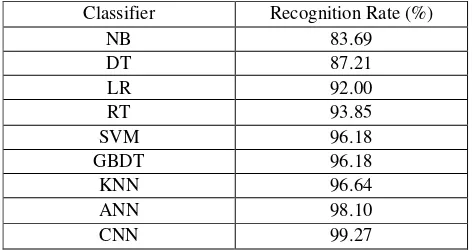
[image:3.612.191.427.364.489.2]Input the training set of MNIST into each classifier to train model, and then its test set is used to test the trained models. Finally, we can get recognition rates of all models. The recognition rates for each model are low to high as shown in Table 1.
Table 1. The results of handwritten digit recognition in machine learning.
Classifier Recognition Rate (%)
NB 83.69
DT 87.21
LR 92.00
RT 93.85
SVM 96.18
GBDT 96.18
KNN 96.64
ANN 98.10
CNN 99.27
In this experiment, all the algorithms used the same training samples and test samples, without too much extraction feature and debugging model, so some conclusions about handwritten digit recognition algorithms in machine learning can be obtained relatively fairly. The recognition rate of convolution neural network is the highest.
Exam Paper System Based on CNN
Image Acquisition
Figure 2. The interface of exam paper system.
Preparations: Let the android mobile open hot spot, then connect this hotspot with PC machine and inquire IP address. Write IP address on the corresponding position of mobile phone interface, and make sure that the port number is consistent with the setting in the program.
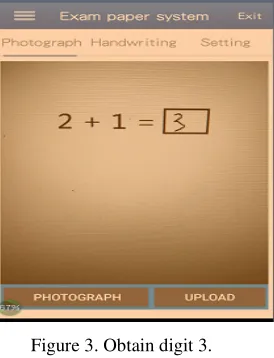
[image:4.612.245.382.308.487.2]Then, run the program, click on “PHOTOGRAPH” to take a photo, as shown in Figure 3, and then click "UPLOAD" to send the photo to the PC machine.
Figure 3. Obtain digit 3.
Handwritten Digit Preprocessing and Recognition
When PC receives the image, handwritten digit preprocessing is then carried out. The preprocessing is shown in Figure 4.
Figure 4. Flow chart of preprocessing.
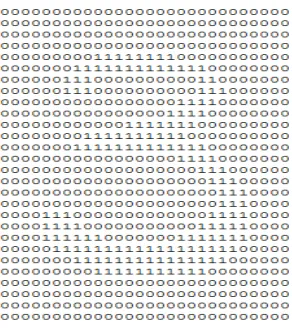
[image:4.612.180.432.536.700.2]Figure 5. The matrix of digit 3.
Then, the program reads the matrix automatically, and obtains a probability vector and the recognition result, as shown in Figure 6. The probability vector represents the possibilities of 0 to 9. The probability of which location is the greatest, the recognition result is the corresponding digit of the position, and the probability of the correct recognition is closer to 1, the better the effect of recognition is.
Figure 6. The recognition result of digit 3.
System Test
The purpose of the system test is to ensure the reliability of the system in reality.
Before the test, 100 digits are collected and processed to form a data set. These 100 digits are made up of 0~9 recognizable by human eye, which are photos taken by ten people. Each digit has been converted to text file and marked.
We use the system based on convolutional neural network to recognize the 100 digits, and its recognition rate is 100 %.
Summary
In this paper, the algorithms of digit recognition in machine learning are collated and compared. Finally, the system of automatic correcting papers is developed on the basis of convolutional neural networks. The research of the system involves many aspects of technology and theory, such as image recognition, image data preprocessing and so on. At present, paper-based examination is universal in China, so more cases still need to use photographic technology to acquire papers’ images, and image preprocessing still needs to be studied. In addition, during the process of machine learning from the laboratory into the software, there will be many places need to constantly improve.
References
[1] Harrington P. Machine Learning in Action[M]// Machine learning in action /. Manning Publications Co. 2012.
[2] Mitchell T M, Carbonell J G, Michalski R S. Machine Learning[M]. McGraw-Hill, 2003.
[4] Hu Zhong-shan, Lou Zhen, Yang Jing-yu, etc. Handwritten digit recognition based on multi - classifier combination [J]. Chinese Journal of Computers, 1999, 22 (4): 369-374.
[5] Jiang Wen-li, Wang Wei, Sun Zheng-xing. Fast online handwritten digit recognition technology based on decision tree [J]. Computer Science, 2006, 33 (9): 207-210.
[6] Li hang. Statistical Learning Method [M]. Tsinghua University Press, 2012: page 50.
[7] Liu Rong-rong. Design and implementation of handwritten digit recognition software based on convolutional neural network [D]. Inner Mongolia University, 2015: page 1-3.
[8] Ma Li-quan, Li Wei, Cai Han-hui, etc. Research on preprocessing in handwritten digit recognition [J]. Chinese Journal of Scientific Instrument, 2001, 22 (S1): 263-265.